Monday, August 28, 2017

What Secrets Is Mueller Finding As He Investigates Trump's Shady Foreign Deals?-- Part III

>


[Last night Valley Girl outlined, in Parts I (here) and II (here), some of the corrupt business practices that have long been at the center of the Trump Organization's dealings with the former Soviet Union. This evening's segment is about Trump's shenanigans in Moscow itself... and in the midst of the 2016 presidential campaign.]

-by Valley Girl

Scanning the news this morning, I found this WaPo article. The Washington Post breaking news is: While Donald Trump was running for president in late 2015 and early 2016, his company was pursuing a plan to develop a massive Trump Tower in Moscow, according to several people familiar with the proposal and new records reviewed by Trump Organization lawyers.” The article goes on to mention Felix Sater and the Bayrock Group, among other principals. (remember that these names are just a Google search away.) OK, the fact that Trump was pursuing the idea of a Trump Tower in Moscow is news.

But far more damning as to Trump’s Russian connections are reports from May, 2017, which likewise report on Felix Sater and the Bayrock Group, and more. The damning information comes in May 2017 from ZEMBLA, a Dutch organization that specializes in producing documentaries for Dutch TV. I’d long ago watched their two-part documentary via youtube: ZEMBLA-- The dubious friends of Donald Trump: the Russians (part 1- 45 minutes) and ZEMBLA-- The dubious friends of Donald trump: King of Diamonds (part 2- 36 minutes).


In court, Trump, lying with impunity, pretended to not know Sater

Part 1 is discussed here, at Huff Post and at Salon. From Huff Po:
A ZEMBLA investigation suggests that the American real estate company Bayrock, through which Donald Trump constructed hotels and apartment complexes, siphoned off $1.5 million by setting up a corporate structure in the Netherlands in 2007. ZEMBLA discovered that the corporate construction was established on the advice of an external legal counsel, namely Bracewell & Giuliani, also known for Rudi Giuliani, former mayor of New York and Trump confidante. The ultimate beneficiary owners of the Dutch business construction: the director of Bayrock and the Khrapunov family from Kazakhstan. Head of the family is Viktor Khrapunov, a former mayor and governor from Kazakhstan, who has been accused of embezzling hundreds of millions of state assets. In 2013 the Khrapunov family bought three apartments in Trump SoHo: Bayrock and Donald Trump are owners of that hotel-condominium.

One of the Bayrock owners is the Russian born Felix Sater, Trump’s former business partner. Though Sater spent years trying to line up deals with Donald Trump’s real estate organization all over the world, Trump has denied knowing Sater. The two met in 2003 when Trump was looking to expand his business globally. Because Sater failed to divulge his criminal history to Trump, he became a liability, putting the president’s financial interest at substantial risk. Should civil or criminal misconduct be proven in the care of Bayrock, Trump could be found complicit, possibly costing him millions of dollars in fines and/or penalties. The president has announced he will get to the bottom of the matter, but documents from the Bayrock corporation show otherwise: Trump actually tried to benefit from the situation, even risking leverage from anyone who knew of his jeopardy.
Russian Mafia figure Felix Sater with shady business associate

And from Salon:
Nearly every newsworthy story about the White House this week (May 2017) has contained one common thread: Russia. Whether it involves President Donald Trump facing backlash for sharing highly classified information with Russian diplomats or encountering fallout from the firing of FBI Director James Comey amid the bureau’s investigation of Russian interference in the 2016 election with possible ties to Trump, his relationship with Russia is proving to be ever relevant.

In examining Trump’s business partners, the filmmakers encounter the Russian mafia, including business and personal connections to oligarchs in Russia. The documentary takes a close look at Trump’s connections to the country, starting with his first trip to Russia in the 1980s.

The Zembla filmmakers interview some of Trump’s controversial friends, a former CIA agent, fraud investigators and attorneys, as well as U.S. Sen. Sheldon Whitehouse, a Democrat representing Rhode Island.

In the film, Malcolm Nance, a former U.S. intelligence officer, discusses Trump’s tendency to shy away from negative assessments of Russians: “If you’re a gambling addict and you owe someone a lot of money, you will never insult your bookie,” Nance says.
Also read ZEMBLA post from May 3, 2017, about part 1 of their documentary. Part 2 of the Zembla documentary is discussed at Alternet on May 15, 2017:
Dutch Documentary Part II: Blood on Trump and Kushner's Hands from Deals with Africa War Zone Diamond Mines Lev Leviev's diamond empire stretches from Angola to Moscow, London and Amsterdam.

The Trump family’s business partners have blood on their hands owing to deals with notorious diamond brokers who operate mines in war torn Africa and own jewelry stores in London, Moscow and Amsterdam.

That's the premise in Part Two of a documentary series by the Dutch TV network Zembla, The Dubious Friends of Donald Trump: King of Diamonds. It shows how the U.S. president and his son-in-law, Jared Kushner, have apparent partnerships with an Israeli billionaire who is tied to “trading in blood diamonds,” as the film's description notes, and how this relationship overlaps with power circles in Russia reaching President Vladimir Putin and Russian oligarchs.

“In the second part of our program about Donald Trump’s controversial friends, we will set our sights on the Israeli billionaire Lev Leviev, who is controversial because he is suspected of trading in blood diamonds,” says the documentary's YouTube summary. “He is one of the world’s biggest diamond traders and owns prestigious stores in New York and Moscow, but he is also the owner of Siebel, the Netherlands’ biggest jewelry chain. Leviev has ties with Russian president Putin, U.S. president Trump and his son-in-law and senior adviser Jared Kushner. Trump, however, claims he hardly knows this ‘King of Diamonds.’ Zembla investigates Lev Leviev’s business empire.”

The first part of the documentary series focused on Trump’s ties to Russian mobsters and oligarchs. That eye-opening report showed how Trump nurtured deals with oligarchs seeking to get their riches out of Russia and revealed how Trump signed off on international money-laundering schemes, including one set up by the law firm of ex-New York City mayor Rudy Giuliani. In the second part, we see how Trump is willing to make deals with anyone who can offer him a return, regardless of the suffering involved. The documentary also shines a light on Kushner’s relationships, which blend business, politics and religion.

There are a half-dozen takeaways from Part II, said James S. Henry, a corporate lawyer-turned-financial investigative reporter who has written lengthy exposés of Trump’s Russian connections and is featured in the film.


“I think the real news and interest in Part Two involves the exposure of apparent Trump partner Leviev's reported deep involvement in (a) trafficking in Angolan blood diamonds by way of his special arrangement with Eduardo dos Santos and family, the country's long-time dictator and chief kleptocrat; (b) Leviev's close ties to Putin; (c) Leviev's extensive business dealings with Trump's son-in-law Jared Kushner; (d) the extensive financial support that both Leviev and Kushner have given to extremist Israel settlers—support that appears to be inconsistent with the role that Kushner has apparently been given by the Trump administration with respect to the peace process; and (e) Leviev's alleged extensive use of non-transparent Dutch and other offshore holding companies to facilitate all these dodgy practices,” Henry wrote in an email to AlterNet.

Sander Rietveld, the documentary’s lead reporter, said Part Two is relevant for American audiences and lawmakers because it raises questions about Trump’s business relationships that can only be answered by examining his tax returns. Congressional Democrats have said Trump’s returns must be fully released before any consideration of federal tax reform.


“I think this is an excellent example of why President Trump needs to disclose his tax returns,” Rietveld said in an email. “Only when he does so, we'll know if and how he was engaged in a business deal with Lev Leviev [beyond the public relations materials shown in the film]. Given the extensive business empire of Leviev, Trump and he could have been together in real estate in the U.S., in Russia or in Eastern Europe. Or in some kind of diamond operation. According to well-established experts and investigators these kinds of operations in Africa and specifically in Angola are related to severe human rights abuses committed by security firms hired by mining companies.”

The film also examines the business circles Kushner travels in, showing overlapping ties between conservative Jewish groups and clerics and politically powerful Russians and Israelis, including Putin and Benjamin Netanyahu.

“The overlap of business and ideology and politics is another takeaway from this story,” Rietveld said. “Jared Kushner, the president's man for the Middle East, and Leviev's company AFI USA not only made a multimillion-dollar deal; they also seem to share a political view on Israel and the Palestinian territories. Both of them have been active in supporting settlements on the West Bank, which according to international law are illegal. And both of them have a very good relationship with the current, very right-wing Israeli government, and more personally with Bibi Netanyahu.”
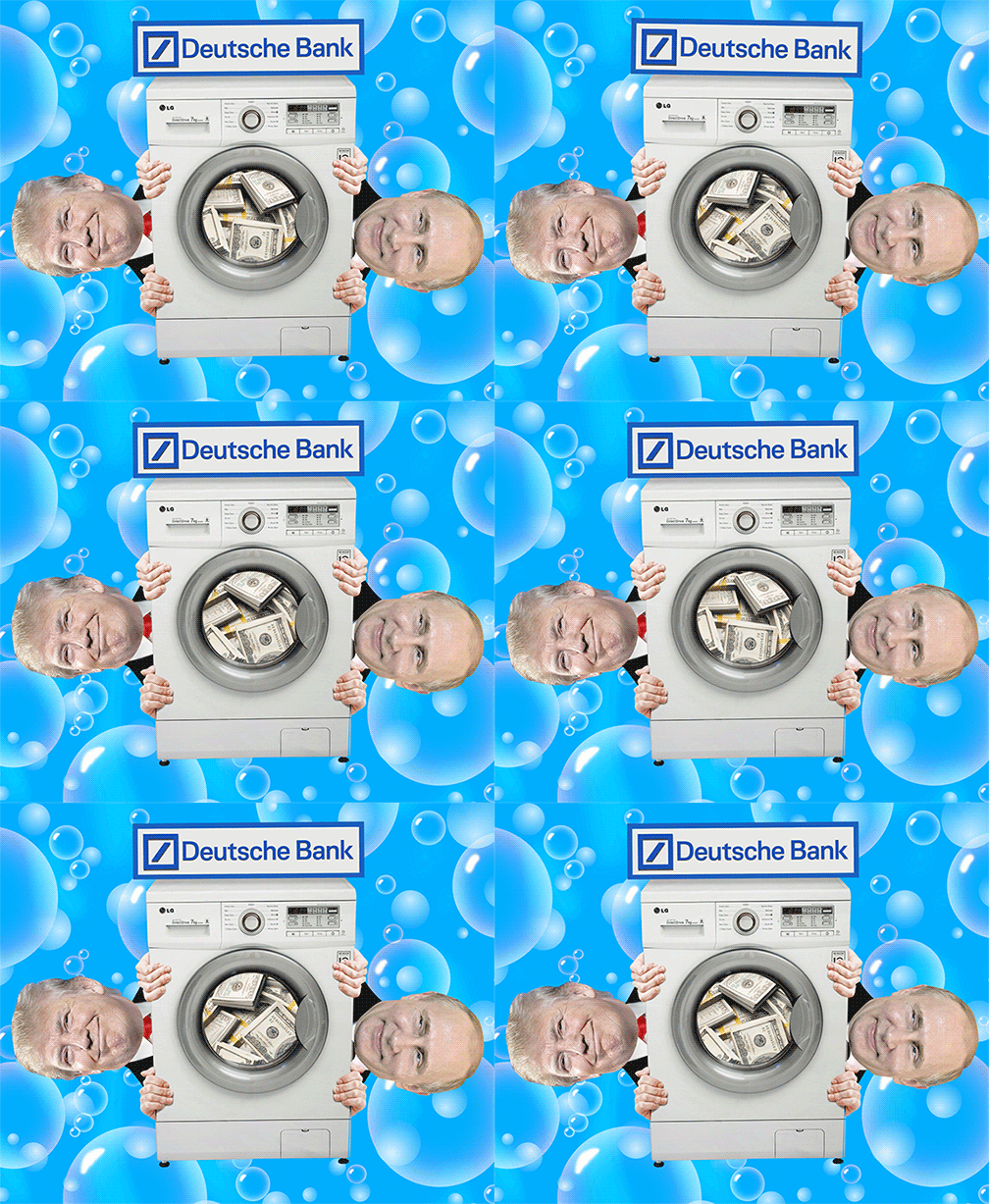
For my money (that’s an idiom) part 2 of the documentary is by far the most explosive, and provides damning information about Jared Kushner and his “circle of friends”


Here’s another twist from the New York Times today.  
A business associate of President Trump promised in 2015 to engineer a real estate deal with the aid of the president of Russia, Vladimir V. Putin, that he said would help Mr. Trump win the presidency.

The associate, Felix Sater, wrote a series of emails to Mr. Trump’s lawyer, Michael Cohen, in which he boasted about his ties to Mr. Putin and predicted that building a Trump Tower in Moscow would highlight Mr. Trump’s savvy negotiating skills and be a political boon to his candidacy.

“Our boy can become president of the USA and we can engineer it,” Mr. Sater wrote in an email. “I will get all of Putins team to buy in on this, I will manage this process.”

The emails show that, from the earliest months of Mr. Trump’s campaign, some of his associates viewed close ties with Moscow as a political advantage. Those ties are now under investigation by the Justice Department and multiple congressional committees.

American intelligence agencies have concluded that the Russian government interfered with the 2016 presidential election to try to help Mr. Trump. Investigators want to know whether anyone on Mr. Trump’s team was part of that process.

Mr. Sater, a Russian immigrant, said he had lined up financing for the Trump Tower deal with VTB Bank, a Russian bank that was under American sanctions for involvement in Moscow’s efforts to undermine democracy in Ukraine. In another email, Mr. Sater envisioned a ribbon-cutting ceremony in Moscow.

“I will get Putin on this program and we will get Donald elected,” Mr. Sater wrote.

“To be clear, the Trump Organization has never had any real estate holdings or interests in Russia,” the Trump Organization said Monday in a statement.

The Trump Organization on Monday turned over emails to the House Intelligence Committee, which is investigating Russian meddling in the presidential election and whether anyone in Mr. Trump’s campaign was involved. Some of the emails were obtained by The Times.

None of the emails obtained by The Times include any responses from Mr. Cohen to Mr. Sater’s messages.

In a statement on Monday, Mr. Cohen suggested that he viewed Mr. Sater’s comments as puffery. “He has sometimes used colorful language and has been prone to ‘salesmanship,’” the statement said. “I ultimately determined that the proposal was not feasible and never agreed to make a trip to Russia.”

Mr. Sater was a broker for the Trump Organization at the time of his messages to Mr. Cohen, which means he was paid to deliver real estate deals and had an incentive to overstate his business-making acumen. He presents himself in his emails as so influential in Russia that he helped arrange a 2006 trip that Mr. Trump’s daughter, Ivanka, took to Moscow.

“I arranged for Ivanka to sit in Putins private chair at his desk and office in the Kremlin,” he said.

Ms. Trump said she had no involvement in the discussions about the Moscow deal. In a statement, she said that during the 2006 trip, she took “a brief tour of Red Square and the Kremlin” as a tourist. She said it is possible she sat in Mr. Putin’s chair during that tour but she did not recall it. “I have never met President Vladimir Putin,” she said.
The story is worthy, but really doesn’t give away much about Felix Sater. In fact, Sater is/ was a Russian Syndicate Crime Boss, and is part of a Moscow-organized crime family. Sater becomes an FBI informant. The American government covers up his fraud, and Sater’s trial transcripts are closed. In Congressional hearings, the then FBI Director James Comey has “no comment” to questions about Sater.

Watch part 1 of ZEMBLA’s investigative report below. But skip ahead to 16:03 and listen until 24:05. The information above is in this part.

I'd like to know exactly when Felix Sater became an FBI informant. That may be unknowable. But, the question is: were his emails sent before or after that. Over and out!


Labels: , , ,

Friday, May 12, 2017

Trump's Kazakh Mafia Connection

>

The Donald and Felix

It's almost a year ago that I wound up in a former piece of the Soviet Union, Azerbaijan, a central Asia kleptocracy where Donald and Ivanka Trump were in business with local mobsters laundering money for the Iranian Revolutionary Guard. But Azerbaijan was hardly the only former part of the Soviet empire where Trump was trying to make a buck. Tonight, David Cay Johnston's DCReport.org broke a story about Trump and the Kazakh mobsters.

Kazakhstan is a huge country with something like 18 million people, rich in natural resources. The current authoritarian president, Nursultan Nazarbayev, was the First Secretary of the Communist Party in 1989 and then "became" president. He was elected in 2015 with 98% of the vote and is widely considered one of the most corrupt despots in the world. Richard Behar, writing for DCReport, asks if "a former Mob connected huster-- a real estate developer who in 2010 worked on the same floor as Donald Trump as his 'Senior Advisor'-- is threatening to spill some beans that could harm the President’s reputation? Sure looks that way, based on an intriguing Wall Street Journal story that exposed aspects of a bitter feud between two of Trump’s former key business associates. The newspaper revealed that the Russia-born Felix Sater-- a twice-convicted one-time Mafia associate-- is demanding hush money from a former boss, Kazakhstan-born Tevfik Arif, whose Bayrock Group worked in a close partnership for nearly a decade with the Trump Organization."
Sater warned Arif, in writing, that news headlines will read: “The Kazakh Gangster and President Trump,” unless Arif forks over $3.5 million to reimburse Sater for legal expenses he claims he’s owed, the Journal reported.   Specifically, Sater is threatening to reveal negative information about Arif’s “past relationship with President Trump and the Republic of Kazakhstan”—as well as Arif’s alleged connections to “organized crime figures and his business activities in Kazakhstan,” which involve “dealings in the post-Soviet metals industry there.”

Spokespeople for Bayrock and Arif have called the allegations “unsubstantiated falsehoods.” The general counsel of Trump Organization didn’t respond to calls and emails.

Sater, however, may not even need the dough.  I’ve discovered that he and a former Trump Organization colleague, Daniel Ridloff, received roughly $20 million-- in a settlement of a case that is linked to an alleged multi-billion-dollar global money laundering scheme originating in Kazakhstan, and stretching to Russia and the U.S.

Specifically, both men were accused in a 2013 complaint filed by a Swiss financier of absconding with nearly $43 million from the sale of an Ohio shopping mall (Tri-County Mall near Cincinnati) to-- American Pacific International Capital (APIC). That company is based in San Francisco. One of the directors is businessman Neil Bush—the son of former President George H.W. Bush and brother of former President George W. Bush.

In the shopping center complaint, the financier included an exhibit-- a 2007 New York Times article that revealed numerous details about Sater’s criminal past. The article said Sater had pled guilty and become a cooperating federal witness. Sater’s cooperation agreement was unsealed by a federal judge in 2013, but many other documents in related cases are under court seal.

Five days after the Tri-County mall complaint was filed, the case was settled.

Neither Sater or Ridloff, whose LinkedIn bio says he worked in “Acquisitions & Finance” in 2010 for the Trump Organization, will comment about the subject. In his own LinkedIn bio, Sater describes himself as a former “Senior Advisor to Board of Directors” of one of Neil Bush’s oil companies (TxOil) that once drilled in Turkmenistan, an oil-rich part of the former Soviet Union.

Bush tells me he’s never heard of Sater. Bush also says that the mall was purchased for $43 million by APIC at a public auction, and then transferred to a Singapore publicly-held real estate company that he chairs called SingHaiyi Group.  “I helped the group [SingHaiyi] find the property through a friend,” he says.  When told about the subsequent litigation against Sater and Ridloff, Bush says: “I don’t remember anything like that.  We bought it at a sheriff’s auction. If the funds filtered through some undesignated [entity] or intermediary, I’m unaware of that.”

A second lawsuit filed in U.S. Federal Court (Southern District of New York) may shed additional light on Sater and Ridloff’s Kazakhstan-related business activity. In this case, the Bank of London and the Middle East (BLME; once the largest bank in Kazakhstan) and the government of Almaty (the country’s largest city) are accusing three Kazakh men-- a former Almaty mayor, his son, and a former chairman of BLME-- of absconding with billions of dollars and laundering the money.

The defendants-- Victor and Ilyas Khrapunov, and Mukhtar Ablyazov, respectively-- deny the allegations and claim the charges are politically motivated.

That’s not the view of Matthew L. Schwartz, a former federal prosecutor, now in private practice at the prestigious law firm of Boies Schiller Flexner, who represents the city of Almaty and the bank. “The international financial fraud perpetrated by Ablyazov, Victor and Ilyas Khrapunov, and their associates is as large and far-flung as they come,” Schwartz says.  “It involves billions of dollars and has touched at least two dozen different countries-- from Kazakhstan, Russia, and Ukraine to the United States, England, and France-- and just about everyplace else.”

Schwartz adds: “We’ll follow the money stolen by these fugitives wherever they may try to hide it.” (A Switzerland-based spokesperson for the family welcomed questions, but declined to respond to any.)

Needless to say, the saga-- a saga within a saga-- is very complicated. A declaration in the Khrapnukov case is by Nicolas Bourg, who happens to be the same Swiss financier who accused Sater and Ridloff of stealing the $43 million from the Ohio mall deal. In the declaration, he says that he was president of a real estate fund (named Swiss Development Group, or SDG) that was controlled by the Khrapunov family “and used to conceal the movement and investment of his family’s money.”

Time out. Where does Trump fit into all this? In October, the Financial Times revealed that three Trump Soho condos in Manhattan were bought in 2013 with $3.1 million that came from the alleged Khrapunov laundering caper. Trump Soho was 18% owned by Trump at the time. There is no evidence that Trump was involved or knowledgeable about the Khrapunovs. But he seems to have benefitted.

In addition, bank statements submitted by City of Almaty lawyers indicate that the ultimate beneficiary of the companies that bought the condos was Elvira Kudryashova-- the California-based daughter of Victor Khrapunov. The FT reported that correspondence and company documents seen by the newspaper showed that Sater and Ridloff worked closely with Kudryashova in 2012.

“They agreed to serve as directors of a company through which she would pour $3 million into a business venture as part of her efforts to secure a U.S. investor visa,” wrote the newspaper.

Sater and Ridloff, my reporting shows, ran the U.S. arm of the Krapunov’s SDG entity at the time. Another connection is in the Linked-In bio of Ridloff’s, where he refers to himself as the former vice president of SDG-Investment Fund.

Bourg, the Swiss financier alleging fraud in the Ohio mall sale, maintains in his declaration that a shell entity he created in Luxembourg-- Triadou-- was an investment vehicle wholly-owned and controlled by SDG.  Bourg states that Triadou was also the entity used to buy the Ohio shopping mall.

An exhibit with the declaration from Swiss financier Bourg includes emails to Felix Sater and others in 2014 with “swift code” details for an account at a now-defunct rogue bank that was headquartered in Dubai. Swift codes are used for international money transfers. In 2015, the bank BLME, formerly Bank of the Middle East, was banned from operating in the U.S. due to money laundering and terror financing allegations. The email to Sater cites an entity called Telford International, which was allegedly used to move the money to BLME.

And-- closing the circle-- Telford was used to fund Triadou, the entity that bought and sold the Ohio mall, according to Bourg.

DCReport.org has obtained an audio recording in which three of Bayrock’s top four executives can be heard discussing coal and oil projects involving Bayrock and Sater, in which the name “Khrapnukov” and “his son” are mentioned. The recording was made in Bayrock’s offices in the Trump Tower in 2008. In all likelihood, the references are to Victor Khrapnukov and his son Ilyas.

The recording was made just three months before Victor reportedly fled Kazakhstan as a fugitive. Ilyas is also accused by Kazakh authorities of money laundering and is a fugitive. Excerpts from the audio are here, and emails penned by Sater in 2007 from Kazakhstan also talk about a coal deal he had just closed-- three days after arriving in Kazakhstan without a visa. Whether the emails are referring specifically to a Khrapnukov deal is unknown.

The Russian-born Sater spent a year in prison in 1993 after pleading guilty to assaulting a man with a broken glass during an argument with in a bar. (The victim required more than 100 facial stitches.) Next, he pled guilty in 1998 to racketeering. Specifically, he helped run a huge pump-and-dump stock fraud with members and associates from four of New York’s five Italian mafia families-- including the brother-in-law of Salvatore “Sammy the Bull” Gravano, the Mafia hitman turned Gotti-informer.

In a press release two years later that cited Sater, New York’s then-police commissioner dubbed the case “Goodfellas meets Boiler Room”-- a reference to both the classic film and to cold-calling operations where salespeople often peddle fraudulent securities. This time around, Sater avoided prison by becoming a government cooperator for more than a decade, ratting out mobsters.
This is the video I wanted to embed... but this one below gets the point, albeit less specifically, across (but do yourself a favor and watch the one at the link too):


Labels: , , , ,

Sunday, March 18, 2018

Michael "Mikey Suits" Grimm Shits On Andrew McCabe For Trump

>


In case you missed Chris Hayes' jaw-dropping interview with double (or triple) agent Felix Sater Friday night, MSNBC has actually posted it in embeddable form. That's it above. Sater is the kind of instinctual career criminal who will work for the Mob one day, the FBI or CIA the next day and the Russians the day after-- at the time, of course-- working for no one but Felix Sater. They don't come lower. But they do come as low. Remember Michael "Mikey Suits" Grimm? Like Sater, he likes to immunize himself from criticism by screaming how he served in the military. But, like Sater, Grimm has flitted from one thuggish outfit after another, betraying each in turn and always looking out for Number One.

And, like Sater, Grimm is currently out of prison and trying to rehabilitate his image-- except he's going about it by running for his old Staten Island/South Brooklyn congressional seat-- the most Mafia-oriented House seat in the country. Staten Island is the last redoubt of the Italian Mafia and south Brooklyn is America's top Russian Mafia territory. Both areas voted for Trump in 2016. The district as a whole gave Trump 53.6% of the vote to Hillary's 43.8%. The current congressman, Dan Donovan is a conventional mainstream conservative, a Republican whose voting record is pretty much identical to what Grimm's was like before he got hauled away to prison. He's a former district attorney, fighting for his political life in a district that is evenly split between the cops and robbers.


Grimm was Steve Bannon's first House recruit, just before Bannon was unceremoniously banished from Trumpville-- his project to destroy the Republican Party establishment shelved. Grimm, who spent a couple months with his head up Bannon's ass, now routinely denounces him. Long before Grimm ever imagined he would run for Congress, he was an undercover agent for the FBI. And an undercover agent for the Mafia-- a double agent. I started following Mikey Suits before he got into politics, when he was just the lowlife bag man who took the Duke Cunningham long-disappeared and unaccounted for $400,000 bribe from Thomas Kontogiannis to George W. Bush. Funny how Grimm, Cunningham and Kontogiannis all went to prison but the "missing" $400K has never been recovered. So much water under the bridge in the last decade and a half!

And last night, while many of us were watching slime bucket Felix Sater spinning his lies on MSNBC, Grimm-- remember, an ex-FBI agent-- released a statement about Andrew McCabe's firing.
"The firing of Andrew McCabe is the first time I've seen true justice on the federal level since the corrupt witch hunt I personally endured. Don't be shocked when Peter Strzok, Loretta Lynch and James Comey are the next to be revealed for the corrupt partisans that they are. As a former FBI agent that was investigated and fully exonerated by Office of Professional Responsibility and the Office of the Inspector General, I can attest to the integrity of that team of watchdogs. The FBI and DOJ's highest echelon of political appointees needs to be cleaned out and this was a necessary step in preserving the faith we all have in the nation's premier law enforcement agency and its brave rank and file."
Interesting perspective from the former Gambino Crime family operative! During the Romney campaign, when Grimm was already in Congress, enough Mikey Suits dirty laundry started leaking out that Romney staffers made the Staten Island congressman a persona non-grata and removed him from his campaign position and took his name off the official Romney website. The specific impetus was when Grimm snuck off from the the GOP frat party at the Sea of Galilee to visit some organized crime connections in Cyprus. The FBI was in hot pursuit and one of Grimm's Cyprus connections, Panayiotis "Peter" Papanicolaou, currently in prison. At the time, both the NY Times and the NY Post ran stories they'd been working on for a very long time... about Grimm's connection to the Mafia here at home, specifically he Gambino connection. Ironically, Grimm's first conversation with then Speaker John Boehner was to demand that Members of Congress be allowed to pack heat on the House floor. Instead Boehner had him banned from his office. The Post got excited about Grimm's Gambino connection.
Staten Island Rep. Michael Grimm investigated the Gambino crime family as an FBI agent-- before opening a restaurant with a business partner so close to one of the mob clan’s capos, he considers him an “uncle,” according to sources and court documents.

The first-term Republican’s ex-business partner, Bennett Orfaly, regularly travels to the federal lockup in Fort Dix, NJ, to visit his pal Anthony "Fat Tony" Morelli, Brooklyn federal prosecutors said.

Morelli’s mob assignments included overseeing the family’s investments in pornography, labor racketeering and illegal dumping, law-enforcement sources said.

Late Gambino boss John Gotti put him in charge of the family’s Florida rackets, one source said.

Morelli, who is serving time on several convictions, is “like an uncle” to Orfaly, another source said.

Asked about his Gambino connections, Orfaly declined to comment. Grimm is under investigation for alleged fund-raising irregularities in his 2010 campaign.

As an FBI agent, Grimm was responsible for keeping tabs on John Gotti’s brother Peter. He also worked undercover on a case that resulted in the arrest of Gambino soldier Greg DePalma.

...An Israeli named Ofer Biton, who until recently was jailed on an a charge of immigration fraud.

He was released to house arrest on a $1.5 million bond after Orfaly posted his stake in several restaurants co-owned with Biton, according to court papers.

Biton’s lawyer, John Meringolo, says the feds are threatening his client with more serious charges unless he testifies against Grimm in the fund-raising probe.

...Before his election to Congress in 2010, Grimm and Orfaly had been partners in an Upper East Side eatery, Healthalicious.

McGinley [Grimm's lawyer] says that prior to making his run, Grimm sold his share of that business to Orfaly.

But three sources familiar with the ongoing probe, told The Post the purchaser was Biton. Either way, Biton now owns Healthalicious outright, sources said-- and he is partners with Orfaly in several Manhattan pita restaurants.

As far as Biton goes, prosecutors claim that a decade ago, he was a member of an ecstasy ring in California and was wiretapped talking to a senior Israeli organized-crime associate. Biton was never charged with any drug crime.

In addition to his problems with the feds, Grimm also faces a civil lawsuit by Healthalicious workers, alleging wage violations when he was part-owner.

A lawyer for the workers, Michael Faillace, said they settled with Orfaly, but Grimm asked that an agreement with him be postponed until after the election.
Now keep in mind that before Grimm ran for Congress, he had been kicked out of the FBI, mostly for taking payoffs from Kontogiannis. Kontogiannis' story would be the biggest political blockbuster of our lifetimes. He's been told he'd be found dead in his cell if he ever tries to tell it though-- and it involves Saudis, Greeks, a $400,000 cash bribe to George Bush and... Grimm. In August, 2013, Grimm's fundraiser Ofer Biton plead guilty in a sweet deal that saved Grimm a lot of trouble.
A former fund-raiser for Representative Michael G. Grimm, whose campaign finances are under investigation by federal prosecutors, pleaded guilty on Friday to visa fraud.

The former fund-raiser, Ofer Biton, an Israeli immigrant who helped direct hundreds of thousands of dollars from supporters of a revered rabbi to Mr. Grimm’s campaign before his election to Congress in 2010, was arrested last August and charged with lying on his visa application.

Followers of the rabbi, Yoshiyahu Pinto, have said in interviews that Mr. Grimm or Mr. Biton told them that the campaign would find a way to accept donations that were over the legal limit, were given in cash or were given by foreigners who did not have permanent resident status.
Is it any wonder Grimm hates the FBI today. Too bad they don't talk about what he was up to when he was a double agent. It would make the Bureau look too bad.


Labels: , , , , , , , , , ,

Friday, July 14, 2017

How Deep In Is Trump With The Russian Mafia? And Why Did No One Warn The Voters Before 2016?

>


Is there anything new that can be said about Organized Crime? It's been an integral part of his story from the beginning. And he runs his own crime family like a Mafia Don. People openly call his slow-witted eldest son "Fredo" and virtually all of his attorneys-- from Roy Cohn right up to the scumbags repping him today-- are sleazy criminal characters who work for mobsters, oligarchs and other anti-social types.


The brand new New Republic, in a cover story called Married to the Mob, highlights just one area of Señor Tumpanzee's criminality-- his long-standing and very much burgeoning relationship with the worst and most vicious Mafia in the history of the world: the Russian mafia.

In “Trump’s Russian Laundromat,” veteran journalist Craig Unger details how the Russian mafia has used the president’s properties-- including Trump Tower and the Trump Taj Majal-- as a way to launder money and hide assets. “Whether Trump knew it or not,” writes Unger, “Russian mobsters and corrupt oligarchs used his properties not only to launder vast sums of money from extortion, drugs, gambling, and racketeering, but even as a base of operations for their criminal activities. In the process, they propped up Trump’s business and enabled him to reinvent his image. Without the Russian mafia, it is fair to say, Donald Trump would not be president of the United States.”

Based entirely on the extensive public record, the piece offers the most comprehensive overview of the deep debt that the president owes the Russian mafia. “The extent of Trump’s ties to the Russian mafia-- and the degree to which he relied on them for his entire business model-- is striking,” says Eric Bates, editor of the New Republic. “After reading this story, it should come as no surprise to anyone that the president continues to exhibit a deep loyalty to the world of shady Russian operatives who have invested vast sums in his properties.”
Unger reminds us that realtor Trump was always eager to accommodate Russian mobsters who in the 80's were beginning to invest in high-end real estate, which offered an ideal vehicle to launder money from their criminal enterprises. "During the ’80s and ’90s, we in the U.S. government repeatedly saw a pattern by which criminals would use condos and high-rises to launder money," says Jonathan Winer, a deputy assistant secretary of state for international law enforcement in the Clinton administration. "It didn’t matter that you paid too much, because the real estate values would rise, and it was a way of turning dirty money into clean money. It was done very systematically, and it explained why there are so many high-rises where the units were sold but no one is living in them." When Trump Tower was built, as David Cay Johnston reports in The Making of Donald Trump, it was only the second high-rise in New York that accepted anonymous buyers.
The very nature of Trump’s businesses-- all of which are privately held, with few reporting requirements-- makes it difficult to root out the truth about his financial deals. And the world of Russian oligarchs and organized crime, by design, is shadowy and labyrinthine. For the past three decades, state and federal investigators, as well as some of America’s best investigative journalists, have sifted through mountains of real estate records, tax filings, civil lawsuits, criminal cases, and FBI and Interpol reports, unearthing ties between Trump and Russian mobsters like Mogilevich. To date, no one has documented that Trump was even aware of any suspicious entanglements in his far-flung businesses, let alone that he was directly compromised by the Russian mafia or the corrupt oligarchs who are closely allied with the Kremlin. So far, when it comes to Trump’s ties to Russia, there is no smoking gun.

But even without an investigation by Congress or a special prosecutor, there is much we already know about the president’s debt to Russia. A review of the public record reveals a clear and disturbing pattern: Trump owes much of his business success, and by extension his presidency, to a flow of highly suspicious money from Russia. Over the past three decades, at least 13 people with known or alleged links to Russian mobsters or oligarchs have owned, lived in, and even run criminal activities out of Trump Tower and other Trump properties. Many used his apartments and casinos to launder untold millions in dirty money. Some ran a worldwide high-stakes gambling ring out of Trump Tower-- in a unit directly below one owned by Trump. Others provided Trump with lucrative branding deals that required no investment on his part. Taken together, the flow of money from Russia provided Trump with a crucial infusion of financing that helped rescue his empire from ruin, burnish his image, and launch his career in television and politics. “They saved his bacon,” says Kenneth McCallion, a former assistant U.S. attorney in the Reagan administration who investigated ties between organized crime and Trump’s developments in the 1980s.

It’s entirely possible that Trump was never more than a convenient patsy for Russian oligarchs and mobsters, with his casinos and condos providing easy pass-throughs for their illicit riches. At the very least, with his constant need for new infusions of cash and his well-documented troubles with creditors, Trump made an easy “mark” for anyone looking to launder money. But whatever his knowledge about the source of his wealth, the public record makes clear that Trump built his business empire in no small part with a lot of dirty money from a lot of dirty Russians-- including the dirtiest and most feared of them all.

...The money, illicit and otherwise, began to rain in earnest after the Soviet Union fell in 1991. President Boris Yeltsin’s shift to a market economy was so abrupt that cash-rich gangsters and corrupt government officials were able to privatize and loot state-held assets in oil, coal, minerals, and banking. Yeltsin himself, in fact, would later describe Russia as “the biggest mafia state in the world.” After Vladimir Putin succeeded Yeltsin as president, Russian intelligence effectively joined forces with the country’s mobsters and oligarchs, allowing them to operate freely as long as they strengthen Putin’s power and serve his personal financial interests. According to James Henry, a former chief economist at McKinsey & Company who consulted on the Panama Papers, some $1.3 trillion in illicit capital has poured out of Russia since the 1990s.

At the top of the sprawling criminal enterprise was Semion Mogilevich. Beginning in the early 1980s, according to the FBI, the short, squat Ukrainian was the key money-laundering contact for the Solntsevskaya Bratva, or Brotherhood, one of the richest criminal syndicates in the world. Before long, he was running a multibillion-dollar worldwide racket of his own. Mogilevich wasn’t feared because he was the most violent gangster, but because he was reputedly the smartest. The FBI has credited the “brainy don,” who holds a degree in economics from Lviv University, with a staggering range of crimes. He ran drug trafficking and prostitution rings on an international scale; in one characteristic deal, he bought a bankrupt airline to ship heroin from Southeast Asia into Europe. He used a jewelry business in Moscow and Budapest as a front for art that Russian gangsters stole from museums, churches, and synagogues all over Europe. He has also been accused of selling some $20 million in stolen weapons, including ground-to-air missiles and armored troop carriers, to Iran. “He uses this wealth and power to not only further his criminal enterprises,” the FBI says, “but to influence governments and their economies.”

In Russia, Mogilevich’s influence reportedly reaches all the way to the top. In 2005, Alexander Litvinenko, a Russian intelligence agent who defected to London, recorded an interview with investigators detailing his inside knowledge of the Kremlin’s ties to organized crime. “Mogilevich,” he said in broken English, “have good relationship with Putin since 1994 or 1993.” A year later Litvinenko was dead, apparently poisoned by agents of the Kremlin.

Mogilevich’s greatest talent, the one that places him at the top of the Russian mob, is finding creative ways to cleanse dirty cash. According to the FBI, he has laundered money through more than 100 front companies around the world, and held bank accounts in at least 27 countries. And in 1991, he made a move that led directly to Trump Tower. That year, the FBI says, Mogilevich paid a Russian judge to spring a fellow mob boss, Vyachelsav Kirillovich Ivankov, from a Siberian gulag. If Mogilevich was the brains, Ivankov was the enforcer-- a vor v zakone, or “made man,” infamous for torturing his victims and boasting about the murders he had arranged. Sprung by Mogilevich, Ivankov made the most of his freedom. In 1992, a year after he was released from prison, he headed to New York on an illegal business visa and proceeded to set up shop in Brighton Beach.

In Red Mafiya, his book about the rise of the Russian mob in America, investigative reporter Robert I. Friedman documented how Ivankov organized a lurid and violent underworld of tattooed gangsters. When Ivankov touched down at JFK, Friedman reported, he was met by a fellow vor, who handed him a suitcase with $1.5 million in cash. Over the next three years, Ivankov oversaw the mob’s growth from a local extortion racket to a multibillion-dollar criminal enterprise. According to the FBI, he recruited two “combat brigades” of Special Forces veterans from the Soviet war in Afghanistan to run the mafia’s protection racket and kill his enemies.

Like Mogilevich, Ivankov had a lot of dirty money he needed to clean up. He bought a Rolls-Royce dealership that was used, according to the New York Times, “as a front to launder criminal proceeds.” The FBI concluded that one of Ivankov’s partners in the operation was Felix Komarov, an upscale art dealer who lived in Trump Plaza on Third Avenue. Komarov, who was not charged in the case, called the allegations baseless. He acknowledged that he had frequent phone conversations with Ivankov, but insisted the exchanges were innocent. “I had no reason not to call him,” Komarov told a reporter.

The feds wanted to arrest Ivankov, but he kept vanishing. “He was like a ghost to the FBI,” one agent recalls. Agents spotted him meeting with other Russian crime figures in Miami, Los Angeles, Boston, and Toronto. They also found he made frequent visits to Trump Taj Mahal in Atlantic City, which mobsters routinely used to launder huge sums of money. In 2015, the Taj Mahal was fined $10 million-- the highest penalty ever levied by the feds against a casino-- and admitted to having “willfully violated” anti-money-laundering regulations for years.


The FBI also struggled to figure out where Ivankov lived. “We were looking around, looking around, looking around,” James Moody, chief of the bureau’s organized crime section, told Friedman. “We had to go out and really beat the bushes. And then we found out that he was living in a luxury condo in Trump Tower.”

...Throughout the 1990s, untold millions from the former Soviet Union flowed into Trump’s luxury developments and Atlantic City casinos. But all the money wasn’t enough to save Trump from his own failings as a businessman. He owed $4 billion to more than 70 banks, with a mind-boggling $800 million of it personally guaranteed. He spent much of the decade mired in litigation, filing for multiple bankruptcies and scrambling to survive. For most developers, the situation would have spelled financial ruin. But fortunately for Trump, his own economic crisis coincided with one in Russia.

In 1998, Russia defaulted on $40 billion in debt, causing the ruble to plummet and Russian banks to close. The ensuing financial panic sent the country’s oligarchs and mobsters scrambling to find a safe place to put their money. That October, just two months after the Russian economy went into a tailspin, Trump broke ground on his biggest project yet. Rising to 72 stories in midtown Manhattan, Trump World Tower would be the tallest residential building on the planet. Construction got underway in 1999-- just as Trump was preparing his first run for the presidency on the Reform Party ticket-- and concluded in 2001. As Bloomberg Businessweek reported earlier this year, it wasn’t long before one-third of the units on the tower’s priciest floors had been snatched up-- either by individual buyers from the former Soviet Union, or by limited liability companies connected to Russia. “We had big buyers from Russia and Ukraine and Kazakhstan,” sales agent Debra Stotts told Bloomberg.

Among the new tenants was Eduard Nektalov, a diamond dealer from Uzbekistan. Nektalov, who was being investigated by a Treasury Department task force for mob-connected money laundering, bought a condo on the seventy-ninth floor, directly below Trump’s future campaign manager, Kellyanne Conway. A month later he sold his unit for a $500,000 profit. The following year, after rumors circulated that Nektalov was cooperating with federal investigators, he was shot down on Sixth Avenue.

Trump had found his market. After Trump World Tower opened, Sotheby’s International Realty teamed up with a Russian real estate company to make a big sales push for the property in Russia. The “tower full of oligarchs,” as Bloomberg called it, became a model for Trump’s projects going forward. All he needed to do, it seemed, was slap the Trump name on a big building, and high-dollar customers from Russia and the former Soviet republics were guaranteed to come rushing in. Dolly Lenz, a New York real estate broker, told USA Today that she sold some 65 units in Trump World Tower to Russians. “I had contacts in Moscow looking to invest in the United States,” Lenz said. “They all wanted to meet Donald.”

To capitalize on his new business model, Trump struck a deal with a Florida developer to attach his name to six high-rises in Sunny Isles, just outside Miami. Without having to put up a dime of his own money, Trump would receive a cut of the profits. “Russians love the Trump brand,” Gil Dezer, the Sunny Isles developer, told Bloomberg. A local broker told the Washington Post that one-third of the 500 apartments he’d sold went to “Russian-speakers.” So many bought the Trump-branded apartments, in fact, that the area became known as “Little Moscow.”

...During his collaboration with Bayrock, Trump also became close to the man who ran the firm’s daily operations--a twice-convicted felon with family ties to Semion Mogilevich. In 1974, when he was eight years old, Felix Sater and his family emigrated from Moscow to Brighton Beach. According to the FBI, his father-- who was convicted for extorting local restaurants, grocery stores, and a medical clinic-- was a Mogilevich boss. Sater tried making it as a stockbroker, but his career came to an abrupt end in 1991, after he stabbed a Wall Street foe in the face with a broken margarita glass during a bar fight, opening wounds that required 110 stitches. (Years later, in a deposition, Trump downplayed the incident, insisting that Sater “got into a barroom fight, which a lot of people do.”) Sater lost his trading license over the attack, and served a year in prison.

In 1998, Sater pleaded guilty to racketeering-- operating a “pump and dump” stock fraud in partnership with alleged Russian mobsters that bilked investors of at least $40 million. To avoid prison time, Sater turned informer. But according to the lawsuit against Bayrock, he also resumed “his old tricks.” By 2003, the suit alleges, Sater controlled the majority of Bayrock’s shares-- and proceeded to use the firm to launder hundreds of millions of dollars, while skimming and extorting millions more. The suit also claims that Sater committed fraud by concealing his racketeering conviction from banks that invested hundreds of millions in Bayrock, and that he threatened “to kill anyone at the firm he thought knew of the crimes committed there and might report it.” In court, Bayrock has denied the allegations, which Sater’s attorney characterizes as “false, fabricated, and pure garbage.”

By Sater’s account, in sworn testimony, he was very tight with Trump. He flew to Colorado with him, accompanied Donald Jr. and Ivanka on a trip to Moscow at Trump’s invitation, and met with Trump’s inner circle “constantly.” In Trump Tower, he often dropped by Trump’s office to pitch business ideas-- “just me and him.”

Trump seems unable to recall any of this. “Felix Sater, boy, I have to even think about it,” he told the Associated Press in 2015. Two years earlier, testifying in a video deposition, Trump took the same line. If Sater “were sitting in the room right now,” he swore under oath, “I really wouldn’t know what he looked like.” He added: “I don’t know him very well, but I don’t think he was connected to the mafia.”

Trump and his lawyers say that he was unaware of Sater’s criminal past when he signed on to do business with Bayrock. That’s plausible, since Sater’s plea deal in the stock fraud was kept secret because of his role as an informant. But even after the New York Times revealed Sater’s criminal record in 2007, he continued to use office space provided by the Trump Organization. In 2010, he was even given an official Trump Organization business card that read: FELIX H. SATER, SENIOR ADVISOR TO DONALD TRUMP.


Sater apparently remains close to Trump’s inner circle. Earlier this year, one week before National Security Advisor Michael Flynn was fired for failing to report meetings with Russian officials, Trump’s personal attorney reportedly hand-delivered to Flynn’s office a “back-channel plan” for lifting sanctions on Russia. The co-author of the plan, according to the Times: Felix Sater.

In the end, Trump’s deals with Bayrock, like so much of his business empire, proved to be more glitter than gold. The international projects in Russia and Poland never materialized. A Trump tower being built in Fort Lauderdale ran out of money before it was completed, leaving behind a massive concrete shell. Trump SoHo ultimately had to be foreclosed and resold. But his Russian investors had left Trump with a high-profile property he could leverage. The new owners contracted with Trump to run the tower; as of April, the president and his daughter Ivanka were still listed as managers of the property. In 2015, according to the federal financial disclosure reports, Trump made $3 million from Trump SoHo.

In April 2013, a little more than two years before Trump rode the escalator to the ground floor of Trump Tower to kick off his presidential campaign, police burst into Unit 63A of the high-rise and rounded up 29 suspects in two gambling rings. The operation, which prosecutors called “the world’s largest sports book,” was run out of condos in Trump Tower-- including the entire fifty-first floor of the building. In addition, unit 63A-- a condo directly below one owned by Trump-- served as the headquarters for a “sophisticated money-laundering scheme” that moved an estimated $100 million out of the former Soviet Union, through shell companies in Cyprus, and into investments in the United States. The entire operation, prosecutors say, was working under the protection of Alimzhan Tokhtakhounov, whom the FBI identified as a top Russian vor closely allied with Semion Mogilevich. In a single two-month stretch, according to the federal indictment, the money launderers paid Tokhtakhounov $10 million.

Tokhtakhounov, who had been indicted a decade earlier for conspiring to fix the ice-skating competition at the 2002 Winter Olympics, was the only suspect to elude arrest. For the next seven months, the Russian crime boss fell off the radar of Interpol, which had issued a red alert. Then, in November 2013, he suddenly appeared live on international television-- sitting in the audience at the Miss Universe pageant in Moscow. Tokhtakhounov was in the VIP section, just a few seats away from the pageant owner, Donald Trump.

After the pageant, Trump bragged about all the powerful Russians who had turned out that night, just to see him. “Almost all of the oligarchs were in the room,” he told Real Estate Weekly. Contacted by Mother Jones, Tokhtakhounov insisted that he had bought his own ticket and was not a VIP. He also denied being a mobster, telling the New York Times that he had been indicted in the gambling ring because FBI agents “misinterpreted his Russian slang” on their Trump Tower wiretaps, when he was merely placing $20,000 bets on soccer games.

Both the White House and the Trump Organization declined to respond to questions for this story. On the few occasions he has been questioned about his business entanglements with Russians, however, Trump has offered broad denials. “I tweeted out that I have no dealings with Russia,” he said at a press conference in January, when asked if Russia has any “leverage” over him, financial or otherwise. “I have no deals that could happen in Russia, because we’ve stayed away. And I have no loans with Russia. I have no loans with Russia at all.” In May, when he was interviewed by NBC’s Lester Holt, Trump seemed hard-pressed to think of a single connection he had with Russia. “I have had dealings over the years where I sold a house to a very wealthy Russian many years ago,” he said. “I had the Miss Universe pageant-- which I owned for quite a while-- I had it in Moscow a long time ago. But other than that, I have nothing to do with Russia.”

But even if Trump has no memory of the many deals that he and his business made with Russian investors, he certainly did not “stay away” from Russia. For decades, he and his organization have aggressively promoted his business there, seeking to entice investors and buyers for some of his most high-profile developments. Whether Trump knew it or not, Russian mobsters and corrupt oligarchs used his properties not only to launder vast sums of money from extortion, drugs, gambling, and racketeering, but even as a base of operations for their criminal activities. In the process, they propped up Trump’s business and enabled him to reinvent his image. Without the Russian mafia, it is fair to say, Donald Trump would not be president of the United States.

Semion Mogilevich, the Russian mob’s “boss of bosses,” also declined to respond to questions from the New Republic. “My ideas are not important to anybody,” Mogilevich said in a statement provided by his attorney. “Whatever I know, I am a private person.” Mogilevich, the attorney added, “has nothing to do with President Trump. He doesn’t believe that anybody associated with him lives in Trump Tower. He has no ties to America or American citizens.”


Semyon Mogilevich, the RussianMafia's "boss of bosses"


Back in 1999, the year before Trump staged his first run for president, Mogilevich gave a rare interview to the BBC. Living up to his reputation for cleverness, the mafia boss mostly joked and double-spoke his way around his criminal activities. (Q: “Why did you set up companies in the Channel Islands?” A: “The problem was that I didn’t know any other islands. When they taught us geography at school, I was sick that day.”) But when the exasperated interviewer asked, “Do you believe there is any Russian organized crime?” the “brainy don” turned half-serious.

“How can you say that there is a Russian mafia in America?” he demanded. “The word mafia, as far as I understand the word, means a criminal group that is connected with the political organs, the police and the administration. I don’t know of a single Russian in the U.S. Senate, a single Russian in the U.S. Congress, a single Russian in the U.S. government. Where are the connections with the Russians? How can there be a Russian mafia in America? Where are their connections?”

Two decades later, we finally have an answer to Mogilevich’s question.

Labels: , , , ,

Wednesday, April 11, 2018

The Trump Organization Was Always A Mafia Front-- What About The Trump Regime?

>


There was lots of bitching and kvetching that the FBI treated Michael Cohen like a Mafia lawyer when they raided hhis home, his hotel room and his office-- kicking down the door in the case of the office. Sunday, former FBI chief, James Comey, is going to be on a 20/20 special with George Stephanopoulos and, according to Axios, a source present at the taping says the interview is going to shock the president and his team. It's his first interview since Señor T fired him almost a full year ago. A promo for the show compares Trumpanzee to a mob boss. And...
• The Comey interview left people in the room stunned-- he told George things that he’s never said before.
• Some described the experience as surreal. The question will be how to fit it all into a one-hour show.
• Comey answered every question.
• If anyone wonders if Comey will go there, he goes there.
Long before Putin helped him steal the 2016 election allegations of Mafia connections have always swirled around Trump and his closest associates. Yesterday, Rolling Stone published an essay by Seth Hettena based on an excerpt from his book, Trump / Russia: A Definitive History, due out May 8th. Subject: Cohen's criminal ties... ties that go beyond the taxi medallions.
The U.S. Attorney's office in Manhattan, acting on a referral from Special Counsel Robert Mueller, is investigating Cohen for possible bank fraud and campaign finance violations that stem, at least in part, from a $130,000 payment Trump's attorney made to hush up a porn star who says she slept with the president. ("I will always protect Mr. Trump," Cohen said.) Meanwhile, Mueller is investigating a $150,000 "donation" that Cohen arranged for Trump's foundation in 2015 from a Ukrainian billionaire named Victor Pinchuk. "Attorney-client privilege is dead!" Trump tweeted this morning. It's not dead, but the raid on Cohen's home, office and swanky Park Avenue hotel room is an extraordinary step that underscores his decade-long role as Trump's heavy, fixer and connector.

Cohen joined the Trump Organization in 2006, and eventually became Trump's personal lawyer, a role once occupied by Roy Cohn, Senator Joseph McCarthy's heavy-lidded hatchet man during the Red Scare who advised Trump in the 1980s. Michael Cohen's bare-knuckled tactics earned him the nickname of "Tom," a reference to Tom Hagen, the consigliore to Mafia Don Vito Corleone in The Godfather. He grew up on Long Island, the son of a physician who survived the Holocaust in Poland, and like Tom Hagen spent a childhood around organized crime, specifically the Russian Mafiya. Cohen's uncle, Morton Levine, was a wealthy Brooklyn doctor who owned the El Caribe Country Club, a Brooklyn catering hall and event space that was a well-known hangout for Russian gangsters. Cohen and his siblings all had ownership stakes in the club, which rented for years to the first Mafiya boss of Brighton Beach, Evsei Agron, along with his successors, Marat Balagula and Boris Nayfeld. (Cohen's uncle said his nephew gave up his stake in the club after Trump's election.)

I spoke to two former federal investigators who told me Cohen was introduced to Donald Trump by his father-in-law, Fima Shusterman, a naturalized U.S. citizen from Ukraine who arrived in the U.S. in 1975. Shusterman was in the garment business and owned a fleet of taxicabs with his partners, Shalva Botier and Edward Zubok-- all three men were convicted of a money-laundering related offense in 1993. "Fima may have been a (possibly silent) business partner with Trump, perhaps even used as a conduit for Russian investors in Trump properties and other ventures," a former federal investigator told me. "Cohen, who married into the family, was given the job with the Trump Org as a favor to Shusterman." ("Untrue," Cohen told me. "Your source is creating fake news.")

Shusterman, who owned at least four New York taxi companies, also set his son-in-law up in the yellow cab business. Cohen once ran 260 yellow cabs with his Ukrainian-born partner, the "taxi king" Simon V. Garber, until their partnership ended acrimoniously in 2012. Glenn Simpson, the private investigator who was independently hired to examine Trump's Russia connections during the real estate mogul's presidential run, testified before the House Intelligence Committee that Cohen "had a lot of connections to the former Soviet Union, and that he seemed to have associations with organized crime figures in New York and Florida – Russian organized crime figures," including Garber.

A curious episode in Cohen's life came in 1999 when he received a $350,000 check from a professional hockey player named Vladimir Malakhov, who was then playing for the NHL's Montreal Canadiens. According to Malakhov, the check was a loan to a friend. The friend, however, swore in an affidavit that she never received the money and never even knew the check had been written until it was discovered years later in a Florida lawsuit. So what happened to the money? One interesting lead was an incident involving Malakhov, who was approached in Brighton Beach and shaken down for money by a man who worked for the Russian crime boss, Vyacheslav Ivankov. "Malakhov spent the next months in fear, looking over his shoulder to see if he was being followed, avoiding restaurants and clubs where Russian criminals hang out," according to testimony an unnamed Russian criminal gave to the U.S. Senate in 1996. Cohen, who said he didn't know Malakhov or anyone else in the case, offered his own theories as to the origin and fate of the check in a 2007 deposition with Malakhov's attorneys.

Q. You don't recall why this check was written to you for $350,000 in 1999 and how these funds left your trust account in any way, shape or form?

A: Clearly Vladimir Malakhov had to have known somebody who I was affiliated to and the only person I can-- and I mentioned my partner's name, Simon Garber, who happens also to be Russian.

Regardless of what he did or didn't know Cohen was able to purchase a $1 million condo at Trump World Tower in 2001, persuading his parents, his Ukrainian in-laws and Garber to do the same in other Trump buildings. Cohen's in-laws Fima and Ania Shusterman bought three units in Trump World Tower worth a combined $7.66 million (one of which was rented to Jocelyn Wildenstein, the socialite known as "Catwoman" for undergoing extreme facial plastic surgery to please her cat-loving husband). Cohen later purchased a nearly $5 million unit in Trump Park Avenue. In a five-year period, he and people connected to him would purchase Trump properties worth $17.3 million. All the frenzied buying by Cohen and his family caught the attention of the New York Post, often described as Trump's favorite newspaper. "Michael Cohen has a great insight into the real-estate market," Trump told a reporter in 2007. "He has invested in my buildings because he likes to make money-- and he does." Trump added, "In short, he's a very smart person."

During Trump's presidential run, reporters noticed a curious thing about Cohen. Questions about Trump's business or his taxes went to his chief legal officer or another staffer, but Cohen handled questions about Russia. "One of the things that we learned that caught my interest," Simpson testified to Congress in November 2017, "serious questions about Donald Trump's activities in Russia and the former Soviet Union went to Michael Cohen, and that he was the only person who had information on that subject or was in a position to answer those questions."

In the 1990s, there was an informal group of federal and local law enforcement agents investigating the Russian Mafiya in New York that called themselves "Red Star." They shared information they learned from informants. It was well known among the members of Red Star that Cohen's father-in-law was funneling money into Trump ventures. Several sources have told me that Cohen was one of several attorneys who helped money launderers purchase apartments in a development in Sunny Isles Beach, a seaside Florida town just north of Miami. This was an informal arrangement passed word-of-mouth: "We have heard from Russian sources that... in Florida, Cohen and other lawyers acted as a conduit for money."

A year after Trump World Tower opened in 2002, Trump had agreed to let Miami father-and-son developers Gil and Michael Dezer use his name on what ultimately became six Sunny Isles Beach condominium towers, which drew in new moneyed Russians all too eager to pay millions. "Russians love the Trump brand," said Gil Dezer, who added that Russians and Russian-Americans bought some 200 of the 2,000 or so units in Trump buildings he built. A seventh Trump-branded hotel tower built up Sunny Isles into what ostensibly has become a South Florida Brighton Beach.

An investigation by Reuters found that at least 63 individuals with Russian passports or addresses have bought at least $98.4 million worth of property in the seven Trump-branded luxury towers. And that was a conservative estimate. At least 703-- or about one-third-- of the 2044 units were owned by limited liability companies, or LLCs, which could conceal the property's true owner. Executives from Gazprom and other Russian natural resource giants also owned units in Trump's Sunny Isles towers. In an observation that several people I spoke with echoed, Kenneth McCallion, a former prosecutor who tracked the flows of Russian criminal money into Trump's properties, told me, "Trump's genius-- or evil genius-- was, instead of Russian criminal money being passive, incidental income, it became a central part of his business plan." McCallion continued, "It's not called 'Little Moscow' for nothing. The street signs are in Russian. But his towers there were built specifically for the Russian middle-class criminal."

Cohen joined the Trump Organization around the time that the second Sunny Isles tower was being built. A few years earlier, he had invested $1.5 million in a short-lived Miami-based casino boat venture run by his two Ukrainian business partners, Arkady Vaygensberg and Leonid Tatarchuk. Only three months after its maiden voyage, it would become the subject of a large fraud investigation. But Cohen was saved from his bad investment by none other than Trump himself, who hired Cohen as an attorney just before his casino ship sank. A source who investigated Cohen's connections to Russia told me, "Say you want to get money into the country and maybe you're a bit suspect. The Trump organization used lawyers to allow people to get money into the country."

  Residents at Sunny Isles included people like Vladimir Popovyan, who paid $1.17 million for a three-bedroom condo in 2013. Forbes Russia described Popovyan as a friend and associate of Rafael Samurgashev, a former championship wrestler who ran a criminal group in Rostov-on-Don in southeastern Russia. Peter Kiritchenko, a Ukrainian businessman arrested on fraud charges in San Francisco in 1999, and his daughter owned two units at Trump Towers in Sunny Isles Beach worth $2.56 million. (Kiritchenko testified against a corrupt former Ukrainian prime minister who was convicted in 2004 of money laundering.) Other owners of Trump condos in Sunny Isles include members of a Russian-American organized crime group that ran a sports betting ring out of Trump Tower, which catered to wealthy oligarchs from the former Soviet Union. Michael Barukhin, who was convicted in a massive scheme to defraud auto insurers with phony claims, lived out of a Trump condo that was registered to a limited liability corporation.

Selling units from the lobby of the Trump International Beach Resort in Sunny Isles was Baronoff Realty. Elena Baronoff, who died of cancer in 2015, was the exclusive sales agent for three Trump-branded towers. Glenn Simpson, who spent a year investigating Trump's background during the campaign, testified before the House Intelligence Committee that Baronoff was a "suspected organized crime figure."

An Uzbek immigrant who arrived in the United States as a cultural attaché in public diplomacy from the Soviet Union, Baronoff became such a well-known figure in Sunny Isles Beach that she was named the international ambassador for the community. Baronoff accompanied Trump's children on a trip to Russia in the winter of 2007–2008, posing for a photo in Moscow with Ivanka and Eric Trump and developer Michael Dezer. Also in the photo, curiously, was a man named Michael Babel, a former senior executive of a property firm owned by Oleg Deripaska, the Russian metals tycoon Paul Manafort allegedly offered personal updates on Trump's presidential campaign. Babel later fled Russia to evade fraud charges.

Baronoff had interesting connections to Sicily. She reportedly met her friend, the Russian foreign minister Sergey Lavrov, there. Baronoff was also close with Dino Papale, a local businessman, who described himself to the New York Times as "president of Trump's Sicilian fan club," while sporting a red "Make America Great Again" cap. Days after Trump's election in November, the local newspaper, La Sicilia, quoted Papale at length describing Trump's secret visit to the island in 2013. Papale hinted that he organized meetings between Trump and Russians.

Michael Cohen's in-laws, the Shustermans, also bought real estate in Sunny Isles. The development was paying off. Trump's oldest son, Don Jr., would later note, "We see a lot of money pouring in from Russia." There is no question Trump owed his comeback in large part to wealthy Russian expatriates.

Cohen and Felix Sater have known each other for nearly 30 years. They met in Brighton Beach when Cohen started dating his future wife, Shusterman's daughter, Laura, who Sater says he knew from the neighborhood. When Cohen joined the Trump organization, Sater had become a fixture in the office. Sater was developing Trump SoHo, a hotel-condo in lower Manhattan that later would be consumed by scandal, and had earned Trump's trust. Trump asked him to look after his children, Ivanka and Don Jr., on a 2006 visit to Moscow. (It was during the Moscow trip that Sater used his Kremlin connections to impress Trump's daughter. Sater would later boast: "I arranged for Ivanka to sit in Putin's private chair at his desk and office in the Kremlin.") When Sater's criminal past was exposed in The New York Times, Trump suddenly looked and acted like a man with something to hide. Despite laying claim to "one of the great memories of all time," he seemed to be having trouble recollecting who Sater was. "Felix Sater, boy, I have to even think about it," Trump told The Associated Press in 2015. "I'm not that familiar with him." Sater flatly contradicted Trump's version of their relationship. In a little-noticed interview with a Russian publication, Snob, Sater was asked if his criminal past was a problem for Trump. "No, it was not. He makes his own decision regarding each and every individual."


In the midst of Trump's presidential run, Sater was shopping a deal to build a Trump World Tower Moscow. Between September 2015 and January 2016, Sater tried to broker a deal for a Moscow company called IC Expert Investment Company. (Sater worked for IC Expert's owner, Andrei Rozov, after he left Bayrock.) Trump signed a letter of intent in October with IC Expert Investment for a Moscow hotel-condo with the option for a "Spa by Ivanka Trump." Providing financing was VTB, a Russian bank subject to U.S. sanctions. Sater's contact at the Trump Organization was his old friend, Trump's lawyer, Michael Cohen. In mid-January, Sater urged Cohen to send an email to Dmitry Peskov, Vladimir Putin's press secretary, "since the proposal would require approvals within the Russian government that had not been issued." Cohen sent the email, got no reply, and said he abandoned the proposal two weeks later.

What Cohen called his old friend's "colorful language" attracted attention from congressional investigators and Special Counsel Robert Mueller's office: "Michael I arranged for Ivanka to sit in Putins private chair at his desk and office in the Kremlin," Sater emailed Cohen in November 2015. "I will get Putin on this program and we will get Donald elected. We both know no one else knows how to pull this off without stupidity or greed getting in the way. I know how to play it and we will get this done. Buddy our boy can become President of the USA and we can engineer. I will get all of Putins team to buy in on this."

Sater gave an unsatisfactory answer to BuzzFeed about why he wrote this email. "If a deal can get done and I could make money and he could look like a statesman, what the fuck is the downside, right?"

Shortly after Trump took office, Sater teamed up with Cohen to submit a Ukrainian peace plan to then national security advisor Michael Flynn that would have opened the door to lifting sanctions on Russia. What happened to the plan? The lawyer at first told the New York Times that he left the plan in Flynn's office. Then, after the story became an embarrassment, he called the Times story "fake news" and claimed he pitched the plan into the trash.

Cohen has always acted to protect Trump, and he likely believed that he could always rely on the impenetrable shield of attorney-client privilege. Arguably, no one who has worked with Trump over the past decade knows more about the president's past business dealings in Russia and elsewhere abroad than Cohen. Now that prosecutors have him in their sights, here's the question: Will Cohen's shield, now broken, become a sword?


Labels: , , , , , ,