"When fascism comes to America, it will be wrapped in the flag and carrying the cross."
-- Sinclair Lewis
Sunday, September 30, 2018
Bad Combination: Rising Housing Prices + Stagnant Wages
>
A little over a week ago, Taylor White penned an article for MarketWatch that alarmed me, This is why Americans are losing confidence in the housing market. Basically a combination of rising house prices, salary stagnation, generational trends and higher interest rates have hurt consumer confidence in the housing market. Today Ben Casselman narrowed in one one factor: rising prices outpacing wages. With unemployment below 3% and construction everywhere, Denver is booming. "Yet," wrote Casselman, "Denver’s once-soaring housing market has run into turbulence. Sales and construction activity have slowed in recent months. Houses that would once have drawn a frenzy of offers are sitting on the market for days or weeks. Selling prices are rising more slowly, and asking prices are being slashed to attract buyers. Similar slowdowns have hit New York, Seattle and even San Francisco, cities that until recently ranked among the nation’s hottest housing markets. The specifics vary, but economists, real estate agents and home builders say the core issue is the same: Home buyers are reaching a breaking point after years of breakneck price increases that far exceeded income gains." The problem is clear: wages are not keeping pace with increased prices and would-be buyers are being pushed out of the market.
Nationwide, sales of previously owned homes fell 1.5 percent in August from a year earlier, according to the National Association of Realtors. Residential building permits were down 5.5 percent over the past year, according to the Department of Commerce. Many economists say the housing market may have turned into a drag on the gross domestic product. ...Introductory economics textbooks suggest that high prices should attract more supply or suppress demand-- or both. Inventories of unsold homes have risen in Denver and other markets in recent months, and the real estate site Zillow found that price cuts have become more common. Over all, however, the housing market is not behaving as the textbooks say it should. Inventories remain low despite the recent increases, and new construction is slowing, not picking up. Part of the problem, local real estate agents say, is that the furious pace of price growth has essentially gummed up the market, making homeowners reluctant to sell for fear of being unable to find a new home. Rising interest rates are compounding the problem because would-be sellers do not want to give up their low interest rates, a phenomenon economists call the lock-in effect. ...Ultimately, the key to breaking the logjam is to build more homes. Downtown Denver is crawling with cranes, many of them erecting amenity-filled apartment complexes aimed at young professionals. A drive in almost any direction from downtown reveals freshly built subdivisions with names like Tallgrass, The Enclave and Green Gables Reserve. Most of those new homes, however, will list for more than $400,000. And hardly any builders are selling properties for under $300,000 without government subsidies. Even many home builders worry they are pricing themselves out of the market. “I see the biggest threat to our business as the affordability challenge, that we are building houses that people can’t afford,” said Gene Myers, chief executive of Thrive Home Builders. The problem, Mr. Myers and other local builders say, is cost. The price of land, building permits and other fees can run close to $150,000 for a single-family lot-- before construction. Some of the challenges are specific to Colorado. Quirks in state law, for example, make it easy for condominium buyers to collectively sue builders over construction defects, making developers reluctant to build condos.
But other issues are common to many cities. Building materials have become more expensive, in part because of tariffs on lumber and other products that President Trump imposed this year. Labor costs are rising, too, especially for skilled trade workers. Restrictive zoning makes it hard to build denser developments that make cheaper homes profitable for builders. “They’re producing what they can produce,” said Sam Khater, chief economist for Freddie Mac, the government housing-finance company. “The problem is, it’s uneconomic for them to produce affordable.” This big-city conundrum is spreading. People priced out of San Francisco moved to Seattle and Portland, driving up prices and displacing people who moved to Denver and Austin. Next on the list: Boise, Nashville and other cities offering some of the same attractions at lower prices. Sure enough, the online real estate site Redfin this spring found that Denver had joined Seattle and San Francisco as cities with a “net outflow” of users-- that is, there were more people on the site looking to leave Denver than to move there. “City after city is going to face this,” said Glenn Kelman, Redfin’s chief executive. “At some point, the buyers step back and say, ‘Enough is enough.’” More people are moving to Denver than leaving it, but migration has tapered off in recent years. J. J. Ament, chief executive of Metro Denver Economic Development Corporation, said he had seen no sign that rising home prices were making the region less attractive. Last month, VF Corporation, an apparel maker that owns brands like The North Face and Vans, announced it would move its headquarters to Denver from North Carolina, partly because of the area’s reputation for outdoor activities. The state also offered $27 million in incentives. “I wouldn’t use the word ‘crisis,’” Mr. Ament said. “The work force is still willing to move here.” Plenty of people in Denver do use the word “crisis,” however. A January report from Shift Research Lab, a local research group, concluded that years of under-building have left the region with a shortfall of tens of thousands of housing units. That shortfall could threaten Denver’s growth, said Phyllis Resnick, a Colorado State University economist and one of the report’s authors. The skilled workers moving to the area, who have been so important to attracting companies and jobs, want to be able to eat out at restaurants, drop off their dry cleaning and send their children to school, all of which require lower and middle income workers. If they cannot afford to live in the area, Ms. Resnick said, Denver will not retain its allure-- and the economy will not keep growing. “My concern is, at some point it sort of breaks because we can’t house the folks that we need to fill out all the economic activity in the region,” she said. “I’m not convinced that in the near term it will correct itself just through market forces, unless that’s through people moving out.”
Unmentioned is that in some of the most desirable markets-- particularly New York, San Francisco/San Jose, Los Angeles/Orange County, Seattle, San Diego, the DC area... huge amounts of money from Asia and Russia have flooded into housing as a safe investment or a place to launder and park shady money. [Trump's entire business model was based on this.] Condos and houses in all these markets sit unoccupied while housing prices rise so high that American workers can't buy them. Back in June, the Wall Street Journal reported the western cities want to slow the flood of home buying by Chinese nationals-- but can't. The flood of capital "washing over cities" is distorting home prices and irritating locals who are squeezed out of the market.
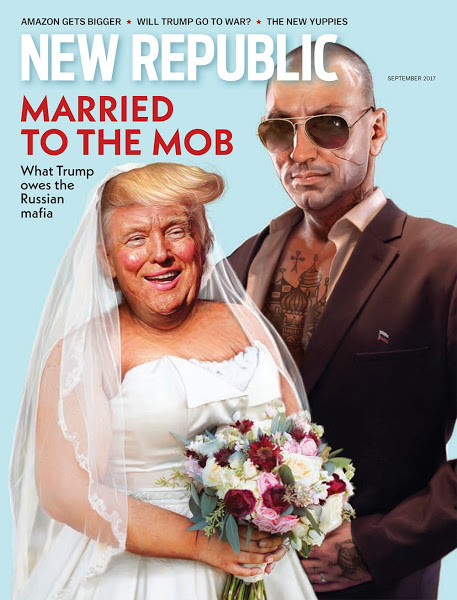
Trump's Mafia connections have been dogging him for his whole life. Somehow they didn't impress his supporters-- except maybe in Staten Island where Mon connections are considered a plus. Yesterday David Von Drehle gave it another try in the Washington Post: All The President's Wiseguys. Trump, he wrote, "spent plenty of time in mobbed-up milieus. As many journalists have documented-- the late Wayne Barrett and decorated investigator David Cay Johnston most deeply-- Trump’s trail was blazed through one business after another notorious for corruption by organized crime. New York construction, for starters. In 1988, Vincent “the Fish” Cafaro of the Genovese crime family testified before a U.S. Senate committee concerning the Mafia’s control of building projects in New York. Construction unions and concrete contractors were deeply dirty, Cafaro confirmed, and four of the city’s five crime families worked cooperatively to keep it that way."
This would not have been news to Trump, whose early political mentor and personal lawyer was Roy Cohn, consigliere to such dons as Fat Tony Salerno and Carmine Galante. After Cohn guided the brash young developer through the gutters of city politics to win permits for Trump Plaza and Trump Tower, it happened that Trump elected to build primarily with concrete rather than steel. He bought the mud at inflated prices from S&A Concrete, co-owned by Cohn’s client Salerno and Paul Castellano, boss of the Gambino family. Coincidence? Fuhgeddaboudit. Trump moved next into the New Jersey casino business, which was every bit as clean as it sounds. State officials merely shrugged when Trump bought a piece of land from associates of Philadelphia mob boss “Little Nicky” Scarfo for roughly $500,000 more than it was worth. However, this and other ties persuaded police in Australia to block Trump’s bid to build a casino in Sydney in 1987, citing Trump’s “Mafia connections.” His gambling interests led him into the world of boxing promotion, where Trump became chums with fight impresario Don King, a former Cleveland numbers runner. (Trump once told me that he owes his remarkable coiffure to King, who advised the future president, from personal experience, that outlandish hair is great P.R.) King hasn’t been convicted since the 1960s, when he did time for stomping a man to death. But investigators at the FBI and U.S. Senate concluded that his Mafia ties ran from Cleveland to New York, Vegas to Atlantic City. Mobsters “were looking to launder illicit cash,” wrote one sleuth. “Boxing, of all the sports, was perhaps the most accommodating laundromat, what with its international subculture of unsavory characters who play by their own rules.” But an even more accommodating laundromat came along: luxury real estate-- yet another mob-adjacent field in which the Trump name has loomed large. Because buyers of high-end properties often hide their identities, it’s impossible to say how many Russian Mafia oligarchs own Trump-branded condos. Donald Trump Jr. gave a hint in 2008: “Russians make up a pretty disproportionate cross-section of a lot of our assets.” For instance: In 2013, federal prosecutors indicted Russian mob boss Alimzhan Tokhtakhounov and 33 others on charges related to a gambling ring operating from two Trump Tower condos that allegedly laundered more than $100 million. A few months later, the same Mr. Tokhtakhounov, a fugitive from U.S. justice, was seen on the red carpet at Trump’s Miss Universe pageant in Moscow. Obviously, not everyone in these industries is corrupt, and if Donald Trump spent four decades rubbing elbows with wiseguys and never got dirty, he has nothing to worry about from special counsel Robert S. Mueller III. But does he look unworried to you?
Perhaps it's worthwhile to go back to a NY Times piece from 1988, long before anyone ever saw a lowlife like Trump in the white House, even as a visitor, Mob Role In New York Construction Depicted. "Vincent (Fish) Cafaro, a former captain in the Genovese organized-crime family in New York," explained The Times, "told the Senate Permanent Subcommittee on Investigations that the Mafia rigged contracting bids in NYC by demanding a 2% kickback from winning bidders and their unions. 'Legitimate guys ain't got a chance,' he said. He told the senators that the Mob-- the Genovese, Gambino, Lucchese and Colombo crime families-- controls 75% New York's construction industry. Cafaro, who told them he had been involved with the Mafia since 1958, was indicted with Anthony (Fat Tony) Salerno for "racketeering, extortion, plotting murders, gambling and conspiracy." He became an informer for the FBI and wore a wire at Genovese Family meetings from October 1986 to March 1987. In 1989 and 1990, Cafaro testified against Gambino boss John Gotti and then disappeared into the federal Witness Protection Program. Remember Staten Island Mafioso figure and congressman, Michael "Mikey Suits" Grimm? He was involved with Anthony "Fat Tony" Morelli. Trump's "Fat Tony" was Anthony "Fat Tony" Salerno. During the Republican primaries Ted Cruz tried getting the Trump Mafia story out into the media. Not many people cared. New Yorkers had known about it for decades and Trump fans in the Old Confederacy were already under Trump's spell. Michael Daly, though, gave it a shot for the Daily Beast: The Klansmen and Mobsters in Donald Trump’s Closet.
Cruz sought to rouse the mob ghosts of Donald Trump’s earlier days, saying on NBC that “ABC, CNN, multiple news reports have reported about his dealings with, for example, S&A Construction, which was owned by ‘Fat Tony’ Salerno, who is a mobster who is in jail.” Trump did deal with S&A Construction in the early 1980s, though not necessarily out of choice. S&A was indeed owned by Anthony “Fat Tony” Salerno of the Genovese crime family, but he was sentenced to 100 years in prison back in 1986 and died behind bars in 1992. So an apologist might just shrug and say it was what everybody had to do back in the day in order to build anything at all. A Trump supporter might even suggest that he and indeed all his fellow builders were victims of the mob in that era. But few of the builders who accepted S&A concrete as an offer they could not refuse actually met with Salerno, as Trump is said to have done in the office of Roy Cohn the lawyer and fixer, who represented The Donald as well as the Don. The Smoking Gun also reported that the now-extensive licensing of Trump name began with two lines of glamorized Cadillac limos-- the Trump Golden Series and the Trump Executive Series-- produced by Dillinger Coach Works, which was itself apparently named after the famous gangland figure John Dillinger. The company was owned by two convicted felons, one of whom, John Staluppi, has been identified by the FBI as a member of the Columbo crime family. And only Trump helped a lady friend of a mob-connected union boss secure financing for three duplex apartments priced at nearly $10 million directly beneath the Trump penthouse in the signature Trump Tower. Verina Hixon’s complex included the building’s only private swimming pool, an addition that required structural alterations to the building. As reported by Wayne Barrett in his book Trump: The Deals and the Downfall and confirmed by law enforcement officials as well as by people who worked on Trump Tower, the beautiful Hixon was a close pal of union boss John Cody, an avowed admirer of Jimmy Hoffa and also close to Cohn. The value of Cody’s goodwill became clear when his union, Teamsters Local 282, called a citywide strike just as Trump Tower was near completion. The Trump site was exempted. The danger of Cody’s displeasure became equally clear when Trump grew so weary of Hixon’s demands that he finally said no. Concrete deliveries ceased not just at Trump Tower but at sites across the city. Hixon soon got what she wanted. Then Cody was sentenced to federal prison in 1984 for extortion and for attempting to murder the man who took over the union following his arrest. The extent of Cody’s fall became clear when Hixon was forced out of the tower. Trump no longer had her beneath his 68th-floor aerie, which is in truth on the 58th floor, the numbers in the tower’s elevators going from 1 to 6 and then 16 to 68 to make it all seem huger. As he expanded into the casino business in Atlantic City, Trump agreed to pay twice the market value for land occupied by a bar owned by the sons of two Philadelphia Mafia bosses, the boys having made a name for themselves as part of a crew called the Young Executioners. The purchase, also reported by Barrett in his book, was reportedly routed through the secretary of Paddy McGahn, a thrice-wounded Marine war hero who had become as influential in his city as Roy Cohn was in New York. In bringing high rollers to Atlantic City, Trump used a helicopter service owned by Joseph Weichselbaum, a mob-connected drug smuggler who lived in a Trump apartment while awaiting sentencing on narcotics charges in 1987. The case was prosecuted in Ohio but was moved to New Jersey for reasons that remain unclear. As reported by The Smoking Gun, the case was then assigned to The Donald’s sister, federal Judge Maryanne Trump Barry. Some serious ghosts would soon be rising from that supposed coincidence had somebody not thought to quickly shift the case to another judge. Barry’s now-deceased husband, John Barry, often served as The Donald’s lawyer in New Jersey. Trump’s dealings with mob figures appear to have included at least one member of Chinese organized crime. The Permanent Subcommittee on Investigations of the U.S. Senate’s Committee on Government Affairs reported in 1992 that Danny Leung was both a vice president for marketing at Trump’s Taj Mahal casino and an associate of the 14K Triad. “He was formerly a business partner with Eddie Louie, a 14K Triad member and the brother of Nickie Louie, aka Louie Yin Poy, a former leader of the Ghost Shadows Gang,” the committee reported. “Leung has also given complimentary tickets for hotel rooms and Asian shows to numerous members and associates of Asian organized crime.” The committee notes, “The 14K Triad comprises over 30 subgroups which include an estimated membership of over 20,000… The 14K engages in a variety of criminal activities including heroin trafficking, alien smuggling and counterfeit credit card manufacturing, and has connections in the United States for all of these purposes.” More recently, Trump was joined in building the Trump SoHo by the son of a convicted extortionist described in court papers as a Russian gangster. Court records also show that the son has himself been convicted of felony assault and of bilking investors out of millions in a stock scheme. Trump has insisted that he only had minimal dealings with the felon, Felix Sater, and was unaware of the man’s record until it was reported in the newspapers. Trump has also insisted that he had minimal dealings with John Cody, telling The Daily Beast that “I barely knew him,” describing the union boss as “a bad guy.” Trump has further denied ever encountering Salerno, though the encounter has been described by a Cohn assistant and there is no disputing that Trump did business with the mobster’s firm.
Trump with father figure, right-wing Mafia lawyer Roy Cohn
A couple of months before the election, we noted that even Trump campaign volunteers at the lowest level had to sign a 2,271-word non-disclosure agreement in which they also promise they won't compete against or say anything bad about Trump, his company, his family members [including Barron] or products-- now and forever." The bizarre requirement meant that even online volunteers had to sign the form, even if they'd never meet a Trumpanzee family member, attend a Trumpanzee rally, meet a Trumpanzee campaign staffer in person or step inside a Trumpanzee campaign office. Those years and decades with the slimiest and most dishonest lawyer in contemporary American history, Roy Cohn, had certainly rubbed off on Señor Trumpanzee. And in more ways than one. Also during the campaign, the Wall Street Journal described Signore Trumpanzee's deep ties to the Mob, writing that through his shady businesses in NYC and Atlantic City he "sometimes dealt with people who had ties to organized crime, while giving Trumpanzee the opportunity to describe himself as "the cleanest guy there is."
Some developers avoided working directly with unsavory figures by operating through a general contractor. Mr. Trump said he preferred to negotiate business matters personally, because he made more money that way. Referring to a concrete contracting firm that law enforcement said was affiliated with one of New York’s Mafia families, Mr. Trump said: “That was a major contractor. You hear stories that they may have been [mob-controlled]. “In the meantime, I was a builder. I was never going to run for office.… I’d go by the lowest bid and I’d go by their track record, but I didn’t do a personal history of who they are.” Many of the associations the Journal explored have been previously reported piecemeal. In the early 1990s, Mr. Trump’s license to operate casinos in Atlantic City was re-examined after a book by reporter Wayne Barrett alleged a number of organized-crime connections. New Jersey officials determined Mr. Trump remained eligible. In its own examination, the Journal reviewed thousands of pages of legal and corporate documents and interviewed dozens of Mr. Trump’s business associates. The gambling business now is largely corporate, but at the time when Atlantic City was newly opened to casinos and a family friend suggested Mr. Trump build there, many banks shunned the industry. “Any project in the gaming arena in general is a difficult project to finance, because of the natural prohibition that a lot of institutions have,” Mr. Trump told New Jersey casino regulators in 1982. Some of the people he dealt with in Atlantic City illustrate why the FBI agent counseled caution. Kenneth Shapiro owned part of a site where Mr. Trump wanted to build his first casino. Mr. Shapiro was a Philadelphia scrap-metal dealer and property investor, described by law enforcement as an “agent” of Philadelphia mob boss Nicodemo “Little Nicky” Scarfo. A co-owner of the site was Daniel Sullivan, a gregarious six-foot-five Teamster and labor consultant with a criminal record that included a weapons violation. “He knew a lot of organized-crime figures and they knew him,” said Walter Stowe, a former FBI agent. Mr. Sullivan also was a tipster to the FBI. Gangsters “knew he was an informant. I don’t know why nobody ever tried to kill him,” Mr. Stowe said. Mr. Trump negotiated with Messrs. Shapiro and Sullivan, now both dead, to lease their property. “They are not bad people from what I see,” Mr. Trump said at a regulatory hearing in 1982. His project nonetheless faced obstacles because of their involvement. Mr. Sullivan, Mr. Trump and another partner had a deal to acquire an interest in a drywall company. New Jersey casino regulators told Mr. Trump any dealings with Mr. Sullivan beyond the property lease could delay casino licensing. He backed out of the drywall deal. When the hotel-casino was near completion, the regulators said Messrs. Shapiro and Sullivan might need casino licenses too, as site owners, but could have trouble getting them. Eventually, Mr. Trump bought the two out. Mr. Trump also used Mr. Sullivan as an adviser on New York labor issues. These included a 1980 dispute over the use of undocumented Polish workers to demolish the Bonwit Teller store on Fifth Avenue to make way for Trump Tower, Mr. Sullivan said in lawsuit testimony. Mr. Trump, in testimony of his own, said he didn’t know there were undocumented workers at the site. Mr. Trump told the Journal he knew Mr. Sullivan and considered him “OK” because he traveled with FBI agents. He said he didn’t know of any underworld connection Mr. Shapiro might have had. Mr. Shapiro was a conduit the Scarfo crime family used to buy influence with Atlantic City’s then-mayor, Michael J. Matthews, according to a 1984 indictment of the mayor. The late Mr. Matthews pleaded guilty to extortion. Mr. Scarfo, now in prison, didn’t agree to an interview. Mr. Trump, as a casino owner, couldn’t legally contribute to the local politicians who controlled such matters as zoning and signs. Mr. Shapiro told a federal grand jury he secretly gave thousands of dollars to the mayor on Mr. Trump’s behalf, said people familiar with his account. “Donald was always trying to maneuver politically to get things done,” said Mr. Shapiro’s brother Barry Shapiro. Kenneth Shapiro said he never was reimbursed for the money given the mayor, according to his brother and two other people. “Donald just reneged; that’s his automatic thing,” Barry Shapiro said. Asked about this, Mr. Trump said he didn’t make contributions to the Atlantic City mayor. “I’m not interested in giving cash, OK?...The last thing I’m doing is now handing cash.” As for Mr. Shapiro, “I never remember him asking me for money. He was always straight with me...I didn’t know Shapiro well other than to know that we did a pretty small little land transaction down in Atlantic City, which was fine.” A major profit source at one Trump casino was a racehorse trader named Robert LiButti. His gambling losses earned Trump Plaza $11 million between 1986 and 1989, state documents show. Mr. LiButti had been convicted of tax fraud related to horse sales in 1977 and was barred from attending races in New York for trying to conceal his horse ownership. A Trump employee told New Jersey regulators that Mr. LiButti repeatedly invoked the name of gangster John Gotti and called him “my boss,” according to a 1991 state investigative report. “LiButti was a high-roller in Atlantic City,” Mr. Trump said in an interview. “I found him to be a nice guy. But I had nothing to do with him.” Jack O’Donnell, who ran Trump Plaza in the late 1980s, said, “It isn’t like [Mr. Trump] saw LiButti once or twice-- he spent time with him, saw him multiple times,” and even attended a birthday party for Mr. LiButti’s daughter. The daughter declined to be interviewed but confirmed to Yahoo News that Mr. Trump attended a birthday party for her. It was illegal in New Jersey for casinos to keep high-rollers happy by giving them cash gifts. Regulators, in a ruling that didn’t cite Mr. Trump personally, fined Trump Plaza for funneling Mr. LiButti $1.65 million via gifts of expensive cars quickly converted into cash. Mr. Trump agreed in 1988 to buy a horse from Mr. LiButti for $250,000, Mr. O’Donnell said in a book he wrote after quitting Trump Plaza. The horse, named D.J. Trump, had cost the LiButti family just $90,000 a year earlier, according to Blood Horse magazine. Mr. O’Donnell said Mr. Trump aborted the deal after the horse had a health problem. Mr. Trump didn’t respond to questions about the horse and the birthday party. ...A lawyer Mr. Trump relied on and socialized with in his early years was the hard-driving attorney Roy Cohn. Among Mr. Cohn’s clients were several gangsters, including Anthony “Fat Tony” Salerno, co-owner of a concrete company important to New York builders. Former Trump Organization executive Barbara Res said that during heated negotiations with contractors, Mr. Trump would pull out a photo of Mr. Cohn and say, “I’m not afraid to sue you and this is who my lawyer is.” Mr. Trump called that “totally false.” He said people in the construction industry “don’t get scared by holding up a picture.” Mr. Trump was a character witness for Mr. Cohn in proceedings that led to the lawyer’s disbarment shortly before his death in 1986. Mr. Cohn had many clients who, like Mr. Trump, weren’t mob-affiliated, such as the late Yankees owner George Steinbrenner. “Roy was a great lawyer if he wanted to be,” Mr. Trump said in an interview. Messrs. Cohn and Trump had a common associate in Teamsters official John A. Cody. Mr. Cody had a lengthy arrest record and was close to mob bosses Carlo Gambino and Paul Castellano, according to a Justice Department memo from 1982, when Mr. Cody was convicted of racketeering. Mr. Cody led a powerful union local that represented drivers who delivered cement to New York construction sites. When he called a strike, Mr. Trump still received cement for Trump Tower, said Mr. Cody’s son, Michael. “My father wasn’t that generous, unless there was a reason,” Michael Cody said. ...In the 2000s, Mr. Trump dealt with another figure who had gangland ties. It happened when a small real-estate firm called Bayrock Group rented space in Trump Tower, two floors below Mr. Trump’s offices, and negotiated deals with Mr. Trump to put his name on buildings and give him equity in them. One person Mr. Trump worked with at Bayrock was Felix Sater. In the early 1990s, well before Mr. Trump knew him, the Russian-born Mr. Sater was a stockbroker but lost his license and went to prison after he jabbed a margarita glass into a man’s face in a bar fight. Later in the 1990s, Mr. Sater was involved in a Mafia-linked scheme to pump up marginal stocks, dump them on unsuspecting investors and stash the profits abroad. The scheme relied on gangsters from three mob families for protection, said a Justice Department news release. It quoted the New York police commissioner at the time as saying the operation could have been called “Goodfellas Meet the Boiler Room.” Mr. Sater pleaded guilty to racketeering, cooperated with prosecutors and had his conviction sealed. It was then, around 2000, that he joined Bayrock and sometimes dealt with Mr. Trump on real estate. Bayrock’s projects included the Trump SoHo condos in New York and Trump International Hotel & Tower in Fort Lauderdale, Fla. Its marketing in Fort Lauderdale included a letter in which Mr. Trump said, “This magnificent oceanfront resort offers the finest and most luxurious experience I have ever created.” The New York Times described Mr. Sater’s criminal history in an article in 2007. Mr. Trump, giving a court deposition days later, said he was unaware of it until then. Two federal press releases in 2000 had referred to Mr. Sater’s past, one from the National Association of Securities Dealers and one from the Justice Department. The Justice Department one announced the indictment of 19 people in the pump-and-dump stock scheme Mr. Sater was part of, including several it identified as members of La Cosa Nostra. The Justice Department release said a Genovese crime-family soldier, Ernest “Butch” Montevecchi, had protected Mr. Sater from an extortion effort. Mr. Montevecchi declined to comment. In a 2009 court proceeding, Mr. Sater described the Bayrock real-estate business, which is no longer active, as one he “built with my own two hands” and where he was probably the No. 2 person. In an interview, Mr. Sater said he had atoned for his crimes by cooperating with the government in the pump-and-dump case and on national-security matters. He declined to answer questions about Mr. Trump.
More recently, Trump's Organized Crime dealings have been with the Russian Mafia rather than the old traditional Italian Mafia. In Trump’s Russian Laundromat, veteran journalist Craig Unger details how the Russian mafia has used the president’s properties-- including Trump Tower and the Trump Taj Majal-- as a way to launder money and hide assets. "Whether Trump knew it or not," writes Unger, "Russian mobsters and corrupt oligarchs used his properties not only to launder vast sums of money from extortion, drugs, gambling, and racketeering, but even as a base of operations for their criminal activities. In the process, they propped up Trump’s business and enabled him to reinvent his image. Without the Russian mafia, it is fair to say, Donald Trump would not be president of the United States."
Who's the richest person on earth? It's not a spoiler to say it's a ruthless crook, right? How's this for a spoiler-- the runner-ups, according to Forbes? Jack Ma ($39 billion), Mukesh Ambani ($40.1 billion), Ma Huateng ($45.3 billion), Alice Walton ($46 billion), Rob Walton ($46.2 billion), Jim Walton ($46.4 billion), Sergey Brin ($47.5 billion), Larry Page ($48.8 billion), Michael Bloomberg, currently up at Bohemian Grove bragging that he's running for president ($50 billion), Larry Ellison ($58.5 billion), David Koch ($60 billion), Charlies Koch ($60 billion), Carlos Slim ($67.1 billion), Amancio Ortega ($70 billion), Mark Zuckerberg ($71 billion), Bernard Arnault ($72 billion), Warren Buffett ($84 billion), Bill Gates ($90 billion)... and, according to Forbes, number uno is Jeff Bezos ($112 billion). OK, but where are the "royal" families that own countries? And where's the Russian mafia that pillaged the collapsing Soviet Union? Modest about reporting their loot. Leonid Blavatnik, who bought Warner Bros Music to launder Russian money claims to be worth a mere $20.8 billion. Alexexy Kordashov, a steel oligarch, claims he's worth about the same as Blavatnik. Vladamir Potanin, who stole a lot of everything says he's worth about the same as the other two criminals. But what about... ssshhhhh. Well, it's a secret, but "everybody" knows Putin is the richest person on earth (i.e., the man who stole the most). Fortune asserted last year that Putin is worth more than Bill Gates and Jeff Bezos combined-- something like $200 billion. No wonder Trump, who aspires to be on these lists, licks Putin's ass. Putin was born in Leningrad (once again, St. Petersburg) in 1952, son of a naval conscript (a submariner) and a factory worker. He studied law, graduated in 1975 and then worked as a KGB officer for 16 years, first in counter intelligence and then spying on foreigners. You've heard of kompromat, right? That was his thing. He says he was a Lieutenant Colonel when he retired in 1991, just as the coup d'état against Mikhail Gorbachev began. Putin was clear that it was anti-Communist which he saw as a dead end. In 1996 he moved to Moscow. In 1998 Boris Yeltsin first appointed him head of the FSB, the new KGB, and then Prime Minister. A year later he gently pushed Boris Yeltsin aside and took over the presidency, immediately dropping corruption charges that Yeltsin and his family were certainly guilt of. So when did Putin have the time to accumulate more wealth than Bill Gates and Jeff Bezos combined? And how? After the Soviet Union collapsed it dawned on everyone-- including Wall Street-- that the government owned virtually everything-- and certainly everything big. The decades of accumulated state wealth was quickly privatized-- by a criminal gang: Vladimir Putin and his ruthless cronies, although mostly Vladimir Putin. Oligarchy? Kleptocracy? Plutocracy? Kakistocracy? All that and more... and everything that Trump longs for.
Forbes had a funny headline yesterday: Russian Commies Try Staging A Comeback. Well, not exactly... but just what a Forbes headline writer would get a woody over. You heard about how Putin is trying to redistribute the wealth of Russia even further upward by raising the retirement age, right. People-- poor people-- have been flipping out all during July. It doesn't really have that much to do with the Communist Party, a Putin house pet... it's pretty organic.
If there is one thing you can bet the house on, it's the fact that people will take to the streets if you change the rules of retirement. A politician or a party that messes with social security is destined to lose popularity. Over the weekend, the Russian Communist Party staged their anti-pension reform protest, something that has been in the works since the celebratory grand finale of the FIFA World Cup on July 15. The no. 2 party in Russia filed their paperwork for an organized street rally, keeping the rules in mind, and got a few thousand people to show up. They had help from Vladimir Putin's new Public Enemy No. 1, Alexei Navalny, who got his followers out with ease. "A trillion in savings will come from pension reform, but guess where that trillion in savings will go?" he told his followers on social media. "Yes, you guessed right." Navalny thinks the money will be squandered and used by the ruling United Russia party to pad their pockets. He's probably right. Russian GDP has fallen by over $1 trillion between 2013 and 2016, more than any of its BRICS counterparts. Navaly ended up in jail last night following another day of protests. He has since been released. "Pension reform should come as no surpise," says Dmitry Medvedev, Russia's Prime Minister. "We are approaching this just now because conditions have been met for life expectancy within the framework of the 80+ program," he said, about the official policy to care for aging Russians. While Navalny was the rockstar of the protest, as always, it was the old Communist Party that took this movement as their own. Or at least wants to. The public is largely against pension reform. The new changes would mainly increase the retirement age. The Communist Party is the biggest party in Russia after United Russia, led by Putin. And if they can galvanize support from people who hate the "R" word-- reform-- they might be able to become a real opposition when Putin fatique sets in.
That's silly... but perfect for Forbes-- and for Putin. A recent poll shows that 90% of Russians oppose the "reform" and an online petition opposing it attracted 3 million signatures. 6,000 people showed up for the rally on Sunday, where people opposing the raising of the retiring age held signs saying "stop stealing our future," not "workers of the world unite" nor "no war but class war," "capitalism kills," "socialism or barbasism" (let alone "the only church that enlightens us is the church that burns"). What Putin wants to do is raise the retirement age, to 65 from 60 for men and to 63 from 55 for women, even though Putin promised to never raise the retirement age while he was campaigning for president. Because the stolen wealth of the oligarchs-- including Putin, of course, is untaxed, there is a strain on public finance and the oligarch-owned government says it can't afford the pensions. Sound familiar? Putin, sounding very Republican: "The moment will come relatively soon when the number of workers will equal the number of retirees and will then continue to decline. And then either the pension system will burst or the budget of the reserve fund used to finance the deficit in the pension system will blow up." No chance of taxing the stolen trillions?
Cohen And Trump-- The Unbreakable Bond Of Third Rate Scumbags
>
I have to admit... it's fun to beat up on a puffed up bully like Michael Cohen-- Trump's bargain basement Roy Cohn wannabe. Since childhood, Cohen has been a Mob-connected asshole and his Mob connection helped acquire a once valuable collection of New York and Chicago taxi medallions-- once but no longer. 70% of business travelers now use Uber or Lyft instead of taxis. Taxis now get just 6% of ground transportation. Cohen's 32 leveraged medallions were once worth about a million dollars each. The value is around $160,000 each now-- and falling. In other words, he owes millions of dollars on the medallions. And it's not like Cohen is going to make up for his bankrupt taxi companies with income from his "law practice." He's a laughing stock as an attorney. In fact Rolling Stone's Seth Hettena looked back into Cohen's past practice and it's as completely predictive of his current predicament as you could possible imagine. Cohen met his pre-Trump/pre-Hannity clientele by roaming NYC courthouses "filing lawsuits on behalf of people with little means who were seeking compensation for the injuries they suffered in car collisions. Many personal-injury lawyers make their living this way, but there was something striking about Cohen's cases: Some of the crashes at issue didn't appear to be accidents at all... [but] deliberate, planned car crashes as part of an attempt to cheat insurance companies."
[I]nvestigations by insurers showed that several of Cohen's clients were affiliated with insurance fraud rings that repeatedly staged "accidents." And at least one person Cohen represented was indicted on criminal charges of insurance fraud while the lawsuit he had filed on her behalf was pending. Cohen also did legal work for a medical clinic whose principal was a doctor later convicted of insurance fraud for filing phony medical claims on purported "accident" victims. Taken together, a picture emerges that the personal attorney to the president of the United States was connected to a shadowy underworld of New York insurance fraud, a pervasive problem dominated by Russian organized crime that was costing the state's drivers an estimated $1 billion a year. ...In one case, Cohen filed a bodily injury lawsuit on behalf of a woman named Tara Pizzingrillo, who was a passenger in a car that was struck by a rented vehicle in 1999 in the Sheepshead Bay neighborhood of Brooklyn. In the 2002 complaint Cohen drafted and filed, Pizzingrillo sued the driver of the rental, Brian McFarland, claiming that she suffered bulging discs, and demanding $1 million from Enterprise Rent-A-Car's parent company, ELRAC Inc. While the case was making its way through the courts, however, both Pizzingrillo and McFarland were indicted for their roles in a criminal ring that staged accidents using rented U-Haul trucks. Pizzingrillo, McFarland and others took turns renting U-Hauls, and, after obtaining insurance coverage, plowed them into vehicles occupied by friends in order to file bogus injury claims. Damian S. Jackson, who prosecuted the case when he worked at the New York Attorney General's office, did not recall Cohen's lawsuit, but said the events it described were typical of the ring's scheme. "They were basically being crash test dummies in each collision," Jackson says. The U-Haul ring submitted more than $350,000 in fraudulent personal injury claims before they were caught. Both Pizzingrillo and McFarland pleaded guilty to third degree insurance fraud, and Cohen's lawsuit was withdrawn. Pizzingrillo did not respond to a message seeking comment.
I used to live in Sheepshead Bay. It and the surrounding neighborhoods are now Russian Mafia-controlled hellholes-- and, though Brooklyn went overwhelmingly for Clinton (79.7% to 17.9%), these Russian neighborhoods went for Trump. Sheepshead Bay voted 66.75% to 29.47% for Trump. Neighboring Brighton Beach, basically all Russian, went 68.79 to 26.92 for Trump. Avenue U in Brooklyn used to be part of the liberal Democratic heartland; now it's like Moscow-- and filled with crooked people who are not friends of America and who make a living by stealing whatever isn't nailed down-- perfect little Trumpists. Rolling Stone reported that "Not only did Cohen represent clients in staged accidents, but some of his clients may not have been in the vehicle when the phony crash occurred. Another of his clients, a Haitian immigrant named Marie Pierre, was sued by State Farm in 2001, after an investigation determined she was involved in another fraud ring that used stolen identities. "Her account of the accident is [so] completely contradicted by the police report that it must be questioned whether she was present at the event," a lawyer for State Farm wrote. Pierre testified that the black 1988 Chevrolet Caprice she was riding in was being driven by a man; the police report listed the driver as a woman. Pierre identified the driver of the other car involved in the crash as black; he was white. Pierre said the vehicle she was riding in was stopped when it was struck in 1999 on Avenue U in Brooklyn; it was moving." Basically all of Cohen's clients were crooks. They still are-- just on a higher level.
Cohen's work on behalf of accident victims was, if nothing else, prolific. In Cohen's challenge to the April 9th raid, his attorneys told a Manhattan judge that Cohen had "hundreds of different clients" from 1996 to 2006, when he ran his own private legal practice. "Negligence," which likely included the bodily injury claims filed on behalf of accident victims, then represented 90 percent of his legal work, Cohen said in a unrelated deposition obtained by Rolling Stone. Much of this work consisted of filing private arbitration claims, which are typically not a matter of public record. However, auto insurers dragged Cohen into court nearly 100 times between 1998 and 2003, asking judges to halt numerous claims he had filed for a variety of reasons, including fraud. It's not clear how the "hundreds of different clients" Cohen represented found him. While many personal injury lawyers take out ads on TV or plaster their faces on highway billboards, Cohen kept a relatively low profile; one of the addresses he used on accident cases was a remote taxi garage in Long Island City, Queens, where he managed a fleet of yellow cabs with his Ukrainian-born business partner, Simon Garber. Investigations from the same period by insurers and the FBI found other lawyers worked within sophisticated insurance-fraud networks that could have been cooked up by Saul Goodman, the ethically compromised lawyer on the hit TV series Breaking Bad, though there is no evidence that Cohen ever knew that any of his clients were involved in these schemes. Some unethical lawyers paid "runners" or "steerers" who staged accidents or monitored the police radio, and then raced to the scene of a crash to drum up business before the ambulance arrived. Neighborhood medical clinics, often established for the sole purpose of billing insurance companies for unnecessary tests and medical services, would refer clients to lawyers in exchange for kickbacks. A 2006 report on auto insurance fraud by the New York Attorney General's office noted that "crooked lawyers are necessary to advance fraudulent lawsuits based on feigned injuries." Incidentally, Cohen also did legal work for Life Quality Medical P.C., whose principal, according to a ProPublica/WNYC investigation, was Dr. Zhanna Kanevsky. Kanevsky was indicted in 2005 by the New York Attorney General's office on charges of insurance fraud, grand larceny and falsifying business records for her role in a fraud ring that was secretly run by a Ukrainian émigré and his wife. According to the indictment, all clinic patients were given three expensive MRI scans, kidney sonograms and nerve testing, and all received the same medical treatment, regardless of injury: physical therapy, chiropractic care and acupuncture treatments several times a week. Kanevsky pleaded guilty and lost her medical license for three years. Cohen, who was the contact attorney for any lawsuits against the clinic, was not implicated in the case. However, an attorney named Albert Rudgayzer was indicted; according to prosecutors, Rudgayzer paid the clinic owners for referring clients and then shared a part of the proceeds from settlements of bodily injury claims. He ultimately pleaded guilty to a misdemeanor and was ordered to pay about $120,000 in restitution and fines. Several investigations have also found that Russian organized criminals were behind what turned out to be massive insurance fraud operations. A sprawling investigation in Suffolk County, New York that indicted hundreds of people involved in more than 1,000 phony accidents in the early 2000s was known as "Operation BORIS"-- an acronym for Big Organized Russian Insurance Scam. The frauds have only grown in subsequent years. A 2012 investigation by the FBI found a Russian organized crime ring (which involved three attorneys) was behind a $275 million auto insurance fraud ring, the largest in history. (One of the defendants in that case, Michael Barukhin, moved into a Trump-branded tower in Sunny Isles Beach, Florida while his case was pending.) "Back in the Soviet days, ripping off the government may have been the single largest industry outside the military in the entire country," says James Quiggle of the Coalition Against Insurance Fraud, a not-for-profit group funded by insurers. "What developed was an entire generation of hoods with very good criminal skills."
My first knowledge of Trump was when I used to visit my pre-high school girlfriend on Ave Z and Trump worked for his crooked KKK father developing a property nearby. The Trumps were looked at as racist, rich trash by everyone in the neighborhood. No one wanted them around. Woody Guthrie lived in the development, Beach Haven-- and wrote a song about it, "Old Man Trump."
I suppose
Old Man Trump knows
Just how much
Racial Hate
he stirred up
In the bloodpot of human hearts
When he drawed
That color line
Here at his
Eighteen hundred family project...
Mikey Suits Can Win The GOP Primary... But Can He Win The General? Perhaps?
>
Staten Island is the most Mafia-friendly place in America. And the other portion of NY-11, south Brooklyn-- just happens to be the most Russian Mafia-friendly place in America. Put them together and you have a new poll the DCCC just released showing that Michael "Mikey Suits" Grimm, a Mafioso himself, is way ahead of incumbent Republican Dan Donovan in the Republican primary. "Things," wrote New York Daily News reporter Jillian Jorgensen over the weekend, "are looking Grimm for Rep. Daniel Donovan. Ex-congressman-- and ex-con-- Michael Grimm leads Donovan by 10 percentage points in the Republican primary in the district that covers Staten Island and part of southern Brooklyn, says a new poll." The Mafia wants Grimm back in Congress to protect their interests. That makes the DCCC very happy. They feel their handpicked-- screw the primary-- Blue Dog candidate, Max Rose, will have a much easier time beating the ex-con than the incumbent.
Grimm is at 49% and Donovan at 39% among GOP voters, according to a poll by the Democratic Congressional Campaign Committee, which hopes to flip the seat. Grimm’s ex-GOP constituents on Staten Island are especially willing to overlook his criminal record-- they favor him over Donovan by 11 points, the Democrats’ poll says. The poll is “consistent with our own internal analysis,” Grimm said. Donovan’s camp ripped the results. “Of course the DCCC is desperate for Michael Grimm because they know he has zero shot of winning in November,” said campaign spokeswoman Jessica Proud. Grimm, an ex-FBI agent, cruised to reelection in 2014 even as he faced a 20-count federal indictment for mail, wire and health care fraud, among other charges. He ended up serving seven months on tax fraud charges related to his operation of a Manhattan health food restaurant.
The Feds let him off easy in return for him not spilling the beans on FBI wrong-doing. Now Grimm, who's mainstream conservtaive voting record, is basically identical with Donovan's mainstream conservative voting record. Both are tacking right and trying to identify with Trump, although Grimm is doing better with attaching himself to Trump core voters. Trump beat Hillary in only one NYC congressional district-- NY-11. He beat Hillary 53.6% to 43.8%. Grimm wants those voters and sought, and received an endorsement from Steve Bannon. Donovan is stuck with an endorsement from unpopular lame duck Paul Ryan. Jorgensen reported that Grimm "rips Donovan as not enough of a conservative or friend to President Trump."
Republican voters like his message, the Democrats’ poll shows. A whopping 67% of voters approve of Grimm’s job performance as congressman, and just 18% disapprove, the poll found.
That’s better than Donovan, of whom 47% of Republican voters approve and 27% disapprove. The DCCC is pushing candidate Max Rose, who like Grimm is a combat veteran. Despite Grimm’s popularity with GOP voters, Democrats would rather run against him and his felony record in the November election. The poll surveyed 404 likely 2018 Republican primary voters from April 9 to April 11. The margin of error is 4.9%.
Remember when the Democratic Establishment really, really, really wanted Hillary to run against Trump rather than Jeb Bush or Marco Rubio? How that worked out for them? And us?
The Trump Organization Was Always A Mafia Front-- What About The Trump Regime?
>
There was lots of bitching and kvetching that the FBI treated Michael Cohen like a Mafia lawyer when they raided hhis home, his hotel room and his office-- kicking down the door in the case of the office. Sunday, former FBI chief, James Comey, is going to be on a 20/20 special with George Stephanopoulos and, according to Axios, a source present at the taping says the interview is going to shock the president and his team. It's his first interview since Señor T fired him almost a full year ago. A promo for the show compares Trumpanzee to a mob boss. And...
• The Comey interview left people in the room stunned-- he told George things that he’s never said before. • Some described the experience as surreal. The question will be how to fit it all into a one-hour show. • Comey answered every question. • If anyone wonders if Comey will go there, he goes there.
The U.S. Attorney's office in Manhattan, acting on a referral from Special Counsel Robert Mueller, is investigating Cohen for possible bank fraud and campaign finance violations that stem, at least in part, from a $130,000 payment Trump's attorney made to hush up a porn star who says she slept with the president. ("I will always protect Mr. Trump," Cohen said.) Meanwhile, Mueller is investigating a $150,000 "donation" that Cohen arranged for Trump's foundation in 2015 from a Ukrainian billionaire named Victor Pinchuk. "Attorney-client privilege is dead!" Trump tweeted this morning. It's not dead, but the raid on Cohen's home, office and swanky Park Avenue hotel room is an extraordinary step that underscores his decade-long role as Trump's heavy, fixer and connector. Cohen joined the Trump Organization in 2006, and eventually became Trump's personal lawyer, a role once occupied by Roy Cohn, Senator Joseph McCarthy's heavy-lidded hatchet man during the Red Scare who advised Trump in the 1980s. Michael Cohen's bare-knuckled tactics earned him the nickname of "Tom," a reference to Tom Hagen, the consigliore to Mafia Don Vito Corleone in The Godfather. He grew up on Long Island, the son of a physician who survived the Holocaust in Poland, and like Tom Hagen spent a childhood around organized crime, specifically the Russian Mafiya. Cohen's uncle, Morton Levine, was a wealthy Brooklyn doctor who owned the El Caribe Country Club, a Brooklyn catering hall and event space that was a well-known hangout for Russian gangsters. Cohen and his siblings all had ownership stakes in the club, which rented for years to the first Mafiya boss of Brighton Beach, Evsei Agron, along with his successors, Marat Balagula and Boris Nayfeld. (Cohen's uncle said his nephew gave up his stake in the club after Trump's election.) I spoke to two former federal investigators who told me Cohen was introduced to Donald Trump by his father-in-law, Fima Shusterman, a naturalized U.S. citizen from Ukraine who arrived in the U.S. in 1975. Shusterman was in the garment business and owned a fleet of taxicabs with his partners, Shalva Botier and Edward Zubok-- all three men were convicted of a money-laundering related offense in 1993. "Fima may have been a (possibly silent) business partner with Trump, perhaps even used as a conduit for Russian investors in Trump properties and other ventures," a former federal investigator told me. "Cohen, who married into the family, was given the job with the Trump Org as a favor to Shusterman." ("Untrue," Cohen told me. "Your source is creating fake news.") Shusterman, who owned at least four New York taxi companies, also set his son-in-law up in the yellow cab business. Cohen once ran 260 yellow cabs with his Ukrainian-born partner, the "taxi king" Simon V. Garber, until their partnership ended acrimoniously in 2012. Glenn Simpson, the private investigator who was independently hired to examine Trump's Russia connections during the real estate mogul's presidential run, testified before the House Intelligence Committee that Cohen "had a lot of connections to the former Soviet Union, and that he seemed to have associations with organized crime figures in New York and Florida – Russian organized crime figures," including Garber. A curious episode in Cohen's life came in 1999 when he received a $350,000 check from a professional hockey player named Vladimir Malakhov, who was then playing for the NHL's Montreal Canadiens. According to Malakhov, the check was a loan to a friend. The friend, however, swore in an affidavit that she never received the money and never even knew the check had been written until it was discovered years later in a Florida lawsuit. So what happened to the money? One interesting lead was an incident involving Malakhov, who was approached in Brighton Beach and shaken down for money by a man who worked for the Russian crime boss, Vyacheslav Ivankov. "Malakhov spent the next months in fear, looking over his shoulder to see if he was being followed, avoiding restaurants and clubs where Russian criminals hang out," according to testimony an unnamed Russian criminal gave to the U.S. Senate in 1996. Cohen, who said he didn't know Malakhov or anyone else in the case, offered his own theories as to the origin and fate of the check in a 2007 deposition with Malakhov's attorneys. Q. You don't recall why this check was written to you for $350,000 in 1999 and how these funds left your trust account in any way, shape or form? A: Clearly Vladimir Malakhov had to have known somebody who I was affiliated to and the only person I can-- and I mentioned my partner's name, Simon Garber, who happens also to be Russian. Regardless of what he did or didn't know Cohen was able to purchase a $1 million condo at Trump World Tower in 2001, persuading his parents, his Ukrainian in-laws and Garber to do the same in other Trump buildings. Cohen's in-laws Fima and Ania Shusterman bought three units in Trump World Tower worth a combined $7.66 million (one of which was rented to Jocelyn Wildenstein, the socialite known as "Catwoman" for undergoing extreme facial plastic surgery to please her cat-loving husband). Cohen later purchased a nearly $5 million unit in Trump Park Avenue. In a five-year period, he and people connected to him would purchase Trump properties worth $17.3 million. All the frenzied buying by Cohen and his family caught the attention of the New York Post, often described as Trump's favorite newspaper. "Michael Cohen has a great insight into the real-estate market," Trump told a reporter in 2007. "He has invested in my buildings because he likes to make money-- and he does." Trump added, "In short, he's a very smart person." During Trump's presidential run, reporters noticed a curious thing about Cohen. Questions about Trump's business or his taxes went to his chief legal officer or another staffer, but Cohen handled questions about Russia. "One of the things that we learned that caught my interest," Simpson testified to Congress in November 2017, "serious questions about Donald Trump's activities in Russia and the former Soviet Union went to Michael Cohen, and that he was the only person who had information on that subject or was in a position to answer those questions." In the 1990s, there was an informal group of federal and local law enforcement agents investigating the Russian Mafiya in New York that called themselves "Red Star." They shared information they learned from informants. It was well known among the members of Red Star that Cohen's father-in-law was funneling money into Trump ventures. Several sources have told me that Cohen was one of several attorneys who helped money launderers purchase apartments in a development in Sunny Isles Beach, a seaside Florida town just north of Miami. This was an informal arrangement passed word-of-mouth: "We have heard from Russian sources that... in Florida, Cohen and other lawyers acted as a conduit for money." A year after Trump World Tower opened in 2002, Trump had agreed to let Miami father-and-son developers Gil and Michael Dezer use his name on what ultimately became six Sunny Isles Beach condominium towers, which drew in new moneyed Russians all too eager to pay millions. "Russians love the Trump brand," said Gil Dezer, who added that Russians and Russian-Americans bought some 200 of the 2,000 or so units in Trump buildings he built. A seventh Trump-branded hotel tower built up Sunny Isles into what ostensibly has become a South Florida Brighton Beach. An investigation by Reuters found that at least 63 individuals with Russian passports or addresses have bought at least $98.4 million worth of property in the seven Trump-branded luxury towers. And that was a conservative estimate. At least 703-- or about one-third-- of the 2044 units were owned by limited liability companies, or LLCs, which could conceal the property's true owner. Executives from Gazprom and other Russian natural resource giants also owned units in Trump's Sunny Isles towers. In an observation that several people I spoke with echoed, Kenneth McCallion, a former prosecutor who tracked the flows of Russian criminal money into Trump's properties, told me, "Trump's genius-- or evil genius-- was, instead of Russian criminal money being passive, incidental income, it became a central part of his business plan." McCallion continued, "It's not called 'Little Moscow' for nothing. The street signs are in Russian. But his towers there were built specifically for the Russian middle-class criminal." Cohen joined the Trump Organization around the time that the second Sunny Isles tower was being built. A few years earlier, he had invested $1.5 million in a short-lived Miami-based casino boat venture run by his two Ukrainian business partners, Arkady Vaygensberg and Leonid Tatarchuk. Only three months after its maiden voyage, it would become the subject of a large fraud investigation. But Cohen was saved from his bad investment by none other than Trump himself, who hired Cohen as an attorney just before his casino ship sank. A source who investigated Cohen's connections to Russia told me, "Say you want to get money into the country and maybe you're a bit suspect. The Trump organization used lawyers to allow people to get money into the country."
Residents at Sunny Isles included people like Vladimir Popovyan, who paid $1.17 million for a three-bedroom condo in 2013. Forbes Russia described Popovyan as a friend and associate of Rafael Samurgashev, a former championship wrestler who ran a criminal group in Rostov-on-Don in southeastern Russia. Peter Kiritchenko, a Ukrainian businessman arrested on fraud charges in San Francisco in 1999, and his daughter owned two units at Trump Towers in Sunny Isles Beach worth $2.56 million. (Kiritchenko testified against a corrupt former Ukrainian prime minister who was convicted in 2004 of money laundering.) Other owners of Trump condos in Sunny Isles include members of a Russian-American organized crime group that ran a sports betting ring out of Trump Tower, which catered to wealthy oligarchs from the former Soviet Union. Michael Barukhin, who was convicted in a massive scheme to defraud auto insurers with phony claims, lived out of a Trump condo that was registered to a limited liability corporation. Selling units from the lobby of the Trump International Beach Resort in Sunny Isles was Baronoff Realty. Elena Baronoff, who died of cancer in 2015, was the exclusive sales agent for three Trump-branded towers. Glenn Simpson, who spent a year investigating Trump's background during the campaign, testified before the House Intelligence Committee that Baronoff was a "suspected organized crime figure." An Uzbek immigrant who arrived in the United States as a cultural attaché in public diplomacy from the Soviet Union, Baronoff became such a well-known figure in Sunny Isles Beach that she was named the international ambassador for the community. Baronoff accompanied Trump's children on a trip to Russia in the winter of 2007–2008, posing for a photo in Moscow with Ivanka and Eric Trump and developer Michael Dezer. Also in the photo, curiously, was a man named Michael Babel, a former senior executive of a property firm owned by Oleg Deripaska, the Russian metals tycoon Paul Manafort allegedly offered personal updates on Trump's presidential campaign. Babel later fled Russia to evade fraud charges. Baronoff had interesting connections to Sicily. She reportedly met her friend, the Russian foreign minister Sergey Lavrov, there. Baronoff was also close with Dino Papale, a local businessman, who described himself to the New York Times as "president of Trump's Sicilian fan club," while sporting a red "Make America Great Again" cap. Days after Trump's election in November, the local newspaper, La Sicilia, quoted Papale at length describing Trump's secret visit to the island in 2013. Papale hinted that he organized meetings between Trump and Russians. Michael Cohen's in-laws, the Shustermans, also bought real estate in Sunny Isles. The development was paying off. Trump's oldest son, Don Jr., would later note, "We see a lot of money pouring in from Russia." There is no question Trump owed his comeback in large part to wealthy Russian expatriates. Cohen and Felix Sater have known each other for nearly 30 years. They met in Brighton Beach when Cohen started dating his future wife, Shusterman's daughter, Laura, who Sater says he knew from the neighborhood. When Cohen joined the Trump organization, Sater had become a fixture in the office. Sater was developing Trump SoHo, a hotel-condo in lower Manhattan that later would be consumed by scandal, and had earned Trump's trust. Trump asked him to look after his children, Ivanka and Don Jr., on a 2006 visit to Moscow. (It was during the Moscow trip that Sater used his Kremlin connections to impress Trump's daughter. Sater would later boast: "I arranged for Ivanka to sit in Putin's private chair at his desk and office in the Kremlin.") When Sater's criminal past was exposed in The New York Times, Trump suddenly looked and acted like a man with something to hide. Despite laying claim to "one of the great memories of all time," he seemed to be having trouble recollecting who Sater was. "Felix Sater, boy, I have to even think about it," Trump told The Associated Press in 2015. "I'm not that familiar with him." Sater flatly contradicted Trump's version of their relationship. In a little-noticed interview with a Russian publication, Snob, Sater was asked if his criminal past was a problem for Trump. "No, it was not. He makes his own decision regarding each and every individual."
In the midst of Trump's presidential run, Sater was shopping a deal to build a Trump World Tower Moscow. Between September 2015 and January 2016, Sater tried to broker a deal for a Moscow company called IC Expert Investment Company. (Sater worked for IC Expert's owner, Andrei Rozov, after he left Bayrock.) Trump signed a letter of intent in October with IC Expert Investment for a Moscow hotel-condo with the option for a "Spa by Ivanka Trump." Providing financing was VTB, a Russian bank subject to U.S. sanctions. Sater's contact at the Trump Organization was his old friend, Trump's lawyer, Michael Cohen. In mid-January, Sater urged Cohen to send an email to Dmitry Peskov, Vladimir Putin's press secretary, "since the proposal would require approvals within the Russian government that had not been issued." Cohen sent the email, got no reply, and said he abandoned the proposal two weeks later. What Cohen called his old friend's "colorful language" attracted attention from congressional investigators and Special Counsel Robert Mueller's office: "Michael I arranged for Ivanka to sit in Putins private chair at his desk and office in the Kremlin," Sater emailed Cohen in November 2015. "I will get Putin on this program and we will get Donald elected. We both know no one else knows how to pull this off without stupidity or greed getting in the way. I know how to play it and we will get this done. Buddy our boy can become President of the USA and we can engineer. I will get all of Putins team to buy in on this." Sater gave an unsatisfactory answer to BuzzFeed about why he wrote this email. "If a deal can get done and I could make money and he could look like a statesman, what the fuck is the downside, right?" Shortly after Trump took office, Sater teamed up with Cohen to submit a Ukrainian peace plan to then national security advisor Michael Flynn that would have opened the door to lifting sanctions on Russia. What happened to the plan? The lawyer at first told the New York Times that he left the plan in Flynn's office. Then, after the story became an embarrassment, he called the Times story "fake news" and claimed he pitched the plan into the trash. Cohen has always acted to protect Trump, and he likely believed that he could always rely on the impenetrable shield of attorney-client privilege. Arguably, no one who has worked with Trump over the past decade knows more about the president's past business dealings in Russia and elsewhere abroad than Cohen. Now that prosecutors have him in their sights, here's the question: Will Cohen's shield, now broken, become a sword?