"When fascism comes to America, it will be wrapped in the flag and carrying the cross."
-- Sinclair Lewis
Saturday, December 24, 2016
Just in time for the holidays: Your comprehensive-ish guide to "Thurber (et al.) Tonight" (the whole dang series)
>
Including Woody Allen, Robert Benchley, Bob and Ray, Will Cuppy, Wolcott Gibbs, Ring Lardner, S. J. Perelman, Jean Shepherd, and E. B. White Tonight
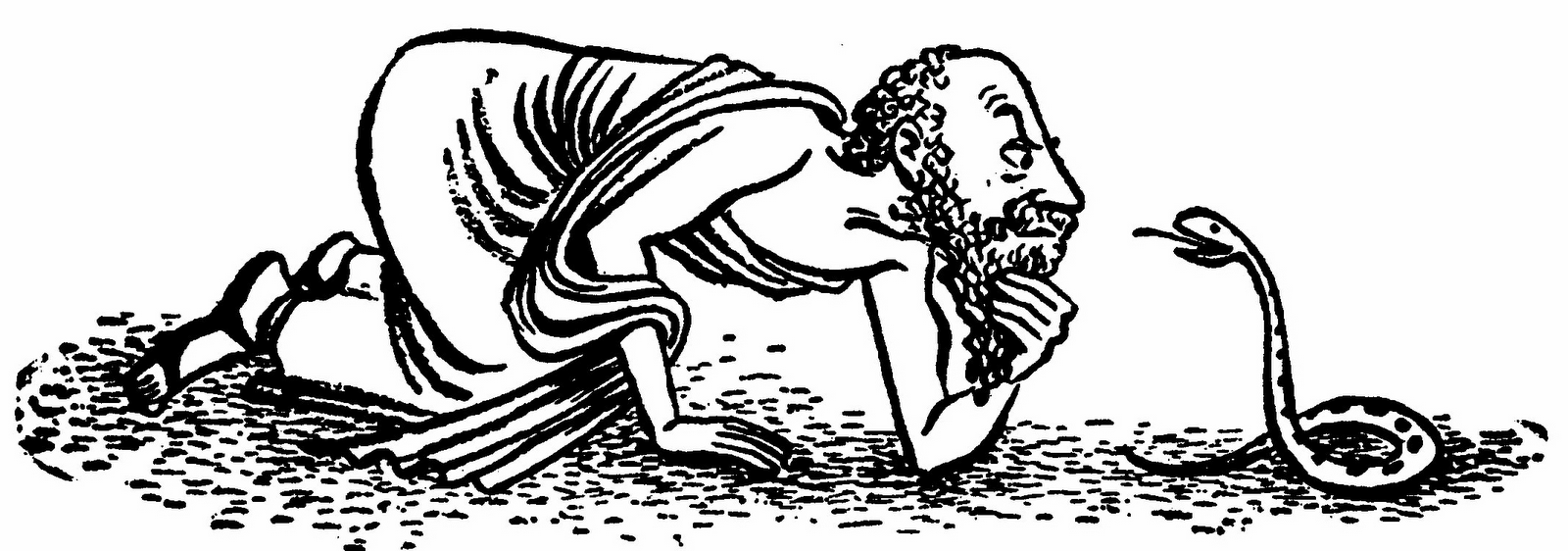
All I asked Santa for was a better picture of the great Will Cuppy; the one I've been using looks like it was taken clandestinely while he was in the Witness Protection program. However, given my lack of faith in the fat phony, I wasn't optimistic that he'd come through, so I went searching on my own once again, and once again my Google Images search for "Will Cuppy" yielded the swell pix of Will Rogers and Ring Lardner which somehow always turn up, and once again I had to decide, with heavy heart, that no, they wouldn't really fill the gap better than what we've got. But then the above image turned up, and I figured that since it purports to be part of a book cover, the chap portrayed therein must actually be our Will. I have to say, though, that this pic creeps the dickens out of me, and so I don't think I'll be popping it into the Will Cuppy slot below. I think I'm actually going to be trying to forget I ever saw it. Sheesh!
by Ken
You look around and see all those decked halls, then close your eyes and hear all that fa-la-la-la-la-ing, and almost instantly you know something's up, am I right? Or else you read Noah's post last night, "Profiles In Cowardice: The Electoral College," and noticed that it's also Part 1 of his annual, er, tribute to the outgoing year, this time out: "2016: America Off The Rails."
That's right, it's the Holiday Season!
Okay, okay, I know it's been going on since about Columbus Day, if not Labor Day, and tonight is already Christmas Eve, for Bill O'Reilly's sake! I believe in letting the damned thing sneak up on me, so sneakily that with any luck it's almost past before it announces its presence. In a week or so we'll be ushering in a new year, and then begins the Countdown to Inauguration Day. And then we're on to wishing for a minimum of four more good years for Justice Ruth Bader Ginsburg.
So in the holiday spirit, or at least what passes for it hereabouts, I'm looking to slip into the DWT schedule some of what Tom and Ray Magliozzi, the Car Talk guys, liked to bill as "encore presentations" of memorable shows, which they hastened to explain were really things they pulled more or less randomly out of a box of old tapes. Naturally I never believed they were chosen entirely at random -- after all, there had to be some reason why those particular tapes were in that particular box, right? And I'm not going to be choosing entirely randomly either. On the theory that along about now we could all use a few laughs, and also because it's one of the things i'm proudest of having done, I'm planning to dig into the "Thurber (et al.) Tonight" series I did here way back in some previous century.
And I didn't even get (back) to what may be my very favorite Benchley piece, "A Little Sermon on Success." (As noted in the comprehensive-ish listing below -- "comprehensive-ish" in that I can't help feeling that I've missed an instance or two here or there -- you can find it here.) Not to mention the sublime "My Five- (or Maybe Six-) Year Plan." And . . . .
And no Thurber encore presentations at all! Yikes!
So I've cooked up this scheme for the holiday season (and perhaps the January slump season as well) to find post slots where I can slip in some especially cherished posts from these revered masters, and maybe some suggested "must reads" from among the stuff of theirs that was previously presented, at least until Howie cries out, "Please stop already!"
But, first things first (not my usual practice, as readers may be aware), I thought we would start with the comprehensive-ish listing itself. This is essentially unchanged from the version to which I have been providing a link since time immemorial. The one change I contemplated was to be able to pop in, finally, a better picture of Will Cuppy, but as noted in the photo caption above, that project came to a creepier-than-dead end. And so, without further ado, excepting one tiny click-through --
Having trouble getting things done? Learn from the master, the great Robert Benchley
>
Harking back to our comedy nights with Benchley plus James Thurber, Woody Allen, Bob and Ray, Will Cuppy, Wolcott Gibbs, Ring Lardner, S. J. Perelman, Jean Shepherd, and E. B. White
"The secret of my incredible energy and efficiency in getting work done is a simple one. I have based it very deliberately on a well-known psychological principle and have refined it so that it is now almost too refined. I shall have to begin coarsening it up again pretty soon.
"The psychological principle is this: anyone can do any amount of work, provided it isn't the work he is supposed to be doing at that moment."
-- Robert Benchley, in "How to Get Things Done"
by Ken
Today, a long-delayed labor of love: the resurrection of a series that was itself a prolonged labor of love, running here in the late-night slot -- for which, in fact, the late-night slot was invented -- over a long and fondly remembered period. It started with Thurber but then went on to include all the names you see above. And in resurrecting it, the name that has crowded to the forefront of my consciousness is that of the great Robert Benchley, specifically in the form of the piece we're about to revisit: "How to Get Things Done," which was first published in the Chicago Tribune in 1930 and first appeared here as a "Benchley Tonight" post in January 2011.
Lately I've been trying to get bits of my life in order, or at any rate a bit more in order, and have had frequent occasion to talk about this as well, frequently with other people trying to do the same thing with their lives. As a result, I've had frequent occasion to try to synopsize this all-but-definitive treatise on how really and truly to get things done -- the secret, as our Bob puts it, to "how I manage to get so much work done and still keep looking so dissipated." By the way, I tried unsuccessfully to track down a picture of our Bob "riding to hounds" or "going to fancy-dress balls disguised as Louis XIV"; there don't seem to have been photographers present on these occasions.
So there was no question in my mind that of all the thousands of sublime pieces that appeared in this series, "How to Get Things Done" is the one for which present-day readers are likely to have the most urgent need. The master list for the series, by the way, can still be found here.
Now let's get down to business -- or, rather, business Benchley-style.
How to Get Things Done
by Robert Benchley
A GREAT MANY PEOPLE have come up to me and asked me how I manage to get so much work done and still keep looking so dissipated. My answer is "Don't you wish you knew?" and a pretty good answer it is, too, when you consider that nine times out of ten I didn't hear the original question.
But the fact remains that hundreds of thousands of people throughout the country are wondering how I have time to do all my painting, engineering, writing and philanthropic work when, according to the rotogravure sections and society notes I spend all my time riding to hounds, going to fancy-dress balls disguised as Louis XIV or spelling out GREETINGS TO CALIFORNIA in formation with three thousand Los Angeles school children. "All work and all play," they say.
The secret of my incredible energy and efficiency in getting work done is a simple one. I have based it very deliberately on a well-known psychological principle and have refined it so that it is now almost too refined. I shall have to begin coarsening it up again pretty soon.
The psychological principle is this: anyone can do any amount of work, provided it isn't the work he is supposed to be doing at that moment.
THE LEMUR IS ONE WORSE than the Monkey. He is often mistaken for a Squirrel, a Rabbit, an Agouti or anything but a Lemur. He has been described as a state of mind or ectoplasm. The Lemur is a Primate because people say so. The Lemur sleeps all day long and nobody tells him that he is a tramp. When disturbed he sort of squeaks. Most Lemurs live in Madagascar but they are never quite warm enough. The Ring-tailed Lemur or Madagascar Cat¹ is caught by sailors who have enough Parrots already. The Gentle Lemur is devoted to his human keeper and often bites him severely. The Aye-aye has large movable ears caused by listening for Grubs. The Potto is rather peevish. The Spectral Tarsier of the West Indies is uncanny. He has huge bug-eyes, elongated ankles and knobby toes. He is sometimes confused with Delirium Tremens. Lemurs comb their hair with their lower front teeth. They mature almost instantaneously. In a way we came from Lemurs because they are also descended from an extinct Tree Shrew something like a large Rat. From the Tree Shrew to the Dogfish is but a step, which practically brings us to the Amoeba. So perhaps the Lemur is to blame for it all.²
- - - - - - - - - - - - - - - - - - - - - ¹Lemur catta. ²Aristotle would not have known a Lemur if it came up and bit him. He had enough to keep track of, without Lemurs.
IN TOMORROW AND SATURDAY NIGHT'S SUNDAY CLASSICS PREVIEWS: Mahler's military songs
SUNDAY IN RING LARDNER TONIGHT: Yes, "The Busher Returns"!!! It's Part 1 of You Know Me Al II
THURBER TONIGHT (including BENCHLEY, WILL CUPPY, WOLCOTT GIBBS, RING LARDNER, BOB AND RAY, E. B. WHITE, JEAN SHEPHERD, and PERELMAN TONIGHT): Check out the series to date
As noted above, after an unfortunate period of sloughing off, I've finally updated the "Thurber (et al.) Tonight" index, and will try to get back to keeping it current. I've even put the "et al." authors in alphabetical order! Is this an elite reference tool or what?
THE HOWLING MONKEY is confined to South America but seems to escape. The back of his head is straight up and down. His howl is caused by a large hyoid bone at the top of the trachea. It can be cured by a simple operation on the neck with an axe. The male Howler is always followed by seven or eight female Howlers with young Howlers but this may be a coincidence. Howlers have long prehensile tails with which they hang from the trees, talk Monkey talk and pick up Brazil nuts. There are several species of Howlers. The Fat Howler is as trying as any. The Howling Monkey and the Spider Monkey are neighbors. The infant Howling Monkey occasionally bears a striking resemblance to a Spider Monkey. Ask me sometime why that is.¹ The Capuchin or Organ Grinder Monkey is regarded as very intelligent. He scrambles after pennies, scratches himself and has morals. He can stand on his hind legs but the tail is a dead giveaway.² Monkeys have loads of fun. They breed in captivity and know many other tricks. They are fond of Bats, marshmallows, Goldfish and ink. Old World Monkeys cannot hang by their tails. They might as well not be Monkeys.³
- - - - - - - - - - - - - - - - - - - - - ¹Spider Monkeys look nothing like Spiders. ²The Tee-tee or Squirrel Monkey inhabits Brazil and the Reading Room of the British Museum. ³There is a general feeling among Old World Monkeys that they are the best Monkeys, but there is no scientific basis for this. If you are an Old World Monkey you are classed as Catarrhine or narrow-nosed. If not, you are Platyrrhine or broad-nosed. That's about the gist of it.
THURBER TONIGHT (including BENCHLEY, WILL CUPPY, WOLCOTT GIBBS, RING LARDNER, BOB AND RAY, E. B. WHITE, JEAN SHEPHERD, and PERELMAN TONIGHT): Check out the series to date
As noted above, after an unfortunate period of sloughing off, I've finally updated the "Thurber (et al.) Tonight" index, and will try to get back to keeping it current. I've even put the "et al." authors in alphabetical order! Is this an elite reference tool or what?
"The family life of the Baboon is known as hell on earth. The males grow meaner and stingier and the females fade at an early age. The children scream, stamp, roll on the ground and will not eat their Centipedes."
THE BABOON is entirely uncalled for. Some people like Baboons but something is wrong with such people. Baboons lose their tempers. There are more Baboons than you might think. The Baboon is not an Anthropoid Ape. He has a tail, though not a good one, and so he is a Lower Ape. In fact he is more of a Monkey. The Arabian Baboon as the name implies is found in Abyssinia. Baboons have highly colored ischial callosities. Scientists tell us that all animals who sit down a great deal have ischial callosities. That is a lie. The Mandrill is the worst especially when going South. Baboons bark. It seems as though there would be no female Baboons but there are. The family life of the Baboon is known as hell on earth. The males grow meaner and stingier and the females fade at an early age. The children scream, stamp, roll on the ground and will not eat their Centipedes. Their parents are proud of them.¹ The Sacred Baboon of the Egyptians was identified with Thoth, the god of literary criticism.² He spent his time making Thothlike motions at the Sacred Ibis, another form of literary criticism. He is not yet extinct. Never call anyone a Baboon unless you are sure of your facts. Baboons have flat feet.
- - - - - - - - - - - - - - - - - - - - ¹Young Baboons ride pick-a-back. ²He is frequently pictured restoring the Udjat or Eye to Aah, the Moon God. Enormous numbers of Udjats have been found in ancient Egyptian tombs. "The twin Udjats represent the Eye of the Sun and the Eye of the Moon." -- Sir E. A. Wallis Budge.
THURBER TONIGHT (including BENCHLEY, WILL CUPPY, WOLCOTT GIBBS, RING LARDNER, BOB AND RAY, E. B. WHITE, JEAN SHEPHERD, and PERELMAN TONIGHT): Check out the series to date
As noted above, after an unfortunate period of sloughing off, I've finally updated the "Thurber (et al.) Tonight" index, and will try to get back to keeping it current. I've even put the "et al." authors in alphabetical order! Is this an elite reference tool or what?
THOSE THIN LONG-WAISTED TYPES with no head to speak of are generally Gibbons. Gibbons are our loudest Apes. Their peculiar cry is often described as hoo hoo hoo hoo and just as often as whopp whopp whopp whopp. Gibbons assemble in crowds and hoo or whopp until exhausted or shot. The natives of Cochin China, the Malay Archipelago and the Island of Hainan often have hoo or whopp madness. A noiseless Gibbon would be a godsend. There is an old saying that the Gibbon is at his best in the American Museum of Natural History.¹ The female Wau-wau or Silvery Gibbon of Java is rather pretty for a Wau-wau. The Hoolock of Upper Assam cannot swim. Gibbons are noted for the number and variety of things they cannot do. It is believed that the Gibbon could be taught to swat flies. Gibbons live in the treetops. They swing from branch to branch by their arms with amazing speed. They are not going to fires. They are going nowhere in particular. Experiments with the Gibbon prove many interesting things about the Long-nosed Bandicoot. Gibbon authorities do not know whether the Gibbon is interested in sex. But you know and I know. There are no Apes in this country, thank goodness.²
- - - - - - - - - - - - - - - - - - - - - - ¹Cf. "Decline and Fall of the Gibbon." ²Embalmed Gibbons are sometimes sold to country bump kins as embalmed Pigmies. Why our rural population should prefer embalmed Pigmies to embalmed Gibbons offers an in teresting problem in psychology.
THURBER TONIGHT (including BENCHLEY, WILL CUPPY, WOLCOTT GIBBS, RING LARDNER, BOB AND RAY, E. B. WHITE, JEAN SHEPHERD, and PERELMAN TONIGHT): Check out the series to date
As noted above, after an unfortunate period of sloughing off, I've finally updated the "Thurber (et al.) Tonight" index, and will try to get back to keeping it current. I've even put the "et al." authors in alphabetical order! Is this an elite reference tool or what?
Will Cuppy Tonight: "The Modern Man" from "How to Tell Your Friends from the Apes"
>
"The Modern Man's highly developed brain has made him what he is and you know what he is."
by Ken
Tonight, finally, we find out "where we come in." Since we read the preface to How to Tell Your Friends from the Apes, we've worked our way through "Memoirs of the Jukes Family, or Where We Come In," meeting Java Man, Peking Man, Piltdown Man, Heidelberg Man, Neanderthal Man, and Cro-Magnon Man. So, without further ado, presenting --
The Modern Man
THE MODERN MAN or Nervous Wreck is the highest of all mammals because anyone can see that he is. There are about 2,000,000,000 Modern Men or too many. The Modern Man's highly developed brain has made him what he is and you know what he is.¹ The development of his brain is caused by his upright or bipedal position, as in the Penguin, the Dinosaur and other extinct reptiles. Modern Man has been called the Talking Animal because he talks more than any three other animals chosen at random. He has also been called the Reasoning Animal but there may be a catch in this. The fissure of Sylvius and the fissure of Rolando enable him to argue in circles. His main pursuits in the order named are murder, robbery, kidnapping, body-snatching, barratry, nepotism, arson and mayhem. This is known as the Good, the True and the Beautiful. Modern Men are viviparous. They mature 6lowly but make up for it later, generally from July first to June thirtieth inclusive. The females carry nickels and pins in their mouths. They are fond of glittering objects, bits of ribbon and olives.² All Modern Men are descended from a Wormlike creature but it shows more on some people. Modern Man will never become extinct if the Democrats can help it.³
- - - - - - - - - - - - - - - - - - - - - - - - - - - - - ¹It is because of his brain that he has risen above the animals. Guess which animals he has risen above. ²Each male has from 2 to 790 females with whom he discusses current events. Of these he marries from 3 to 17. ³To be perfectly fair, Modern Man was invented on October 25, 4004 B.C., at 9 o'clock in the morning, according to the statement of Dr. John Lightfoot (1602-1675) of Stoke-upon-Trent, Vice-chancellor of the University of Cambridge. Dr. Lightfoot's Whole Works comes in thirteen volumes.
* * *
TOMORROW IN WILL CUPPY TONIGHT: So how do you tell your friends from the apes? Starting with "The Chimpanzee"
THURBER TONIGHT (including BENCHLEY, WILL CUPPY, WOLCOTT GIBBS, RING LARDNER, BOB AND RAY, E. B. WHITE, JEAN SHEPHERD, and PERELMAN TONIGHT): Check out the series to date
Will Cuppy Tonight: "The Cro-Magnon Man" from "How to Tell Your Friends from the Apes"
>
The Cro-Magnons
"Even so recently as twenty or thirty years ago people knew hardly anything. For earlier data one has but to glance at the Family Album."
-- from tonight's installment
by Ken
We're nearing the end of our journey through the relations of Homo sapiens gathered in the opening section, "Memoirs of the Jukes Family, or Where We Come In," of How to Tell Your Friends from the Apes. Since the preface, we've met Java Man, Peking Man, and Piltdown Man, and Heidelberg Man, and Neanderthal Man. Tonight we meet --
The Cro-Magnon Man
THE CRO-MAGNONS were an old man, two young men, a woman and a child. The woman's brain was larger than the average man's. She had been killed with a blunt implement. The Cro-Magnons were very tall and had perfectly enormous fibulas like those in Chicago and Minneapolis, caused by chromosomes, genes, hormones and blastomeres. They were so wonderful that they were called Homo sapiens after us. They had Adam's apples. The Cro-Magnons were Upper Pleistocene and respectable. They invented Santa Claus, foreign missions, eggplant, punctuation, tatting and new methods of killing Neanderthals. They made rules preventing each other from doing what they did. We should love the Cro-Magnons because they were so smug.1 The Cro-Magnons were interested in art because of their unhappy home life which in turn was caused by their art. They would paint a Woolly Rhinoceros or a Paleolithic Bison in a cave when there was no one to stop them. Their favorite painting was called "A Yard of Paleolithic Bison." Their art was Independent and was finally arrested. It was Late Aurignacian because it was found in Early Solutrean deposits. The Cro-Magnons died out because they neglected sex.
- - - - - - - - - - - - - - ¹Perhaps we of today are inclined to overestimate the intellectual powers of the Cro-Magnons, who lived at least 25,000 years ago. As some of my readers may recall, even so recently as twenty or thirty years ago people knew hardly anything. For earlier data one has but to glance at the Family Album.
THURBER TONIGHT (including BENCHLEY, WILL CUPPY, WOLCOTT GIBBS, RING LARDNER, BOB AND RAY, E. B. WHITE, JEAN SHEPHERD, and PERELMAN TONIGHT): Check out the series to date
THE NEANDERTHAL MAN lived in fear of the Woolly Mammoth, the Woolly Rhinoceros, the Woolly Hyena¹ and the Neanderthal Woman, who would drag him to her cave and roll great stones against the door and marry him. The Neanderthal Woman had no charm but she had a club. The Neanderthal Man was so difficult to rouse that one wonders if it was worth it. There were no icemen because it was the Great Ice Age. Neanderthal Men had very short fibulas. They walked with a shuffling gait like Edgar Wallace characters. They were slow on the uptake. The Neanderthals lived in groups under an Old Man who would drive out all the likely youths as soon as they were likely. Then the more intelligent girls would stroll off in the same direction to pick wild flowers. They would have clubs. The Neanderthal Man had plenty of brains but somehow they did him no good. During the Great Ice Age the glaciers kept advancing and retreating much more than they do now. They kept the Neanderthals on the run. The glaciers were in a wild state and only the fleetest Neanderthals could escape from them.² This was the survival of the fleetest. The Neanderthal Man had fires, caves, marrow bones,³ mosquitoes, love and arthritis. What more can you ask?
- - - - - - - - - - - - - - - - - ¹The Neanderthal Man was rather woolly himself. ²Cf. "Pursued by a Glacier." ³Neanderthal Men also ate Snails, Frogs, Lemmings and other varmints. Some say they ate fried Neanderthal.
THURBER TONIGHT (including BENCHLEY, WILL CUPPY, WOLCOTT GIBBS, RING LARDNER, BOB AND RAY, E. B. WHITE, JEAN SHEPHERD, and PERELMAN TONIGHT): Check out the series to date
Will Cuppy Tonight: "The Heidelberg Man" from "How to Tell Your Friends from the Apes"
>
"The Heidelberg Man had more jaw than any other male fossil. Professor Schoetensack had been saying for twenty years that he would find just such a jaw and you can bet that he did."
THE HEIDELBERG MAN was known as the Heidelberg Jaw. He had more jaw than any other male fossil. Professor Schoetensack had been saying for twenty years that he would find just such a jaw and you can bet that he did. The Heidelberg Man developed his jaw by agglutinative language and umlauts. He did this once too often and became extinct. The Heidelberg Man lived on plain simple food and good fresh air. He had toothache, indigestion and dizzy spells. He had brains in all the wrong places. If you asked him a question he would answer some other question. He had a vestigial tail and so have some other people I might mention. The Heidelberg Man was a Nudist and he was fond of companionship. He chose his companions by trial and error. He did not keep track of them all because he had no adding machine. He believed that practice makes perfect.¹ His wit and humor ran to practical jokes such as pushing other Heidelberg Men off the Alps and hitting them in the eye with large rocks or Paleoliths.² He was almost always angry and ferocious, causing an increased flow of adrenalin from the suprarenal capsules into the bloodstream. This could not go on forever. There were good ones and bad ones.³
- - - - - - - - - - - - - - - - - ¹In this species the male was the boss. ²There has been some doubt whether the Heidelberg Man talked. Of course he talked. You couldn't stop him. ³The Heidelberg Man was the first fossil who could be called Man in Latin, so he was called Homo heidelbergensis. The Java, Peking and Piltdown Men could only be called Men in English.
* * *
TOMORROW AND SATURDAY NIGHT'S SUNDAY CLASSICS PREVIEW: Giordano's Andrea Chénier
THURBER TONIGHT (including BENCHLEY, WILL CUPPY, WOLCOTT GIBBS, RING LARDNER, BOB AND RAY, E. B. WHITE, JEAN SHEPHERD, and PERELMAN TONIGHT): Check out the series to date
Will Cuppy Tonight: "The Piltdown Man" from "How to Tell Your Friends from the Apes"
>
"The Piltdown Man's skull was twice as thick as an ordinary Englishman. It is in small pieces which can be fitted together in various ways after choosing sides. This is called Badminton."
THE PILTDOWN MAN was called the Dawn Man or Barmy Ned because he was found in Great Britain. He was a great help because he left crude flint implements. These were small rough pebbles chipped by the Piltdown Man just as all the small rough pebbles of today were chipped by us. Crude flint implements were used for making still cruder flint implements.¹ The Piltdown Man had little to do. His skull was twice as thick as an ordinary Englishman. It is in small pieces which can be fitted together in various ways after choosing sides. This is called Badminton. He could collect stamps. The Piltdown Man had aspidistras, delphiniums and sinus trouble. Already he was aiming at the stars and missing them. The manubrium indicates self-control but very little to control. The Piltdown Man had no chin and was rather toothy. It seems incredible that he had a private life but those are just the ones who do. The young took after their parents. Anthropologists say that the Piltdown Man was stupider than any person of today. Anthropologists are people who are in museums. They lead sheltered lives. The Early Irish left few skulls. The Early Scotch left no skulls.
- - - - - - - - - - - - - - - - - ¹Some say the Piltdown Man also used them to scrape furs if he had furs, for clothing if he had clothing. It is not improbable that the better sort of Piltdown Men employed some form of covering, if only a minimum.
THURBER TONIGHT (including BENCHLEY, WILL CUPPY, WOLCOTT GIBBS, RING LARDNER, BOB AND RAY, E. B. WHITE, JEAN SHEPHERD, and PERELMAN TONIGHT): Check out the series to date
Will Cuppy Tonight: "The Peking Man" from "How to Tell Your Friends from the Apes"
>
The Peking Man
"We do not know whether he was religious or promiscuous or both. He did not have love as we understand it because he had no gin."
by Ken
After the preface to How to Tell Your Friends from the Apes on Sunday, last night we began the book's first part, "Memoirs of the Jukes Family, or Where We Came in," with "The Java Man." Next up we have --
The Peking Man
THE PEKING MAN shows that people were living in Asia long long ago as most of us knew already. He was discovered near Peking or Peiping and was named Sinanthropus pekinensis to keep certain persons from calling him Peiping Tom. Sin means China although the Chinese are no worse than other foreigners. The glabella was prominent so he was probably a young male.¹ The brain shows that the calvarium or brain-case was good. The skull was in perfect condition because the Peking Man took better care of his skull than some of us. He had begun to think or whatever the Chinese do. The prefrontal region resembles that found in some parts of the Middle West. The right horizontal ramus shows a tendency to do everything backwards. The Peking Man is lovable because he left no culture. He knew nothing about the Ming Dynasty and the Ch'ing Dynasty and the Sung Dynasty and he wrote no short poems stating that he got drunk and went out in a canoe and fell in. He had no imports and exports but he had fauna and flora.² The Peking Man was fond of overpopulation. We do not know whether he was religious or promiscuous or both. He did not have love as we understand it because he had no gin.
- - - - - - - - - - - - - - - - - - - - - - ¹Or a young female. ²He had the Catalpa, the Soy Bean, the Mongolian Mammoth, the Chinese Ostrich, the Yak and the Carp. He may have had Bats.
THURBER TONIGHT (including BENCHLEY, WILL CUPPY, WOLCOTT GIBBS, RING LARDNER, BOB AND RAY, E. B. WHITE, JEAN SHEPHERD, and PERELMAN TONIGHT): Check out the series to date
Will Cuppy Tonight: "The Java Man" from "How to Tell Your Friends from the Apes"
>
Illustration by Jacks
"The Java Man had immense supraorbital ridges of solid bone and was conscious in spots. Does that remind you of anyone?"
-- from Will Cuppy's "The Java Man"
by Ken
As promised last night, when we had most of the preface from How to Tell Your Friends from the Apes, tonight we have the first piece, "The Java Man," of the seven that make up the book's first section, "Memoir of the Jukes Family, or Where We Come In." I'm not sure the Jukes Family reference will be as familiar as it once was, so we're going to see to that, then proceed with "Java Man."
THURBER TONIGHT (including BENCHLEY, WILL CUPPY, WOLCOTT GIBBS, RING LARDNER, BOB AND RAY, E. B. WHITE, JEAN SHEPHERD, and PERELMAN TONIGHT): Check out the series to date
Will Cuppy Tonight: "How to Tell Your Friends from the Apes"
>
by Ken
We haven't heard from our friend Will Cuppy in a while, and while I thought Thursday that we might dip once again into his most popular books, because it's subjects are human (biologically, at least), I think now that we will go back to his second book, How to Tell Your Friends from the Apes -- and go systematically through his pieces concerning species that are closest to our own, including the one that is our own, starting with the book's first part, "Memoirs of the Jukes Familly; or, Where We Come In."
For those coming new to Will Cuppy, the thing to remember about his zoological studies is that, funny as they may be, none of the facts are made up or even stretched. He researched his pieces fanatically, a point he had trouble communicating to The New Yorker's editors, who seemed to think he was just making stuff up. I don't doubt that anthropological research has advanced the state of the knowledge of homo sapiens' ancestors beyond the state of that knowledge in 1931, when this book was published, but Cuppy was giving his readers that state of knowledge.
We're going to start with a major part of Cuppy's preface.
THURBER TONIGHT (including BENCHLEY, WILL CUPPY, WOLCOTT GIBBS, RING LARDNER, BOB AND RAY, E. B. WHITE, JEAN SHEPHERD, and PERELMAN TONIGHT): Check out the series to date
Will Cuppy Tonight: "Lucrezia Borgia" (from "The Decline and Fall of Practically Everybody")
>
No getting around it, the Borgias are hot. They've even got their own series coming up on Showtime, debuting April 3, with Jeremy Irons playing the patriarch of the clan, that sweetheart Rodrigo Borgia, better known to us by his later professional name, Pope Alexander VI. Always ahead of his time, Will Cuppy here offers a characteristically affectionate portrait of the apple of Rodrigo's . . . er, Pope Alex's eye, his cutie pie of a daughter, Lucrezia. It's in this piece, by the way, that Will describes the Italian Renaissance as "that great flowering of this and that."
"All children are natural, but some are more so than others and are therefore known as natural children. These appeared in large numbers during the Italian Renaissance, that great flowering of this and that, when men began to awaken to the possibilities of life as it might be lived if you went right ahead and lived it."
"Once away from her awful family, she was a different Lucrezia, devoting herself to her housework, her embroidery, deeds of charity and piety, and all like that."
-- Will Cuppy, in "Lucrezia Borgia"
LUCREZIA BORGIA (from The Decline and Fall of Practically Everybody)
Lucrezia Borgia was the natural daughter of Rodrigo Borgia and a lady called Giovannozza, or Big Jenny.1 According to those who should know, she was just an ordinary girl, neither better nor worse than the average natural daughter, but there has been so much talk that no history would be complete without her. You would feel that something was missing.
Lucrezia was born in 1480, four years after Cesare, a natural son of the same parents. While they were at it, Rodrigo and Vannozza had a couple of other natural children, Giovanni and Goffredo, who never amounted to much.2 Rodrigo had quite a few more by various lady friends whom I have been unable to trace with any degree of accuracy. He probably couldn't do it himself.
All children are natural, but some are more so than others and are therefore known as natural children. These appeared in large numbers during the Italian Renaissance, that great flowering of this and that, when men began to awaken to the possibilities of life as it might be lived if you went right ahead and lived it. Inevitably, natural children were soon popping up all over the place. This tendency among the Italians of that period may well be called the Spirit of the Renaissance.
Rodrigo Borgia was one of the key men in the movement. He was a gay old dog and liked to have beautiful ladies around him, the more the better.3 He would even date those to whom he had not been properly introduced, and the vital statistics would go up again. This was very wrong of Rodrigo, but he couldn't seem to help it. Perhaps he did not try. He liked blondes.4
Cesare was the really bad one. He was a dreadful bore, always talking of politics and social conditions. He was trying to establish a Borgian kingdom in central Italy or some such nonsense, a scheme which came to nothing because of the foolish methods he employed in the attempt. You, too, can do this if you read The Prince, or How to Wind Up behind the Eight Ball, by Machiavelli, one of Cesare's admirers, a volume still recommended by leading thinkers for reasons into which we need not go at the moment. It is one of the Hundred Great Books.5
Which brings us to the poisonings. We all know that the Borgias, especially Lucrezia, had a habit of poisoning all and sundry whenever they got the chance; only it doesn't seem to be strictly true. There is every reason to believe, if one goes into the matter at all, that Lucrezia never harmed a fly in all her born days. It may be that Rodrigo and Cesare slipped a little something into the wine at times when drinking with persons who had any money or property to confiscate or who were otherwise objectionable, but it has never been proved. It seems that there were occasional casualties during and after the Borgia banquets. So what? Could they help it if some of their guests dropped dead of old age?
Much has been written about the kind of poison employed by Cesare and Rodrigo. Some called it La Cantarella and said it was made by a secret process involving a dead pig or possibly a deceased bear.6 They also said it was capable of causing death after any interval desired by the party of the first part. If he wanted the victim to die three weeks from next Friday afternoon, he would give him some La Cantarella wound up for that particular period. I find there is only one poison of that kind, and it doesn't work.7 Let's not be too certain that Cesare and his father poisoned anybody at all with their Borgia bane. Besides, it was probably just good old arsenic.
As for Lucrezia, there wasn't even a rumor in her own day that the strawberries at her Wednesday luncheons were dipped in sugar of lead and the other dishes tastefully sprayed with antimony, hellebore, corrosive sublimate, and deadly nightshade, all popular Renaissance flavors. It is not recorded that she was ever caught furtively sprinkling a certain white powder labeled "La Cantarella -- For External Use Only" over everything in sight, nor was she always backing you into a corner and hissing, "Do have some of this delicious henbane, my own make." That was all thought up afterwards by somebody who, apparently, had nothing better to do.
So it does seem unfair for the newspapers to flash "Borgia Confesses!" and "Borgia Burns!" whenever a feminine mass poisoner has told all or has paid the penalty for her crimes. And they don't mean Rodrigo and Cesare. They mean Lucrezia. But just try to convince any acquaintance chosen at random that Lucrezia was all right. He'll only inquire, "Then what about all those funerals?" There must be an answer to that if one could think of it.
I'm afraid we must also give up the legend of Lucrezia's far too romantic temperament -- I mean the widespread belief that she was a little too friendly with Tom, Dick, and Arrigo. She was never accused of anything so awful as a love affair when she was a home girl in Rome, and you may be sure the neighbors were watching. She didn't seem to be even normally crazy about the boys, let alone a nymphomaniac from the cradle. Indeed, she was almost odd in that way. Out of tune with the times, you might say.
She was not an ugly girl, either, though she was not the raving beauty of song and story. She was fairly pretty, with a strong nose, a retreating chin, and eyes of indeterminate color. But she had a nice figure, and men of the Renaissance noticed those things. She also had bright yellow hair, which she washed once a week with a mixture of saffron, box shavings, wood ash, barley straw, madder, cumin seed, and one thing and another to bring out the hidden glints and restore its natural color. You left it on your head for twenty-four hours and washed it off with lye made of cabbage stalks, the only hazard of which was the second-degree burn. If your hair remained on the scalp, you were a blonde.
Some people still prefer to think of her as a brunette. If it makes them happy, that's all right with me.
Of course Lucrezia did marry a few times. Like a dutiful daughter and sister, she married whenever Rodrigo and Cesare told her to do so. They found her behavior in this respect very useful in their diplomatic work, and she didn't seem to care one way or the other. When the male Borgias had enough of any one union, they told her that would be all and she should marry somebody else. She did whatever they said. It was all the same to her.8
First of her husbands was Giovanni Sforza, natural son of Costanzo of Pesaro, a fellow with a full beard and the right party line at the time. They had a June wedding in 1493 and she left him four years later on the grounds, thought up by Rodrigo and Cesare, that he was incompetent, irrelevant, and immaterial, and no fun to live with. Giovanni was hopping mad over it all and what he said about the Borgias is usually printed in Latin.9 This was the year in which Cesare murdered his older brother Giovanni, a stabbing case. Always up to something, that one.
Sforza's statements about the Borgias' home life, including charges I do not care to repeat, really started something from which the Borgian reputation never recovered. I wish I could assure you that the allegations were entirely false and that there were no further occasions for gossip, but then one runs into the mysterious infant born in Lucrezia's bedroom about a year after her husband had been sent on his way. Personally, I am not at all certain that this natural child was Lucrezia's, or that ---- I mean I'm surprised that I mention it. Besides, it was such a little one.
Next in line was Alfonso of Aragon, a natural son of Alfonso II of Naples, who was the natural grandson of Alfonso the Magnanimous. This made him the catch of the season.10 He was a pretty stripling of seventeen, extremely timid and given to running away from Lucrezia now and then. They always caught him and brought him back. He was not used to being married, and Cesare was always pushing him around. Pretty soon Lucrezia gave birth to a son who, as everybody hastened to remark, did not in the least resemble Alfonso. But Lucrezia was rather fond of her young husband, and the marriage might have grown into something fine and permanent if Cesare hadn't strangled him after a couple of years.11
The third lucky man was Alfonso d'Este, son and heir of Ercole d'Este, Duke of Ferrara. This Alfonso was legitimate for a change and inclined to be uppish about it. He refused at first to marry into any Juke family,12 but when the Borgias raised Lucrezia's dowry to $3,000,000 and threw in some land he decided to go through with it, as who wouldn't? The Este were all rather startled to find themselves in such company, as they were among the very best people, tracing their house back to Welf IV, or Guelph IV, than whom one cannot possibly have a more respectable person on one's family tree.13 Alfonso's sister Isabella, Marchioness of Mantua, was fit to be tied. She was so legitimate that it hurt.
Alfonso's father, Duke Ercole, took care of the business end and raised no difficulties about the more delicate point. He was a thorough man of the world. Before his marriage to Eleanora of Aragon, mother of Alfonso and Isabella, he sent her a portrait of himself and one of his natural daughters painted by Cosimo Tura. Eleanora was in raptures over the gift.
And so they were married by proxy on December 30, 1501, and Lucrezia made the long trip to Ferrara. She stopped just outside the city at the palace of Alberto d'Este, Duke Ercole's natural brother, and was entertained overnight by Lucrezia Bentivoglia, Ercole's natural daughter -- the girl of the portrait. Next day Alfonso came and took her to his own palace where, by a neat touch of history, she was greeted at the front door by the Countess of Carrara, the Countess of Uguzoni, and Bianca Sanseverino, the three natural daughters of Sigismundo d'Este, Ercole's legitimate brother. She felt quite at home from the first.
Our heroine spent the last seventeen years of her life in Ferrara as the dutiful if hardly adoring wife of Alfonso, and practically everybody agrees that she was as good as good can be all that time. Once away from her awful family, she was a different Lucrezia, devoting herself to her housework, her embroidery, deeds of charity and piety, and all like that. Her father died in 1503, some said by poison, and it was reported on excellent authority that seven devils were seen in his chamber at the moment of passing. They had come for him, I guess. After that everything went wrong for Cesare, who died a few years later in Spain. He hadn't been well for a long time. He had something you get from staying out nights.
Lucrezia became Duchess of Ferrara and a complete social success in 1505 when old Ercole died and Alfonso ascended the throne.14 Even Isabella rallied round, wouldn't you know it? It would have been too wonderful, if only Alfonso had been a little livelier. He was a sober-sided type, always busy at his cannon foundry or off to the wars, with no time for foolishness. Eventually, however, there were five children, four boys and a girl.
And what do you think Lucrezia did with her spare time? She went in for Renaissance culture, of which Ferrara was a regular hotbed, not quite the best, but fairish, and she found herself right in the middle of it, willy-nilly.15
She was much admired by the many poets who frequented the palace, especially at mealtimes, often inspiring them to poems of some length. If I know poets, they would read her their works by the hour, day, and week, year in and year out, all exactly alike, all extolling her beauty, intelligence, chastity, and modesty, somewhat as if these matters had been in considerable doubt, and all a little too long. It is worth noting here that none of these persons died of poison. If anybody ever asked for it -- well, there you are.
Among those who testified to Lucrezia's sterling qualities was the great Ludovico Ariosto, whose Orlando Furioso will hold an honored place among the world's poetic achievements as long as enough people like that sort of thing. You will recall that in the eighty-third stanza of the forty-second canto of his epic the master ranks Lucrezia, for all-around feminine virtue, even above the Lucrezia of old.16 As no breath of scandal ever sullied their relations, one gathers that the friendship was a bit on the dull side.
It is true that Lucrezia saw a lot of Pietro Bembo, the handsomest poet of his day and the smoothest courtier in Ferrara, a man who outshone Alfonso on every count and who seems to have aroused the duke's displeasure in some way. It is also a fact that Bembo left town hurriedly, a move which proves nothing whatever against him or the duchess. Perhaps he was going to Urbino anyhow. The incident hardly justifies us in believing, as so many people do, that whenever Alfonso was away from home Lucrezia would slip on something comfortable and curl up with a good author.
Of course Lucrezia was fond of Ercole Strozzi, too. He had written a Latin epigram comparing her to a rose, a compliment that might well turn a girl's head for the moment without necessarily bringing on a mad infatuation. As for Ercole, I am convinced from a study of the composition in question, with its careful diction and the usual allusion to Venus in exactly the right place, that any passion he felt for her was all in his head.
So one day Ercole and Lucrezia were strolling arm in arm through the gardens and forest paths of the ducal grounds, as they had been doing right along for some time. Early the next morning Ercole was found murdered near the palace -- whether he was coming or going is not quite clear — and some think he was stabbed by Alfonso, for the duke was jealous again. Alfonso could not write an epigram in Italian, let alone Latin. Well, I still believe that Lucrezia and Ercole had been up to no harm. And I know just what you are going to ask me: "Then what were they doing out in the woods all that time? Picking daisies?"
NOTES 1 Or Vannozza for short. 2 Vannozza was respectably married, though not to Rodrigo, when the kiddies arrived. 3 He was Spanish, you know. 4 Vannozza was a blonde, as was Giulia Farnese, mother of Laura Borgia, born in 1492, the year Rodrigo became Pope Alexander VI. 5 Niccolò Machiavelli was the natural son of Bernardo Machiavelli. He died in 1527 after taking too powerful a purgative. 6 Frederick Baron Corvo maizes a point, though not a decisive one, when he states that neither Rodrigo nor Cesare ever killed a bear. No bear, no poison, he argues. 7 Peter of Abano lists cats' brains as extremely lethal. Cats' brains are harmless if used in moderation. 8 A modern physician says that Lucrezia was "the neurasthenic, soft-fleshed, visceroptotic type of girl." I should not be in the least surprised. 9 His next wife told a different story, and they had a baby to prove it. 10 Some time before this, Alfonso's natural half sister Sancia had married Rodrigo's natural son Goffredo. 11 In fairness it must be said that Cesare did not always commit his own murders. He had most of them done by one Micheletto, a natural son of Old Man Micheletto. 12 You won't believe it, but the name of the Juke family was Juke, not Jukes. "Jukes" is the plural, see? 13 Queen Victoria herself was a Welf, or Guelph. She could have claimed relationship by marriage to Lucrezia Borgia if she had cared to do so. 14 Duke Ercole left his mark on Ferrara. Shortly before his death he issued an edict forbidding bakers to knead the dough with their feet. 15 Although the learned Isabella may have regarded her as slightly subhuman, intellectually speaking, you mustn't think that Lucrezia was completely illiterate. She owned seventeen books bound in purple velvet with gold and silver trimmings. 16 Oh, you know -- the one who was raped.
SUNDAY in THURBER TONIGHT: We dip into The Years with Ross.
Will Cuppy Tonight: "Aristotle, Indeed!" (from "How to Become Extinct")
>
"Is it my fault if anything one quotes from Aristotle sounds as if he was a little touched in the head? And does that necessarily make him the greatest thinker of all time?
"I don't doubt that Aristotle thought more in actual footage during his life than any other person ever thought in the same elapsed time of sixty-two years. I do say, however, that any prize he deserves for so doing should be for quantity, not quality, as a great deal of it was spinach. . . .
"Give our growing citizens plenty of Aristotle, and you'll have a lot of citizens who have tried to read Aristotle. . . ."
-- Will Cuppy, in "Aristotle, Indeed!"
As I noted last night in introducing our Will's "Own Your Own Snake," tonight's offering was directly inspired by it. But then, things were always bound to come to a head, sooner or later, between Will and the Father of Learning. -- Ken
Drawings by William Steig
ARISTOTLE, INDEED! (from How to Become Extinct)
I have received a curious letter from a lady who signs herself "Furious." The communication reads in part:
I guess you think you know it all, don't you, Mr. Cuppy? I have admired some of your articles. I loved the one about the Yak. [Author's note: I have never written an article about the Yak.] [Editor's note: The author eventually did write an article about the Yak. It's collected in the later books of natural-history pieces, How to Tell Your Friends from the Wombat.] But when you attack Aristotle, the greatest thinker who ever lived, like you did in a piece entitled "Own Your Own Snake," you are out of your depth. Aristotle had more sense in his little finger than you have in your whole ugly carcase.
Sez you! I may be dumb, "Furious," but you're not putting anything over on me with that letter, not for one moment. I know what you mean, for all your beating about the bush and saying you admire me and all that. You mean I am not as smart as Aristotle, and you needn't try to deny it. I can read between the lines as well as the next one.
I'll give you credit for one thing, "Furious." You have raised an issue that will have to be met sometime, sooner or later. I was hoping it would be later. Whether Aristotle was a smarter man than I am, or vice versa, is a point, however, to be determined by a group of duly constituted authorities, not by some flighty young woman in a pet. Do you follow?
And while I'm about it, I may as well add that your use of the word "like" in the expression "like you did" is not English. The word you were groping for is "as." "As you like" -- see? I suggest, for your own good, that you spend part of your time each day learning the language. Or why don't you take up tatting? You might have a future there.
It's very strange, too, your leaping to the defense of an ancient Greek who died in 322 B.C., as if he were your best friend in an awful spot and only you could save him. There's something back of this, "Furious." Have you got Aristotle mixed up with some other old Greek you happen to have met around town? Are you barking up the wrong Greek? Or is it just some personal grudge you have against me? A member of the Hate Cuppy Movement, eh?
The fact is, I gave Aristotle quite a break in that article. I only quoted a sentence or two from his study of the snake's tongue and made a few remarks -- disparaging, it is true, but nothing to what he had coming. Is it my fault if anything one quotes from Aristotle sounds as if he was a little touched in the head? And does that necessarily make him the greatest thinker of all time?
I don't doubt that Aristotle thought more in actual footage during his life than any other person ever thought in the same elapsed time of sixty-two years. I do say, however, that any prize he deserves for so doing should be for quantity, not quality, as a great deal of it was spinach. He would sit around and think like one possessed, or he would walk around and think, since he was a Peripatetic, as they called it in those days. And then he would announce that Swallows spend the winter under water on the bottom of ponds and streams, or that Eels are the product of spontaneous generation, or that women have fewer teeth than men. And then it would be published and taught in the schools, because it sounded like the sort of thing that always is taught in the schools.
Still and all, Aristotle stimulates you. He keeps you guessing, not only about what he meant but about what he thought he meant. Take what he says about the snake's legs -- or lack of legs, rather. He says snakes have no legs because, if they had any, they would have only two or four, and that wouldn't be nearly enough. You can stay up all night figuring that one, snatch a few winks of sleep, and fly at it again the next morning. And you'll be little the wiser. All you'll be is a wreck.
How, you may wonder, did Aristotle arrive at this goofy bit of natural history? Well, he had a theory that "no sanguineous creature [by which he meant red-blooded] can move itself at more than four points." "Granting this," says he, and I'll grant it, merely to see what happens -- "Granting this, it is evident that sanguineous animals like snakes, whose length is out of all proportion to the rest of their dimensions, cannot possibly have limbs; for they cannot have more than four (or they would be bloodless), and if they had two or four they would be practically stationary; so slow and unprofitable would their movement necessarily be."
Now that's what I call talking too much. That particular passage has taken so much out of me that I can't go into it and parse it the way I should. But I can see what it's driving at. Snakes have no legs because it wouldn't jibe with a rule that Aristotle made up himself out of his own head -- that stuff about the four points. And if they had two or four legs, they would be rooted to the earth, as if they were nailed down. Honestly, if I made a practice of promulgating such drivel, where would I be today? In Ward 8.
Of course, there's always the chance, however slim, that Aristotle may know what he's talking about. Some rather long lizards have only four legs. Maybe they can't have any more. Maybe they do have only four places where they can have legs. Even so, they seem to get by with the four. They aren't stationary. Then why couldn't a snake get along with only four legs, too? Surely four legs are better than none. And then again, snakes abandoned legs during the course of evolution. They thought it all over for millions of years and they don't want any legs. You have to consider that, too.
It is a pity that Aristotle didn't drop the whole subject with the comment he made in another place: "Serpents, like fish, are devoid of feet." There is a statement worthy of a scientist. I couldn't improve on it myself. It says nothing about legs, but the implication is clear, for nobody would expect any legs where there are no feet. It is not brilliant, but it is true, and true it will remain until Dr. William Beebe shows up at the American Museum of Natural History with a four-footed fish, which might be any day now.
In a word, Aristotle's discovery that snakes and fish have no feet is a keen bit of observation for an ancient Greek, but why should it make him the Father of Learning?
Yet there is something else about the snake that our old friend missed altogether. He said snakes do not have something which they certainly do have, for when snakes were deciding what to abandon as they evolved, they appear to have voted unanimously to keep that one, though the heavens fall, and they have stuck to it through thick and thin. Snakes have a pretty firm grasp of fundamentals when you come right down to it, and a fine feeling for what is essential to life, liberty, and the pursuit of happiness. Snakes are perfectly O.K. in that way.
You may wonder how Aristotle could make such an error, when the subject was right up his alley. He had what amounted to a yen for investigating the more recondite anatomy and watching the private gyrations of even the humblest creatures, so much so that one wonders how he ever found time for his own dates. Well, he appears to have convinced himself by the use of pure reason that snakes would not be any fun to watch because they were footless animals, and he had already laid down a certain rule about the way footless animals were built. This teaches us that the thing to do is to look at the animal.
Aristotle, of course, was frequently right, for it is almost impossible, under the laws of chance, to be wrong all the time. Thanks to him we know that the Weasel does not bring forth its young by the mouth, as held by Anaxagoras. He also denied that Hyenas change their sex every year. He was only guessing, but it sounds like a good guess. I don't know what to say of his theory that flat-footed people are treacherous. Some of them are, very likely.
If Aristotle could speak for himself, though, he would probably tell us that he never wrote half the tosh they call his, at least in its present form. His books may be only lecture notes taken down in class by some of his backward pupils and later touched up from time to time by professors of philosophy. Have you ever met one of those?
Also, after everything has been done that can be done, the commentators are always having to explain that part of this or that sentence must have been lost in transit. It dropped out some way, that's why it doesn't make sense. That's fine for Aristotle. I only wish a few commentators would get busy with my works and tell the public it isn't my fault. Part of it must have dropped out when I wasn't looking. Or some fiend broke into my office and garbled the manuscript before I could send it off to the publishers. I have never seen any of these manuscript garblers myself, but perhaps they exist.
Anyway, Aristotle should worry. I was glad to see, when I called there recently, that the reference department of that splendid institution, the New York Public Library, contains enough index cards on Aristotle to choke a herd of Elephants, all referring to several miles of the actual volumes in the stacks. Swell! Give our growing citizens plenty of Aristotle, and you'll have a lot of citizens who have tried to read Aristotle.
I haven't a spark of envy in my whole system, but I couldn't help noticing, as I just happened to be riffling through the files, that they haven't so much as one card on any of my books. Not a mention, not a whisper, about a single one of the Cuppy volumes, all two of them. They don't take me seriously, I suppose.
I'm not kicking. I'm only hinting that Aristotle never had anything like that to contend with. All the libraries in the world have been buying his books like mad for two thousand years, and they would buy more if there were any more. Naturally, with that kind of help, his fame is now so secure that you can't budge it. I can't honestly feel that I've budged it an inch, pick on him as I may, year in and year out.
Well, I've always said, and I say it again, I ought to be more of a mixer. I guess I don't get drunk with the right people.
TOMORROW in WILL CUPPY TONIGHT: "Lucrezia Borgia" (from The Decline and Fall of Practically Everybody)
Will Cuppy Tonight: "Own Your Own Snake" (from "How to Become Extinct")
>
"Herpetologists are people who know all about snakes and other reptiles, also amphibians. They are like other people, except that they are herpetologists. . . .
"It was one of [Darwin's] main ideas, you know, that the males of almost all animals have stronger passions than the females. Since then we've learned a thing or two. At any rate, the female snake is right there when spring arrives in the woods. . . .
"In closing, I have a little message which I wish you'd relay to some of those people who won't read a snake article because it gives them the jumps: There are no snakes in Iceland, Ireland, or New Zealand. And no snake articles."
-- Will Cuppy, in "Own Your Own Snake"
To any readers who are squeamish (or worse) about snakes, let me say that you're most unlikely to be squeamisher (or worser) about them than I am. I hesitated before including this piece, especially with the illustrations, unthreatening though they are. But I decided that: (1) If I could handle it, at least in theory anyone should be able to (it is, after all, quite respectful of the sensibilities of the snake-resistant among us), and (2) more important, it sets up a sensational sequel piece, "Aristotle, Indeed!," which we have on tap for tomorrow. -- Ken
Drawings by William Steig
OWN YOUR OWN SNAKE
(from How to Become Extinct)
Snakes are vertebrates and the vertebrates are classified as higher animals, whether you like it or not. I mean you can be a higher animal and still be a snake. This seems a rather peculiar arrangement, to be sure. If you can think of a better, let's have it.
Snakes affect different persons in different ways. Some loathe snakes so much that they won't even read about them -- and you ought to know some of these people! Others actually love snakes. Which brings us rather neatly to the first main subject or theme of this article: the snake as something to love. (I see the weakness of this theme as well as you do. The snake is not something to love.)
Do you know how many people in this country keep snakes as pets? I thought not. Even more people, of course, do nothing of the sort, and most of these would condemn the practice as morbid or worse. Frankly, considering what some of them do pet, I don't see why they should draw the line at snakes.
My own attitude is pretty tolerant. I don't care what people do about anything, let alone what they do about snakes. I may add that in my own case the problem of loving a snake or not loving a snake has never come up. I may be the type that just doesn't care to have a houseful of snakes for my very own. If I were crazy about snakes, I'd have some, wouldn't I? Or maybe I haven't met the right snake.
There are many arguments, none of them awfully good, for having a snake in the house. There's the familiar one that a snake is better than nothing. Well, that hasn't a leg to stand on, if my experience with a certain pet -- a non-snake -- is any criterion. Never take up with an animal that is merely better than nothing. Some day you may thank me for this tip.
I'd like to give a little advice to those who keep poisonous serpents around, but life has taught me that such people do not take advice. I had that out with a lady correspondent who used to write me about her pet Rattlesnakes and other diabolical species. Every time she got a new Fer-de-Lance or a Bushmaster, she would write and tell me what a darling the fellow was, knowing only too well that I wouldn't sleep a wink that night. She knew I would sit up and answer her letter, urging her to be more careful with the deadlier varieties.
One of this lady's contentions was that snakes are fundamentally friendly creatures, seeking only to be pals with those whom Fate has cast in their way. Snakes do not want to bite you, she said, they much prefer not to bite you. She was so tiresome on this point that I watched for a chance to get even, and finally it came. One of her letters contained the statement, "Snakes never bite unless they are frightened." I immediately sent her the following note: "All right, then, snakes never bite unless they are frightened." Brief but to the point, eh?
I lost track of the lady a couple of years ago, so I can't give you her latest opinions. Perhaps she got tired of my constant warnings. Her last letter, though, was as long and chatty as ever, all about the gigantic King Cobra she had acquired from the jungles of Malaysia. He was a perfect dear, she said, and just loved to be chucked under the chin with the petting stick. (The petting stick is a stick padded at the end, with which snake lovers stroke and tickle the objects of their affection, mostly from a safe distance. And how would you like it?) The very next day, I recall, she was going to enter the King Cobra's cage and give it a good tidying up.
Among the harmless ophidians, the Gopher Snake is a favorite pet with many. It grows as long as nine feet and it hisses loudly most of the time, but you could get used to that. This snake is just what you want if you suffer from Pocket Gophers, as a great many people do, surprising as it may seem in this day and age. How little we know about the lives of our own fellow creatures, when you come right down to it. But, my God, Pocket Gophers!
"Do snakes make intelligent pets?" and "How intelligent is a snake?" are questions I am often asked, sometimes by people you wouldn't expect to bring up the subject. I generally tell them how the big Boa at the London Zoological Gardens swallowed her blanket, first constricting or squeezing it in the approved manner, apparently in the belief that it was a live goat. This little anecdote invariably disappoints all who hear it. They seem to think it should be longer, or funnier. Why is it that people don't see the significance of things any more? Is it a trend?
Some snakes are intelligent enough, if you don't expect much. Others aren't. I hesitate to speak of Butler's Garter Snake in this connection, for even the simplest statistic about it sounds insulting. Its head is only five-sixteenths of an inch wide, or about half what a Garter Snake's head should be. It is pretty clear that nothing of any importance could happen in such a head; though, for all I know, they may think they're frightfully clever. Butler's Garter Snake gets by, that's about all you can say.
Butler's Garter Snake inhabits Ohio and Indiana, also parts of Michigan, Wisconsin, Iowa, Kansas, and Nebraska. Observers who report it from western New York and Pennsylvania are probably Middle Westerners trying to be nasty. A related species is the Narrow-headed Garter Snake of California, a state in which several kinds of reptiles are noted for their limited cranial capacity. Scientists do not know why this condition should exist in only one particular region, but I know. Mother Nature just thought more head would be a waste of material.
Here is the place, by the way, to mention those herpetologists who specialize in Garter Snakes. Herpetologists are people who know all about snakes and other reptiles, also amphibians. They are like other people, except that they are herpetologists. By counting the dorsal scales and the labial, ventral and subcaudal scutes, studying the stripes, and measuring the tails of thousands and thousands of Garter Snakes, they have succeeded in dividing the little fellows into a number of species and subspecies; more, to be candid, than actually exist. For each new species he discovers, the herpetologist receives a bonus. Would that explain it?
Yet herpetologists have their place in the scheme of things. Because of them, we know that Butler's Garter Snake has, in most instances, only six supralabials, a state of affairs caused by the fusion of the penultimate and antepenultimate scutes. We who take our Garter Snakes so lightly may well give a thought to the herpetologists counting scutes on the genus Thamnophis in museum basements while we are out living our lives. Most of the specimens are pickled.
No article entitled "Own Your Own Snake" would be complete without a glance at Aristotle, with whom I have been conducting a feud on problems of natural history for some years now. And so far the odds are in my favor, if I do say it. I ask little credit for my victories over the Father of Learning, as they call him. They're too easy. Every time I look up something in his works, darned if the old boy isn't screwy. I suppose the rest of his stuff is fine. I just happened to look at the worst places.
Take the snake's tongue, perhaps the most controversial subject in herpetology. What says the old Stagirite? (That's what he was, you know.) Turn to Line 5, Section 660a, of De Partibus Animalium (Oxford, 1912), and read that this organ "is forked and has a fine and hairlike extremity, because of their [serpents'] great liking for dainty food. For by this arrangement they derive a twofold pleasure from savours, their gustatory sensation being as it were doubled."
Well, that's the way it goes in this business. You save up a reference for years in order to convict a rival of feeble-mindedness out of his own mouth, and when you come to use it, the thing has evaporated somehow. I would have sworn that was the silliest quotation I ever saw in my life, and I've seen plenty.
Aristotle's view of the snake's tongue, somewhat in eclipse during the Dark Ages, when people had no time for such foolishness, came to the fore again with the Revival of Letters and held first place in the schools until shortly before the Repeal of the Corn Laws. During that entire period, as today, there was a strong popular suspicion that the snake bites, or stings, with the tongue, squirting the venom through the flickering filaments and injecting it in some unknown manner with the same instrument, though where that would leave the teeth and fangs it would be hard to say. The last scientist of any eminence to support this view was a Dr. W. Holt Yates, M.R.C.P., President of the Royal Medical Society of Edinburgh, and author of a History of Egypt. Nobody, including his immediate family, took Dr. Yates very seriously.
We of the Lost Generation were taught that the snake hears, as well as feels, with the tongue. It sounded silly, but we took it, doped as we all were by World War I, or were we just naturally dopes? As we rush to press, the latest snake book tells us that snakes do not hear with the tongue at all -- they smell with it, for Godsakes. A snake can smell with its nose if it wants to. It can also smell by darting out its tongue and then sticking it up into its Jacobson's organ in the roof of its mouth. Working frantically back to the fountain-head, I find that Dr. Ditmars himself, in his Snakes of the World, says the snake's tongue enables it "to detect vibrations and to instantaneously 'taste' various odors either in the air or on the ground." Are you still with us?
Do you see what this makes me, when I practically called Aristotle a halfwit for saying that snakes smell with their tongues? Do you get the full force of it? Let this be a lesson to all authors who are trying to prove something. Don't make up your piece as you go along, trusting that your authorities will say what you thought they would say. First get your facts, and then write your piece, if write you must. As for Aristotle, I'll get him the next time. Father of Learning, my eye!
But speaking of sex, pet snakes are disappointing. They are not in the mood, apparently. Snakes are at their best in a wild state, where conditions are free and easy, to say the least. As Darwin puts it in The Descent of Man, "Male snakes, though appearing so sluggish, are amorous." Isn't that just like Darwin? It was one of his main ideas, you know, that the males of almost all animals have stronger passions than the females. Since then we've learned a thing or two. At any rate, the female snake is right there when spring arrives in the woods.
The social life of the snake, I fear, is not all that might be desired. Dr. Ditmars, who is no alarmist, says that Rattlesnakes, Copperheads, and Blacksnakes mate as soon as they emerge from their dens in May, even before they take a bite of food, which shows only too plainly which way their minds run. Snakes are born in summer, and it is believed that most of them mate during their second or third spring, that is, at the age of a year and a half or two years and a half. They figure they're only young once.
You have to follow a snake around before you know it. DeKay's Snake always struck me as a quiet and well-behaved sort until I learned some of its habits. It mates at the age of eighteen months. You'd expect that of the Striped Swamp Snake, but hardly of DeKay's. And I suppose there's no use trying to hush up John's Sea Snake, which mates when only six months old. At that age both the male and the female John's Sea Snake are sexually mature, and I don't mean maybe.
Snakes, in a word, are well worth knowing, unless you'd rather know something else. In closing, I have a little message which I wish you'd relay to some of those people who won't read a snake article because it gives them the jumps: There are no snakes in Iceland, Ireland, or New Zealand. And no snake articles.
TOMORROW in WILL CUPPY TONIGHT: "Aristotle, Indeed!" (from How to Become Extinct)