Monday, May 11, 2020

Nina Turner, RoseAnn DeMoro, Others Call for New Third Party

>

Bernie Sanders in Wisconsin. Could a third-party candidate do this?

by Thomas Neuburger

I'm thinking out loud these days, trying to crack the uncrackable nut, escape the inescapable trap laid for policy-minded voters, the one that says “It's a Republican or a neoliberal; there's no other viable choice. Pick one.”

More and more, people want to pick neither.


I don't have an solution yet, but I swear there has to be one. The present situation is unsustainable. If the country stays trapped for much longer between two terrible choices — in 2020 it's Trump or Biden; in 2016 it was Trump or Clinton; in 2012 it was Romney or Obama (who, if your memory stretches back that far, ran in 2008 saying “Yes We Can,” then switched on Day 1 to “Yeah, But No I Won't,” though we let ourselves pretend for quite some time we could convince him otherwise).

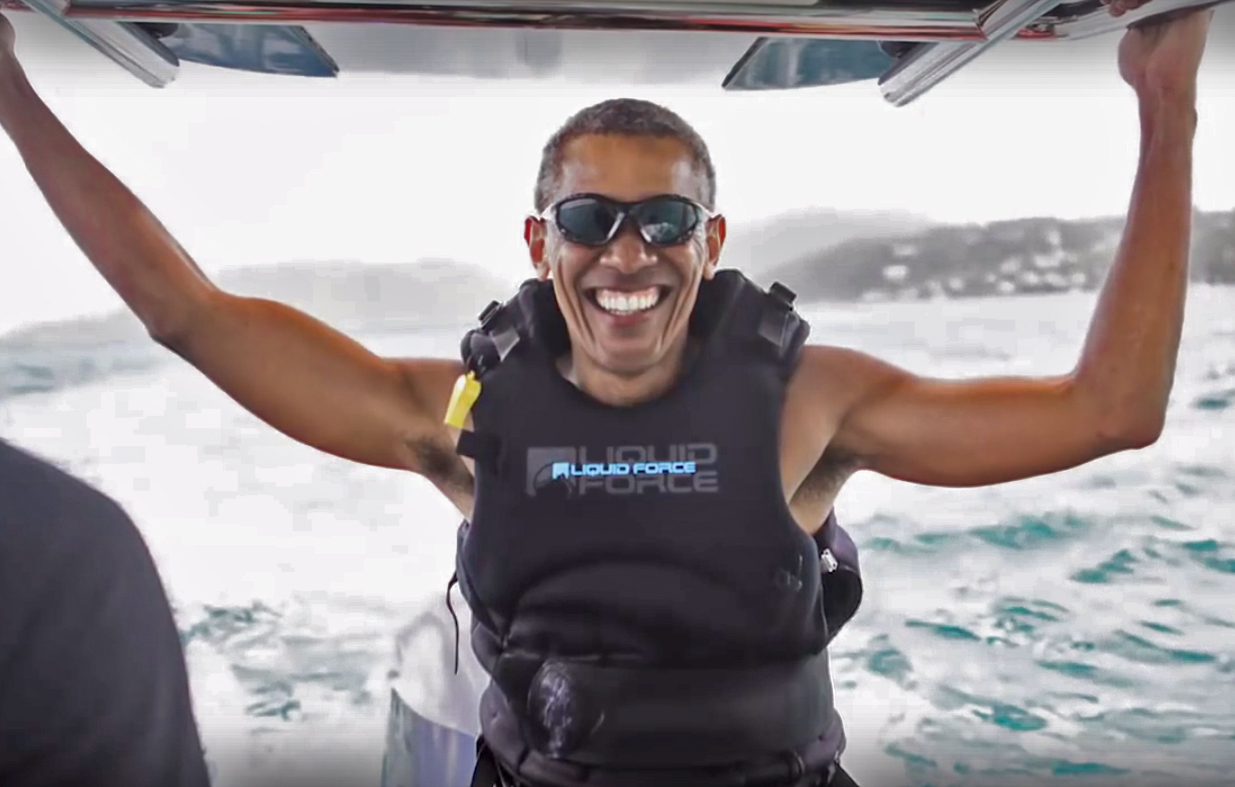
Barack Obama — Mr. “Let's Play 'Grand Bargain' With Your Social Security,” Mr. “Keystone Pipeline Will Make America Great,” Mr. “Desperate to Pass TPP Before I Retire to Richard Branson's Yacht” — the man who was never the person he campaigned as in 2008 — was just the most recent addition to a long line of servants of wealth pretending to be heirs of the FDR Party legacy.

It's been aptly said that “There is only one party in the United States, the Property Party, and it has two right wings: Republican and Democrat” (Gore Vidal); also that “Today's Democratic leaders would rather lose with Biden than win with Sanders” (lots of people, including yours truly; most recently here). And today, after the primary spectacles of 2016 and 2020, it seems that reforming the Democratic Party is as doomed an exercise as supporting a third-party candidate would be, a candidate who may never get on the ballot in all 50 states and, if so, would never be chosen by the bipartisan “debate commission” to appear on stage with the two “major” donor-approved choices.

How the Parties Captured the Debates

After the 1980 election, during which the League of Women Voters allowed independent John Anderson into the presidential debate, the two parties colluded to wrest control of the debates for themselves — successfully. Today's Commission on Presidential Debates (CPD) is jointly run by the Democratic and Republican Parties, not the League of Women Voters. Here's how that played out in 1992 and 1996 (emphasis mine):
In 1992, Reform Party candidate Ross Perot had a seven percent rating in the polls before the presidential debates. On election day, Perot had 19 percent of the vote, the largest-ever jump for a presidential candidate [source: PBS]. Proving himself a risk to the other candidates, the Dole and Clinton campaigns excluded him from the presidential debates through the CPD when he ran again in 1996. Perot later sued the major television networks for failing to grant him equal time, but since the Federal Communications Commission (FCC) changed the provision in 1975, Perot lost his suits [source: FCC].

The fallout from Perot's exclusion from the debates illustrates one of the vital services the CPD provides the two major parties. It acts as a shield. Despite the Democrats and Republicans drafting memorandums of understanding and deciding who can participate, it's the CPD that publicly issues the decisions; so it's the CPD that accepts the public's ire. But since it isn't beholden to the public, the CPD has nothing to lose.
All of which just points out how impossible the two-branched solution to our quadrennial problem has proved to be. If a third-party won't work, and reforming the unreformable won't work, what's to be done?

(There is a third possibility, and a kind of hybrid fourth one, but I'm going to save those discussions for another time.)

Out of Frustration, A Tenth Third Party Raises its Head

Despite these obstacles, people are hungry for a way out, a way to silence the bipartisan blackmailers. On the left that frustration has led people like Nina Turner, former co-chair of the 2020 Bernie Sanders campaign; RoseAnn Demoro, former head of the Sanders-supporting National Nurses United; Nick Brana, a Sanders 2016 alum and former electoral manager with Our Revolution; actor John Cusack and many less notable others, to start to talk (well, tweet enthusiastically) about forming and supporting another American third party, one that will advance progressive policies, a party that progressive voters can finally control.


And they're not talking hypothetically. These folk are well and truly frustrated, and they're close to well and truly done with the modern, apparently unredeemable Democratic Party.

What to Make of This?

I said at the start I was thinking out loud. I see a deep hunger, much of it shared by the best lights behind the Sanders campaign, but I also see impediments.

Will a People's Party candidate fill a Sanders-size stadium? It depends on the candidate, but very likely no. That candidate would have to relight Sanders' improbable public fire, blaze with his surprising light.

Will a People's Party candidate reach the election debate stage? I fear the answer is never. Nor will there ever be cable campaign coverage, discussion in the corporate press, or live camera feeds of that candidate's peopled podium like there were of Donald Trump's empty one. That candidate will be silenced out of the public discussion, erased from the landscape of choices. Would even Sanders, had he run third party, become the Sanders that thousands flocked to hear? Likely not.

So perhaps that avenue is closed even as the desire to take it opens up. Yet the gaping maw of the hunger that drives that desire isn't going away soon, perhaps not even in our lifetimes. So what's the solution to our national political nightmare, the bear trap of blackmail — "Trump or the neoliberal" — we either ignore or succumb to every four years of our lives?

The way out isn't apparent … yet. But I guarantee there will be one. At some time something will break here so completely that even the broken Party of FDR can't pretend it can put things right again with its next pro-corporate offering.

I do hope, if we see that tragic day, the moment will be managed in an orderly electoral way. The alternative — a chaotic transition to a multi-headed, multiply led revolt — puts us back in the 1930s, and in most major countries of the world, that didn't go well at all.

We got lucky, got Roosevelt, who was allowed to be elected. Most nations got something less.


Labels: , , , , , , ,

Monday, February 24, 2020

Is Bloomberg Buying the DNC? If So, What Does He Plan to Do With It?

>

Paradise lost. One misstep is all it takes to take the proud down low.

by Thomas Neuburger

Whom the gods would destroy, they first make proud.
—With apologies to Henry Wadsworth Longfellow

This is a small point that leads to a larger one. Consider what Mike Bloomberg is building within the Democratic Party, within the DNC. According to the following analysis he's turning the DNC into an anti-Sanders machine, a force loyal to himself, that will operate even after Sanders is nominated, even after Sanders is elected, if he so chooses.

With that he hopes to limit and control what Sanders and his rebellion can do. It's the ultimate billionaire counter-rebellion — own the Party machine that the president normally controls, then use it against him.

Our source for this thought is Glen Ford at Black Agenda Report. Ford is one of the more vitriolic defenders of radical change in America, but in this analysis I don't think he's wrong, at least in making the case that Bloomberg is giving himself that option. But do decide for yourself.

Here's his case:
Bloomberg Wants to Swallow the Democrats and Spit Out the Sandernistas

If, somehow, Bernie Sanders is allowed to win the nomination, Michael Bloomberg and other plutocrats will have created a Democratic Party machinery purpose-built to defy Sanders -- as nominee, and even as president.
The details of his argument are here (emphasis added):
Bloomberg has already laid the groundwork to directly seize the party machinery, the old fashioned way: by buying it and stacking it with his own, paid operatives, with a war-against-the-left budget far bigger than the existing Democratic operation. Bloomberg’s participation in Wednesday’s debate, against all the rules, is proof-of-purchase.

In addition to the nearly million dollar down payment to the party in November that sealed the deal for the debate rules change, Bloomberg has already pledged to pay the full salaries of 500 political staffers for the Democratic National Committee all the way through the November election, no matter who wins the nomination. Essentially, Bloomberg will be running the election for the corporate wing of the party, even if Sanders is the nominee.

In an interview with PBS’s Christiane Amanpour on Tuesday night, senior Bloomberg advisor Timothy O’Brien made it clear that the DNC is in no condition to refuse being devoured by Bloomberg, even if they wanted to. O’brien predicted the Republicans will spend at least $900 million on the election, while the DNC has only about $8 million on hand. Even the oligarch’s underlings are telegraphing the takeover game plan.

Bloomberg is not so much running for president as making sure that the Democrats don’t go “rogue” anti-corporate to accommodate the Sandernistas. He is ensuring that the Democratic Party will be an even more hostile environment for anti-austerity politics than in the past – not in spite of the phenomenal success of the Sanders project, but because of it.
Ford has not much love for Bernie Sanders, as he finds Sanders (and his supporters) weak for sticking with the Democrats. Ford thinks Sanders should go "third party" in his opposition to the corrupt duopoly that owns our politics. That's a point on which we can disagree without disagreeing that the duopoly is indeed corrupt, or that Bloomberg is setting himself up for post-electoral mischief.

Ford also thinks the Party will split in the face of this anti-Sanders resistance, especially if the counter-resistance continues after a President Sanders is inaugurated.

We'll see about all that. Ford may be right in his estimate of Bloomberg's intentions. He may also be right in Bloomberg's ability to carry through if his intentions are indeed as Machiavellian as he says.

On the other hand, Sanders may gather to himself enough control of the DNC and other Party machinery that he does indeed transform it, and with it, slowly, the Party itself. That's certainly been his game plan, and if he does indeed have a movement behind him — a really big one — I wouldn't bet against him being right. I myself don't see a way for a third party to succeed in the U.S. unless it's a "virtual third party" — but more on that at another time.

The Larger Point

So this is our smaller point, that Mike Bloomberg may be positioning himself to "own" the DNC, and with it enough of the Democratic Party, so that he can himself rein in a President Sanders. Is that his goal? It certainly seems possible. "Mini-Mike" is certainly Machiavellian.

Which leads to the larger point: How much rebellion, within the DNC and elsewhere, with or without Bloomberg's interference, will someone like President Sanders encounter and how long will it last? If it lasts throughout his presidency, that's a horse of a different color — a much darker one.

In fact, the dark horse of today's American politics is the entrenched, corrupt (and frankly, pathological) über-rich and their death grip on all of our governing institutions, including the press. Will that death grip tighten as the Sanders movement grows? And will they continue to squeeze the throats of the working class, even as the victims find their own throats and tighten in response?

Would you bet, in other words, that the rich who rule us wouldn't kill the country that feeds their wealth — wouldn't spark such a confused and violent rebellion that even they would be forced at last to flee — won't do all all this out of animus, pique and world-historical hubris?

That bet is even money all the way. They just might try it, just might be willing to strangle the body itself, the political body, just to see how far it they can get by doing it.

Whom the gods would destroy...
 

Labels: , , , , , , , , ,

Thursday, February 13, 2020

The Resistance to Sanders Is Led by Cable News Anchors

>

Click through to the source for the video

by Thomas Neuburger

There are growing signs that the resistance to [Sanders'] campaign will be led by cable news anchors.
—Alex Shepherd, The New Republic

The "Resistance" has been almost clichéd to death these days, bludgeoned into meaninglessness. Nancy Pelosi has been leading a "resistance" to Donald Trump that includes approving all of his spending and expanding all of his war and domestic spying powers.

"Every single day,"she wrote via Twitter, "I find myself asking: what do the Russians have on @realDonaldTrump personally, financially, & politically?" But that doesn't stop her and the rest of Democratic Party leadership from giving him almost all the money and power he wants, stopping only at approving the worst of his policy choices, such as war with Iran.
"Wow!" [Trump] said on Twitter. "All of our priorities have made it into the final NDAA: Pay Raise for our Troops, Rebuilding our Military, Paid Parental Leave, Border Security, and Space Force! Congress – don't delay this anymore! I will sign this historic defense legislation immediately!"

The establishment of the U.S. Space Force as the sixth Armed Service of the United States, under the Air Force, fulfills one of Trump's most high-profile requests.

Despite broad bipartisan support, a handful of left-leaning Democrats and libertarian-leaning Republicans opposed the measure because it did not include policy planks that would have restrained Trump's war powers, including a ban on support for Saudi Arabia's air campaign in Yemen.
Some "Resistance" to the man Senate Democratic leader Chuck Schumer called "the most dangerous and worst man in the presidency we have ever had in the history of this nation."

The Real "Resistance"

The real resistance by Democratic leaders, of course, is to its own base of anti-Establishment voters, candidates and office-holders, a resistance that's been too well documented to be repeated here. One of those candidates, Bernie Sanders, is right now making a credible threat to take over the Party in the name of that anti-Establishment base — an outcome that all donor-defending Democrats look upon with horror.

But what can they do, aside from the odd and opportune tilting of the balance? If they declare outright war — instead of the obvious but pretend-covert war they're now waging — they risk making a mockery of their own battle cries, Blue No Matter Who and Unity Unity Unity.

Enter the next line of defense, the Party-supporting mainstream press, including and especially cable news channels CNN and MSNBC. The real resistance for now against the Sanders-led revolt against the swamp in which they all swim has been handed off to Chuck Todd, Jake Tapper and all the colleagues and "analysts" who occupy million-dollar seats on TV's cable news stations.

Alex Shepherd is by far the only person to have spotted this, but he's one of the few mainstream writers to point it out. In a piece for The New Republic, Shepherd says:
Bernie Sanders Has an MSNBC Problem

Cable news networks, particularly the "liberal" one, are a growing barrier to his surging campaign.

...Sanders has framed himself as an outsider, taking on the political establishment as a democratic socialist. But as he has surged in the polls—he now leads Biden with all voters—he is increasingly running up against another establishment: the media, and particularly cable news.

Trump’s takeover of the Republican Party was aided by a coup at Fox News. After some early turbulence, Fox quickly got in line and has become something like state TV, an echo chamber for the president’s point of view. Sanders has fewer natural allies in cable TV. In fact, the supposedly liberal network, MSNBC, has become a serious obstacle, pumping out Republican anti-Sanders talking points with increasing frequency.

After last Friday’s Democratic debate, Chris Matthews waxed apoplectic about what electing a socialist could mean for America. “I have an attitude towards [Fidel] Castro,” he said. “I believe if Castro and the Reds had won the Cold War there would have been executions in Central Park, and I might have been one of the ones getting executed. And certain other people would be there cheering, OK?” Matthews’s colleagues pointed out that Sanders was more of a Danish type of socialist than a Castro type of socialist, but to little avail.

Two days later, James Carville, Bill Clinton’s former campaign guru, went on Morning Joe to rant about how a Sanders nomination would bring about the apocalypse. Literally. “The only thing between the United States and the abyss is the Democratic Party,” he said. “That’s it. If we go the way of the British Labour Party, if we nominate Jeremy Corbyn, it’s going to be the end of days.” The same day, Chuck Todd, who also hosts NBC’s Meet the Press, read from an article from the right-wing website The Bulwark comparing supporters of Sanders, who is Jewish, to “brownshirts.”
And in the lead-up to Tuesday’s New Hampshire primary, Lawrence O’Donnell argued that the real story was that Bernie was losing momentum because his poll numbers were down from the last Democratic primary—even though he is now facing more than a half-dozen opponents, compared to 2016, when he faced one. “The story of the Sanders campaign so far this year is how much ground he’s lost from four years ago,” O’Donnell said. He also ignored the fact that Sanders is leading nationally, which wasn’t the case in 2016.

This is not a new phenomenon....
The Sanders surge is real. Most polling sites give him a greater chance to win the Democratic primary than any of his competitors, prognostications that have been validated by Sanders' clear win in New Hampshire, his arguable win in Iowa despite the obvious and questionable machinations of the Iowa Democratic Party (see "Orwell Goes to Iowa" for more), and the likelihood, as I write today, of his winning most of the Super Tuesday contests, including the one in delegate-rich California.

But as the Sanders campaign ups its game, the Cable News Resistance is upping theirs. Most recently, Chuck Todd has likened Sanders supporters to actual Nazis ("brownshirts"), and Chris Matthews, as Shepherd notes above, publicly fears being hung by the neck by Sanders-supporting "socialists" from a tree in Central Park, America's Place de la Concorde apparently.

The battle is clearly on. Who will win this "primary within the primary," this war of insiders against insurgents? Establishment-defending media, or the mass of voters (the actual real Resistance) who are putting their trust in Sanders to drain the DC swamp of creatures like Nancy Pelosi, Chuck Schumer, and yes, Chuck Todd and Chris Matthews?

Smart money is on Sanders to win the nomination (even David Plouffe agrees with that). If he does, how far will Establishment and donor defenders in the mainstream press, people like Chuck Todd, go to stop him in the general election?

Smart money is sitting that one out.
  

Labels: , , , , , , ,

Thursday, October 24, 2019

Could the Democratic Convention Nominate Someone Who Didn't Run In the Primary?

>

Richard J. Daley, legendary boss of the Democratic Party machine in Chicago (source: Chicago Sun Times)

by Thomas Neuburger

We're still more than half a year from the 2020 Democratic National Convention with the entire voting part of the primary race ahead of us, yet fears of a dramatic, brokered and broken nomination process are already entering the conversation. "It’s hard to ignore the potential for a first-round deadlock at the Democratic National Committee (DNC) convention next July," writes CNN, and they are not alone.

Those fears are likely to be confirmed; it's improbably in the extreme that one candidate will enter the convention with a majority of pledged delegates, which means that some later round of voting, which will add in the superdelegates and a lot of horse-trading, will pick the nominee. What happens then, and how the outcome is viewed by voters, may well determine which party occupies the White House in 20201.

Most game-theory analyses see these as the branches to consider, assuming no majority winner in round one:
  1. What happens if Biden is the round one plurality winner?
  2. What happens if Warren is the round one plurality winner?
  3. What happens if Sanders is the round one plurality winner?
Given that Party leaders would much prefer Biden to Warren, appear to find Warren acceptable (but we may find out otherwise), and will never allow Sanders to hold Party power if they can possibly avoid it, the alternatives seem clear.

If Biden wins round one with a plurality, the superdelegates, who will vote in every round afterward, will support him. Biden will then be the nominee.

If Warren wins the first round with a plurality, will the superdelegates and Party movers and shakers put their money where their mouths have been and support her in round two? The jury's out on that. Warren may be the nominee, or Party leaders may balk and look elsewhere.

And if Sanders is the round one plurality winner, will superdelegates and Party leaders dare nominate someone else instead, a "unity candidate" (who could do anything but unify Sanders supporters with the Party base)?

They might, but I doubt it. The Party hates Sanders and will tank him at the convention if they can, just as they and their media ecosystem have done throughout the whole of the rest of process. On the media's contribution to the "stop Sanders" effort, see Ryan Grim's comment at 2:29 in the embedded clip on what he calls the widespread Sanders "media blackout" and I call its conspiracy of silence.

But that route is risky, both in fact and perception. If Sanders enters round two with the most pledged delegates, would they dare support someone else?

The Smell of Outright Theft

All of the analyses so far suggest that if Sanders leads in round one but doesn't win the nomination, Democratic Party leaders are faced with just two choices — confirm the will of the people and nominate Sanders anyway, or reach down into the candidate pool to nominate someone who received fewer votes.

They can do this, of course, and perhaps even try to sell it. Let's say that Biden, Buttigieg and Harris together have a delegate count that's greater than Sanders' total, with Biden in the lead. Party leaders could then "convince" enough Biden, Buttigieg and Harris delegates to support Biden in round two and declare him the "unity candidate." This allows superdelegates enough logical cover to give Biden the nomination with their added votes.

"Convince" in this case is a euphemism for a deal no one who wants a future in the non-Sanders Party can refuse, as Ryan Grim explains below:


But the stink of corruption, the smell of outright theft, would be all over that deal, since Biden (or whoever) would not alone have had a delegate total greater than Sanders' total, and that person would immediately lose the claim of legitimacy in the eyes of most Sanders supporters, regardless of Party leaders logic.

A Biden or Buttigieg nomination, even if majority-supported, already has the look of general election failure painted on it. The same nomination, if stolen from Sanders by Party leaders, would sink like a twenty-pound stone, weighed down by the anger of millions of potential, now lost, Sanders supporters.

What's an entrenched political elite to do? There seems no easy answer.

The Party's Knight on a White Neoliberal Horse

This leads us to an unexplored possibility — that Party leaders might coalesce around, and nominate, someone who didn't run in the primary. The list of these people is great; there are far more people in fact who didn't run in the primary than did, unlikely as that may have seemed while watching the debates.

I've seen every name from Michael Bloomberg to John Kerry to Oprah Winfrey to Hillary Clinton (also here) and more suggested as the Party's Knight on a Great White Horse. Of course, the person they choose would have to be both credible as a potential president and garner enough enthusiastic support — genuine support, not purchased or threatened — to actually look like the "unity candidate" she or he would be claimed to be.

The obvious choice, of course, is Barack Obama. The neoliberal majority of the Democratic Party — and even many who call themselves progressives — would support him in a instant if they could.

Unfortunately, they can't; he's constitutionally ineligible, so I'll leave it to others to populate the list of alternatives.

My own candidate for the next obvious choice is his wife, Michelle. (For more, see here: "Poll: Michelle Obama Would Be Frontrunner in 2020 If She Ran.") Reporting has said for years that she doesn't want to run, which is likely why she's never included in these lists. But if the Party were desperate enough, would they sell her hard on the idea? And if they do, would she accede for the "good of the nation"? We'll have to see.

In any case, it's not beyond Sanders' reach to place first the first round of voting and put Party leaders in a deep existential bind. And it's not beyond thinking that Michelle Obama might actually win in against Trump.

Is It Legal For the Party to Nominate Someone Who Didn't Run In the Primary?

Yet even if the Party wanted to nominate an outside-the-primary candidate, could they do it? The DNC rules are ambiguous on that. Of course, we already know what the DNC thinks of their rules, but this may be a special case given how public the choice will necessarily be.

Thanks to a friend who did this research, these are the applicable paragraphs from the DNC rulebook (pdf):
Eligible delegates may vote for the candidate of their choice whether or not the name of such candidate was placed in nomination. Any vote cast other than a vote for a presidential candidate meeting the requirements of Article VI of this Call and Rule 13.K. of the 2020 Delegate Selection Rules shall be considered a vote for “Present.” [Page 16]
This appears to say that delegates may vote for anyone, even if the name has not been placed in nomination, so long as the candidate meets the "requirements of Article VI of this Call and Rule 13.K."

Here is Article VI (emphasis and square brackets mine):
VI. Presidential Candidates

The term “presidential candidate” herein shall mean any person [1] who, as determined by the National Chairperson of the Democratic National Committee, has accrued delegates in the nominating process and plans to seek the nomination, [2] has established substantial support for their nomination as the Democratic candidate for the Office of the President of the United States, [3] is a bona fide Democrat whose record of public service, accomplishment, public writings and/or public statements affirmatively demonstrates that the candidate is faithful to the interests, welfare and success of the Democratic Party of the United States, and [4] will participate in the Convention in good faith. [...]
The key words here are "and" and "delegates". If my reading is correct, the first sentences lists four "and" conditions, all of which must be met. That's a fair reading of this complex sentence, though I have seen it disputed. Does the "and" highlighted above join only conditions [3] and [4], with the [1] and [2] stating OR-conditions instead? It would be really picky (and violently ungrammatical) if Party leaders were to argue this way, but I've seen worse done.

The other key word, though, offers more hope for Party neoliberals. Does "any person who as accrued delegates in the nominating process" include only those who have accrued pledged delegates — or does "accruing" superdelegates count as well?

If the latter, accruing superdelegates, is all it takes to make a person eligible for nomination, all bets are off and the list of potential "unity" (i.e., non-Sanders) candidates widens far beyond the primary field.

The Station This Train Is Headed For

This is speculation, of course, but we're headed straight toward that station, straight to the moment when supersdelegates have to decide whom to back and how to sell their decision. Do they send Sanders to defeat even if he has a first-round plurality? Do they really like Elizabeth Warren enough to nominate her if she has a first-round plurality, or will they look elsewhere after all? Do they really trust Biden or Buttigieg with their electoral hopes against a vigorous and vicious Trumpian campaign?

Is Hillary Clinton (she's obviously eager to run) worth a second go?

And more critically for the Party and the nation: If the chips don't fall their way, what matters most to them? Could it possibly be true that their number one goal is simply that Sanders not win, and the rest will be left to chance, the gods, and their next best efforts after that?

It's a reasonable question. After all, given the construction of our rural-favoring electoral process, a party that doesn't have a plan to save left-behind America — and doesn't nominate a candidate with appeal beyond the bicoastal professional class — may not be playing its strongest cards for a reason.
 

Labels: , , , , , , ,

Monday, October 14, 2019

Dems Seek $70 Million Corporate Cash to Fund 2020 Convention

>

Every word a true one

by Thomas Neuburger

Almost the very definition of corruption is trading money for favors while serving the public interest in public office. Almost, but not quite. There are other definitions, and Zephyr Teachout's "self-serving use of public power for private ends" is still the best. But money-for-gifts-and-services is the easiest to identify and despise.

For those not permanently married to the Democratic or Republican parties as tribal identities, what's to choose between the legalized corruption of Joe Biden and his family and the international-mob–infested corruption of Donald Trump and his? Not much, except perhaps in degree.

Do we really need evidence of a quid pro quo, a smoking gun, to see a body on the floor, its money in someone else's hands, and a room where two walked in but only one walked out, to know a bribe occurred? If you can convict a person of murder on strong circumstantial evidence — and you can — you can convict (in your mind) for bribery the same way.

The DNC Responds to the Sanders No-Corporate-Money DNC Pledge

With that in mind — and remembering Bernie Sanders' recent pledge to forbid corporate funding of the DNC and Democratic Party convention — let's look at what the pre-Sanders DNC is up to:
Dems seek lobbyist cash to fund Milwaukee convention

Party representatives are meeting with lobbyists about funding the $70 million event as candidates swear off corporate-connected dollars.

Two top operatives planning the Democratic Party’s 2020 convention in Milwaukee went to K Street last week to pitch lobbyists on their plans for the $70 million event.

Against the backdrop of the Democratic primary, it was an awkward pairing — representatives for special interests meeting with top Democrats while the party’s leading presidential candidates reject corporate PAC and lobbyist cash. But Democratic National Committee officials explained during the meeting how corporations can help foot the bill for the convention, regardless of who the nominee is, addressing some lobbyists’ worries that a crusading left-wing nominee like Bernie Sanders or Elizabeth Warren could try to reject corporate money, embarrassing convention sponsors.
Two things to note about that passage: First, "representatives for special interests" is fog-talk for corporate bribe-givers. Amnesty International is also a "special interest," but no one considers them a nest of money-laundering bribery agents.

Second, did you see the inclusion of Elizabeth Warren along with Bernie Sanders in the last sentence? To my knowledge, the anti-corruption Warren hasn't yet followed Sanders lead in forbidding corporate gifts to the DNC, its convention and her inauguration if she's the nominee.

Here's just part of what Sanders' Issue page promises regarding corporate funding of his party if he's the nominee and president:
As the Democratic nominee, Bernie will:

• Ban corporate contributions to the Democratic Party Convention and all related committees.

As president, Bernie will:

• Ban all corporate donations for inaugural events and cap individual donations to $500.

• End the influence of corporations at the DNC.
  • Ban donations from federal lobbyists and corporations.
  • Institute a lifetime lobbying ban for National Party Chairs and Co-Chairs
  • Ban Chairs and Co-Chairs from working for entities:
    • With federal contracts.
    • That are seeking government approval for projects or mergers.
    • Can reasonably be expected to have business before Congress in the future.
• Ban advertising during presidential primary debates.

• Institute a lifetime lobbying ban for former members of Congress and senior staffers.
Again, this is just some of what he's promised on this issue. (He's also going to overturn Buckley v. Valeo, the Supreme Court's original sin when defining money as speech, but that's a subject for another day.)

Will Elizabeth Warren Support Sanders' No-Corporate-Money DNC Pledge?

Has anyone seen a response to this from Warren? I hope we get one, and I hope it's as strong — I also hope she's asked if she agrees with Sanders' position during one of the debates — but given her "play nice with the Party" stances, I'm not overly optimistic. Here's how the New York Times described her message to Party leaders: "While her liberal agenda may be further left than some in the Democratic establishment would prefer, she is a team player who is seeking to lead the party — not stage a hostile takeover of it."

Either that's inaccurate — a real possibility, since the Times has a horse in this race — or Warren is unlikely to be as full-throated about strangling the Party-wants-corporate-money monster in its bed, if she speaks about it at all.

Will the DNC Return Corporate Money If Sanders Is the Nominee? No.

So the Party is going full bore into K Street offices, selling what they can offer and hoping K Street will offer what they want — $70 million, for now.

And, at least according to Politico in the article cited above, the DNC won't give back any what they manage to harvest from corporate sources if Sanders is the nominee: "The DNC doesn’t plan to return any corporate money that is donated to the convention regardless of the nominee, convention CEO Joe Solmonese told POLITICO."

So that's that.

We knew going in he'd be like that

There's an interesting little war setting up between Sanders and the Party. No wonder no one but us "small people" want Sanders to win. It's definitely a club, the DNC is in it, and we're not even invited to hold their coats.
 

Labels: , , , , , , , , ,

Thursday, August 22, 2019

What Could Sanders Accomplish By Executive Action Alone?

>

Which Democratic candidate would be this bold, would do what any Republican in the country would do — simply dare to say, "Make it so" when executive power is clear and available?

by Thomas Neuburger

During the 2016 primary race it became apparent that Bernie Sanders was offering more than just a revolt against entrenched elites; he offered a revolution in the way our government functions. That revolution would be executed along three branches or lines of action, two of which he had complete and personal control of.

First, he would revolutionize the norms by which the past forty years of neoliberal government operated — years that started with Reagan and continued through each administration since — by not doing what each administration before him had done as a matter of course.

These acts of not-doing would not only save the nation enormous grief, they would save progressive activists and voters enormous time and energy. From this 2015 piece on the subject, here's my imagined Sanders speech on "What I Will Never Do":
If you elect me president, here's what I will never do —

    ▪ You can count on me never to push a plan to cut Social Security and Medicare. Not one person outside of government will have to spend one minute trying to prevent me from privatizing — or cutting in any way — these vital programs. Not one minute. And if Congress proposes these cuts and it reaches my desk, you won't have to spend one minute asking me to veto that proposal. It's vetoed the minute it arrives.

    ▪ I will never negotiate a so-called "trade" deal that sends American jobs across our borders. No one will have to spend one minute asking me to stop a deal that hurts American workers. I will support only trade deals that increase American jobs, that create new workers in this country, that increase our balance of payments, and nothing less.

    ▪ No one will have to spend one minute stopping me from granting coal, oil and gas leases on lands or in waters controlled by the Department of the Interior. Not one minute. Drilling in the Arctic? You won't even have to ask. The answer is already No. New coal leases? Not one. Dangerous and deadly-to-the-climate offshore drilling leases? Those days are over.

    Soon I will tell you what I will do to aggressively bring down carbon emissions. But if I don't start here, with what I won't do, how will you know I'm serious?

    ▪ You will never see me even contemplate extending tax breaks for the very rich, as we saw all too often in our recent past — for example, during the negotiations to extend the Bush tax cuts, or negotiations at the end of the last fiscal year. Any such deal that reaches my desk will go straight back to Congress for renegotiation.

    If Congress wants a bill, they can give me one I can sign. If they want to shut down the government over tax breaks for the very very wealthy, they will shut it down, and I will explain it that way to the American people. If they want me to sign a bill, any bill, they need to understand — tax breaks for the rich can never be a part of it.

In other words, you'll never have to lobby me to not do what I said I would never do. You can spend your precious time, your precious energy, in other ways. There are many things I will do as well. Some I will do alone, using the power of the Executive Branch. And some I will ask your help to do because we need help from others. But the things I listed above, and many more besides, will never be contemplated.

I hope you agree that sparing you the constant effort to stop these wrong acts is indeed an accomplishment, and one you'll be glad, even eager, to have. It's one I'll certainly be glad and eager to give you.

Thank you.
I could have added that Sanders will never do what every president for the last third of a century as done — pardon or fail to prosecute criminal behavior by other elites, including those in their own donor class (like Jon Corzine, one donor-criminal that Barack Obama's administration failed to prosecute). 

Unlike most other Democratic candidates in the current cycle, Bernie Sanders won't just save you from Donald Trump (or any other Republican candidate who rings the populist bell), he'll also save you years of time you can spend more productively than endless trying to please-please-please-beg-and-force him not to do what Democrats like Barack Obama seemed eager do almost daily.

But this was just the first part of an imagined three-part speech.

The second part would deal with what Sanders could do — should he be so bold — by executive action alone, without Congress, without leaders like Nancy Pelosi and Mitch McConnell reaching in to muck up the operation. There's much more possible under executive action than any Democrat will allow you to contemplate — or if you do contemplate it, they'll admonish you that it's "best to pass a law instead" (because that's what Republicans always do when they have executive power, right?).

The third part of the speech would detail how Sanders would solve problems that could only be solved with true progressive legislation despite the machinations of conservative Democrats (including Nancy Pelosi; she deserves that appellation now) and their Republican partners.

Let's hold the "How I Will Pass Legislation" topic for another time; it touches on Sanders' unique theory of change. (For a preview of that theory, listen to the first part of Sanders' interview with Joe Rogan.)

What Could a President Sanders Do by Executive Order?

Here's a sample of what Sanders will do (not could do, will do) by executive order as soon as he's elected. This is from the latest "Bern Notice" authored by Sanders campaign writer David Sirota (emphasis mine):
Here’s an open secret: right now, your federal tax dollars subsidize giant CEO pay packages as well as corporate efforts to bust unions and offshore jobs. But when Donald Trump is defeated in 2020, that will end with a stroke of President Bernie Sanders’ pen -- and big corporations like Amazon, Honeywell and Boeing will have to either change their behavior, or lose their government largesse.

At issue is Bernie’s brand new Workplace Democracy Plan, set to be introduced by Bernie today at the Iowa AFL-CIO convention. The initiative is a comprehensive package of reforms designed to strengthen workers’ ability to form unions.

One provision in the plan is a pledge to immediately issue an executive order banning federal contracts from being awarded to companies “that outsource jobs overseas, pay workers less than $15 an hour without benefits, refuse to remain neutral in union organizing efforts, pay executives over 150 times more than average workers, hire workers to replace striking workers, or close businesses after workers vote to unionize.”
If I'm not mistaken, the U.S. government is the nation's largest employer, by a lot. Just as a federal Jobs Guarantee program would set a de facto floor on wages and working conditions by directly competing with the private sector for workers and offering more than their current "junk jobs" offer (explained by Stephanie Kelton here), a ban on federal contractors who do any of a list of wrong things, a ban that can be enforced by executive action alone, would change corporate behavior immediately and effectively.

This just scratches the surface. A total ban on new federal oil-and-gas leases, with an aggressive expiry of current ones, started immediately, would immediately change the economics of the fossil fuel market. Much of the much-discussed Student Loan Forgiveness program could be executed without legislation, since the government holds most student debt.

And so on.

Who Among the Current Democratic Candidates Is Bold Enough to Act Without Congress?

Despite all this, the question one should be asking isn't, "What can be done by a bold Democratic president?" though the list of what could be done is wonderful to contemplate.

The question one should ask instead is, "Who among the current candidates would dare use executive power in this way?" Would Harris? Would Biden?

Would even Warren, with her love of the inside game and use of others as leverage, dare to act when the only leverage she had was the power of the president to simply "make it so"?

If for you the Democratic primary is more than a year-long reality game show, with contestants striving to to outdo each other in capturing the public eye, in entertaining us spectators during our once-every-four-years Survivor-like ritual cage match — if the Democratic primary is more than just that for you — shouldn't the willingness to act be a primary, perhaps the primary, consideration in choosing who will run the executive branch for the next four years?

The question, it seems, almost answers itself.
 

Labels: , , , , , ,

Monday, July 29, 2019

The "Existential Battle" Is for Control of the Democratic Party

>

Steve Kornacki, MSNBC's so-called "numbers guy," visually misrepresents Sanders' strength against Trump, then lies about the erroneous graphic: "Elizabeth Warren, she’s been running second place, she is running second place on the Democratic side. She leads Trump by 5 points." The graphic shows that Kornacki is obviously wrong. Warren is in third place, and Sanders' margin against Trump is greater than Warren's.

by Thomas Neuburger

Sanders is the revolutionary. His election would mean a complete overhaul of the Democratic Party, forcing everyone who ever worked for a Clinton to look toward the private sector. That’s what a vote for “change” would mean in 2020.
     –Matt Taibbi

We've been hearing quite a bit about how the 2020 election is an "existential battle" for control of the nation's future, and that Trump's re-election poses an "existential threat." For example:

Jennifer Rubin, Washington Post: "we are in a fight for our democracy and our decency; we are engaged in an existential battle to defend objective reality".

Chauncey DeVega, Salon: "Trump is promising an authoritarian "national renewal" to his white supporters through a fake populism that nurtures feelings of grievance and victimhood -- feelings that can only be remedied through loyalty to the Great Leader and Dear Father. Political violence will be necessary -- and is already taking place across the country -- because TrumpWorld and its members believe that they are in an existential battle for survival."

Matt Taibbi, Rolling Stone, reporting from Iowa: "In a mid-June appearance in Iowa, Biden tipped off reporters that he’d be making remarks about Trump. Dressed in dark-wash dad jeans and blue shirt, he became the 10,000th Democrat this year to call the president an 'existential threat.'"

That 2020 existential battle, of course, is always cast as between the Democrats and the Republicans.

But there's another existential battle going on, one that will occur before the main event — the battle for control of the Democratic Party. In the long run, that battle may turn out to be more important than the one that immediately follows it.

Matt Taibbi, from the same article:
[T]he undeniable truth is that the Democratic race is about Sanders. Most of the candidates either support Medicare for All or try to sound like they do. They also tend to support a $15 minimum wage and call for wealth taxes, a Green New Deal, antitrust actions, and some rejection of corporate donors. Even Joe Biden, he of the lengthy career deep-throating credit-card-industry bucks, has parroted Sanders’ anti-corporate themes, noting that the Constitution reads “ ‘We the People,’ not ‘We the Donors.’ ”

There is an irony in the fact that Sanders has become the bête noire of Clintonian politics, given that Sanders represents the culmination of Bill’s 1992 electoral formula: “Change versus more of the same.”

Decades later, this is no longer just a marketing formulation. About 20 of the candidates exist somewhere on the spectrum of traditional Democratic politics, with Klobuchar, Mayor Pete, and Biden on one side, and Warren on the more progressive end. Sanders is the revolutionary. His election would mean a complete overhaul of the Democratic Party, forcing everyone who ever worked for a Clinton to look toward the private sector. That’s what a vote for “change” would mean in 2020.
Before mainstream Democrats can begin the "existential battle" with the forces of Trump and Republicanism, they have to win the existential battle against the force that wants to force change on their own party.

They're engaged in that battle today, and it seems almost all of the "liberal media," sensing the existential nature of the threat, is helping them win it. Katie Halper, in a second perceptive piece on the media's obvious anti-Sanders bias, "MSNBC’s Anti-Sanders Bias Is Getting Truly Ridiculous," writes: "When MSNBC legal analyst Mimi Rocah (7/21/19) said that Bernie Sanders 'made [her] skin crawl,' though she 'can’t even identify for you what exactly it is,' she was just expressing more overtly the anti-Sanders bias that pervades the network."

Halper then documents instance after instance of this bias, from graphics that show Sanders in fourth place in a poll in which he placed second...


to Steve Kornacki presenting a different misleading graphic from a different poll, then reinforcing the visual error with a verbal lie (see above), to political analyst Zerlina Maxwell (and former Clinton staffer, though this was never mentioned) blaming Sanders on-air for not mentioning race until 23 minutes into a speech, when in fact he mentioned it at the five-minute mark.

Maxwell corrected her misrepresentation later when challenged about it...


...but only on Twitter, and only while reinforcing her scorn for Sanders.

MSNBC is clearly acting as a messaging arm of the Democratic Party mainstream in its battle with progressives in general and Sanders in particular, and Zerlina Maxwell, who's been variously employed by that mainstream, from her work with Clinton to her work on MSNBC, is an agent in that effort.

Let me repeat what Matt Taibbi wrote: "[Sanders'] election would mean a complete overhaul of the Democratic Party, forcing everyone who ever worked for a Clinton to look toward the private sector."

Before this election becomes a referendum on Trump, it will be a referendum on the Democratic Party, on whether voters in the Democratic primary, as many of them as are permitted to participate in it, will choose to continue the Party as currently constituted, or force on it sudden, radical and transformational change.

If the nation wishes true deliverance, not just from Trump and Republicans, but from the painful state that got Trump elected in the first place, it will first have to believe in a savior. 

Will it choose as its savior a radically overhauled Democratic Party? Or will it trust its salvation to a Party that, in the words of the Onion's fictional, but accurate Nancy Pelosi, offers as "our core 2020 argument" that "we are infinitesimally less objectionable than our opposition."

Welcome to the Democratic primary. In the long run, if mainstream Democrats win the first existential battle of 2020 and enter the second unreformed, how much of the nation will truly rally to their side and help them defeat the current Trump, or the next one, or the next one after that?

Will the nation still seek delivery from their pain, even after Trump is defeated, if indeed he is? And if they do, will they find it in an unreconstructed, money-driven Democratic Party, or go looking elsewhere again, perhaps to an elsewhere worse than the elsewhere the current Trump emerged from?
  

Labels: , , , , , , ,

Monday, April 29, 2019

What We Learned from the April 15 Emerson Poll

>

Click to enlarge (source)

by Thomas Neuburger

On April 15, just prior to Joe Biden's entry into the race, Emerson College Polling released their Democratic primary contest report. Two things to note before we go further.

First, the poll of the Democratic primary shows four clear tiers of candidates (see graphic above):

Tier 1 — Bernie Sanders and Joe Biden, far above the rest
Tier 2 — Buttigieg, O'Rourke, Harris and Warren, two-thirds below the leaders
Tier 3 — Castro and Yang, polling at 3%
Tier 4 — Everyone else

Tier 4, everyone else, is polling at or below the choice named "Someone Else."

Second, the Emerson site write-up of this poll highlights everything but the striking 12-point surge by Sanders, who rose from 17% in February to 29% in April. Mayor Pete's rise over the same period — from 0% to 9% — is their first touted takeaway. According to Spencer Kimball, the organization's director, "[I]t looks like Mayor Pete is the candidate capturing voters’ imagination".

The site's second takeaway highlights Biden's 3-point drop over that same period. Kimball again: “Biden has seen his support drop. In February, he led Sanders 27% to 17%, and in March the two were tied at 26%. Now, Sanders has a 5 point lead, 29% to 24%.”

Kimball is wrong twice. Mayor Pete is not the "candidate capturing voter's imagination." His rise from February to April is considerably less than Bernie Sanders increase over the same period.

Also, Biden's decline below Sanders isn't because "Biden has seen his support drop." That drop was just three points. Sanders is surging; his 12-point surge is four times Biden's fall. Sanders simply leapfrogged him.

What We Learned & What We Know

From all this we learned several things:

• Sanders is indeed surging.

• The polling organization, via the quotes the site chose to feature, is trying to hide the Sanders surge. That tells you something about the organization, if not the poll itself. The polling itself is may be sound, but the organization has an Establishment dog in the race.

• Much of the Biden vote is also a Sanders vote, at least so far.

From the underlying polling data itself, 31% of Biden voters have Sanders as their second choice, while O'Rourke and Buttigieg together would capture another 30% of the Biden vote if Biden were out. That seems a good rough proxy for a nascent 50-50 split among Biden supporters for Radical Change vs. Return to Obama Status Quo, "nascent" because I don't think anyone who could support Sanders would begin to tolerate Biden after she learns what Biden actually stands for. Stay tuned for Biden to shed that support.

Further, from the crosstabs Sanders and Biden are as good as tied among millennials (ages 18-29). I'd be shocked if almost all of this group didn't turn against Biden by the time the primary is over.

It's early yet, but if we give Sanders a conservative half of Biden's support across the whole primary, Sanders would lead the field with over 40% popular support — a clear plurality, but not a majority. Of course, as the issues become sharpened, that could change further.

• The delegate count is the vote that matters, not the popular vote.

I'll expand on this point later, but just as the popular vote in the general election is not the vote that matters, the popular vote in the primary is also not the vote that matters. The "pledged delegate" count will control what happens at the convention in the first round of voting. After the first round, superdelegates enter the battle, mostly on the side of re-establishing an Obama status quo.

This means that if Joe Biden, say, picks up 25% of pledged delegates in the very early California primary, then fades to almost nothing but doesn't drop out, his California delegates will still vote for him at the convention in round one, denying those votes to anyone else. It will go like that state by state.

So if you're a Sanders supporter, the data to watch is not his popular support, which could surge even greater by April 28, when the last of the big states votes, but his cumulative delegate count. Watch especially the delegate counts in the early races, when the sheer mass of candidates will tend to dilute any candidate's share of the total available.

• A brief expansion of the last point: Delegate counts for Tier 4 candidates can be ignored (Klobuchar, for example, will not pull many Minnesota delegates from the other candidates), and of Tier 3 candidates only Castro, who will vie with O'Rourke for "favorite son" delegates in Texas, is likely to affect the final delegate count.

This leaves Biden, Buttigieg, O'Rourke and Harris as the chief delegate vote-splitters, since most Warren delegates are likely Sanders delegates if Warren releases them. Can Biden, Buttigieg, O'Rourke and Harris together capture more than 50% of the pledged delegate total entering the convention? On that point the entire drama of the convention — and with it, the nomination — will turn.

After all, Sanders can "win" with a plurality on the first round and still be denied the nomination. 

• Even so, watch these polls with great interest.

The sooner Sanders captures and keeps first place in popular support in a world with Biden as a candidate, the stronger his argument to voters in the early primaries that he should get the most delegates.

Also, the sooner Sanders captures and keeps majority support (50% or more) in these polls, the stronger his argument at the convention will be that superdelegates should support him on the second round or risk a rebellion among his supporters independent of what Sanders himself recommends. Such a revolt against the Democratic Party could put Trump in charge of the nation for another four years regardless of the goodness of the Democratic Party's "compromise" or "unity" candidate.

Put simply, superdelegates need to be put on the hottest hot seat Sanders supporters can create if his candidacy is to survive a second round of voting.

The Rebellion Has Already Started

From the Department of Just Saying, here's an expansion of that last point. The nation is already in revolt, just as it was in the 1850s before the first shot was fired at Fort Sumter. We're sitting on a powder keg, just not a lit one.

So far the rebellion is mainly electoral. People surged for Obama in 2008 thanks to the (false, as it turns out) "Times They Are A-Changin'" paint job his campaign received from Will.I.Am and "Yes We Can."

They surged for Sanders in 2016, then shockingly to many (but not to all) surged again for Trump, who lying through his teeth, ran on a "Sanders platform" and marched to a 304–227 Electoral College win over the quintessential status quo candidate Hillary Clinton.

In some congressional districts they surged again in 2018, supporting true-progressive candidates like Marie Newman, who narrowly lost to corrupt status-quo Democrat Dan Lipinski, and successful rebel-progressives like Rashida Tlaib, Ilhan Omar and Alexandra Ocasio-Cortez.

The rebellion is surging again this year, once more electorally. Unless the odd or unexpected happens, unless he stumbles or is brought down, expect Sanders' support to reach near or above 50% among potential primary voters — and expect his 2020 polling against Donald Trump to equal his dominant 2016 polling. During that primary, Sanders beat Trump in almost every head-to-head poll by a far greater margin than Clinton did.

But if the grinding machine that is the bipartisan, militarized Establishment denies again the people's choice for president, look for the rebellion against it to seek electoral revenge once more only — by not voting or voting for Donald Trump.

After that, the rebellion will not be so restricted.

Mural by Banksy

Nor will the forces that already counter it. 

Imperial storm troopers guarding a bank in Portland

I'm not sure many of us will want to live here after that. Democratic Party leaders, this could be your very last chance to get things right electorally. If you don't, the matter may be taken from your hands for good.

Just saying.
 

Labels: , , , , , ,

Monday, December 17, 2018

The Gilets Jaunes Movement Is a Lot More Complicated Than You Think (Plus Notes for the U.S. in 2020)

>

Asset composition by wealth percentile in France (source). Note that the percentile axis (the x-axis) is not linear — the marks show deciles from 0% to 90%, but the remaining decile is further broken into four ever-tightening groups, 90-95%, 95-99%, 99.5-99.9% and 99.9-100%. The non-linearity of the asset amounts at each mark is also striking, though predictable. The assets for those at the 30% mark are roughly 10 times those at the 10% mark; assets at the 50% mark are just four times those at the 30% mark; and assets at 70% are about twice those at 50%. Then asset increases start to climb, even as the groups shrink, until assets at the 99.9% mark are six times those just a half-percent below, at the 99.5% mark.

by Gaius Publius

From this part of the world, the gilets jaunes (yellow vests) movement in France is a curiosity. Many on the left see it as a rebuke of the neoliberal policies of President Macron — because it is a rebuke of those policies — and therefore add onto it their own ideas about what an anti-neoliberal rebellion means.

But is it just that? A friend of mine and former writing partner, "ChrisInParis" at the old Americablog, has lived many years in France and pointed us recently to this Twitter thread about the gilets jaunes (GJ) with the admonition, "The GJ are a lot more complicated than you think."

The following abstracts that thread. (To jump to my own thoughts on what this means for the U.S., click here.) I present it hoping to prevent you from simplifying les gilets jaunes into a kind of fantasia on the theme of the 2011 Arab Spring. It's not that.

The gilets jaunes movement is a very mixed bag, with left elements, right elements, far-right elements, class grievances, economic grievances, racial animus, co-optionist actors and some flailing. Not all participants adhere to all beliefs of all other participants, by a long shot. And the movement is in the process of transforming itself, being transformed by its own onward energy, or being hijacked, depending on how events play out.

So, as you ponder and speak about les gilets jaunes, tread lightly. The thread below explains all that. It starts here:


The following is the text.

1/ So, this is a thread on the Gilets Jaunes (GJs). I see a lot of confusion out there re: the protests, as well as a tendency among some to view the movement through a biased lens, such that, for example, if you dislike Macron you may be approving of the movement & vice versa.

2/ 1st, some caveats:
Caveat #1: I know more about France than most people, but I do not know more than all people. I am open to correction & new information. . . .

3/ Caveat #2: A lot of the info we have on the protests is scattershot at this point. I will talk about the evidence we currently have, but am open to the possibility it could be flawed.

4/ Moving on, the confusion about the movement is completely understandable. I remain very confused about aspects of it. It's hard to get a handle on what exactly is happening on the ground.

The most pertinent questions are: who is protesting? What are they protesting? Etc.

5/ So, some background: you will notice a lot of people saying that many in France approve of the protestors & that Macron’s approval is low. Both of these facts are true.

6/ However, both of these facts *generally* hold in France. Presidential approval is often low (they have multiple parties, are less partisan, there’s often gridlock, the party of the PM is often different than the party of the Prez, etc.)

7/ None of this is in defense of Macron. Nor is it to say that the French are not particularly disapproving of him (recall: his party is new, thus his base of support is likely even softer than it would be).

It's just good to remember: low presidential approval is not unusual.

8/ Re: approval for protestors. France is a very protest-friendly country. They often speak approvingly of any protest, even those they may ideologically disagree w/. (This may not, however, be the case if the protestors are primarily black and brown).

9/ None of this is to insinuate that the French, in general, are not particularly fond of Les Gilets Jaunes (I have no idea). Just to say that, broadly speaking, the French are predisposed to both protesting & valuing the spirit of protest.
2 replies 1 retweet 46 likes

10/ This is perhaps reflected in the government’s willingness to respond to protest demands, something that’s not really being reported on:

Macron scraps fuel tax rise in face of gilets jaunes protests

11/ Now the other thing to understand about France is that there are deep societal tensions related to immigration. There is also racism & islamophobia. This pre-dates the current refugee crisis & is complexly related to the fact that France was a colonial state.

12/ &, like the U.S., France contains a spectrum of discriminatory beliefs & behaviors. For ex, there is the openly bigoted far-right party (FN), but then there are also more subtle & societally “acceptable” biases (cf. burkini ban). There is also structural racism & segregation.

13/ That’s all to provide the general societal backdrop. 

So, onto the next Q: where did the GJ protests come from?

The protests have been generally cited as originally occurring in response to a fuel tax intended to combat climate change.

14/ Such a flat tax would technically be regressive, given the poor would pay the same as the rich. It could also hurt rural communities more than urban communities due to asymmetries in availability of public transportation.

15/ I think there are reasonable debates to be had about the role/nature of climate-change-focused taxation. More here:


16/ Now, some analyses have indicated that Macron’s recent changes to the wealth tax, in combo w/ the new flat tax, may have contributed to people’s anger.

I’m not going to get into an in-depth discussion of the wealth tax b/c I don’t really have enough economic acumen to do so

17/ But, a few things to remember (none of this is in defense of the tax cut, so don’t @ me)

-cutting taxes in France is a different scenario than cutting taxes in the U.S.
-this is not the first time the tax has been changed. Presidents have gone back and forth on this for yrs


18/ -the justification for the tax cut was that businesses/investors were leaving France.

Macron slashes France's wealth tax in pro-business budget [subscr. required]

19/ Again, I don't know enough to discuss this in-depth. Below is a piece from Picketty arguing that cutting the wealth tax cut was a mistake. Plz share other analyses if you have them (fine w/ moderate sources, but no right-wingers, plz)

Suppression of the wealth tax: an historical error

20/ Alright, so that’s mostly the background for how the GJ protests originated, as far as I know. . .

But, plz remember, in addition to extant left-wing forces in France, there are also far-right forces who are very economically "populist" & also anti-immigrant.

21/ Now: who are the protestors? Well, they’re not all Gilets Jaunes, or, at least, they didn’t all start out that way. I believe there are also people demonstrating *against* climate change, for example. . . .There also appears to be some antifa/GJ overlap. . .

22/ And I've heard there is also a prominent racial justice group is apparently protesting adjacent to the Gilets Jaunes, though I do not know if they are protesting in unity w/ them. I’m sure there are many other groups & unaffiliated individuals as well. . . .

23/ Remember: France is a country that fosters a spirit of protest. I don’t want to minimize what is happening now, but it is generally unsurprising that multiple different groups w/ different interests are now protesting, either jointly or separately.

24/ So, there’s a lot of talk about whether or not the GJ's are right-wing or left-wing or neither. Many folks on here seem to think it is a left-wing movement. Perhaps b/c they are protesting Macron, a “centrist. . ."

25/ However, at this point in time, it seems to be inaccurate to consider the movement “left-wing.”

Polling suggests that the majority identify w/ the far-right (42%) or center-ish-right (16%), though some (20%) identify w/ the far-left.


26/ &, yesterday, an “unofficial” list of demands from the Gilets Jaunes was released by a journalist. I personally would like to know more about the origin of this document. The GJs, as far as I know, don’t have unified leadership. So who wrote the list? (see next tweet)

27/


28/ This is essentially a far-right document. For example, it is pro-Frexit. It also mentions stopping immigration in the context of a “civilizational crisis.” Additionally, it’s also not particularly economically progressive, given that it proposes tax cuts for all citizens.

29/ So, what we know from polling, as well as this “unofficial” document, is that the Gilets Jaunes are comprised of mostly far-right protestors who are making far-right demands. I’m open 2 changing my mind on this if new info comes in

But, that's what the current evidence says

30/ Now, interestingly, “Gilets Jaunes” movements are now cropping up in other countries & many of them are far-right. Pro-Brexit protesters appear to have marched in yellow jackets in London.


31/ La Liberation (which is left-leaning) also reports that right-wingers are showing solidarity w/ the Gilets Jaunes in Serbia & Germany. Note that the "reasons" behind this protest-solidarity range from lowering carbon prices to limiting immigration. https://www.liberation.fr/checknews/2018/12/07/d-autres-pays-d-europe-ont-il-leur-mouvement-des-gilets-jaunes_1695931 …

32/ This photo, from an anonymous twitter account (thus not verified), appears to show GJ protesters in the Netherlands. Note the Q-An*n writing on the jacket.


33/ Then, of course, there is this:

Russian accounts fuel French outrage online

34/ So, overall, evidence points to the Gilets Jaunes as being primarily far-right at this moment in time. I can’t say whether they started that way or were high-jacked, or what. In other countries, solidarity protests have been right-wing/far-right.

35/ Some identify as left-wing, but, given the evidence above, I think it's very inaccurate at this time to call the movement left-wing in nature.

36/ Given that the evidence we have points to quite a few far-right affiliations w/ the Gilets Jaunes, I would urge left-leaning people to avoid fetishizing the movement, by, say, sharing images like this one:


37/ Overall, complex social movements are not typically amendable to idolization. There are some exceptions to this, but the Gilets Jaunes does not appear to be one. . . . .

38/ I think, especially given the far-right underpinnings, it's best to not see this protest as a kind of spontaneous combustion occurring in *isolated* response to Macron policies. There are deep historical/societal factors also at play here.

39/ Finally, you can oppose Macron, as well as his tax policies, w/out praising this particular movement. You can even say that people would have a right to be outraged, w/out praising this particular movement.

Basically, I'm trying to say: don't praise far-right movements.

40/ That’s it.

Again, I’m not claiming expertise here, so I would be open to discussion/correction, etc. from people who know more than I do.

I'm also open to changing my POV as new info comes in.

[PS 1] Oh, PS, and this is important.

Re: the 20% of Gilets Jaunes who identify as supporters of Melenchon: Melenchon is left-wing economically, but is also a nationalist. So, you might consider not praising these folks either.


[PS 2]


The Lesson for Us All

Me again. So that's the story. The GJ movement isn't entirely clean, it's not entirely dirty, and it's changing or being changed. Be careful what you say about it — it's very easy to be wrong — and do stay tuned.

Rebellions are often messy mixed affairs. In the U.S. recently, only the Sanders-led revolt was relatively clean, while the Trumpist version was mostly dirty, much more a mélange of good and truly evil.

Keep this in mind in 2020 and beyond. We're going to get the same revolt again, either led by the person we put in power, or led against the person we put in power. If that person is a Sanders or a Trump, she or he will lead it, down good paths or bad, all while fighting the corporate counter-revolt that will surely follow.

But if that person is an Obama or a Beto, a sweet-sounding betrayer of hopes and promises, the real revolt, led badly or well, will be against that person, with the neoliberal Democratic Party taking a problematic and indefensible position in defense.

Again, stay tuned. If the Democratic Party isn't taken over by the Sanders and the AOC's of the world, and very very soon, it really is over. The twin tsunamis — the revolt against wealth; global climate instability and crisis — which already wet our faces, are poised and ready to truly drown our world.

Mes centimes,

GP
   

Labels: , , , ,