Monday, July 27, 2020

Desperately Needed: Election Protection-- Otherwise Expect "Street-Level Violence And Political Impasse" In November

>

Never Waste A Serious Crisis by Nancy Ohanian

Over the weekend, the Washington Post ran a story about the extreme dysfunction NYC has experienced in trying to run an election. There is still no determination who will represent NY-12, a district that includes Yorkville, the Upper East Side, Midtown (including Trump Tower), Gramercy Park, Turtle Bay, Tudor City, Union Square, Roosevelt Island, Kips Bay, the East Village and the Lower East Side in Manhattan; Astoria, Long Island City and Sunnyside in Queens; and Greenpoint and northern Williamsburg in Brooklyn. Wall Street hack and establishment liberal Carolyn Maloney represents the district now but on election night (June 23) the results were too close to call. With tens of thousands of mail-in ballots, they still are.
• Carolyn Maloney- 16,473 (41.6%)
• Suraj Patel- 15,825 (39.9%)
• Laura Ashcraft- 5,268 (13.3%)
• Peter Harrison- 1,933 (4.9%)
"Just 648 in-person votes are separating them," wrote Jada Yuan, "with 65,000 mail-in ballots still being counted. And an entire district of 718,000 people across three boroughs have no idea who their next representative will be-- a full month after Election Day... At the center of this mess is a massive influx of mail-in ballots-- 403,000 returned ballots in the city this cycle vs. 23,000 that were returned and determined valid during the 2016 primary-- and a system wholly unprepared to process them. It’s not just delayed results that are at issue: In the 12th district and in the primaries across the country, tens of thousands of mail-in ballots were invalidated for technicalities like a missing signature or a missing postmark on the envelope."

All across the state, other close primaries were also plagued by the same problems. "None of this," continued Yuan, "bodes well for November’s federal election in which President Trump has refused to say whether he will accept the results. Turnout is expected to skyrocket because of the presidential race. Another covid-19 spike in the fall could lead to more mail-in ballots from people who fear crowded polling places. Add in slowed mail delivery because of the pandemic, while Trump constantly threatens to dismantle the U.S. Postal Service. Meanwhile, Trump and his Republican allies have repeatedly attacked the integrity of mail-in voting, making unfounded claims that the method is susceptible to widespread fraud."
Enter New York’s 12th as an extreme, but not isolated, case study. On Tuesday, the race even caught the eye of White House press secretary Kayleigh McEnany, who cited “the absolute catastrophe for New York City” in her news briefing while answering a question on election security.

“It’s a dark omen for November,” said a Wall Street Journal op-ed about the race, warning against voter fraud.

“Let’s fix this dumpster fire before it burns down the country in November,” the New York Daily News, a liberal tabloid, wrote in its op-ed on the race, warning about voter disenfranchisement through ballots that are invalidated because of missing postmarks.

...But the invalidation rate is concerning to many who are watching the race. According to data from the Board of Elections first published by The Intercept, up to 1 in 5 mail-in ballots were declared invalid before even being opened, based on mistakes with their exterior envelopes. The majority of mistakes are due to missing or late postmarks, and missing signatures. Preliminary numbers from the Board of Elections show an invalidation rate of 19 percent in both Manhattan and Queens and 28 percent in Brooklyn, just in this district. That rate, if applied to all of Brooklyn, would equate to 34,000 ballots thrown out, in a borough with the city’s largest population of black residents.

...Election Day was on June 23. The Board of Elections, by law, waited a week for all the mail-in ballots to arrive, and then waited until July 8 to start the count because of the sheer volume of ballots to sort through and the July Fourth weekend. A week after that, still no absentee ballots had been counted in the 12th District.

...All the action in their contest is focused on the count, and it is something out of a dystopian thriller about office tedium. At the Manhattan canvassing spot, numbered folding tables are scattered throughout a cavernous space. Two BOE employees sit on one side of a plexiglass sneeze guard.

On the other side are the watchers. Each campaign gets one watcher at each table. The BOE employees open the envelopes and show the ballots through the sneeze guard so the watchers can contest a ballot’s validity and compile chicken-scratch tallies. The pace is equivalent to watching a sloth eat bark.

Back in his office, Patel is worrying over “the postmark issue.” It was all he could think about: The 13,000 invalid ballots across three boroughs in his race. Based on photocopies of envelopes his campaign received from the Board of Elections, he estimated half of those were not counted because of a missing postmark.

These are ballots that fell into a kind of black hole of election law. Ballots that arrived to the BOE before or on June 23, Election Day, with or without a postmark are valid. Ballots that arrived by the cutoff of June 30 with a postmark of June 23 or earlier are valid. Ballots that arrived before June 30 but have no postmark or a postmark of the 24th, which many had, likely due to what the BOE called “USPS error,” Patel said-- those are invalid, automatically.

“It’s a question of timeliness. We are constrained,” said Valerie Vazquez-Diaz, the BOE’s spokeswoman.

That third category of ballots are the one Patel is fighting to have counted. The lawsuit he filed calls on Gov. Cuomo to fix the issue with an executive order.

In his Tuesday news conference, Cuomo punted the issue to the state legislature.

What Patel argues is that the law isn’t taking into account how much the pandemic changed the election. In the midst of the state’s shutdown in April, Cuomo signed an executive order mandating that the BOE send an absentee ballot application to every New Yorker, who in the past could only obtain an absentee ballot for very narrow reasons, such as illness or disability.

The BOE, with limited staff allowed in its offices, sprung to action, setting up an online portal and a phone line for absentee ballot requests and preparing a mailing for the city’s 3million registered primary voters. That didn’t go out until mid-May.

Every ballot request needed to be approved by a bipartisan set of staffers, then entered into the voter rolls. Then a court dispute about the presidential primary delayed the finalization of the ballot, which the BOE didn’t begin sending out until three weeks before the election.

That’s where the U.S. Postal Service comes in. Mail-in ballots are in the hands of a federal agency on the brink of bankruptcy that had to sideline 17,000 workers on quarantine because of exposure to the virus. Louis DeJoy, a Trump donor recently appointed as postmaster general, has announced cost-cutting changes that will likely further slow mail delivery.

At every turn, the governor’s executive orders and the BOE’s deadlines were out of touch with the Postal Service’s abilities. The final date for voters to send in absentee applications was June 16, an impossible seven-day turnaround for the application to get to the BOE and a ballot to get to the voter in time to cast it.

But in New York, there was another issue. The governor’s executive order called for the ballots to have business-class postage-paid return envelopes. In a normal year, voters provide their own stamp, which is considered first-class mail and always postmarked. The USPS said it is also their policy to postmark all ballots. It is not standard, however, as voter advocacy groups have said, to postmark the type of business-class mail used in New York’s primary election. If you drop it off in a mailbox it is simply sent to its destination. It seems as though the postage class created confusion among some USPS employees.

The only way for a voter to guarantee a postmark would have been to stand in line at a post office and watch a teller do it, rather than drop it in a box, which defeats the public-health benefit of mail-in ballots.

Upon review of what happened in New York, USPS spokeswoman Martha Johnson said, “We are aware that some ballots may not have been postmarked and have taken actions to resolve the issue going forward.”

On Wednesday night, Cuomo and New York Attorney General Letitia James responded to the lawsuit Patel joined by saying that allowing un-postmarked ballots was “not in the public interest because it would upend the rules... after the election has already taken place.”

Patel quickly looked into a new legal strategy and has secured an expedited hearing that may happen as early as Thursday.

“This is not the fault of vote by mail,” he said. “I’ve always been an advocate of vote by mail. It increased participation to astronomical rates for a congressional primary. But man is New York unprepared to have the procedures in place to count these ballots in a timely fashion.”

Of course, he still wants to know the outcome.

“It might be that we open up those ballots and they all go to Maloney. It’s not my job to decide who gets to vote,” he said. “At least we’d know what the actual intention of New York-12 was.”
OK, want to imagine the worst-- that it isn't just a couple of Wall Street-friendly Democrats, one old and one young,  fighting over postmarks-- but Trump and Biden in November? Jess Bidgood, reporting for the Boston Globe wrote that "On the second Friday in June, a group of political operatives, former government and military officials, and academics quietly convened online for what became a disturbing exercise in the fragility of American democracy. The group, which included Democrats and Republicans, gathered to game out possible results of the November election, grappling with questions that seem less far-fetched by the day: What if President Trump refuses to concede a loss, as he publicly hinted recently he might do? How far could he go to preserve his power? And what if Democrats refuse to give in?"
“All of our scenarios ended in both street-level violence and political impasse,” said Rosa Brooks, a Georgetown law professor and former Defense Department official who co-organized the group known as the Transition Integrity Project. She described what they found in bleak terms: “The law is essentially... it’s almost helpless against a president who’s willing to ignore it.”

Using a role-playing game that is a fixture of military and national security planning, the group envisioned a dark 11 weeks between Election Day and Inauguration Day, one in which Trump and his Republican allies used every apparatus of government-- the Postal Service, state lawmakers, the Justice Department, federal agents, and the military-- to hold onto power, and Democrats took to the courts and the streets to try to stop it.

If it sounds paranoid or outlandish-- a war room of seasoned politicos and constitutional experts playing a Washington version of Dungeons and Dragons in which the future of the republic hangs in the balance-- they get it. But, as they finalize a report on what they learned and begin briefing elected officials and others, they insist their warning is serious: A close election this fall is likely to be contested, and there are few guardrails to stop a constitutional crisis, particularly if Trump flexes the considerable tools at his disposal to give himself an advantage.

“He doesn’t have to win the election,” said Nils Gilman, a historian who leads research at a think tank called the Berggruen Institute and was an organizer of the exercise. “He just has to create a plausible narrative that he didn’t lose.”

The very existence of a group like this one, which was formed late last year, underscores the extent of the fear in Washington’s political circles-- and beyond-- that Trump will take the same hammer he has used to fracture the norms of executive governance over the past three years and upend the nation’s delicate tradition of orderly political transitions of power by refusing to concede if he loses.

“We have norms in our transition, rather than laws,” said Rachel Kleinfeld, a senior fellow in the Democracy, Conflict and Governance Program at the Carnegie Foundation, who was not part of the game. “This entire election season is something a democracy expert would worry about.”

It is a fear that has been stoked by the president himself, who has repeatedly warned, without offering evidence, of widespread fraud involving mail-in ballots-- which voters are likely to use at unprecedented levels because the pandemic has made in-person voting a potential health risk-- to cast doubt on the results of November’s election.

“I think mail-in voting is going to rig the election, I really do,” he told Fox News’ Chris Wallace last Sunday. When asked if he would accept the election results, he said: “I’ll have to see.”

Former vice president Joe Biden, the presumptive Democratic nominee, has taken to issuing foreboding warnings of his own. “This president is going to try to indirectly steal the election by arguing that mail-in ballots don’t work-- they’re not real, they’re not fair,” he said at a fund-raiser on Thursday night. He has also mused publicly about Trump having to be escorted, forcibly if need be, from the White House.

That happened in one of the four scenarios the Transition Integrity Project gamed out, according to summaries of the exercises provided to the Boston Globe. But constitutional experts-- and the game play-- was less focused on the possibility of a cinematic, militarized intervention on Inauguration Day, which is a possibility many still consider remote, than the room the Constitution appears to leave for a disastrous and difficult transition if the incumbent does not accept a loss.

“How well is our constitutional legal system designed to deal with an incumbent president who insists that he won an election but for the presence of fraud?” said Lawrence Douglas, a professor at Amherst College who has written a book on what would happen if Trump took such a stand. “And I think the rather unfortunate answer is our system is not well designed at all to deal with that problem,” said Douglas, who was not involved in the game.

Brooks got the seed of the idea for the Transition Integrity Project after a dinner where a federal judge and a corporate lawyer each told her they were convinced the military or the Secret Service would have to escort Trump out of office if he lost the election and would not concede. Brooks wasn’t so sure. She and Gilman decided to turn the Washington parlor game into an actual exercise; they held an early meeting in Washington, with about 25 people, in December.

“When we started talking about this we got a lot of reactions-- oh, you guys are so paranoid, don’t be ridiculous, this isn’t going to happen,” Brooks said.

Two things have happened since then: Trump has displayed increased willingness to challenge mail-in ballots, and his administration has deployed federal forces to quell protests in front of the White House and in Portland, Oregon, and has threatened to do so in other cities.

“That has really shaken people,” Brooks said. “What was really a fringe idea has now become an anxiety that’s pretty widely shared.”

Brooks, Gilman, and others recruited a slate of players including a former swing state governor, a former White House chief of staff, and a former head of the Department of Homeland Security. They invited both Democrats and Republicans who they knew had concerns about Trump’s comments on the election; nearly 80 people in all were involved. The Republicans were described by participants as “never Trump” or “not Trump Republicans.”

They played using the so-called Chatham House Rules-- in which participants can discuss what was said, but not who was there; some participants were willing to be named. They included Republicans Trey Grayson, the former Kentucky secretary of state, and conservative commentator Bill Kristol, as well as Democrats Leah Daughtry, who was CEO of the 2008 and 2016 Democratic National Convention Committees, former White House ethics czar Norm Eisen, and progressive Democratic strategist Adam Jentleson.

The game was elaborate. The participants took on the roles of the Trump campaign, the Biden campaign, relevant government officials, and the media-- generally, Democrats played Democrats and Republicans played Republicans-- and used a 10-sided die to determine whether a team succeeded in its attempted moves. The games are not meant to be predictive; rather, they are supposed to give people a sense of possible consequences in complex scenarios.


Each scenario involved a different election outcome: An unclear result on Election Day that looked increasingly like a Biden win as more ballots were counted; a clear Biden win in the popular vote and the Electoral College; an Electoral College win for Trump with Biden winning the popular vote by 5 percentage points; and a narrow Electoral College and popular vote victory for Biden.

In the scenarios, the team playing the Trump campaign often questioned the legitimacy of mail-in ballots, which often boosted Biden as they came in-- shutting down post offices, pursuing litigation, and using right-wing media to amplify narratives about a stolen election.

To some participants, the game was a stark reminder of the power of incumbency.

“The more demonstrations there were, the more demands for recounts, the more legal challenges there were, the more funerals for democracy were held, the more Trump came across as the candidate of stability,” said Edward Luce, the US editor of the Financial Times, who played the role of a mainstream media reporter during one of the simulations. “Possession is nine-tenths of the law.”

In multiple scenarios, officials on both sides homed in on narrowly decided swing states with divided governments, such Wisconsin, Michigan, and North Carolina, hoping to persuade officials there to essentially send two different results to Congress. If a state’s election is disputed, a legislature controlled by one party and governor of another each could send competing slates of electors backing their party’s candidate.

Both sides turned out massive street protests that Trump sought to control-- in one scenario he invoked the Insurrection Act, which allows the president to use military forces to quell unrest. The scenario that began with a narrow Biden win ended with Trump refusing to leave the White House, burning government documents, and having to be escorted out by the Secret Service. (The team playing Biden in that scenario, meanwhile, sought to patch things up with Republicans by appointing moderate Republican governors, including Charlie Baker of Massachusetts, to Cabinet positions.)


The scenario that produced the most contentious dynamics, however, was the one in which Trump won the Electoral College-- and thus, the election-- but Biden won the popular vote by 5 percentage points. Biden’s team retracted his Election Night concession, fueled by Democrats angry at losing yet another election despite capturing the popular vote, as happened in 2000 and 2016. In the mock election, Trump sought to divide Democrats-- at one point giving an interview to The Intercept, a left-leaning news outlet, saying Senator Bernie Sanders would have won if Democrats had nominated him. Meanwhile, Biden’s team sought to encourage large Western states to secede unless pro-Democracy reforms were made.

That scenario seemed highly far-fetched, but it envisioned a situation in which both sides may have incentives to contest the election.

“There is a narrative among activists in both parties that the loss must be illegitimate,” he said.

According to the Constitution, the presidency ends at noon on Jan. 20, at which point the newly inaugurated president becomes the commander in chief.

The games, ultimately, were designed to explore how difficult it could be to get there.

“The Constitution really has been a workable document in many respects because we have had people who more or less adhered to a code of conduct,” said retired Army Colonel Larry Wilkerson, a Republican and former chief of staff to Colin Powell who participated in games as an observer. “That seems to no longer to be the case. That changes everything.”

Labels: , , , ,

Thursday, June 25, 2020

Are The Republicans Slitting Their Own Throats? Do You Care?

>

I Can't Breathe by Nancy Ohanian

Every time Trump starts flapping his gums about the imagined evils of vote-by-mail-- which makes one wonder if he hasn't been counting on massively rigging the electronic voting systems-- Republican Party officials shudder-- and Democrats jump for joy. Let's take Florida as an example. Yesterday Gary Fineout and Marc Caputo reported that Democrats have opened up a 302,000-voter advantage over Republicans in vote-by-mail enrollment. "Five months before Election Day," wrote Fineout and Caputo, "more than 1.46 million Democrats have signed up to vote by mail compared to 1.16 million Republicans... By comparison, in 2016, Democrats held an advantage of about 8,800 in vote-by-mail enrollment." Is that important? Oh, yes; it's gigantic. Just consider these previous presidential election results:
• 2000- Bush beat Gore 2,912,790 (48.85%) to 2,912,253 (48.84)-- 537 votes
• 2012- Obama beat Romney 4,237,756 (50.1%) to 4,163,447 (49.13%)-- 74,309 votes
• 2016- Trumpanzee beat Hillary 4,617,886 (48.60%) to 4,504,975 (47.41%)-- 112,911 votes
I'm sure you've noticed that all of those decisions were considerably less than the 302,000 advantage the GOP has ceded to the Democrats by paying attention to their moron-in-chief.
The reason for the success is twofold. Democrats have put heightened emphasis on getting more people to cast ballots from home, an effort that preceded the onset of the coronavirus pandemic. And Trump has demonized this type of voting so much that Republicans, who once dominated mail-in ballots, are souring on it.

Florida's vote-by-mail enrollment gap is among a number of warning signs for Trump, who carried the state by fewer than 113,000 votes, or 1.19 percentage points, four years ago.

...[Florida Democratic Party executive director] Juan Peñalosa marveled at Trump’s “insane” success in dampening GOP enthusiasm for mail-in voting because it has worked so well for Florida Republicans.

“They’re going to have to turn out more people-- maybe 300,000 more voters-- on Election Day,” Peñalosa said in an interview. “They haven’t had to turn out that many more voters in one day in more than a decade that I’ve been in Florida.”

...Trump’s rhetoric appears to be dampening Republican enthusiasm for voting by mail.

In Florida, the number of Republicans signed up to cast vote-by-mail ballots has declined by 186,000 since 2018, while Democrats have increased their numbers by 69,000, according to the latest state data. It’s a stark turnaround for a party that famously won a 1988 U.S. Senate race thanks to mailed-in ballots.

The margin has increased since the March 17 presidential primary, when Democrats had an advantage in of 47,000 people enrolled to vote by mail.
Alan Grayson started building this strategy among Florida Democrats when he was running for office in Orlando. He used to talk with me about it with tremendous enthusiasm. He told me that "Presidential turnout among Florida absentee voters runs around 80%, while election-day turnout is around 35%.  COVID will make that difference even greater." He deserves a lot of credit for how this has been developing. He told me that when he started, the GOP had a 3-to-1 advantage in Florida vote-by-mail. In fact, the McCain campaign sent two vote-by-mail applications to every Republican voter in the state. I had my campaign go door-to-door among Democrats to sign them up to vote by mail. At one point, ¼ of all the Democratic mail voters in the entire state were in my district, even though there are 27 districts. Over time, the other 26 districts have caught up. One of the reasons why Democrats won in CD 7 and CD 10 is that I had represented parts of those districts, and had signed up the Democrats there to vote by mail."

I asked several Democratic candidates running in November. Bob Lynch, an old friend in Miami Dade running for state House, told me that "It isn’t even necessarily about strategy, Florida residents have a right to vote. This is sacred and I believe we should do everything we can to make this as easy as possible. Vote By Mail has taken on added importance given that we are in the middle of a Pandemic. Whoever I wind up facing in the General Election, they will be a Republican. A party whose entire platform is based on suppressing voter turnout. Nationwide, they have also made it blatantly obvious that they don’t care about putting people’s health at risk if it means an extra dollar for their donors. We believe in protecting people’s health while ensuring their constitutional rights don’t face unnecessary obstacles."

Adam Christensen is running for Congress southwest of Jacksonville (FL-03) for a seat being vacated by Trumpist nut Ted Yoho. Encouraging voters to cast their ballots by mail is an integral part of his campaign. This morning he told me that "For a lot of progressive campaigns, voting by mail could be a game changer. We believe that it will act as a catalyst to increase the number of young people who vote in each election. In Florida the number of 18-24 year old’s who voted in the presidential primary grew by 338% from 2016-2020. Because of the Pandemic it has been essential to get the word out to everyone who is eligible because their voices will be the difference in flipping districts across the country. Historically, wait times at college campuses have hindered the number of college students who end up voting. Students in the presidential primary in Texas waited upwards of 4-6 hours just to vote. Anything that makes voting easier, especially for those who are first time voters is a fantastic thing and we need to do everything we can to promote it. The Republicans running against us want as few people as possible to vote (especially college students). Which is why they have fought to decrease the number of polling locations open especially in north central cities like Gainesville, Ocala, Jacksonville and Orlando. Currently there are multiple organizations that are focused on this effort, including Vote From Home 2020 and various college campus clubs and Democratic organizations including the University of Florida College Democrats and the surrounding DEC’s. Campaigns need to be using their social media presence to educate and let people know how to vote by mail. Progressive campaigns also should have policy points focused on expanding vote by mail. And the Democratic Party should be doing everything in their power to make sure that every registered voter can receive and vote early, by mail, or without any wait time."

Fineout and Caputo noted that "It’s not just Florida where the vote-by-mail gap has widened between the two parties. In swing-state Michigan, Republicans this month burned mail-in ballot signup forms in protest. In Texas, Rice University political science professor Bob Stein said support for mail-in voting dropped in real time among Republican voters in Harris County as he conducted a survey that gauged attitudes about voting methods while Trump criticized vote-by-mail. In Pennsylvania, Democrats cast a disproportionate number of mail-in ballots during a June 2 primary. Wisconsin Democrats have focused more on mail-in voting after its disaster of a primary, as have Georgia Democrats following that state’s problematic June 9 primary."

To John Pavlovitz, this GOP fear of the voters is something important people need to understand by election day. "With every panicked and quivering move," he wrote, they are clearly testifying. They are confirming how frightened they are right now. There is no other logical conclusion to be reached. There is only one reason they cull down the polling sites for thousands of people, to only one. It’s the same reason they condemn voting by mail-- after repeatedly voting by mail. The same reason they continually gerrymander themselves a more favorable playing field. The same reason they oppose paper ballots and absentee votes. The same reason remove active voters from the rolls. The same reason they continue to attempt sleight of hand legislation to sneak in more restrictive voter ID laws: The reason they do all of these things-- is that they are mortally terrified of American voters."
We are their only outstanding obstacle to unabated rule.

We are the single remaining line of defense Democracy has left here.

We the People, are the last-gasp breath of a dying Republic being slowly suffocated beneath the weight of institutionalized racism and disdain for the poor and contempt for diversity.

These leaders do not want Americans to speak.

They know that if the voices of the people are heard, they will in one glorious, sprawling, clarion choir-- declare them fraudulent and malignant and unequivocally undeserving of stewarding this nation a single day longer.

And they know that if they lose their current, tenuous stranglehold on this nation they will likely never get it back, as the swift current of changing demographics will soon swallow them up, taking with them the unearned spoils of privilege that once seemed permanent.

Me The People by Nancy Ohanian


They know that this could well be their last moment of unmolested barbarism, and so like cornered, wounded animals they are frantic and flailing and unpredictably violent in saving themselves.

Which is why we need to show up now: in numbers that cannot be manipulated, in a show of strength and revolve that is simply unalterable, in a moment so immune from pollution that it will be undeniable.

We need to throw aside our petty semantic squabbles and our minor skirmishes of preference and our lesser battle purity politics and our litmus test deal breakers, because these things only dilute the full potency of our collective presence-- and that is what the fearful people want. They want us to not only have to overcome their malfeasance, but our fatigue and ego and apathy as well.

Because that is the great truth of these days and they know it: that despite their every jittery, panicked attempt to stack the deck and tip the odds, despite every clandestine legislative maneuver, despite this President’s unapologetic efforts at perverting the system-- we still have the numbers and we can still save this flawed but promising experiment in liberty, and find out what it might be capable of if the full expanse of humanity was welcomed at the table for the first time.

We can see if the old parchment promises can still yield a new promised land of equity for everyone, without caveat or condition; if it still has enough life and liberty and happiness for all of us to have a full helping.

I think that would be something beautiful to behold, I think it might alter the history of this planet, and I think it’s worth whatever is required between now and November to see it.


Friends, this is not about defeating people who have voted and normally would vote Republican. They are not the enemy. This is about defeating this President and these Republicans, who have no love for America or Conservatism or Jesus, who are historically corrupt and uniquely parasitic and who threaten good people of every distinction.

I firmly believe that decent and disparate people of every political leaning, religious tradition, and value system can navigate those real and profound differences, if we create a space where that is the sincere desire and honest objective. I also believe that this cannot happen with this President and with these particular leaders in power and it’s as simple as that.

Yes, these Republicans are fully terrified of us, America.

Let’s make them right to be afraid.

Let’s make November their worst nightmare.

Labels: , , , , ,

Sunday, April 12, 2020

Will Trump’s GOP Finally Kill American Democracy?

>


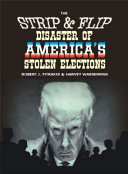
-by Bob Fitrakis and Harvey Wasserman

For Donald Trump’s GOP followers, the real issue in the 2020 election is democracy itself.

They want it abolished.

Their primary allies are the Coronavirus, state legislatures like those in Ohio and Wisconsin, and the US Supreme Court.

The campaign just hit a new level in Wisconsin. Using the Pandemic, its gerrymandered GOP legislature made voting in the April 7 primary as dangerous as possible. The US Supreme Court, with its usual 5-4 death hammer, has backed them up.

That 5-4 margin selected George W. Bush (Bush v. Gore) in 2000, and cemented the corporate purchase of our elections with Citizens United (2010), Arizona Clean Elections (2011), Shelby County(2013) and McCutcheon (2014).

In recent years Republican governors and legislators have done all they can to limit the franchise. With discriminatory laws demanding voter ID, de facto poll taxes, abolition of early voting, elimination of neighborhood precincts, failure to deliver ballots and voting machines, bans on voting by alleged ex-felons and more, the GOP has assaulted the ability of citizens of poverty, youth and color to vote.

Now the 2020 Pandemic has made it all but impossible to run voting stations. With social distancing and other necessary precautions, operating 116,990 precincts for some 138,000,000 voters, as in 2018, would be impossible.

The Brennan Center for Justice now estimates it would take about $2 billion to federally fund absentee balloting for the whole nation. All registered voters would be mailed a ballot which they would send back to election boards or voting centers. Social distancing and other challenges raised by the pandemic would be eliminated.

An all paper vote-by-mail system may be the clearest route to a fair election. With ballots mailed to all registered voters, citizens would have the option of mailing or walking them back in to election boards. Centralized election centers would handle voting for those with special needs, and would provide for late registration and mass voting, as in the black community’s “souls to the polls” tradition.

Managing a paper-based universal system poses a wide range of serious challenges. But it can circumvent the main obstacles posed by a Pandemic, and offers a welcome alternative to the chaotic hodge-podge of hackable voting machines and rigged polling places that have cursed so many recent elections.

With a well-run universal paper-based mail-in system, we have every reason to believe that voter turnout would soar and reliable vote counts and recounts would be reasonably do-able.

Which is exactly what the Trump Cult most fears. For them, an easily accessible, reliably verifiable voting process is the ultimate enemy. If such a system were put in place, says Trump, “the Republicans would never win another election.”

In other words, for Trump and his ilk to stay in power, democracy must be crushed.

This week’s disaster in Wisconsin may be exactly what the Republicans have in mind. Trump’s ineptitude and greed have deepened and prolonged the Pandemic. Now he has used it in Wisconsin to crush democracy itself.

Thousands of Wisconsin citizens were denied their right to vote when ballots were not mailed out in time to be returned by a tight artificial deadline, which the Trump courts upheld. Voting stations throughout the state were closed or badly run. In Milwaukee, where 180 were planned, just five operated. Incredibly brave poll workers were scarce and terrified. Their jobs were hampered by the demand for social distancing, face masks (when they could get them) protective gear and more.

As usual in urban areas, incredibly brave, dedicated citizens waited hours to vote-- this time amidst a highly contagious Pandemic. At least some are likely to die from the experience.

In choking off the popular vote, Wisconsin Republicans entrenched a right-wing extremist on the state supreme court for ten more years.

In Ohio, the gerrymandered GOP legislature has blocked mailing ballots directly to registered voters, favored by the Republican Ohio Secretary of State and Ohio voting rights groups. Instead the legislature demands that voters must fill out an application to request an absentee ballot from their board of elections. The ballot is mailed to them, which must then be filled out, put inside an envelope, fill out personal information on the outside of that envelope, put that envelope inside another mailing envelope and either mail it or drop it off at the board of elections.

Strangely, the instructions are: “Important: Your voted ballot must be sealed in this envelope for your ballot to be counted.” The bold letters are theirs, implying that if your inner envelope was not properly sealed, your vote won’t be counted. Even stranger, the pre-paid postage stamp on the return mailing envelope appears on the back side of the envelope, not the side with the mailing address.

These mail-in ballots must be postmarked no later than April 27 to be counted.

Voter registration advocates have taken to dumping piles of absentee ballot applications in grocery stores like Kroger in hopes that people will pick them up and get their votes in on time.

Should enough Trump legislatures lock up their states like Ohio and Wisconsin, Trump’s “election” will be a foregone conclusion.

As back-up, he might use the Pandemic he has prolonged to cancel actual voting. The GOP legislatures, which are entrenched in states with an Electoral College majority, might then simply proclaim his “victory.” The Supreme Court, which has just adjourned until October, would rubber stamp the process, 5-4.

The American people now have just seven months to prevent this from happening. It won’t be easy. But our lives depend on it.


Labels: , , , ,

Thursday, April 09, 2020

Why Do Trump And The GOP Oppose Vote By Mail-- Even During A Deadly Pandemic?

>


That was a Tweet from Señor Trumpanzee yesterday. It would be paranoid to say he opposes vote by mail because the GOP has put so much effort into being able to rig electronic voting machines. But paranoia doesn't always mean you're wrong, does it? I asked some of the progressive candidates we've been talking with how they felt about Trump's attempts to vilify and block vote by mail proposals. I start with the two progressives in the Kentucky primary that will determine who takes on Trump's most repulsive enabler in the Senate, Mitch McConnell.

Charles Booker, endorsed by Blue America, was the first candidate to respond. "The Republican position against vote-by-mail-- even in the midst of this pandemic-- is galling," he told me. "To force people to choose between their health and exercising the right to vote is horrifying. But it isn't surprising. " But he went on from there:
I'm black, and I'm a Type 1 diabetic--- two groups of people who have been shown to be more likely to die from the coronavirus. Republican leaders who stand against vote-by-mail in this pandemic are telling me I have a choice: participate in our democracy, or drop dead.

In Kentucky, I have long fought for increased access to the ballot box by breaking down barriers to voting. I've sponsored legislation to automatically restore voting rights to people who have completed their sentences for felony convictions; I've supported our Governor as he has made that policy law with an executive order. And I've railed against Republican efforts to suppress the vote, most recently with a photo voter ID bill that our Governor vetoed just days ago. And I have called on our leaders in Washington to support states in implementing vote-by-mail for all 2020 elections.

When I was a little boy, my granddad told me about being forced to guess the number of beans in a jar before he was allowed to vote. That was 30 years ago. I spent a lot of my adult life thinking things had gotten better, and that such blatant voter suppression was in America's past. Now, in 2020, I know better, as the President and Republicans across the country tell people like me that we can vote, but we might die. Our choice.
Moments later, Mike Broihier, who was endorsed by Marianne Williamson yesterday, weighed in as well. Like Charles, Kentucky Democrats know how fast and loose McConnell's GOP plays with election security. "I used to agree with the saying that Democracy isn't a suicide pact, but seeing the lines of Wisconsin voters sent out  en masse during the pandemic by conservative state and US Supreme courts makes me wonder. The right's vision of voter suppression as a path to success was later made clearer in a presidential tweet, when, as usual, President Trump was unable to focus on a single message, even for 280 characters. If he'd just stuck with the canard that mail-in voting is rife with fraud-- it isn't-- he might have successfully dog-whistled his base. But he had to add "...and for whatever reason, (it)doesn't work out well for Republicans. Exactly, if you don't suppress the vote and disenfranchise people the arc of history bends more quickly towards justice and that is what entrenched politicians fear. Trump even previewed this thinking last week, speaking about the House COVID19 relief bill, saying, 'They had things, levels of voting that if you’d ever agreed to it, you’d never have a Republican elected in this country again.' The take away, for me, is that this is the time to double down on voter registration efforts and grassroots turn-out-the-vote operations. Here in Kentucky in 2019 the work of Indivisible and other organizations flipped several solid red counties and moved the needle far enough to eject a cretinous Republican governor. On the ground, from what I have seen in my campaign, those same people, having tasted their influence, are not resting on their laurels but are ready to continue the fight, mail in ballots or not."

I also spoke to several House candidates who still have primaries coming up against Republican-lite fake Democrats. Milwaukie Mayor Mark Gamba is running for the Oregon seat occupied by GOP-friendly Blue Dog Kurt Schrader. "It's amazing how easy it is to make Republicans afraid of a thing," he told me soon after Trump's tweet. "Now they are going to be afraid of the mail. What the wealthy puppet masters fear is an actual democracy, where the person who represents the actual people, the person with the better ideas, the person with the proven track record of causing positive change gets elected, rather than the person who has the most wealthy supporters. The great American experiment is collapsing under the weight of all of that wealth. We watched it play out this morning in the democratic primary, no thinking person can imagine that Joe Biden will make a better president, a better leader, a better inspirer to greatness than Bernie Sanders will.  But Joe will kowtow to the rich, Joe will maintain the status quo that is killing our democracy and our very future on this planet.  But he won't tax the rich, by god. He won't stop the fossil fuel industry from continuing this headlong suicide cult they have created and maintained. It is now more critical than ever that we replace every bad senator and congressperson we can with a thinking, progressive champion for the people and the planet."

Boston progressive Brianna Wu is running for a seat occupied by anti-healthcare reactionary Stephen Lynch. Today she asked "What is Trump talking about? The problem is, and continues to be, that even he doesn’t know. What 'voter fraud' is he speaking of? None. Of course he doesn’t support voting by mail. If more people were able to vote, he would lose, and he knows it. And more importantly, it’s sickening that he is more concerned with perpetuating lies for his own political purposes than coordinating a real federal response to COVID-19, which is killing thousands of Americans. We need voting by mail, and we need to save lives."

Goal ThermometerTom Guild is running for the Oklahoma City seat occupied by another Blue Dog, Kendra Horn, who's even further right than Schrader. He told me that Senor Trumpanzee fights every battle "with a view towards what’s good for him, but not necessarily for most Americans. In the current national emergency, people may literally be risking their lives to go to the polls on election day, so it makes sense to have prudent alternatives, where ordinary Americans can both exercise the right to vote and also remain healthy and alive. Several states have relied mainly or exclusively on mailed ballots for some time now and have not only increased participation, but have had few, if any, reports of fraud or abuse. As in many areas of law and public policy, we may have to bring the current POTUS kicking and screaming into the current century. When it comes to the fundamental right to vote, while maintaining the health and safety of voters, mailed ballots are a promising way to protect and preserve both. Come on Mr. President, don’t lead from behind!"

Arizona progressive Eva Putzova is also taking on a reactionary Blue Dog, Tom O'Halleran, this one an "ex"-Republican legislator with a horrifying conservative record. O'Halleran may not recognize what a liar Trump is, but Eva sure does. "There is no voter fraud connected to mail-in ballots or in-person voting anywhere in the country," she told me, "and numerous studies show that. Trump, and his Republican enablers, want to suppress the vote generally, and with youth and people of color in particular. Trump himself said high levels of voting hurt Republicans. So, DEMOCRACY hurts Republicans according to the leader of the Republican Party. We need to carry on the fight to expand democracy and the right to vote at every level in this country. This is the fight of our lifetime. If we lose, and voting becomes a privilege rather than a right, we will live in a quasi-fascist society where rights are not inherent but accrue only to those favored few. I will oppose such an outcome with every breath in my body."

Queens progressive Shaniyat Chowdhury-- replying to Trump's lies-- summed it up for virtually all the candidates Blue America has endorsed: "Voter fraud is when you work with Cambridge Analytics to manipulate emotions of voters without their knowledge. He should know all about it. We should be able to vote without any suppression. It’s a guaranteed right but also a privilege that many tax paying Americans do not have."


Labels: , , , , , , , , ,

Saturday, April 04, 2020

Trump vs Democracy

>


Our heroic jefe, Señor Trumpanzee, is not just a war-time president, he's fighting a war on two fronts-- one against the COVID-19 pandemic-- who could have known?-- and one against democracy. Yesterday, Alex Isenstadt reported from the front lines in Trumpanzee's war against democracy. As you can see on the chart above, 65% of registered voters support the idea of vote by mail-- including 93% of Democrats, 70% of independents and even 32% of Republicans.

It is notable that 68% of Republicans oppose vote by mail. Makes no sense. Actually it does. Historically, conservatives have always done everything they could to keep the franchise as small as possible. They year for their glory days when only older white males with property were allowed to vote. Progressives have slowly but surely chipped away at that. This week David Ralston, the Republican Speaker of the Georgia House explained it as well as any conservative: "The president said it best. This will be extremely devastating to Republicans and conservatives in Georgia." Yep, larger numbers of people voting usually is "extremely devastating" to conservatives.

Isenstadt wrote that "Trump's political operation is launching a multimillion-dollar legal campaign aimed at blocking Democrats from drastically changing voting rules in response to the coronavirus outbreak. In the past several weeks, the reelection campaign and the Republican National Committee have helped to oversee maneuvering in a handful of battleground states with an eye toward stopping some Democratic efforts to alter voting laws, and to bolster Trump. The mobilization is being closely coordinated with Republicans at the state and local levels.
The Trump campaign and RNC are actively engaged in litigation in Wisconsin, where the parties are at loggerheads over an array of issues including voter identification, and in New Mexico, where the battle involves vote-by-mail. The skirmishing has also spread across key states like Pennsylvania and Georgia, where the well-organized Trump apparatus has fought over changes that could sway the outcome of the election.

The enterprise-- which includes more than two dozen GOP officials, including lawyers dedicated entirely to litigation-- shows how completely the pandemic has upended the 2020 election. While litigation over voting issues is not uncommon, the coronavirus-- and the likely obstacles it will create for voting in November-- has brought the issue to the forefront of the campaign.

The public health crisis is already injecting a huge X-factor into the election, with impossible-to-predict effects on voter turnout, and officials in both parties acknowledge the fights over voting laws could affect the outcome of the election.

Democrats-- who typically benefit from high turnout elections because their voters cast ballots less reliably-- are plowing ahead with initiatives to make it easier to vote.

...Trump advisers say they are open to certain changes, such as automatically sending absentee ballot applications to voters over age 65. But they’re opposed to other moves Democrats are pushing, such as sending every voter a ballot regardless of whether they ask for one, which Republicans argue would open the door to fraud.

Trump has long been fixated on voter fraud. He has repeatedly claimed without evidence that he lost New Hampshire in 2016 because out-of-staters cast ballots, and after the election the president set up a since-disbanded voter fraud commission. Following the disastrous 2018 midterms, Trump said that after voting, some people “go to their car, put on a different hat, put on a different shirt, come in and vote again.”

During an appearance on Fox News this week, Trump pushed back against an effort by House Democrats to secure billions of dollars for election assistance in the coronavirus relief package. The bill Trump ultimately signed included $400 million, a fraction of what Democrats had been seeking.

“The things they had in there were crazy. They had things, levels of voting that if you’d ever agreed to it, you’d never have a Republican elected in this country again,” Trump said.

Federal funding to help states ease voting barriers in response to coronavirus is just one front in the battle. Trump's political apparatus is taking a state-by-state approach.

In Pennsylvania, where Democrats proposed an entirely vote-by-mail system, Trump advisers worked with the Republican-controlled Legislature to push through more circumscribed rules. They include a limited expansion of absentee voting and changes to the handling and counting of those ballots.

In Georgia, some officials are recommending sending everyone a ballot, also a no-go for Trump's team. The president’s advisers instead advocated mailing people applications they would need to fill out and return in order to receive a ballot. The idea was approved by Georgia’s Democratic Party and Republican secretary of state.

Republicans see an advantage in the change in Georgia. They say they will be able to use their financial advantage over Democrats to reach their Georgia supporters to ensure they're returning ballot request forms.

The Democratic offensive is being led by Marc Elias, a veteran election attorney who is currently involved in litigation in more than a dozen states. He has advocated a handful of changes in the wake of the outbreak, including providing pre-paid postage for mail-in ballots and extending the postmark deadline to Election Day.

"If states are not able or willing to rise to the occasion of the challenges that Covid-19 poses, we’re going to continue looking very seriously to the courts to protect the rights of voters and to ensure that ballots don’t go uncounted that should be counted,” Elias said.

Trump advisers say they are trying to prevent overreach on the part of Democrats, who have long sought to ease voting restrictions.

“It is beyond disgusting that the Democrats are using this crisis to try to dismantle the integrity of our voting system,” said Justin Clark, a senior Trump campaign counsel who is helping to spearhead the legal fight. “The American people won’t stand for this, and the campaign and the party intend to fight with them for a free, fair, and open vote in November."

Clark pointed to so-called community ballot collection-- an idea embraced by some Democrats that would allow local organizations and individuals to collect ballots from voters at their homes-- as something the Trump campaign would fight.

The pandemic is expected to increase the amount of funding the Republican Party devotes to lawsuits. The cash-flush Trump machine announced in February it was directing $10 million toward legal battles, but people involved in the effort say that figure is now likely to climb much higher.
You know how you always see photos of presidents and their wives early on election day voting at the polls? You won't see one of those this Friday for the Florida primary; Trump has requested absentee ballots for himself and the former Slovenian sex worker he married-- just as some 160,000 other Palm Beach County residents have. Yesterday at his daily shit show, he said "I think a lot of people cheat with mail-in voting. People should vote with ID, voter ID, I think voter ID is very important. The reason they don’t want voter ID is because they intend to cheat. It shouldn’t be mail-in voting. It should be you go to booth and you proudly display yourself, you send it in the mail… all sorts of bad things can happen… by the time it gets in and is tabulated."

Some think that the conservative plot to demolish the U.S. Post Office-- which happens to be constitutionally-mandated-- is now, because of the pandemic-- in high gear. No post office, no trustworthy mail-in-voting? Kara Eastman, in the progressive Democrat running to replace Trumpist toady Don Bacon in Omaha. "Republicans are afraid of high turnout so they are afraid of universal vote by mail," she told us. "We need to push to ensure that our democracy doesn’t fall victim to this virus like our economy has." Texas progressive Mike Siegel noted that "In one fell swoop, we see that the Republicans are both a death cult and fundamentally anti-democratic. They’d rather us risk infection than increase voter participation. I understand that creating national vote-by-mail is a monumental task, but with resources and commitment it is certainly achievable. It’s the right thing for public health and it’s the right thing for our democracy." Please consider supporting the campaigns being run by Kara, Mike Siegel, Mark Gamba and Liam O'Mara by clicking on the thermometer below and contributing what you can in these tough times.

Goal ThermometerMark Gamba, the mayor of Mikwaukie, is running for Oregon's 5th congressional district against Blue Dog Kurt Schrader, who finds himself voting with Republicans far more than an actual Democrat. Gamba is a progressive with every instinct and every action. This morning he told us that "Oregon has been 100% vote by mail for over 20 years. It’s super convenient, we have two weeks with our ballots and can vote at our kitchen tables. We get some of the best turnouts in the country especially since we have one of the highest levels of voter registration in the country. What’s more, there’s a paper trail. It can’t be cheated. That last one in particular is what worries the Republicans. They know that in totally fair elections they lose. In this Pandemic moment, we are one of the few states that can safely vote. Our primary will continue as scheduled. I think the Republicans know that these last 3+ years have been some of the worst in American history for a significant part of the population. In a fair election, with a big turnout, they will lose the presidency, the Senate and the House will move further to the left. If we hope to stop climate change and create a universal health care system so that these pandemics don’t become a regular part of our lives then moving to a nationwide, Oregon style, vote by mail will be a powerful first step."

A Riverside County congressional candidate for a seat help by Trump-lockstepper Ken Calvert, progressive Liam O'Mara is also a history professor. "It is one of the most poorly-kept secrets in American politics that not everyone involved in it likes democracy," he said today. "There is a vocal subset of Republican officials who scream about Democrats wanting to take our freedoms, while they quietly do the job themselves-- authoring and passing surveillance legislation, expanding police powers, eroding civil rights legislation through the courts, and engaging in active voter-suppression. This has long since moved past hypocrisy and into farce, and if we cannot find a way to reach the voters who enable these figures, we will find ourselves living under permanent minority rule as the kind of "managed democracy" we see in places like Russia. If we're not willing to fight back for basic liberties like voting, then the act could lose meaning, becoming a rubber-stamp for a minority party, and our freedom be stamped out with it. We need to extend and secure voting rights, not let them be stripped from more each year. Enough is enough. Are we to be a republic or a party dictatorship? Talk to your Republican friends. Help them to understand that partisan divisions are being exploited to undermine what it means to be an American. If we can't talk to each other again, we may lose those values to which we pledged our allegiance."


Labels: , , , , , , ,

Sunday, March 22, 2020

Will Democrats Keep 3 Massachusetts Special Election Seats In 9 Days-- Or Will The State Shut Down Voting? Anyone Ever Hear Of Absentee Voting?

>


In the 2018 election, Democrats increased their majorities in the Massachusetts state legislature, picking up 3 seats in the state Senate and 10 in the state House. There are 4 special elections on March 31, a week from Tuesday. Tomorrow the state legislature will decide whether or not to postpone the elections. My bet is that they will. These are the vacant seats being contested:
• Hampden and Hampshire state Senate District. Republican Donald Humason, who had no opponent in 2018, resigned after being elected mayor of Westfield. Democratic state Rep. John Velis, a self-described "fiscal conservative," will face off against Republican businessman John Cain. Neither had a primary opponent. 20,848 Democrats voted, as did just 5,586 Republicans.
• Plymouth and Barnstable state Senate District (Bourne, Falmouth, Kingston, Plymouth, Pembroke and Sandwich). Republican Vinny deMacedo resigned to take a non-governmental job. Democratic selectwoman Susan Moran will face Republican James McMahon III, the losing GOP candidate for Attorney General in 2018. 32,858 Democrats voted in the primary but just 14,755 Republicans.
• Bristol House District 3. Republican Shaunna O'Connell after being elected mayor of Taunton. Democrat Carol Doherty won her primary and will face Kelly Dooner, who was unopposed in the GOP primary. 4,994 Democrats voted in the primary, as did 1,614 Republicans.
• Middlesex House Distict 37. Democrat Jennifer Benson resigned to take a job outside of government. Democrat Danillo Sena won her primary and will face Catherine Clark, who won the Republican primary. 9,544 Democrats and 2,451 Republicans voted in the primaries.
Why did so many more Democrats vote in the primaries in these districts, three of which are red? Primaries were held on the same day as the Massachusetts presidential primary which attracted far more Democrats than Republicans.

The DLCC wrote that "Flipping even one seat like these would be a huge victory for Democrats everywhere. They all [the 3 who elected Republican legislators] lean Republican at the local level-- one has been in GOP hands for more than a quarter-century!-- but revulsion against Trump has finally given Democrats an opening to flip them blue."


States have been postponing elections. "Postponing" is absurd in the early stages of a deadly pandemic expected to rage for the rest of the year or possibly close to 2 years. Organizations and governments that say anything other "until further notice" are either stupid or lying. It's time to start mail-only voting as a way for preparing for November. Polling places are death traps, especially for polling workers but for long lines of voters included. Governors cancelling primaries and special elections are doing the right thing. But legislatures must immediately-- as in before they are told to stay home the way Georgia's state legislature has-- pass laws allowing for mail-in voting. Republicans oppose this since he makes it easier for people to vote, something conservatives oppose with all their might and ugliness.

Vote-by-mail is favored by a majority of Americans-- 55% to 25% who oppose the idea, mostly Republicans naturally.


Do you want some good news? Here's a Snopes page the checked out that viral list of good things from around the world that's been circulating widely online. Most of it is true or partially true. Here in California, Governor Newsom issued an executive order on Friday to permit vote-by-mail n all upcoming election. And the same day, the Texas Democratic Party filed a lawsuit aimed at increasing access to vote by mail.
The plaintiffs are “demanding a declaratory judgment that allows all eligible voters, who believe their health is in danger under the threat of COVID-19, the ability to cast their ballot by mail if they so choose," according to a press release.

The lawsuit was filed in Travis County District Court against the Texas secretary of state and Travis County Elections.

Texas has one of the most restrictive vote-by-mail programs in the country. Voters must be older than 65, disabled, out of the county or in jail to vote by mail in the state.

“We must do everything we can to guarantee access to the ballot box for individuals who are practicing social distancing and self-quarantining,” Democratic Party Chair Gilberto Hinojosa said in a statement. “Current law says you can vote-by-mail if you are disabled and we believe COVID-19 puts the health of all of us at risk. This lawsuit will.”


Mike Siegel, who was the City Attorney of Austin before he decided to run for Congress, has been super-concerned about Texas voting restrictions for long before COVID-19. "This crisis," he told us this morning, "shows how important representative government is, and we must condemn any policy that weakens our democracy. In Texas, vote by mail is restricted to the elderly, to travelers, and to persons with a disability. Disability is defined as having a 'physical condition' such that going to the polls represents a risk of injury. Of course, in this coronavirus pandemic, every person is at risk by going to the polls, not to mention poll workers themselves. Universal access to vote by mail is thus essential to protect both democracy and public health. Unfortunately, the Texas Republican Party fears opening the door to 'no excuse' vote by mail, because once open it will be hard to close. More participation means a faster decline for a GOP that clings to an anti-immigrant, anti-Black, anti-choice and anti-justice agenda. The public sees that vote by mail is the obvious choice. Hopefully we can continue to build pressure to force progress to occur."


Last week, in a Washington Post OpEd Amy Klobuchar and Ron Wyden advocated for a bill they introduced to allow every American to vote by mail. "The best way to ensure that this virus doesn’t keep people from the ballot box is to bring the ballot box to them," they wrote. "We must allow every American the ability to vote by mail." And then they added something that seems oxymoronic (although ACLU voting Rights Project director, Dale Ho, explains it in the video below): "And we must expand early voting so that voters who are not able to vote by mail are not exposed to the elevated infection risks of long lines and crowded polling locations."


Labels: , , , , , ,