Monday, October 14, 2019

How Giuliani Directed Igor And Lev To Poison TX-32 Congressional Race With Over $3 Million In Russian Money To Get Marie Yovanovitch Fired

>
Russian Bribes And Election Interference-- The Texas Connection

Texas Republican Pete Sessions has a well-deserved reputation as a complete sleaze-ball. A crony of Jack Abramoff, he was never charged with bribery, even though he accepted over $20,000 in tribal money for his role in a slimy casino deal in 2002. He ran the NRCC and played fast and loose with campaign finance laws, often ignoring them entirely. He was rewarded for his "good work" with the chair of the House Rules Committee. He became even more famous when he led a nearly successful effort to disband the Office of Congressional Ethics (which he called "a political witch hunt"). So it should have surprised no one when it came out recently that he was taking large sums of Russian money as bribes from Trump/Giuliani cronies Lev and Igor. As Rules Committee chair, he was able to do more than just prevent medical marijuana laws from being voted on. And Giuliani must have directed Lev and Igor to him because of his notoriety for bribe-taking in the Allen Stanford-- currently serving a 110 year sentence in a federal pen-- scandal.

Sessions represented a north Dallas district for 21 years that was always being redistricted ahead of threatening demographic growth. Last year the area finally ran out of the number of old white men needed for him to win reelection. He lost a tight battle against a super-mediocre and pointless centrist Democrat, football player Colin Allred, 144,067 (52.3%) to 126,101 (45.8%). Even though Cook's out-dated, lagging PVI is R+5, even Hillary beat Trump by two points there in 2016 and this district may be swingy for a few cycles, it's days as a red bastion are over.

So Sessions decided to move his clown show down to Waco, where he was born and run there instead. TX-17 is much friendlier towards right-wing nuts like Sessions, but not friendly enough for incumbent Bill Flores to fight another battle. Flores is retiring. The PVI is R+12 and Trump beat Hillary 56.3% to 38.8%. But last year Flores didn't do as well as he had been doing-- winning 56.8% to 41.3%, with none of the 3 top counties in the district-- McLennan, Brazos and Travis-- performing as well for him as he expected. The Travis part of the district came in D+41 and McLennan and especially Brazos are headed on that direction. Can Sessions staunch the tide?

"Congressman 1"-- crooked Texas Republican Pete Sessions


Flores doesn't think so. "The announcement this week that former Rep. Pete Sessions from District 32-- north northeast of Dallas-- is going to run in District 17 should alarm all of us. Like you, I find it unacceptable that someone from outside Texas 17 would attempt to drop in and to try to elbow his way to the front of the line ahead of our local leaders. We have great leaders currently living, working, raising families and serving our communities in District 17. I hope you share my views that one of these people should be the next congressman or congresswoman from Texas District 17. Furthermore, I intend to help, support and vote for these types of local people during the 2020 election cycle and hope you will consider doing so also. One of the people who has announced that he is running for Congress from District 17 summed it up perfectly with his statement, “With all due respect, Mr. Sessions, we got this.” While I am not endorsing this candidate at this time, I could not agree more. Texas District 17 has plenty of talent-- let’s support them!" The Republican locals in the race are Wesley Lloyd and Trent Sutton and the Democrats will be fielding centrist Rick Kennedy, who opposes Medicare-for-All, again.

And that brings us to Sessions' propensity to always be on the receiving end of every bribery scandal to hit Congress. Most recently, according to Fox News, he has admitted taking illegal Russian cash from Igor and Lev. Caught red-handed he now claims he will turn over more than $20,000 to local charities. On Friday he told the media that "Yesterday, I learned that two contributors to my 2018 campaign are being charged for not following campaign contribution laws. Their deception cannot, and should not, be tolerated. Therefore, I am contributing the amount of their contributions to charities that serve abused women and children and the elderly in Central Texas." No one yet knows how much Russian cash Giuliani was able to direct the 2 clowns to inject into 2018 races, although over $600,000 has been found so far, probably just the tip of the iceberg. The biggest amount went to Trump-- around $350,000-- but much of it was spread around via the NRC, the NRCC and over a dozen local state Republican parties. Certain key super-corrupt individuals-- like Sessions-- were given direct, coordinated contributions for specific reasons. Sessions was bribed to help them get the American ambassador to Ukraine, Marie Yovanovitch fired, which he did.

In the Igor and Lev indictments, Sessions is referred to as "Congressman 1." A few bribed Republicans have promised to donate the money charity, but most-- like Trump, are holding onto the cash. And Sessions says he's giving back $20,000. Problem is that he may have gotten far more than that-- and some right into his pockets. According to CNN, "The indictment alleges that a 'Congressman-1' had been the beneficiary of approximately $3 million in independent expenditures by 'Committee-1... At and around the same time, Parnas and Fruman committed to raising those funds for Congressman-1. Parnas met with Congressman-1 and sought Congressman-1's assistance in causing the US Government to remove or recall the then-US Ambassador to Ukraine,' the indictment states." Igor and Lev gave immense sums of money to America First Action and America First Action bought $3,134,768 in independent expenditures from Sessions doomed campaign, by far the largest single source of money in the TX-32 race.

Sessions has no intention of contributing any of that $3,134,768 to "charities that serve abused women and children and the elderly in Central Texas."

Pete Sessions has not been arrested yet


UPDATE: Will Sessions Be In Prison Before The Election?

The Wall Street Journal reported that "A grand jury has issued a subpoena related to Manhattan federal prosecutors’ investigation into Rudy Giuliani, seeking documents from former Rep. Pete Sessions about his dealings with President Trump’s personal lawyer and associates, according to people familiar with the matter. The subpoena seeks documents related to Mr. Giuliani’s business dealings with Ukraine and his involvement in efforts to oust the U.S. ambassador in Kyiv, as well as any interactions between Mr. Sessions, Mr. Giuliani and four men who were indicted."


Labels: , , , , , , ,

Friday, October 11, 2019

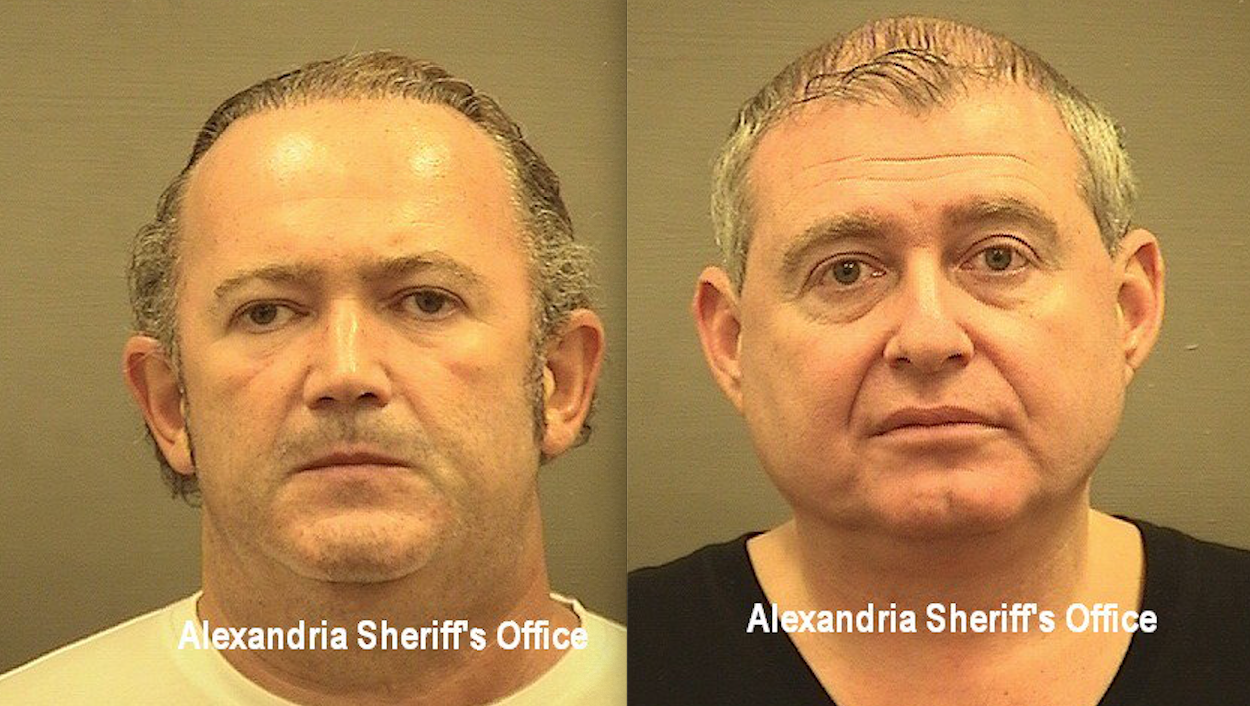
Trump's Pet Ukrainians, Lev and Igor, Arrested Trying To Flee The Country. Trump: "Lev Who? Igor Who?"

>

The gang's all here

When I read that Russian spies Lev Parnas and Igor Fruman had been arrested Wednesday night--after lunch with Giuliani-- I thought their names sounded very familiar. I vaguely recalled they had been money-laundering large sums of money from the old Soviet Union into Trump's campaign (and pockets). I wrote about it it in July. What we saw back then was how a BuzzFeed team reported that two unofficial envoys reporting directly to Giuliani have waged a remarkable back-channel campaign to discredit Trump's rivals and undermine Mueller's inquiry into Russian meddling in U.S. elections. In a whirlwind of private meetings, Lev Parnas and Igor Fruman-- who pumped hundreds of thousands of dollars into Republican campaigns and dined with the illegitimate U.S. president-- gathered repeatedly with top officials in Ukraine and set up meetings for Giuliani, as they turned up information that could be weaponized in the 2020 presidential race. The 2 criminals were there to urged prosecutors to investigate the Bidens.
The two men-- who both have troubled financial histories-- rose to prominence in Republican circles, meeting with party leaders while injecting hundreds of thousands of dollars into top Republican committees and dozens of candidates’ campaigns.

As they carried out their campaign, they used their proximity to the White House to tout a new business they set up to sell natural gas in Ukraine, with photos posted on Facebook showing Parnas posing with President Trump in the White House and top House members on Capitol Hill.

Their work proved influential. Prosecutors in Kiev announced in March they would investigate the officials accused of trying to steer the election in Clinton’s favor-- a month after meeting with Parnas, Fruman, and Giuliani-- and Trump applauded the plan in an interview with Fox News, calling the allegations “big” and “incredible.” The next month, Attorney General William Barr announced he had appointed a federal prosecutor to lead a probe into the origins of the Mueller investigation.

Parnas said he expected the information that he and Fruman advanced to become an important focus of Barr’s inquiry, and to dominate the debate in the run-up to the 2020 election. “It’s all going to come out,” he said. “Something terrible happened and we’re finally going to get to the bottom of it.”

In an exclusive interview with BuzzFeed News at the Trump International Hotel, the 47-year-old former stock broker insisted he and Fruman were not paid for acting as intermediaries between the Ukrainian officials and Giuliani. “All we were doing was passing along information,” he said. “Information was coming to us-- either I bury it or I pass it on. I felt it was my duty to pass it on."

...Kenneth McCallion, a former federal prosecutor who once represented Ukraine’s former prime minister Yulia Tymoshenko, said Parnas and Fruman were “playing with fire” by carrying out their campaign in the U.S. and Ukraine without registering as foreign agents or being vetted by the State Department.

“Trump has either authorized Giuliani to engage in private diplomacy and deal-making, or even worse, remains silent while Giuliani and his dodgy band of soldiers of fortune engage in activities that severely undermine US credibility and are contrary to fundamental US interests,” he said.

...What’s clear is that, for Parnas and Fruman, the stakes were more than just political. While they launched a new energy company to operate in Ukraine, large sums of money were flowing into various bank accounts belonging to the men that are now the focus of legal complaints.

In one transaction in 2018, more than $1 million was wired to a bank account belonging to Parnas from the client trust account of a Florida lawyer specializing in real estate and foreign investments. Parnas and Fruman then redirected $325,000 to a Trump-supporting super PAC-- without declaring the original source of the funds, records and interviews show.

The money is now the target of a complaint before the Federal Election Commission by a non-profit watchdog group.
Parnas tried scratching out Pete Sessions' name


Meanwhile Parnas and Fruman were shoveling hundreds of thousands of dollars in illegal foreign money into the campaign coffers as bribes to crooked Republicans besides Trump-- like Rick Scott (R-FL), Pete Sessions (R-TX), aka "Congressman 1" in the Parnas and Fruman indictment, Joe Wilson (R-SC). Most of their bribes went to the GOP through the RNC and through Republican state parties in New York, Wisconsin, West Virginia, Mississippi, Missouri, New Jersey, Pennsylvania, South Carolina, California, North Dakota, North Carolina, Louisiana, Wyoming, Alabama, Virginia, Connecticut, Kansas, Minnesota, and Illinois. I wonder who directed them to put the money into those particular pots, someone who is likely to eventually head off to prison.


Trump literally wants more immigrants like these two


USA Today helped bring all this up to date in their report of the arrest last night as Parnas and Fruman were caught at Dulles trying to flee the country.
Two Ukrainian-born business partners, who showered Republican campaign committees with nearly $500,000 and dined with President Donald Trump at the White House, were arrested late Wednesday on campaign finances charges, federal authorities said Thursday.

Lev Parnas and Igor Fruman helped Rudy Giuliani meet a key Ukrainian prosecutor as the president's personal lawyer sought to discredit Trump's political rival, former Vice President Joe Biden. Both of the men also are among the prospective witnesses House Democrats want to question in their impeachment inquiry.

The indictment charges Parnas, Fruman, David Correia and Andrey Kukushin with federal campaign finance law violations.

It alleges they “conspired to circumvent the federal laws against foreign influence by engaging in a scheme to funnel foreign money to candidates for federal and state office so that the defendants could buy potential influence with candidates, campaigns and the candidates’ governments.”

Parnas and Fruman began attending campaign fundraising events in March 2018, the indictment alleged.

They had no significant prior history of political donations, and “sought to advance their personal financial interests and the political interests of at least one Ukrainian government official with whom they were working,” the indictment charges.

In order to hide their sources of funding and capital, Parnas and Fruman created a limited liability company called Global Energy Producers and “intentionally caused certain large contributions to be reported in the name of GEP instead of their own names,” the indictment charged.

When media reports about the Global Energy Producers' contributions first surfaced, an individual working with Parnas said “{t]his is what happens when you become visible… the buzzards descend,” the indictment charged. “[t]hat’s why we need to stay under the radar…” Parnas responded, according to the indictment.

The indictment also alleges that Parnas, Fruman, Correia and Kukushmin schemed with an unidentified foreign national to get retail marijuana licenses in particular states, including Nevada. In or about September and October 2018, Correia drafted a table of prospective political donations. The table allegedly described a multi-state licensing strategy that would funnel $1 million to $2 million in contributions to federal and state political committees.

The plan also included a funding schedule of two $500,00 transfers. The foreign national arranged for the funds to be wired on or about September 18, 2018, and October 16, 2018 from overseas accounts to a U.S. corporate bank account controlled by Fruman and another individual,” the indictment charged.

The alleged conspirators took steps to hid the foreign national’s involvement and role in the funding “to, in Kukushkin’s words, “his Russian roots and current political paranoia about it,” the indictment charged.

Parnas and Fruman, who were born in Ukraine when it was part of the Soviet Union but who now live in Florida, have become political players in recent years. In May 2018, Parnas posted pictures on Facebook of himself and Fruman with Trump in the White House and with his son, Donald Trump Jr., in California. That was the same month their company, Global Energy Producers LLC, was credited for giving $325,000 to a campaign committee that supports Trump's re-election.

But in a legal dust-up that appears unrelated to the Ukraine scandal, the campaign contribution sparked a complaint to the Federal Election Commission-- and at least two lawsuits-- because of questions about the source of the money. Despite the generous political contributions, Parnas faces a $510,000 federal judgment in a case over a debt for a movie that never got made.

Three House committees-- Foreign Affairs, Intelligence, and Oversight and Reform-- scheduled depositions Thursday with Parnas and Friday with Fruman to ask how they fit in with Trump's dealings with Ukraine. Those panels have also subpoenaed documents from Giuliani and Secretary of State Mike Pompeo.
Committee chairs Adam Schiff, Elijah Cummings and Eliot Engel sent subpoenas to Lev and Igor yesterday via their attorney, John Dowd, reminding them all that they are "private citizens who are not employees of the Executive Branch. They may not evade requests from Congress for documents and information necessary to conduct our inquiry. They are required by law to comply with the enclosed subpoenas. They are not exempted from this requirement merely because they happen to work with Mr. Giuliani, and they may not defy congressional subpoenas merely because President Trump has chosen the path of denial, defiance, and obstruction... In addition to providing the subpoenaed documents, the Committees also expect your clients to appear to testify about these matters at a later date."

Trump blatantly lied to reporters yesterday, saying I don’t know those gentleman. Now, it’s possible I have a picture with them because I have a picture with everybody. I don’t know them, I don’t know about them, I don’t know what they do. I don’t know, maybe they were clients of Rudy’s. You’d have to ask Rudy." He also said he doesn't know if Giuliani is about to be indicted. "I haven't spoken to Rudy about it I will say this, from what I heard... they said we have nothing to do with it." And by the way, there are dozens of pictures of Trump with Lev and Igor, sometimes as a pair, sometimes as individuals. No one asked Trump is he plans to give back the $400,000 he's taken in bribes from the two criminals.

Like the Mafia... but worse

Labels: , , , ,

Thursday, February 14, 2019

Too Much Money Sloshing Around Without Strict Regulation Corrupts Democracy-- Always

>


The Trump Regime has been working to rig the campaign finance rules in preparation for his reelection efforts; more on that below. It has also ordered the gutting of the task forces protecting elections from foreign meddling. At an earlier time in history, a leader like Trump would have been dragged out of his palace and lynched... or guillotined. We don't do that any more. Betsy Woodruff wrote yesterday that "Two teams of federal officials assembled to fight foreign election interference are being dramatically downsized, according to three current and former Department of Homeland Security officials. And now, those sources say they fear the department won’t prepare adequately for election threats in 2020." Who would have guessed?
“The clear assessment from the intelligence community is that 2020 is going to be the perfect storm,” said a DHS official familiar with the teams. “We know Russia is going to be engaged. Other state actors have seen the success of Russia and realize the value of disinformation operations. So it’s very curious why the task forces were demoted in the bureaucracy and the leadership has not committed resources to prepare for the 2020 election.”

The task forces, part of the Cyber Security and Infrastructure Agency (CISA), were assembled in response to Russian meddling in the 2016 presidential election. One focuses in part on securing election infrastructure and the other focuses on foreign influence efforts, including social media disinformation campaigns.

...The election task force has worked to shield election infrastructure from foreign efforts to change vote counts. And the foreign influence task force is working to publicly reveal efforts by foreign actors to shape American political discourse on social media—in the hopes of significantly expanding Americans’ understanding of the threat. It was also designed to improve DHS’s coordination with foreign allies who face the same threat, and to help DHS better alert the private sector about threats.
To help guarantee even a chance at reelection, the colossally unpopular-- even hated-- Trump moved quickly to rig his fund-raising operation by having Mnuchin institute a Treasury Department rule that allows political 501 (c)(4) dark money "charities"-- which can take massive amounts of illegal money from Russia, Saudi Arabia, Israel, Brazil and other Trump allies from around the world-- and pass them on to Trump's campaign without anyone knowing.

On December 12, the Senate voted 50-49 to abrogate the rule, Susan Collins (R-ME) voting with every Democrat and Thom Tillis (R-NC) absent. Paul Ryan and Kevin McCarthy immediately declared that the legislation would not get a vote in the House... so it died-- at least for the session.

Things have changed after the midterms. The Democrats control the House and this rule change would easily pass. But the Senate is Trumpier now and it's less likely the Democrats could get it through-- if McConnell even allowed it to come up for a vote again, which is unlikely. Meanwhile campaign finance watchdogs are furious because Mnuchin and Trump are encouraging foreign interference in U.S. elections.
Titled the “Spotlight Act,” legislation from Senators Ron Wyden (D-OR) and Jon Tester (D-MT)-- accompanied by an identical bill from Rep. David Price (D-NC in the House-- would overturn the rule change and restore donor disclosure to the IRS.

“At a time when our elections are plagued by unlimited corporate spending, anonymous donors, and illegal foreign meddling, the Trump administration’s decision to obscure millions in dark campaign money weakens our already failing campaign finance system and diminishes the power of voters,” Price said in a statement.

Dark money groups reported nearly $148 million in outside spending to the FEC during the 2018 cycle, not including money spent toward so-called issue ads aired before election season and other undisclosed political efforts, and contributed more than $176 million to super PACs.

Foreign nationals are prohibited from making federal contributions and politically-active groups cannot use foreign funds to influence elections. Though the IRS doesn’t directly enforce the foreign money ban, the FEC or Department of Justice (DOJ) could request an unredacted version of a politically-active nonprofit’s tax returns in order to assess whether it had received foreign money, said Brendan Fischer, director of federal reform at the Campaign Legal Center.

McClatchy reported in July 2018 that Special Counsel Robert Mueller likely got access to the National Rifle Association’s (NRA) hidden donors as part of his investigation into Russian interference in the 2016 election.

A few weeks later, Treasury Secretary Steven Mnuchin announced the IRS rule change, just hours after the arrest of alleged Russian agent Maria Butina-- accused of infiltrating the NRA.

The NRA spent a record $54.4 million in 2016, much of which went to help elect President Donald Trump, all while keeping its donors hidden as a dark money nonprofit. In a letter to Wyden, the NRA said it received roughly $2,500 from Russian sources in 2016.

Mnuchin justified the IRS rule change by noting it will prevent confidential donor information from leaking-- as it did in 2013 when the IRS posted unredacted tax forms revealing donors to the Republican Governors Association Public Policy Committee. He also noted that nonprofits must continue to keep donor information in their own records.

Even if the bill reached the Senate floor and passed both chambers, President Donald Trump would be waiting on the other side with a veto ready-- and a two-thirds override appears impossible. The December 2018 resolution passed with just 50 votes, with every Republican except Sen. Susan Collins (R-ME) voting nay.
There's a new cop on the beat at the House Financial Services Committee, a committee the banisters and their lobbyists have always thought-- and for good reason-- was there to do their bidding. Even when it was controlled by Democrats, chairman Barney Frank accepted millions in bribes and never let the regulating get "out of hand." Now the banksters and lobbyists will have to face down serious reformers with a serious agenda: Alexandria Ocasio Cortez (D-NY), Rashida Tlaib (D-MI), Ayanna Pressley (D-MA) and Elizabeth Warren protégée Katie Porter (D-CA). The committee is still dominated by crooks and bribe takers, from ranking member Patrick McHenry (R-NC) to a pacel of bribe-hungry Blue Dogs and New Dems like Josh Gottheimer (Blue Dog-NJ), Jim Himes (New Dem-CT) and Gregory Meeks (New Dem-NY).

Let's take a minute and see how much the Finance Sector schmeired each member of the current committee in the last cycle. This is sickening, especially if you have this in mind when you read it. And remember, this is for just one cycle. Some of these members have taken millions in bribes from the banksters over time.


The names of the freshman members on the committee have their names in red on the list below. They haven't had enough time yet to get the really big bucks flowing in yet-- at least most of them haven't. But most of them will.
Josh Gottheimer (Blue Dog-NJ)- $1,985,233
Patrick McHenry (R-NC)- $1,692,156
Andy Barr (R-KY)- $1,491,455
Blaine Luetkemeyer (R-MO)- $1,427,138
Steve Stivers (R-OH)- $1,357,140
Sean Duffy (R-WI)- $1,314,213
French Hill (R-AR)- $1,160,462
Bill Huizenga (R-MI)- $1,039,719
Ann Wagner (R-MO)- $1,012,350
Lee Zeldin (R-NY)- $960,750
Carolyn Mahoney (D-NY)- $779,561
Jim Himes (New Dem-CT)- $766,617
Katie Porter (D-CA)- $691,718
Tom Emmer (R-MN)- $652,679
Ed Perlmutter (New Dem-CO)- $636,580
Trey Hollingsworth (R-IN)- $622,300
Ted Budd (R-NC)- $606,530
David Kustoff (R-TN)- $585,288
Bill Foster (New Dem-IL)- $581,335
Dean Phillips (New Dem-MN)- $580,192
Gregory Meeks (New Dem-NY)- $564,100
Roger Williams (R-TX)- $519,355
David Scott (Blue Dog-GA)- $512,750
Denny Heck (New Dem-WA)- $512,140
Cindy Axne (New Dem-IA)- $480,437
Sean Casten (New Dem-IL)- $471,722
Joyce Beaty (D-OH)- $454,085
Brad Sherman (D-CA)- $452,225
Scott Tipton (R-CO)- $447,376
Alex Mooney (R-WV)- $446,970
Emanuel Cleaver (D-MO)- $437,900
Maxine Waters (D-CA)- $431,256
Jennifer Wexton (New Dem-VA)- $424,685
Juan Vargas (New Dem-CA)- $415,313
Frank Lucas (R-OK)- $391,850
Bryan Steil (R-WI)- $369,602
Ben McAdams (Blue Dog-UT)- $354,794
Nydia Velázquez (D-NY)- $351,849
Peter King (R-NY)-$335,925
Vicente González (Blue Dog-TX)- $301,502
Barry Loudermilk (R-GA)- $300,099
Warren Davidson (R-OH)- $288,750
Anthony Gonzalez (R-OH)- $284,389
Denver Riggleman (R-VA)- $280,943
Lance Gooden (R-TX)- $255,000
Stephen Lynch (D-MA)- $229,618
Lacy Clay (D-MO)- $212,220
Bill Posey (R-FL)- $197,350
Al Lawson (New Dem-FL)- $136,352
John Rose (R-TN)- $127,999
Al Green (D-TX)- $119,688

[less than 6 figures in a cycle means the member has sworn off bribery and this is just normal contributions from tellers and realtors and individuals in related fields]

Sylvia Garcia (D-TX)- $94,836
Alexandria Ocasio Cortez (D-NY)- $90,189
Madeleine Dean (New Dem-PA)- $88,151
Rashida Tlaib (D-MI)- $82,690
Alma Adams (D-NC)- $79,290
Ayanna Pressley (D-MA)- $73,363
Tulsi Gabbard (D-HI)- $60,526
Jesús "Chuy" García (D-IL)- $50,958


The tweet above was used in a Reuters story last week by Pete Schroeder and Michelle Price, Banks Weight Whether To Embrace Or Avoid Progressive Firebrand Ocasio-Cortez. I was laughing when I read it because the reaction from the banksters and their lobbyists isn't that different from the reaction of the Democratic establishment. "Barely a month into the new Congress," they wrote, "financial lobbyists in Washington are already strategizing how to handle the star power of rookie Democrat lawmaker Alexandria Ocasio-Cortez. The Democratic Socialist and Wall Street critic joined the 60-member House Financial Services Committee in mid-January and more than a dozen lobbyists interviewed by Reuters say the 29-year-old activist and former bartender is too high-profile to ignore." They have the same problem Pelosi and Hoyer have.
Richard Hunt, chief executive of the Consumer Bankers Association, said he had not encountered a lawmaker like Ocasio-Cortez in more than 20 years in Washington. “She has the ability to influence unlike a lot of other freshmen.”

...An economics major and self-confessed “science nerd,” Ocasio-Cortez campaigned on issues that put her at odds with the financial industry, including separating commercial and investment banking, breaking up large banks, and forgiving student debt.

Central to her campaign has been the rejection of corporate campaign dollars, closing off a traditional avenue for industry access and influence on Capitol Hill.

Now lobbyists fear that her enlarged platform will help the first-term junior lawmaker push her ideas into the mainstream and are trying to figure out how best to respond.

Lobbyists representing big banks, such as JPMorgan Chase & Co, Citigroup, Bank of America Corp, Wells Fargo and Morgan Stanley, which have embraced progressive causes such as diversity, inclusion, gun control or above-minimum wages, want to push these credentials. They also want to highlight how they employ thousands of people in Ocasio-Cortez’s district in Queens and the Bronx, they said.

Smaller and mid-size firms, meanwhile, want to distance themselves from Wall Street titans and emphasize their critical role as community lenders.

Several financial lobbyists, noting she lacks a financial services background, said they were keen to meet with Ocasio-Cortez to explain their business models and issues.

Paul Merski, executive vice president at the Independent Community Bankers of America, said the group had contacted the lawmaker’s office and was hoping to schedule a meeting. He added his focus would be to draw the distinction between larger financial firms and ICBA’s members, which as small community lenders have built-up “tremendous goodwill” across the aisle.

Spokespeople for JPMorgan, Citigroup, Bank of America, Wells Fargo, and Morgan Stanley declined to comment.

Speaking to Reuters on the sidelines of a Capitol Hill event on Wednesday, Ocasio-Cortez said the appointment of progressives like her to the panel “sends a very powerful message” to the financial industry.

She said she wanted to pursue aggressive oversight and expose financial corporations’ role in broader areas of concern, such as the detention of children in privately-funded facilities on the Mexico border.

“We can leap back in and say, what does a responsible financial sector looks like?”

Other lobbyists worry, however, engaging her could backfire, especially if Ocasio-Cortez uses social media to publicize the meeting. For example, she went on Twitter to name and shame corporate lobbyists at a Congressional freshman orientation event in December.


“The fear is, it’s like going in to talk to the FBI, anything you do or say can be used against you,” said one lobbyist for a major bank.

Lobbyists note how Ocasio-Cortez has already ignited a public debate on climate change and inequality by calling for a Green New Deal and proposing a 70 percent tax on income exceeding $10 million, an idea Nobel Laureate Paul Krugman has endorsed.

Waleed Shahid, a former campaign aide and a spokesman for Justice Democrats, the progressive group that recruited Ocasio-Cortez, said her ability to raise public awareness about complex issues had caught the establishment’s attention.

“She can really explain what is happening with Wall Street in a way the public can understand it, and that’s why Wall Street is terrified.”

Speaking to Reuters, Ocasio-Cortez did not rule out listening to industry concerns to arrive at responsible regulation, but said “they have more than enough sympathetic ears” on the committee.

“We also saw in 2008 just a lot of advocacy for policies that were at its core totally irresponsible. But they were dressed up as conservative fair-minded measures,” she added.

Saikat Chakrabarti, chief of staff for Ocasio-Cortez, whose Twitter handle is @AOC, had his own message for the industry: “@AOC is here to hold Wall Street accountable, not be your buddy,” he Tweeted on Wednesday in response to this story.

The financial industry faced a similar challenge in 2012 when newly elected progressive firebrand Elizabeth Warren joined the Senate Banking Committee and her grilling of bank executives and regulators won her a national following.

But while Warren was well-known as a consumer advocate before joining Congress, she did not have the same social media platform as Ocasio-Cortez. Isaac Boltansky, director of policy research at Washington-based boutique investment bank Compass Point Research & Trading, said that whichever bank slips up next will get “taken to the woodshed in a way that we haven’t seen before.”

Often caught flatfooted by Warren, the industry hopes to rebuild bipartisan support it enjoyed in Congress before the 2007-2009 financial crisis. And with many incumbent centrist Democrats smarting after Ocasio-Cortez called them out for doing big business’s bidding, some see an opportunity to divide and conquer.

Several lobbyists told Reuters they believed they could isolate Ocasio-Cortez and other progressives on the financial services committee by building coalitions with moderate Democrats, such as fellow New York Representative Gregory Meeks, and centrist Republicans.

They said they would also lean on Committee Chairwoman Maxine Waters, a Democrat and a liberal who has pledged to work across the aisle, to rein in the progressive wing.
I'm sure they would-- and will. And they can always get their man Steny to crack the whip when push comes to shove. He's not on the committee but the Finance Sector has been very nice to him-- to the tune of $6,865,814 in bribes since 1990-- and that ain't chump change. Nor is the kind of money that people contribute to a politician because they like his sense of humor or how sharply he dresses. They expect Hoyer to deliver-- and he always does. This has long been the single most corrupt committee in Congress-- and the lobbyists, the banksters and the members who have been fattened on their bribes-- the Gregory Meekses, the Josh Gottheimers and the Patrick McHenrys are not going to give up all their power just because of some damned progressive busy-bodies butting in on their business.


Labels: , , , ,

Tuesday, December 11, 2018

Impeachment Or Indictment?

>


Sunday, on MSNBC's AM Joy, sharp-tongued columnist Jennifer Rubin predicted that in January 2021, just as his term is finally ending, Señor Trumpanzee will resign so that "President" Pence, also on his way to the garbage heap of history, can pardon him of all crimes.

Eric Levitz is always good for a yuck. His "Intelligencer" piece for New York Magazine over the weekend, Trump 2020 Shaping Up to Be a Campaign to Stay Out of Prison, was a barrel of monkeys (orange ones). "In 2016," he wrote, "Donald Trump claimed that America’s presidential election would determine nothing less than whether a proven criminal would be sent to jail-- or the Oval Office. In 2020, that might actually be the case." Trump is now implicated in a federal criminal conspiracy-- in fact, as the director of that conspiracy. He assumes, like most people following this case that "the only reason Donald Trump has not been indicted on federal charges is because he is the president. The conventional wisdom among legal scholars holds that the commander-in-chief cannot be indicted so long as he or she remains in office. That means that if Trump loses in 2020, he could promptly find himself in legal jeopardy."
[T]his says nothing of the new evidence of collusion between the Trump campaign and Russian government that’s sprinkled throughout Mueller’s memo. These lines of inquiry may not bear prosecutable fruit, but Cohen’s conviction alone should be sufficient for putting the fear of a post-presidential indictment into Trump.

It is true that the president could still be impeached instead of indicted. But even if Mueller’s investigation ultimately links the president to more crimes-- and demonstrates that his 2016 campaign had illicit ties to Russia-- it is hard to imagine a critical mass of Republican senators voting to remove Trump from office. There aren’t many things that this president has done with diligence and discipline, but delegitimizing the Mueller probe in the eyes of his base is one. And given how many blatant abuses of power that base has already witnessed-- and how unwavering the Trumpen proletariat’s support for their dear leader has been through it all-- it’s hard to see the president’s approval rating dropping to Nixonian levels, no matter what Mueller’s “WITCH HUNT” yields.

All of which is to say: There is a significant chance that in 2020, Donald Trump will be running for a second-term-- and from the law-- simultaneously. And if that proves to be the case, the consequences for American political life could be dire.

For Trump, the costs of losing the 2016 election were largely superficial — by most accounts, the original aim of the reality television star’s campaign was publicity, not the presidency. And yet, the mere threat of narcissistic injury was enough to inspire Trump to sow distrust in the legitimacy of the election. In July 2016, the GOP nominee told a crowd in Pennsylvania that “the only way we can lose, in my opinion... is if cheating goes on.” One month later, he told supporters in North Carolina that if the state’s voter-ID law remained suspended, Clinton voters would go to the polls “15 times” each...

Trump never stopped disputing the integrity of the election, even after he had won. Instead, the president-elect claimed, repeatedly, that millions of illegal ballots had robbed him of his rightful popular vote victory.

In this year’s elections, Trump had far less at stake. He wasn’t on the ballot himself, and a Democratic takeover of the House was already close to a foregone conclusion by midsummer. And yet, to boost his party’s 2018 prospects, the president proved willing to fabricate an impending “invasion” by migrant terrorists and gangsters; suggest that said invasion was being organized by the Democratic Party as part of an elaborate bid to steal the midterm elections; persist in fomenting such incendiary conspiracy theories even after they inspired one of his supporters to attempt the assassination of many leading Democrats; and deploy thousands of U.S. troops to the southern border, so as to give his big lie an extra measure of credibility.

Even before Mueller’s latest revelations, this behavior was sufficient to prompt widespread anxiety about what Trump would be willing to do to win reelection, and/or what he might incite “Second Amendment people” to do should he lose it. If the president’s personal freedom ends up on the ballot in 2020, a lot of worse-case-scenarios become more plausible.

Some progressives have worried that Trump might actually be able to turn the threat of a postelection indictment into a source of electoral strength. The idea being: If the sitting president can (somewhat credibly) campaign against a deep-state plot to “lock him up,” then the Democratic nominee will struggle to focus attention on Trump’s policy failures and substantive betrayals of working people, where he is arguably most vulnerable. But that particular fear seems unfounded. Trump’s myriad scandals haven’t alienated the GOP base, but they appear to have damaged him with just about everyone else. And anyhow, there are plenty of ways to insert policy arguments into a campaign dominated by an incumbent’s corruption scandals (simply pointing out the president appears too consumed by his own problems to worry about yours could suffice).

Should the Mueller probe continue to implicate the president in unsavory and illegal activities, the Democratic Party’s 2020 prospects will improve; but America’s prospects of averting a democratic crisis and/or heightened levels of political violence won’t.

Josh Gerstein, writing for Politico, offered another possible way for Trumpists to undermine the law on which Mueller's case against Trump will eventually rest, the prohibition of using foreign money in U.S. elections. "Ravi Singh," wrote Gerstein, "an Illinois-based political consultant and self-proclaimed 'campaign guru,' is challenging a decades-old federal law barring foreign involvement in U.S. elections. He calls the provision unconstitutional, insisting Congress can’t regulate the role played by non-citizens in state and local elections... At a time when the special prosecutor’s legitimacy is being attacked on various grounds, a ruling in Singh's favor would create even more uncertainty around the broader effort to shield U.S. elections from foreign influence."
Singh is appealing a 2016 federal conviction on charges a Mexican real estate developer secretly footed the bill for a quarter million dollars-worth of digital campaign consulting that Singh provided two San Diego mayoral candidates.

The source of the funds for Singh’s campaign work, businessman Jose Azano, has homes in San Diego and Miami and spent much of his time in the U.S., but is not an American citizen or green card holder. He was allegedly hoping to gain influence in a bid to redevelop San Diego's waterfront.

Singh’s lawyers have leaned on the Tenth Amendment to support their appeal. The clause gives states and the people the powers that the Constitution does not expressly delegate to Congress.

“Congress’s effort to trample on the states’ ability to structure their political processes as they see fit violates the Tenth Amendment,” Singh attorneys Harold Krent and Todd Burns wrote in a recent brief.

Singh’s defense team notes that enforcing a ban on foreigners donating to virtually any U.S. electoral campaign has had some bizarre results. For instance, various localities including Takoma Park, Maryland, San Francisco and Chicago allow non-citizens to vote in local elections of some sort. However, under the broad federal ban, it is illegal for at least some of those foreigners to donate to candidates in those same races.

“If the eligibility of foreign nationals to vote in state and local elections is exclusively a state/local matter, it stands to reason that the eligibility of foreign nationals to make contributions related to such elections is also exclusively a state/local matter,” Singh’s defense wrote.

...The Justice Department has a blunt response to that argument.

“It does not matter that some local jurisdictions may permit aliens to vote,” prosecutors wrote in a brief defending the conviction. “That is a matter of grace, not constitutional requirement.”

The prosecution also raised the specter that giving foreigners a green light to spend in non-federal elections could lead to foreign countries effectively taking control of local governments in the U.S, particularly along the border.

“It cannot be beyond Congress’s power to prevent foreign citizens from pumping funds into local and state governments to set up foreign enclaves within United States borders,” prosecutors wrote. “If Canadian citizens decided that they wanted to install favored officials in all towns on the northern border by flooding local elections with foreign national funds, Congress would certainly be acting within its power to thwart it.”

Legal experts are divided about how much traction Singh is likely to get for his argument that Congress went too far in banning foreigners without green cards from donating to state and local races.

“Regulating the activities of foreign nationals is not only a form of protecting self-government and democratic processes, but it’s also a form of protecting the country itself,” said GOP campaign finance lawyer Jan Baran of law firm Wiley Rein.


“I think there’s actually a pretty strong federalism issue here and it’s super interesting,” said Temple University Law Professor Peter Spiro, a leading expert on citizenship and dual nationality. “If non-citizen voting is constitutionally acceptable, I’m not sure I see what the government’s rationale here is... It’s hard to see the national security explanation when you’re talking about state and local elections, and once you take that off the table it just looks like a federal diktat in terms of how states define their own political community.”

...[T]hus far the foreign donation ban has played an elusive role in Mueller’s investigation. Despite leveling more than 100 criminal charges at a total of 34 individuals and three companies, Mueller has yet to directly charge anyone with violating the foreign donation ban.

The foreign donation ban was cited in an early Mueller search warrant for the Alexandria condo owned by former Trump campaign chairman Paul Manafort, who has since been convicted of bank and tax fraud and admitted to evading a federal law requiring registration of lobbyists for foreign governments.

Some have accused Mueller of deliberately avoiding charging a violation of the ban. A Russian firm that is the only defendant currently fighting a Mueller charge, Concord Management and Consulting of St. Petersburg, has alleged that the special counsel didn’t charge the company with violating the prohibition because prosecutors knew they couldn’t show the defendants knew their conduct was illegal, which the law requires.

A criminal complaint against a Russian accountant connected to Concord, Elena Khusyaynova, explicitly cites the foreign donation ban, but doesn’t charge any specific violation of it. (However, that case, focusing on alleged interference in the 2018 midterm elections, is being handled by prosecutors in Alexandria, Va.-- not by Mueller's team.)

“The Special Counsel has pleaded around the knowledge requirements of all related substantive statutes and regulations," Concord’s American lawyers, Eric Dubelier and Kate Seikaly wrote in a filing earlier this year that accused Mueller's team of "sleight of hand."

Last month, however, U.S. District Court Judge Dabney Friedrich rejected Concord’s drive to throw out the conspiracy charge it faces.

Mueller's office declined to comment on any concerns about how a ruling against the foreign-donation ban could impact his probe. However, at least one Mueller investigator is intimately familiar with the San Diego probe. The FBI agent who oversaw much of the Manafort investigation, Omer Meisel, also played a key role in the probe that led to charges against Singh, Azano and others.

The central focus of the San Diego inquiry-- Mayor and former Congressman Bob Filner-- never faced a federal charge, but he was hit with state charges and resigned the mayor's post amidst a sexual harassment scandal.

Labels: , , , ,

Sunday, December 02, 2018

Cascade Of Trump Crooks Continues... Broidy Takes A Turn In The Spotlight Again

>


Trump always claimed he would relate to government the same way he related to business— in into win it. Only an idiot would have ever thought there were any norms he would respect, any rules he would allow to hamper him. He ran his businesses like a criminal enterprise and he certainly ran his campaign in the same way. Can it still be a surprise to anyone that his campaign was awash in foreign money, primarily from forces seeking to harm America? Presumably Mueller is tracing the flow of Russian money into the Trumpist effort. Yesterday, Kenneth Vogel reported on foreign money from another source in an article in the NY Times, Trump Fund-Raiser Received Laundered Foreign Money, Prosecutors Say. “Federal prosecutors,” he wrote, “cited the involvement of a onetime top fund-raiser to President Trump on Friday in a scheme to launder millions of dollars into the country to help a flamboyant Malaysian financier end a Justice Department investigation. Elliott Broidy, a Los Angeles-based businessman who was a finance vice chairman of Mr. Trump’s 2016 campaign and inauguration committees, was paid to lobby the Trump administration to try to end an investigation related to the embezzlement of billions of dollars from a Malaysian state-owned fund, according to court filings made public on Friday.”
The filings were released in connection with a guilty plea entered by George Higginbotham, a former Justice Department employee. Mr. Higginbotham admitted to conspiring to lie to banks about the source of tens of millions of dollars he funneled into the United States from the Malaysian financier Jho Low, who federal authorities say masterminded a scheme to loot the 1 Malaysia Development Berhad fund, also known as 1MDB.

Mr. Higginbotham, who left the Justice Department in August, was not involved in the department’s investigation of Mr. Low, and is cooperating with prosecutors.

In his guilty plea, Mr. Higginbotham admitted that he and the entertainer and businessman Pras Michel, a former member of the Fugees, a defunct hip-hop group, arranged for millions of dollars of Mr. Low’s money to be transferred to a law firm owned by Mr. Broidy’s wife to pay them to try to end the 1MDB investigation.

The charging papers and supporting documents do not identify Mr. Broidy or his wife, Robin Rosenzweig, by name, and neither has been charged with a crime. But the facts of the case align with previous reporting on Mr. Broidy’s efforts related to 1MDB, as well as emails from Mr. Broidy that were stolen from Ms. Rosenzweig’s account and disseminated to news outlets that match emails cited in Friday’s court filings. The filings identify Mr. Broidy as “Person 1” or “Individual 1,” and characterize him as “a nonlawyer business owner” who “owns several businesses, including an investment firm.”

In a brief interview on Friday, Mr. Broidy did not deny that the filings refer to him. But he referred specific questions to his lawyer, who did not respond to a request for comment.

Mr. Broidy, who pleaded guilty in 2009 in an unrelated pension fund bribery case, is one of several Trump associates whose business with foreign governments and figures has attracted scrutiny, including from investigators for the special counsel, Robert S. Mueller III.

A veteran Republican fund-raiser who also owns a defense contracting firm, Mr. Broidy had seemed positioned to become a highly influential figure in a political hierarchy that was upended by Mr. Trump’s victory. Mr. Broidy had started raising money for Mr. Trump’s 2016 campaign at a time when most elite Republican donors were staying away. After Mr. Trump’s election, Mr. Broidy marketed his connection to the new administration to politicians, businessmen and governments around the world, including some with unsavory records, and won big contracts for his defense firm.

The continuing case of Mr. Low and 1MDB is complex, with federal prosecutors unsealing an indictment against him and an associate in November, and extracting a guilty plea from a former Goldman Sachs banker who was involved in bribes and kickbacks related to 1MDB bond work. Mr. Broidy’s involvement, which predates Mr. Low’s indictment, underscores both Mr. Low’s efforts to navigate the United States judicial system, and the far-flung nature of Mr. Broidy’s business pursuits in the early days of the Trump administration.

In March 2017, Mr. Low’s associates were looking to retain “someone with political influence,” according to a Friday filing. Their goal was to help him deflect efforts by American authorities to seize assets bought with money he was accused of siphoning from 1MDB, and to end the Justice Department investigation into his activities, according to the filings. They indicate that, after Mr. Low expressed interest in hiring Mr. Broidy and Ms. Rosenzweig’s law firm, Mr. Michel met with Mr. Broidy and an associate “and explained Jho Low’s situation in the 1MDB matters.”

Mr. Broidy “indicated to Michel that although he was willing to assist Jho Low, he would not take any compensation directly from Jho Low in exchange for his services,” according to the filings. They indicate that Mr. Broidy “wanted $15 million in compensation, but Michel negotiated the price down to approximately $8 million.”

At least $6 million was transferred to Ms. Rosenzweig’s law firm through various accounts set up to “disguise the true source, origin and purpose of the funds, and, specifically, to conceal from U.S. financial institutions Jho Low’s ownership, control and affiliation with these funds and transactions,” according to the filings.

A draft agreement called for a $75 million “success fee” to be paid to Mr. Broidy if the investigation was resolved within 180 days, or $50 million if it was resolved within 365 days.

Mr. Broidy traveled to Thailand in May 2017 to meet with Mr. Low and Mr. Michel, and he indicated “that he would sit down with Jho Low’s legal team and figure out the best way to get to a settlement on the 1MDB matters,” according to the filings.

Mr. Michel indicated that Mr. Broidy “agreed to try to influence a potential nominee for a federal position that would have authority over the 1MDB forfeiture matters,” according to the filings, which note that the potential office holder was not nominated.

The filings also detail a memo sent in August 2017 by Mr. Broidy’s assistant to him outlining talking points intended to ease concerns about the 1MDB scandal that were apparently intended for use by Najib Razak, then the prime minister of Malaysia, during a conversation with Mr. Trump.

And the court filings indicate that Mr. Low’s allies talked with Mr. Broidy about using his “political connections to lobby United States government officials” to force the exit of a Chinese dissident from the United States.

Mr. Broidy did not register to lobby for Mr. Razak or Mr. Low, and on Friday, he said that his activities did not constitute lobbying.

He has claimed in a lawsuit that he is the victim of a cyberattack by people working for Qatar, who stole his emails in retaliation for his criticism of the country and disseminated them to the news media. Qatar has denied responsibility.

Friday’s court filings in Mr. Higginbotham’s case cite at least one email from Mr. Broidy that was disseminated to the news media. Prosecutors note that Mr. Broidy “has alleged that at least some of the stolen emails were manipulated and/or fabricated by the hackers.”

Mr. Broidy had also drawn unwanted attention because of the criminal investigation of Mr. Trump’s former personal lawyer, Michael D. Cohen, which led to the revelation in April that Mr. Cohen had arranged a $1.6 million hush agreement with a former Playboy model who became pregnant during an affair with Mr. Broidy. That led to Mr. Broidy’s resignation as deputy finance chairman of the Republican National Committee.
Way back last spring…


Labels: , , ,