Monday, October 14, 2019

How Giuliani Directed Igor And Lev To Poison TX-32 Congressional Race With Over $3 Million In Russian Money To Get Marie Yovanovitch Fired

>
Russian Bribes And Election Interference-- The Texas Connection

Texas Republican Pete Sessions has a well-deserved reputation as a complete sleaze-ball. A crony of Jack Abramoff, he was never charged with bribery, even though he accepted over $20,000 in tribal money for his role in a slimy casino deal in 2002. He ran the NRCC and played fast and loose with campaign finance laws, often ignoring them entirely. He was rewarded for his "good work" with the chair of the House Rules Committee. He became even more famous when he led a nearly successful effort to disband the Office of Congressional Ethics (which he called "a political witch hunt"). So it should have surprised no one when it came out recently that he was taking large sums of Russian money as bribes from Trump/Giuliani cronies Lev and Igor. As Rules Committee chair, he was able to do more than just prevent medical marijuana laws from being voted on. And Giuliani must have directed Lev and Igor to him because of his notoriety for bribe-taking in the Allen Stanford-- currently serving a 110 year sentence in a federal pen-- scandal.

Sessions represented a north Dallas district for 21 years that was always being redistricted ahead of threatening demographic growth. Last year the area finally ran out of the number of old white men needed for him to win reelection. He lost a tight battle against a super-mediocre and pointless centrist Democrat, football player Colin Allred, 144,067 (52.3%) to 126,101 (45.8%). Even though Cook's out-dated, lagging PVI is R+5, even Hillary beat Trump by two points there in 2016 and this district may be swingy for a few cycles, it's days as a red bastion are over.

So Sessions decided to move his clown show down to Waco, where he was born and run there instead. TX-17 is much friendlier towards right-wing nuts like Sessions, but not friendly enough for incumbent Bill Flores to fight another battle. Flores is retiring. The PVI is R+12 and Trump beat Hillary 56.3% to 38.8%. But last year Flores didn't do as well as he had been doing-- winning 56.8% to 41.3%, with none of the 3 top counties in the district-- McLennan, Brazos and Travis-- performing as well for him as he expected. The Travis part of the district came in D+41 and McLennan and especially Brazos are headed on that direction. Can Sessions staunch the tide?

"Congressman 1"-- crooked Texas Republican Pete Sessions


Flores doesn't think so. "The announcement this week that former Rep. Pete Sessions from District 32-- north northeast of Dallas-- is going to run in District 17 should alarm all of us. Like you, I find it unacceptable that someone from outside Texas 17 would attempt to drop in and to try to elbow his way to the front of the line ahead of our local leaders. We have great leaders currently living, working, raising families and serving our communities in District 17. I hope you share my views that one of these people should be the next congressman or congresswoman from Texas District 17. Furthermore, I intend to help, support and vote for these types of local people during the 2020 election cycle and hope you will consider doing so also. One of the people who has announced that he is running for Congress from District 17 summed it up perfectly with his statement, “With all due respect, Mr. Sessions, we got this.” While I am not endorsing this candidate at this time, I could not agree more. Texas District 17 has plenty of talent-- let’s support them!" The Republican locals in the race are Wesley Lloyd and Trent Sutton and the Democrats will be fielding centrist Rick Kennedy, who opposes Medicare-for-All, again.

And that brings us to Sessions' propensity to always be on the receiving end of every bribery scandal to hit Congress. Most recently, according to Fox News, he has admitted taking illegal Russian cash from Igor and Lev. Caught red-handed he now claims he will turn over more than $20,000 to local charities. On Friday he told the media that "Yesterday, I learned that two contributors to my 2018 campaign are being charged for not following campaign contribution laws. Their deception cannot, and should not, be tolerated. Therefore, I am contributing the amount of their contributions to charities that serve abused women and children and the elderly in Central Texas." No one yet knows how much Russian cash Giuliani was able to direct the 2 clowns to inject into 2018 races, although over $600,000 has been found so far, probably just the tip of the iceberg. The biggest amount went to Trump-- around $350,000-- but much of it was spread around via the NRC, the NRCC and over a dozen local state Republican parties. Certain key super-corrupt individuals-- like Sessions-- were given direct, coordinated contributions for specific reasons. Sessions was bribed to help them get the American ambassador to Ukraine, Marie Yovanovitch fired, which he did.

In the Igor and Lev indictments, Sessions is referred to as "Congressman 1." A few bribed Republicans have promised to donate the money charity, but most-- like Trump, are holding onto the cash. And Sessions says he's giving back $20,000. Problem is that he may have gotten far more than that-- and some right into his pockets. According to CNN, "The indictment alleges that a 'Congressman-1' had been the beneficiary of approximately $3 million in independent expenditures by 'Committee-1... At and around the same time, Parnas and Fruman committed to raising those funds for Congressman-1. Parnas met with Congressman-1 and sought Congressman-1's assistance in causing the US Government to remove or recall the then-US Ambassador to Ukraine,' the indictment states." Igor and Lev gave immense sums of money to America First Action and America First Action bought $3,134,768 in independent expenditures from Sessions doomed campaign, by far the largest single source of money in the TX-32 race.

Sessions has no intention of contributing any of that $3,134,768 to "charities that serve abused women and children and the elderly in Central Texas."

Pete Sessions has not been arrested yet


UPDATE: Will Sessions Be In Prison Before The Election?

The Wall Street Journal reported that "A grand jury has issued a subpoena related to Manhattan federal prosecutors’ investigation into Rudy Giuliani, seeking documents from former Rep. Pete Sessions about his dealings with President Trump’s personal lawyer and associates, according to people familiar with the matter. The subpoena seeks documents related to Mr. Giuliani’s business dealings with Ukraine and his involvement in efforts to oust the U.S. ambassador in Kyiv, as well as any interactions between Mr. Sessions, Mr. Giuliani and four men who were indicted."


Labels: , , , , , , ,

Saturday, October 12, 2019

Ukraine: The Plot Thickens... Will Rudy Be Indicted By The Same Prosectors' Office He Used To Run, SNDY, Before He Went Bad? And What About Pete Sessions?

>


Giuliani is using a loophole in ethics laws to avoid disclosing where he's getting the money he uses to pretend he's working for the U.S. government while just operating as a reelection hack for the Trump campaign. If he's paying for all the work he's doing to reelect Trump himself, wouldn't he have to report it as an in-kind campaign contribution? Washington Post reporters Trevor Potter and Delaney Marsco brought it up Thursday: We Have No Idea Who Is Paying Rudy Giuliani. "Giuliani," they wrote "is not the secretary of state. In fact, he has no official position in President Trump’s Cabinet or administration. Yet he is traveling the world holding himself out as a U.S. government operative, engaging in some unknown amount of 'unofficial' diplomacy and insisting his work is not only officially sanctioned by the president but also assisted by the State Department. The president’s 'private lawyer' is not charging Trump for his services, but he and his law firm are known to have dozens of clients-- including foreign entities-- who are paying for whatever services they think Giuliani can provide for them. That is a very convenient setup for Giuliani-- but it leaves the public in the dark about the wealthy special interests who might be subsidizing his gratis work for Trump-- or for whom he might actually be working while invoking Trump’s name and that of the State Department. Because Giuliani is not officially a federal employee, he can sidestep ethics obligations that would require transparency behind the foreign or domestic interests who are paying him."

Elaina Plott, writing for The Atlantic reported that she spoke with Giuliani who told her he was about to fly to Vienna-- just before his two criminal associates Lev and Igor, were arrested-- escaping to... Vienna (with one-way tickets).
[W]hen confirming today that Parnas and Fruman were heading to Vienna on matters “related to their business,” told the Journal that he himself only had plans to meet with them when they returned to Washington. By this logic, Giuliani was also planning to fly to Vienna within roughly 24 hours of his business associates, but do no business with them while all three were there.

This morning, Giuliani told me he’d have to reschedule our lunch. I’ve tried to reach him since then, to discuss Parnas’s and Fruman’s arrests, among other things, to no avail. When I called at 3 p.m. ET to ask about his Vienna trip, a woman claiming to be his communications director answered the phone. I have called him more than 100 times over the past year, and this is the first time that has ever happened. She said she’d have to get back to me. As we spoke, I could hear a voice that resembled Giuliani’s shout “asshole” in the background. “Oh, sorry,” the woman told me. “He was talking to the TV.”

Why were Parnas and Fruman bound for Vienna? Why was Giuliani-- if what he told me was true-- planning to be in the same city a day later?

Giuliani finally sent me a text message at 4:18 p.m. ET: “I can’t comment on it at this time.”

Parnas and Fruman, both Soviet-born, have been instrumental in helping Giuliani develop Ukrainian contacts in his quest to prove that Biden, while vice president, tried to curtail an investigation into a Ukrainian gas company for which his son Hunter Biden served on the board. Parnas told NPR, for example, that he was the one who had arranged a Skype call between Giuliani and former Ukrainian Prosecutor General Viktor Shokin to discuss their corruption theory. Parnas was also present at meetings in New York and Warsaw earlier this year with Giuliani and Yuriy Lutsenko, another former prosecutor general for Ukraine.

I met Parnas and Fruman in March, when I joined Giuliani at Shelly’s Back Room, a cigar bar in D.C., to discuss Special Counsel Robert Mueller’s soon-to-be-released report on Russian interference in the 2016 election. Sipping back-to-back glasses of Macallan-- double, one large ice cube-- and smoking a Nicaraguan cigar, Giuliani told me he’d known Parnas for two years. Parnas laughed and said he’d grown up “idolizing” Giuliani. They bantered about how the Mueller probe would likely amount to nothing, with Parnas adding that it was Trump’s “constitutional right” to fire former FBI Director James Comey. Save for introducing himself when I arrived, Fruman was quiet. Parnas told me they were all “great friends” and all “work together.”

Along with allegedly using a shell company to donate hundreds of thousands of dollars to Republican candidates and a pro-Trump super PAC, Parnas and Fruman were also accused by federal prosectors of meddling in American political activities on behalf of one or more Ukrainian officials. In the 21-page indictment, prosecutors allege that Parnas and Fruman lobbied for the removal of the U.S. ambassador in Kiev, Marie Yovanovitch-- something Giuliani sought as well, arguing that she was biased against the president. In May, Trump ordered Yovanovitch’s removal.

The White House has kept mum about the arrests. Jay Sekulow, Trump’s personal lawyer alongside Giuliani, told reporters that neither Trump nor his campaign has “anything to do with the scheme these guys were involved in.”

It’s difficult to know, however, precisely what Trump may or may not know about Parnas and Fruman, given that Giuliani and Trump are in constant contact and that Giuliani, at least broadly, has frequently kept Trump updated on his maneuverings in Ukraine. Presumably these are the kinds of questions that House Democrats had in mind when they subpoenaed Giuliani last month, and Parnas and Fruman today. Giuliani has said he refuses to testify or provide documents to the House Intelligence Committee. Parnas and Fruman, for their part, are being held in a Virginia jail on a $1 million bond each.

Trump is already seeking to distance himself from the controversy. “I don’t know those gentlemen,” the president told reporters before departing for a rally in Minnesota. “Now, it’s possible I have a picture with them, because I have a picture with everybody.”

“Maybe they were clients of Rudy,” Trump added. “You’d have to ask Rudy.”
24 hours later former-- as in fired-- U.S. ambassador to Ukraine Marie Yovanovitch was testifying before Congress in the Trump impeachment hearings. Trump tried stopping her from testifying. This is the statement from committee chairmen Adam Schiff, Eliot Engel and Elijah Cummings yesterday:
Last night, the Committees learned that the State Department, at the direction of the White House, directed Ambassador Marie Yovanovitch not to appear for her voluntary interview today. This is the latest example of the Administration’s efforts to conceal the facts from the American people and obstruct our lawful and constitutionally-authorized impeachment inquiry.

In response, the House Intelligence Committee issued a subpoena to compel her testimony this morning.  This duly authorized subpoena is mandatory, and the illegitimate order from the Trump Administration not to cooperate has no force.  As is required of her, the Ambassador is now complying with the subpoena and answering questions from both Democratic and Republican Members and staff.

Any efforts by Trump Administration officials to prevent witness cooperation with the Committees will be deemed obstruction of a co-equal branch of government and an adverse inference may be drawn against the President on the underlying allegations of corruption and coverup.
You can read the entire opening statement she gave Congress yesterday by clicking on the link. But this probably isn't going to help cases currently being made against Trump, Giuliani, Igor and Lev: "With respect to Mayor Giuliani, I have had only minimal contacts with him-- a total of three that I recall. None related to the events at issue. I do not know Mr. Giuliani's motives for attacking me. But individuals who have been named in the press as contacts of Mr. Giuliani may well have believed that their personal financial ambitions were stymied by our anti-corruption policy in Ukraine."

In closed hearings, according to the early reports from the NY Times, Yovanovitch delivered a scathing indictment of the Trump administration’s conduct of foreign policy, warning that private influence and personal gain have usurped diplomats’ judgment, threatening to undermine the nation’s interests and drive talented professionals out of public service… She said that John Sullivan, the deputy Secretary of State, told her this spring that she had "done nothing wrong and that this was not like other situations where he had recalled ambassadors for cause."

Washington Post reporters Karounn Demirjian and John Hudson wrote that she "was confirmed as ambassador to Ukraine in August 2016 but recalled in May, after conservative activists-- including Trump’s personal lawyer Rudolph W. Giuliani-- accused her of being biased against the president. State Department officials have said the accusations against the career diplomat are baseless."
Yovanovitch’s early departure stunned career diplomats who had been planning high-level internal meetings for her that were scrapped because she would no longer be serving in the position.

The resignation this week of Michael McKinley, a career diplomat and senior adviser to Pompeo, came amid rising dissatisfaction inside the State Department at what is seen as Pompeo's failure to defend his subordinates who became targets in the Ukraine controversy.

According to an indictment that federal prosecutors unsealed Thursday, a Soviet-born associate of Giuliani’s met in the spring of 2018 with a U.S. congressman, who public campaign records indicate was Texas Republican Pete Sessions, to seek “assistance in causing the U.S. government to remove or recall the then-U.S. Ambassador to Ukraine.” The indictment says that Giuliani’s associate, Lev Parnas, pushed for Yovanovitch’s ouster “at least in part, at the request of one or more Ukrainian government officials.”

Sessions, who lost his reelection bid in November 2018, said Thursday that he did not know if he was the congressman mentioned in the indictment and denied any wrongdoing.

Zelensky won the Ukrainian presidential election in April and took office on May 20, the same day Yovanovitch was recalled.
Sessions, it should be noted, is running for Congress again, albeit in another Texas district, far from the north Dallas district that got sick of him and kicked him out. This one (TX-17), from which GOP incumbent Bill Flores is retiring, is also turning purple and is unlikely to embrace Sessions, especially now that he's seen as being tied up with this Ukraine mess. Although Trump won the R+12 district 56.3% to 38.8%, 2018 was closer for an unfinanced Democrat, Rick Kennedy, who held Flores to just 56.8%.

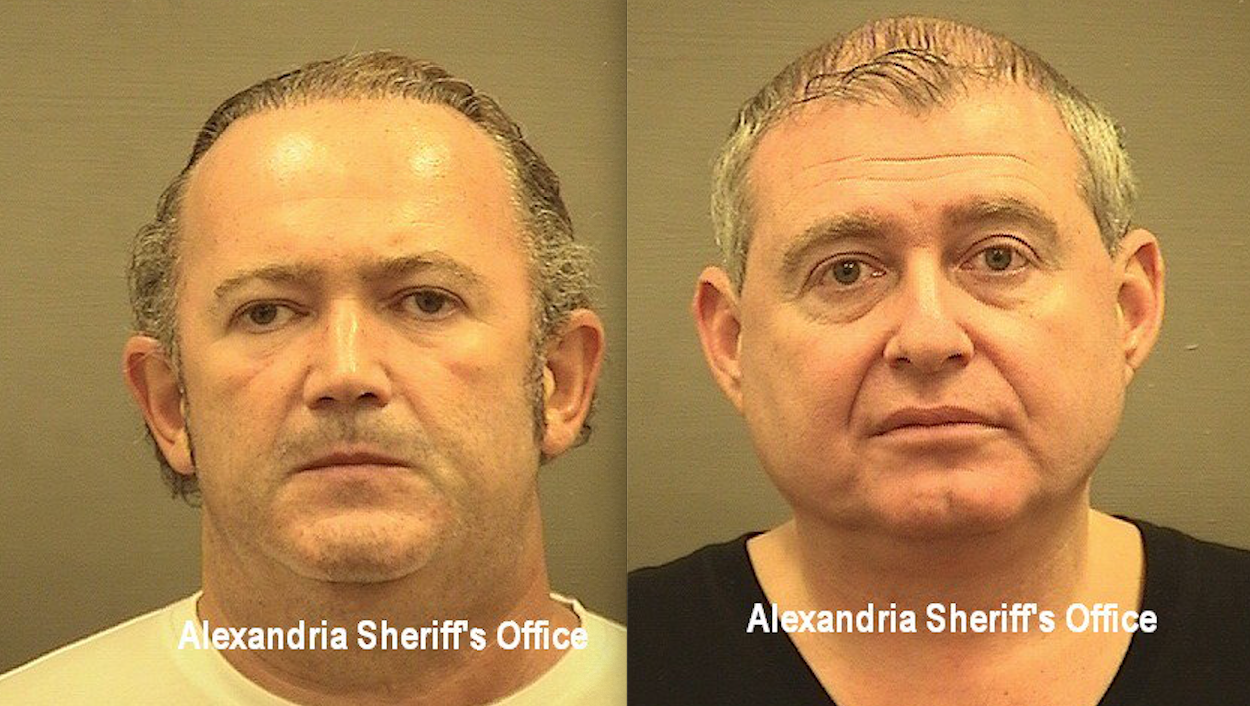
Meanwhile, Giuliani's relationship with Igor and Lev is part of an ongoing federal criminal investigation. The FBI wasn't ready to go public with it but they "had to quickly move to arrest Lev Parnas and Igor Fruman before they boarded a flight out of the country from Washington Dulles Airport with one-way tickets. They have been named as witnesses in the ongoing impeachment inquiry into President Trump. The investigation is being conducted by the FBI's New York field office and prosecutors in the Southern District of New York, the same U.S. Attorney's office Giuliani ran before he became mayor of New York."


Labels: , , ,

Saturday, July 28, 2018

The Anti-Red Wave

>


2010 was an anti-blue wave, just as 2018 is shaping up to be an anti-red wave. No doubt a failed clown like Ben Ray Lujan will try to "modestly" take credit for the great Democratic wins in November, regardless of the indisputable fact that there would be more wins if he was put into hibernation until November 9. The Republican who was in his place in 2010 was Pete Sessions, the corrupt and sleazy NRCC chairman from Texas. Yesterday, Politico mentioned 2 things: a- he's in trouble electorally this year (true) and b- he was the architect and engineer of 2010 (absurd). Alex Isenstadt was making the point that Sessions "is confronting a treacherous political landscape back at home-- a well-funded Democratic opponent with a boffo résumé, a rapidly diversifying and more liberal district, and, perhaps most critically, a constituency of well-educated and upper-income suburban voters who increasingly are turning on the president. His predicament underscores the grave danger confronting Republicans this fall. As the party braces for an electoral drubbing that threatens to wipe out the majority they won eight years ago, the list of incumbents under duress is growing ever longer-- and even powerful lawmakers like Sessions, a sharp-elbowed tactician who hasn’t faced a serious reelection contest in over a decade, are suddenly trying to survive a Trump-fueled bloodbath. In Texas alone, Democrats are targeting three Republican incumbents who’ve been in office for over a decade." [You can find more Democrats who won their primary races here, but who the DCCC refuses to help, primarily because they are progressives.]
[Sessions] pointedly declined to say whether he’d campaign as an ally of the president, who narrowly lost Sessions’ North Dallas district in 2016. And he appeared to concede that some in the business-friendly area-- which is home to a number of prominent country club-style Republicans, including former President George W. Bush-- have soured on the bombastic commander in chief.

...[Colin] Allred outlined how he intends to defeat the entrenched incumbent. He said Sessions has lost touch with his fast-changing district and is more interested in pursuing his leadership ambitions and advancing his party’s political interests.

But Allred hinted at another strategy: Winning over traditional Republicans who felt disillusioned with the president.

“I think if you are a George W. Bush Republican, you don’t see yourself in this version of the Republican Party led by Donald Trump,” said Allred, who was accompanied by his dog Scarlet, a Rhodesian Ridgeback.
Yeah... not the kind of Democrat Blue America expects much from-- other than heartbreak-- in the coming session of Congress because he'll be trying to hold onto that seat by behaving like (voting like) a Republican but will be swept out of office in 2022, in the anti-blue wave Ben Ray Lujan and Nancy Pelosi are engineering and being the architects of now.

Did you contribute to Doug Jones' campaign? It's good he beat the GOP child rapist, of course, but... on crucial roll calls, he's voted with the GOP over half the time. The half-dozen worst Senate Democrats-- from bad to worst:


Yesterday Axios had SurveyMonkey do another poll for them, looking alt 5 specific groups and how Trump approval/disapproval ratings are likely to impact the midterms. Alexei McCammond wrote that "The most important group to watch will be the #NeverHillary independents-- a group that narrowly disapproves of Trump's performance, according to a new Axios-SurveyMonkey poll. It's also not a good sign for Republicans that Trump's disapproval ratings are high among suburban white women. The other subgroups lean pretty much the way you'd expect.
#NeverHillary Independents are closely split on their views of Trump, and in 2016 they split three ways: 37% didn't vote at all, 33% picked Trump and 23% went for a third party candidate. The big question in 2018 is whether their disapproval of Trump will lead them to vote for a Democrat.

Suburban white women are a critical swing voter group. Nearly half strongly disapprove of Trump, but they're almost evenly divided between Democrats (44%) and Republicans (42%). They are mostly moderate or conservative in their views, but they care a lot about health care and immigration-- two of the biggest issues that are likely to drive Democrats to the polls.

Rural Americans are overwhelmingly white (76%), and many love Trump (38% strongly approve). They care most about jobs and the economy, but if Republicans want their help, they'll have to address the concerns of the 42% who disapprove of Trump.

African-American women are often called the backbone of the Democratic Party, and not surprisingly, they overwhelmingly disapprove of President Trump. Two out of three voted for Hillary Clinton in 2016. But if Democrats want their vote in 2018, the party will need to invest in the issues they care about.

Millennials (18-34) don't like Trump, and they are more likely to mention education and the environment over issues like health care and immigration. In 2016, 31% voted for Clinton and 19% voted for Trump, but 39% stayed home. If Democrats want to win them over, they'll need to focus on voter registration-- because millennials are the least likely group to report being registered to vote.

Labels: , , ,

Wednesday, February 21, 2018

Battle Ground Dallas-- Texas And Its People Are So Much Better Than Their Politicians

>


Redistricting takes place at the beginning of every decade, after the census. But in 2002 Republicans won control of the Texas legislature for the first time in 130 years. They immediately set about redrawing the state's congressional districts-- absurdly in many cases-- to send more Republicans and fewer Democrats to Congress. AT the time, Democrats held 17 seats to the Republicans 15. Tom DeLay, then House Majority Whip, oversaw the legislative takeover and then the gerrymandering. After the 2004 election, the Republicans he'd 21 seats and the Democrats 11. One of DeLay's tactics was to carve up Democratic areas-- Austin being the most obvious-- to dilute Democratic votes. Among DeLay's Democratic targets were Max Sandlin (who he replaced with Louie Gohmert) Charlie Stenholm (defeated by Randy Neugebauer), and Martin Frost (one of the top Democratic House leaders and DCCC chair). A Jewish conservative, Frost was a top Democratic rainmaker and was considered a possible future Speaker. He was probably DeLay's #1 target. His district included parts of Dallas, Fort Worth and Arlington. DeLay redrew it by taking out Democratic-friendly areas of Fort Worth and Arlington and putting in rich, white Republican suburbs around Dallas. While Al Gore won the old district in 2000, the new boundaries would have given George W. Bush a huge 68% landslide. The new district was specifically redrawn for right-wing state Rep Kenny Marchant, who still occupies it today. Frost's home in Arlington was shifted into a heavily Republican district, represented by 10-term incumbent Joe "oily Joe" Barton. Frost decided to seek re-election in the newly redrawn 32nd District, which included some of the district he represented from 1979 'til 1993. It didn't work; he lost by 10 points to Republican Pete Sessions, who still holds the seat.

Goal ThermometerThe Republicans have had to gerrymander the district again to exclude an exploding Latino population around Irving and Grand Prairie. DeLay and then Republicans in the legislature  ten years later didn't take the rapid changes in demographics seriously enough. In 2016 Hillary, who had no expectations of winning in Texas, took TX-32 by 2 points, 48.5% to 46.6%. Sessions, who didn't even have a Democratic opponent in 2016, is suddenly a top Democratic target. This morning Gloria Steinem announced her endorsement of Lillian Salerno. "Lillian," she wrote, "is the perfect woman to bring real life to Washington. She worked her way through college and law school, made a life's work out of finding people jobs, and knows what it is to be the single mother of three. It’s so important to elect a leader like Lillian to Congress-- we need more women’s voices speaking up for paid family leave, equal pay for equal work, and policies to prevent sexual harassment in the workplace. Texas only sends 3 women, out of a delegation of 38, to Washington right now. This is shameful! Texas women deserve true representation in government. The current representative for Lillian's district, Pete Sessions, voted against the Affordable Care Act, voted to cut Planned Parenthood funding, and even voted against the reauthorization of the Violence Against Women Act. Women need someone in Congress fighting for them and their families, not actively working against them.

Today there are 7 Democrats vying for the party nomination, including 3 who have raised over 6-figures: Clinton centrist Ed Meier, Obama centrist Colin Allred and independent-minded progressive Lillian Salerno. Blue America has endorsed Lillian and with that primary coming up so quickly-- 2 weeks from tomorrow-- I want to reintroduce her and make another appeal, asking you to help her fund her get-out-the-vote efforts. (You can do that by tapping on the Blue America Turning Texas Blue Again thermometer just above on the right. Meanwhile please take a look at a guest post Lillian wrote:


Defying The Alarming Trend Of Growing Corporate Power
by Lillian Salerno


In 1994, at the height of the AIDS crisis, in which I lost several friends and a beloved employee to the disease, I started a manufacturing company in Little Elm, about 35 miles north of Dallas, to produce the first-ever automatically retracting syringe to eliminate the risk of nurses contracting HIV through accidental needle sticks. The syringe received rave reviews from nurses, hospital executives and public health officials, a major grant from the National Institutes of Health and robust private investment. But when my partners and I tried to sell it to hospitals, we were told time and time again that even though it was a better product-- a lifesaving product-- they weren’t able to purchase it. The primary supplier of syringes, which controlled 80 percent of the market, structured an arrangement with a vast network of hospitals that essentially closed our industry to new firms for good, and the entire rural community of Little Elm suffered as a result.

I thought my story was a unique, that I picked a rotten industry to enter and had to fight hard as a small business just to stay alive. I was so caught up in my own fight for so long, I didn’t see the bigger picture until some years later. Like many, I was inspired by candidate Barack Obama’s rhetoric to restore power to the people, and I entered his administration aiming to fight for small business, to give those farmers and entrepreneurs the government support that the FTC and DoJ wouldn’t to give to me.

When I began to meet with America’s family farmers and entrepreneurs, a painful familiarity began to set in. Suddenly, I began to realize that the medical device industry wasn’t especially rotten, but rather that monopoly had become standard in the American marketplace. Early on, I remember in the drive back after a disheartening meeting with a small business owner, I asked a friend, “what is the government doing about this?” she looked at me and laughed. I realized that I was the government, and while I could help with some auxiliary issues, I didn’t have the power to tackle the structural issue of monopoly. Truth be told, I learned that there wasn’t much of an appetite to take on monopolies in the Obama administration. The candidate who I believed would defy the alarming trend of growing corporate power fell in line.

The consequences of growing corporate concentration are wide-ranging and dramatic. New research shows (Declining Labor and Capital Shares by Simcha Barkai) that around the average worker would be making around 14,000 dollars a year more if the economy was as concentrated as it was 30 years ago. But nowhere are the effects more visible than in America’s family farms and small-towns. Corporations dominate local economies to such an extent that people are unable to start their own businesses or sell into markets. These mega-corporations impede on worker’s freedom to take their labor elsewhere for better pay, they impede on the family farmer’s right to fair pay and access to market. Small town’s no longer have the power to shape their own economic destinies, which were once vigorously protected by federal antimonopoly laws.

Evidence on monopolies impact on small towns can be seen from data on economic recovery. From 2010 to 2014, 60 percent of counties nationwide saw more businesses close than open, compared with just 17 percent during the four years following the 1990s slowdown. During the 1990s recovery, smaller communities-- counties with less than half a million people-- generated 71 percent of all net new businesses, with counties under 100,000 people accounting for a full third. During the 2010 to 2014 recovery, however, the figure for counties with fewer than half a million people was 19 percent. For counties with less than 100,000 people, it was zero.

How did we get here? After the Great Depression, the government used antimonopoly laws to keep markets open and fair for smaller, independent businesses-- in other words, to keep mom-and-pop shops open and Main Street buzzing. These were businesses run by people who cared about and understood their communities, that kept wealth circulating locally, that created the vast majority of new jobs and that were often the source of game-changing innovation.

But in the 1980s, folks in power decided bigger was better, and conventional political wisdom followed suit. For the federal officials charged with protecting competition, that meant that cheap consumer prices trumped all other values, including the preservation of American jobs, open and competitive markets where innovation could flourish, and maintaining level playing fields for start-ups and small businesses. To this day, when government officials evaluate mergers, it’s considered a good thing when they result in job losses-- because that means, in the twisted reasoning we still use, gains in economic efficiency. The hard-working Americans turned out on the street corner to look for new jobs are the human sacrifices to the insatiable beast of corporate concentration.

It is a myth that the economic challenges that family farmers and small-town America face are caused by forces largely outside our control, like globalization or improvements in technology. We have the ability to help restore competition and economic vibrancy in rural America and beyond. The government has the authority to ensure markets are once again open and competitive so that communities have a chance to shape their own economic destinies.

Small town’s aren’t defined by the major corporations that sell in franchised retailers. Small town’s aren't corporate mega-farms. Small towns are the mom and pop stores and the local restaurants, the family farmers and small manufacturers willing to employ someone in the community who’s fallen on hard times. Small towns are unique ecosystems of small businesses and family farmers and if monopoly power keeps growing unchecked, small towns will lose their identity.


Labels: , , , , , ,

Tuesday, February 13, 2018

TX-32-- Why Lillian Salerno?

>


TX-32 was carefully gerrymandered district in the northern Dallas metro to specifically exclude minority voters in order to keep crooked GOP hack Pete Sessions safe. Last year the district PVI was R+10. Despite the gerrymandering that removed minority heavy areas around Irving and Grand Prairie, the new PVI is R+5. McCain beat Obama 55-44% there and Romney did even better-- 57-42%. But TX-32 was not Trump country in 2016. Hillary didn't campaign there or run ads there but she beat Señor Trumpanzee 48.5% to 46.6%. The backward-looking and incredibly incompetent DCCC didn't bother even fielding a candidate and Sessions cruised to reelection against a couple of un-funded independents with 71.1%. The DCCC hasn't paid any attention to Sessions and his district since he beat powerful Democratic incumbent Martin Frost there in 2004. There are three Democrats running seriously competitive campaigns going into the March 6-- and, presumably, the May 22 runoff-- primary: Edward Meier, a status quo type Hillary person; Colin Allred, a football player who worked had a low level job in the Obama administration; and Lillian Salerno, a progressive who Obama appointed deputy undersecretary of rural development for the Department of Agriculture. Almost a year ago, She wrote an OpEd for the Washington Post, Want To Rescue Rural America? Bust Monopolies. "For decades," she wrote, "rural America has been punished by bad policy that places too much power in the hands of distant financiers and middlemen through the formation of monopolies, which undermines small, local businesses and drains communities of resources. I know, because I started a company in rural Texas, and the challenges I faced illustrate the problem.
After the Great Depression, the government used antimonopoly laws to keep markets open and fair for smaller, independent businesses-- in other words, to keep mom-and-pop shops open and Main Street buzzing. These were businesses run by people who cared about and understood their communities, that kept wealth circulating locally, that created the vast majority of new jobs and that were often the source of game-changing innovation.

But in the 1980s, folks in power decided bigger was better, and conventional political wisdom followed suit. For the federal officials charged with protecting competition, that meant that cheap consumer prices trumped all other values, including the preservation of American jobs, open and competitive markets where innovation could flourish, and maintaining level playing fields for start-ups and small businesses. To this day, when government officials evaluate mergers, it’s considered a good thing when they result in job losses-- because that means, in the twisted reasoning we still use, gains in economic efficiency. The hard-working Americans turned out on the street corner to look for new jobs are the human sacrifices to the insatiable beast of corporate concentration.

This slow-rolling wave of corporate mergers has left almost all major markets-- airlines, telecommunications, health care, retail, milk, seeds for growing crops, hardware, even cowboy boots-- dominated by a cluster of mega-corporations, cloaked behind a plethora of brand names. These behemoths now hold unprecedented power over thousands of once-thriving community economies.

Corporate concentration has hit farmers, ranchers and agricultural workers especially hard. Many markets are entirely monopolized by a single company that dictates the terms of business to suppliers. Two decades ago, in the seed industry alone, 600 independent companies existed. Today there are six giants, several of which are pursuing high-profile mergers that will result in even more radical concentration. Similar levels of concentration exist for the beef, pork, chicken and dairy industries. The result is that the farmer’s share of each retail dollar of food has been collapsing, while consumers pay either the same or higher prices. Mega-corporations in the middle exploit their dominant market positions to reap all the profits.

It is a myth that the economic challenges that rural and small-town America face are caused by forces largely outside our control, like globalization or improvements in technology. We have the ability to help restore competition and economic vibrancy in rural America and beyond. The government has the authority to ensure markets are once again open and competitive so that communities have a chance to shape their own economic destinies. The question is whether we will recognize the error of our ways and put taking on monopolies high on the economic agenda-- for rural and small-town America, and for everyone who wants to ensure our country can once again be the land of opportunity.
Goal ThermometerPartially based on this incisive OpEd and the thinking-- and resolve-- behind it, Blue America decided to endorse her. Yesterday we asked her to explain some of the lessons she learned as a Texas healthcare entrepreneur in regard to how monopolies stifle innovation in the healthcare industry. Please give it a read. And if you like what you see and would rather have Lillian serving in Congress than shameless Big Business puppet Pete Sessions, please consider clicking on the Turning Texas Blue Again thermometer on the right and contributing to Lillian's campaign.


Fixing Healthcare-- The ACA Was A First Step, But Not Sufficient
- by Lillian Salerno


Every person deserves quality, affordable healthcare. A healthcare system that robs individuals of this fundamental right is a moral and economic failure.

We made tremendous progress in passing the Affordable Care Act. It did a lot of good things-- ensuring children could stay on their parent’s plan until they were 26, made sure that no one could be denied coverage for a pre-existing condition, and ended lifetime insurance caps. But it was far from perfect and America cannot live up to its potential until every single person has quality, affordable healthcare.  During the healthcare negotiations, I worked alongside nurses, small businesses, patients and healthcare providers trying to lower costs and increase transparency, but the medicine’s middlemen (i.e. pharmaceutical, insurance companies, pharma, big medical supply houses) on the other side of the table. They had all the power-- which prevented us from passing a bill that would fix our broken healthcare system.

To truly fix it, we must create transparency in costs, break up monopolies in the healthcare industry, make Medicare available to everyone and work towards single-payer healthcare.

I am running for Congress in TX-32 because we can all sense that America is in trouble. It’s not just Trump, who is a dangerous person. Or Pete Sessions, his lapdog. It’s everywhere.

For instance, there’s a company called Luxturna which makes a remarkable new medical treatment to treat blindness. They use genetic technology. Amazing stuff.
But they have decided to charge $850,000 for it, or $425,000 per eye, because that’s the maximum amount they think someone will pay not to be blind. They have taken medicine, and have turned it into a ransom note. When they were kids, the scientists who discovered this probably said they wanted to help people. None of them grew up saying they wanted to grow up to figure out the maximum amount someone would pay to be able to see. Yet that is the society we have today.

We must stop this madness. When we invented penicillin, the idea was to save lives, not to serve Wall Street. We can restore the America we know and love. But it is going to take all of us. It’s going to take courage. And it’s going to take political leadership.

Everyone I know has a nightmare healthcare story. A medical emergency that leads to bankruptcy. A chronic condition that they spend 20 hours a week fighting to get the insurance company to cover the treatment for.  An impossibly expensive medication that insurance won’t pay for. Or just the inability to see the doctor for a routine problem because of the co-pays and deductibles and opaqueness of knowing the cost of a visit.

We must have transparency in healthcare costs. One of my constituents was telling me this weekend about her experience. She said that because she is trained as a nurse and has the time to negotiate and shop around, she pays out of pocket when she needs most medical procedures or tests, such as an x-ray of her foot because of an injury. She negotiates for herself because if she went through her healthcare company she would have no idea how much it would cost until she saw the bill 2 months later. She knows most people can’t do that, but it’s the only way she can keep the costs down.

Healthcare costs should be like a menu, just like any other service or good that we purchase, and it’s up to the government to make this a reality for Americans. It’s the only thing we don’t know the cost of what we are purchasing upfront. There are currently models that could help. For example, you can call up Planned Parenthood and ask what the cost of any of their services are. They have a menu of services with prices-- so if you only have a certain amount of money you can spend today, you can take care of the most urgent things first. No surprises. The same must be true for medicine and all the other pieces of the healthcare industry.

We must also break up monopolies in the healthcare sector. In 1994, at the height of the AIDS crisis, in which I lost several friends and a beloved employee to the disease, I started a manufacturing company in Little Elm, Texas about 35 miles north of Dallas, to produce the first-ever automatically retracting syringe to eliminate the risk of nurses contracting HIV through accidental needle sticks. The syringe received rave reviews from nurses, hospital executives and public health officials, a major grant from the National Institutes of Health and robust private investment. But when my partners and I tried to sell it to hospitals, we were told time and time again that even though it was a better product-- a lifesaving product-- they weren’t able to purchase it. The primary supplier of syringes, which controlled 80 percent of the market, structured an arrangement with a vast network of hospitals that essentially closed our industry to new firms for good. And this is not a unique story. Innovation and entrepreneurship is stifled in healthcare and all industries because we have allowed monopolies to thrive and do not exercise the political will to enforce our anti-trust laws.

We must do better. We cannot continue to spend 40% more on healthcare costs than other developed countries with worse outcomes. We cannot continue to bankrupt our citizens while corporations profit off of our illness and vulnerability. We need political leadership. We cannot continue to lose out on important innovations that increase the health and safety of our citizens. We can and we will fix healthcare.


Labels: , , , , ,

Tuesday, September 12, 2017

Imagine If Candidates Were Chosen By The Voters Because They Actually Know Something-- Meet Lillian Salerno (TX-32)

>


While more Republican incumbents assess their party's-- and their own-- electoral prospects next year and respond by announcing early retirements, a flood of qualified Democrats are rushing to announce their candidacies across the country. Mainstream conservatives Ileana Ros-Lehtinen (R-FL), Dave Reichert (R-WA) and Charlie Dent (R-PA) were joined yesterday by Michigan foreclosure king, Dave Trott and the rumors about Leonard Lance (R-NJ) have been like a buzzsaw today.

Meanwhile, Democrats are flocking to announce their candidacies-- and in districts that the DCCC has studiously ignored for years. Let's take TX-32 for an example, a carefully gerrymandered district in the northern Dallas metro designed specifically to exclude minority voters to keep crooked GOP hack Pete Sessions safe. Last year the district PVI was R+10. Despite the gerrymandering that removed minority heavy areas around Irving and Grand Prairie, the new PVI is R+5. McCain beat Obama 55-44% there and Romney did even better-- 57-42%. But TX-32 was not Trump country last year. Hillary didn't campaign there or run ads there but she beat Señor Trumpanzee 48.5% to 46.6%. The backward-looking and incredibly incompetent DCCC didn't bother even fielding a candidate and Sessions cruised to reelection against a couple of un-funded independents with 71.1%. He spent $2,559,457 and the independent who raised some money, Gary Stuard, spent $3,189. The DCCC hasn't paid any attention to Sessions and his district since he beat powerful Democratic incumbent Martin Frost there in 2004. This year, though, there are already nearly a dozen Democratic candidates who have declared, including former football star and Obama HUD official Colin Allred (no issues page on his website), Danielle Pellett (sounds liker a Berniecrat), Darrell Rodriguez (sounds like a Benriecrat), former Hillary Clinton campaign staffer Ed Meier, George Rodriguez, Ron Marshall, Chris Suprun (no issues on his website-- although a "coming soon" promise), Steve Love (website sounds like we're dealing with someone who isn't mentally competent), Todd Maternowski, Awbrey Tyler Hughlett (website indicates another possible crazy person) and today Lillian Salerno. How does anyone navigate a huge field like this?

Salerno looks interesting at first glance. Obama appointed her deputy undersecretary of rural development for the Department of Agriculture, where she served from 2012-2017 and then moved back to her native Dallas.

Back in April, Salerno wrote an OpEd for the Washington Post worth looking at in light of what she would bring Congress, Want to rescue rural America? Bust monopolies. "Since President Trump’s election," she wrote, "much has been made of his rural, heartland voters, and how politicians can better serve them, with most discussion centering on international trade and globalization. But there is another political and economic disaster crushing the heartland-- one politicians could solve now, if they chose to. For decades, rural America has been punished by bad policy that places too much power in the hands of distant financiers and middlemen through the formation of monopolies, which undermines small, local businesses and drains communities of resources. I know, because I started a company in rural Texas, and the challenges I faced illustrate the problem."
In 1994, at the height of the AIDS crisis, in which I lost several friends and a beloved employee to the disease, I started a manufacturing company in Little Elm, about 35 miles north of Dallas, to produce the first-ever automatically retracting syringe to eliminate the risk of nurses contracting HIV through accidental needle sticks. The syringe received rave reviews from nurses, hospital executives and public health officials, a major grant from the National Institutes of Health and robust private investment. But when my partners and I tried to sell it to hospitals, we were told time and time again that even though it was a better product-- a lifesaving product-- they weren’t able to purchase it. The primary supplier of syringes, which controlled 80 percent of the market, structured an arrangement with a vast network of hospitals that essentially closed our industry to new firms for good.

The environment in rural Texas was perfect for our company. We had a talented workforce, the means to build and ship our products, and a community that supported our work. But because the hospital and medical device market was intensely concentrated, our company didn’t reach its full potential. Our business became mired in litigation rather than innovation. And the entire community of Little Elm suffered as a result.

Ours is a common story. For years, rural and small-town America have fought an uphill battle for economic survival. Many in the halls of power viewed the shuttered storefronts and desolate downtowns as the inevitable consequence of globalization and technology, about which little can (or even should) be done. But one major force behind the steep economic decline is something that, until very recently, has received virtually no attention: the unprecedented level of corporate monopoly power that has been concentrated throughout the American economy.

The consequences are wide-ranging and dramatic (one new research paper found that the increase in corporate consolidation effectively transfers $14,000 a year from workers’ wages to corporate profits). But nowhere are the effects more visible than in rural and small-town America. In these communities, corporations dominate local economies to such an extent that people are unable to start their own businesses or sell into markets. They are no longer free to take their labor elsewhere for better pay. Small town businesses and the communities they serve no longer have the power to shape their own economic destinies, which were once vigorously protected by federal antimonopoly laws.

Let’s look at just one indicator-- new business formation. From 2010 to 2014, 60 percent of counties nationwide saw more businesses close than open, compared with just 17 percent during the four years following the 1990s slowdown. During the 1990s recovery, smaller communities-- counties with less than half a million people-- generated 71 percent of all net new businesses, with counties under 100,000 people accounting for a full third. During the 2010 to 2014 recovery, however, the figure for counties with fewer than half a million people was 19 percent. For counties with less than 100,000 people, it was zero.

How did we get here? After the Great Depression, the government used antimonopoly laws to keep markets open and fair for smaller, independent businesses-- in other words, to keep mom-and-pop shops open and Main Street buzzing. These were businesses run by people who cared about and understood their communities, that kept wealth circulating locally, that created the vast majority of new jobs and that were often the source of game-changing innovation.

But in the 1980s, folks in power decided bigger was better, and conventional political wisdom followed suit. For the federal officials charged with protecting competition, that meant that cheap consumer prices trumped all other values, including the preservation of American jobs, open and competitive markets where innovation could flourish, and maintaining level playing fields for start-ups and small businesses. To this day, when government officials evaluate mergers, it’s considered a good thing when they result in job losses-- because that means, in the twisted reasoning we still use, gains in economic efficiency. The hard-working Americans turned out on the street corner to look for new jobs are the human sacrifices to the insatiable beast of corporate concentration.

This slow-rolling wave of corporate mergers has left almost all major markets-- airlines, telecommunications, health care, retail, milk, seeds for growing crops, hardware, even cowboy boots-- dominated by a cluster of mega-corporations, cloaked behind a plethora of brand names. These behemoths now hold unprecedented power over thousands of once-thriving community economies.

Corporate concentration has hit farmers, ranchers and agricultural workers especially hard. Many markets are entirely monopolized by a single company that dictates the terms of business to suppliers. Two decades ago, in the seed industry alone, 600 independent companies existed. Today there are six giants, several of which are pursuing high-profile mergers that will result in even more radical concentration. Similar levels of concentration exist for the beef, pork, chicken and dairy industries. The result is that the farmer’s share of each retail dollar of food has been collapsing, while consumers pay either the same or higher prices. Mega-corporations in the middle exploit their dominant market positions to reap all the profits.

It is a myth that the economic challenges that rural and small-town America face are caused by forces largely outside our control, like globalization or improvements in technology. We have the ability to help restore competition and economic vibrancy in rural America and beyond. The government has the authority to ensure markets are once again open and competitive so that communities have a chance to shape their own economic destinies. The question is whether we will recognize the error of our ways and put taking on monopolies high on the economic agenda-- for rural and small-town America, and for everyone who wants to ensure our country can once again be the land of opportunity.
The primary is six grueling months away-- March 6. This is absolutely an important and flippable district to watch, one a Democrat, as long as he or she has something to offer aside from party label, should be able to win either in 2018 or in 2020. I spoke with Lillian Salerno this afternoon and she came across as a populist very much in the tradition of people like Sam Rayburn, Ann Richards and Lloyd Bentsen. She even mentioned that great Texas legislator Wright Patman to be, not something you hear from many candidates these days. And she told me "We burden our students with more debt than they can pay. We deny our workers a livable wage and affordable healthcare while we send all the prosperity to Wall Street. I'm going to Washington to return the government to the people."

Labels: , , , , , ,

Friday, June 09, 2017

Taking On Pete Sessions-- The Clinton Wing Of The Party Makes Its Move... Kind Of

>

Ed and Hill

Last year the DCCC didn't bother recruiting a candidate in TX-32, Pete Sessions district in the suburbs north of Dallas, including Highland Park, University Park, Richardson, Garland and east to Lake Ray Hubbard and Lavon Lake. The DCCC hasn't paid any attention to Sessions and his district since he beat powerful Democratic incumbent Martin Frost there in 2004. This year, though, there are already 9 Democratic candidates who have declared, including former football star and Obama HUD official Colin Allred (no issues page on his website), Danielle Pellett (sounds liker a Benriecrat), Darrell Rodriguez (sounds liker a Benriecrat), former Hillary Clinton campaign staffer Ed Meier (no issues page on his website), George Rodriguez (no website), Ron Marshall (no issues page on website), Steve Love (website sounds like we're dealing with someone who isn't mentally competent), Todd Maternowski (no issues page on his website) and Awbrey Tyler Hughlett (website indicates a possible crazy person). How does anyone navigate a huge field like this?

Well, David Dayen, helped us figure out something about at least one of these candidates: the Hillary Clinton guy, Ed Meier. The commencement speaker at Medgar Evers College yesterday, Hillary took a swipe at Trump: "I’ve had a few setbacks in my own life... and losing an election is pretty devastating, especially considering who I lost to." Yes, and don't forget what your loss did to the rest of us. Some of her old team are meeting in DC today at a cocktail party to raise money for one of themselves, Meier, for his congressional run. Meier will never get to Pete Sessions unless he can beat Colin Allred in the primary first. The fundraiser is being hosted by Robby Mook, Cheryl Mills, Jake Sullivan, Tom Nides, Lona Valmoro and Dan Feldman, all Clinton campaign alums.
The high-powered D.C. fundraiser with a mix of political and business leaders may seem discordant, at a time when Democrats are coalescing around a more strident liberal politics. And it suggests that the faction that has maintained an iron grip on Democratic politics for decades does not plan to go away quietly.

...Nides, a Clinton bundler and top executive at Fannie Mae and Morgan Stanley, slid into government service when Clinton served at the State Department. Nides went right back to Morgan Stanley after Clinton left State, but was rumored to be a top candidate for White House chief of staff or another top position in a Clinton White House. Nides helped Bill Clinton sell NAFTA to Congress in the 1990s, and later helped Morgan Stanley fend off more aggressive financial reform in the Dodd-Frank Act.

When Elizabeth Warren, anticipating a Clinton victory, said in a speech last September that the Democratic nominee’s hypothetical White House’s personnel shouldn’t include “Citigroup or Morgan Stanley or BlackRock getting to choose who runs the economy in this country so they can capture our government,” it was widely assumed the Morgan Stanley inclusion was a reference to Tom Nides.

Similarly, it was assumed that Warren’s name-check of BlackRock, the world’s largest asset management firm, was a reference to Mills, a major Clinton confidant who will also co-host Friday’s Meier fundraiser. Mills, Clinton’s former chief of staff at the State Department,  has served on BlackRock’s board of directors since October 2013. Observers immediately intuited this as a ploy by Larry Fink, the BlackRock CEO, to insinuate himself into Clinton’s inner circle as part of a bid to become Treasury Secretary. With Trump winning the presidency, Fink took the consolation prize: a seat on the President’s Strategic and Policy Forum, a panel of CEOs who advise the administration on the economy.

In addition to the BlackRock board, Mills now runs her own hedge fund, BlackIvy, which endeavors to build commercial businesses in sub-Saharan Africa. During the campaign, Clinton’s Wall Street reform policies very closely mirrored the preferences of BlackRock and its CEO.

Dan Feldman, one of the other Clinton veterans hosting the Meier fundraiser, is now a partner at the white shoe Washington law firm Akin Gump, where according to the press release announcing his hire he advises “multinational corporations, U.S. trade associations and foreign governments on international business and policy issues.”

These are not exactly abnormal credentials for a D.C. fundraiser. But seeing so many ex-Clinton officials team up on behalf of a congressional candidate, particularly those with deep ties to the financial industry, raises questions about Meier’s views on that critical domestic policy subject.

Meier currently serves as the interim executive director of an non-profit education company called Big Thought, which provides after-school and summer learning programs in the Dallas area. He was a senior advisor to Clinton at the State Department before serving as a policy advisor on the campaign. As co-executive director of the Clinton transition, Meier spent the final months before Election Day focused on staffing a potential Clinton White House.
Bleccchhhh... if that's the kind of crap that all the Resistance energy goes into-- what a damned waste!

Labels: , , , , ,

Thursday, April 20, 2017

Developments In Texas-- Cruz Is Vulnerable... And So Is Pete Sessions

>


There have been a lot of rumors lately that Jared Polis may be contemplating ditching his safe Boulder, Colorado congressional seat for a very iffy gubernatorial run in a crowded field for an open seat. I wish him well. But he was just elected Regional Vice Chair of the DCCC for a region that includes Texas, likely to be one of the hottest 2018 battlegrounds. Ummm... likely... likely... if the DCCC is paying attention, which is something it certainly hasn't done in Texas in recent years.

Tuesday we looked at good Democratic congressional targets for 2018-- and 9 were in Texas, more than in any other state, more than the 8 in California or 7 in Florida. And only one is a district the DCCC has ever even worked in before, TX-23, a nice blue district the DCCC-- through sheer and dogged incompetence-- keeps giving to the GOP. Will Hurd is the congressman in this 71% Hispanic district because the DCCC insisted on running an especially corrupt conservative shithead named Pete Gallego, a one-term Blue Dog who the voters recognized as a Republican-in-disguise and quickly kicked out of office. That, of course, didn't stop the DCCC from recruiting him for another try. Hillary beat Trump last November in the district, 49.8% to 46.4% but on the same day, the same voters slapped the DCCC Blue Dog down again-- 48.5% to 46.8%. And that's the only district the DCCC has any experience with! So far if they have a candidate, they're keeping it quiet. (When they recruit someone especially horrible-- an "ex"-Republican or a wealthy clueless person or something along those lines--  they try to keep it quiet for as long a they can.)

The other Texas incumbents who would make good one or two-cycle targets are Joe Barton (R-TX), John Culberson (R-TX), Pete Sessions (R-TX), Mike McCaul (R-TX), Lamar Smith (R-TX), Pete Olson (R-TX), Kenny Marchant (R-TX), Roger Williams (R-TX) and John Carter (R-TX). But that would mean someone is paying intense attention-- intense-- the way Ted Lieu is on the West Coast. (Someone running for governor can't do it in his spare time. Nothing will get done and another opportunity will be blown.) Today there was news that civil rights attorney and former NFL player Colin Allred has decided to run in TX-32, Pete Sessions' carefully gerrymandered but recently vulnerable north Dallas metro district). About a month ago we suggested that Regina Montoya would be the likely candidate, although there are several others considering the race as well, excited by the 48.5% to 46.6% Hillary win over Trump. A Democrat wasn't even on the ballot against Sessions last time, who faced a Green and a Libertarian and walked away with 71.1% of the vote. He'll be tough to beat for anyone-- and the DCCC doesn't have the vaguest notion of how to fight in the district.

Goal Thermometer Wednesday morning the Texas Lyceum released a brand new poll that shows El Paso Congressman Beto O'Rourke tying Ted Cruz for Cruz's Senate seat. It also shows another potential contender, the more conservative and establishment-oriented Joaquin Castro, ahead of Cruz, 35-31%.

Texans, like most Americans disapprove of the way Trump is doing his job-- and by double digits. 54% disapprove and just 42% approve. The first half of the poll, released Tuesday, delved into immigration as an issue:
 Texans believe that immigration is the number one issue facing the state and the nation, but a plurality of Texas adults (62 percent) also say that immigration helps the U.S. more than it hurts. The younger the respondent, the more positively they view immigration.

 Public safety and economics drive Texans’ concerns over illegal immigration.

 Most Texas adults continue to oppose (61 percent) President Donald Trump’s proposal to build a wall on the U.S.- Mexico border, and most don’t want him to deport millions of undocumented immigrants.

 Many support traditional immigration reform proposals, even a pathway to citizenship if significant restrictions are put in place.

Labels: , , , , , ,

Sunday, March 19, 2017

The Natives Are Restless-- In Texas

>


Regina Montoya is a successful attorney, chairwoman of Dallas Mayor Mike Rawlings' Taskforce on Poverty and senior vice president and general counsel of Dallas' Children's Medical Center. In 2000. In 2000 she ran against Pete Sessions, who beat her 100,510 (54.0%) to 82,685 (44.4%). She was able to nearly match his $1,986,465 fundraising haul (with $1,642,494). Things have changed in TX-32 (North Dallas from Uptown, Highland Park and University Park, up to Richardson and Garland to the eastern shore of Lake Ray Hubbard). Even though the Republican legislature recently gerrymandered the district to make it less Latino, Hillary actually beat Trumpanzee 48.5% to 46.6%-- in a district that Romney won 57.0% to 41.5%. And now Dallas area Democrats want Montoya to run against Sessions again. He appears very vulnerable and she's a pretty ideal candidate for a seat like that. The DCCC brain surgeons didn't run a candidate in 2016 at all and, in fact, the last time Sessions had a real challenge was in 2004 when he was in an incumbent vs incumbent battle with Martin Frost, each raising over $4.5 million. Since they, it's been a free pass from the DCCC. But not 2018 (they claim).

Over the weekend, Patrick Svitek, reporting for the Texas Tribune, wrote that Sessions' packed town hall on Saturday was raucous and angry-- and all about the highly unpopular TrumpCare, which can't pass without Sessions' connivance on the House Rules Committee. His constituents know it too. In the Republican primary Trump came in third behind Cruz and Rubio.
Addressing over 2,000 people, Sessions was frequently drowned out by boos and angry outbursts from the audience. Many of his answers were not entirely audible due to the crowd’s reaction as he began to speak.

“We are going to make the changes, we are going to pass the bill and we are going to repeal Obamacare,” Sessions said at one point, a declaration that gave way to sustained chants of “Vote him out!”

...“You know what? I know why you’re so frustrated: You don’t know how to listen,” Sessions said amid the negative feedback, inviting a new round of boos.

“I know how to listen,” Sessions added a short time later.

Sessions did appear to find some common ground with the otherwise largely hostile crowd. Asked repeatedly about Trump's proposed budget cuts to a number of federal agencies and programs, he expressed support for protecting the National Institutes of Health and Meals on Wheels, the service that provides food to the elderly and relies on grants that could be on the chopping block. Sessions also expressed doubt that Congress would go along with what he described as Trump's "drastic cuts" to the Environmental Protection Agency.

...In a congressional town hall in North Texas, U.S. Rep. Michael Burgess, R-Lewisville, withstood two hours of booing from hundreds of angry constituents at a local high school.
Lucky for Burgess, his district, TX-26, just a bit north and west of Sessions' (primarily Denton County), is way redder. The PVI is R+20, Romney beat Obama 60-38% and Trump beat Hillary 60.9-34.4%. Burgess was first elected in 2002 when he bear retiring GOP crackpot Dick Armey's son in the primary. Last year the Democrat "running" against him raised zero dollars, the same amount the Democrat who ran against him in 2014 spent. In the 8 times he's run, the DCCC has never even tested his popularity by backing a candidate. And, worthless as ever, they have no intention of doing so in 2018.


Labels: , , , ,