Monday, September 21, 2020

A Man Is Only As Good As His Word? So How Do Closet Cases, Like Lindsey Graham Survive In Electoral Politics?

>


I'm gay. When I realized it, I was living in Amsterdam. I went to a psychologist and told him. He looked at me oddly and said, basically, "So? You need me to give you the addresses of gay bars?" Then I flew to the U.S., for my first visit back home in 4 years, to tell my mother. Her response was to tell me I couldn't borrow her wigs. Years later my first corporate job was working for a gay man. My sexuality never held back my career and I rose to be president of the parent company. I'm glad I never went down the closet road. People in closets live a life reflexively and usually increasingly dishonest. They lie about who they are, what they are and, eventually, about everything and start living a life where serial dishonestly becomes the essence of being, more so than any semblance of honesty. It's the slipperiest of slopes to start down and so, so tragic for so many people.

It's the slope poor Lindsey Graham felt he had to go down if he was going to be a successful politician in South Carolina. And, his life has been one gigantic lie, both professionally and personally. "Everyone knows" and even colleagues and acquaintances who find him likable, simpatico and amusing, all tend to pity him. And now it may be catching up with him politically, as an unlikely Democratic opponent has him locked in a what should be an easy reelection campaign but is basically tied and too close to call.

On Saturday, Washington Post reporters Sean Sullivan and Seung Min Kim wrote that 4 and a half years ago Lindsey "sat across a conference table from his colleagues and issued them a dare. 'I want you to use my words against me,' said Graham, a South Carolina Republican with a flair for drama. Pointing with his index finger, Graham continued: 'If there’s a Republican president in 2016 and a vacancy occurs in the last year of the first term, you can say Lindsey Graham said let’s let the next president, whoever it might be, make that nomination.' On Saturday, Graham was singing a different tune, pledging support for President Trump in 'any effort to move forward regarding the recent vacancy created by the passing of Justice Ginsburg.' The stark turnabout from 2016 marked the latest chapter in Graham’s dramatic reinvention of himself during the Trump presidency, morphing from an old-school Senate institutionalist and bipartisan dealmaker into a stalwart soldier for the president’s agenda."

Democrats and other opponents of The Donald very much would like to take Graham up on his offer-- to hold his words against him. I don't know how effective this Lincoln Project ad will be with South Carolina voters, but I suspect someone will figure out exactly how to hold his words against him in a way that will cause him no end of political pain. After all, no one likes a liar... well, except for Republicans who apparently love liars:


"Graham," our Post duo reminded us, "is chairman of the powerful Senate Judiciary Committee charged with processing Supreme Court nominees, and he is in the midst of a competitive reelection campaign that could factor closely into the fight for control of the upper chamber. His comments Saturday, coming after less-decisive statements in the hours after Justice Ruth Bader Ginsburg’s death Friday, amounted to the latest indication of how Republican leaders are rallying quickly around a strategy of seeking to fill her seat this year. That prospect has stoked widespread outrage among Senate Democrats, who are calling Republicans hypocrites for the move after blocking President Barack Obama’s Supreme Court nominee in 2016 because they said the president chosen by voters that fall should make the pick.
“There’s no doubt everything will be sort of on the table if we’re thrown into a world where you can’t trust somebody’s word and precedents get changed at will to fit your priorities of the moment,” Sen. Chris Murphy (D-CT) said in response to Graham’s decision to align behind Trump and go back on what he said in 2016.

During Saturday’s call, Senate Minority Leader Charles E. Schumer (D-NY) used similar language, saying that if Senate Republicans move forward with whoever Trump nominates, “nothing is off the table for next year” should Democrats win control of the chamber. That appeared to be a reference to structural changes to the court proposed by liberal activists such as expanding the number of justices-- a proposal that has sparked some disagreements among Democrats.


Republican leaders appeared determined to press ahead swiftly to fill the court vacancy with a conservative jurist. Senate Majority Leader Mitch McConnell (R-KY) promised Trump during a Friday phone call that his nominee would get a vote in the Senate, according to people familiar with their conversation who, like others, spoke on the condition of anonymity to discuss the private conversation.

Trump told McConnell he liked Judge Amy Coney Barrett of the U.S. Court of Appeals for the 7th Circuit and Barbara Lagoa of the 11th Circuit, according to two people briefed on the discussion.

“We were put in this position of power and importance to make decisions for the people who so proudly elected us, the most important of which has long been considered to be the selection of United States Supreme Court Justices,” Trump wrote on Twitter Saturday. “We have this obligation, without delay!”

...Less clear is how rank-and-file Republican senators will respond, with many in tough reelection races in states where Trump is not popular. Republicans hold a 53-to-47 majority in the Senate, meaning they can afford to lose no more than three members in a confirmation vote, should the entire Democratic caucus unite against Trump's nominee.

They have already lost one.

“I do not believe that the Senate should vote on the nominee prior to the election,” Sen. Susan Collins (R-Maine), who is in a tough reelection fight, said in a statement. “In fairness to the American people, who will either be re-electing the President or selecting a new one, the decision on a lifetime appointment to the Supreme Court should be made by the President who is elected on November 3rd.”

Collins’s reservations contrasted sharply with the comments from Graham, who is seeking a fourth term in the Senate. The contest has been tougher than many expected in a ruby-red state Trump won easily in 2016, with recent polls showing Democrat Jaime Harrison in close competition with Graham.

Now Graham will be at the center of what will likely be one of the most contentious confirmation battles in history, affording him an opportunity to demonstrate his loyalty to Trump. But some Democrats say his position could help amplify the arguments against his reelection.

“A lot of folks miss the Lindsey of old-- and that’s why this race is so competitive,” said Steve Benjamin, the Democratic mayor of Columbia, S.C. “When it comes time to do what’s right and maybe not popular,” Benjamin said, “it can be difficult for some.”

Harrison, one of his party's fast-rising African American stars, sounded similar notes. “My grandpa always said that a man is only as good as his word. Senator Graham, you have proven your word is worthless,” he wrote on Twitter.
Writing for The Atlantic, Edward-Isaac Dovere offered a glimpse into what Republican senators are saying in private and off the record. "Whispering Republicans," as he termed them, talk about how they hate The Donald and then back him in public-- to the media and, of course, with their votes. The GOP is absolutely one of the country's two spineless, jellyfish parties. "The secretly apostate Republican senators," wrote Dovere, "have two choices: They can support a president they think is a threat to American democracy while also violating Senate Majority Leader Mitch McConnell’s invented 2016 rule about not confirming justices in an election year, or they can oppose Trump, enraging both him and their progressively cultish base while giving up what might be their last chance to secure a conservative majority for a generation."

Notice The Donald's Chamber of Commerce retweet from Sunday morning, signally he's ready for war with Alaska senior Senator Lisa Murkowski, who is not up for reelection in November and is not up for giving Trump a third Supreme Court pick.


For McConnell, this is principle versus power, and the golden rule is “Whoever has the gold makes the rules.” And it’s happening as the next generation of ambitious Republicans looks to a future in which Trumpism remains a dominant force within the party no matter what happens in November.

Don’t expect many Republicans-- even those who want to stick it to Trump-- to be direct with their commitments. “If they try to shove something through, I think you’re going to see some of these Republicans who hate Trump fall on the horrible sword of ‘This country is dangerously divided right now; the hypocrisy is horrible; if we do something like this, it will tear the country apart,’” says Joe Walsh, the former Republican representative from Illinois, who briefly ran a primary campaign against Trump that went nowhere earlier this year. Based on conversations he’s had, Walsh estimates that, of the current Republican senators, “if you put a gun to their head privately, I would say more than 40 of the 53 would like to see him lose.”

Walsh insists that Republicans didn’t want this vacancy-- not now. “This is political death for the Republicans,” he told me.

This is not the time for Republicans to insist that they haven’t “seen the latest tweet.” This is where they either will or will not give Trump the boost that he needs weeks before the election. Now, more than ever, they are either with him or against him. “This,” Senator Amy Klobuchar of Minnesota, a Democrat, said on CNN last night, “is my colleagues’ moment of reckoning.”

...Senator Joni Ernst, in a tight reelection race in Iowa, said in July that she would support a nomination process if an opening occurred. But that puts her at odds with her fellow Iowa senator, Chuck Grassley, who said in August that he couldn’t support a confirmation in an election year if he was going to be consistent with the position he took in 2016. He stood then with McConnell’s adamant refusal to give Merrick Garland a hearing after Antonin Scalia’s sudden death in 2016, though Garland was nominated nine months before Election Day. Of course, the question becomes whether Grassley will hold to his position now that the question is no longer theoretical.

...Late yesterday, I asked a former Republican House member what an anti-Trump Republican senator would do when facing a choice that sounds more out of a novel than anything Goethe might have come up with if he’d ever wandered around Capitol Hill.

“The Republican senator,” said the person, who requested anonymity to speak directly about old colleagues, “will do what they must in the name of self-preservation.”

“Guess what?” the former House member said of Graham. “He’s going to do it. You know he is. He’s up for reelection in South Carolina. He needs his base. He’ll flip on this.”

McConnell, in his Rube Goldberg–machine statement explaining why Trump’s nominee will get a vote on the floor of the Senate but Obama’s didn’t, left the door open to having a vote in a potential lame-duck session after the election.

Maybe it’ll all come down to Senator Mitt Romney, who is publicly offended by pretty much everything Trump stands for but whose spokesperson shot down rumors last night that he would oppose a confirmation before the election. Or maybe, if Mark Kelly wins his Senate race in Arizona, it will all hinge on a legal dispute over whether he would get to immediately be sworn into the seat because his opponent was appointed to it. Or maybe by then we’ll be in a country where the November 3 votes are taking weeks to count, rioters and militias are out on the streets, and, as in 2000, the election will head to the Supreme Court, which now is without a tiebreaker vote.

In 2016, from the minute he learned of Scalia’s death, Obama knew that Republicans would try to prevent him from appointing a justice and flipping the balance to a 5–4 liberal majority. He nominated Garland anyway and threw himself into the fight, daring the GOP senators to oppose a middle-of-the-road, accomplished judge whom so many had voted for in his confirmation to a lower court. Working the phones for a few senators he dreamed might buck McConnell, he pleaded with them: Don’t do this.

I remember speaking with one of the Republican senators struggling with breaking the process then. The senator, though torn, ultimately did not say anything publicly, and didn’t invite Garland in for a meeting.

Last night, Obama closed his statement mourning Ginsburg with, “As votes are already being cast in this election, Republican senators are now called to apply that standard.” Don’t hold a confirmation hearing, he said. Always an institutionalist with his eye toward history, Obama was admitting that the process breakers had won.

Now the question is, what else will Trump, the ultimate process breaker, win?


David Frum offered up 4 reasons to doubt McConnell’s power. He asked himself 4 questions:
Does McConnell really command a Senate majority?

The polls do not favor Susan Collins, Cory Gardner, or Thom Tillis--senators from Maine, Colorado, and North Carolina up for reelection this cycle. Yet these competitors may not be ready to attend their own funerals. They may regard voting against McConnell's Court grab as a heaven-sent chance to prove their independence from an unpopular president-- and to thereby save their own seats... (Martha McSally of Arizona, however, is likely a safe vote for McConnell. The deadest of the Senate's dead ducks surely must be focused on retaining national Republican support for her post-Senate career. Mitt Romney of Utah is a more open question: His strong sense of fairness will push him against confirmation; his consistent support for conservative judges will pull him in favor.)

Does McConnell really have a nominee to advance?

Any last-minute Trump nominee will face a gantlet of opposition in the Senate, a firestorm of opposition in the country, and probably a lifetime of suspicion from the majority of the country.

Can McConnell and Trump find an appointee willing to risk all that for the chance-- but not the guarantee-- of a Supreme Court seat? Specifically, can they find a woman willing to do it? The optics of replacing Ginsburg with a man may be too ugly even for the Trump administration. And if they can find a woman, can they find a woman sufficiently moderate-seeming to provide cover to anxious senators? The task may prove harder than immediately assumed.

Will Trump balk?

Until now, judicial-nomination fights have mobilized Republicans and conservatives more than Democrats and liberals. The fight McConnell proposes may upset that pattern. Trump's hopes for reelection depend on suppressing votes and discouraging participation. The last thing he needs is a highly dramatic battle that could mobilize Democrats in states including Arizona and North Carolina-- even Georgia and Texas.

The smart play for Trump is to postpone the nomination to reduce the risk of Democratic mobilization, and to warn Republicans of the risks should he lose. Trump’s people do not usually execute the smart play. They are often the victims of the hyper-ideological media they consume, which deceive them about what actually is the smart play. This time, though, they may just be desperate enough to break long-standing pattern and try something different.

Will the conservative legal establishment play ball?

The judicial status quo enormously favors conservatives. Even should Democrats win big in November, it will take many years for them to catch up to the huge Republican lead in judicial appointments. By then, who knows, the GOP may have retaken the Senate, and of course it may well find a way to hold on in 2020.

But a last-minute overreach by McConnell could seem so illegitimate to Democrats as to justify radical countermoves should they win in November: increasing the number of appellate judges and Supreme Court justices; conceivably even opening impeachment hearings against Justice Brett Kavanaugh.

McConnell may want the win badly enough to dismiss those risks. But many conservative-leaning lawyers in the country may be more cautious. And their voices will get a hearing in a contentious nomination fight-- not only by the national media, but by some of the less Trump-y Republican senators. This could be enough to slow down a process that has no time to spare.

Mitch McConnell has gotten his way so often that it’s hard to imagine he might ever lose. But the political balance of power is shifting this fall, and for once, McConnell may be on the wrong side of a power dynamic.


Labels: , , , , , , , , , , ,

Friday, March 06, 2020

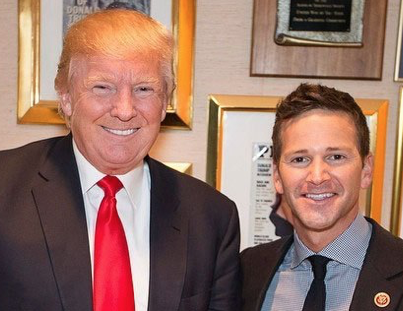
Aaron Schock Finally Comes Out-- But Still Swears He's Never Seen Downton Abbey

>

Aaron has a lovely belt collection and a repulsively homophobic voting record

You can't have been a regular DWT reader if yesterday's exit from the closet by Aaron Schock was a surprise to you. Aaron was the out-est closet case in Congress when he was serving there. It's nice he didn't wait for National Coming Out Day (October 11) to finally embrace-- publicly-- his homosexuality. Is he still going to be a Republican? And when will Mitch McConnell, Lindsey Graham, Patrick McHenry, Adrian Smith, Jason Smith, Ben Ray Lujan... come out? After they leave office? And if the rumors are true about Gym Jordan and Matt Gaetz, please, guys, do not tell anyone... ever; just stay in the closet.

Here's Aaron's exit statement:
I am gay.


For those who know me and for many who only know of me, this will come as no surprise.  For the past year, I have been working through a list of people who I felt should finally hear the news directly from me before I made a public statement. I wanted my mother, my father, my sisters, my brother, and my closest friends to hear it from me first.

The fact that I am gay is just one of those things in my life in need of explicit affirmation, to remove any doubt and to finally validate who I am as a person. In many ways I regret the time wasted in not having done so sooner.

I offer my story as one person’s experience. I’ve come to believe it is, in some respects, just a more public version of a difficult and  ultimately, now optimistic, journey familiar to many LGBTQ people.

My story starts in the rural Midwest, as part of a family centered in a faith and its particular traditions. At the Apostolic Christian Church where we belonged, we were enthusiastic regulars. My parents did their best to raise me and my siblings according to biblical tenets as they understood them.

When our family moved from our farm in Minnesota to Peoria, Illinois, we wound up in one of the less rigid branches of our church.  So, while our previous congregation had, for example, considered watching TV to be sinfully idle, the Peoria branch let it slide.

In many ways, I thrived in this environment. It helped me to live with a feeling of purpose and taught me to try to treat others as I would want to be treated. Memorizing Bible verses, going to church camp, attending services at least twice a week-- that was my world.

I’m sure I knew other gay people in those years of growing up, but I don’t think any of us were aware of it. I understood that the teachings of my upbringing were pretty clear on the matter. Because of it, as I got  older and first felt myself drawn in the direction of my natural orientation, I didn’t want to think about it. I always preferred to force my thoughts in other directions, leaving a final answer about that for another day. To that end, it helped that I was also born a fairly goal-focused  personality, driven to succeed and to push myself in every way I knew how. My focus early in life was on getting a head start in business, purchasing my first piece of real estate while still in high school. But when my local school board blocked my attempts at early graduation, it’s that same drive that also pushed me to pursue elective office, first on the school board at 19, on to the Illinois legislature at 23, and in Congress at 27.

In spite of that success, or maybe because of it, I still lived a pretty sheltered life.

Arriving in Washington in 2009, as the youngest member of Congress, I received a  lot of attention. I confess to enjoying it, though in my case, the attention also glided toward speculation. I was a single guy, and people would comment on how I dressed, and about my preoccupation with physical fitness. Untruthful stories were written. Even years into my time in Washington, I was still naïve enough to wonder why the news media would run with an utterly false story about me and a show I’d  never even heard of, and still haven’t seen, Downton Abbey.

It took me a while to figure out that it was really just the media’s own way in which they got to say that about  me in print… to tie me to a stereotype. In fact, if you want to learn something about the “woke” media, Google my name and consider how  prominently that fabricated lie, still without even a single source to back it up, will feature in stories about me by people who otherwise  call themselves journalists. It was another way, albeit more sophisticated, to be teased about being gay. A dog whistle.

Once in Congress, I did like I’d always done and threw myself into the distraction of work and what I once understood success to be. That included being responsive to the interests of the constituents in the  district that I served. Perhaps correctly, perhaps not, I assumed that revealing myself as their gay congressman would not go over well. I put my ambition over the truth, which not only hurt me, but others as well.

I also, in retrospect, realize that I was just looking for more excuses to buy time and avoid being the person I’ve always been.

I like to think I would have sorted all this out in the right way, had  circumstances allowed. As it turned out, the opportunity quickly  vanished in early 2015, when I found myself facing an array of false  charges involving office and campaign expenses. That ordeal quickly descended into a years-long struggle to clear my name, so all-consuming that I chose to resign from the House and devote myself almost full time to the effort.

Following my resignation, I was neither seeking nor holding elected office for the first time since my teens. Thinking I was out of the political spotlight made me much less worried about others knowing that I was gay. I truly wanted to tell my family and felt ready to do so, starting with Mom and Dad. But just as I felt comfortable enough to come out,  government prosecutors weaponized questions about my personal life and used innuendo in an attempt to cast me as a person of deceptive habit and questionable character. My family, friends, and former employees were subpoenaed and asked prying questions about my personal and dating life.

Unfortunately for prosecutors, the most sensational thing they learned about my personal life was that I didn’t have much of one while I was in office. But the government’s tactics in prosecuting my case made it obvious that coming out would be better discussed after the charges against me were dropped. It was ironic and painful; just as I was finally ready to come out of the closet, it felt as though someone had locked the door.

For all the grief that these events brought into my life, I was confident that the truth would win out and that I would be free to share it. I refused any offer of a plea bargain and insisted on going to trial. The trial never happened because, last March, government prosecutors asked the judge to dismiss the indictment and all of the charges against me.

After the four years of legal hell finally ended this past March, the joy of vindication was met with the reality of facing my truth with those closest to me. I made plans to drive to my mother’s for Easter holiday and tell her what I had so long avoided.

In many ways my mind at that point was also oriented towards making up for lost time, socially. I got tickets for the Coachella Music Festival with friends. A few days later, I got into my car, with all the fear and anxiety that I suppose many feel when they finally head off to have that long-avoided conversation with their family. I think it would be fair to say, life intervened.

Halfway through the trip, I spoke with my mother. News broke of my weekend at Coachella. Pictures online made clear what I was en route to tell my mother in person. She told me to turn around and go back to LA. I wasn’t welcome at home for Easter.    To characterize some of these conversations with my family in general, it’s fair to say it has not been a case of instant acceptance and understanding. What I had to share was unwelcome news to every single person in my family, out of the blue in some cases, and was met with sadness, disappointment, and unsympathetic citations to Scripture.  It hurt to hear all this, to say the least. What I had feared from many of them had come to pass. My family had always been my closest friends and biggest supporters, through thick and thin. And I say, not to arouse sympathy, but hopefully, rather, understanding, I felt fairly alone.

My approach since has been rooted in an appreciation for how long it took me to overcome my own resistance to being gay. As much as I would like for my family to quickly change about the way they view it, I’ve come to  terms with the fact that it might take my loved ones more time than I would like. And I realize some might never come around.

I do hold out hope that, over time, my family will come to accept me as I am. I remind them that I am still the same Aaron they have always known, the one they were so proud of not long ago. I realize that, having gone through a tough and lonely career ordeal, I’ve come to need them only more.

While feeling at times like my mother’s fallen star, I’ve also been cautioned by my fellow gays active in politics about what to expect from the LGBTQ public. Where was I, they will ask, when I was in a position to help advance issues important to gay Americans?

No one gets to choose when we learn our lives’ big lessons. Mine have been no different. In 2008, as a Republican running in a conservative district, I took the same position on gay marriage held by my party’s nominee, John McCain.  That position against marriage equality, though, was also then held by Hillary Clinton and Barack Obama as well.

That fact doesn’t make my then position any less wrong, but it’s sometimes easy to forget that it was leaders of both parties who for so long wrongly understood what it was to defend the right to marry.

As is the case throughout most of human history, those who advance the greatest social change never hold elected office. I can live openly now as a gay man because of the extraordinary, brave people who had the courage to fight for our rights when I did not: community activists, leaders, and ordinary LGBT folks. Gay bloggers who rallied people to our cause. I recognize this even in the face of the intense and sometimes vicious criticism that I’ve received from those same people.

The truth is that if I were in Congress today, I would support LGBTQ rights in every way I could. I realize that some of my political positions run very much counter to the mainstream of the LGBTQ movement, and I respect them for those differences. I hope people will allow for me the same.

To that end, I hope that others can respect that for me being gay has not required stepping into some entirely new belief system, disconnected from every other facet of my life’s experiences. I haven’t overcome one kind of repression for another.

Looking ahead, I hope that you’ll find me reflecting credit on the gay  community-- diverse in its thinking, growing in confidence, gaining in  equality and acceptance. I’m a freer person, happy to let go of problems that really should never have been so problematic to begin with. Life is better with nothing to fear or hide. Whatever comes next for me, at least the story will be authentic, and good things usually follow from that.

I also hope that in sharing my story it might help shine a light for  young people, raised the way I was, looking for a path out of darkness and shame. And maybe aspects of my journey will also give their parents  and family some pause before they decide how they’re going to react to the eventual news. The battle for equality is won as hearts and minds once opposed to us are faced with a different set of facts than those they were taught.

This journey has taught me a valuable lesson: that, whether you are gay or straight, it’s never too late to be authentic and true to yourself.

As for my family, I still get occasional emails trying to sell me on  conversion therapy, but recently at our relative’s wedding, my mother told me that if there is anyone special in my life, she wants to meet  them. I’m optimistic about the future and ready to write the next chapter of my life.

Labels: , ,

Wednesday, January 08, 2020

How To Write About Lindsey Graham While Ignoring What Living In The Closet Does To A Person

>


Brian Stelter used his CNN.com column, Reliable Sources, to report that "Once upon a time, Lindsey Graham was a Republican senator who was not afraid to exit the Fox-verse and appear on other networks. But, in recent months, Graham has been appearing almost exclusively on Fox. In fact, he’s become a regular fixture on the president’s favored network. Since September 1, 2019, Graham has appeared at least 36 times on either Fox News or Fox Biz. He has appeared twice on CBS News in that time frame. We couldn’t locate any other interviews he has sat down for on other networks."


Just in time for Mark Binelli's Lindsey Graham profile, How Lindsey Graham Lost His Way for Rolling Stone. Interesting piece for people interested in Lindsey Graham, although there is one glaring flaw. The phrase "closet case" was never really talked about. Binelli skirted around the "rumors" that Graham is gay, but gave more space to denial than to assertion. It reminded me of the nonsense journalists used to cover up for other obvious closet cases like Mark Foley (R-FL), Denny Hastert (R-IL), Ed Schrock (R-VA), Jon Hinson (R-MS), Steve Gunderson (R-WI), Aaron Schock (R-IL) and Larry Craig (R-ID)-- to name a few-- before they were "officially" outed. I don't know or care who Lindsey Graham has sex with or if he does or he doesn't. What's important is the nature of closet cases and it has been covered extensively by some Republican politicians who were outed.

Two who explained it well are former raging homophobes Robert Bauman, once a closeted GOP congressional leader, and Roy Ashburn, once a closeted California state Senator. Here, watch Ashburn explain how toxic it is for a legislator to live in a fearful, dark closet and how it turns someone into an inveterate liar who eventually loses track of the difference between truth and lies.


This statement by Ashburn is typical of the Republican closet cases who have been outed and everyone knows Lindsey Graham is always ever so close to saying approximately the same thing: "I was in hiding and so casting any kind of vote might, could, in some way lead to my secret being revealed. That was terrifying to me; it was paralyzing. And so I cast some votes that have denied gay people of their basic equal treatment under the law. And I'm not proud of it." As I noted in 2012 the Lavender Scare is an integral part of conservative politics.


Robert Bauman's book, The Gentleman From Maryland: The Conscience of A Gay Conservative, is more important if you want to understand what makes closeted politicians like Lindsey Graham tick. Bauman had come a very long way from living as a a self-loathing, denier who voted against gays while sneaking out of his marital bed to troll for quickie sex with other males in the shadows of the Capitol by the times he was able to muster the clarity to wrote his book. He sought to warn future Republican elected officials against the hypocrisy of the closet. His warnings have gone unheeded by three generations of conservative closet cases in Congress and government. Remember, Bauman wasn't just some run of the mill Republican. He was one of the founders of both the Young Americans for Freedom and the American Conservative Union and served as chairman of each. He was a leader of anti-gay hysteria among Republicans in Congress, while he was sneaking around-- a married man-- having sex with underage boys. Eventually he was arrested with a 16 year old, shunned by his colleagues, rejected by his constituents, divorced by his wife... his life a shambles.


Benelli's Graham (closeted) is worried he could lose his seat-- the only thing he has in an otherwise miserable existence-- if he doesn't pretend to be a raging right-wing maniac and Trumpist. That's the story. Binelli's anecdotes are very good and make it worth reading. This was a good one by McCain campaign manager Steve Schmidt: "People try to analyze Lindsey through the prism of the manifest inconsistencies that exist between things that he used to believe and what he’s doing now. The way to understand him is to look at what’s consistent. And essentially what he is in American politics is what, in the aquatic world, would be a pilot fish: a smaller fish that hovers about a larger predator, like a shark, living off of its detritus. That’s Lindsey. And when he swam around the McCain shark, broadly viewed as a virtuous and good shark, Lindsey took on the patina of virtue. But wherever the apex shark is, you find the Lindsey fish hovering about, and Trump’s the newest shark in the sea. Lindsey has a real draw to power-- but he’s found it unattainable on his own merits."

David Woodard, is a political-science professor at Clemson University. He ran Graham’s first two campaigns for the House and recalls the first-term congressman as quickly becoming the unofficial social director for his freshman class, though he added, "You’re going to find Lindsey knows a lot of people, but he’s not close to anybody." Binelli closes his very long profile by asking Woodward what motivates Graham to stay in politics after all these years. "I’ve thought about that. He’s alone. It’s not like he has a family, a child. His time, when he’s away from the spotlight, I think is a lonely time. He’s more comfortable in the spotlight where he’s Senator Lindsey Graham, talking about things he knows a lot about. I thought he wouldn’t run in 2020. And then he did the Kavanaugh thing, and he’s the Trump buddy. If Trump wins a second term, he might wind up in the Cabinet, maybe Secretary of Defense? The South, and South Carolina in particular, has a history of sending ’em back. He’s got Thurmond’s seat, and Thurmond had that seat until he was 100. So he could have a long way to go."


Labels: , , ,

Wednesday, August 28, 2019

Jerry Falwell, Jr. Has Been Very Christian-- Towards Handsome Young Men He Has Physical Contact With

>


No one knows for sure if the pool boy was screwing Jerry Falwell, Jr. or Ayatollah Falwell was screwing the pool boy. I'll keep my theories to myself until there's further evidence, even if circumstantial evidence would lead one to believe that Jr. may have a sore tuchas from time to time. But anyway... it appears that Falwell, Jr.-- when he isn't selling President Satan to gullible evangelicals-- has been double timing the pool boy-- with his personal trainer. Come on, admit it, the personal trainer, Benjamin Crosswhite-- a 23 year old recent graduate from Liberty-- when Falwell was wooing him-- is pretty hunky.


Aram Roston and Joshua Schneyer broke the story for Reuters yesterday, although they were more hung up on how much Falwell was fleecing the flock than on what he was getting up to with young Mr. Crosswhite. They wrote that "Evangelical leader and prominent Donald Trump backer Jerry Falwell Jr personally approved real estate transactions by his nonprofit Christian university that helped his personal fitness trainer obtain valuable university property, according to real estate records, internal university emails and interviews. Around 2011, Falwell, president of Liberty University in Virginia, and his wife, Rebecca, began personal fitness training sessions with Benjamin Crosswhite, then a 23-year-old recent Liberty graduate. Now, after a series of university real estate transactions signed by Falwell, Crosswhite owns a sprawling 18-acre racquet sports and fitness facility on former Liberty property. Last year, a local bank approved a line of credit allowing Crosswhite’s business to borrow as much as $2 million against the property." Nice! All Falwell gave the pool boy was a shabby male brothel!
A Florida lawsuit brought public scrutiny to a relationship between the Falwells and Giancarlo Granda, a young man they befriended while he was working as a pool attendant at a luxury Miami Beach hotel and later backed in a business venture involving a youth hostel. Falwell filed an affidavit in 2018 saying he used his own wealth to lend $1.8 million to the $4.65 million project with Granda.

And U.S. President Trump’s now-jailed fixer, Michael Cohen, has said he helped the Falwells suppress racy personal photos, as Reuters reported this May, in the months before Cohen persuaded Falwell to endorse Trump’s 2016 White House bid. There is no evidence that Cohen’s efforts to suppress the photos were a quid pro quo for Falwell’s vital political backing.

The support Falwell provided to the two young men, Granda and Crosswhite, has some parallels. Both were aided in business ventures and both have flown on the nonprofit university’s corporate jet.

One difference: When Falwell helped Crosswhite, he used the assets of Liberty, the tax-exempt university he has led since 2008. Among the largest Christian universities in the world, Liberty depends on hundreds of millions of dollars its students receive in federally backed student loans and Pell grants.

In 2016, Falwell signed a real estate deal transferring the sports facility, complete with tennis courts and a fitness center owned by Liberty, to Crosswhite. Under the terms, Crosswhite wasn’t required to put any of his own money down toward the purchase price, a confidential sales contract obtained by Reuters shows.

Liberty committed nearly $650,000 up front to lease back tennis courts from Crosswhite at the site for nine years. The school also offered Crosswhite financing, at a low 3% interest rate, to cover the rest of the $1.2 million transaction, the contract shows.

...“The concern is whether the university’s president wanted to do his personal trainer a favor and used Liberty assets to do it,” said Douglas Anderson, a governance specialist and former internal audit chief at Dow Chemical Co, who reviewed both the transaction and Liberty’s explanation of it at Reuters’ request. That would be bad governance, he said. “At a minimum, the terms suggest the buyer got a great deal and Liberty got very little.”

Labels: , ,

Saturday, August 17, 2019

14% Of Gays Voted For Trump In 2016. Anyone Know What Percentage Of Jews Voted For Hitler?

>


I spend hours a day speaking with candidates all around the country. listening to their rationale about why Blue America should endorse them and help them raise money. Sometimes it's an absolute joy-- like meeting brilliant, refreshing and sincere progressives who I know will make such a difference when they're in Congress. It's how I felt when I spoke to AOC, to Alan Grayson, to Donna Edwards, Rashida Tlaib, Ted Lieu, Pramila Jayapal, Jamie Raskin, Ro Khanna and, more recently to Andy Levin, Kim Williams, Mike Siegel, Eva Putzova, Audrey Denney, Jamaal Bowman, Shan Chowdhury, Rachel Ventura... I better stop now or I'll fill up this whole page.

But you know what drives me crazy when I talk to candidates-- when they show a like of courage, stupidity, greasy careerism... when they show me they get their talking points from Fox News, the DCCC, EMILY's List or the Republican Party. Don't we have enough people in Congress wasting seats with mindsets made from that garbage? Yesterday I wasted hours on the phone talking with Democratic congressional candidates who wanted to tell me how conservative their districts are and how progressive ideas could never win-- how Medicare-for-All, the Green New Deal and raising the minimum wage would kill their campaigns. When I take the time to try to make one understand why he was getting it all wrong about raising the minimum wage, he got all huffy and said, "Well, that's your opinion" and then cited one of the most right-wing morons in Congress-- who is likely about to lose her seat because she's pissed off her own base so badly by voting with the GOP-- as proof of why raising the minimum wage was a bad idea. His mind was made up. He has zero chance of winning the seat.

But if you think the GOP doesn't have a team sitting around coming up with narratives and talking points-- as does the DCCC-- I suggest you read this piece Steve Contorno wrote for the Tampa Bay Times yesterday, Memo reveals a House Republican strategy on shootings: downplay white nationalism, blame left. "Congressional Republicans," wrote Contorno, "recently circulated talking points on gun violence that falsely described the El Paso massacre and other mass shootings as 'violence from the left.' A document obtained by the Tampa Bay Times and sent by House Republicans provides a framework for how to respond to anticipated questions like, 'Why won’t you pass legislation to close the ‘gun show loophole’ in federal law?' and 'Why shouldn’t we ban high-capacity magazines?' The answers are boilerplate Republican arguments against tougher gun restrictions. But it also included this question: 'Do you believe white nationalism is driving more mass shootings recently?' The suggested response is to steer the conversation away from white nationalism to an argument that implies both sides are to blame."
“White nationalism and racism are pure evil and cannot be tolerated in any form," the document said. “We also can’t excuse violence from the left such as the El Paso shooter, the recent Colorado shooters, the Congressional baseball shooter, Congresswoman Giffords’ shooter and Antifa."

U.S. Rep. Gus Bilirakis, R-Palm Harbor, included the talking points in a newsletter that he emailed this week to his Florida constituents. His spokeswoman Summer Robertson said they were “provided by the House Republican Conference," the caucus arm in charge of devising messaging strategy for its members. The conference’s internal strategies are not usually made public.
The Dayton shooter, a conveniently dead KKK supporter has been painted as a Bernie and Elizabeth Warren supporter by Trump and the GOP. He shot and killed his transgender brother in the murder spree (who was reported to be a girl by the media. Contorno reported that despite the GOP talking points-- often reported as facts by the media-- "Extremist-related murders have spiked in the last year, according to the Anti-Defamation League, and the vast majority-- 73 percent-- are committed by right-wing extremists and white supremacists. Not a single extremist-related murder in the United States last year was carried out by 'the left.'... FBI Director Christopher Wray recently told Congress 'a majority of the domestic terrorism cases we’ve investigated are motivated by some version of what you might call white supremacist violence.'" That's the opposite of what Republican officials, Fox News and Hate Talk radio use to brainwash their moron victims. It's a damn shame when Democrats running for Congress get caught up in the rinse cycle.

I was born into a Jewish family that was very anti-fascist, primarily because of the shared Jewish experience of the Holocaust, which was not a "both sides" kind of thing, just an example of right-wing racism gone amuck. So it really pains me to see Jews buy into the whole Republican/Trumpist thing-- and there are plenty who do for one reason (selfishness, stupidity, racism, greed) or another (Israel). There are still people alive today who can when there were a few Jews in the Warsaw Ghetto who joined Group 13. Horrorfying... but you know what's even more insane than a Jew revitalizing the whole kapo idea? Gays doing the same thing today. Ever hear of the Log Cabin Republicans? Gwen Aviles wrote a piece about then yesterday for NBCNews.com, Gay Republican Group Endorses Trump In Reversal From 2016. "The Log Cabin Republicans, the nation’s largest collective of LGBTQ conservatives, has officially endorsed the re-election of President Donald Trump-- after its board of directors voted against endorsing him in 2016-- stating that Trump has advanced LGBTQ rights and helped the GOP move past 'culture wars' during his tenure. In a Washington Post OpEd published on Thursday evening, Robert Kabel, chairman of the group, and Jill Homan, its vice president, wrote that 'for LGBTQ Republicans, watching the 2016 GOP convention before Donald Trump was like a dream fulfilled' and marked the beginning of Trump removing gay rights 'as a wedge issue from the old Republican handbook' and 'taking bold actions that benefit the LGBTQ community.'" Sounds like an alternative universe? It is. Sad that these people are so incredibly stupid or-- much worse-- kapo-like.
The group, which announced new board leadership in March, cites Trump’s commitment to end HIV/AIDS in 10 years, which was met both was cautious optimism and flat-out skepticism, and his work with Richard Grenell, the openly gay U.S. ambassador to Germany, to encourage other nations to end the criminalization of homosexuality, as examples of his dedication to the lesbian, gay, bisexual, transgender and queer community.

It also states that other Trump policies, which were not specifically delineated as LGBTQ policies, such as his tax cuts, trade deals and “hard line on foreign policy,” have benefited gay Americans.

Though the Log Cabin Republicans are lending their support to Trump, the group said that it does not agree with all of his and his administrations’ actions, including the so-called transgender military ban.

“We are committed to letting all qualified Americans serve in the military,” the Log Cabin Republicans wrote. “We oppose the transgender service restriction and will continue to press the administration to reconsider.”

The Log Cabin Republicans endorsement of Trump comes as it marks a reversal from its 2016 stance.

The former president of the Log Cabin Republicans, Gregory T. Angelo, has been critical of policies enacted under Trump in the past. Three years ago, he issued a statement against Trump’s election platform, which he called “the most anti-LGBT platform in the party’s 162-year history.”

“Opposition to marriage equality, nonsense about bathrooms, an endorsement of the debunked psychological practice of ‘pray the gay away’-- it’s all in there,” he wrote at the time. “This isn’t my GOP, and I know it’s not yours either.”

Yet, Angelo appears to have had a change of heart, writing on Twitter Thursday night that the Log Cabin Republicans’ endorsement of Trump should have come in 2016.

Not all members of the Log Cabin Republicans agree with the group's assessment of Trump's track record on LGBTQ issues.

Jordan Evans, who became the only openly transgender Republican elected official after she was elected the Town Constable of Charlton, Massachusetts, in 2017, said she was "extremely upset" by the group's endorsement.

"I'm awestruck that they would endorse Trump, given his track record that's been nothing but detrimental to the LGBTQ community," Evans said. "Especially because we have another Republican candidate-- Bill Weld-- so to not even give him a chance or to wait to make an endorsement until after the RNC convention is unexplainable."

Evans added that the group's endorsement was indicative of the "greater disconnect" between Republicans and LGBTQ individuals and that it would make it harder for the Log Cabin Republicans to collaborate with other queer groups who were already "weary" to work with them.

"We keep falling back on the queer issues of yesterday, but we need to approach this new horizon, which includes fighting for public accommodations and transgender rights," Evans said. "We should be focusing on how we can have an effective voice, not going backwards."

A number of gay Democrats have also disavowed the endorsement.

“Hey @LogCabinGOP, that endorsement seems even more #%** stupid today...,” Pennsylvania Rep. Brian Sims, D-Philadelphia, wrote on Twitter.


“You’re an embarrassment. And a sympathizer for a racist, queerphobic regime,” Jonathan D. Lovitz, senior vice president of the National LGBT Chamber of Commerce, wrote in response to a tweet from Richard Walters, the chief of staff for the Republican National Committee, sharing news of the endorsement. “History will always remember where people like you and the @LogCabinGOP stood.”

In addition to the president’s contentious transgender military policy, which bars transgender personnel from serving openly and denies them access to gender-affirming medical care, the Health and Human Services Department proposed a new rule in May suggesting that federal laws banning sex discrimination in health care don’t apply to patients’ “gender identity."

United States citizenship has also been denied to some children of LGBTQ couples, and just this week, the Trump administration unveiled a proposed rule that would greatly expand the exemption that allows religious entities to ignore anti-discrimination laws by broadening the definition to include federal contractors that declare themselves to be religious-- a rule that LGBTQ advocates have decried as a license to discriminate.

While the Log Cabin Republicans are a significant endorsement for Trump, LGBTQ voters are a reliable part of the Democratic base, according to exit polls. In the 2018 midterm elections, over 80 percent of LGBTQ people said they voted for the Democrat in their local federal election, while just 17 percent voted for the Republican. And in 2016, 78 percent of LGBTQ voters said they voted for Hillary Clinton, the Democratic presidential nominee, while just 14 percent reported supporting Donald Trump.
There are lots of gays in Congress. The Democrats, with just a very few exceptions from the Republican wing of the Democratic Party, are all fine with their identity and out of the closet. None of the Republicans are "out." All of them-- from Jason Smith (R-MO) and Adrian Smith (R-NE) to Lindsey Graham (R-SC), #MoscowMitch (R-KY) and Patrick McHenry (R-NC) are homophobic, self-loathing, deceitful closet cases who vote against the LGBTQ community whenever they have the opportunity and who have become practiced liars, not just about their sexual identity, but about everything!


Labels: , ,

Monday, July 15, 2019

A Closet Mentality Is All About Deceit-- And Can Be Very Problematic To Break Free Of-- The Case Of McKinsey Pete

>


On Friday we took a little look at McKinsey Pete's gay identity politics. Several people have asked me to explain why living in the closet is such a terrible thing. To live a double life, a person has to start learning how to lie and deceive and eventually that deceitfulness takes over someone's whole being and they stop understanding when they're lying and when they're telling the truth, not just about their sexuality, but about everything. This is something I've studied carefully when it comes to politicians. I read and then re-read Maryland top-dog GOP outed congressman Bob Bauman's fantastic book, The Gentleman From Maryland. Bauman, founder of the American Conservative Union and Young Americans For Freedom, wrote poignantly about how his secret double life was so stressful that it led to alcoholism. I had dinner with Mark Foley after he was caught bonking young congressional pages and we began an honest years-long correspondence. And here in California when far right-wing ultra-homophobic state Senator Roy Ashburn was caught, drunk, with a young male prostitute, I studied his fascinating public epiphany. I respect him for it. He now talks about how a tawdry and fearful existence in the closet ruined his life (below) and forced him into an existence predicated on hypocrisy and deceit. Ashburn, when asked if he's been a hypocrite, said, flatly, YES! "I was in hiding."


From an L.A. Times interview Patt Morrison did with Roy Ashburn in 2010 soon after he was busted:
For decades you worked so hard to keep your sexual orientation under wraps. This must have been a torment, but in another sense, was there an element of relief?

I'm sensing relief now. I had not consciously decided to come out, but there's no doubt looking back that I had become increasingly bold about attending gay events, like pride festivals, and going to dance clubs and bars. Last year I attended Las Vegas Pride and San Diego Pride.

Were you looking over your shoulder?

A little more in San Diego than Las Vegas.

...At some point, you must have realized a public career was incompatible with being open about your sexual preferences.

Something happened that I guess caused me to realize that. When I was in sixth grade, the police had a raid in the sand dunes [near San Luis Obispo] and a bunch of gay men were arrested, probably charged with indecent activity. That sticks in my mind-- the publicity and the shame around it. One of my teachers was one of the people. The talk among the kids, the talk among the adults, the talk in the community, the press-- at that time the choice was pretty clear: If you were gay and open, it was a life of shame, ridicule, innuendo about molesting and perversion. It was a dark life. Given that choice of whether you come out or whether you're in secret, I mean, there really wasn't a choice.

You worked for members of Congress, then were elected to public office yourself from Kern County. Were your sexual preferences in the back of your mind, or did you just go about your business?

The answer is both yes and no. I was married and had children. And I had a career and a passion. I also had a huge secret. But given my circumstances and my responsibilities, it wasn't an overwhelming issue for me. The desires were always there, but my focus was primarily on-- well, pretty selfishly-- on me and my career and my family.

Barry Goldwater had a gay grandson and didn't think government had any business in anybody's bedroom. But the recent brand of Republicanism has championed anti-gay issues.

I truly believe the conservative philosophy as embraced by Goldwater: that the government has no role in the private lives of the citizens. In the 1980s, there was a coming together of the religious right and the Goldwater right, sort of a marriage of convenience. It propelled Ronald Reagan to the presidency. Reagan never repudiated that but-- this is just my view-- I don't think he really embraced it either. In no way do I want to put down people of strong religious convictions; I happen to have very strong religious beliefs myself. But it was a merger of those two, and the religious [right's issues] were about same-sex rules, same-sex marriage, abortion, gun rights, these sort of core, litmus-test issues.

Did you feel uneasy with that combination? You did help to organize and speak at a rally in 2005 against a legislative bill sanctioning same-sex marriage.

How I ever got into that is beyond me. I was very uncomfortable with that, and I told one of my confidantes, "I'm never doing that again." It was not what I wanted to do, it wasn't me, but I helped to organize and lent my name.

A lot of people, gay or straight, are probably wondering why you voted even against issues like insurance coverage for same-sex partners.

The best I can do is to say that I was hiding. I was so in terror I could not allow any attention to come my way. So any measure that had to do with the subject of sexual orientation was an automatic "no" vote. I was paralyzed by this fear, and so I voted without even looking at the content. The purpose of government is to protect the rights of people under the law, regardless of our skin color, national origin, our height, our weight, our sexual orientation. This is a nation predicated on the belief that there is no discrimination on those characteristics, and so my vote denied people equal treatment, and I'm truly sorry for that.


"Roy [Cohn] was not gay," Republican operative and Trump crony Roger Stone remarked about Trump's mentor, to CNN legal commentator Jeffrey Toobin. "He was a man who liked having sex with men. Gays were weak, effeminate. He always seemed to have these young blond boys around." Political closet cases live in darkness, fear and self deception. Their lives are a lie and lying becomes the norm. All Republican closet cases are, at heart, Roy Cohn. A lifelong homosexual-- and a swell guy-- Mark Foley, long before he was caught, drunk, sneaking into a boys dormitory looking for sex, was a critic of President Clinton. "It's more sad," he told the media, "than anything else, to see someone with such potential throw it all down the drain because of a sexual addiction."

McKinsey Pete is a Democrat, so at least politically, he is very different from Bauman, Foley, Cohn and Ashburn (not to mention Lindsey Graham and Mitch McConnell, neither of whom has been publicly outed yet). Sunday, the NY Times published a sure-to-be-controversial piece by Jeremy Peters, Pete Buttigieg’s Life in the Closet-- And why it took him until he was 33 to come out.


The closet that Pete Buttigieg built for himself in the late 1990s and 2000s was a lot like the ones that other gay men of his age and ambition hid inside. He dated women, deepened his voice and furtively looked at MySpace and Friendster profiles of guys who had come out-- all while wondering when it might be safe for him to do so too.

Chris Pappas, who was two years ahead of Mr. Buttigieg at Harvard and is now a Democratic congressman from New Hampshire, said he arrived at college “pretty much convinced that I couldn’t have a career or pursue politics as an L.G.B.T. individual.” Jonathan Darman, who was one class ahead of Mr. Buttigieg, remembered how people often reacted to a politician’s coming out then: “It wasn’t a story of love but of acknowledging illicit desire.” And Amit Paley, who graduated in Mr. Buttigieg’s class, recalled that “it was still a time where vocalizing anti-gay sentiments was not only common, but I think pretty accepted.”

The thought that 15 years later someone they might have shared a dorm or sat in a lecture hall with would become the first serious openly gay candidate for president of the United States never crossed their minds. But no one would have found the possibility more implausible than the young man everyone on campus knew as Peter.

Mr. Buttigieg, now the mayor of South Bend, Indiana, struggled for a decade after leaving Harvard to overcome the fear that being gay was “a career death sentence,” as he put it in his memoir.

Many in his generation and in his college class decided to come out as young adults, whether they were confident they would be accepted or not, and had their 20s to navigate being open about their identity-- a process that helped make Americans more aware and accepting of their gay friends, family members and co-workers. Instead, Mr. Buttigieg spent those years trying to reconcile his private life with his aspirations for a high-profile career in public service.

Attitudes toward gay rights changed immensely during that period, though he acknowledges that he was not always able or willing to see what broader social and legal shifts meant for him personally.

“Because I was wrestling with this, I’m not sure I fully processed the idea that it related to me,” he said in an interview.


More than most people his age-- even more than most of the ambitious young men and women he competed against at Harvard-- he possessed a remarkably strong drive for perfection. He went on to become a Rhodes scholar, work on a presidential campaign, join the military and be elected mayor all before he turned 30. After being deployed with the Navy to Afghanistan in 2014, he said he realized he could die having never been in love, and he resolved to change that. He finally came out in 2015, when he was 33.

He took a longer journey than his peers did, he has said, because of the inner turmoil he experienced over whether in fact he wanted to be known as the “gay” politician.

His record of accomplishment during those years in the closet is impossible to separate from the isolation and anxiety he felt as he weighed the cost of telling his family, friends and constituents who he really was. Pursuing so many goals had two outcomes, intentionally or not: It distracted his busy brain from a reality he wasn’t ready to face, and provided him the armor of a life experience that would make his sexual orientation just one of a litany of attributes.

“Peter struck me very early on, at 18 or 19, as someone who would run for president regardless,” said Randall Winston, a close friend of Mr. Buttigieg’s from college. Over beers and Chinese food, Mr. Winston said, they spent late nights on campus talking about the right and wrong reasons for getting into politics. “If you want to be a political leader, why?” he recalled. “Is it about yourself? Is it really about the good of the nation? I think he was asking himself those questions from the jump.”

Mr. Buttigieg said in the interview that if he had been interested in a career other than politics, he would have found the decision to come out much easier. “The arts is one where you could have jumped in there in the 2000s, and it would have been sort of incidental,” he said. “Whereas something like finance, it was getting there. And in politics it would have been completely defining.”

Few experiences in his young adulthood were as formative in shaping his identity as the hypercompetitive environment he encountered at Harvard. Even liberal Cambridge, where meeting a gay student or professor would have been fairly unremarkable, did not always nurture the sense of confidence that he and many of his gay classmates felt they needed to be themselves. At times their surroundings seemed to do just the opposite.

In interviews with a dozen of Mr. Buttigieg’s friends and classmates, people described a culture in which a mix of abundant ambition and youthful insecurity made students carefully attuned to the way they presented themselves to others.

Mr. Winston recalled the dual pressures of having high expectations for yourself while also being aware-- sometimes realistically, sometimes not-- that your classmates and professors had their own ideas about who you were too.

“I don’t want to say it’s all artifice-- a lot of this is just common to growing up,” he said. But the culture at Harvard, he added, caused a lot of students to think, “‘O.K., I’m going to maintain this aura, this impression I’m giving to others.’”

Describing the insecurities he felt as a young man, Mr. Buttigieg has said he sometimes marvels at how differently the world treats him today compared with what he expected when he was too afraid to come out. On the day he kicked off his presidential campaign, he said he had imagined what he would say to his teenage self. “To tell him that on that day he announces his campaign for president, he’ll do it with his husband looking on,” he said with a note of disbelief in his voice. “Would he believe me?”

Mr. Buttigieg took a long and fraught path from life as an undergraduate who once had a girlfriend to a presidential candidate who travels the country with his husband in tow. While he was still in the closet, the country became a different place very quickly. And to understand Mr. Buttigieg’s journey is to understand the microgeneration in which he came of age.

When members of the Harvard class of 2004 were juniors in high school, Matthew Shepard, a 21-year-old gay man from Wyoming, was bludgeoned, tied to a fence post and left to die in a murder that shocked the nation’s conscience. By the time they shipped off to Cambridge, few would have any gay friends — at least ones who were open about it. And the idea of a man marrying another man, or a woman marrying another woman, seemed almost absurd. The closest thing gay men and lesbians had to marriage was a civil union, which in 2000 was legal in exactly one state: Vermont.

“Gay marriage was not this obvious liberal no-brainer,” said Mr. Darman, a journalist and historian who came out in his senior year of college, 12 years before Mr. Buttigieg would. While Harvard was certainly a liberal bubble, it was still in many ways very socially conventional in the early 2000s, he said. “In a lot of social settings at Harvard in that period, the default assumption was that you were straight. And that would not have been true even five years later.”

Friends and classmates remembered Mr. Buttigieg as thoughtful and clearly on a trajectory that would bring him success of some kind, even if it dawned on few of them that might mean the White House.

One thing no one seemed to peg him for was someone wrestling with being gay. He was so discreet that many of his friends and classmates said in interviews that they never would have guessed he was hiding anything until he told them. He left the testosterone-fueled campus sex banter to others. Hegel and de Tocqueville were more to his conversational tastes.

“His sexuality didn’t present as a really big thing in his life,” said Joe Flood, a classmate. “I think he always thought about himself politically,” he added, noting that Mr. Buttigieg would become active in the university’s Institute of Politics, an organization at the Kennedy School of Government that hosted big-name politicians like Senator Edward M. Kennedy and Howard Dean during their time in school. “You don’t end up there accidentally,” Mr. Flood said... There was a small, close-knit social circle of L.G.B.T.Q. students. But they existed a world apart from Mr. Buttigieg’s Harvard.


Peter at Harvard


...But when Mr. Buttigieg and his peers left college and started embarking on their professional lives, the country was changing in significant ways, jolting their sense of what it could mean to be openly gay and have a high-profile career.

One of the biggest developments was right in Harvard’s backyard. In 2004, Massachusetts became the first state where same-sex couples could marry. Students flocked to Cambridge City Hall in the early-morning hours on May 17 to watch the first couples wed at 12:01 a.m.-- the earliest moment possible under the new law. Mr. Buttigieg remembers the occasion but was not there. “I don’t remember feeling that connected to it actually,” he said.

Soon states from Iowa to Maine would start allowing same-sex couples to marry. Then Congress would repeal the military’s “don’t ask, don’t tell” ban on serving openly as gay or lesbian. And the Supreme Court would declare the rights of gay men and lesbians to have their relationships recognized by the state, first in 2013 when it struck down the Defense of Marriage Act in United States v. Windsor, and then again in the 2015 decision that guaranteed same-sex marriage as a right protected by the Constitution in Obergefell v. Hodges.

In 2004, when Mr. Buttigieg’s class graduated, public opinion polls showed that roughly one-third of Americans favored allowing same-sex couples to marry. A decade later it was more than half the country and rising.

Many closeted people found their plight more difficult during the early years of social and legal change, as they wrestled with whether to finally open up after years of trying to maintain an impression of themselves that was false.

Mr. Paley, who was Mr. Buttigieg’s college classmate, remembers sitting in his dorm room in 2003 as a closeted junior and crying as he read Justice Anthony M. Kennedy’s opinion in the landmark case Lawrence v. Texas, which struck down bans on intimacy between homosexuals on grounds that such laws were an affront to their dignity. “That helped me realize I can’t live my life this way,” he said of hiding his sexual orientation. It took Mr. Paley until the end of his senior year to fully come out, and he now serves as chief executive of the Trevor Project, an organization that works to advance the rights of L.G.B.T.Q. youth.

Mr. Pappas, the congressman from New Hampshire, ran his first race for state legislature in 2002 as an openly gay candidate and won. “It’s an important facet of who I am,” he said. “And I think over time I realized how powerful it was that I share that with more and more people.”

He said he ran as an out candidate in that first race because he saw no point in turning back after he came out in college. And after hearing from people who told him how encouraging it was to see him as an openly gay man in politics, Mr. Pappas realized he had made the right choice regardless of the political implications. “I don’t think I fully appreciated that at first,” he said.

After he graduated, Mr. Buttigieg went to work for John Kerry’s presidential campaign in Arizona and quickly immersed himself in the job. Mara Lee, who worked with him at the time and remains a friend, remembered meeting her co-worker for the first time: “Here’s this guy who’s doing a million things at once. He has seven or eight TVs on to monitor the local and national news. He’s introducing himself to me-- being genuine-- and having a conversation while typing.” She remembers two computer screens on his desk.

Once he came out, she said that being gay was never the first thing he wanted people to see when they met him-- a veteran, Rhodes scholar, polyglot who was first elected mayor of South Bend when he was 29. “While it’s an important part of who he is, it’s not the only part,” she said.

When he first ran for mayor in 2011 and won, he was closeted. A local gay rights group did not initially endorse him in that race, opting instead for a candidate with a more established track record on the issues. Mr. Buttigieg endured some awkward moments, like signing a city law banning discrimination based on sexual orientation in 2012. To not think about how the law directly affected him, he acknowledged, “took a little compartmentalization.”

His employees and constituents saw an eligible bachelor in their young mayor and wanted to set him up with their daughters. Some on his staff even joked about his old light green Ford Taurus as a “chick magnet.” He did not bother to correct them.

When he did come out in the summer of 2015, the forum he chose was an op-ed for the South Bend Tribune. “It took years of struggle and growth for me to recognize that it’s just a fact of life, like having brown hair, and part of who I am,” he wrote.

He may have waited far longer than most young gay men today. But ever the overachiever, he made record time in setting a new bar. In less than four years he went from being single and closeted to being married and out as a gay candidate for president.
Peters, who is a member of the LGBTQ community and not closeted, didn't bother to mention that he's gay for this story. He probably should have. But something more important that he should have done is spend some time looking into Pete's time as a consultant for McKinsey, a firm that inculcates its employees with an ability to lie smoothly and effectively. Pete's life in the closet prepared him for that perfectly-- for that and for the life of a politician. He may not lie as much as Trump and Biden... but he's still young and tends not to tell the truth about anything that can be seen as controversial.

Bernie also beat Hillary in South Bend

Labels: , , , , , , ,