Tuesday, September 08, 2020

Rich Members Of Congress Make Economic Policy That Assists Their Own Class-- At The Expense Of Normal People

>


Congress is filled with multimillionaires representing the interests of their own class. This past April, OpenSectrets.org entitled a news piece by Karl Evers-Hillstrom Majority of lawmakers in 116th Congress are millionaires. It skewers policy drastically in favor of the status quo and in favor of the rich and against the working class. And not all the multimillionaires are Republicans-- not by a long-shot. The 3 wealthiest members are all reactionary Republican enemies of working families-- Senator Kelly Loeffler (R-GA), Rep. Greg Gianforte (R-MT) and Rep. Michael McCaul (R-TX). But the wealthiest Democrat in Congress, Senator Mark Warner (D-VA), also represents his class interests and has run-up one of the most conservative voting records of any Democrat in the Senate.

"While some lawmakers are still paying off student loans," wrote Evers-Hillstrom, "others are paying off their third or fourth mortgage. The group of wealthiest members includes career politicians who boosted their portfolios over decades in Congress and recently elected lawmakers." Before Georgia Governor Brian Kemp rewarded top GOP (and Brian Kemp) campaign contributor Kelly Loeffler (with half a billion dollars and crooked as the day is long) with her very own Senate seat, the richest member of the Senate was another egregious crook, Medicare swindler Rick Scott (R-FL).

Among the wealthiest members of the House are half a dozen being challenged by working class champions this cycle:
Mike Siegel vs Michael McCaul (R-TX)- $113 million
Andy Ruff vs Trey Hollingsworth (R-IN)- $50.1 million
Julie Oliver vs Roger Williams (R-TX)- $27.7 million
Shahid Buttar vs Nancy Pelosi (D-CA)- $16.0 million
Jon Hoadley vs Fred Upton (R-MI)- $11.0 million
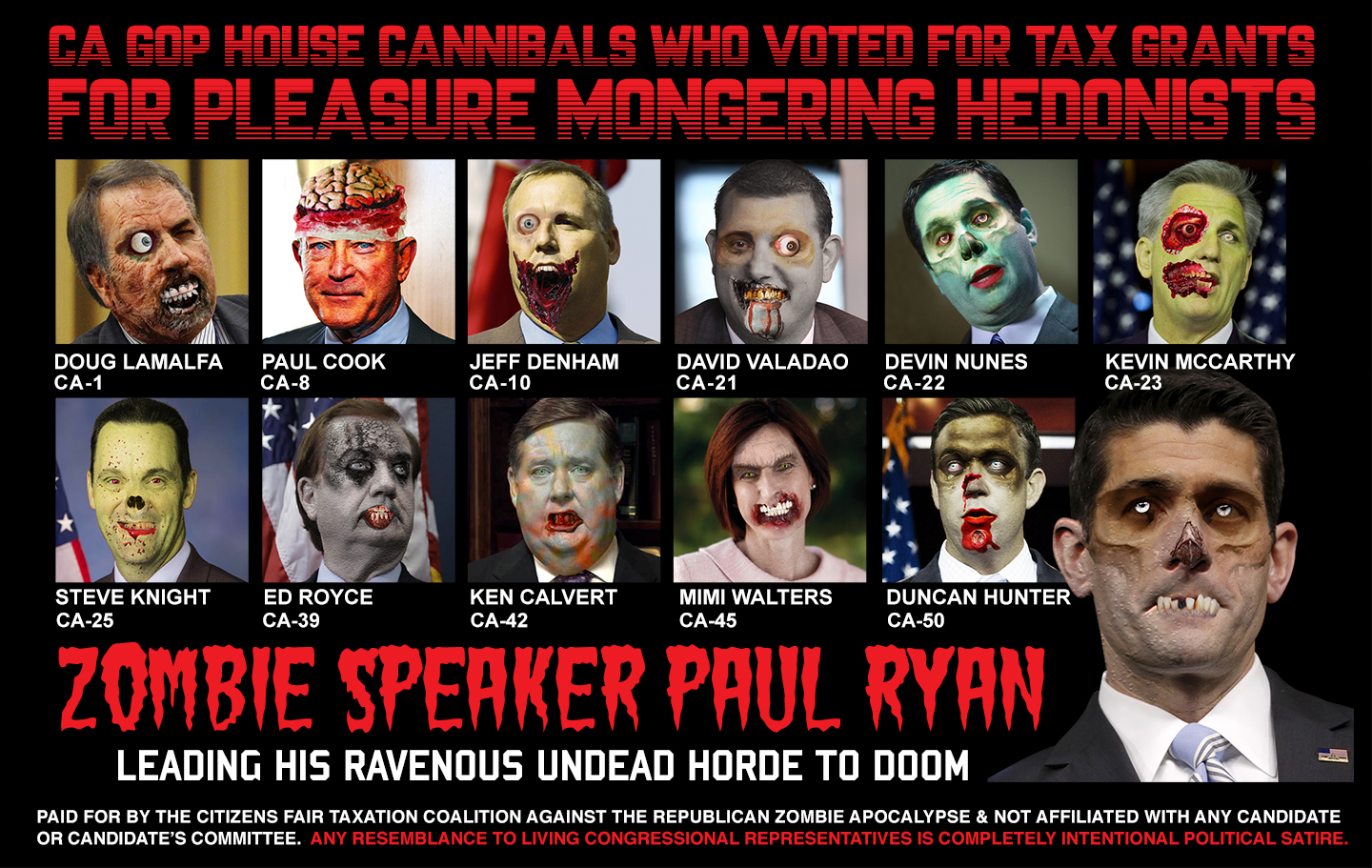
Liam O'Mara vs Crooked Ken Calvert (R-CA)- $8.0 million
Why is this important? Alan Grayson was probably the most effective member of the House when it came to bolstering the interests of the working class, but he was one of the wealthiest members of Congress, although coming from a solid working class background in the Bronx. Same with Ro Khanna and Judy Chu today-- very wealthy but dedicated to the class they came from, not to the donor class. Yesterday, Megan Cassella, writing for Politico noted that "The path toward economic recovery in the U.S. has become sharply divided, with wealthier Americans earning and saving at record levels while the poorest struggle to pay their bills and put food on the table. The result is a splintered economic picture characterized by high highs-- the stock market has hit record levels-- and incongruous low lows: Nearly 30 million Americans are receiving unemployment benefits, and the jobless rate stands at 8.4 percent. And that dichotomy, economists fear, could obscure the need for an additional economic stimulus that most say is sorely needed."


Obscure? Sure, in the eyes of people who want that need obscured, like Mitch McConnell, an arch-crook and arch-reactionary worth an estimated $40 million. McConnell has been blocking a package of pandemic assistance for several months because it assists working families too much and too directly without doing enough, in his mind, for very wealthy GOP supporters. "The trend is on track to exacerbate dramatic wealth and income gaps in the U.S., where divides are already wider than any other nation in the G-7, a group of major developed countries," wrote Cassella. "Spiraling inequality can also contribute to political and financial instability, fuel social unrest and extend any economic recession. The growing divide could also have damaging implications for President Donald Trump's reelection bid. Economic downturns historically have been harmful if not fatal for incumbent presidents, and Trump's base of working-class, blue-collar voters in the Midwest are among the demographics hurting the most. The White House has worked to highlight a rapid economic recovery as a primary reason to reelect the president, but his support on the issue is slipping: Nearly 3 in 5 people say the economy is on the wrong track, a recent Reuters/Ipsos poll found."
"The economic inequities that began before the downturn have only worsened under this failed presidency," Democratic presidential nominee Joe Biden said Friday. "No one thought they'd lose their job for good or see small businesses shut down en masse. But that kind of recovery requires leadership-- leadership we didn't have, and still don't have."

Recent economic data and surveys have laid bare the growing divide. Americans saved a stunning $3.2 trillion in July, the same month that more than 1 in 7 households with children told the U.S. Census Bureau they sometimes or often didn’t have enough food. More than a quarter of adults surveyed have reported paying down debt faster than usual, according to a new AP-NORC poll, while the same proportion said they have been unable to make rent or mortgage payments or pay a bill.

And while the employment rate for high-wage workers has almost entirely recovered-- by mid-July it was down just 1 percent from January-- it remains down 15.4 percent for low-wage workers, according to Harvard’s Opportunity Insights economic tracker.

...Trump and his allies have seized on the strength of the stock market and positive growth in areas like manufacturing and retail sales as evidence of what they have been calling a "V-shaped recovery": a sharp drop-off followed by rapid growth.

But economists say that argument fails to see the larger picture, one where roughly a million laid-off workers are filing for unemployment benefits each week, millions more have seen their pay and hours cut, and permanent job losses are rising. The economy gained 1.4 million jobs in August, the Labor Department reported Friday, but the pace of job growth has slowed at a time when less than half of the jobs lost earlier this year have been recovered.


Some economists have begun to refer to the recovery as "K-shaped," because while some households and communities have mostly recovered, others are continuing to struggle-- or even seeing their situation deteriorate further.

“If you just look at the top of the K, it’s a V-- but you can’t just look at what’s above water,” said Claudia Sahm, director of macroeconomic policy at the Washington Center for Equitable Growth. “There could be a whole iceberg underneath it that you’re going to plow into.”

The burden is falling heavily on the poorest Americans, who are more likely to be out of work and less likely to have savings to lean on to weather the crisis. While recessions are always hardest on the poor, the coronavirus downturn has amplified those effects because shutdowns and widespread closures have wiped out low-wage jobs in industries like leisure and hospitality.
Goal Thermometer"The burden is falling heavily on the poorest Americans," is a funny way of putting it. Is God making that happen? The luck of the draw? Immutable economic forces? Or is it policy directed by the members of Congress representing their own class? I asked Mike Siegel, a former teacher, union organizer and civil rights attorney, currently running for a central Texas House seat occupied by one of the wealthiest men in Congress, Michael McCaul (who married into a radio broadcasting fortune). "Everyone witnessed McCaul and this administration pull trillions of dollars out of thin air to backstop Wall Street and big corporations while they threw Main Street under the bus, said Mike this morning. "That's because their real constituency is the donors who fund their elections, plus opportunities for self enrichment. The wealthy donor class got their bailout and continue to do quite well while tens of millions of hard-working Americans are on the verge of homelessness with an active eviction crisis. This is not new for McCaul considering over 70% of his campaign is funded by Corporate PACs and special interests, and his personal wealth has increased over 940% while in public office. He voted to deregulate big banks while he had millions invested in companies like CitiGroup, Bank of America, and J.P. Morgan Chase. He refused to increase consumer credit card protections while heavily invested in Visa. He repeatedly worked to deregulate the securities industry, a top campaign donor group that he has millions invested in. We have to stop this kind of corruption by voting them out."

Shahid Buttar is running for a House seat occupied by the only Democrat on the list-- and he's holding her accountable in a way she never had been before. "My opponent in the general election, House Speaker Nancy Pelosi," he told me this morning, "has relentlessly promoted her class interests while abandoning the needs of Americans struggling to put food on the table and stay in their homes. She opposes universal healthcare, rent and mortgage cancellation, the proposed federal jobs guarantee, and a long overdue increase in the minimum wage. Meanwhile, Pelosi outrageously prioritized tax breaks averaging $1.6 million each for over 43,000 tax filers who claim more than $1 million a year in annual income. Our federal spending priorities are backwards. And corporate Democrats-- led by Pelosi-- are a big part of the problem." If you like what Buttar has to say, please consider contributing to his campaign here.


Labels: , , , , , ,

Tuesday, October 23, 2018

Why We Can't Have Nice Things

>

One of us, not one of them-- so Pelosi will try to destroy him without blinking

Today is the first day of early voting for Utah and Saturday is the start of early voting for the rest of the Florida counties that didn't start yesterday-- albeit not all that early. But most of the rest of the country is in the throes of it now-- at least in those states that allow it. It started in bluer states like Minnesota, New Jersey and Illinois last month. And people have been voting at unprecedented numbers for a midterm. Turnout virtually everywhere is higher than it was for the 2014 midterm. And some states and counties are reporting numbers that make it look more like a presidential cycle. So this is part of a wave... right? Well that depends if these early voters want to support Trump or put a check on him. Do they want to preserve healthcare for their families or do they want to make healthcare a privilege for the wealthy?

So how do you know who's voting? The excitement about early voting was so high in Miami-Dade that people camped out at the polling places Sunday night! Republican Trump supporters? Not likely. There GOTV rallies in Miami, Tampa and Jacksonville with Andrew Gillum and Joe Biden-- and they brought Bill Nelson or a Bill Nelson dummy along with them-- and they resulted in long, long lines Monday. Republican Trump supporters? That isn't what anyone is saying. Gillum is seemingly everywhere in the state while DeSantis is hiding under his bed licking his deep wounds after being eviscerated in the CNN debate. These are early voters in Miami. Unless they were wearing Gillum shirts to fake out the media, these were not Republican Trump supporters.


North Carolina is also in the midst of early voting and about 431,000 North Carolinians cast their ballots during the first five days of early voting, compared to 410,000 in 2016 and just 298,000 in 2014. And this is despite the fact that this year, only 27 counties had early voting sites open on the first Saturday of early voting, compared to 48 counties in 2016 and over 80 counties in 2014. So are they voting for Trump or against Trump. No way to be certain, but so far around 196,000 ballots have been cast by registered Democrats, compared to 134,000 by registered Republicans and 121,000 by unaffiliated voters.

Early voting in Nevada started Saturday and something like 3 times as many Nevadans cast ballots during the first week of early voting compared to the 2014 midterms. Clark County (Las Vegas), a Democratic stronghold, had turnout that is usually seen in presidential election cycles.

How about this headline from the Houston Chronicle? Shocking turnout for first day of early voting in Houston. "Thousands of people were already camped out at a key early voting location in Houston on Monday morning, hours before voting was even set to begin." But are these Democrats or Republicans?

This was from day one of early voting in Travis County (Austin). As you can see, not only did early voters blow past the 2014 (midterm) number by 40,000 votes (!!!!), they passed the 2016 (presidential) number as well!

2018: 47,405
2016: 47,109

2014: 17,181

And then there was the BETO Effect in hometown El Paso County!

2018: 17,294
2016: 15,286
2014: 2,817

The Tysons Reporter wrote that "In Virginia's Fairfax County interest in this mid-term election is running high-- possibly as high as in a presidential election year. If early ballots are any indication, interest in this mid-term election is running high-- possibly as high as in a presidential election year. As of last Friday, 23,772 ballots had been cast in Fairfax County since early voting began September 15. That’s an increase of 112 percent over the number of early ballots cast at this point in the 2017 election. The figures come from the non-partisan Virginia Public Access Project. In Fairfax City and Falls Church the increase is 115 percent. Statewide, 95,616 ballots have been case for an increase of 97 percent. 'It’s actually quite shocking,' Richard Keech, deputy director of the elections office in Loudoun County told the Washington Post.'This would be the first time without a president on the ballot that we’ve seen this kind of increase.'"

But don't get too excited. Some states are reporting that more Republicans are rushing to vote early than Democrats, including states with pivotal Senate races, like Arizona, Indiana, Montana and Tennessee. In Indiana, fro example, 51% of early voters have been Republicans and just 39% Democrats. That could auger badly for Joe Donnelly, who has done nothing at all to rev up the Democratic base. In fact, his conservative voting record is going to get many Democrats out to the polls. Same in Tennessee. Phil Bredesen--- who was leading in the polls until he said he would have voted for Brett Kavanaugh's Supreme Court confirmation-- deflated his base and only 30% of early voters have been Dems, while 63% have been Republicans.

The hopeful news for Democrats in many states is that women are voting in greater numbers than men and that suburban voters are the ones who are out voting early. Women and suburbanites, regardless of party affiliation, are out to punish the GOP for enabling Trump. Florida, Texas and Georgia, particularly have seen huge upsurges in women voters. And it's suburban voters rather than rural voters who are crushing it in Florida, Georgia and Tennessee.

Honestly though, it's hard to tell which party is benefitting most from this early voting increase. Reporting for New York Magazine, Eric Levitz wrote that Tribalism Isn’t Our Democracy’s Main Problem. The Conservative Movement Is and that the "Democrats and Republicans now provide the electorate with stark choices on health care, taxation, social spending, immigration, racial justice, abortion, environmental regulation, labor rights, and myriad other issues. It has rarely, if ever, been more clear what-- and whom-- each party in the U.S. stands for."
[O]ur republic may be suffering from a variety of disfiguring illnesses, but all trace back to the damage that hyperpartisanship did to its immune system: Our president may be a kleptocratic conspiracy theorist who oozes contempt for America’s highest ideals (and ignorance of high-school civics)-- but only because conservative voters came to despise the Democratic Party more than they loathe self-proclaimed pussy-grabbers. Congress might be barely able to fund its own paychecks, let alone find consensus solutions to policy challenges-- but voters only tolerate such gridlock because they’ve come to see compromise as a synonym for their side’s defeat. And Americans might be losing confidence in public institutions, the integrity of their nation’s elections, and the value of democracy itself-- but this is largely because so many of them have decided that one of their nation’s two political parties poses an existential threat to their bedrock ideals.
University of Maryland political scientist Lilliana Mason writes in her book, Uncivil Agreement: How Politics Became Our Identity that contemporary American politics,"our conflicts are largely over who we think we are rather than over reasoned differences of opinion." By this, Mason means that our nation’s partisan divisions are not rooted in the severity of red and blue America’s ideological disagreements, but in the extremity of their social animosities.
In an exhaustive study of the 2016 electorate, Vanderbilt political scientist Larry Bartels found that a majority of Democratic and Republican voters “endorse government efforts to regulate pollution, provide a decent standard of living for people unable to work, and ensure access to good health care.” Those conclusions are buttressed by the past two years of policy polling, which has consistently found Democrats and Republicans seeing eye-to-eye on a wide range of economic issues. To name just a few: At least a plurality of voters in both parties want the government to increase federal spending on health care, preserve the ACA’s Medicaid expansion, guarantee affordable health insurance to people with preexisting conditions, subsidize tuition at public colleges, provide a “public option for the internet”-- and keep taxes on the wealthy and corporations at least as high as they were before the Trump tax cuts passed.

Crucially, the possibilities for consensus legislation are not limited to “bread-and-butter” issues. Even on our culture war’s bloodiest killing fields-- i.e., on the subjects of immigration, guns, and abortion-- there is plenty of room for Republicans and Democrats to find common cause. In August of this year, a Fox News poll found that 69 percent of Republicans favor a pathway to legal status for all law-abiding, undocumented immigrants currently working in the United States (and that finding is consistent with broader polling on the subject). On gun policy, a wide variety of proposals routinely attracts majority support from “red” and “blue” Americans-- while universal background checks and (the substantively bad idea of) barring Americans on the “no-fly list” from purchasing firearms boast the backing of over 75 percent of voters in either camp. On abortion rights, recent surveys have shown that a majority of both parties’ voters want the Supreme Court to uphold Roe v. Wade, and thus, preserve a constitutional right to abortion services. (Of course, there is far less consensus on these issues among the two parties’ most politically engaged elites, activists. and interest groups.)

And yet, these myriad areas of agreement have been no bulwark against hyperpartisanship: Ordinary Republican and Democratic voters don’t disagree about public policy much more than they used to, but they still fear and loathe each other more than at any point in our nation’s modern history.

To see why we all can’t get along, let’s turn to the second half of Mason’s thesis. Drawing on insights from social psychology, Mason argues that human beings are hardwired for tribalism. We compulsively (and unconsciously) divide the social landscape into ingroups and outgroups; selectively process information that affirms the virtues of the former and the vices of the latter; and allow our self-esteem to rise and fall with the status of our team.

...Through an elaborate analysis of survey data, Mason shows that the strongest partisans in the United States today are not the voters with the most conservative or liberal policy opinions-- but rather, those with the strongest attachments to social groups that are uniformly associated with one major political party. As all of one’s social identities “line up behind one party or the other, they all win and lose together,” Mason writes. “The humiliation of loss is amplified. Victory, then, becomes more important than policy outcomes. Even when both sides hold the same policy positions, the priority is often to make sure the dirty shirts don’t win.”

Mason points to the government shutdown of 2013 as a paradigmatic example of this phenomenon. As we’ve seen, a plurality of Republican voters want the federal government to expand Medicaid and protect individuals with preexisting conditions. And yet, a plurality of Republican voters also wanted their elected representatives to shut down the government-- and thus, inflict economic damage on their own country-- on the outside chance that doing so would prevent Barack Obama’s plan to expand Medicaid and protect people with preexisting conditions from ever taking effect.

For Mason, and many other critics of polarization, the fundamental problem with the phenomenon is not that it has made political conflict in the United States bitter and divisive. On many policy questions, America really is bitterly divided; bipartisan comity in this country has typically been built atop a foundation of disregard for the rights of marginalized social groups (African-Americans invariably among them). To the extent that social polarization has enabled such groups to win meaningful representation, it has been a laudable development.

But Mason contends that, in minimizing the overlap-- and thus, personal contact-- between Democratic and Republican voters, social polarization has also amplified our tribal biases, and thus, led partisans to exaggerate the severity of their genuine divisions; overlook the myriad areas where consensus policymaking is possible; and tolerate substantive betrayals from their own party’s leadership. “When individuals participate in politics driven by team spirit or anger, the responsiveness of the electorate is impaired,” Mason argues. “If their own party-- linked with their race and religion-- does something undesirable, they are less likely to seriously consider changing their vote in the ballot booth.”

This analysis is persuasive. But as an account of why the United States lacks responsive government, it is deeply inadequate. Partisan prejudice might give legislators greater freedom to betray their constituents’ substantive aims-- but it does not explain why so many of our elected officials choose to exercise that liberty. Social polarization, therefore, is not the cause of unresponsive government in the U.S., so much as a condition that facilitates it.

This distinction has important, practical implications. If the fundamental obstacle to popular sovereignty in America isn’t hyperpartisanship, then reducing the latter will not necessarily bring us closer to the former; in fact, it is possible to imagine conditions in which “depolarizing” American politics could lead us even farther from that ideal.

To see why this is, consider one of Mason’s prescriptions for how our republic can be healed:
If the parties themselves had any interest in reducing levels of partisan prejudice, they could likely do so simply by encouraging the prominent flag-bearers of the party to loudly and freely discuss partisan opponents in an unprejudiced way…What if the leaders of the Democratic and Republican parties decided to take on a tolerant rhetoric toward the opposing team? What if party prototypes started discussing real differences rather than demonizing their opponents? What if party opinion leaders (of both parties) started talking about politics by commending compromise and acknowledging the humanity and validity of the opposing team?
Mason is no naïf; she stipulates that there is “no reason to believe that this will occur in the near term, particularly in the Republican Party.” But the trouble with her proposal goes beyond its implausibility. The reciprocal, rhetorical disarmament she describes would likely reduce partisan hostilities-- but whether it would make government more responsive depends entirely on the terms of the two parties’ reconciliation.

For example, if Democratic elected officials and opinion leaders had commended compromise during last year’s health-care debate; acknowledged the validity of the Republican Party’s attempt to throw millions of low-income Americans off of Medicaid to finance tax cuts for the rich; and supplied the votes necessary for gutting federal health-care spending (in defiance of the wishes of a majority of both parties’ voters), then our politics would have become less polarized-- and less responsive to the popular will-- at the same time.

And this is not all-that fanciful a hypothetical. More than a few times in recent decades, Democrats have sought bipartisan compromise by acquiescing to unpopular (and unwise) conservative policy goals. It wasn’t wrenching social divisions that led the government to cut the capital gains tax rate in the 1990s, in defiance of a majoritarian preference for higher taxes on the wealthy-- it was Bill Clinton. Similarly, it was Barack Obama, not partisan prejudice, that brought Congress to the cusp of passing unpopular cuts to Social Security in 2011; in fact, partisan prejudice arguably prevented those cuts from passing.

Which is to say: Even in our hyperpartisan times, the two major parties can sometimes unite behind a policy that a broad, bipartisan majority of the public opposes. Social polarization cannot explain such failures of popular government; but the immense political power of reactionary elites in an economically polarized society can.

American Gothic, Revisited by Nancy Ohanian

The biggest barrier to popular sovereignty has always been economic inequality.

In truth, the most formidable obstacle to responsive government in the U.S. is-- and always has been-- the disproportionate power that economic elites wield over its political system. Influencing elections and legislative processes requires investments of time, money, and attention. Wealthy individuals and corporations can easily shoulder such expenses; ordinary voters can’t. This simple reality-- that economic power is easily converted into the political variety-- is an inherent constraint on popular sovereignty in all (capitalist) democracies. But it’s a constraint that can be more or less restrictive, depending on how unequally wealth is distributed, how easily large masses of ordinary people can organize politically, and how effectively outsize political spending is regulated or socially stigmatized. More concretely, policymaking tends to be more responsive to popular concerns in nations with strong labor unions, as such institutions help secure workers a larger share of economic growth, while also enabling working-class voters to collectivize the costs of political engagement.

In the contemporary United States, however, unions are on the verge of extinction; the richest 0.1 percent of the population commands as much wealth as the bottom 90 percent; and legal restrictions on political spending are effectively nonexistent. The Koch Network plans to spend $400 million electing its preferred Congress this November; corporate America is poised to spend upwards of $2 billion lobbying it next year. Given these conditions, one wouldn’t be expect policymaking to reflect popular preferences, no matter the social makeup of the nation’s two political parties.

After all, the last time organized labor was this weak and wealth, this concentrated, it was the Gilded Age. And that era was plagued by governance so unresponsive to public needs, the average height and life expectancy of ordinary Americans declined during it, even as their nation grew immensely wealthier. It is true that Democratic and Republican voters were bitterly divided and socially isolated in this period. But few would cite a dearth of “cross-pressured” voters as the principal reason why the federal government did not provide more relief to the unemployed during the Panic of 1893; or immiserated small farmers with deflationationary monetary policies throughout the late 19th century; or routinely massacred striking workers. The disparate economic power-- and political organization-- of corporate elites and ordinary workers is a much more intuitive explanation for the government’s failures in that period. It remains so in ours.

Political tribalism is bad. But government by and for the rich is worse.

Now, there is reason to believe that social polarization contributes to such disparities. Countering the inherent imbalance of political power between the superrich and working people requires the latter to organize around their class interests. And a population that is bitterly divided by Colin Kaepernick and the phrase “Happy Holidays”-- or, in the Gilded Age context, a recent Civil War and a de jure racial caste system-- is going to have hard time making common cause.

But if social polarization abets the power of reactionary plutocrats in the United States, reactionary plutocrats return the favor. In the industrial Midwest, labor unions once functioned as a (modestly) effective bulwark against racial polarization-- unionized white workers were far more likely to remain Democrats (which is to say, in a political coalition with a majority of the African-American electorate) than their non-unionized peers, amid the white backlash of the late 1960s.

But over the ensuing decades, a political movement bankrolled by conservative elites implemented a variety of policies that weakened organized labor-- and consciously worked to increase the political salience of America’s racial and and cultural divisions.


...[T]he GOP, and its associated institutions, have spent much of the past half-century actively trying to polarize the electorate along racial lines, and mobilize the Christian right through appeals to its most paranoid, millenarian instincts. This is no partisan conspiracy theory; it is basic political history. In the late 1960s, Republican operatives realized that an America in which the electorate was split along racial lines would be one in which the party least dependent on African-Americans would thrive. Some spelled out this theory explicitly, in best-selling books. John Ehrlichman, Nixon’s top domestic aide, summarized the spirit of his boss’s 1968 campaign as, “We’ll go after the racists”-- adding, in his memoir, “The subliminal appeal to the anti-black voter was always present in Nixon’s statements and speeches.” And that appeal has been a fixture of Republican political rhetoric in the United States ever since. (Anyone who doubts that the conservative movement still seeks to exacerbate social polarization would do well to spend an evening with Fox News’s prime-time lineup.)

One major appeal of “polarization” (or “hyperpartisanship”) as a framework for understanding our democracy’s dysfunction is that it does not implicate any one party or political movement: We are all subject to cognitive biases; impersonal, sociological forces have strengthened those biases; and thus, we have lost our collective capacity to find common ground.

...Tribalism may be a threat to democracy; but the tribe that the poorest 99 percent of Americans do not belong to is a bigger one.
OK, so in 20 words or less, why can't we have nice things? Is anyone watching season 3 of Versailles? And silly me, I've been urging people to vote for any shit Democrap no matter how bad, just to preserve us from Trump. I had a bad feeling about that advice. I need to think about it more closely. Mitch McConnell to Bloomberg News October 16: "I think it would be safe to say that the single biggest disappointment of my time in Congress has been our failure to address the entitlement issue [Social Security, Medicare and Medicaid], and it's a shame, because now the Democrats are promising Medicare-for-All... There's been a bipartisan reluctance to tackle entitlement changes because of the popularity of those programs. Hopefully at some point here we'll get serious about this. We haven't been yet." McConnell was making the point that cutting these popular programs can only be done in a bipartisan way so both parties share the ire. That's why I oppose Blue Dogs and New Dems so vehemently. They're the ones willing-- eager-- to share the ire.


Labels: , , ,

Wednesday, September 26, 2018

Are You Ready To See The Democratic Party Turn Its Back On The Working Class Entirely-- Without A Fight?

>


I can't believe what I'm seeing with my own eyes-- and it's playing out glacially-- but the Democrats and Republicans seem to be switching their essences again. Remember, from history books, when the Democrats were the bad guys defending slavery and the Republicans were the anti-slavery party? A 100 years later, the Republicans were the party of bigotry and racism and the Democrats were the aspirational party for people of color. But what I want to talk about-- think through really-- has more to do with class than race per se.

The a big giant chunk of the FDR coalition, basically shattered and buried by Bill Clinton and Obama, were working class voters. Unions were strong and they delivered elections to Democrats on every level. The Republicans were barely a serious party in the '30s and '40s and were busy being reborn during the '50s and '60s. Fortunately for them-- though not for the Democrats:
Pointed threats they bluff with scorn
Suicide remarks are torn

From the fools gold mouthpiece the hollow horn
Plays wasted words, proves to warn
That he not busy being born

 Is busy dying
But, no, it wasn't alright, ma. The GOP gradually started reaching the white working class, while the corporate Democrats saw a "business-friendly" a better strategy, abandoning unions to the not so tender mercies of the Republicans, and paying less and less attention to workers and more attention to a new identity-oriented coalition they were stitching together of minorities, women, gays, wealthy people and suburbanites. Hillary's 2016 campaign was, in effect, the New Democratic Party. If it wasn't because the Kremlin fixed it, she lost Wisconsin, Pennsylvania, Iowa and Michigan because her outreach to the white working class was perfunctory and inauthentic. She seemed happy enough winning every Orange County district while losing traditionally Democratic white working class districts like ME-02, IA-01, WI-01, MI-11 and IL-17.

As I've mentioned before, when I was growing up, the Democrats used to be called the Santa Claus party-- because they gave things away, like Social Security, Medicare, food stamps-- while the Republicans were the Scrooge party. With Pelosi's lunk-headed announcement last month that one of her top 3 priorities when the Dems regain the House in January will be to reinstate the reactionary PAYGO, the 180 degree switch is now complete.

Just look at the midterm candidates the DCCC has recruited this cycle-- virtually NO WORKING CLASS CANDIDATES at all... instead all upper middle class corporate lawyers, business types and military-industrial complex goons. The few working class candidates who made it past the primaries often had to fight the DCCC every step of the way. The DC Establishment hates the working class and reacts to candidates who make living with their hands as if they were being invaded by aliens. It's their elite club and they do not want working class men and women in it. And it's not just the Republicans any longer. Pelosi's worth $16 million and there are so many millionaires in the Democratic caucus that it's no wonder they don't represent-- or even want to represent-- the interests of the working class anymore.

Did you read Ron Brownstein's report for CNN yesterday? He pointed out that this year Democrats' "opportunities in blue-collar and small-town districts appear to be stalled or even receding. Given Trump's continued strength with working-class whites, Democrats were targeting far fewer of these seats to begin with... If this pattern persists through Election Day, it would widen the trench between major metropolitan areas increasingly dominated by Democrats and less densely populated areas beyond them where Republicans still rule. "If you look back over 20 years, these alignments are very pronounced, as the Republican base has migrated from the country club to the country," says Tom Davis, a former Republican representative who served as chair of the National Republican Congressional Committee. "This is entirely consistent with a 20-year movement that Trump is putting an exclamation point on... [W]hile the blue-collar terrain remains rocky, Democratic opportunities seem to be expanding in white-collar seats."

As you might expect, Chris Hedges was far harsher in his American Anomie post at TruthDig! yesterday. "The belief," he wrote, "that if we work hard, obey the law and get a good education we can achieve stable employment, social status and mobility along with financial security becomes a lie. The old rules, imperfect and often untrue for poor people of color, nevertheless were not a complete fiction in the United States. They offered some Americans-- especially those from the white working and middle class-- modest social and economic advancement. But the capture of political and economic power by the corporate elites, along with the redirecting of all institutions toward the further consolidation of their power and wealth, has broken the social bonds that held the American society together. This rupture has unleashed a widespread malaise... The reconfiguring of American society into an oligarchy and the collapse of our democratic institutions have left most of the population disempowered. The elites, predatory by nature, have discarded all restraint."
The political process, as the research by professors Martin Gilens and Benjamin I. Page underscores, no longer advances the interests of the average citizen. It has turned the consent of the governed into a cruel joke. “The central point that emerges from our research is that economic elites and organized groups representing business interests have substantial independent impacts on U.S. government policy, while mass-based interest groups and average citizens have little or no independent influence.” This facade of democratic process eviscerates one of the primary social bonds in a democratic state and abolishes the vital shared belief that citizens have the power to govern themselves, that government exists to promote and protect their rights and interests.

The economic structures, like the political structures, have been reconfigured to mock the belief in a meritocracy and that hard work leads to a productive and valued role in society. American productivity, as the New York Times pointed out, has increased 77 percent since 1973 but hourly pay has grown only 12 percent. If the federal minimum wage was attached to productivity, the newspaper wrote, it would be more than $20 an hour now, not $7.25. Some 41.7 million workers, a third of the workforce, earn less than $12 an hour, and most of them do not have access to employer-sponsored health insurance. A decade after the 2008 financial meltdown, the Times wrote, the average middle class family’s net worth is more than $40,000 below what it was in 2007. The net worth of black families is down 40 percent, and for Latino families the figure has dropped 46 percent.


That's the very first meme I ever used-- actually I created it-- when writing about Randy Bryce for the first time. I noted that he used that messaging again in a new e-mail to his supporters yesterday." They think I'm unfit," he wrote. "I'm a father and a son. I'm a veteran and a cancer survivor. I've spent my career building things with my own two hands. I'll never quit fighting for what working families need because I'm a working person myself.
But according to the head of Paul Ryan's super PAC, I'm "unfit" to serve.

Instead, they think Bryan Steil, a corporate attorney and former Capitol Hill aide who literally spent his career outsourcing jobs from Wisconsin while he was hand-groomed by career politicians, is more qualified.

In Congress, I'll work to protect Social Security, to make Medicare for All a reality, to bring back good jobs, to protect workers with strong unions, to stand with women and families with access to reproductive care, and to make our children's future brighter by reinvesting in public schools. I'll fight for working people because I am one-- and I don't know about you, but I think that makes me pretty darn fit to serve.

I see that Ryan's corporately-funded SuperPAC has spent $1.8 million intensely smearing Randy. The DCCC's response? The DCCC isn't spending on working class candidates. They haven't spent anything, let alone $1.8 million, countering Ryan's SuperPAC. I should note, though, that the DCCC has reserved $3 million in airtime to defend multimillionaire lottery winner Gil Cisneros, a Republican who conveniently claims he's now a "Democrat" and who was recruited by the DCCC because they love multimillionaires who live in beachfront mansions. Iron-workers who didn't graduate from college but who have struggled the way ordinary Americans struggle... not so much.

Goal ThermometerYou'd think the DCCC would be supporting Ammar Campa-Najjar, now that his opponent, Drunken Hunter, has been indicted for dozens of serious crimes. But if you did, you'd be wrong. Even though the two are tied 46-46% in the polls, the DCCC is not supporting him. My contention is that it's because he's another working class kid they don't want in their exclusive club. But a friend at the DCCC told me that's less a factor than the virulent racism that still infects the DCCC going all the way back to Rahm Emanuel and Steve Israel days. Hard to know. But there is a pattern-- two in fact. (And, remember Bryce is half Mexican too.) Other working class kinds the DCCC is shunning include J.D. Scholten-- no, the DCCC does not want to rid Congress of cash-cow Steve King-- Jess King and James Thompson. Interestingly, there's some correlation between candidates who back Medicare-For-All-- oposed by the DCCC-- and working class candidates. We'll talk more about this as the election proceeds and as it becomes more apparent which candidates the DCCC spends money on and which they grind into the dust.


Labels: , , , , ,

Friday, December 08, 2017

What Is Paul Ryan Planning To Do To Americans Next?

>


The Republicans seem to have gotten away with passing Paul Ryan's egregiously class warfare tax scam-- even if the newest polls show most American voters hate it. A Gallup poll released this week shows that a majority of independent voters (56%) oppose the tax bill, as do 87% of Democrats. Only 16% of Republicans disapprove of it. Overall just 29% of American voters approve, the same number the new Quinnipiac poll found. And here's a page from the CBS poll released yesterday:


Republican lawmakers, though, are excited about their victory and don't seem to be thinking about voters getting even with them in 2018. In fact, they have even worse in store before them-- Ryan's dream-- an attack on Medicare and Social Security. After Ryan threatened on Ross Kaminsky's talk radio show that "We're going the have to get back next year at entitlement reform, which is how you tackle the debt and the deficit" (have just blown both up with massive tax cuts for the rich), Ruben Gallego (D-AZ) responded "It's pure greed not necessity why Speaker Ryan wants to dismantle Social Security and Medicare." Ryan's point was that Medicare and Medicaid, which he calls "entitlements" are "the big drivers of debt." He sees then as "really where the problem lies, fiscally speaking." Ryan calls Medicare and Social Security "a welfare system that's trapping people in poverty and effectively paying people not to work. We've got to work on that."


Over in the Senate, Ryan's bizarrely white teethed buddy, Marco Rubio, said that "instituting structural changes to Social Security and Medicare for the future” is the best way forward. Sam Stein:
Trump has repeatedly vowed that he has no plans or designs to touch Medicare or Social Security. He has been openly critical of past Republican efforts-- including those undertaken by Ryan-- to do so.

And for good reason. Republicans suffered massive midterm losses following George W. Bush’s failed attempt at Social Security privatization in 2005. Barack Obama reduced Medicare expenditures by hundreds of billions of dollars as part of Obamacare, which Republicans effectively branded as a Medicare “cut” in the 2010 midterms.

One plugged-in GOP lobbyist told The Daily Beast that the expectation on K Street was that Trump would instead pursue a major infrastructure bill in 2018 in part because it would better position the party for the 2018 elections.

“I personally think they will pivot to infrastructure in desperate attempt to win support before midterms,” the lobbyists said.

Infrastructure reform carries its own set of complications, not least of which is that GOP leadership outside of Trump doesn’t seem particularly enamored with the idea. And while it may prove more popular a pursuit, other Republicans ascribe to the notion that when your party has a majority in both chambers of Congress, you use it.

"It seems consistent with long-held Republican concerns-- which ought to be bipartisan, but too rarely are-- that these life-saving programs that the American people rely on are not sustainable in their current form,” Michael Steel, a former top House GOP aide, said of Medicare and Social Security. “It's politically easy to ignore reality, which is why Washington Democrats and their fellow travelers tend to demagogue this issue shamelessly."

Ryan has not spoke of entitlement reform in political terms. Instead, he’s talked about the need to pursue it as a means of exhibiting fiscal conservatism. "We're going to have to get back next year at entitlement reform, which is how you tackle the debt and the deficit," Ryan said during a radio appearance. The Speaker has also stated that he has begun to convince the president of the necessity of going down this route.

Democrats have been blown away by what they see as political chutzpah. And they’ve warned repeatedly that the forthcoming tax cut bill, which will add an estimated $1 trillion to $1.5 trillion to the nation’s debt over ten years time, is merely a predicate for gutting the social safety net in the upcoming year.

“I have not the slightest doubt as I have said before, that after the Republicans pass this huge tax giveaway to the wealthy and large corporations, they will be back on the floor of the Senate,” Sen. Bernie Sanders (I-VT) said on the Senate floor last week. “And when they come back, they'll say, 'oh, my goodness, the deficit is too high. We have got to cut social security, Medicare, Medicaid, education, and nutritional programs.'”


David Gill, the progressive Democrat vying with some Republican-lite establishment hack to take on Republican Rodney Davis in central Illinois told us that "Bernie Sanders is exactly right-- it has long been clear that the Republicans are intent on cutting Medicare and Social Security. Beyond the fact that this approach is incredibly heartless and mean-spirited, it also is based on a lie. These social programs are not 'entitlements'; rather, they are programs into which the recipients have made contributions over a long period of time. The attempt to dismantle these programs is yet another result of the fact that our politics and our government are now fully-owned subsidiaries of Corporate America. My Republican opponent, Rodney Davis, marches in lockstep with his party’s leadership, in spite of the fact that the bills that he supports will bring tremendous pain to the vast majority of the people in our district. When we should be working toward improving peoples’ lives with a single-payer healthcare system, a $15 per hour minimum wage, and tuition-free access to public universities, Mr. Davis is trying to move us in precisely the wrong direction. I lost by 0.3% of the vote when I last ran in 2012; Mr. Davis was saved in that election by the presence of a liberal independent. Next year we will have just two candidates in the general election, and I have no doubt that my passionate progressive politics can win here in IL-13."


Austin Frerick has a similar perspective down in Iowa's 3rd district. "It's immoral that Speaker Ryan and David Young are now thinking about cutting Social Security to pay for the trillion dollar tax cut they gave to corporations. At a time when over half of all older workers have no retirement savings, we need to instead be talking about strengthening and expanding Social Security. Workers earned this safety net. These corporations just bought a giveaway.  This says everything about which side they're on and I'll give you a hint, it ain't ours."

Labels: , , , , ,

Monday, July 10, 2017

The GOP's Class War Against Their Own Base-- Bernie Is Fighting Back For Them

>


Many 2018 congressional candidates are delighted to campaign against Trump and to tie their opponents to him, especially the ones with big Trump vote scores. Several of the Blue America-endorsed candidates are running against far right GOP incumbents who literally have 100% pro-Trump voting records, as Doug Applegate has pointed out about Darrell Issa and Katie Hill has pointed out in the case of Steve Knight, who blatantly lies to his Santa Clarita/Simi Valley/Antelope Valley constituents in trying to pain himself as "bipartisan" and "mainstream." Randy Bryce's opponent, Paul Ryan, has a 100% Trump score as does Paul Clements' opponent, Fred Upton.

And more candidates than not are delighted to point out the glaring Putin-Gate scandals that have become a nightly staple of the #1 and #2-rated cable TV shows, Rachel Maddow's and Lawrence O'Donnell's, both of which are absolutely crushing Fox News in their time slots, with Fox News adamantly refusing to expose Trump's and his Regime's Putin escapades. Yesterday Bernie was in Morgantown, West Virginia and Covington, Kentucky, not to talk about Russia or Trump or Putin-Gate but to talk with voters in these two states Trump won in landslides (68.7-26.5% in West Virginia and 62.5-32.7% in Kentucky) about the Republican legislation they're passing off as "healthcare" that is really nothing but the Republican Party's class warfare against workers. Before the rally in Covington Bernie issued a shot across the bow of Kentucky's senior senator, Senate Majority Leader Mitch McConnell:
Since the Affordable Care Act (ACA) was implemented, no state in the country has benefited more from the ACA than Kentucky. The uninsured rate for adults in Kentucky has gone down from 20.4 percent in 2013 to just 7.8 percent in 2016-- the largest reduction in America. Today, as a result of the ACA, only 4 percent of children in Kentucky are uninsured.

Unbelievably, at a time when Kentucky has made significant progress in health care, the Republican bill being proposed in the Senate by Kentucky’s own Senator Mitch McConnell would throw over 230,000 people in Kentucky off of health insurance. It would also decimate the Medicaid program in the state which provides insurance for more than 2 million people, including 40 percent of all children.

Further, at a time when Kentucky is struggling with an opioid addiction epidemic, there is no question that if McConnell’s legislation were to be passed, thousands of Kentuckians would no longer be able to receive the treatment they desperately need.

The bottom line is that this legislation, which nationally would throw 22 million Americans off of health insurance, cut Medicaid by almost $800 billion, substantially raise premiums for older workers and defund Planned Parenthood, is a disaster for America but an even greater disaster for Kentucky and other states that voted heavily for Trump. This Republican legislation must be defeated.
Bernie's populism is as different from Trump's as their Twitter feeds are

I want to reiterate something we looked at Saturday morning. Covington is the county seat of Kenton County, Kentucky's third most populous county. And, yes, Trump won that county decisively in November-- 59.7% to 33.7% but on primary day, Kenton County told a far different story. On the Republican side, Ted Cruz won Kenton Co. with 2,475 votes to Trump's 1,997. And Hillary and Bernie each beat both of them. Bernie won 4,880 votes countywide-- more than Cruz and Trump combined. Bernie was on the road punching back-- and so are the candidates who have been inspired and energized by his message. You think candidates like Randy Bryce in Wisconsin, Dave Gill in Illinois and Jenny Marshall are going to shy away from talking about how economic inequality is impacting working families in their districts? That is largely what their campaigns are about? That and how they plan to fight back against Republican efforts to tilt the scales further in favor of the top 2% of wealth-holders. This morning Randy Bryce told us that "Speaker of the House Paul Ryan has proven beyond any shadow of a doubt that it’s not a working person’s house that he is speaking on behalf of. In addition to not wanting to have a public town hall because of his horrible policies, he is trying to steal what we have left of health care. Now that our campaign has taken off, he’s had the NRCC unleashed against me even though he won his last election by 35 points! What is he afraid of? Oh yeah-- that would be the people in the district. He can run but he can’t hide. November 6, 2018 can’t get here soon enough."

Jenny Marshall, the Blue America-endorsed progressive running against Trump/Ryan rubber stamp Virginia Foxx in central North Carolina, has a similar perspective. "As I travel the 5th district talking to people on the street," she told us, "the overwhelming issue that keeps coming up is money. It doesn’t surprise me in the least, as the poverty rate across the 5th district is 18.6% which is 4.3% higher than the nation's average. A staggering 44% of the households in the district are low-income meaning their incomes were less than twice the poverty level ($48,500 for a family of 4). People are hurting. They want a representative who understands and will fight for a better future for their family. We cannot ignore their pain any longer." Last month, a short article in The Economist about how little tax the Scandinavian super-rich pay gave them more fodder.

Of life's two certainties, death cannot be dodged even by the well-to-do. Taxes are another matter. Quantifying quite how much they manage to keep from the taxman, however, has always been tricky. One common approach governments take is to conduct randomised audits of tax returns. This methodology can give regulators a rough sense of overall tax revenues lost. But it is far from ideal. For instance, studies based on randomised tax audits are usually both too small and too crude to reflect accurately the financial shenanigans of the most egregious tax-dodgers: the super-rich.

A new study by Annette Alstadsæter, Niels Johannesen and Gabriel Zucman, three economists, tackles this problem by investigating two recent financial-data hoards: the “Swiss leaks,” a record of bank accounts held at HSBC in Switzerland; and the “Panama papers,” files that document the use of offshore accounts and shell companies by clients of Mossack Fonseca, a law firm in Panama. By matching the leaked information with wealth data from Denmark, Norway and Sweden, the authors are able to construct the most detailed estimate to date of the extent of tax evasion.

Their research leads to two conclusions. First, tax evasion is extremely concentrated. The average Scandinavian household paid around 3% too little in taxes in 2006; the richest 1% of households, with net assets of at least $2m, underpaid by around 10%. The truly rich, though, behave truly differently. The top 0.01% of households, with net assets of over $40m, short-changed the taxman by a whopping 30%.

Second, the numbers imply that previous estimates of wealth inequality, often based on tax data, have understated the problem. And the Scandinavian statistics may provide a conservative estimate of worldwide tax-dodging: only around 2% of Scandinavian household wealth is held in offshore accounts, compared with the global average of 4%.

Globalisation has disproportionately benefited the rich in part by rewarding capital more handsomely than labour. But globalisation has also made it easier for the well-heeled to hide their wealth. In that sense, maybe the data should cause even more surprise: despite the best efforts of a lucrative global tax-evasion industry, Scandinavia’s ultra-rich are paying 70% of their taxes.
As Alan Grayson reminded me yesterday Citizens for Tax Justice has research that shows basically identical anti-social trends by the super-rich here in the U.S. Earlier today, Ro Khanna (D-CA), who has become one of Congress' top champion's of action to make economic equality and equality of opportunity attainable goals in this country, reminded is that "Picketty has shown that today's economy favors capital over labor. Our tax rules also favor shareholders over the working class. That is why working families feel that the system is rigged against them-- that they are working harder but making less. We need to restructure the economy to reward work instead of speculation and to hold the investor class accountable for the taxes they owe."

Goal Thermometer I look forward to do the day Ro Khanna is working with Dr. Dave Gill, a central Illinois House candidate, to translate these lofty goals and ideals into programs and tangible progress. "Here in IL-13," Dave told us this morning, "we've seen the impact of economic inequality for the past 20-30 years, with jobs sent overseas and reduced access to appropriate health care and educational opportunities. As I travel through the district, I see the blight of poverty everywhere, and it pains me to know that IL-13 voted for Trump by 5 points last year. There is good news on the horizon, though-- I talk with citizens throughout the district, and among those who did vote for Trump, there are huge levels of buyer's remorse. They now recognize that his 'economic populism' was a crock, and they're angry that they got deceived by him. It started with his Cabinet picks, and the anger has grown as they've come to learn more about TrumpCare. As an E.R. physician, I know all too well the consequences of a bad healthcare system, and I look forward to going to Congress and helping to lead the charge toward Single-Payer. I've been a Bernie fan since the early 90's, and I'm proud that Bernie handily won our district in the Democratic primary last year. I hope to follow in his footsteps and ultimately join him in Washington."

Labels: , , , , , , , , ,

Sunday, July 31, 2016

Zadie Smith wonders if the post-Brexit U.K. can remain "united," and if it can honor its old values

>


Zadie Smith in 2014

"Whether we still know, in Britain, what a better life is, what its necessary conditions are and how to achieve them, is what’s now in doubt."
-- Zadie Smith, in "Fences: A Brexit Diary,"
in the August 18
 New York Review of Books

by Ken

Though Zadie Smith is probably better known as a fiction writer (and teacher of fiction writing; she's a tenured professor at NYU), my experience of her is entirely as a nonfiction writer -- such an incisive and insightful one that when I saw that she's written "Fences: A Brexit Diary" for the August 18 New York Review of Books, that was the first thing I turned to when the issue arrived.

I'm sorry that I can't encapsule what makes the piece so absorbing piece, because the power of its perspective depends on the many strands of Zadie's personal history and cuiltural consciousness which are so carefully woven into her responses to the Brexit vote,. Consider just these geographical circumstances:

• that, because of a family illness, she has been living for the last year back in her old North West London neighborhood, which retains a fair amount of its remembered multicultural character but is in the throes of gentrification

• that, at the time of the actual Brexit vote, she was in Northern Ireland, "staying with my in-laws, two kindly, moderately conservative Northern Irish Protestants with whom I found myself, for the first time in our history, on the same side of a political issue," and "together we watched England fence itself off from the rest of Europe, with hardly a thought about what this meant for its Scottish and Irish cousins in the north and the west."

The latter circumstance gives rise to this perspective:
Much has been written since about the shockingly irresponsible behavior of both David Cameron and Boris Johnson, but I don’t think I would have been so entirely focused upon Boris and Dave if I had woken up in my own bed, in London. No, then my first thoughts would have been essentially hermeneutic. What does this vote mean? What was it really about? Immigration? Inequality? Historic xenophobia? Sovereignty? EU bureaucracy? Anti-neoliberal revolution? Class war?

But in Northern Ireland it was clear that one thing it certainly wasn’t about, not even slightly, was Northern Ireland, and this focused the mind on what an extraordinary act of solipsism has allowed this long-brutalized little country to become the collateral damage of an internal rift within the Conservative Party. And Scotland! It’s hard to credit. That two supposedly well-educated men, who have presumably read their British history, could with such utter recklessness throw into hazard a hard-won union of three hundred years’ standing—in order to satisfy their own professional ambitions—appeared that morning a larger crime, to me, than the severing of the decades-long European pact that actually prompted it all.

NEOLIBERALISM MAKES YOU FEEL "LIKE
YOU CAN DO NOTHING TO CHANGE IT"


"When Google records large numbers of Britons Googling 'What is the EU?' in the hours after the vote," Zadie writes, "it becomes very difficult to deny that a significant proportion of our people were shamefully negligent in their democratic duty on June 23."

Zadie has a lot to say about the often-twisted reasoning, confusion, and rank ignorance of many voters on both the Leave and Remain sides, and to the extent that the result can be taken as evidence of "a working-class populist revolution, she's sympathetic:
Doing something, anything, was in some inchoate way the aim: the notable feature of neoliberalism is that it feels like you can do nothing to change it, but this vote offered up the rare prize of causing a chaotic rupture in a system that more usually steamrolls all in its path.
At the same time, she takes note of "the casual racism that seems to have been unleashed alongside [this "violent, more or less considered reaction to austerity and the neoliberal economic meltdown that preceded it"], both by the campaign and by the vote itself, and adds two anecdotes from her Jamaican-born mother:
A week before the vote a skinhead ran up to her in Willesden and shouted “Über Alles Deutschland!” in her face, like a memory of the late 1970s. The day after the vote, a lady shopping for linens and towels on the Kilburn High Road stood near my mother and the half-dozen other people originally from other places and announced to no one in particular: “Well, you’ll all have to go home now!”
Most interestingly, though, "the profound shock" Zadie felt at the referendum result causes her to focus on "our own Londoncentric solipsism." That shock, also experienced by many other Londoners, "suggests at the very least that we must have been living behind a kind of veil, unable to see our own country for what it has become."
I kept reading pieces by proud Londoners speaking proudly of their multicultural, outward-looking city, so different from these narrow xenophobic places up north. It sounded right, and I wanted it to be true, but the evidence of my own eyes offered a counternarrative. For the people who truly live a multicultural life in this city are those whose children are educated in mixed environments, or who live in genuinely mixed environments, in public housing or in a handful of historically mixed neighborhoods, and there are no longer as many of those as we like to believe.

For many people in London right now the supposedly multicultural and cross-class aspects of their lives are actually represented by their staff—nannies, cleaners—by the people who pour their coffees and drive their cabs, or else the handful of ubiquitous Nigerian princes you meet in the private schools. The painful truth is that fences are being raised everywhere in London. Around school districts, around neighborhoods, around lives. One useful consequence of Brexit is to finally and openly reveal a deep fracture in British society that has been thirty years in the making. The gaps between north and south, between the social classes, between Londoners and everyone else, between rich Londoners and poor Londoners, and between white and brown and black are real and need to be confronted by all of us, not only those who voted Leave.

"EXTREME INEQUALITY FRACTURES COMMUNITIES"


Who wouldn't pay £5,000 for the Savoy's Sazerac cocktail?

Not just does inequality fracture communities, Zadie writes, but "after a while the cracks gape so wide the whole edifice comes tumbling down."
In this process everybody has been losing for some time, but perhaps no one quite as much as the white working classes who really have nothing, not even the perceived moral elevation that comes with acknowledged trauma or recognized victimhood. The left is thoroughly ashamed of them. The right sees them only as a useful tool for its own personal ambitions. This inconvenient working-class revolution we are now witnessing has been accused of stupidity—I cursed it myself the day it happened—but the longer you look at it, you realize that in another sense it has the touch of genius, for it intuited the weaknesses of its enemies and effectively exploited them. The middle-class left so delights in being right! And so much of the disenfranchised working class has chosen to be flagrantly, shamelessly wrong.
She has some trenchant observations about the way "the neoliberal middle and upper-middle class" has "shafted itself" as surely as the poor, who are regularly ridiculed for "voting against their interests."
[G]o up to Notting Hill and watch the private security vehicles, paid for by private residents, slowly patrolling up and down the streets, in front of all those £20 million residences, nervous perhaps of the council house residents still clinging on, the other side of the Portobello Road. Or go up to the Savoy and have a gander at the vintage cocktail list on which the cheapest drink on offer goes for £100 (the most pricey is something called the Sazerac—which claims to be the most expensive cocktail in the world—coming in at £5,000). Strange times.

Of course that cocktail list is only another stupid symbol, but it is of its time and place. There has been a kind of money madness in London for some time and for the rest of us looking on it’s hard to find in such symbols any sign of a beautiful, harmonious, or even happy life (what kind of happy person needs to be seen ordering a £5,000 cocktail?), though at least when you are this rich you can comfortably fool yourself that you are happy, utilizing what the old North London Marxists used to call your “false consciousness.” That crusty standby won’t work anymore for describing the economically and socially disenfranchised of this nation: they are struggling, deeply unhappy, and they know it.
In "wealthy London," Zadie observes, where it's great sport to "lecture the rest of the country on its narrow-mindedness": " 'Them' and 'us' never actually meet except in symbol."
We may walk past “them” very often in the street and get into their cabs and eat their food in their ethnic restaurants, but the truth is that more often than not they are not in our schools, or in our social circles, and they very rarely enter our houses—unless they’ve come to work on our endlessly remodeled kitchens.

Elsewhere in Britain people really do live cheek-by-jowl with the recently migrated, and experience the undercutting of their wages by newcomers. They really do have to fight for resources under an austerity government that makes it all too easy to blame your unavailable hospital bed on the migrant family next door, or on an oblique bureaucracy across the Channel, which the nitwit demagogues on the TV keep telling you is the reason there’s not enough money in the NHS. In this atmosphere of hypocrisy and outright deceit, should the working-class poor have shown themselves to be the “better man” when all around them is corruption and venality? When everyone’s building a fence, isn’t it a true fool who lives out in the open?

"IN BRITAIN NIGELS COME AND
GO, BUT RUPERTS ARE FOREVER"


NYRB caption: "Nigel Farage canvassing for ‘Leave’ votes during the Brexit campaign, London, May 2016. He resigned as leader of the UK Independence Party on July 4, shortly after the referendum."

Zadie takes pointed note of the influence of the mega-rich right-wing media barons.
My life and the lives of my fellow Britons are at all times at least partially governed by a permanent, unelected billionaire class, who own the newspapers and much of the TV, and through which absurd figures like Farage are easily puffed up, thus swinging elections and shaping policy.
And she notes the lesson from Brexit that "the postwar British compact between government and people is not guaranteed,"
and it can be collectively unraveled, or trampled over by a few malign actors. Therefore the civilizing liberal arguments that established a universal health care system, state education, and public housing out of the ruins of war now need a party willing to make those arguments afresh in a new age of global capitalism, though whether that party will still even bear the name “Labour” remains to be seen.
It's "this patrimony," she argues, that has drawn "the recently migrated," and she allows that "some have come merely to exploit it."
But the great majority have come to participate: they enroll their kids in our state schools, they pay their British taxes, they try to make their way. It is certainly not a crime or a sin to seek a better life abroad, or to flee from countries riven by wars, many of which we ourselves had a hand in. Whether we still know, in Britain, what a better life is, what its necessary conditions are and how to achieve them, is what’s now in doubt.

OF COURSE THIS IS ALL FROM A U.K. PERSPECTIVE

But I don't think it's that hard to translate it to a U.S. one.
#

Labels: , , , , , , ,