Are You Waiting To Go To The Dentist Until Bernie Starts Implementing Medicare-For-All?
>

In 2012 Greg Kaufmann, reporting for The Nation looked at the disaster that is American dentistry in the form of a Q&A with Bernie, who, as chairman of the subcommittee on primary health and aging, had “began preparing for a hearing on The Dental Crisis in America… While the senator is well known for his advocacy of a single-payer healthcare system, he is also a longtime and passionate advocate for the expansion of Federally Qualified Health Centers (FQHCs)-- community health centers in underserved areas that provide primary medical care, dental care, mental health counseling and low-cost prescription drugs on a sliding-fee basis. He fought for these centers as a congressman prior to his election to the Senate in 2006, and he was a major player in ensuring that there was a significant investment in FQHCs in the healthcare reform legislation passed in 2010. But with 47 million people living in areas where it’s still difficult to access dental care, 17 million low-income children not seeing a dentist every year and one-fourth of U.S. adults over age 65 missing all of their teeth, Sanders says there is still a long way to go to address this crisis.” Kaufmann interviewed him a few days before the hearing.
Kaufmann: Dental disease has been called “the silent epidemic” or “the hidden healthcare crisis.” Is that how you would characterize it?
Bernie: Absolutely. We have a real crisis both in terms of access to affordable dental care-- and not only for lower-income Americans but for many in the middle-class as well-- and the consequences of a lack of treatment.
Let’s be clear. There are nearly 50 million Americans living in places where it’s difficult to access dental care, and 130 million Americans do not have dental insurance coverage. As a nation, I think it’s a pretty sad state of affairs when one-fourth of US adults over 65 have lost all of their teeth. What that means for that generation is that they didn’t get proper dental care and their teeth were yanked, rather than being treated. And it’s a sad state of affairs that we have only 45 percent of Americans age 2 and older who saw a dentist in the last twelve months.
If you are one of the people who go to a dentist on a regular basis, who can afford the high cost of dental care, you may not be aware of how serious this crisis is. But the reality is there are tens and tens of millions of Americans who do not have access to a dentist, or who cannot afford dental care even if they have access to it, and this impacts a lot of kids, a lot of seniors, and working people in general.
When we talk about the healthcare crisis in America we’ve got to also be talking about the dental crisis and how to address it.
Kaufmann: Given that so many people are impacted by a lack of access to care, why do you think the issue doesn’t get more attention?
Bernie: I think the American Dental Association has been aggressive in trying to prevent real dental reform. And except in rare cases when people are dying-- there’s some attention then-- but if you’re talking about toothaches being the major cause of student absenteeism, or increasing risk for diabetes, heart disease, poor birth outcomes, it’s just not going to get the same kind of attention. And I also think because low-income people bear the brunt of this crisis-- the needs of low-income people never get a whole lot of attention.
Kaufmann: In preparation for the hearing, you’ve asked people to share their stories about finding quality dental care. What kind of response have you gotten?
Bernie: An unbelievable response. We’ve now received over 1,000 testimonials. Many of them are from the state of Vermont, but many are from other parts of the country too. And it just tells me that people who are suffering with dental disease and problems with access have never had a chance to express themselves so they’re taking advantage of this opportunity to do it. Time and again, we’re hearing from adults who say they’ve been living with rotting teeth, or for years haven’t been able to afford a dentist, or they are struggling to find a dentist who will treat their kids.
Kaufmann: Can you talk more about how the dental crisis is impacting both lower-income people as well as the middle-class?
Bernie: Let’s be honest, dental care in America is extremely expensive, period. If you walk down the street and trip, and knock out a couple teeth, you’re talking thousands of dollars to get those teeth replaced and plenty of people can’t afford that. We have many dentists throughout this country who do not treat Medicaid patients-- only about 20 percent of the nation’s practicing dentists accept people on Medicaid-- and parts of the country where there is no Medicaid available for dental care at all. We’ve got many dentists now who are primarily into cosmetic dentistry, they’ve moved away from basic dentistry. We also have a graying dentist population, with more dentists retiring each year than students graduating from dental schools to replace them. So, we don’t have enough dentists, and we certainly don’t have enough dentists in the communities where the crisis is the greatest and people are in most desperate need of one. Low-income people, racial or ethnic minorities, pregnant women, seniors, people with special needs, people in rural areas-- they all have a much harder time accessing a dentist than other groups of Americans.
Kaufmann: You have made a big push for community health center funding over the years-- certainly during the healthcare reform debate but even long before then in the House. Dental care was an important part of that push. Have you seen any impact from the funding you and your allies were able to steer towards that effort?
Bernie: Absolutely, and here’s the good news: any newly established-- and there are many-- federally qualified community health center must provide dental care. In Vermont, we now have the highest percentage of people in the country per capita who are visiting community health centers-- 18 percent of Vermonters use them for their primary care. We’ve seen a huge expansion of dental clinics in the state—beautiful state-of-the-art clinics in a number of the community health centers. And wherever these clinics arise there are waiting lines to get in there, and the reason for that is that the community health centers are there to treat people whether they are on Medicaid or any other program and have no health insurance. So the need is extraordinary and people are coming in big time. We still have a long way to go in Vermont but we’ve made some real progress, and I suspect that’s happening around the country as we expand the number of community health centers. There are now over 3.5 million people who receive dental services at 1,100 community health centers across the country. But I want to emphasize, we still have a very, very long way to go.
Kaufmann: At Wednesday’s hearing, what aspects of the crisis will you be exploring?
Bernie: We want to hear first of all about the crisis of access. We know that, for example, there are hundreds of thousands of visits to emergency rooms in the US every year to deal with preventable dental conditions. We also want to hear about the ideas out there in terms of how we can expand the dental workforce-- and not just in terms of dentists but an expansion of workers who may not have a dental degree but do have training in dental care. In Minnesota, they are called “dental therapists,” and it’s similar to a nurse practitioner in the medical field. The Kellogg Foundation estimated that 25 to 30 percent of routine dental services could be performed by a dental therapist. There are also fifty countries around the world that use these kinds of dental care providers, including Great Britain, Australia, Canada, New Zealand-- so why can’t we do it here? We also have to make sure that we continue to expand the dental clinics within the community health centers. Also, one of the areas I personally think has extraordinary potential and is very cost-effective is literally having a dental office in schools. We’ve done that now in three locations in Vermont and in every instance it is working very, very well-- and we know it’s important. The US Surgeon General’s Report in 2000 noted that students miss 50 million-- 50 million!-- hours of school in a year due to dental problems.
Kaufmann: Any new legislation to expand dental access will face significant opposition from Republicans and conservative Democrats based on cost. Can you talk a little bit more about this issue of cost-effectiveness?
Bernie: Look, if you have somebody who doesn’t have health insurance, who doesn’t have a doctor or dentist, and in order to deal with their cold or flu or dental problem, they go to an emergency room-- in general, that visit will cost ten times more than walking into a community health center. Expect to hear testimony about the exorbitant costs states are incurring that could be avoided if people had basic, preventive care.
So when you build a community health center or a dental clinic you are getting people away from the emergency room and you are saving substantial sums of money. You are also saving money with regular cleanings and care by not having to do more expensive dental procedures down the road. And again, dental disease and poor teeth can lead to other very significant health problems-- digestive problems, diabetes, heart disease, infections-- people have died as a result of brain infections related to dental decay.
But it’s not just a question of money, it’s a question of pain, it’s a question of time missed at work or school. So I think you can make a strong case that an ounce of prevention is worth more than a pound of cure.
Kaufmann: You’ve long been passionate about this issue and you’ve kept pushing it over many years. Where does that passion comes from?
Bernie: In 1969, two days after my son was born, I moved up to an area of Vermont in the northeast part of the state, which is called the Northeast Kingdom-- it’s the most rural part of the state and the poorest part of the state. And I will never forget this young boy, 10 or 11 years old-- here’s a kid whose teeth were rotting in his mouth, I’d not seen anything like that ever. It just blew me away and I found out how severe the problem is. I’ve never forgotten that.
Two years ago or so I was visiting a brand new dental clinic in Hardwick, Vermont, about two miles away from where that kid had lived. An older guy brought in his granddaughter who was in high school. The granddaughter was going to this dental clinic for her routine cleaning, her teeth were in beautiful shape. The old man had no teeth in his mouth at all. He said he’d have teeth if there had been a clinic. But we still have such a long way to go.
If you walk down the street today, and you see somebody who has two front teeth missing, you know that that person is poor. And the truth is that when that person goes in to apply for a job it will be far more difficult to get that job. It’s a badge of poverty and it impacts people’s ability to get ahead.
Kaufmann: Do you anticipate offering legislation coming off of this hearing?
Bernie: Yes. It will include many of the ideas we’ve talked about and that we’ll discuss at the hearing. It deals with the absolute need to make sure that we have access for all Americans to decent quality dental care. Raising Medicaid reimbursement rates to dental care may be part of the solution but ultimately we have to make sure that there are providers who are prepared to treat lower-income and working class people who today cannot afford care. It’s a question of getting dentists and healthcare professionals into areas where they will treat people who need treatment.

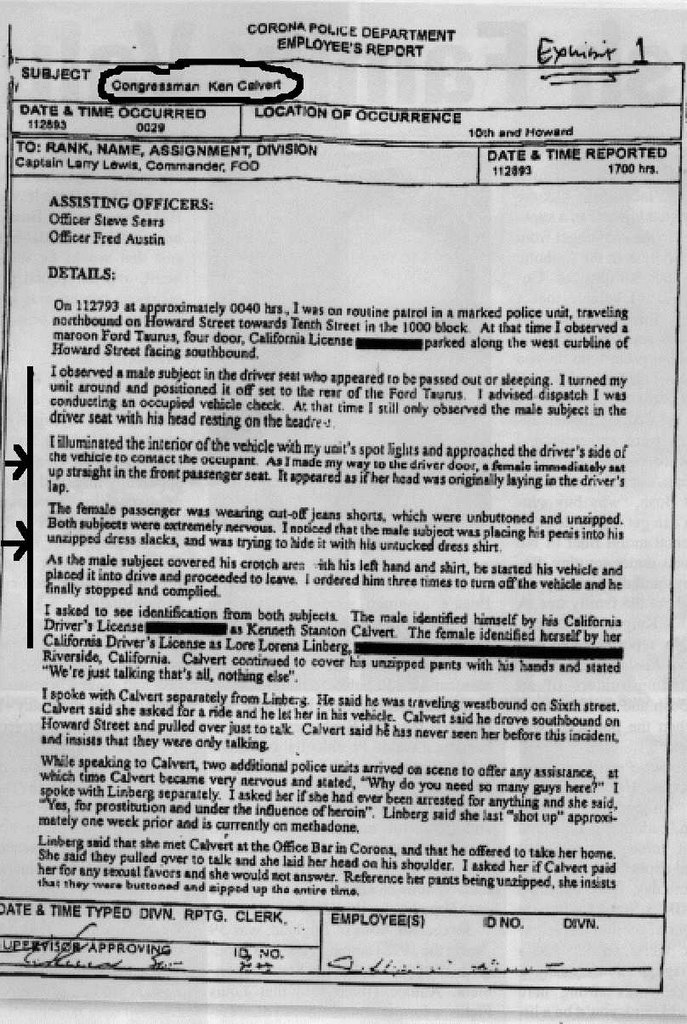
 Liam O’Mara, a Riverside County history professor and progressive activist is running to represent the Southern California congressional district held by untreated sex-fiend and corrupt Trumpist Ken Calvert. Calvert doesn’t believe in supporting public health in any way so, is an opponent of not just Medicare-for-All, not for plain ole Medicare as well. O’Mara brings an entirely different perspective to the debate. "I know a great many people without dental or vision insurance, which means far higher costs when things inevitably go wrong,” he told us yesterday. "In fact, I am among them, as one of the many academics who slip between the cracks of good coverage because of the way the field has pushed us into part-time contractors. I know people in my circle who've not seen a dentist in a decade or more. Is it any surprise that billboards for tooth implants are proliferating along freeways in poorer areas? The lack of coverage pushes people into expensive catastrophic care, despite regular check-ups being far cheaper and more healthful. Dentistry is one of countless areas where we could save money if we just made insurance available to everyone. Bernie's plan does that, and we need to elect enough progressives to see it become law."
Heidi Sloan, is a progressive Democrat competing with anti-healthcare Trumpist Roger Williams for a gerrymandered seat in central Texas (TX-25)."Medicare For All," Heidi, who sent us this tweet (above) from a few days back, told us, "is about providing care to all people and to our whole bodies. That means vision, reproductive health, mental health, and dental. Our teeth are not somehow separate from the rest of our bodies, and it is absurd that the insurance industry has convinced us to think of our dental health as something different from our health in general-- as though receiving care for these bones were a treat instead of a necessary component of well-being. When I chew food, I don't think I'm experiencing a luxury. If you've ever had wisdom teeth come in, you know that alleviating that pain should not be regarded as a nice bonus that you get if you can afford it. In demanding Medicare For All, we are demanding the working class have real healthcare for our bodies, and we're not buying that our teeth are somehow exempt from that demand anymore."
Morgan Harper is running for a seat in Columbus, Ohio held by a do-nothing Democratic backbencher, Joyce Beatty. Morgan will never be accused of being a do-nothing-- and passing Medicare-for-All is one of the planks in her progressive platform. "The dentistry crisis in this country," she said, "is largely overshadowed by the broader healthcare crisis; it cannot be ignored. Millions of Americans do not have easy access to quality dental care, millions more are uninsured, and for those who are fortunate to have dental insurance, the quality of that coverage often does little to offset the costs of needed procedures. We must do better."
Labels: dental care, Heidi Sloan, Liam O'Mara, Medicare, Medicare For All, Morgan Harper, Zappa
posted by DownWithTyranny @ 5:00 AM
3 comments
|
Reddit


 to... let their freak flag fly.)