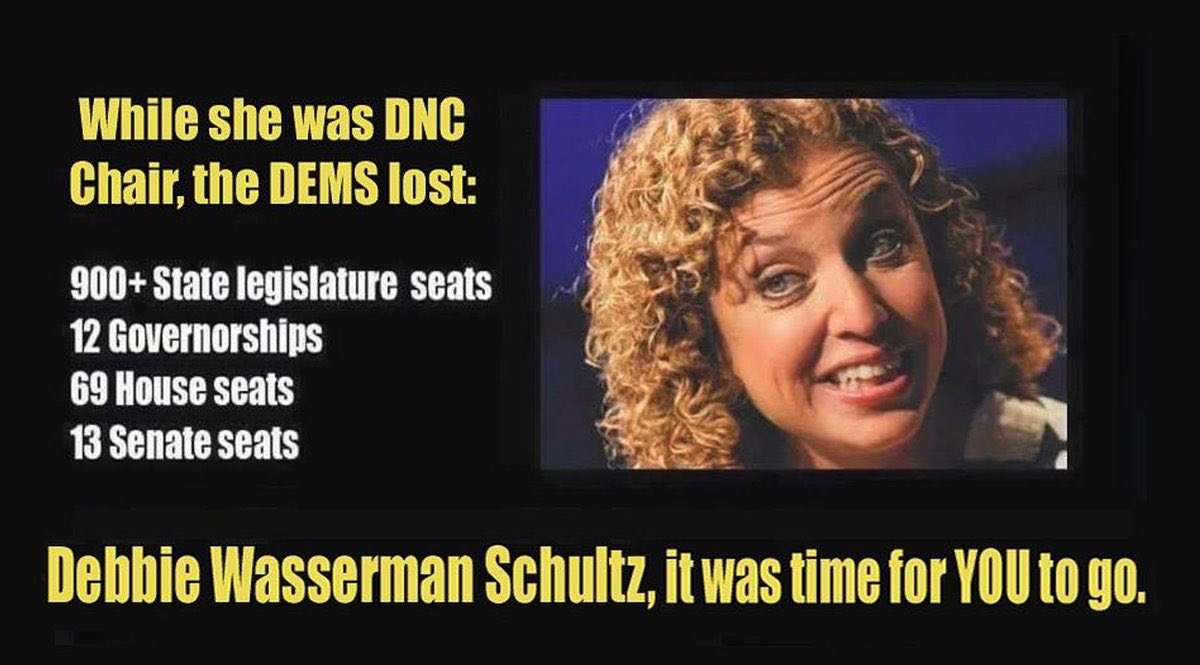
Monday, February 03, 2020

The Stop Bernie Movement Is Inherently Anti-American

>

He Can Do It, detail, by Nancy Ohanian

We should know results from Iowa soon but an AP VoteCast just released within the hour indicates that "The first voters to make their choice in the race for the Democratic presidential nomination are desperate for fundamental change to the political system. Roughly two-thirds of Iowa caucusgoers said supporting a candidate who would transform how the system in Washington works was important to their vote." And the two big issues are both Bernie issues-- healthcare and the Climate Crisis. Only a third of caucus-goers said that they would prefer restoration of the political system to the way it was before when Status Quo Joe was VP.

Yesterday, our old friend Tim Canova, a progressive Democrat who took on status quo establishment hack Debbie Wasserman Schultz, only to see her political machine rig the election against him, wrote to his supporters that "The past few days have brought news that the Democratic National Committee (DNC) is stacking the deck again in its 2020 presidential nomination process, much like the DNC did in 2016. First, Tom Perez, the DNC chair, announced a tidal wave of appointments of corporate lobbyists to the party’s Convention Committee-- a practice started at the DNC by Debbie Wasserman Schultz when she was putting both thumbs on the scales against Bernie Sanders in the 2016 primaries. Several days later, the DNC announced it was relaxing its own debate rules to make room for billionaire candidate Michael Bloomberg in the next debate. This comes after months of DNC strict adherence to debate rules to undermine the candidacies of Tulsi Gabbard, Corey Booker, Kamala Harris, and just about anyone else outside the top tier of candidates – even though nearly half of Democratic voters remain undecided in many key states. Next came news reports that the DNC may amend its rules to allow superdelegates to vote on the first ballot at the Convention– clearly aimed at blocking Bernie Sanders or Tulsi Gabbard, if need be, at the Convention."

He wrote that he is "not among those surprised or suddenly outraged by the DNC’s latest actions. Nothing much changed after 2016. The party remains owned by and under the control of the same powerful corporate interests that have selected past presidential nominees and have impeded all kinds of progressive reforms under Democrat and Republican administrations alike. Our fight in South Florida is the same fight across this country, to restore democracy by first restoring integrity and justice to our elections. We need a system of 100% hand-marked paper ballots counted by hand in public, as was done in the United States for more than two centuries. With the Iowa Caucus just days away, it’s good to remember why it’s difficult for the DNC or anyone else to steal Iowa. It’s because Iowa is a caucus, and therefore by its very nature, the votes are made publicly and counted in public. The same cannot be said of primaries, all of which use electronic voting machines that are inherently vulnerable to outside hacking and insider manipulation of the software. It’s important to also remember that the DNC establishment has not changed its stripes. Since the 2016 election, lawyers for the DNC and Wasserman Schultz have even argued in open court that the DNC has the right to rig its own presidential primaries and nominations process, and that it has no duty to abide by its own rules in its own corporate charter. Anything to rig elections against the party’s own grassroot supporters."

It isn't just the Republicans and Vladimir Putin who are out to steal U.S. elections. Establishment Democrats can be just as self-interested and ruthless. That said, I do want to add that Christine Pelosi, one of the loudest progressive voices on the DNC told me that there is virtually no chance that the Stop Bernie plot to allow superdelegates to vote on the first ballot will succeed. "This," she said, "was a handful of DNC members who griped about having to go to a second ballot and wondered if they could change the call to convention and roll back our reforms. WILL NOT HAPPEN... as the most prodigious author of DNC Resolutions, I know the members very well and am aware of their concerns about decisions made without transparency and about a repeat of 2016." I trust her judgment on this.

I also trust Luke Savage's view, written out yesterday for Jacobin, about the impetus behind the Stop Bernie Movement. He wrote that "'electability' is the public rallying cry of the Stop Bernie campaign. But look a little closer, and the real issue becomes clear: the establishment fears having a democratic socialist in the White House."
Bernie Sanders’s recent rise in the polls has elicited an entirely predictable reaction from all the usual suspects who make up America’s op-ed pages. But, personally offended as the chatterati are, there are signs that the prospect of a Sanders victory in the Democratic primary contest is awakening an altogether more vicious beast that’s long been in the Vermont senator’s crosshairs.

This week, NBC, the Associated Press, and Politico all reported on the emerging anxiety within elite Democratic circles about Sanders’s ascent in the polls and nascent efforts by operatives to arrest his momentum. As journalist Andrew Perez noted, all three reports cited one Matt Bennett, cofounder of the organization Third Way, who issued boilerplate warnings about the supposed dangers of a Sanders nomination. In a pattern that is almost certain to be repeated in the coming weeks and months, Bennett’s intervention was framed as an earnest expression of concern by a moderate Democrat mindful of taking what he believes to be a major political risk

But it was actually something else, given Bennett’s job at a self-identified “think tank” that has received extensive contributions from corporate patrons, including health insurance company Humana and Koch Industries. Washington is packed with groups like Third Way and others in the same mold, the function of which is to provide a layer of institutional sediment separating corporate interests from the mouthpieces they fund to advance their interests. In the gelatinous mass of lobbyists, megadonors, corporate spokespeople, and political operatives resulting from this arrangement, it can often be difficult to tell where the private sector ends and the public sector or party apparatus begins.

Nonetheless, Bennett’s anguished intervention is a telltale sign that panic about Sanders is starting to spill outside the op-ed pages and into the boardrooms of corporate interests-- from pharmaceutical companies to Wall Street investment firms-- who have an immediate pecuniary interest in opposing his program. If Sanders’s performance in the first round of primaries and caucuses matches current expectations, big business will undoubtedly intensify its efforts to stop him-- likely aided, as in this case, by centrist Democrat operatives who sit at the noxious juncture of party politics and corporate agitprop.


A more overt harbinger came in the form of a recent MSNBC appearance by former Obama administration adviser, Wall Street financier, and Narandra Modi enthusiast Steve Rattner-- who currently works as Michael Bloomberg’s personal money manager and is reportedly worth well over $100 million. Though he took care to repeat the meta argument so fashionable among neoliberal Democrats that Sanders “can’t win,” Rattner’s primary concern seemed to be something else:
The more that Bernie Sanders rises... the more people are getting scared about a Bernie Sanders candidacy, for two reasons. First, because they think he’ll lose. And second, they think if he wins, he’ll implement the kinds of policies... which are so far away from the center of the Democratic Party. So there’s a lot of activity around trying to quote “stop Bernie,” although it isn’t called by that just yet.
Goal ThermometerRattner is, of course, quite correct to suggest that a Sanders presidency would move to implement policies opposed by the “center of the Democratic Party”-- an innocuous-sounding phrase leveraged to obscure the vast web of Wall Street firms, pharmaceutical giants, insurance companies, and other corporate interests that have long found a home within the Democratic establishment, dictated the limits of the party’s policy agenda, and stuffed the upper echelons of its donor and consultant class.

More than any expressed concerns about his viability in a general election, opposition to the Sanders program and what it would mean for corporate balance sheets is what Stop Bernie is really about.
The anti-Bernie smear ads on TV in Iowa and New Hampshire could easily be seen as... well, almost pro-Bernie. David Doel showed them on his show and explained why they're so patently ridiculous and utterly ineffective. Spoiler: "Bernie Sanders wants to give everyone health insurance. He's more radical than Obama was!"


Labels: , , , , ,

Friday, June 21, 2019

Blue Dogs And New Dems Team Up With The GOP To Permit Unwarranted Spying On American Citizens

>


Late Tuesday night, the House voted on an amendment offered by Justin Amash (R-MI) and Zoe Lofgren (D-CA) to an omnibus appropriations bill. The amendment failed 253-175. It was voted down by an institutionally conservative coalition that included 127 Republicans and 126 Dems from the Republican wing of the Democratic Party— primarily New Dems, Blue Dogs and associated shitheads (like Steny Hoyer). Voting to pass the bill were almost every progressive in the House (110) of them + a motley crew of 65 Republicans. The rejected bill was meant to end unwarranted federal mass surveillance of phone calls, texts, and browsing histories of the American people (the stuff Ed Snowden exposed). Reason Magazine explained the amendment as seeking to forbid the use of any funds to submit a surveillance request under Section 702's guidelines unless the requesting organization— the National Security Agency (NSA)— certifies that the surveillance is not "to acquire the communications of a particular, known person reasonably believed to be in the United States, any acquisition of a communication as to which no participant is a person who is targeted pursuant to the authorized acquisition, or any acquisition of a communication known to be entirely domestic."
Translation: The purpose of Section 702 of FISA is intended to authorize warrantless secret surveillance of foreign targets of interest in other countries who may be plotting against the United States. In practice, we know that the NSA has been collecting significant amounts of domestic communications of American citizens, without warrants, in violation of the Fourth Amendment. This was the surveillance that Edward Snowden helped expose, and we've been arguing over it ever since.

Despite repeatedly and loudly complaining that he and his aides had been illegally surveilled under FISA as a candidate, President Donald Trump has done nothing to actually restrain these surveillance powers. Last year, given the opportunity to rethink the limits of Section 702 when it was up for renewal, Congress and Trump instead expanded its authority to snoop on Americans.

So this year, Amash and Lofgren embarked on a new effort to stop the NSA from secretly collecting Americans' communications. Amash spoke passionately in defense of his amendment on the House floor [Tuesday] evening:
We can see what's wrong with Washington right here. We have Republicans for months saying "We're worried about FISA abuse. FISA's out of control!" Here we are trying to limit FISA and they're running against it. They're saying "No, we can't limit FISA!" Democrats say, "We want to hold the president in check. Executive power is out of control." We have an amendment to hold the president in check. This is our time to stand up for the American people. I'm sick of going home and telling them that neither side wanted to defend their rights.
But it was not to be. The amendment got all of 10 minutes of debate and was defeated.
So… which team would you want to be on? One one side you have Barbara Lee (D-CA), AOC (D-NY), Justin Amash (R-MI), Ted Lieu (D-CA), Ro Khanna (D-CA), Pramila Payapal (D-WA), Katie Porter (D-CA), Joe Kennedy III (D-MA), Joe Neguse (D-CO), Rashida Tlaib (D-MI), Jim McGovern (D-MA), Jan Schakowsky (D-IL), Ilhan Omar (D-MN), David Cicilline (D-RI), Deb Haaland (D-NM), Jamie Raskin (D-MA), Jerry Nadler (D-NY)… And on the other side you have Kevin McCarthy (R-CA), Steny Hoyer (D-MD), Devin Nunes (R-CA),  Josh Gottheimer (Blue Dog-NJ), Steve King (R-IA), Fred Upton (R-MI), Debbie Wasserman Schultz (New Dem-FL), Liz Cheney (R-WY), Henry Cuellar (Blue Dog-TX), Sean Duffy (R-WI), Cheri Bustos (Blue Dog-IL), David Scott (Blue Dog-GA), Charlie Crist (Blue Dog-FL), Ron Kind (new Dem-WI), Virginia Foxx (R-NC), Tom O’Halleran (Blue Dog-AZ), Jefferson Van Drew (Blue Dog-NJ), Max Rose (Blue Dog-NY)…


I reached out to some Democrats who firmly believe in the concept of privacy from unreasonable searches. Remember Tim Canova, a constitutional lawyer from Florida who made a couple of spirited runs against Debbie Wasserman Schultz, one of the New Dems who backs unwarranted spying on American citizens. Tim reminded me that he had “long opposed the federal government’s warrantless mass surveillance program… Wasserman Schultz has argued that federal agencies need these tools to protect us from terrorists, from those who would collude with foreign enemies, rig our elections, and destroy our system of government. It’s therefore ironic that Wasserman Schultz and her own electronic communications are now of interest to the U.S. Justice Department and various federal prosecutors. Most notable are investigations into the origins of the unverified and salacious Christopher Steele dossier and how it was used in 2016 to lie to a Foreign Intelligence Surveillance (FISA) court to spy on the Trump campaign. It turns out that Wasserman Schultz had her Democratic National Committee (DNC) paid millions of dollars for the dirty dossier, with payments ultimately going to Steele, a former foreign Intelligence agent, and his sources inside Russian intelligence circles. As the New York Times reported, the Russians may have fed Steele the most outlandish lies about Trump as part of a Kremlin disinformation program to destabilize our political system. Paying foreigners to influence the U.S. presidential election are serious violations of federal campaign finance law. It also turns out that Wasserman Schultz laundered these payments to Steele and the others through Fusion GPS, a crony, and a high powered law firm, Perkins Coie. That’s money laundering to conceal the underlying felonies. Federal prosecutors likely have plenty of probable cause to obtain a FISA warrant to inspect Wasserman Schultz’s electronic communications from 2016. Meanwhile, Wasserman Schultz keeps voting in the House to allow federal mass surveillance without warrants. If there’s any karmic justice in this world, it won’t be warrantless mass surveillance that catches up with Wasserman Schultz, but a FISA warrant based on verified information and probable cause. RussiaGate conspiracy mongering has been great for cable TV ratings and has allowed criminal Democrats like Wasserman Schultz to distract attention from their own crimes. It is quickly proving to be a failing strategy against Donald Trump. All thanks to Dirty Debbie.”

Jon Hoadley is a state Rep running for the congressional seat held by Trump enabler Fred Upton. His position wasn’t much like Canova’s but wound up with a similar conclusion. “Voters in Southwest Michigan were disappointed to learn their 16-term congressman, Rep. Fred Upton (R-MI), once again landed on the wrong side of history by voting against the Lofgren-Amash amendment. This amendment would have closed the legal loopholes that enable mass government surveillance on private citizens. As a state representative, I've introduced legislation to ensure privacy for broadband users and worked to advance net neutrality. And when we turn Michigan's Sixth District blue next November, I'll vote to end mass government spying on citizens and to hold corporations accountable for abusing consumer data.

Dr. Michael Owens, a national security expert running for Congress against craven Blue Dog David Scott in a suburban district southwest of Atlanta told me that it’s unfortunate that Scott “again voted with Republicans and the Trump Administration to continue to allow the government to collect Americans' personal, private communications without a warrant. This is the second time that David Scott has voted for the warrantless collection of Americans' data that was installed hastily after 911 by President Bush as part of the overreaching Patriot Act. We must be clear, with David Scott's help, the Republicans in the House were successful in voting against the basic freedoms that every American is granted under the Fourth Amendment, he continues to be complicit in the government's mass collections of data that potentially puts  every American citizen at risk to cyber attacks and the potential exposure of any American citizen's most private information. Lastly, with this vote Congressman Scott continues to support Trump by allowing the biased targeting of migrants, asylum seekers, refugees and immigrants… I support this amendment and would’ve stood with the many progressive and decisive Democrats who voted yes. Under this amendment the government would have basic safeguards to allow the government to continue using Section 702 for its stated purpose of gathering foreign intelligence. But just as important, it would’ve stopped the abuse of the Constitution's 4th amendment with the government’s warrantless collection of Americans’ communications under FISA. This amendment would’ve also helped to reduce the billions of pieces of information that are being collected, indexed and searched against the will of the American people.”


Another reactionary Blue Dog who opposed the bipartisan amendment was Tom O’Halleran (AZ), a “former” Republican. And, like Scott, he has a strong progressive primary opponent— Eva Putzova. “The U.S. government can continue to read its citizens’ emails and text messages and surveil their internet activity Russian-style, “ she told me after the vote. “This is a tactic used to control the citizenry by totalitarian regimes and I know that, because I grew up under one of those regimes. Selling out the freedom of our people is unacceptable whether it’s done on partisan basis or not. In this case, both Republicans and Democrats showed a total disregard for personal liberties and failed their constituents.”

Dary Rezvani is the Fresno-area progressive taking on Devin Nunes (R-CA), a huge proponent of illegal domestic surveillance, isn’t happy that his own congressman is leading this charge. “The topic of surveillance,” he told me, “especially as it relates to this topic has always fascinated me for multiple reasons. The first being that Republicans try to sell themselves as the anti-big government party yet they have continually fueled and proposed legislation that allows for government overreach. As a child of 9/11, I remember vividly the arguments over the Patriot Act. At the time I thought ‘if you aren't doing anything wrong, what is the difference?’ Now, being a bit older and a bit wiser, I realize that this has little to do with protecting the public and everything to do with monitoring citizens that might be a ‘problem’ for the status quo. Privacy is a hot topic especially lately. It took a minute but the general population is starting to realize how valuable data is, specifically personal data. As our privacy becomes less and less private, the ability to organize and collectively voice our opinions against injustice becomes more and more difficult. Look at countries like China and Russia, where besides the exception of a couple of cases, the ability to protest is almost impossible. Once again, there’s something wrong with the rhetoric here. America is supposed to be the land of the free. That is what I was taught in school, my mom was taught in school and so on. The problem once again comes back to America's inability to critically think for themselves and ultimately question the government. However, when has there been a time in our history that you could openly question the government without your patriotism coming into question? As Americans, our information should be ours and ours alone. If we have created a society that the government has to monitor every letter we type, we have failed so far beyond belief that no amount on monitoring that can save it.”

Wendy Reed ran against Kevin McCarthy twice, without any help from her own party either time. Yesterday she told me that she would have gladly voted for the amendment and that fact “that McCarthy voted against it shows why he is hated by progressives and Freedom Caucus alike; he is a sellout corporatist, owing his allegiance only to money.”

Discussing this vote with Florida Democrat Alan Grayson, he told me that "After the Snowden revelations, an independent study showed that mass spying had not caught a single terrorist– although it had allowed NSA agents to spy on their girlfriends. 1984 just came a few years late. Big Brother is, indeed, watching you." 


Labels: , , , , , , ,

Friday, November 16, 2018

Long Past Time To Retire Brenda Snipes AND Debbie Wasserman Schultz

>


Florida is in the news— and at least it isn’t a hurricane. I think the first time we rang an alarm bell about Debbie Wasserman Schultz’s crooked crony, Broward County elections chief Brenda Snipes, we were picking up on a Politico report by Marc Caputo. In the 2016 cycle, she worked to steal the election for DWS, as sure as DWS worked to steal the presidential primary for Hillary. Snipes broke the law by destroying ballots cast in the tight primary election between Wasserman Schultz and Tim Canova after Canova sued to get access to the ballots. Canova, according to Caputo "wanted to inspect the optical-scan ballots cast in his Aug. 30 primary race against Wasserman Schultz because he had concerns about the integrity of the elections office. Under longstanding federal law, ballots cast in a congressional race aren’t supposed to be destroyed until 22 months after the election. And under state law, a public record sought in a court case is not supposed to be destroyed without a judge’s order. Snipes’ office, however, destroyed the paper ballots in question in October-- in the middle of Canova’s lawsuit-- but says it’s lawful because the office made high-quality electronic copies. Canova’s legal team found out after the fact last month.”

She wasn’t fired and was never held accountable so… of course, she took that as a green light to just keep fucking up. People are more concerned that she’s made it impossible to ever know who really won the gubernatorial and senate races in Florida than they are about how she stole another race from Tim Canova on behalf of DWS. Below is an email Canova sent his followers in Broward and Miami-Dade yesterday:
Since Election Day, the eyes of the nation have been on Broward County. While all other counties in Florida completed their counting of ballots, Broward continued finding new ballots to be counted, nearly swinging the election results for U.S. Senate and Florida Governor from Republicans to Democrats. Now there’s a state-wide machine recount, and the likelihood of lawsuits and possible hand recounts.

It’s been more than a year since we discovered that Brenda Snipes, the Broward Supervisor of Elections, illegally destroyed all the ballots cast in our 2016 primary against Debbie Wasserman Schultz. The news media refused to cover the story. If not for this double-trainwreck that landed in Broward, with both Governor and Senate races hanging in the balance, the media blackout would have continued. Instead, because of her role in the middle of the contested races for Governor and Senator, the mainstream media is finally asking questions about Snipes.

I warned for months that the failure to remove Snipes and her cronies from office would undermine public trust and result in continuing election irregularities, frauds, and illegal conduct. Since Election Day, I have heard from countless Broward residents from across the political spectrum expressing the same view, that they have lost faith and confidence in Broward election results, from non-partisan city commission and judicial elections to primaries and Congressional elections. Many ran for office as outsiders fighting for clean government, and now are horrified to see the level of corruption in our elections.

Two years ago, I first sought to inspect the ballots cast in our 2016 primary in an effort to verify the vote. Instead, we discovered that Snipes and one of her directors, Dozel Spencer, conspired to obstruct justice and tamper with evidence. This is not a theory, but an actual conspiracy that was established by a mountain of evidence discovered in our public records lawsuit against Snipes. In sworn videotaped depositions, Snipes and Spencer admitted to the ballot destruction. The Florida Circuit Court then granted us summary judgment in a 10-page order finding that Snipes obstructed justice, lied to the court, illegally tampered with evidence, and violated numerous state and federal criminal statutes, some punishable as felonies.

I reached out to Florida Governor Rick Scott months ago, as well as Democratic and Republican party officials, state and federal law enforcement agencies, and every member of the U.S. House of Representatives and Senate. None responded, no one saw fit to investigate, and Republican Rick Scott failed to remove Snipes from office, an abdication of his responsibility as Governor to uphold the rule of law and protect us from official corruption.


The journalist Chris Hedges has said that the corruption today is so bad that they don’t even try to hide it. Barely a week before the recent election, Snipes campaigned openly with Wasserman Schultz. And why not, she had already destroyed ballots with impunity. I warned for months that if her crimes went unpunished, Snipes would have every incentive to engage in future illegal conduct and rig another election against us. The burden should not be on campaigns like ours to prove fraud when someone with Snipes’ record is left in charge of elections.

Snipes and her top staff should have been prosecuted months ago. Allowing someone with her record of lawlessness to continue supervising the recent primary and general election taints all those results by creating “incurable uncertainties” about the election outcomes. That’s why a growing number of Broward residents and former candidates are now arguing that recent election results from the primary and general elections should be invalidated, and that the courts should order new elections with appropriate safeguards— namely, hand-marked paper ballots that are counted by hand in public.

Our campaign has also uncovered other disturbing irregularities in the recent election. One campaign volunteer smelled a rat on Election night, and took video on her smart phone of a line of private vehicles driving up and transferring the blue satchels containing paper ballots to a rented truck. The ballots should have been in the possession of two people at all times. They were not. In addition, the ballots should have been transferred only to a sheriff’s deputy who should have signed a receipt for the ballots. None of this happened, which destroys the “chain-of-custody” of the ballots and casts doubt on any potential paper ballot recount.

Like many other candidates who have lost under highly suspicious circumstances, we are still assessing our options moving forward. One thing is certain, whatever happens to our campaign, we will continue calling for Snipes and her staff to be removed from office and prosecuted for their crimes. The criminal justice system must be used to clean up the swamp in the Broward elections office.
I’m going to guess that U.S. District Judge Mark Walker would tend to agree with Tim. NPR reported that Walker slammed Florida yesterday for repeatedly failing to anticipate election problems, and said the state law on recounts appears to violate the U.S. Supreme Court ruling that decided the presidency in 2000. “We have been the laughing stock of the world, election after election, and we chose not to fix this.” Key word there is "chose."

Labels: , , , , , , , ,

Thursday, October 25, 2018

Time To Finally Get Rid Of Wasserman Schultz (But Not With A Pipe Bomb)

>


The Joe Crowley of South Florida, Debbie Wassermann Schultz, has finally agreed to participate in a debate. She'll face Republican Joe Kaufman and progressive independent Tim Canova tonite at Broward College, conveniently after many FL-23 voters have already cast their ballots. That's Debbie! As low as they go! [NOTE: Now I'm hearing she's making excuses about not showing up tonight] On Tuesday, the Miami Herald published an OpEd by Canova, Here’s why I’m challenging Debbie Wasserman Schultz as an independent. He reminded the readers that just about 3 years ago he took a leave as a tenured law professor at Nova Southeastern University "to run for Congress and challenge an entrenched incumbent, Debbie Wasserman Schultz, then the chair of the Democratic National Committee. To me, she was the epitome of why the party was failing: a corporate funded incumbent supporting a trickle-down Wall Street agenda of corporate trade deals, payday lending, private prisons, and endless wars." Blue America had urged Tim to run and endorsed him on the day he declared. This cycle we've endured him again, even though, technically, he isn't running as a Democrat.


My agenda is full employment, a renewable energy New Deal, a national infrastructure bank, ending the drug war and mass incarceration, universal single-payer healthcare, and protecting and conserving the environment. These issues are too pressing, and that’s why I decided to run again, to build on the momentum of the last campaign and continue waking voters on these issues.

But voters often first want to know why I left the Democratic Party and decided to run this time with No Party Affiliation (NPA). My “DemExit” was an unexpected fallout from the aftermath of my 2016 primary. After falling short by a few thousand votes, I started receiving phone calls from election experts across the country questioning the accuracy of the results. Some suspected hacking or software rigging. Our own internal field numbers, based on more than 10,000 door knocks a week, also showed a far different outcome. To try to put the matter to rest, I decided to verify the vote by simply inspecting the paper ballots in some key precincts, as permitted under Florida’s public-records law and at my own expense. If the ballots matched up, the issue would be resolved.


Brenda Snipes, the Broward County Supervisor of Elections, stonewalled my ballot request for months. I filed a lawsuit in June 2017, and while the lawsuit was pending, Snipes destroyed all the ballots, violating numerous state and federal criminal statutes. She concealed the ballot destruction from the court for more than two months and admitted to all this in sworn videotaped deposition.


Snipes claimed there was no harm to the public because she says she maintained digital scanned images of the purported ballots. But no one is permitted to inspect the software that creates these digital ballot images. Instead, the software is “proprietary,” the private property of the same software vendors hired by Snipes. Under such circumstances, her illegal destruction of the ballots has undermined public faith and confidence in Broward elections.

In May, the Florida Circuit Court granted me summary judgment, finding that Snipes broke the law. We recently settled for $150,000 in lawyers’ fees and court costs.


I had been a Democrat most of my life, served as a legislative aide on Capitol Hill to a Democratic U.S. senator, volunteered my time and energy to several campaigns and was inspired in my academic work by Franklin Roosevelt’s New Deal in banking and public finance.

But when Democratic Party officials in Florida refused to join my call for an investigation into Broward’s ballot destruction, that was finally enough. I am running as an independent to speak to a much wider part of the electorate. Although Republicans make up only 23 percent of registered voters in my district, independent voters are quickly approaching the number of registered Democrats. If there’s any district in the country where an independent can win, Florida’s Congressional District 23 is it, right here, right now.

Democratic Party politics appear petty when compared to the growing economic and environmental crises we face in Florida. For many people, this feels like year 10 of a Great Depression in jobs, incomes and savings. It’s why so many people voted for Bernie Sanders and so many others for Donald Trump. They know the system is broken, and that incremental change will change nothing.

Although Wasserman Schultz says climate change and sea-level rise are real, she then votes for billions of dollars in federal subsidies for the fossil-fuel industry and big agribusinesses, the industries contributing most to climate change. And she votes for hundreds of millions of dollars in federal subsidies for the Big Sugar industry, which along with those factory farms, are most responsible for polluting our waterways with toxic algae, endangering public health, harming tourism and threatening our oceans and aquifers.


I didn’t leave the Democratic Party as much as it left me. It’s much the same with the Republican Party. Both went so establishment and corporate that they abandoned the American people. That’s why although I’m running as an independent, I’m still the real New Deal Democrat in the race, and the candidate most in line with Teddy Roosevelt’s Republican progressive vision of trust-busting to protect workers and consumers, and to conserve our natural environment. Like during the Roosevelts’ era, our generation needs to tame capitalism without destroying it in order to liberate people while providing them with meaningful work in a dynamic economy.


UPDATE From Tim

Tonight was to be the one and only debate in our independent campaign for Congress against Debbie Wasserman Schultz and a Republican opponent. Unfortunately, the debate has been cancelled.

First, Debbie Wasserman Schultz did not even have the good grace to respond to the invitation made by Broward College on behalf of their students. No response at all.

And here’s an indication of Wasserman Schultz’s absolute hypocrisy: Last night she attended a debate of candidates for Florida governor at Broward College! Apparently, everyone else should be expected to debate opponents and answer to voters, but not Debbie.

The debate was going to proceed without Wasserman Schultz. My Republican opponent, Joe Kaufman, had already accepted Broward College’s invitation. But Kaufman cancelled this morning, even though the replacement moderator was a Republican who has served as press secretary to a number of prominent Florida Republicans, including Florida’s Attorney General.

Broward College felt compelled to cancel the entire event, rather than letting me take the stage alone, as the only candidate in this congressional district willing to debate.

It’s absolutely revolting that candidates for Congress, including a sitting Congresswoman who proclaim their fidelity to democracy, are actually afraid of the voters and have such little respect in particular for younger voters. They believe that college students and other young voters will not turn out to vote. And by not speaking to young voters, they are hoping it has that effect.

My opponents have also rejected a Town Hall invitation from March for Our Lives, a group formed by high school students in the aftermath of the Marjorie Stoneman Douglas High School shootings in Parkland, Florida earlier this year. And once again, Debbie Wasserman Schultz did not even respond to the invitation. That’s vintage Debbie. If you have a $5000 check from a political action committee, Debbie will make time for you. If not, her staff won’t even return your calls or debate invitations.

Wasserman Schultz and Kaufman both pretend to care about school safety, the lousy conditions in our public schools, and the concerns of college students. Yet, when push comes to shove, they both avoid invitations from students to appear in public, debate the issues, and answer their questions.

As a professor, I know all too well what a difficult job market this is, even for college graduates, and the burdens they carry in student debt. That’s why I have an agenda for students, one that includes a plan to reduce interest rates on existing student debt and even to forgive much outstanding student debt-- the same way the Federal Reserve helped Wall Street banks and hedge funds following the 2008 financial collapse. I support tuition-free public colleges, and we also have a plan for voluntary national service for high school grads that would provide tuition-free higher education at any school, public or private, after three years of servic-- the same kind of deal my dad’s generation got after World War II with the G.I. Bill of Rights. A national service program would provide opportunities in civilian conservation in national forests and coastal waters, cultural production in the arts and music, and improving all kinds of infrastructure-- just like in President Franklin Roosevelt’s New Deal. I also support Medicare For All, which would greatly help young people, many of whom presently lack any health insurance.

None of my opponents have any real agenda to address the concerns of our youth. No wonder why they run away from public forums and debates at our colleges and with young voters. The corrupt establishment is making such a mess of our world, I fear what the future will be like for our children.

This is what our campaign is fighting against: cowards who do not believe in democracy and who show such disrespect and disdain for young voters, and for people of all ages.

This is what our campaign is fighting for: a New Deal for all Americans!


Labels: , , , , , ,

Wednesday, September 19, 2018

No Red Wave But A Red Tide Catches Up With Florida Governor Rick Scott

>


Last month, in a post, Florida's Lovely Beaches-- Over-Run With Deadly Human Waste, we looked at a gigantic problem for Floridians that their politicians aren't adequately addressing. When I woke up yesterday, I was glad to see a headline from a Florida newspaper, Rick Scott campaign stop besieged by red tide protesters.

Zac Anderson wrote that "Protesters jammed the sidewalk and spilled into the street around Mojo’s Real Cuban, forcing Scott to enter the restaurant through the back door and leave the same way after just 10 minutes as members of the crowd shouted 'coward.'... With the noxious odor of red tide hanging in the air and a fresh wave of dead fish washing up on nearby Gulf beaches, a large crowd of people incensed about the devastating algae bloom that has plagued the region for months directed their anger at Gov. Rick Scott during a campaign event in Venice Monday." And does Scott ever deserve it!


The Republican governor is on the defensive about his environmental record as he tries to unseat Democratic U.S. Sen. Bill Nelson. Protesters gathered Monday took aim at Scott for cutting funding for environmental agencies early in his first term, arguing Scott’s cost-cutting and deregulation have kept the state from implementing measures that could have helped minimize naturally occurring red tide blooms.

“The more I learn about red tide the more I can point to Rick Scott making it worse,” said Venice resident Rich Peabody, 71. “It’s not his fault, but he’s making it worse.”

Peabody stood by the back door to Mojo’s and shouted “coward” at Scott as he left the restaurant.

“He’s a coward; he wouldn’t face these people,” said the semi-retired Peabody, who moved to the area nine years ago. “Look at our beaches.”

...Scott’s critics say his policies have exacerbated the problem. Red tide blooms start offshore but can feed on nutrients found in nearshore waters. Leaky septic tanks, lawn fertilizer found in stormwater runoff and other factors can add to nutrient levels in nearshore waters.

Scott signed off on legislation that repealed a mandatory septic tank inspection program. The inspections were intended to identify failing septic tanks that are leaching pollutants.

The governor also cut $700 million from the state’s water management districts, which help implement a range of water quality programs. And Scott reduced staffing at the state Department of Environmental Protection and pushed to speed up and streamline environmental permitting, leading some to accuse the state of cutting corners in protecting the environment.

...The unusually strong red tide bloom that has lingered along a vast stretch of Southwest Florida coastline for nearly a year and a separate blue-green algae bloom that originated in Lake Okeechobee and is fouling estuaries on both coasts have mushroomed into major campaign issues in Florida’s midterm election.

Sarasota resident John Citara, 52, came out to protest Scott’s visit wearing a white hazmat suit and a gas mask.

Citara said he used to take his sons to the beach on a regular basis to go swimming, but now they go to document the environmental devastation.

“Once you wipe out the economy and the tourism, Florida’s dead,” Citara said. “If this doesn’t show us we need to do things differently and hold people accountable, what will?”

Nokomis resident Kim Hileman, 60, moved to the area from Pennsylvania in April “for quality of life.”

“Thinking I would escape the snow and enjoy the warm weather and beaches,” Hileman said.

But there have been very few nice beach days since Hileman moved south. So on Monday she led the crowd outside Mojo’s in a chant of: “Hey hey ho ho red tide Rick has got to go.” The “red tide Rick” moniker was featured on a range of other signs.

Jane Hunter helped organize the protest as a leader with the liberal-leaning Englewood Indivisible group.

“We need to make a statement back to our community and the Scott campaign that you can’t just totally befoul the Southwest coast of Florida and then run for Senate and vote against the environment,” Hunter said. “Nope. Not gonna happen. There needs to be some accountability.”


South Florida congressional candidate Tim Canova was the first person to warn me about the scope of the environmental catastrophe unfolding in Florida right now. And though Rick Scott deserves all the blame in the world, this problem is the result of corrupt politicians from both parties playing footsie with fat cat polluters. Tim's opponent, Debbie Wasserman Schultz, is as culpable as Scott. Yesterday, Tim told me that "The Gulf coast of Florida is being devastated by Red Tide and the blue-green toxic algal, both fed by agricultural runoff from massive factory farms. This has resulted in the deaths of hundreds of sea turtles, manatees, dolphins, sea otters, and thousands of fish, pelicans, herons and other birds. Hundreds of people have fallen sick with respiratory illnesses. According to Toxic Puzzle, a documentary film narrated by Harrison Ford, scientists are now connecting these toxins with higher rates of Parkinson’s and Alzheimer’s disease and Amyotrophic Lateral Sclerosis (ALS), known as Lou Gehrig’s disease. Unfortunately, this deepening crisis is brought to us by the pollution in our politics. Politicians in both parties are taking millions of dollars in campaign donations from Big Agribusinesses and Big Sugar, including my opponent Debbie Wasserman Schultz who repeatedly voted to appropriate billions of dollars in federal subsidies for these same polluters. My campaign takes no corporate money, perhaps one of the reasons we are now being throttled and shadow banned on social media, making it more and more difficult to raise money in small online donations. We are standing up to Big Sugar and other predatory corporate interests, and our grassroots campaign is growing on the ground where it matters most."


Labels: , , ,

Thursday, August 16, 2018

A Progressive Foreign Policy?

>


How do you define a progressive foreign policy agenda? It's touchy, when you go beyond peace. Want to step on Jewish toes? Try it if you're a politicians and see how quickly you get turned into Cynthia McKinney (D-GA) or Earl Hilliard (D-AL). How about Armenian toes? There are around half a million Armenian-Americans, almost half of whom are concentrated in California with significant enough populations in Boston and NYC told wield some real political clout. It may be popular among Trump supporters to denigrate Muslim-Americans but there are about 3.5 million of them-- and they're better educated and wealthier than the average non-Muslim American-- and they vote... especially in New York City, Dearborn Michigan, Patterson, New Jersey, Philly, L.A., with significant numbers in Arkansas, Maine, Texas, Virginia, Illinois and Delaware. Politicians-- who are likely more interested in healthcare, education, the economy, climate change, gun violence, equality or other domestic issues-- have to be careful about the minefield around foreign policy. Stumbling can be fatal.

This week at In These Times, Phyllis Bennis, is asking for a bold foreign policy platform for the left, demanding that socialists and other progressives align their domestic programs with a progressive foreign policy vision. There was always grumbling among foreign policy-obsessed folks about Bernie. Bennis, however, starts with Alexandria Ocasio (NY) and Rashida Tlaib (MI), neither of whom is in Congress yet but both whom are guaranteed to be there in January. They are other super-progressives, she asserts, are not showing a clear enough link between domestic issues and... well she starts off with the easy stuff for most progressives-- challenging war and militarism and the war economy. Almost all progressive candidates I talk are passionately for peace and against what Eisenhower warned is the military-industrial complex.

But that isn't really what the complaint is. It's when demands are made about specific issues that divide constituencies that things start to get hairy. "It’s not," wrote Bennis, "that progressive leaders don’t care about international issues, or that our movements are divided. Despite too many common assumptions, it is not political suicide for candidates or elected officials to stake out progressive anti-war, anti-militarism positions. Quite the contrary: Those positions actually have broad support within both our movements and public opinion. It’s just that it’s hard to figure out the strategies that work to connect internationally focused issues, anti-war efforts, or challenges to militarism, with the wide array of activists working on locally grounded issues. Some of those strategies seem like they should be easy-- like talking about slashing the 53 cents of every discretionary federal dollar that now goes to the military as the easiest source to fund Medicare-for-all or free college education. It should be easy, but somehow it’s not: Too often, foreign policy feels remote from the urgency of domestic issues facing such crises. When our movements do figure out those strategies, candidates can easily follow suit." Yep that's the (relatively) easy part. Now comes the less easy stuff, especially what it's not just a principal but an actual policy that touches countries and people.
Candidates coming out of our movements into elected office will need clear positions on foreign policy. Here are several core principles that should shape those positions.

A progressive foreign policy must reject U.S. military and economic domination and instead be grounded in global cooperation, human rights, respect for international law and privileging diplomacy over war. That does not mean isolationism, but instead a strategy of diplomatic engagement rather than-- not as political cover for-- destructive U.S. military interventions that have so often defined the U.S. role in the world.

Looking at the political pretexts for what the U.S. empire is doing around the world today, a principled foreign policy might start by recognizing that there is no military solution to terrorism and that the global war on terror must be ended.

More broadly, the militarization of foreign policy must be reversed and diplomacy must replace military action in every venue, with professional diplomats rather than the White House’s political appointees in charge. Aspiring and elected progressive and socialist office-holders should keep in mind the distinction between the successes and failures of Obama’s foreign policy. The victories were all diplomatic: moving towards normalization with Cuba, the Paris climate accord and especially the Iran nuclear deal. Obama’s greatest failures-- in Libya, Syria, Iraq, Afghanistan and Yemen-- all occurred because the administration chose military action over robust diplomacy.

Certainly, diplomacy has been a tool in the arsenal of empires, including the United States. But when we are talking about official policies governing relations between countries, diplomacy-- meaning talking, negotiating and engaging across a table-- is always, always better than engaging across a battlefield.

A principled foreign policy must recognize how the war economy has distorted our society at home-- and commit to reverse it. The $717 billion of the military budget is desperately needed for jobs, healthcare and education here at home-- and for a diplomatic surge and humanitarian and reconstruction assistance to people of countries devastated by U.S. wars and sanctions.

A principled foreign policy must acknowledge how U.S. actions-- military, economic and climate-related-- have been a driving force in displacing people around the world. We therefore have an enormous moral as well as legal obligation to take the lead in providing humanitarian support and refuge for those displaced-- so immigration and refugee rights are central to foreign policy.

For too long the power of the U.S. empire has dominated international relations, led to the privileging of war over diplomacy on a global scale, and created a vast-- and invasive-- network of 800-plus military bases around the world.

Now, overall U.S. global domination is actually shrinking, and not only because of Trump’s actions. China’s economy is rapidly catching up, and its economic clout in Africa and elsewhere eclipses that of the United States. It’s a measure of the United States’ waning power that Europe, Russia and China are resisting U.S. efforts to impose new global sanctions on Iran. But the United States is still the world’s strongest military and economic power: Its military spending vastly surpasses that of the eight next strongest countries, it is sponsoring a dangerous anti-Iran alliance between Israel and the wealthy Gulf Arab states, it remains central to NATO decision-making, and powerful forces in Washington threaten new wars in North Korea and Iran. The United States remains dangerous.

Progressives in Congress have to navigate the tricky task of rejecting American exceptionalism. U.S global military and economic efforts are generally aimed at maintaining domination and control. Without that U.S. domination, the possibility arises of a new kind of internationalism: to prevent and solve crises that arise from current and potential wars, to promote nuclear disarmament, to come up with climate solutions and to protect refugees.

That effort is increasingly important because of the rapid rise of right-wing xenophobic authoritarians seeking and winning power. Trump is now leading and enabling an informal global grouping of such leaders, from Egypt’s Abdel Fattah el-Sisi to Victor Orban in Hungary and others. Progressive elected officials in the United States can pose an important challenge to that authoritarian axis by building ties with their like-minded counterparts in parliaments and governments-- possibilities include Jeremy Corbyn in the United Kingdom and Andrés Manuel López Obrador in Mexico, among others. And progressive and leftist members of Congress will need to be able to work together with social movements to build public pressure for diplomatic initiatives not grounded in the interests of U.S. empire.

In addition to these broad principles, candidates and elected officials need critical analyses of current U.S. engagement around the world, as well as nuanced prescriptions for how to de-escalate militarily, and ramp up a new commitment to serious diplomacy.

Russia: Relations with Russia will be a major challenge for the foreseeable future. With 90 percent of the world’s nuclear weapons in U.S. and Russian hands, and the two powers deploying military forces on opposite sides of active battlefronts in Syria, it is crucial that relations remain open—not least to derail potential escalations and ensure the ability to stand down from any accidental clash.


Progressives and leftists in Congress will need to promote a nuanced, careful approach to Russia policy. And they will face a daunting environment in which to do so. They will have to deal with loud cries from right-wing war-mongers, mainly Republicans, and from neo-con interventionists in both parties, demanding a one-sided anti-Russia policy focused on increased sanctions and potentially even military threats. But many moderate and liberal Democrats-- and much of the media-- are also joining the anti-Russia crusade. Some of those liberals and moderates have likely bought into the idea of American exceptionalism, accepting as legitimate or irrelevant the long history of U.S. election meddling around the world and viewing the Russian efforts as somehow reaching a whole different level of outrageousness. Others see the anti-Russia mobilization solely in the context of undermining Trump.

But at the same time, progressive Congress members should recognize that reports of Russian efforts to interfere with the 2016 and 2018 elections cannot be dismissed out of hand. They should continue to demand that more of the evidence be made public, and condemn the Russian meddling that has occurred, even while recognizing that the most serious threats to our elections come from voter suppression campaigns at home more than from Moscow. And they have to make clear that Trump’s opponents cannot be allowed to turn the president’s infatuation with Vladimir Putin into the basis for a new Cold War, simply to oppose Trump.

China: The broad frame of a progressive approach should be to end Washington’s provocative military and economic moves and encourage deeper levels of diplomatic engagement. This means replacing military threats with diplomacy in response to Chinese moves in the South China Sea, as well as significant cuts in the ramped-up military ties with U.S. allies in the region, such as Vietnam. Progressive and socialist members of Congress and other elected officials will no doubt be aware that the rise of China’s economic dominance across Africa, and its increasing influence in parts of Latin America, could endanger the independence of countries in those parts of the Global South. But they will also need to recognize that any U.S. response to what looks like Chinese exploitation must be grounded in humility, acknowledging the long history of U.S. colonial and neocolonial domination throughout those same regions. Efforts to compete with Chinese economic assistance by increasing Washington’s own humanitarian and development aid should mean directing all funds through the UN, rather than through USAID or the Pentagon. That will make U.S. assistance far less likely to be perceived as-- and to be-- an entry point for exploitation.

NATO: A progressive position on NATO flies straight into the face of the partisan component of the anti-Trump resistance-- the idea that if Trump is for it, we should be against it. For a host of bad reasons that have to do with personal enrichment and personal power, Trump sometimes takes positions that large parts of the U.S. and global anti-war and solidarity movements have long supported. One of those is NATO. During the Cold War, NATO was the European military face of U.S.-dominated Western anti-Communism and anti-Sovietism. With the end of the Cold War and the collapse of the Soviet Union, peace activists from around the world called for the dissolution of NATO as an anachronistic relic whose raison d’etre was now gone.


Instead, NATO used its 50th anniversary in 1999 to rebrand itself as defending a set of amorphous, ostensibly “Western” values such as democracy, rather than having any identifiable enemy-- something like a military version of the EU, with the United States on board for clout. Unable to win UN Security Council support for war in Kosovo, the United States and its allies used NATO to provide so-called authorization for a major bombing campaign-- in complete violation of international law-- and began a rapid expansion of the NATO alliance right up to the borders of Russia. Anti-war forces across the world continued to rally around the call “No to NATO”-- a call to dissolve the alliance altogether.

But when Trump, however falsely, claims to call for an end to the alliance, or shows disdain for NATO, anti-Trump politicians and media lead the way in embracing the military alliance as if it really did represent some version of human rights and international law. It doesn’t-- and progressives in elected positions need to be willing to call out NATO as a militarized Cold War relic that shouldn’t be reconfigured to maintain U.S. domination in Europe or to mobilize against Russia or China or anyone else. It should be ended.

In fact, Trump’s claims to oppose NATO are belied by his actions. In his 2019 budget request he almost doubled the 2017 budget for the Pentagon’s “European Deterrence Initiative,” designed explicitly as a response to “threats from Russia.” There is a huge gap between Trump’s partisan base-pleasing condemnation of NATO and his administration’s actual support for strengthening the military alliance. That contradiction should make it easier for progressive candidates and officeholders to move to cut NATO funding and reduce its power-- not because Trump is against NATO but because the military alliance serves as a dangerous provocation toward war.

...Israel-Palestine: The most important thing for candidates to know is that there has been a massive shift in public opinion in recent years. It is no longer political suicide to criticize Israel. Yes, AIPAC and the rest of the right-wing Jewish, pro-Israel lobbies remain influential and have a lot of money to throw around. (The Christian Zionist lobbies are powerful too, but there is less political difficulty for progressives to challenge them.) But there are massive shifts underway in U.S. Jewish public opinion on the conflict, and the lobbies cannot credibly claim to speak for the Jewish community as a whole.

Outside the Jewish community, the shift is even more dramatic, and has become far more partisan: Uncritical support for Israel is now overwhelmingly a Republican position. Among Democrats, particularly young Democrats, support for Israel has fallen dramatically; among Republicans, support for Israel’s far-right government is sky-high. The shift is particularly noticeable among Democrats of color, where recognition of the parallels between Israeli oppression of Palestinians and the legacies of Jim Crow segregation in the United States and apartheid in South Africa is rising rapidly.

U.S. policy, unfortunately, has not kept up with that changing discourse. But modest gains are evident even there. When nearly 60 members of the House and Senate openly skipped Benjamin Netanyahu’s speech when he came to lobby Congress to vote against President Obama’s nuclear deal with Iran, the sky didn’t fall. The snub to the Israeli prime minister was unprecedented, but no one lost their seat because of it. Rep. Betty McCollum’s bill to protect Palestinian children from Israel’s vicious military juvenile detention system (the only one in the world) now has 29 co-sponsors, and the sky still isn’t falling. Members of Congress are responding more frequently to Israeli assaults on Gaza and the killing of protesters, often because of powerful movements among their constituents. When Trump moved the U.S. embassy to Jerusalem, the Israeli daily Ha’aretz acknowledged the divide: “While members of the Republican Party overwhelmingly expressed support for the move, Democrats were split between those who congratulated Trump for it and those who called it a dangerous and irresponsible action.”

That creates space for candidates and newly elected officials to respond to the growing portion of their constituencies that supports Palestinian rights. Over time, they must establish a rights-based policy. That means acknowledging that the quarter-century-long U.S.-orchestrated “peace process” based on the never-serious pursuit of a solution, has failed. Instead, left and progressive political leaders can advocate for a policy that turns over real control of diplomacy to the UN, ends support for Israeli apartheid and occupation, and instead supports a policy based on international law, human rights and equality for all, without privileging Jews or discriminating against non-Jews.

To progress from cautiously urging that Israel abide by international law, to issuing a full-scale call to end or at least reduce the $3.8 billion per year that Congress sends straight to the Israeli military, might take some time. In the meantime, progressive candidates must prioritize powerful statements condemning the massacre of unarmed protesters in Gaza and massive Israeli settlement expansion, demands for real accountability for Israeli violations of human rights and international law (including reducing U.S. support in response), and calls for an end to the longstanding U.S. protection that keeps Israel from being held accountable in the UN.

The right consistently accuses supporters of Palestinian rights of holding Israel to a double standard. Progressives in Congress should turn that claim around on them and insist that U.S. policy towards Israel-- Washington’s closest ally in the region and the recipient of billions of dollars in military aid every year-- hold Israel to exactly the same standards that we want the United States to apply to every other country: human rights, adherence to international law and equality for all.

Many supporters of the new crop of progressive candidates, and many activists in the movements they come out of, are supporters of the increasingly powerful, Palestinian-led BDS (boycott, divestment and sanctions) movement, that aims to bring non-violent economic pressure to bear on Israel until it ends its violations of international law. This movement deserves credit for helping to mainstream key demands-- to end the siege of Gaza and the killing of protesters, to support investigations of Israeli violations by the International Criminal Court, to oppose Israel’s new “nation-state’ law-- that should all be on lawmakers’ immediate agenda.

Iran: With U.S. and Iranian military forces facing each other in Syria, the potential for an unintentional escalation is sky-high. Even a truly accidental clash between a few Iranian and U.S. troops, or an Iranian anti-aircraft system mistakenly locking on to a U.S. warplane plane even if it didn’t fire, could have catastrophic consequences without immediate military-to-military and quick political echelon discussions to defuse the crisis. And with tensions very high, those ties are not routinely available. Relations became very dangerous when Trump withdrew the United States from the multi-lateral nuclear deal in May. (At that time, a strong majority of people in the United States favored the deal, and less than one in three wanted to pull out of it.)

The United States continues to escalate threats against Iran. It is sponsoring a growing regional anti-Iran alliance, with Israel and Saudi Arabia now publicly allied and pushing strongly for military action. And Trump has surrounded himself with war-mongers for his top advisers, including John Bolton and Mike Pompeo, who have both supported regime change in Iran and urged military rather than diplomatic approaches to Iran.

Given all that, what progressive elected officials need to do is to keep fighting for diplomacy over war. That means challenging U.S. support for the anti-Iran alliance and opposing sanctions on Iran. It means developing direct ties with parliamentarians from the European and other signatories to the Iran nuclear deal, with the aim of collective opposition to new sanctions, re-legitimizing the nuclear deal in Washington and reestablishing diplomacy as the basis for U.S. relations with Iran.

It should also mean developing a congressional response to the weakening of international anti-nuclear norms caused by the pull-out from the Iran deal. That means not just supporting the nonproliferation goals of the Iran nuclear deal, but moving further towards real disarmament and ultimately the abolition of nuclear weapons. Progressives in and outside of Congress should make clear that nuclear nonproliferation (meaning no one else gets to have nukes) can’t work in the long run without nuclear disarmament (meaning that the existing nuclear weapons states have to give them up). That could start with a demand for full U.S. compliance with the Nuclear Non-Proliferation Treaty, which calls for negotiations leading to “nuclear disarmament, and on a treaty on general and complete disarmament.”

...Yemen and Saudi Arabia:

The ongoing Saudi-led war against Yemen reflects the most deadly front of Saudi Arabia’s competition with Iran for regional hegemony. The United States is providing indirect and direct support, including U.S. Air Force pilots providing in-air refueling so Saudi and UAE warplanes can bomb Yemen more efficiently, and Green Berets fighting alongside Saudi troops on the border, in what the New York Times called “a continuing escalation of America’s secret wars.”


The U.S.-backed Saudi war against Yemen has also created what the UN has declared the world’s most serious humanitarian crisis. Congress’ first action must be to immediately end all U.S. involvement in the war. Next, Congress must reject all approvals for arms sales to Saudi Arabia and the UAE as long as they continue to bomb and blockade Yemen.

Ending these arms sales may be a serious challenge, given the power of the arms manufacturers’ lobby, Israel’s strong support of Saudi Arabia against Iran and the fact that Saudi Arabia remains the top U.S. arms customer. But recent efforts and relatively close votes in both the House and Senate, while not successful, indicate that challenging the longstanding process of providing the Saudis with whatever weapons they want may be closer to reality than anticipated. The House called the U.S. military involvement in the Saudi war in Yemen “unauthorized.” Reps. Ro Khanna, Marc Pocan and others have introduced numerous House bills in recent months aimed at reducing U.S. arms sales and involvement in the Saudi-led assault. In the Senate, a March resolution to end U.S. military involvement in the Yemen war failed by only 11 votes, a much narrower margin than anticipated. Progressive candidates and new members of Congress should support all those efforts, and move further with a call for ending the longstanding U.S. alliance with Saudi Arabia, especially military sales and support for the Saudi-Israeli partnership against Iran.
Tim Canova, the stalwart progressive Democrat, running as an independent for the south Florida seat occupied by-- and, earlier, drawn by-- Debbie Wasserman Schultz, once got on the wrong side of the progressive foreign policy komissariat. I can't remember the exact details but often when I write about his campaign, some commenter comes howling into the comments section to denounce him. I didn't ask Tim about that nonsense. Instead, I asked him about the whole idea of a progressive foreign policy vision. This is what he told me:
I see our foreign policy as inextricably linked to our domestic agenda and political challenges. At home we seek a green and solar New Deal to provide work and meaning to a generation that’s been displaced by technology and hammered by austerity, privatizations and a global race to the bottom. Abroad, we want the same for people all over the world. We should be supporting and promoting democracy movements and progressive economic and social policies.

After World War II, the greatest generation benefitted greatly from the G.I. Bill of Rights that invested in the people. At the same time, U.S. foreign policy promoted New Deals in Western Europe through the Marshall Plan. Today, in the US and abroad, we see democracy losing out to corporate oligarchy. Instead of full employment policies, we see pressures from big banks, international institutions, and market forces to cut public budgets, cut taxes on the rich, privatize all state functions, and liberalize trade to insane degrees. It’s created a massive amount of human suffering throughout much of the world in sky high levels of joblessness and underemployment, and stagnant incomes, however hidden or ignored.

These are the kinds of conditions that contribute to large migration flows, xenophobic backlashes, and mercenary armies for brutal and perpetual Middle East wars and for Central American street gangs. The world that we want restores the balance at home and abroad, puts people first, reins in the corporate oligarchs, ends their huge subsidies and lawlessness, taxes their offshore accounts. A New Deal at home and as good neighbors, New Deals in our foreign policies.
Another progressive Florida candidate, Matt Haggman, running for the open Miami seat that Ileana Ros Lehtinen is abandoning, told us that "it’s imperative we continue to move away from a militaristic approach when it comes to negotiations and more towards a humanitarian solution. The U.S. has always been the beacon in providing support for refuge-- especially when it comes to immigration and refugee rights-- and we must continue to lead globally in this area."

Labels: , , ,