Monday, October 14, 2019

How Giuliani Directed Igor And Lev To Poison TX-32 Congressional Race With Over $3 Million In Russian Money To Get Marie Yovanovitch Fired

>
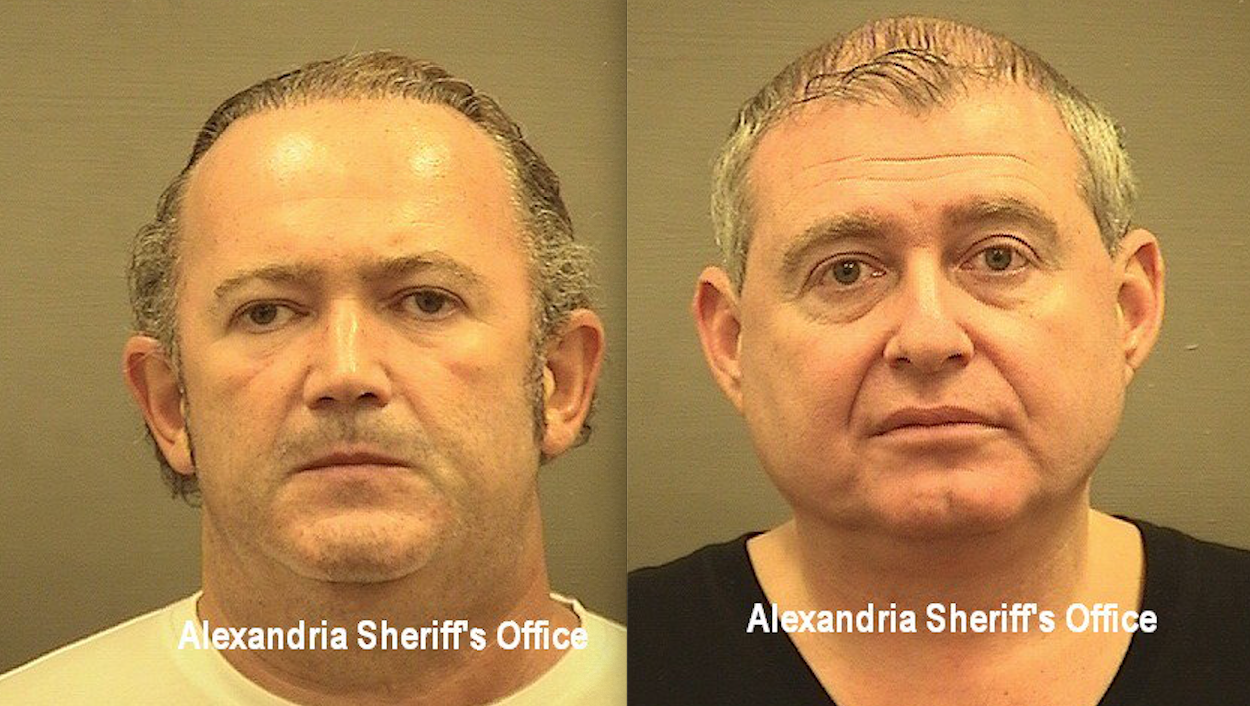
Russian Bribes And Election Interference-- The Texas Connection

Texas Republican Pete Sessions has a well-deserved reputation as a complete sleaze-ball. A crony of Jack Abramoff, he was never charged with bribery, even though he accepted over $20,000 in tribal money for his role in a slimy casino deal in 2002. He ran the NRCC and played fast and loose with campaign finance laws, often ignoring them entirely. He was rewarded for his "good work" with the chair of the House Rules Committee. He became even more famous when he led a nearly successful effort to disband the Office of Congressional Ethics (which he called "a political witch hunt"). So it should have surprised no one when it came out recently that he was taking large sums of Russian money as bribes from Trump/Giuliani cronies Lev and Igor. As Rules Committee chair, he was able to do more than just prevent medical marijuana laws from being voted on. And Giuliani must have directed Lev and Igor to him because of his notoriety for bribe-taking in the Allen Stanford-- currently serving a 110 year sentence in a federal pen-- scandal.

Sessions represented a north Dallas district for 21 years that was always being redistricted ahead of threatening demographic growth. Last year the area finally ran out of the number of old white men needed for him to win reelection. He lost a tight battle against a super-mediocre and pointless centrist Democrat, football player Colin Allred, 144,067 (52.3%) to 126,101 (45.8%). Even though Cook's out-dated, lagging PVI is R+5, even Hillary beat Trump by two points there in 2016 and this district may be swingy for a few cycles, it's days as a red bastion are over.

So Sessions decided to move his clown show down to Waco, where he was born and run there instead. TX-17 is much friendlier towards right-wing nuts like Sessions, but not friendly enough for incumbent Bill Flores to fight another battle. Flores is retiring. The PVI is R+12 and Trump beat Hillary 56.3% to 38.8%. But last year Flores didn't do as well as he had been doing-- winning 56.8% to 41.3%, with none of the 3 top counties in the district-- McLennan, Brazos and Travis-- performing as well for him as he expected. The Travis part of the district came in D+41 and McLennan and especially Brazos are headed on that direction. Can Sessions staunch the tide?

"Congressman 1"-- crooked Texas Republican Pete Sessions


Flores doesn't think so. "The announcement this week that former Rep. Pete Sessions from District 32-- north northeast of Dallas-- is going to run in District 17 should alarm all of us. Like you, I find it unacceptable that someone from outside Texas 17 would attempt to drop in and to try to elbow his way to the front of the line ahead of our local leaders. We have great leaders currently living, working, raising families and serving our communities in District 17. I hope you share my views that one of these people should be the next congressman or congresswoman from Texas District 17. Furthermore, I intend to help, support and vote for these types of local people during the 2020 election cycle and hope you will consider doing so also. One of the people who has announced that he is running for Congress from District 17 summed it up perfectly with his statement, “With all due respect, Mr. Sessions, we got this.” While I am not endorsing this candidate at this time, I could not agree more. Texas District 17 has plenty of talent-- let’s support them!" The Republican locals in the race are Wesley Lloyd and Trent Sutton and the Democrats will be fielding centrist Rick Kennedy, who opposes Medicare-for-All, again.

And that brings us to Sessions' propensity to always be on the receiving end of every bribery scandal to hit Congress. Most recently, according to Fox News, he has admitted taking illegal Russian cash from Igor and Lev. Caught red-handed he now claims he will turn over more than $20,000 to local charities. On Friday he told the media that "Yesterday, I learned that two contributors to my 2018 campaign are being charged for not following campaign contribution laws. Their deception cannot, and should not, be tolerated. Therefore, I am contributing the amount of their contributions to charities that serve abused women and children and the elderly in Central Texas." No one yet knows how much Russian cash Giuliani was able to direct the 2 clowns to inject into 2018 races, although over $600,000 has been found so far, probably just the tip of the iceberg. The biggest amount went to Trump-- around $350,000-- but much of it was spread around via the NRC, the NRCC and over a dozen local state Republican parties. Certain key super-corrupt individuals-- like Sessions-- were given direct, coordinated contributions for specific reasons. Sessions was bribed to help them get the American ambassador to Ukraine, Marie Yovanovitch fired, which he did.

In the Igor and Lev indictments, Sessions is referred to as "Congressman 1." A few bribed Republicans have promised to donate the money charity, but most-- like Trump, are holding onto the cash. And Sessions says he's giving back $20,000. Problem is that he may have gotten far more than that-- and some right into his pockets. According to CNN, "The indictment alleges that a 'Congressman-1' had been the beneficiary of approximately $3 million in independent expenditures by 'Committee-1... At and around the same time, Parnas and Fruman committed to raising those funds for Congressman-1. Parnas met with Congressman-1 and sought Congressman-1's assistance in causing the US Government to remove or recall the then-US Ambassador to Ukraine,' the indictment states." Igor and Lev gave immense sums of money to America First Action and America First Action bought $3,134,768 in independent expenditures from Sessions doomed campaign, by far the largest single source of money in the TX-32 race.

Sessions has no intention of contributing any of that $3,134,768 to "charities that serve abused women and children and the elderly in Central Texas."

Pete Sessions has not been arrested yet


UPDATE: Will Sessions Be In Prison Before The Election?

The Wall Street Journal reported that "A grand jury has issued a subpoena related to Manhattan federal prosecutors’ investigation into Rudy Giuliani, seeking documents from former Rep. Pete Sessions about his dealings with President Trump’s personal lawyer and associates, according to people familiar with the matter. The subpoena seeks documents related to Mr. Giuliani’s business dealings with Ukraine and his involvement in efforts to oust the U.S. ambassador in Kyiv, as well as any interactions between Mr. Sessions, Mr. Giuliani and four men who were indicted."


Labels: , , , , , , ,

Saturday, July 28, 2018

The Anti-Red Wave

>


2010 was an anti-blue wave, just as 2018 is shaping up to be an anti-red wave. No doubt a failed clown like Ben Ray Lujan will try to "modestly" take credit for the great Democratic wins in November, regardless of the indisputable fact that there would be more wins if he was put into hibernation until November 9. The Republican who was in his place in 2010 was Pete Sessions, the corrupt and sleazy NRCC chairman from Texas. Yesterday, Politico mentioned 2 things: a- he's in trouble electorally this year (true) and b- he was the architect and engineer of 2010 (absurd). Alex Isenstadt was making the point that Sessions "is confronting a treacherous political landscape back at home-- a well-funded Democratic opponent with a boffo résumé, a rapidly diversifying and more liberal district, and, perhaps most critically, a constituency of well-educated and upper-income suburban voters who increasingly are turning on the president. His predicament underscores the grave danger confronting Republicans this fall. As the party braces for an electoral drubbing that threatens to wipe out the majority they won eight years ago, the list of incumbents under duress is growing ever longer-- and even powerful lawmakers like Sessions, a sharp-elbowed tactician who hasn’t faced a serious reelection contest in over a decade, are suddenly trying to survive a Trump-fueled bloodbath. In Texas alone, Democrats are targeting three Republican incumbents who’ve been in office for over a decade." [You can find more Democrats who won their primary races here, but who the DCCC refuses to help, primarily because they are progressives.]
[Sessions] pointedly declined to say whether he’d campaign as an ally of the president, who narrowly lost Sessions’ North Dallas district in 2016. And he appeared to concede that some in the business-friendly area-- which is home to a number of prominent country club-style Republicans, including former President George W. Bush-- have soured on the bombastic commander in chief.

...[Colin] Allred outlined how he intends to defeat the entrenched incumbent. He said Sessions has lost touch with his fast-changing district and is more interested in pursuing his leadership ambitions and advancing his party’s political interests.

But Allred hinted at another strategy: Winning over traditional Republicans who felt disillusioned with the president.

“I think if you are a George W. Bush Republican, you don’t see yourself in this version of the Republican Party led by Donald Trump,” said Allred, who was accompanied by his dog Scarlet, a Rhodesian Ridgeback.
Yeah... not the kind of Democrat Blue America expects much from-- other than heartbreak-- in the coming session of Congress because he'll be trying to hold onto that seat by behaving like (voting like) a Republican but will be swept out of office in 2022, in the anti-blue wave Ben Ray Lujan and Nancy Pelosi are engineering and being the architects of now.

Did you contribute to Doug Jones' campaign? It's good he beat the GOP child rapist, of course, but... on crucial roll calls, he's voted with the GOP over half the time. The half-dozen worst Senate Democrats-- from bad to worst:


Yesterday Axios had SurveyMonkey do another poll for them, looking alt 5 specific groups and how Trump approval/disapproval ratings are likely to impact the midterms. Alexei McCammond wrote that "The most important group to watch will be the #NeverHillary independents-- a group that narrowly disapproves of Trump's performance, according to a new Axios-SurveyMonkey poll. It's also not a good sign for Republicans that Trump's disapproval ratings are high among suburban white women. The other subgroups lean pretty much the way you'd expect.
#NeverHillary Independents are closely split on their views of Trump, and in 2016 they split three ways: 37% didn't vote at all, 33% picked Trump and 23% went for a third party candidate. The big question in 2018 is whether their disapproval of Trump will lead them to vote for a Democrat.

Suburban white women are a critical swing voter group. Nearly half strongly disapprove of Trump, but they're almost evenly divided between Democrats (44%) and Republicans (42%). They are mostly moderate or conservative in their views, but they care a lot about health care and immigration-- two of the biggest issues that are likely to drive Democrats to the polls.

Rural Americans are overwhelmingly white (76%), and many love Trump (38% strongly approve). They care most about jobs and the economy, but if Republicans want their help, they'll have to address the concerns of the 42% who disapprove of Trump.

African-American women are often called the backbone of the Democratic Party, and not surprisingly, they overwhelmingly disapprove of President Trump. Two out of three voted for Hillary Clinton in 2016. But if Democrats want their vote in 2018, the party will need to invest in the issues they care about.

Millennials (18-34) don't like Trump, and they are more likely to mention education and the environment over issues like health care and immigration. In 2016, 31% voted for Clinton and 19% voted for Trump, but 39% stayed home. If Democrats want to win them over, they'll need to focus on voter registration-- because millennials are the least likely group to report being registered to vote.

Labels: , , ,

Friday, March 23, 2018

The DCCC Screwed Up A Primary In Houston But They Didn't Learn Their Lesson-- And Now They're Doing It In Dallas

>


Very much by design, the DCCC doesn't have a Regional Vice Chair for the area of the country that includes Texas rand Colorado. That gives the national headquarters and their incompetence staffers an opportunity to do whatever they want without adult supervision-- like the catastrophe they caused in Houston, a catastrophe they seem hellbent to repeat in Dallas now. TX-32 is a district held by a corrupt conservative Republican, Pete Sessions. The district, which has been gerrymandered again and again to keep it as white as it could be to make it "safe" to Sessions. Looks like demographics have finally caught top with the GOP on this one. This prosperous North Dallas area is surrounded by more diverse neighborhoods and even though the GOP cut out minority areas around Irving and Grand Prairie, dropping the Hispanic part of the population significantly, the district is just 50% white. The R+10 is now just R+5 and Romney's 57-41% win over Obama turned into a 2016 Hillary win over Trump (48.5% to 46.6%). Sessions is looked at as a vulnerable incumbent, especially in a wave cycle like the one we're experiencing.

Two Obama alumni, Colin Allred and Lillian Salerno came in at the top of the primary and will now face off in a May 22 primary. Yesterday the DCCC announced they were putting their fat fingers on the scale against Lillian-- the more progressive candidate-- and put Allred on their Red to Blue list. I might add that when the DCCC pulls shenanigans like this, they usually say the other candidate in not financially viable. In this case the two candidates are about even. As of the February 14 FEC reporting deadline Allred had raised $541,064 and had $74,821 in his war chest. Salerno had raised $430,783 and had $164,698 in her war chest.

Salerno responded with a press release that emphasized that "Folks here are sick and tired of a bunch of Washington insiders trying to make their decisions for them. But I’m not scared-- I’ve stood up to power and fought for what’s right my entire life. Our campaign is confident and remains focused on sharing our vision with voters: electing a fighter who will get results for working families. Texas hasn’t elected a new woman to Congress in twenty-two years, and we’re not taking it anymore. The DCCC would do well to remember: Don’t mess with Texas women."

Her campaign manager Jeanne Stuart, hit back at a DCCC on the rampage against progressives and against local democracy: "After the DCCC’s embarrassing stumble attacking candidate Laura Moser, they have not learned their lesson. Texas Democrats know better than some Washington D.C. committee that’s trying to tip the scales. 62% of primary voters did not vote for Colin, and we are confident we will win the run-off and that Lillian is the strongest candidate to beat Pete Sessions in November.

Progressive activist and former Texas Agriculture Commissioner, Jim Hightower went further yet: "The D-triple-C has gone d-triple-crazy, barging into local elections like clueless, antidemocratic potentates. Lillian is a strong Texas Democrat. She knows how to take-on Sessions and win-- despite what the party’s corporate establishment wants."

Two more powerful surrogates weighed in against the DCCC's interference. Betty Ritchie is the Chair of the DNC Rural Council and Secretary of the DNC Women’s Caucus. She knows the candidates and said that "Lillian is a fighter through and through. The voters of Congressional District 32 will see that Lillian has stood up for people her whole life. She’s the only candidate that can take on Pete Sessions, and is unafraid of going up against the powerful." Lenna Webb, President of North Dallas Texas Democratic Women, agreed wholeheartedly, "We’re witnessing an unprecedented surge of activism here in North Texas, with thousands of concerned citizens organizing in their communities to beat Pete Sessions. Voters are deeply engaged in evaluating Democratic candidates in CD-32, and deserve the opportunity to make this decision for themselves. The Democratic Congressional Campaign Committee should step back and let voters decide."

Goal ThermometerThis is what I can tell you as a person looking at this for over a decade: the DCCC has no idea how to win, especially in Texas. The harder Democrats run away from their failed machine, the better they do. Want to beat Pete Sessions? How about a hard-nosed, authentic, lifelong Texan who has battled big pharma, insurance companies, and big corporate Ag to help working families, nurses, and family farmers. That's Lillian Salerno. But the DCCC is so out-of-touch that they not only ignore Lillian, but they try to tip the scales to her opponent whose experience can be counted in months not years. It makes me want to scream, and Dallas Democrats shouldn't have to suffer two more years of Pete Sessions because of this stupidity. I got Lillian on the phone this morning and asked her directly what she thinks about the DCCC coming in and supporting her opponent? If you'd like to contribute to her campaign, please click on the Blue America 2018 congressional thermometer on the right. This is what she told me:
This move shows why we need new leadership in Congress. This is an attack on those of us in Texas who are trying to elect new leadership to Washington. Folks here are sick and tired of a bunch of DC insiders trying to make their decisions for them. Our campaign is confident and remains focused on sharing our vision with voters: electing a proven Texas Democrat who will get results for working families. Let the people of Texas decide."
Last night Abby Livingston wrote the controversy up for the Texas Tribune, noting that "In past cycles, the DCCC has named districts to its Red to Blue program, rather than specific candidates, to avoid these kinds of flare-ups." The DCCC also endorsed the less progressive candidate, retired Air Force Intelligence Officer Gina Ortiz Jones, over progressive Rick Treviño.

This morning Treviño told his supporters that "The DCCC has just announced they want to pick the winner of our primary-- and they don't want the progressive. They want to control our elections in West Texas because they want their consultant friends in Washington to get rich by running high-dollar candidates. They don't care what happens to us after they lose another race. It's disrespectful to the people who live here, and we don't have to take it. In today's Washington, the working class doesn't have a voice. That's just a fact. The Democratic Party has been losing up and down the ballot because the political establishment keeps forcing candidates on us that will pay big bucks to their consultants instead of fighting for the working class. If we want to win again, we can't let the DCCC keep derailing progressive change. When I travel around this district, from San Antonio to the colonias, I see the result of the DCCC's constant failure to win. People who live outside gated communities too often lack even the basic services that should be their right to expect in a rich country like the United States. Last year, they let Will Hurd get away with winning by one percent of the vote, and because of that, the one-percent keeps getting its way in Congress. It's time to win again for the working class. There are enough insiders on the ballot. We need a Member of Congress who has been fighting for the working folks here for their entire career, not another D.C. insider. The DCCC doesn't understand what life is like here, and they don't know how to win. But you and I do: we win by standing with working people and fighting for a progressive future."

Labels: , , , , , , ,

Wednesday, February 21, 2018

Battle Ground Dallas-- Texas And Its People Are So Much Better Than Their Politicians

>


Redistricting takes place at the beginning of every decade, after the census. But in 2002 Republicans won control of the Texas legislature for the first time in 130 years. They immediately set about redrawing the state's congressional districts-- absurdly in many cases-- to send more Republicans and fewer Democrats to Congress. AT the time, Democrats held 17 seats to the Republicans 15. Tom DeLay, then House Majority Whip, oversaw the legislative takeover and then the gerrymandering. After the 2004 election, the Republicans he'd 21 seats and the Democrats 11. One of DeLay's tactics was to carve up Democratic areas-- Austin being the most obvious-- to dilute Democratic votes. Among DeLay's Democratic targets were Max Sandlin (who he replaced with Louie Gohmert) Charlie Stenholm (defeated by Randy Neugebauer), and Martin Frost (one of the top Democratic House leaders and DCCC chair). A Jewish conservative, Frost was a top Democratic rainmaker and was considered a possible future Speaker. He was probably DeLay's #1 target. His district included parts of Dallas, Fort Worth and Arlington. DeLay redrew it by taking out Democratic-friendly areas of Fort Worth and Arlington and putting in rich, white Republican suburbs around Dallas. While Al Gore won the old district in 2000, the new boundaries would have given George W. Bush a huge 68% landslide. The new district was specifically redrawn for right-wing state Rep Kenny Marchant, who still occupies it today. Frost's home in Arlington was shifted into a heavily Republican district, represented by 10-term incumbent Joe "oily Joe" Barton. Frost decided to seek re-election in the newly redrawn 32nd District, which included some of the district he represented from 1979 'til 1993. It didn't work; he lost by 10 points to Republican Pete Sessions, who still holds the seat.

Goal ThermometerThe Republicans have had to gerrymander the district again to exclude an exploding Latino population around Irving and Grand Prairie. DeLay and then Republicans in the legislature  ten years later didn't take the rapid changes in demographics seriously enough. In 2016 Hillary, who had no expectations of winning in Texas, took TX-32 by 2 points, 48.5% to 46.6%. Sessions, who didn't even have a Democratic opponent in 2016, is suddenly a top Democratic target. This morning Gloria Steinem announced her endorsement of Lillian Salerno. "Lillian," she wrote, "is the perfect woman to bring real life to Washington. She worked her way through college and law school, made a life's work out of finding people jobs, and knows what it is to be the single mother of three. It’s so important to elect a leader like Lillian to Congress-- we need more women’s voices speaking up for paid family leave, equal pay for equal work, and policies to prevent sexual harassment in the workplace. Texas only sends 3 women, out of a delegation of 38, to Washington right now. This is shameful! Texas women deserve true representation in government. The current representative for Lillian's district, Pete Sessions, voted against the Affordable Care Act, voted to cut Planned Parenthood funding, and even voted against the reauthorization of the Violence Against Women Act. Women need someone in Congress fighting for them and their families, not actively working against them.

Today there are 7 Democrats vying for the party nomination, including 3 who have raised over 6-figures: Clinton centrist Ed Meier, Obama centrist Colin Allred and independent-minded progressive Lillian Salerno. Blue America has endorsed Lillian and with that primary coming up so quickly-- 2 weeks from tomorrow-- I want to reintroduce her and make another appeal, asking you to help her fund her get-out-the-vote efforts. (You can do that by tapping on the Blue America Turning Texas Blue Again thermometer just above on the right. Meanwhile please take a look at a guest post Lillian wrote:


Defying The Alarming Trend Of Growing Corporate Power
by Lillian Salerno


In 1994, at the height of the AIDS crisis, in which I lost several friends and a beloved employee to the disease, I started a manufacturing company in Little Elm, about 35 miles north of Dallas, to produce the first-ever automatically retracting syringe to eliminate the risk of nurses contracting HIV through accidental needle sticks. The syringe received rave reviews from nurses, hospital executives and public health officials, a major grant from the National Institutes of Health and robust private investment. But when my partners and I tried to sell it to hospitals, we were told time and time again that even though it was a better product-- a lifesaving product-- they weren’t able to purchase it. The primary supplier of syringes, which controlled 80 percent of the market, structured an arrangement with a vast network of hospitals that essentially closed our industry to new firms for good, and the entire rural community of Little Elm suffered as a result.

I thought my story was a unique, that I picked a rotten industry to enter and had to fight hard as a small business just to stay alive. I was so caught up in my own fight for so long, I didn’t see the bigger picture until some years later. Like many, I was inspired by candidate Barack Obama’s rhetoric to restore power to the people, and I entered his administration aiming to fight for small business, to give those farmers and entrepreneurs the government support that the FTC and DoJ wouldn’t to give to me.

When I began to meet with America’s family farmers and entrepreneurs, a painful familiarity began to set in. Suddenly, I began to realize that the medical device industry wasn’t especially rotten, but rather that monopoly had become standard in the American marketplace. Early on, I remember in the drive back after a disheartening meeting with a small business owner, I asked a friend, “what is the government doing about this?” she looked at me and laughed. I realized that I was the government, and while I could help with some auxiliary issues, I didn’t have the power to tackle the structural issue of monopoly. Truth be told, I learned that there wasn’t much of an appetite to take on monopolies in the Obama administration. The candidate who I believed would defy the alarming trend of growing corporate power fell in line.

The consequences of growing corporate concentration are wide-ranging and dramatic. New research shows (Declining Labor and Capital Shares by Simcha Barkai) that around the average worker would be making around 14,000 dollars a year more if the economy was as concentrated as it was 30 years ago. But nowhere are the effects more visible than in America’s family farms and small-towns. Corporations dominate local economies to such an extent that people are unable to start their own businesses or sell into markets. These mega-corporations impede on worker’s freedom to take their labor elsewhere for better pay, they impede on the family farmer’s right to fair pay and access to market. Small town’s no longer have the power to shape their own economic destinies, which were once vigorously protected by federal antimonopoly laws.

Evidence on monopolies impact on small towns can be seen from data on economic recovery. From 2010 to 2014, 60 percent of counties nationwide saw more businesses close than open, compared with just 17 percent during the four years following the 1990s slowdown. During the 1990s recovery, smaller communities-- counties with less than half a million people-- generated 71 percent of all net new businesses, with counties under 100,000 people accounting for a full third. During the 2010 to 2014 recovery, however, the figure for counties with fewer than half a million people was 19 percent. For counties with less than 100,000 people, it was zero.

How did we get here? After the Great Depression, the government used antimonopoly laws to keep markets open and fair for smaller, independent businesses-- in other words, to keep mom-and-pop shops open and Main Street buzzing. These were businesses run by people who cared about and understood their communities, that kept wealth circulating locally, that created the vast majority of new jobs and that were often the source of game-changing innovation.

But in the 1980s, folks in power decided bigger was better, and conventional political wisdom followed suit. For the federal officials charged with protecting competition, that meant that cheap consumer prices trumped all other values, including the preservation of American jobs, open and competitive markets where innovation could flourish, and maintaining level playing fields for start-ups and small businesses. To this day, when government officials evaluate mergers, it’s considered a good thing when they result in job losses-- because that means, in the twisted reasoning we still use, gains in economic efficiency. The hard-working Americans turned out on the street corner to look for new jobs are the human sacrifices to the insatiable beast of corporate concentration.

It is a myth that the economic challenges that family farmers and small-town America face are caused by forces largely outside our control, like globalization or improvements in technology. We have the ability to help restore competition and economic vibrancy in rural America and beyond. The government has the authority to ensure markets are once again open and competitive so that communities have a chance to shape their own economic destinies.

Small town’s aren’t defined by the major corporations that sell in franchised retailers. Small town’s aren't corporate mega-farms. Small towns are the mom and pop stores and the local restaurants, the family farmers and small manufacturers willing to employ someone in the community who’s fallen on hard times. Small towns are unique ecosystems of small businesses and family farmers and if monopoly power keeps growing unchecked, small towns will lose their identity.


Labels: , , , , , ,

Tuesday, February 13, 2018

TX-32-- Why Lillian Salerno?

>


TX-32 was carefully gerrymandered district in the northern Dallas metro to specifically exclude minority voters in order to keep crooked GOP hack Pete Sessions safe. Last year the district PVI was R+10. Despite the gerrymandering that removed minority heavy areas around Irving and Grand Prairie, the new PVI is R+5. McCain beat Obama 55-44% there and Romney did even better-- 57-42%. But TX-32 was not Trump country in 2016. Hillary didn't campaign there or run ads there but she beat Señor Trumpanzee 48.5% to 46.6%. The backward-looking and incredibly incompetent DCCC didn't bother even fielding a candidate and Sessions cruised to reelection against a couple of un-funded independents with 71.1%. The DCCC hasn't paid any attention to Sessions and his district since he beat powerful Democratic incumbent Martin Frost there in 2004. There are three Democrats running seriously competitive campaigns going into the March 6-- and, presumably, the May 22 runoff-- primary: Edward Meier, a status quo type Hillary person; Colin Allred, a football player who worked had a low level job in the Obama administration; and Lillian Salerno, a progressive who Obama appointed deputy undersecretary of rural development for the Department of Agriculture. Almost a year ago, She wrote an OpEd for the Washington Post, Want To Rescue Rural America? Bust Monopolies. "For decades," she wrote, "rural America has been punished by bad policy that places too much power in the hands of distant financiers and middlemen through the formation of monopolies, which undermines small, local businesses and drains communities of resources. I know, because I started a company in rural Texas, and the challenges I faced illustrate the problem.
After the Great Depression, the government used antimonopoly laws to keep markets open and fair for smaller, independent businesses-- in other words, to keep mom-and-pop shops open and Main Street buzzing. These were businesses run by people who cared about and understood their communities, that kept wealth circulating locally, that created the vast majority of new jobs and that were often the source of game-changing innovation.

But in the 1980s, folks in power decided bigger was better, and conventional political wisdom followed suit. For the federal officials charged with protecting competition, that meant that cheap consumer prices trumped all other values, including the preservation of American jobs, open and competitive markets where innovation could flourish, and maintaining level playing fields for start-ups and small businesses. To this day, when government officials evaluate mergers, it’s considered a good thing when they result in job losses-- because that means, in the twisted reasoning we still use, gains in economic efficiency. The hard-working Americans turned out on the street corner to look for new jobs are the human sacrifices to the insatiable beast of corporate concentration.

This slow-rolling wave of corporate mergers has left almost all major markets-- airlines, telecommunications, health care, retail, milk, seeds for growing crops, hardware, even cowboy boots-- dominated by a cluster of mega-corporations, cloaked behind a plethora of brand names. These behemoths now hold unprecedented power over thousands of once-thriving community economies.

Corporate concentration has hit farmers, ranchers and agricultural workers especially hard. Many markets are entirely monopolized by a single company that dictates the terms of business to suppliers. Two decades ago, in the seed industry alone, 600 independent companies existed. Today there are six giants, several of which are pursuing high-profile mergers that will result in even more radical concentration. Similar levels of concentration exist for the beef, pork, chicken and dairy industries. The result is that the farmer’s share of each retail dollar of food has been collapsing, while consumers pay either the same or higher prices. Mega-corporations in the middle exploit their dominant market positions to reap all the profits.

It is a myth that the economic challenges that rural and small-town America face are caused by forces largely outside our control, like globalization or improvements in technology. We have the ability to help restore competition and economic vibrancy in rural America and beyond. The government has the authority to ensure markets are once again open and competitive so that communities have a chance to shape their own economic destinies. The question is whether we will recognize the error of our ways and put taking on monopolies high on the economic agenda-- for rural and small-town America, and for everyone who wants to ensure our country can once again be the land of opportunity.
Goal ThermometerPartially based on this incisive OpEd and the thinking-- and resolve-- behind it, Blue America decided to endorse her. Yesterday we asked her to explain some of the lessons she learned as a Texas healthcare entrepreneur in regard to how monopolies stifle innovation in the healthcare industry. Please give it a read. And if you like what you see and would rather have Lillian serving in Congress than shameless Big Business puppet Pete Sessions, please consider clicking on the Turning Texas Blue Again thermometer on the right and contributing to Lillian's campaign.


Fixing Healthcare-- The ACA Was A First Step, But Not Sufficient
- by Lillian Salerno


Every person deserves quality, affordable healthcare. A healthcare system that robs individuals of this fundamental right is a moral and economic failure.

We made tremendous progress in passing the Affordable Care Act. It did a lot of good things-- ensuring children could stay on their parent’s plan until they were 26, made sure that no one could be denied coverage for a pre-existing condition, and ended lifetime insurance caps. But it was far from perfect and America cannot live up to its potential until every single person has quality, affordable healthcare.  During the healthcare negotiations, I worked alongside nurses, small businesses, patients and healthcare providers trying to lower costs and increase transparency, but the medicine’s middlemen (i.e. pharmaceutical, insurance companies, pharma, big medical supply houses) on the other side of the table. They had all the power-- which prevented us from passing a bill that would fix our broken healthcare system.

To truly fix it, we must create transparency in costs, break up monopolies in the healthcare industry, make Medicare available to everyone and work towards single-payer healthcare.

I am running for Congress in TX-32 because we can all sense that America is in trouble. It’s not just Trump, who is a dangerous person. Or Pete Sessions, his lapdog. It’s everywhere.

For instance, there’s a company called Luxturna which makes a remarkable new medical treatment to treat blindness. They use genetic technology. Amazing stuff.
But they have decided to charge $850,000 for it, or $425,000 per eye, because that’s the maximum amount they think someone will pay not to be blind. They have taken medicine, and have turned it into a ransom note. When they were kids, the scientists who discovered this probably said they wanted to help people. None of them grew up saying they wanted to grow up to figure out the maximum amount someone would pay to be able to see. Yet that is the society we have today.

We must stop this madness. When we invented penicillin, the idea was to save lives, not to serve Wall Street. We can restore the America we know and love. But it is going to take all of us. It’s going to take courage. And it’s going to take political leadership.

Everyone I know has a nightmare healthcare story. A medical emergency that leads to bankruptcy. A chronic condition that they spend 20 hours a week fighting to get the insurance company to cover the treatment for.  An impossibly expensive medication that insurance won’t pay for. Or just the inability to see the doctor for a routine problem because of the co-pays and deductibles and opaqueness of knowing the cost of a visit.

We must have transparency in healthcare costs. One of my constituents was telling me this weekend about her experience. She said that because she is trained as a nurse and has the time to negotiate and shop around, she pays out of pocket when she needs most medical procedures or tests, such as an x-ray of her foot because of an injury. She negotiates for herself because if she went through her healthcare company she would have no idea how much it would cost until she saw the bill 2 months later. She knows most people can’t do that, but it’s the only way she can keep the costs down.

Healthcare costs should be like a menu, just like any other service or good that we purchase, and it’s up to the government to make this a reality for Americans. It’s the only thing we don’t know the cost of what we are purchasing upfront. There are currently models that could help. For example, you can call up Planned Parenthood and ask what the cost of any of their services are. They have a menu of services with prices-- so if you only have a certain amount of money you can spend today, you can take care of the most urgent things first. No surprises. The same must be true for medicine and all the other pieces of the healthcare industry.

We must also break up monopolies in the healthcare sector. In 1994, at the height of the AIDS crisis, in which I lost several friends and a beloved employee to the disease, I started a manufacturing company in Little Elm, Texas about 35 miles north of Dallas, to produce the first-ever automatically retracting syringe to eliminate the risk of nurses contracting HIV through accidental needle sticks. The syringe received rave reviews from nurses, hospital executives and public health officials, a major grant from the National Institutes of Health and robust private investment. But when my partners and I tried to sell it to hospitals, we were told time and time again that even though it was a better product-- a lifesaving product-- they weren’t able to purchase it. The primary supplier of syringes, which controlled 80 percent of the market, structured an arrangement with a vast network of hospitals that essentially closed our industry to new firms for good. And this is not a unique story. Innovation and entrepreneurship is stifled in healthcare and all industries because we have allowed monopolies to thrive and do not exercise the political will to enforce our anti-trust laws.

We must do better. We cannot continue to spend 40% more on healthcare costs than other developed countries with worse outcomes. We cannot continue to bankrupt our citizens while corporations profit off of our illness and vulnerability. We need political leadership. We cannot continue to lose out on important innovations that increase the health and safety of our citizens. We can and we will fix healthcare.


Labels: , , , , ,

Wednesday, November 15, 2017

A Self-Serving Democratic Establishment Still Has Its Fingers On The Levers Of Power-- And Will Continue Disadvantaging Progressives

>

Kara Eastman (Democrat) and Brad Ashford ("ex"-GOP Blue Dog)

Alixandria Lapp, a poster child for the DC Dem's revolving door problem worked for New Dem Adam Smith (WA) from 1997-2005 and then went to work for the DCCC. In 2007 she became executive director of the New Dems, the Republican wing of the Democratic Party. A year later she was working as a lobbyist for Parven, Pomper & Schuyler and after that as a lobbyist for Akin, Gump. In 2011 she went to work running Pelosi's House Majority PAC, where she still works, triple-dipping her time away, now extremely wealthy.

Yesterday she tweeted a batch of private PPP surveys, that mostly tested voters' reactions to aspects of the Trump/Ryan tax proposal but also testing a generic Democrat against a Republican incumbent in each district-- except one. Last night we looked into the primary in Omaha (NE-02), where a progressive woman, Kara Eastman, is facing off against a party-switching opportunist, Blue Dog Brad Ashford. Ashford has been endorsed by the U.S. Chamber of Commerce and the National Federation of Independent Business, organziations that normally back Republicans and Democrats willing to sell out to Big Business.


During the 2016 cycle, Lapp spent $47,470,121 on House races. Most of it had as much impact as it would if she flushed it down the toilet. Million dollar TV campaigns against Michigan's John Bergman ($1,309,400), Colorado's Mike Coffman ($1,734,087), Virginia's Barbara Comstock ($1,909,690), Florida's Carlos Curbelo ($1,482,032), California's Jeff Denham ($1,011,635), Pennsylvania's Brian Fitzpatrick ($2,266,961), Texas' Will Hurd ($1,641,510), Maine's Bruce Poliquin ($1,863,263), California's David Valadao ($1,745,038), New York's Claudia Tenney ($2,084,879), and Colorado's Scott Tipton ($1,430,111) were ineffective and all failed. Lapp managed to help elect 4 ghastly Blue Dog turds: Brad Schneider in Illinois ($1,100,394), Charlie Crist in Florida ($1,567,917), Jacky Rosen in Nevada ($2,124,182) and Josh Gottheimer in New Jersey ($2,366,09), all of whom have earned F's from ProgressivePunch and all of whom keep voting with the GOP against progressive proposals and with the Republicans on Ryan's agenda.

Last year, Lapp spent $741,041 of the House Majority PAC's money in a futile bid to save Ashford's miserable career. (The DCCC spent $2,688,673 in the same race, almost entirely wasted on pointless, uninspiring TV ads that media buyers get a hefty percentage cut of, absolute and dysfunctional corruption.) Ashford lost 141,066 (48.9%) to 137,602 (47.7%), making him the only Democratic incumbent to lose his seat. He lost because he's a Republican masquerading as a Democrat and Democratic voters saw him spend 2 years voting with Ryan and refused to vote for him again.he helped drag Hillary down to defeat in the district-- Trump beat her by 2 points-- and establishment Democrats in DC decided to run him again this year. Brilliant! They are so brilliant. No wonder Pelosi allows the trip-dipping-- salary, a percentage of what she brings in and a percentage of the pointless media buys. The Blue Dogs and New Dems have endorsed him and the DCCC-- professing neutrality, of course-- are doing everything they can to destroy Kara Eastman's campaign while pushing Ashford the Blue Dog/Republican loser. They do it in big ways-- telling institutional donors to not give Eastman money-- and in small ways, like Lapp-dog having PPP poll for Ashford, not for a generic Democrat. From the PPP memo Lapp sent around yesterday:
In Nebraska’s 2nd Congressional District, Republican incumbent Congressman Don Bacon has an approval rating of 40%, and 48% of voters say they disapprove of the job he is doing. President Trump has an approval rating of 42% and a disapproval rating of 54% in Bacon’s district, while 8% of voters say they approve of the job Congress is doing and 85% say they disapprove. Speaker Paul Ryan is also unpopular with 28% of voters saying they approve of the job he is doing and a majority (62%) responding that they disapprove. These percentages, along with a hypothetical matchup between Bacon (40%) and Democrat Brad Ashford (49%), indicate that Bacon is quite vulnerable in his upcoming re-election. Also, the new tax plan is not popular in his district, and a plurality (48%) of voters indicated they would be less likely to vote for Bacon if he voted in favor of the Republican tax plan.


As long as we're here, let's take a look at some of the other flippable districts they polled, starting with California, where they singled out CA-25 (Santa Clarita, Simi Valley and the Antelope Valley). The district's 2015 PVI of R+3 is now 3 points bluer at dead even. Last time Hillary won the district 50.3% to Trump's 43.6%. But the DCCC ran such a weak uninspiring carpetbagger, Bryan Caforio, that the numbers flipped and he lost to weak incumbent Steve Knight 138,766 (53.1%) to 122,406 (36.9%). Lapp's House Majority PAC wasted $242,487 on Caforio-- the DCCC wasted another $3,164,363. And, Caforio is running again, of course, hoping to take advantage of the anti-Trump wave, as he did, unsuccessfully, last cycle. This time he's likely to lose the primary to a much stronger Democrat, progressive Katie Hill, who has what it takes to beat Knight.
In California’s 25th Congressional District, Republican incumbent Congressman Steve Knight has an approval rating of 33%, and 50% disapprove of his job performance. President Trump has an approval rating of 40% and a disapproval rating of 58% in his district, while 9% of voters say they approve of the job Congress is doing and 84% say they disapprove. Speaker Paul Ryan is also unpopular with 23% of voters saying they approve of the job he is doing and a majority (66%) responding that they disapprove. These percentages, along with a hypothetical matchup between Knight (38%) and a “Democratic opponent” (50%), indicate that Knight is quite vulnerable in his upcoming re-election. The new tax plan is not popular in his district, and a majority of voters (51%) indicated they would be less likely to vote for Knight if he voted in favor of the Republican tax plan.


Goal ThermometerThe DCCC has never recognized CA-48 as an opportunity before. But Hillary won the district (narrowly) and Dana Rohrabacher, the crackpot incumbent, is all tied up in Putin-Gate and a major embarrassment to the district. Democrats are coming out of the woodwork to run against him-- 7 at last count. One, Omar Siddiqui from CA-39, doesn't want to run in his home district because he loves the racist, right-wing Republican, Ed Royce, who represents it. Siddiqui is the self-proclaimed "Reagan Democrat" in the race, a self-funder with no traction. The DCCC is pumping up two New Dems, Hans Keirstead and Harley Rouda and studiously ignoring the progressive woman in the race, Laura Oatman, the same way they're ignoring Kara Eastman in Omaha.
In California’s 48th Congressional District, Republican incumbent Congressman Dana Rohrabacher has an approval rating of 36%, and 51% say they do not approve of the job he is doing. President Trump has an approval rating of 44% and a disapproval rating of 54% in Rohrabacher’s district, while 9% of voters say they approve of the job Congress is doing and 86% reported that they do not approve. Speaker Paul Ryan is also unpopular with 28% of voters saying they approve of the job he is doing and a majority (63%) responding that they disapprove. These percentages, along with a hypothetical matchup between Rohrabacher (41%) and a “Democratic opponent” (51%), indicate that Rohrabacher is quite vulnerable in his upcoming re-election. The new tax plan is not popular in his district, and a plurality of voters (46%) indicated they would be less likely to vote for Rohrabacher if he voted in favor of the Republican tax plan.


Goal ThermometerThere are several more interesting races they polled in Michigan, New York, Illinois, New Jersey, Minnesota and Florida but let me skip right to the two in Texas, one in Houston and one in Dallas, both districts that went for Clinton over Trump and both with multiple candidates, good, bad and ugly. The best candidate in the Houston district is award-winning cancer doctor Jason Westin and the best one in the Dallas district is Obama's former undersecretary of Agriculture, Lillian Salerno.
TX-07

In Texas’ 7th Congressional District, Republican incumbent Congressman John Culberson has an approval rating of 31%, and 55% of voters say they disapprove of the job he is doing. President Trump has an approval rating of 37% and a disapproval rating of 59% in Culberson’s district, while 12% of voters say they approve of the job Congress is doing and 83% say they disapprove. Speaker Paul Ryan is also unpopular with 29% of voters saying they approve of the job he is doing and a majority (65%) responding that they disapprove. These percentages, along with a hypothetical matchup between Culberson (39%) and a “Democratic opponent” (49%), indicate that Culberson is quite vulnerable in his upcoming re-election. The new tax plan is not popular in his district, and a majority (53%) of voters indicated they would be less likely to vote for Culberson if he voted in favor of the Republican tax plan.


TX-32


In Texas’ 32nd Congressional District, Republican incumbent Congressman Pete Sessions has an approval rating of 36%, and 52% of voters say they disapprove of the job he is doing. President Trump has an approval rating of 39% and a disapproval rating of 58% in Sessions’ district, while 6% of voters say they approve of the job Congress is doing and 85% say they disapprove. Speaker Paul Ryan is also unpopular with 27% of voters saying they approve of the job he is doing and a majority (66%) responding that they disapprove. These percentages, along with a hypothetical matchup between Sessions and a “Democratic opponent,” where Sessions has 43% of the vote and his Democratic opponent has 48%, indicate that Sessions is quite vulnerable in his upcoming re-election. The new tax plan is not popular in his district, and a majority (51%) of voters indicated they would be less likely to vote for Sessions if he voted in favor of the Republican tax plan.


John Fetterman isn't running for Congress. He launched a campaign for Pennsylvania Lt. Governor yesterday. But the DCCC and DSCC should be looking for candidates like him, not like Gil Cisneros and not like Kyrsten Sinema. Watch this incredibly effective launch video for a future national political leader:


Labels: , , , , , , , , , ,

Friday, November 03, 2017

Monsanto Really Wants To Stop Blue America's 2 Newest Candidates-- Austin Frerick (IA-03) And Lillian Salerno (TX-32)

>


It may have been lost yesterday as a line in a long, long post on how crooked the political establishment is. At one point I listed the Hillary donors funding a crap candidate for Pete Sessions' seat in Dallas, Ed Meier. Meier is scooping up lots of cash from Hillary world for his primary against a real populist and progressive, former Obama Under Secretary of Agriculture, Lillian Salerno. Ed Meier has $438,414.21 in cash on hand, and reported, as part of his $585,951.45 haul, personal donations from the establishment, such as former Clinton campaign manager Robby Mook, former Clinton campaign chairman John Podesta, former Clinton aide Neera Tanden, former Biden chief of staff Ron Klain, former Treasury Secretary Jack Lew, longtime Clinton loyalist Minyon Moore (a slimy payday lender lobbyist), Monsanto lobbyist Jerry Crawford, former Clinton spokesman Philippe Reines, former U.S. Sen. Ken Salazar (Blue Dog) of Colorado, Clinton adviser Jake Sullivan, former Rep. Ellen Tauscher (New Dem) of California and the leadership PAC of conservative Virginia Senator Mark Warner.

Jerry Crawford, the Monsanto lobbyist, ran Hillary's Iowa operation last year. When I researched him a bit, I noticed that this cycle Crawford didn't just give money to defeat Salerno in Dallas, he also gave money to defeat the other prominent progressive anti-monopoly candidate, Austin Frerick in Crawford's home district, IA-03 (Des Moines and southwest Iowa).

Early in the cycle, Monsanto, through their lobbyist, made a maximum contribution to Republican David Young. Monsanto really wants to prevent Frerick from getting into Congress and they also contributed a maxed out donation to the corporate Democrat opposing him too! In the last quarter, Crawford has made only 2 reportable federal contributions: $2,700 to DCCC shill Theresa Greenfield, who doesn't list a single policy position on her website and, as we mentioned yesterday, to corporate Democrat Ed Meier in Texas. As far as I know, Lillian Salerno and Austin Frerick are the only Democrats speaking up against the Monsanto-Bayer merger.

The Monsanto Company Citizenship Fund has made no contributions to federal candidates in Iowa this cycle except $5,000 to Young. Last month David Dayen looked at how Salerno and Frerick are running on the kind of anti-monopoly platforms driving corporations and their lobbyists and the politicians they own up the wall. As a Treasury economist Frerick looked into "excess profits" that corporations make from monopolistic activities. In a paper for the Obama administration he noted with alarm that "outsized profits have been rising across virtually all sectors of the economy [and] "that too much wealth and power has been concentrated in the hands of a few giant corporations." He told Dayen that "It’s the issue of our time. It’s everywhere." Dayen:


It’s difficult to translate a wonkish concept like excess returns into something bite-sized for voters. And it’s difficult to revive a long-dormant anti-monopoly movement to explain why corporate concentration is not only bad because of potential consumer price increases, but because of reduced entrepreneurship, abandoned communities, poor quality of service, and a diminished democracy.

But Frerick is willing to try. He left the Treasury for his native Iowa, where he’s running for the House of Representatives in the 3rd Congressional District, a swing seat occupied by two-term Republican David Young. And Frerick has made the fight against corporate monopolies the centerpiece of his campaign. He’s probably the only congressional candidate in history who lists among his heroes RuPaul and Thurman Arnold, the head of the Justice Department’s antitrust division during Franklin Roosevelt’s presidency.

Frerick and another anti-monopoly candidate in Texas, Lillian Salerno, represent a new school of thought in the Democratic Party, criticized in the past for too much coziness with corporate donors. A populist challenge to corporate power and growing monopolization is part of the party’s “Better Deal” midterm campaign platform. Newer members of Congress, like Ro Khanna, D-Calif., have foregrounded market concentration as a threat; with some colleagues, he is building a Congressional Monopoly Caucus to develop policies to counter the trend.

In 2018, we’ll see if this interest in monopoly politics can play on the campaign trail.

Frerick talks about running a Teddy Roosevelt-style campaign. In rural towns in southwest Iowa, he has challenged the merger between Monsanto and Bayer, which would give two companies (the other is Dow/DuPont) control of 75 percent of the U.S. corn seed supply. Add the company created by the merger of ChemChina and Syngenta, and three companies would sell 80 percent of all seeds. Farmers have no ability to bargain for corn seed, which has doubled in price over the last decade, even while crop prices have dropped.

Free market theory says that in a mature market, profits should be low as a result of competition. It’s hard to think of a mature market than that for seeds, a business that is roughly 14,000 years old, give or take a millennium.

Monsanto also has a foothold in fertilizers and pesticides, a dominance that will grow as they get bundled with seed purchases, Frerick believes. This makes it difficult for rural America to survive. In Red Oak, where Frerick called me from last week, over 60 percent of children qualify for free or reduced lunch, according to the state Department of Education.

“Debt levels in these communities are as high as the farm crisis” of the 1980s, Frerick said. “The land’s the most productive it’s ever been, and none of the money ever stays here. These little towns are hollowed out, and you get lack of hope.”

Beyond advocating to block the Monsanto-Bayer merger, Frerick wants to break up Monsanto and other Big Ag corporations. As a young, gay Democrat-- three marks against him for some voters-- Frerick believes this straight talk gives him a chance with rural voters. “Democrats are an urban party, especially in Iowa,” he said. “The fact that I’m young and can talk corn prices and crop insurance, that makes people happy.”

[Dayen didn't mention it, but David Young is well-known in DC as a typical Republican closet case, running around with males in Washington while pretending to be straight back in Iowa. The IA-03 race could be the first in history between a proud, out-front gay man and a homosexual hiding in the closet and lying about it.]

But Frerick has a broader case to make on monopolies. In urban areas of Des Moines with less connection to farm life, he’s talked about cable companies who take hours to answer customer service calls, or shrinking local newspapers due to Facebook and Google capturing prized eyeballs for advertisers. In older communities, he’s condemned pharmaceutical companies that funnel patients to expensive drugs with little or no competition. A separate 2016 paper Frerick wrote while at the Treasury explained how drug companies use corporate charity as a profit center, by paying discounts for individuals so insurers and government plans have to pay exorbitant rates for medications.

Frerick believes focusing on corporate power can reach voters who have backed away from Democrats in recent years. “When we were putting together the campaign, every consultant said nobody understands antitrust,” Frerick said. “They take people for dummies. You just have to build the bridge for people.”


Lillian Salerno has the same idea. She recently announced her candidacy for Texas’s 32nd Congressional District, which Pete Sessions has represented for 11 terms. Hillary Clinton beat Donald Trump in this suburban Dallas district in 2016, but Democrats inexplicably didn’t run a candidate. This year several Democrats are vying to challenge Sessions, including Clinton-world favorite Ed Meier, and former NFL linebacker–turned–civil rights attorney Colin Allred.

But Salerno believes her story will resonate. “I had a front-row seat on the game being rigged,” she said.

In the late 1980s, Salerno and an engineer friend, Thomas Shaw, became disturbed by news reports about surging HIV and hepatitis C contractions among health care workers. When treating patients, hospital personnel would accidentally stick themselves with used needles, with hundreds of thousands of accidents annually.

Shaw spent years tinkering with syringes until perfecting a design that worked like a ballpoint pen: Once you fully depressed the needle into the patient, a ring would snap and retract the needle, allowing workers to safely pull out the implement. Shaw and Salerno formed a company, Retractable Technologies, to sell this lifesaving syringe to hospitals. They even received a $650,000 grant from the National Institutes of Health to bring it to market. But that’s when they found out about Becton, Dickinson & Co., which sells 80 percent of all syringes in America.

Most hospitals buy supplies in bulk through group purchasing organizations, or GPOs, which carry a “90/10” requirement. Hospitals must continue to purchase at least 90 percent of their supplies from inside the GPO to qualify for discounts and avoid millions of dollars in penalties. This contractual obligation fortified BD’s monopoly, despite selling a more dangerous, more expensive product.

Even after a federal law, the 2000 Needlestick Safety and Prevention Act, mandating that hospitals work to prevent needle-stick injuries, and after two successful lawsuits forcing BD to pay over $400 million for violating anti-monopoly statutes, Retractable has been unable to penetrate the U.S. market, doing most of its business overseas. In 2000, the Centers for Disease Control estimated 380,000 needle-sticks at hospitals every year. Today, they estimate 385,000.

“When you have something as a small business and try to sell it, and the big guys don’t want that done, there’s no opportunity,” said Salerno, who served as Retractable’s COO for over a decade. She added that BD’s control of the halls of Congress and hospital wards mattered more than the safety their product provided. “I don’t advise [entrepreneurs] to do this anymore, and that makes me really sad.”

Salerno worked with the World Health Organization on global HIV prevention, and joined the Obama administration as deputy undersecretary for rural development in the Department of Agriculture. But she never forgot the plight of startups that run into buzzsaws of market concentration. “When they were talking about TPP, I would say, what about the markets in this country, why not open them up?” Salerno said. “They thought I was kidding, I said no. Why are we worrying about the Pacific Rim when companies can’t sell into Dallas?”

Salerno, who just joined her race in mid-September, believes antitrust policy can make the economy more dynamic. New business creation has fallen dramatically in recent years, stifled by incumbent behemoths who either buy out or cripple the competition. “I have eight siblings, four are entrepreneurs,” Salerno said. “I have 26 nieces and nephews, and one is an entrepreneur. And he was unsuccessful, though he tried like hell. Innovation, people should be really worried about that one. That is our competitive edge.”

As a small businessperson in the health care sector, Salerno brings a fresh perspective about how the system really works. She supports a single-payer system but believes that it must be paired with changing how market structures raise costs. And the way medical supply giants bundle their products and force providers into all-or-nothing deals make those costs hard to see. “I’ve talked to politicians. If you just put engineers around a table, with devices used in a hospital, and figure out what it costs to make and what it would cost to buy, it would change everything,” she said.

Though voters may be unfamiliar with the terminology of antitrust enforcement, Salerno thinks she can sell its importance to exurban Dallas voters. “There’s not a Texan that doesn’t have a rural connection. They remember when Walmart came to town, when the storefronts shut on Main Street,” Salerno said. “They get that there’s something wrong with the fact that they’re walking in to buy something for a phone, and they have only two companies to choose from. They get it.”

Both Salerno and Frerick believe that concrete examples of how workers, businesses, and consumers have been damaged by corporate monopolies can resonate. And they believe that America cannot respond to income inequality or a captured political system without taking on the economic royalists who have consolidated wealth and power.
Goal ThermometerLillian Salerno and Austin Frerick are the two newest Blue America-endorsed candidates. If you'd like to help make sure they can get their free market, anti-monopoly message out in their Iowa and Texas districts, please consider contributing to their campaigns by tapping on the ActBlue Blue America congressional thermometer on the right. And remember, there's no such thing as a contribution too small. Both are running grassroots campaigns based on small contributions, while fighting heavily-funded corporate opponents, in both their respective primaries and, if they win them, in the general election as well. These are two important races that will take more than just a national wave to win. These are the kinds of races where the Democratic Party has to put up exemplary candidates, not run-of-the-mill careerist shills for the DC establishment.

Labels: , , , , , , , ,