Thursday, October 04, 2018

Not All Evangelicals Want To See Trump Mocking Jesus From The Oval Office

>


The VoteCommonGood bus tour started out on Tuesday night in Bethlehem, PA with a rally for progressive Democrat Sue Wild in a swing district the Democrats are counting on flipping. Not all evangelicals are happy with Trump-- not with his demeanor, not with his policies and not with the way he's been handling his job. Vote Common Good is seeking to introduce evangelical communities across the country to Democratic candidates in the hope of helping to flip the House. Last night they were in Lancaster doing exactly that with Jess King. Tomorrow they'll be in Asheville, Tennessee. Christina Tatu and Laura Olson covered the first rally for the Morning Call: Bucking their brethren, Evangelical group brings message to Lehigh Valley: Vote Democratic to flip U.S. House. "Darlene Sinclaire of Allentown considers herself a Christian," they wrote, "but unlike most of her church-going friends, she doesn’t plan to vote for the conservative candidate in this year’s election. Sinclaire, who was once a registered Republican and is now a Democrat, was among those attending a rally in Bethlehem on Tuesday night to sway religious voters to Democratic candidates. 'I’m upset with the current administration. … I feel like there’s a general lack of humanity,' she said during the Vote Common Good rally at Bethlehem’s Rose Garden Park. Most of Sinclaire’s religious friends support President Donald Trump because they believe he could overturn abortion, but Sinclaire says voters need to 'look at the bigger picture. I can’t look at just one issue anymore,' she said, citing women’s issues and immigration as among her top concerns."


Robb Ryerse is an evangelical pastor from Arkansas as well as the VoteCommonGood political director. He came up to Pennsylvania for the start of the bus tour. "Beautiful things get born in places called Bethlehem," he reminded us. "Yesterday, a new movement was born, a movement to call people of faith back to the common good as our motivating impulse for political engagement." Back to Tatu and Olsen:
Conservative evangelical voters have been a reliable constituency for Republicans for years. In 2016, more than 80 percent of white evangelical voters supported Trump, according to Pew Research Center.

But organizers of Tuesday’s rally in Bethlehem believe the demographic can play a role in seeking to flip the U.S. House of Representatives to the Democrats.

“Religion is lock step with Republicanism without any concern about what kind of Republicanism it is,” said said Doug Pagitt, a pastor from Minneapolis who is leading the Vote Common Good effort.

“We believe there are people who are not comfortable with the choices. Their faith calls them to one thing and their Republican impulses call them somewhere else,” Pagitt said, describing some of those involved as frustrated with Trump’s nomination in 2016 and others who found they could no longer support him after he was elected.

So Pagitt and others are embarking on a 31-city tour across the country, bringing their message to voters in districts seen as the most likely to flip parties and where they made connections with similar-minded pastors and activists working on the ground on immigration and other issues.

Pagitt said he’s a bit of an activist and has been involved in rallies for issues like abolishing the death penalty and stricter gun control. Part of his activism is getting other church leaders to participate, which led him to organize Vote Common Good.

The effort has support from the Democratic Congressional Campaign Committee, according to the New York Times, with Democratic nominees across the country participating.

Democrat Susan Wild, who is running to represent the Lehigh Valley in Congress, said Tuesday that she is seeing more voters “cross the aisle” from Republican to Democrat for a variety of reasons, from wanting to see more women in office to the stance on immigration.

“I don’t think this is a partisan experience. I think this is a moral experience. People who cross the aisle this year are doing so because of their moral compass,” she said, adding that this year’s slate of political candidates seems to be more diverse than ever before.

Wild said she attended the rally to reach out to religious voters, who make up a significant portion of the Lehigh Valley’s voting population.

The event was also about unity and working together for the common good instead of against each other, she said.

“I want to reach across the aisle. The only way we can move forward is together,” Wild said.

There were about 60 people at the rally Tuesday night. The majority of those in attendance were Democrats.

Organizers said the event was intended to feel more like a “block party” than a political rally, with a positive message and live music. Organizers also shared their own stories, like Christy Berghoef from Holland, Mich., a mother of four young children who decided to spend the next five weeks touring with Vote Common Good.

“My friends have said, ‘Why are you doing this? Why would you leave your four young children to travel in cramped quarters for five weeks?’” said the lifelong Republican.

For Berghoef the decision was easy.

“We have a responsibility to balance systems that oppress. We have a responsibility to feed the hungry and care for the sick,” she said. “Desperate times call for desperate measures. As a follower of Jesus, I believe we need to leave the world brighter than we left it,” she said.

On Wednesday, Democratic congressional candidate Jess King will join organizers for an event in Lancaster. The rest of the tour includes stops in the Carolinas, West Virginia, Texas and New Mexico, before ending in California.

Pagitt said Wild and King have the “right spirit and attitude,” and said many of the candidates they are supporting on the tour are women.

A spokesman for Wild’s opponent, Republican Marty Nothstein [another GOP sex predator], said in a statement before Tuesday’s event that Vote Common Good “appears to be another wing of the Democratic campaign.”

...“From fear to faith, we are calling on people to set aside their fears, whether they have faith in God or believe in this country,” Pagitt said.

Our friend, Samir Selmanović, who is on the tour, explained what this journey means to him. "Something outrageous is going on in the world. And it requires a response that asks us to take new and outrageous risks. We will no longer be subsumed into an 'American Christian' stereotype built by the Right, be marginalized due to our faith by the Left, or be politically timid for fear of appearing partisan.

"We will use our voices and wield our votes as we work together towards the Common Good that Jesus invited us to imagine and embody. As such, we reject any special privilege, position, or influence accorded Christianity by the American nation in its principles, laws, or practice.

"We measure the value of our religion by the value it brings to its non-adherents. Especially to its non-adherents. Right now, interested only in privileging Christianity, Christianity of self-serving sort, Republican Congress and the President could not possibly care less about Jesus and about what is, for them, Jesus' naive worldview and agenda.

"For most Christians in Congress, Jesus is a liberal wussy. For us, he is the teacher and the Lord."

Samir and the rest of the VoteCommonGood crew is up against quite a machine in this David v Goliath battle. The religionist right has been bullshitting their congregants for a long time that the profane and anti-God Trump is "the chosen one." And now they have a film. "More than 1,000 US cinemas are screening The Trump Prophecy-- which posits that God chose the philandering billionaire to restore America’s moral values." Far right crackpot, Franklin Graham, said last year that Trump’s victory was the result of divine intervention. "I could sense going across the country that God was going to do something this year. And I believe that at this election, God showed up."

The filmmaker claims that "Trump will serve two terms, the landmark supreme court ruling on abortion in the Roe v Wade case will be overturned, and that next month’s midterm elections will result in a 'red tsunami,' strengthening Republican control of both houses of Congress. Barack Obama will be charged with treason and Trump will authorise the arrest of 'thousands of corrupt officials, many of whom are part of a massive satanic paedophile ring.' Trump will also force the release of cures for cancer and Alzheimer’s that are currently being withheld by the pharmaceutical industry."

Vote Common Good, isn't completely in feeling the Trump Regime is a fraud when it comes to Jesus' message. Yesterday America's nation’s largest coalition of Christian churches, the National Council of Churches issued a statement that they believe Brett Kavanaugh has "disqualified himself from this lifetime appointment and must step aside immediately." They were offended by his lying and stated that he "exhibited extreme partisan bias and disrespect towards certain members of the committee and thereby demonstrated that he possesses neither the temperament nor the character essential for a member of the highest court in our nation."

Labels: , , , , ,

Saturday, August 18, 2018

Susan Wild's Lucky Break In Pennsylvania's Lehigh Valley: Another GOP Sex Scandal

>

The board complained Nothstein had "ego" problems but didn't fire him until after the sex scandal

When the Pennsylvania Supreme Court oversaw the redrawing of the state's gerrymandered congressional districts, Charlie Dent's 15th district got somewhat friendlier for Democrats. Dent had already decided he couldn't stand working in a Trumpified Washington and had announced his premature retirement. The new 7th district is 71.6% from Dent's 15th CD, 24.8% from Matt Cartwright's old 17th district and a tiny bit from Tom Marino's old 10th district. The 15th was an R+2 district. The new 7th is a D+1. In this Trumped-up political environment, it's nearly unimaginable that a Republican could win it this year. Under the new boundaries, Hillary beat Trump 48.7% to 47.6%.

6 Democrats ran in the primary May 15. There was tremendous apprehension because among the top three candidates there were 2 progressives-- Greg Edwards and Susan Wild-- and one Republican-lite candidate, John Morganelli. Morganelli was financed by GOP billionaires through a network of shady SuperPACs controlled by No Labels-- a right-wing group that works to elect conservative Democrats. In the end, though Wild won:
Susan Wild- 15,262 (33.45%)
John Morganelli- 13,754 (30.15%)
Greg Edwards- 11,602 (25.43%)
The GOP primary was very close and now we're getting to Wild's good luck.
Marty Nothstein- 16,241 (50.49%)
Dean Browning- 15,923 (49.51%)
First note that 45,622 voters participated in the Democratic primary, while only 32,164 participated in the Republican primary, a great sign for November. But, even better, at least from a partisan perspective is that the local media this week is filled with a Nothstein scandal. Nothstein, a cyclist, has been working as executive director of the Lehigh Valley velodrome (an arena for track cycling) for a decade. The velodrome board put him on unpaid leave in February, something he's tried to hide from voters, after it came to their attention that he has been credibly accused of sexual misconduct. Since then, they fired him. Nothstein, like every single Republican politician accused of sexual impropriety in history, denies everything and claims it was a "political hit job." Nothstein has been able to hide the scandal for 6 months and flipped out when the Morning Call, after a 3-month investigation blew the whistle. The other Republican in the primary, Dean Browning, who lost by just 318 votes, says he was unaware of the scandal and had no idea Nothstein had been put on leave (and then fired) because of it. When the Lehigh County GOP, asked Nothstein if he had any skeletons in his closet he lied and said he didn't, according to Browning, who added "If I was in his situation if an allegation came up, I would take it upon myself to explain to voters whether any of it is true or not."
A source with direct knowledge said Nothstein’s being placed on leave came within days of the board receiving the email indicating he was under investigation for alleged misconduct by the U.S. Center for SafeSport, an independent wing of the congressionally sanctioned U.S. Olympic Committee.

SafeSport has “exclusive authority” to conduct internal investigations of “actual or suspected sexual misconduct” and underlying problems related to sexual misconduct at 47 Olympic-sanctioned sports programs no matter how old the claim may be. It was created in 2014 following mounting abuse complaints and public pressure.

...Jonathan Whiteman, a USA Cycling risk protection manager who fields abuse claims, said his office received the complaint about Nothstein on Oct. 30. That was 11 days after Nothstein publicly announced his bid for Congress.

Whiteman forwarded it to SafeSport on Nov. 1. Before referring it, Whiteman said he gathered “enough specificity to allege a policy has been violated,” as is required.

“What I can confirm is USA Cycling received an allegation involving Marty Nothstein that included sexual misconduct,” Whiteman said in a May phone interview. “When USA Cycling receives an allegation of sexual misconduct, we are not making any determination of validity before reporting it to the U.S. Center for SafeSport.”

...The February timing of the decision matches a big drop in the salary Nothstein listed on his most recent congressional candidate filing. The May 15 filing shows Valley Preferred paid Nothstein $23,781 this year-- which equaled two months of his gross $148,688 salary.

Neither the nonprofit’s board nor Nothstein publicly announced his departure from the velodrome or the reasons behind it even as the nonprofit labored to get the track ready for its opening season.

...Two weeks before the May 15 primary election, Nothstein would only say he was campaigning full time when repeatedly questioned by a reporter about his employment status at the velodrome. Board members declined to comment or did not return requests for a comment this spring.

...Nothstein and velodrome officials publicly ended their relationship this month. That’s when the velodrome started to advertise on its website a job listing for executive director. Nothstein said Thursday he received no financial settlement from the velodrome.
Paul Ryan's shady SuperPAC has been funding Nothstein's race but is refusing to comment on the scandal and a spokesman won't say whether or not they will continue their activities on his behalf.

Labels: , , , , ,

Saturday, May 05, 2018

District Polling Is Way More Predictive Than Nationwide Polling: PA-07

>


Every time there's some bump up or down in the polls I have half a dozen nervous campaign managers who call me to talk about what it means. It means nothing. No, I assure them, the wave is not cancelled. I suggest they check out the special election swings; those swings are far more predictive of what to expect in November than any polling. But if you want polling, look at local polling not national polling.

Yesterday Muhlenberg College's Institute of public opinion released an April/May survey for the newly redrawn 7th district, the old Lehigh County district with Northampton and southern Monroe County. The district starts north of the Delaware Water Gap and Stroudsburg, where I once lived, and goes south and west to Kunkletown and south to Nazareth, Easton, Bethlehem, Allentown to send south of Zionsville and Hosensack and as far west as New Tripoli. Most of it was Charlie Dent's district, (PA-15) when had a moderate Republican lean (R+4) and now has a slight Democratic lean (D+1).

The incumbent, Charlie Dent, announced he's retiring and the end of the current term and there are 3 Democrats and 2 Republicans running campaigns for the seat that are financially competitive. These numbers are as of the March 31 FEC reporting deadline:
Greg Edwards (D)- $326,369
Marty Nothstein (R)- $304,920
Susan Wild (D)- $286,227
John Morganelli (D)- $233,570
Dean Browning (R)- $203,550
Greg Edwards and Susan Wild are both progressives. John Morganelli is virtually a Republican (anti-Choice, anti-immigrant, etc) but for some reason running as a Democrat. The only elected official is Marty Nothstein, a Lehigh County commissioner. Now for the findings. 53% of registered voters in the newly redrawn district disapprove of the job Trump is doing and only 39% approve. Governor Tom Wolf, who will be on the ballot in November, has a 41-32% job approve rating. Independent voters say they disapprove of Trump 57-35% and say-- by a margin of 35-24%--that they plan to vote for a Democrat in November.

Under the new boundaries Hillary would have won by about a point-- 48.7% to 47.6%. So, quite a bit of buyers' remorse. Dangerous for the GOP: An enthusiasm gap has emerged among voters with 64% of Democrats "very interested" in the midterms, to just 53% of Republicans. A generic congressional ballot gives the Democrats an 11% lead-- 46% to 35%.

Generally, voters aren't familiar with the candidates but head to head matchup between Edwards, Wild and Morganelli show that each one of them would beat either Dean Browning or Marty Nothstein, based almost entirely on party affiliation. Wait 'til people start finding out that Bernie has endorsed Edwards appeared with him this afternoon at the Miller Symphony Hall in Allentown. Bernie:
"For the past 25 years, Greg Edwards has worked tirelessly to organize for justice in health care, education and economic dignity throughout the Lehigh Valley. From his work in the nonprofit sector, to his practice of nonviolent direct action, Greg is a proven progressive leader who has had the courage to speak out and fight for those left behind. The powerful grassroots movement behind Greg Edwards is championing Medicare for All, universal pre-k, debt free college and raising the minimum wage, and he is living his values of unwavering inclusion by building the diverse coalition Democrats need to win in his district."
Edwards was also endorsed by the Congressional Progressive Caucus, the biggest Democratic caucus in Congress. People sometimes note that there's a long time between now and the election and that Trump could turn it all around by then. There is a long time between now and then but the likelihood is that Trump will make his party's situation worse, not better. According to an analysis by CNBC's John Harwood, most voters have become numb to each new Trump scandal because they don’t believe what he says anyway and that "most Americans have considered Trump dishonest throughout his time in office. They judge his character indecent. But that no longer drives change in their judgments of his presidency... It will take blockbuster information to shift their assessments of Trump" which are overwhelmingly negative, especially in swing suburban districts like PA-07.

Labels: , , ,

Wednesday, May 02, 2018

Bernie Endorses Progressive Champions In Pennsylvania

>


Bernie's point this week, when he asked his supporters to back 3 candidates in Pennsylvania, was that "if we are going to defeat right-wing Republicans in 2018 and 2020, we need to win in states that Trump won, like Pennsylvania. And, in my view, the only way we win in those states is by supporting progressive candidates who have the guts to defend working-class families-- white, black, Latino, Asian American, Native American-- and take on the power and greed of the billionaire class."

I wonder what went on in his mind when he picked his 3 candidates. Was it more than just paying them back for backing his campaign in 2016? All of them had done exactly that. The 3 progressive reformers-- John Fetterman (Lieutenant Governor), Greg Edwards (PA-07) and Jess King (PA-11)-- are in tight races. Fetterman may be the most progressive candidate in his race-- or perhaps Nina Ahmad is-- but Fetterman supported Bernie in the 2016 primary. Blue America likes them both-- a lot-- and so far we're staying neutral. Greg Edwards (who has ignored, or been to busy to respond to, our attempts to reach out to his campaign) and Jess King (who Blue America has endorsed early on) are certainly the most progressive candidates in their primaries.

Susan Wild and John Morganelli are Edwards' main opponents. Wild seems like a garden variety Democrat and is backed by EMILY's List, which is generally anti-progressive. Similarly, Morganelli seems like an off-the-shelf Dem, OK but nothing that special. Greg Edwards is certainly the best in this race for Charlie Dent's old seat, which just flipped from R+4 to D+1.

PA-11 has a different contour. Jess King is running a powerful race and was able to clear the field of primary candidates and stay financially competitive with the Republican incumbent, Lloyd Smucker. As of the March 31 FEC reporting deadline, he had raised $564,344 and Jess had taken in $515,812. Unfortunately, the ungerrymandering of the state by the Pennsylvania Supreme Court worked better for Smucker than for Jess, as heavily Democratic Reading was taken out of the district. It was formerly PA-16, with a PVI of R+5 but it's now PA-11, which has a much more daunting PVI-- R+14. (Remember, though, Conor Lamb, not nearly as good a candidate as Jess, just won a similarly red district.). Trump works magic for Democratic candidates. Bernie wrote that "Trump represents something we have never seen before in the history of the United States. It is not just that he represents the interests of the wealthy and powerful. It's that we have never had a president with more authoritarian tendencies than him."
The 2018 midterm elections will be long remembered as a pivotal moment in American history because, if we are successful, we can put an end to the disastrous Trump agenda. If we are not, we will have at least two more years of a rapid shift toward authoritarianism, the further normalization of corruption and the continued rise of oligarchy.

But we cannot defeat Trump and the Republican Party with the same playbook, or by supporting the same kind of candidates long favored by the political establishment and financial elite. That is how we got to where we are today.
He'll be barnstorming with John Fetterman, Greg Edwards and Jess King before the primaries May 15 primaries. "Our job in 2018," he wrote, "is to take on and defeat Trump's authoritarianism, xenophobia, racism, sexism, homophobia and religious bigotry. But we can only do that if we run candidates who can rally the American people around an agenda that works for them, not the billionaire class.
For more than a decade now, John Fetterman has been an outstanding progressive leader in Pennsylvania. From early in his career he has stood with the working families of the state as he advocated for a $15 per hour minimum wage, Medicare for all, marriage equality and ending the failed war on drugs. He has been an outspoken defender of women’s health, immigrant rights, racial justice and LGBTQ equality.

For the past 25 years, Greg Edwards has worked tirelessly to organize for justice in health care, education and economic dignity. The powerful grassroots movement behind Greg Edwards is championing Medicare for all, universal pre-k, debt-free college and raising the minimum wage, and he is living his values of unwavering inclusion by building the diverse coalition Democrats need to win in his district.

Goal ThermometerJess King has seen firsthand how the biggest corporations have hurt workers and squashed competition. In Congress, she will work to pass Medicare for all, rein in Wall Street, break up corporate monopolies, and support the real job creators: small businesses in our local economies.
Please contribute to Jess' grassroots campaign by tapping on the ActBlue congressional thermometer on the right. We agree with Bernie; she's a great candidate who would make a real difference in Congress. If the issues he's been campaigning on mean something to you, please help make sure she replaces Lloyd Smucker, someone who never strays from what Trump and Ryan demand from this puppet Congress. Jess is no one's puppet... and never will be.

Labels: , , , , ,

Sunday, March 04, 2018

Who Exactly Is Making All Those Terrible Blunders At The DCCC This Cycle?

>

Luján & Pelosi continue recruiting NRA allies while undermining progressives

Like Trump, DCCC chairman, Ben Ray Luján, only hires the best people. Just like Trump. Are you wondering whose idea was the savage attack on Democrat Laura Moser in Houston? That savage attack by the DCCC has brought her over $100,000 and may actually catapult her into the run-off, damaged and unable to compete effectively against GOP incumbent John Culberson. A surge of intense anti-DCCC feelings across Texas and the rest of the country was the otherwise biggest result. No one is claiming the credit for the idea.

But an increasing parade of Democrats are condemning it, even DNC chair Tom Perez. Nina Turner summed up with progressives are thinking about the whole tawdry incident: "The DCCC has lost touch with its base. Despite facing continued losses, they have yet to realize that the path to the majority requires supporting diverse candidates who hold progressive values. The majority of Democrats, and many independent voters, support Medicare for All and banning assault rifles."

How about the decision to try to get the most progressive candidate in Pennsylvania's new 7th district, Greg Edwards, out of the race? Edwards is also the only African-American candidate in the race. He's also the top fundraiser among the Democrats-- $185,592 as of the December 31 FEC reporting deadline, compared to the more establishment candidate Susan Wild's $122,433 (20% of which was self-funding). Greg is the founder and Senior Pastor of Resurrected Life Community Church in Allentown. His campaign website introduced him by vowing he'll champion "an aggressive progressive program that includes equitable health care, free higher-education, economic dignity and civic engagement that puts people before big corporations and big donors." Not exactly a message the DCCC wants to hear from candidates, especially not from candidates who mean it.

Edwards is running on a platform that includes Medicare-For-All, which the DCCC oposes. as well as for debt-free college, campaign finance reform, clean energy, a more reasonable minimum wage and an immigration policy that includes a path to citizenship.

Charlie Dent is retiring after the current session. That's the seat we're talking about-- and it's a great deal more friendly for a Democrat. The heart of it is still the Lehigh Valley put instead of heading west into GOP-leaning parts of Berks and Lebanon counties, it goes north to encompass all of Northampton County and a tiny bit of Monroe County (where I used to live). Dent's old 15th district had a PVI of R+4. The new 7th district has a PVI of D+1. Hillary would have beat Trump under the new boundaries 48.7% to 47.6%. It's a prime candidate for a flip... and the DCCC wants to make sure when it flips, it flips to a corporate Democrat, not a values-based progressive like Edwards. Wild is a weak candidate who follows the DCCC injunction against putting up an issues page of a campaign website. Instead she has innocuous, even insulting, bullshit like "sharing a working-class ethic," "taking care of business," "walking in your shoes," listening to-- and fighting for-- every voice."

Friday Dave Weigel reported for the Washington Post that the DCCC has been trying to get Edwards out of the race.
The drama in Pennsylvania is centered on Greg Edwards, a pastor running for a newly drawn swing seat in the Lehigh Valley. On Thursday, he told the Washington Post that the DCCC had approached local Democrats to ask whether he could be persuaded to seek another office.

“As far as I know, they only targeted one candidate to leave this race-- the most progressive candidate, the only candidate of color,” Edwards said. “Their inability to understand why that’s fundamentally wrong says everything.”

The DCCC pushed back on Edwards’s claims, saying that the unique situation in Pennsylvania, where a court struck down a gerrymandered map and created 18 new districts just weeks before party primaries, prompted them to ask several candidates if they might run instead for offices further down the ballot.

Tim Persico, a DCCC operative, had indeed asked local Democrats if Edwards, or ex-Allentown solicitor Susan Wild, might leave the crowded primary to run for state Senate in a district where Hillary Clinton had run strongly but the party had struggled to recruit solid candidates. After Edwards learned of the meeting, Persico returned to Allentown and met with Edwards for 30 minutes.

“Pennsylvania’s congressional maps were just completely redrawn, and it’s very typical for candidates to recalculate their campaign plans as a result,” DCCC Communications Director Meredith Kelly said. “As a Pennsylvania native, Tim knows the importance of local politics in the state and went to Allentown for an early, on-the-ground assessment of the political landscape in this newly drawn district, particularly regarding the multiple Democratic candidates’ next steps. This is completely normal. He did not, however, ask anyone to drop out of the congressional race.”

David Marshall, who runs the Pennsylvania Democrats’ state Senate campaign committee, said that Persico had only asked him “if we’d be interested in any of these folks” if they dropped into down-ballot races.

“I said that if a candidate was rolling in with a few hundred thousand dollars, that would be a great, strong start,” said Marshall. “This week, I asked: ‘Is there any movement?’ And he said they took umbrage and felt like they were being pushed out of the race.”

...“It’s a shame that the DCCC and the wealthy white donors and revolving door consultants that make up the Democratic Party establishment are actively trying to stop Greg [Edwards],” said Waleed Shahid, a spokesman for Justice Democrats, a group that has endorsed left-leaning candidates in a number of races, including some with incumbents, where party leaders prefer different candidates. “Their consultant-driven strategy seems to prefer milquetoast candidates who they believe can appeal to moderate Republicans over progressive candidates of color. This is what systemic racism looks like.”

...[W]hen told that the party was defending its conversations about whether he could switch between races, Edwards said that neither he nor voters wanted the party to call the shots.

“I’d just say that the DCCC got caught red-handed, and admitted as much to us,” said Edwards.
So... who's the "brains" behind these two moves in Texas and Pennsylvania? I've been asking my contacts at the DCCC and I finally hit pay dirt. On condition of anonymity, a DCCC staffer told me both moves were thought up by Jason Bresler. Who? Ben Ray Luján recently made this revolving door character the DCCC's political director. Luján: "Jason Bresler is a veteran of congressional politics, who knows how to recruit top candidates, build quality campaigns and win tough races in areas that Democrats need to regain ground. From Minnesota to Illinois and Florida, Jason has guided Democrats to victory in many Republican-leaning districts, and he knows the importance of candidates and campaigns focused on connecting with hardworking families." This is how these pathetic congenital losers fellate each other and puff themselves up so they all walk around denying the reality of scores of losses for over a decade.

Labels: , , , , , , , ,

Thursday, February 01, 2018

DCCC Fundraising Requirements Make Decent Candidates Not Want To Run

>

House party fundraiser

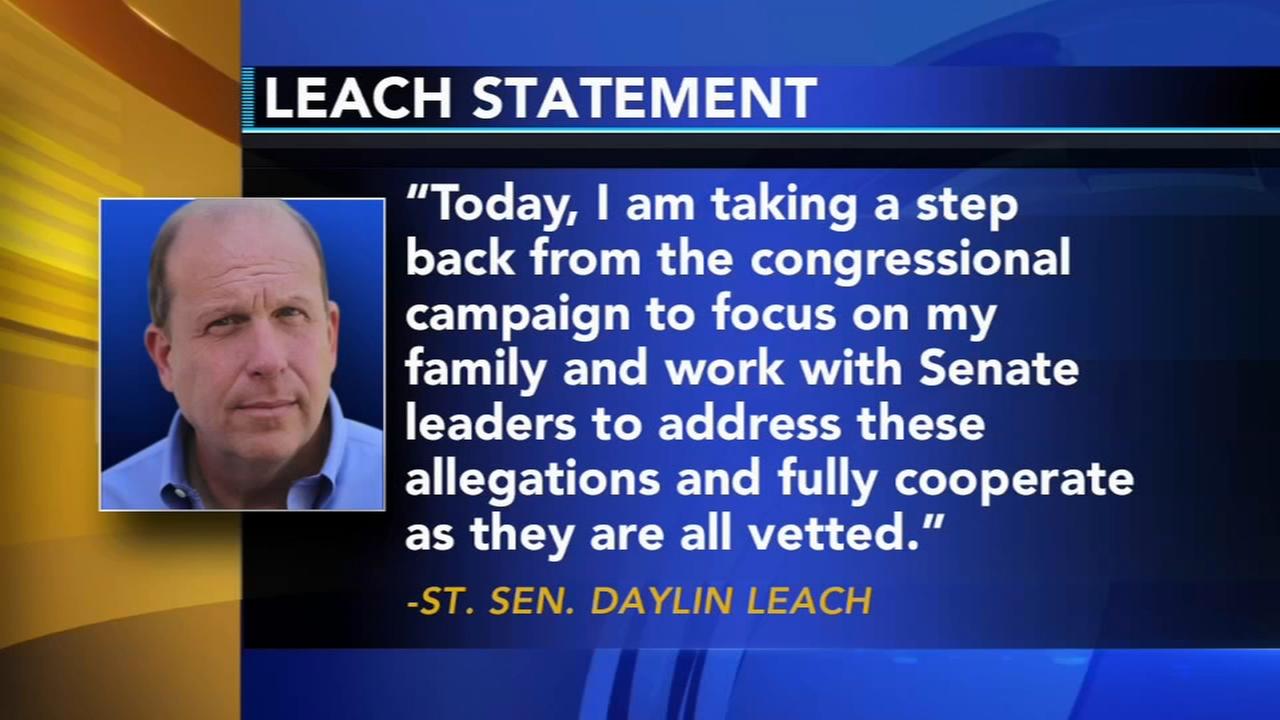
PA-07-- Pat Meehan's super-gerrymandered suburban Philly district-- has been a big pain the the butt for Blue America this cycle. There are a bunch of fake Democrats in the race and two excellent progressive Democrats Blue America has endorsed in past races (Mary Ellen Balchunis and state Senator Daylin Leach) and a novice candidate, Paul Perry, who we met with early open and who impressed us as the kind of idealistic true believer sorely needed in a corrupted and dysfunctional Congress. Recently Meehan was caught stealing tax-payer funds as hush money in a sexual harassment case and, as news of the state Supreme Court, insisting that the state un-gerrymander districts like PA-07 before November, Meehan announced he's retiring. Blue America still hasn't endorsed anyone in the race yet. And, Paul Perry dropped out even before Meehan, citing an inability to raise enough money to undertake a competitive race.

By the end of the last FEC reporting cycle on September 30, Meehan had raised $1,007,569 and 5 Democrats had raised almost that much combined. The leading Democratic fundraiser was Leach ($397,663) but the second highest Democratic fundraiser ($303,117, $82,000 of which was self-funded), Dan Muroff, seems to have engineered a #MeToo scandal for Leach and Leach suspended his campaign. The big self-funder in the race was Molly Sheehan ($170,000, virtually her entire war-chest) and another candidate, Elizabeth Moro, is a Republican pretending to be a Democrat. Mary Ellen Balchunis still hasn't jumped into the race. Paul Perry had raised $90,893 before dropping out. In a guest post for The Intercept yesterday, he wrote that he "left [the race] in part because the money game rules every part of the process. It shapes the types of candidates, even progressives like myself, into becoming the types of politicians we should be fighting against. The time spent courting donors disconnects you from voters by design. The process itself de facto disqualifies millions of Americans-- based on wealth, connections, economic class-- from realistically seeking elected office to represent their communities. I came to realize that no matter how good my intentions were, getting elected wouldn’t fix that broader problem gnawing away at our democracy." Paul is a smart, courageous and personable guy with great ideas. America needs him and more people like him in government-- and fewer people like money-grubbing crooks like Paul Ryan, Kevin McCarthy, Steny Hoyer and Debbie Wasserman Schultz. He agrees:
On paper, I was an ideal candidate for the Democrats. Born and raised in the district, a successful career in education and nonprofit work, Ivy League graduate, young, Black, with gay parents and therefore, a compelling family story. But the Democratic Congressional Campaign Committee didn’t take an interest in me until they started to have doubts about the other top candidates: two white men who had already raised hundreds of thousands of dollars and a white woman who would loan her campaign $170,000. I also started raising significant money, putting me on their radar. Besides a polite if not cautionary phone call with one of their Northeast operatives, the first official communication I received from them was... [a form letter telling him to raise $200,000 for the quarter, pretty much the same letter they send everyone running].

In other words: We don’t give a shit who you are, young man. Just show us the money. In two short weeks at the very outset of my campaign, they directed me to raise $200,000. I failed their first Rolodex test, but pressed on into the third quarter nonetheless. As the campaign dragged on and their sense of the weakness of the field and my campaign gathering strength, my finance director started getting more calls from their finance people. They wanted weekly numbers, down to the number of hours I had spent on the phone with donors each week, how much money I had raised on a weekly and daily basis, and even average contribution estimates. I went back and forth with my team about how much to play ball with them considering they weren’t doing much for us.

As the campaign picked up steam, the DCCC invited me to attend a fundraiser for Rep. Dwight Evans from the nearby 2nd District. The representative was immensely generous and ushered me around the room introducing me to folks (literally sharing donors with me). He encouraged me to keep my head down and stay tough. People like me stand on the shoulders of giants like him. I cannot imagine what trials and tribulations he has been through as a Black politician during the past few decades and now as the only Black member of his state’s congressional delegation.

Now, this is a hard thing-- writing about people who were nothing but kind to me, as is the case with Evans. Nevertheless, I still felt herded like cattle at that party. I worked the room, swatting away consultants looking for contracts, absorbing cheap shots from white-haired trial lawyers who scoffed at my youthful candidacy, always seeking out the fattest wallets in the room. The DCCC was tossing me softballs and seeing how far I could hit them. As I drove back to Philadelphia that night, I reflected on what a bizarre rite of passage I had just been through. How would functions like that make me a better legislator for people like Geraldine [the first constituent he met when he was door-knocking and who he promised he would help make sure conservatives didn't steal her Obamacare money which was keeping her alive]? It wouldn’t.

At another point during the campaign, I was invited to meet with former Pennsylvania Gov. Ed Rendell. He had visited my high school back in 2003, and I had asked him a tough question about education policy that he had embedded in his education stump speech. When I got to his office, he immediately showed me his poorly named memoir, A Nation of Wusses. Our interaction from years back was on Page 108. He let me leave with a copy of the book, but not before we talked shop. I now had another tough ask for him: his support for my newly launched congressional campaign. Things had come full circle as the young kid who challenged the governor was now an adult running for Congress.

Rendell had already publicly endorsed another candidate in the race. He encouraged me to drop out and run for state House or Senate. I told him I had no plans to do so and was just getting started. Then I told him my strategy for victory. He believed my argument and offered some help. We sat there as he made a few calls to influencers on my behalf and rapidly rifled off names of people I should reach out to for donations. His secretary pulled together a donor list and sent it over to my team. Rendell invited me to meet a top Obama bundler, Tony Welters, a few nights later at a restaurant in South Philly. He would set up a brief introduction for 10 minutes before their meal.

I showed up at Serpico on South Street a few days later to find Rendell and two older African-American men tucked into a booth in a mostly empty room with dark wood décor. Rendell waved me over to sit down next to the man across from him and I shook all of their hands. He introduced me and noted that Welters is a top executive for a major health care company and a top fundraiser for Obama. The three men then began to grill me on my stance on fracking.

I’m against it, I told them, especially the pipeline they were trying to run past schools and homes in my district. Rendell boasted about how he had personally brought fracking to Pennsylvania. Welters shared how frustrated he is by Democrats who are “doctrinaire” on the issue. He wished they’d open up to fracking. (Welters, I learned later, is involved in the fracking industry.)

Sensing that I was not about to let up, they moved on. (“That’s exactly right,” Rendell told The Intercept when asked for comment on the conversation.) Rendell asked me if I’ve been to Israel. I said I have not. The bundler immediately chimed in, “Well, we need to get you over there because it would make it a helluva lot easier to raise money for you.” Rendell followed up with, “Call my office and we’ll get you set up for a trip over there.” I remained silent. Welters brought the conversation to a close by saying that he would gladly host a house party for me. Rendell had previously indicated that such a party would likely bring in $100,000 to $200,000, at least. I offered some polite goodbyes and alighted out of the restaurant, stunned and gleeful. After dozens of calls to the bundler, the party never materialized before I left the race.

On reflection, I realized that I was only a pawn in a larger play for influence. Rendell had publicly endorsed one candidate in the race, told a second candidate he would support him once he won the primary, and told me that he’d support my campaign by connecting me with donors. I was astounded by the unabashedly noncommittal plays for power. I was ashamed of myself for going along with it seeking an advantage. I felt myself leaning, hedging, and contorting to fit the mold my elders and those with more money, resources, and experience were asking me to do to gain their favor.

I want to be clear that I felt and deeply appreciated the support I got from everyone who gave time, money, mentorship, and other resources that were generously offered to me during my short-lived campaign. One of the great joys of running for office is that you basically put out a call to everyone you know and quickly find out how many people truly love and support you despite all the stupid things you’ve done in your life. That said, I came to the conclusion that it wasn’t enough for me to potentially win and just be another healthy cog in a fundamentally sick system. I’d rather challenge and have some hard conversations with those perpetuating that system-- one that is dangerous for our democracy. I’d rather step away and find ways to transform that system, which is what I chose to do.

As a candidate, there was no escaping the endless drumbeat of the pressure to raise funds.

At all levels, examples abound. The Democratic state representative on the county committee set up to endorse a primary candidate, who blatantly stated, “Money is money. We need a candidate who has or can raise a lot of it so we can win.” The county party chair who wouldn’t return my calls and emails presumably because they had already backed the wealthiest Democrat in the race. The well-known “progressive” interest groups who withheld their endorsements despite my (and others’) strong alignment with their causes because they were “waiting on the numbers” and wanted to assess “viability.” At every juncture, the message was clear: “Show us the money.” Few other indicators of candidate strength existed at all.

As an educator, I have come to believe that most of our problems are problems of learning. How and what we learn, and from whom, are the processes by which we come to understand and shape the world around us. All that I’ve just shared with you, each and every moment, taken together, are examples of how we train our leaders in this country. This should horrify all of us. It should spur us to action to rid our politics of this money-drenched culture. When we let wealth and connections drive who gets elected in the country, we get the dismal politics we now awake to every morning. As with everything in a true democracy, it’s on us to fix this. I still believe we can if we have the will to fight. Our friends, families, and neighbors-- the Geraldines around the corner from us, praying they get to keep their health care-- they are counting on us.
I have seen and continue to see the DCCC chewing and spitting out candidates like Paul all the time and everywhere in the country. The people who unit are horrible and the staffers who work for them are even worse-- much worse, in fact. Reformers in Congress, aware that the basic problem with the DCCC is Nancy Pelosi (and Steny Hoyer) blackmailed Pelosi that if she wanted to be party leader again she would have to allow the DCCC chair to be elected rather than appointed by her. Reluctanly, she agreed, after the latest DCCC debacle in 2016. Her candidate, an inept and utterly incompetent Ben Ray Lujan-- the identity politics candidate who is Hispanic, western and gay (albeit closeted gay which Pelosi doesn't understand doesn't "count" as gay)-- had just botched the 2016 election, laying back and waiting Hillary to sweep their incredibly shitty recruits into office. They also forced her to agree to have the Democratic caucus elect 5 regional vice chairs. So first off, no one ran against Ben Ray. So he's the chair again and as incredibly incompetent and unfit as he was in the last cycle, maybe worse. As for the vice chairs... there's one good one: Ted Lieu, who basically keeps the DCCC from interfering with primaries in his area and encourages all the candidates who ask for his advice and help. None of the candidates in the Midwest region are aware that Betty McCollum is the regional vice chair and she does nothing at all. Ditto for Don McEachin in the southern district. Neither is any better than the regional vice chair for the Texas/Colorado area-- and Pelosi and Lujan have made sure there would be no regional vice chair for that area after Jared Polis resigned almost immediately after being elected last year. That leaves the Northeast where Joe Kennedy III is the regional vice chair. Nice rebuttal to Señor Trumpanzee Tuesday night, but if he's doing a better job that McCollum and McEachin, I haven't noticed-- and neither have the candidates in his region. He's pretty much a non-factor who thinks he can become president by making flashy speeches but without doing any of the work. Sorry kids, but I see the difference between someone who takes a job seriously and someone who wants something on his résumé. I had asked Paul to reach out to Kennedy-- as I do with all candidates in the Northeast. They never spoke.

Labels: , , , ,

Sunday, January 21, 2018

Why Is Paul Ryan Letting Pennsylvania Crook Pat Meehan Off So Lightly?

>

Pat "Chester the Molester" Meehan doesn't look so happy

Yesterday I got an e-mail from Keystone Progress, one of the most reliable progressive groups in Pennsylvania. They were demanding Republican Pat Meehan resign from his swing district seat in the Philly suburbs-- one of the 3 most gerrymandered seats in the whole country, PA-07, which includes parts of Delaware, Montgomery, Berks, (a tiny sliver of) Lancaster and Chester counties. The district went for Obama 53-46% in 2008, for Romney 50-49% in 2012 and for Hillary 49.3-47.0% in 2016. The PVI went from R+2 in 2015 to R+1 this year. The DCCC has managed to screw up the races every year since 2010 when Joe Sestak left the seat. The e-mail from Keystone Progress:
Rep. Pat Meehan (R-Cheltenham) settled a sexual harassment claim against himself using thousands in public dollars. Additionally, Meehan has been a "leader" in the effort by this congress to, ostensibly, investigate sexual harassment.

Meehan's conduct should be disqualifying of a congressperson.

Join us in calling for Pat Meehan's resignation, for conduct unbecoming of the office and for abuse of the public trust.

Every man should be held accountable when they violate a woman, including elected officials.

Pat Meehan can no longer serve the interests of his constituents, and we call on him to resign immediately. 

They forgot to mention that Meehan, a Ryan rubber stamp, is a member of the House Ethics Committee who worked hard to position himself as a leader in fighting sexual misconduct. Ken Vogel from the story Saturday in the NY Times noting that last year the staffer who accused him of making unwanted romantic overtures to her was decades younger than him and he grew hostile when she did not reciprocate and ruined her career.
Life in the office became untenable, so she initiated the complaint process, started working from home and ultimately left the job. She later reached a confidential agreement with Mr. Meehan’s office that included a settlement for an undisclosed amount to be paid from Mr. Meehan’s congressional office fund... The handling of that complaint-- which included an aggressive pushback by representatives from Mr. Meehan’s office and congressional lawyers, who suggested she had misinterpreted the congressman’s behavior-- demoralized the aide. It led to her estrangement from her colleagues, and isolation from friends, family and her boyfriend, according to the people in whom she confided. It set her back financially and professionally, as she continued to pay legal costs associated with the complaint even after leaving her job in Mr. Meehan’s office and struggling to find a new one. She moved back in with her parents and ultimately decided to start a new life abroad.

...After counseling and mediation sessions mandated by the Office of Compliance, the sides reached an agreement that included a settlement and a strict nondisclosure agreement, according to people familiar with the process.

The exact amount of the settlement could not be determined, partly because Mr. Meehan’s office paid it from a congressional office fund that allows such payments to be disguised as salary and reported months after they were made. But people familiar with the payout said it was thousands of dollars.

...The aide’s dealings with the Office of Compliance left her feeling as if the settlement was not worth the emotional distress the process had caused, said the friends and former colleagues. All spoke to The Times on the condition of anonymity because they were concerned that, if lawyers for Mr. Meehan or the House accused the woman of violating the nondisclosure agreement, her settlement could be withdrawn and her career prospects further damaged.

Other women who have endured the complaint process have suffered personal and professional consequences.

“I tried to get another job with another member of Congress, and I was blackballed. Nobody wanted to touch me,” said Marion Brown, who filed the complaint that led to Mr. Conyers’s resignation, and who was not speaking about the Meehan case. “And I’m still going through backlash, because he resigned without admitting doing anything wrong.”
Meehan is denying the charges and the woman's attorney called his statement "a desperate effort to preserve his career." It's worth mentioning that she had paid her own lawyers’ fees, and the settlement she reached was not enough to cover her legal and living expenses while she was out of work. Vogel ends his piece by mentioning that "one of the leading Democratic prospects, State Senator Daylin Leach, suspended his bid in December, after he was accused of sexual harassment and inappropriate touching."

What he didn't bother mentioning is that the one woman who came out publicly against Leach, a self-admitted Kirsten Gillibrand wannabe named Aubrey Montgomery accused Leach of telling dirty jokes in front on her a decade ago. She continued to donate to his campaigns for the next ten years and didn't suddenly turn on him until she became a finance consultant for another Democrat in the race, a sleazy character and carpetbagger named Dan Muroff, who had been pushing the story around for months before The Inquirer finally went with it.

Late Saturday afternoon Ryan kicked Meehan off the Ethics Committee and told him to repay taxpayer funds he used as hush money to cover up his unethical behavior. No one understands exactly why Ryan isn't asking Meehan to resign the way John Conyers, Trent Franks and Blake Farenthold were forced to, for the exact same behavior. Oh yeah... only Meehan has been a devoted Ryan rubber stamp. How could I forget?

I wonder if the poor wife knows

Labels: , , ,

Tuesday, January 09, 2018

Is There A Way Back For Men Who Made Women Uncomfortable?

>


Pennsylvania State Senator Daylin Leach is an old friend. “The Liberal Lion” of the legislature, when he decided to run for Congress against Pat Meehan (PA-07) last year, he quickly became the front-runner in a crowded Democratic primary field. And then he got caught up in the #MeToo movement. He wasn’t accused of raping anyone or feeling up anyone or using his office inappropriaterly to pressure women to have sex with him or anything like that. But the accusations of making women uncomfortable with his ribald humor caused the Democratic establishment-- who never liked him anyway-- to demand that he withdraw from the congressional race and resign from the legislature. He decided to suspend his campaign and do some serious soul searching. I still don’t know what he’s going to do but yesterday the Philadelphia Inquirer ran an op-ed, What I’ve Learned he had penned. I noticed he isn’t accepting federal campaign contributions any longer.
The last few weeks have given me time for introspection.

Prior to the recent story about me in the Inquirer, I was aware that reporters were calling dozens of my employees, former employees, acquaintances, and opponents to ask them if I had ever made them or anyone they knew uncomfortable. That sort of scrutiny tends to put one in survival mode, triggering something akin to a flight-or-fight response. When the story finally came out, I was angry and defensive. I lashed out, which I regret.

As I began trying to reckon with what happened, I reached out to friends, colleagues, and even some people who don’t think very highly of me. I did a lot of listening.

I learned that I have been largely oblivious to the nature of power dynamics and privilege, both between men and women and between employers and employees. I have never considered myself very powerful or intimidating. I have never been comfortable with a hierarchical structure and have always tried to create working environments that were informal and relatively egalitarian. Thus, I was under an incorrect assumption that anyone who had an issue with me would feel free to address me directly. I now understand that people, especially young women, might be reluctant to approach me with concerns about humor they aren’t comfortable with.

I also asked people if I had ever done anything to make them uncomfortable. Frankly, I was looking for reassurance, hoping for responses like “Absolutely not, Daylin.” There was a good bit of that, which I am grateful for. But some people were candid in telling me that my humor could be off-color or offensive. Some told me they had been offended by my humor in the past, while some told me others might feel that way.

My discussions with others didn’t end at humor. I have always been a somewhat touchy person in conversation with both men and women and, therefore, I always assumed it was OK. But not everyone has the same comfort level with touching. It never occurred to me to even think about this before, which I am mortified to admit.

All of this has left me shaken. It has also taken a toll on my family and staff.

I spent my childhood in profoundly uncomfortable situations. I had very limited parental contact, no siblings, and lived in a series of challenging foster homes. I learned early on that humor and personal contact were ways to make friends and put people at ease. This is not an excuse, but an explanation. While many people have said positive things about my humor over the years, it is clear now that my sense of what is and is not welcome in a given situation has, at times, been flawed. I was sometimes impulsive and thoughtless. That needs to change. I should never put humor before kindness.

As I’ve contemplated where to go from here, one thing is certain: I am truly sorry for ever saying or doing anything that has made anyone uneasy, uncomfortable, or distressed. If there is any way to make things right, I want to do that. If anyone wants to contact me to talk about this, I’m easy to find and eager to listen.

The novelist Craig Silvey wrote that an apology “doesn’t take things back, but it pushes things forward.” I think the best way for me to apologize is to change my conduct. I promise to do that.

I am trying to learn. I know this won’t satisfy everybody, but hopefully, over time, any skeptic will be convinced of my sincerity. I believe that there must be room for growth and forgiveness on this issue and in all areas of life.

We are living through a time in which humanity seems to be in desperately short supply. I hope we can all look at each other as flawed human beings who are constantly trying to improve. I promise that is what I will be trying to do.

Labels: , , ,

Monday, December 11, 2017

TODAY, Pennsylvania's Supreme Court Could Deal A Fatal Blow To Gerrymandering

>


As we mentioned late Friday, today is D-Day for gerrymandering in Pennsylvania. Yes... TODAY. There are 3 gerrymandering lawsuits wending their way through the courts in Harrisburg and the first one makes its judicial splash today. "The litigation," reported Reuters on Sunday, "is part of a growing set of legal challenges to partisan redistricting, including a U.S. Supreme Court case out of Wisconsin that could for the first time establish a constitutional standard to measure the legality of such map-making. The high court is scheduled to decide that case by June 2018, five months before the midterm elections.
In addition to the state case, two pending federal lawsuits also challenge the district lines as unconstitutional. Legal observers consider the state lawsuit the most likely to succeed in time for the voting next November.

The Democratic-majority state Supreme Court has ordered the presiding judge to render his decision by Dec. 31. The high court will then determine whether to accept his ruling or issue its own conclusions.

The state lawsuit asserts the redistricting included numerous examples of blatantly partisan lines.
It's so complicated that Reuters then flubbed the whole thing, writing that "Democrat-dominated Reading, one of the most economically depressed cities in the state, was carved out of the 6th district and placed into the reliably Democratic 13th, a move the plaintiffs said was intended to render the city’s votes meaningless." What reporter Joseph Ax should have written was "Democrat-dominated Reading, one of the most economically depressed cities in the state, was carved out of the 6th district and placed into the reliably Republican 16th, a move the plaintiffs said was intended to render the city’s votes meaningless." Reading's Democratic voters are swamped by Lancaster County's huge Republican majorities. If Reading was still part of the 6th, the 6th, a more swingy district, would be a safe blue district. I remember when my old friend Aryanna Strader (now Lt. Governor candidate Aryanna Berringer) ran against entrenched Republican Joe Pitts in the 16th in 2012. There are 3 counties (or parts of counties) in the 16th-- Berks, whose county seat in Reading, Chester and Lancaster. There were about 30,000 votes that came out of Reading and it was a landslide for Aryanna. She beat Pitts 65-30%. Chester County, which provided around 38,000 votes, is more swingy and Pitts was ahead by a nose-- 48-47%. But when Lancaster County came in, it was clear what the Republican legislators had done-- close to 190,000 votes from an exceedingly red county made Reading's voters meaningless. Pitts won Lancaster Co. 125,310 (60%) to 69,033 (33%).

Ax got his next example quote right though. It demonstrates another GOP tactic legislators use to make Democratic votes meaningless-- exactly what they did to blue, blue Austin, Texas, for example. "Montgomery County," he wrote, "where state senator Leach lives, has approximately 820,000 residents, slightly more than the 711,000 needed for a single congressional district, but has been sliced into five separate districts." Ax reported that Daylin Leach, the progressive lion of the state's Democrats, "is running in one of the country’s most gerrymandered congressional districts, one with such a twisting, winding shape that it has earned the derisive nickname 'Goofy Kicking Donald Duck.' The 7th congressional district has become a national poster child for critics of gerrymandering, the process by which one party draws district boundaries to ensure an advantage among voters. Democrats say the lines have helped Republicans like U.S. Representative Patrick Meehan, the four-term incumbent Leach seeks to unseat, to stay in office... Leach said he would make gerrymandering a campaign issue. 'It’s theft of democracy,' Leach said. 'This is horribly destructive.'... The 7th district is so precisely engineered that at one point it narrows to the width of a single seafood restaurant, snaking past two other congressional districts so it can link two far flung Republican-leaning areas."


“Three congressional districts all converge on this spot,” Leach said from the parking lot at Creed’s Seafood and Steaks last week, as cars whizzed overhead on the Pennsylvania Turnpike.

“This is the sixth; over there is the seventh; and down that road is the 13th,” he said, pointing in several directions. “This is what gerrymandering looks like on the ground.”

...Critics of gerrymandering say it helps explain why Pennsylvania has sent 13 Republicans and only five Democrats to the U.S. House since the 2011 redistricting, despite being a closely divided swing state.

...The Democrats have targeted six Republican-held districts in the state as part of their quest to pick up the 24 House seats they need to overturn the Republicans, who also have a Senate majority and President Donald Trump in the White House.

Democrats need to win the nationwide popular vote by at least 10 points in 2018 to do so, in part because of gerrymandered lines, according to Michael Li, a redistricting expert and lawyer at New York University’s Brennan Center for Justice.

“Pennsylvania is probably the most aggressive of the gerrymanders,” he said. “You look at some of the maps in the Philadelphia suburbs, and it looks like a 4-year-old just slapped paint around.”

The non-partisan League of Women Voters of Pennsylvania sued the state in June, arguing the maps violate the state constitution by depriving residents of a meaningful vote.

The litigation is part of a growing set of legal challenges to partisan redistricting, including a U.S. Supreme Court case out of Wisconsin that could for the first time establish a constitutional standard to measure the legality of such map-making. The high court is scheduled to decide that case by June 2018, five months before the midterm elections.

“The politicians are not supposed to pick their voters; the voters are supposed to elect their leaders,” said Mimi McKenzie, an attorney with the Public Interest Law Center who represents the League of Women Voters and other Pennsylvania voters.
Last week Rep. Matt Cartwright told us that ""Pennsylvania’s Congressional map is an abomination, a perfect example of politicians selecting their voters, instead of vice versa. I think we are fortunate to have a majority on the state Supreme Court willing to dive into this question and fix our preternaturally bollocksed up Congressional boundaries. It is hard to imagine that any tribunal could conclude that this map is not violative of any reasonable standard of electoral fairness. The real question is the one you have asked at the beginning:  whether the Supreme Court has the will to race time and put a new map in place for 2018. My prediction is that the Olympic-caliber foot-dragging Republicans in Harrisburg will test the high court’s resolve-- to do the right thing-- to the utmost."

Yesterday we discussed it with Daylin Leach again and he told us that when he started talking about the evils of gerrymandering 15 years ago, "I felt like I was talking to myself. It was on nobody's radar. Now, the issue is popping, and I'm extremely gratified that we appear to be finally on the precipice of progress on this insult to democracy. Hopefully, the courts will deal with this in a thoughtful, but aggressive way to consign the theft of votes that gerrymandering is to the ash heap of history."


Labels: , , , , ,

Sunday, October 01, 2017

Will Gerrymandering As A Problem Plaguing American Democracy Disappear On Tuesday?

>


When I first saw North Carolina state Senator Jeff Jackson's tweets (above), ny eye was drawn to the graphic. Maybe because of the hues or the simplicity of the forms, it rang some Fernand Léger bells in my mind. Turned out, though, that Jeff was talking about gerrymandering, not art criticism. As the editors of the NY Times pointed out on Friday, the Supreme Court could solve the gerrymandering mess on Tuesday. Yes, this Tuesday! They can go a long way towards de-regging the political system... but will they? "Politicians," they wrote, "keep themselves, and their party, in power by redrawing the geographical boundaries for legislative seats in the states and in Congress."
They can be very open about doing this. In North Carolina, where the statewide vote is often close, a Republican lawmaker was asked why the G.O.P.-led Legislature drew district maps that gave Republicans 10 congressional districts and Democrats only three. He responded, “Because I do not believe it’s possible to draw a map with 11 Republicans and two Democrats.”

All map drawing is political, but at its most extreme, it strikes at the heart of representative democracy. By letting politicians pick their voters rather than the other way around, this practice, known as partisan gerrymandering, corrodes the relationship between lawmakers and their constituents. It also discourages bipartisanship and undermines the public’s trust in government.

The Supreme Court has repeatedly steered clear of solving this age-old problem. But on Tuesday, in a case that could transform the American political landscape, the justices will hear arguments over whether, and how, partisan gerrymandering can be reined in.

Why is this so hard? Almost no one defends the practice. James Garfield, who served in Congress before becoming president and had benefited from gerrymandering, called it “evil.” President Ronald Reagan called it a “national scandal” in 1987-- “anti-democratic” and “un-American.” John Kasich, the Republican governor of Ohio, said last year that it remains the “biggest problem we have.” Polls show that seven in 10 Americans oppose it

Yet even though the Supreme Court has said a political gerrymander may be so extreme that it violates the Constitution, it has never struck one down because the justices have not been able to agree on how much partisanship in map drawing is too much, or even how to measure it.

If any case could convince them that it’s time to step in and find a solution fast, it’s the one they’re hearing on Tuesday: Gill v. Whitford, a lawsuit out of Wisconsin that offers a stark lesson in just how distorted the map-drawing process has become in an era of sophisticated mapping technology and intense political polarization.

In 2010, Republicans won unified control of Wisconsin’s government for the first time in years. They were determined not to lose it anytime soon, so they turned the decennial redistricting process, which began in 2011, into a clandestine partisan operation. They set up a “map room” at a Republican-allied law firm, used refined data analyses to draw new, Republican-friendly district lines, and invited only Republican lawmakers to come in and see their new districts-- after they signed nondisclosure agreements.

It worked. In 2012, the first election using the new maps, Republican candidates won 48 percent of the vote, but 60 of the state’s 99 legislative seats. The Democrats’ 51 percent that year translated into only 39 seats, yet two years later, when the Republicans won the same share of the vote, they ended up with 63 seats-- a 24-seat differential. In other words, Republicans had figured out how to draw maps to lock in their legislative majority no matter how many, or few, votes they received.

This is the opposite of how democracy is supposed to work, as a Federal District Court in Wisconsin found in striking down the maps last year under both the First and 14th Amendments. It was beyond doubt, the court held, that the new maps were “designed to make it more difficult for Democrats, compared to Republicans, to translate their votes into seats.”

The court rejected the lawmakers’ claim that the discrepancy between vote share and legislative seats was due simply to political geography: Democratic voters, they said, are concentrated in urban areas, so their votes have an impact on fewer races, while Republicans are spread out across the state. In fact, that doesn’t explain why the Wisconsin maps are so skewed. Rather, political science experts point to two predictors of a successful partisan gerrymander: state legislatures under one-party control and a recent history of close elections. Wisconsin has both.

So do several other battleground states, where extremely biased legislative maps could be at risk if the court rules against Wisconsin, according to an analysis by the Brennan Center for Justice. The analysis also found that 16 or 17 Republican seats in the House of Representatives-- two-thirds of the 24 seats that Democrats would need to retake control of that chamber-- are a result of extreme partisan bias in the drawing of district lines.

In recent years, Republicans have benefited far more from extreme gerrymanders, because of political trends and accidents of timing, but both parties are guilty of skewing maps when they’re able to. So how can the court get past its ambivalence and strike down clearly unfair maps?

There are several straightforward ways to measure the degree of partisanship. The plaintiffs have pointed to one in particular, called the “efficiency gap,” which looks at the difference between each party’s “wasted” votes. That means every vote cast for its losing candidates, and all votes for its winning candidates above the bare majority needed to prevail. The greater the difference, the higher the partisan bias in the maps.

Measures like this could appeal to Justice Anthony Kennedy, who said in a 2004 case that he was open to the possibility of a standard that would allow the court to rule on partisan gerrymanders. Justice Kennedy, as usual, holds the key vote on the issue, since the four more liberal justices are probably prepared to strike down Wisconsin’s maps, while the four conservative justices are likely to say the court shouldn’t get involved in the political process. But extreme gerrymandering is a problem that by definition can’t be fixed through the normal political process, since the whole point is to make it hard or impossible for certain voters to make their voices heard. That’s not government of the people; it’s government in spite of the people.

The better, although not perfect, solution is to take map drawing away from self-interested politicians and put it in the hands of an independent or bipartisan commission, as more than a dozen states have done, helping to make races both more competitive and less partisan.

Until that happens everywhere, the court must step in and stop the most egregious gerrymanders. If it refuses to, the problem will only get worse.
Randy Bryce seemed concerned about what would go down Tuesday for his state. "When a political party's ideas (GOP) are so horrible that they need to gerrymander districts," he said, "it really says a lot. Thousands of voters in Wisconsin voted more for Democrats than Republicans but more Republicans gained seats. That's just wrong. It's time the voters choose their representatives-- not the other way around." With the Court hopelessly split between far right partisan corporate goons-- John Roberts, Clarence Thomas, Sammy Alito and Neil Gorsuch-- and normal justices-- Ruth Bader Ginsburg, Stephen Breyer, Sonia Sotomayor and Elena Kagan-- Anthony Kennedy will be the likely tie-breaker.
When lawyers for the voters challenging Wisconsin's maps filed their main Supreme Court brief last month, they quoted Kennedy 41 times, beginning with their opening paragraph: Partisan maps "penalize citizens" because of their "association with a political party, or their expression of political views," he said in 2004.

They have reason to be hopeful. In the past, Kennedy has lamented political polarization and gridlock-- conditions made worse by the election of hard-right and hard-left partisans who disdain comity and compromise.

Two years ago, he cast the deciding vote in letting voters take Arizona's redistricting process away from the legislature and assign it to an independent commission, such as the one Kennedy's home state of California already had.

Cornell Law School professor Michael Dorf, a former Kennedy law clerk, says the justice isn't shy about courts weighing in on political matters.

"He is pulled to the idea that challenges to the machinery of democracy ... should be justiciable," Dorf says. And Kennedy most likely sees partisan gerrymandering as "a kind of cheating. It think it offends his sense of fair play."

On the other hand, the 81-year-old justice lamented in 2013 that the courts should not have to decide major issues best left to the political branches.

"A democracy should not be dependent for its major decisions on what nine unelected people from a narrow legal background have to say,” he said.

The question of unelected judges making political decisions has confounded the court for decades. In a 1946 opinion on whether political districts should be roughly equal in population, Justice Felix Frankfurter said courts "ought not to enter this political thicket" and instead should rely on Congress or state legislatures to fix what's broken.

Only in the 1960s did Chief Justice Earl Warren write the final chapter in that debate, ruling that state legislative districts as well as those for Congress must achieve the principle of one person, one vote.

But the question in gerrymandering cases is different: It's not about the vote itself but its relative weight in picking winners and losers. Challengers in Wisconsin contend that when Democrats are packed into the districts their candidates win and sprinkled into a greater number of districts their candidates lose, the system is rigged against them.

A federal district court ruled 2-1 last year that those districts discriminated against Democratic voters "by impeding their ability to translate their votes into legislative seats." It demanded that the legislature draw new district lines by this November for use next year, but the Supreme Court-- with Kennedy's approval-- blocked that requirement by a 5-4 vote.

Arguing for Wisconsin Tuesday will be Solicitor General Misha Tseytlin-- another of Kennedy's former law clerks. His brief — which quotes Kennedy 33 times-- refers to gerrymandering as a "centuries-old status quo" and warns that any ruling against it would have to rely on one or more of the mathematical formulas devised by opponents. The result, he says, would be that in many states, "any displeased voter ... can file a lawsuit in federal court."

Daniel Epps, an associate professor at Washington University School of Law and another of Kennedy's former law clerks, says his former boss's search for the right balance between voting rights and judicial restraint was on display in the 2004 case.

“You can sort of see him struggling with it," Epps says. "And now is going to be the time when he has to come up with an answer.”

State Senator Chris Larson is the most effective progressive leader in the Wisconsin legislature. He told me early today that "After seizing power in 2010, Republicans in Wisconsin have used every effort to rig the political system against voters. Gerrymandering tilted the entire playing field their way and over time they have become less and less fearful of being held accountable for their actions against students, the environment, and working families. Just this month they passed a wildly unpopular $3 billion corporate giveaway to FoxConn, the largest public act of corporate welfare in American history. Shortly after, they passed the state budget which was over 2 months late, still falls short of even modestly funding K-12 education, and is yet the highest spending bill in state history (lots of corporate giveaways to fund). The US Supreme Court has a chance to restore integrity to elections by correcting the perpetual injustice inflicted by rigged maps. Setting clear guildlines is easy and it will ensure the will of voters is reflected every election instead of just the will of those elected every 10 years who then draw themselves into isolation."

Pennsylvania's most progressive state Senator, Daylin Leach, is busy running for the Democratic nomination for one of the most gerrymandered seats in America, PA-07. But not too busy to be ready to line up at 4am on Tuesday to get into the Supreme Court session for the oral arguments. He's a member of the Supreme Court Bar and they have a separate line, but it's still a line. Daylin was a prominent part of one of the amicus briefs and he's live-blogging the whole experience. Yesterday he told me that "Gill vs Whitford may be our last chance for a long time to make our elections meaningful. Gerrymandering is an obscene and poorly disguised theft of our vote. The vast majority of us are shoved into districts specifically to guarantee that our votes will never matter. This leads to few competitive elections and incumbent legislators who have no political incentive to accomplish anything. It is destroying our democracy and impeding any effort to actually solve problems. Lets hope that 5 justices care enough about what the founders envisioned to preserve it."

Labels: , , , , , , ,