"When fascism comes to America, it will be wrapped in the flag and carrying the cross."
-- Sinclair Lewis
Saturday, August 29, 2020
Have You Ever Played The "Who's The Nazi" Game?
>
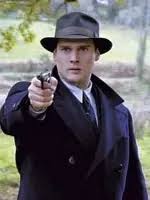
Taegan Goddard dug up this wonderful Dorothy Thompson piece from a 1941 issue of Harper's Magazine, Who Goes Nazi?. This is an especially poignant question for me right now, not just because of what Trump has done to the Republican Party--and half the country-- but because I am in the middle of watching the excellent series, A French Village, which I cannot recommend strongly enough-- 7 dramatic seasons starting in 2009 about a small French village occupied by the Germans in 1940. Over the course of the show, the villagers adapt, many choosing collaboration, others choosing passive or active resistance. I keep wondering how long it will take, if Trump wins a second term, for California, for example, to turn into Un village français. Dorothy Thompson's article may need to be updated soon. "It is," she wrote 80 years ago, "an interesting and somewhat macabre parlor game to play at a large gathering of one’s acquaintances: to speculate who in a showdown would go Nazi. By now, I think I know. I have gone through the experience many times-- in Germany, in Austria, and in France. I have come to know the types: the born Nazis, the Nazis whom democracy itself has created, the certain-to-be fellow-travelers. And I also know those who never, under any conceivable circumstances, would become Nazis. It is preposterous to think that they are divided by any racial characteristics. Germans may be more susceptible to Nazism than most people, but I doubt it. Jews are barred out, but it is an arbitrary ruling. I know lots of Jews who are born Nazis and many others who would heil Hitler tomorrow morning if given a chance. There are Jews who have repudiated their own ancestors in order to become 'Honorary Aryans and Nazis'; there are full-blooded Jews who have enthusiastically entered Hitler’s secret service. Nazism has nothing to do with race and nationality. It appeals to a certain type of mind." [How prescient of her, writing so many years before the on-set of Israel's Likud Party!]
Kind, good, happy, gentlemanly, secure people never go Nazi. They may be the gentle philosopher whose name is in the Blue Book, or Bill from City College to whom democracy gave a chance to design airplanes-- you’ll never make Nazis out of them. But the frustrated and humiliated intellectual, the rich and scared speculator, the spoiled son, the labor tyrant, the fellow who has achieved success by smelling out the wind of success-- they would all go Nazi in a crisis. Believe me, nice people don’t go Nazi. Their race, color, creed, or social condition is not the criterion. It is something in them. Those who haven’t anything in them to tell them what they like and what they don’t-whether it is breeding, or happiness, or wisdom, or a code, however old-fashioned or however modern, go Nazi. It’s an amusing game. Try it at the next big party you go to.
Let's look at Congress. Can you name 10 who would never, under any circumstances collaborate with a Trump/Nazi Regime? How about 10 who would be the most eager to be part of it? My guesses are just Democrats since you can pretty much consider all Republicans eager to get on board.
NEVER (JAMAIS): • AOC • Rashida Tlaib • Ilhan Omar • Jamie Raskin • Ro Khanna • Barbara Lee • Pramila Jayapal • Ted Lieu • Jan Schakowsky • Jerry Nadler As Willing As Deputy-Prefect Sevier...Though Maybe Not As Excited By The Prospect As Philippe Chassagne:
• Anthony Brindisi • Josh Gottheimer • Ben McAdams • Tulsi Gabbard • Henry Cuellar • Abigail Spanberger • Steny Hoyer • Kendra Horn • Collin Peterson • Stephanie Murphy
Did I leave anyone out? Please let me know in the comments if you have any good nominations-- for either list... or if I've been too harsh or too kind to any of these politicians. I'd love to know what you think.
Het Meisje Met Het Rode Haar-- The Girl With The Red Hair-- plus Newt Gingrich And Kyrsten Sinema
>
This morning when I woke up I found an email from my old friend Toon in Amsterdam. He had heard about the fires ravaging L.A. and he wanted to make sure I was ok. Then he started going on about how Trump and Boris Johnson are ruining the world. That led him in two directions-- were Bernie and Elizabeth too old to get the job done-- I assured him they weren't and that either could-- and then he started writing about how during World War II, "A lot of Dutchmen were completely indifferent about German occupation. A lot of Dutchmen were completely pro or opportunistic." There were not many like our friend (RIP) Hilda van Norden or Hannie Schaft. Hannie Schaft? I didn't know the name. So I took a few moments off from the impeachment news and looked her up. There were dozens of YouTubes... all in Dutch, like one above. Jannetje Johanna Schaft (Hannie's actual name) was born in 1920. Twenty-four years later, she was arrested at a Nazi checkpoint in Haarlem, her hometown, tortured for a month and shot by Dutch Nazis 3 weeks before the end of the war. 7 months later she was reburied in a state funeral. Queen Whilhelmina called Schaft "the symbol of the Resistance." As the impeachment trap closes on Trump, will he try a coup? Who's to stop him? If he does, who will be our own Hannie Schaft? You? Hannie was in law school in 1943 when the Germans occupied the country. University students were required to sign a declaration of allegiance to the occupation authorities. Like 80% of students, Schaft refused to sign and was expelled. Would you sign? After leaving school and Amsterdam and moving back in with her parents, she joined the Council of Resistance. Eventually she became an assassin and began carrying out attacks on Germans and on Dutch collaborators. She learned to speak German fluently and became involved with German soldiers. She was recognizable by her red hair and wound up on the Nazis "most wanted" list. Eventually, she died her hair black. She was identified by her red roots after she was arrested.
Hannie Schaft, murdered by Dutch Nazis, symbol of The Resistance
I also found an e-mail from Newt Gingrich this morning. "Friend," he wrote, "If you refuse to fight for President Trump... then don't read this email. But don't come complaining to me when anti-Trump socialist fanatics take over!
Sorry to be so blunt, but Democrats have decided to impeach President Trump and we have an urgent deadline to stop them:
We're rallying as many Loyal American Patriots as we can for the next 24 hours -- and we've activated 5x-matching for you. You've already received emails from Steve Scalise, Liz Cheney, Darin LaHood, Drew Ferguson and others... They ALL want you to know this is the most important request we have EVER made of you. If we fall short now, we will ALL suffer the consequences. Stand with President Trump, who has been FALSELY accused!
Hannie was offered an opportunity to be a courier when she joined the resistance to the fascists. She wanted the job of killing fascists. At what point is shooting someone like Newt Gingrich the right thing to do? Now? Never? Not 'til they've overthrown democracy entirely? Oh... and speaking of collaborators, as opposed to full on fascists like Newt, Politico ran a piece by Burgess Everett yesterday on putative Democrat Kyrsten Sinema, the mentally impaired and deranged freak from Arizona who Schumer decided to make a senator last year. That she, in Everett's words, "hobnobs with Republicans at least as much as she does with her own caucus," is hardly the problem. She started as a socialist, became a Green, then a liberal Democrat, then a conservative Democrat, then the chair of the House Blue Dogs and will soon enough join the GOP and go further right than Marsha Blackburn. "Sinema," wrote Everett, "doesn’t really fit in with her fellow Senate Democrats. Don’t even ask her whether she watches the Democratic presidential debates." She's more into physical fitness-- a regular fräulein of the Nationalsozialistischer Reichsbund für Leibesübungen. Her voting record isn't, as Everett claims, "on par with West Virginia Sen. Joe Manchin’s." It's worse. Sinema's ProgressivePunch lifetime crucial vote score is much closer to Susan Collins' than to Manchin's:
• Joe Manchin (D-WV)- 52.45 • Doug Jones (D-AL)- 45.21 • Kyrsten Sinema (Freak-AZ)- 34.18 • Susan Collins (R-ME)- 24.97 • Rand Paul (R-KY)- 13.76
Sinema's support for the fascists that Trump nominated-- like Attorney General William Barr-- "and her lack of zeal for impeachment are part of a political profile drawing blowback from progressives and cheers from the GOP. Yet Sinema is also setting herself up to be a pivotal vote the next time the Democrats are in power. And her radical breed of centrism could be a headache for the party. Take the liberal drive to bust down age-old Senate rules in order to pass Medicare for All or a Green New Deal. Sinema not only opposes getting rid of the 60-vote filibuster threshold for legislation, she wants to restore the supermajority requirement for presidential nominees that has been weakened by both parties." Exactly what Schumer wanted when he selected her as Arizona's senator.
“They will not get my vote on [nuking the filibuster],” Sinema said in her office, outfitted with shiny leather and translucent chairs and boasting a vivid shade of purple that pops from the walls. “In fact, whether I’m in the majority or the minority I would always vote to reinstate the protections for the minority… It is the right thing for the country.
Senate allies
Sinema isn’t actively trying to reshape the party. Though she captured a state that Democrats would love to seize in the 2020 campaign, she’s utterly uninterested in using her perch as senator to do cable TV hits, speak to the Capitol Hill press corps or offer general guidance to Democrats ahead of a crucial election cycle. Yet her record speaks for itself. She voted for Barr and Interior Secretary David Bernhardt and opposed attempts to roll back the Trump administration’s coal deregulation regime earlier this month. It’s an approach that has the potential to revive the Senate’s moribund middle but has left her something of a mystery to her Democratic colleagues, even fellow moderates. “Haven’t had a lot of interaction with her. She’s kind of doing her own thing,” said Sen. Jon Tester (D-MT), a centrist senator with a more liberal voting record than Sinema’s. Unlike any of her colleagues, she snubbed sitting Sen. Ed Markey and endorsed Rep. Joe Kennedy, an old House colleague and close friend, in the hotly contested Massachusetts Democratic Senate primary. That earned a rejoinder from Manchin: “I would never do that … made no sense to me at all.”
And she is criticizing senators in both parties for “highly partisan” statements on impeachment and is declining to endorse the House impeachment inquiry: “That’s not my job, that’s not my role.” For all her distance from the establishment, Sinema also seems to have come to an understanding with Schumer, whom she [fake-]opposed as Democratic leader during her 2018 campaign. Like every member of the caucus, she gets random calls from Schumer frequently enough that she can easily break into a raspy New York accent while doing a brief impression of the minority leader: “‘Sinema! What’s new?’” But when push comes to shove on important votes, she has a warning for party honchos: Leave her alone. “Everyone knows that I am very independent-minded,” she said. “And that it’s not super useful to try and convince me otherwise.” Sinema isn’t especially close with either Trump or Majority Leader Mitch McConnell (neither has her phone number, she said), but she doesn’t light into them the way most Democrats do. She’s working with McConnell to whip votes for repealing Obamacare’s medical device tax and said the president “certainly” knows who she is. And observers watching her on the Senate floor during a vote would be forgiven for thinking she’s a Republican, considering her chats with GOP senators like Majority Whip John Thune of South Dakota, Tom Cotton of Arkansas and Kevin Cramer of North Dakota. She spends at least as much time on the Republican side of the chamber as the Democratic half and lists Sen. Ted Cruz of Texas as an ally atop the Commerce Committee’s Aviation and Space subcommittee. Cruz returned the favor by declining to lump the Arizona Democrat in with what he sees as an increasingly socialist Democratic Party. “I said to her one time: Why aren’t you a Republican? … she said: ‘I just couldn’t be,’” Cramer recounted. Cramer and Sinema came into the House together in 2013, and then arrived in the Senate this year. They are close friends but couldn’t be more different. In fact, there are few like Sinema, the youngest Democrat at 43 who’s trying to figure out how to teach a spin class in the archaic Senate gym and boasts a sense of style that stands out in the tradition-bound Senate. “I’m sort of a prude and she’s very exotic,” Cramer explained of their contrasting demeanor. “She was very hard on President Obama. So she’s quite feisty.” There’s one Republican who’s still at arm’s length from Sinema: Martha McSally, whom Sinema defeated in 2018 but was then quickly appointed to fill the seat of the late Sen. John McCain. McSally said that the two “left it all out there on the field during the campaign” and Sinema said their staffs work together. But after a race in which McSally accused Sinema of saying “It’s OK to commit treason,” and Sinema said McSally was spreading "smears," there’s been no real attempt to put the past behind them. “There hasn’t been that conversation,” Sinema said flatly. Sinema isn’t out for revenge, either. She’s currently uncommitted in McSally’s campaign against Democrat Mark Kelly and has no plans to weigh in. She said her constituents “don’t care” about endorsements. That neutral stance might buy her goodwill with her Republican colleagues, who are in the majority, after all. But it’s another reminder that her moderate stance doesn’t play well with all Democrats. The state Democratic Party put off a censure vote against her this year, but could revive it next year. Rep. Raúl Grijalva, a progressive Democrat from Arizona, said Democrats were “a little thrown back” by her vote for Barr and warned her not to forget her state’s increasingly young, diverse voting population as she navigates the tricky politics of being from a swing state. “She runs her own thing. It worked for her getting elected. In terms of effectiveness, we’ll see,” Grijalva said. “I would be more concerned about not reflecting where the demographics in Arizona are going. And they’re going Democratic and they’re going more progressive.” Sinema is unmoved and might even see a censure as a badge of honor after McCain received one from the state GOP. Sinema won’t fight the effort and won’t change her positions. And if the censure resolution comes back up next year? “I don’t know. Also, don’t care.” Sinema’s attempt to be above the political fray is central to her identity and her goal of building relationships with as many colleagues as possible. Party leaders’ whip counts? Not her problem. Using her platform as senator to regularly promote her views to a national audience? Not interested. Skipping caucus lunches almost everyone else attends? She’ll be there when it matters for Arizona. And missing votes on the EPA chief for an Ironman race? “Ironman’s pretty badass. It’s awesome,” she responded when asked if she got any criticism for skipping town for New Zealand just two months into her term. Less awesome, in her view, is the 2020 Democratic presidential primary. And with her party fixated on beating both McSally and Trump in Arizona, Sinema’s endorsement or even guidance for candidates about how to win there could be key. But that’s not something she’s interested in, either. She even said it’s “premature” to commit to supporting her own party’s nominee at this point and indicated it could be months before she tunes into a debate. “Eventually it would be wonderful to have a candidate that shares the values of the majority of Americans,” Sinema said cryptically. “Let’s winnow the field below like, 20 or something, and then maybe it gets easier. Like, when it’s enough for two basketball teams, it’s too much.”
When Kevin Cramer distanced himself from her by saying "I’m sort of a prude and she’s very exotic," he meant she's a lascivious, licentious bisexual. One of her former colleagues in the House, a happily married man who told me she tried seducing him several times, finds her "the strangest member of Congress... a duck out of water... It makes as much sense that she's in the Senate as it does that Trump is in the White House."
Orlando progressive Democrat Alan Grayson also used to serve with Sinema in the House. Yesterday, during a discussion of the Politico article, he told me that "There are a lot of observers who see 'unprincipled' and think 'independent,' or they see 'betrayal' and they think 'moderate.' No matter how long such 'independent moderates' are in office, the only thing they can ever look back on is being elected. They can’t answer the question, 'what have you done for The People?'"
She used to serve on the same board as I did-- before she was elected to Congress. After a short time I realized she was insane and soon after I realized she was dangerously insane. I always made sure to sit outside of her line of vision... just in case she was carrying a pistol in her handbag and decided to go postal. I'm not joking.
Is Trump's Satanic Nature Sparking An American Religious Revival On The Left?
>
Saturday, in the Washington Post Dan Balz reiterated an important point: Señor Trumpanzee Has No Understanding Of Governing... and nothing but disdain for anything to do with learning. Balz wrote that "After a week in which the threat of recession rocked global financial markets, his trade war with China showed no signs of progress and the government of Israel got into a nasty dispute with two members of Congress, President Trump went to bed Thursday night with other weighty issues on his mind. He tweeted: 'Great news. Tonight we broke the all-time attendance record previously held by Elton John at #SNHUArena in Manchester!' This is the frivolous mindset of the president of the United States. His flurry of statements over the past few days have brought into focus once again something fundamental about the president: He has little understanding of what it means to govern. He would rather tweet from the bleachers."
Balz wrote that Señor Trumpanzee's "trade war with China has contributed to the problems now facing the global economy. Yet the president accepts no responsibility-- for his policies, his statements or his tweets, all of which have added to the uncertainty. He has a mixed message: Everything is great, and what isn’t great is somebody else’s fault. Trump was reduced again last week to doing what he always does when there is trouble brewing. He attacked others. He hurled more insults at Federal Reserve Chair Jerome H. Powell, a Trump appointee who has become the president’s favored whipping boy... Meanwhile, a new Fox News poll of the 2020 campaign showed Trump losing to every Democrat tested. More telling was that the incumbent president did not break 40 percent against any of them. Polls are polls, and the election is more than a year away, but those numbers should concern the president’s advisers."
You say "good, who wants this asshole interfering in governance?" Well, ok, except look who he's empowered to do it instead. Family members as clueless as he is himself. A Cabinetful of self-serving, wealthy imbeciles. And as funny as it is to hear The Mooch rubbing his snout in the mud and shit now, we're currently stuck with Neo-Nazis like Cuccinelli and Stephen Miller. Yesterday, Bloomberg New reporters Jennifer Jacobs and Justin Sink wrote some of the Trump appointees, led by Miller, have been trying for almost 2 years to give states the power to block undocumented immigrant children from enrolling in public schools. They wrote that "Miller had been a driving force behind the effort as early as 2017, pressing cabinet officials and members of the White House Domestic Policy Council repeatedly to devise a way to limit enrollment, according to several people familiar with the matter. The push was part of a menu of ideas on immigration that could be carried out without congressional approval." Somewhere along the way someone must have told the neo-Nazis that their plan was illegal and violated a 1982 Supreme Court ruling (Plyler v Doe) that found that punishing children for their parents' actions "does not comport with fundamental conceptions of justice." I wonder why that doesn't apply to putting children in cages and selling them to commercial foster homes and adoption centers. Strange that evangelicals don't seem to mind. Although... The Conversation has a post about the revival of a "Christian left" for just that reason.
Holding pictures of migrant children who have died in U.S. custody and forming a cross with their bodies on the floor of the Russell Senate Office Building, 70 Catholics were arrested in July for obstructing a public place, which is considered a misdemeanor. The protesters hoped that images of 90-year-old nuns and priests in clerical collars being led away in handcuffs would draw attention to their moral horror at the United States’ treatment of undocumented immigrant families. American Catholics, like any religious group, do not fit neatly into left-right political categories. But ever more they are visibly joining the growing ranks of progressive Christians who oppose President Donald Trump’s anti-immigrant rhetoric and federal agencies’ negligent, occasionally deadly treatment of immigrants on his orders. American Christianity is more often associated with right-wing politics. Conservative Christian groups advocating for public policies that reflect their religious beliefs have conducted extremely visible campaigns to outlaw abortion, keep gay marriage illegal and encourage study of the Bible in schools. Kentucky county clerk Kim Davis, an Apostolic Christian, was jailed for refusing to issue marriage licenses after the U.S. legalized same-sex marriage in 2015. But there’s always been progressive Christian activism in the United States. I have studied religious thought and action around migrants and refugees for some time-- including analyzing the New Sanctuary Movement, a network of churches that offers refuge to undocumented immigrants and advocates for immigration reform. Black churches were central in the civil rights movement in the 1960s, and black Christians have continued to engage in advocacy and civil disobedience around poverty, inequality and police violence. Latinos and Native Americans, too, have for centuries fought for “progressive” causes like labor rights, environmental protection and human rights. So it’s not quite right to herald the “rise” of a religious left, as several think pieces have done since Christians began openly resisting Trump’s immigration enforcement and other policies. That erases the historic resistance of religious communities of color. Still, Trump’s hardline immigration policies seem to have spurred a broader population of Christians into action. And their civil disobedience crosses racial, ethnic and even party lines in new ways. One reason for this is simple: Migration has become increasingly visible in recent years, especially under Trump. The number of undocumented immigrants in the U.S. peaked at 12.2 million in 2007. Presidents George W. Bush and Barack Obama approached this issue by using relatively pro-immigrant language while deporting hundreds of thousands each year. Though immigration at the United States’ southern border has actually been decreasing since 2000, the number of Central American asylum-seekers has grown. In 2014, an unprecedented surge in Central American children seeking asylum protections got significant media attention. Donald Trump began his presidential campaign the next year with a speech maligning migrants. During his administration, his rhetoric has slowly become policy. But the primary reason Christian groups are now focusing on immigration, I’d argue, is simply that the notion of welcoming strangers and caring for the vulnerable are embedded in the Christian tradition.
In the Biblical text Matthew 25, the “Son of Man”-- a figure understood to be Jesus-- blesses people who gave food to the hungry, cared for the sick and welcomed strangers. And in Leviticus 19:34, God commands: “The alien who resides with you shall be to you as the citizen among you.” These texts help explain why support for immigrants crosses traditional left-right religious boundaries. Denominations that are generally considered left-leaning, like the United Church of Christ and the Evangelical Lutheran Church in America publicly oppose Trump’s harsh treatment of immigrants. So do the Catholic bishops and Southern Baptists, which are typically more socially and politically conservative. Beyond directly assisting migrants at the U.S. border by offering food, shelter, translation and legal services, many of these Christian groups also believe that in democratic societies they should pursue laws founded on Christian moral teachings. After all, they point out, God’s command in Leviticus was to the nation of Israel-- not just individual Israelites. And Jesus often told religious and political officials how to act and criticized the oppression of foreigners, widows and orphans by those in authority. Faith-based support for immigrants is not limited to Christian groups. Jewish and Muslim organizations have both provided humanitarian aid to Central American asylum seekers and protested a federal ban on travel from Muslim countries. And 40 Jewish leaders were arrested in New York City on Aug. 12 for protesting the Trump administration’s detention policies. The 2020 election season has brought Christian faith-based activism into the political fore. Several Democratic presidential candidates have spoken openly about the faith-based roots of their progressivism. Sen. Elizabeth Warren has referenced the biblical text of Matthew 25 as a touchstone for her critique of wealth inequality and insistence on universal health care. In pushing for criminal justice reform, Sen. Cory Booker speaks about the Christian tradition of “grace.” He’s also been known to quote the Prophet Muhammad, Buddha and the Hindu god Shiva. Mayor Pete Buttigieg is a devout churchgoer who is also gay. He says that his sexual orientation is God-given and that his marriage, in the Episcopal church, to another man, has brought him closer to God. Talk of an emerging “religious left” is ahistoric. American Christianity has always had its liberal strains, with pastors and parishioners protesting state-sponsored injustices like slavery, segregation, the Vietnam War and mass deportation. But the high profile, religiously based moral outrage at Trump’s immigration policies does seem to be spurring some long-overdue rethinking of what it means to be Christian in America.
Dance Around The Golden Calf (1910)- Emil Nolde
Now a little history. This is from an oldie but goodie that Gregory Paul wrote in 2003 for the U.K. website Free Inquiry: The Great Scandal: Christianity’s Role in the Rise of the Nazis. Keep in mind that early on, Hitler was quite popular on the right-- among Republicans in the U.S. and Conservatives in the U.K. and among the ultra conservative high clergy. Paul points out that a growing body of scholarly research reveals that a convoluted pattern of religious and moral failure in how Christianity dealt with Naziism, considering that it "had the capacity to stop Nazism before it came to power and to reduce or moderate its practices afterwards, but repeatedly failed to do so because the principal churches were complicit with-- indeed, in the pay of-- the Nazis. Most German Christians supported the Reich; many continued to do so in the face of mounting evidence that the dictatorship was depraved and murderously cruel. Elsewhere in Europe the story was often the same. Only with Christianity’s forbearance and frequent cooperation could fascistic movements gain majority support in Christian nations. European fascism was the fruit of a Christian culture. Millions of Christians actively supported these notorious regimes. Thousands participated in their atrocities. What, in God’s name, were they thinking?" Keep in mind that Christianity was historically anti-Semitic and "largely hostile toward modernism and democracy... Jews were seen as materialists who promoted and benefited from Enlightenment modernism." American Evangelicals under Trump, have been twisting Christianity so that it's almost unrecognizable as having anything to do with Jesus. In the 1930s and '40s, "Aryan Christianity differed from traditional Christianity in denying both that Christ was a Jew and that Christianity had grown out of Judaism. Adherents viewed Christ as a divine Aryan warrior who brought the sword to cleanse the earth of Jews. Aryans were held to be the only true humans, specially created by God through Adam and Eve; all other peoples were soulless subhumans, descended from apes or created by Satan with no hope of salvation. Most non-Aryans were considered suitable for subservient roles including slavery, but not the Jews. Spiritless yet clever and devious, Jews were seen as a satanic disease to be quarantined or eliminated... German Aryanism, whether Christian or pagan, became known as 'Volkism.' Volkism prophesied the emergence of a great God-chosen Aryan who would lead the people (Volk) to their grand destiny through the conquest of Lebensraum (living space). A common motto was 'God and Volk.' Disregarding obvious theological contradictions, growing numbers of German nationalists managed to work Aryanism into their Protestant or Catholic confessions, much as contemporary adherents of Voudoun or Santería blend the occult with their Christian beliefs. Darwinian theory sometimes entered Volkism as a belief in the divinely intended survival of the fittest peoples."
According to standard biographies, the principal Nazi leaders were all born, baptized, and raised Christian. Most grew up in strict, pious households where tolerance and democratic values were disparaged. Nazi leaders of Catholic background included Adolf Hitler, Heinrich Himmler, Reinhard Heydrich, and Joseph Goebbels. Hitler did well in monastery school. He sang in the choir, found High Mass and other ceremonies intoxicating, and idolized priests. Impressed by their power, he at one time considered entering the priesthood. Rudolf Hoess, who as commandant at Auschwitz-Birkinau pioneered the use of the Zyklon-B gas that killed half of all Holocaust victims, had strict Catholic parents. Hermann Goering had mixed Catholic-Protestant parentage, while Rudolf Hess, Martin Bormann, Albert Speer, and Adolf Eichmann had Protestant backgrounds. Not one of the top Nazi leaders was raised in a liberal or atheistic family-- no doubt, the parents of any of them would have found such views scandalous. Traditionalists would never think to deprive their offspring of the faith-based moral foundations that they would need to grow into ethical adults. ...The Nazis championed traditional family values: their ideology was conservative, bourgeois, patriarchal, and strongly antifeminist. Discipline and conformity were emphasized, marriage promoted, abortion and homosexuality despised. Traditionalism also dominated Nazi philosophy, such as it was. Though science and technology were lauded, the overall thrust opposed the Enlightenment, modernism, intellectualism, and rationality. It is hard to imagine how a movement with that agenda could have been friendly toward atheism, and the Nazis were not. Volkism was inherently hostile toward atheism: freethinkers clashed frequently with Nazis in the late 1920s and early 1930s. On taking power, Hitler banned freethought organizations and launched an “anti-godless” movement. In a 1933 speech he declared: “We have . . . undertaken the fight against the atheistic movement, and that not merely with a few theoretical declarations: we have stamped it out.” This forthright hostility was far more straightforward than the Nazis’ complex, often contradictory stance toward traditional Christian faith. As detailed by historian Ian Kershaw, Hitler made no secret of his intent to destroy democracy. Yet he came to power largely legally; in no sense was he a tyrant imposed upon the German people. The Nazi takeover climaxed a lengthy, ironic rejection of democracy at the hands of a majority of German voters. By the early 1930s, ordinary Germans had lost patience with democracy; growing numbers hoped an authoritarian strongman would restore order and prosperity and return Germany to great-power status. Roughly two-thirds of German Christians repeatedly voted for candidates who promised to overthrow democracy. Authoritarianism was all but inevitable; at issue was merely who the new strongman would be. What made democracy so fragile? Historian Klaus Scholder explains that Germany lacked a deep democratic tradition, and would have had difficulty in forming one because German society was so thoroughly divided into opposing Protestant and Catholic blocs. This division created a climate of competition, fear and prejudice between the confessions, which burdened all German domestic and foreign policies with an ideological element of incalculable weight and extent. This climate erected an almost insurmountable barrier to the formation of broad democratic center. And it favored the rise of Hitler, since ultimately both churches courted his favor-- each fearing that the other would complete the Reformation or the Counter-Reformation through Hitler. ...[F]or obvious reasons-- Chancellor Hitler had greater initial success reaching accommodation with Roman Catholic leaders than with the Protestants. The irony lay in the fact that the Catholic Zentrum (Center) Party had been principally responsible for denying majorities to the Nazis in early elections. Although Teutonic in outlook, German Catholics had close emotional ties to Rome. As a group they were somewhat less nationalistic than most Protestants. Catholics were correspondingly more likely than Protestants to view Hitler (incorrectly) as godless, or as a neo-heathen anti-Christian. Catholic clergy consistently denounced Nazism, though they often undercut themselves by preaching traditional anti-Semitism at the same time. Even so, and despite Catholicism’s minority status, it would be German Catholics and the Roman Catholic Church whose actions would at last put total power within the Nazis’ reach. Though it was not without antimodernists, the Catholic Zentrum party had antagonized the Vatican during the 1920s by forming governing coalitions with the secularized, moderate Left-oriented Social Democrats. This changed in 1928, when the priest Ludwig Kaas became the first cleric to head the party. To the dismay of some Catholics, Kaas and other Catholic politicians participated both actively and passively in destroying democratic rule, and in particular the Zentrum. The devoutly Catholic chancellor Franz von Papen, not a fascist but stoutly right-wing, engineered the key electoral victory that brought Hitler to power. Disastrously Papen dissolved the Reichstag in 1932, then formed a Zentrum-Nazi coalition in violation of all previous principles. It was Papen who in 1933 made Hitler chancellor, Papen stepping down to the vice chancellorship. The common claim that Papen acted in the hope that the Nazis could be controlled and ultimately discredited may be true, partly true, or false; but without Papen’s reckless aid, Hitler would not have become Germany’s leader. The church congratulated Hitler on his assumption of power. German bishops released a statement that wiped out past criticism of Nazism by proclaiming the new regime acceptable, then followed doctrine by ordering the laity to be loyal to this regime just as they had commanded loyalty to previous regimes. Since Catholics had been instrumental in bringing Hitler to power and served in his cabinet, the bishops had little choice but to collaborate. German Catholics were stunned by the magnitude and suddenness of this realignment. The rigidly conformist church had flipped from ordering its flock to oppose the Nazis to commanding cooperation. A minority among German Catholics was appalled and disheartened. But most “received the statement with relief-- indeed with rejoicing-- because it finally also cleared the way into the Third Reich for Catholic Christians” alongside millions of Protestants, who joined in exulting that the dream of a Nazi-Catholic-Protestant nationalist alliance had been achieved.[27] The Catholic vote for the Nazis increased in the last multi-party elections after Hitler assumed control, doubling in some areas, inspiring a mass Catholic exodus from the Zentrum to the fascists. After the Reichstag fire, the Zentrum voted en masse to support the infamous Enabling Act, which would give the Hitler-Papen cabinet executive and legislative authority independent of the German Parliament. Zentrum’s bloc vote cemented the two-thirds majority needed to pass the Act. Why did the church direct its party to provide the critical swing vote? It had its agenda... Even after the Enabling Act, Hitler’s position remained tenuous. The Nazis needed to deepen majority popular support and cement relations with a skeptical German military. Hitler needed to ally all Aryans under the swastika while he undermined and demoralized regime opponents. What would solidify Hitler’s position? A foreign policy coup: the Concordat of 1933 between Nazi Germany and the Vatican.
The national and international legitimacy Hitler would gain through this treaty was incalculable. Failure to secure it after intense and openly promoted effort could have been a crushing humiliation. Hitler put exceptional effort into the project. He courted the Holy See, emphasizing his own Christianity, simultaneously striving to intimidate the Vatican with demonstrations of his swelling power. Catholic apologists describe the Concordat of 1933 as a necessary move by a church desperate to protect itself against a violent regime which forced the accord upon it-- passing over the contradiction at the heart of this argument. Actually, having failed in repeated attempts to negotiate the ardently desired concordat with a skeptical Weimar democracy, Kaas, Papen, the future Pius XII (who reigned 1939–1958), the sitting Pius XI, and other leading Catholics saw their chance to get what they had been seeking from an agreeable member of the church-- that is, Hitler-- at an historical moment when he and fascism in general were regarded as a natural ally by many Catholic leaders. Negotiations were initiated by both sides, modeled on the mutually advantageous 1929 concordat between Mussolini and the Vatican. Now Zentrum’s pivotal role in assuring passage of the Enabling Act can be seen in context. It was part of the tacit Nazi-Vatican deal for a future concordat. The Enabling Act vote hollowed Zentrum, leaving little more than a shell. Thus, a clergy far more interested in church power than democratic politics could take control on both sides of the negotiating table. In a flagrant conflict of interest, the devout Papen helped to represent the German state. Concordat negotiations were largely held in Rome, so that Kaas could leave his vanishing party yet more rudderless. Papen, Kaas, and the future Pius XII worked overtime to finalize a treaty that would, among other things, put an end to the Zentrum. In negotiating away the party he led, Kaas eliminated the last political entity that might have opposed the new Führer. Nor did the Vatican protect Germany’s Catholic party. Contrary to the contention of some, evidence indicates that the Vatican was pleased to negotiate away all traces of the Zentrum, for which it had no more use save as a bargaining chip. In this the Holy See treated Zentrum no differently than it had the Italian Catholic party, which it negotiated away in the Concordat with Mussolini. ...The Concordat was a classic political kickback scheme. The church supported the new dictatorship by endorsing the end of democracy and free speech. In addition it bound its bishops to Hitler’s Reich by means of a loyalty oath. In exchange the church received enormous tax income and protection for church privileges. Religious instruction and prayer in school were reinstated. Criticism of the church was forbidden. Of course, nothing in the Concordat protected the rights of non-Catholics. ...The practical results of the collaboration were clear enough. Most Catholics “soon adjusted to the dictatorship;” indeed they flocked to the Party. Post-Concordat voting patterns suggest that Catholics, on average, even outdid Protestants in supporting the regime, further undermining any efforts by the clergy to challenge Nazi policies. In any case much of the Catholic clergy was Nazifying. Even the idiosyncratic S.S. welcomed Catholics, who would ultimately compose a quarter of its membership. The Concordat’s disastrous consequences cannot be exaggerated. It bound all devout German Catholics to the state—the clergy through an oath and income, the laity through the authority of the church. If at any time the regime chose not to honor the agreement, Catholics had no open legal right to oppose it or its policies. Opponents of Nazism, Catholic and non-Catholic, were further discouraged and marginalized because the church had shown such want of moral fiber and consistency... [T]he 1933 Concordat stands as one of the most unethical, corrupt, duplicitous, and dangerous agreements ever forged between two authoritarian powers. Perhaps the Catholic strategy was to outlast the Nazi’s frankly popular tyranny rather than try to bring it down. But the Catholic Church made no attempt to revoke the Concordat and its loyalty clause during the Nazi regime. Indeed, the 1933 Concordat is the only diplomatic accord negotiated with the Nazi regime that remains in force anywhere in the world. Germany’s Protestant sects were too decentralized to be coopted by a single document. To this extent Protestants who disputed Nazi policies could be said to enjoy a more favorable position than Catholics. But opposition was rare among Protestants too. Hitler cynically courted the major denominations even as they cynically courted him. Most smaller traditional Christian sects did little better. For example, Germany’s Mormons and Seventh-Day Adventists bent over backwards to accommodate National Socialism. Catholics and Protestants at first embraced the new German order. Germany was regaining international prestige, the economy improving thanks to growing overseas support.[36] Industrialists like Henry Ford invested heavily in the new Reich. German Christians also looked to the Nazis for a revival of “Christian” values to help counter the rise of nontheism. Most welcomed the Nazis’ elimination of chronic public strife by terrorizing, imprisoning, and killing the fast-shrinking German Left. The leftists had long been despised by traditionalists, who composed four fifths of the population. The state purged a far higher proportion of atheists than traditional Christians. In newspapers and newsreels the Nazis proudly publicized their new concentration camps. Reports sanitized the camps’ true nature, but no one could mistake that they were part of a new police state—to which most German followers of Jesus raised no objection. The very high rate of “legal” executions reported in the press also met with mass indifference or positive approval. Far from being hapless victims, the great bulk of German Christians joined, eagerly supported, collaborated with, or accommodated to a greater or lesser degree, the new tyranny.
I don't want to leave this on such a downer note tonight. So... my friend Doug Pagitt, the head of Vote Common Good, has a new book out today, Outdoing Jesus. It's so uplifting. Watch him talking about it. I'm hoping that it will help cleanse your mind of all that right-wing satanic crap above:
by Noah In reality, Trump probably prefers being addressed in the White House as Mein President For Life, with a straight-armed salute and clicked heals, but he'd gladly accept Mein Fuhrer. As I write this (Sunday morning), Trump's Deport Fest '19 has been postponed. What's the matter Herr Trump? Not enough boxcars? Is our decaying railroad infrastructure unable to handle your dreams? Meanwhile, how many illegal Russian immigrants are among those in Trump's big round up plans? How many Northern Europeans who have overstayed their visas? You know, from a country like... Norway? Racism and xenophobia are in the modern Republican Party DNA. It's a qualification to join the party. It has been since Nixon invited the Dixiecrats to leave the Democratic Party and join up with his republicans in 1968. If you encounter anyone that doubts that, you could count the number of swastika-wearing attendees marching to Trumps sick rallies or you could just point to any Trump rally where the attendees enthusiastically and viciously cheer the tortuous human misery of children being taken from their parents, kept in cages with out even basic necessities such as enough water and food, soap, toothpaste, and the means to wash their own clothing, not to mention being raped by their guards. The rapists aren't coming over the border. They are already here waiting for the next shipment of "fresh meat." Is there a Josef Mengele among the staff? We probably won't know for a while but what we do know right now is that the Trump government "can't" or won't tell us where a lot of these captive children are or what has happened to them. Traditionally, when such a status or situation happens in other countries, Chile in the 1970s for instance, we call the taken "the disappeared." In America, the evil ones in our government and media brush that off euphemistically as a "snafu" and the naive fools among us buy it. When Trump starts rounding up adults, how many of them will join the ranks of "the disappeared?" Just watch. Trump and his staff will say they "can't" tell us where they were deported to. Maybe they'll even bring back Kristjen Nielsen to tell the Big Lie. She's good at that. That's why she got the job the first time. And, how will republicans attempt to redefine the word "deported?" This is Trump World. This is the Republican Party in 2019.
by Noah Sometimes actions do speak louder than words. Sometimes words are enough. Trump has, from time to time, insincerely and superficially spoken and tweeted words favorable to the LGBTQ community, including some recent nice words (best words?) directed toward Gay Pride Month (For any republicans reading this, that's THIS month). But, no sooner did Trump board Air Force One to return to the United States than, in a move to show his true self and his solidarity with his party of bigots, he issued a decree that our embassies can no longer fly the Gay Pride flag on their flag poles. Some words are actions in and of themselves, meant to continue to encourage and embolden his followers. Some words are the words of a conniving coward who wants others to do the dirty work. We've had Nazis for a long time, but with the dawn of Trump, we've had things like endless white supremacy hand gestures and racist comments and policy pronouncements from White House staff. We've had white supremacists from GOP-TV, like Carlson and Hannity, enjoying a direct line to Trump. Trump, too, employs the same hand gestures that aide and speechwriter Stephen Miller is infamous for. Trump enjoys retweeting white supremacy propaganda from Carlson. Richard Spencer's crew chants "Hail Trump." It goes on and on. The Nazis know they have an ally. The photo for tonight's meme was taken at a Detroit Gay Pride parade on Saturday. Some of Trump's "very fine people" came out of their Nazi closets to attend and mark the festivities in their own very Republican way. You probably won't see much, if any of the photo, unless FOX "News" names the pictured perps as their "Heroes Of The Month." Note that it isn't just the Gay Pride flag that is the object of desecration for Trump's Nazis. I think we know where Trump really stands on that one as well, in his charred black heart of hearts. He's just a little bit more secretive about it. There will be more flags targeted.
Like Hitler, about a third of Germans had been born into Catholism in the 1930s. (Hitler himself had already found a different god by then.) As the Nazis came to power they recognized the Church as an enemy. They banned the Catholic-aligned Centre Party in 1933 and although the Reichskonkordat treaty with the Vatican that year guaranteed religious freedom for Catholics, the Nazis confiscated Church property and closed down Church schools and youth organisations and banned the Catholic press. Pope Pius Xi and, after 1939, Pius XII were the popes during Hitler's rise and fall.Pius XII's obsession with hatred of communism was helpful to the Nazis. He was more inclined to condemn "the evils of modern warfare" than the Nazis.
His silence gave license to Catholic members of the SS to shoot the Jewish men, women and children as they cowered on the edge of the massive graves, to turn on the gas in the concentration camp chambers and then to go to confession with untroubled conscience. It encouraged the Germans in the belief that God was still on their side... The Nazis desperately needed the Pope's silence for that very reason. They knew that any complaint my the Pontiff would damage the war effort and slow the progress of the Final Solution... It gave some Catholics-- including quite a few priests-- the excuse to man the rat-lines to help the SS criminals escape, after the war, to Latin America. The Pope's silence in face of this overwhelming evil was a deliberate choice.
Like Hitler, the Trumpists were alarmed that the Vatican could be a center of opposition to its plans and since Trump occupied the White House, his men have been attacking Pope Francis for not being more like Pius XII. The Trumpists have backed an American fascist cardinal, Raymond Burke in his schemes against Pope Francis. Two years ago the Real News Network started covering this. Sunday MSNBC is running a Richard Engel one-on-one interview with Steve Bannon about his war against Pope Francis. This morning he previewed it on Morning Joe: Engel also penned a piece about it today for NBC New, Steve Bannon and U.S> ultra-conservatives take aim at Pope Francis. "The populist political consultant has a new target in his crusade against 'globalism'-- Pope Francis," wrote Engel. "'He’s the administrator of the church, and he’s also a politician,' said Bannon, a former adviser to President Donald Trump. 'This is the problem... He’s constantly putting all the faults in the world on the populist nationalist movement.'" To attack the Pope, Bannon and the fascists are trying to pin the Vatican sex abuse scandals on him.
Since becoming pope in 2013, Francis has expressed a consistent message on the type of “America First” nationalism championed by Bannon. Two years ago, the pope cautioned against growing populism in Europe, warning it could lead to the election of leaders like Hitler. He has called for compassion toward migrants, saying that fearing them "makes us crazy," as well as other marginalized groups including the poor and gay people. He has also defended diversity. Bannon alleges that Francis has mismanaged numerous sex abuse scandals roiling the church, and says the pope is not treating the issue seriously enough. "The Catholic Church is heading to a financial crisis that will lead to a bankruptcy," he said. "It could actually bring down, not the theology, not the teachings, not the community of the Catholic Church, but the physical and financial apparatus of this church." In a speech ending a landmark Vatican conference on the issue of clerical sexual abuse in February, the pope vowed to "decisively confront the phenomenon," adding: "The church will never seek to hush up or not take seriously any case." But Bannon is not alone in criticizing the pontiff. A raft of conservative Catholics, from bishops to lay theologians to firebrand pundits, have attacked Francis. They were supporters of Francis’s traditionalist predecessor, Benedict XVI, who unexpectedly resigned in 2013. On Thursday, Benedict published a letter outlining his views on the sex abuse crisis. "The crisis, caused by the many cases of clerical abuse, urges us to regard the church as something almost unacceptable, which we must now take into our own hands and redesign," he wrote. Bannon has found an ideological ally in conservative Cardinal Raymond Burke, a former archbishop of St. Louis who was demoted by Francis and has supported calls for the pope's resignation. Burke and Bannon reportedly met at the Vatican in 2014 and are both involved in building an incubator for budding right-wing ideologues in Italy. Bannon described the project as "an academy that brings the best thinkers together" to train "modern gladiators." Other American theologians have openly attacked Francis for “devaluing the doctrines of the church.” The center of the anti-Francis backlash is in the U.S., according to Massimo Faggioli, a liberal professor of theology at Villanova University. "There is no question about that," he said. Francis, the first pope from the Southern Hemisphere, was a trailblazer and an outsider from the start, and the elevation of an Argentine brought a new “geopolitical perspective” and priorities to the papacy, Faggioli said. While Benedict saw Catholicism’s future squarely within the Western world, Francis has espoused a vision of “global Catholicism” in which issues of social justice are paramount. He has turned support for the poor and the environment into the key issues of his pontificate, while warning against consumerism and unfettered capitalism. Francis has set precedents by condemning the death penalty in all cases and signaling that divorced and remarried Catholics should be able to receive Communion. John Carr, director of the Initiative on Catholic Social Thought and Public Life at Georgetown, said this reformist impulse has rankled church traditionalists. Accustomed to favorable treatment from the Vatican, many American Catholics saw themselves sidelined by Francis' progressive agenda. “If you’re an archbishop living in a big house with a big car and he says you need to have the smell of the sheep, that’s threatening,” Carr added. “He looks at the world from the bottom up and from the outside in. If you’re on top, if you’re an insider in the church, in the economy, in politics, he can threaten you.” The backlash has been swift. Weeks after Francis’s election, Archbishop Charles Chaput of Philadelphia, a prominent conservative, announced that members of the right wing within the church had “not been really happy.” Robert Sirico, the founder of the Acton Institute, a Michigan-based think tank, considers Francis to be sympathetic to socialism.
“His dominant understanding of what business is is selfish and doing things to benefit only themselves rather than the poor,” said Sirico, who met Francis in 2013. The Acton Institute’s mission is to integrate free market principles with Christian theology, and Sirico disagrees with the pope about issues including welfare, taxation and climate change. While both Sirico and Bannon say they don't believe the pope should step down, others go further. They have adopted an extremist, “take-no-prisoners” approach unlike any opposition to John Paul II or Benedict, according to Faggioli. The Vatican’s former ambassador to America, Archbishop Carlo Maria Viganò, wrote a letter last August claiming that Francis had covered up misconduct by Theodore McCarrick, a disgraced ex-cardinal. “Homosexual networks” within the clergy, Viganò wrote, were responsible for the high incidence of abuse and were “strangling the church.” The Vatican has not commented on Viganò's allegations. To moderate and liberal Catholics, such weaponization of the sex abuse crisis is aimed at undermining Francis. His critics want to tarnish “the affection people have for him as pope,” according to Carr. “The irony is that they don’t have any particular history of standing up for victims and in some cases were allies of those who were involved in the crisis,” added Carr, who is himself a survivor of clerical sexual abuse.