"When fascism comes to America, it will be wrapped in the flag and carrying the cross."
-- Sinclair Lewis
Wednesday, September 09, 2020
Welcome To Miami Where The Definition Of Insanity Is Doing The Same Thing Over And Over Again And Expecting Different Results
>
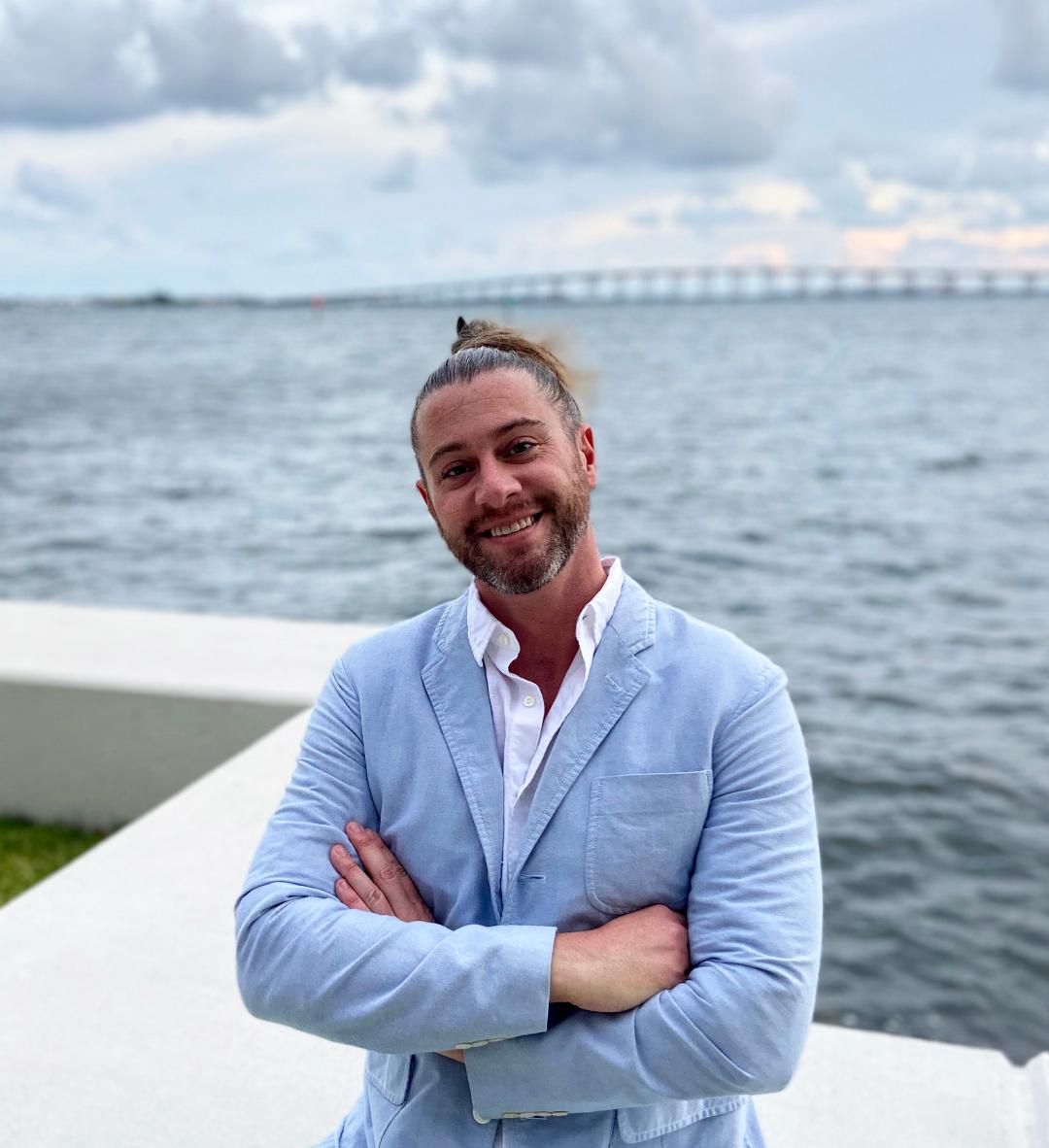
My name is Bob Lynch. I am a white guy from Irish immigrant descent who is running in a 90% Hispanic district. The Florida Democratic Party classifies districts like mine as "Minority Access" Districts. This means that the demographics of the district is a minority majority. None of the party leaders had a problem with me running because I am a relatively affluent straight White man. They did have a problem with Kathy Lewis running in a white majority Senate District (SD-20) but that is neither here nor there. Today's news about multiple polls showing that Joe Biden and Kamala Harris are underperforming with Latino voters in Miami-Dade County is disturbing, but it is not at all surprising. I have spent the last ten years of my life living in Spanish speaking countries. This includes Miami, which is largely known as the capital of Latin America. I speak more Spanish than English down here, whether it is with my neighbors, my friends, or the people who work at the grocery store in my neighborhood. The Republican Party pays people to work for them who are essentially hired assassins and sell outs. They are killing our state. It is easier to get an assault rifle than a Covid test. Florida Republicans are ruthless. But they speak Spanish... South Florida is an incredibly complex place. We have people from all over Latin America and Europe. We have major socioeconomic issues with the lower/working class constantly being taken advantage of by the upper class. This transcends race or ethnicity. The working class is quickly being priced out of town. The Biden Campaign is making the same mistakes that the Andrew Gillum and Bill Nelson campaigns made. Miami does not share a border with Mexico. We don't have a big Puerto Rican population like they have in the I-4 corridor. Yet the Democratic Party keeps trying to run their Latino outreach in Florida as if it is East L.A. or San Antonio. No es asi aqui. It is so incredibly frustrating knowing that the Republicans fund local Spanish language ads, during soccer games on Univision or Telemundo. Democrats just assume that everyone who speaks Spanish will vote for them because of DACA or Hurricane Maria or John Kelly being a racist piece of shit. I took the time to learn Spanish. It was one of the most rewarding experiences of my entire life. But it wasn't easy. I had to sit down and shut up and listen in order to learn. I’ve always wanted to go to some really cool places, Miami was one of them, so I had to learn how to communicate. Learning to communicate with people in their native language is just basic level human decency. Let's not complicate it. The fact that Rick Scott, Ron DeSantis, and Marco Rubio have been able to capitalize on this while Democrats in Florida keep losing is a complete embarrassment. We have to do better, which includes not taking some Latino voters for granted while completely writing others off. It means listening to the people in OUR community and treating them like real people. Not some monolithic voting bloc that exists solely in Nate Silver’s head. Miami-Dade county is the embodiment of America being a melting pot. Everyone has their own story. All you have to do is listen.
Texas: A Problem And A Solution, A Solution To A Problem Democrats Have Almost Everywhere
>
Before running for Congress to replace Rep. McCaul in TX-10, Mike Siegel was best known in Texas as the lead lawyer for the City of Austin in the statewide legal battle over Texas Senate Bill 4, a "show me your papers" anti-immigrant law passed after Trump took office in 2017. Mike recently announced the endorsement of Jolt Action, a powerful statewide organization devoted to engaging Latino youth in electoral politics. Yesterday, Mike told me that in Texas, "Democrats often say 'this isn't a red state, it's a non-voting state.' That's why my campaign is focused on broadening the Democratic base here in the Texas 10th, and the way we do that is by fighting hard on issues that matter most for each community. Texas Latinos are not monolithic; they include Democrats and Republicans, youth activists and older conservatives, Dreamers and socialists and moderates, too. But I earned the Jolt Action endorsement, and the endorsement of folks like Dolores Huerta and retired Texas Senator Gonzalo Barrientos, because I'm committed to doing the work, showing up and listening, engaging young people, opposing hateful attacks, and fighting alongside our Latino neighbors. That means we oppose the Border Wall and Family Separation and other racist policies; it means we fight for good jobs and universal healthcare and quality public schools; and we show that we as Democrats believe in solidarity, not just during elections, but every week of every year, whenever the community calls." I got an e-mail yesterday from Latino Decisions with an analysis Albert Morales did for the group. He begins with a statement that a debilitated DCCC should have figured out long ago-- "everything about how Democrats do GOTV-- not only in Texas, but nationally-- is flawed. My major conclusion was this: The outdated strategy employed by Democrats to de-prioritize registered voters with little or no vote history has a disproportionately negative impact for Latino turnout... [E]lectoral strategists are generally befuddled by what might be called the chicken-or-the-egg turnout mystery. Should Latinos become targets only after they’ve proven they will vote, or should they become targets precisely because they are registered yet rarely if ever vote? Put another way, does voting create a new target or does targeting create a new voter? To me, the answer is clear: It takes an egg to make a new chicken, and it takes targeting to create new voters. In Texas, confusion about this turnout puzzle limits Democratic electoral prospects in contests from the presidency down to sheriff races. If millions of Latino registrants on the rolls never get direct mail, phone bank calls or visits from paid or volunteer canvassers, how can we expect them ever to graduate from citizen to registrant, registrant to voter, voter to reliable voter, and reliable voter to reliable Democratic voter?"
[I]f Democrats are serious about flipping Texas or similar states they need a seismic shift in the way the party conducts Latino outreach. America is highly polarized. The share of true independents is dwindling, and both party coalitions get their news from divergent media sources. The Mark Penn-led era of clever swing voter groups-- soccer moms, office park dads-- is over. Mobilization, not persuasion, is king. Elections today thus turn on how well (or poorly) each side delivers its voters to the polls. Notice that Donald Trump’s campaign in 2016 invested few resources on persuading voters. Instead, the campaign executed a two-pronged, mobilization/de-mobilization plan: Ratchet up their highly-conservative base and suppressed turnout among black voters and other disaffected Democrats. Too few Democratic strategists understand these realities. How, exactly, do Democrats develop their targeting strategies? Let me answer that question by sharing from my own experience. Any Democratic operative who got her or his start in campaigns before the turn of the century surely remembers the party’s training manuals. They were the bibles of get-out-the-vote (GOTV) efforts. The scripture was simple and straightforward: Avoid knocking on the doors of voters with no vote history, and instead target reliable and consistent voters with whatever GOTV resources you had at your disposal, from door-hangers to phone banks. That’s how I was trained when I cut my teeth knocking on the doors more than two decades ago. Times and technologies have changed; organizers now carry tablets, not clipboards. But the premises and practices are largely unchanged. Unfortunately for Latinos, this targeting philosophy means Democratic campaigns too often fail to sufficiently reach them via direct mail, canvassing or phone banks. Indeed, countless polls and studies conducted by Latino Decisions show that Latinos report they are contacted by campaigns at much lower rates than white or even black voters. The 2018 election was no exception. With the 2020 election underway, organizers have more targeting tools at their disposal than ever. For those working in states that will make or break their candidates, contests can turn on the amount and type of resources invested to turn out low-propensity voters. A new philosophy is essential if Democrats ever hope to flip any state, but especially my home state of Texas. Four million undermobilized Latinos in Texas Nowhere is the mobilization problem more pronounced than in Texas, a state where 4 million Latino voters are on the sidelines including the nearly 400,000 minors who will turn 18 in time to vote in the 2020 presidential election. Trump carried Texas by roughly 800,000 votes in 2016. Texas has approximately the 1.6 million inactive-but-registered Latino voters. How does their inactivity matter? Put simply, their disfranchisement creates policy, political and even polling problems.
• POLICY. To cite just one prominent example, the muting of Latino voices results in passage of state laws like Texas’ SB4, otherwise known as the “show me your papers” law that targets the state’s Latinos. The law allows police officers to seek their legal status. In a recent focus group of low-propensity Latino voters, not one of the participants was aware of the bill Republican Governor Gregg Abbott signed into law. • POLITICS. Who counts is a self-fulfilling prophecy of perception. Sadly, the perception among too many campaign managers, most of whom are white, is that Latinos are less critical than other voting groups. Hence, when making campaign budget choices, the Latina field director’s field budget often gets sliced first. Less money is spent on Spanish Language TV, radio and digital buys. • POLLING. Pollsters use turnout among Latinos to dictate sample sizes. As LD’s Matt Barreto explained recently in the Washington Post, most mainstream pollsters severely under-sample Latinos and other people of color in Democratic primary polls.
And this doesn’t include the 2 million eligible-but-unregistered Latinos in Texas. What might registering and mobilizing mean for Lone Star politics? I focus on that question in next week’s follow-up post. A Flipped Script Two publications out this week echo my conclusions about the insufficient focus on unmobilized or undermobilized Latinos, in Texas and elsewhere. First, the Democratic Strategist distributed a list of every voter mobilization organization working on the center-left to find, register or motivate citizens to vote Democratic. Only three of the 34 listed organizations focus on Latino voters, and two of these are state-focused groups. Mi Familia Vota is the lone, national organization that specifically targets Latino voters. Second, The Atlantic’s Christian Paz published a deeply-reported piece on Democrats and their problems with Latino voters. After interviewing a number of activists and strategists, Paz concludes: “[S]ome of the Latino political organizers I spoke with described the primary season so far as a master class in ‘political malpractice’-- as one person phrased it-- with candidates struggling to engage Latino voters, address issues beyond immigration reform, and treat Latinos as the influential voting bloc they are. Others reported a lack of candidate interest in working with their organizations, including missed meetings and radio silence on questionnaires…There’s a real risk that if Democrats don’t sort out these issues soon, they could struggle to attract and mobilize what could be the largest minority voting bloc in 2020.” Latinos are the largest minority voter block. Here at Latino Decisions we estimate the Democratic nominee will only need 40 percent of the white electorate to win on Election Day. It behooves Democrats to recognize both of these facts. Luckily for House Democrats, Congressman Tony Cardenas, Chairman of BOLD PAC who inspired this thought piece, is leading by example. Cardenas has called upon Democrats to reach out to every registered Latino voter regardless of their vote history. Time is on our side, but it won’t be forever.
Mike Siegel isn't the only progressive Democrat running to flip Republican-held districts in Texas this year. You can see all of them by clicking on the Blue America Turning Texas Blue thermometer on the right. Roger William's gerrymandered 25th CD, which stretches from the suburbs south of Ft. Worth into the heart of Austin. One of the Democrats competing to take Williams on, Heidi Sloan, seems to have a similar perspective not just with Siegel but with Albert Morales of Latino Decisions as well. She told me that in her district "the Republican incumbent, Roger Williams, won his fourth term in 2018 by 26,000 votes-- but over 230,000 eligible voters were not mobilized to participate in the election. Democrats cannot win in Texas without expanding the electorate, and especially here it is crucial to target Latino voters. Our campaign brings enormous ground game to this District (our 600 volunteers have knocked 45,000 doors in just five months), and we are researching which parts of the District have Latino communities but low voter turnout to canvass. Democrats who have run in this district in the past have not prioritized these communities because they are not high-propensity voters, but our campaign understands that we must win their support to win this seat. We are stepping up to the challenge of reaching them with our block walking, sharing our vision that includes the most ambitious immigration proposals on the table as well as workers' rights and healthcare for immigrants, and motivating them to come to the polls with politics that impact their lives."
Bernie Needs More Support From His Contemporaries-- His Campaign Is Working On It
>
Adrian Pantoja is a Professor of Politics at Pitzer College and a senior analyst for Latino Decisions. Over the weekend, they released some new polling of Latino voters in California, who overwhelmingly favor Bernie for president. Pantoja wrote that "one of the primary ways to win the hearts and minds of young Latinos is by campaigning on issues that matter most to them." Bernie seems to have accomplished that.
This table lists the top ten policy issues for young Latinos in California. Pantoja pointed out that the ten top issues are important for all respondents, regardless of age but, what is distinct among young Latino voters is that the ranking of these issues differs. "For example, access to affordable housing is the most pressing issue for young Latino voters, while lowering health care costs is the most pressing issue for older Latino voters. Protecting immigrant rights ranks second among younger Latinos, while this issue ranks fourth among older Latinos. The relative importance of immigration issues may be due to the fact that 52 percent of young Latinos say they have a family member or close friend who is undocumented, while only 24 percent of Latinos 50 years and older know someone in that situation. The policy issues of young Latino voters relative to older Latino voters are more alike than different." Bernie's task now is to win over more older voters, not just Latino seniors but seniors across the board. Yesterday, Wall Street Journal reporter Eliza Collins took up the issue of Bernie's outreach to seniors. In Iowa, he was asking his most enthusiastic young followers to help him persuade their parents. "His campaign," she wrote "is coaching thousands of young supporters on how to talk to their parents and grandparents during the holidays.
“It’s up to us as students and young people to make the moral appeal to our older relatives to join us in voting for Bernie, because let’s face it: they won’t be around for as long to deal with the consequences of this election, but we will be,” reads a document titled “Students for Bernie: Family Persuasion Guide” that was sent out to nearly 3,000 students ahead of Thanksgiving. The campaign plans to do another push before the holidays later this month. Aides to Mr. Sanders, 78 years old, say he can win the Democratic nomination for president in 2020 if he is able to turn out a diverse coalition of young and working-class people who don’t typically vote in the primaries. But in recent months, these aides have also acknowledged that he needs to do better with older voters, a section of the electorate that has been more likely to go to the polls than their younger counterparts have been. A Quinnipiac University poll released Tuesday showed Mr. Sanders with 52% of support among Democratic primary voters under age 35, but just 2% with those over 65. By contrast, former Vice President Joe Biden won the backing of 47% of voters over 65 in that poll. Wall Street Journal/NBC News polling shows a similar trend. Mr. Sanders’s campaign manager Faiz Shakir said in an interview that the campaign has made more of an effort to focus on seniors in the past three months and hopes to peel off some voters who have been supporting other candidates. Urging young supporters to talk to older relatives about Mr. Sanders is an unconventional strategy. The campaign is also taking some more traditional steps. A six-figure digital ad buy in Iowa includes one spot targeting senior voters [up top]. The ad features Mr. Sanders speaking at a town hall in Des Moines about expanding Social Security benefits and capping the cost of prescription-drug prices. Aides to Mr. Sanders also say the $8 million they have put into TV advertisements in the states that have early primaries will help them reach seniors because they are placing the ads during shows that are popular with older audiences. Mr. Sanders’s campaign is airing most spots during the local news and network morning shows, according to data from political-ad tracker Kantar/CMAG. It is also buying time during the sitcom The Big Bang Theory, daytime talk programs The Ellen DeGeneres Show and Dr. Phil and the game show Family Feud. According to the Sanders campaign, 20% of the events he hosted in November were senior-focused. On the campaign trail, Mr. Sanders often says that Medicare for All, a signature policy, would cover home health care, hearing aids and eyeglasses. He rails against pharmaceutical companies ratcheting up the cost of prescription drugs. Winning older voters could be particularly key in Iowa and New Hampshire, states with older populations and the first two to vote in the nominating contest. Sixty-four percent of Democratic caucus-goers in Iowa in 2016 were over age 45. Fifty-nine percent of New Hampshire Democratic primary voters were in that age group, according to entrance and exit polling. Mr. Sanders has been visiting both states to try to shore up his support, and he has won over some senior voters. Judy Plank, a 76-year-old retiree from Le Mars, Iowa, said she liked Mr. Sanders because his age meant he had a wealth of political experience and because she has long supported the same issues he has. “We’re contemporaries, he’s a year older but we won’t let that bother any of us,” she said at a rally in November. She thought her peers who didn’t like him were just scared of new ideas, “and then they’re mad at him because they’re scared,” she said.
Many candidates-- though not the conservative ones, like Sttaus Quo Joe, Mayo Pete and Bloomberg-- have embraced Bernie's proposal for expanding Social Security, The Right To A Secure Retirement. There are 4 key components to his plan:
• Expand Social Security benefits for all recipients and protect pensions. • Guarantee home and community based long-term care services. • Protect our most vulnerable seniors by quadrupling funding for the Older Americans Act and expanding other programs seniors rely on. • Expand and train the direct care workforce we need.
Slashing drug prices is another piece of this that has widespread appeal to seniors, especially since Trump's bullshit promises in 2016 have amounted to nothing at all. In fact, the cost of medicine has increased. Bernie wrote that "In the United States, we pay the highest prices in the world for prescription drugs. This year alone the price of major prescription drugs have increased more than five times the rate of inflation with price hikes as high as 875 percent. While about one out of five Americans cannot afford to pay for the medicine prescribed by their doctors,10 big drug companies made $69 billion in profits last year and the top 25 CEOs in the pharmaceutical industry received $440 million in compensation in 2017. Seniors take an average of 4.5 drugs every month. For a senior taking brand name medications, the yearly price of those medications was more than $30,000 in 2017, more than most seniors’ annual income. Nearly a quarter of seniors with prescriptions have a hard time affording their medicine. Under Medicare for All, we will stop the pharmaceutical industry from ripping off seniors by making sure that no one in America pays over $200 a year for the medicine they need by capping what Americans pay for prescription drugs. This is exactly what exists in countries like the United Kingdom, Sweden and New Zealand. Under this plan, seniors will never experience another donut hole where they are forced to pay thousands of dollars for the life-saving medicine they need. We will also take bold action to take on the pharmaceutical industry by:
• Requiring Medicare to negotiate lower drug prices while maintaining access to all FDA-approved medications. • Cut drug prices by 50% by making sure the U.S. pays no more for prescription drugs than other major countries. • Allow patients, pharmacists and wholesalers to purchase lower-cost drugs from Canada and other countries. • Exercise federal march-in rights to manufacture drugs produced at taxpayer expense. • Require companies to disclose the costs of clinical drug trials.
"At a time when about half of American households over the age of 55 have no retirement savings and one out of five seniors are trying to live on less than $13,500 a year, our job is not to cut Social Security," wrote Bernie, who has been saying this for decades. "Our job is to expand Social Security so that everyone in this country can retire with the dignity they have earned and everyone with a disability can live with the security they need. Social Security is the most successful government program in our nation’s history. Before Social Security was signed into law, nearly half of seniors lived in poverty. Today, while much too high, the poverty rate for seniors is down to 9.2 percent. Through good times and bad, Social Security has paid every nickel owed to every eligible American-- on time and without delay. That is an extraordinary accomplishment. Despite what you may have heard from those who want to cut back on Social Security, let’s be clear: Social Security is not “going broke.” Social Security has a $2.9 trillion surplus and can pay every benefit owed to every eligible American for the next 16 years.
Although Social Security’s finances are strong, Congress must strengthen and expand it for generations to come. How do we do that? Simple. At a time of massive income and wealth inequality, the wealthiest Americans in this country must pay their fair share into the system. Today, a billionaire pays the same amount of money into Social Security as someone who makes $132,900 a year because the Social Security payroll tax is capped. Here's the plan that should have him in the number one spot among seniors, just as he is among Americans under 40:
• First, we will make sure that Social Security will pay every benefit owed to every eligible American for the next 52 years. • Second, we will expand benefits across-the-board including a $1,300 a year benefit increase for seniors with incomes of $16,000 a year or less. • Third, we will lift millions of seniors out of poverty by increasing the minimum benefits paid to low-income workers when they retire. • Fourth, we will increase cost-of-living adjustments to keep up with the rising cost of health care and prescription drugs by establishing a Consumer Price Index for the Elderly.
Our old friend, Valley Girl, sent me this video with a note. All I can say is that I agree with her assessment and I'm more than happy to share it with you. Valley Girl wrote that she "found this, saw that it was 26 minutes long, and inwardly groaned because I am flat out worn out. I wasn't sure I had the attention span for it. But I started watching, and the time flew past. I just couldn't stop watching it. There were no surprises here in what Bernie said. Bernie was asked sensible questions, not corporate media 'gotcha' questions. And it covered an effective array of topics, given the time limit. The interview was very well-paced, and that's why I just couldn't stop watching from it start to finish. I feel a whole lot less tired after watching!"
When asked about trade policies, I especially liked this response: "We're going to develop trade policies with the input of workers and farmers, trade policies that work for ordinary people, not just the CEOs of large... The function of trade is not just to make large corporations wealthier."
Many of the same people who saddled the Democratic Party in 2016 with Hillary-- very old ones-- are prepared to repeat the same mistake next year. No, Hillary isn't running. But she has a substitute for 2020: Status Quo Joe. You know who's not buying into the centrist bullshit? Young Latinos. A poll commissioned by Latino Decisions was filled with food news for Bernie-- and good news for America.
The balance of power among Latino voters is tilting toward younger voters. Every 30 seconds a Latino turns 18 years old and becomes eligible to vote. Indeed, the growth of the Latino electorate is largely driven by young citizens turning 18 and less by declining immigration from Latin America. The Latino Community Foundation and Latino Decisions directs our attention to young Latino voters by oversampling this population in a recent survey of California voters. The likelihood that young Latinos will vote is frequently doubted. This may be one of the reasons candidates and parties typically target voters that are older, more educated and affluent. Despite this perception and inattention by campaigns, the results of the survey show that 70 percent of respondents between the ages of 18 and 39 said they plan to vote in the March 2020 primary. These figures are consistent with other research by The Latino Community Foundation which found 68% of registered Latinos in California voted in 2016.
Other survey questions also show a high degree of political interest and engagement among young Latinos. Nearly 40 percent said their interest in politics has increased since Trump became president and 71 percent said they read and watch news about politics and current affairs “somewhat” to “very often.” Finally, 84 percent said they are planning to complete the U.S. Census form in 2020, despite efforts on the part of the Trump administration to discourage such participation. Understanding the power and future direction of the Latino electorate requires us to focus on the values, beliefs and behaviors of young Hispanics. We focus on California because the state will pay a pivotal role in the Democratic primary and the state is home to the largest concentration of Latino voters, making them decisive players in that outcome. Our data suggests candidates should pay closer attention! The political power is shifting toward young Latino voters in California.
Support from younger Latinos in California, who tend to be very progressive, is so strong and so firm that the latest polling shows Bernie winning the most votes in that crucial Super-Tuesday state.
Watch Trump's Reelection Campaign Circle The Bowl-- And Drag The GOP Down With It
>
Don't Be So Sure by Chip Proser
In the August IBD/TIPP poll of registered voters, which closed before the Trump supporter massacred 22 people in an El Paso Walmart and before China signaled they had stopped buying America agricultural products-- a signal that there is likely to be a depression in the farm belt next year-- Trump's job approval dropped from 43% to 40%. The poll shows, Status Quo Joe (54-41%), Bernie (50-45%), Elizabeth Warren (49-45%) and Kamala (47-45%) all beating him. Meanwhile, Latino Decisions poll was also just released. First of all...
They pollsters asked respondents who they would vote for if the election were held today:
Arizona
• Trump: 14% • Democrat: 65%
California
• Trump: 18% • Democrat: 67%
Florida
• Trump: 29% • Democrat: 53%
Nevada
• Trump: 22% • Democrat: 59%
Texas
• Trump: 20% • Democrat: 62%
NATIONAL
• Trump: 21% • Democrat: 62%
There are a number of things working to bring Trump's numbers down further. First among Latinos-- the NY Timesreported Monday night that "Trump’s re-election campaign has harnessed Facebook advertising to push the idea of an 'invasion' at the southern border, amplifying the fear-inducing language about immigrants that he has also voiced at campaign rallies and on Twitter. Since January, Mr. Trump’s re-election campaign has posted more than 2,000 ads on Facebook that include the word 'invasion'-- part of a barrage of advertising focused on immigration, a dominant theme of his re-election messaging." The ads target white nationalist types and the result is what we saw in El Paso over the weekend. Then in rural America, a major Trump base of support, a depression is looming because of Trump's trade war and unbelievably inept negotiating skills. After Trump's threats to put another 10% tariff on $300 billion of products from China, China stopped buying U.S. agricultural goods. Kate Rooney reported for CNBC that farmers in Iowa, Kansas, Nebraska, Missouri, Minnesota, Indiana, Illinois, Ohio, to name a few states, would have to find new customers... pronto. Only Mexico, Canada and Japan buy more American agricultural products than China, worth $5.9 billion annually. The Minister of Commerce announced that China was "suspending" purchases of American grain and other products and blamed Trump.
China is one of the largest buyers of U.S. agriculture. Bloomberg News reported that Beijing may stop importing them completely in response to new tariffs by the United States. According to reports by Chinese State media, it would also consider slapping tariffs on U.S. agricultural products that it already bought. Those stories helped exacerbate fears on Wall Street pushing stocks to their worst day of the year. Now that China has confirmed the reports, it could add to pressure on equities. Stock futures fell Monday, implying a 480 point drop Tuesday. U.S. farming has been a hot-button issue in the ongoing trade war. The president said that he had secured large quantities of agricultural purchases when he met with President Xi Jinping at the G-20 summit in June. Trump later accused China of not following through, leading him to announce on Thursday 10% tariffs on the remaining $300 billion in Chinese imports. China, which has historically managed its currency, let the yuan break to its lowest level against the dollar in more than 10 years on Monday. The Treasury Department labeled China as a currency manipulator on Monday evening, following tweets by the president with that same accusation. “This is a major violation which will greatly weaken China over time,” Trump said. Later in the day, he tweeted that it is “now even more obvious to everyone that Americans are not paying for the Tariffs-- they are being paid for compliments of China, and the U.S. is taking in tens of Billions of Dollars.”
And a third crisis for the GOP-- obviously of their own making-- is the box they find themselves in over gun violence and domestic terrorism. This morning, reporting for Bloomberg News, Sahil Kapur wrote that Republicans "Fear Extinction In The Suburbs" Over Gun Control. "After two gruesome mass shootings in a 24-hour span," he wrote, "some Republicans are raising alarms that their opposition to new firearm limits is making the party toxic to the suburban women and college graduates who will shape the 2020 election.
“Republicans are headed for extinction in the suburbs if they don’t distance themselves from the NRA. The GOP needs to put forth solutions to help eradicate the gun violence epidemic,” said Dan Eberhart, a Republican donor and oil-and-gas executive who supports President Donald Trump. Last year, Eberhart said, he was having lunch with Rick Scott when the then-Florida governor learned of the massacre unfolding in Parkland. It marked the deadliest high school shooting in U.S. history, as a gunman used an AR-15-style rifle to kill 17 people. Eighteen months later, as the country reels from killing sprees in El Paso, Texas, and Dayton, Ohio, Eberhart said it’s time to join Democrats and majorities of Americans who want to ban those types of guns. “The GOP needs to make several moves such as universal background checks, eliminating loopholes and banning military-style assault weapons to neutralize the issue,” he said. “Otherwise, Republicans will lose suburban voters just like they did in the midterms on health care.” While most Republicans have opposed expanding background checks and banning assault-rifles, GOP Senator Lindsey Graham said Monday he cut a deal with Democratic Senator Richard Blumenthal on “red flag” legislation to assist and encourage states to keep guns away from people who are found to pose an imminent risk of violence. Many Democrats said that wasn’t enough and called for a renewal of the assault-weapons ban and universal background checks, among other measures. The 2018 election reflected a changing landscape on guns. Republicans were swept out of the House majority after losing suburban bastions where they were once dominant-- in places like Orange County, California, and around Dallas and Houston in Texas. Voters in 2018 favored stricter gun control by a margin of 22 percentage points, and those who did backed Democrats by a margin of 76% to 22%, according to exit polls. Gun policy ranked as the No. 4 concern, and voters who cited it as their top issue voted for Democrats by a margin of 70% to 29%. And the mood has changed since 2016. The gun issue propelled Trump in key states like Florida, Ohio, North Carolina and Pennsylvania among voters who opposed Democratic nominee Hillary Rodham Clinton’s support for gun control, said Republican strategist Brad Todd, whose firm polled on the issue. Todd said swing voters may still “see upsides and downsides to both approaches” on gun policy. There have been 255 mass shootings so far this year, according to the Gun Violence Archive, which counts incidents where at least four people were shot or killed, not including the shooter. With the presidential election 15 months away, it’s unclear just how salient the issue of guns will be in shaping voter behavior. The renewed debate captures a dilemma for Trump as he revs up his re-election campaign with appeals to rural Americans steeped in a rich gun culture. But he risks alienating upper-income suburbanites, who can make or break his prospects, if he’s seen as unwilling to take action to stop frequent mass shootings. All of the major Democratic candidates are running on gun control measures, including tougher background checks and banning assault weapons, setting up a stark contrast with Trump. “Every time the country experiences a tragedy of this nature the Republican brand takes a hit,” said Carlos Curbelo, a Republican former congressman who lost his suburban Miami-area district to a Democrat in 2018. “Because many, many Americans perceive that Republicans are unwilling to act on gun reform, due to the influence of the NRA and other organizations.” “Certainly in swing suburban districts there is broad support for” policies like universal background checks and 72-hour waiting periods, Curbelo said. “A lot of voters, especially young voters, have lost their patience with this issue.” A Marist poll last month, commissioned by NPR and PBS, found that 57% of American adults support banning “the sale of semi-automatic assault guns such as the AK-47 or the AR-15,” while 41% oppose it. Support for such bans was 62% among suburbanites, 74% among women in the suburbs and small cities, and 65% among white college graduates. But the survey found broad opposition to banning semi-automatic assault weapons among the core elements of Trump’s coalition-- 67% among Republicans, 67% among conservatives, 65% among white men without college degrees, and 51% among rural Americans. The party’s longstanding opposition to gun control is a product of party leaders working to consolidate single-issue firearm owners voters who reliably turn out in elections and tend to view any new restrictions as a threat to their Second Amendment rights. It explains why most Republicans oppose even modest measures like universal background checks, which received 89% national support in the Marist poll, including large majorities across all demographic and party affiliations. The NRA opposes that proposal, too. “The NRA is committed to the safe and lawful use of firearms by those exercising their Second Amendment freedoms,” the NRA said in a statement Sunday, adding that it “will not participate in the politicizing of these tragedies” but will work to pursue practical solutions. Earlier this year, eight House Republicans from suburban or competitive districts voted with Democrats to pass a bill that would impose background checks on buyers for gun sales considered private, which are not currently required by federal law. But Senate Majority Leader Mitch McConnell, a Kentucky Republican, has refused to consider the bill, and Trump has threatened to veto it. In a statement Monday, Trump denounced the “twisted” killers over the weekend and called for new “red flag” laws to keep firearms away from people found to be dangerous. He blamed the internet, social media and violent video games for pushing people toward violence, though he suggested easy access to guns wasn’t the problem. “Mental illness and hatred pulls the trigger, not the gun,” he said.
Irony? Take my word on this one-- he isn't capable of it.
Hispanic Voters Could Be A Strong Part Of The Democratic Coalition... With Some Real Work
>
Latino Decisions surveyed Latino registered voters in Florida, Arizona and Nevada for a new memo released by Priorities USA this week. They will likely be an Anti-Trump bulwark in all three states, but could provide the Democrats with a much bigger share of the votes, if the Democratic Party were to magically come alive and start acting something like a political party. As Bob Dylan said, decades ago when he looked into the future and saw the way Pelosi, Hoyer and Schumer would be running the Democratic Party: "He not busy being born is busy dying." In many places the Democrats haven't done enough to bring Hispanics into the party. There're still, for example, congressional districts with huge Hispanic pluralities-- even majorities-- with Republican congress members. Republican Will Hurd represents a huge south Texas district where 70% of the population is Hispanic. Last year the Democrats nominated a non-Hispanic candidate (with a Hispanic name) and she lost, so the DCCC is trying to fix the primary so they can run her again this cycle. The DCCC has never run a serious campaign against Mario Diaz Balart, whose south Florida district is 71% Latinx, Devin Nunes (CA- 47% Latinx), Paul Cook (CA-39% Latinx) or Dan Newhouse (WA-38% Latinx). Last year none of them had serious candidates with serious DCCC support. So far this year, it looks like mastermind Cheri Bustos is planning a redux. Diaz-Balart has no announced opponent. The DCCC recruited another sure loser, Phil Arballo, against Nunes. They are ignoring Cook's and Newhouse's districts again. Newhouse has no opponent at all and Cook's opponent, Chris Bubser, is running on a cut and paste DCCC platform that won't, move any needles for anyone.
Diaz-Balart con Don the Con-- shouldn't this be a kiss of death?
The report begins with a ritual statement about how "Latino voters will make up an increasing share of the electorate in 2020" and then warns that "while they predominantly support Democrats over Trump, there is a significant amount of work to be done. Health care and immigration are the top issues for Latino voters in Florida, Arizona and Nevada, but Democrats must conduct significant outreach to engage voters on the specifics of Trump’s policies to fully take advantage of the salience of the messages available to us, particularly on economic issues. While views on the strength of the economy are generally positive, a majority of voters surveyed in all three states said they do not believe they benefit personally from Trump’s economic policies. Trump’s immigration policies are deeply unpopular with the Latino communities in these states, and can be seen as emblematic of his larger racist and divisive message that, not surprisingly, is toxic with Latino voters." In other words Democratic Party "support is somewhat soft, with one-third falling into the lean or undecided categories... [M]ost are hesitant to say they would consider supporting Trump [but] those that do feel that protecting jobs and the economy are the top reasons they might consider voting for him."
While the effectiveness of health care and other economic messages are similarly strong among Latino voters as across all battleground voters, it is a strategic imperative to make the messaging and creative culturally competent and relatable to the diversity of experiences within the Latino community. ...Cuban origin voters in Florida are a consistent outlier, the only Trump-friendly segment: 43% certain Trump, and 11% lean Trump. Still, 41% of Cubans in Florida are planning to vote for the Democrat in 2020, and another 5% are undecided. ...Message testing [across all 3 states] found that protecting Medicare and Social Security were especially important and motivating across all states and population segments, as were other messages that focused on economic issues. ...It is imperative that Democrats do not allow Trump to continue to define his record on economic issues without holding him accountable for policies that have hurt many working and middle-class Latinos financially. Even among these Democratic-leaning voters, there is a perception that the economy is moving in the right direction (60% in Florida, 50% in Nevada, and 41% in Arizona), and Trump gets stronger approval on his handling of the economy (58% approve in Florida, 43% in Nevada, and 35% in Arizona) relative to his overall approval. Those favorable impressions are important to note because protecting American jobs and overseeing a successful economy are the most compelling reason these voters would consider supporting Trump. This is especially true for Latinos in Florida (50%), Nevada (40%), and persuasion voters (50% in Florida, and 43% in Arizona and Nevada).
Despite these openings for Trump, the majority do not believe his economic or tax policies provide any personal benefit: 59% in Florida, 67% in Arizona, 60% in Nevada, and 61% of persuasion voters in all three states said they did not benefit at all from Trump’s economic policies. They sense they are left out of the economic growth taking place in the country. They’ve heard that Trump’s tax cuts benefited the already wealthy and corporations (52% Florida, 63% Arizona, 61% Nevada) and that he uses his office to enrich himself and his friends. It is also true that generic economic performance measures have little traction relative to more day-to-day personal finance/economic realities. At rates of 70% and above, Latino voters tell us that wages not keeping up with the cost of living is more important to them than stock market performance or job indicators. Concerns about health care are largely tied to economic concerns. The top cited personal economic concern that Latino voters “worry about a lot” is out-of-pocket health care costs. In Florida and Arizona, 45% worry a lot about prescription drug costs too. The rising costs of health care have made other personal expenses more difficult to manage (saving for retirement, paying for education, etc). Other health care-adjacent issues also pose significant worry, including ability to handle an emergency expense and keeping up with basic expenses. And, as noted at the outset, the most motivating message was the appeal to protect Medicare, Medicaid, and Social Security. Democrats must ensure that Latino voters are hearing about Trump’s disastrous health care record, especially through paid media. Only 49% in Florida (51% among Florida persuadables) have heard that the changes to the health care system Trump will advance could cause millions to lose coverage and end protections for preexisting conditions. The rates are higher in Arizona (59%) and Nevada (56%), and with persuasion voters in the West (56% Arizona and Nevada persuadables). More awareness on this issue could pay off significantly given the importance of health care costs, and their responsiveness to messaging on it.
Among Latino registered voters in Arizona, 77% are certain or leaning towards voting Democratic. That number is 71% in Nevada. But just 57% in electoral vote-rich Florida, primarily because of weak numbers among Cuban-Americans (41% certain or lean Democratic and 54% certain or lean Trump). This ad that started running today looks like it would be helpful:
Older Hispanic voters tend to be among the most patriotic voters in America. The survey shows they respond strongly-- negatively-- to Trump's authoritarian nature. The OpEd yesterday by John Podesta in the Washington Post, The Mueller Report Paints The Most Unpatriotic Portrayal Of A Presidential Candidate-- Ever might be a good one to translate and circulate widely in Latinx communities.
The raw partisan divide cleaving America and constantly worsened by President Trump is almost certain to be on full display Wednesday, when Robert S. Mueller III appears on Capitol Hill. The House Judiciary Committee, followed by the House Intelligence Committee, will hear Mueller’s testimony about the findings in his special counsel report on Russian interference in the 2016 presidential election. Committee members on both sides of the aisle will have to contend with an inescapable conclusion from a fair reading of the report: The Russian attack would not have worked-- and perhaps would have been over before it really got started-- if not for Donald Trump’s enthusiastic encouragement and amplification of it. While much will be made about the legal standard to prove specific conspiracies beyond a reasonable doubt, it’s clear that every step of the way, Russia was looking for green lights, and at every step of the way, the Trump campaign provided them. An unequivocal bipartisan rejection of Russian outreach and attacks in 2016 might have left Russian President Vladimir Putin with no incentive to go forward. But, as the Mueller report shows, Trump encouraged the interference: The Trump campaign “welcomed” it and “expected it would benefit electorally from information stolen and released through Russian efforts.” Even beyond that, had both candidates and both parties agreed to banish from the campaign trail material illegally hacked by a foreign adversary, especially after its Russian origins were confirmed, coverage of and interest in the hacked material certainly would have taken on a different tenor. Instead, Trump himself mentioned “WikiLeaks” 164 times in the last month of the campaign, even after the U.S. intelligence community publicly identified the hacks and leaks as a Russian active-measures operation. All along, Trump deflected blame from Russia and excused the hacking, making a unified American response all but impossible. The Mueller report represents the most damning portrayal of unpatriotic behavior ever compiled about an American candidate for president-- and only then does it go on to detail a shocking pattern of obstruction of justice that more than a thousand former prosecutors say would have led to the indictment of anybody not holding the office of the president. While this full accounting of the past is important, the most profound urgency of the Mueller report and his testimony concerns the present and the future. Just a few weeks ago, at the Group of 20 meeting in Osaka, Japan, the world watched as Trump joked about Putin’s attack on American democracy, mock-scolding the Russian leader not to do it again. It was the sort of display that has become familiar, going back to 2015, when Trump appeared to excuse the murder of journalists critical of the Putin regime (“Well, I think that our country does plenty of killing, too”). Then there was Trump’s humiliating joint news conference with Putin in Helsinki in 2018 that left even his most reliable defenders disgusted. When Trump said last month that if a foreign government offered dirt on his 2020 opponent he would “take it,” that was a green light for Putin and other potential malefactors. Yet only weeks earlier, the president’s own Pentagon leadership had approved for public release a sobering report, “Russian Strategic Intentions,” that amounts to a postscript to the Mueller report. In what can only be read as a scathing indictment of Trump’s behavior over the past three years, the report condemns “the unwillingness of Western experts and governments to confront the ideological-- as well as political and military-- aspects of our rivalry with Putinism.” The report also says that “Putin’s worldview is zero-sum, so it’s hard to imagine a win-win scenario. For Putin to win-- to look ‘great,’ the U.S. has to lose.” Putin himself confirmed that outlook in his own words last month, crowing in an interview with the Financial Times that Western democracy has become “obsolete” and “outlived its purpose.” Putin’s actions in 2016, exposed in great detail by the Mueller report and the indictments of Russian operatives, were an attack on American democracy-- and not just in the sense that Russia’s illegal hacking of Trump’s opponents and social media disinformation campaign were meant to alter the outcome. They were an attack on democracy as a concept, an attempt to destroy the American public’s faith in fair elections that had served, on the world stage, as an implicit rebuke to Putin’s autocratic rule. That attack is not over. In April, Trump’s FBI director, Christopher A. Wray , described Russian cyber-aggression as “not just in an election cycle threat. It is pretty much a 365 day a year threat.” That’s why Mueller’s testimony is so vital. He can provide guidance on how Russia operates and how to prevent further attacks. But Americans must face the truth: Trump, in broad daylight, has encouraged the destruction of the nation’s fundamental democratic institutions, and he continues to do so.
EXTRA: Another Republican Congressman Bites The Dust Pete Olson announced his retirement this afternoon. His district-- TX-22-- was an already targeted seat. Although the DCCC foolishly ignored it in 2018, Hillary had improved on Obama's performance by almost 8 points. Trump beat her 52.1% to 44.2%. Last year, the Houston suburbs were unexpectedly unfriendly towards Trump and the GOP and Olson's share of the vote fell, especially in Fort Bend and Harris counties. The R+10 district had been consistently delivering him wins in the mid- to high 60s. And then 2018 and the anti-Trump wave appeared. Olson still won but with just 51.4% of the vote. This used to be a very white district. When Olson was first elected, the population was a bit over 60% white and about 20% of the residents were Latino. Now the district is much more diverse-- and the kind of majority minority district Republicans are finding it harder and harder to win in:
So, suddenly Olson's 97% Trump adhesion score was an albatross around his neck. He was forced to spend $1,921,992 (more than he raised) to hold onto his seat as newcomer Sri Kulkarni (D) threw $1,539,576 into his campaign. Neither the DCCC nor the NRCC spent any money in the district. This year it looked like a lot of money is being set aside for this district (by both party committees), which starts the suburbs south of Houston, includes Pearland and Alvin and then twists west to Sugar Land, Brazos Bend State Park, past Rosenberg and almost as far as East Bernard in Wharton County. Olson had already raised $635,183 and spent $221,320 this year and Kulkarni had raised $415,249 and spent nearly $100,000. Both Olson and Kulkarni have primary opponents.
It's Not Heidi Heitkamp's Party To Leader Any Longer
>
Heidi and Trumpanzee
On a recent episode of the NY Times podcast, The Daily, Alex Burns interviewed former Senator Heidi Heitkamp. Whether you call what happened in 2018 a blue wave-- in which case you'd be wrong-- or an anti-red /anti-Trump wave-- in which case you'd be correct-- Heitkamp lost her seat while dozens of other Democrats were winning. Kevin Cramer beat her 179,720 (55.1%) to 144,376 (44.3%), although she outspent him massively. Her own campaign raised $31,025,854 to his $5,947,202 and outside spending was about even for the two candidates. Heitkamp was on with The Daily, sharing her wisdom on how Democrats can win in 2020 by turning towards the right, the way she did. She had one of the 3 or 4 worst voting records of any Democrat in the Senate, often betraying anything that would be recognizable as progressive or even Democratic. And she lost-- badly-- but she still thinks she gets to urge Democrats to do what she did-- and for some reason, corporate media thinks it's splendid having her dispense her opinions which have been proven so wrong. And, she's very aggressive about her own lameness. She claimed that Democrats backing progressive policies "make the Republicans very happy. That's because she's an idiot who thinks that because she was a senator, she knows what she's talking about. She doesn't; she's clueless. Her self-proclaimed expertise is about elections in rural America. She won just 12 of North Dakota's 53 counties... and two of them were the only urban counties in the state Grand Forks County and Fargo County. Her conservatism didn't help her in the rural counties. The rural counties she did win were the super-blue Indian reservation counties. But she feels that the progressive ideas which are so popular-- from Medicare-For-All to making the wealthiest Americans pay their fair share of taxes-- kill the Democratic chances. She's so utterly un-self aware that she doesn't realize she might have actually held onto her seat if she had backed those ideas instead of disparaged them. She as far from the New Deal ideas on which the Democratic Party is built as you can be and still even remotely call yourself a Democrat. She whined and whined about Democrats not paying attention to rural voters, but I sincerely doubt she's ever considered reading Bernie's platform for rural America. Yesterday someone with a more pertinent electoral vision, Belén Sisa, wrote about why Bernie is the right candidate for the Latinx community-- and why she's working for his campaign. "As a young activist," she wrote, "one of the first chants I learned was 'Sí se puede'-- yes we can. Simple, yet powerful, the chant (adopted by Barack Obama) was in fact coined by Dolores Huerta and César Chávez, the leaders of the United Farm Workers movement. Huerta and Chávez organized poor Mexican and Filipino farm workers into unions and led boycotts for better pay and working conditions. Chávez and Huerta’s accomplishments are now celebrated as inspiring, but what many don’t remember is that the people behind the United Farm Workers movement were once villainized as 'radical communists.'"
Over the course of history, Latinos and Latinas who have fought for substantive equality have been labeled as radicals again and again. To name a few: we’ve had heroes like Emma Tenayuca, who most notably lead the 1938 Southern Pecan Shelling Company worker’s strike, and Luisa Moreno, who worked to unify Spanish-speaking communities in New York and organized her female coworkers into a Garment Workers Union during the Great Depression. Those attacks were intended to smear freedom fighters and derail the fight for equality. It didn’t work then, and it won’t work now. The desire for true economic freedom is what drives movements like these to deliver victories for the working class around the world. In 1965, farm workers were paid 90 cents per hour with an additional 10 cents per bucket they picked. Along with these unlivable wages, the workers were subject to inhumane work conditions with little to no access to water, no toilets, and race-segregated housing. Workers paid two dollars or more per day for mosquito infested unheated metal shacks that had no indoor plumbing or cooking facilities. What César Chávez understood is that getting people involved in direct action could change politics. He believed that liberty for his community would only come if workers owned a piece of their workplace and had decision-making power. The Farm Workers Credit Union provided loans to workers when banks denied them. Instead, the banks financed the big farm owners who were exploiting their workers in the fields. By pulling together their resources as a community, workers were able to sustain themselves through the winter months and into summer months when they went on strike. Solidarity gave them freedom and autonomy to fight for their economic and human rights. Huerta and Chávez were not alone. The Brown Berets helped lead the fight against police brutality, bad school conditions and a racist educational system in East Los Angeles during the 1960s and 1970s, putting free programs in place to help their communities. The Brown Berets, a Chicanx liberation group, founded El Barrio Free Clinic in response to pressing issues facing the Mexican American community, like the lack of access to affordable healthcare. The clinic was operated by an all-volunteer staff and helped low-income families who could not afford to see primary doctors near them. The community came together to ensure that all people, even those with limited resources, had quality healthcare and giving them true economic freedom from healthcare bills. Sadly, we still face many of the same disparities as the movements before us. Healthcare in our country has not become more accessible. In fact, nearly 1 in 5 Latinos in the United States are uninsured, which makes Latinos the largest uninsured ethnic group in the country. Currently, organizations like Mijente, Movimiento Cosecha, and RAICES are spearheading people-owned and powered services to help our community with legal fees, housing, and legal services at no cost in the fight for justice. Latinx workers, disproportionately working in minimum wage jobs, are still fighting for a living wage, the right to unionize, better working conditions, and basic benefits like paid time off and family, sick, and maternity leave. So when we hear Senator Bernie Sanders saying that everyone living in this country should be able to receive free-at-point-of-service health care (regardless of immigration status), that’s revolutionary. When we see him say we should raise the minimum wage to $15 dollars and confront Walmart to allow workers to own part of the company they work for, we are seeing someone who is standing with working class people in this country by calling out the greed that has kept too many of us poor without the economic freedom to thrive. Our campaign is talking about a government by the people, for the people, to help the people-- and that’s why those in power are using the same old scare tactics they’ve used against every person in our country’s history who has fought to do good for all people rather than for their bottom line. True economic and social freedom is realized by empowering people, not big government or big corporations. We elect our legislators to protect and expand our economic rights. Now it’s up to us to hold them accountable. Now more than ever, in the face of right-wing nationalism and our rapid movement towards oligarchy, we must stand up and remind this country that our victories have always been driven by people power. It’s time to come together for the good of all-- just like our forebears did for the rights we enjoy today. César Chávez and the Farm Workers Credit Union, the Brown Berets and their community health centers, Martin Luther King Jr. and the Poor People’s Campaign: our country is replete with examples of heroes that made a difference. Now it’s up to us to make this country a place where all of us have the economic and human rights we deserve. It’s going to take all of us coming together to create a country where all of us can thrive, not just a wealthy few. When we think about who to vote for, we should choose the candidate who has been amplifying and supporting our fight for worker’s rights, by walking with workers on picket lines and trying to ensure a dignified life for all regardless of immigration status, income, race, or gender. I believe that candidate is Bernie Sanders.
By the way, every poll I've seen that measures support for the primary candidates by ethnic demographic, shows Bernie leading among Latinos They seem to understand this better than other groups do:.

 I took the time to learn Spanish. It was one of the most rewarding experiences of my entire life. But it wasn't easy. I had to sit down and shut up and listen in order to learn. I’ve always wanted to go to some really cool places, Miami was one of them, so I had to learn how to communicate. Learning to communicate with people in their native language is just basic level human decency. Let's not complicate it.


