Election Reflections-- Blue Dogs, Schumer, Texas, Florida... You Want To Know What Went Wrong?
>

Anthony Brindisi (NY) and Joe Cunningham (SC) were elected to the House in the 2018 anti-red wave-- just when Blue Dog chairwoman Kyrsten Sinema graduated to the Senate. Sinema was the worst Democrat in Congress-- by far. She voted against anything and everything that smacked of progressivism. She voted with the GOP on progressive roll calls around 75% of the time. Now she's the worst Democrat in the Senate, although we'll soon see if Frackenlooper gives her a run for her money.
Back in the House, Brindisi and Cunningham spent the last two years see-sawing back and forth for the #1 and #2 worst Dems. Both are virulent Blue Dogs with ghastly voting records that could only be analyzed in one way: Republican. At the moment, Cunningham's record is slightly worse-- 76.54% against progressive initiatives, while Brindisi "only" voted against progressivism 75.31%. None the less, Pelosi and Bustos decided to waste $4 million trying to save Cunningham and $5.5 million trying to save Brindisi. Two of the GOP's best friends inside the Democratic caucus-- but especially Brindisi-- spent their time whining about how if anything progressive was brought to the floor for a vote it would doom their reelections.
Cunningham was defeated by Republican Nancy Mace (having out-spent her by $2 million) 216,042 (50.6%) to 210,627 (49.4%). It looked like Brindisi would be joining him in the losers' column-- and he still may-- but... yesterday Syracuse.com reported that Brindisi has surged back into contention, winning the absentee count 73-27% (25,998-7,787)... Brindisi has now cut Tenney’s lead to 10,294 votes, down from 28,422 votes on Election Day. There are at least 20,000 ballots remaining to be counted across the district. Brindisi will have to win at least 77% of those ballots to overtake Tenney." That's a steep hill to climb but it isn't impossible that Congress will be stuck with Brindisi and his whining for two more years.
Let's flip back to the Senate for a minute-- although the DCCC operates exactly like to DSCC-- and take a look at a post from July by Andrew Perez, with the benefit of hindsight-- Senate Democrats’ Machine Spent $15 Million To Destroy Progressive Primary Candidates. Short version: "The Democratic establishment has successfully blocked progressive Senate candidates in primaries, with the help of labor unions, Wall Street tycoons and corporate interests."
Now that the Schumer and the DSCC have managed to confound every pollster and lose the Senate again, it's worth looking at how they undermined every single progressive who tried to run-- spending $15 million in the process during the primaries. They hate progressives and fear them more than Republicans, who they have much more in common with.
While Schumer's DSCC hand-puppet, Catherine Cortez Masto (NV) promised last year that the DSCC would support progressive incumbent Ed Markey if he faced a primary challenger, they reneged entirely when he was challenged by a far less progressive Rep. Joe Kennedy III. Although a SuperPAC set up by Kennedy, the New Leadership PAC, spent $4,126,114 bolstering him, neither the DSCC nor Schumer's slimy Senate Majority PAC, spent a nickel helping Markey. Instead, they spent millions helping very right-wing Democrats like Frackenlooper to defeat progressive former Colorado House Speaker Andrew Romanoff. "In the final weeks of the race," wrote Perez, "SMP spent $1 million to boost Hickenlooper, after he spent his failed presidential campaign attacking key tenets of progressives’ legislative agenda, including Medicare for All and the Green New Deal. At the time of the cash infusion, Hickenlooper was losing ground in the polls and engulfed in scandals: He had just been fined by Colorado’s Independent Ethics Commission for violating state ethics law as governor, the local CBS station uncovered evidence of his gubernatorial office raking in cash from oil companies, and a video circulated showed Hickenlooper comparing his job as a politician to a slave on a slave ship, being whipped by a scheduler."

Some major donors have financial stakes in current and future legislation.The final polls and final predictions showed Sara Gideon, Theresa Greenfield and Cal Cunningham beating, respectively, Collins, Ernst and Tillis. Instead the 3 Republicans are returning to the Senate. Gideon's share of the vote was a pathetic 42.7%, Greenfield's was 45.2% and Tillis' was 47.0%. The DSCC and Schumer's PAC spent ungodly amounts, as did the Democratic candidates.
For instance: SMP received a $1 million donation from billionaire Jonathan Gray, an executive at Blackstone, which owns the hospital staffing chain, TeamHealth. SMP also received $2 million from the Greater New York Hospital Association.
In late 2019, Schumer helped stall Senate legislation that would have kept patients from receiving “surprise medical bills,” the hefty charges that occur when they visit hospitals that are in their insurance network but are unknowingly treated by providers who are considered out-of-network.
SMP is affiliated with Majority Forward, a dark money group focused on attacking Republican Senate candidates. Majority Forward received $450,000 in 2018 from pharmacy giant CVS Health-- which also owns health insurer Aetna. The group also received $300,000 from the American Health Care Association (AHCA), a trade association that represents the nursing home industry.
The Democratic primary candidates backed by the DSCC have expressed reservations about Medicare for All, arguing they believe people should be allowed to keep their private health insurance if they want it. Many of the DSCC’s favored candidates do support creating a public health insurance option.
Meanwhile, the Real Estate Roundtable, a trade group for real estate investors, donated $50,000 to Majority Forward. Schumer and Senate Democrats recently helped Republicans unanimously pass pandemic relief legislation that included a special, little-noticed provision that amounted to $170 billion worth of new tax breaks for wealthy real estate investors.
In addition to the Colorado race, SMP has waded into at least three other Senate primaries this year.
In North Carolina, SMP funded Carolina Blue, a super PAC that spent $4.5 million to help veteran and former state senator Cal Cunningham win the primary in March. Cunningham handily defeated his chief opponent, state senator Erica Smith, who was running to his left...
In Iowa, SMP spent nearly $7 million to promote real estate developer Theresa Greenfield. She easily bested her two primary opponents, including progressive Kimberly Graham, who campaigned in support of Medicare for All and the Green New Deal.
SMP has already spent more than $2 million in Maine, including nearly $500,000 to promote House Speaker Sara Gideon in the Democratic primary. Some of the group’s advertising against Republican Senator Susan Collins was also designed to boost Gideon.
In North Carolina, Cunningham raised $46,795,495 to Tillis' $21,474,728. The DSCC spent $24,542,003 and Schumer's PAC spent $35,838,924.Both the DSCC and the DCCC have decided to blame progressives for their cataclysmic losses, even though every single incumbent who lost was a conservative and every single progressive-- including progressives in tough districts like Matt Cartwright, Dan Kildee, Andy Levin, Peter DeFazio and Jahana Hayes-- won.
In Maine, Gideon raised $68,577,474 to Collins' $26,511,555. The DSCC spent $4,667,250 and Schumer's PAC spent $27,909,459.
In Iowa, Greenfield raised $47,004,937 to Ernst's $23,536,707. The DSCC spent $27,899,050 and Schumer's PAC spent $41,225,046.
Last week Ryan Grimm asked progressive challenger Mike Siegel this question: "Do you have to run as a kind of centrist or moderate in some of these districts, or can a progressive message win in a swing district in Texas?" Mike began by comparing his race to that of another re-match Texan, Sri Kulkarni (who had an open seat this time). Kulkarni is an avowed conservative, a corporate Democrat and careerist endorsed by both the Blue Dogs and New Dems. He raised $4,863,231 compared to Troy Nehls' (R) $1,532,299 and the DCCC and Pelosi's PAC spent $7.3 million bolstering him. He lost 209,735 (51.6%) to 181,318 (44.6%). Mike Siegel is a Squad-grade progressive who raised $2,332,415 compared to Michael McCaul's $3,515,771 (as of Oct. 14). The DCCC, which preferred a conservative Democrat run, spent $270 on Mike's race and Pelosi's PAC spent zero. Yes, you read that right-- $270. McCaul was reelected 215,896 (52.5%) to 186,350 (46.3%). Had the DCCC spent part of the $7.3 million they wasted on Sri, would Mike have won? We'll never know, will we?
In answer to Grim's question, Mike pointed out that being conservative didn't help Kulkarni and even though he campaigned loudly on Medicare for All, the Green New Deal and racial justice, Mike outperformed him by every possible metric.
[W]hat I would have liked to have tested is if we had an entire progressive ticket. You know, it could be that the most consequential decisions about my campaign were made March 3, Super Tuesday, when we decided that Bernie Sanders wasn’t gonna be the presidential nominee and, in Texas, we decided that Christina Tzintzún Ramirez wasn’t going to be our Senate nominee.Today, the Washington Post reported that "The parts of America that have seen strong job, population and economic growth in the past four years voted for Joe Biden, economic researchers found. In contrast, President Trump garnered his highest vote shares in counties that had some of the most sluggish job, population and economic growth during his term. Trump fared well among voters who said the economy was their top concern, and he even won votes in places that didn’t fare particularly well under his presidency. This is perhaps a continuation of the 2016 election, when Trump won a huge share of places that had struggled under President Barack Obama. Democrats tended to view the 2020 election more as a referendum on Trump, especially his response to the pandemic." It's worth hitting that Intercept link above and reading Ryan's whole interview with Siegel. But now I want to leave you with a quirky but apocryphal story by Richard Cooke in yesterday's Daily Beast: I Covered Congressional Races in Florida in 2018, and Boy Do I Know Why Trump Won the State in 2020. "One party’s aides were courteous and organized," he wrote. "The other’s could barely tell me when the candidate was speaking next. Wanna take a guess?" He covered FL-26 and FL-27 in 2018, when Debbie Mucarsel-Powell and Donna Shalala both flipped those very blue (but Republican-held) districts blue. This year, both flipped back to red.
So with my analysis that I’m doing now with our team and many others in Texas is what would it take to really get out more poor voters? I mean, I’m talking about poor people. Like, when you canvass in rural Texas, in a town like Eagle Lake, or Brenham, in the summer, you meet people who are in these rundown, double-wide kind of houses, basically falling apart at the seams-- people who have to survive three months of 100-degree weather with no air conditioning at all, people who have very marginal employment. What’s it going to take to get those folks to care about an election? You know, whether you’re talking about black folks and Latinx voters in a city, or poor rural voters-- black, Latino, and white-- what’s it gonna take for them to really care about an election?
And to me, Bernie Sanders would have helped us make that populous case. You know, Texas has this tradition of populism; it goes back 100 years or more. But like, if we were really talking about farm policy, if we were really talking about water policy, if we were talking about rural jobs programs, things that really affect their lives. I mean, as a congressional candidate, I was talking about these things, but it’s hard to really break through.
Same thing with Christina. You know, statewide in Texas, we’re not going to flip Texas if we don’t win the RGV, the Rio Grande Valley. And, you know, if you haven’t been to Texas, you might not realize there are communities along the border called colonias, where they don’t even have running water and municipal sewage in some of these developments. I mean, these are like, you know, sometimes undocumented residents, sometimes U.S. citizens who are living in abject poverty. What’s it gonna take to get those folks to care? And it’s not some slick TV ads, it’s not a poll-tested message. Even for me, I got some DCCC support, and some of my messaging was about prescription drug prices and protecting pre-existing conditions. But I feel like that’s too nuanced for these folks. I mean, it has to be more direct.
You know, this, this might be a little off-topic, but one of the things I’m thinking about is, think about the movements in Venezuela under Hugo Chávez or Bolivia under Evo Morales. Evo Morales is supported by the poorest indigenous farmers from the high plains of Bolivia. Those people are engaged in the electoral process. In this country, poor people are not engaged in the electoral process.
And so, for me, on a gerrymandered map, I don’t know if I could have gotten more than 210,000 votes, like McCaul got, unless we were really doing organizing with poor people. And I think that’s a longer-term investment. That’s where it’s this question, these people who gave me $2800, when I called them and spoke to them for a minute, would they give me $1,000 if I was gonna say: We’re going to invest in a five-year project to do deep organizing these communities? Is the donor class willing to invest in changing the fundamental conditions in areas like mine that would really enable progressive change in the long term?
...[O]ne of the things I’ve been preaching on the campaign trail, you know, and I got to do some events with Bernie and he absolutely loved it-- you know, this is our New Deal moment, American history: crumbling U.S. infrastructure, massive wealth inequality, unemployment-- major crises we need to confront. In the 30s it was fascism rising in Western Europe; now, it’s climate change.
And how did we enact a New Deal in this country? You know, a 15-year program, the Works Progress Administration, massively investing in infrastructure, putting people to work in all sorts of jobs. It was FDR, when he ran for president the first time, talking about the New Deal every chance he gets: We’re gonna give you a New Deal. Whatever the question was-- economic policy, jobs, health care, you name it, we’re gonna give you a New Deal.
Imagine we had a candidate for president who for 10-12 months is talking nonstop about fundamental economic change. That’s what it takes. And that’s where the Democratic establishment, which to some extent supported me, although not as strongly as they could have, they’re not talking about that, because we’re too invested in conservative donors who don’t want us to say that.
And so we’re caught in between. You know, half the Democratic Party is still taking the corporate PAC money, moderating the message, saying: OK, we’re only going to talk about this extremely narrow issue, you know, protecting pre-existing conditions or negotiating prescription drug prices downwards, whereas like people don’t have AC and it’s 100 degrees every day, they don’t have gas in the car, they’re making $10 an hour and getting 20 hours a week. I mean, they are struggling to survive. They’re completely cynical about democracy as something that’s even real in the world. And we’re not speaking clearly to them about why it matters to vote.

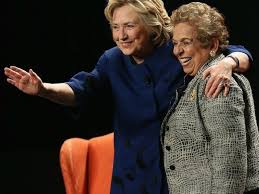
Situated in and near Miami, these districts make up some of the most volatile and interesting political territory in the United States. FL-27 had voted heavily for Hillary Clinton in 2016, but the House seat had been held by a socially liberal Republican, Ileana Ros-Lehtinen, for 30 years. Ros-Lehtinen was retiring, and on paper the district seemed a natural Dem pick-up. The districts also overlapped with Miami-Dade, the most populous county in Florida, whose turnout would be critical in deciding a narrow gubernatorial race.Debbie Mucarsel-Powll raised $6,178,239 compared to Carlos Gimenez's $1,946,504. The DCCC and Pelosi's PAC spent about $6 million trying to save her. She lost the blue D+6 seat 177,223 (51.7%) to 165,407. Donna Shalala (the one who speaks no Spanish in a 71.7% Latino district) raised around the same $3,000,000 that her opponent, Maria Salazar (from 2018) spent. Shalala was so out of touch with her own constituents that she didn't even request help from the DCCC. In fact, she gave them money! She lost 176,114 (51.3%) to 166,705 (48.6%).
Instead of requesting interviews, I decided to see the candidates like an undecided voter would, joining the audience for stump speeches and campaign events. This seemed standard, almost old-fashioned reporting. It never occurred to me that it would be hard, let alone so hard that I’d need to extend my stay in Miami. By leaving time, I felt not like an undecided voter, but like a private detective. Finding a schedule of Republican campaign events took 15 minutes. With Democrats, this process took five days.
...Perhaps this information was at one of the other offices. Volunteers tried to be helpful. One suggested a website might have the information, and when pressed, offered unsarcastically that I “try Google.” Another showed me an event dated two weeks prior. Finally, with fanfare, someone produced a number for another campaign office. They could put me in touch with the right person. I stepped outside and dialed. I had called the switchboard for the City of Miami Gardens, Florida.
Irritation was turning into intrigue, and while the next few days were mileage and frustration-heavy, they were in some ways a reporter’s dream. The factional fighting between Miami-Dade Democrats, Florida Democrats, Senate campaign offices and the national party was flagrant. One of the few times I saw the operation energized was when I mentioned the Miami-Dade Democrats to a staffer for and she rolled her eyes. I heard more than one volunteer try to remember the names on the ballot and fail. I was left unsupervised in campaign offices, in prime eavesdropping real estate, though this was just a bonus: campaigners were ready to vent their frustrations, and I opened my confessional.
By comparison, the Republicans I encountered were courteous, organized, and dedicated. I heard a speech by the GOP challenger for FL-27, Maria Salazar, and afterwards her apparatchiks handed me business cards. At voting locations drowned in GOP paraphernalia, campaign staff showed me detailed spreadsheets, tallying how early turn-out numbers tracked with their booth-by-booth strategy. They asked if I needed anything. The competition dynamic was starting to remind me of 1980s comedy movie: a ruthless, well-heeled team up against a band of plucky misfits.
My grail quest became no easier. At one field location, I arrived just before the advertised opening time and waited by myself for hours before leaving empty-handed. Finding the number for one press secretary took phone calls to 22 different people, most of whom didn’t know who he was. Several times I was told that a particular volunteer was important and “knew everything.” Tracked down at a polling booth, he turned out to be a young backpacker, freshly arrived from Spain, who knew as little as anyone else. Later, I realized the source of this special status: he was one of the few people on the ground who could speak Spanish. Donna Shalala herself (i.e. the candidate) could not.
Following a hot tip about a possible press contact, I turned up at another campaign office with a different strategy: I would refuse to leave. After the traditional greeting-- bewilderment, being offered a chair within earshot of indiscrete conversations-- there was a short conclave. I could speak with Ben. Ben and I sat facing each other, in the middle of an open-plan office. By this time I had become a kind of connoisseur of incompetence, and I sensed that Ben was good at something, but he had not dealt with a reporter before. “Can I ask what your role with the campaign is?” Ben was a policy adviser. He had no idea if his candidate had any events that day, and no idea why he was speaking with me.
When the comms person did come in (this was treated as a special occasion), our conversation had an informality that was almost charming. I explained my difficulty with the Democratic campaigns, and the contrast with Republicans. “They’re a lot more organized than us!” she said, and I had to laugh. They sure were! Here at last was some kind of schedule, but as we stepped through it, something was missing. Through exhaustive internet searches, I had found a digital ticketing website offering a Q&A event featuring Donna Shalala. Why wasn’t it on the schedule? “Ohhh, that’s cancelled.” Perhaps, she said, they could line up an interview instead? I explained that I had been trying to see the election from the perspective of a voter, not a reporter, and how information was freely available from Republicans and almost non-existent from Democrats. Catching my drift, she started to flush.
The call came through later, when I was in a Haitian-owned coin laundry. A DNC flack in Washington, D.C. had heard I was making trouble, planning some kind of “Dems in disarray” story, and as I scribbled notes on top of an industrial dryer, I picked up the story that had been relayed to him, as much from his tone as his words. A foreign correspondent had arrived in Miami expecting VIP treatment, then got miffed when the red carpet wasn’t rolled out. Smearing the ground game would be revenge for a bruised ego. “Money at a national level has gone into these seats,” he assured me.
Walking him through what I’d seen-- and hadn’t seen-- only made him angry. “We’re going to win both of those seats,” he said, berating my ignorance. It was a strange reaction. By then I probably had as clear a snapshot of the election in Miami as anyone. Wasn’t that information useful? Potentially important, even? Instead, someone hundreds of miles away was blithely junking this eye-witness evidence in favor of obnoxious confidence. “You’ll see,” he insisted, “when we win FL-26 and FL-27 on election night, I’ll message you.” And they did, and he did.
In my reply, I pointed out that Andrew Gillum, the Democratic favorite to become Florida’s governor, had lost by a narrow margin, and that poor turnout in Miami-Dade was the culprit. And perhaps you can imagine my lack of surprise two years later, when FL-26 and FL-27 both fell to GOP challengers, one of them Maria Salazar. On the presidential ballot, Clinton’s 30-point lead in Miami-Dade shrunk to a 7-point margin for Biden.
In a piece titled What the Hell Happened to Democrats in Miami-Dade?, Rolling Stone observed ruefully that “Miami-Dade is considered safe—until election night, when suddenly it’s not,” and quoted Maria Elena Lopez, first vice-chair of the Miami-Dade Democrats.
Lopez lamented how the Democratic National Convention did not talk to, fund, or advise the local parties. “We don’t get any feedback from the DNC,” she said. “They don’t come to us and say, ‘Hey, what is the messaging that would work in your community? Where are we weak?’ [The party] doesn’t do that, at all. We are on our own.”
“Unfortunately, this is not the first time that we’ve seen this,” she said. It was not the first time I had seen it either.

Labels: 2020 congressional elections, Blue Dogs, Brindisi, DCCC, Donna Shalala, DSCC, FL-26, FL-27, Florida, Mike Siegel, Mucarsel-Powell, progressives vs Democrats, Schumer, Senate 2020, Texas
posted by DownWithTyranny @ 1:00 PM
2 comments
|
Reddit