Thursday, February 13, 2020

Who Will Save The Grotesquely Corrupt Democratic Party Establishment From Bernie's Zeal For Reform And Fair Play?

>


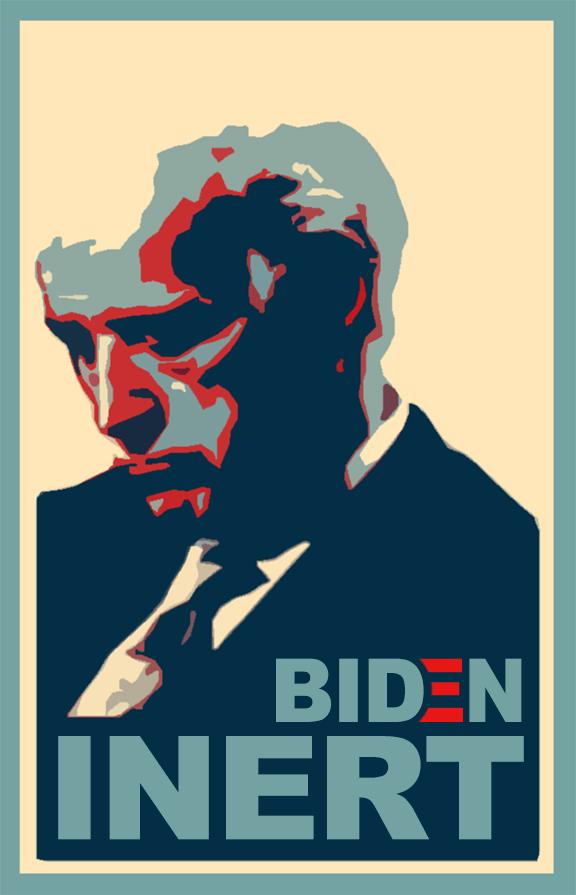
Votes have finally still dribbling in from the New Hampshire primary when I was finishing up on this post. 100% of the votes have now been counted and all the candidates-- except Status Quo Joe, who was in South Carolina-- were already off to Nevada. The New Hampshire numbers were catastrophic for Biden but didn't cause him to drop out the way they did for Andrew Yang, Michael Bennet and Deval Patrick. These were the numbers available (with all 100% in):
Bernie- 76,324 (25.7%)
Mayo Pete- 72,457 (24.4%)
Klobuchar- 58,796 (19.8%)
Elizabeth- 27,387 (9.2%)
Status Quo Joe- 24,921 (8.4%)
Steyer- 10,7727 (3.6%)
Tulsi- 9,655 (3.3%)
Yang- 8,315 (2.8%)
Deval- 1,266 (0.4%)
Bennet- 963 (0.3%)
Wednesday morning, the media spin was how Bernie didn't do well, how well conservative candidates Mayo Pete and Amy Klobuchar did, how badly Biden had done and, most of all... who will stop Bernie?

Do you remember how Harry Reid and his Las Vegas thugs fixed the Nevada primary for Hillary in 2016? Reid, a shady status quo establishment character, is, naturally enough, a big Bloomberg booster. He told Vice that Bloomberg "has a plan, that’s for sure. You have to recognize, the man-- he really was a good mayor of a huge, huge, city, the largest city in America. I like him, I’ve always liked him. Nobody’s done more on guns and climate than he has. No one." What's Mini-Mike's plan beyond spending a million dollars a day on Facebook ads? And what's he done for Climate? And what does Reid know about Climate? It sure looks like the remnants of Reid's greasy political machine is up to its old tricks. The Nevada Independent got its hands on a flyer the Culinary Union sent out to its members. Imagine for a moment that someone wants to give you a dollar, but that that entails you giving up your dime pr even half-dollar. That's how the Nevada Democratic establishment is framing Bernie's Medicare-for-All plan-- giving up your half dollar and neglecting to mention the dollar. [It's also the way the Republican Party explains Medicare-for-All.] The establishment warned Culinary Union members-- in both English and Spanish-- that Bernie is trying to "end Culinary Healthcare."
The Culinary Union, which provides health insurance to 130,000 workers and their family members through a special trust fund, strongly opposes Medicare for all on the basis that it would eliminate the health insurance they have negotiated for over several decades. Health insurance provided by the Culinary Health Fund is considered to be some of the best in the state, and the union even opened a 60,000-square-foot state-of-the-art health clinic a couple of years ago for its members.

The union, considered an organizing behemoth in the Silver State, has been known to tip the scales in elections in the past. Though the 60,000-member union has not yet decided whether it will endorse in the Democratic presidential primary, the flyer appears to be part of a coordinated campaign ahead of Nevada’s Feb. 22 Democratic presidential primary and shows the union will not be sitting idly by, with or without an endorsement.

A spokeswoman for the Culinary Union said the flyer is also going out to members Tuesday night via text and email.

Another handout that the Nevada Independent reported on last week obliquely accuses Sanders and Warren of wanting to take away union members’ hard-fought health plans and warns that electing a candidate who supports Medicare for all would lead to four more years of a Donald Trump presidency.

The new flyer makes more clear the distinction the union is drawing between Sanders’ and Warren’s plans. The flyer also lauds the four other presidential hopefuls-- former Vice President Joe Biden, former South Bend Mayor Pete Buttigieg, Minnesota Sen. Amy Klobuchar and California billionaire Tom Steyer-- for backing more modest plans to establish a government-run public health care option that would “protect Culinary Health care.”

The only other difference the flyer draws between the six candidates is on the issue of “good jobs.” The flyer says that all of the candidates all would work to “strengthen organizing, collective bargaining, and right to strike,” but only Klobuchar would “work with unions on regulations about technology at work,” which has been a major concern for the Culinary Union given the rise of automation in the service industry.

The Intercept noted that "the DNC is acting shady in managing the Democratic primaries... [and] As Michael Bloomberg buys his way into the Democratic primary, he is plastering the airwaves with hagiographic advertisements that ignore his awful record on race, labor unions and how he escalated the Stop-and-Frisk program as mayor of New York."

Lee Fang, also writing for The Intercept yesterday went after Mini-Mike's barrages lies, a barrage that is starting to define his campaign, The most obvious place to start is the Stop-and-Frisk policy that most New Yorkers viewed as an outgrowth of Bloomberg's low-key racism but that he is trying to bullshit his way away from, just the way Mayo Pete has tried too do about his own mayorial racism. Let's start by watch this clip from Ari Melber's Tuesday show:


Fang wrote that "In response, the Bloomberg campaign released a misleading statement on Tuesday claiming that he simply inherited the policy and later reduced the practice. 'I inherited the police practice of stop-and-frisk, and as part of our effort to stop gun violence it was overused... 'By the time I left office. I cut it back by 95%, but I should’ve done it faster and sooner. I regret that and I have apologized-- and I have taken responsibility for taking too long to understand the impact it had on Black and Latino communities.'"
The statement drew immediate backlash over its twisting of history. In 2001, New York City maintained an aggressive program of stopping and searching people throughout the city, with an overwhelming focus on young African American and Latino men. But, under the Bloomberg administration, the program vastly expanded, from around 97,296 stops in 2002 to a height of 685,724 in 2011-- a more than sevenfold increase during the former mayor’s tenure.

Far from changing course over the mayor’s focus on “racial equity,” as he has since claimed, the practice was clawed back by several lawsuits, which charged that the law enforcement program violated the basic constitutional rights of residents. U.S. District Judge Shira A. Scheindlin, in a scathing decision, noted that over the course of 2.3 million frisks, weapons were found only 1.5 percent of the time. The decision pointed out that over half of the stops included African Americans and about third Latino, with less than 10 percent targeting white people.

The Bloomberg administration fought alongside New York’s notoriously aggressive police union to continue the program, arguing that the stop-and-frisk effort was focused on suspects with “furtive movements,” in “high-crime areas” and those with a “suspicious bulge.” But the judge knocked down those assertions, noting that such claims are vague and subjective.

In the comments that circulated online this week, Bloomberg can be heard speaking at an Aspen Institute conference in 2015 defending the program’s racial slant as justifiable given the proportion of crime in African American and Latino communities. “You can just take the description, Xerox it, and pass it out to all the cops,” said the billionaire former mayor. “They are male, minorities, 16 to 25. That’s true in New York; that’s true in virtually every city.”

While data does reflect that violent crime tends to cluster in particular neighborhoods and among young men, the Bloomberg administration’s stop-and-frisk program went well beyond targeting based solely on objective evidence. Expert testimony in federal court found that the New York Police Department carried out far more stop-and-frisks on African American and Latino residents even when controlling for precinct-level crime statistics and socioeconomic characteristics. In other words, the evidence showed that minorities were targeted for stops based on a lesser degree of suspicion than white people.

The charge of racial bias was also backed up by multiple investigations and media scandals. In one case, a low-level police officer recorded his superior instructing him on how to target residents for stop-and-frisk in a particular neighborhood. “I have no problem telling you this: male blacks, 14 to 20, 21,” the officer said in the recording. In another case, a young Harlem teenager surreptitiously recorded officers stopping and frisking him. Asked why they had targeted him, the officer replied, “For being a fucking mutt.”

What’s more, the true extent of the program may never be known. Every time a New York police officer engages in stop-and-frisk, they are expected to fill out a form for the action to be recorded by the city. Court monitors have noted that there is evidence that many stops go unrecorded or are improperly documented. Current New York Mayor Bill de Blasio, who succeeded Bloomberg in 2014, dramatically curtailed the police program, prompting backlash from the police union. Last year, the New York Police Department reported 11,008 stops, a small fraction of the amount of stops during the Bloomberg era.

Bloomberg has attempted to use his vast fortune to rebrand his image. The Bloomberg Philanthropy has given grants to various civil rights groups and worked to build schools, libraries, and community centers in low-income and minority neighborhoods, a fact often cited during Bloomberg’s campaign for the Democratic Party’s presidential nomination.

The billionaire executive’s largesse, however, can’t conceal Bloomberg’s own words defending the racial bias in his approach to law enforcement. The Aspen Institute comments in 2015 were among many instances in which he defended the program. In 2013, during a radio program, Bloomberg declared, “I think we disproportionately stop whites too much and minorities too little. It’s exactly the reverse of what they say.”


And by the way, you've heard about the two billionaires-- one relatively benign and one possibly as bad as Trump-- trying to buy the election, right? This chart from Kantar's Campaign Media Analysis Group shows spending on TV (just TV) advertising through January 29. It is absolutely jaw-dropping! I've never seen anything like it.


What is the Democratic Party establishment so scared about-- and why are they right to be scared? No more feathering of nests at the expense of them working class, for one thing. Chris Maisano: "Forty years of neoliberalism have beaten down and disorganized the US working class. The Bernie Sanders campaign is showing how electoral politics can be used to re-politicize working people-- and organize collectively for their class interests... In an environment of profound social fragmentation, it should not be surprising that popular discontent has found expression through the Sanders campaign and the 'political revolution' it spearheads. The decline of organized labor and the social disintegration of many working-class communities means that only a relatively small fraction of workers are positioned to pursue effective forms of collective action in their workplaces or communities. Election campaigns are therefore one of the few channels currently available to engage and politicize a mass working-class audience, reconstitute the working class as a political subject, and create a more favorable environment for workers to organize both inside and outside the electoral arena. The Sanders campaign is priming working people to think of themselves as members of a class with an interest in political revolution. How could this be anything but a boon to the Left and the prospects for labor movement revitalization?"


Labels: , , , , , , , , ,

Wednesday, January 22, 2020

Midnight Meme Of The Day!

>


by Noah

Moscow's Mayor Rudy Giuliani is one of those knuckle-dragging goons that craves being the center of attention. He can't live without it. So much so he's practically demanding now to be a witness at the impeachment trial of his even more bonkers buddy. Rudy just has to get out there and be in front of the cameras. I mean, can you imagine what he must be like at home, away from public view? This guy is literally bouncing off the walls and probably the ceiling too, all hand gestures, screaming and spraying rivers of saliva all over the floor. His couch is probably a reeking soggy sponge of spit. God, his house must stink! If you go there, be careful you don't slip and fall in the slime.

And all that stuff I just said about Rudy? That is Rudy at his best. There's one thing any other administration, one that had an attorney general that didn't wake up every morning to embrace the sleaze like William Barr does would most likely have done already and that's march his dimply-pimply butt into the nearest high-walled, bars on the windows federal housing. The charge: Being an unregistered foreign agent. Ah, but there's the rub! This current administration doesn't consider Russia to be foreign at all, so Rudy's protected. No indictment headed his way.

So, since we're stuck with Rudy being free and out loud right in public, let's at least go for the dark hilarity that Washington deals in so well. C'mon Donnie! C'mon Mitch! Let's reverse the decision to bar Rudy! Let's go for the gusto! Let's grant Moscow's Mayor his wacko wish! Let's hear from the Rudy who claims to be a cyber-security expert but locked himself out of his own iPhone! Let's hear from the guy who accidentally butt dials reporters! Let's hear from that guy! Let's see how much intelligence he's given out over his unsecured phone while talking to Trump on his! C'mon! Let's have Rudy be a witness at the impeachment trial as he wishes to be! I've already seen apprentice on Hannity. Believe me bigly, Rudy is ready for the bigtime! In fact, I think that after the prosecution gets through throwing nerf balls at him, he should be defended by Louis Gohmert, David Duke, Gym Jordan, Lindsey Graham, and Hannity himself. That would be some funny shit. Just watch him goon-out on live TV all over the world! But even better, just put him on the stand and let Perry Mason have at him until he's just a blob of whimpering gelatinous goo on the $enate floor. Clean up in Aisle One!


Labels: , , ,

Thursday, January 16, 2020

Still Wondering: How Is It That 40% Of Americans Support Trump? And A Corollary: Why Is Biden Still Ahead In The Primary?

>


When I was beginning my teenage years, I had a girlfriend whose family lived on Avenue Z in Brooklyn, not far from the Trump family housing project, Beach Haven, that Woody Guthrie lived in and wrote a song about. I used to visit her a lot and often saw the Trumps (though, alas, never Woody). They had bad vibes but everyone knew who they were. They liked it that way. Publicity, even bad publicity, was their lifeblood.


Decades later I was working in a publicity and p.r. firm in San Francisco. There was always some discussion about the adage, that the only bad publicity is no publicity. And that has certainly been one of the building blocks of Donald Trump's repulsive life. On Monday, Vanity Fair published an essay by Peter Hamby, Why Trump Has A Huge Advantage Over Dems With Low-Information Voters. Basically, he understands publicity... most Democrats don't. They're too busy trying to understand policy-- which Trump has no interest in whatsoever. "Trump," wrote Hamby, "despite his deep personal insecurities and lust for elite validation... has derived much of his political success by ignoring Washington finger-waggers and connecting with the more primal instincts of his supporters, in whatever televised or digital corner of the media he can, with or without the good graces of the national press and savvy insiders. Trump stumbled into understanding something crucial about the electorate, which is this: There are plenty of divisions in our conventional wisdom-- insider versus outsider, progressive versus moderate, young versus old-- but one of the biggest splits in American politics is simply between those who follow politics closely and those who do not." Recall when on election night Trump noted how he loves the poorly educated. Believe me, he still does... in a manner of speaking. He loves how easily manipulated they are.
It’s a split that maps, if not perfectly, onto the gap that emerged between college and non-college educated voters in 2016. The latter set are often low-information voters who view politicians and media with contempt, deciding to sit elections out. Trump has exploited them to powerful effect. The president has made politics about culture-- not just policy. He found a way to attract new voters, particularly rural and non-college educated whites who previously thumbed their nose at conventional politics. Because he’s a pure attention merchant, he doesn’t care what screen he appears on, as long he is there. Because he lacks an ounce of shame, it all works, with or without the blessing of the legacy press.

None of the above can be said for Democrats, who care habitually about the good graces of the national press, and who don’t see politics as a subspecies of the entertainment business. Democrats happen to believe in facts and institutions-- and yes, they would like a cable contract when the campaign is over, thank you very much. But to Trump’s great advantage, the mainstream press is where many of the fights for the Democratic nomination are being waged: on cable news, on Twitter, and in the prestige media. Jared Goldberg-Leopold, the former senior communications adviser for Washington governor Jay Inslee’s presidential bid, told the Washington Post recently that, “In many ways, 2020 is the Cable News Primary. MSNBC and CNN are the biggest pipelines into voters’ living rooms.” The problem for Democrats is that those media spaces are, today more than ever, islands unto themselves. Cable may be a good way to reach highly engaged Democratic primary voters, but the reality is that television news is watched by only a tiny fraction of Americans. During the first five days of the much-hyped impeachment hearings, only about 4% of the American population tuned in to watch some part of the testimony on TV. Twitter, the other opinion-shaper preferred by Democrats, is younger, more educated, and more liberal than the country as a whole, and only 10% of its users create 80% of its content, according to Pew Research.

As much as Democrats and the press like to blame ideological and partisan bubbles for our broken political culture-- Facebook! Fox News!-- their pieties usually don’t include the fact that political media culture is a bubble of its own, a cocoon of college-educated and left-leaning professionals who read the same things, watch the same shows, and liked your last tweet about Lizzo. In this world, the inside game is everything. Topics like wine caves, pay-fors, court packing, white privilege, and Iowa’s role in the nomination process have become topics of profound consequence in the race. The political media blob tumbles forward every day on the assumption that people are aware of these story lines and characters, that voters are tuning in, when many probably can’t tell you what channel this thing is on. The assumption should be that they are not. Olivia Nuzzi, the New York magazine political writer, recently told the Columbia Journalism Review that for campaign reporters, “It’s very easy to get in the weeds on stuff that we feel like everybody knows, that’s actually not something that any normal human being would know.” Even in Iowa, where caucusgoers have a front-row seat to the race and defeating Trump is top of mind for Democrats, the minutiae of Washington rarely pops up at campaign events. “It’s health care, prescription drug costs, teacher pay, climate change,” said Caroline Cummings, a political reporter for KGAN in Cedar Rapids. “I can’t recall one question about the Mueller report when it was front and center in the D.C. chatter, and I can recall very few times when impeachment was at the forefront of conversation among caucusgoers on the campaign trail.” Americans might be obsessed with Trump, but they really aren’t obsessed with politics.

Not since Barack Obama have Democrats had a figure compelling enough to overwhelm the informational divides in our culture, to appear on all screens at all times and capture the attention of people who don’t usually follow politics: black people, Hispanics, young people, low-income voters, and people who just think politics sucks. Democrats need them. But at this stage of the race-- still early, yes-- Democrats aren’t even close to grabbing the hearts and minds or even the eyeballs of the drop-off voters who stayed home on Election Day in 2016. In fact, it’s worse: Many of those voters can’t even tell you who is actually running for president. This doesn’t mean voters are dumb. It means they’re normal-- and that Democrats have serious work to do to reach them.

A new series of focus groups, conducted by former Obama speechwriter Jon Favreau for Crooked Media, lays bare the challenge for Democrats trying to compete for attention with Trump in the current media environment-- and spells trouble for Democratic presidential hopefuls who think they occupy anything close to a slice of the popular mindshare heading into an election year. The focus groups, which will be featured on season two of Favreau’s podcast series The Wilderness, were convened late last year in Milwaukee, Philadelphia, Phoenix, and Miami. Each included 10 voters. The Philadelphia group included registered Democrats who voted in 2016 for Hillary Clinton. The Miami group was majority black and Hispanic and focused on people who voted for Obama in 2012, but stayed home or voted third party in 2016 rather than vote for Clinton. The Milwaukee group included voters who flipped from Obama to Trump in 2016, but voted Democrat in 2018. The Phoenix group was made up of voters who flipped from Mitt Romney to Clinton in 2016, and generally had higher income and education levels.

The Phoenix group of affluent suburbanites was highly attuned to the Democratic race: Like many Democratic-leaning voters showing up to campaign events in Iowa, they sounded like pundits, fluent in the electoral map and the ideological debates over Medicare for All versus Medicare for All Who Want It. “They sounded like they watched too much Morning Joe,” Favreau said. It was the other three groups of voters in Milwaukee, Philadelphia, and Miami-- the off-and-on Democrats who don’t follow the news closely-- that worried Favreau the most, he told me. “I came away thinking that Trump may not be as big of a challenge as the cynicism and distrust that a lot of these voters have towards the entire political system and the media,” he said. “Most of them don’t like Trump at all, but since politics hasn’t delivered for them in a tangible way, they’re starting to ignore the circus altogether, which makes them very hard to reach.”

In each of the three low-information groups, Favreau asked voters to say the first word that came to mind when he said “Democratic Party.” Almost everyone repeated a handful of the same names-- Barack Obama, Michelle Obama, Hillary Clinton, Joe Biden, Bernie Sanders, Nancy Pelosi, and Bill Clinton-- along with known Republican Condoleezza Rice for some reason (“I loved her,” said George, an Ecuadoran immigrant and dog owner in Miami). Elizabeth Warren’s name came up three times. Pete Buttigieg was named once, in Philadelphia. Most of the voters said they were generally aligned with the Democratic Party on issues-- especially the idea of reducing health care costs and expanding access-- but that they also associated the Democratic Party with infighting, taxes, socialism, ineptitude, and “too many candidates.” Only Obama’s name elicited warm reactions among everyone.

If opinions about the Democrats were scarce, for Trump, the opposite was true. “I purposely waited to bring up Trump because I wanted to ask them about their thoughts on issues important to them and why they vote and what they think about government first,” Favreau said. “But in almost every focus group, someone just brought up Trump almost immediately. He is everywhere, like a national psychic wound.” But even as they universally expressed displeasure with Trump, including the people who voted for him in Milwaukee but flipped in 2018, almost every participant told Favreau they wouldn’t yet commit to voting for the Democratic nominee in 2020. Some said it depends on who the nominee is. Others were open to voting for a third-party candidate instead of the Democrat. “None of them really like Trump, but they don’t have much love for Democratic politicians, Republican politicians, and especially the media, which they don’t trust at all,” Favreau said. “They really do see Trump as part of a broader political media culture that’s just out of control, silly, nasty, and not focused on what they care about.” A theme that surfaced again and again, not just about Democrats but about politics generally, was that the whole process is confusing, tedious, and off-putting—and that news organizations and social media do little to make sense of it. “I don’t understand it. I haven’t even watched the news. I just turn it off and go do something else,” said Angela from Philadelphia, a Medicaid-dependent mother of an autistic child who said she was raised Democrat but no longer follows elections closely, despite voting in 2018. “What they need to do is have an ‘understanding class’ with those who don't understand, so they can get a better election going on. Because I would love to be in politics just to see what’s going on, but as I see it now, I want no parts of it.”

Favreau listed the name of each leading Democratic candidate for president and asked the voters to say the first thing that came to mind. Biden and Sanders, the two most famous names, predictably elicited the most responses, but almost all of them were surface-level and not particularly flattering. In Milwaukee words that came to mind for Biden included “hugger,” “oil tycoon,” “cops,” and “old white money.” Six of the voters-- all of whom had voted in the past two election cycles-- responded with some variation of “nothing” or “I have nothing” when Biden was named. In Philadelphia the voters associated Biden with “crime bill,” “too old,” and “not fired up.” A grandmother and self-described “cat lady” named Jean said, “I heard he said a bad thing, I didn’t like it.” Biden elicited better reactions in Miami, where attendees said “Obama,” “experience,” and “well dressed” when the former vice president’s name was mentioned.

Sanders, too, was described as “too old” in all three cities, though many of the responses were, if not on message, at least message-adjacent. The Miami group associated Sanders with “crazy hair,” “grinny,” “free college,” and “wants to give away too many things for free.” The Philadelphia group said “your crazy uncle,” “health care,” “questionable health,” and “passionate hand talker.” In Milwaukee the Obama–Trump voters described Sanders as “for the people,” “crazy but in a good way,” “boisterous,” and “bold”—while three of the voters had no response to his name. What jumped out to Favreau, though, was the fact that none of the other Democrats were registering with the voters. Only Warren’s name elicited a few responses in Milwaukee-- “energy” and “progressive”-- but the participants knew almost nothing about her. “A lot of us in politics are obsessing over some dumb Twitter fight between candidates or fourth-quarter fundraising numbers while most of these voters couldn’t name any Democratic candidates beyond Joe Biden and Bernie Sanders and maybe Elizabeth Warren,” Favreau told me.

Despite the Midwestern pedigree, only one voter in Milwaukee had heard of Buttigieg, from Indiana, and not a single person recognized Minnesota’s Amy Klobuchar. Buttigieg’s name also fell on deaf ears in Philadelphia. “Who dat?” asked Don, the father of a four-year-old boy. “Former mayor of a city I’ve never heard of,” responded Meredith, a mother from the suburb of Upper Darby. Others in the group shook their heads. In Miami, where the focus group participants were majority black or Hispanic, the question of whether Americans would vote for a gay nominee like Buttigieg snowballed into a confused conversation about sexuality and gender pronouns. “My sister today told me about a new thing called binary,” said Wendy, a Jamaican immigrant and mother of two. “It’s just too many new things that are added. I’m just getting confused,” she said. “Nonbinary,” chimed in a Cuban-American man named Renee. Tammy, a grandmother from Miami, agreed with Wendy. “Yeah, it’s getting kind of confusing.” Some in the Miami group said they would think twice about voting for a gay nominee. Others didn’t.


Focus groups are not polls, but they do add important texture to the horse race and pressure-test assumptions embedded in the national conversation. The Wilderness focus groups offer a glimpse into the behavior and opinions of those voters you don’t often read about, the self-identified Democrats who “don’t know enough” or have “no opinion” about the candidates. If you scrolled through excited corners of progressive Twitter last week, for instance, you’d think that Julián Castro’s endorsement of Warren was a major moment, giving her a stamp of approval from a former Obama administration official and the lone Hispanic figure in the 2020 race. But an Economist–YouGov poll from December showed that fully 35% of Democrats, and 39% of Hispanics, didn’t even know who Castro was. Another national Quinnipiac poll from December showed that 36% of Democrats didn’t know enough about Buttigieg to have an opinion, and a whopping 49% of Democrats didn’t know enough about Klobuchar. These are names on the tip of every political reporter’s tongue, the marquee actors in America’s national pageant, yet vast swaths of Democrats haven’t given them a passing thought.

These poll numbers are different in Iowa, New Hampshire, Nevada, and South Carolina, states where the candidates are spending their time and money, and where voters are paying closer attention to the early stages of the race. Whoever wins the Democratic nomination will obviously see their Name I.D. grow with time. But at the moment, Democrats other than Biden and Sanders are facing down a massive attentional gulf versus Trump. “Right now there are just too many of them,” said Jessica from Milwaukee. “I’m not watching the Democratic debates. I mean, this is like The Bachelor. You don’t watch on week one. There’s too many. Like, I’ll tune in when there’s two weeks left and we’ve narrowed down the population. But I don’t care enough right now. I want to see the number down to three roses, then I’ll vote.”

In the meantime, the views of these lesser-engaged Democrats are complex and don’t fall neatly into the ideological buckets often discussed in the media. They mostly liked the idea of Medicare for All, but also doubted how the government could possibly pay for it. They brought up a wide variety of issues as their top concerns—poverty, opioids, prison reform, Medicaid, college affordability, guns, LGBTQ rights, drug prices, taxes—but few could say what the federal government had done to help. “No one could remember the last thing the government had actually done to improve their lives, except one woman in Miami who brought up the Affordable Care Act,” Favreau said. In Milwaukee, where all the panelists had voted in the 2018 midterms, they were often more knowledgeable about state politics than national. “That’s the stuff that has a direct impact on us, right?” said Carol, a mother of two from suburban Waukesha County. “The stuff in Washington is all, like, at the top level. But day to day, I feel like that’s where we have more impact, where we feel, or can convince ourselves, anyway, that we have more impact to effect change.” All of them expressed clashing opinions that frequently surface in polls of Democratic voters: They wanted a nominee who would fight and not compromise on principles, but also someone who would work with the other side and heal the country.

Favreau asked each of the focus groups how they consumed their news. Most cautioned that they tune out political news, before naming Facebook, Instagram, Twitter, Google News, CNN, Fox News, MSNBC, BBC, and “local news.” But even as the participants identified their own news sources, every focus group participant said they didn’t trust them for information about politics. All of the cable networks were viewed as agenda-driven and produced to stoke outrage and ratings rather than inform viewers. “You only get what they want you to have. There’s no solid form of receiving news that isn’t biased or that isn’t, you know, structured and formulated and produced for the masses,” said Don, the father from Philadelphia. “You only get what they want you to have.” In Miami, George, the Ecuadorean immigrant, said TV news treats politics like entertainment, at the expense of more serious news. “The way they report, it seems like it’s more like a joke, so people don’t believe anything,” he said. Another Miami voter named Paul lamented the panel-style debates that have come to dominate the cable channels. “You have one side against the other,” he said. “They talked for two minutes. Nothing gets solved and you move on to the next topic. There’s no compromise anymore. There’s no smart talk.”

“They don’t trust CNN or Fox, see them as two sides of the same coin,” said Favreau. “They don’t even trust what they read on Facebook anymore, which is probably a very good thing, but the result is that they don’t know what to believe, and so they just largely tune out.” The focus groups crystallized the imperative for Democrats to find new ways to reach the irregular voters they need, with tactics and innovations that slice through the confusion of the media landscape. It’s more than that, though: The Democratic nominee must feel, for lack of a better phrase, bigger and more relevant than politics.
Meanwhile, I'm guessing this is good news anyway:


Labels: , , ,

Wednesday, November 20, 2019

Pride In The Military Isn't Something You Read About Frequently Here

>


My grandfather came from Russia to America when he was 14. Most of his family were denied entry and wound up in Brazil. Far more of my grandfather's relatives are in Recife, Natal and Salvador than in the U.S. They are doctors, lawyers, businessmen, teachers, an artist and so on. They speak Portuguese and when I've met them I had to communicate with Spanish. That didn't lend itself to developing anything real.

When I watched the testimony of Lt. Colonel Alexander Vindman at the impeachment hearing yesterday, I couldn't help but feel some kind of bond. Both our families were Russian Jews finding refuse in the U.S. to escape persecution in Russia, mine from the czar and his from the Soviets. Both our families were extremely grateful and extremely patriotic. My father American-born father was an FBI agent who then enlisted in the Army to fight the Nazis. Alexander Vindman and his brothers also enlisted in the military. He was a spectacular witness and the most amazing contrast anyone could have to Trump's oldest worthless sons, who has never worked a day in his life and is the least patriotic person-- other than his father-- that I've ever seen. Trumpanzee Jr. spent his day on Twitter disparaging Vindman while Vindman, who still has shrapnel in his body from fighting in Iraq, was endangering his career by testifying to Congress in a way that displeased Trump and his cronies.

The Republican attorney, Steven Castor, kicked off the GOP attempt to smear him, insinuating he is loyal to Ukraine, not the U.S. He also asserted that Vindman "isn’t really that senior." Fox and other far right propaganda operations is all over this. The GOP and its allies are trying to claim Vindman has dual loyalties. This is typical of the far right in terms of always accusing Jews of having dual loyalties-- plain old neo-fascist anti-semitism.


An L.A. Times editorial pretty summed it up: Republicans Smeared Vindman At Impeachment Hearing. It backfired Spectacularly.

This week, people were surprised by a piece in Foreign Policy Magazine showing that military and national security officials have been contributing more money to Bernie than to any other candidates, including Trump.
Foreign Policy examined how much money was donated to campaign committees from employees of the State Department, the military, the Department of Homeland Security, and the Justice Department, drawing on data from the Center for Responsive Politics. When combining contribution amounts together, Sanders is the biggest beneficiary of national security support, followed by Buttigieg and Warren. Democratic front-runner Biden and President Donald Trump trail behind those candidates, ranking no higher than third for any one department.


...Despite the presence of two veterans and an incumbent president in the race, no candidate has raised as much as Sanders in military contributions.

“I would never have guessed that. [Sanders] would have been way down my list of possible answers if this were a Final Jeopardy question,” Larry Sabato, the director of the University of Virginia Center for Politics, wrote in an email. “He’s mainly about economic equality and Medicare for All.”

A Sanders campaign aide pointed to the senator’s promises to “end the endless wars” and the many years he has spent on the Veterans’ Affairs Committee as reasons for his popularity with military employees. “It shouldn’t be a surprise that these things draw support from so many in the military, but Bernie is extremely proud to have it,” the aide said.


Labels: , , ,

Wednesday, August 07, 2019

Trump's White Nationalism Is A Threat To The Safety Of Every American

>


When Nan Whaley, the mayor of Dayton heard-- through the grapevine-- that Trump was thinking of going to Dayton to comfort the victims of the white nationalist mayhem he had caused, she joked that if Dayton was lucky Trump would direct AirForce One to fly to Toledo instead. That would be a long shot-- he'll be there, and in El Paso, today. The Washington Post's John Wagner reported that his "appearances that will not be universally welcome as the two cities grieve from weekend mass shootings that left 31 dead and many others injured and rattled. After hiding out in his rat-infested Bedminster golf resort all weekend while his white nationalist supporters ran amuck, Kellyanne Conway lied to the media, claiming he's wanted to go there since he heard of the massacres and suggested his "itinerary would be similar to other visits in the wake of mass shootings or natural disasters. 'He’s goes, trying to help heal communities, meeting with those who are injured, those loved ones who have survived the innocents who have lost their lives so senselessly and tragically,' she said. 'He meets with local law enforcement, federal law enforcement. He meets with medical professionals. He thanks first responders.'" That's today's script.
Several past and present Democratic officials urged Trump not to visit El Paso, a city of about 683,000 with a largely Latino population, in the aftermath of Saturday’s anti-immigrant attack at a Walmart Supercenter that left 22 dead.

Officials are still investigating but believe the alleged gunman posted a manifesto that echoed Trump’s harsh rhetoric on immigrants, notably describing his attack as “a response to the Hispanic invasion of Texas.”

“This president, who helped create the hatred that made Saturday’s tragedy possible, should not come to El Paso,” former congressman Beto O’Rourke (D-TX) tweeted late Monday afternoon. “We do not need more division. We need to heal. He has no place here.”


The words of O’Rourke, a presidential candidate, echoed those earlier in the day of Rep. Veronica Escobar (D-TX), whose district includes the El Paso Walmart targeted in the massacre.

During a television appearance Monday, she urged the president and his team “to consider the fact that his words and his actions have played a role in this.”

“From my perspective, he is not welcome here,” Escobar said on MSNBC’s Morning Joe. “He should not come here while we are in mourning.”

El Paso Mayor Dee Margo (R) said at a Monday news conference that Trump will visit his city on Wednesday. He said he would welcome Trump in an official capacity and ask him “to support our efforts with any and all federal resources that are available.”

But Margo also cautioned Trump against invoking his previous rhetoric to talk about the border city.

“I will continue to challenge any harmful and inaccurate statements made about El Paso,” Margo said. “We will not allow anyone to portray El Paso in a way that is not consistent with our history and values.”

Adolpho Telles, chairman of the El Paso County Republican Party, said during a television interview Wednesday that he welcomes Trump’s visit.

“Clearly it is going to help with people healing, and this is a time of healing,” Telles said on CNN.

He accused Democrats of “making this a political event for their benefit.”

White House officials say Trump is also planning to visit Dayton, where another gunman killed nine people early Sunday.

Asked during a CNN interview Tuesday morning if he wants Trump to visit his home state, Rep. Tim Ryan (D-OH) noted that he represents a different area but said that Trump “would not be welcome in my hometown.”

Ryan, another Democratic hopeful whose congressional district includes a large swath of northeastern Ohio, called Trump “a polarizing figure.”

“He finds a million ways to divide us,” Ryan said. “He’s got to get beyond that.”

Trump, meanwhile, took to Twitter on Tuesday to push back against a tacit rebuke from former president Barack Obama.

In social media posts on Monday, Obama called on the country to reject words “coming out of the mouths of any of our leaders” that feed fear and hatred and normalize racist sentiments.

In his tweet, Trump quoted co-host Brian Kilmeade on Fox News’s Fox & Friends as pointing out that it was unusual for past president to speak out about the current occupant of the Oval Office in the wake of mass shootings.

“Did George Bush ever condemn President Obama after Sandy Hook,” Trump quoted Kilmeade as saying. “President Obama had 32 mass shootings during his reign. Not many people said Obama is out of Control. Mass shootings were happening before the President even thought about running for Pres.”
That's probably not the way Greg Miller was looking at it when he wrote, also for the Post, Far-right Violence Spurs Calls To Revise Security Priorities. He noted that the country "continues to employ a staggering arsenal of armed forces, unmanned drones, intelligence agencies and sweeping domestic authorities to contain a threat-- Islamist terrorism-- that has claimed about 100 lives on American soil since the nation mobilized after the Sept. 11, 2001, attacks. No remotely comparable array of national power has been directed against the threat now emerging from the far right, a loose but lethal collection of ideologies whose adherents have killed roughly the same number of people in the United States, post-9/11, as al-Qaeda and the Islamic State combined. The disparity is a source of growing alarm for officials and experts, some of whom now say the United States is overdue for a realignment of national security priorities as violence on the far right escalates."

The 22 murdered in El Paso Saturday were part of a spate of massacres incited by Trump's white nationalism "directed at targets selected for racial or religious reasons, including shootings at synagogues in San Diego and Pittsburgh... The prospects for a change in course, however, appear limited-- complicated by legal constraints, toxic American political currents and the amorphous nature of an adversary that has no dis­cern­ible structure or Osama bin Laden-like leader and has burrowed into corners of the Internet the way al-Qaeda once hid in the mountain redoubts of Afghanistan. The grim statistics associated with these two strains of extremism have begun to converge. The numbers of people killed in attacks linked to Islamist radicals or the far right in the United States since 2002 are virtually equivalent-- 104 versus 109, respectively, according to data compiled by the think tank New America .
Protecting the public from the most pressing terrorist threat “has been our governing principle for many years now,” said Lisa Monaco, who served as the top counterterrorism adviser to President Barack Obama. Given the surge in attacks linked to the far right, she said, “we need to prioritize our resources and focus on this threat.”

In some ways, the opposite has occurred under President Trump.

Last year, the administration downgraded the position that Monaco previously held, meaning that the top counterterrorism adviser in the White House no longer reports directly to the president.

The administration has also curtailed or disbanded a Department of Homeland Security program that had been created to counter violent extremism by working with regional authorities and organizations to identify those vulnerable to radicalization, whether by Islamist groups or the far right.

The main obstacle to mobilizing against the white supremacist threat, officials said, may be political. Trump on Monday denounced the alleged white nationalist sentiments of the suspected killer in El Paso. But his presidency has come to be defined by policies that are aligned with aspects of the white nationalist agenda and his penchant for fanning racial animus.

“This both makes the mobilization more necessary and interferes with that mobilization,” said Dan Byman, a terrorism expert at Georgetown University and a former staff member of the 9/11 Commission. Trump’s words and actions, he said, amplify the danger by emboldening those with radical, racist views, while his signals of tolerance toward such groups-- including his comments after violence in Charlottesville-- undermine his subordinates’ ability to agree upon and organize around the threat.

Trump’s refusal to acknowledge Russian interference in U.S. politics has also contributed to the far right’s rise, experts said. Since at least 2015, Moscow’s destabilization efforts have included sweeping online operations aimed at sowing racial division in the United States by promoting the positions of white nationalists.

A social media study by researcher J.M. Berger concluded that far-right networks online are dominated by intersecting themes: “support for U.S. President Donald Trump, support for white nationalism, opposition to immigration (often framed in ­anti-Muslim terms).”

The latter is an area in which the response to 9/11-- with its wars in Afghanistan and Iraq and multibillion-dollar investments in border security aimed at blocking entry to radicalized Muslims-- may have fostered xenophobic attitudes that contributed to the rise of the far right.

There are indications that U.S. national security agencies are beginning to shift toward the far-right threat. FBI Director Christopher A. Wray recently testified that the bureau had made about 100 domestic terrorism arrests in the past nine months and that “a majority of the domestic terrorism cases we’ve investigated are motivated by some version of what you might call white supremacist violence.”

But others said the almost singular reliance on the bureau to disrupt far-right networks-- with little or no involvement of other agencies-- underscores the extent to which the government has failed to adapt.

Nicholas Rasmussen, who served three years as director of the National Counterterrorism Center, said that attacks linked to al-Qaeda or the Islamic State-- including the Boston bombings and the night club shooting in Orlando-- were invariably followed by “all-hands” meetings at the White House. Among those assembled were often the heads of the Pentagon, the CIA, and the Treasury and State departments.

“But I suspect that didn’t happen this weekend at the White House,” Rasmussen said. “If it had happened in the Obama or Bush White Houses, I’m not sure it would have either. Because as soon as you hear ‘domestic,’ everybody reverts to ‘Well, the FBI has the ball.’ ” He added: “The FBI is hands down the best investigative law enforcement agency in the world, but asking them to take on this problem on their own makes no sense.”

A National Security Council spokesman declined to say whether any Cabinet-level meetings had taken place at the White House in the wake of the latest shootings, citing policy against such disclosures.


Labels: , , , , ,

Tuesday, April 02, 2019

Maybe Pelosi Needs A New Chair For House Ways And Means-- Neal Is Dragging His Feet On Trump's Taxes

>

Mnuchin and Richard Neal, who REALLY doesn't want to get the Adam Schiff treatment from Trumpworld

When the Biden p.r. machine stirs up shit against Bernie-- which they never stop doing (it's like a pit of vipers whispering in the ears of any journalist foolish enough pay them any attention)-- one of the first things they always bring up is that he hasn't released his taxes. Really? When he ran in 2016 he did release his taxes for 2014; they were boring and very white bread. He has since pledged to release 10 years this time, but virtually every anti-Bernie pundit who has raised this, wrongly claims he's never released any tax returns.

You know who didn't release any tax returns of course. And, according to Greg Sargent's column in the Washington Post yesterday, the Democrats-- particularly Richard Neal-- seem to be dragging their feet and screwing it up. Trump's "absurd claim" that Barr's 4-page press release purporting to be a "summary" of the report granting him "total exoneration," is laughable and only hardcore Trump 2-digit IQ worshippers believe it-- oh, and the corporate media. Trump's "efforts to bully Democrats and the media into groveling with forgiveness for supposedly having gotten this scandal wrong, are all about what lies ahead. The obvious game is to chill further scrutiny, which very much constitutes a live threat to Trump that no amount of furious tweeting about 'exoneration' can make disappear." Sargent points out that that is precisely "why Democrats should, if anything, be intensifying their effort to access Trump’s tax returns right now, not dragging their feet on it."

He sites a new memo-- from centrist Dems no less-- hoping to amp up the pressure on Neal and Pelosi, arguing that "getting the returns is a legal slam dunk, and is absolutely justifiable, or even imperative, as a matter of oversight and good governance," since as head of the House Ways and Means Committee, Neal has the law in his side, a law that says he can "request any individual’s tax returns, after which the Treasury Department 'shall' furnish them." Neal has asked multiple House committees to each furnish a rationale rooted in governing or oversight for getting the returns, the theory being that this will place the request on firmer institutional footing and make the legal case stronger. The Trump administration will challenge the request, leading to a long court battle."

Over the weekend, Arthur Delaney at HuffPo reported that the overly cautious "Neal is in no hurry and seemingly doesn’t care if Democrats don’t get the documents before the next election." Back to Sargent:
The idea is that, while it may be understandable for Democrats to want to build a strong institutional and legal case, this cannot become an excuse for further delay. Notably, the memo points out that while there is no precedent for seeking a president’s tax returns under this particular provision of the law, that’s because for decades, presidents and presidential candidates voluntarily released them.

That is, until Trump blithely shredded this most basic norm of transparency-- meaning that his own unprecedented contempt for this norm is what necessitates the House taking this aggressive step in response.

Along those lines, the memo further argues that doing this would represent a thoroughly legitimate and reasonable exercise of Congress’ oversight function. Among the reasons:
To determine whether Trump’s foreign financial dealings create conflicts of interest, or worse, whether he’s compromised by them in some way. We still do not know whether special counsel Robert S. Mueller III defined his investigation to avoid looking at Trump’s finances. Whether he did or not, the memo argues, Congress has its own obligation to scrutinize these questions.
To determine whether Trump is violating the Constitution’s emoluments clause by receiving payments from foreign governments without Congress’ consent. The memo argues that the fact that the clause allows for Congress to consent to certain emoluments-- or not to-- itself requires getting the returns, so it can exercise its responsibility to determine whether any particular emoluments either are, or are not, deserving of congressional consent.
To determine whether-- or to what extent-- Trump and his family have profited off the huge tax cut he signed, which could be substantial. The memo argues that this information could help Congress determine whether to go along with whatever future tax policies Trump proposes, such as making certain provisions in the new tax law permanent.
Here’s the thing. The urgency of all these matters should not in any way be seen as diminished by the conclusion of the Mueller investigation. That’s because, even if no criminal charges were brought for conspiracy with Russia, the Mueller probe and its spinoffs added substantially to the broader case against Trump’s corruption.

This is a case that will continue to build, as the multiple other investigations resulting from Mueller’s work, as well as those launched by House Democrats, proceed. As Timothy L. O’Brien, who understands the depths of Trump financial murk like no one else does, puts it, “reality is likely to keep intruding on everybody who has been ushering Trump-Russia coverage into the grave.”

After all, because of those investigations, we have learned that Trump carried on negotiations with Russia over a Moscow project for many months while GOP voters were picking their nominee; that he has been directly implicated in a criminal campaign finance scheme; and that Trump concealed both these things from America. Getting Trump’s tax returns could help shed light on whether there are other such foreign dealings, and on his tax treatment of the hush money payments, among other things.

We have also learned from Trump’s own former lawyer that he may have gamed assets for insurance and tax fraud purposes, and that Trump’s tax returns could contain clues to those things-- not to mention clues to the extensive history of tax fraud used to inflate his inherited fortune, something we learned about from that big NY Times expose.

Rather than getting drawn into a sad-sack debate over whether Democrats should “move on” from the Mueller investigation, it’s more natural to just keep the focus on Trump’s corruption, as a matter of basic oversight. The political ground for maintaining that focus is actually more fertile right now, due to everything we’ve learned-- and continue to learn-- as a result of the Mueller investigation. And getting Trump’s tax returns is central to that basic mission.
A couple of years ago Dr. Stephanie Sarkis, author of Gaslighting: Recognize Manipulative And Emotionally Abusive People-- And Break Free, wrote a piece for Psychology Today 11 Warning Signs of Gaslighting-- Gaslighting is a manipulation tactic used to gain power. And it works too well. The only way we're going to break free of Trump's gaslighting is at the polls in a little over a year and a half, but it's important to understand one of Trump's most used coping mechanisms. Sarkis defines gaslighting as a common tactic used by abusers, dictators, narcissists and cult leaders to gain more power, while making a victim question their reality. These are her 11 warning signs. How many of them do you recognize in Trumpanzee?
They tell blatant lies-- with a straight face.
They deny they ever said something, even though you have proof.
They use what is near and dear to you as ammunition.
They wear you down over time.
Their actions do not match their words.
They throw in positive reinforcement to confuse you.
They know confusion weakens people.
They project.
They try to align people against you.
10. They tell you or others that you are crazy.
11. They tell you everyone else is a liar.


Labels: , , , , , ,

Tuesday, February 05, 2019

President AOC? Not Yet

>


The graphic above shows the 45 members of the House who signed on to a vague statement of support for the Green New Deal. But now that AOC is actually getting ready to introduce a formal bill-- although some of the details are still sketchy and up for negotiation-- there are far fewer members... at least so far. The first members of Congress to sign on as co-sponsors:
Earl Blumenauer (D-OR)
Ted Lieu (D-CA)
Ro Khanna (D-CA)
Pramila Jayapal (D-WA)
Joe Neguse (D-CO)
Ayanna Pressley (D-MA)
Brendan Boyle (New Dem-PA)
Joaquin Castro (New Dem-TX)
Yvette Clarke (D-NY)
He may have been a little ahead of himself but Michael Moore has already declared Alexandria Ocasio-Cortez the leader of the Democratic Party. Don't we wish! Also, he said, "moderates" are should wise up and realize the whole "moderate" thing is gone and just needs to be buried.
MOORE: If you're being moderate, stop being moderate. Take a position. There's no middle ground anymore. There's no half-way point to should somebody be paid a living wage. 'Well, I'm a moderate so I think they could be paid half of that living wage.'

You know, on the issue of choice, there is no half-way there. You're either for it or you're against it.

Do you believe in equal rights for women? Do you believe we should have an Equal Rights Amendment?

There's no middle ground. There's no time for moderation.


Alexandria Ocasio Cortez gave us another reason to love her tonight while the unspeakable baboon was pretending to be president and so many Democrats make fools of themselves by jumping up and applauding him, treating him like a "normal" "president." (By the way, the 3 New Dems sitting directly behind her were Ann Kuster (NH), Julia Brownley (CA) and Ann Kirkpatrick (AZ) and the smiling imbecile in front of her is Joe Manchin (WV). All 4 of them have ProgressivePunch "F" ratings and only Trump makes them look any better than they are.


Labels: , , , , ,

Monday, January 07, 2019

Republicans Have A Sense Of Foreboding About 2020-- And They Should

>


Trump still has a motley collection of apologists-- the Fox News crew, hate talk radio hosts, self-serving politicians, neo-Nazi crackpots and their partners in the white evangelical movement-- but there is no longer anyone with an ounce of intellectual integrity defending Trump or unwilling to admit that he is, far and away, the worst "president" in American history-- off the scale (or on an entirely different scale) relative to unworthy past presidents like Nixon, Andrew Johnson, Calvin Coolidge, George W. Bush, Herbert Hoover, James Buchanan, JohnTyler and Warren G. Harding. And now things are going to get even worse. Early Sunday morning, Mike Allen and Jim Vanderhei, writing at Axios, noted that with the departure of John Kelly, the tidal wave of fake news emanating from Señor Trumpanzee has "escalated." Kelly controlled the paper flow in and out of the Oval Office and that process has now collapsed into complete anarchy. [Neo-Nazi Stephen Miller is running the United States government.]
Wednesday was Kelly's last formal day in the White House, but his influence had declined since he announced his departure on Dec. 8.

Since then, Trump has made several unusually specific factual assertions that were quickly shown to be inaccurate, suggesting more unvetted information may be reaching him than had been the case in the heyday of Kelly's control:
Arguably the most notable one ... During Wednesday's devil-may-care, 95-minute Cabinet meeting, Trump said that back in 1979, the Soviet Union had invaded Afghanistan "because terrorists were going into Russia. They were right to be there." A Wall Street Journal editorial scolded: "We cannot recall a more absurd misstatement of history by an American President." [Watch Maddow explain what happened.]

And then there's the president's depiction of how tariffs work. "China is paying us tremendous tariffs. We’re getting billions and billions of dollars of money pouring into the Treasury," he said Friday at a Rose Garden news conference. The N.Y. Times points out: "The United States does not send China a bill for the cost of tariffs, which are often passed on to American importers or consumers."
The Washington Post called the Cabinet meeting "a fact-checking nightmare." ...The president believes he pays no price for escalating inaccuracies, even ones that have been repeatedly debunked...With most of his human guardrails gone, the unvetted language of Trump's rallies is once again a staple of his governing.
Are congressional Republicans abandoning him in droves? Not yet. The first House votes of the new session are always rules packages and it's always a party line vote. 3 Republicans-- Tom Reed (NY), John Katko (NY) and Brian Fitzpatrick (PA)-- broke with their party and voted with Pelosi on her changes. Then came the appropriations bills to reopen the government without giving Trump money for his wall. You can rest assured he understood what this serious of votes meant better than the ones about the rules package. 8 Republicans abandoned him on all or some of the 3 roll calls-- Will Hurd (TX), John Katko (NY), Chris Smith (NJ), Brian Fitzpatrick (PA), Greg Walden (OR), Peter King (NY), Elise Stefanik (NY) and Fred Upton (MI). He'll notice. These was the percentage of the vote each of these members got in November (along with Trump's 2016 percentage):
Will Hurd- 49.2% (46.4%)
John Katko- 53.1% (45.3%)
Chris Smith- 55.8% (56.8%)
Brian Fitzpatrick- 51.3% (47.1%)
Greg Walden- 56.5% (56.5%)
Peter King- 53.3% (53.0%)
Elise Stefanik- 56.7% (53.9%)
Fred Upton- 50.2% (51.3%)

Upton, Katie, Hurd, Fitzpatrick and King are all seriously vulnerable for 2020 and have to walk a fine line between being seen as disloyal by Republicans and as too enabling by independents. All 5, perhaps all 7, will be targeted by the Democrats. On the Senate side, two Republicans up for reelection in blue-trending states, Susan Collins (ME) and Cory Gardner (CO), have called for reopening the government without money for Trump's wall. Matt Gorman who was this past cycle's NRCC communications director remarked that "You’re not just walking a tight rope, you’re eating, sleeping, and breathing on it."

This evening, John Bresnahan and Sarah Ferris reported for Politico that dozens of Republicans may cross the aisle and vote with Pelosi against Reump's government shutdown. "White House officials and Republican congressional leaders," they wrote, "worry that GOP support for the shutdown is eroding, weakening President Donald Trump’s hand as he seeks billions of dollars for a border wall that Democrats have vowed to oppose, according to GOP lawmakers and aides... Despite the White House PR blitz, House Minority Leader Kevin McCarthy (R-CA), Minority Whip Steve Scalise (R-LA) and other senior Republicans believe that 'a significant bloc' of House Republicans could vote with Democrats on the funding measures, according to GOP lawmakers and aides." McCarthy says between 15 and 25 will vote against Trump.
GOP leaders say they can keep that number below 55, a key threshold. That many Republican defections, coupled with all House Democrats, would reach 290 "yes" votes, a veto-proof majority. House Democrats can't overcome Senate Majority Leader Mitch McConnell's (R-KY) refusal to bring up their bills, but such a vote would signal the House can override a Trump veto, a major blow to the president and his allies.
NBC News reported that "Cracks in the GOP ranks have already emerged as skittish Republicans, many of whom face difficult elections in 2020, have begun asserting their independence.
Sen. Cory Gardner (R-CO) who might have the most difficult race in in 2020 in a state that is edging more Democratic each election, was the first Republican to say that Senate should vote on the House bills to reopen the government.

He acknowledged the perils of opposing Trump but said that the president understands that he has to broaden his support if he’s going to win re-election, which would in turn help him.


“The president also has to win the states he either barely carried or didn’t carry to win re-election,” Gardner told NBC News in an interview. “While this (border funding fight) is maybe more a base-appealing measure, there are other issues he’s going to have to do to broaden the base.”

Sen. Thom Tillis (R-NC), another member up in 2020 who is looking for a solution to the stalemate, wrote an op-ed in The Hill floating the idea that agreement on a border wall could be coupled with relief for Dreamers in the Deferred Action for Childhood Arrivals program.

Democrats plan to try and put pressure on vulnerable Republicans on controversial issues by painting them as allies with a president who is increasingly less popular among independent voters, starting with the shutdown. The Democratic campaign arm in the Senate, the Democratic Senatorial Campaign Committee, has already begun targeting potentially vulnerable Republicans like Gardner and Sen. Susan Collins (R-ME).

“Senate Republicans own every miserable consequence of their pointless shutdown and those up for election this cycle have a choice: join Democrats in reopening the government by passing the legislation they’ve already supported or give voters another reason to throw them out of office in 2020,” said David Bergstein, Democratic Senatorial Campaign Committee spokesman.

Collins has said that she’d support the House bills if Senate Majority leader Mitch McConnell brings them to the floor, telling reporters she sees “no reason why the bills that are ready to go, on which we’ve achieved an agreement, should be held hostage to this debate over border security.”

In the House, Rep. Will Hurd (R-TX), who narrowly won his re-election and whose border spans 1,500 miles of the Texas border with Mexico, voted to reopen the government. Political strategists have said that the last-minute attention on immigration and the caravan by the president nearly cost Hurd his re-election.

And Rep. Elise Stefanik (R-NY), who easily won her re-election in her upstate New York district, is positioning herself as an independent voice in the Republican Party, said she voted for the bills because “I oppose government shutdowns.”

Perhaps an indicator of the challenge for some Republicans, two veteran Republican senators from red states-- Lamar Alexander of Tennessee and Pat Roberts of Kansas-- have already announced that they won't seek re-election in 2020. Both are conservative senators who have a history of working across the aisle.

“I’ve learned that being true to myself and sticking to my principles will always win the day,” Roberts said in his speech announcing he would not run in 2020.

And others are seeking their own independence from the president. Freshman Republican Sen. Mitt Romney of Utah started his congressional career with a strong statement of opposition to the president in an op-ed. While he doesn't have to run for re-election for six years, he does have to serve with a president who he said has fallen short of presidential leadership.
And Trump himself? He's probably going to have a primary coming. In an Op-Ed for CNN, Joshua Spivak, an academic at Wagner College, wrote that Trump may be a shoo-in for renomination but, "if history is any judge, an intraparty battle-- even if the challenger is unsuccessful-- could be devastating for the incumbent. No sitting President who sought his party's nomination has been denied it since Chester Arthur in 1884-- Arthur only got the office following President James Garfield's assassination. And presidents who face a serious re-election challenge have regularly gone down in defeat in the general election."
While the story of 19th century presidents is generally a tale of one-termers, presidents since McKinley have been very successful at winning re-election. It's notable that none of the 13 presidents (including the four VPs who moved up following the death of a president) who won re-election faced a serious primary challenge. They all were essentially handed the ballot line.

The presidents who did not win re-election tell a much different tale. Five presidents lost in their quest for another term (in the case of Gerald Ford, it was a first full term). Four of them-- all but Herbert Hoover-- faced a noteworthy challenge in their party's primary. In addition, Harry Truman and Lyndon Johnson both pulled out of the race after seeing serious primary challengers emerge.

Even when sitting presidents prevailed in the primaries against serious contenders, their authority was often undermined and they went on to lose in the general election. In addition to William Howard Taft in 1912, this was the case for Gerald Ford in 1976, Jimmy Carter in 1980, and George H.W. Bush in 1992.

Ford, Carter and Bush all faced difficulties in their first terms, which created an opening for a primary challenger to run. But beyond those challenges, the primary fight forced the President to dirty his hands with politics early on, instead of staying above the fray and focusing on governing.

Even worse, it shows that the president does not have complete control over his party. A challenger also pushes the president to take on positions that alienate centrist voters at exactly the time he needs to be wooing independents in the center.
Trump, of course, has been dirtying his hands every minute of every day since he managed to worm his way-- likely with Russian help-- into the White House. A significant number of Americans don't consider him a legitimate president and would rather see him imprisoned or dead than back for a second term. He's been an Oval Office occupant like no other and you can count on his reelection campaign also being like no other. At this point I'd bet almost any of the leader Democratic contenders could beat him. Note: there's more than just beating him; it will all be for naught if we aren't also thinking about what come after him? Want your cake and the ability to eat it too? Please help bake the winning cake-- winning for 2020 through 2025.


Labels: , , , , , ,