Thursday, November 30, 2006

Annals of Science: No wonder Chimpy the Prez doesn't like science. The laboratory animals all seem to be pointing at him and laughing

A friend of the blog passes on this nugget from the Nov. 23 New Haven Advocate:

Bush Nuts:
Are George W. Bush lovers certifiable?


By Andy Bromage

A collective “I told you so” will ripple through the world of Bush-bashers once news of Christopher Lohse’s study gets out.

Lohse, a social work master’s student at Southern Connecticut State University, says he has proven what many progressives have probably suspected for years: a direct link between mental illness and support for President Bush.

Lohse says his study is no joke. The thesis draws on a survey of 69 psychiatric outpatients in three Connecticut locations during the 2004 presidential election. Lohse’s study, backed by SCSU psychology professor Jaak Rakfeldt and statistician Misty Ginacola, found a correlation between the severity of a person’s psychosis and their preferences for president: The more psychotic the voter, the more likely they were to vote for Bush.

But before you go thinking all your conservative friends are psychotic, listen to Lohse’s explanation.

“Our study shows that psychotic patients prefer an authoritative leader,” Lohse says. “If your world is very mixed up, there’s something very comforting about someone telling you, ‘This is how it’s going to be.’”

The study was an advocacy project of sorts, designed to register mentally ill voters and encourage them to go to the polls, Lohse explains. The Bush trend was revealed later on.

The study used Modified General Assessment Functioning, or MGAF, a 100-point scale that measures the functioning of disabled patients. A second scale, developed by Rakfeldt, was also used. Knowledge of current issues, government and politics were assessed on a 12-item scale devised by the study authors.

“Bush supporters had significantly less knowledge about current issues, government and politics than those who supported Kerry,” the study says.

Lohse says the trend isn’t unique to Bush: A 1977 study by Frumkin & Ibrahim found psychiatric patients preferred Nixon over McGovern in the 1972 election.

Rakfeldt says the study was legitimate, though not intended to show what it did.

“Yes, it was a legitimate study, but these data were mined after the fact,” Rakfeldt says. “You can ask new questions of the data. I haven’t looked at” Lohse’s conclusions regarding Bush, Rakfeldt says.

“That doesn’t make it illegitimate, it just wasn’t part of the original project.”

For his part, Lohse is a self-described “Reagan revolution fanatic” but said that W. is just “beyond the pale.”

Regarding 9/11 commission recommendations, it's not as if there won't be a big difference in what the Democrats pursue--just don't expect miracles

"Of all our recommendations, strengthening congressional oversight may be among the most difficult and important. So long as oversight is governed by current congressional rules and resolutions, we believe the American people will not get the security they want and need."
--from the report of the 9/11 commission

What this recommendation entails, explains Jonathan Weisman in today's Washington Post, is--

grant[ing] the House and Senate intelligence committees the power not only to oversee the nation's intelligence agencies but also to fund them and shape intelligence policy. The intelligence committees' gains would come at the expense of the armed services committees and the appropriations panels' defense subcommittees. Powerful lawmakers on those panels would have to give up prized legislative turf.

And that, it turns out, is no more going to happen in a Democratic-controlled Congress than it was going to in a Republican-controlled one.

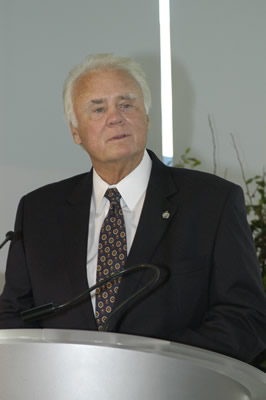
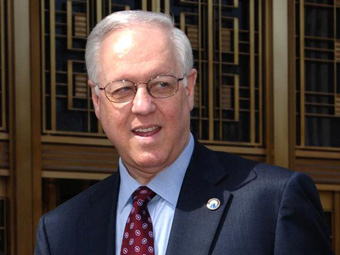
"I don't think that suggestion is going anywhere," said Rep. C.W. Bill Young (R-Fla.) [right], the chairman of the Appropriations defense subcommittee and a close ally of the incoming subcommittee chairman, Rep. John P. Murtha (D-Pa.). "That is not going to be their party position."

Note the casual description of this change as a "suggestion," as if the commission had suggested changing all ice cream served on Capitol Hill from vanilla and chocolate to mocha almond raisin. This isn't quite how the commission members see it.

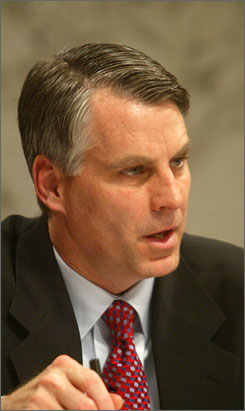
"The Democrats pledged to implement all the remaining 9/11 reforms, not some of them," said former representative Timothy J. Roemer (D-Ind.) [left], who served on the commission.

Does it really matter?

To the Sept. 11 commission, the call for congressional overhaul was vital, said former New Jersey governor Thomas H. Kean (R), the commission's co-chairman. Because intelligence committee membership affords lawmakers access to classified information, only intelligence committee members can develop the expertise to watch over operations properly, he said. But because the panels do not control the budget, intelligence agencies tend to dismiss them.

"The person who controls your budget is the person you listen to," Kean said.


The Democrats do plan to implement many other commission recommendations that were brushed aside by the Republican leadership in Congress. This one, however, appears to go just too far.

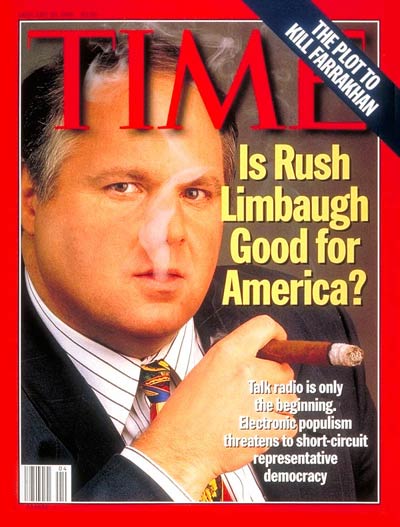
RUSH LIMBAUGH, POLICY WONK? MAGS OFFERS HER TAKE ON AMERICA'S MOST, ER, INSIGHTFUL (?) COMMENTATOR


By Mags

In a moment of clarity, Rush Limbaugh has proven without a doubt why he makes the big commentary bucks. Without fanfare or doubt, he had this to say about the situation in Iraq that is now termed a civil war by some media (MSNBC and NBC):

“Let’s just have the civil wars and let the crumbs crumble and the cookie crumble where--because I’m fed up with this. . . Fine, just blow the place up. Just let these natural forces take place over there instead of trying to stop them, instead of trying to use . . . I just . . . Sometimes natural force is going to happen. You’re going to have to let it take place.”

Rush's popularity has always been a mystery to me. And when the right wing claims to be more mature than everyone else, I have to shake my head. But here he shows what he is truly made of. He puts to rest any doubts at all that the Right has superiority of thought and analysis.

Let me break this down for you, since his statement is so sophisticated and so fine-tuned and full of nuance. If I may be so bold as to offer my take on his take, I offer you this:

RUSH: "Kill them all, and let God sort 'em out."

Thank you, Rush. That is the most insightful analysis I have read on the Middle East in a long time. Not.

Here is the foundational principle in controlling others:

You can't do it!!!!

You can work with people. You can negotiate with people. You can offer incentives. You can withhold rewards. But ultimately what you and the boy prez and the whole of the right wing need to understand is that brute force will only work for so long. Of course you can kill them all, but even you will see the immorality of that. At least one can hope.

Here is my advice to you, Rush: Apply immediately to be a member of Bush's think tank. I think you are just the sort of policy wonk they are looking for.


AND NOW, A SPECIAL DWT PREVIEW OF COMING ATTRACTIONS--WATCH THIS SPACE!

It's one of those phenomena of the online world. Mags is one of my favorite people in the world, and yet I sometimes have to remind myself that I've never actually met her. Howie and I "met" her on an online political discussion group, and over the years got to know not just what and how she thinks, but a lot about who she is and how she became that. So, while I'm always curious to hear what she has to say about any subject, there are some subjects I'm especially keen to hear her talk about. Like the other day, when she was writing about Sen. Barack Obama's courting of leaders of the religious right. I know that when she speaks about the control those leaders exert over their flocks, she is speaking from her personal history as a victim of fundamentalism--but one who eventually escaped.

I hoped she would write more about that, and got back a personal note so powerful that I knew we had to share it with DWT readers. "I came out of religion," she wrote, "because my life fell apart to such a degree that I was no longer allowed the luxury of belief in fables. As I studied, I found out that much of what was taught within the church and what was spouted on religious channels simply was not true. The credibility gap for me was part of it, and I think initially the larger part. However, it goes beyond that."

I'm delighted to report that she has agreed to let us print that post. We should have it for you soon, depending on our hectic publishing schedule--maybe even tomorrow. Watch this space!--Ken

Quote of the day: A U.S. district judge in Washington catches the Bush administration doing what it likes doing best: flouting the law

"It is unfortunate, if not incredible, that FEMA and its counsel could not devise a sufficient notice system to spare these beleaguered evacuees the added burden of federal litigation to vindicate their constitutional rights. . . . Free these evacuees from the 'Kafkaesque' application process they have had to endure."
--U.S. District Judge Richard J. Leon, who ruled yesterday that, in the words of the Washington Post's Spencer S. Hsu, "the Bush administration unconstitutionally denied aid to tens of thousands of Gulf Coast residents displaced by hurricanes Katrina and Rita and must resume payments immediately"

This, it appears, is among the gentler portions of Judge Leon's 19-page ruling. Given the Bush administration's unvarying attitude toward the law--"we are above the law," or perhaps "we are the law"--the only surprise is that it doesn't have judges assaulting it nonstop all through the 50 states and the District of Columbia.

These people are other things as well, some of them more serious, but what they almost always are is lawbreakers. Isn't it time they began to be held to account for it?

Thanks to all the readers who added their comments to my Dr. Strangelove post--including the one who scooped my second-favorite line

I don't know about you, but I've been having a grand time with the comments that have been added to my Dr. Strangelove post (wondering whether readers today would know who Gen. Jack D. Ripper is).

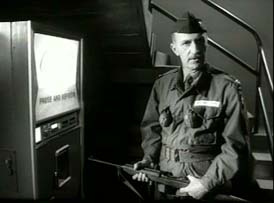
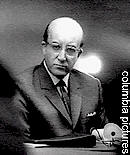
We've heard more about the "purity of essence" man himself, General Ripper, and about Sterling Hayden, who played him so eerily and hilariously--seen above with the haplessly captive Group Capt. Lionel Mandrake [definitely check out the glorious chunk of their dialogue quoted by Scott], another of Peter Sellers' great impersonations in the film. (Hmm, we've seen him now as Mandrake and as President Muffley, but not as the title character. That doesn't seem right.)

We've had fond recollection of the great Slim Pickens as Major T. J. "King" Kong (left), the pilot of one of the planes dispatched by the wacked-out General Ripper to bomb their designated targets inside the Soviet Union. And from reader randy g came the fascinating note that Peter Sellers was originally scheduled to play this role in addition to his three others. I never knew that!

And then we've had this really interesting post from the goob:

Both of my daughters (17 and 21) have seen this movie and loved it. In fact, one of them viewed it in a high school history class. Much hope for public education there.

Whether or not they'd recognize a reference to Jack D. Ripper right off I'm not sure, but if I reminded them of the character I'm sure they would.

Oh, and as long as we're reciting favorite lines? This movie has more of my favorites than any other, but I have to include "You'll have to answer to the Coca Cola company."


As it happens, goob, this is my second-favorite line from the movie. General Ripper's sealed Air Force base has been liberated by the U.S. Army, but the planes the general has sent off on their deadly bombing missions in the Soviet Union can't be recalled without the code known only to General Ripper, who alas is no more. Now only one man can possibly save the world.

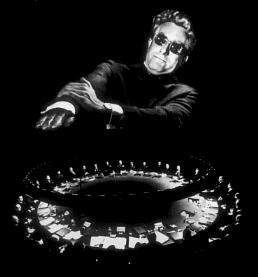
Actually, Mandrake doesn't know he's trying to save the whole world, but we do, having seen the officials gathered in the War Room in Washington [also from randy g--President Muffley's "Gentlemen, you can't fight in here. This is the War Room"] learn about the Russians' Doomsday Machine, which the demented scientific adviser Dr. Strangelove [left--there!] explained will be triggered by the American bombing.

Now Mandrake needs to get word to Washington. Unfortunately, he has no change for the pay phone. (This just goes to show how the world has changed. Back in 1964, it was the lack of a mere dime that thwarted his efforts to save the world.)

But wait, there in the hall is a Coke machine! Mandrake orders Col. "Bat" Guano (Keenan Wynn, right) to shoot it open. The colonel, who has already shown himself none too impressed by Mandrake's funny uniform and funnier accent [from knobboy--"Bat Guano (Colonel): 'I think you're some kind of deviated prevert. I think General Ripper found out about your preversion, and that you were organizing some kind of mutiny of preverts' "], is aghast at the mere suggestion. Compelled by the "prevert" to do this deed, Colonel "Bat" warns him . . . well, you know.

Update from Howie: Well, uh . . . actually, we've got nothing, but rest assured, we're keeping our ears open


Readers who scour the comments to DWT posts will have noticed that the proprietor made a special guest appearance yesterday commenting on Mags's piece on Barack Obama.

This actually exhausts our knowledge. We should, however, be coming up on one of the more dramatic legs of the journey: the Incursion Into Paraguay--armed with not much more support materials than an old Russian-language map. (And no, he doesn't read the Cyrillic alphabet.) From his initial researches, it seemed distinctly as if Paraguay doesn't exactly welcome outsiders with open arms, and his inquiries at the consulate in L.A. seemed to indicate a distinct lack of enthusiasm for discussing the subject that interested us most: the recently disclosed Bush land holdings in the country.

Naturally we're looking forward to a full report on those holdings. Or, alternatively (and even more dramatically), to news that Paraguayan authorities have detained a suspected American spy. Of course, if Paraguay's intelligence service takes the same approach to "enemy combatants" as its U.S. counterparts, it's possible that we may never hear from him again.

Wednesday, November 29, 2006

And now, by popular demand, we bring you Virginia Sen.-elect Jim Webb's "smackdown of Smirk"

Commenting on today's Quote of the Day, from Chimpy the Prez hisself, reader jimmy the saint suggested: "I think the comment of the day should be Senator-elect Webb's smackdown of Smirk."

It's taken us awhile to get back to it, but here it is:

In Following His Own Script, Webb May Test Senate's Limits

By Michael D. Shear
Washington Post Staff Writer

At a recent White House reception for freshman members of Congress, Virginia's newest senator tried to avoid President Bush. Democrat James Webb declined to stand in a presidential receiving line or to have his picture taken with the man he had often criticized on the stump this fall. But it wasn't long before Bush found him.

"How's your boy?" Bush asked, referring to Webb's son, a Marine serving in Iraq.

"I'd like to get them out of Iraq, Mr. President," Webb responded, echoing a campaign theme.

"That's not what I asked you," Bush said. "How's your boy?"

"That's between me and my boy, Mr. President," Webb said coldly, ending the conversation on the State Floor of the East Wing of the White House.

Webb was narrowly elected to the U.S. Senate this month with a brash, unpolished style that helped win over independent voters in Virginia and earned him support from national party leaders. Now, his Democratic colleagues in the Senate are getting a close-up view of the former boxer, military officer and Republican who is joining their ranks.

If the exchange with Bush two weeks ago is any indication, Webb won't be a wallflower, especially when it comes to the war in Iraq. And he won't stick to a script drafted by top Democrats.

"I'm not particularly interested in having a picture of me and George W. Bush on my wall," Webb said in an interview yesterday in which he confirmed the exchange between him and Bush. "No offense to the institution of the presidency, and I'm certainly looking forward to working with him and his administration. [But] leaders do some symbolic things to try to convey who they are and what the message is."

In the days after the election, Webb's Democratic colleagues on Capitol Hill went out of their way to make nice with Bush and be seen by his side. House Speaker-elect Nancy Pelosi (D-Calif.) sat down for a lunch and photo opportunity with Bush, as did Democratic leaders in the Senate.

Not Webb, who said he tried to avoid a confrontation with Bush at the White House reception but did not shy away from one when the president approached.

The White House declined to discuss the encounter. "As a general matter, we do not comment on private receptions hosted by the president at the White House," said White House spokeswoman Dana M. Perino.

Webb said he has "strong ideas," but he also insisted that--as a former Marine in Vietnam--he knows how to work in a place such as the Senate, where being part of a team is important.

He plans to push for a new GI bill for soldiers who have served in the days since the Sept. 11, 2001, attacks, but not as a freshman senator. He has approached the Democratic leadership about getting senior legislators to sponsor the bill when the 110th Congress convenes in January.

A strong backer of gun rights, Webb may find himself at odds with many in his party. He expressed support during the campaign for a bill by his opponent, Sen. George Allen (R-Va.), that would allow concealed weapons in national parks. But an aide said this week that Webb will review Allen's legislation.

"There are going to be times when I've got some strong ideas, but I'm not looking to simply be a renegade," he said. "I think people in the Democratic Party leadership have already begun to understand that I know how to work inside a structure."

His party's leaders hope that he means it.

Top Democratic senators, including incoming Majority Leader Harry M. Reid (D-Nev.) and Charles E. Schumer (D-N.Y.), had invested their money and prestige in Webb before he won the party primary in June. His victory was also theirs, but now they have to make sure he's not a liability.

"He's not a typical politician. He really has deep convictions," said Schumer, who headed the Senate Democrats' campaign arm. "We saw this in the campaign. We would have disagreements. But when you made a persuasive argument, he would say, 'You're right.' I am truly not worried about it. He understands the need to be part of a team."

One senior Democratic staff member on Capitol Hill, who spoke on condition that he not be identified so he could speak freely about the new senator, said that Webb's lack of political polish was part of his charm as a candidate but could be a problem as a senator.

"I think he's going to be a total pain. He is going to do things his own way. That's a good thing and a bad thing," the staff member said. But he said that Webb's personality may be just what the Senate needs. "You need a little of everything. Some element of that personality is helpful."

Webb has started to put himself out front. On "Meet the Press" last week, he dispensed with the normal banter with host Tim Russert to talk seriously about Iraq and the need for economic justice in the United States.

He announced yesterday that he has hired Paul J. Reagan, a communications director for former governor Mark R. Warner (D) and a former chief of staff for U.S. Rep. James P. Moran Jr. (D-Va.). It will be Reagan's job to help his boss navigate the intricacies of Washington and Capitol Hill without losing the essence of his personality.

"The relationships he has built over his long career will serve me well," Webb said in a statement yesterday.

Virginia Gov. Timothy M. Kaine (D), who campaigned hard to get Webb elected, said yesterday that the first-time officeholder doesn't have the finesse of most experienced politicians.

"He is not a backslapper," Kaine said. "There are different models that succeed in politics. There's the hail-fellow-well-met model of backslapping. That's not his style."

But Kaine said that Webb's background, including a stint as Ronald Reagan's Navy secretary, will make him an important--if unpredictable--voice on the war in Iraq.

"There are no senators who have that everyday anxiety that he has as a dad with a youngster on the front lines. That gives him gravitas and credibility on this issue," Kaine said. "People in the Senate, I'm sure, will agree with him or disagree with him on issue to issue. But they won't doubt that he's coming at it from a real sense of duty."

Staff writer Peter Baker contributed to this report.

If you've managed to be optimistic about what's being taught in classrooms, especially our science classrooms, don't read this piece by Laurie David

It's grossly unfair, but Laurie David is surely best-known as the real wife of the brilliant writer-producer Larry David--not to be confused with his fake wife on Curb Your Enthusiasm. It's unfair because everyone involved in environmental issues knows her as one of the movement's most steadfast activists. (The biographical note that accompanies the piece below from Sunday's Washington Post reads, "Laurie David, a producer of An Inconvenient Truth, is a Natural Resources Defense Council trustee and founder of StopGlobalWarming.org.")

Keith Olbermann reported this story on last night's Countdown, but there's so much interesting detail in it--and the devil is always in the details--that I thought you might be interested in her own telling of it:

Science a la Joe Camel

By Laurie David
Sunday, November 26, 2006; B01
At hundreds of screenings this year of "An Inconvenient Truth," the first thing many viewers said after the lights came up was that every student in every school in the United States needed to see this movie.

The producers of former vice president Al Gore's film about global warming, myself included, certainly agreed. So the company that made the documentary decided to offer 50,000 free DVDs to the National Science Teachers Association (NSTA) for educators to use in their classrooms. It seemed like a no-brainer.

The teachers had a different idea: Thanks but no thanks, they said.

In their e-mail rejection, they expressed concern that other "special interests" might ask to distribute materials, too; they said they didn't want to offer "political" endorsement of the film; and they saw "little, if any, benefit to NSTA or its members" in accepting the free DVDs.

Gore, however, is not running for office, and the film's theatrical run is long since over. As for classroom benefits, the movie has been enthusiastically endorsed by leading climate scientists worldwide, and is required viewing for all students in Norway and Sweden.

Still, maybe the NSTA just being extra cautious. But there was one more curious argument in the e-mail: Accepting the DVDs, they wrote, would place "unnecessary risk upon the [NSTA] capital campaign, especially certain targeted supporters." One of those supporters, it turns out, is the Exxon Mobil Corp.

That's the same Exxon Mobil that for more than a decade has done everything possible to muddle public understanding of global warming and stifle any serious effort to solve it. It has run ads in leading newspapers (including this one) questioning the role of manmade emissions in global warming, and financed the work of a small band of scientific skeptics who have tried to challenge the consensus that heat-trapping pollution is drastically altering our atmosphere. The company spends millions to support groups such as the Competitive Enterprise Institute that aggressively pressure lawmakers to oppose emission limits.

It's bad enough when a company tries to sell junk science to a bunch of grown-ups. But, like a tobacco company using cartoons to peddle cigarettes, Exxon Mobil is going after our kids, too.

And it has been doing so for longer than you may think. NSTA says it has received $6 million from the company since 1996, mostly for the association's "Building a Presence for Science" program, an electronic networking initiative intended to "bring standards-based teaching and learning" into schools, according to the NSTA Web site. Exxon Mobil has a representative on the group's corporate advisory board. And in 2003, NSTA gave the company an award for its commitment to science education.

So much for special interests and implicit endorsements.

In the past year alone, according to its Web site, Exxon Mobil's foundation gave $42 million to key organizations that influence the way children learn about science, from kindergarten until they graduate from high school.

And Exxon Mobil isn't the only one getting in on the action. Through textbooks, classroom posters and teacher seminars, the oil industry, the coal industry and other corporate interests are exploiting shortfalls in education funding by using a small slice of their record profits to buy themselves a classroom soapbox.

NSTA's list of corporate donors also includes Shell Oil and the American Petroleum Institute (API), which funds NSTA's Web site on the science of energy. There, students can find a section called "Running on Oil" and read a page that touts the industry's environmental track record--citing improvements mostly attributable to laws that the companies fought tooth and nail, by the way--but makes only vague references to spills or pollution. NSTA has distributed a video produced by API called "You Can't Be Cool Without Fuel," a shameless pitch for oil dependence.

The education organization also hosts an annual convention--which is described on Exxon Mobil's Web site as featuring "more than 450 companies and organizations displaying the most current textbooks, lab equipment, computer hardware and software, and teaching enhancements." The company "regularly displays" its "many . . . education materials" at the exhibition. John Borowski, a science teacher at North Salem High School in Salem, Ore., was dismayed by NSTA's partnerships with industrial polluters when he attended the association's annual convention this year and witnessed hundreds of teachers and school administrators walk away with armloads of free corporate lesson plans.

Along with propaganda challenging global warming from Exxon Mobil, the curricular offerings included lessons on forestry provided by Weyerhaeuser and International Paper, Borowski says, and the benefits of genetic engineering courtesy of biotech giant Monsanto.

"The materials from the American Petroleum Institute and the other corporate interests are the worst form of a lie: omission," Borowski says. "The oil and coal guys won't address global warming, and the timber industry papers over clear-cuts."

An API memo leaked to the media as long ago as 1998 succinctly explains why the association is angling to infiltrate the classroom: "Informing teachers/students about uncertainties in climate science will begin to erect barriers against further efforts to impose Kyoto-like measures in the future."

So, how is any of this different from showing Gore's movie in the classroom? The answer is that neither Gore nor Participant Productions, which made the movie, stands to profit a nickel from giving away DVDs, and we aren't facing millions of dollars in lost business from limits on global-warming pollution and a shift to cleaner, renewable energy.

It's hard to say whether NSTA is a bad guy here or just a sorry victim of tight education budgets. And we don't pretend that a two-hour movie is a substitute for a rigorous science curriculum. Students should expect, and parents should demand, that educators present an honest and unbiased look at the true state of knowledge about the challenges of the day.

As for Exxon Mobil--which just began a fuzzy advertising campaign that trumpets clean energy and low emissions--this story shows that slapping green stripes on a corporate tiger doesn't change the beast within. The company is still playing the same cynical game it has for years.

While NSTA and Exxon Mobil ponder the moral lesson they're teaching with all this, there are 50,000 DVDs sitting in a Los Angeles warehouse, waiting to be distributed. In the meantime, Mom and Dad may want to keep a sharp eye on their kids' science homework.

laurie@lauriedavid.com

Oh no! This means we won't have Doctorbill Frist to kick around on the 2008 campaign trail! (Some of us were counting on him for comic relief)

Somehow I got on the e-mailing list for Sen. Doctorbill Frist's PAC's newsletter. Sometimes when I'm feeling really good I read it for laughs. Of course it doesn't often happen that I'm feeling really good, so sometimes I open the file and shoot back a snotty reply having to do with the urgency of Doctorbill's need for prompt, powerful mental-health intervention. (I don't generally get any response. Not ever, actually.) More often I've come to just delete the thing unread.

So I don't know whether I missed the news that Chris Cillizza is featuring today on his washingtonpost.com blog, "The Fix":
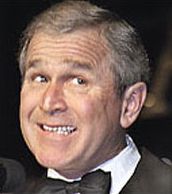
Senate Majority Leader Bill Frist (R-Tenn.) will not run for president in 2008. Frist issued a statement on his Web site this morning announcing the decision (read the full text below). His decision was first reported in Hotline's On Call blog. He will not immediately endorse any of the other candidates pursuing the race, a source close to Frist said.

Shucks. I was looking forward to a replay of some of the highlights of Doctorbill's Senate career, in particular his distinguished service as Senate majority leader. You know, like his famously reptilian performance in the matter of poor brain-dead Terry Schiavo, whom he resurrected diagnostically via film clips.

Besides, isn't Tennessee supposed to supply the GOP's comic-relief presidential candidates? Does this mean that Lamar Alexander will have to run again? (I hope he's still got the plaid shirt, which I have a feeling he doesn't wear a lot outside election seasons.)

Of course, Tennessee has a brand-new Republican senator. Just today, though, Al Kamen, dubbing Sen.-elect Bob Corker "The Constant Campaigner," reported in his "In the Loop" column":

On Nov. 8, the day after his election, even before heading to Walt Disney World, his office prepared papers to file with the Federal Election Commission changing his campaign's name from Bob Corker for Senate 2006 to Bob Corker for Senate 2012.

Well, at least he didn't change it to 2008, as most everyone else in the House and Senate is doing.


Whoa, let's not take anything for granted there, Al. I know the guy hasn't served a day in the Senate yet, but by 2008 he'll have a full half term's worth of experience. Besides, he has access to those people who did the ad portraying his Democratic Senate opponent, Harold Ford, as a Playboy-style carouser, with those luscious racial overtones. I'm afraid Corker just may have to take this one for the team.

Mags says: BARACK COULD HAVE ASKED HIS ELDERS

In case you hadn't heard, for what it's worth, Illinois Sen. Barack Obama is now officially the most liked Democrat, according to a new Quinnipiac poll, with a "likeability" score of 58.8. (If you're trying to figure out what it's worth, consider that our Barack was handily out-"likeabled" by Rudy Giuliani--yes, Rudy Giuliani--who scored a monster 64.2. Any poll that finds Rudy the most "likeable" of any group of people is probably crying for a recount.)

And as has been widely reported--and debated--Obama has been invited by Pastor Rick Warren to speak this weekend at the Saddlebrook Church's second annual Global Summit on AIDS and the Church, prompting howls from the left and the right.

Mags has some thoughts to share with the senator:

Barack Obama could have asked one of us oldsters to get his bearings on the evangelical-Democratic connection if indeed there needs to be one. (To be honest, it is more accurate not to call the religious right "evangelical," because there are many evangelicals who should be insulted to be lumped together with the religionists who call themselves evangelicals and fundamentalists these days.)

But Barack, being the overachieving youngster he is, decided to go full speed ahead. Poor kid decided to accept an invitation from Rick Warren (of Purpose Driven Life fame) to speak at the Saddleback Church in California.

What's the problem? In spite of the fact that Obama chided Democrats in 2004 for not being Christian enough, and did the same as recently as June 2006 (in a keynote speech to Call to Renewal's "Building a Covenant for a New America" conference), it turns out that Barack is not Christian enough for the Christians either. In fact, some of them are telling him that he is downright evil. I am sure he didn't have a clue as to the state of his damned soul, but there it is on the Internet, so it must be true. A Christian commentator said so. (Blogger Howling Latina provides a helpful rundown of Obama's perceived sins.)

What many people do not understand about the religious right is that they did not get where they are today by being inclusive. The older you get, the more you realize that people like being exclusive. Look, the rich tried it long ago and liked it in the form of country clubs. Now the poor can do it in the form of self-righteous religionism. It only follows--everyone wants to be special, and even better if one can claim the hotline to heaven. Name-dropping God is the biggest of all.

Now that the religionists have latched onto abortion and gay marriage as all-purpose dogmas, they are unlikely to let either one go anytime soon. Abortion is such a useful issue. They get the emotional impact of calling women and physicians baby-killers, and they get to insert themselves (pun intended) into the reproductive lives (read sex lives) of women. Look, judgment is not just for the Taliban anymore. U.S. men and women have decided they like being involved in your morality of lack of it.

These two exclusions are easy. The rules are simple. No nuance. No exceptions. No mercy. Pastor Ted will be able to tell you all about it.

Sorry, Barack, they do not want your kind of Christianity. They have spent decades being particular, and now that the Republicans have financed and used this segment of our population by rewarding their ignorance and their diminished ability to think logically with political clout, well, let's just say they are not open to you or your kind of outreach.

Here is the down low on this. The stalwarts will not change. There is no motivation to change. They are the most special of the most special. They have religious leaders to tell them exactly what is right and wrong, thus simplifying their lives and relieving them of the rational fears with which we all must grapple. They have a community within a bubble. There are no other reference points. They reinforce each other, no matter how insane, no matter what reality tells them. Like a dysfunctional family, they will allow no outsiders in. They might hear the truth or something they will later have to explain to their flock. Too much risk in letting the outside in.

We could have told you that, Barack. But you assumed that no one had ever tried to start a discourse with the right wing. Your smugness about your religion as opposed to us godless leftists just did not pay off. You will learn the lesson George Bush learned. If you do not cater to them on all points, then you are not welcome among them. They will shun their own for much less.

This might be your bump in the road. Popularity and good looks do not a president make. Don't believe everything the media tells you about why elections are won or lost. Next time you take your elders to task, as you did in 2004, check out the reality on the ground. We cannot afford to rearrange the basics of freedom for these people. If you aren't going to sell out women and gays, they don't want you. If you are, we won't want you.

Give the Pastor Teds and some other disgruntled right-wingers time to do the work. Let the Jesus Camps speak for themselves, and let the world march on without these people. Let them discover how corrupt their leaders are, and how bankrupt their philosophies are. A little more time, experience, and soul-searching might be of value to both you and the religious right.

Quote of the day: In Estonia, Chimpy the Prez shows that he's not goin' to say "civil war" and you can't foment him into sayin' it so don't even try

"There's a lot of sectarian violence taking place [in Iraq], fomented in my opinion because of the attacks by Al Qaeda causing people to seek reprisal."
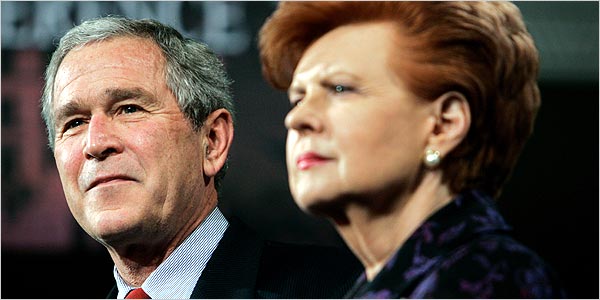
--President Bush, at his news conference yesterday in Estonia, en route to Latvia for the NATO summit meeting (he's seen above in Riga with Latvian President Vaira Vike-Freiberga)

Actually, you don't get the full measure of the quality of the president's, er, "thinking"--the degree to which his "opinion" is based on not having the quaintest clue what's going on--unless you hear him running on about all that fomentin' going' on in Iraq. (Thank you, Keith Olbermann.) Given the level of fantasy and delusion going on here, there seems hardly any point in pointing out that any strength that Al Qaeda has in Iraq (and never mind that American military mouths were dismissing it just a week or two ago) is wholly owing to our efforts.

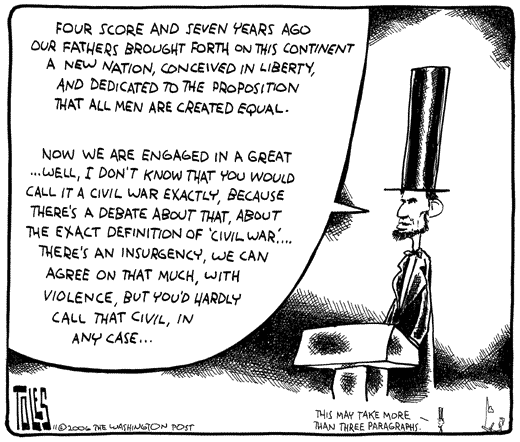
Of course, the president's immediate language problem was the desperate need to avoid the forbidden words "civil war." If we have any hope of making sense of this, we would do well to turn to the cartoon world. (Or perhaps we should say we're turning from an unintentional cartoon to an intentional one.)

Tuesday, November 28, 2006

A question for our times: Please tell me it isn't necessary to explain now who Gen. Jack D. Ripper is (purity of essence, purity of essence)


I paused before posting Hendrik Hertzberg's creepy portrait of Dr. Eric Keroack, Chimpy the Prez's eerie choice to oversee "population services" in the Dept. of Health and Human Services. What gave me pause was Hertzberg's brilliantly evocative description of Dr. Keroack as "a sort of family-friendly version of General Jack D. Ripper." What gave me pause--and I'm sure the matter must have been discussed in the New Yorker copy department too--was whether readers would know who Gen. Jack D. Ripper is.

I would love to be embarrassed here, to be barraged with scornful assurances that of course everyone knows. But I worry all the same. Stanley Kubrick's stupefyingly great Dr. Strangelove, or How I Learned to Stop Worrying and Love the Bomb is 42 years old. Forty-two! (Yikes!) What's worse, it's in black and white. I keep hearing that you can't pay people to watch black-and-white movies nowadays.

So I just don't know whether you can now make casual reference to General Ripper, the Air Force base commander who goes completely nuts and, to protect the "purity of essence" of our bodily fluids against the demon Russkies, sets nuclear war in motion. In a film overflowing with astonishing performances, let's just say that there is none better than Sterling Hayden's glorious incarnation of the daffy Ripper (our opening photo).

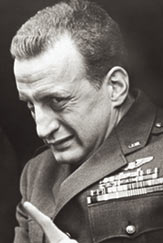
I think my favorite line in the movie, though, is merely spoken about General Ripper. It's the reluctant, hedged-six-ways-to Sunday admission by gum-chewing Gen. Buck Turgidson (George C. Scott, above), in response to President Merkin Muffley's persistent questions, that in launching a nuclear attack it appears that General Ripper "may have exceeded his authority."

Candid admission: I didn't know President Muffley's name. I had to look it up.

Say, while we're on the subject, I don't suppose we have room here for a picture of President Muffley--one of Peter Sellers' three amazing role assumptions in the picture. Oh, come on, let's see if we can't just squeeze him in.

Whether he's trashing Anita Hill or habeas corpus, Arlen Specter can always be counted on to do . . . well, what he thinks is best for him

"If Specter has accommodated his views to his party's, his leisure habits have not changed: he still plays squash seven days a week, a routine that he has maintained since the nineteen-seventies."
--Jeffrey Toobin, in "Killing Habeas Corpus," in the current (Dec. 4) New Yorker

Now Jeffrey Toobin is a fine writer on legal matters, and I enthusiastically commend this piece, which works a pretty decent profile of Arlen Specter into an excellent chronicle of the passing of the appalling Military Commissions Act of 2006, one of the low points of even this mind-numbingly dreadful session of Congress. But I keep coming back to this sentence.

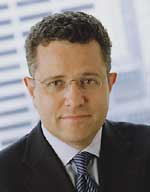
Every writer, I imagine, gets stuck. One of the most familiar ways is the need for some sort of transition to get you from point A to point B when there really isn't any logical one. And maybe that's all that happened to Toobin (pictured at left) here. Having accomplished his tidy survey of the flips and flops of Specter's political survival, he wants to get into the subject of the senator's pretty remarkable literal survival, highlighted by his grimly determined battles against a brain tumor in 1993 (when he "was told that he had three to six weeks to live") and his late-2004 diagnosis of Hodgkin's disease ("during the first several months of his tenure as chairman of the Judiciary Committee [in 2005] he received chemotherapy," and he "never stopped playing squash").

And yet, there is that bizarre transition. There is no question in Toobin's mind, and certainly not in his account, that Specter has indeed "accommodated his views to his party's," meaning that he has submerged his famous "moderate" political views to those prevailing in his party. It was clear pretty much overnight, for example, when the Republicans retook control of the Senate in the 2004 election:

At a press conference on the day after he was reëlected in 2004, Specter repeated a view he had expressed many times, saying that he regarded the protection of abortion rights established by Roe v. Wade as "inviolate," and suggesting that "nobody can be confirmed today" who didn't share that opinion. Almost immediately, conservative groups in the Republican Party demanded that Specter be denied the chairmanship. Protesters chanted outside his office and inundated the Senate switchboard with telephone calls.

After a series of tense meetings with his Republican colleagues, Specter was allowed to take over as chairman of the committee, but he had to make certain promises, especially about Bush's nominations to the Supreme Court. "I have voted for all of President Bush's judicial nominees in committee and on the floor," Specter said in a carefully worded statement at the time. "And I have no reason to believe that I'll be unable to support any individual President Bush finds worthy of nomination." In the subsequent two years, Specter was as good as his word, shepherding the nominations of John G. Roberts, Jr., and Samuel A. Alito, Jr., to confirmation to the Supreme Court. Nearly two decades earlier, Specter had provided a key vote against Ronald Reagan's nomination of Robert H. Bork to the Court, but as chairman of the Judiciary Committee he became an advocate for two new Justices whose views resembled Bork's.


And, as Toobin's chronicle shows, Specter's willing accommodation to the Right became clear again in the battle over the rights of "enemy combatant" detainees, where he wound up voting for a bill that--in fairly clear violation of the Constitution--legislates the suspension of perhaps this country's most fundamental legal right, that of habeas corpus.

I'm sure that Toobin knows there's nothing logical about this transition. What on earth could Specter's squash-playing have to do with his political twisting and turning?

But maybe Specter, the happily outgoing chairman of the Judiciary Committee (come on--Arlen Specter for Pat Leahy [right]? talk about a one-sided trade) just lends himself to curious transitions. He is one of the more curious denizens of the Senate in my alarmingly long time observing it. Not one of the best, or even one of the better senators. At the same time, certainly not one of the worst. (There's always heavy competition for that distinction.) There's just something, well, curious about him and his career that keeps drawing you back. Well, keeps drawing me back anyway.

Maybe the thing is that Specter himself probably thinks he numbers among the handful of greatest senators in the history of our republic. He would probably be happy to tell you so, without your even asking.

What can make Specter's Senate career so tricky is that Pennsylvania has an authentic tradition of prominent moderate Republicans, people like onetime Gov. William Scranton and Sens. Hugh Scott and John Heinz. Specter made believe he came in that tradition. And maybe, in less poisoned political times, he was--that is, before the Republican Party sold its soul to the devil.

The juxtaposition of Specter with Heinz [right] is curious. Specter entered the Senate in 1981, four years after Heinz, and they served together for 10 years. The plane crash that killed Heinz leaves us no way of knowing how he would have responded to the changing political times. He died on April 4, 1991. As an example, the Supreme Court nomination of Clarence Thomas--which we're about to talk about--was announced by the first President Bush three months later, on July 8.

For most of us, it's easy to date Specter's ascension to the upper ranks of the Public Enemy list: Clarence Thomas's 1991 Supreme Court confirmation battle. The televised Senate Judiciary Committee hearings in which Anita Hill testified to what she claimed was Thomas's repellent behavior when he was her boss at the Equal Employment Opportunity Commission offered a rare glimpse into two wildly different philosophies of governing, indeed of life:

The committee Democrats, headed by then-chairman Joseph Biden, quaintly assumed that it was their job to get the facts. The Republicans, however, clearly didn't give a damn about the facts; all they wanted was to get their way--in this case, to ram the Thomas nomination through, no matter what it took. And what it took, from Senator Specter, was a vile trashing of Hill that had nothing to do with the facts. Drawing on his experience as a prosecutor, he did a dance of crude character assassination.

Of course I can't say for sure what Specter did or didn't know. I can only say that he's not a moron, and it seemed to me pretty clear at the time of the Thomas-Hill hearings that only a moron could possibly not know that Hill was telling the truth and Thomas was lying. It should have been a matter of personal embarrassment that there were morons among the Republicans on the Judiciary Committee at the time, but as far as Anita Hill was concerned, it really didn't matter. The committee Republicans' marching orders were to get Clarence Thomas confirmed, and that's what they were by God going to do--facts, schmacts.

Astonishingly, though, Specter seems to think that his disgraceful conduct in those hearings is grounds for pride:

In his autobiography, "Passion for Truth" (2000), he writes with pride about his work as a young investigator for the Warren Commission; as a crusading Philadelphia district attorney; and as an aggressive cross-examiner of Anita Hill in Clarence Thomas's Supreme Court confirmation hearings. He has, he wrote, a "fetish for facts," and faith in proceedings like habeas corpus to protect individual rights

I don't know what it all goes to show. I guess maybe that there is a breed of politician as dangerous as, if not more dangerous than, the easy-to-read extremist ideologues like former Sens. Jesse Helms and Rick Santorum or former House Speaker Newt Gingrich. These are the people who claim to be pragmatists guided by unshakable (indeed often biblical) principle, and yet who on closer inspection seem to have no principle higher than their own self-adoration.

Thinking about these people usually depresses me, and my response to the Toobin New Yorker piece has been no exception. The one surprise is that in this round of morbid speculation, I've found myself shading into thinking about the nearest thing Arlen Specter has to a senatorial twin, another legend in his own mind, Holy Joe Lieberman. You get that same smarmy, smug self-certainty, with an added layer of unpleasantness that may be generational, a product of the fact that Holy Joe is a dozen years younger: the heavy tinge of corruption in his career, the cash-and-carry history of corporate whoring that makes his quasi-rabbinical pretensions even more obnoxious.

(Somebody is bound to point out the disturbing coincidence, if it is a coincidence, that Specter and Lieberman are both Jewish. I'm just pointing it out before someone hurls the deadly charge of anti-Semitism. In fact, I and most of the Jews I know rate both of them high on our enemies' list. And I would point out that Holy Joe has gone even farther than our Arlen toward making himself the anti-Semites' favorite Jew.)

Jeez, now I'm really depressed.

Quote of the day: Hendrik Hertzberg offers his take on the rocky start to the new era (or perhaps "news cycle") of cooperation in Washington

"Who knows, really, what this President has been taught by this month’s election? The present President Bush, after all, is a decider of decisions, not a learner of lessons. And he likes to decide that he was right all along."
--Hendrik Hertzberg, in his New Yorker "Comment" piece this week (Dec. 4), "It's His Biparty"

In the wake of the midterm congressional election, Hertzberg notes, President Bush announced "a new era of cooperation" with the Democrats who are preparing to take over control of both houses. Hertzberg suggests, though, that "The new era of coöperation may or may not be definitively dead, but at the moment it appears to have been not so much an era as a news cycle."

He runs down the most blatant symptoms (with appropriate descriptive detail):

• resubmission of the failed nomination of U.N. Åmbassador John Bolton [right--"the man's resemblance to Yosemite Sam does not end with his mustache"] to his job (with discussion of backup plans to keep Bolton on the job without Senate approval beyond the term permitted by his recess appointment)

* renomination of the highly partisan ideological hack Kenneth B. Tomlinson, whom one would have thought had come out on the dark side of enough government investigations by now to be disqualified from any kind of legitimate employment, to be chairman of the Broadcasting Board of Governors

• renomination of four of the least qualified candidates ever to be considered, let alone actually nominated, for federal judgeships

• appointment of "one Eric Keroack," a certifiable fake-Christian loon, to be in charge of "population affairs" at the Dept. of Health and Human Services (this one you have to hear about--see below for more)

He concludes:

Perhaps what we are seeing is one last White House attempt to reënergize the legendary "base," after which the new era of coöperation will resume. Or perhaps the President has simply reverted to type. Last week, he found himself in Vietnam, where the United States once fought a big, bloody, disastrous war of choice. In Hanoi, which under its nominally Communist rulers is more vibrantly capitalist than Ho Chi Minh City ever was when it was called Saigon, he was asked if the American experience in Vietnam offered any guidance about Iraq. "One lesson is that we tend to want there to be instant success in the world, and the task in Iraq is going to take a while," he replied, and added, "We'll succeed unless we quit." What did he mean? That the peaceable, bustling, unthreatening (if unfree) Vietnam of today represents an American success, made possible by the fact that we didn't quit until fifty-eight thousand Americans and three million Vietnamese were dead? Or that it represents an American failure, which would have been averted by another decade of war, another fifty-eight thousand, another three million? Who knows? And who knows, really, what this President has been taught by this month's election? The present President Bush, after all, is a decider of decisions, not a learner of lessons. And he likes to decide that he was right all along.


ABOUT DR. KEROACK—"a sort of family-friendly version of General Jack D. Ripper"

Here's what Hertzberg has to say about our new chief of "population services" in HHS:

On November 16th, Bush appointed one Eric Keroack to be the new chief of "population affairs" at the Department of Health and Human Services. In this post, Dr. Keroack, a gynecologist, will oversee what is called Title X, a Nixon-era program that distributes contraceptives to poor or uninsured women. Until recently, he was the medical director of a Christianist pregnancy-counselling organization that regards the distribution of contraceptives as "demeaning to women." One of his odder theories makes him a sort of family-friendly version of General Jack D. Ripper. In Keroack's case, the precious bodily fluid of concern is the hormone oxytocin, a.k.a. "God's Super Glue." Apparently, oxytocin is released during certain enjoyable activities, including hugging, massage, and, of course, sex. It is also, according to Keroack, the fluid that keeps married couples bound to each other. Therefore, if a young woman squanders her supply on too much fooling around, she can forget about ever becoming a committed wife. Keroack's appointment, unlike the others, does not, alas, require Senate confirmation.


POSTSCRIPT: ABOUT GEN. JACK D. RIPPER

Even before I originally posted this item, I worried whether everyone would know who Gen. Jack D. Ripper is. If you don't know, or just would like to see a picture (hey, we've also got Gen. Buck Turgidson and President Merkin Muffley), click here.

Follow-up on the news: NYS Comptroller Alan Hevesi easily won reelection, but there doesn't seem much chance that he can survive in office

Before the election, I expressed anguish over the damnably and unaccountably stupid behavior of New York State Comptroller Alan Hevesi ("What happens when good people do bad things?"), a man I've admired for a lot of years, for a long time as a sensible, principled state assemblyman from Queens, then for two terms as New York City comptroller. I noted that I voted for him in the 2001 Democratic primary for mayor of New York City, which had its aborted first run on that least auspicious Election Day, Sept. 11.

Hevesi's troubles began when his obscure reelection opponent charged that he had regularly used a state employee to chauffeur his ailing wife. Unfortunately, it was true--and to make matters worse, he had already gotten in trouble for doing this while he was New York City comptroller. He had every reason to know this wasn't allowed, even if he had honestly intended to reimburse the state--an intention that was put in doubt by his not having done any reimbursing until he finally made an inadequate initial payment after the matter became public. He has offered the lame "explanation" that Mrs. Hevesi needed a state driver for some kind of "security" reasons.

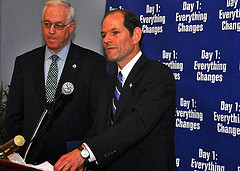
The release of a damning State Ethics Commission report not long before the election seemed to seal the comptroller's doom, not least because the certain-to-be-elected new governor, State Attorney General Elliot Spitzer (they're seen together here in happier times), commented publicly that he had read the report carefully, and subsequently withdrew his endorsement of his fellow Democrat. Other state Democrats running for election or reelection fled from him.

Of course, state Republicans had thought so little of their prospects in the state comptroller's race that their nomination went to a barely known upstater, Saratoga County Treasurer J. Christopher Callaghan. Nevertheless, the New York Times took the extraordinary step of endorsing the unknown and clearly underqualified Callaghan. It was hard to argue the case: How could Hevesi possibly continue to serve as the state comptroller, whose primary responsibility is to serve as a watchdog over state expenditures to ensure their legitimacy?

Well, to the shock of no one, Hevesi was reelected, and by a fairly convincing 56 to 39 percent. (For what it's worth, I voted for him. I mean, what else could I do?) However, there are still several investigations underway, and on Nov. 17, Danny Hakim reported in the Times ("Spitzer Is Seen as Likely to Seek Hevesi's Ouster"):

Governor-elect Elliot Spitzer will almost certainly ask the State Senate to remove Comptroller Alan G. Hevesi, who used a state worker as a chauffeur for his ailing wife, after the new term begins in January, people involved in the discussions said on Thursday.

Mr. Spitzer, the attorney general until the end of the year, is awaiting the outcome of three inquiries into Mr. Hevesi's conduct--including one by his own office, from which he has recused himself--before he makes a final decision.

But the governor-elect is inclined to push for Mr. Hevesi's removal based on information disclosed in a scathing State Ethics Commission report issued last month, the people involved in the discussions said. Those people spoke on condition of anonymity because Mr. Spitzer's decision is not final.

''While a personally painful decision, it's an easy decision because the facts are clear,'' said one person with knowledge of the governor's thinking on the issue. ''What would the drive for greater accountability and a higher ethical standard mean if you tolerated that level of abuse? He will move swiftly and aggressively to remove him.''


In a way, outgoing Republican Gov. George Pataki was let off the hook by the circumstances of the timing. He could have tried to remove Hevesi from office, but of course any action he took would have applied only to Hevesi's current term as comptroller, with no direct bearing on his reelection.

What happens next? (Always bearing in mind, of course, that those ongoing investigations might affect the course of events. Realistically, though, they seem hardly likely to do anything except make Hevesi's position even more untenable.)

The Legislature can remove a statewide elected official in two ways. The Democratic-controlled Assembly could vote to impeach Mr. Hevesi. A trial would then be held in the Republican-controlled Senate, which would be joined by judges from the state's highest court, the Court of Appeals. A two-thirds vote would be required to remove him.

Under the second procedure, the governor could call the Senate into session. A trial would then be held, and a two-thirds vote would be needed to remove Mr. Hevesi.

Because Assembly Speaker Sheldon Silver, a Democrat, has been supportive of Mr. Hevesi, Mr. Spitzer is more likely to refer the matter to the Senate, whose Republican leaders have called on Mr. Hevesi to resign. Many Democratic senators are also likely to be swayed by the new governor, who just won election by a record margin.

The Senate has never removed a statewide elected official from office under the second of these procedures. If it chose to do so with Mr. Hevesi, its action might be subject to legal challenge, some political analysts have said. In 1913, the Assembly impeached Gov. William Sulzer, and he was removed after a trial in the Senate.

If the Senate removed Mr. Hevesi, the governor would choose his successor. But if Mr. Hevesi resigned, the Legislature as a whole would choose his replacement, giving control to the Democrats.


POSTSCRIPT: WHY A LOT OF US VOTED FOR HEVESI

The day after Hakim's piece appeared, the Times published the following letter to the editor, which pretty well describes my feelings too:

To the Editor:

Re ''Spitzer Is Seen as Likely to Seek Hevesi's Ouster'' (front page, Nov. 17):

Alan G. Hevesi's remark that ''millions of New Yorkers elected me by an overwhelming percentage to serve another four-year term as comptroller'' and ''that is what I intend to do'' may be wishful thinking.

Rather than allowing his ill-considered behavior to wound his party twice over, I voted for him in hopes of keeping the comptroller's office in the Democrats' hands until the investigations are completed, and then having him replaced by a qualified and more circumspect Democrat.

Harold Stone
New York, Nov. 17, 2006

Monday, November 27, 2006

Today we find ourselves not particularly trusting the Washington Post's reporting or editorializing, but loving its editorial cartoonist


We've already expressed doubt this morning about the independence of mind of the Washington Post's news judgment. Now it's the turn of the paper's editorial page, which wants to bully congressional Democrats into talking to His Imperial Majesty Tiny George Bush about Social Security:

THE BUSH administration has signaled that it wants to discuss Social Security reform with the incoming Democratic majority in Congress. This may sound quixotic: President Bush failed to secure reform when his own party controlled the legislature, so what hope does he have now? But the president's top economic advisers, including his Treasury secretary, his chief of staff and his budget director, appear ready to drop what Democrats call privatization--the diversion of payroll tax revenue into personal retirement accounts. Unless they want to define themselves as unbendingly partisan, the Democrats should accept the administration's invitation to discuss reform.

Let's pass over this business of "what Democrats call privatization." (This wasn't written by Karl Rove, was it? It is, after all, the Bush administration that always makes up names for its policies which distort or flatly contradict their actual intent. "Privatization," after all, is what most non-ideologues call the administration's scheme.) Now, I see no harm in Congress talking about anything--as long as it isn't being suckered into a propaganda ambush, which as far as I know is the only way this administration knows how to "negotiate."

But it's kind of astonishing that the Post editorial writer has the historically oblivious gall to assume, in defiance of the administration's entire record, that it is acting in good faith, while it's the Democrats who have something to prove. It makes you wonder if the editorialists ever look at their own brilliant editorial cartoonist. (See above.)

Is it just a propaganda offensive from drug companies and their GOP allies, or is the prescription-drug benefit actually working?


Is it possible that the Medicare prescription-drug program has been a success?

According to yesterday's Washington Post ("Success of Drug Plan Challenges Democrats; Medicare Benefit's Cost Beat Estimates"), it "has proven cheaper and more popular than anyone imagined."

It's not entirely surprising to learn that "drug-company lobbyists, Bush administration officials and many congressional Republicans are preparing to block any effort to increase federal control over drug prices, saying the Medicare benefit is working well."

Already this sounds suspicious, though, because "increase federal control over drug prices" is lobbyist-speak for what most of us would describe as "try to alter the prohibition in the drug-benefit enabling legislation which explicitly banned the government from attempting to negotiate lower drug prices." You do have to wonder--even though you know of course that Washington Post editors and reporters would never, ever let themselves be used as propagandists for the administration and its private-sector partners in the drug and insurance industries.

However, Lori Montgomery and Christopher Lee do report:

Polls indicate that more than 80 percent of enrollees are satisfied, even though nearly half chose plans with no coverage in the doughnut hole, a gap that opens when a senior's drug costs reach $2,250 and closes when out-of-pocket expenses reach $3,600. By the latest estimates, 3 million to 4 million seniors will hit the doughnut hole this year and pay full price for drugs while also paying drug-plan premiums.

The cost of the program has been lower than expected, about $26 billion in 2006, according to the nonpartisan Congressional Budget Office. The cost was projected to rise to $45 billion next year, but Medicare has received new bids indicating that its average per-person subsidy could drop by 15 percent in 2007, to $79.90 a month.

Urban Institute President Robert D. Reischauer, a former director of the Congressional Budget Office, called that a remarkable record for a new federal program.


As someone who has written on a number of occasions that the program was a scam being perpetrated on senior citizens for the benefit of the drug and insurance companies (who certainly seem to be making out like bandits from it), I would love to know if I've been wrong. I admit that I'm unrepentantly suspicious, since it doesn't seem logical that everyone involved is coming out ahead financially and the cost is lower than anyone anticipated. If it is true, I'm inclined to think that it goes beyond good news into the realm of the miraculous.

In which case, I guess we should all shout "Hallelujah!" But first, could we have some independent verification? Believe it or not, this would not be the first time that the Bush administration has used the strategy of getting its story out first, even though the story turns out to be a pack of lies. By my count, it would be closer to, uh, the zillionth time. And I'm embarrassed to have to point out that on a fair number of those occasions, the Washington Post indeed has lent its news space to the propaganda campaign.

Perhaps Mr. Krugman, whose interest in the Medicare prescription-drug benefit is well-established, will be looking into it?

Quote of the day: That mean Bob Herbert won't even give Chimpy the Prez credit for his brilliant Iraq strategy: Let's all shop till we drop!

"The soldiers in Iraq are fighting, suffering and dying . . . anonymously and pointlessly, while the rest of us are free to buckle ourselves into the family vehicle and head off to the malls and shop."
--Bob Herbert, in his NYT column today, "While Iraq Burns"


As we reported, last week on Keith Olbermann's Countdown, Lawrence O'Donnell Jr. quoted "a military relative" of his saying "that the American military is at war, but America is not at war."


November 27, 2006
Op-Ed Columnist

While Iraq Burns
By BOB HERBERT

Americans are shopping while Iraq burns.

The competing television news images on the morning after Thanksgiving were of the unspeakable carnage in Sadr City--where more than 200 Iraqi civilians were killed by a series of coordinated car bombs--and the long lines of cars filled with holiday shopping zealots that jammed the highway approaches to American malls that had opened for business at midnight.

A Wal-Mart in Union, N.J., was besieged by customers even before it opened its doors at 5 a.m. on Friday. "All I can tell you," said a Wal-Mart employee, "is that they were fired up and ready to spend money."

There is something terribly wrong with this juxtaposition of gleeful Americans with fistfuls of dollars storming the department store barricades and the slaughter by the thousands of innocent Iraqi civilians, including old people, children and babies. The war was started by the U.S., but most Americans feel absolutely no sense of personal responsibility for it.

Representative Charles Rangel recently proposed that the draft be reinstated, suggesting that politicians would be more reluctant to take the country to war if they understood that their constituents might be called up to fight. What struck me was not the uniform opposition to the congressman's proposal--it has long been clear that there is zero sentiment in favor of a draft in the U.S.--but the fact that it never provoked even the briefest discussion of the responsibilities and obligations of ordinary Americans in a time of war.

With no obvious personal stake in the war in Iraq, most Americans are indifferent to its consequences. In an interview last week, Alex Racheotes, a 19-year-old history major at Wesleyan University in Connecticut, said: "I definitely don't know anyone who would want to fight in Iraq. But beyond that, I get the feeling that most people at school don't even think about the war. They're more concerned with what grade they got on yesterday's test."

His thoughts were echoed by other students, including John Cafarelli, a 19-year-old sophomore at the University of New Hampshire, who was asked if he had any friends who would be willing to join the Army. "No, definitely not," he said. "None of my friends even really care about what's going on in Iraq."

This indifference is widespread. It enables most Americans to go about their daily lives completely unconcerned about the atrocities resulting from a war being waged in their name. While shoppers here are scrambling to put the perfect touch to their holidays with the purchase of a giant flat-screen TV or a PlayStation 3, the news out of Baghdad is of a society in the midst of a meltdown.

According to the United Nations, more than 7,000 Iraqi civilians were killed in September and October. Nearly 5,000 of those killings occurred in Baghdad, a staggering figure.

In a demoralizing reprise of life in Afghanistan under Taliban rule, the U.N. reported that in Iraq: "The situation of women has continued to deteriorate. Increasing numbers of women were recorded to be either victims of religious extremists or ‘honor killings.' Some non-Muslim women are forced to wear a headscarf and to be accompanied by spouses or male relatives."

Journalists in Iraq are being "assassinated with utmost impunity," the U.N. report said, with 18 murdered in the last two months.

Iraq burns. We shop. The Americans dying in Iraq are barely mentioned in the press anymore. They warrant maybe one sentence in a long roundup article out of Baghdad, or a passing reference--no longer than a few seconds--in a television news account of the latest political ditherings.

Since the vast majority of Americans do not want anything to do with the military or the war, the burden of fighting has fallen on a small cadre of volunteers who are being sent into the war zone again and again. Nearly 3,000 have been killed, and many thousands more have been maimed.

The war has now lasted as long as the American involvement in World War II. But there is no sense of collective sacrifice in this war, no shared burden of responsibility. The soldiers in Iraq are fighting, suffering and dying in a war in which there are no clear objectives and no end in sight, and which a majority of Americans do not support.

They are dying anonymously and pointlessly, while the rest of us are free to buckle ourselves into the family vehicle and head off to the malls and shop.

Sunday, November 26, 2006

Stop the presses! According to the AP, it turns out that you can too buy happiness! (No, really--these professors have got it all figured out)

What's more--although the news doesn't seem to have reached Princeton--this one psychologist guy is convinced that "very rich people rate substantially higher in satisfaction with life than very poor people do, even within wealthy nations."

Oops, sorry! We should have warned you to make sure you were sitring down for that news.


Money-Happiness Link Is Complex, Study Says
Researchers Debunk Myth That Money Doesn't Buy Happiness

By MALCOLM RITTER, AP

NEW YORK (Nov. 26) -- Does money buy happiness? It's sometimes said that scientists have found no relationship between money and happiness, but that's a myth, says University of Illinois psychologist Ed Diener [right]. The connection is complex, he says. But in fact, very rich people rate substantially higher in satisfaction with life than very poor people do, even within wealthy nations, he says.

"There is overwhelming evidence that money buys happiness," said economist Andrew Oswald [left] of the University of Warwick in England. The main debate, he said, is how strong the effect is.

Oswald recently reported a study of Britons who won between $2,000 and $250,000 in a lottery. As a group, they showed a boost in happiness averaging a bit more than 1 point on a 36-point scale when surveyed two years after their win, compared to their levels two years before they won.

Daniel Kahneman [right], a Nobel-Prize winner and Princeton economist, and colleagues recently declared that the notion that making a lot of money will produce good overall mood is "mostly illusory."

They noted that in one study, people with household incomes of $90,000 or more were only slightly more likely to call themselves "very happy" overall than were people from households making $50,000 to $89,999. The rates were 43 percent versus 42 percent, respectively. (Members of the high-income group were almost twice as likely to call themselves "very happy" as people from households with incomes below $20,000.)

But other studies, rather than asking for a summary estimate of happiness, follow people through the day and repeatedly record their feelings. These studies show less effect of income on happiness, Kahneman and colleagues said.

There is still another twist to the money-happiness story. Even though people who make $150,000 are considerably happier than those who make $40,000, it's not clear why, says psychologist Richard E. Lucas [left] of Michigan State University.

Does money make you happier? Or does being happier in the first place allow you to earn more money later, maybe by way of greater creativity or energy? Or does some other factor produce both money and happiness? There's evidence for all three interpretations, Lucas says.

In any case, researchers say any effect of money on happiness is smaller than most daydreamers assume.

"People exaggerate how much happiness is bought by an extra few thousand," Oswald said. "The quality of relationships has a far bigger effect than quite large rises in salary.... It's much better advice, if you're looking for happiness in life, to try to find the right husband or wife rather than trying to double your salary."

Snapshot no. 1 from Jebworld: Okay, so it's not much of a library, but what should you expect when you enter the belly of KGB headquarters?

I mentioned recently that the morning after the election I headed for Florida to deal with too-long-postponed family matters. I mentioned at the time that I have two little vignettes of Life in Jeb Bushworld that I want to share.

I don't claim that they're scandals of an order to qualify as Turning Points in the Revolution. There may even be explanations of sorts for them. And I don't intend to make great research projects or crusades of them. I offer them merely as vignettes--call them snapshots of "Your Gov't at Work (or Whatever)" in the realm of Chimpy the Prez's Smarter Brother.

I have to back up a bit. When my stepfather's health forced my folks to move south in the '70s, "Aventura" was still an unincorporated chunk of the northeast corner of Florida's Dade (now Miami-Dade) County, a shimmering glimmer in the greedy eyes of the developers who envisioned, well, the developers' paradise the present-day City of Aventura ("the City of Excellence," it proclaims at every opportunity) has become.

One of the bright spots was the coming of the Northeast Dade Regional Library. It was, well, a really nice library. In more recent years my mother grumbled about the librarians in charge, but that may have been because their predecessors set a high standard. It was a placed filled with people soaking up information, a place filled with reading materials--and, yes, listening and viewing materials, and also computers that anyone could sign up to use. It was a genuine community resource--an abundant source for community-oriented materials, and even a gathering place.

It was, in other words, a demonstration that government can do things right, sometimes.

Then came the horrible hurricane season of 2005. Obviously, what lodged in the national memory--such as it is--is the devastation of New Orleans and the nearby Gulf Coast. Heck, it's not even clear that the nation remembers that. So there was never much room for national awareness of how badly some of those storms hit Florida. And especially with consciousness focused on the devastation to the west, Governor Jeb's standard of "preparedness" was adequate to forestall the kind of nasty finger-pointing attention that, it seems to me, began the unraveling of his brother's presidency.

You always hear in Florida how popular Governor Jeb is. The assurances of his popularity are always accompanied by a laundry list of issues on which a large number, often a majority, of Floridians disapprove of his administration. This popularity of his often seems to me kind of like the celebrity of those celebrities who are famous for being famous--is it possible that his popularity is just on account of how popular he is?

To return to 2005, I had to look it up, but it was Hurricane Wilma that more or less blew off the roof of the Northwest Miami-Dade Regional Library. Clearly the structural damage was severe--and very likely so was the damage to the library's holdings. In the grand scheme of things, I suppose it's understandable that there were higher priorities in restoring life to something like "normal."

But that was a year-plus ago. I knew that for a while, at least, some sort of bookmobile was wheeled up to provide minimal library service to the community. But I hadn't heard anything recently, and wondered if the library itself had been reopened yet. I kept an eye on it as the bus from the airport passed the site. I wanted to react quickly enough to ring for the bus stop right in front if the library was open. I was imagining getting at one of the library computers--checking e-mail, catching up on Howie's day-after DWT election coverage, maybe adding a quick note of my own.

As the bus approached, it was easy enough to see that there were no cars in the library parking lot. Then I noticed that was a sort of fenced-in no man's land. As we passed, I noticed that there was a big sign posted on the fence, which seemed to say something about the library having relocated. When the bus reached its final destination, Aventura Mall, I was curious enough to walk back. Sure enough, the sign announced that the library had relocated to the Aventura Government Center.

The address was more or less on the route I would be walking to the senior residence where my mother lives now, so I decided to check it out.

I had already noticed an apparent recent discovery among local builders of the smoked-glass-and-chrome look, which seems to be their solution as development develops higher-rise developments. The Aventura Government Center turns out to be just such a monstrosity.

The lobby was not only nearly empty but--thanks to the light-blocking efficiency of that smoked glass--nearly dark. Off to one side was a lone desk with a lone guard. It was pretty much the way I imagined a new KGB headquarters would have looked if one had been built in the later years of the Soviet Union. (The smoked-glass-and-chrome look would suit Moscow about as well as it suits suburban Miami-Dade County.)

I headed for the desk and announced with something like excitement, "I haven't been to the new library yet."

"Is that where you want to go?" the guard said. In fairness, he was much more cordial than I imagine his counterpart would have been if this were actually KGB headquarters.

I said it was, and he instructed me to stand on a pair of feet emblazoned on the floor. After taking a picture (of sorts--it could as easily have depicted wheat harvest in Ukraine as yours truly), he handed me a peel-label "'pass" and directed me to a circular stairway up to the second floor. When I got there, I looked around, trying to find the new library. There were a few shelves with books (probably more than the "dozen" I remember telling people there were--though I think it's probably still fewer books than I own), a larger number of shelf units displaying DVDs, and a few tables--well filled with people, I should add (though 15 or so people would probably have been enough to accomplish that).

It's essentially what you see in the photo I found online, except that you might not guess from the photo that that's it. I know it is, because that's what I eventually asked the two women behind the desk, once I had given up looking for the rest of it and regained my powers of speech. "Is this all of it?" I said, pointing.

Even as I said it, I wished I could have found a less tactless way of asking. But that really was the question. And the answer was: yes.

It turned out that they do have computers--laptops that I might have been able to use if I had a library card, which I could get if I were a resident, or I could use my mother's card, I was told . . . but by then I just wanted to get out of the place. I paused long enough to ask if the library was being rebuilt.

"You mean the other library?" one of the women behind the desk said. Again, not overly tactful of me, forgetting that this was a library I was standing in. In my defense, I like to think that anyone who has ever been in an actual library could have made the same mistake. I figured the space might equally well have been a storage space if somebody hadn't gotten a juicy tax break or giveback for making believe that it's a library.

But I recovered quickly enough to confirm that yes, I was wondering about the other library. And I was told that yes, it is being rebuilt. I felt better than I had since I'd first set eyes on the KGB building. "It's such a nice library," I said.

Well, it was. Now, all this time later, it stands there looking as cared for and functional as the Chernobyl plant.

And I'm naive enough to be shocked. Shocked that a regional resource for information, knowledge and general community awareness has been allowed to all but vanish from public consciousness. Sure, I know there are priorities. But sometimes what people don't do tells us more about their priorities than what they do.


POSTSCRIPT

On the Miami-Dade Public Library System website where I found the photo, it accompanied this piece announcement:

Northeast Branch

The Northeast Branch Library has relocated to the mezzanine level of the Aventura City Hall located at 19200 West Country Club Drive. At 1,200 square feet, the new location is open and airy and will provide patrons a much needed improvement to their library experience.

Severe roof damaged caused by Hurricane Wilma forced the Northeast Branch Library to close its doors at its old site. At the new location, patrons can check out lap tops, DVDs or their favorite books.

The Northeast Branch Library will be open Monday through Friday from 8:30 a.m. - 5:00 p.m.


Two things:

First, what kind of library, branch or otherwise, is open only weekdays and never later than 5pm?

Second, is the writer of this bit of copy being intentionally deceptive? Or is he/she genuinely unaware that what was "relocated" was not a "branch" library but Miami-Dade's Northeast Regional Library? Somehow in the process of relocation the facility seems to have metamorphosed into a branch library. Frankly, I'm not sure that what's been put there qualifies for even that designation. (I'm guessing they had more books in that bookmobile they brought in right after the hurricane.) But I can't help wondering whether the history here has been deliberately obfuscated.

Of course, a bit of casual rewriting of history certainly fits in with the KGB motif they seem to be going for.

Quote of the day: Hear that thump-thump-thump? Could it be the sound of "other shoes" dropping as the Democrats prepare to take over Congress?

Senators Stevens and Inouye, outgoing and incoming chairmen of the defense appropriations subcommittee

"I don't see any monumental changes. If something is wrong [with the earmarks system] we should clean house, but if they can explain it and justify it, I will look at it."
--Sen. Daniel Inouye (D-Hawaii), incoming chairman of the Senate's defense appropriations subcommittee, to the New York Times's David D. Kirkpatrick, in "As Power Shifts in Congress, Pork May Linger"

Senator Inouye, you see, takes over from Sen. Ted "I'm the Chairman, So Shut Your Face" Stevens (R-Alaska) as chairman of the Senate subommittee that oversees defense appropriations. Inouye and Stevens, Kirkpatrick writes,

are the best of friends in the Senate, so close they call each other brother. Both are decorated veterans of World War II. They have worked together for nearly four decades as senators from the two youngest and farthest-flung states. And they share an almost unrivaled appetite for what some call political pork.

Mr. Stevens, an 83-year-old Republican, and Mr. Inouye, an 82-year-old Democrat, routinely deliver to their states more money per capita in earmarks--the pet projects lawmakers insert into major spending bills--than any other state gets. This year, Alaska received $1.05 billion in earmarks, or $1,677.27 per resident, while Hawaii got $903.9 million, or $746.05 per resident, according to Taxpayers for Common Sense, a nonpartisan group that tracks such figures.


"Meet the new cardinals, as the chairmen of the House and Senate appropriations subcommittees are known on Capitol Hill," writes Kirkpatrick.

Many have a lot in common with the Republicans they will succeed. All have worked for years to climb to their posts, where the authority to grant earmarks puts them among the most powerful lawmakers in Congress. Like Mr. Inouye and Mr. Stevens, many have developed unusual bipartisan camaraderie while divvying up projects. By longstanding, informal agreement, the majority typically doles out about 60 percent of the money for earmarks and lets the minority pass out the rest. And they form a united front against limitations on the earmark process.

“What is good for the goose is good for the gander," Senator Patty Murray, the Washington Democrat who is set to become chairwoman of the transportation subcommittee, said last fall in a speech defending an Alaska Republican's allocation of more than $200 million in federal money for a bridge to remote Gravina, Alaska, with a population of 50. It became notorious as the “Bridge to Nowhere."


Now, there are some crucial distinctions to be made here. "Pork"--a senator or representative's "bringing home the bacon" to his/her home state or district--is one thing. Not only is that not going to disappear, it probably shouldn't. Members of Congress, after all, are supposed to promote the interests of their constituents. Of course, we'd like to think that they also feel a responsibility to the welfare of the country as a whole, but this is an issue for another time. It really isn't the issue where earmarks are concerned.

Oh, it can be a delicate distinction, at least at the outset. As legislators become better at delivering pork to their states or districts, it starts to shade from "constituent service" into federal financing of their reelection campaigns. (My goodness, is it possible that we already have federal financing of campaigns? Well, at least where canny incumbents are concerned, you bet.)

The next step is the creepy one, though--when money begins to change hands for purposes other than the welfare of the legislators' constituents. The federal spending, after all, goes to people, and one thing we should have learned by now is that where there's money flowing, or even trickling, people are drawn to it like magnets trying to get their mitts on as much of it as they can grab off.

I suppose it started with honest businesspeople in senators' states and representatives' districts understandably directing their political contributions to candidates who showed the interest and ability to extract money from Congress for projects back home that had the happy result of putting government money in the contributor's coffers. And once this process takes hold, it is likely to escalate to the limit of the participants' consciences, or sense of shame, or fear of getting caught.

One of the great achievements of the Republican congresses during the GWB presidency has been the final stripping away of all conscience, shame and even fear of getting caught. As Kirkpatrick reminds us:

Earmarks became associated with corruption in Congress because of their role in bribery scandals involving the lobbyist Jack Abramoff and former Representative Randy Cunningham of California. But the number and cost of such projects has soared for years. The Congressional Research Service found that over the last 12 years, the number of earmarks had tripled to 16,000, worth $64 billion a year. Critics argue that the system fosters waste and cronyism by allowing individual lawmakers to direct federal money to pet projects with little vetting or oversight, often anonymously.

Longtime DWT readers are familiar with the way the most unabashedly corrupt GOP committee and subcommittee chairmen have used their positions controlling the valves on those giant money pipes to enrich themselves and their loved ones, cronies and just plain bribers. They have lots of ways of diverting a torrent of that cash flow into their money ponds, but earmarks have become one of the nifties. The dead-of-night stealth with which they're often inserted in legislation, along with the anonymity the perpetrators freely maintain, tells us all we need to know about the intentions of the earmarkers.

Or does it?

“I happen to be a supporter of earmarks, unabashedly," said Senator Tom Harkin of Iowa, the Democrat set to become chairman of the appropriations subcommittee for labor, health and human services. “But I don't call them earmarks. It is ‘Congressional directed funding.' "

Fourteen years ago, Mr. Harkin recalled, he started the practice of directing millions of dollars in defense spending each year toward breast cancer research. “Now, was that bad?" Mr. Harkin asked. “If you left it to the Defense Department, they never would have done it."


What can one say except that Senator Harkin is a smart guy--too smart, really, to expect us to swallow this bilge? Former California Rep. Randy "Duke" Cunningham isn't in the slammer for supporting breast-cancer research. Ditto former Ohio Rep. Bob Ney, awaiting his departure for the Big House--not to mention those California cuties (and perennial DWT faves) Reps. Jerry Lewis, John Doolittle and Duncan Hunter. The sounds they are hearing is the heavy-breathing plodding of slow-moving (Republican) prosecutors advancing on them from behind, and finally closing in.

Reporter Kirkpatrick makes his case that the soon-to-be Democratic "cardinals," as ranking minority members of the committees and subcommittees they are about to take over, understand only too well how the system is played. It would be nice if the leadership in both houses of Congress created new sets of rules that helped all members focus on the public good in the appropriation of money. It looks, though, as if we're going to have to depend on the consciences of the new cardinals.

Kirkpatrick's NYT article concludes:

Ms. Murray, the Washington Democrat, said her party would take a less political approach to earmarks than the Republicans did. She said Republicans had bribed lawmakers with earmarks to persuade them to vote for barebones domestic spending bills. “They stuffed them with earmarks to buy votes," she said. “We are not going to do that."

Still, in an interview with The Honolulu Advertiser the day after the election, Mr. Inouye said he and Mr. Stevens did not plan to rock the boat. “I had a chat with Senator Stevens before the election," Mr. Inouye said. “We pledged to each other that no matter what happens, we will continue with our tested system of bipartisanship, and we've been doing this for the past 25 years, and it's worked."


Uh-oh, was that another thump I just heard?

Saturday, November 25, 2006

Quote of the day: Seems like just yesterday (oh, it was?) we were beating up on "Poppy" Bush for . . . well, for being his demon-seed son's dad

[Click on it to enlarge it just enough to enhance readability.]

"I'll say this for W--he managed to make people nostalgic for his dad's presidency, which is no mean achievement."
--online commenter clevershark, responding to this cartoon by Ward Sutton

HOLD THAT TIGER? (Including Mags's gleeful special election report from Michigan)


By Mags

I know the saying is "Think globally, act locally," but the national nightmare has been more of a magnet for me than local politics in the last couple of years.

However, on election eve, I attended a Granholm rally and witnessed the charisma and intelligence of the divine Miss Jenn for myself. Her plan to fund health care for those Michigan workers with no access to health care is cutting edge and brilliant.

When browsing websites today, I visited the Michigan Liberal. Michigan has been a Republican stronghold in state politics since the days of Gov. John Engler. Happily we threw off part of the burden when we elected Jennifer Granholm governor in 2002, but the state capitol remained stubbornly red. This year we were able to turn the Michigan State House blue.

This is monumental for Michigan residents. It means another four years of one of the most fiscally responsible governors in our history. Granholm campaigned on the idea that we are all in this together, that if we are not a people bound by our common concern for each other, then we are not bound at all.

My meanderings today led me to the Michigan Liberal page so I could see what excitement the changing of the guard was bringing to my state. And as I wandered through the postings there, I came upon a surprise. This escaped my notice earlier this year. I am not sure how this will play in Peoria (a town I am familiar with from my youth), but the idea is being floated in three states for now, and Michigan is one of them.

The donkey is an unlikely symbol for a political party, which says nothing about strength or intelligence. And it certainly does not speak to dignity. It is not a noble beast. But, consider momentarily The Blue Tiger Dems (see above).

Changing old habits is never easy, but in the NFL, the Cincinnati Bengals had an awful record and seemed to just get worse and worse. At some point they decided to change everything about themselves. New logos, new uniforms. Now they are a team that commands respect.

I wonder if the Dems might do well to consider an image overhaul with all of their other considerations right now. The tiger is indeed noble, cunning, and an animal of immense grace and power. Looks good to me. Maybe we can get this into the public spotlight. It's worth a shot.

(1) Continuing this week's Doonesbury story line about who exactly fights our "volunteer" wars, and (2) looking back at B.D.'s "long road home"

(1) CONTINUING THIS WEEK'S STORY LINE

Earlier this week, we saw the Rev. Scot Sloan, longtime Walden College social activist, enlisting old acquaintance and current Walden football coach B.D. to talk to his ethics class, which is filled with students who are all gung-ho for the Iraq war--except when it comes to actually fighting in it. B.D., a veteran of Vietnam and both Gulf wars, lost a leg in the current one.

Here are the rest of this week's strips (click on them to enlarge):

THURSDAYFRIDAYSATURDAY

(2) B.D.'s "LONG ROAD HOME"

When I wrote recently about Gene Weingarten's terrific Washington Post interview with Garry Trudeau, the subject that came up most frequently was the extraordinary recurring series that Trudeau has been doing since 2004, highlighted by the stunning strip of April 21, 2004, when one of the strip's original characters, onetime star quarterback and now Walden coach B.D., was almost killed fighting in Iraq--and wound up losing a leg.

Trudeau has returned to the story frequently for a week or two at a time, tracing B.D.'s initial recuperation; his family's struggle to cope without him; his return to the States and reunion with his wife, Boopsie, and their daughter, Sam (and of course their live-in nanny, former tanning champion Zonker Harris); his physical rehabilitation and return home; and, by far most arduous, his almost unbearably difficult return to something like normal emotional function, which began when--with the greatest reluctance--he made contact with the support staff at his local V.A. center.

Trudeau has explained that following publication of the strips depicting B.D.'s wounding, someone in the Pentagon reached out to him, offering assistance in exploring the world of the returned vets, and he wound up immersing himself in it. As a result, he has not only brought those of us with no other experience of this world into it, but has provided a sounding board, helping hand and forum for the vets themselves and their loved ones--and for other victims of profound emotional trauma as well. From the ongoing sampling of mail that's been published on the Doonesbury website (in the "Blowback" section), it's clear that countless damaged vets and their families have not only been able to identify with B.D. and his family but have been moved to seek help, looking for a counselor like B.D.'s Elias.

Astoundingly, Trudeau has been able to make most of these strips not only seriously moving but seriously funny, often hilarious. (The others, like the harrowing sequence with Elias in which B.D. finally dredged up his worst memory of Iraq, weren't intended to be funny.) Clearly, one of the keys has been that we know these characters so well, and there's so much in them for Trudeau to play with--like letting us finally see B.D. without his helmet (and eventually find out how he became so attached to it). And then, he's added wonderful characters like the V.A. center receptionist Celeste and of course Elias.

I mentioned when I wrote about the Washington Post Trudeau interview that my previous posts on the subject of Doonesbury seemed to arouse no interest "and often startling hostility." What I didn't mention was that I had been so shaken by a couple of truly savage comments that I deleted an entire post. It wasn't till later that I realized that the deleted post was the one in which I had written specifically about the B.D. odyssey. Once that was deleted, as I discovered when I went looking in the DWT archives, no earlier trace remained here of that subject.

I've come to understand that there are bands of knuckle-draggers out there with a viscerally psychotic hatred for Doonesbury. It's probably sort of like what we on this side of the political spectrum feel for Rush Limbaugh--the difference being that Doonesbury is intelligent, sensitive, funny and usually strikingly insightful, while Rush Limbaugh is a pile of raging, imbecilic, useless, life-destroying toxic waste, mortal enemy of human decency in every form.

The irony is that my particular wingnuts were apparently even dumber-than-usual Net-stalkers, mental primitives whose store of "knowledge" is exhausted at "Doonesbury = liberal = boo! hate! kill!"

Because, in fact, the B.D. saga has, for reasons that should be obvious, reached across ideological lines, at least among people who are actually concerned about American veterans. This is not to be confused with the mindless right-wing platitudinizers who fetishistically screech their hysterical and mostly empty "support for our troops." The truth is that your average right-wing blowhard--all mouth and no brain--doesn't give a flying farandole about those troops, as witness the brutal lack of support our phony "patriots" allow our government to provide them, and especially the grotesquely inadequate treatment accorded veterans, notably the ones who come back from their service broken in mind or body or both.

The most startling revelation in the Trudeau interview came, not from Mr. Trudeau, but from Mrs. Trudeau. Jane Pauley agreed to talk to Weingarten about a subject that her husband mostly wouldn't: her own struggle with a difficult-to-diagnose bipolar condition several years ago which she understood only too well had stretched her family to its limits. With the support of her husband and three children, along with lithium and therapy, she got her life back.

The B.D. story is something special, she told Weingarten--the best work Trudeau has ever done. This can hardly have surprised him. After all, what Trudeau fan doesn't think so? However, she clearly startled him when she said, "I don't think he's consciously aware that it has anything to do with me." She went on to explain: "Garry's mind is very compartmentalized. The department doing the strip in his brain is not directly connected to the husband part, but it defies credulity that on some level it is not present in his work. What is he writing about, really? He's writing about mental illness, and how it's possible to find a way out of it, with help. It's very hopeful."

Trudeau has published two volumes of the B.D. saga: The Long Road Home and The War Within. He's donating his share to Fisher House, which provides housing for the families of loved ones receiving treatment in major military and V.A. medical centers. (When B.D. was returned stateside, his wife and daughter stayed in Fisher House housing.)

What we have here are just a few samples of the B.D. strips. They aren't necessarily my favorites, but they're good, representative ones that I happened to find online and remember fondly (again, click to enlarge):

Old pal Ray, who saved B.D.'s life, waits after his amputation.
Homecoming--with daughter Sam, nanny Zonker, wife Boopsie
B.D. goes outside for his first session with V.A. counselor Elias.

Friday, November 24, 2006

Poor Poppy! Could he possibly have pocketed enough of that cool Arab cash to offset the pain of hearing his boy George maligned?

Here's a boy who knows how to put a smile on his Poppy's face.

By Mags

The other day George Bush Sr. was reported to be insulted that anyone could even think to criticize his son. He is insulted that people have awakened to the nightmare of the Bush family and have begun to call them like we see them. He cannot believe the world thinks he only thinks about money.

[To make matter's worse, Poppy was at some sort of "leadership conference" in Abu Dhabi, United Arab Emirates--presumably pocketing a healthy wad of friendly Arab cash. Being in Abu Dhabi, for a Bush, should be like being among family. Is it any surprise that Poppy was startled to hear harsh words spoken about his boy?--Ed.]

George Sr.'s lip was quivering, we are told. My oh my, this former CIA man is nearly brought to tears? We are to believe he is this sensitive? Where are our manners? I guess enough people have not died. I guess we need to have even worse catastrophes before we earn the right to criticize a precious member of this family of thieves, profiteers, and opportunists.

George Sr. maintains his son is honest, even though he is a proven liar. And he maintains his son is making the right decisions, even though there are few in his corner now over the Iraq debacle. And no one--repeat, no one--thinks we can get out of there without big problems. Winning is no longer on the table.

Perhaps GHWB should save it for another day and another time. We have had it up to here with the Bush family. And if he is not there to help us disentangle ourselves from his son's folly, then he might as well sit down and shut up.

Certainly he should wise up and stop acting like he is unaware of the political realities. His act is only slightly better than Junior's.

Bush family, you are not America. You are simply a ruling family that is awash in corruption and power-mongering. Spare us your "happy family" act, this little father-son drama. Save it for someone who does not know you.

What is it with these Bushes? Try to fix what you broke; otherwise spare us the theatrics.

Just because the Republicans didn't succeed in vote-stealing their way to continued control of Congress doesn't mean that they didn't try

One thing we haven't heard a lot about in the wake of the midterm elections is voting-machine chicanery. I don't know about you, but my own suspicion is that this isn't because the Republican vote-stealing operation was any less engaged than in the last few national elections. In fact, I have no reason to doubt that it was far more energized. I'm inclined to suspect, rather, that in prime vote-stealing country what happened was that the actual Democratic margin of victory was several points higher than counted, enough to offset the now-standard GOP margin of theft.

I was prompted to think of the subject again by
this column by E. J. Dionne Jr. in today's Washington Post. As it happens I was in Florida at the time of the Great Sarasota Voting-Machine Debacle--in the vote to choose a replacement for (the surely irreplaceable) Katherine Harris in the House of Representatives--and was struck by the resigned tone of the local coverage. For example, the Miami Herald, hardly a left-wing muckraking sheet, clearly understood the underlying message as "Oops, here we go again--can't we do any election right in Florida?"

For the record, while I was still in Florida, and the story of the Sarasota "undervote" was taking shape, Gov. Jeb Bush went way out on a limb and pronounced the undervote "unusual." I haven't tracked the governor's subsequent pronouncements and actions, but judging by the Florida election authorities' subsequent lack of concern for irregularities that most of us would describe as not just
unusual but downright fishy, I think it's safe to say that our Jeb didn't let this unusualness unduly disrupt his routines.


An Electronic Canary

By E. J. Dionne Jr.
Friday, November 24, 2006

Americans can be grateful that Sarasota County is in Florida and not in Montana or Virginia.

There's nothing wrong with Sarasota, a lovely place. But if the voting snafus in the contest for Florida's 13th District had hung up either of this year's two closest Senate races, we still would not know which party had won control of the Senate.

Supporters of new voting technologies have been patting themselves on the back, saying there were no big voting problems this year. Let them go to Sarasota.

Here's the story so far: The official vote count in the battle for -- you won't believe this -- Katherine Harris's seat put Republican Vern Buchanan [left] 369 votes ahead of Democrat Christine Jennings [right] out of roughly 238,000 votes cast.

But in Sarasota County, there was an "undervote" of more than 18,000--meaning that those voters supposedly didn't choose to record votes in the Buchanan-Jennings race. Jennings carried the county 53 percent to 47 percent.

The Sarasota undervote in the congressional race amounted to nearly 15 percent. Kendall Coffey [right], Jennings's lawyer, has pointed out that in the other four counties in the district, the undervote ranged from 2.2 to 5.3 percent. Put another way, roughly 18,000 of the 21,000 undervotes in the contest came from Sarasota County.

It's hard to believe that Sarasota's voters had a different view of the race than voters everywhere else in the district, considering that the undervote on the county's absentee ballots, cast on paper, was only 2.5 percent. The upshot: Any reasonable statistical analysis suggests that only 3,000 to 5,000 of Sarasota's undervotes were intentional, meaning that 13,000 to 15,000 votes were probably not counted.

If you believe that these machines operated properly, then you must also believe that I missed my true vocation as an NBA center.

Imagine if 18,000 votes had just disappeared in either of the key Senate races. Or imagine a presidential election in which the electoral votes of Florida were decisive and the state was hanging in the balance by--to pick a number that comes to mind--537 votes. And, by the way, in 2000 we could at least see those hanging and dimpled chads. In this case the votes have--poof!--simply disappeared.

Despite the Sarasota problem, the state Elections Canvassing Commission certified Buchanan's "victory." Jennings has gone to court to demand a new election.

But there is good news here: This is a problem in just one congressional district. Control of the House does not depend on how this race turns out. It is therefore in the interest of both parties, not to mention the country, to be simultaneously aggressive and judicious in figuring out what went wrong in Sarasota and to use that knowledge to fix the nation's voting system before a major disaster strikes. Sarasota is the canary in the electronic coal mine.

On Tuesday, Judge William L. Gary decided not to move the case along quite as fast as Jennings had requested. That will prove to be an excellent decision if the delay is part of an effort to collect every bit of information we can on Sarasota's machines.

Jennings's lawyers have asked the judge to give her campaign full access to at least eight of the voting machines and their software--a fair request. If the taxpayer-supported companies that sell this equipment are not willing to be 100 percent open about how their machines and their programming work, they should not be allowed to record and count the people's votes.

And if anyone still needs evidence that all electronic systems should provide verifiable paper trails so real ballots are available in the event of a recount, let them go to Sarasota.

If the courts punt, Congress, which has a right to judge the credentials of its members, should get to the bottom of this. It may be asking the impossible, but Democrats and Republicans should not make this a fight about which party picks up one more seat. Instead, they should conduct a joint inquest into this contest to provide a basis for bipartisan legislation creating national standards for improving our voting systems.

The U.S. Supreme Court has insisted that "[h]aving once granted the right to vote on equal terms, the State may not, by later arbitrary and disparate treatment, value one person's vote over that of another." Thousands of voters in the 13th District have an interest in demanding that the system live up to those words, which came from the decision in a little case in 2000 called Bush v. Gore.


FRIDAY NIGHT UPDATE--Great Minds Think Alike Dept.:
Krugman's back from vacation and thinking about Sarasota too!


You know the story about the columnist who cried vacation, right? How he was always crying "Vacation!" and as a result when the wolf came everyone figured he was on vacation and didn't pay any attention to him and so there was huffing and, you know, puffing and . . . stuff. Well, who thought Paul Krugman would sneak back into town on a Friday?

Okay, I confess, I worked myself down as close as I could manage to a vegetative state for the start of the four-day weekend. Yesterday afternoon I did slog downstairs to pick up the newspaper; today I didn't even manage that until I finally ventured out this evening. Amazingly, my paper was still there. (If I don't fetch it before then, I figure I deserve to have it stolen.) And there, to my surprise, was Krugman weighing in on the electronic voting mess, with specific reference to that "undervote" in Florida's 13th CD which Governor Bush himself pronounced "unusual."

Naturally Krugman says what needs to be said the way it needs to be said. So instead of burying the column in a comment, let's just let the thing roll:


November 24, 2006
Op-Ed Columnist

When Votes Disappear
By PAUL KRUGMAN

You know what really had me terrified on Nov. 7? The all-too-real possibility of a highly suspect result. What would we have done if the Republicans had held on to the House by a narrow margin, but circumstantial evidence strongly suggested that a combination of vote suppression and defective--or rigged--electronic voting machines made the difference?

Fortunately, it wasn't a close election. But the fact that our electoral system worked well enough to register an overwhelming Democratic landslide doesn't mean that things are OK. There were many problems with voting in this election--and in at least one Congressional race, the evidence strongly suggests that paperless voting machines failed to count thousands of votes, and that the disappearance of these votes delivered the race to the wrong candidate.

Here's the background: Florida's 13th Congressional District is currently represented by Katherine Harris, who as Florida's secretary of state during the 2000 recount famously acted as a partisan Republican rather than a fair referee. This year Ms. Harris didn't run for re-election, making an unsuccessful bid for the Senate instead. But according to the official vote count, the Republicans held on to her seat, with Vern Buchanan, the G.O.P. candidate, narrowly defeating Christine Jennings, the Democrat.

The problem is that the official vote count isn't credible. In much of the 13th District, the voting pattern looks normal. But in Sarasota County, which used touch-screen voting machines made by Election Systems and Software, almost 18,000 voters--nearly 15 percent of those who cast ballots using the machines--supposedly failed to vote for either candidate in the hotly contested Congressional race. That compares with undervote rates ranging from 2.2 to 5.3 percent in neighboring counties.

Reporting by The Herald-Tribune of Sarasota, which interviewed hundreds of voters who called the paper to report problems at the polls, strongly suggests that the huge apparent undervote was caused by bugs in the ES&S software.

About a third of those interviewed by the paper reported that they couldn't even find the Congressional race on the screen. This could conceivably have been the result of bad ballot design, but many of them insisted that they looked hard for the race. Moreover, more than 60 percent of those interviewed by The Herald-Tribune reported that they did cast a vote in the Congressional race--but that this vote didn't show up on the ballot summary page they were shown at the end of the voting process.

If there were bugs in the software, the odds are that they threw the election to the wrong candidate. An Orlando Sentinel examination of other votes cast by those who supposedly failed to cast a vote in the Congressional race shows that they strongly favored Democrats, and Mr. Buchanan won the official count by only 369 votes. The fact that Mr. Buchanan won a recount--that is, a recount of the votes the machines happened to record--means nothing.

Although state officials have certified Mr. Buchanan as the victor, they've promised an audit of the voting machines. But don't get your hopes up: as in 2000, state election officials aren't even trying to look impartial. To oversee the audit, the state has chosen as its "independent" expert Prof. Alec Yasinsac of Florida State University--a Republican partisan who made an appearance on the steps of the Florida Supreme Court during the 2000 recount battle wearing a "Bush Won" sign.

Ms. Jennings has now filed suit with the same court, demanding a new election. She deserves one.

But for the nation as a whole, the important thing isn't who gets seated to represent Florida's 13th District. It's whether the voting disaster there leads to legislation requiring voter verification and a paper trail.

And I have to say that the omens aren't good. I've been shocked at how little national attention the mess in Sarasota has received. Here we have as clear a demonstration as we're ever likely to see that warnings from computer scientists about the dangers of paperless electronic voting are valid--and most Americans probably haven't even heard about it.

As far as I can tell, the reason Florida-13 hasn't become a major national story is that neither control of Congress nor control of the White House is on the line. But do we have to wait for a constitutional crisis to realize that we're in danger of becoming a digital-age banana republic?

Quote of the day: Even if Chimpy the Prez can really be persuaded that we have to get out of Iraq, it's a long way out of the hole we've dug

"Anyone wanting to answer the question of 'how we began' in Iraq has to confront the monumental fact that the United States, the most powerful country in the world, invaded Iraq with no particular and specific idea of what it was going to do there, and then must try to explain how this could have happened. . . .

"Irresistible as Rumsfeld is [as the villain], however, the story of the Iraq war disaster springs less from his brow than from that of an inexperienced and rigidly self-assured president who managed to fashion, with the help of a powerful vice-president, a strikingly disfigured process of governing."


--Mark Danner (pictured above), in "Iraq: The War of the Imagination," in the new (Dec. 21) New York Review of Books

In this indispensable piece, taking off from the chasm between the reality of our invasion of Iraq and the story imagined by American leaders (and many of their followers), Danner draws in part on Bob Woodward's State of Denial: Bush at War, Part III, Ron Suskind's The One Percent Doctrine: Deep Inside America's Pursuit of Its Enemies Since 9/11, and James Risen's State of War: The Secret History of the CIA and the Bush Administration.

It's Bob Woodward who has chosen, "with impeccable timing," Danner writes, "to place Donald Rumsfeld in the role of mustache-twirling villain, a choice that most of the country, in the wake of the elections and the secretary's instant fall from power, seems happy to embrace."

Ron Suskind, however,

more convincingly, argues that Bush and Cheney constructed precisely the government they wanted: centralized, highly secretive, its clean, direct lines of decision unencumbered by information or consultation. "There was never any policy process to break, by Condi or anyone else," Richard Armitage, the former deputy secretary of state, remarks to Suskind. "There was never one from the start. Bush didn't want one, for whatever reason."

Suskind suggests that--

the most telling [reason] may stem from George Bush's belief in his own certainty and, especially after 9/11, his need to protect the capacity to will such certainty in the face of daunting complexity. His view of right and wrong, and of righteous actions--such as attacking evil or spreading "God's gift" of democracy--were undercut by the kind of traditional, shades-of-gray analysis that has been a staple of most presidents' diets.

And out of this, Suskind and Danner argue, was born the bizarre, secretive policy-making system of the Bush administration, where decisions were made on the basis of little or no information with little or no input from outside the tightly secretive circle of secret-holders.

Suskind describes how many of those in the [U.S. government's] "foreign policy establishment" found themselves "befuddled" by the way the traditional policy process was viewed not only as unproductive but "perilous." Information, that is, could slow decision-making; indeed, when it had to do with a bold and risky venture like the Iraq war, information and discussion--an airing, say, of the precise obstacles facing a "democratic transition" conducted with a handful of troops—could paralyze it. If the sober consideration of history and facts stood in the way of bold action then it would be the history and the facts that would be discarded. The risk of doing nothing, the risk, that is, of the status quo, justified acting.

As an example of the grotesqueness of this policy-making procedure, Danner cites the strange experience of Gen. Jay Garner (right) as the first overseer of the U.S. occupation of Iraq.

Consider, for example, this striking but typical discussion in the White House in April 2003 just as the Iraq occupation, the vital first step in President Bush's plan "to transform the Middle East," was getting underway. American forces are in Baghdad but the capital is engulfed by a wave of looting and disorder, with General Tommy Franks's troops standing by. The man in charge of the occupation, Lt. Gen. (ret.) Jay Garner, has just arrived "in-country." Secretary of State Colin Powell has come to the Oval Office to discuss the occupation with the President, who is joined by Condoleezza Rice, then his national security adviser. Powell began, writes Woodward, by raising "the question of unity of command" in Iraq:
There are two chains of command, Powell told the president. Garner reports to Rumsfeld and Franks reports to Rumsfeld.

The president looked surprised.

"That's not right," Rice said. "That's not right."

Powell thought Rice could at times be pretty sure of herself, but he was pretty sure he was right.

"Yes, it is," Powell insisted.

"Wait a minute," Bush interrupted, taking Rice's side. "That doesn't sound right."

Rice got up and went to her office to check. When she came back, Powell thought she looked a little sheepish. "That's right," she said.

Danner has a good deal to say about the implications and consequences of this fact--apparently unknown either to the president or to his national security adviser--that there were two chains of command in Iraq, which both ended in the Pentagon, but let's just skip to some immediate consequences of this whole policy-making nightmare.

General Garner, you'll recall, was dismissed almost before he began work. Danner notes that he "had briefed the President and his advisers before leaving Washington, emphasizing his plan to dismiss only the most senior and personally culpable Baathists from the government and also to make use of the Iraqi army to rebuild and, eventually, keep order." But before Garner left Baghdad, he became aware--on the first and second days of his successor, L. Paul Bremer, in Iraq--of Bremer's first two Coalitional Provisional Authority orders.

The first ordered the total "De-Baathification of Iraqi Society."

When an appalled aide showed a draft of the order to Garner, he raced to Bremer (right) and tried to explain that "before nightfall . . . you will put 50,000 people on the street, underground and mad at Americans."

"I have my instructions," Bremer replied, "and I have to implement them."

Garner actually got Secretary Rumsfeld, the highest person in his chain of command, on the phone. Rumsfeld claimed, "This is not coming from this building."

Woodward stops short of using the word "lie," but makes it clear that he believes the "other participants" who told him that "the de-Baathification order was purely a Pentagon creation. Telling Garner it came from somewhere else, though, had the advantage for Rumsfeld of ending the argument." And also preserving a measure of deniability for the wily Rumsfeld. (Bremer would write in his book that the order came from Rumsfeld undersecretary Douglas Feith, who may have been one of the arch neocons promoting the war but was hardly likely to have give such an order on his own.)

Garner had more luck on Bremer's second day, when he learned that Order Number 2 was about to disband the Iraqi ministries of Defense (including the army) and Interior. No no, he couldn't make Bremer understand the disastrousness of peremptorily disbanding the army, amid pipedreams of somehow concocting a new army out of thin air. ("Jerry," General Garner argued, "you can get rid of an army in a day, but it takes years to build one.") But Garner pointed out to Bremer that he himself had just made a speech saying how important the Iraqi police force was to his rebuilding plans. Garner pointed out that the police were part of the Ministry of the Interior.

Bremer looked "surprised" by this--"an expression similar, no doubt," Danner ventures, "to Rice's when she and the President learned from the secretary of state that the civilian occupation authority would not be reporting to the White House but to the Pentagon." (Postscript: The axing of the Interior Ministry was removed from Coalition Provisional Authority Order Number 2.)

Danner begins his concluding section:

Nearly four years into the Iraq war, as we enter the Time of Proposed Solutions, the consequences of those early decisions define the bloody landscape. By dismissing and humiliating the soldiers and officers of the Iraqi army our leaders, in effect, did much to recruit the insurgency. By bringing far too few troops to secure Saddam's enormous arms depots they armed it. By bringing too few to keep order they presided over the looting and overwhelming violence and social disintegration that provided the insurgency such fertile soil. By blithely purging tens of thousands of the country's Baathist elite, whatever their deeds, and by establishing a muscle-bound and inept American occupation without an "Iraqi face," they created an increasing resentment among Iraqis that fostered the insurgency and encouraged people to shelter it. And by providing too few troops to secure Iraq's borders they helped supply its forces with an unending number of Sunni Islamic extremists from neighboring states. It was the foreign Islamists' strategy above all to promote their jihadist cause by provoking a sectarian civil war in Iraq; by failing to prevent their attacks and to protect the Shia who became their targets, the US leaders have allowed them to succeed.

To Americans now, the hour appears very late in Iraq. Deeply weary of a war that early on lost its reason for being, most Americans want nothing more than to be shown a way out. . . .


But what kind of way out is there?

Danner has more to say in this piece, and promises a future piece on this subject, but it's hard to be optimistic. In fact, I was already punchy from reading a "Comment" piece by George Packer (right) in this week's (Nov. 27) New Yorker. Packer has been writing sensibly about our adventure in Iraq (though it's wise to remember that he originally favored military intervention). In this piece, called "Unrealistic," he goes off on what he perceives as widespread misunderstanding of how difficult it is going to be for us to extract ourselves:

Since winning the midterms, [the Democrats] have been talking about the endgame in Iraq with a strangely serene sang-froid. Last week in the Times, John M. Deutch, who was the director of Central Intelligence under President Clinton, praised the nomination of [Robert] Gates to replace Donald Rumsfeld, and added, "The consequences of withdrawal need not be catastrophic to American interests in the region." Also last week, on National Public Radio, Representative John Murtha, the Pennsylvania Democrat who was an early supporter of withdrawal, casually offered that, if Iraq were to fall apart in the wake of an American departure, "I don't think it'll be any worse" than the partition of the Indian subcontinent. A million people are estimated to have died in 1947 during the movement of Muslims and Hindus across the newly drawn India-Pakistan border. Sixty years and several wars later, the two countries confront each other in a nuclear standoff, trade charges of subversion, and periodically exchange fire in the Kashmiri Himalayas.

Packer goes on to name some more names--of people who he says have been misleading the public into thinking that our extraction from Iraq can be accomplished anytime soon or without near-catastrophic pain. Well, I hadn't noticed those expectations, and if Packer is right, then he has perhaps performed a useful service in dashing them. Meanwhile, Here is the best hope he can offer:

Though it may well be too late, politically a new Iraq policy is finally possible. It should use every ounce of America's vanishing leverage to get the Iraqi factions, including insurgent and militia leaders and their foreign backers, to sit together in a room, with all the vexing issues of political power and economic resources before them. The U.S. government should announce that decisions about troop levels, including withdrawal, would depend on, not precede, the success or failure of the effort. An official involved with the Democratic congressional leadership said last week that political compromise and a gradual lessening of violence could allow the U.S. to reduce its numbers over the next eighteen months to thirty thousand troops, with other countries, including Muslim ones, convinced that it's in their interest to fill the gap with peacekeepers. If America is already heading for the exit, no one will want to have anything to do with Iraq except to pick at its carcass.

Ultimately, it's up to the President. The man who still holds that office may not want a new policy. And even if he does, it may not work. We may have to accept that the disintegration of Iraq is irreversible and America's last remaining interest will be to leave. If so, we shouldn't deepen the insult by pretending that we're doing the Iraqis a favor. Even realism has an obligation to be realistic.


I don't want to backpedal on the need for us to extricate outselves from this horrendous mess. I just want everyone to keep in mind the nightmarish clutch of realities that have to be included if we're to find a, well, realistic way out.

OK, NOW THAT THE DEMOCRATS CONTROL CONGRESS, WILL HEALTH CARE COSTS GO DOWN? CAN THEY UNJIGGER THE SYSTEM? DO THEY WANT TO?


If you've been following DWT for the last few months, you know I spent an awful lot of time talking with men and women running for Congress. One question I always asked was simple and straightforward. I wanted to know what their constituents were bringing up to them, not necessarily what they were bringing up to their constituents. And almost every single person I spoke to talked about some aspect of the prohibitive cost of health care. Congressman Brad Miller (D-NC) said something which I still haven't been able to get out of my head. It was about the sheer hatefulness of the entire system.

And the system couldn't be more hateful if it were specifically designed by Kafka to be hateful. Estimates go as high as 40% of each health care dollar spent going to wasteful and needless bureaucracy and the creation of profits centers around those functions which actually impede the efficient delivery of health care. The system wasn't designed by Kafka. Nor was it even designed by Congress per se. It was designed by the very people who stood the most to gain, profit-wise, by structuring it the way it is now. In other words, the HMOs and pharmaceutical companies bribed our elected legislators with tens of millions of dollars, and our legislators abdicated to them the right to design and structure a system that would screw consumers and doctors.

So now that the Democrats have won majorities in both houses, that will all change, right? Well . . . not so fast. It may change a bit; it may even change quite a bit. But I've been writing quite a lot lately about the similarities between the two Inside-the-Beltway-based corporately -financed parties and how different they are from the grassroots, outside-the-Beltway people in whose name they govern. Today David Sirota tackles the implications of this in relation to health care in an article called "The Money Party vs. The People Party."

It's kind of depressing, especially if you believe in the Democratic Party and just spent a couple months doing what you could to make sure Democrats came to power. Because instead of the progressive values and principles we were fighting for, we have crass, craven, highly corrupt political hacks like Rahm Emanuel and Steny Hoyer in power. The Associated Press has a story by Andrew Bridges out today about drug reimportation and how a Democratic Congress will deal with that. "Efforts to allow Americans access to cheaper prescription drugs from abroad should blossom once Democrats assume control in Congress, but it won't be a top priority, lawmakers and health care experts said. Members of the House and Senate are gearing up for a renewed push to change federal law and permit broader imports of prescription drugs from Canada and elsewhere, where certain medicines can cost less than two-thirds what they do in the United States. Their hope is the imports will drive down prices at home."

Sirota points out, however, that the pharmaceutical industry has other ideas. An aside here. Toward the end of my recent interview with Steny Hoyer I got carried away with a ritual--albeit toned-down--denunciation of Hoyer's patron, Rahm Emanuel. Hoyer said there is no one (he said "no one") who fights harder against the pharmaceutical lobby. Let's keep an eye on that; in fact, both eyes.

Back to Sirota. He points out that there are Republicans like Sen. David Vitter (R-LA) and Rep. Jo Ann Emerson (R-MO) willing to stand up to Big Pharma, and there are Democrats like Rep. John Dingell (D-MI) who have been bought off by them and will parrot their lies and talking points to scuttle serious reform.

It isn't black and white. He points to a story in today's New York Times by Robert Pear that shows a dynamic of what Sirota calls "the Money Party vs. the People Party" battling it out over reform. Again, it's not 100% Democrats good, Republicans bad. Well, it's almost always Republicans bad, but there are plenty of bad Democrats as well. The Times, in fact, has some interesting examples:

"Billy Tauzin, president of [PhRMA], a lobbying organization for brand-name drug companies, recently urged Rep. Edolphus Towns, [extremely corrupt] Democrat of New York, to seek a position as chairman of a powerful House subcommittee, said Karen Johnson, a spokeswoman for Mr. Towns. The subcommittee has authority over Medicare and the Food and Drug Administration. Democrats have yet to decide who will head the subcommittee. . . . Amgen, the biotechnology company, recently disclosed that it had retained as a lobbyist, George C. Crawford, a former chief of staff for Rep. Nancy Pelosi of California. . . . Amgen is also seeking strategic advice from the Glover Park Group, a consulting firm whose founders include Joe Lockhart, a former press secretary for President Bill Clinton. . . . Other major drug companies have been snatching up Democratic former-aides-turned-lobbyists. Merck recently has hired Peter Rubin, a former aide to Rep. Jim McDermott of Washington, one of the more liberal House Democrats. Cephalon has hired Kim Zimmerman, a health policy aide to Sen. Ben Nelson, a conservative Democrat of Nebraska. . . . The Biotechnology Industry Organization has retained Paul T. Kim, a former aide to two influential Democrats, Sen. Edward M. Kennedy of Massachusetts and Rep. Henry A. Waxman of California."

If you're wondering why, you haven't been paying attention to how Congress has been working to screw over consumers and workers in the last 12 years. In that time it's all been the Republicans--with a dose of some reactionary, corrupt Democrats. Now the ball is in the Democrats' court. Let's see what they do with it. As Sirota said in his closing today, "This is the real divide that matters in politics--not Republicans and Democrats, but Money vs. People. Don't let the pundits' calls for nebulous 'bipartisanship' fool you. Don't let the pledges of 'civility' from politicians divert your attention. There is too much bipartisanship in pursuit of selling out, and too much civility that hides a very uncivil class war that Congress has waged--and may continue to wage--on middle America."
 

Thursday, November 23, 2006

HAVE A GREAT HOLIDAY SEASON--TIERRA DEL FUEGO, HERE I COME

Countdown Buenos Aires. I may not be totally packed, but I have my packing game plan all worked out. Everything's been falling into place, and I managed to count out enough vitamins and supplements--I take 24 different capsules, pills, powders, concoctions, some once a day, some three times a day--for the whole trip. I managed to pack far more books than I'll be able to read . . . just in case; I always fear I'll be stuck on a 12-hour plane ride with nothing to read.

Anyway, I'm leaving DWT in the capable hands of Ken, one of my oldest friends in the world, and I have no doubt that neither Blunt nor Cheney nor Bush nor Emanuel will get away with anything without Ken at least calling them on it. Meanwhile, I'll be investigating the Bush land grab in Paraguay and seeing what the hell Jenna was up to in San Telmo when she was robbed a few days ago. (San Telmo is like a gentrified East Village-cum-Weho scene; I rented an apartment in a more conservative, less "with it" part of town, Recoleta.) I'm not bringing a laptop, but I'll report back when I return. Meanwhile, if I can't keep away from blogging, I'll probably write some stuff for my travel blog, Around The World Blog, which I've ignored all during the election season.

I was surprised that I still haven't gotten around to writing about my trip to Vietnam. I'm sure I did, in fact, because it had such a profound impact on me--the war there having been so important in my development--but I can't find where I wrote it. Today I was thinking about Vietnam again, not especially because I'm on the verge of a trip, but because of something I read over at Firedoglake, a little holiday greeting from Jane: Happy Thanksgiving From The McCain/Lieberman War. Her story--and, it turns out, many other peoples'--is about the Iraqi Civil War spiraling out of control again. Hundreds killed, just today, in senseless violence. I'll get to that in a second. Jane's point was about what scumbags Lieberman and McCain--who are probably plotting an '08 fake-centrist, fake-"national unity" campaign for the White House--are. They want to send more American soldiers to die senselessly in the Iraq Civil War. My Vietnam thought was about how completely the spiritually minded Vietnamese people seem to have forgiven the grotesque crimes our country committed against theirs. The Iraqis are not so spiritual, and have memories and hatreds that last thousands of years. Thanks, Bush, you asshole.

I've been thinking again about the whys of this war. It's too easy to dismiss it as just Bush being too stupid to know any better and a bunch of rabid neocons in cahoots with the right wing faction in Israel railroading him into it. I think Bush's Regime did have a plan. And it didn't work out the way they wanted it to. (These things rarely do.)

Sure, they knew they would be able to create generational wealth for their families and supporters with the war--a transference of hundreds of billions of dollars from the taxpayers to a chosen few. And sure, they knew they could use the war to consolidate their political power. Yeah, yeah . . . and Saddam's a dick, and they actually may have believed there could have been some operational WMDs there. But I have another idea entirely about why they started this war and why they've run it so very, very "incompetently." And I figure today, just as I leave for South America, I'm going to drop it on you.

The war wasn't primarily about Iraq and Saddam. It was a warning to Iran and North Korea and Pakistan and . . . well, possibly, even Russian and China--anyone who would challenge the American hegemonists. The message was "Look what we will do to your country if you fuck with us. No one from any level of society will be safe. We will destroy your whole society, turn your people against each other, kill your women and children with the utmost impunity and barbarism. We can bomb you from the skies, break into your houses, deprive you of water and food and electricity, level your towns; we can torture anyone we want and murder anyone we want. And there's nothing anyone can do about it. So don't fuck with us."

The message that Iran and North Korea--and reportedly several other countries--took away from this was not the one the Bush Regime wanted them to get. They immediately rushed forward with serious nuclear programs, understanding that unless they could protect themselves from a barbaric and uncontrollable Bush Regime, they would be at the mercy of the worst bunch of fascists the world has seen since the demise of Hitler. And on that, this presidency will be judged by history.

'TIS THE SEASON . . . FOR PARDONING TURKEYS. WILL IRVING "SCOOTER" LIBBY BE NEXT?


The dull lame-brains who program television make a big deal about how presidents "pardon" turkeys on Thanksgiving (and then sit down to a big turkey feast, of course). But I haven't seen much about plans in the White House to perpetrate another major crime against our country by this criminal regime. And that would be? A pre-trial pardon for the arch-traitor Irving Libby (aka- "Scooter").

Jason McLure writes in yesterday's Legal Times that "A pardon before the trial, of course, could save the White House the messiness of having Vice President Dick Cheney or presidential aide Karl Rove called to the stand to testify about the administration's behind-the-scenes efforts to sell the invasion of Iraq. But short-circuiting the judicial process for a favored deputy would no doubt create a political firestorm." No doubt.

Libby, who has been charged with 30 years worth of perjury, obstruction, and making false statements during the investigation into the leak of the identity of CIA agent Valerie Plame, hasn't been charged with treason, a crime that could lead to the death penalty. All his charges are about process, not about the actual criminal behavior emanating from the rogue regime in the White House. There is no one who ever doubted that Bush would pardon him. The question has always been when. People who take treason seriously would like to see a trial so the public has at least a chance to get to the bottom of the criminal behavior inside the Bush Regime. Cheney is adamant that there be no trial and he has let Bush know that he must prevent it no matter what the consequences.

According to McLure, "The vast majority of presidential pardons have been granted after a review through the Justice Department's Office of the Pardon Attorney-- which typically only reviews cases long after defendants have been tried and convicted." Cheney has categorically stated in no uncertain terms that this is not something he could accept.

It is widely expected that Bush will be pardoning a long list of Republican criminals connected to his regime, many of whom have refrained from implicating key executive branch operatives in expectation of pardons. Does anyone think Jeffrey Skilling is going to serve 24 years in prison? And Abramoff? Cunningham? Ney? Noe? And the indictments are just at the earliest stages now that the election is over. Bush will probably have to deal with Curt Weldon, Jerry Lewis, John Doolittle, Conrad Burns... as many as a score of Republican members of Congress-- and he can pardon William Jefferson while he's at it-- just to show how nonpartisan his pardoning' is.

Quote of the day: We have to talk about the issue of who we send to war, and Keith Olbermann and Larry O'Donnell have made a major contribution

"A military relative of mine put it to me this way recently when I was visiting an Army base. He said that the American military is at war, but America is not at war. They feel this segregation. They know they're being sent to do a job that none of us would consider doing. . . .

"All of us political pundits in makeup on chat shows are unanimous in one characteristic, Keith, and that is that we are combat cowards. Not one of us has ever been in combat. . . .

"On the eve of a family holiday, this country has to think about this."


--political commentator Lawrence O'Donnell Jr., to Keith Olbermann last night on Countdown


There has been some lively discussion in the comments on my recent post about Rep. Charles Rangel's proposal to reinstitute the military draft--this time mostly without exemptions. More important than anything, it seemed and seems to me, is the minimal discussion allotted to the issues at stake here.

We're going to have to start learning how to have serious issue discussions--and, yes, arguments. It's a habit that was rendered unnecessary, possibly impossible, in the Age of Bush, in which most "comment" has focused on the stupidity, criminality and/or immorality of the utterances coming out of the administration and its cohorts. The midterm election has changed all of that. Now we have to figure out how to thrash out real policy matters. And goodness knows, the corruption, ideological depravity and rank incompetence of the federal government's performance these last six years has left a multitude of issues in urgent need of solution.

At least on the issue of who fights our wars, on last night's
Countdown Keith Olbermann came through in a big way, thanks in no small part to frequent guest Larry O'Donnell. I can't say he's ever bowled me over with his insights, but last night he was gangbusters. Keith's first question got him off to a fast start.

KEITH OLBERMANN: Should Congressman Rangel's draft proposal actually be taken seriously when the new session of Congress begins, and how would serious discussion of a draft change the debate about an exit strategy for Iraq? How would it affect any future military action that the administration might be contemplating against, say, Iran or North Korea?

LAWRENCE O'DONNELL: I think it should be taken seriously this time, and Charlie Rangel seems to be taking it seriously this time. He proposed it two years ago and let on right away that he wasn't serious, he was just trying to make a point, that the burden of this war is not fairly shared in this country. This time he is very serious. He's already introduced a bill. It's specific. It says absolutely no deferments except for health and conscience--he would allow conscientious objectors. And I actually think it would be a good thing, a smart thing for the Democrats, for Nancy Pelosi, to allow this bill to be debated on the House floor. It has no chance of passing. But the debate would focus the issue of what is going on in Iraq now and who are we asking to go there?

We are at the "can't leave, can't win" stage. That's what Henry Kissinger has described it as, so that we can't win this war but we leave, and we can't leave for face-saving reasons, we can't leave because Iraq will become destabilized--never mind that it's not stabilized now, and never mind that that's exactly what Henry Kissinger said about Vietnam, a country that two American presidents now have successfully visited, without any incident, because it is one of the most stable countries in the region, after Henry Kissinger said that was impossible.

So we now know where we are in this war. We know exactly where we are. It is the echo of John Kerry's line about Vietnam. We're at the stage where we can fairly ask ourselves: Who is going to be the last soldier who dies for a mistake? And we should ask ourselves how that soldier got there, and why it's not a member of our family.

Keith asked whether the Rangel proposal should be looked at "to some degree" like Jonathan Swift's "A Modest Proposal," in which Swift suggested that the solution to the Irish famine was for the Irish to eat their own children. Larry's remarkable reply was spoken virtually without pause or hesitation.

LAWRENCE O'DONNELL: We're at the point, Keith, where there are no good ideas. And the draft may not be a good idea, and it may not be something I would actually support or vote for if I was in the Congress, but I would want to hear the debate, the debate that centers on the question of who are we putting out there? Who is now in the line of fire in a war that America has turned against and does not believe it can win? And morally, how do we leave those people in that line of fire?

And is it something we're able to do because we don't know them? Because 99 percent of this country has no relationship to anyone serving in Iraq. They don't have a friend there, they don't have a family member there. This is something we have to confront. This is a moral question now, because it's very clear we're not going to have anything we can call a win there, and once you know that about a military exercise, you have a very difficult case in justifying why military lives should continue to be risked.

Because we have an all-volunteer army, we have separated, we have segregated the military culture in this society from the rest of the society, and they know it. A military relative of mine put it to me this way recently when I was visiting an Army base. He said that the American military is at war, but America is not at war. They feel this segregation. They know they're being sent to do a job that none of us would consider doing.

All of us political pundits in makeup on chat shows are unanimous in one characteristic, Keith, and that is that we are combat cowards. Not one of us has ever been in combat. Every one of us has avoided service in the war of our generation. Every one of us who comes on these shows to talk about this.

And to those who come on these shows now and want to say, "We can't leave, but we might not win," I have to say to them, "Why aren't you in Iraq now? And if you're too old, why weren't you in Vietnam, why weren't you in the war that came your way?" Why is this something we delegate to other people, to be in wars that we know we're going to lose, and we know we're going to lose lives while we're watching ourselves lose?

Out of respect for Larry's statement, Keith suggested deferring the many political and other questions it raised to another occasion. Larry had a thought about that.

LAWRENCE O'DONNELL: On the eve of a family holiday, this country has to think about this.

AMERICA'S BIGGEST TURKEY, PLANET DENNY HASTERT, PREPARING FOR FINAL BOW ON THE NATIONAL STAGE?

Last weekend, our old pal John Laesch joined us for another Blue America chat at Firedoglake. It's been looking clear that Denny Hastert is planning a quick exit from the congressional back bench he was just elected to. Today John Hulse discusses the Planet Denny problem in the New York Times. "Speaker J. Dennis Hastert made history this year when he became the longest-serving Republican in that post. Now he is about to go into the books again as one of the few House speakers, and the first in almost 50 years, to rejoin the rank and file. Defying expectations that he would immediately retire if the Republicans lost their majority, Mr. Hastert is preparing to remain in the House for at least the early months of the 110th Congress while he helps orchestrate a line of succession at home in Illinois and seeks to shape a political ending beyond his party's defeat."

Do you think the residents of IL-14 are sympathetic about being played the fool? Hulse claims Hastert is "dejected and embarrassed." I wonder if he's read the recent issue of Rolling Stone, where he is named the #1 worst member of Congress, "The Highway Robber."
Hastert could well be the weakest House speaker in history. Tapped by Tom DeLay to serve as the mild-mannered frontman for the GOP leadership, the former wrestling coach ceded most of his power to the now-disgraced majority leader, allowing Republicans to treat the Capitol as their private piggy bank. Last year, Hastert got in on the action himself, secretly inserting $207 million into the budget for the "Prairie Parkway"--a highway that will speed development of 210 acres he owns in Illinois. Before the year was out, Hastert sold part of his land--soon to be the site of a sprawling subdivision--for a profit of $2 million.

"Here's a guy who saw a chance to profit from his official acts and took it," says Bill Allison, who uncovered the late-night earmark as a senior analyst for the Sunlight Foundation, a nonpartisan watchdog group. "Most of us aren't speaker of the House, and most of us don't have a $200 million earmark running through our back yard. Hastert does, and he made a fortune from it."


The highway earmark isn't the first, or even the worst, instance of gross criminality on the part of Hastert. Armenian-Americans are unlikely to forget that Hastert took a half-million-dollar bribe from the Turkish government to derail bipartisan legislation in regard to the Armenian genocide. And Inside the Beltway, there is an uneasy awareness about how the deeply closeted ex-wrestling coach Hastert covered up for years and years the use by other closeted gay Republicans, particularly Mark Foley and Jim Kolbe, of the congressional page program as a dating service. The DeLay-and-Hastert-appointed Ethics Committee, run by the ethicsless Doc Hastings, is . . . investigating. Don't hold your breath.

Hulse points out that Hastert didn't really want to run to begin with this year, and that he was pressured into it by the president. And now he "would like to end on a brighter note than losing the majority that he has led since 1998. Just as important, Mr. Hastert wants to make sure that no Democrat, or even a Republican he does not anoint, slips into his Congressional seat through the short campaign preceding a special election. 'I think if he left and we lost the seat, that would be adding insult on top of injury,' said Representative Jack Kingston, Republican of Georgia."

Hastert likes his perks, and is giving them up with great reluctance. "Since the attacks of Sept. 11, 2001, he has rarely if ever flown on commercial planes because of security concerns, and he has been surrounded by a staff of 60 or so, including Congressional and political workers. For the last eight years, he has stood behind the vice president in the constitutional line of succession to the presidency. Now he will be just one of 435 and a member of the minority in the House, where, as Mr. Hastert knows too well, the majority clearly rules." No one expects him to serve for more than a few months at the most. He has been eager for an appointment as ambassador to Japan.

Hastert raised over $4 1/2 million from his corporate backers to beat Laesch--and spent an astronomical $37 per vote. Laesch, 32, spent less than $2 a vote and came closer than any other Democrat to beating Planet Denny, increasing Democratic margins in every single county and even winning in Whiteside County for the first time. Laesch built a classic grassroots campaign and has become well-known and well-liked in the district. He is well-situated to beat back a challenge, first from Democratic Party boss Rahm Emanuel (D-Tomczak), who will be eager to insert a like-minded shill as the party candidate, and then whatever right-wing stooge the Republicans hand-pick to replace Hastert.

Labels: , ,

Wednesday, November 22, 2006

YEAH, YEAH, THE DEMOCRATS PROBABLY ARE SOMEWHAT LESS CORRUPT THAN THE REPUBLICANS--NOT COUNTING PARTY BOSS EMANUEL. SO?

It's somehow more satisfying to skewer your ideological enemies for corruption and hypocrisy than politicos with whom you basically agree with on most matters. William Jefferson--he of the fridge with $90,000 in cold, hard cash--should face the consequences of his faithlessness as an elected official, but his sins interest me far less than those of Tom DeLay, John Boehner, Roy Blunt or Jerry Lewis. Of course their systematic and highly organized corruption is, by any standards, far more serious and egregious than the kind of lowlife penny-ante stuff it looks like Jefferson was engaged in. His brand of corruption was more in line with Randy "Duke" Cunningham's. I just searched DWT for "cunningham" and got 222 hits. I followed with "William Jefferson" and got 4--and all 4 mention far worse crooks than Jefferson in the headlines: John Doolittle, Bill Frist, Dennis Hastert and Steny Hoyer.

In the last few days I've been thinking less about Right vs. Left than about Insider vs. the rest of us. In a few hours I'm flying down to Paraguay to scope out the new 98,840-acre Bush estate down there. Some reports say the Bush land grab is more like 200,000 acres, and every report confirms that it sits atop one of the world's biggest (and most valuable) aquifers. I spoke to a Paraguayan official who told me that in 80 years the Bush land would be worth more than an oil field because of that water. And for as long as DWT has been sounding the alarm about "Duke" Cunningham and Tom Noe, we've been talking about how the ultimate corruption of the Bush Regime has never been about stealing a million or ten here or there, but about building generational wealth at the expense of us and our children.

Everyone I know--relatives, close friends, acquaintances--was aware that I dedicated the last six months to helping, in whatever small way I could, to drive the corrupt, degenerate, criminal Republicans out of congressional power. Now they say, "I bet you're happy!" Do you think I am? Well, I'm a generally happy guy--but not politically. Sure, I'm glad that Nancy Pelosi will be the speaker of the House instead of "Planet Denny" Hastert, and I'm glad that Harry Reid will be the Senate majority leader instead of Mitch McConnell; absolutely and unequivocally. But . . . well, at first I thought I wasn't jumping for joy because, although 12 of our Blue America candidates won, some of the men and women I liked most didn't. I had such high, high hopes for what people like Angie Paccione, Victoria Wulsin, John Laesch, Coleen Rowley, Tony Trupiano, Robert Rodriguez and Donna Edwards could do for our country.

I realized, though, that that wasn't at the root of the queasy feeling at the pit of my stomach.

The election results weren't even in yet, and the very worst elements of the Democratic Party were successfully claiming credit for the grassroots victory that was unfolding. The Insider media was buying into the Insider politicians' line that Rahm Emanuel won the election. I was even on a panel a few days later and a perfectly credible progressive blogger asked me to give Rahm some credit for his hard work and brilliance. (I'm sorry I snapped and launched into a tirade. That blogger will probably never talk to me again.)

Was this an election about derailing the careers of a bunch of perfectly contemptible Republicans like Curt Weldon and Dirty Dick Pombo and J. D. Hayworth so that the careers of perfectly contemptible Democrats like Rahm Emanuels and Steny Hoyers and Tim Mahoneys could be put on the fast track? Or was this an election that was supposed to bring real and systemic change to our political system? Will we never be plagued by rigged electronic voting machines again? Will it be made clear that attacking our democracy is as serious as attacking buildings and people? Will there be consequences so people know to never do it again? What about the root of all political corruption, money? Isn't this the time to separate them?

My friend David Donnelly is the national campaigns director for the Public Campaign Action Fund. Yesterday he did an op-ed piece for the Baltimore Sun about this being the time for public financing of elections. Like many of my colleagues and friends, David feels that "voters gave the next Congress an unmistakable mandate: Clean up your act." He reminds us that exit polling showed 42% of voters saying corruption was the single most important factor in determining whom to vote for--bigger than Iraq, terrorism or the economy! Corruption was a major factor in the defeat of incumbents like Sen. Conrad Burns (R-MT), Rep. Dirty Dick Pombo (R-CA), Rep. Curt Weldon (R-PA) and every statewide office holder in Ohio (governor, attorney general, secretary of state, U.S. senator, etc.), and for extremely close calls for dozens more.

Dave writes that "voters want more than just to remove the rotten apples. They believe the barrel--the system--is rotten, and they want comprehensive change in how elections are paid for, not just convictions of bribe-taking politicians." He wonders if Democrats are up to the task of cleaning up the mess. Over 100 Democrats are on record as supporting, at least in a general sense, "clean elections," a system that really does "force candidates to spend more time listening to voters than to campaign donors." Sounds good, huh? Not so fast.
On the other hand, congressional Democrats' fundraising has hit all-time highs. According to the Federal Elections Commission, 38 of the top 50 fundraising challengers were Democrats, 11 of whom raised more than $2 million. Democratic challengers had nearly a 3-to-1 fundraising advantage over Republican challengers, though that was largely due to the Republicans' defensive electoral posture. Will their fundraising prowess color their perception on the nature of the problems inherent in the private financing of our elections?

Speaker-to-be Rep. Nancy Pelosi, Democrat of California, has pledged to "sever the ties between lobbyists and legislation" in the first 100 hours of running the House of Representatives in January. The proposed changes are good first steps, as they try to restore ethics and to rein in some of the ways insider lobbyists curry favor. But the proposals don't touch one dollar contributed by lobbyists and special interests to campaigns.

The Democrats ought to think big and ask the Republicans to join them in proposing to publicly finance all congressional elections. It can be paid for with less than what is unaccounted for in Halliburton's Iraq contract. Americans know that, right now, we have the best government money can buy. The problem is with who is doing the buying.


David cites Steny Hoyer, part of the corrupt Emanuel machine and a notorious K Street hack--as well as the new House majority leader-- as a supporter of "clean elections." When I spoke with him on the phone, I got the idea he'd support a clean elections bill on the same day and with as much enthusiasm as Roy Blunt and John Boehner, the new House minority leader and whip.

William Rivers Pitt also wrote about corruption and reform yesterday. And, predictably, he's in agreement with Dave about the need for Democrats to step up to the plate in a real way. "The Democratic calls for reform before the election proved to be one of the central reasons the GOP found itself on the losing side of an electoral rout. . . . The size of the Democratic victory on November 7th gives the new majority a powerful mandate to make the necessary changes to the way business is done on the Hill."

And like many of us who worked so hard to cleanse the Congress, Pitt is worried that the Democrats' reforms may tend towards the superficial and cosmetic.


While the new majority appears to be moving toward assembling and passing a significant reform package, a number of important steps are in danger of being left aside. Proposals are being floated to create public funding for candidates, thereby restricting the power of private persons and corporations to take over the process by way of the checkbook. Another proposal would create an independent ethics watchdog to enforce the new rules, as well as the old rules that have been all too often ignored.

Finally, and perhaps most significantly, a proposal has been made to restrict earmarks, commonly known as "pork." Earmarks are anonymously planted into legislation, and are basically the way Congress directs vast amounts of taxpayer money into their own districts. In 2005, some 15,000 earmarks were dropped into various pieces of legislation for a total cost of $47 billion. The most notorious of these was the $223-million earmark for the "Bridge to Nowhere" in Alaska. Earmarks figured prominently in several of the GOP scandals that inspired these calls for reform in the first place.

As it stands, these important proposals are being debated by the new majority, and the members are split on whether to pursue these changes, along with the rest of the reform package. Lobbying reform legislation is slated for debut early next year, just after the new majority is sworn in.


Pitt doesn't know Emanuel the way I do. Which may be why he's more optimistic. He thinks the proposed reforms need to go further. He doesn't get it yet that they will go as far as Emanuel and his boy Steny want them to do, and not a step farther. "It is not enough for the new majority to say, 'The GOP is bad, but we will be better, so trust us.' This is less about which party is more corrupt, and more about a process that is in itself corrupting. The American people spoke quite clearly during the election: They want the Augean stables cleaned out, and the Democrats now have the power to do so. Public financing of campaigns, an independent watchdog to enforce the rules, and a restriction on earmarks, along with the other proposed reforms, would go a long way to fulfilling the demands of the electorate."

How many years will it take before it's the Republicans singing that tune and pointing, convincingly, to Emanuel and Hoyer, making a case for electing reform-minded Republicans to clean up the swamp in Washington?

Next week's Nation has an op-ed that goes a long way toward describing the deepening divide inside the Washington political class. They refer to it as the old politics, represented by selfish, tired party careerists and hacks like James Carville and Stanley Greenberg, and the new politics represented by Howard Dean and others who believe in empowering the grassroots.
Amid Democratic post-election celebrating, there was a bizarre outburst: a malicious attack launched by James Carville against Howard Dean, chair of the Democratic National Committee, demanding his ouster. Carville's freakish initiative was bogus in every way. He has the same influence in party affairs as any other talking head on CNN--that is, none. In a year when the Democrats achieved their first real Congressional victory since 1992, Carville accused Dean of losing seats by not devoting more money to close House races.

The Ragin' Cajun was promptly stuffed. Don Fowler, former state party chair of South Carolina, observed: "Asking Dean to step down now, after last week, is equivalent to asking Eisenhower to resign after the Normandy invasion." Sen. Harry Reid, the new majority leader, rallied to Dean too. "I didn't support his running for the chair of the DNC," Reid said. "I was wrong. He was right: I support his grassroots Democratic Party-building."

Carville's reckless foray, joined by pollster Stanley Greenberg, is worthy of comment only because the two are picking a fight that reflects the deep, potentially explosive fault line in the party: the battle for control between old and new. Carville speaks for yesterday's failed politics--the Clinton years. Dean represents a more promising future with his aggressive efforts to rebuild a fifty-state party that grows from the grassroots up.

On the day after the election, Clintonistas-in-waiting awoke to realize their wing of the party is not represented at the top of the party. For them, it seems, restoration of a Clinton White House--getting Senator Hillary Clinton nominated in 2008--needs inside influence. Harry Reid and House Speaker Nancy Pelosi, despite their cultural differences, are both labor liberals. So why not take a shot at Dean and see what happens? Senator Clinton issued a limp disavowal, but if her side wants to start a fight, she can't have it both ways.

To get the hypocrisy, remember that Carville and Greenberg came to fame with Bill Clinton's 1992 "Putting People First" victory. The new President promptly turned right, and his White House eviscerated the DNC's promising coordination of state party campaigns. Clinton politics was all about him. Eight years later, Democrats had lost it all: White House, Senate, House.

In contrast, Dean got a lot of flak when he remarked that Democrats should start talking to everyone, including people in deeply red states. He made the same pitch when he ran for DNC chair in 2005 against the establishment and won.

Surprise--Dean has actually done what he promised. He gets funds to states, with the result that Democrats are speaking directly again to people in red areas, including through ads on Christian-right radio. This is politics for the long term. Nobody expects early conversion in Mississippi. But less than two years after Dean's launch, Democrats won control of the House and Senate for the first time since the Clinton team lost it in 1994.

The party does face a soul-searching reckoning, and this is a good fight to have. But it should not be determined by the typical push-and-shove of Beltway insiders arguing over tactics. The argument has to be more fundamental: Are Democrats ready to take on the big concerns they have so often finessed in this conservative era? Will they respond to the anger and discontents expressed by people in this election, or will they continue to play it safe?

Quote of the day: Holy Joe Lieberman hires a soulmate--another self-promoting ideologue who'll say whatever it takes to get his name in the papers

"Jewish mothers do not raise their Jewish sons to work for the Christian Coalition."
--Marshall Wittmann, newly hired by Connecticut Sen. Joseph Lieberman as his spokesman, and described by the New York Times's Mike Leibovich as "a Trotskyite turned Zionist turned Reaganite turned bipartisan irritant turned pretty much everything in between--including chief lobbyist for the Christian Coalition, the only Jew who has ever held that position"

The last U.S. senator the 53-year-old Wittmann worked for, by the way, was "Straight Talkin'" John McCain, to whom he apparently retains strong emotional ties--even if working for McCain meant that he couldn't plaster his own pithy quotes all over the media the way he seems to like. Straight-Talkin' John likes to plaster his own pith. As of course does Holy Joe. So it looks like it's back in the shadows for our Marshall.

Also by the way, we are hearing unquieting reports that Senator Lieberman may face a threat for political control of the Connecticut for Lieberman Party, including startling word that at least one voter in the state has actually registered as a member of the party. This could be enough to tip the balance of power, since it appears that no one else, not even the senator himself, bothered to join CFL, the party that sent him back to Washington after Connecticut Democrats said "Thanks, but no thanks" to his reelection bid in this year's primary.

Of course, in reality it was all those Republican votes that saved Holy Joe's senatorial behind. Still, we know that his real emotional roots are with those loyal CFL voters who stood by him in his Time of Troubles.

Could there perhaps be a "Lieberman for Connecticut" Party in Holy Joe's future? One well-informed Nutmeg State pol, who preferred to remain anonymous on account of he may find it professionally necessary "to kiss the lying old fart's butt," expressed doubt. ""Connecticut for Lieberman' was a big enough stretch," he said. "It was not only arrogant in the extreme but more than faintly ridiculous. However, 'Lieberman for Connecticut' is just plain preposterous."

HOW RAHM FAILED: JUST THE FACTS-- AN ANALYSIS OF DCCC SPENDING PATTERNS IN THE HOUSE 2006 ELECTION CYCLE VIS-A-VIS EFFICIENCY AND EFFECTIVENSS


Dan Drasin is a DWT reader who has worked as computer technologist for the past 10 years in a variety of fields including banking and health care. He was born in Indiana and currently lives with his wife and 2 kids in Baltimore, Maryland. Dan's the vice president of software development for a health care supplier. He loves watching politics and I asked him to help us make sense of the raw numbers-- which are still coming in-- that help explain about how congressional races are fought, won and lost. I didn't suggest the title; he came up with it himself-- although Adam's illustration can't be blamed on Dan. Dan's report:

Of course I was thrilled the night of November 7 as the returns slowly came in and it was clear that not only would the House go Democratic in a big way, but that the Senate was also a possibility. My good humor mostly drowned out the the little voice in my head that wondered why some of the key swing races (like CT4 and KY4) weren't falling. But I saw the Indiana races going well, and then New Hampshire surprised me with positive results and I was flying sky high. And even while watching Rahm Emanual being hailed as "the architect" and listening to Begala and Carville singing his praise for his centrist strategy, my mind only spent a few seconds remembering how frustrated I'd been in the run up to that night in hoping that Rahm would spend money in a more aggressive pattern.

So when all the hoopla started to die down (a week later), and there was all this back and forth about who played what part in the victory, I decided that some cold, dispationate analysis might be in order. 

Now I know there are those out there who will say, "Hey, we all played a part; why do we need to fight about assigning credit?" And there's an element of truth to that. I'm really not interested in finding out WHO deserves the credit, but more WHAT (strategy) deserves the credit. Certainly this is important for the next election cycle, but also for how to govern for the next 2 years.

So here's what I did: I took all the data from the FEC on all contributions in the  2005/2006 cycle.  Yup, that's right. Every contribution to all Federal candidates is not only reported to the FEC, but is also made available for download from the FEC website. How cool is that! And what a wonderful contribution to an open democracy. So then I loaded this information into a database (Oracle) and then sliced and diced it looking at the pattern of DCCC contributions. My goal was to assess how effective the DCCC "swing state" strategy that Emanuel was using for targetting and promoting winners. 

(The database is now setup for lots more analysis-- if anyone has some queries they want me to run or wants the entire dataset, let me know...)

So I ran a bunch of queries, dumped the summary information in Excel and played with it for a while.  The information in the spreadsheet was interesting, but not all of it had an obvious meaning. I divided the timeline of contributions into 3 periods: before September, September, and October/November.  I created spreadsheet for each of the following:
    - all of the DCCC contributions by district,
    - DCCC contribution in races that were "pickups",
    - all contributions by ALL committees and individuals in races that were "pickups"
    - all contributions by all entities with statistical analysis (means, medians, etc.)
    - translation of some of the raw data meanings

Summary: The DCCC strategy of race targetting did NOT spend dollars efficiently. If it had been the dominant investment pattern, the House may not have gone for the Dems. A big "thank you" is needed to Howard Dean's DNC and all the other groups that pushed for the 50 state strategy to expand the competive races and keep them alive for the duration. (BTW, Chuck Schumer has come out and publicly thanked Dean for his strategy, saying that he was right and it was a good thing that he perservered...)

Notes:
    - the phrase "winning district" refers to a district that was either "won" or in doubt as of Nov. 10. 
    - the margin needed for Dem control of the House is 16 in this analysis because GA-12 (Republican takeover target) was included

    - The summary data that I compiled from the data can be found here:
Excel version: http://filexoom.com/files/2006/11/21/44982/fec2.xls

Browser based version:
http://filexoom.com/files/2006/11/21/44982/fec2.mht

Mac viewable document (download, extract and then open fec2.htm):
http://filexoom.com/files/2006/11/21/44982/fec2_files.zip


Findings:
    - up until 9/1/06, the DCCC spent a total of $2.1M on House races and $1.2 of it went to races that were eventually winning districts.
    - up until 9/1/06, the DCCC spent less than $5,000 on only 15 districts that were eventual winners. (FL-16 can be forgiven as this was before the Mark Foley scandal...) C'mon, 5K is nothing...
    - in 3 (maybe 4-- i'm not clear on CT2), the DCCC actively supported a different ("centrist," non-grassroots) candidate than the eventual winner and then refused to provide support to eventual winner. Note: these were all pickups.
    - In September, the DCCC investment pattern was roughly the same: of $7.3M spent, $5.3 went to only 15 districts that were eventual winners.
    - In September, the DCCC spent crazy money in some expensive markets that didn't fall (600K in KY4, 500K in OH15, 350K in PA6, 300K in VA2) and still NO money in a number of races that were eventual pickups or close recount situations (or had polls showing them as competitive-- CA-11, CT-02, IA-02, KS-02, KY-03, NC-08, NH-01, NH-02, NY-19, OH-02, PA-07, and WY-AL). They underspent in some additional races that were pickups (like PA-08) or very close (like WA-08) as well.
    - At the same time, the races where the DCCC didn't spend, were kept alive by different groups (like MoveOn, The Netroots, Blue America, etc working through ActBlue) following different investment strategies (like the 50-state strategy.) The ALL Contributions in PICKUPS tab shows all investment (by all parties) in each of the districts by time-period. This gives an idea of the total amount of money effecting these races and hence the impact that DCCC participation (both in dollars and publicity) would have had.
    - After October 1, the DCCC investment pattern improved as they finally jumped into some of the winning races that that they had previously ignored (like IN-02, MN-01, PA-04, PA-08) in a significant way. But even so, their record was only $8.2M out of $14.1M going to winning races and significant support in only 18 winning races.
    - In October they spent large sums of money on some key "swing races" that didn't break ($2.5M in PA-06, $800K in KY-04, $500K in OH-01, $450K in OH-15, $300K in VA-02, $250K in CT-04, and $100K in CO-04.)
   
Analysis:
    - If the DCCC "swing state" strategy had been the guiding strategy for all investment throughout the cycle, the Dems might not have retaken the House.
    - The winning margin of races were kept alive all through the cycle into October by other (generally progressive) investors following the 50-state strategy (as well as local grassroots support of excellent candidates). In October, the DCCC finally began investing in some of the races and helped close them out in the Dem column-- but absent the previous investment, it is unlikely that these races would have been competive in October and so would not have been able to tip the balance in the House.
    - The additional margin of victory (wave) came from districts that the DCCC never invested in at all (even with polling showing the races as competitive).
    - The DCCC concentrated an enormous amount of money in some very expensive races that did NOT end up breaking for the Dems. This money, or at least some of it, could have been more efficiently spent on less expensive races that were also close.
    - The DCCC bias toward swing-states and non-grassroots, so-called "centrist" or pro-Business  candidates prevented it from investing in a number of key races (many of them winners).

To return to the summary-- Dems everywhere should thank those who pushed the 50-state strategy but more importantly, this strategy should be the guiding strategy moving forward (until something else is proven better). Also, the propensity by some with influence in the Inside the Beltway faction of the Democratic Party to look for and push non-grassroots, pro-Business, "centrist" candidates and shun progressives and outspoken anti-war candidates and candidates with indenpendent ways of approaching keys issues needs to be examined carefully going forward. This strategy doesn't seem to have any correlation with victory and so should be abandoned.

While this analysis answers some questions, it also raises new ones. Why did the swing-state strategy work so much worse than the DCCC expected? Why did the 50-state strategy perform so much better than the DCCC expected? Also, why did progressive candidates do so well in districts that the DCCC had given up on while at the same time so many of the DCCC-targetted swing states failed to fall. A lot of possible answers spring to mind, but some more analysis is needed (I'll go out on a limb eventually with my theories, but I'd like to have some more facts to back them up first..).  In the future I plan to expand this analysis by factoring in margin-of-victory in more districts and throw in the Partisan Voter Index (PVI) to get an idea of the performance in a wider number of districts.

-Daniel Drasin

Labels: ,

Tuesday, November 21, 2006

I hope Charlie Rangel (my congressman!) doesn't expect his fellow Democrats to thank him for proposing bringing back the military draft

Have you noticed a mounting public relations effort to persuade us that our all-volunteer military isn't, as widely imagined, the employer of last resort for people squeezed out of the full-steam-ahead Bush economy? It seems our fighting forces--presumably including the National Guard?--has never been so highly qualified or committed. It almost makes you wonder why so much of the "sensitive" work has been turned over to our modern-day mercenaries, the contractors. It's somehow reassuring to think that our men and women in uniform are fighting this grotesquely purposely war by choice, and are returning gladly for second and third tours because they just can't get enough of it.

There is notably little support for Congressman Rangel's idea that the Iraq adventure would never have been undertaken if it had put the children of the privileged in harm's way. This week, though, Doonesbury is giving us some snapshots of the view from mythical Walden College:


[Click on either strip to enlarge.]

WEDNESDAY UPDATE

Quote of the day: Hey, torture victims, now the joke's really on you. You're not allowed to tell anyone what we did to you--it's secret! Ha ha!

"At least some of the secrets the government is trying to protect are the very techniques used against people such as Mr. Khan--and its means of protecting them is to muzzle him about what the CIA did to him. . . .

"The problem with this argument is not just its Kafkaesque sheen. . . . Given the importance of open trials for the high-value detainees, it's hard to imagine a principle that would more thwart the effort to bring them credibly to justice."


--from the editorial "Top-Secret Torture" in today's Washington Post


Sometimes you have to wonder if the Bush administration is playing "Can you top this?" with itself. Now the official U.S. policy on torture seems to have been modified to: "We don't torture people, and when we do, they're not allowed to talk about it."

You'll want to read the whole of the
Post editorial. Its invocation of Kafka seems epecially appropriate. This whole administration has often seemed as if it was scripted by Kafka.


Top-Secret Torture
The Bush administration claims detainees can't disclose how they were treated.

BURIED WITHIN a recent government brief in the case of Guantanamo Bay inmate Majid Khan is one of the more disturbing arguments the Bush administration has advanced in the legal struggles surrounding the war on terrorism. Mr. Khan was one of the al-Qaeda suspects who was detained in a secret prison of the CIA and subjected to "alternative" interrogation tactics--the administration's chilling phrase for methods most people regard as torture. Now the government is arguing that by subjecting detainees to such treatment, the CIA gives them "top secret" classified information--and the government can then take extraordinary measures to keep them quiet about it. If this argument carries the day, it will make virtually impossible any accountability for the administration's treatment of top al-Qaeda detainees. And it will also ensure that key parts of any military trials get litigated in secrecy.

Mr. Khan is one of 14 people transferred to Guantanamo earlier this year from the CIA's secret prison program. After his transfer, lawyers seeking to represent him asked for an order granting them access on the same terms as lawyers representing other detainees. The government objected on two main grounds. It contended that the court lacks jurisdiction because of two new laws that strip federal courts of authority over detainee matters. That may well be correct, and Judge Reggie B. Walton agreed last week that any consideration of counsel access should wait until the court of appeals rules on the jurisdictional question.

But the government also argues that Mr. Khan is different from previous Guantanamo inmates; their lawyers are cleared to see information classified at the "secret" level. The CIA program, however, involves top-secret information, so lawyers for Mr. Khan would have to be cleared at a higher level--and access would have to take place under more restrictive circumstances.

The trouble is that at least some of the secrets the government is trying to protect are the very techniques used against people such as Mr. Khan--and its means of protecting them is to muzzle him about what the CIA did to him. CIA official Marilyn A. Dorn said in an affidavit that Mr. Khan might reveal "the conditions of detention and specific alternative interrogation procedures." In other words, grossly mistreating a detainee now justifies keeping him quiet.

The problem with this argument is not just its Kafkaesque sheen. If the courts accept it, it would have vast practical implications. The integrity of any military trials of the high-value detainees will depend on their excluding evidence obtained by unduly coercive means. By the logic of the government's argument, however, all of that litigation will have to take place in secret. Detainees are also supposed to be able to appeal their status as enemy combatants to the federal appeals court here in Washington. The government's logic would all but assure that the bulk of any such appeal would be secret as well. So accepting this theory would mean that no claim of torture could be resolved in a transparent and accountable fashion. Given the importance of open trials for the high-value detainees, it's hard to imagine a principle that would more thwart the effort to bring them credibly to justice.

Follow-up on the news: So there is something too low in taste for Murdochworld (but they just had to see if they could get away with it)


"I and senior management agree with the American public that this was an ill-considered project. We are sorry for any pain this has caused the families of Ron Goldman and Nicole Brown Simpson."
--Rupert Murdoch, announcing the News Corporation's cancellation of its planned O.J. Simpson book and TV specials

ROY BLUNT'S CORRUPTION MAY BE A GOP GIFT TO THE DEMOCRATS BUT ULTIMATELY EMANUEL WILL BE A GIFT OF EQUAL VALUE TO REPUBLICANS


Yesterday we reported how conservative Republican icon Richard Viguerie was bemoaning the re-election of John Boehner and Roy Blunt to the GOP House leadership. "Boehner and Blunt's close ties to big government lobbyists," Viguerie pointed out, "indicate that the Republican Party will continue to represent Corporate America over the interests of Main Street America."

In today's New York Times Thomas Edsall points out that in voting for Blunt particularly, Republican House members handed the Democrats a gift that will keep on giving.
After an election repudiating the politics of Jack Abramoff and Tom DeLay, Republicans elevated Blunt from the number three spot in the leadership to number two.

Roy Blunt embodies the insidious, half-legal corruption that has permeated the G.O.P. majority since 1995. Blunt's election as minority whip, by a 137-to-57 margin, was a defiant Republican rejection of calls to clean up their act. Warnings by Blunt's challenger, John Shadegg of Arizona-- "We ceded our reform-minded principles in exchange for a... tighter grip on power"-- went unheeded.


Edsall points out that Blunt, politically a pure Tom DeLay Mini-me, created "an identical network of state and federal political committees that raised money from the same lobbyists, corporations and trade associations that financed what became known as DeLay Inc." Edsall succinctly elucidates how the DeLay-created Republican Culture of Corruption, has been, more recently, operated by Blunt. (Now, many fear, it is being transformed by Rahm Emanuel and Steny Hoyer into an equally venal system of corruption that will finance their own political ambitions to transform the Democratic Party from an agent for change and progress to, basically, a less radical Republican-lite operation-- with plenty of perks for those who play ball).

If one political operation captured the essence of Delay's leadership, it was the Republican takeover of Washington's influence-peddling industry. This industry, grossing $2.36 billion last year alone, eagerly accommodated Delay's demands to replace Democratic lobbyists and association executives with Republicans. In a mutually rewarding relationship, lobbyists who financed DeLay Inc. wrote amendments and bills, while DeLay received a flood of cash to build a multimillion-dollar network of PACs. These committees lavished contributions, corporate jets and year-round entertainment on Republican House members, ensuring their loyalty, and channeled cash into local political parties, helping to win control of state legislatures that, in turn, gerrymandered districts to implement a long-term strategy of larger G.O.P. Congressional majorities.

In 2003, after DeLay moved up to majority leader and turned the so-called K Street Project over to him, Blunt promptly converted a legion of Republican lobbyists into an arm of the House whip operation. Lobbyists have always been close to Congress, under rule by either party. What DeLay and Blunt did was to sacralize this relationship. In doing so, they transferred a chunk of power from Capitol Hill to business interests.

This unholy alliance was a crucial factor in transforming the G.O.P. into an army of spenders whose earmarks, appropriations and tax cuts rivaled the government largess of Lyndon Johnson's Great Society.

In 2004, Blunt turned his lobbyist team loose to win passage of a bill eliminating a $50 billion corporate tax break that the World Trade Organization had ruled in violation of international agreements. These lobbyists inserted $143 billion worth of new corporate tax breaks, turning the bill into a Fortune 500 Christmas tree.


Edsall concludes with a thoroughly repulsive portrait of Blunt and his corrupt family crime operation, and reminds the public why principled conservatives-- like Viguerie-- are tearing their hair out over the cementing of Blunt to the Republican power structure. "In Blunt, House Republicans have kept on display a top official reminding voters why they cast ballots for Democrats on Nov. 7. After winning the post of minority whip last week, Blunt declared that the Republicans had 'come together ... frankly, to get rid of the bad habits that we may have developed in 12 years in the majority.' This is precisely the opposite of what they actually did, which was to affirm their bad habits. The burden on the Democrats will be to make the elusive Blunt a nationally recognized figure."

The Democrats have a far greater burden than just demonizing the demon. They need to keep from turning into the demon themselves, a task that was not made any easier with the rise to power of the two most systemically corrupt Democrats in the entire caucus, Emanuel, the new Caucus Chair, and Hoyer, the Majority Leader, both of whom have bragged of their ties to K Street and neither of whom is likely to allow any but the most superficial reforms pass through Congress.


Today Jonathan Weisman reports in the Washington Post on Democratic plans to "tackle" ethics. It doesn't look bad on paper. Nor does it look particularly good. "Despite divisions among Democrats over how far to go in revising ethics rules, House leaders plan a major rollout of an ethics reform bill early next year to demonstrate concern about an issue that helped defeat the Republicans in the midterm elections."

You needn't get too between the lines to read that "divisions" means that Emanuel and Hoyer will prevent any truly significant operational ethics reforms and "demonstrate" smacks of a p.r. move, Emanuel's only discernible talent. Weisman goes on to trumpet a pure p.r. package that will sicken anyone looking for or expecting serious reform. "They will do it with a twist: Instead of forwarding one big bill, Democrats will put together an ethics package on the House floor piece by piece, allowing incoming freshmen to take charge of high-profile issues and lengthening the time spent on the debate. The approach will ensure that each proposal-- including banning gifts, meals and travel from lobbyists as well as imposing new controls on the budget deficit-- is debated on its own and receives its own vote. That should garner far more media attention for the bill's components before a final vote on the entire package."

And not a word about the serious reforms that would separate gushers of corporate cash from the political process, the cash that allowed DeLay, Hastert and Blunt to build their corrupt congressional regime and is now falling into the avaricious and equally corrupt hands of the Rahm Emanuel political machine.

Monday, November 20, 2006

RICHARD VIGUERIE DOESN'T LIKE REPUBLICAN BRIBERY-- AND IS HE EVER NOT INTO BOEHNER AND BLUNT


Richard Viguerie is a true believer-- in a right wing vision of America. But Viguerie has grown more and more disenchanted with the band of thieves and scoundrels who have taken over the Republican Party in recent years. The re-election of arch criminals John Boehner and Roy Blunt to the GOP House leadership sent Viguerie over the cliff.
"House Republicans have decided to reward failure. Republicans are like the Biblical Jews, who had to wander through the desert for 40 years until that generation of corrupt and immoral leaders had passed from the scene. And Republicans are not going to get to the political 'Promised Land' until they get new leaders who are principled conservatives.

"President Bush and congressional Republican leaders in recent years seemed to have adopted a one-word strategy for governing-- BRIBERY. In essence they’ve said to the voters-- 'we've got money, you've got votes-- let's talk.' But the House Republicans who today selected John Boehner and Roy Blunt as their leaders clearly haven’t gotten the message that the voters sent them on November 7: We will not reward Republicans who engage in bribery, expand government, and ignore social issues.

"Boehner and Blunt's close ties to big government lobbyists indicate that the Republican Party will continue to represent Corporate America over the interests of Main Street America."


If there's a right-wing nutcase in your family and you need to get him or her a Christmas present-- if you're not too busy making war of Christmas-- a great stocking stuffer might be Viguerie's latest book, Conservatives Betrayed: How George W. Bush and Other Big Government Republicans Hijacked the Conservative Cause.

While the loons who use terror to rouse anti-gay panic complain about scare tactics, the real enemies of marriage show their faces

"They misled voters. They scared seniors into believing they would lose Social Security benefits. Our problem was we did not have funds to respond to the attacks."
--Cathi Herrod (right), president and director of policy for the far-right Center for Arizona Policy, and spokeswoman for the campaign for Arizona's failed Proposition 107, which would have banned not only same-sex marriages but all forms of legalized domestic partnership

This was all set for tomorrow's Quote of the Day. Yes, I cheated a little, and for once it was all set to go, with pictures in place and everything. And then reality intervened.

It was the very loud thud of the other shoe dropping, as reported by ABC News via AOL:

Abuse Led Preacher's Wife to Kill Husband, Family Says

It was a crime that stunned the nation. In March, 32-year-old Mary Winkler, a soft-spoken preacher's wife, was charged with the murder of husband Matt, a Church of Christ minister in the small town of Selmer, Tenn.

Shocked parishioners discovered Matt's bloodied body, riddled with a blast of bird shot, in the home the couple shared with their three daughters.

When Winkler was questioned the day after the shooting, authorities said she confessed to the crime, saying she had snapped after years of abuse.

Now out on bail, Winkler is working in a dry-cleaning shop and preparing for her trial, where she will tell her side of the story.


Oh, I remember the day the story broke. Howie and I swapped e-mails about it. I actually never did hear about that next-day confession. All it took was hearing about a 32-year-old woman with three children killing her minister husband. I wondered, could there possibly be anyone who didn't know with something near 100 percent certainty what the rest of the story was going to be?

Well, here it is--


In an exclusive interview with Good Morning America, Winkler's family said she killed her husband because she was abused.

"Physical, mental, verbal," said Clark Freeman, Winkler's father. "I don't know how she took it. She's a stronger individual than I am."

Freeman says the abuse became more apparent the last three years of Winkler and Matt's marriage.

"I saw bad bruises. The heaviest of makeup covering facial bruises," Freeman said. "So one day, I confronted her. I said, 'Mary Carol, you are coming off as a very abused wife, very battered.'"

But Freeman says she denied the accusations.

"[She] would hang her head and say, 'No, daddy, everything's all right. Everything's all right.'"

Friends say Winkler didn't talk about the abuse, but her growing fear of her husband was obvious.

"One Sunday, Mary came into the church and I looked at her and she had a black eye," said Winkler's friend Rudie Thomsen.


The story goes on, but it doesn't get any better, or any less predictable:

• Mary Carol's sisters say that Pastor Matt kept her from seeing her family.

• "Winkler's attorneys say there are also indications that Matt may have sexually abused her as well. 'What went on behind their closed doors is going to have to be told,' said Winkler's attorney Leslie Ballin. 'Some of what we've got from the state of Tennessee touches on sexual abuse.'"

• Finally there's one surprise: "What's striking to many outsiders is how accepting and supportive the majority of the community has been to Winkler." Might this suggest that perhaps the religionist stranglehold on American sense and decency is loosening? That more people have an easier time now understanding that the preacher man up there spewing his phony pieties is as likely as not to be not just a hypocrite but a power-tripping thug?

The only thing missing from the story--so far, anyway--is allegations of child abuse. And let's hope that, for once, this is not part of the story. We're told that the children are now living with their father's parents, and as long as we're hoping, can we hope that the late Pastor Matt was no reflection on his parent's nurturing skills?

•     •     •     •     •     •     •     •     •     •     •     •

Now, to get back to Cathi. No, I'm sorry, sweetheart. I really don't think your problem is all of us mean homos with our scare tactics and all of our money. I think what your problem comes down to is that you and your fellow crusaders are terrorists who--possibly to take your minds off your own meager existences?--have made it your business to arouse knee-jerk hatreds so you can try to impose your prejudices on other people's lives.

In "New Tactic in Fighting Marriage Initiatives," the Washington Post's Sonya Geis explains that, in states where proposed bans on same-sex marriage include prohibitions against all civil partnerships, opponents have begun highlighting the expectable impact on unmarried straight couples. She reports that Arizona's anti-Proposition 107 campaign--

avoided almost any mention of gay marriage, except in small liberal pockets of the state. Instead, the message was about the section of the measure that would have banned government agencies from recognizing civil unions or domestic partnerships.

That apparently struck home in the state's sizable senior-citizen enclaves, where many older couples do not marry because their retirement income would be affected. The initiative was defeated, 52 percent to 48 percent.


As Marty Rouse (right), national field director of the gay advocacy group Human Rights Campaign said of the Arizona fight: "Once you say gay and lesbian, people home in on that. We have to focus on the majority of people that will be affected by this. And the majority of people are straight couples."

There does appear to have been some murkiness concerning the exact harm straight domestic partners would have suffered. However, the idea of the anti-gay busybodies whining about scare tactics is almost too grotesque to be humorous. Although it's hate that they're ultimately selling, fear is always their most potent weapon. (Meanwhile, if Arizona's merchants of hate really couldn't match their opponents in fund-raising, maybe there's hope for the republic after all.)

As the wackos peddle their religionist psychoses, based on absolutely nothing in reality (no, I'm sorry, but their own delusional prejudices and fantasies, while real enough as such, don't count as "reality"), they never summon the minimal honesty to explain who is harmed by same-sex marriage and how. In the absence of any attempt to do so, if they had even the teensiest modicum of decency, they would keep their fool mouths shut.

Yes, the institution of marriage is in woeful shape. But the threat has nothing to do with the homos. The people screwing up marriage are the straight people who've made such a frigging mess of it.

WILL THE DEMOCRATS TACKLE CORRUPTION-- I MEAN THE REAL THING, NOT THE WINDOW DRESSING


I'm packing a lot of books for my trip to Tierra del Fuego-- no computer and no electronic gears, just lots of books. My goal is to unwind and recharge and commune with nature-- and read for relaxation. My friend Milt Shook wrote a novel, Talent on Loan and I'm taking that along, as well as a couple of books on the history of Latin America, a book called Bones of the Master that my old college buddy Krishna Das gave me, and a new Harry Turtledove novel. If you haven't already taken my advice and read David Sirota's book, Hostile Takeover: How Big Money and Corruption Conquered Our Government-- And How We Take It Back, the holidays are a perfect time to read it. If you already have, then you already know that when it comes to exposing Inside-the-Beltway corruption, especially the really bad systemic kind, David is right on top of it. Today he's got a must-read at TomPaine.com about how the newly empowered congressional Democrats will be dealing with corruption.
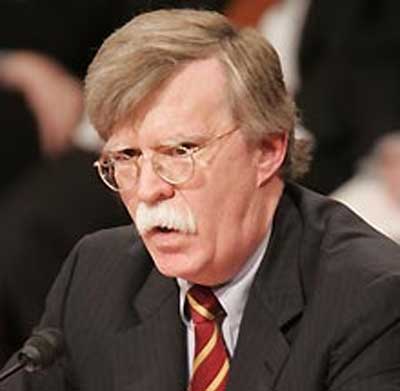
Keep in mind that polls showed that Republican corruption ranked second only to Iraq among reasons that voters gave for voting against incumbent GOP legislators. David sagely advises Democrats to not just go for headline grabbing bullshit about banning lunches and golf trips with lobbyists but to go for the real McCoy-- "the nexus of money and politics. Specifically, they must push to publicly finance all congressional elections." Every Democrat I've interviewed has endorsed the concept, from ones who really believed it with all their heart and soul like Congressman-elect John Hall, Congresswoman-elect Kirsten Gillibrand, Ohio Attorney General-elect Marc Dann to one very crucial House member leader who probably wasn't quite as determined as the other three: Steny "K Street" Hoyer, the newly elected Majority Leader of the U.S. House of Representatives. The dismal system of campaign finance operating is, in short, the root of all corruption in our political system.
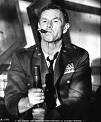
We have a system that is legalized bribery-- legal campaign contributions go in, and legal legislative favors go out. But just because it is legal, doesn't mean it isn't unethical and isn't one of the major reasons why our government can no longer solve problems. It is. A government cannot solve problems if members of Congress making decisions are forced by virtue of their campaign finances to appease the Big Money interests that are often at the root of those problems.


David sees good signs on the Senate side, with both extremely influential Illinois Senators, Obama and Durbin pushing in this direction and even a few Republicans showing acquiescence, if not actual enthusiasm. And according to a story in yesterday's New York Times "Common Cause says that 21 newly elected Democrats, more than half the class, and 69 incumbents have signed a pledge endorsing the idea."

However, as I pointed out yesterday, the Insider forces, regardless of partisan divide will are banding together, to preserve the status quo. You don't have to be a political reactionary to hate reform. Take Dianne Feinstein (D-CA) for example. Since her days on the San Francisco Board of Supervisors and later when she was mayor of that city, she has built her career around gargantuan corruption, war profiteering and grotesque cronyism, much of it involving her defense contractor husband and real estate mogul, Richard Blum. So it should surprise no one that DiFi, as chairman of the Rule Committee, is already digging in her heels about reform and has already voiced opposition to an independent Congressional ethics watchdog. "If the law is clear and precise, members will follow it. As to whether we need to create a new federal bureaucracy to enforce the rules, I would hope not."

Like many incumbents (usually insiders by definition) DiFi has always opposed public financing because it negates a vast-- usually insurmountable-- advantage incumbents have over challengers. "You use taxpayer dollars to finance people who may not only be fringe candidates but-- I was going to use the term 'nut'-- may be mentally incompetent."

David points out the depth of DiFi's-- and other legislators'-- deceit on this:
Sen. Feinstein's logic, of course, is a patently dishonest canard, though you've got to give her credit-- her lie is an effective one in how it brings up thoughts of taxpayers having to fund the Charles Manson for Congress campaign. But let's get back to reality: Every serious public financing proposal-- including the ones that have passed in states like Arizona and Maine-- create thresholds to almost totally limit the possibility of "mentally incompetent" people from receiving taxpayer dollars to run a campaign. These thresholds often involve a candidate having to raise a certain number of small dollar contributions from a geographically diverse base in order to qualify for public dollars.


David's research on Hoyer led him to the same conclusion about his commitment to campaign finance reform that my brief conversation with him on the subject last week led me: happy talk with a sharp knife ready to cut out the heart of any significant reforms. "In a May 2006 Roll Call article, the spokesman for now-Majority Leader Steny Hoyer, D-Md., said that public financing 'is not something he's looked at or focused on extensively.' That's Washingtonese for 'he will fight against it all the way.' And really, should we be surprised? Hoyer is the same lawmaker who brags to reporters about heading up the Democrats' K Street Project."

Will the Hoyers and the Feinsteins, not to mention the Emanuels and the entire Republican Party and it's propaganda machine be able to kill off real reform? Possibly. But David leaves us with some feelings of optimism: "Because public financing so fundamentally threatens how business is done in Washington, it will only become reality if progressives hit the trifecta of massive grassroots/netroots pressure, support from the batch of new lawmakers who ran on an anti-corruption platform, and an infusion of star power from someone like Obama. And make no mistake about it: the latter two wild cards have no chance of happening without the grassroots component-- a narrowly focused, carrot-and-stick campaign to embarrass, cajole and pressure Congress to act."

Public Campaign and Common Cause are both very well organized around this issue. Blue America intends to work as hard as we can to continue to push meaningful campaign finance reform as well.

Al Kamen offers a Twilight Zone-ish report on a D.C. block that seems to be sucking up Republican congressmembers like the Bermuda Triangle

Why, for all we know, you could be putting yourself at risk just by reading the following report, the lead item in today's "In the Loop" column in the Washington Post. Just to be clear about this, DWT specifically disclaims any responsibility. Read on at your own risk.

[cue: Twilight Zone theme]

Democrats, Beware the Curse of D Street

Incoming Democrats: Alert! Do not, repeat, not, buy a home on the 100 block of D Street SE on Capitol Hill. It may be jinxed.

How else to explain how this solidly Republican enclave--once home to as many as six GOP House members--is no more? A few weeks ago, a "for sale" sign went up at the townhouse belonging to Porter Goss, a former House member from Florida who moved over to the CIA a couple of years ago. Then Rep. Mark Foley felt obliged to quit before the election and his district fell to the Democrats.

Rep. Nancy L. Johnson (Conn.) lost on Nov. 7. Ditto her next-door neighbor, Rep. E. Clay Shaw Jr. (Fla.). Two doors down, Rep. Chris Chocola (Ind.) met a similar fate. And across the street Rep. Jim Ryun (Kan.) lost his race.

Painters were spotted Friday touching up Chocola's place in preparation for an open house yesterday.

Democrats who insist on buying one of these fine homes--even before local and federal health officials finish investigating whether these homes have "loser building" syndrome--at least should lowball.

Talk about mean streets.

WHEN WILL BUSH PARDON HIS BUDDY, REPUBLICAN FUNDRAISER AND CROOK TOM NOE?


When I started Down With Tyranny, I had two very special Republicrooks in mind, San Diego area Congressman Randy "Duke" Cunningham (currently serving 4 years in prison on a bribery conviction) and Ohio GOP kingpin and coin thief, Tom Noe. Today Noe was sentenced to 18 years in prison, having been convicted of "theft, corrupt activity, money laundering, forgery and tampering with records."


Noe had already been sentenced to two years in prison after pleading guilty to illegally helping to fund the BushCheney re-election campaign. It is widely believed, though no real investigation has been done yet, that he worked with Ken Blackwell and the Ohio Republican Party machine to steal the 2004 election for Bush. Ohio's newly elected Attorney General, Marc Dann, estimates that over a billion dollars per year have been stolen from Ohio residents by the corrupt Republican political machine operating, until now, virtually without checks or balances.


Noe was also fined $120,000 but the out-going Republican Attorney General, Jim Petro, who himself is implicated in the conspiracy, claims Noe stole over $4 million. Most political observers credit Noe's unchecked greed and wanton criminality with the undoing of Ohio's Republican Party in the recent elections in which the GOP lost the governor's mansion, a Senate seat and both the Attorney General and Secretary of State positions.

Follow-ups on the news: Beginning a new series, we wait to hear from A.G. Al "The Torture Guy" Gonzales if it's OK to suggest that people be shot

Follow-ups tend to come pretty automatically here at DWT, since we tend to have a near-obsessive connection to so many of the items we post. Nevertheless, items do fall in the cracks. I know I've got a number of stories crying out for updating.

And let's plunge right in with one that has roused some concern of a life-or-death nature. Recently, we found it necessary to respond to what seemed an especially stupid piece of reporting--in a large newspaper we're reluctant to name again (let's just say it's somewhere east of the Mississippi River and north of the Smoky Mountains)--on the Democratic race for House majority leader. It led us to wonder about the possibility of having everyone involved with that story taken out and shot. Perhaps understandably, some question arose as to whether this was such a good idea.

We did try to clarify the issue, pointing out that it wasn't so much the folks at the newspaper (you know, the one somewhere east of the Mississippi River and north of the Smoky Mountains) we had in mind as the Democratic blabbermouths whining to the aforementioned newspaper. That seemed more constructive than pointing out that we weren't really advocating shooting people, just exploring the possibility.

The question remained open, though, and we decided to take it to the appropriate authority, which would obviously be Attorney General Al "The Torture Guy" Gonzales's Torture Hotline, 1-900-FRY-THEM.

Since this is a 900 number rather than a toll-free one, we may have skimped a bit on the detail in leaving our message, but basically we asked if it's OK to advocate shooting bad people, and if not, what the most emphatic acceptable alternatives would be. We can't rule out the possibility that our message included a query as to the current acceptability of waterboarding, but if it did, we should make clear that we weren't necessarily pushing for it. After all, the way we understand it, waterboarding requires special equipment, and while most anyone who needs a gun knows or can find out where to get one, it's not as if you can go to Sears or Home Depot for a home waterboarding kit. Or can you?

Anyway, uh, we'll keep you posted--you know, like with another of these updates--as soon as we hear back from the A.G.

Quote of the day: Is it possible that Chimpy thinks we're "winning" in Iraq because his handlers lack the nerve to tell him what's really going on?

"This didn't have to be managed this bad. It's just awful."
--Kenneth "Cakewalk" Adelman, the longtime GOP foreign-affairs stalwart and Cheney-Rumsfeld intimate (who as a member of the Defense Policy Board famously predicted that the invasion of Iraq would be "a cakewalk"), to the Washington Post's Peter Baker in "Embittered Insiders Turn Against Bush"

Adelman, as you've probably heard (he's been sounding off a lot lately), is "no longer on speaking terms" with his old chum the vice president. In his interview with the Post and others, writes Peter Baker, Adelman said--

The failure to find weapons of mass destruction disturbed him. He said he was disgusted by the failure to stop the looting that followed Hussein's fall and by Rumsfeld's casual dismissal of it with the phrase "stuff happens." The breaking point, he said, was Bush's decision to award Medals of Freedom to occupation chief L. Paul Bremer, Gen. Tommy R. Franks and then-CIA Director George J. Tenet.

"The three individuals who got the highest civilian medals the president can give [that's Tenet, Franks and Bremer flanking you-know-who] were responsible for a lot of the debacle that was Iraq," Adelman said. All told, he said, the Bush national security team has proved to be "the most incompetent" of the past half-century. But, he added, "Obviously, the president is ultimately responsible."

Adelman said he remained silent for so long out of loyalty. "I didn't want to bad-mouth the administration," he said. In private, though, he spoke out, resulting in a furious confrontation with Rumsfeld, who summoned him to the Pentagon in September and demanded his resignation from the defense board.

"It seemed like nobody was getting it," Adelman said. "It seemed like everything was locked in. It seemed like everything was stuck." He agrees he bears blame as well. "I think that's fair. When you advocate a policy that turns bad, you do have some responsibility."

Most troubling, he said, are his shattered ideals: "The whole philosophy of using American strength for good in the world, for a foreign policy that is really value-based instead of balanced-power-based, I don't think is disproven by Iraq. But it's certainly discredited."

THE QUACK, QUACK, QUACK CAN BE HEARD FROM CAPITOL HILL TO THE HOUSTON SUBURBS-- SHELLEY SEKULA-GIBBS, THE ULTIMATE LAME DUCK


When much-disliked Houston City Councilwoman Shelley Sekula-Gibbs became the "official" Texas Republican Party write-in candidate to replace indicted and disgraced ex-Congressman Tom DeLay, Texas' very partisan Governor gave her a helping hand. Because her name is difficult to spell, particularly for the kind of uneducated, low-information voters who tend to vote for Republicans, Gov. Perry's political team devised a way of getting her on the ballot. On the same day as the general election, they also had an election to fill the unexpired term of the disgraced DeLay, which would amount to about 2 weeks of work in DC. It also amounted to her name on the ballot. It didn't help and she lost anyway. But, unopposed, she did win the 2 weeks.

The hope then was that she would make such a great impression on the residents of TX-22 that when she challenged freshman Congressman Nick Lampson (D) in the pretty red district in 2008, she'd be well remembered. She has made an impression-- only not the great one in the game plan.

Vowing to help cut taxes, solve the country's immigration problems, and fight terrorism in her two weeks in DC, she was off to a... start. "But," according to yesterday's Houston Chronicle, "her star has been badly tarnished by an odd series of actions, and she's been lampooned on Web sites, talk radio and in gossip columns. Though the punch lines will quickly fade, political insiders say Sekula-Gibbs has done serious-- if not irreparable-- damage to her hopes of reclaiming the 22nd Congressional District seat in two years."

We've been following closely her blowup with DeLay's professional staff, most of whom are admired both on Capitol Hill and back in TX-22. They all agree she's a rude and incompetent imbecile and most of them, from DeLay's chief of staff to an intern, walked out on her in disgust last week, after she made unreasonable demands that they "make" Bush and Cheney show up for her party and that they draft legislation that she could introduce to solve the immigration problem in her first week. One former DeLay staffer told DWT, "She seemed unrealistic in her demands, even frantic and deranged... and very angry. She became extremely abusive towards everyone around her. I've never seen such unprofessional behavior anywhere on Capitol Hill before."

"She has mortally damaged herself for '08," said Bill Miller, an Austin media consultant who works for clients in both parties. "She has embarrassed herself. She has embarrassed Republicans. She's done a first-class job of ruining any prospective chance she had of winning that race."

Said Fort Bend County GOP Chairman Gary Gillen: "When it comes time for 2008, the negative publicity won't be beneficial for her."


Basically she has guaranteed herself a tough primary battle in 2008, one few think she has a chance to win. Both David Wallace, Mayor of Sugarland and Paul Bettencourt, the Harris County Tax Collector, two extreme right wing fanatics, are planning to go after the GOP nomination in 2008. Neither well-liked nor respected as a member of the City Council, "Now," says Gary Polland, former Harris County Republican chairman, "she's going to be tainted with this story for her entire time in Congress. And if she decides to run in two years, the story will be, 'That's right, Shelley was in Congress for six weeks and ran off all of Delay's staff.'"

Sunday, November 19, 2006

GUANTANAMO-- IT'S STILL THERE

Irish singer songwriter Neil Hannon is synonymous, at least professionally, with his band, The Divine Comedy. We must remind ourselves that the election of a few Democrats to the House and Senate is a good first step but hardly the end to the troubles George Bush has brought on our country and to so many people throughout the world. This new song and video from Divine Comedy, "Guantanamo," is powerful and poignant. At one point I literally was forced to avert my eyes.

ATRIOS BUILT A TIME MACHINE


You've seen Ken Pollack on TV, right? Very authoritative and... well he seems kind of an expert in... something. Of course, next to the CNN talking heads, the kid who comes over to backwash my pool filter would seem authoritative. Anyway, after I read about Duncan's totally awesome workable time machine I realized he should be on TV instead of Pollack.

Quotes of the day: Frank Rich heralds the new era of Chimpyesque "bipartisanship" (while Maureen Dowd passes on a lesson in political gamesmanship)

"Already we are seeing conclusive evidence that the White House's post-thumpin' blather about bipartisanship is worth as little as the 'uniter, not a divider' bunk of the past."
--Frank Rich, in his NYT column today, "It's Not the Democrats Who Are Divided"*

"The plain reality," writes Rich, "is that the victorious Democrats, united in opposition to the war and uniting around a program for quitting it, have done pretty much all they can do. Republican leaders must join in to seal the deal."

And he concludes: "Most of all, disengagement from Iraq is the patriotic thing to do. Diverting as 'divided Democrats' has been, it's escapist entertainment. The Washington story that will matter most going forward is the fate of the divided Republicans. Only if they heroically come together can the country be saved from a president who, for all his professed pipe dreams about democracy in the Middle East, refuses to surrender to democracy's verdict at home."


ALSO TALKING--Maureen Dowd may not have much to say, but at least she sometimes quotes people who do

I would like to think that Speaker-designate Nancy Pelosi learned the valuable lesson from the majority-leadership battle that while the House speaker has a lot of power, he/she always has to remember that he/she can't take that power anywhere his/her members don't want to go. (More practical lesson: If Rep. John Murtha, her candidate for majority leader, is really that bad at head-counting his members, he wouldn't have made a terribly helpful second in command.)

I'm going to guess that Madame Speaker didn't have a whole lot to learn from Maureen Dowd's not wildly perceptive or useful column NYT yesterday ("Squeaker of the House"*). However, after claiming, "Even Pelosi supporters pointed out that she was squandering her power, and hurting the image of the Democrats by making them look like Democrats," our Mo quoted "one":

"The better way to do it is to just let your rival go ahead and win and then strip them of everything. All of a sudden their office is moved and their wires are disconnected and there's a Playskool phone on their desk, so that it's not even worth having the job anymore."

Ah, so this is how the game is played at the "grandmaster" level.

-     -     -     -     -     -     -     -     -     -     -     -     -
*As usual, the full texts of the NYT columns are posted in a comment.

McCAIN STUMBLES ALL OVER HIMSELF AND CHARLIE RANGEL HAS A LITTLE SURPRISE FOR PEOPLE WHO LIKE WARS: THEIR OWN CHILDREN CAN GO FIGHT THEM


Public opinion surveys always show McCain with a lot of public approval. He has a great p.r. staff. The media always calls him a moderate, even though on virtually everything but torture he's an extreme right wing nut-- and even on torture, he backed down pretty fast when Rove and Cheney yelled "Boo!" And when's the last time the media mentioned The Keating 5 when talking about McCain's quest for the presidency?

Do you think the mass media will point out how his views are violently at odds with the wishes of most Americans on a number of critical issues? Just today, for example, McCain vowed that if he were elected president he would immediately work to overturn Roe vs Wade. Does that make him a flip-glopper? A liar? A panderer? An extremist? Patently unqualified to lead this country? All of the above?

McCain's media strategy has been to try to pass him off as a "straight talker" and not just another politico who will tell any audience what they want to hear in return for their support, and yet... at heart, that's exactly what he is. He's crass; he's craven; he's completely untrustworthy. In 1999 when he was trying to portray himself as a moderate he took up the same position as President Clinton, that abortion should be safe, legal and rare. "I'd love to see a point where it is irrelevant, and could be repealed because abortion is no longer necessary. But certainly in the short term, or even the long term, I would not support repeal of Roe v. Wade, which would then force X number of women in America to [undergo] illegal and dangerous operations." But this morning, on ABC, when the goal is to appeal to the GOP base, the far right kooks who vote in the Republican primaries, he had quite something else entirely to say:
STEPHANOPOULOS: Let me ask one question about abortion. Then I want to turn to Iraq. You're for a constitutional amendment banning abortion, with some exceptions for life and rape and incest.

MCCAIN: Rape, incest and the life of the mother. Yes.

STEPHANOPOULOS: So is President Bush, yet that hasn't advanced in the six years he’s been in office. What are you going to do to advance a constitutional amendment that President Bush hasn't done?

MCCAIN: I don't think a constitutional amendment is probably going to take place, but I do believe that it's very likely or possible that the Supreme Court should — could overturn Roe v. Wade, which would then return these decisions to the states, which I support.

STEPHANOPOULOS: And you'd be for that?

MCCAIN: Yes, because I'm a federalist. Just as I believe that the issue of gay marriage should be decided by the states, so do I believe that we would be better off by having Roe v. Wade return to the states. And I don't believe the Supreme Court should be legislating in the way that they did on Roe v. Wade.


Not your issue? How about the Bush war against Iraq? Even with a warmonger like Henry Kissinger finally admitting that a military victory is impossible and admitting that Iraq isn't going to accept an American form of government, especially not one imposed on them, McCain is positively salivating at the prospect of sending more young Americans into the meatgrinder of the Iraqi Civil War. Not many Americans support this point of view (just Lieberman as far as I can see).

"Kissinger presented a bleak vision of Iraq, saying the U.S. government must enter into dialogue with Iraq's regional neighbors-- including Iran-- progress is to be made in the region." Interviewed by the BBC, Kissinger responded to a question about winning in Iraq in a way very different from Republican or McCain dogma:
If you mean by 'military victory' an Iraqi government that can be established and whose writ runs across the whole country, that gets the civil war under control and sectarian violence under control in a time period that the political processes of the democracies will support, I don't believe that is possible.


McCain is still yelling about sending more troops and babbling the same Rove-invented nonsense about fighting them there or fighting them down at the WalMart. "We leave this place, chaos in the region, and they'll follow us home. So there's a great deal more at stake here in this conflict, in my view, a lot more." Meanwhile, the only fighting we did at the WalMart with VietNam after we gave up on that catastrophic miscalculation was over shelf space.

McCain's base of support, low-information suburban "independents," (or, more accurately, Decline-to-state's) are about to get a big wake-up call if they think the war can just go blithely forward and be fought by other people's children. You remember all that hubbub about young Republicans-- reminiscent of a "too busy" young Dick Cheney-- who were all for the war but couldn't quite get themselves over to Iraq? Well Charlie Rangel has an idea about making fighting something that isn't only for the sons and daughters of poor Americans. It's called a draft; and I expect that would end the war-- and McCain's chances to be elected to anything.

A BIT OF FRAYING IN THE "ALLIANCE"-- CORRUPT SAUDI ARABIAN PRIMITIVES THREATEN MORE MODERN, BUT EQUALLY CORRUPT, BRITS


Today's Sunday Times is carrying an unpleasant harbinger of things to come-- I know, I know; I never heard of a harbinger that wasn't unpleasant either. This one reflects rather badly on the fake system of alliances the ever incompetent Bush Regime cobbled together to fight "terrorism." Metternich he is not-- nor even James Baker or Henry Kissinger; just retardo boy with clever nanny Condi. Two of Bush's key players are at the point of blows: England and Saudi Arabia.

The Saudis are demanding that Blair halt a potentially embarrassing investigation into a "royal" family slush fund (bribes-- in excess of $100 million) set up to support the "royal" family's sybaritic life style. Their ultimatum-- delivered by Prince Mohammed bin Nawaf, the Ambassador: end the inquiry immediately or the Saudis will break diplomatic relations, end whatever intelligence cooperation there is in matters pertaining to al-Qaeda and terminate payments on defense contracts worth almost $100 million and something like 10,000 British jobs.
The Saudis are furious about the criminal investigation by the Serious Fraud Office (SFO) into allegations that BAE Systems, Britain's biggest defense company, set up the "slush fund" to support the extravagant lifestyle of members of the Saudi royal family.

The payments, in the form of lavish holidays, a fleet of luxury cars including a gold Rolls-Royce, rented apartments and other perks [booze, whores, all that kind of stuff the hypocritical Saudis frown on while thriving on], are alleged to have been paid to ensure the Saudis continued to buy from BAE under the so-called Al-Yamamah deal, rather than going to another country. Al-Yamamah is the biggest defense contract in British history and has kept BAE in business for 20 years.

At least five people have been arrested in the probe. They include Peter Wilson, BAE's managing director of international programs, and Tony Winship, a former company official who oversaw two travel and service firms that are alleged to have been conduits for the payments.


The Saudis are doubly pissed-off because Blair had already assured them last summer that he would make the investigation go away or, at the very least, keep the details from leaking out and embarrassing the "royals."

What a drag for poor ole England! And that isn't even the only problem they're having with damned foreigners this weekend. It looks like everyone's pal, ex-KGB colonel/current President Vladamir Putin has had a critic, a British citizen, poisoned with thallium-- in a London sushi restaurant. "Scotland Yard has launched an investigation into an audacious attempt to murder-- using a deadly poison-- a leading Russian defector at a restaurant in London. Alexander Litvinenko, a former colonel in the Russian secret service and a fierce critic of President Vladimir Putin, was seriously ill under armed guard at a London hospital last night."

Increasingly it looks like one of the most critical tasks for a mature U.S. government after Bush is gone, will be to work to mend not just bilateral international relations and not just America's tattered reputation in the rest of the world, but also the entire system on which peace and cooperation between nations is based. It may have taken decades to build up but a moronic, arrogant, ill-informed, head-strong and delusional Executive Branch has wrecked it in less than 6 years. Imbecilic Bush Regime hack, Michael Chertoff, was posturing and whining to the neo-fascist Federalist Society a few days ago that "the United Nations and other international entities increasingly are using international law to challenge U.S. powers to reject treaties and protect itself from attack. 'International law is being used as a rhetorical weapon against us.'"

RICKIE LEE JONES: WHAT HAPPENS AFTER UGLY MAN?


Although Rickie Lee Jones has earned lots of gold and platinum awards for her music and graced the covers of countless magazines, many political activists know her, or have recently become reacquainted with her, because of the song she did with Tom Maxwell and Ken Mosher, "Have You Had Enough?", used in the campaigns that helped elect a diverse array of progressive candidates, from congressmen and women-elect Jerry McNerney (CA-11), John Hall (NY-19), Chris Carney (PA-10), Patrick Murphy (PA-08), Chris Murphy (CT-05), Kirsten Gillibrand (NY-20), Joe Sestak (PA-07), to local candidates like Scott Randolph in Orlando, Florida.

Today Rickie Lee talks about a post-"Ugly Man" America and wishes everyone a happy and well-deserved Thanksgiving:


What a great month this has been, for those of us who fought so hard to overturn this government, it must be a sweet time indeed.  I am thinking of Howie Klein, who networked everyone he knew or heard of to participate in articles, recordings, protests, performances, speeches... as well as KPFK DJ Michael Slate, who hounded me to be here in anti-Bush demonstrations for the past four years.

I must confess that for my part I had lost faith, become politically agnostic as Lee Cantelon put it,  and withdrew. I saw my democratic representatives move so far right in their ambiguous campaigns that I could no longer keep my balance in the middle. Suddenly, standing tough, I was part of the new radical left, which was not radical at all. I was not part of any clandestine thought of overtaking the government and feeding it to communists, socialists, or anarchists of any sort. I was part of the radical thought that wanted to protect the money elderly people had paid all their lives for their own old age, to keep all children in preschools and in grade schools and middle schools that provided at least the same curriculum we had enjoyed-- music, art, PE-- in class sizes manageable and safe,   in schools no food company could invade, nor political or religious institution could influence. I hoped to see a trend toward inclusive, common sense ideology and away from religious dogma of the sort manufactured in tent revival meetings and Southern Baptist armories, where the Christian soldiers doctrine makes them the sole bearers of the light of god, and all others must fall in their path,  never mind that obscure part of the bible that says God is a loving God, or the theme that suggest Christians might be a people who follow the tenants of forgiveness which would lead to an assumption of humility, tolerance, and good manners. Instead these people are best characterized as ignorant, intolerant and very scary. 

We can never forget who they are, and how they can suddenly rise and take from us a political institution we fight hard to keep, both spiritually and intellectually, and take for granted, by our collective apathy. They took the country away for a very, very scary eight years. The president installed himself, a war was created, oil fields installed, bad people dominated our good idea. Now that our own officials are in, let us be sure we drive them hard before us, to do what we sent them there to do: to restore and retain the America we have enjoyed since the revolution of the 1960's.   

President Clinton, for all his personal faults, was a golden boy of that kind of thought, and I for one was proud that no matter how many campaigns of maligning against him the people stood fast and kept him in office-- all those people that we, from the left and the once middle, thought were too uninformed to know better. They do know better. Remember folks, they did not vote for Bush any more than we did. He was selected and inserted. 

I wanted to tell you that, for my part, I have met the best of my country as we bobbled in a sea of fascist propaganda. I would send out a gurgling cry 'anyone remember how it was last year' and far in the distance "hey, who are these assholes who have stolen our country??"    

"That's how I feel," and I knew that this is how revolutions are grown, from the ground up. You cannot ever squash out peoples' memory. You can send out all the propaganda in the world and rewrite it so it looks a different way, discredit, rewire. But people know what they experienced. We knew the values and freedoms we grew up with had been absconded, and we sensed the pure evil that seemed to loom behind this impostor. I had spent my life maintaining the mantra 'music and politics are not my bag, baby.'  But suddenly they were. I wondered how my heroes could remain so subtle, so silent. Truly. Springsteen? Neil Young? Where the heck were they all in 2002, 2003? 

When I first performed "Ugly Man" in 2002, I was booed simultaneously to being applauded-- and this concert was in the heart of the left, San Francisco. "Hey people," I chided, "free speech...  remember?" But there was an audible gasp as they realized I was talking about GW Bush. To me, it was a pivotal moment. No one was speaking out. They were getting fired, they were being ostracized. It was a bad, bad time in our social history. "Revolution, everywhere that you're not looking... revolution." I was defying the government with that line. Don't think I wasn't a little bit nervous; I was. Hard to imagine now. 

But imagine it. They are still poised to take folks away, under the Patriot Act, for anti-American activity. It is a law. They can use it as they like. They did do a lot of damage, and it needs to be undone.

Now that we have the House and Senate, and the freedoms we love are again employed (I noticed the UCLA students were in the street last week demonstrating) we must be sure to stoke and protect the machine that provides these freedoms.  We must protect the democratic candidates that love to see the freedoms of the constitution employed by the people, and work to protect the social atmosphere that allows them to exist.

We must drive these newly elected officials back toward the left and restore the middle of the road to its' rightfully place-- the middle of the road-- and out of the margins that it was driven into when the media voices, controlled by the right, used the word 'left ' like McCarthy once used the word 'communist.' We must not let the dust settle to the right. When humanity allows it's compass to be pounded into pretending north is not north, fascism is not fascism but patriotism, we lose our direction for future generations. Let us endeavor to restore our country to its pre-Bush common sense, at least, and move quickly to pass legislation to protect the rights of the those things that have been trampled by the big business policies of this administration. Our grandchildren, our grandparents, our grand ideas. I am so proud. I just can't believe it. Congratulations to everyone who worked and read and spoke out loud-- this is a good month, and it's worth celebrating this Thanksgiving. 

rickie lee jones
and the furnitureforthepeople.com
collective.

Labels: ,

POLITICIANS STARTING TO TAKE BLOGGING SERIOUSLY-- AT LEAST IN ENGLAND AND VIRGINIA


A few weeks ago I was approached by the Steny Hoyer's office to see if I would do an interview with him before the showdown with Jack Murtha. I was surprised because I had had some pretty nasty things to say in the past about the Democrats' version of a K Street pol. But Hoyer was also aware of the fact that I had pointed out how reactionary Murtha's voting record had been and that was the message he wanted out in the blogosphere. (He already had a vicious media campaign planned out to smear Murtha in terms of corruption so that the ethically-challenged system politicians like Tom DeLay, Rick Santorum, Bill Frist, Rahm Emanuel and Steny Hoyer use to "sell access," give a seat at the table or give preferential treatment-- how ever you want to put it-- to Big Business in return for "contributions" [bribes] and a patronage scheme, would get lost in complexities that TV is incapable of making into soundbites.) Anyway, you can read about my Hoyer interview here.

The reason I'm bringing it up again has nothing really to do with the Hoyer-Murtha battle for the leadership of the Democratic caucus, a fight that was set up so that it could have had no good outcome. My original goal was to get Hoyer into a live blog session at Firedoglake where members of the community could talk to him in depth and get a feel for his thinking. We've been doing this for the last several months and we've raised over half a million dollars for politicians whose ideas we bought into. Hoyer had some reservations about the format. His assistant didn't have a problem with people asking tough questions about, for example-- hers-- his role in the passage of the hated bankruptcy bill, but she wanted a guarantee that people wouldn't call him names. I think she mentioned "shill" or "hack" or something like that. We guaranteed her we would hire extra site monitors and prevent any name calling or abuse. Eventually they said they didn't have the time for an hour blog session but that they would do a 30 minute phone interview and after the leadership election they'd do the blogging. I haven't heard back yet.

Most politicians don't quite know what to make of blogging and bloggers. Bush, Sr., a man who lost the presidency in part because he didn't know what a bar code scanner at a supermarket checkout stand was, thinks blogs are mean to Junior and have caused people to hate him. They poison the atmosphere; and here I always though Republicans favor poisoning the atmosphere!

Friday, on the day Tony Blair submitted to an online interview, the BBC ran a more perceptive examination based on a speech given by the British prime minister's outgoing chief strategy advisor, Matthew Taylor. Acknowledging that the web could be "fantastic for democracy," he bemoaned that it was more often used to encourage the "shrill discourse of demands" that dominate modern politics. Ah... for the good old days, where whatever the king said goes!


Speaking at an e- democracy conference in central London, he said modern politics was all about "quality of life" and that voters had a "very complex set of needs."

The end of deference, the rapid pace of social change and growing diversity were all good things, he argued, but they also meant governments found it increasingly difficult to govern.

"We have a citizenry which can be caricatured as being increasingly unwilling to be governed but not yet capable of self-government," Mr Taylor told the audience.

Like "teenagers", people were demanding, but "conflicted" about what they actually wanted, he argued.

They wanted "sustainability," for example, but not higher fuel prices, affordable homes for their children but not new housing developments in their town or village.

But rather than work out these dilemmas in partnership with their elected leaders, they were encouraged to regard all politicians as corrupt or "mendacious" by the media, which he described as "a conspiracy to maintain the population in a perpetual state of self-righteous rage."

Whether media was left wing or right wing, the message was always that "leaders are out there to shaft you."

He went on: "At a time at which we need a richer relationship between politicians and citizens than we have ever had, to confront the shared challenges we face, arguably we have a more impoverished relationship between politicians and citizens than we have ever had.

"It seems to me this is something which is worth calling a crisis."

The Internet, he told the conference, was part of that "crisis."

"The Internet has immense potential but we face a real problem if the main way in which that potential expresses itself is through allowing citizens to participate in a shrill discourse of demands.

"If you look at the way in which citizens are using technology and the way that is growing up, there are worrying signs that that is the case.

"What is the big breakthrough, in terms of politics, on the web in the last few years? It's basically blogs which are, generally speaking, hostile and, generally speaking, basically see their job as every day exposing how venal, stupid, mendacious politicians are.

"The Internet is being used as a tool of mobilization, which is fantastic, but it only adds to the growing, incommensurate nature of the demands being made on government."

He challenged the online community to provide more opportunities for "people to try to understand the real trade-offs that politicians face and the real dilemmas that citizens face."


Taylor-- and Blair-- are far more sophisticated in their outlook towards the new technology than Bush and say... Ted Stevens. But their view is still hostile, defensive and based on pacification, co-option and subjugation. He decried the basic anti-establishment attitude. "I want people to have more power, but I want them to have more power in the context of a more mature discourse about the responsibilities of government and the responsibilities of citizens." He ought to drop by one of our Saturday sessions at Firedoglake. I'm sure Bush never will and I doubt Steny Hoyer will.

Meanwhile, a right-wing blogger, Jon Henke, who headed up Felix Macacawitz' ineffectual blogging operation during his failed bid for re-election, acknowledges the effectiveness of the netroots and the lefty blogosphere. Henke's essay, unlike Macacawitz' propaganda, is very much worth reading. "Make no mistake, without the netroots, Webb would not have won. He may not even have been close. It was a long-cultivated activism/outreach/media-hounding New Media campaign that brought Webb to the attention of the institutional Democrats, sold him to the activists and shaped the narratives of both Webb and Allen for the media... Republicans have not quite caught onto the potential of engaging the blogosphere yet."

SEEMS LIKE NO ONE LIKES BUSH ANYMORE-- I WONDER WHY


This morning's Washington Post has a front page story that covers politics from a more realistic point of view than the hacks claiming that the Democrats' (and Nancy Pelosi's) goose is cooked because of her support for Jack Murtha. That's false. This one is real. Embittered Insiders Turn Against Bush. And have they ever! They blame him for the catastrophe in Iraq (which even Tony Blair now admits is a "disaster" and, still worse for many GOP solons, not to mention soon-to-be ex-salons, they blame him for Republican losses in  Congress.

"Heading into the final chapter of his presidency, fresh from the sting of a midterm election defeat, Bush finds himself with fewer and fewer friends. Some of the strongest supporters of the war have grown disenchanted, former insiders are registering public dissent and Republicans on Capitol Hill blame him for losing Congress."

Many feel the hallmark of Bush's regime has been mismanagement, if not outright incompetence-- and those are Republicans... right-wing ones! "'People expect a level of performance they are not getting,' former House speaker Newt Gingrich (R-Ga.) said in a speech. Many were livid that Bush waited until after the elections to oust Rumsfeld. 'If Rumsfeld had been out, you bet it would have made a difference,' Sen. Arlen Specter (R-Pa.) said on television. 'I'd still be Chairman of the Judiciary Committee.'"

The Post suggests that Senate Republicans sought some revenge on Bush by electing his most bitter intra-party enemy, Trent Lott, their Whip. Other charges have started flying as well: Bush was aloof, authoritarian. even too holier-than-thou (if not downright blasphemous in claims to some kind of Divine approval) for Republicans. Republicans, even those not agog over the mismanagement in Iraq, started breaking with Bush over uncontrolled federal spending, an innately dishonest, nearly indefensible corporate immigration policy, the Supreme Court nomination of Harriet Miers, the lack of adequate response to Hurricane Katrina, and the public outrage over Bush's Dubai Ports World deal.

The biggest problem Republican Insiders have with Bush, of course, is the same problem causing his approval rating among non-Insiders to keep falling and falling like there is no bottom: Iraq. This suggests serious political problems ahead, problems that neither Rove nor Cheney will be able to rescue him from. When Mitch McConnell threatened that Democrats better not impede Bush's campaign to pack the federal courts with unqualified far right ideologues, Chuck Schumer laughed in his face and said, basically, bring 'em on.

Saturday, November 18, 2006

STEELE NEEDS A JOB BUT WHEN HE APPROACHES THE BUSH REGIME THEY SUGGEST HE GET INTO SHOW BIZ


Don't think Rove forgot that Michael Steele shunned Bush during his Senate run or that he likened the Republican "R" to Hawthorne's concept of a scarlet letter. So, although Republicans are giving him high grades for... something (oh, I know, he cheated the way they all do, proving that's he is after all one of them, even if he is of a darker hue). Anyway, when Republicans make a heroic stand in a political battle and do the right thing for their party they are often rewarded with some kind of sinecure. Even that whacko Alan Keyes was given the ambassadorship to... some island somewhere? (Definitely not a real country; but he calls himself "Ambassador.")

But when Steele, a man of no accomplishments whatsoever, except being an articulate African-American who buys into-- for whatever reason-- all the GOP bullshit, went to the White House for a gig, he was reminded about why they call it the "White" House. Rove had someone tell him "a high-ranking post in the administration's last two years would curb his independence and cramp his style. Instead, they advised, he could be 'a black Rush Limbaugh.'" (Does that mean they're going to give Ken Hamblin a job in the Regime?)


Earlier he had been passed over as the replacement to recently outed Ken Mehlman as RNC head. Rove felt a Hispanic might help staunch the catastrophic Republican slide in the Latino community, knowing full well that African-Americans are too savvy to ever vote in real numbers for Republicans anyway.

CAN DEMOCRATS START TO TURN AROUND THE ENVIRONMENTAL DAMAGE DONE BY THE BUSH REGIME? PROBABLY


Most people nervous about wanton environmental destructiveness on the part of the Bush Regime, are breathing easier these days, primarily because the environmental movement's Public Enemy #1, Dirty Dick Pombo, Chairman of the House Resources Committee, went down to a substantial defeat last Tuesday. In Rolling Stone's pre-election rundown of the "10 Worst Congressmen" Pombo ranked #7-- and he was one of only two, the other being Curt "one step ahead of the law" Weldon, who was defeated. The Stone minced no word's in their description of Pombo:
No member of Congress has worked harder to savage America's natural resources than Pombo, a Stetson-wearing cattleman who ran for office after a nature trail was slated to run through his family's 500-acre ranch. As chairman of the House Resources Committee, Pombo has waged a career-long campaign to abolish the Endangered Species Act, which he accuses of putting "rats and shellfish" before people. Last year he almost succeeded: His comically titled "Threatened and Endangered Species Recovery Act" would have phased out all protection for threatened wildlife by 2015. Pombo has also won passage of bills to eliminate habitat protections on 150 million acres of wilderness and to lift a quarter-century moratorium on offshore oil drilling.

"Dick Pombo is the most dangerous member of the House," says Carl Pope of the Sierra Club. "There's no one who represents the threat to our public lands that he does."


Notice that Pope qualified his denunciation of Pombo as "the most dangerous member of the House. Just as destructive to earth-- although for different reasons-- is a member of the U.S. Senate. The problem there, though, is that he wasn't up for re-election. That didn't stop Radar from pointing out James Inhofe (R-OK), Chairman of the Senate Environment and Public Works Committee, in their pre-election coverage, America's Dumbest Congressmen-- Radar Ranks The 10 Biggest Fools On The Hill.

Where Pombo has been all about greed and old fashioned corruption-- allowing developers and polluters to behave as though the country's environment was just an inconvenient impediment to profits that could be easily gotten around by the right amount of money donated to the right members of Congress-- Inhofe is... well, psychotic and of the school that Jesus is coming to get us in a few weeks-- or months-- anyway, so why bother with environmentalism. Not only did he score a perfect zero from the League of Conservation Voters every single year since 1997, was the only senator to oppose Everglades restoration.

Inhofe is still the senior Senator from Oklahoma but come January he will no longer head the committee charged with writing environmental legislation. In fact... well even better news in a moment. Radar made their case for Inhofe's notable lack of intelligence based on more than just his disdain for protecting the environment:

Inhofe is best known for his categorical claim that global warming is "the greatest hoax ever perpetrated on the American people"—a rhetorical flourish he recently refined by likening climate change theories to Nazi propaganda. And here's the scary part: Those are the sentiments of our chairman of the Environment and Public Works Committee. It's a bit like making Lyndon LaRouche the American Ambassador to England.

But that's not the half of it. As far back as 1972, he called for Democratic presidential nominee George McGovern to be "hanged with Jane Fonda" for referring to alleged atrocities committed by American troops in Vietnam. In 2001, he took to the Senate floor to announce that Israel was justified in whatever treatment it handed out to Palestinians because, after all, God had promised the Jews the land they occupied. For good measure, he also called Palestinian terror bombers practitioners of "satanic evil," and intimated to the New Republic that both Bill and Hillary Clinton were out to assassinate him.

And then there was the recent debate over the latest constitutional amendment to ban gay marriage, when Inhofe assured Senate colleagues of his own virility and that of his manly forbearers. "My wife and I have been married 47 years. We have 20 kids and grandkids. I'm really proud to say that in the recorded history of our family, we've never had a divorce or a homosexual relationship." It's the same flawless gene pool that produced a man who thinks our situation in Iraq is "nothing short of a miracle."


But the even better news comes today from intrepid reporter Kevin Drum, predicting that Inhofe may soon lose any ability at all to molest Mother Nature's bounty. To begin with, the newly ascendant Senate Democrats have placed a veritable polar opposite to Inhofe in as the new chairperson, Barbara Boxer. And there's more: Virginia's John Warner, who has more seniority on the committee and, though a conservative, is relatively reality-based in his assessment of things like Global Warming (which Inhofe thinks is gay commie propaganda), has claimed dibs on the ranking minority member post.

Inhofe, of course, refuses to accept that reality as well. But, as Drum puts it "Sidelining Inhofe completely would be one of the most dramatic signs imaginable that the Republican leadership is reclaiming a bit of common sense in the wake of their midterm defeat. Warner may be conservative, but he's a traditional, reality-based conservative, not a crackpot ideologue like Inhofe."

INSIDE THE BELTWAY, WOMEN WHO THREATEN CHANGE ARE WITCHES WHO USE BOTOX. IN HOUSTON, MOUNTED POLICEMEN ARE TRAMPLING MINIMUM WAGE WORKERS WITH HORSES


Ideological reactionaries and basically apolitical careerist Insiders (and their Siamese twins in the mass media) will make common ground at killing change. It doesn't matter that the talentless, personalityless and generally worthless Mort Kondracke plays the role of a "liberal" to Fred Barnes' more convincing "conservative." The title of their lame Fox TV show, "The Beltway Boys," explains what is essential about both of them. So it should have hardly surprised anyone when Kondracke dubbed the country's newly-elected agent-for-change, Nancy Pelosi "the wicked witch of the West." Isn't he witty? No, he's a moron and, worse, he's in the way. Madame Defarge, make a note.

When today's Washington Examiner opined that the GOP didn't learn a Lott from '06 defeat they only got it partially right. The Republicans surely didn't learn squat. Otherwise they wouldn't have brought KKK/pork barrel king Trent Lott back into the leadership, nor would they have stuck with ultimate insiders John Boehner and Roy Blunt in the House, instead of reformers Mike Pence and John Shadegg. But did the breed of Democrats whose existence is likewise completely contained in the physical and emotional bounds of the Inside-the-Beltway "Green Zone" learn any more? I'm afraid most haven't. In Rahm-world, it was just out with the GOP crooks and power-mongers and in with the Democratic crooks and power-mongers.

Nancy Pelosi seems sincere-- although gaging sincerity for any pol is walking on very thin ice-- when she says her first priority is ending Bush's war in Iraq and Patrick Leahy seems determined to get to the bottom of the obsenity of Bush Regime torture policies. But for one of the ultimate Beltway insiders, reactionary former solicitor general Ted Olson, what's important is to savage Pelosi in the media to prevent a debate about the ideas and values she represents (the ones the electorate just endorsed). So he got a McCain dog and pony show at the neo-fascist Federalist Society hooting and hollering with some misogynistic remarks about Pelosi (and of course, Hillary Clinton) and botox. Ho, ho, ho! One hopes these criminals giggle on their way to the gallows some day.

Even if Congress (and the media) aren't quite ready to debate whether the principals in the Bush Regime should be tried or not, there are important issues more worthy of public attention than the script being handed out by Insiders meant to turn back the tide of history. Matt Stoller at MyDD will always be dependably more in touch with what's crucial in our society than any TV talking heads or any gaggle of congressional nitwits and their staffs... any day of the week. Yesterday Houston mounted police trampled peacful strikers with their horses. The Chevron workers make $5.35 an hour and have no health insurance. Think about that and then think about the Beltway Establishment and what their petty concerns and pronouncements are.

JOHN LAESCH HAS LEARNED A LOT IN HIS FIRST RUN FOR OFFICE. IS IT ENOUGH TO TURN IL-14 BLUE?


We've gotten to know a lot of progressive challengers this election cycle and, judging by the amounts of money we've donated, John Laesch has been one who has really connected with members of our community. I'm so happy he's decided to join us today at Firedoglake for a look at the campaign that's just ended and for a little discussion about where we go from here. Where we go from here may be something that John has to look at a lot more quickly than any of our other candidates.

John's come a long, long way since we first met up with him last June. For one thing, he's come a lot closer to beating Denny Hastert than any other Democrats running for Congress in the 14th CD have. In 2002 Larry Quick took 26% of the vote. In 2004 Ruben Zamora took 31%. John just got 40%... on his first run for any office. He also accomplished what no one else has; he forced Hastert to come back to the district to campaign and he forced Hastert to spend a great deal of money to keep from an embarrassing loss, money that could easy have been spent to help Republicans who lost in close races, like Rob Simmons, Mike Fitzpatrick or Ann Northup. John increased Democratic vote counts in every single county in the district and, for the first time, even beat Hastert in one county, Whiteside (with 54% of the vote). In DeKalb County, where we ran our "Time To Throw Hastert Out" radio spots, John took 42% of the votes, a huge increase over past Democratic performances there.

It's hardly a secret and rumors are flying everywhere that Hastert would like to retire, not just from the GOP Leadership-- which he has already announced-- but from Congress entirely. Right now he will only say he's not running again in 2008. One suburban Chicago paper put it bluntly: "Political watchers noted that leaders seldom stick around for long after moving from a vaunted position to a rank-and-file member... Republican strategist Gary Mack, who previously worked for Jim Edgar, said Hastert might step down early if it meant he could have a bigger role in picking his replacement. 'It's very easy to understand why a federal official third in line for the presidency wouldn't want to stick around and become a minion,' he said."

Republicans tend to get used to the perks and prerogatives of office and when they lose their leadership positions, they tend to bail entirely, Gingrich and DeLay being two very recent examples-- and Hastert having been more used to "perks" than anyone else in memory.


Hastert, known as someone who could consume more sushi at a single sitting than any 3 of his colleagues, also has pretensions to being named ambassador to Japan. Among the local Republicans salivating not over platters of sushi but over the chance to replace Hastert in Congress are state Representatives Tom Cross, Tim Schmitz, Patricia Reid Lindner and state Senator Chris Lauzen, as well as Kane County Board chairman Karen McConnaughay, former state Senator Steve Rauschenberger and former gubernatorial and U.S. Senate candidate Jim Oberweis. (There is also a good chance that Rahm Emanuel will try pushing John out of the way for a less grassroots oriented, less independent-minded, more... malleable candidate like state Rep. Linda Chapa LaVia.)

In the Chicago Sun Times, columnist Lynn Sweet points out that Hastert has two sons, a lawyer and, of course, a lobbyist and Hastert would love to bequeath the seat to one of them.

Longtime and well-connected local Republican hack Tom Roeser gets to another big consideration: the bottom line.
It's pretty late at night and I'm not going to go into a lot of research but a rumor has been bubbling up that should be recorded… even if it's knocked down later as more information comes due. The rumor, substantiated by a number of people I've talked to who know the Denny Hastert people personally is this: Denny Hastert has determined to resign before his term as Speaker expires-- for one reason only. When you step down as Speaker your pension is calculated on your level of pay and Speaker's pay is a lot more than that of an ordinary member of Congress. Somebody who's a lot fresher than I am at this hour of the night can check Denny's salary but I think it's in the neighborhood of, say, $200,000 plus."


And for Hastert, the bottom line has always been... the bottom line (his own).


UPDATE: JOHN LAESCH REMINDS US WHY HE WAS THE FIRST CANDIDATE WE PLACED ADS FOR

At the live blog session (linked in the first paragraph of the post above) John asked us to watch a video his campaign made. It brought tears to my eyes. Then he announced:
We met today to discuss strategy and everyone wants to keep going… An open seat will be much easier to win. I think that the hat is officially in the ring.

The “new team” is assembling even as we speak.

Persistence is the key: Durbin ran three times before becoming a Congressman and Mike Noland (mentioned above) ran three times before becoming our State Senator.

We brought lots of new people into politics and it would be a shame to not see this organization advance.


The Blue America PAC '08 is accepting donation. You can count on us doing more for John when he tries this time than we were able to do last time.

Quote of the day: All right, Al Franken, America is waiting to hear--are you going to apologize to Rush Limbaugh? Huh, liberal guy? Huh?

History can be fickle, and cruel (and often hard to remember at exam time). Many incandescent QOTD candidates, for example, have been lost to time through the simple mischance of being scribbled on the backs of envelopes or whatnot, never to be seen again, or at least not for a couple of weeks, by which time they've begun to recede into history.

Today's quote, for example, turned up scribbled on the back of a Berkshire Record Outlet catalog supplement on the carpet in front of the couch. It's from Al Franken's visit to The Colbert Report this week, plugging the paperback edition of his book The Truth . . . with jokes, and it documents one of the very strangest episodes in the 2006 immediate post-election period: Rush Limbaugh's eye-popping declaration that he was relieved by the Republican rout, because it meant he no longer had to carry the water for people who didn't deserve to have their water carried for them.

A stern Stephen Colbert confronted Al with this utterly logical challenge:

"Al, would you like to apologize to Rush Limbaugh for attacking him for things you know he didn't even mean?"

Friday, November 17, 2006

CLAIMS & PRONOUNCEMENTS FROM THE INSIDE THE BELTWAY MENAGERIE


It's Friday and it was a busy week... pressure, stress, ups, downs, wins, losses tension, release; people say dumb things. People in Washington usually hold their cards pretty close to the breast. Maybe it was the aftermath of the election, but a lot of people said a lot of crap today.

One of the funniest was... well, you remember Rick Santorum, right? Used to be a far right Senator from Pennsylvania but acted like he represented Texas? Big gay hater... Opus Die kinda guy? Barely broke 40% in his sad, doomed-from-the-start re-election bid? Yeah, you remember. Anyway, poor thing, announced he isn't going to run for the presidency in 2008. I mean he would but he says the wife would kick him out of their ill-gotten, lobbyist-financed house. GOP hypocrite-in-chief Bill Bennett-- and believe me, that's a title that has a helluva lot of competition around it-- has been urging a Draft-Santorum "movement," in response to the not-conservative-enough-for-neo-fascists candidacy of right wing ideologue John McCain. And because Rudy's a drag queen. Personally, I think the ideal Republican ticket would be a combination of Santorum, Macacawitz and Frist.

Not that there aren't as many-- or almost as many-- imbeciles on the Democratic side of the aisle. It's all about the Beltway and who's inside. Once you're in there it gets more and more difficult to preserve any sense of humanity. Some manage it; but not many. Today Glen Greenwald answers the Beltway jackasses who have been braying about Nancy Pelosi for the last few days. "The mindless group-think driving the media's caricatures of Nancy Pelosi is truly astounding to behold, even considering the source. She's not even Speaker yet, and they've already pronounced her to be a bitchy, vindictive shrew incapable of leading because she's consumed by petty personal bickering rather than serious and substantive considerations. And all of this is based on nothing. Unsurprisingly, all of this has been concocted by the herd of all-knowing Beltway analysts who fancy themselves to be such high-minded warriors against conventional wisdom even though they are its most obedient vessels."

Glenn particularly singles out many of the usual suspects, (what's the plural of ignoramus?-- them) at The New Republican, always the best contrary indicator in town, none feebler than Marty Peretz. But you would never stray far from truth by claiming that either the Washington Post's Ruth Marcus or neoCon Slate's Timothy Noah is at least as dim witted as Peretz' pathetic gang. Glenn leaves them all on the floor bloodied and speechless and his whole article is worth reading. He ends it like this:
Yet the Beltway media mavens know better, and so they are already out in force attacking Pelosi's character with petty and baseless chattering. This country has extremely serious issues facing it, and yet these self-styled "serious" journalists are already trying to cripple Pelosi's ability to do anything before she has even begun, all based on giggly chit-chat and gossipy garbage that has no legitimacy other than the fact that they all repeat it in unison on television and in print.

It's what these pundits and journalists do. They have preconceived, vapid notions about everything and everyone -- all driven by deep self-love for their own superior wisdom -- and they distort reality and crowd out sober analysis of everything that matters. Nancy Pelosi, and really everyone, would be well-advised not to listen to them and, above all, never adopt as a goal trying to please or satisfy them. They are frivolous and out of touch with everything that matters and should be treated as such.


Another irrelevant Establishment chatterer, putatively on "our side," James Carville has had diarrhea of his piehole all week. Today the National Journal's Hotline looked at Carville's ranting and raving and explained why no one should ever pay him any heed again. Hotline's conclusion: Dean was smart and correct; Carville's a windbag. Chris Bowers over at MyDD takes it even further and fills in the hole Carville dug for himself-- and places a tombstone on top. (Let's hope someone remembered the silver stake through the heart.) " If Carville wants to blame someone for this, he should note that the netroots, the same people who give Howard Dean a 96% approval rating, could hardly be any more squeaky clean in our efforts in the close seats that we lost. We stepped up in these seats, big time. When Carville criticizes Howard Dean, keep in mind that he is using Howard Dean as a placeholder to attack the entire progressive netroots and the entire progressive movement on behalf of big donors and consultants who once again want to rule the party with an iron fist. But we were the ones fighting for these seats, tooth and nail, along with local Democrats on the ground. National Democrats from the corporate wing of the party were nowhere to be found in these races."

A couple of senile Republican senators widely expected to die or retire announced they're not retiring in 2008. The alternative works just fine too. The crazy tubes guy from Alaska, Ted Stevens (82) says he has lots more bridges to nowhere to build before he leaves the Senate. Stingy beyond reason when it comes to helping the poor, he's a pork barrel whore beyond any other U.S. Senator other than perhaps Trent Lott (KKK-MS). Stevens "gained the most national attention of his career when he chaired the powerful Appropriations Committee 1997 to 2005 except for the 18-month interlude when Democrats controlled the chamber. That position abetted Stevens’ career-long effort to steer federal funding back home to Alaska. In 2005 his bridge to nowhere made him the laughing stock of the entire Senate, regardless of political party. Stevens has a good for nothing son, Ben, best known for his corruption, who he wants to leave the seat to, but, like Queen Elizabeth... not quite yet. New Mexico's Pete Domenici, relative to Stevens just a kid at 74, also announced that he's not going anywhere either, but that isn't putting a halt to the jockeying for position among politicians of both parties who want that Senate seat. That just makes him dig in all the harder, of course.

McCain claimed voters rejected the right wing nuts who have been in charge of Congress for the last 12 years because they weren't right wing enough. I guess he still hasn't committed suicide like he said he would if the Democrats recaptured the Senate. Anyone know if Dredge has retired?

Probably the stupidest statement of all, though came from the amen choir known as the House minority party, which re-elected-- overwhelmingly-- the two radical right symbols of partisan corruption that is actually what made the voters turn against the GOP, Boehner and Blunt.

MORE ON BUSH-- THE SUDDEN CONVERT TO BIPARTISANSHIP


Fresh from announcing that he's re-submitting a gaggle of already rejected right-wing extremists as judicial nominees, the stories about Bush's new-found bi-partisan nature are blossoming all over Washington. There's even talk that he may shove Rove out the door to signal his embrace of a new concept he thought of: "I'm a unitah, not a dividah." (Although in an interview yesterday with James Moore, author of Bush's Brain and The Architect, Keith Olbermann suggests it could be Abramoff-related corruption and ethics concerns that could be Rove's undoing.)

For now, though, the Rovian instinct for jugular partisanship and pitbull attack, still dominates White House policies... completely. Take for example Bush's bipartisan nomination as head of the family-planning programs at the Department of Health and Human Services, a clearly unacceptable loon who has would have less of a chance of being confirmed than Rumsfeld would have as the next Supreme Court nominee-- except the post doesn't require confirmation by the Senate.

A far right extremist and loony fanatic, Eric Keroack considers contraceptives "demeaning to women" and, presumably that is the kind of advice on matters of reproductive health and adolescent pregnancy he will be giving his new boss, Mike Leavitt. Today's Washington Post points out that Keroack "will oversee $283 million in annual family-planning grants that, according to HHS, are 'designed to provide access to contraceptive supplies and information to all who want and need them with priority given to low-income persons.'"

The announcement pissed off family-planning advocates as, no doubt, it was meant to. "Marilyn Keefe, interim president of the National Family Planning and Reproductive Health Association, which represents 4,000 family-planning clinics, said Keroack's work 'seems to really be geared toward furthering anti-choice, anti-contraception policies.' She added that despite the congressional election results, the appointment 'goes to show you the importance of controlling the White House and how important federal agencies are in the delivery of health services'... Cecile Richards, president of the Planned Parenthood Federation of America, called Keroack's appointment 'striking proof that the Bush administration remains dramatically out of step with the nation's priorities.'"

THE LATEST PRISON SENTENCES FOR A VARIED BATCH OF "LAW AND ORDER" REPUBLICROOKS


Earlier I made reference to the guilty plea from Shaun Hansen, one of Ken Mehlman's and Karl Rove's little helpers in the 2002 theft of the New Hampshire senate race by John Sununu. He could face 7 years in the slammer, although even if he gets a harsh sentence, this is another one Bush is sure to pardon on his way to historical infamy. And Bush will be very busy that last week in office.

Some interesting developments at the Republican Party's biggest former money machines: Abramoff and Enron. Abramoff (aka- Federal Inmate No. 27593-112) headed off to start serving his 6 year prison sentence for the fraud-- though not the murder of Konstantinos "Gus" Boulis-- in a Mafia-riddled cruise ship scam that involved both Ney and DeLay and has been made to look benign by federal investigators. Abramoff has more trials, more convictions and, no doubt, more prison sentences ahead, many for bribing Republican congressmen.

A few weeks ago Jeff Skilling, the #2 crook at Enron, was sentenced to 24 years in prison and the court denied a request for him to remain free pending an appeal. He's now residing at the Butner Correctional Facility in North Carolina.

Although 24 years is the longest term received by any of the Enron crooks, it was at the lowest end of federal sentencing guidelines. "Officially" the size of Skilling's fraud was considered by the court to be $80 million, which pointed to a sentence of between 24.3 years and 30.4 years in jail. In reality, the Enron fraud involved much greater sums. Thousands of jobs and $2 billion of pension funds were lost while the 2001 bankruptcy wiped out $60 billion of Enron's market value. Skilling also faces fines of $18 million, a fraction of the $100 million in reparations and fines sought by federal prosecutors.

Yesterday Richard Causey, the former chief accountant for Enron Corp. received a 5 1/2 -year prison sentence. He pleaded guilty to one count of  securities fraud and got a sweet deal, although he and his wife were forced to forfeit $1.25 million in a bank account, and he gave up the rights to about $250,000 more in deferred pay from Enron. The last two Enron crooks, Mark Koenig and Michael Kopper, get sentenced in Houston today.

But I heard the most interesting news from the Enron scandal when I woke up this morning and switched on CNN. The talking moron playing the reporter role botched the story completely but managed to convey something and I found it at USAToday in a report about a bipartisan bit of legislation from Dianne Feinstein (D-CA) and right wing extremist Jeff Sessions of Alabama, something dubbed "The Ken Lay Law". Basically it would disallow the automatic vacating of a conviction if the guilty party dies (as supposedly happened in Ken Lay's case). This would allow for the restitution for the victims to be pursued. According the CNN the law would be retroactive so that Lay's huge stash of ill-gotten gains could be forfeited. I somehow can't imagine Bush signing that one into law.

And just to round out the report on future recipients of Bush presidential pardons, the state of Florida has opened a criminal probe into Republican Congressman Mark Foley's case. Remember, Republicans and their media allies are still desperately trying to spin this as just some "naughty e-mails" and they take every opportunity to claim-- falsely-- that Foley never had any sex with any of the boys. That is sure to all come out in the wash... unless he does a plea bargain to some minor charges and the whole thing just goes away. Emanuel worked hard to make the Foley thing happen so he could get his shill into the seat. Now that's Mahoney is a congressman, I suspect Emanuel will be just as happy to see the whole thing just go away before the game splashes all over him.

Oh, and let me end with a tale of redemption. Crooked Republican ex-governor of Lieberman's state, John Rowland has served his 10 months in prison and is now serving... Big Tobacco, just like recently re-elected Republican minority leader John Boehner, 168-27. He was a speaker of the U.S. Tobacco convention in Florida last week. (Rowland, not the other crook.) And speaking of re-elected crooks, the Republicans rejected all their "reform" candidates and also re-elected corruption king Roy Blunt (minority whip), 137-57. And Blunt's puppet, the Howdy Doody nimrod guy was elected as Conference Chair, 100-91.

Quote of the day: CNN's Crazy Glenn Beck continues to garner accolades from all over for his interview malfunction with Rep.-elect Keith Ellison

"Finally, a guy who says what people who aren't thinking are thinking!"
--Jon Stewart, on last night's Daily Show, referring to CNN's Crazy Glenn Beck

Howie has already reported on exciting new CNN hire Glenn Beck's recent on-air, er, brain malfunction, which earned him Keith Olbermann's Wednesday "Worst Person in the World" award. Last night Jon Stewart had his turn.


JON: But enough about the war in Iraq. There's also a battle being waged to protect our homeland. Because the Army can't be everywhere, it's up to concerned citizens like CNN's Glenn Beck to spot possible enemy combatants--like Keith Ellison, a newly minted Minnesota representative and the first Muslim ever elected to the U.S. Congress.

- - - - - - - - - - - - - - - - - - - - - - - - - -
[video clip--split screen showing Crazy Glenn Beck with Rep.-elect Keith Ellison]
CRAZY GLENN: No offense, and I know Muslims, I like Muslims, I have been to mosques . . .
- - - - - - - - - - - - - - - - - - - - - - - - - -

JON [with a puzzled, glowering expression]: This . . . uh . . . is not going to end well.

- - - - - - - - - - - - - - - - - - - - - - - - - -
[video clip]
CRAZY GLENN: I have to tell you, I have been nervous about this interview with you, because what I feel like saying is, "Sir, prove to me that you are not [stammers] working with our enemies, [extending palm--Ellison is smiling] and I know you're not. I'm not accusing you of being an enemy, but that's the way I feel, and I think a lot of Americans will feel that way.
- - - - - - - - - - - - - - - - - - - - - - - - - -

JON: Finally, a guy who says what people who aren't thinking are thinking!

The congressman stuck to his guns. [Recoiling in horror.] N-not that he had guns!

- - - - - - - - - - - - - - - - - - - - - - - - - -
[video clip]
REP.-ELECT KEITH ELLISON: There's no one more patriotic than I am, and so I don't need to prove my patriotic stripes.

CRAZY GLENN: I understand that, and I'm not asking you to.

- - - - - - - - - - - - - - - - - - - - - - - - - -

JON: I'm just asking you to. Just like, as a conservative white guy, the burden is on me to prove to you that I've neither blown up a federal building with a fertilizer bomb nor sucked off a gay hooker in the men's room of a Denny's.

•          •          •          •          •          •          •          •          •

For the record, one thing The Daily Show edited out of the exchange was our Glenn pointing out that Ellison is a Democrat, and of course an advocate of cut-and-run in Iraq. Conceivably, Glenn would have been at least somewhat fearful if he had been talking to someone of those views who is a Lutheran, or a Pentecostal, or whatever the heck it is you call those hapless souls who until recently worshiped Pastor Ted.

Oh, of course not. It was religious bigotry of the sort that is supposed to be unacceptable in this country.

Curiously, our Glenn apparently remains employed by CNN. Maybe the honchos are scouring the nation's mental institutions for a politically contrasting crazy person they can hire to "balance" him.

HAS ANYONE EVEN THOUGHT ABOUT REVOKING SUNUNU'S CAPITOL HILL PARKING PRIVILEGES? OR IS IT A CASE OF HE STOLE THE ELECTION FAIR 'N' SQUARE?


Shaun Hansen was only 30 when he helped White House-based Republican operatives Ken Mehlman and Karl Rove steal the crucial U.S. Senate seat in New Hampshire for John Sununu. When he finally pleaded guilty yesterday he was 34. Wow! That took a long time! Although other crooked Republicans have been found guilty-- and went to prison for this crime against Democracy-- Sununu is still allowed to vote in the U.S. Senate and still collects a 6-figure salary and will forever collect a giant pension. And neither Mehlman nor Rove has ever even been questioned in the case, although they gave the orders and, at least in the instance of Mr. Mehlman, coordinated the criminal acts and followed every minute detail.

Hansen pleaded guilty yesterday to "playing a role" in a Republican scheme to jam Democratic phone lines in New Hampshire on Election Day in November 2002. he directed his employess to place something like 1,000 calls to jam the phone banks at Democratic Party headquarters in order to prevent the get out the vote effort, which allowed Sununu to slip by popular Governor Jeanne Shaheen.

Hansen will be sentenced on my birthday (February 20) and could get up to 7 years and a half million dollar fine but that is unlikely. The local kingpin of the scheme, a former Bush campaign chairman for New England and the New England regional chairman of the Republican National Committee, James Tobin got off with less than a year in the slammer. Did I mention that neither Mehlman nor Rove is in jail? And that Sununu is still supposedly a senator?

[about the picture: Rove and Mehlman rarely pose together and even Republicans don't like being photographed with the two of them. You never know what's going to come back and bite you in the ass. This was the only one I could find.]

PS: How come Glenn Beck doesn't ask Sununu if he's working for America's Middle eastern enemies? Or is it official CNN policy to just ask that of Democrats and African Americans?

MY LAST HOYER-MURTHA STORY-- IT'S NOT ABOUT A LEFT-RIGHT DIVIDE; IT'S JUST ABOUT INSIDER POWER STRUGGLES


Ari Berman has a good analysis of the fight between Hoyer and Murtha for the leadership yesterday at The Nation. Ken and I have tended to see this as a battle between Emanuel's slick and systemically corrupt K Street-oriented political machine and lonely liberal-under-seige Nancy Pelosi. (David Sirota's incisive Hoyer vs. Murtha: A Pelosi Win-Win looks at it from an entirely different perspective, although not one that is mutally exclusive by any means.)

I spent some time on the phone with Hoyer and some time on the phone with Murtha. I wrote about Hoyer. The Murtha stuff, for some reason I can't understand, was off the record. I've been perplexed by why solid liberals like Maxine Waters, Barney Frank, Henry Waxman and Jerry Nadler were campaigning for Rahm's boy Steny. Sure Steny has a more "liberal" voting record-- on everything but the #1 issue in the country, Iraq-- than Murtha, but he's far from a liberal. Both get C's from DMI, although Hoyer is more like a C plus and Murtha is a C minus. We started hearing that some of the Blue America candidates had endorsed Hoyer, which really perplexed us, since we had carefully made sure each one was against the kind of systemic corruption that had been such a disgrace in the DeLay-Hastert-Boehner House.

When I read that John Hall, who certainly owes nothing to Rahm Emanuel or his machine (Emanuel having supported a milquetoast, GOP-lite primary opponent and then ignored his campaign against Sue Kelly when he beat Rahm's candidate) was in the Hoyer column, I was confused. Jane Hamshire and John Amato told me to ask him if we could have a conference call so we could get some insight into how he made his decision. When the new Congressman finally reached me, Jane was on a plane, Amato was going to an appointment and I was driving to the Paraguayan consulate to pick up a visa-- although I thought I had to go to Century Park Blvd (which is where I was when Hall rang) instead of Century Blvd, way the hell on the other side of town (which is where the Paraguayans are).

Anyway, while I drove around Century City looking for an address that doesn't exist, Hall told me a bit about what went into his thinking about the contest. None of it really related to anything the outside world takes into account in these internal battles in DC. Hall seemed more concerned with the firewall situation on the computer network for his district offices and about what office he's being assigned in the Capitol and, most important, about the heady agenda of substantive issues he arrived in DC with.

He said he liked both guys and he seemed to feel that the people who had reached out to him during his race-- Chris Van Hollen, Eliot Engel, Michael McNulty, even fellow freshman Kristen Gillibrand, as well as the dean of the New York delegation, Charlie Rangel--were all Hoyer supporters. It was almost a regional thing-- and who helped out with the campaign and who knows who and all kinds of things between House members that have nothing to do with policy and issues and ideology. I think someone in there was even a friend of a relative or something.

Berman got into this too:
Hoyer's seniority, experience and deep connections helped win support from a broad array of groups within the caucus. He courted incoming freshman Democrats by emphasizing the $4.4 million he gave or raised for House members and won a majority of endorsements from them. Before the conservative Blue Dog Democrats and moderate New Democrat Coalition he touted his centrist reputation and work to make the party more inclusive. Appealing to members of the Progressive Caucus, he detailed in great depth, his "commitment to core Democratic principles," such as raising the minimum wage and protecting reproductive rights and the environment. Hoyer boasted of a perfect score from NARAL and an "F" from the NRA, the exact opposite of the socially conservative Murtha. Opposition to the war could only carry Murtha so far.


And Berman found the guy who summed it up best: Massachusetts progressive, Mike Capuano, a big Murtha supporter. "This is not about philosophy. I'm a liberal. If that were the basis, I wouldn't support Jack or Steny. They're both too conservative for me."

Yeah, I agree with that. And maybe they're both too corrupt too. But I still can't help seeing it as the Inside-the-Beltway slicksters (Rahm's venal team) against Democrats willing to listen to the grassroots (Nancy's team). I never endorsed either guy-- Ken seemed more certain which really was the lesser of two evils-- and I never tried to influence anyone I know to vote one way or the other. If I can't trust Barney and Maxine and Henry-- and John Hall... well, I'd have to start my own party.

And one last thing: all this fretting and foolishness about what a disaster this is for Pelosi is pure poppycock. You might not remember a little story about Tom DeLay, the Hammer, that better illustrates the non-issue here. In 1994, Newt Gingrich's hand-picked choice for Majority Whip, Robert Walker, was defeated by Tom DeLay, who had previously managed the party whip campaign of Edward Madigan against Gingrich. Did the press report that as a "mortal wound" for the incoming speaker? Did it prevent the Republicans from enacting their agenda? Uh... no. And that's the difference in how the Republicans and the Democrats get covered by "the liberal media." History was made yesterday with the election of the first woman Speaker, the highest ranking elected woman in the history of the United States. How did TV cover it? You saw. (I had to go to a German news agency to find the picture above. All the available U.S. ones were meant to portray a negative bias.)

Thursday, November 16, 2006

JERRY MEEK TAKES CARVILLE TO SCHOOL AND SPANKS HIM FOR MISBEHAVIN'


I appreciated Art Torres' honest and perceptive assessment of the Inside-the-Beltway Emanuel/Carville vs the grassroots Howard Dean dispute yesterday. I was even more impressed today when North Carolina dynamo Jerry Meek, chairman of his state's Democratic Party came out and told Carville to go stick his head back up the DLC's ass where it normally spends all its time. In a press release entitled "NCDP Chair Meek to Carville: The Election Results are Proof Dean's 50-State Strategy is Working," there was no Washingtonian beating around the bush. Here's the text of the letter Meek sent Carville:
As the Chair of the North Carolina Democratic Party, I cannot disagree more strongly with your recent comments regarding Governor Dean. For the past 20 months, we have benefited from having regional field directors across this state, organizing, building, and implementing
ground plans. The results here in North Carolina were tremendous. While your focus seems to be exclusively upon congressional and senatorial races, I'm concerned about all of the races-- including down ballot races. Because of the work of these regional field directors, we elected Sheriffs and
county commissioners in some of the reddest of counties. We increased our control of the state
house by 5 seats (now 68-52) and of the state senate by 2 seats (now 31-19). We elected Heath
Shuler to Congress, with one currently undecided potential pickup seat. These down ballot races are particularly important to future electoral successes.

There is no institution-- other than the DNC-- that is charged with the task of building the Party in the long-term (rather than focusing exclusively on the current election). Howard Dean understands,
correctly, that we need to have an infrastructure in place that creates continuity between elections, allowing for the Party's expansion.

Like every State Chair I know, he has my full support. I can assure you that any attempt to remove Gov. Dean would be met with fierce opposition.

Best Wishes,
Jerry


Apparently Senate Majority Leader Harry Reid groaned, rolled his eyes Heavenward and left no wiggle room in his declaration of utter confidence in Howard Dean today when he was asked about Carville's crazy and pointless suggestion that the Democrats dump Dean. A friend of mine told me that Carville had been angling for the job himself so that he and his wife (who also didn't get the RNC job) could be chairs of the two committees, allowing them to shill whatever crap they're selling for even more money. This is one power couple who's time and come... and gone.

HOWDY DOODY NIMROD, ADAM PUTNAM (R-FL) MAKES A BOO-BOO