Tuesday, August 20, 2019

Maggie Toulouse Oliver versus The Machine, The Swamp, Schumer, The DC Stink

>


So far Blue America has only endorsed 3 candidates for the Senate in 2020, outstanding incumbent Jeff Merkley (D-OR) and two progressives in hot primary races against conservative Establishment shleps: Andrew Romanoff in Colorado and Maggie Toulouse Oliver in New Mexico, the current Secretary of State. Before Romanoff can get to incumbent Republican Cory Gardner he'll probably have to beat failed presidential candidate Frackenlooper. And before Maggie Oliver gets to whichever conservative loser the GOP spits out for the seat, she'll have to beat the DC Establishment candidate for the seat Ben Ray Luján.

Yesterday, Ryan Grim, reporting for The Intercept asked if New Mexico will go with the progressive or with the ex-head of the DCCC. "The party establishment," he wrote, "has already unified behind Ben Ray Luján, a New Mexico congressman, to fill the seat being vacated by Democratic Sen. Tom Udall, who is retiring. Luján-- who is assistant House speaker, a close ally of Speaker Nancy Pelosi, and the chair of the Democratic Congressional Campaign Committee last cycle-- was quickly endorsed by Pelosi after announcing his bid in April. In an unusual move, the Democratic Senatorial Campaign Committee, rather than letting the primary play out, endorsed him as well."

Goal ThermometerLeave it to Schumer and the DSCC to always pick the more corporate and more conservative candidate! And the one most easily controlled by party leadership. Their move should be enough of a reason to contribute to Maggie's campaign immediately. (Please do so by tapping on the 2020 Blue America Senate thermometer on the right.) Maggie Toulouse Oliver is too progressive for Schumer's taste and too independent-minded and New Mexico-focussed for the transpartisan corrupt DC Establishment. As Ryan reminded his readers, "As the chair of the DCCC, Luján oversaw the party’s effort to beat back progressive challengers in open primaries across the country. Now, he faces such a challenge himself."
On August 13, the Working Families Party, which has become an increasingly potent player in the state’s politics, endorsed Maggie Toulouse Oliver, joined later by the Action PAC (a project affiliated with The Intercept columnist Shaun King). Oliver, a 43-year-old single mom whose children were on Medicaid when they were younger, began her career with the League of Conservation Voters and was elected secretary of state in 2014. An outspoken progressive, she backs a Green New Deal, Medicare for All, wants to abolish the Immigration and Customs Enforcement agency; as secretary of state, she enacted automatic voter registration and same-day registration.

The Lujáns, on the other hand, are a political dynasty in New Mexico and arrived in the region as Spanish colonial settlers long before it was part of the United States. Ben Ray’s father, Ben Luján, was speaker of the New Mexico House. Michelle Luján Grisham serves as the state’s governor, and her uncle, Manuel Luján Jr., was a Republican who served in the U.S. House and as George H.W. Bush’s interior secretary. Eugene Luján was chief justice of the New Mexico Supreme Court.

The New Mexico race is the first serious attempt in 2020 by progressives to take the 2018 House primary playbook and port it over to a Senate campaign. For the DSCC to so quickly get behind Luján reflects a less secure party power structure, one that feels under siege in Washington from a rising progressive wing.

At a meeting on August 14 of major progressive groups in the state, Eric Griego of New Mexico WFP pushed for the movement to unify around Oliver, he said, but the groups-- representing unions, the environment, and reproductive rights-- were worried about taking on Luján and are so far staying out. “They’re looking at the bare-knuckle politics,” he told The Intercept. “Their heart is with Maggie, and everybody is scared shitless to get in the race.”

There's an asymmetry in how the parties approach primaries in relatively uncompetitive states. Republicans tend to fill open red Senate seats with true believers and ultraconservatives, as the party’s business wing and its activist base are largely aligned on major ideological questions. In the Democratic Party, the corporate donor base and party activists are at odds, with the former typically out-muscling the latter, which tilts the balance of power toward moderates in the Senate Democratic caucus.

Establishment Democrats often argue that they would prefer to elect more progressive candidates, but the demands of pragmatism, and the tilt of the electorate, require them to support centrist candidates with corporate backing. A 2018 academic study, however, cast significant doubt on that claim, offering evidence that those party leaders prefer centrist candidates but mask that preference in the language of pragmatism.

The tendencies on either side have had drastic implications, as Senate Republicans have moved to reshape the Senate into a vehicle for minority dominance, and Senate Democrats have largely attempted to hew to Senate norms. It took former Senate Majority Leader Harry Reid some five years to do modest filibuster reform, as he worked to overcome objections from inside his caucus to changing Senate rules. At the first hint of opposition to Supreme Court nominee Neil Gorsuch, Senate Majority Leader Mitch McConnell quickly ended the filibuster for Supreme Court nominees.

One obstacle for progressives in blue states is that they often have to run, in primaries, against candidates who aren’t obviously objectionable to Democratic voters-- and have major backing from high-dollar donors. That combination is difficult to beat. Leading into the primary election between former New York Rep. Joe Crowley and Alexandria Ocasio-Cortez, for instance, there was no upsurge in local or national opinion that there was something terribly wrong with Crowley. Sure, he was heavily backed by corporate donors, but he largely voted the right way on the House floor. Only in victory has Ocasio-Cortez been able to demonstrate the genuine difference between the two to a national audience.

Oliver faces the same challenge in New Mexico. “It’s not easy because he’s not somebody that people dislike. He’s not the enemy, but he’s not the best possible option,” said Heather Brewer, Oliver’s campaign manager. “There’s nothing wrong with Ben Ray Luján, but there’s something right about electing the first woman and a strong progressive from the blue state of New Mexico.”

And Luján has become even less wrong since running for Senate. After chairing the DCCC for three cycles and raising extraordinary sums of corporate money, he quickly raised some $200,000 of corporate PAC money for his Senate campaign. Yet after Oliver swore off corporate PAC money, Luján made the pledge too (though he has declined to return what he has already taken). Lujan also signed on to the Green New Deal, introduced by Ocasio-Cortez in February, after launching his campaign. Though he had never before supported former Rep. John Conyers’s Medicare for All legislation, in June, he finally co-sponsored the one written by Rep. Pramila Jayapal (D-WA) which earned him Jayapal’s endorsement.

Still, he hasn’t moved left on everything. Though Luján is the highest-ranking Hispanic lawmaker in Congress, and has condemned Trump’s policy of separating families and caging children, he has not aimed his fire squarely at ICE. Oliver is more outspoken on the question and has called for Immigration and Customs Enforcement to be abolished, with its responsibilities distributed to other agencies that do not act as rogue secret police forces.

And while Oliver has been calling for the impeachment of Donald Trump, Luján has hewed to the Pelosi line that it’s premature to move forward. “On the books, he’s got a decent record; he’s not bad, we could do worse,” Griego said. “He’s a consummate inside player, and a really loyal soldier to Pelosi.”

New Mexico has become increasingly progressive in recent years and, as the GOP has faded as a political force, leftist activists have focused their energy on corporate Democrats. The biggest win so far came in 2018 against Debbie Rodella, a powerful state lawmaker who was a one-woman obstacle to progress. WFP recruited and backed an insurgent challenger, Susan Herrera, who stunned the state by ousting her in a state House primary. WFP and other progressive allies are again focused on a handful of corporate-backed Democrats at the state level in 2020, even as the groups aren’t united behind Oliver.

The race for Oliver could come down to whether she can win the backing of reproductive rights groups and win heavily among women, who not only lean Democratic but tend to be more active on behalf of candidates than men. Getting the backing of EMILY’s List is critical; the organization’s brand is so strong with female donors that if a candidate doesn’t have that endorsement, it’s hard for them to raise money. Call back when you have their endorsement, multiple candidates have been told repeatedly during their own runs.

EMILY’s List endorsed Oliver’s run for secretary of state, but backing her against Luján would require the group to challenge the Democratic power structure, of which EMILY’s List is a part. Still, EMILY’s List staying out of the race would also be politically difficult. Only 56 women have served in the Senate in the entire history of the upper chamber, with just 25 serving today. And Luján, as chair of the DCCC, angered pro-choice groups by arguing that opposition to reproductive rights should not be a litmus test for candidates (but quickly backtracked under fire).

The longer it takes for Oliver to win the backing, the harder it becomes to raise the kind of money she’ll need to compete against Luján. (EMILY stands for “Early Money Is Like Yeast.”) Luján has raised more than $1.6 million so far to Oliver’s roughly $200,000, a disparity that was flagged by the progressive groups this week in their argument for why they should stay neutral.

Brewer said she was hopeful the campaign would earn the support of EMILY’s List. “I would assume given they’re a strong organization that supports pro-choice women, that that is their only consideration in how they make decisions,” she said. “I couldn’t speak to how Washington insiders might be trying to manipulate that.” And, Brewer argued, New Mexico races are relatively inexpensive; Oliver will be able to get her message out statewide for just a few million dollars, which Brewer was confident they could comfortably raise.

Ben Ray, a coincidentally named spokesperson for EMILY’s List, said that no decision had been made. “Our endorsements are a rolling process,” he said. “We are always happy to see strong women leaders like Maggie get in races like this.” (Rolling is one way to describe it; while outside activists often perceive EMILY’s List as dragging its feet, its endorsement process is cumbersome and laborious, involving a choice council that is difficult to convene at one time.)

Oliver, meanwhile, is also hoping to lock down national progressive endorsements from groups like Justice Democrats, MoveOn, the Progressive Change Campaign Committee, Democracy for America, the local Indivisible, and more. That could make up for the lack of support from other mainline progressive groups afraid to take on the party establishment.
Sad about Pramila. I didn't know that.

As Grim implied, Luján is a follower-- never a leader, never an independent thinker. This campaign has been funny inasmuch as whatever Oliver does, Luján follows. He's always opposed Medicare-for-All but decided to back it because she did and because it polls well. He's always opposed the Green New Deal but decided to back it because she did and because it polls well. And now, he's suddenly backing impeachment, many months after most Democrats have-- and after he looked like a fool because Maggie did and he didn't... and voters were noticing. It's fine that Luján has decided to copy everything Maggie does. Maggie does good things. But what happens if he gets into the Senate and starts copying Schumer-- which is exactly what Schumer is counting on. That won't be nearly as good. New Mexico deserves an independent-minded Senator like Tom Udall, not some hack career politician.

Labels: , , , , , , ,

Wednesday, June 05, 2019

The Same Reasons Why Primaries Are So Important, Are The Reasons Anti-Democracy Creeps Like Cheri Bustos Hate Them

>


On Monday, Georgia progressive Michael Owens penned a post for Daily Kos on a topic that should be familiar to all DWT readers by now-- DCCC Incumbent Protection Policy Threatens a Progressive Congressional Race in Georgia. The DCCC policy of stifling primaries isn't new, but under Cheri Bustos they're pursuing it openly-- and with a vengeance. Vendors he needed for his campaign are refusing to work for him in fear of DCCC retribution. His district has a PVI of D+20. No Republican is going to ever come close to winning that seat. Yes, it's Georgia but Trump only took 26.6% of the vote there. Obama won it both times he ran. But the fake-Democrat occupying the seat is David Scott, a Blue Dog who supports Republican legislation, Republican ideas and even Republican candidates! The DCCC should be helping Owens get rid of him; instead, they're trying to destroy him. "The DCCC," he wrote, "should promote democracy and not stifle it. As it relates to Democratic primary elections like mine, the voters of the district should to decide who their next congressperson is, not the DCCC."

The entrenched political class hates primaries because primaries are a way for voters to hold them accountable and because of primaries, candidates out of synch with their constituents are forced to take positions they would rather not. We talked about that in early May when Ben Ray Luján-- a 100% Pelosi puppet who never strays from her demands-- was forced to endorse the Green New Deal because his Senate primary opponent, New Mexico's progressive Secretary of State, Maggie Toulouse Oliver, has been vigorously campaigning on it-- and making traction because of it.

Yesterday I found a press release in my inbox. This was the giant, bolded headline:

Luján Co-Sponsors Medicare for All Legislation

It's news because who would ever imagine this stooge would go against Pelosi, who opposes Medicare-For-All. Ah... but that primary. One of the top planks of Maggie Toulouse Oliver's is... yes, of course, Medicare-For-All.

Pramila Jayapal and Debbie Dingell, who wrote the bill, asked for co-sponsors on February 27. On that day 106 Democrats signed on. As expected, Luján refused. In march, April and May, more Democrats became co-sponsors. And here we are in June and... the magic if a primary kicks in:
"Since my very first days in Congress, I’ve strongly held the belief that health care is a fundamental right for all, not a privilege for a few. No individual should ever be denied care or worry about costs when sick. But, for far too many Americans today, that is not the reality. Despite the incredible progress we’ve made because of the Affordable Care Act and Medicaid expansion, we continue to see Americans crushed by the health insurance industry and health care remains a right that far too many New Mexicans and far too many Americans struggle to gain. It’s why I’m proud to announce my support of Medicare for All-- bold legislation that will greatly enhance the ability for Americans to receive care. After working with Congresswoman Jayapal’s office to ensure veteran and Native health concerns were properly addressed, I am proud to add my name to the legion of patients, activists, and lawmakers who’ve endorsed Medicare For All.”
What a bullshitter! Maggie handled it gracefully on Twitter a couple of hours after his bug announcement.


Heather Brewer, Oliver's campaign manager, told me that for the sake of New Mexico they're "glad that the congressman is joining Maggie in supporting Medicare for All. We were surprised by his change of heart given that he’s had more than a decade in Washington to advance bold healthcare initiatives, but he has already followed Maggie’s lead and changed his longstanding positions on the Green New Deal and accepting corporate PAC money. Voters care about progressive issues and policies, but more than that, they want a real progressive leader, like Secretary of State Maggie Toulouse Oliver, who stands on strong progressive values.”

This is what Maggie has had to say about impeachment. Everyone is wondering how long will it be before Ben Ray jumps onboard too?
"There is more than enough evidence to move forward with impeachment. It’s time to hold this president accountable. We can both hold this President accountable and push for our progressive priorities-- and don’t let anyone tell you differently. Even as we investigate the president,we can continue to fight for bold ideas like Medicare-for-All and a Green New Deal, expanding voting rights, protecting a woman’s right to make her own healthcare decisions, and fighting our student debt crisis. I’ve never backed down from a fight with Donald Trump before and I’m not about to start now."

Labels: , , , , , , , ,

Monday, July 22, 2019

#MuellerTimeWithMaggie

>


Maggie Toulouse Oliver is the first 2020 Senate candidate Blue America is endorsing-- other than the reelection effort for our old pal, Jeff Merkley (D-OR). First and foremost, Maggie, New Mexico's Secretary of State, is a progressive trailblazer-- something with good positions, good ideas and the courage and ability to move positions and ideas into policy and reality. Bonus: if she wins she will be the first woman elected to the U.S. Senate from New Mexico. Her opponent is Nancy Pelosi puppet Ben Ray Luján, from a political family, a professional politician with neither a set of operative values nor any real point of view.

Maggie, like Jeff Merkley, would be another rare self-made member of the working class in the Senate, something a Senate-ful of multimillionaires desperately needs. As Bernalillo County Clerk and then Secretary of State, she’s helped clean up New Mexico's state government, hold dark-money special interests accountable, and oversee fair elections.

Goal ThermometerLuján has been running himself ragged trying to keep up with her as she campaigned on issues way too progressive for where he has been for his whole career in the House. On day one of her campaign she began talking about how deeply she backs the Green New Deal and Medicare-for-All. Poor Luján had no choice but to go along with the two popular programs, neither of which he had previously backed. She is also advocating opening an impeachment investigation of Trump, something Luján still can't quite bring himself to breaking with Pelosi over.

Today-- starting at 12:30PM (MT)-- and tomorrow, Maggie is live-streaming herself reading the entire Mueller Report on Facebook and Instagram (#MuellerTimeWithMaggie) in preparation for Mueller's testimony before the House Judiciary Committee on Wednesday. "I’ve read the Mueller Report, and the facts are clear," she told New Mexico voters: "There is more than enough evidence for Congress to begin impeachment proceedings." (While Mueller is testifying, Trump plans to have the White House on shutdown so everyone can help him with his tweets.) I asked Maggie to introduce herself to DWT voters with a guest post explaining what she's hoping to accomplish today and tomorrow. If you like what you read, please consider contributing to her campaign by clicking on the 2020 Blue America Senate thermometer on the right.

There Is More Than Enough Evidence For Congress To Begin Impeachment Proceeding
by Maggie Toulouse Oliver


Haven’t read the Mueller Report? Well, you’re in good company. Neither have most of the folks in Washington, D.C.

As a result, Congress continues to ignore the preponderance of evidence presented by Special Robert Mueller that President Donald Trump committed obstruction of justice.

And Congress continues to abdicate its authority-- and responsibility-- to hold this president accountable.

I’m not willing to let the president off the hook. I have called for and continue to call for Congress to begin impeachment proceedings. Indeed, all across my home state of New Mexico and the United States, voters are demanding that Congress do its job.

But House leadership is not taking action. My opponent in the New Mexico U.S. Senate race, Congressman Ben Ray Luján, is a member of Democratic House Leadership, which, in keeping with Speaker Nancy Pelosi’s position, has refused to move forward with impeachment. Congressman Luján even voted last week to end debate and effectively kill the articles of impeachment introduced by Rep. Al Green. That’s not the leadership we need.

I’m proud to be the only candidate in this race for U.S. Senate to be calling for impeachment. It’s past time for action.

Having read the Mueller Report, I am convinced that there is more than enough evidence to begin impeachment proceedings. If more people-- especially those in Washington-- had read the Mueller Report, I am convinced that everyone would be demanding impeachment proceedings.

To help those who may not have read the report hear the overwhelming evidence of obstruction of justice, today I will start reading the Mueller Report live on Facebook and Instagram. I encourage everyone to tune in to get the facts.

And the facts are clear: President fired FBI Director James Comey, instructed people to shut down investigations into the President’s associates, and so many other obstructive actions that-- to my mind-- are exactly what the founders were talking about when they wrote “The President, Vice President and all civil Officers of the United States, shall be removed from Office on Impeachment for, and Conviction of, Treason, Bribery, or other high Crimes and Misdemeanors.”

In light of Special Counsel Robert Mueller’s upcoming testimony before the U.S. Congress on Wednesday, I’m clearing my scheduling and dedicating my time to reading Volume 2 of the Mueller Report because anyone who has read the Mueller Report knows that there’s more than enough evidence in it to warrant starting impeachment proceedings.

The bottom line is that if more members of Congress-- and people all across America-- had read what I’m reading live today and tomorrow, there would be no question that it is time to start impeachment proceedings against Donald Trump. I’m the only candidate in the U.S. Senate race in New Mexico calling for impeachment proceedings. I won’t stop talking about this until the people in Washington finally hold this President accountable.

#MuellerTimewithMaggie


Labels: , , , , ,

Friday, May 03, 2019

Here's Why Establishment Conservatives HATE Primaries-- Poor Ben Ray Luján

>

When Ben Ray was chair of the DCCC last year...

When Tom Udall announced he wouldn't run for another 6 year Senate term in 2020, DC swamp monster, Ben Ray Luján, immediately announced his availability. Like his old pal, Joe Crowley, Luján is quite popular in DC and if it was only lobbyists and consultants and the Washingtonian elite voting, he would win. But it isn't-- and he may well not get through the primary, where the state's progressive Secretary of State, Maggie Toulouse Oliver, is battling to be the state's first woman senator. (Luján could say he's battling to be the state's first openly gay senator but he's locked tightly in a closet of knee-jerk deceitfulness, so... not open at all.)

Oliver is campaigning on an overtly progressive platform, including Medicare-For-All and the Green New Deal. Luján is campaigning on an "it's my turn" platform. He hasn't signed on as a co-sponsor of H.R. 1384, Pramila Jayapal's new-and-improved Medicare-For-All Act. And he hasn't signed on as a co-sponsor to Lloyd Doggett's H.R. 1046 to lower prescription drug prices. But suddenly, out of the blue, starting to feel the pressure of a primary from a progressive... look what happened:


Over 80% of the co-sponsors signed on to Alexandria Ocasio's Green New Deal Resolution (H.Res. 109) came aboard on Day One-- February 7. Everyone else came aboard by February 25. Did Luján suddenly become a fan of something progressive-- and AOC!-- on May 1? That's a laugh! But you know what did happen? Two things:

1- He saw Maggie Oliver's website, the first page of which includes "Maggie will be a champion for working families. She will be a fierce voice for women, women’s right to choose, and equal pay for equal work. She’ll push for a Green New Deal. And she’ll take on Donald Trump’s backwards policies to cut Social Security and Medicare. In the Senate, Maggie will never stop working to make sure we have a Washington that works for all of us." And this:


2- The state party passed two resolutions last week, one supporting the Green New Deal-- unanimously-- and one condemning the DCCC's decision to disadvantage primary challengers, almost unanimously. "Be it resolved that the DPNM State Central Committee, the governing body of the DPNM, strongly opposes the DCCC’s new primary elections policy; Be it further resolved that the DPNM State Central Committee urges the DCCC to abolish its new primary elections policy, establish a policy of neutrality in all Democratic primary elections to ensure a level playing field, and allow the Democratic voters in all Congressional districts to choose the candidate of their choice without any interference from the DCCC."

The Green New Deal resolution was sent to Luján's office and he had no choice but to sign on as a co-sponsor of AOC's resolution in Congress or basically forfeit any chance of winning the Senate primary. This is the state party resolution he was sent that is anathema to Pelosi's status quo establishment leadership team, of which he is a (lackey) member:
Support for a National Green New Deal

Whereas the citizens of New Mexico, the United States, and the world are under threat from increasingly extreme weather and environmental disaster caused by global climate change. Global climate change is caused by human activity, primarily the burning of fossil fuels, and a timely transitioning away from them is necessary to stave off severe economic damages and mass loss of human, animal, and plant life,

Whereas, because fossil fuels will become more expensive to access and the world economy is moving away from fossil fuels, it is necessary to transition New Mexico’s economy away from fossil fuels, and such a transition must be just, fair, equitable, and ensure support to current workers in the fossil-fuel industries,

Whereas, the New Mexico economy would be strengthened by the diversification away from fossil fuels and a broadening of our energy exports by becoming a leader in solar- and wind-energy generation and upgrades to the energy infrastructure

Whereas, a "Green New Deal" has broad bipartisan support among US voters, and would provide necessary federal funding and substantial economic benefit, enabling New Mexico to achieve these diverse goals,

Be it resolved that we support House Resolution 109/Senate Resolution 59, the Green New Deal, to carry these goals forward for the State of New Mexico and the Nation and that copies of this resolution be transmitted to New Mexico's congressional delegation.
Imagine if 2020 progressive presidential candidate Marianne Williamson could sit down with Luján and help him think clearly about what the role of government should be and how he could fit in in making the lives of ordinary New Mexicans better. I know-- too much too ask. Meanwhile, though, watch Marianne's fascinating new video, out earlier this morning:


Labels: , , , , , , ,

Wednesday, August 28, 2019

Only 2 People Like The New Schumer Policy Attacking Progressive Candidates: Cory Gardner & Ben Ray Luján

>

Andrew Romanoff: "I signed the Fossil Fuel Money Pledge-- rejecting contributions from the oil, gas, and coal industry. Our campaign doesn't take any PAC money at all."

No one liked Cheri Bustos' decision to blackball all consultants and vendors who work candidates running against incumbents. It has been a disaster for the DCCC which no longer has an executive director and saw it's entire executive level staffers either quit or be fired. The DCCC isn't in turmoil since it doesn't actually exist other than as a money vacuum. And Bustos herself has been forced to go to see a professional therapist to help her with her racism problems. Everyone I know has been repulsed by this whole episode. And then there's one asshole in Washington who looked at it and said... hold my beer.

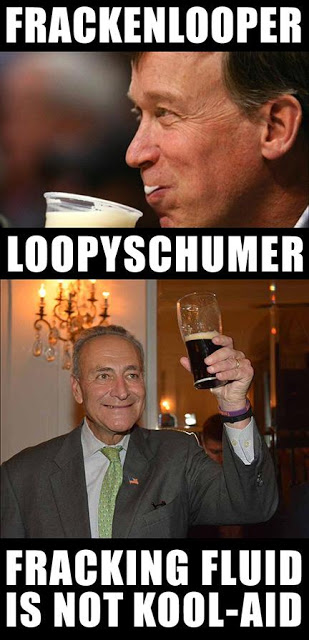
It should be breaking widely in the media today that Chuck Schumer and his DSCC puppet Catherine Cortez Masto (D-NV) at the DSCC have decided to go a step further than Bustos did. They are blackballing consultants and vendors who work for candidates other than candidates they back. Let's take Colorado for example. While Schumer's candidate, John Frackenlooper, was pretending to be a presidential candidate-- and who had an average preference score of 0.3% and was booed by Democratic audiences for his conservative policy stances-- there was a Senate race in full swing. There are close to 20 candidates running serious campaigns, including top tier candidates like former Ambassador Dan Baer, ex-state Senator Mike Johnston, ex-House Majority Leader Alice Madden, ex-House Speaker Andrew Romanoff, state Senator Angela Williams, who had hired staffers. Now Schumer and Cortez Masto are trying to force them-- on pain of blacklisting-- to quit the campaigns that some have been working on for months-- after Frackenlooper admitted he would make a shitty senator and pledged to not run.

This is insane. One political operative who I know pretty well, went nuts on the phone today and told me that he had "received calls over the last few days from campaign managers who are running races (now) against the DSCC's preferred candidate. To say they are livid would be a gross understatement. One manager used the term 'disgusting creature' to describe Schumer just two hours ago. Another called the staff at the DSCC 'Nazi youth' after he received a call from one of them demanding he quit the race. I have a feeling these anecdotes will get even fiercer over the coming days." These are the kinds of shenanigans one would expect from the fascist party, not from the Democratic Party. Schumer and Cortez Masto should both be removed from their leadership positions before anyone gives a nickel more to the DSCC or to Hickenlooper who was boasting yesterday that money is flooding into his campaign from the exact sources that real Democrats prefer to not accept money from.


The 74% who want to see progressive legislation pass are going to be mighty disappointed if Schumer helps Frankenlooper worm his way into the Senate


Ernest Luning, writing for ColoradoPolitics.com, reported that on Monday 6 women running-- Angela Williams, Diana Bray, Lorena Garcia, Alice Madden, Stephany Rose Spaulding and Michelle Ferrigno Warren-- wrote a "strongly-worded letter" to Schumer and Cortez Masto telling them that their endorsement of Hickenlooper in the primary was "premature" and should be rescinded. "Washington insiders should watch the race develop and hear from all of the candidates before getting involved. To be clear, this race is not a coronation of any candidate. We hope the DSCC will give strong consideration to rescinding its endorsement, and allow Coloradans to decide the outcome of this primary campaign... What is more troubling is Hickenlooper’s rhetoric throughout his failed Presidential bid he derisively referred to progressives as 'socialist' and paternally lectured us on how our progressive values will 're-elect Donald Trump.' Let us not forget that it was progressives who fought for the rights of women and communities of color in the 1960s and 1970s that we still enjoy today. Governor Hickenlooper’s statements have offended and angered many of the voters in Colorado. Just like Senator Gardner, Governor Hickenlooper is utterly disrespectful and tone deaf to the contributions of activists and communities that make Colorado a leader on progressive values."

Conservative Democrats who oppose progressive values and polices-- like Kamala Harris, Amy Klobuchar, Michael Bennet and Time Kaine-- have also endorsed Frackenlooper.

Reporting for the Denver Post, Justin Wingerter wrote that Scumer's moronic decision has "sparked an intense email discussion among state Democratic Party officers over the weekend, with allusions to Nazism, criticisms of Hickenlooper and calls for formal opposition. The emails offer a window into an intraparty conflict that is sure to spill out in public for weeks and months to come as Democrats debate who should be their nominee to take on Republican Sen. Cory Gardner.


“Hickenlooper has made it clear that he neither understands nor cares about the true problems in our country,” wrote Dana Torpey-Newman, chair of the Douglas County Democratic Party, “and I object to being told that I, as a party chair, am unable to take sides in a primary, but the DSCC… is able to put a thumb on the scale and force out our candidates who actually comprehend the deeper roots of the societal problems we face.”

...“It is getting to the point that people feel, why bother showing up, as decisions have already been made by the higher-ups?” wrote Paula Ozzello, chair of the Las Animas County Democratic Party in southern Colorado. She called the DSCC’s endorsement of Hickenlooper a “slap in the face” to other candidates, some of whom are “damn good.”

...Democratic Party officials in Clear Creek and Custer counties defended the DSCC. Elliot Jackson, who is listed as a second vice chair in the Custer County Democratic Party, said she has zero patience for intraparty warfare. Democrats should focus on beating Gardner in 2020, she said.

“The absolute ONLY thing I admire about Republicans is their unwavering devotion to doing whatever is necessary to gain power,” Jackson wrote. “They can’t govern worth a damn, because they don’t care about that, but they are masterly at getting into power. Part of that strategy is rallying behind their candidates, and convincing the public that the enemy is Democrats."

Jackson advised her fellow Democrats to study Nazi Germany, saying she was “haunted by the image of German communists and socialists at each other’s throats in the concentration camps, as they were waiting to be put to death by the Nazis they couldn’t be bothered to stick together to oppose.”

Peter Monson, secretary of the Clear Creek County Democrats, agreed with Jackson, saying he also had no interest in intraparty squabbles.

“So the DSCC came out in support of Hick. So what?” Monson wrote. “Maybe I am naive, but I don’t think that will have much sway among primary voters and caucus-goers one way or another. Voters are the ones who will decide, and my only hope is that they pick candidates for president and Senate with the best chance of winning in the general election. That is, or should be, our overriding priority for 2020."

Monson confirmed Monday that he sent the email. Several others in the chain declined to comment.

Much of the emailed discussion centered on how the Colorado Democratic Party should respond to the DSCC’s endorsement. Vinson, the party’s executive director, said the state party will remain neutral in the primary election, which is a Colorado Democratic Party policy. But others wanted a strong statement from the state party denouncing the DSCC endorsement.

“We should not submit this to the media but should send it to all of the national party leaders, in my opinion,” Torpey-Newman, of Douglas County, wrote. “Merely saying that the people of Colorado will decide is not enough, in my opinion. They must be told explicitly why this is unacceptable and what the potential consequences of doing so are."

Susan Newcomer, chair of the Grand County Democratic Party, agreed. So did Sheena Kadi, a vice chair in the Adams County Democratic Party, who is also deputy director of One Colorado. Kadi said Hickenlooper had made Colorado proud but party apparatuses should not endorse.

"I have received dozens of calls, texts, emails, and asks from fellow Democrats wondering why the DSCC is ‘interfering/meddling/obstructing’ in our primary process,” Kadi wrote. She worried the endorsement would convince Democratic voters the race had already been decided and stifle engagement in the election. “And if they don’t show up, unaffiliated voters won’t be persuaded and will not turn out to vote, and we will have another six years of Senator Cory Gardner.”

Jackson, the Custer County party official, said she wouldn’t mind telling national Democratic groups to hold off on endorsing until 2020, but any statement must avoid “trashing another Democrat.”

Morgan Carroll, chair of the Colorado Democratic Party, briefly inserted herself into the email discussion to say the party’s response to the DSCC “needs to be that the people of Colorado will decide who their nominee will be.” As of Tuesday morning, no public response to the DSCC endorsement had been issued by the state party.

"The Colorado Democratic Party has a strict policy of neutrality in primaries and we will not change that policy,” Carroll said in a statement to The Post. “There’s a lot of grassroots energy to defeat Cory Gardner, which is why so many excellent candidates have stepped up to run. At the end of the day, the people of Colorado will be the ones to decide who will run against the most vulnerable Republican senator in the country, and it will be the people of Colorado who lead us to another blue wave in 2020."
Goal ThermometerHeather Brewer, the campaign manager for Maggie Toulouse Oliver's U.S. Senate campaign, told me early this morning that "While we haven't had any direct efforts (yet) to threaten our consultants or otherwise put the squeeze on us, I believe it is only a matter of time. We are ready to fight back against any DSCC attempts to bully their way to victory." Pelosi immediately endorsed Luján, who, of course, lists no policy on his lame cut-out DCCC website. She slammed the DSCC and the DCCC for "this disgusting un-democratic and un-Democratic practice... Washington insiders don't get to decide who becomes the next U.S. Senator from New Mexico, the voters do. Washington is broken and desperate attempts to circumvent the democratic process to consolidate power with the D.C. elite aren't going to fix it. Only with new leaders, like Maggie Toulouse Oliver, who are beholden only to those they represent, can we begin to repair the damage and implement much-needed progressive policies like the Green New Deal and Medicare for All."

Help Colorado progressives defeat Frackenlooper-- and New Mewxico progressives defeat Ben Ray Luján-- by contributing to Andrew Romanoff's campaign and Maggie Oliver's campaign at the 2020 Senate thermometer above. Schumer has demanded that the big "progressive affiliated organizations and the in-the-pocket unions (like the firefighters, who are practically part of the Democratic Party establishment and always go for the worst candidates, be in Biden or Luján) and other institutional Democratic sources of campaign contributions, immediately stop giving contributions to Andrew Romanoff, Maggie Oliver and any of the other candidates other than the handpicked Frackenlooper and Ben Ray Luján.


Labels: , , , , , , , ,

Thursday, March 26, 2020

There's Just One Elections Pundit Who Knows What She's Talking About-- Rachel... And That's NOT Maddow

>


Rachel Bitecofer updated her November model this week, partially based on what she calls the mathematical inevitability of a Biden nomination. It shows a Democrat beating Trump in the electoral college 289-181. These are her projected Democratic votes in the half dozen most pro-Trump states:
Wyoming- 29.37%
West Virginia- 31.73%
Oklahoma- 33.45%
Idaho- 34.58
Utah- 35.35%
Arkansas- 36.64%
These are her projected Democratic votes in the half dozen most anti-Trump states:
Vermont- 67.22%
New York- 66.76%
Massachusetts- 66.41%
California- 65.76%
Rhode Island- 62.62%
New Jersey- 61.46%
And these are the Democratic votes in the 10 swing states:
New Hampshire- 53.9%
Michigan- 53.24%
Pennsylvania- 52.47%
Florida- 51.68%
Wisconsin- 51.61%
North Carolina- 50.57%
Iowa- 49.59%
Ohio- 49.06%
Georgia- 48.88%
Arizona- 48.71


"[V]oters," she wrote, "will likely see this recession as they saw the first term of Obama’s presidency, in context. No president can do much to avoid a total standstill of the global economy from an unprecedented virus. But Trump’s mismanagement of the underlying pandemic causing the economy to melt down will be judged by voters, and it’s already clear that the president’s missteps in the early days of the pandemic are exacerbating America’s economic woes."
A recession will certainly provide a potent test of the old “fundamentals” models that my research challenges. Make no mistake about it: If “the economy, stupid” still matters, it needs to matter here, and it should put the presidency completely out of grasp for Trump. Along with the state-level analysis presented here, economic fundamentals models under a recession will predict dismal electoral prospects for Trump. I assume these models have elements in them to prevent them from making forecasts akin to the Reagan/Carter map from 1980, which of course we will not see because the electorate of 1980, which was rich in liberal Republicans and conservative Democrats, and a Southern realignment hitting its stride is long gone.

Now, the parties are largely ideologically homogenous and partisanship has evolved to become a social identity, an individual’s “ride or die,” which makes the prospect of red states breaking in favor of Biden seem unlikely, especially given the salience of white racial identity in contemporary Republican politics. In an America in which partisans are willing to inflict bodily harm on each other over politics, it seems unlikely that a mere recession, even an intense one, could move them off of their preferred presidential candidate in the ways it did prior to the polarized era, when the economic-fundamentals models, like the dinosaurs once did, ruled the Earth.


...Biden, though unexciting to many millennials and Gen Z voters, is perceived by party mainstreamers as highly electable. These perceptions carry important implications for the behaviors of donors, volunteers, candidates, and tertiary actors such as the punditocracy, who hold important narrative-setting power in the electoral ecosystem. Biden will likely be pushed towards selecting fellow primary contender Amy Klobuchar as his running mate, and in the two-person debate last Sunday, the candidate shrewdly dominated the news cycle by announcing that he will select a female running mate.

Given her performance in the Democratic primary and status as a popular senator from Minnesota, Klobuchar likely leads Biden’s short list. Klobuchar’s reputation for bipartisanship and moderation will be immensely attractive to traditional Democratic strategists who will likely be looking at the VP slot via a regionalism lens, looking to solve the “Midwest problem.”

But whether this is the right lens depends on how you diagnose that 2016 loss. I don’t want to put words in the party’s mouth, but if media surrogates and candidate statements are any indication, it appears Democrats believe their 2016 losses in Michigan, Pennsylvania, and Wisconsin, which, as a reminder, were surprise losses, were due to the failure of Hillary Clinton to win over white, working-class voters. The movement of these Obama-to-Trump voters was the decisive element in Clinton’s loss, and the recovery of them must be the central element of any plan to recapture the Midwest.

This diagnosis, that Clinton underperformed Obama among white, working-class voters, is not quantitatively wrong. This is a mathematical fact. Where this diagnosis runs into trouble is misunderstanding why Clinton underperformed Obama among white, working-class voters and what, if anything, can be done about it. Because underlying the cycle-specific trends are the realities of the long-term demographic, coalitional realignments of the two parties, where the Republican Party is becoming a rural-based party of whites, particularly working-class whites (but  more accurately, non-college-educated whites), and the Democratic Party is becoming an urban/suburban party, racially and ethnically diverse in a society that is becoming more racially and ethnically diverse, and where college education is becoming a reliable predictor of Democratic candidate vote choice (so much so that I use it to predict Democratic candidate vote share in my modeling).


What this means, of course, is that every four years, fewer white, non-college-educated voters (especially those in rural areas) vote for Democrats. And this has profound impacts in the Midwest, because the traditional Democratic strongholds were often, in more rural, heavily unionized areas of these states. Which is why Democrats look at these areas as, “I used to win here, and I should be winning here now.” Which brings us back to the Obama-to-Trump voters. Some of these voters are actually “pure” independents. They broke against the Democrats in 2016 because they were the status quo. In data I worked with from Morning Consult, about 30 percent of Obama-to-Trump voters expressed unfavorable views of Trump as of last fall. My belief is that this group is likely the pure independent chunk, voters I call “change voters,” who we might expect to swing away from Trump in 2020 now that he represents the status quo (especially under an economic recession environment).

As for the rest? As Dave Weigel observed in his analysis of the March 10 primary states, rural, white, working-class voters seem to be continuing their long-term dealignment/realignment away from the Democratic Party and to the Republican Party in the 2020 primary because Biden lost ground compared to Hillary’s performance in previous Democratic strongholds in rural areas; more evidence that the long term dealignment/realignment makes the prospects of Biden winning back white, working-class voters seem unlikely.

Instead, Democrats should be worried about their own coalition, especially given the significant ideological fractures in it, because that weakness played a critical role in their 2016 loss. And that weakness occurred in large part due to the same strategic miscalculations Democrats seem inclined to repeat in 2020-- focusing on rural/white, working-class voters rather than party unity and turnout of their own coalition. That said, 2020 is not 2016. If Biden picks a moderate like Amy Klobuchar, he’s still going to win the election in the very same way that Democrats completely ignored Donald Trump in their 2018 campaign strategies, but still picked up 40 House seats. This was true before COVID-19 came along to destroy the economy and highlight Trump’s many management shortcomings, but the pandemic and economic collapse are going to exacerbate Trump’s problems.

...Now, are there some realigning Republicans, disgusted by the Trump GOP, who are telling their liberal friends and neighbors they voted for a Democrat in 2018?  Absolutely. But I deal in data, and the data tells a different story about the forces that powered the 2018 wave. Yes, it captures a massive shift of independents moving to the Democrats after voting for Trump in 2016, but the myth of the disaffected 2018 Republican appears to be just that, a myth. Instead, the 2018 suburban transformation was largely powered by millennials and Gen Z voters, voters of color, and college-educated women, many of whom had been lazy about voting prior to the election of Donald Trump but now see their votes as America’s last line of defense. It was the surge to the polls by these voters, Democrats, but also independents, that my 2018 model anticipated and it’s these voters who power the 2020 version, too.

Of these “surge” voters, the most vulnerable to turnout failure are young voters and voters of color and the intersection of these two demographics: young voters of color. And for these voters, ideological representation matters. The argument for two moderates on the Democratic ticket is that it avoids alienating disaffected Republicans who might be willing to support the ticket so long as it’s digestible. But again, the 2018 data doesn’t offer much empirical evidence of Republican support at the ballot box for Democrats beyond the average “crossover” rates typical for the polarized era and certainly, the same strategy to court Republicans came up empty in 2016. And the strategy is not cost free. It will, to some extent, cost Democrats support among some Bernie Sanders supporters. While nominating someone on the far left is certainly not ideal, it may not be ideal for the party to go forward with two moderates on the ticket either, because it leaves their progressive flank exposed to what will be a high-tech assault from the Trump campaign and from the RNC who recognize the importance of disaffection among the progressive base plays in their hopes to retain the presidency and control of the Senate.

As the losing ideological faction from the primary, progressives are about to become the targets of a well-financed, sophisticated propaganda campaign hosted by Republicans attempt to fracture the “not-Trump coalition” and reduce the vote share needed for Trump to carry swing states to the pluralities he reached in the 2016 cycle. If 2020 plays out like 2012, 2008, 2004, or even 2000, with typically low protest-balloting rates, Trump’s path to 270 becomes not just difficult, but nearly impossible because of the president’s low approval ratings. Failing to shore up support among liberal voters, especially at a time of great fiscal calamity could prove to be the Democrats’ Achilles’ heel-- as it was in the 2016 cycle.

In addition to progressive defection, Democrats were also left exposed in 2016 when turnout among voters of color, especially black voters, receded from its Obama Era highs. For older voters of color, potential VP pitfalls lie more along lines of racial representation. The data is irrefutable: Black voter turnout increased in 2008 and 2012 for Barack Obama because black voters rallied around a candidate who represented them. In 2008, that increased turnout was part of a large coalition that gave Obama a huge victory, but in 2012, that turnout offset the loss of independents, who broke in favor of Mitt Romney that cycle. Black turnout in places like Cleveland and Columbus allowed Obama to win Ohio anyway...

Changes from the July 1, 2019, forecast

Arizona: Toss-up to Lean D
With Biden winning the nomination and Mark Kelly (a former astronaut) on the Senate ballot, things are looking very good for Democrats to flip this realigning state completely blue in 2020. It’ll be quite the political transformation for the state that made Sheriff Arpaio famous. One thing to watch here in 2020-- even with the Green Party candidate withdrawing and throwing support behind the Democratic Party’s 2018 senate nominee Kyrsten Sinema, the Green Party candidate still pulled in 2.4% of the vote after significant targeting of progressives via the state’s GOP. It was a prototype of the strategy the RNC plans to deploy to support Trump and their senate candidates in 2020 outlined above. More on this when my senate and House ratings drop.


Nevada: Lean D to Likely D

Nevada looks good for Democrats. And frankly, you can’t live in a world in which Arizona is likely turning into a blue state (at least while Democrats are energized) and Nevada doesn’t end up in Biden’s column. The Nevada caucuses met the admittedly low bar for success set by their big sister, the Iowa caucuses, as votes were counted, reported, and a winner was announced all on caucus night. Nevada also beat the Iowa caucuses on turnout. Although falling a bit short of its inaugural (reorganized) 2008 participation rates, 2020 turnout well-exceeded its 2016 rates. This was an important benchmark for Democrats, because both the Iowa caucuses and New Hampshire primary posted average turnout-- far short of the blockbuster turnout numbers seen in elections since Trump and short of what analysts, including yours truly, were expecting in these contests.

To be sure, this cycle’s Iowa caucuses faced two abnormalities that no doubt disrupted them. The caucuses were held the day after the Super Bowl, which had apparently never happened before. And if that wasn’t bad enough, the final three weeks leading up to the caucuses, including the day of the caucuses itself, were disrupted by Trump’s impeachment (show) trial in the Senate, which forced many of the candidates to leave the Hawkeye State and return to D.C. But New Hampshire’s primary, although also impacted by impeachment, should have been largely unaffected, and although turnout was fine, it certainly was not blockbuster. Seeing turnout almost reach 2008 levels in Nevada was a positive sign for Democrats, and as it turns out, it was also a harbinger of things to come as the South Carolina primary met its 2008 benchmarks, as did turnout in many of the Super Tuesday states. Turnout in the Virginia Democratic primary that day nearly doubled its 2016 numbers.

I should note: Although the correlation between primary participation and general election turnout is generally weak, especially for Democrats, presidential elections are different, and 2008’s massive turnout of the primary coalition that gave Obama the nomination heralded significant upticks in voting participation in the presidential election that fall, particularly among groups less likely to vote, such as minority voters and young voters. Failing to see a turnout increase in the Democratic primaries materialize definitely would have been a troublesome sign for Democrats and would have forced me to reassess my confidence in a Democratic victory in the fall. Please note, current turnout collapses due to COVID19 are not signals of Democratic performance in the fall.

Montana: Safe R to Likely R

With the entrance of popular Gov. Steve Bullock into the state’s Senate race, Montana is moving from Safe R to Likely R, with potential for further upgrade later. Bullock will need to demonstrate dominance among independents in polling out of Big Sky Country to truly be competitive there under a high-turnout scenario, as will his ticket-mate, Joe Biden. But more importantly, they’ll need every single Democrat and left-leaning independent in the state to show up and vote. Which is a problem, because although a great many Democrats and left-leaning independents will be inspired to vote in 2020 due to Trump fear, I assume the Bullock campaign’s resources will largely be spent on conversion. And I’m just not sure it’ll work against Steve Daines, a center-right, traditional, conservative. Regular followers will know that I’m generally bearish about conversion (although sometimes it works, most recently in the Kentucky governor’s race against controversial Republican incumbent Matt Bevin, who along with a reputation for Trump-like divisiveness also curtailed the state’s Obamacare Medicaid expansion program). Conversion in the polarized era is hard, and it is difficult to find evidence of it in polling data from the past decade. Further complicating things for Bullock is that the targets most susceptible to this type of conversion effort aren’t likely to be offended by a guy like Daines, who is already in office. And the resources spent on this effort are resources that will not be spent maximizing the turnout of people who would vote for Bullock if they could be motivated to show up.

So, Montana will be worth watching at least. A recession and COVID19 blowback might have more influence in Montana than in other red states because in Montana there are more independents (the dominant independent group there are right-leaning independents, which is why Montana usually breaks in favor of Republicans). But the race will add spending and attention to an otherwise ignored state and given the inflated polling of other long-shot Senate bids, like Tennessee’s 2018 Senate race with former Gov. Phil Bredesen, may produce enough “false flag” polling (pollsters: be sure to always put those party labels on the ballot questions!) to attract attention from the Biden campaign, or possibly Bloomberg, who will be spending on Biden’s behalf.

Virginia: Likely D to Safe D

As I mentioned, turnout nearly doubled in the Virginia Democratic primary and despite a coordinated effort dubbed Operation Chaos by Virginia’s Second Amendment groups galvanized by Virginia’s newly sworn-in Democratic trifecta passing a gun background check bill and a “red flag” law, few Republicans utilized Virginia’s open primary rules to sabotage the Democratic primary by voting for Bernie Sanders (Fun fact: I tested this in my VA primary poll and found that although yes, some Republicans indeed planned to show up and vote for Sanders, they were greatly outnumbered by others who planned to vote for either Biden or Bloomberg. Although the percent of Republican identifiers doubled in 2020 over their numbers in the 2016 primary in Virginia, Republicans still made up a paltry 6 percent of the primary electorate, a far cry from the 23 percent who indicated in our poll at least a soft intent to vote.

But I digress. Virginia’s days as a “purple” state are behind her due to the state’s atypically high rates of college education (a trait she shares with her fellow former swing state, Colorado). I’m not sure we’ll be seeing Virginia return to two-party competition in statewide contests unless college-educated voters end their long-term realignment to the Democratic Party. The way people think of suburban realignment is as a fixed pool of voters changing their affiliation from Republican to Democrat, or at least from Republican to independent. There are certainly some Republicans that left the GOP as it shifted sharply to the right, embracing populism via the Tea Party, then Palinism, which morphed into Trumpism. But this exodus largely occurred before Trump entered the picture, although his candidacy did seem to push out a final surge. And in terms of elites, since 1994, far more Democrats have left their party than Republicans (due to the Southern realignment). During the course of the Trump presidency year, although 19 Republican office holders have quit their party, 15 Democrats have done the same, most recently, a freshman House member in New Jersey who is almost surely regretting that decision today.

Instead, the political metamorphosis in America’s suburbs is largely powered by generational replacement and the coming of age of America’s two largest, most diverse, and best educated generations in history: millennials, who are at the front end of the generation, 40, and at the bottom end of the generation, in their late 20s, and Generation Z, which is currently only about half enfranchised. Millennial college grads are bucking the trend their Gen X parents followed when they became Republicans (because back in the 1980s, Greed was Good and Alex Keating was cool). Instead, some are becoming Democrats, or at least left-leaning Independents. That said, people have a high propensity to adopt their parent’s political attitudes in a process known as political socialization. Generally, 80 percent of individuals adopt their parent’s political attitudes while 20 percent end up like me, forever facing uncomfortable, stilted, small-talk conversations over their Thanksgiving turkey.

Because of this reality, generational replacement is a slow process, but several additional factors are speeding things up. Nowadays, geographic mobility is a reality of the modern economy, so today’s college graduates often find themselves settling in suburbs outside major cities in states they didn’t grow up in. And although the GOP’s race problems aren’t exactly new, the issues they have long faced with black voters over conservatives’ resistance to civil rights legislation are now spreading to other minority groups, such as Latino and Asian voters, a byproduct of the party’s increasingly strident rhetoric on policy issues that touch on race, such as immigration and social welfare programs (as the GOP’s 2012 autopsy report correctly noted: This rhetoric is isolating America’s growing minority population and, I can tell you, frustrating the Gen Z and millennial Republicans who are at the mercy of the party’s Boomer leadership).

The suburbs of today are not the suburbs of yesterday. Because millennials are entering their 30s and 40s, they are entering the suburbs and raising their children there, as their parents did before them. And like generations before them, as they have come into “real” adulthood they are maturing politically, starting to become more interested in politics and in voting. And if they were casual voters in 2016, they, and to a lesser but still important extent their college-age equivalents in Generation Z, are rabid about it now. They showed up in what was, for these age groups, huge numbers in the 2018 midterms, and will likely repeat that in the 2020 general. And their presence in the electorate, both Democrats and independents, is reshaping the political landscape of America’s suburbs.

Does this mean there are no former Republicans who now call themselves independents voting for Democrats in the ‘burbs? Of course there are! But they play a supporting role-- they aren’t the lead actors.

Texas: Likely R to Lean R

Like in 2018, my expectation in terms of the statewide ballot in Texas is that Democrats are going to turn in a very competitive performance but will likely come up short. To actually win statewide, they need a massive turnout increase among Latino voters, and I’m not sure that the Democratic Party truly grasps that yet. Which is funny, right? Because Republicans have recognized the power of descriptive representation among Latino voters for decades, finding and promoting talented Latino politicians all across the country in the Southwest and in Florida and tapping into human beings’ innate desire for sameness. Even Beto O’Rourke, for all the improvements he made to running for statewide office in Texas (the most important of which was abandonment of what I call the “Embarrassed Democrat” platform) still didn’t quite grasp that Latino turnout is the ONLY path to victory. If he had, he would have invested less time and resources on visiting all 250-something counties and more money on Latino turnout. If the Democrats finagled $50 million dollars out of Bloomberg and spent it all on Latino turnout this cycle, Biden could potentially win Texas. Of course, that would also require effective messaging: It is one thing to talk to voters, but what you say to them matters, a lot in convincing them their vote matters.

The best asset Biden has for winning Texas is the fact that Democrats will likely believe deeply in the potential for that Senate seat to flip-- plus, there are nine (that’s correct, nine) House seats within reach deep in the heart of Texas, in the realigning suburbs around Houston and Dallas. These districts either got underinvested in or even outright missed in the 2018 wave (I highlighted these races back in August of 2019 here). Add to this an effort by Texas Democrats to pick up seats in the state legislature, perhaps enough to give them control of the state house for the first time since the Southern realignment ran its course through the state, and you have very similar circumstances to conditions we’ll be seeing in Iowa and North Carolina, where Democrats will also benefit from multiple competitive races helping to boost overall turnout. This earns Texas a lean R, for now.

Georgia: Lean R to Toss-up

And that leaves us with Georgia. The Peach State, and the state I spent six years living in as I pursued my doctorate at the University of Georgia (Go Dawgs, Woof, Woof, Woof). Although I initially rated Georgia as Lean R, and that is the rating the state warrants under the model, it has now gone from holding not one, but two Senate races! Those two Senate seats which, by the way, are likely going to be pivotal for Democrats’ hope to take control of the Senate, have certainly increased the salience of Georgia for the party. Despite their best efforts, the party was unsuccessful in convincing the state’s star Stacey Abrams to run, and indeed, her decision to sit out was a major factor in my decision to initially rate Georgia as Lean R.

But it was a strategically shrewd move for Abrams, who likely appears somewhere high up on Biden’s VP list. While coming up short, her candidacy for the state’s governorship in 2018 was impressive. For a black female to come within a hair’s breadth of winning the governorship of Georgia-- GEORGIA, for God’s sake, in a congressional midterm cycle, no less? So please, don’t @ me with the “but she couldn’t even win her own race” tweets. Georgia is an R+5 state, and as in many red states, Republicans have strategically used control of state government there to erect barriers to voting. Drop Stacey Abrams in Virginia and I’m not sure anyone would want to run against her. So important to remember that a politician’s electoral performance (and their issue positioning/ideology for that matter) is conditional on where they serve/run for office and in the polarized era, what matters for that is the party composition of the district/state. Take a 2018 loser like Claire McCaskill, whose Missouri Senate seat went from R+5 to about R+9 during her tenure, and drop her off in a state like Wisconsin (EVEN), and McCaskill is still serving in the Senate.

Back to Georgia. For the special election, well-known preacher Raphael Warnock has entered the race against incumbent Sen. Kelly Loeffler, who was appointed to the seat last fall to fill an unexpected vacancy created when the state’s senior senator, Johnny Isakson, had to retire suddenly due to illness. What you may not know, because it’s super-weird and election nerd wonky, is that this special election is like Mad Max of Thunderdome + WrestleMania, except it’s more like 20 candidates of all stripes enter, and two will leave. That’s because the state’s rules governing appointment-filled vacancies and elections require winners to exceed a 50 percent +1 benchmark to avoid a runoff. And because this election is a special election to fill out a two-year term, there will not be a primary first to whittle down the competition to a single Republican and Democratic nominee.

So, with more than a dozen candidates running in it, this election seems all but certain to end in a January 2021 runoff between the top two vote-getters. Things became far more complicated for the GOP when Rep. Doug Collins, a fervent Trump supporter and MAGA adherent, decided to challenge Loeffler, a “country club conservative,” in the special rather than conceding defeat after trying to pressure Kemp into appointing him to the seat instead of her. Despite immense pressure from Georgia’s pro-Trump base, Kemp appointed Loeffler for two reasons: broader electability in what the party knows will be a competitive Senate cycle and her ability to self-finance her race (she donated $20 million dollars to her own campaign).

A quick aside on this. Bashing the big-money biases of candidate selection from both party’s organizations is easy to do, and money is quite obviously a terrible sickness on the American political system, but I do want to point out that both the DNC and RNC are facing serious constraints due to the costs of modern campaigns that drive these decisions. With Senate races costing around $100 million dollars in the post-Citizens United environment, the parties are increasingly forced to turn to millionaires (and more recently billionaires) to run for office because they are the only ones who can come up with the type of money needed to compete. Collins, who was supported by Georgia’s vibrant Republican grassroots community, didn’t take too kindly to being passed over for the Senate seat largely due to funding potential and is willing to jeopardize the party’s ability to hold the seat over it (well that, and a dash of good ol’ fashioned ideological extremism) and will now have plenty of fodder to use against Loeffler who is one of four senators under scrutiny for selling stocks in the run-up to the pandemic.

IF Georgia Democrats can thread the needle and somehow get their field to winnow and get Warnock over the 50 percent threshold on Election Day in November, they could flip that seat. But that’s a mighty big “if,” for a lot of reasons, not the least of which is that the Democrats have ideologues in their party, too, which can make coordination difficult. Having two competitive Senate seats in a state that broke for Trump by just 5 points in 2016 in a low-turnout environment makes Georgia a toss-up state for the Biden team. And because a state like Georgia is superfluous to an Electoral College victory (you only need 270 EC votes to accomplish that) this is where things like candidate quality, strategy, and VP selection can make a difference. Under a scenario where Stacey Abrams or even Kamala Harris is on the ticket, Georgia could become ground zero.

What does it all mean?

Collectively, the update reflects the consolidation of the Democratic primary around a digestible candidate decently positioned to capitalize on anti-Trump blowback constrained by polarization and hyperpartisanship, the forces that constitute the fundamentals of the 2020 presidential election. Democrats and left-leaning independents are fired up, galvanized by negative partisanship and ready to vote Trump out. But Republicans, at least as of today, are equally determined to keep him. I want to make something clear- this update largely ignore what is all but guaranteed to be a serious economic recession as well as the toll the COVID19 pandemic ends up taking on American lives.

Can a mismanaged response to COVID19 that exacerbates the death toll and economic collapse and ensuing recession further complicate Trump’s already dismal reelection picture? Absolutely. When I said “barring a shock to the system” and listed economic recession it was not because I expected such an effect would help Trump electorally. Indeed, I’m not sure Trump would be capable of benefitting from any “rally around the flag” event, which the pandemic certainly could qualify as, because it is simply not in his nature to behave in ways that would allow him to rally the public around him, at least not outside a very constrained window of time.

If I had to guess, voters will likely hold Trump largely blameless for the economic collapse but the management of the country’s response to the pandemic is another matter. That said, after watching the Trump presidency play out, with the revelations of the Mueller Report-- deftly deflected by Attorney General Barr in what I admiringly note was a brilliantly executed public relations effort-- and the stunning revelations from House’s investigation into the president’s actions in the Ukraine scandal unable to move Republican voters off of the 90/10 approval perch, until I see data that shows Trump’s Red Wall cracking, I remain bullish on his ability to remain at least competitive for reelection in 2020. In other words, it’s hard for me to imagine the political map remade and Democrats suddenly competitive in places like Arkansas, which is what we have seen historically when presidential elections have corresponded to periods of massive economic or societal upheaval. Polarization and hyperpartisanship makes such an outcome unlikely, but if signs of such a democratic reawakening were to emerge, I will be sure to tell you.


Since Bitecofer brought up the Senate... I want to point out an American Prospect report this week on knucklehead Chuck Schumer and his toxic role in screwing up the DSCC, which he used to head and now maintains a firm grip on through weak puppet Catherine Cortez Masto, who he appointed. Bob Moser began with how Schumer was able to drive the more qualified and surer statewide bet-- Maggie Toulouse Oliver-- in the New Mexico open-seat race, out of the race to make room for a centrist nothing DC establishment candidate, Ben Ray Luján.

Moser wrote that "While the DCCC, which intervenes early and often in House primaries, tends to garner more press attention-- and more howls of protest from progressives-- the DSCC is just as powerful and intrusive. Senate Minority Leader Chuck Schumer’s hand-picked favorites gain an insurmountable financial advantage and the establishment stamp of approval, effectively ending most primary elections before they begin. Schumer doesn’t just choose between candidates who’ve declared their interest or started to run; he aggressively shapes the races to suit his narrow idea of “electability,” sometimes elbowing the 'wrong' candidate out of the race with strong-arm tactics. And when he’s not happy with his choices, Schumer goes out and finds his own, recruiting centrist candidates with big-donor connections who often turn out to be lackluster campaigners at best."

In the case of solidly blue New Mexico, "Toulouse Oliver didn’t want to give in. She’d fought uphill her whole life. But she and her campaign were about to get a hard lesson in exactly why, since 2010, not a single candidate endorsed early by the DSCC had lost a Democratic primary." Heather Brewer, her campaign manager, told Moser that she tried "to get DSCC Chair Catherine Cortez Masto or her boss, Schumer, to meet with Toulouse Oliver and see what she had to offer. 'They never returned my phone calls,' Brewer says. 'We were just ignored.' They had no illusions that the establishment would go against Luján, she says. 'We just wanted the opportunity to make the case that they should stay out of the primary. Two strong, viable progressives were running. Given the Democratic edge here, whoever won the primary was going to win the general election. This was the race. Why shouldn’t New Mexicans be able to decide between two worthy candidates?' Brewer knows very well that Luján is no progressive; she an dI discussed it over the phone at least a dozen times. And saying so to a reporter helps explain how Schumer is able to snow the public.


For candidates left unchosen by the DSCC and the Schumer machine, “there are so many, many, many obstacles that you wouldn’t see if you’re on the sidelines,” Brewer says. “It’s all designed to keep outsiders from even trying.” The highest, hardest hurdle is raising enough money to compete. “We were told again and again, if you can hold Luján’s financial advantage to 10-to-1, you’re doing great,” Brewer says. When the party committees decide to weigh in on a primary and pick their favorite, they aren’t just pledging to put millions behind him or her, along with other valuable campaign resources (organizers, consultants, fundraising pros); they’re signaling where other Democratic donors should invest as well-- and which candidates they shouldn’t bother with. But the party doesn’t stop there. “I understand, from what we were told, they were using their influence to get organizations who’d endorsed Maggie, or thought about supporting her, to stay on the sidelines,” Brewer says.

When the candidate met with donors and progressive organizations that would be expected to be friendly to her effort, Brewer says, “We got a lot of paternalistic reactions: ‘Are you sure you want to take on this fight? Because it might come back to bite you.’ What you couldn’t help hearing was, ‘Why aren’t you putting your pretty little dress on and waiting for another time?’”

Toulouse Oliver managed to raise enough to staff up her campaign last spring and summer. But that was just one challenge it had to meet. Top-level campaign vendors-- pollsters, field organizers, fundraisers-- have grown increasingly wary of taking on non-establishment candidates. And for good reason: Last year, the DCCC announced that it would blacklist any campaign vendor that worked on a primary challenge to a Democratic incumbent. By implication, that also meant steering clear of any challenge to party-endorsed candidates altogether. “The DSCC didn’t spell it out the same way,” Brewer says, “but they didn’t have to. If you go with an insurgent candidate, you’re done. ‘You cross us, and we’ll cross you.’ It cast a shadow over everything about how people approached Maggie’s campaign.”

One person who didn’t take Toulouse Oliver lightly was her opponent. Just two days after she bucked the DSCC and officially announced she was running, Luján-- whose voting record on the environment had been mixed-- declared he would be co-sponsoring Green New Deal legislation in the House. A month later, he said he would-- like Toulouse Oliver-- refuse to accept corporate PAC money. In June, he tacked left again, coming out for Medicare for All. And in August, he became the highest-ranking Democrat to call for an impeachment inquiry.

By that point, he’d effectively appropriated most of the big issues that Toulouse Oliver was campaigning on. And, no surprise, he was also raising big bucks. By October, Luján had $1.6 million in the bank. Toulouse Oliver had $85,000 heading into the final quarter of the year. “We did polling,” Brewer says, “and we still had a path to victory. It was an ugly, scorched-earth path, though.”

At the end of October, after six months of fighting the system, Toulouse Oliver withdrew, throwing her support behind Luján and celebrating the small-but-unsatisfying feat of pushing him to the left. For the rest of the campaign, she’d continue working as secretary of state to make voting easier-- work that will, of course, benefit Luján in November.

The DSCC had won again. Field cleared, check! Months later, Brewer, who’s been working in New Mexico politics for two decades, still hasn’t gotten over it. “You’re going 100 miles an hour trying to fight the establishment, and then-- bang, it’s over. This policy of hamstringing challengers, strong-arming vendors, warning donors not to give to challengers-- it’s completely contrary to the Democratic spirit. What they’re doing is shutting out different voices. It’s not OK.”

Goal ThermometerIt used to be a rare thing for the national Democratic committees to step into-- much less step on-- party primaries. “The party’s traditional view was that you should be neutral until the states or districts picked a nominee,” says Andrew Romanoff, a former Colorado House Speaker who served on the Democratic National Committee in the late 1990s. But since the mid-2000s, under the leadership of Pelosi, Schumer, and former Senate Majority Leader Harry Reid, the notion that voters should choose their own nominees has become an anachronism.

Schumer made his bones in the Senate by chairing the DSCC during his first term, in the 2005-2006 cycle, making good use of his home-state ties to Wall Street. From the start, he’s shown no hesitation about meddling in primaries-- and no interest in changing his ideas about what an “electable” candidate looks like, despite the fact that his handpicked recruits have regularly bombed in winnable general elections. This year, the strategy of fixing primaries has reached its logical zenith: In every single state where there’s an open Senate seat or a vulnerable Republican, the DSCC has chosen an early favorite. That adds up to a lot of states this time around—four in which Democrats are favored to win (Arizona, Colorado, Maine, New Mexico), and seven more where they have fair-to-middling chances (Georgia, Kansas, Kentucky, Iowa, Montana, North Carolina, Texas).

The DSCC, of course, says it’s all a matter of pragmatism. The rationale for preventing voters from choosing Democratic nominees is supposedly to avoid “divisive” primary battles that drain resources and goodwill heading into general elections. And the choice of candidates is based on cold, hard calculations of what it’ll take to win a particular state. “These are not decisions made on a whim or a popularity contest,” Dan Sena, who ran the DCCC in 2018, said when questions were raised about this year’s Senate picks. “These are decisions that are very well thought-out, take time to develop, and often they’re critical to being able to flip a seat.” DSCC spokesperson Lauren Passalacqua put it more simply: “We’re working with the strongest candidates who will help Democrats take back the Senate.”

So what does the lineup of “strongest candidates” in key 2020 races look like? Eight of the 11 are white. Six are men. Three have never run for any office. Six have never won an election. All but two oppose both the Green New Deal and Medicare for All. All but one—the Rev. Raphael Warnock in Georgia, the lone African American on the list—are demonstrably more conservative than their main rivals bypassed by the DSCC.

The list of viable contenders rejected by the DSCC is a study in contrast. The tone was set with the first early endorsement of the cycle: A couple of weeks before the committee chose Ben Ray Luján over Maggie Toulouse Oliver last April, Schumer’s blessing went to former astronaut Mark Kelly in Arizona, a political novice who only registered as a Democrat in 2018, over Rep. Ruben Gallego, a 39-year-old rising star in the progressive caucus who’d long been planning to run. (Gallego subsequently opted to bow out.)

Another Schumer recruit was rolled out in June 2019 in the state every Democrat would most love to win: Mitch McConnell’s Kentucky. Democrats there, and many progressives around the country, had gotten fired up about the prospect of an out-of-the-box challenger to the self-proclaimed “Darth Vader of the Senate,” who’s never lost in six Senate elections and also never been liked: Twice over the past year, McConnell’s approval ratings in Kentucky hit a rock-bottom 18 percent. Matt Jones, a 41-year-old Eastern Kentucky native with the gravelly drawl to prove it, started Kentucky Sports Radio after finishing Duke Law School, and has become one of the most beloved figures in the state, mixing politics into his sports talk and specializing in McConnell takedowns. “For a lot of this state, I’m their one progressive friend,” he told me last summer, when he was still considering a tilt at the McConnell windmill.

Like other Kentucky Democrats, Jones had watched with mounting frustration as McConnell demolished a series of well-funded centrists backed by the DSCC. Kentuckians mostly vote Republican now, and they gave Trump a 30-point blowout margin in 2016, but they’ve still elected Democrats to the governorship three of the last four cycles. Jones couldn’t help wondering, “What if you stand up for progressive economic values and do it with a down-home Kentucky spin?” His hope was that the DSCC, which he calls “a complete disaster when it comes to selecting candidates,” would stand back and give him a chance to test his theory. “Kentucky is a blue-collar, anti-establishment state,” he says, “The reason that people like Trump here has nothing to do with ‘issues’ per se. They like him for the exact same reason they don’t like McConnell. To beat him, you’ve got to run somebody who runs against his mainstreamism.”

The DSCC did not stand back, of course. It never reached out to Jones. Instead, Schumer wooed Amy McGrath, the ex-Marine who came up just short in a House race in 2018. McGrath is running straight down the middle, emphasizing “country over party,” and raising a ton of money-- just as the DSCC favorite in 2014, Alison Lundergan Grimes, did, before losing to McConnell by 15 points. Jones ultimately decided to stick with his radio network and channel his McConnell animus into an upcoming book, Mitch, Please. The whole thing left him, and a lot of his fans, anguished. “I was looking at this and saying, ‘I’m thinking about taking on the most powerful senator since LBJ. I’m going to do it as a radio host, and risk having people turn on me for good and ruining my career if I lose. And then there’s Schumer coming along to say that I’m going to have to run against the Democratic establishment as well.’”

Join the club, Matt. With Jones out of the running, first-term state Rep. Charles Booker of Louisville, an African American, stepped up late last year to give McGrath some competition from the left with a scrappy grassroots campaign touting Medicare for All and universal basic income.

And so it went, throughout 2019. In Iowa, where first-term Republican Joni Ernst looks eminently beatable, the DSCC came out in June for real-estate executive Theresa Greenfield, another first-time candidate, over two young progressives with broad appeal who’d been looking to run: J.D. Scholten, whose grassroots populist campaign nearly unseated the white supremacist Rep. Steve King in 2018, and Linn County Supervisor Stacey Walker, an African American Bernie Sanders supporter who’s viewed as a rising force in the party. Scholten wound up running against King again. When Walker decided to stay out of a “primary orchestrated by Washington elites,” as he put it, he was brutally honest about his reasons. “I don’t have the privilege of challenging institutional forces on this scale without incurring significant damage to my political career,” he said, “and at the end of the day, this fear won out over my courage and I’m not proud about that.”

The Iowa seat, it’s worth noting, almost surely wouldn’t be in Republican hands if the DSCC hadn’t given an early, field-clearing endorsement in 2014 to famously haughty Rep. Bruce Braley after longtime Democratic Sen. Tom Harkin retired. Soon after receiving Schumer’s blessing, Braley made headlines complaining about the shortage of locker-room attendants in the Senate gym during a government shutdown; worse, he was caught on tape poking fun at the idea that popular Republican Sen. Charles Grassley, a mere “farmer” without a law degree, might soon be chairing the Senate Judiciary Committee. Farmers, a large contingent in Iowa, took notice; Braley lost handily.

It wasn’t the first or last time the DSCC’s strategy left it to ride or die with a candidate who proved inept or downright offensive. In 2016, with Republican Sen. Pat Toomey looking like a sure loser in Pennsylvania to populist Democrat Joe Sestak, Schumer recruited Katie McGinty, who’d run for election exactly once and won 8 percent in a primary. Sestak had infuriated the DSCC by challenging and beating Republican-turned-Democrat Arlen Specter in a 2010 primary, and he had to pay the price. McGinty, propelled into the general election by $5 million in DSCC spending against Sestak, became a laughingstock for her wooden public presence and a pariah for her deep ties to oil and gas companies. She lost a race that set spending records on both sides.


Even when Schumer’s recruits win general elections, the upshot for Democrats can be problematic. His great success story of 2018, Arizona Sen. Kyrsten Sinema, votes regularly with Republicans on judicial nominees, backed Attorney General Bill Barr’s confirmation, opposes net neutrality, and was ranked-- by one nonpartisan vote-tracking group-- as more conservative in 2019 than Mitch McConnell. The Arizona Democratic Party threatened to censure her last year for “failing to support the tenets of the 2016 Democratic Party platform.”

In newly competitive Kansas, where GOP Sen. Pat Roberts is retiring, the early DSCC nod went to longtime Republican state Sen. Barbara Bollier, who’d switched parties only one year before. In Maine, where Sen. Susan Collins’s serial capitulations to President Trump have wrecked her reputation for independence in a state that’s been trending blue, a potentially lively Democratic primary was squelched in May, when the DSCC endorsed state House Speaker Sara Gideon. “They didn’t just get in putting their thumb on the scale,” marveled progressive activist Betsy Sweet, who stayed in the race while other contenders dropped away, but struggled to raise money and find campaign vendors. “It was like the full body.” Collins, Sweet noted, has beaten Schumer picks in the past, partly because of the way the DSCC dictates they run campaigns. “What I see Chuck Schumer trying to do for all these candidates is to package them like a cookie. Their formula is to raise a lot of money and [run] a lot of negative ads, and you win.”

If anyone doubted her assessment, Schumer’s interventions in North Carolina provided ample proof. First-term senator Thom Tillis is considered one of the most beatable Republicans in the country. After trying and failing to recruit a series of candidates last year, Schumer landed on moderate military veteran Cal Cunningham, a one-term state legislator in the early ’00s who lost the Democratic nomination for Senate in 2010, despite a DSCC endorsement, and hasn’t run for office since. The DSCC was determined to block state Sen. Erica Smith, who’d been running a progressive campaign from the start. “Sen. Schumer, for whatever reason, did not want an African American running for Senate in North Carolina,” Smith said. Just before they tapped Cunningham, Smith claimed that party leaders had told her, “unequivocally that they were not, had not, did not intend to endorse in the primary.” Smith stayed in, defiant but drastically outspent.

Toward the end of the campaign, a mysterious PAC—its funding later traced to the Republican Senate Leadership Fund—spent more than $2 million on dirty-trick ads touting Smith as the “true progressive” in the race and criticizing Cunningham’s stances on LGBT rights and climate change. But PACs supporting Cunningham, which put $7 million behind him, simply ramped up their spending in response. Cunningham won 57-35 on Super Tuesday.

Schumer’s quest for a non-Smith candidate in North Carolina produced the most embarrassing, and revealing, glimpse yet into the DSCC’s criteria for selecting the “strongest” candidates. Jeff Jackson, a 37-year-old National Guardsman who’s crusaded against Republican voter suppression and gerrymandering in the state Senate, met with Schumer early in 2019 to discuss his own possible candidacy. In September, long after he’d decided not to run, Jackson revealed why in a talk at UNC Charlotte. Jackson, all gung ho, said he’d outlined his plans for the campaign, telling Schumer he wanted to start with “100 town halls in 100 days” across the state.

Schumer responded brusquely, Jackson reported. “Wrong answer … We want you to spend the next 16 months in a windowless basement raising money, and then we’re going to spend 80 percent of it on negative ads about Tillis.”

Democracy in action.

Early last year, as he laid the groundwork for a Senate campaign in Colorado, Andrew Romanoff got a call from the DSCC. “They said Sen. Schumer would like to meet with you, see what you’re putting together, see if we can recommend any consultants,” he recalls. The outreach was a bit surprising. A decade before, Romanoff, who’d been the youngest House Speaker in state history, had gotten crosswise with the Washington establishment when he’d mounted an unsuccessful progressive challenge to Michael Bennet, who’d been appointed to the Senate in 2009 when Ken Salazar became President Obama’s secretary of the interior.

Back then, Romanoff admits, his support for single-payer health care, radical environmental reforms to combat climate change, and same-sex marriage were a few election cycles ahead of their time in Colorado. Ten years later, as he tried to mount his political comeback, those views had become mainstream-- so much so that at least a half-dozen other potentially viable progressives, including two women who’d also been state House Speakers, were planning to run for the chance to unseat unpopular first-term Republican Sen. Cory Gardner. But hey, Romanoff thought: Maybe his old foes at the DSCC would give him a leg up this time.

“It turned out that it was all a ruse,” Romanoff says. “Sen. Schumer made it clear to me that he was going to recruit Hick”-- former Gov. John Hickenlooper, who was then running a hopeless campaign for president from the right, likening Bernie Sanders to Marx and Stalin--“into the race. They were very naked about this. They didn’t want to see a primary; they didn’t want Democrats to fight each other. And they didn’t seem terribly concerned that Hick had said publicly, more than once, that he’d be a terrible senator and didn’t want the job.”


Romanoff was undaunted by Schumer’s kiss-off. “If Washington were a town known for its good judgment,” he says, “I might have been more inclined to defer.” But Schumer wasn’t blowing smoke. In late August, a week after Hickenlooper put a merciful end to his presidential bid, he released a video declaring that he’d changed his mind about running for Senate. “I’ve always said Washington was a lousy place for a guy like me who wants to get things done,” Hickenlooper said. “But this is no time to walk away from the table.”

Huzzah! The DSCC endorsed him two days later.

Colorado Democrats were dumbfounded and furious. The move was especially mystifying, as candidate Trish Zornio noted, because “any Democrat running against Cory Gardner is slated to win. It’s a wonderful thing: A potted plant would probably win in November.” Six of the women running in the primary fired off a public letter to Schumer and Cortez Masto, demanding that the DSCC “reconsider its early endorsement” of Hickenlooper and accusing the party of gross gender bias. “Those of us who have run for office before have been told to ‘wait our turn’ and ‘don’t rock the boat’ more times than we care to mention,” they wrote. “Now the DSCC, by its endorsement, is implying that we should defer to a male candidate because you seem to believe he is ‘more electable.’”

This wasn’t just sexist, they said, but a recipe for losing a Senate seat that should be a gimme. Hickenlooper’s popularity had waned during his two terms as governor, as he fought against legalizing marijuana, sued two towns that tried to ban fracking, and quintupled oil and gas production in the state, earning him the nickname “Frackenlooper.” His reactionary presidential campaign hadn’t burnished his image. “We would hate to see Colorado as another state that could not take back the U.S. Senate because of poor candidate selection by the DSCC,” the women wrote, referring to Schumer’s habit of wooing older white men out of retirement to run and lose-- including former governors Ted Strickland of Ohio (2016) and Phil Bredesen of Tennessee (2018), and former senators Bob Kerrey of Nebraska (2012) and Evan Bayh of Indiana (2016). They all looked strong in early polling. And they all lost by double digits in November.

Before long, as money poured in for Hickenlooper and dried up for the others, fury gave way to resignation for most of the hopefuls. By the end of November, five of the letter writers had dropped out, along with former U.S. Attorney for Colorado John Walsh and Obama-era Ambassador Dan Baer, the lone openly gay contender. But the resentments remained fresh, especially as Hickenlooper followed the DSCC’s “windowless basement” formula and skipped 19 of 20 candidate forums and debates between September and March. On March 7, Romanoff—the strongest progressive left standing (“I’m either stubborn or slow to take a hint”)-- beat Hickenlooper in the state’s Democratic caucuses, the first step in Colorado’s long and convoluted process of choosing a nominee.

Hickenlooper remains the favorite to prevail in the June 30 primary, with a large lead in the polls and millions to spend. But the DSCC’s heavy-handed intervention on his behalf won’t soon be forgotten. If early endorsements are supposed to foster unity and quell bitter divisions in the Democratic ranks, this one backfired spectacularly.

So did Schumer’s even more unaccountable maneuvering in Texas, where demographic trends finally began to translate into Democratic votes in 2018. Rep. Joaquin Castro was expected to head up a big, impressively diverse field of Democrats hoping to topple Sen. John Cornyn, a powerful Mitch McConnell lieutenant in Washington who’s a faint presence back home. Even if Castro opted out, the contenders would include the most powerful African American in the state capital, Sen. Royce West of Dallas, and the dynamic organizer of the Jolt Initiative that’s registered hundreds of thousands of young Latino voters, Cristina Tzintzún Ramirez. No matter who won, the top of the Democratic ticket in Texas was going to look like the future. Until Schumer stepped in.

In December, before Castro made up his mind, the DSCC threw its weight behind the most conservative white candidate in the mix, M.J. Hegar. A female Air Force pilot and Purple Heart recipient in Afghanistan, Hegar had come close to knocking off a House Republican in the suburbs of Austin in 2018, largely on the strength of a viral campaign video, “Doors,” which memorably highlighted the personal and professional obstacles she’d overcome. She’s an appealing character-- a motorcycle-riding mom with tattoos and a knack for cornpone putdowns (she loves to call Cornyn “cupcake”)-- with the kind of mushy ideology that might have made her a strong candidate in the Texas of the 1980s or ’90s. Back then, Democrats needed to woo white voters back into the fold to win. Today, they can only win with record turnout from the nonwhite majority.

Even Texas Democratic Party officials were left stunned by the endorsement. Castro soon decided to keep his House seat and wait for another day to run statewide, but the others stayed in. West and Ramirez both ran against the DSCC, which he accused of “trying to block African Americans out of the process.” Ramirez spoke openly of her discussions with the national party: “I let them know that if they did endorse her, I would hate for it to backfire on her in the general election with voters of color who already felt underrepresented and ignored.” On Super Tuesday, Hegar led the field, but with only 22 percent of the vote-- an anemic showing for a candidate who spent $3 million, with an additional $3.5 million boost from VoteVets Action Fund, a dark-money group that backs Afghanistan and Iraq veterans. West, who spent less than $1 million, narrowly edged Ramirez for a spot in a May 22 runoff.

If Hegar makes it to the general election, it’ll cost millions more to get there. So much for the Schumer strategy of avoiding expensive and divisive primaries. There was no guarantee that Castro, West, or Ramirez would have beaten Cornyn in November if they emerged from a fair and unmediated primary, of course. But Texas Democrats would have had a candidate who looked like Texas circa 2020, rather than an echo of the good ol’ past.

But the past is never past, it seems, when Chuck Schumer and his brain trust play God in Democratic primaries.


Labels: , , ,