Democrats And Republicans Are Intensely Polarized-- And The Injection Of Fascism Into The GOP Seems to Be Making It Impossible For the Country To Stay Together
>
Conservative Republican Max Boot is having a midlife crisis in real time and in full public view: Conservatism Has Become A Racket And Trump Is The Grifter In Chief. "You can debate when the conservative movement became a racket-- I nominate 1996, the year Rupert Murdoch and Roger Ailes created Fox News Channel to monetize right-wing outrage-- but there is no doubt it has long since passed that point," he wrote. "If you have any doubt, look at the recent revelations about the National Rifle Association, probably the single most powerful conservative lobbying group in America."
The NRA’s long-serving executive vice president, Wayne LaPierre, told his followers: “It’s up to us to speak out against the three most dangerous voices in America: academic elites, political elites and media elites. These are America’s greatest domestic threats.” So LaPierre must be a man of the people, selflessly dedicated to the goal of two assault weapons in every house and a bazooka in every garage, right?The Trump Regime spent $2,573,708,000,000 in the first seven months of fiscal 2019 (October-April), setting an all-time record. Much of that money was wasted-- not spent on the public good, like building high speed rail system or on rebuilding collapsing bridges or on healthcare or education. Do you recall the brilliant Eric Levitz piece from about half a year ago-- Tribalism Isn’t Our Democracy’s Main Problem. The Conservative Movement Is? "Today’s party system offers voters a wide-- and clearly labeled-- range of alternatives," he asserted. "While myriad policy debates remain stifled by bipartisan consensus (the proper size and role of the U.S. military, for example), it is nevertheless the case that Democrats and Republicans now provide the electorate with stark choices on health care, taxation, social spending, immigration, racial justice, abortion, environmental regulation, labor rights, and other issues. It has rarely, if ever, been more clear what-- and whom-- each party in the U.S. stands for." He seems to be forgetting about the Blue Dogs, New Dems and the whole pernicious Republican Wing of the Democratic Party, muddying the water and distorting the brand but... let's go with his premise for a moment.
Actually, protecting the “right” of anyone to buy any gun at any time turns out to be a lucrative racket. The NRA paid LaPierre $927,863 in 2014, $5,051,249 in 2015 and $1,358,966 in 2016, according to the group’s tax returns. In 2016, eight other NRA executives also made more than $500,000. But that is only the beginning of their compensation...
LaPierre’s reported compensation is just part of a larger, troubling pattern at the NRA that could threaten its tax-exempt status. An investigation by the New Yorker and the Trace found that “a small group of N.R.A. executives, contractors, and venders has extracted hundreds of millions of dollars from the nonprofit’s budget, through gratuitous payments, sweetheart deals, and opaque financial arrangements. Memos created by a senior N.R.A. employee describe a workplace distinguished by secrecy, self-dealing, and greed, whose leaders have encouraged disastrous business ventures and questionable partnerships, and have marginalized those who object.”
...A similar culture of impunity exists across the right. Leaders are being lavishly rewarded, and their misdeeds are being covered up as long as they rile up the rubes. Fox News host Sean Hannity makes a reported $36 million a year and owns his own airplane while railing, like LaPierre, against “elites.” Fox News’s parent company, meanwhile, became notorious for paying tens of millions of dollars to settle lawsuits regarding sexual harassment charges brought against some of its biggest stars, including Ailes and then-anchor Bill O’Reilly.
...America’s conservatives are Trump’s willing marks in no small part because, long before he came along, they had already gotten used to being fleeced by self-serving rabble-rousers-- the real-life versions of Elmer Gantry, Berzelius “Buzz” Windrip and Larry “Lonesome” Rhodes.

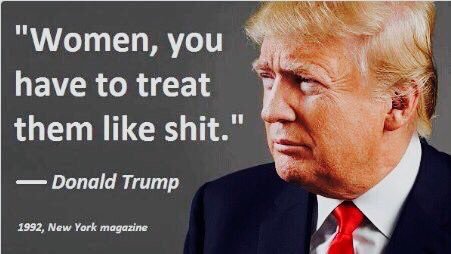
Our president may be a kleptocratic conspiracy theorist who oozes contempt for America’s highest ideals (and ignorance of high-school civics)-- but only because conservative voters came to despise the Democratic Party more than they loathe self-proclaimed pussy-grabbers. Congress might be barely able to fund its own paychecks, let alone find consensus solutions to policy challenges-- but voters only tolerate such gridlock because they’ve come to see compromise as a synonym for their side’s defeat. And Americans might be losing confidence in public institutions, the integrity of their nation's elections, and the value of democracy itself-- but this is largely because so many of them have decided that one of their nation's two political parties poses an existential threat to their bedrock ideals.
...In Uncivil Agreement: How Politics Became Our Identity, University of Maryland political scientist Lilliana Mason... writes, “our conflicts are largely over who we think we are rather than over reasoned differences of opinion.” By this, Mason means that our nation’s partisan divisions are not rooted in the severity of red and blue America’s ideological disagreements, but in the extremity of their social animosities.
Polling data offers a mountain of evidence for the first half of that thesis. While Democratic and Republican voters earnestly (and vehemently) disagree on plenty of issues, surveys suggest these disputes are hardly more numerous or severe than they were three decades ago (when bipartisan comity was still alive and well on Capitol Hill). When asked to opine on discrete questions of public policy, the American electorate’s preferences have remained relatively stable over time-- while policy ideas with broad, bipartisan support have remained abundant.
In an exhaustive study of the 2016 electorate, Vanderbilt political scientist Larry Bartels found that a majority of Democratic and Republican voters “endorse government efforts to regulate pollution, provide a decent standard of living for people unable to work, and ensure access to good health care.” Those conclusions are buttressed by the past two years of policy polling, which has consistently found Democrats and Republicans seeing eye-to-eye on a wide range of economic issues. To name just a few: At least a plurality of voters in both parties want the government to increase federal spending on health care, preserve the ACA's Medicaid expansion, guarantee affordable health insurance to people with preexisting conditions, subsidize tuition at public colleges, provide a "public option for the internet"-- and keep taxes on the wealthy and corporations at least as high as they were before the Trump tax cuts passed.
Crucially, the possibilities for consensus legislation are not limited to “bread-and-butter” issues. Even on our culture war’s bloodiest killing fields-- i.e., on the subjects of immigration, guns, and abortion-- there is plenty of room for Republicans and Democrats to find common cause. In August of this year, a Fox News poll found that 69 percent of Republicans favor a pathway to legal status for all law-abiding, undocumented immigrants currently working in the United States (and that finding is consistent with broader polling on the subject). On gun policy, a wide variety of proposals routinely attracts majority support from "red" and "blue" Americans-- while universal background checks and (the substantively bad idea of) barring Americans on the “no-fly list” from purchasing firearms boast the backing of over 75 percent of voters in either camp. On abortion rights, recent surveys have shown that a majority of both parties’ voters want the Supreme Court to uphold Roe v. Wade, and thus, preserve a constitutional right to abortion services. (Of course, there is far less consensus on these issues among the two parties’ most politically engaged elites, activists, and interest groups.)
And yet, these myriad areas of agreement have been no bulwark against hyperpartisanship: Ordinary Republican and Democratic voters don’t disagree about public policy much more than they used to, but they still fear and loathe each other more than at any point in our nation’s modern history.
We were apes before we were ideologues.
To see why we all can’t get along, let’s turn to the second half of Mason’s thesis. Drawing on insights from social psychology, Mason argues that human beings are hardwired for tribalism. We compulsively (and unconsciously) divide the social landscape into ingroups and outgroups; selectively process information that affirms the virtues of the former and the vices of the latter; and allow our self-esteem to rise and fall with the status of our team.
These habits of mind have been with us since the dawn of our species, if not long before. The left-to-right ideological spectrum, by contrast, derives from seating arrangements during the French Revolution. It is therefore unsurprising that ordinary voters view politics through the lens of group identity, not ideology: Most Americans do not develop an intellectual attachment to some abstract philosophy of government, and then join the party whose platform best represents their theory of the state. Rather, the average voter is born into a variety of social groups (a religion, a “race,” a class, etc.), and then joins whichever party appears to best represent her people.
Contraty to many a pundit's belief, this is not a new development; electoral politics has always been "identity" politics. What is new is how cleanly the two-party system currently divides Americans along lines of racial, religious, and regional identity. In recent decades, whites, devout Christians, and rural dwellers have become increasingly Republican-- while nonwhites (and racially liberal whites), the irreligious (and/or non-Christian), and urbanites have become increasingly concentrated beneath Team Blue’s tent.
Mason argues that the polarization of these social identity groups is largely responsible for our hyperpartisan politics. The motley party coalitions that reigned in the mid-20th century might have undermined democratic accountability by obscuring the stakes of elections; but for much the same reason, they also dampened partisan strife. Animosity between whites and blacks (specifically, directed by whites toward blacks), or fundamentalist Christians and atheists, or country folks and city slickers was no less powerful in the America of the 1950s than it is in our own. But at a time when African-American trade unionists shared a party with white southern planters-- and secular, urban professionals shared one with Bible-thumping Western farmers-- voters’ “social prejudice and vitriol” was “decoupled from their political choices.”
On the one hand, this state of affairs prevented either party from aggressively pursuing civil rights for African-Americans; or reproductive freedom for women; or the lifting of race-based restrictions to immigration. On the other, “since voters did not receive clear cues about their partisan ingroups and outgroups, they did not treat their fellow citizens as enemies simply because of their party affiliation,” Mason writes.
This made it easier for Congress to pass legislation in times of divided government, and made partisans more comfortable with the bedrock norms of liberal democracy not least, the presumptive legitimacy of elections won by the other side. More counterintuitively, Mason contends that this depolarized political environment actually made lawmakers more accountable to voters-- at least, in one important way.
Back when the major party coalitions were more socially heterodox, there were far more “cross-pressured” voters in the electorate; which is to say, voters who identified with one social group that was typically associated with Republicans (say, Protestants), and one that was linked to Democrats (say, union members). These “cross-cutting” social identities made it far less psychologically difficult for such Americans to respond to their party’s failures of governance-- or candidate selection-- by swinging to the other side: At least one important aspect of their self-conception was already pulling in that direction.
By contrast, few rural white Evangelical Christians can vote for a Democrat in 2018 without betraying all of their definitions of who “their people” are. And since a human being’s self-esteem is partially tied to the status of the social groups to which she belongs, when all of a person’s social identities are aligned behind one party, the desire to see that team win electoral affirmation can overwhelm all substantive concerns.
Through an elaborate analysis of survey data, Mason shows that the strongest partisans in the United States today are not the voters with the most conservative or liberal policy opinions-- but rather, those with the strongest attachments to social groups that are uniformly associated with one major political party. As all of one’s social identities “line up behind one party or the other, they all win and lose together,” Mason writes. “The humiliation of loss is amplified. Victory, then, becomes more important than policy outcomes. Even when both sides hold the same policy positions, the priority is often to make sure the dirty shirts don’t win.”
Mason points to the government shutdown of 2013 as a paradigmatic example of this phenomenon. As we’ve seen, a plurality of Republican voters want the federal government to expand Medicaid and protect individuals with preexisting conditions. And yet, a plurality of Republican voters also wanted their elected representatives to shut down the government-- and thus, inflict economic damage on their own country-- on the outside chance that doing so would prevent Barack Obama’s plan to expand Medicaid and protect people with preexisting conditions from ever taking effect.
Still, there are worse things than hyperpartisanship; bipartisanship, for example.
For Mason, and many other critics of polarization, the fundamental problem with the phenomenon is not that it has made political conflict in the United States bitter and divisive. On many policy questions, America really is bitterly divided; bipartisan comity in this country has typically been built atop a foundation of disregard for the rights of marginalized social groups (African-Americans invariably among them). To the extent that social polarization has enabled such groups to win meaningful representation, it has been a laudable development.
But Mason contends that, in minimizing the overlap-- and thus, personal contact-- between Democratic and Republican voters, social polarization has also amplified our tribal biases, and thus, led partisans to exaggerate the severity of their genuine divisions; overlook the myriad areas where consensus policymaking is possible; and tolerate substantive betrayals from their own party’s leadership. “When individuals participate in politics driven by team spirit or anger, the responsiveness of the electorate is impaired,” Mason argues. “If their own party-- linked with their race and religion-- does something undesirable, they are less likely to seriously consider changing their vote in the ballot booth.”
This analysis is persuasive. But as an account of why the United States lacks responsive government, it is deeply inadequate. Partisan prejudice might give legislators greater freedom to betray their constituents’ substantive aims-- but it does not explain why so many of our elected officials choose to exercise that liberty. Social polarization, therefore, is not the cause of unresponsive government in the U.S., so much as a condition that facilitates it.
This distinction has important, practical implications. If the fundamental obstacle to popular sovereignty in America isn’t hyperpartisanship, then reducing the latter will not necessarily bring us closer to the former; in fact, it is possible to imagine conditions in which “depolarizing” American politics could lead us even farther from that ideal.
To see why this is, consider one of Mason’s prescriptions for how our republic can be healed:
If the parties themselves had any interest in reducing levels of partisan prejudice, they could likely do so simply by encouraging the prominent flag-bearers of the party to loudly and freely discuss partisan opponents in an unprejudiced way… What if the leaders of the Democratic and Republican parties decided to take on a tolerant rhetoric toward the opposing team? What if party prototypes started discussing real differences rather than demonizing their opponents? What if party opinion leaders (of both parties) started talking about politics by commending compromise and acknowledging the humanity and validity of the opposing team?Mason is no naïf; she stipulates that there is “no reason to believe that this will occur in the near term, particularly in the Republican Party.” But the trouble with her proposal goes beyond its implausibility. The reciprocal, rhetorical disarmament she describes would likely reduce partisan hostilities-- but whether it would make government more responsive depends entirely on the terms of the two parties’ reconciliation.
For example, if Democratic elected officials and opinion leaders had commended compromise during last year’s health-care debate; acknowledged the validity of the Republican Party’s attempt to throw millions of low-income Americans off of Medicaid to finance tax cuts for the rich; and supplied the votes necessary for gutting federal health-care spending (in defiance of the wishes of a majority of both parties’ voters), then our politics would have become less polarized-- and less responsive to the popular will-- at the same time.
And this is not all-that fanciful a hypothetical. More than a few times in recent decades, Democrats have sought bipartisan compromise by acquiescing to unpopular (and unwise) conservative policy goals. It wasn’t wrenching social divisions that led the government to cut the capital gains tax rate in the 1990s, in defiance of a majoritarian preference for higher taxes on the wealthy-- it was Bill Clinton. Similarly, it was Barack Obama, not partisan prejudice, that brought Congress to the cusp of passing unpopular cuts to Social Security in 2011; in fact partisan prejudice arguably prevented those cuts from passing.
Which is to say: Even in our hyperpartisan times, the two major parties can sometimes unite behind a policy that a broad, bipartisan majority of the public opposes. Social polarization cannot explain such failures of popular government; but the immense political power of reactionary elites in an economically polarized society can.
The biggest barrier to popular sovereignty has always been economic inequality.
In truth, the most formidable obstacle to responsive government in the U.S. is-- and always has been-- the disproportionate power that economic elites wield over its political system. Influencing elections and legislative processes requires investments of time, money, and attention. Wealthy individuals and corporations can easily shoulder such expenses; ordinary voters can’t. This simple reality-- that economic power is easily converted into the political variety-- is an inherent constraint on popular sovereignty in all (capitalist) democracies. But it’s a constraint that can be more or less restrictive, depending on how unequally wealth is distributed, how easily large masses of ordinary people can organize politically, and how effectively outsize political spending is regulated or socially stigmatized. More concretely, policymaking tends to be more responsive to popular concerns in nations with strong labor unions, as such institutions help secure workers a larger share of economic growth, while also enabling working-class voters to collectivize the costs of political engagement.
In the contemporary United States, however, unions are on the verge of extinction; the richest 0.1 percent of the population commands as much wealth as the bottom 90 percent; and legal restrictions on political spending are effectively nonexistent. The Koch Network plans to spend $400 million electing its preferred Congress this November; corporate America is poised to spend upwards of $2 billion lobbying it next year. Given these conditions, one wouldn’t expect policymaking to reflect popular preferences, no matter the social makeup of the nation’s two political parties.
After all, the last time organized labor was this weak and wealth, this concentrated, it was the Gilded Age. And that era was plagued by governance so unresponsive to public needs, the average height and life expectancy of ordinary Americans declined during it, even as their nation grew immensely wealthier. It is true that Democratic and Republican voters were bitterly divided and socially isolated in this period. But few would cite a dearth of “cross-pressured” voters as the principal reason why the federal government did not provide more relief to the unemployed during the Panic of 1893; or immiserated small farmers with deflationationary monetary policies throughout the late 19th century; or routinely massacred striking workers. The disparate economic power-- and political organization-- of corporate elites and ordinary workers is a much more intuitive explanation for the government’s failures in that period. It remains so in ours.
Political tribalism is bad. But government by and for the rich is worse.
Now, there is reason to believe that social polarization contributes to such disparities. Countering the inherent imbalance of political power between the superrich and working people requires the latter to organize around their class interests. And a population that is bitterly divided by Colin Kaepernick and the phrase “Happy Holidays”-- or, in the Gilded Age context, a recent Civil War and a de jure racial caste system-- is going to have a hard time making common cause.
But if social polarization abets the power of reactionary plutocrats in the United States, reactionary plutocrats return the favor. In the industrial Midwest, labor unions once functioned as a (modestly) effective bulwark against racial polarization-- unionized white workers were far more likely to remain Democrats (which is to say, in a political coalition with a majority of the African-American electorate) than their non-unionized peers, amid the white backlash of the late 1960s.
But over the ensuing decades, a political movement bankrolled by conservative elites implemented a variety of policies that weakened organized labor-- and consciously worked to increase the political salience of America’s racial and and cultural divisions.
Of course, the Republican Party did not invent America’s social conflicts. The white South didn’t require Barry Goldwater’s permission to recoil from the Civil Rights Act; blue-collar whites in the North didn’t need Richard Nixon’s blessing to deplore forced busing or the anti-war movement; white Evangelicals didn’t need Reagan’s encouragement to revile the sexual revolution. To some unknowable-- but doubtlessly significant-- degree, the social polarization of the American electorate was an inevitable response to events that no Republican strategist ever dictated.
But it remains the case that the GOP, and its associated institutions, have spent much of the past half-century actively trying to polarize the electorate along racial lines, and mobilize the Christian right through appeals to its most paranoid, millenarian instincts. This is no partisan conspiracy theory; it is basic political history. In the late 1960s, Republican operatives realized that an America in which the electorate was split along racial lines would be one in which the party least dependent on African-Americans would thrive. Some spelled out this theory explicitly, in best-selling books. John Ehrlichman, Nixon’s top domestic aide, summarized the spirit of his boss’s 1968 campaign as, “We’ll go after the racists”-- adding, in his memoir, “The subliminal appeal to the anti-black voter was always present in Nixon’s statements and speeches.” And that appeal has been a fixture of Republican political rhetoric in the United States ever since. (Anyone who doubts that the conservative movement still seeks to exacerbate social polarization would do well to spend an evening with Fox News' prime-time lineup.)
One major appeal of “polarization” (or “hyperpartisanship”) as a framework for understanding our democracy’s dysfunction is that it does not implicate any one party or political movement: We are all subject to cognitive biases; impersonal, sociological forces have strengthened those biases; and thus, we have lost our collective capacity to find common ground.
But this universalism is also the framework’s fatal weakness. In the real world, the conservative movement-- and the economic elites that it serves-- have an interest in perpetuating both social polarization, and the unresponsive governance that it produces. And for a very simple reason: The interests that unite most members of America’s fractious social groups tend to be those that derive from their common identity as people who must work for a living. Which is to say, they tend to be class interests: An overwhelming, bipartisan majority of the American public wants their government to raise taxes on the wealthy, create jobs for the unemployed, expand access to subsidized health care, and prevent corporations from poisoning their air and water. The conservative movement wants Uncle Sam to do none of those things.
For this reason, any serious program for combating unresponsive government in the United States must be concerned with both increasing the political salience of (non-billionaire) Americans’ common material interests, and reducing the political power of the conservative movement. Achieving those objectives will require bridging America’s social divides (to whatever extent that that can be done without acquiescing to unjust hierarchies of race, gender, and religion). But it will most definitely not entail the pursuit of a depolarized, dispassionate partisan politics as an end in itself.
Unfortunately, Mason’s framework leads her to prescribe something dangerously close to the latter.
In her book’s penultimate chapter, Mason analyzes survey data on the attitudes and policy preferences of American political activists-- and observes that even these “high-information” voters tend to be motivated less by rational policy commitments, than strong social identities. “Our actual opinions-- the intensity of our attitudes-- can’t compel the same sort of political activism that our simple sense of social connection can,” Mason writes. “We take political action, potentially making real political changes, because we feel close to particular groups of people and want them (and therefore ourselves) to be winners.”
From this, Mason concludes that the recent uptick in political activism in the United States is undesirable, as it is motivated by blind tribal instincts, not rationality, and “an electorate that is emotionally engaged and politically activated on behalf of prejudice and misunderstanding is ot an electorate that produces positive outcomes.” Therefore, a less-mobilized electorate-- one that viewed politics with enough emotional detachment to shift its partisan allegiances in response to events-- would produce better government.
Bipartisanship by Nancy Ohanian
But the notion that politically ambidextrous voters are vital for responsive policymaking-- while cognitively biased political activists are not-- is both myopic and ahistorical. It ignores the political system’s innate bias toward serving elite interests, and thus, the inadequacy of competitive elections as a vehicle for realizing popular sovereignty.
Cross-pressured voters did not break the stranglehold that big business held over American politics in the Gilded Age-- mass, class-based political activism did. Without (cognitively biased) Americans mobilizing against their “outgroup” class enemy (or perhaps a caricatured and prejudicial image thereof), we would not have the weekend, or child labor laws, or what remains of the New Deal bargain.
The fact that mass political activism is generally motivated by group identity-- as opposed to ideology, or pure reason-- is not an argument against mass political activism. Rather, it is an argument for the vital importance of cultivating group identities that are conducive to progressive change.
Tribalism may be a threat to democracy; but the tribe that the poorest 99 percent of Americans do not belong to is a bigger one.


Labels: Eric Levitz, Max Boot, the nature of conservatism, tribalism
posted by DownWithTyranny @ 9:00 PM
2 comments
|
Reddit