Thursday, December 15, 2016

Much of the $2.5 Trillion in Corporate “Overseas Cash” Is Already in the U.S.

>

How can you miss what never leaves town?

by Gaius Publius

Coming out of the season of merry and bright we'll be coming into the full blast of news about "what Trump will do." One thing he's going to do is drastically lower taxes on the wealthy and on corporations. Another thing he'll do is declare a "tax holiday" on corporate profit that's (so-called) "held overseas", the (so-called) "unrepatriated" pile of cash that extremely favorable U.S. tax laws allow corporations to delay paying taxes on.

To be fair, Clinton would likely have done the same thing — declare her own version of a "tax holiday" — probably in return for private investment in a public-private "infrastructure bank." Will Trump's sweet deal to corporations take the same shape? It's possible.

For example, we find this, the possibility of a huge tax giveaway on "offshore profits" to Silicon Valley high-tech companies, via Americans for Tax Fairness (ATF):
Trump Tax Plan Would Let Tech Industry Permanently Dodge Hundreds of Billions in U.S. Taxes

High-tech corporations hold 29% of all untaxed offshore profits held by U.S. multinationals

WASHINGTON, D.C.—President-elect Donald Trump met with CEOs of some of the most profitable corporations in America today [December 14] and likely promised them a massive tax giveaway on their untaxed offshore profits, which would mean American families have to pick up their tab.

A spokesman for Trump said one of the topics of his meeting with high-tech executives would be “access to capital,” which likely referred to the huge tax break he plans to offer U.S. multinational corporations to bring home the untaxed profits they are holding offshore.

U.S.-based Fortune 500 companies have $2.5 trillion in profits booked offshore [pdf], mostly in tax havens, on which no U.S. taxes have been paid. Researchers calculate that these companies would owe more than $700 billion [pdf] in taxes if they were to pay what they owe.

Trump wants to cut the tax rate on profits held offshore from 35% to just 10%. That would cut their tax bill to just $150 billion, losing $550 billion in revenue [pdf] that could be used to fund education, infrastructure, healthcare, veterans’ benefits or other domestic priorities.

Trump’s guests today are all members of the technology and information sector. Technology corporations have 29% of all untaxed offshore profits reported to the U.S. Securities and Exchange Commission (Fig. 9). Just 10 corporations hold 40% of the total untaxed offshore profits, five of them attending today’s meeting with Trump: Apple, Microsoft, IBM, Google and Oracle.

As The Los Angeles Times reported, many of the executives invited to today’s meeting are “invested in Trump’s plan to enable corporations to move tens of billions of dollars currently sheltered in off-shore accounts back into the United States by slashing the taxes firms would owe on the money. The overhaul of the tax code Trump envisions would give Silicon Valley a financial boost.” ...
ATF smells a deal involving the high-tech portion of those trillions in "offshore" profits. So do I. (Note the estimate of the size of Fortune 500 "offshore" profits — $2.5 trillion.)

"Money doesn’t stop at borders. Tax accounting does."

But there's a "given" in this discussion — an unexamined assumption — that those trillions in corporate "overseas" profit is, in fact, held overseas. Wolf Richter is here to tells us the assumption is false. A great deal of that money, perhaps most or all, is already in the U.S.

Richter (my emphasis):
Come on Moody’s, Spare Us These Falsehoods: That $1.3 Trillion “Overseas Cash” Is Already in the US

Some falsehoods simply refuse to die. No matter how many times they get stabbed in the heart, and no matter who stabs them, they rise again in their full glory.

The falsehood that a vast amount of US corporate cash, including much of Apple’s $250 billion, is “locked away overseas” is one of them. We’ve known since May 2013 from the Senate subcommittee investigation and hearings into Apple’s tax-dodge practices that a big part of corporate “overseas cash” is actually invested in the US.

Now Moody’s Investor Services repeats the same falsehood and explicitly lobbies Congress to give our poor, multinational Corporate Titans with their hardscrabble businesses another tax break.
Here's the quote from Moody's itself:
Most of the cash that companies have is generated and being held overseas. Moody’s estimates that the amount of overseas cash will reach about $1.3 trillion, or 74% of total cash, in 2016. That’s up from an estimated $1.2 trillion, or 72% of total cash a year earlier.
Note that Moody's estimate of "$1.3 trillion" is considerably less than the AFT estimate of $2.5 trillion, but Moody's may have an interest in keeping its estimates conservative when it comes to companies that most of us would call "tax cheats."

Richter is having none of it, the claim that the most of the "overseas" money is actually overseas:
But here’s the thing. In May 2013, Apple got into a pickle because it had decided to fund its stock-buy-back and dividend program by taking on a record $17 billion in debt rather than “repatriating” part of its “offshore” cash and paying income taxes on it.

The Senate subcommittee investigation and hearings, chaired by Senator John McCain, showed that Apple had sheltered at least $74 billion from US income taxes between 2009 and 2012 by using a “complex web” of offshore mailbox companies. The investigation found untaxed “offshore” profits of $102 billion held by Irish subsidiaries – which Apple refused to “repatriate” in order to keep that income from being taxed in the US.

But according to the Senate report, Apple doesn’t have to repatriate that moolah because it’s already in the US. The Irish mailbox subsidiaries, on whose books this money is for tax purposes, transferred it to Apple’s bank accounts in New York. The money is managed by an Apple subsidiary in Reno, Nevada, and is invested in all kinds of assets in the US. Apple’s accountants in Austin, Texas, keep the books[.]

Money doesn’t stop at borders. Tax accounting does.
There's much more at the link, but you get the gist. A very large amount of that money is already in the U.S., invested in U.S. assets, held in U.S. banks, and is only nominally held by offshore "mailbox" subsidiaries, since those subsidiaries are free to invest it anywhere in the world, including in the U.S.

Will declaring a tax repatriation holiday on "offshore profits" create new investments in the U.S.?  It would seem that all of these companies, Apple for example, are already invested in the U.S. to whatever extent they want to be. So to answer the question, No.

Bottom line — When you hear Trump (or anyone) claim that "bringing the money back home" will mean "new investments" in the U.S., you're being lied to. You're also being treated like a fool, since Trump knows as well or better than anyone on the planet what hiding assets behind "holding companies" and post office addresses actually means.

It means you can do anything you want with your money, send it anywhere at any time in almost perfect secrecy.

 L'il Abner's goin' fishing for Saddam's WMDs. He's been told exactly where they are. He's also going to hunt for some of Apple's "offshore" money. Let's try not to join him (source).

These are just flat lies, that all "offshore" profits are really offshore. Believing them is like believing the Bush lies about WMDs in Iraq. Accept those stories if you like, but they'll call you a rube and a bumpkin if you do, then laugh as they dine on frogs' legs before heading to the bank. Just saying.

GP
 

Labels: , , , , , , , ,

Tuesday, April 05, 2016

Panama's Mossack Fonseca Has Certainly Become Very Famous Over The Weekend... Here's Why

>


I bet everyone inside Fortress Hillary in Brooklyn breathed a sign of relief when the Panama Papers of money launderers and assorted financial criminals started leaking and didn't show any Clintons, Mezvinskys or any of the other shady characters they've surrounded themselves with. I'm told, though, there's plenty more to come. The first political casualty seems to be Sigmundur David Gunnlaugsson, the right-wing prime minister of Iceland who had set up a secret company in the British Virgin Islands to shelter investments with his rich partner, Anna Sigurlaug Pálsdóttir, who he later married. He didn't disclose his investment when he ran for Parliament, even though it included shares in 3 of Iceland's failed banks. Though there is mounting pressure on him to do so, as of this writing, he hasn't resigned yet. People are running around Reykjavik chanting the old slogan from the 2008 financial collapse, "Vanhæf ríkisstjórn," roughly "unfit/unqualified Government." Do you watch The Vikings on the History Channel? You don't want to piss these people off. [UPDATE: Gunnlaugsson resigned today.]

This is what Bernie had to say during the debate on the Panama Free Trade Treaty supported by Republicans and the Republican wing of the Democratic Party. Hillary supported the treaty, of course. But read Bernie's statement carefully:
Lastly, let me say a brief word about Panama and the Panama free-trade agreement. Panama's entire economic output is only $26.7 billion a year or about two-tenths of 1 percent of the U.S. economy. Nobody can legitimately claim that approving this free-trade agreement will significantly increase American jobs.

Then why would we be considering a stand-alone free trade agreement with Panama ? It turns out that Panama is a world leader when it comes to allowing wealthy Americans and large corporations to evade U.S. taxes by stashing their cash in offshore tax havens. The Panama Free Trade Agreement will make this bad situation much worse.


Each and every year, the wealthiest people in our country and the largest corporations evade about $100 billion in U.S. taxes through abusive and illegal offshore tax havens in Panama and other countries.

According to Citizens for Tax Justice:

A tax haven... has one of three characteristics: it has no income tax or a very low rate income tax; it has bank secrecy laws; and it has a history of non-cooperation with other countries on exchanging information about tax matters. Panama has all three of those... They're probably the worst.
 This is the (very) short version of what this whole Mossack Fonseca scandal is all about. The secret files:
Include 11.5 million records, dating back nearly 40 years-- making it the largest leak in offshore history. Contains details on more than 214,000 offshore entities connected to people in more than 200 countries and territories. Company owners in billionaires, sports stars, drug smugglers and fraudsters.

Reveal the offshore holdings 140 politicians and public officials around the world-- including 12 current and former world leaders. Among them: the prime ministers of Iceland and Pakistan, the president of Ukraine, and the king of Saudi Arabia.

Document some $2 billion in transactions secretly shuffled through banks and shadow companies by associates of Russian President Vladimir Putin.

Include the names of at least 33 people and companies blacklisted by the U.S. government because of evidence that they’d been involved in wrongdoing, such as doing business with Mexican drug lords, terrorist organizations like Hezbollah or rogue nations like North Korea and Iran.

Show how major banks have driven the creation of hard-to-trace companies in offshore havens. More than 500 banks their subsidiaries and their branches-- including HSBC, UBS and Société Générale-- created more than 15,000 offshore companies for their customers through Mossack Fonseca.
The story is humongous around the world but has been tamped down here in the U.S. So far 140 politicians and thousands and thousands of millionaires and billionaires-- from around the world-- have been exposed as tax evaders. The Russian government dismissed it as just some standard Putinphobia. He can use that same tactic Hillary uses-- how his enemies just always have it out for him, which is true, but doesn't mean he doesn't sometimes commit some crimes, like squirreling away $2 billion. Others named include relatives of Chinese leaders including President Xi Jinping, David Cameron's crooked father, Pakistani Prime Minister Nawaz Sharif, well-known criminal Petro Poroshenko, the President of Ukraine, and some nuclear bomb-building North Koreans. I think this story will have legs.

Kevin Brady (R-TX), chairman of the House Ways and Means Committee announced he plans to draft American international tax reform legislation immediately. (The horse went thataway!) The main purpose will, of course, be to lower taxes on the rich and on corporations. Matthew Yglesias did a solid explanation of what's going on with this whole mess yesterday.
Mossack Fonseca is not a household name, but the Panamanian law firm has long been well known to the global financial and political elite, and thanks to a massive 2.6 terabyte leak of its confidential papers to the International Consortium of Investigative Journalists it's about to become much better known. A huge team of hundreds of journalists is pouring over the documents they are calling the Panama Papers.

The firm's operations are diverse and international in scope, but they originate in a single specialty-- helping foreigners set up Panamanian shell companies to hold financial assets while obscuring the identities of their real owners. Since its founding in 1977, it's expanded its interests outside of Panama to include over 40 offices worldwide, helping a global client base to work with shell companies not just in Panama but also the Bahamas, the British Virgin Islands, and other notorious tax havens around the world.

The documents provide details on some shocking acts of corruption in Russia, hint at scandalous goings-on in a range of developing nations, and may prompt a political crisis in Iceland.

But they also offer the most granular look ever at a banal reality that's long been hiding in plain sight. Even as the world's wealthiest and most powerful nations have engaged in increasingly complex and intensive efforts at international cooperation to smooth the wheels of global commerce, they have willfully chosen to allow the wealthiest members of Western society to shield their financial assets from taxation (and in many cases divorce or bankruptcy settlement) by taking advantage of shell companies and tax havens.

If Panama or the Cayman Islands were acting to undermine the integrity of the global pharmaceutical patent system, the United States would stop them. But political elite of powerful western nations has not acted to stop relatively puny Caribbean nations from undermining the integrity of the global tax system-- largely because western economic elites don't want them to.

UPDATE: And, Yes, We Have An Americano

One of the first Americans identified in the rapidly unfolding Panama scandal is high-profile notorious Wall Street sleaze-bag Benjamin Wey, president of New York Global Group. You may recall that he was indicted last year on 8 counts of securities fraud, stock manipulation, money laundering, and wire fraud for his role in a fraudulent scheme to profit from undisclosed, controlling ownership interests in several companies. His wife, sister and two of his attorney's were also indicted for "the aiding and abetting of violations of the antifraud provisions and the disclosure and reporting provisions of the federal securities laws." Among the American politicians he had bribed with campaign contributions are sleazy pro-Wall Street Democrats from the corporate wing of the party: New Dems Joe Crowley and Sean Patrick Maloney and Blue Dog Steve Israel (with a $20,000 "contribution" to the DCCC on September 30, 2013). Wey has also given money to the most corrupt of the Vegas politicians, Harry Reid. The revelations will only get more interesting. This morning's Chicago Tribune:
Benjamin Wey is a U.S. citizen and president of New York Global Group. He was indicted last year, along with his Swiss banker, Seref Dogan Erbek, on securities fraud charges. Wey's alleged scheme to conceal a true ownership interest in publicly traded companies was at the heart of the charges. Wey is accused of using offshores set up with Mossack Fonseca to disguise complicated transactions between Chinese operating companies and publicly traded U.S. shell companies.

The two "are believed to have profited in the tens of millions, while victim shareholders were left holding the bill," Diego Rodriguez, an FBI official involved in the case, said in a statement at the time of indictment.
Crowley and Maloney, widely considered two of the most corrupt of the Wall Street-owned New Dems, have refused to divest themselves of the bribes from Wey. Needless to say, the DCCC won't give up the $20,000 Steve Israel brought in from him either.

Labels: , , , , , ,

Thursday, April 10, 2014

Can Maine Head The Plutocrats Off At The Pass-- Or At Least At The Waters' Edge?

>


I was reading the other day that one of the poor, benighted states controlled by Republicans is about to pass a bill allowing for campaign contributions from foreign nationals, not dual citizens like Israeli agents Sheldon and Miriam Adelson, but full blown foreigners with a position they want to see supported in the U.S. Congress. The laws are lax enough-- just look at the Republican running against Mike Honda, Vanila Singh, who is apparently being funded by Indian fascist Narendra Modi through Chicago cutout Shalabh "Shalli" Kumar-- without Ohio or Wisconsin or whichever state it is doing even more damage to the basic premises of American democracy. And right afterward I read that Reince Priebus, chair of the Republican National Committee, is agitating for the GOP's Supreme Court to strike down all contributions to whatever anyone wants to give to bribe the politician of their choice. "I don’t think we should have caps at all," he told Hate Talk Radio host Hugh Hewitt Tuesday.

Plutocrats and GOP predators agree with Priebus, of course, but most normal Americans don't. Last June Gallup found that a staggering 80% of Americans would vote to limit the amount of money congressional candidates could raise and spend on election campaigns. Even a majority of admitted Republican voters agree, although, obviously, their hive-mind could be changed with a week of Koch-funded advertising.

Last week, Maine's state legislature made a move in the direction of just saying NO to the plutocrats and taking back our democracy for the people. Abigail Field reported on the development for Benzinga.com. "While Congress," she wrote, "cowers before multinationals’ lobbyists and moves to re-enact loopholes that let corporations like GE and Apple hide their income from the IRS, the Maine Legislature decided it had enough. On Friday, April 4, Maine passed legislation that will end some of the games." A state legislature? How can they do anything? Well, with the U.S. House of Representatives totally owned by the plutocrats and unwilling to do anything that will displace them, a movement to take back the country can only get started at a state level.
“I would like the Governor to sign the bill,” said Rep. Adam Goode, the sponsor of the legislation. “The bill is about huge multinational corporations that hide their income in off shore tax havens. Small businesses in Maine don’t use these tricks. That puts Maine’s small businesses at a competitive disadvantage.”

Governor LePage has ten days to sign the bill into law, veto it, or let it become law without his signature. According to Maine Revenue Services, closing the “Water’s Edge” loophole will raise $10 million for every two year budget cycle.

“In Maine $10 million is a lot of money,” said Rep. Goode. If the Governor vetoes the bill, “we’re sending a message that we’re prioritizing multinational corporations’ access to tax havens over kids access to head start or seniors’ access to prescription drugs. Those programs are routinely on the chopping block.”

Companies can dodge taxes by shifting income to low-tax jurisdictions. Not only do they send the money to tax havens off shore, but they also set up companies to hide income in low tax states, such as Nevada and Delaware. Twenty-three states and the District of Columbia countered stateside tax avoidance by “combined reporting.”

Combined reporting requires companies to report their income in all states; then the combined income is taxed in proportion to the business’s activity in their state. That way, if large amounts of income that were produced by business activity in, say Maine, but were reported for tax purposes as belonging to Delaware, it would be included in the total income pie that Maine would proportionately tax.

But if combined reporting stops at “the Water’s Edge," it only includes income reported within the United States. To get at offshore tax havens, the states can require worldwide combined reporting, or Water’s Edge plus a list of known tax havens.

Maine, like Montana and Oregon, has taken the latter approach. Rep. Goode’s bill includes a list of 38 known tax havens.  Goode noted that Maine already uses combined reporting to stop corporations from hiding their money in low tax states like Delaware or Nevada. “If we won’t let corporations hide their money in Delaware, why would we let them hide it in the Cayman Islands or Bermuda?”

According to a U.S. PIRG report on how multinationals’ tax avoidance hurts states and how ending the Water’s Edge loophole would help, in the 1970s and 1980s several states required combined worldwide reporting. After the U.S. Supreme Court upheld its legitimacy, multinationals turned to lobbying and succeeded in changing state laws.

As a result, most states with combined reporting allow waters’ edge reporting, and most of the handful that require  multinationals to add income from tax havens do it ineffectively. Instead of a clear list of 38 tax havens, like the Maine bill on Governor LePage’s desk, those laws invite litigation by failing to clearly define “tax haven” or otherwise fail to reach all tax haven income, according to the U.S.PIRG report.
By Sunday, October 16, LePage can sign the bill into law, veto it-- which he will likely do-- or let it pass without a signature. I know Republican Senator Susan Collins says she doesn't interfere in state matters-- although she did quietly lobby Republican allies in the legislature to oppose expanding Medicaid-- but this is a matter she knows a lot more about that LePage does. She endorsed his reelection bid. I wonder if she's telling him how to handle this one. We sure know how her progressive opponent, Shenna Bellows, would handle it. Last night she told us: "It's time for the country's largest corporations and wealthiest individuals to pay their fair share of taxes. The Maine Legislature took a critical step forward today in passing a bill that would require multinational corporations to report their income across all 50 states and 38 known tax havens outside the country. Closing the 'Water's Edge' loophole would generate millions of dollars of greatly needed revenue for the state. It's a matter of fairness. The wealthiest corporations in this country should not be allowed to hide their income in off-shore tax havens and avoid fair contributions to education, infrastructure and the other investments in our economy that benefit everyone."

Labels: , , , , ,

Monday, March 24, 2014

The G.E. Loophole-- Bankrupting America To Make G.E. Executives Richer, Part I

>


On April 2, the Senate Finance Committee is planning to renew 55 major tax breaks worth $700 billion over 10 years, which is mostly to the benefit of the corporations like General Electic, Goldman Sachs and Citigroup, which underwrite the political careers of our political elite in general and the members of the Senate Finance Committee in particular. They will move the tax extender package, which guarantees that some of these mega-corporations and crooked Wall Street banks will continue to rake in billions of dollars in profits every year while paying a far lower tax rate than families and small businesses. $80 billion of the $700 comes from 2 major loopholes-- pardon the jargon: the Active Financing Exception and the CFC look-through rule, both of which were designed and maintained to assist corporations shift U.S. profits offshore to tax havens.

But, but, but… this isn't the House, controlled by corrupt corporate whores like Boehner, Ryan and Cantor. The Senate is controlled by the Democrats. This could never happen without the Democrats being on board. Precisely. Let's begin with the members of the Committee. The new chairman, replacing Big Buisness-owned Max Baucus, is Ron Wyden (D-OR) and the ranking member is Orrin Hatch (R-UT). There are 22 other members:
Jay Rockefeller (D-WV)- $2,000
Chuck Schumer (D-NY)- $2,000
Debbie Stabenow (D-MI)- $27,750
Maria Cantwell (D-WA)
Bill Nelson (D-FL)- $4,000
Bob Menendez (D-NJ)- $5,750
Tom Carper (D-DE)- $17,800
Ben Cardin (D-MD)- $14,000
Sherrod Brown (D-OH)- $32,600
Michael Bennet (D-CO)- $8,000
Bob Casey (D-PA)- $9,000
Mark Warner (D-VA)- $10,500
Chuck Grassley (R-IA)- $4,000
Mike Crapo (R-ID)
Pat Roberts (R-KS)- $7,500
Mike Enzi (R-WY)- $7,000
John Cornyn (R-TX)- $15,000
John Thune (R-SD)
Richard Burr (R-NC)- $2,000
Johnny Isakson (R-GA)- $3,000
Rob Portman (R-OH)- $14,800
Pat Toomey (R-PA)- $4,000
Partisanship and ideology aside, a bigger bunch of bribe-taking crooks won't be found anywhere in American government. The only member who could be counted to to consistently put the well-being of his consistence first is Sherrod Brown. General Electric has countless ways to funnel legalistic, thinly veiled bribes to senators. The numbers next to each member's name indicates direct payments by just one of the many General Electric PACs made during the 2012 cycle and so far this cycle. Why G.E.? These men and women are about to decide whether or "not" to extend the G.E. loophole that allows one of the most profitable corporations in history to pay no taxes. Time to go back to David Kocieniewski's classic NY Times investigative piece about GE's tax chicanery from March 24, 2010, G.E.'s Strategies Let It Avoid Taxes Altogether. Profits that year were $14.2 billion and their U.S. tax bill was zero; in fact, G.E. claimed a $3.2 billion tax benefit!
That may be hard to fathom for the millions of American business owners and households now preparing their own returns, but low taxes are nothing new for G.E. The company has been cutting the percentage of its American profits paid to the Internal Revenue Service for years, resulting in a far lower rate than at most multinational companies.

Its extraordinary success is based on an aggressive strategy that mixes fierce lobbying for tax breaks and innovative accounting that enables it to concentrate its profits offshore. G.E.’s giant tax department, led by a bow-tied former Treasury official named John Samuels, is often referred to as the world’s best tax law firm. Indeed, the company’s slogan “Imagination at Work” fits this department well. The team includes former officials not just from the Treasury, but also from the I.R.S. and virtually all the tax-writing committees in Congress.

…A review of company filings and Congressional records shows that one of the most striking advantages of General Electric is its ability to lobby for, win and take advantage of tax breaks.

Over the last decade, G.E. has spent tens of millions of dollars to push for changes in tax law, from more generous depreciation schedules on jet engines to “green energy” credits for its wind turbines. But the most lucrative of these measures allows G.E. to operate a vast leasing and lending business abroad with profits that face little foreign taxes and no American taxes as long as the money remains overseas.

Company officials say that these measures are necessary for G.E. to compete against global rivals and that they are acting as responsible citizens. “G.E. is committed to acting with integrity in relation to our tax obligations,” said Anne Eisele, a spokeswoman. “We are committed to complying with tax rules and paying all legally obliged taxes. At the same time, we have a responsibility to our shareholders to legally minimize our costs.”

The assortment of tax breaks G.E. has won in Washington has provided a significant short-term gain for the company’s executives and shareholders. While the financial crisis led G.E. to post a loss in the United States in 2009, regulatory filings show that in the last five years, G.E. has accumulated $26 billion in American profits, and received a net tax benefit from the I.R.S. of $4.1 billion.

But critics say the use of so many shelters amounts to corporate welfare, allowing G.E. not just to avoid taxes on profitable overseas lending but also to amass tax credits and write-offs that can be used to reduce taxes on billions of dollars of profit from domestic manufacturing. They say that the assertive tax avoidance of multinationals like G.E. not only shortchanges the Treasury, but also harms the economy by discouraging investment and hiring in the United States.

“In a rational system, a corporation’s tax department would be there to make sure a company complied with the law,” said Len Burman, a former Treasury official who now is a scholar at the nonpartisan Tax Policy Center. “But in our system, there are corporations that view their tax departments as a profit center, and the effects on public policy can be negative.”

The shelters are so crucial to G.E.’s bottom line that when Congress threatened to let the most lucrative one expire in 2008, the company came out in full force. G.E. officials worked with dozens of financial companies to send letters to Congress and hired a bevy of outside lobbyists.

The head of its tax team, Mr. Samuels, met with Representative Charles B. Rangel, then chairman of the Ways and Means Committee, which would decide the fate of the tax break. As he sat with the committee’s staff members outside Mr. Rangel’s office, Mr. Samuels dropped to his knee and pretended to beg for the provision to be extended-- a flourish made in jest, he said through a spokeswoman.

That day, Mr. Rangel reversed his opposition to the tax break, according to other Democrats on the committee.

The following month, Mr. Rangel and Mr. Immelt stood together at St. Nicholas Park in Harlem as G.E. announced that its foundation had awarded $30 million to New York City schools, including $11 million to benefit various schools in Mr. Rangel’s district. Joel I. Klein, then the schools chancellor, and Mayor Michael R. Bloomberg, who presided, said it was the largest gift ever to the city’s schools.

…As it has evolved, the company has used, and in some cases pioneered, aggressive strategies to lower its tax bill. In the mid-1980s, President Ronald Reagan overhauled the tax system after learning that G.E.-- a company for which he had once worked as a commercial pitchman-- was among dozens of corporations that had used accounting gamesmanship to avoid paying any taxes.

“I didn’t realize things had gotten that far out of line,” Mr. Reagan told the Treasury secretary, Donald T. Regan, according to Mr. Regan’s 1988 memoir. The president supported a change that closed loopholes and required G.E. to pay a far higher effective rate, up to 32.5 percent.

That pendulum began to swing back in the late 1990s. G.E. and other financial services firms won a change in tax law that would allow multinationals to avoid taxes on some kinds of banking and insurance income. The change meant that if G.E. financed the sale of a jet engine or generator in Ireland, for example, the company would no longer have to pay American tax on the interest income as long as the profits remained offshore.

Known as active financing, the tax break proved to be beneficial for investment banks, brokerage firms, auto and farm equipment companies, and lenders like GE Capital. This tax break allowed G.E. to avoid taxes on lending income from abroad, and permitted the company to amass tax credits, write-offs and depreciation. Those benefits are then used to offset taxes on its American manufacturing profits.

G.E. subsequently ramped up its lending business.

As the company expanded abroad, the portion of its profits booked in low-tax countries such as Ireland and Singapore grew far faster. From 1996 through 1998, its profits and revenue in the United States were in sync-- 73 percent of the company’s total. Over the last three years, though, 46 percent of the company’s revenue was in the United States, but just 18 percent of its profits.

Martin A. Sullivan, a tax economist for the trade publication Tax Analysts, said that booking such a large percentage of its profits in low-tax countries has “allowed G.E. to bring its U.S. effective tax rate to rock-bottom levels.”

…Minimizing taxes is so important at G.E. that Mr. Samuels has placed tax strategists in decision-making positions in many major manufacturing facilities and businesses around the globe. Mr. Samuels, a graduate of Vanderbilt University and the University of Chicago Law School, declined to be interviewed for this article. Company officials acknowledged that the tax department had expanded since he joined the company in 1988, and said it now had 975 employees.

At a tax symposium in 2007, a G.E. tax official said the department’s “mission statement” consisted of 19 rules and urged employees to divide their time evenly between ensuring compliance with the law and “looking to exploit opportunities to reduce tax.”

Transforming the most creative strategies of the tax team into law is another extensive operation. G.E. spends heavily on lobbying: more than $200 million over the last decade, according to the Center for Responsive Politics. Records filed with election officials show a significant portion of that money was devoted to tax legislation. G.E. has even turned setbacks into successes with Congressional help. After the World Trade Organization forced the United States to halt $5 billion a year in export subsidies to G.E. and other manufacturers, the company’s lawyers and lobbyists became deeply involved in rewriting a portion of the corporate tax code, according to news reports after the 2002 decision and a Congressional staff member.

By the time the measure-- the American Jobs Creation Act-- was signed into law by President George W. Bush in 2004, it contained more than $13 billion a year in tax breaks for corporations, many very beneficial to G.E. One provision allowed companies to defer taxes on overseas profits from leasing planes to airlines. It was so generous — and so tailored to G.E. and a handful of other companies-- that staff members on the House Ways and Means Committee publicly complained that G.E. would reap “an overwhelming percentage” of the estimated $100 million in annual tax savings.

According to its 2007 regulatory filing, the company saved more than $1 billion in American taxes because of that law in the three years after it was enacted.

By 2008, however, concern over the growing cost of overseas tax loopholes put G.E. and other corporations on the defensive. With Democrats in control of both houses of Congress, momentum was building to let the active financing exception expire. Mr. Rangel of the Ways and Means Committee indicated that he favored letting it end and directing the new revenue-- an estimated $4 billion a year-- to other priorities.

G.E. pushed back. In addition to the $18 million allocated to its in-house lobbying department, the company spent more than $3 million in 2008 on lobbying firms assigned to the task.

Mr. Rangel dropped his opposition to the tax break. Representative Joseph Crowley, Democrat of New York [one of the most blatantly corrupt Members of Congress in history], said he had helped sway Mr. Rangel by arguing that the tax break would help Citigroup, a major employer in Mr. Crowley’s district.

…While G.E.’s declining tax rates have bolstered profits and helped the company continue paying dividends to shareholders during the economic downturn, some tax experts question what taxpayers are getting in return. Since 2002, the company has eliminated a fifth of its work force in the United States while increasing overseas employment. In that time, G.E.’s accumulated offshore profits have risen to $92 billion from $15 billion.

“That G.E. can almost set its own tax rate shows how very much we need reform,” said Representative Lloyd Doggett, Democrat of Texas, who has proposed closing many corporate tax shelters. “Our tax system should encourage job creation and investment in America and end these tax incentives for exporting jobs and dodging responsibility for the cost of securing our country.”

As the Obama administration and leaders in Congress consider proposals to revamp the corporate tax code, G.E. is well prepared to defend its interests. The company spent $4.1 million on outside lobbyists last year, including four boutique firms that specialize in tax policy.
We'll dig a littler deeper in Part II, which will be the next post up.

Labels: , , , , ,

Monday, April 29, 2013

Maybe It Really Isn't Fair To Always Just Blame The Germans

>


The conventional wisdom runs something like this: the northern European (Protestants) are industrious and thrifty and the southern Europeans + the Irish (Catholics) are slackers and high livers who squander their wealth on wine and women. Or... the Nazis won the long-war after all and are now cracking the whip to make everyone in Europe act like a good little Germans-- or starve. After all, who really gained the most from the creation of the Common Market and the Eurozone? German industry is well... very much über alles. Cyprus, Spain, Italy, Portugal, Greece... not so much. German banks have, conventional wisdom has it, underwritten their spendthrift ways-- or at least their ability to buy expensive German manufactured goods.

Over the weekend, Der Spiegel offered an alternative interpretation, basically, why don't the 1% in these crooked countries pay their fair share and stop avoiding taxes? Like here in the U.S. "interest rates are very low, because the ECB [like the Fed] is flooding the euro zone with money to stabilize the system. People who save their money are currently getting the short end of the stick, as they are stealthily being dispossessed. On the other hand, those with enough money to invest in stocks and real estate are benefiting from the boom triggered by the flood of funds coming from the ECB. In other words, taxpayers and ordinary savers are paying for the euro rescue efforts, which are primarily benefiting the rich in Europe's most troubled economies. Their assets remain largely untouched, while the assets of their rescuers are melting away... [T]he aid programs to date have only replaced old loans with new ones, so that the borrower countries will never shed their heavy debt burdens." Ordinary Germans are getting sick of being painted as the bad guys, although keep in mind when you read the numbers below that the averages reflect that many of these southern Europeans countries have much, much less economic equality than the northern countries do. The rich are really rich (and powerful) and the poor are getting poorer and the middle class in smaller, less powerful... and shrinking.
[T]here is also a second image of Germany, one that's based on numbers, not emotions. The figures were obtained by the European Central Bank (ECB) and released last week. This image depicts a country whose households own less on average than those that are asking for its money.

In this ranking of assets, Cyprus is in second place Europe-wide, while Germany ranks much lower, even lower than two other crisis-ridden countries, Spain and Italy.

And this Cyprus, with its affluent households, is now supposed to receive €10 billion ($13.1 billion) from the European Stability Mechanism (ESM), the Euro Group's permanent bailout fund, and the International Monetary Fund (IMF), at least according to the decisions reached after dramatic negotiations, which the German parliament, the Bundestag, is expected to approve this week. But a new question is arising: Why exactly are we doing this? Isn't Cyprus rich enough to help itself?

In light of the new ECB study, a new discussion of the Euro Group's bailout strategy is indeed necessary. So far taxpayers have born the risks of this strategy, by guaranteeing all loans the ESM has paid out to needy countries. Greece, Ireland, Portugal and Spain are already part of this group, and now Cyprus has been added to the mix.

...It would be more sensible-- and fairer-- for the crisis-ridden countries to exercise their own power to reduce their debts, namely by reaching for the assets of their citizens more than they have so far. As the most recent ECB study shows, there is certainly enough money available to do this.

The numbers are potentially explosive. For instance, the average German household has assets of €195,000, almost €100,000 less than the average Spanish household. The average net wealth of households in Cyprus is €671,000, more than three times the German value. Italian and French households are also significantly wealthier than their German counterparts.

The differences are even more pronounced when it comes to median net wealth, which is the level that the lower half of the population just reaches and the upper half exceeds. On this measure, Germany, at €51,400, is actually in last place in the euro zone. The corresponding value for Cyprus is five times as high. Median net wealth is even higher in crisis-rattled Portugal than in Germany.

The conclusions of the ECB study had hardly been published before various efforts to relativize and whitewash the figures began. The results were apparently embarrassing to the ECB itself, but also to the German government.

...[T]he differences in wealth were mainly attributable to property ownership habits in the various countries. Whereas just over 80 percent of households own their own homes in Spain (83 percent) and Slovenia (81.6), and even 90 percent in Slovakia, this is true of only 44 percent of Germans.

...Nevertheless, some attempts to downplay differences in wealth within the euro zone are reminiscent of card tricks. One argument holds that the Germans are portrayed as being too poor, because their figures do not account for their claims against the government pension system. In other countries, people provide for their retirement by buying property, which Germans don't have to do because they have government pension insurance.

But this is a spurious argument. Claims against a government pension fund do not constitute the asset accumulation in the classic sense, but rather a promise that could quite possibly not be kept. The current working generation pays for the pensions of retirees, which is precisely why pension claims cannot be reflected in the wealth calculation. They are offset by the younger generation's obligation, which is essentially a liability to vouch for the claims.

There are in fact understandable reasons why the Germans even lag behind such crisis-ridden countries as Greece, Cyprus and France when it comes to asset accumulation. In the last 100 years, Germans have been the victims of several events with the traits of expropriation. The hyperinflation of the 1920s, a consequence of World War I, destroyed the wealth of a middle class that had seen its fortunes consistently improve during the German Empire.

The monetary reform of 1948 eliminated the Reichsmark, which had become worthless after Germany's defeat in World War II, and wiped out the savings of an entire nation. In East Germany, 40 years of socialism destroyed the last vestiges of wealth and property. In the less than 23 years since German reunification, residents of the former East German states have not yet managed to attain the same levels of affluence as their fellow Germans in the west.

Most countries in the euro zone were spared such disasters. Either they emerged victorious from the two world wars, like France, or they remained neutral, like Spain. Either way, their citizens were able to build wealth over generations.

...The numbers, Italy's leading business newspaper Il Sole 24 Ore wrote, seem to suggest that "la Bundesbank" were trying to say to us: "You're the rich ones, and if you have problems, kindly solve them on your own."

Italy isn't swimming "in money, but in poverty," the paper argued, noting that 16.5 percent of Italians are considered poor while only 13.4 percent of Germans fall below the poverty line. The Italian central bank prepared its own report, which emphasized that Italy has more poverty and a lower average income, but also more wealth and less private debt.

It isn't this supposed wealth but growing poverty that has Italians upset these days. And it isn't the lives of the rich that shape the headlines, but the fates of people like Anna Maria Sopranzi, 68, and Romeo Dionisi, 62. Dionisi was a self-employed craftsman from Civitanova Marche in central Italy.

Sopranzi and Dionisi hung themselves from a heating pipe in their basement. A farewell note was stuck to the windshield of their neighbor's car. "Forgive us," they had written. Deeply in debt and impoverished, they had had no income for months but plenty of delinquent customers. Right up until the end, they hadn't shown any signs of despair or asked for help, neither from relatives nor the church.

They died of shame, and of the burden of the demands imposed by Equitalia, a government-owned company that collects taxes for the tax authorities.

People commit suicide every day in Italy. This was also the case before the crisis, but the deaths of Sopranzi and Dionisi were suicides committed out of despair, a warning sign that shook the entire country. The newly elected president of the parliament, Laura Boldrini, a former spokeswoman for the United Nations High Commissioner for Refugees, attended the funeral. "This is government murder," people said in the church. "To you we are just numbers." The archbishop appealed to politicians, saying: "It must become clear to you that we can no longer manage."

The crisis has plunged many people into poverty in Southern Europe, people who no longer know how they will make ends meet. Unemployment has risen to record level, and there are no new jobs in sight.

In Spain, a third of residents have taken out mortgages on their homes. With more than 4 million people losing their jobs in the years of crisis since 2007, many have been unable to continue servicing their loans with banks and savings banks.

There were 30,000 foreclosures last year alone, and most of them were primary residences. In most cases, the downgraded price paid at auction isn't sufficient to cover the entire outstanding debt, so that the mortgage holder is forced to continue paying high penalty interest and pay off the remaining debt in installments.

...Southern Europeans in a number of countries have traditionally paid no taxes on a good share of their income, which is one reason households with far smaller incomes have been able to accumulate substantially larger assets than German households.

Estimates by Friedrich Schneider, an economist in the Austrian city of Linz, reveal how horrifying the scope of the shadow economy is in the crisis-ridden countries of the euro zone. Among all the countries in the Organization for Economic Cooperation and Development (OECD), Greece, Italy, Portugal and Spain occupy the first four positions in the applicable negative ranking.

On the Iberian Peninsula and in Italy, the hidden economy makes up 20 percent of GDP, compared with almost 25 percent in Greece. By comparison, it only constitutes about 13 percent in Germany, and significantly less than 10 percent in other euro countries, like Austria and the Netherlands.

The greater the importance of moonlighting, the lower the tax revenues. The shadow economy deprives Spain, Italy and other countries of dozens of billions of euros in tax revenue each year, and has been doing so for decades.

Schneider's figures also show that in Greece, Spain and Portugal, the shadow economy plays an even greater role today than it did in the late 1980s. The scope of the shadow economy has declined in Italy, but only slightly. In other words, if attitudes toward taxation in Southern Europe were just as good as they are in the north, the debt-ridden countries would have solved their budget problems long ago.

All problems aside, Lars Feld, a member of the German Council of Economic Experts, also sees the ECB figures as good news. "They show that Germany, with its tough conditions for the euro bailout funds, is in the right."

After all, the debt-ridden countries are only eligible for the billions from bailout funds if they satisfy certain conditions in return. In addition to spending cuts and tax increases, they generally include the obligation to actually collect taxes. If tax laws not only appear on paper, but are also enforced, then "even Greece will be able to set aside doubts concerning the sustainability of its debts," says Feld.

Despite the drawbacks and qualifications of the ECB's wealth figures, one realization remains: The countries of the south are far more prosperous than previously supposed.

For these countries' governments and the politicians in the partner countries dealing with bailouts, this can only lead to one conclusion: There is still plenty to be had. Cash-strapped countries that have already taken advantage of aid from the bailout funds should be required to increase their own contribution even further.

In fact, the ailing economies have already begun increasing taxes on their citizens, in some cases substantially. In this context, many governments are also taking aim at assets.

Last year, for example, Spain reintroduced a wealth tax that had been abolished five years earlier. It doesn't generate much in revenues, in fact, less than €1 billion. This is because of generous exemptions that can reach €1 million on properties used as primary residences.

The Socialist government in France introduced a special tax on assets last year, which generated €2.3 billion in revenues. The Greek government plans to tax the rich to an even greater extent. After the government drastically increased revenue goals for the wealth tax last year, it now expects revenues to increase from €1.2 billion to €2.7 billion.

Economist Labrianidis also favors requiring the wealthy to play a stronger role in repaying the government debt. "The biggest problem is tax evasion and tax flight. And I'm not talking about the kiosk owner who doesn't give you a receipt for a pack of cigarettes," says the professor. He is referring to "the very rich," and he is calling for political will and a "wealth registry." Still, Labrianidis sees "no steps being taken in this direction. There is no political will to chase capital."

The average wealth of Greek households may seem high, but the country ranks near the bottom in Europe in terms of tax revenues. In 2011, tax revenues, including social security contributions, amounted to 35 percent of GDP, compared with an EU average of 40 percent.

Greek authorities are also making very little headway in their fight against tax evasion. Lists exist of delinquent doctors, wealthy people unwilling to pay their taxes and tax fugitives in Switzerland. There are also lists of undeclared swimming pools (which are subject to a tax) and proud owners of luxury yachts whose incomes are barely large enough to pay taxes. But the tax collectors continue to come up short. Last year, tax authorities were expected to drum up €2 billion in back taxes to help pay off the country's debt, at least under the conditions imposed by the troika consisting of the International Monetary Fund (IMF), the ECB and the European Commission. The actual figure was barely €1.1 billion.

In all southern European countries, the rich show little inclination to help pay for the consequences of the crisis. One exception is Diego Della Valle, 59, the inventor of the driving shoe and the president and CEO of Italian leather goods company Tod's. He proposes that companies like his, which are doing well despite the crisis, invest 1 percent of their profits to help the weakest members of society: the local elderly and unemployed youth.

In the case of Tod's, that would amount to €1.5 million, and if other profitable, publicly traded companies follow suit, he hopes to raise €150 million. Della Valle, who plans to launch his voluntary welfare contribution campaign this week, notes that this is something he can afford, and that for him it is "no great sacrifice, nor is it populism."


As nice as that may sound, keeping the government's hands away from private assets is a very popular pastime in Italy. It's an approach embodied by Silvio Berlusconi. More than anyone else, the self-made billionaire and longstanding former prime minister personifies the notion of circumventing the law and living according to the motto: Taking is more sacred than giving.

Although Italy has a high income tax rate of up to 43 percent, the government loses an estimated €120 billion a year to tax evasion and tax flight. There have long been discussions of tax increases and capital levies, but as is so often the case, little has ever been implemented.

Some ideas that have been discussed are the reintroduction of the land tax, an increase in the value-added tax and a wealth tax. The IMU, a tax on real estate ownership, including primary residences, was finally introduced under former Prime Minister Mario Monti. His predecessor Berlusconi had pledged, if re-elected, to reimburse around €4 billion in money that had been paid under the IMU tax. There was also a levy on yachts 10 meters or longer.

...Spain is a little further along in this respect. The conservative government of Prime Minister Mariano Rajoy, which came into office in December 2011, felt compelled to increase the maximum income tax rate from 45 to 52 percent. Rajoy also limited the possibility of reducing corporate income tax with write-offs. Before, on average, companies paid a de facto rate of only 10 percent to the government, says Josep Oliver i Alonso, a professor of applied economics at the Autonomous University of Barcelona

. Rajoy also reinstated the inheritance tax abolished by the Socialists, which will now apply to medium-sized and large estates. But because the crisis-torn population is already suffering under the increased value-added tax of 21 percent, as well as prescription fees and increases in taxes on alcohol and tobacco, Spaniards are growing less tolerant of the rich who try to avoid paying taxes on their money. New scandals are uncovered almost daily.

A former treasurer with the governing party, the conservative People's Party, hid €38 million in Swiss bank accounts, while a son of the former head of the Catalan government reportedly moved €32 million to tax havens. Even the son-in-law of the Spanish king allegedly siphoned ill-gotten public funds abroad.

...Peter Bofinger, a member of the German Council of Economic Experts, which advises the federal government, also believes that the crisis-ridden countries should ask the wealthy to make a substantially larger contribution. To clean up government finances, he is even calling for a capital levy. "The rich would then, for example, be required to relinquish a portion of their assets within 10 years."

A model of this sort of capital levy is the so-called Equalization of Burdens program implemented in Germany after World War II. At the time, the wealthy were compelled to pay a special tax for a period of 30 years.

Bofinger is convinced that a wealth tax would be far more appropriate than imposing a levy on savers, as was recently the case in Cyprus. "Resourceful wealthy people from Southern Europe will simply move their money to banks in Northern Europe, thereby evading the levy."

For Brussels economist Wolff, the ECB statistics provide more than just an answer to the question of who should pay the bill for the crisis in Southern Europe. "It becomes clear, once again, how unfair wealth is distributed, in Germany and elsewhere."

What he means is that wealthy Germans should also be expected to cover the costs of the crisis. "The effort to rescue the euro would be completely absurd if, in the end, the relatively poor average German household helped the super-rich in Greece avoid paying higher taxes."
Sounds like Paul Ryan and Silvio Berlusconi have substituted the same childish Ayn Rand books for the Bible on their bedside tables. Or are greed and selfishness just part of the inherent nature of conservatism?

Labels: , , , , , , , ,

Saturday, February 09, 2013

Congressman Jack Kingston (R-GA) Has A Plan That-- With A TINY Bit Of Tweaking-- Could Erase The Budget Deficit Forever And Clean Up Washington

>


Thursday we looked at how strongly the Republican Party Establishment backed sequestration. Even Speaker Boehner, who normally doesn't vote, but who had a loud message to send, voted in favor of it-- as did every single Republican Party leader, from Cantor and McCarthy all the way down the food chain to Armed Services Committee chairman Buck McKeon, who's been whining about it ever since. But now they're all whining about how it will devastate the economy-- which they seem to have picked up from hearing President Obama drill through their heads. But Boehner claims it's "our vest leverage" and is demanding pain for working families in return for them not imposing it on the economy. What the hell is wrong with these people?

Yesterday Greg Sargent laid out the Senate Democrats' offer to the Republicans for a rational détente on this insanity, which he got from Sherrod Brown (D-OH). The Dems think they can save taxpayers $120 billion over ten months in a proposal that will avert sequestration with a balanced 50-50 mix of new revenues and spending cuts-- but with no benefits cuts to society's most vulnerable members.
“Reid made a decision to do something the country will support,” Brown told me. “We just have to get Republicans off of their intransigence on this.”

...Brown said that some of the spending cuts being considered for the plan include cutting farm subsidies, some defense cuts, and perhaps cuts to Medicare, but only on the provider side. A senior Senate Democratic leadership aide told me that when it comes to the defense cuts in the plan, it will be a “scaled back version of what the sequester already does.”

Meanwhile, Democrats are mulling an array of new revenues for the plan: The Buffett Rule, ending the carried interest loophole, nixing tax breaks for companies that offshore jobs, and cutting farm subsidies (many of which were expected).
It may not be a plan as comprehensive and positive as the one offered by the House Progressive Caucus but... well Max Baucus is never going to be Raul Grijalva, Keith Ellison, Ed Markey or Barbara Lee. In fact, we should probably be grateful that Max Baucus is also never going to be the Georgia Republican and prospective Senate candidate, Jack Kingston, who has his own crackpot ideas on what to do about balancing the budget. The Ayn Rand fan club at the Wall Street Journal jumped right on board:
At the heart of his reform plan is restoring the process of automatic spending cuts that prevailed in the late 1980s under the name Gramm-Rudman. In the 1980s deficits were the budget cut trigger, but Mr. Kingston would apply it to spending levels. If Appropriators exceed the spending targets set early in the fiscal year under the Budget Act, automatic "sequesters," or across the board program cuts, would be imposed. When this process was in place in the 1980s, the deficit as a share of GDP fell to below 3% from 6%. Mr. Kingston says his goal is to reduce spending over time to 18% of GDP, down from 24% to 25% today.

Mr. Kingston says one of his main goals is to "destroy the infrastructure of spending." This would include removing Members from subcommittees on which they are unable, for home state political reasons, to cast difficult antispending votes. He would end the concept of "emergency spending," which both parties routinely use to evade spending targets and inflate the deficit with little public scrutiny.
"Removing Members from subcommittees on which they are unable, for home state political reasons, to cast difficult antispending votes" sounds good-- but not nearly as good as removing Members from subcommittees on which they are unable, because of campaign contributions they've taken from lobbyists and corporations, to cast difficult antispending votes. Now if that was implemented, Washington would be fixed... overnight.

This morning in his weekly address to the nation, President Obama again urged Congress to stop playing games and avert the sequester which everyone in Washington who doesn't want to wreck the economy, knows will be a disaster.
Over the last few years, Democrats and Republicans have come together and cut our deficit by more than $2.5 trillion through a balanced mix of spending cuts and higher tax rates for the wealthiest Americans. That’s more than halfway towards the $4 trillion in deficit reduction that economists and elected officials from both parties say we need to stabilize our debt.

I believe we can finish the job the same way we’ve started it-- with a balanced mix of more spending cuts and more tax reform. And the overwhelming majority of the American people agree-- both Democrats and Republicans.

Now, my preference-- and the preference of many Members of Congress-- is to do that in a balanced, comprehensive way, by making sensible changes to entitlement programs and reforming our tax code. As we speak, both the House and Senate are working towards budget proposals that I hope will lay out this kind of balanced path going forward.

But the budget process takes time. And right now, if Congress doesn’t act by March 1st, a series of harmful, automatic cuts to job-creating investments and defense spending – also known as the sequester-- are scheduled to take effect. And the result could be a huge blow to middle-class families and our economy as a whole.

If the sequester is allowed to go forward, thousands of Americans who work in fields like national security, education or clean energy are likely to be laid off. Firefighters and food inspectors could also find themselves out of work-- leaving our communities vulnerable. Programs like Head Start would be cut, and lifesaving research into diseases like cancer and Alzheimer’s could be scaled back. Small businesses could be prevented from getting the resources and support they need to keep their doors open. People with disabilities who are waiting for their benefits could be forced to wait even longer. All our economic progress could be put at risk.

And then there’s the impact on our military readiness. Already, the threat of deep cuts has forced the Navy to delay an aircraft carrier that was supposed to deploy to the Persian Gulf. As our military leaders have made clear, changes like this affect our ability to respond to threats in an unstable part of the world. And we will be forced to make even more tough decisions in the weeks ahead if Congress fails to act.

The good news is, there’s another option. Two months ago, we faced a similar deadline, and instead of making deep, indiscriminate cuts that would have cost us jobs and slowed down our recovery, Democrats and Republicans came together and made responsible cuts and manageable changes to our tax code that will bring down our deficit. This time, Congress should pass a similar set of balanced cuts and close more tax loopholes until they can find a way to replace the sequester with a smarter, longer-term solution.

Right now, most Members of Congress-- including many Republicans-- don’t think it’s a good idea to put thousands of jobs at risk and do unnecessary damage to our economy. And yet the current Republican plan puts the burden of avoiding those cuts mainly on seniors and middle-class families. They would rather ask more from the vast majority of Americans and put our recovery at risk than close even a single tax loophole that benefits the wealthy.

Over the last few years, we’ve made good progress towards reducing our deficit in a balanced way.  There’s no reason we can’t keep chipping away at this problem. And there’s certainly no reason that middle-class families and small businesses should suffer just because Washington couldn’t come together and eliminate a few special interest tax loopholes, or government programs that just don’t work. At a time when economists and business leaders from across the spectrum have said that our economy is poised for progress, we shouldn’t allow self-inflicted wounds to put that progress in jeopardy.

So my message to Congress is this: let’s keep working together to solve this problem. And let’s give our workers and our businesses the support they need to grow and thrive. Thanks, and have a great weekend.

Labels: , , , ,

Monday, July 09, 2012

Fathers & Sons: Willard Inc. is no George Romney, and it appears to be no accident that he keeps his finances under such tight wraps

>


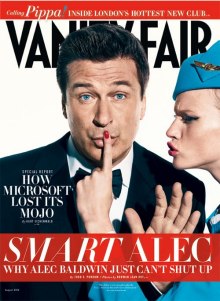
You may or may not want to read about "Smart Alec," or "How Microsoft Lost Its Mojo," but the August Vanity Fair also contains the above e-referenced poke into Willard Romney's finances, based on the limited publicly available documents, by Nicholas Shaxson.

"The contrast between George Romney and his son Mitt -- a contrast both in their business careers and in their willingness to come clean about their financial affairs -- dramatically illustrates how America has changed."
-- Paul Krugman, in his NYT column today, "Mitt's Gray Areas"

"Not only was George Romney, that loser, ironclad in his ideological commitments; his vision of how capitalism should work was in every particular the exact opposite of the one pushed by the vulture capitalist he sired."
-- Rick Perlstein, in a January rollingstone.com column,
"What Mitt Romney Learned From His Dad"

by Ken

I got a jolt this morning when I noticed this in the NYT's "Today's Headlines" e-mail:
Cuomo for President? Who Said That? Well, Dad
By DANNY HAKIM
Andrew M. Cuomo has said he wants to concentrate on being "the best governor I can be," but Mario M. Cuomo has higher ambitions for him.
No, I didn't actually read the piece. The blurb told me as much as I wanted to know about it. (And I was damned if I was going to waste a precious nytimes.com click on it. That's the same reason I'm not providing a link. If you want to read the piece, I'm sure you can find it for yourself. Waste your own damn click.)

For all the twists and complications of his political career, Mario Cuomo remains one of my dwindling band of political heroes, someone who came to public prominence championing the proposition, increasingly under attack by the benighted forces of the greed-and-ignorance Right: We're all in this together. Young Andrew, however, seems more attuned to the thinking of an older, slightly less benighted Right: Some of us are in this together, and if we serve the interests of us folk who matter, it will like magic benefit all those other people, the one who don't matter so much, as well.

I've wondered how Mario and Matilda Cuomo have felt about the political odyssey of Young Andrew. I guess I hoped there was at least a vein of disappointment, even disapproval. I've been led to believe that Birch Bayh (another of my political heroes) has never been thrilled with the "centrism" (to use a polite word) of Young Evan B. Heck, even George W. Bush reportedly grew weary of disapproving phone calls from "Poppy" -- kind of ironic considering how George H.W. is said to have come to dread those incessant calls from his mother browbeating him in the name of his moderate-Republican father, Sen. Prescott Bush.

As I've written before, I'm fascinated and appalled by what seems to me an unbridgeable gap between the Two Romneys: the unspeakable Willard Inc. and his father, onetime Michigan Gov. (and presidential candidate) George Romney. George R wasn't one of my political heroes, but maybe in some retrospective way he should qualify. He was a remarkable political figure: a certified titan of American industry who at the same time felt a commitment to promote social and economic justice for Americans as a whole. This gap was beautifully explored by Rick Perlstein in a January rollingstone.com column, "What Mitt Romey Learned From His Dad," which I wrote about here as "Willard Inc. may be his father's biological offspring, but politically speaking, he's no George Romney." Rick P is a reliably terrific writer, but this column was something else -- a must-read if you've never read it, or haven't read it recently.

Now Paul Krugman is reviewing the subject with an economist's perspective on the financial side of the father's and son's careers, with an eye to what the differences may tell us about ways in which the country has changed. I guess I've already spoiled the sleight of hand of the opening:
Once upon a time a rich man named Romney ran for president. He could claim, with considerable justice, that his wealth was well-earned, that he had in fact done a lot to create good jobs for American workers. Nonetheless, the public understandably wanted to know both how he had grown so rich and what he had done with his wealth; he obliged by releasing extensive information about his financial history.

But that was 44 years ago. And the contrast between George Romney and his son Mitt . . . . [for the rest of this sentence, see the quote atop this post].

THERE IS, FIRST, AN UNBRIDGEABLE GAP
BETWEEN THE TWO ROMNEYS' CAREERS
What did George Romney do for a living? The answer was straightforward: he ran an auto company, American Motors. And he ran it very well indeed: at a time when the Big Three were still fixated on big cars and ignoring the rising tide of imports, Romney shifted to a highly successful focus on compacts that restored the company's fortunes, not to mention that it saved the jobs of many American workers. . . .

Now fast-forward to Romney the Younger, who made even more money during his business career at Bain Capital. Unlike his father, however, Mr. Romney didn't get rich by producing things people wanted to buy; he made his fortune through financial engineering that seems in many cases to have left workers worse off, and in some cases driven companies into bankruptcy.

THEN THERE'S THE STARK CONTRAST IN HOW
THE TWO ROMNEYS DEALT WITH FINANCES


And in particular -- for two public figures -- their disclosure thereof. The differences are even more damning to Willard when you consider that in his father's time there was nothing automatic about release of even the now-common release of two or maybe three years' worth of tax returns, whereas Willard himself is not only a veteran political candidate but a former governor.

As Willard is no doubt tired of hearing by now, when his father made his run for the presidency, he released an astounding 12 years' worth of tax returns ("explaining," says PK, "that any one year might just be a fluke"), revealing that he made a lot of money ("in his best year, 1960, he made more than $660,000 -- the equivalent, adjusted for inflation, of around $5 million today") and "he paid a lot of taxes" ("36 percent of his income in 1960, 37 percent over the whole period"), both because he "seldom took advantage of loopholes to escape his tax obligations" and because "taxes on the rich were much higher in the '50s and '60s than they are now" ("once you include the indirect effects of taxes on corporate profits, taxes on the very rich were about twice current levels").

By contrast, Willard "grudgingly release[d] one year's tax return plus an estimate for the next year." Which "show[ed] that he paid a startlingly low tax rate."
But as the Vanity Fair report points out, we're still very much in the dark about his investments, some of which seem very mysterious. Put it this way: Has there ever before been a major presidential candidate who had a multimillion-dollar Swiss bank account, plus tens of millions invested in the Cayman Islands, famed as a tax haven?

"And then," PK writes, "there's his Individual Retirement Account."
I.R.A.'s are supposed to be a tax-advantaged vehicle for middle-class savers, with annual contributions limited to a few thousand dollars a year. Yet somehow Mr. Romney ended up with an account worth between $20 million and $101 million.

There are legitimate ways that could have happened, just as there are potentially legitimate reasons for parking large sums of money in overseas tax havens. But we don't know which if any of those legitimate reasons apply in Mr. Romney's case -- because he has refused to release any details about his finances. This refusal to come clean suggests that he and his advisers believe that voters would be less likely to support him if they knew the truth about his investments.

And that is precisely why voters have a right to know that truth. Elections are, after all, in part about the perceived character of the candidates -- and what a man does with his money is surely a major clue to his character.

Oh, says PK, there's "one more thing":
To the extent that Mr. Romney has a coherent policy agenda, it involves cutting tax rates on the very rich -- which are already, as I said, down by about half since his father's time. Surely a man advocating such policies has a special obligation to level with voters about the extent to which he would personally benefit from the policies he advocates.

Yet obviously that's something Mr. Romney doesn't want to do. And unless he does reveal the truth about his investments, we can only assume that he's hiding something seriously damaging.

THE VANITY FAIR ARTICLE:
"WHERE THE MONEY LIVES"


Nicholas Shaxson's tantalizing, exhaustive poke-athon into leads gleaned from such public disclosures as Willard's people have grudgingly made of his finances, "Where the Money Lives," begins:
A person who worked for Mitt Romney at the consulting firm Bain and Co. in 1977 remembers him with mixed feelings. "Mitt was . . . a really wonderful boss," the former employee says. "He was nice, he was fair, he was logical, he said what he wanted . . . he was really encouraging." But Bain and Co., the person recalls, pushed employees to find out secret revenue and sales data on its clients' competitors. Romney, the person says, suggested "falsifying" who they were to get such information, by pretending to be a graduate student working on a project at Harvard. (The person, in fact, was a Harvard student, at Bain for the summer, but not working on any such proj ects.) "Mitt said to me something like 'We won't ask you to lie. I am not going to tell you to do this, but [it is] a really good way to get the information.' . . . I would not have had anything in my analysis if I had not pretended.

"It was a strange atmosphere. It did leave a bad taste in your mouth," the former employee recalls.

This unsettling account suggests the young Romney -- at that point only two years out of Harvard Business School -- was willing to push into gray areas when it came to business. More than three decades later, as he tried to nail down the Republican nomination for president of the United States, Romney's gray areas were again an issue when he repeatedly resisted calls to release more details of his net worth, his tax returns, and the large investments and assets held by him and his wife, Ann. Finally the other Republican candidates forced him to do so, but only highly selective disclosures were forthcoming.

Even so, these provided a lavish smorgasbord for Romney's critics. Particularly jarring were the Romneys' many offshore accounts. As Newt Gingrich put it during the primary season, "I don't know of any American president who has had a Swiss bank account." But Romney has, as well as other interests in such tax havens as Bermuda and the Cayman Islands.

Eventually the article takes us into what Shaxson calls "Tax Haven U.S.A.," increasingly a haven, not just for domestic tax dodgers, but for "tax-evading and other criminal foreign money . . . predominantly channeled not into productive investment but into real estate and financial business."
One cannot properly understand Wall Street's size and power without appreciating the central role of offshore tax havens. There is absolutely no evidence that Bain has done anything illegal, but private equity is one channel for this secrecy-shrouded foreign money to enter the United States, and a filing for Mitt Romney's first $37 million Bain Capital Fund, of 1984, provides a rare window into this. One foreign investor, of $2 million, was the newspaper tycoon, tax evader, and fraudster Robert Maxwell, who fell from his yacht, and drowned, off of the Canary Islands in 1991 in strange circumstances, after looting his company's pension fund. The Bain filing also names Eduardo Poma, a member of one of the "14 families" oligarchy that has controlled most of El Salvador's wealth for decades; oddly, Poma is listed as sharing a Miami address with two anonymous companies that invested $1.5 million between them. The filings also show a Geneva-based trustee overseeing a trust that invested $2.5 million, a Bahamas corporation that put in $3 million, and three corporations in the tax haven of Panama, historically a favored destination for Latin-American dirty money—"one of the filthiest money-laundering sinks in the world," as a U.S. Customs official once put it.

Bain Capital has said it did everything required by the U.S. government to check that the investors were not associated with unsavory interests. U.S. law doesn't require Bain to enforce the tax laws of its investors' home countries, but the presence of Swiss trustees, Bahamas trusts, and Panama corporations would raise red flags with any tax authority.

Many Americans might react with a shrug to the idea of shady foreign money such as Robert Maxwell's being invested here. But, says Rebecca Wilkins, of the Washington, D.C.-based nonprofit Citizens for Tax Justice, "It is shocking that a presidential candidate should think that is O.K."

EVEN DIE-HARD BUSINESS TYPES GET THAT
WILLARD HAS TO RELEASE THE RETURNS


Here defrocked Wall Street tech analyst turned Internet entrpreneur (CEO and editor-in-chief of Business Insider) and Daily Ticker blogger Henry Blodget talks to The Daily Ticker's Aaron Task.


Henry B has been persistently on Willard's case about releasing his tax returns in his own interest. (See, for example, his Daily Ticker post today, "Yes, Mitt Romney Should Release His Tax Returns," and his Friday post on his own Business Insider site, "Dear Mitt Romney: It's Time To Release All of Your Tax Returns").

Some excerpts from the above clip:

AARON TASK: Henry, what is it that you think is in those returns that you want to see?
HENRY BLODGET: I don't know! Let me see them and I'll tell you what is in the returns that we want to see. I think the issue is that there's been no president or presidential candidate in the last 20, 20, 30 years who hasn't released all of the tax returns that people think might be at all relevant to what's going on. . . . The question that everybody is asking, and not just from a partisan perspective, is: What is Romney hiding?

AARON: Look, I think there's a lot of things that he probably could have done that were legal, the way the tax code is set up, for wealthy people -- a lot of them do this, they park money overseas and there's nothing technically wrong with it. But if you want to be president of the United States, it's a question you're going to have to address to the American people, of why aren't you keeping that money here in America? Especially when his tax rate was 14 percent in 2010, which is pretty low by historical standards.
HENRY: Unbelievably low. And again, his whole plank is "taxes are too high," "there's too much regulation," "we've got to free business," "it's great that people can get rich in this country." And look, it is great that people can get rich, and he has been tremendously successful, and if he's going to run on the whole plank of individual responsibility -- "go out and accomplish your goals" -- he should be proud of that, and he should say, "Look, I have been tremendously successful, and here are all the taxes I have paid, and I have paid every dime I owed, and of course I'm going to take advantage of the loopholes and things like that, because that's what everybody does. He should just stand up and say that, instead of hiding behind it.

HENRY: Again, it's not a partisan thing. I think even people who are violently pro-Romney and want change should just want to see these returns. How did he make his money? Where is his money? [Something about] loopholes? . . . If he's running on his personal success and his integrity and having paid every dime, good! Show us! And then again, if you're going to make the argument that the problem with the U.S. economy is that taxes are too high, especially on rich people, what I would like to hear him say is: If I hadn't paid these tens of millions of dollars in taxes -- and again, last year he paid 3 million in taxes on 22 million of income -- if I hadn't had to pay those taxes, here's why the economy would have been better. I'd like to hear him say that, and effectively that's what he's arguing, that his 14-percent rate should be lower, because there's too much tax. I think he has a point. Of course Obama is using this to try to distract people from the economy, which is not doing well. But there is a very easy way to end that distraction in one minute, and that is: release the returns. Then you're done. You can say it's all out there, say what you will, Obama, and you can't run from the economy.

WILLARD KNOWS HE WON'T BE "DONE"
IF HE "JUST" RELEASES THE RETURNS

Right-wing types who imagine that the only problem with releasing the returns is that they'll make Willard "look" bad -- like, say The Simpsons' Mr. Burns. Oh, they'll do that, all right, and that could cost him a certain amount of support. Even with the lapdog right-wing-controlled media, a certain number of folks hit hard by the meltdown brought on by right-wing governance may begin to wonder whether Willard is really on their side. But the real danger is that, however adroitly those tax returns were massaged -- within Willard's people's expansive idea of the boundaries of the law -- they're apt to be riddled with stuff that more than looks bad. The minute those returns go up online, all over the country there are going to be forensically fanatical troublemakers on their case, turning up funny stuff that threatens to explode into a 21-smoking-gun salute, and even the spin-happy infotainment noozers are going to have to keep tabs on the story for fear of being left inspinnably behind.

Henry Blodget makes the point -- every time he tackles the subject -- that eventually what's being hidden will come out. This is a good point, and one that cover-uppers all too often forget. My guess, though, is that there's so much funny stuff buried among Willard's financials that lots of really gruesome stuff isn't going to come out without sustained pressure for disclosure.

OH, HE WEARS THE MORMON UNDERWEAR,
BUT DOES HE WALK THE MORMON WALK?


One last point from Henry B: Releasing the returns, he says, is "the right thing to do."
Mitt Romney is campaigning to become President of the United States. Americans have every right to want to know how he made his money and and how he manages it, as well as what sorts of taxes he pays. Regardless of who you're rooting for in the campaign, it is is far better that this information come out now, rather than later (and it will come out). Given that Mitt Romney is campaigning on financial expertise and economic know-how, these questions are even more relevant for him than for any other candidate, which Mitt Romney obviously knows. And if Mitt Romney persists in refusing to release the returns, this issue really will become a distraction.

The Mormon Church advocates doing the right thing without delay regardless of the cost. [Boldface emphasis added. -- Ed.]

Mitt Romney should stop denouncing people asking perfectly reasonable questions and, instead, follow that advice.

I love that! Willard's famous faith commands him to do the right thing without delay regardless of the cost! Unless he wants to tell us that he's not serious about that faith, he just likes to wear the underwear.

But of course that's not all there is to Willard's Mormonism. There's money. As Henry B himself reported last week: "The Vast Majority Of Mitt Romney's Charitable Donations In The Past Two Years Have Gone To The Mormon Church." As long as the church elders are getting their cut of the loot, I don't think Willard will be hearing so much as a harsh word from the defenders of his faith.
#

Labels: , , , , , ,