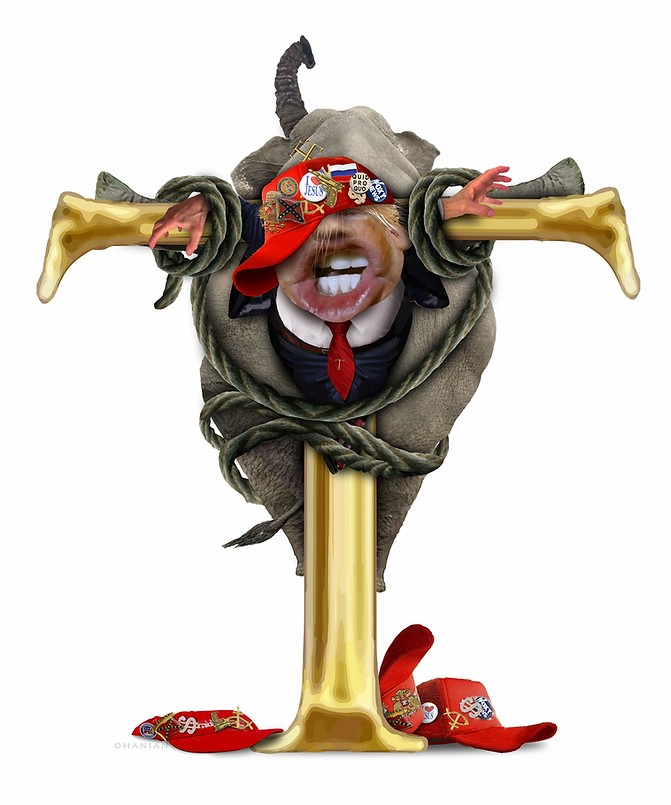
"When fascism comes to America, it will be wrapped in the flag and carrying the cross."
-- Sinclair Lewis
Monday, October 19, 2020
What Trump's Toxicity Is Costing The Republican Party-- Let's Take Omaha And The Surrounding Suburbs, For Example
>
NE-02 can deliver more than just a member of Congress; it can also deliver one presidential electoral vote. That vote has only gone to a Democrat-- Obama in 2008-- one time. Polling indicates that electoral vote is going to go to Biden this cycle, as the district flips blue in both the presidential and congressional contests. Kara Eastman looks like she'll be replacing Trump shill Donald J Bacon in Congress and she's working hard to turn out voters who will support not just her own campaign but Biden's and other Democrats as well. Kara, who's perspective is far more populist and progressive than Biden's is being helped by Biden, just as Biden is being helped by her. Syncronicity. But both candidates owe one man the lion's share of credit for their good polling: Trump.
Politico writer David Siders reported yesterday that it's Trump's collapse in red-leaning Omaha suburbs that has resulted in a 6-7 point overall polling deficit for him. He'd wrote that what's happening in NE-02 is a case study of "how the president’s alienation of a traditional Republican constituency is proving costly to his reelection campaign-- and how his increasingly desperate last-minute appeals to suburbanites are going unheeded."
“If you look at the struggle that Trump has going on in the suburbs, it’s just super consistent,” said Ryan Horn, a Republican media strategist based in Omaha. “What you see in Nebraska 2 you’ll see in Dallas, Texas, you’ll see in Charlotte, North Carolina, you’ll see in Sioux Falls, South Dakota, you’ll see in Orange County, California … It’s super, super consistent.”
The Omaha World-Herald, which until endorsing Hillary Clinton in 2016 hadn’t backed Democrat for president since 1932, endorsed Joe Biden recently, pleading for a break from Trump’s “recklessness.” And Don Bacon, the district’s Republican congressman, has been forced to remind voters that he is not in lockstep with Trump.
“Kara Eastman frequently on TV and on radio says I’ve sworn a loyalty oath to the president,” Bacon complained in a recent debate with Eastman, his Democratic challenger. “And it’s a lie.”
Not long ago, Nebraska Republicans couldn’t have fathomed such a problem at the top of the ticket in their state, which awards one electoral vote in each of its three congressional districts and two electoral votes to the statewide winner. But in 2008, Barack Obama, carrying the 2nd District, picked off one of the electoral votes, marking the first time in 44 years that a Democrat had accomplished that feat.
Stunned, Republicans in the state’s legislature re-drew the 2nd District lines to make it safer for the GOP, adding the more conservative, western suburbs of Sarpy County to the city of Omaha. Obama lost the reconfigured district to Mitt Romney in 2012, and Trump carried it narrowly four years later.
Today, despite the advantage of a favorable map, Trump is on the cusp of undoing the entire scheme. A New York Times/Siena College poll last month put Trump 7 percentage points behind Biden in the district, losing women by 11 percentage points and independent voters by 28 percentage points. Though Trump remained ahead of Biden in Sarpy County, the margin was not wide enough to compensate for his shortcomings in Omaha and the surrounding communities of Douglas County.
...Bacon, the 2nd District congressman who’s facing a rematch with Eastman, a progressive Democrat, said competing in urban and suburban areas can be a “challenge” for any Republican. What Trump has going for him, Bacon said, is “a thing in Nebraska where we are a little more conservative in nature.”
The unemployment rate in Nebraska is lowest in the nation, and Bacon said, “I tell people, ‘Who do you trust to bring the economy back?'"
However, Bacon said, “We’re also Nebraska nice... and we want more diplomacy and decency, and I think that’s what hurts the president.”
...Former state Sen. Burke Harr, a Democrat who represented central Omaha in the state legislature, said that unlike four years ago, “even chamber of commerce people I talk to are freely admitting they’re having a hard time justifying voting for Trump.” And the World-Herald seemed to have that chamber of commerce crowd in mind when it endorsed Biden, too.
The paper appealed directly to conservative readers in its endorsement of Biden this past weekend. “Trump’s departure from the White House,” the paper opined, “would benefit not only the country but also the Republican Party, by unshackling GOP officeholders from the slavish deference they’ve felt obligated to display to the president’s years-long series of eccentricities and embarrassments.”
The 2nd District’s single Electoral College vote is unlikely to tip the balance on Election Day. But there are scenarios in which a victory in the district could push Trump or Biden to the decisive number of 270 Electoral College votes.
Last month, when Republican Voters Against Trump, a group founded by former Weekly Standard Editor Bill Kristol, announced a six-figure digital ad buy in Nebraska’s 2nd District against Trump, it called the area a “tipping point,” noting that if “Joe Biden were to pick up Pennsylvania and Michigan, a victory in NE-2 would secure him the 270 votes he would need to clinch a presidential victory.”
“We’ve seen models that show that this district will make the difference in the presidential race,” said Kyle Clark, Bacon’s political director. “We are at ground zero.”
Flush with cash, Biden has spent about $2 million on advertising in the district since Labor Day, about six times what Trump has spent, according to the ad tracking firm Advertising Analytics. Jill Biden and Doug Emhoff, Sen. Kamala Harris’ husband, have appeared in recent weeks in Omaha. So have Karen Pence and Lara Trump, the president’s daughter-in-law. On Tuesday, Donald Trump Jr. was there lacing into Biden and the “radical left.”
The full effect of Trump’s suburban deterioration on the rest of the GOP ticket remains unclear in Nebraska-- and across the country. But it is being tested in the congressional race between Bacon and Eastman... Eastman is working relentlessly to yoke Bacon to the president. In recent debates, she goaded Bacon for voting with Trump more than 90 percent of the time. She asked him if it was still an “easy choice” to endorse Trump.
Bacon, a co-chair of Trump’s re-election campaign in Nebraska, said that it was easy, contrasting Trump with Biden on economic and social issues.
However, he added, “I do not support the rhetoric. I don’t like the name calling.”
So Far, Trump-Stoked Chaos And Anomie Are Not Helping Him With Voters
>
Rev. John Pavlovitz was frustrated when he woke up yesterday-- very frustrated. He wrote that he felt "done being represented by a needy, belligerent, barely literate mobster, done with unrepentant racists and anti-science religious zealots, done with confederate flags and Fox News and MAGA cultism, done with a grotesque Frankenstein Christianity wildly stumbling around without Jesus’ tender heart, done living in a nation, nearly half of which wants it to be more white, less diverse, and less kind." On second thought, he noted that dwelling on that frustration isn't what he needed to do as much as the fact that America is "he place we’re going to shout down the bigots, the place we’re going to outnumber the close-minded, the place we’re going to demand equity, the place we’re going to tear down the flags and the statues and mindsets that perpetuate white supremacy, the place we’re going to expand so that every hungry, exhausted, hurting soul finds rest, and the place we’re going to lock arms and dig in our heels and push back the terrified bullies trying to drag us backward." Pavlovitz concluded that "The racists are growing desperate. I think their violence is going to get worse. I think they feel the head winds of History blowing fiercely against them and they are going to make one more frantic, brutal, ugly assault on diversity and decency-- and we’ll have to be here to be the line that will not be moved." He's ready "to be here to be the line that will not be moved... We have to make a stand." Trump made a deranged and extremely worrisome appearance on Fox News with one of his worst media enablers, Laura Ingraham. You should watch this and see if you can count the lies (hint-- more than one every 20 seconds). Try to remember that almost a third of Americans-- many of them armed to the teeth-- believe whatever this sociopath says: That was Monday. On Tuesday, on his way to stir up trouble in Kenosha, he was still carrying on about how "an entire plane" was "filled with looters, the anarchists, rioters, people looking for trouble. When reporters, trying not to laugh in his orange face, asked him to speak to a witness who TRump claimed was made to feel "uncomfortable" on the plane filled with looters and rioters and thugs, he told the reporters he will try to put them in touch with the person. "Maybe," he said, "they will speak to you, maybe they won’t."
Has Trump lost his mind-- or is he just gaslighting and feeding his low-IQ base the red meat they thrive on? Even Ingraham noted that some of this crazy off-the-top-of-his-head nonsense she was getting out of him was conspiracy theory stuff. NBC News reporter Ben Collins explained where Trump got it. He wrote that the conspiracy theory that Señor Trumpanzee was pushing Monday about the plane almost completely loaded with thugs in "dark uniforms, black uniforms" ready to disrupt the Republican National Convention "was almost identical to a rumor that went viral on Facebook three months ago... There is no evidence of any such flight. When Ingraham asked for more information about the flight, the president said, 'I'll tell you sometime.' He then alleged the people had been headed to Washington to disrupt the RNC. Before mentioning the uniformed men who allegedly boarded the plane, Trump claimed that there are 'people that are in the dark shadows' and 'people that you haven’t heard of' controlling Democratic nominee Joe Biden." He also claimed "they control the streets" and are being paid by rich people and corporations.
Ingraham pressed the president for more details and said it sounded like he was alleging a conspiracy. “They’re people that are on the streets. They’re people that are controlling the streets,” Trump said. The claim about the flight matches a viral Facebook post from June 1 that falsely claimed, “At least a dozen males got off the plane in Boise from Seattle, dressed head to toe in black.” The post, by an Emmett, Idaho, man, warned residents to “Be ready for attacks downtown and residential areas,” and claimed one passenger had “a tattoo that said Antifa America on his arm.” That post was shared over 3,000 times on Facebook, and other pages from Idaho quickly added their own spin to it, like the Idaho branch of the far-right militia group 3 Percenters. One post claimed that “Antifa has sent a plane load of their people” and that the Payette County Sheriff’s Office confirmed it. Within days, that version of the rumor picked up enough steam in Idaho Facebook groups that the Payette County Sheriff’s Office had to release a statement insisting that the viral rumor was “false information.” Rumors of marauding bands of Antifa supporters have plagued local Facebook groups, chain emails and forwarded text messages since mid-May. One of the most viral rumors on an Antifa invasion into the suburbs was taken down after Twitter said it was created by a troll account with ties to white nationalists. Some armed Americans took to town squares in several towns to fight off fictitious busloads of Antifa in June, spurred by false rumors on Facebook pages. Seven days after the original Idaho rumor went viral on Facebook, armed men stood guard over protests in Missoula, Montana, worried about the planeloads of Antifa supporters.
In his Washington Post column about Trump's flawed election strategy August 20th, David Byler pointed out that not only is "Trump's suburban pitch... off-key in an election dominated by the coronavirus," but that "Playing the race card is more likely to backfire now than in any time in a generation. In 2019, the libertarian Cato Institute found that 52% of Americans who live in the suburbs favor 'building more houses, condos and apartments' in their community while 46% oppose the idea. According to YouGov, 50% of suburbanites think Biden would be better at handling race relations than Trump, and only 28% prefer Trump to Biden... These communities are no longer all-White bastions where fathers work and mothers stay home with the children. These neighborhoods are racially diverse: According to a 2018 study, only 68% of suburbanites were White, 14% were Hispanic and 11% were Black. And no matter where they live, Pew Research Center found that the share of mothers who stay home with children declined from 49% in 1967 to 27% in 2016. The audience Trump believes he’s targeting-- White stay-at-home suburban moms-- may be smaller than he thinks. Trump's bullshit about "saving Kenosha" is not being bought by voters, who are finally recognizing how Trump lies and manipulates to push his personal agenda. Even with support for Black Lives Matter sliding in Wisconsin, voters are still backing Biden, not Trump. Yesterday, Chuck Todd's team at NBC News speculated that playing the race card "is-- at best-- break-even for Trump. And at worst, it’s another liability for him. According to our August NBC News/WSJ poll (conducted before the violence in Kenosha), Trump held a 4-point advantage over Biden when it comes to which candidate better handles crime, with 43 percent picking Trump and 39 percent Biden. But on uniting the country, Biden’s edge over Trump was 23 points, 49 percent to 26 percent. And on race relations, Biden’s lead over Trump is 24 points, 53 percent to 29 percent. So despite the conventional wisdom, it’s not clear at all this issue is a winner for Trump. The new poll from Morning Consult that was released yesterday-- so post-conventions-- shows Biden ahead 51 to 43% nationally. 55% of voters view Trump negatively while just 46% view Biden negatively. But it's the swing states where the campaigns are in full gear that are most interesting. According to this set of polling, Trump is losing every swing state but Ohio and Texas. But what about that normal convention bounce? Well, there was some. Biden increased his support after the 2 conventions in Arizona, Georgia, Michigan, Texas and Wisconsin-- stayed the same in North Carolina, Ohio, Minnesota and Colorado-- and lost one point each in Pennsylvania and Florida, each of which he is still leading in. Trump, on the other hand, had a bounce down in Michigan, Georgia and Arizona, stayed the same in Wisconsin and Colorado, and increased his positions slightly in Florida, Pennsylvania, North Carolina and Minnesota-- in each of which he's still losing-- and in Ohio and Texas.
O-H-I-O Created DEVO-- Will The State Be Trump's Political Crypt?
>
In 2008, Obama's message of "Hope and Change" resonated in Ohio and he took the state, 51.5% to 46.9%. Four years later it was a little closer-- 50.7% to 47.7%-- but Buckeyes were still looking for the change Obama was promising. In 2016, the candidate promising change was Trump, while Hillary represented the status quo of an establishment the Midwest was sick of. Ohio-- like other Midwestern states that had backed Obama-- peeled off and gave Trump the presidency. Hillary took just 43.24% of the vote, a shockingly low number for a swing state. In fact, after Ohio slammed the door so loudly on her campaign, overnight "everyone" decided Ohio was no longer a swing state. True, Ohio has the worst and least effective Democratic Party of any large state in the country-- even worse than Florida's. Although Democrat Sherrod Brown managed to hold onto his U.S. Senate seat-- he has his own organization and doesn't depend on the state party-- Republicans have come to dominate state elections. All six statewide constitutional elected leaders-- from governor to auditor-- are Republicans. The General Assembly is no longer competitive with Republicans holding 24 state Senate seats (to the Democrats' 9) and 61 state House seats to the Democrats 38. The gerrymandered districts are horrific for the congressional map and today Democrats hold just a pathetic 4 of Ohio's 16 seats, with no obvious changes in sight even if Trump loses in a November wave election. Recruitment, grassroots organizing and party support guarantee that Ohio could stay red even if Trump loses the state. Will he though? The Associated Press piece, Trump's trouble in suburbs key to suddenly competitive Ohio by Thomas Beaumont and Dan Sewell, was picked up by the NY Times over the weekend. They wrote that "less than four months until this November's election, Trump is facing an unexpectedly competitive landscape in Ohio because he has lost ground in metropolitan and suburban areas, threatening the overwhelming advantages he has in rural areas, state data show. Trump's campaign has budgeted $18.4 million in television advertising in Ohio for this fall, second only to Florida, according to campaign advertising tracking data." That's lot of money that would otherwise be spent in Michigan, Arizona, Wisconsin and Pennsylvania, states that-- even if the Trump campaign won't acknowledge it-- are all but lost already, making Ohio a do-or-die state, more likely a do-or-die-really-badly state. Trump has turned Ohio, North Carolina, Arizona, Iowa and even Texas into swing states. Not Biden, Trump. Biden hasn't even booked air time in Ohio and isn't counting on its 18 electoral votes as part of its path to victory. Although Beaumont and Sewell made a half-assed attempt to mislead their readers into thinking Ohio experienced "a series of midterm" wins by Democrats in 2018, the Ohio Democratic Party didn't even put up a convincing fight anywhere, let alone win a single congressional seat in the midst of the anti-red wave. This year the Democrats have weak, old-news candidates offering nothing different from more of what got Hillary rejected in the few districts that should be winnable. OH-01-- Cincinnati-- should be a blue seat but the Democrats have a typical DCCC yawn for a candidate, Kate Schroder. At least she's financially competitive, unlike the other Democratic candidates:
• OH-1 (Cincinnati- R+5)-- Steve Chabot (R)- $1,974,536, Kate Schroder (D)- $1,431,582 • OH-02 (southern Ohio- R+9)- Brad Wenstrup (R)- $1,212,781, Jaime Castle (D)- $124,641 • OH-04 (central and western Ohio- R+14)- Gym Jordan (R)- $9,114,164, Shannon Freshour (D)- $712,180 • OH-05 (Toledo- R+11)- Bob Latta (R)- $1,150,153, Nick Rubando (D)- $142,363 • OH-06 (Ohio River Valley- R+16)- Bill Johnson (R)- $1,408,761, Shawna Roberts (D)- $262 • OH-07 (Canton and Cleveland suburbs- R+12)- Bob Gibbs (R)- $579,047, Quentin Potter (D)- nothing as of June 30 • OH-08 (North Central Ohio- R+17)- Warren Davidson (R)- $737,880, Vanessa Enoch (D)- $15,729 • OH-10 (Dayton- R+4)- Michael Turner (R)- $1,107,654, Desiree Tims (D)- $596,527 • OH-12 (Columbus suburbs- R+7) Troy Balderson (R)- $1,333,727, Alaina Shearer (D)- $450,941 • OH-14 (Cleveland and Akron suburbs- R+5)- David Joyce (R)- $2,221,238, Hillary O'Connor Mueri (D)- $354,665 • OH-15 (Columbus suburbs- R+7)- Steve Stivers (R)- $2,192,653, Joel Newby (D)- $13,373 • OH-16 (northern Ohio suburbs- R+8)- Anthony Gonzalez (R)- $1,684,672, Aaron Godfrey (D)- $15,189
Beaumont and Sewell wrote that "Republican presidential candidates have been steadily losing support in Ohio's once reliably GOP suburbs around Cleveland, Columbus and Cincinnati. But Trump's fall was particularly sharp, according to state voting data and census records compiled by Mike Dawson, a public policy consultant and creator of ohioelectionresults.com. For instance, in the affluent northern Columbus-area suburb of Upper Arlington, Republican George H. W. Bush won by 34 percentage points in 1992. Twenty years later, Republican Mitt Romney's winning margin there was 8 percentage points. In 2016, Trump lost Upper Arlington to Hillary Clinton by 16 percentage points. A similar picture emerged in the 10 wealthiest suburbs outside Cleveland in Cuyahoga County. In Franklin County outside Columbus, Trump lost nine of the 10 most affluent suburbs, a sharp decline from other Republicans over the past 24 years. The trend was worst in suburban Hamilton County outside Cincinnati, where Trump's losing margin in the 10 richest suburbs was at least 50% of Republicans' total decline since 1992." And yet... none of the Democratic candidates look like any of those suburbs are going turn to them, even as they turn against Trump. Disgust with Trump could throw the election to a worthless Democrat like Biden, but that isn't going to do the track for the kinds of congressional candidates running against GOP incumbents.
Murder/Suicide by Nancy Ohanian
“College educated suburbanites in Ohio, particularly college educated women, were not as supportive of the president in 2016 as they’ve traditionally been of Republican presidential nominees, and that will continue in 2020," said Karl Rove, senior adviser to President George W. Bush's presidential campaign in 2004, when the Republican won election in part by narrowly carrying Ohio. “Trump has a problem with them.” ...Rove said that Trump maintains a clear path to carrying Ohio: “It’s to repeat his 2016 performance in 2020." That includes matching and, in some instances, exceeding his overwhelming margins in the GOP-heavy counties along the Indiana border and the struggling industrial Mahoning River Valley corridor and along the Ohio River to the south. But Rove said Trump must also “do what he did in 2016 in suburban Cincinnati, Dayton, Cleveland and Columbus." History suggests that's going to be hard, some Ohio Republicans say. “Can the electoral leakage for Republicans in these first- and second-ring suburbs continue to be offset by running up the score along the Ohio River?” said former state Republican Party Chair Kevin DeWine, a former state representative and second cousin to Republican Gov. Mike DeWine. “We have to be honest as Republicans and say we are dangerously close to that tipping point.” During an August 2018 special election, Danny O'Connor came within 1,700 votes out of more than 200,000 of becoming the first Democrat in 36 years to win Ohio's 12th Congressional District, which includes once solidly Republican Delaware County. Trump came to campaign for O'Connor's opponent, Rep. Troy Balderson, and helped pull him to victory. Democrats continued making inroads in 2018, picking up six suburban state legislative seats. That November, Erik Yassenoff, in losing his bid for a northern Columbus-area district, became the first Republican candidate for Ohio General Assembly to lose Upper Arlington. “I think you’re seeing people in the suburbs align more with the urban populations," Yassenoff said. Ohio Democratic Party Chair David Pepper has watched as younger, educated and often more racially and ethnically diverse families have sought the top schools and other comforts of Ohio's booming suburbs since the mid-2000s. The trend was especially clear last year as Democrats scored victories in local suburban elections. "This is where the fundamental shift has happened, what used to be the base of the Republican Party, these larger, generally white-collar suburbs around Cincinnati, Columbus and Cleveland and Akron," Pepper said. In Yassenoff's Upper Arlington, voters elected their first Democrats to its City Council. In nearby Hilliard, Democrats won their first seat on the City Council in three decades. There were similar Democratic municipal gains in Republican-leaning suburbs around Toledo and Dayton, as well as in communities outside Cleveland. Perhaps most telling, southeast of Columbus in the old Republican suburb of Reynoldsburg, Democrats swept the municipal elections and elected three Black female council members, a first for the city. “What it tells us is that more people are becoming engaged and involved," said Meredith Lawson-Rowe, among the new Reynoldsburg council members. Even as Trump’s standing began to fall after the onset of the coronavirus pandemic, Ohio was not seen as a concern, campaign officials said. But polls in other states showing close races in Iowa, Georgia and even Texas have also now shaken the firm grip on Ohio.
Ohio started off well in the pandemic. Gov. DeWine was one of the most pragmatic and science-oriented governors in the country. The Republicans in the legislature and Trump destroyed all his work and now Ohio is spiking out of control. On Friday, Ohio reported 1,720 new cases and yesterday another 1,537, bringing the state's total to 73,858-- 6,319 cases per million Buckeyes, a little better the Spain (6,573 cases per million), a lot worse than Italy Italy (4,039 cases per million). Ten counties are pandemic hotspots (total confirmed cases) + 2016 Trump percentage:
Trump's response to his problem with college-educated voters in the suburbs is simple-- to beat loudly and incoherently on his racism drum while claiming that Biden-- or a nonsensical caricature of Biden that Trump's campaign team is trying to create-- and the Democrats want to abolish the suburbs. "Trump has launched a slash-and-burn campaign against an exaggerated caricature of his Democratic opponent," wrote Josh Dawsey in the Washington Post, casting former vice president Joe Biden as a destroyer of basic freedoms and a threat to voter’s safety who would 'let terrorists roam free' and 'abolish the American way of life.' His new dystopian vision, with militant and extreme language not typical in American politics, marks a sharp departure from Trump’s previous effort to cast Biden as 'Sleepy Joe,' an establishment politician with deteriorating mental abilities. It marks the latest effort, orchestrated by the Trump’s advisers, to shift the conversation from rising coronavirus infections and deteriorating public support for the president’s pandemic response. In new advertising, tweets and public statements that began to appear earlier this month, Trump has argued that the presumptive Democratic nominee is a harbinger of chaos and destruction, depicting a fantastical scarecrow largely divorced from reality."
Most Americans Are Ready-- Eager-- To Vomit On Trump's Grave
>
Some of the best members of Congress are freshmen who were elected in 2018-- AOC (NY), Ilhan Omar (MN), Rashida Tlaib (MI), Ayanna Pressley (MA), Andy Levin (MI), Joe Neguse (CO), Chuy Garcia (IL), Veronica Escobar (TX), Sylvia Garcia, Debra Haaland. Those 10 are the only freshmen whose voting records have earned them "A" grades from ProgressivePunch. Last cycle, Democrats netted 41 House seats but none of those 10 listed above are included in that count. Each of them won a blue seat that had already been occupied by a Democrat. And, with the exception of Andy Levin's suburban Oakland and Macomb counties district, each is overwhelmingly urban. The story of the media emphasizes about the 2018 election is that the action was flipping suburban districts from red to blue. Unfortunately pretty much all of those Democrats in flipped suburban districts turned out to be conservatives or, at best, "moderates." They're not for-- or not willing to go out on a perceived limb for-- peace, economic equality, real reform or anything else that drove voters to the polls for in 2018. Most disappointing of all are the 9 freshmen who joined the right-wing, corporately-funded Blue Dogs-- Joe Cunningham (SC), Jared Golden (ME), Kendra Horn (OK), Ben McAdams (UT), Max Rose (NY), Anthony Brindisi (NY), Mikie Sherrill (NJ), Abigail Spanberger (VA) and Xochitl Torres Small (NM). Each has a record rated "F" by Progressive Punch. They represent a combination of urban, suburban and rural districts. And they are hardly the only freshmen with "F"-rated voting records. These are the members of the class of 2018 who did NOT earn "A" ratings:
• Mary Gay Scanlon (PA-05)- B (suburban) • Madeleine Dean (PA-04)- B (suburban) • Jahana Hayes (CT-05)- B (suburban) • Donna Shalala (FL-27)- C • Mike Levin (CA-49)- C (suburban) • Sean Casten (IL-06)- C (suburban) • Debbie Mucarsel-Powell (FL-26)- C • Chris Pappas (NH-01)- C • Greg Stanton (AZ-09)- D • David Trone (MD-06)- D (suburban) • Jennifer Wexton (VA-10)- F (suburban) • Steven Horsford (NV-04)- F (suburban) • Tom Malinowski (NJ-07)- F (suburban) • Lizzie Fletcher (TX-07)- F (suburban) • Dean Phillips (MN-03)- F (suburban) • Haley Stevens (MI-11)- F (suburban) • Colin Allred (TX-32)- F (suburban) • Kim Schrier (WA-08)- F (suburban) • Gil Cisneros (CA-39)- F (suburban) • Lauren Underwood (IL-14)- F (suburban) • Sharice Davids (KS-03)- F • Harley Rouda (CA-48)- F (suburban) • T.J. Cox (CA-21)- F • Susan Wild (PA-07)- F (suburban) • Josh Harder (CA-10)- F (suburban) • Susie Lee (NV-03)- F (suburban) • Lucy McBath (GA-06)- F (suburban) • Antonio Delgado (NY-19)- F (suburban) • Chrissy Houlahan (PA-06)- F (suburban) • Andy Kim (NJ-03)- F (suburban) • Katie Porter (CA-45)- F (suburban) • Max Rose (NY-11)- F • Mikie Sherrill (NJ-11)- F (suburban) • Angie Craig (MN-02)- F (suburban) [all the members below this line vote more frequently-- like below 50%-- against progressive substantive roll calls than for them] • Elissa Slotkin (MI-08)- F (suburban) • Xochitl Torres Small (NM-02)- F • Abby Finkenauer (IA-01)- F • Elaine Luria (VA-02)- F • Cindy Axne (IA-03)- F • Jared Golden (ME-02)- F • Ben McAdams (UT-04)- F (suburban) • Kendra Horn (OK-05)- F • Abigail Spanberger (VA-07)- F (suburban) • Anthony Brindisi (NY-22)- F • Joe Cunningham (SC-01)- F
Trump's niece, Mary Trump, recounted in her book, Too Much And Never Enough, how Trump paid someone to take his SATs so he could get into college, a fairly easy college to get into. She also noted that "Honest work was never demanded of him, and no matter how badly he failed, he was rewarded in ways that are almost unfathomable. He continues to be protected from his own disasters in the White House." Some low-achievers-- say in Mississippi or Wyoming-- might think that was a smart move. Well-educated college graduates in the suburbs are not likely react the same way and that anecdote isn't likely to endear Trump to them. Ron Brownstein's a good reporter with interesting insights but when he writes about electoral politics, it's a Democrat vs Republican thing, not a progressive vs reactionary thing or a reformer vs corrupt sack-of-shit thing. And his CNN.com post yesterday was all about how the massive anti-Trump wave is headed towards more suburban districts held by Republicans that remained after the 2018 wave. He sees it as well-educated votes in the 'burbs turning against the Trump and his congressional enablers. He wrote that "In 2018, a suburban revolt against Trump powered Democrats to sweeping gains in white-collar House districts from coast to coast. The backlash left the GOP holding only about one-fourth of all House districts that have more college graduates than the national average, down from more than two-fifths before the election... Now, recent national and district-level polls signal that many of the well-educated voters souring on Trump are also displaying more resistance to Republican congressional candidates than in 2018-- potentially much more. That movement could frustrate GOP hopes of dislodging many of the first-term House Democrats who captured previously Republican suburban seats in 2018. It also means Democrats see further opportunities in white-collar House districts-- from Pennsylvania and Georgia to Indiana and especially Texas-- where the GOP held off the 2018 suburban tide, often only by narrow margins."
"The suburban exodus has continued, and my gut is as long as Trump is identified as the leader of the party, that continues," says former Republican Rep. Tom Davis of Virginia, who served as chair of the National Republican Congressional Committee. Even if Trump's strength outside the metro areas allows the GOP to recapture some of the non-urban seats Democrats won last time, Davis warns, further suburban losses could still leave the party in a deeper hole after November. "You can't afford that," says Davis... "[Suburbia] was the base of the Republican Party just a decade and a half ago. And there just aren't enough rural voters to make up for those kind of losses. It means for the Republicans that instead of picking up seats in the House, that the bleeding could continue." ...Public polling this spring consistently showed Trump and the GOP facing grim numbers with well-educated voters. National surveys released in the past few weeks by Monmouth University, the Pew Research Center and CNN all showed Trump's approval rating among White voters with at least a four-year college education sinking to 33% or less, with at least 64% disapproving. By comparison, even during the 2018 Democratic sweep, exit polls found that 38% of college-educated White voters approved of Trump's job performance, according to results provided by Edison Research, which conducts the exit polls for a consortium of news organizations that includes CNN. That decline contrasted with Trump's showing among minorities in the new CNN and Monmouth polls, which found the President's approval rating with voters of color was almost exactly the same as in the 2018 exit poll, just over 1-in-4 in each case. ...The Monmouth and CNN polls and a national New York Times/Siena College survey all found Biden leading Trump among well-educated White voters by about 30 percentage points, a much bigger advantage than any data source on the 2016 results recorded for Clinton. (The exit polls showed Trump narrowly carrying those college-plus White voters.) Critically, some of the recent public surveys found that weakness trickling down to GOP congressional candidates. In last week's Monmouth survey, college-educated White voters preferred Democrats over Republicans in House races by a resounding 59% to 36%. If that disparity held through November, it would represent a huge deterioration for Republicans since 2018, when the exit polls showed Democratic House candidates nationwide carrying those voters by 8 percentage points, about one-third as much. (That came after the exit polls made a methodology change that analysts believe provided a more accurate estimate of the vote among college- and non-college Whites than in previous years.) Even the more modest swing among well-educated voters that exit polls recorded in 2018 was sufficient to fundamentally reconfigure the House battlefield. The Democratic wave that year crested highest in well-educated and often racially diverse urban and suburban districts. Before that election, Republicans held 43% of the House districts where the share of people 25 and older with at least a four-year college degree exceeded the national average, according to a CNN analysis of the 2018 results. But now Republicans hold only 23% of such seats, according to a new analysis of results from the Census Bureau's American Community Survey conducted by CNN senior visual editor Janie Boschma. In all, Democrats control 135 of the House districts with higher-than-average college education levels, while Republicans hold just 41. (Those numbers reflect the new district lines drawn under court order in Pennsylvania, but not the new lines that state courts have approved in North Carolina.) Many of the top Democratic House targets for November are within those remaining 41 Republican districts with more college graduates than average, including incumbent Reps. Brian Fitzpatrick in Pennsylvania, Ann Wagner in Missouri, Chip Roy in Austin, Don Bacon in Nebraska, David Schweikert in Arizona and Steve Chabot in Ohio, as well as opportunities in open seats around Indianapolis, Atlanta, Houston, Dallas and Raleigh, North Carolina. Several more potentially vulnerable GOP seats (including those held by incumbent Reps. Rodney Davis in Illinois, John Katko in New York and Scott Perry in Pennsylvania) come in just below the average education line. The flip side is also true: Many of the Democrats elected in 2018 who Republicans most hope to oust hold seats in districts with many more college graduates than average, including Reps. Lizzie Fletcher and Colin Allred in Texas, Sharice Davids in Kansas, Elissa Slotkin and Haley Stevens in Michigan, Lucy McBath in Georgia, Abigail Spanberger in Virginia, Tom Malinowski in New Jersey and all the newly elected Democrats from Orange County, California. In 2016, when exit polls showed Trump running more competitively among college-educated White voters, he won many of the white-collar districts on both lists. With far fewer voters than in earlier generations splitting their tickets between presidential and House candidates, the outcome in many of them may be tipped by whether he does so again. Perhaps the best test of Trump's standing in white-collar districts will come in Texas, which Republicans have dominated since the early 1990s. Even in 2016, the state was only marginally competitive, with Trump beating Clinton there by 9 percentage points or nearly 800,000 votes. But in 2018, Democratic Senate candidate Beto O'Rourke rode a surge of support in Texas' big metropolitan areas-- he won its five largest counties by about six times as much as Barack Obama did in 2012-- to hold Republican Sen. Ted Cruz to a victory of only about 2.5 percentage points. Democrats rode O'Rourke's strong performance to sweeping gains in state legislative and local elections across urban and suburban areas, as well as the election of Fletcher and Allred. "In Texas, the Democrats performed about as well in the suburbs in 2018 as they've done in 20 or 25 years," says Matt Mackowiak, a Republican consultant and GOP chair in Travis County (Austin). Trump's increasingly polarizing strategy for reelection helps explain why many strategists in both parties believe it will be difficult for as many House candidates as in the past to win in districts that vote for the other party in the presidential contest. That may help Republican challengers against Democratic incumbents in blue-collar and rural districts where Trump has been stronger, such as Reps. Collin Peterson in Minnesota, Jared Golden in Maine and Abby Finkenauer in Iowa. But it looms as a huge challenge for the GOP in these suburban areas. Carlos Curbelo, a former GOP representative who lost his urban Miami district during the 2018 Democratic sweep, agrees it will be tough for the party's candidates to escape the undertow if Trump doesn't improve his position in those places. "It's almost impossible," he says. "All candidates [are] encouraged to run their own races and maneuver however it is they need to in order to win. But with this heavy overlay, it's very difficult. The space in which to maneuver is very tight." Like the NRCC's Salera, GOP consultant Mackowiak says he believes Trump will perform better in these suburban districts than the party did in 2018. While Mackowiak believes that "if it's a referendum on Trump he's going to get killed in the suburbs," he maintains the President can win back previously red-leaning college-educated voters by tying Biden and Democratic House candidates to liberal ideas such as the Green New Deal and single-payer health care that might advance under unified Democratic control of government. Still, Mackowiak acknowledges that if 2020 produces an electoral divide in Texas similar to the one in the 2018 Senate race-- with Trump holding the state by maximizing rural turnout while suffering huge losses in the big metro areas-- it will "be a category five political hurricane" for local Republicans. "The state House will be gone," he said. "We will lose three or four congressional seats. That's an unthinkable scenario." Yet many observers in both parties believe that's exactly what the November election may produce in virtually every state: a widening trench between the preponderantly White small-town and rural areas that remain bonded to Trump and a deepening recoil from him in the diverse and well-educated urban and suburban population centers. Trump may be comfortable with that trade since he is trying only to finesse one more Electoral College victory even if he loses the popular vote again. But many Republicans say Trump's vision of squeezing bigger margins out of shrinking places at the cost of generating more resistance in communities that are growing is a losing long-term trajectory for the party. Nowhere is that more true than in the battle for control of the US House. "It's a strategy that is divorced from the reality of the country," says Curbelo. "And there are Republican leaders in both chambers who are aware of this. This is not an important [consideration in] the President's strategy because in his team's mind they only have to win one more election. But for everyone else it's a longer-term game. A lot of Republicans have been willing to be shortsighted and taken what they can get from the Trump era. But ultimately they know this is not the future of the party."
"Shooting rubber bullet grenades at protesting priests. Catastrophically botching the pandemic response, resulting in a public health and economic calamity. Tweeting 'white power' memes. Ranting in front of empty arenas about how he navigated a 'slippery ramp.' Being MIA while his Russian benefactors put out a hit on American soldiers in Afghanistan. The last 3 months have been a political dumpster fire, for President Trump," wrote Tim Miller at Rolling Stone this week, "and the flames have engulfed Republicans up and down the ballot." Miller, a #NeverTrump Republican, spoke with 9 GOP political operatives to find out how they perceive Trump's performance impacting their candidates. "Are there discussions," he asked, "about either storming the cockpit or gently trying to #WalkAway from Trump? And finally, why in the hell aren’t they more pissed at this incompetent asshole who is fucking up their life?"
What I found in their answers was one part Stockholm Syndrome, one part survival instinct. They all may not love the president, but most share his loathing for his enemies on the left, in the media, and the apostate Never Trump Republicans with a passion that engenders an alliance with the president, if not a kinship. And even among those who don’t share the tribalistic hatreds, they perceive a political reality driven by base voters and the president’s shitposting that simply does not allow for dissent. As one put it: “There are two options, you can be on this hell ship or you can be in the water drowning.” So I give you the view from the U.S.S Hellship, first the political state of play, and then the psychological. The Politics The impact of Trump’s disastrous 3 months on down ballot candidates was best summed up in the first text message I got back. “Could you use a poop emoji for my comments?” The assessment was excreta across the board.
• “Every shred of evidence points to a likely ass kicking in the fall.” • “Well it’s as bad as it gets right now.” • “Right now most campaigns are thanking baby jesus every day the election isn’t held today.” • “I’ve got Trump down in Texas. [Republican Senator Steve] Daines down in Montana.” • “It’s certainly better than public polling, but it’s not good.” • “I told very high ranking people in the Trump Administration that it hasn’t been like this since October of 06”-- when President Bush’s numbers were tanking over fallout from the Iraq War, Katrina, and the Mark Foley scandal.
But in 2006, Republican candidates could strategically distance themselves from an unpopular president without facing a mutiny within the ranks. That won’t work in 2020, as-- though Trump’s numbers are plummeting with some demos-- they are solidifying or improving among his core support demographic. Which makes running afoul of Trump fatal in the eyes of these strategists. “There are practical realities-- we ran a bunch of red district primaries, and it would come back that the number one issue for 80+% of Republican primary voters was loyalty to Donald Trump. I’m not making that number up,” a respondent told me. Several consultants pointed to the situation that Sen. John Cornyn faces in Texas to illustrate the problem. They indicated that internal polling shows Trump either tied or very slightly ahead in the Lone Star State. One said Cornyn should be feeling very lucky that Beto O’Rourke ran for president, rather than tacking slightly center and spending $90 million on a campaign to unseat the incumbent senator. Another said Cornyn’s “quietly in trouble.” But rather than addressing this by creating some strategic separation from Trump to solidify the historically conservative Dallas and Houston suburbs where Trump is bleeding out, Cornyn has become a Mr. Trump fan girl, echoing his virus denial and defending the attack on nonviolent protestors in Lafayette Square. Why? According to one: “You have 25% of the state is rural and Trump gets like Saddam Hussein level numbers here. 87% in 25% of the state… Cornyn gets 69. And so Cornyn can’t find a place to break from because he could really put that in jeopardy.” And thus the polarizing nature of Trump makes it impossible for Cornyn to make a move that helps him in the swingy suburbs without risking the floor falling out from under him in West Texas. This same calculus pervades no matter the race, no matter the district, no matter the geography: The operatives insist that the pro-Trump zealotry the president’s supporters demand makes it far more difficult for candidates to win over anyone else. A consultant who advises a challenger in a swing house seat that Hillary Clinton carried, for example, indicated that they thought they had less ability to distance from Trump than those who are in safer, more MAGAfied districts. “No dissent is tolerated [with the base],” and “If my candidate is going to win, it’s going to be by 1 or 2 percent they can’t afford to lose any votes [on the pro-Trump flank].” In fact some candidates in competitive house seats are going the other direction because of what it takes to win a primary. A different consultant said: “My candidate didn’t vote for Trump. But we’re running ads right now about being a big Trump supporter,” because in that district “drap[ing] yourself in Trump is still a good decision.” This view is so widespread that when asked, all of the consultants but two said they haven’t even had a conversation about the possibility of distancing from Trump with any of their candidates or campaign teams. Another put it this way: “The idea of distancing, if it’s discussed, it’s discussed very quietly, it’s discussed one-on-one. You wouldn’t talk about it on a conference call…maybe someone would, but let’s just say it hasn’t happened yet and I’m on a lot of those calls.” Sit with that for a second. The idea of separating from Trump is so verboten in GOP circles that the best consultants won’t even talk about talking about doing it in mixed company, for fear of being stigmatized, and thus losing potential client work on other campaigns.
Trump's Suburban Problem Will Continue To Be Catastrophic For The GOP
>
Gangsta President goes over badly in the suburbs
On Wednesday, reporting from Richmond for the Washington Post, Laura Vozzella wrote that since Señor Trumpanzee “took office, voter turnout has surged in Virginia, the state that holds elections every year, leading analysts to conclude that even local races have turned into referendums on the president.” And that’s exactly what the lesser of two evils party is counting on this year, not just in Virginia but everyone outside of the deepest red states. The Democratic establishment is willing to gamble on candidates who will not expand the party’s voting base because they are counting on Trump’s toxicity to outweigh even fatally flawed garbage candidates like Status Quo Joe, Michael Bloomberg or Mayo Pete. There are 19 states that are just too red for the Democrats to seriously contest: from most red to “least” red: Wyoming, Oklahoma, Utah, West Virginia, Idaho, North Dakota, Arkansas, Kentucky, Alabama, Tennessee, South Dakota, Nebraska, Kansas, Louisiana, Montana, Mississippi, Alaska, Missouri and South Carolina. That’s 115 electoral votes. Among states that have been in that incontestable column before that are now considered battlegrounds are Texas, Arizona, North Carolina, Indiana and Georgia-- which together are worth 91 electoral votes. Without all of those battlegrounds does Trump real have a pathway to a second term? And yet even with all of them, he’s still far from victory and must win Florida and Ohio to even get within striking distance by winning a couple of states that are more blue than red. I wouldn’t bet on Trump. His job approval ratings have decreased in every single state since he was inaurgurated, including in even the reddest states like Wyoming, Oklahoma, Utah and West Virginia. According to the latest Morning Consult Trump Tracker there is where Trump’s approval/disapproval stands now-- and how much it has decreased since he took over:
• Alabama- 59-37% but still down 14 points! • Alaska- 53-43%, down 14 points • Arizona- 46-50%, down 24 points • Arkansas- 52-44%, down 22 points • California- 34-62, down 22 points • Colorado- 41-56%, down 16 points • Connecticut- 37-59%, down 27 points • Delaware- 39-57%, down 26 points • DC- 17-79%, down 31 points • Florida- 49-48%, down 21 points • Georgia- 46-49%, down 21 points • Hawaii- 31-66%, down 22 points • Idaho- 57-39%, down 11 points • Illinois- 38-58%, down 29 points • Indiana- 49-47%, down 20 points • Iowa- 42-55%, down 22 points • Kansas- 50-47%, down 21 points • Kentucky- 55-41%, down 20 points • Louisiana- 53-43%, down 21 points • Maine- 42-55%, down 21 points • Maryland- 35-66%, down 14 points • Massachusetts- 34-63%, down 25 points • Michigan- 41-55%, down 22 points • Minnesota- 42-55%, down 16 points • Mississippi- 57-38%, down 15 points • Missouri- 50-47%, down 16 points • Montana- 48-49%, down 25 points • Nebraska- 46-51%, down 28 points • Nevada- 45-52%, down 17 points • New Hampshire- 41-56%, down 16 points • New Jersey- 41-56%, down 17 points • New Mexico- 44-53%, down 26% • New York- 36-61%, down 33 points • North Carolina- 47-49%, down 20 points • North Dakota- 49-47%, down 21 points • Ohio- 46-51%, down 19 points • Oklahoma- 53-44%, down 25 points • Oregon- 36-60%, down 26 points • Pennsylvania- 45-52%, down 17 points • Rhode Island- 37-59%, down 18 points • South Carolina- 52-44%, down 17 points • South Dakota- 50-47%, down 18 points • Tennessee- 56-40%, down 17 points • Texas- 49-46%, down 17 points • Utah- 49-47%, down 25 points • Vermont- 28-70%, down 40 points • Virginia- 45-52%, down 15 points • Washington- 34-63%, down 30 points • West Virginia- 58-39%, down 18 points • Wisconsin- 41-55%, down 20 points • Wyoming- 66-31%, down 5 points
How do you explain those numbers? The Associated Press’ Steve Peoples tried by noting Trump’s growing problems in the suburbs. He pointed to what was about to turn out to be gubernatorial losses for Trumpist allies Matt Bevin in Kentucky and Eddie Rispone in Louisiana. In two heavily red states that Trump won in landslides Andy Beshear ousted Matt Bevin 49.20% to 48.83% and John Bel Edwards beat Eddie Rispone 51.33% to 48.7%. In both races, the Republicans out-raised the Democrats. Peoples wrote that “It's difficult to draw sweeping conclusions from state elections, each with their own unique quirks and personalities. But there's little doubt Tuesday's outcome is a warning to Republicans across the nation a year out from the 2020 election and a year after the 2018 midterms: The suburbs are still moving in the wrong direction. ‘Republican support in the suburbs has basically collapsed under Trump,’ Republican strategist Alex Conant said. ‘Somehow, we need to find a way to regain our suburban support over the next year.’… Republicans demonstrated their firm grip on rural areas, and turnout for both sides appeared to be healthy for off-year elections.”
But the GOP's challenge was laid bare in lower-profile elections across the nation on Tuesday. Just outside Philadelphia, Democrats said they took control of the Delaware County's five-member council for the first time since the Civil War. In nearby Chester County, Democrats beat two Republican incumbents on the board of commissioners to seize the majority for the first time ever. The same shifts defined state legislative races across Virginia's suburbs, particularly in places like Henrico County just outside Richmond. Republican state Sen. Siobhan Dunnavant won there by almost 20 percentage points four years ago. The area has recently been transformed by an influx of younger, college-educated voters and minorities, a combination that's become a recipe for Democrats' support. Dunnavant ended up winning by 2 percentage points against Democrat Debra Rodman, a college professor who seized on Trump and her Republican opponent's opposition to gun control to appeal to moderate voters. In northern Virginia, Democrat John Bell flipped a state Senate district from red to blue in a district that has traditionally favored Republicans. The race, set in the rapidly growing and diverse counties outside of Washington, D.C., attracted nearly $2 million in political advertising. Democrats' surging strength in the suburbs reflects the anxiety Trump provokes among moderates, particularly women, who have rejected his scorched-earth politics and uncompromising conservative policies on health care, education, and gun violence. Republicans' response in Virginia was to try to stay focused on local issues. In the election's final days, Dunnavant encouraged Trump to stay out of the state. The president obliged, sending Vice President Mike Pence instead. Struggling for a unifying message, some Republicans turned to impeachment, trying to tie local Democrats to their counterparts in Washington and the effort to impeach Trump. No one played that card harder than Kentucky's Bevin, who campaigned aside an "impeachment" banner and stood next to Trump on the eve of the election.
That failed-- miserably. Republican strategist Rick Tyler: “They continue to lose needed support in suburban districts, especially among women and college-educated voters. That trend, if not reversed, is a death spiral.” And in 2018, an election marked by a significant anti-red wave elected many mediocre Democrats based almost only one one thing: not Trumpist/not Republican. These 2018 freshmen all represent predominantly suburban districts that were held by Republicans immediately before the election:
• Josh Harder (CA) • TJ Cox (CA) • Gil Cisneros (CA) • Katie Porter (CA) • Harley Rouder (CA) • Mike Levin (CA) • Jason Crow (CO) • Lucy McBath (GA) • Sean Casten (IL) • Lauren Underwood (IL) • Abby Finkenauer (IA) • Cindy Axne (IA) • Jared Golden (ME) • Elissa Slotkin (MI) • Haley Stevens (MI) • Angie Craig (MN) • Dean Phillips (MN) • Steven Horsford (NV) • Jeff Van Drew (NJ) • Andy Kim (NJ) • Tom Malinowski (NJ) • Mikie Sherrill (NJ) • Antonio Delgado (NY) • Anthony Brindisi (NY) • Madeleine Dean (PA) • Chrissy Houlahan (PA) • Colin Allred (TX) • Ben McAdams (UT) • Abigail Spanberger (VA) • Jennifer Wexton (VA) • Kim Schrier (WA)
And there are still plenty of suburban red-to-blue flips this cycle with Trump at the top of the ticket. Endangered suburban seats held by Republicans include AZ-06 (David Schweikert), CA-04 (Tom McClintock), CA-42 (Ken Calvert), CA-50 (Ducan Hunter), GA-07 (Rob Woodall), IL-13 (Rodney Davis), IN-05 (Susan Brooks), MO-02 (Ann Wagner), NC-02 (George Holding), NC-06 (Mark Walker), NY-01 (Lee Zeldin), NY-02 (Peter King), PA-01 (Brian Fitzpatrick), TX-10 (Michael McCaul), Chip Roy (TX-21), TX-22 (Pete Olson), TX-23 (Will Hurd), TX-24 (Kenny Marchant), TX-25 (Roger Williams), TX-31 (John Carter), VA-01 (Rob Wittman), VA-05 (Rob Riggleman) and WA-03 (Jaime Herrera Beutler). We talked to three of the progressives running to replace right-wing Republicans from these districts, Liam O'Mara, who's taking on Ken Calvert in Riverside County, CA; Julie Oliver, who wants a rematch against Roger Williams in the central Texas district that goes from central Austin all the way up to the southern Fort Worth Metro; and Nabilah Islam who is running for the open seat in the suburbs north of Atlanta. Liam pointed out that "For the first time in decades, if not ever, the city of Corona is majority Democratic. The former Republican stronghold has experienced a steady wave of defections over the past few years, and Democrats now outnumber Republicans by a thousand voters and growing. It seems the racism and xenophobia, corruption, and incompetence of the Trump-era GOP is not acceptable to everyone. This should not come as a surprise-- while Republicans in the 42nd still have a numerical edge, their share of the total has been falling for a decade straight. The damage done by folks like McConnell, Calvert, and Trump to the national Republican brand may prove fatal in the end."
And Julie-- like so many Democrats running in increasingly "swingy" districts that have been dominated by Republicans-- is basing her campaign, in part, on the fact suburban voters have had it with GOP divisive politics. "Texans are tired of the bigotry, the hate, the fear-mongering, and the small, backwards-looking ideas of career politicians like Roger Williams and the status quo have tried to use to divide us. Our campaign laid the groundwork in 2018 a district that went for Trump by 21 points to within single digits through grassroots organizing, running on the courage of our convictions. And in 2020, we're going to finish the job."
Nabilah noted that "In rapidly diversifying suburbs like the one I am running to represent, the appetite for Donald Trump is next to none. What we're seeing is first and second-generation Americans coming of age and becoming more politically active. Where our once more conservative parents might have been more middle of the road Democrats or even Republicans their children (people like me) understand that incrementalism has done us no favors, in fact, in many scenarios hurt our communities. We've implemented policies and practices like 287(g) that separate families, watched housing become more unaffordable, and our student loans debilitate us from advancing in like generations past. That doesn't include the fact that healthcare costs are skyrocketing (nearly 25% of GA07 goes uninsured according to 2017 census data), we're dealing with a climate crisis and wealth and income inequality is at an all-time high."