Wednesday, February 26, 2020

How Many Arizona Republicans Are Heroin Addicts?

>


Safford, Arizona, Graham County seat is northeast of Tucson and 81% white. In 2016, the county itself-- part of the sprawling first congressional district-- gave Trump a massive 67.2% to 27.6% win over Hillary and gave McCain a similarly lopsided win to John McCain over Ann Kirkpatrick. Two years later, Graham County gave the win to Martha McSally over Kyrsten Sinema (64.8% to 31.8%) in the Senate race and was Wendy Rogers (R) territory by a wide margin over Blue Dog Tom O'Halleran. It was the reddest county in the district-- by far.

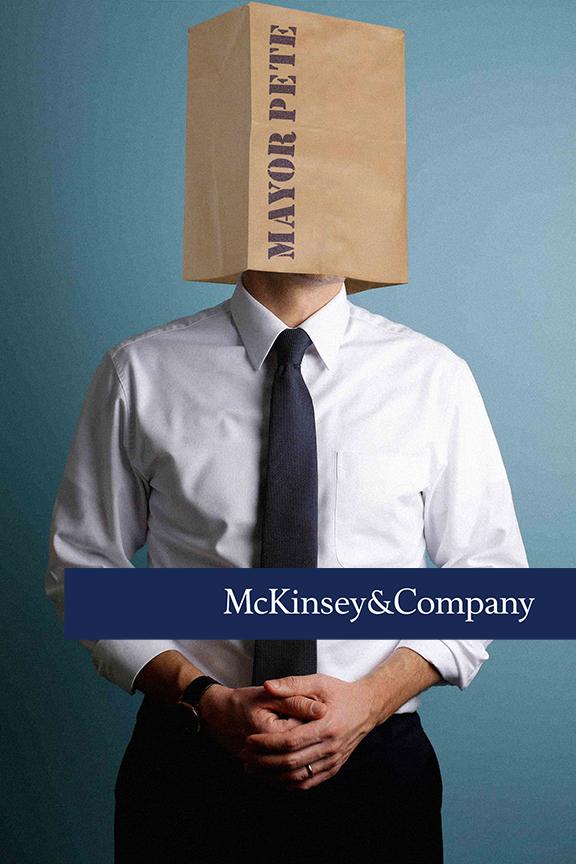
Until yesterday when Safford City Councilman Chris Taylor withdraw from the congressional race, there were 5 Republicans vying for the nomination to take on O'Halleran or Eva Putzova (if she beats O'Halleran in the Democratic primary). Now there are 4-- John Moore, Nolan Reidhead, Doyel Shamley and Tiffany Shedd. Taylor, an opioid addict, pulled the plug on his campaign because he OD-ed on heroin. Taylor is just a typical right-wing Republican crackpot as you can see from the picture of his lunatic smacked-out program above.

He tries to use the excuse that he's a combat veteran but he was a junkie in high school and, remember, we're talking about street drugs here, not medical opioids. Taylor says he's seeking treatment for his addiction. His statement to the Arizona Republic:
Today, I have suspended my campaign for the US House of Representatives and am seeking treatment for substance abuse disorder. I will fully cooperate with local authorities on any matters arising from my recent relapse and overdose. Please respect the privacy of my wife and children as we deal with this situation.

I’m not going to hide from this. I’m not ashamed of what happened. I wish to sincerely apologize to the amazing people who have supported me. I don’t know what went wrong. I recently relapsed after having so many solid years in sobriety. I have to figure out where I went wrong. Thankfully I have every resource available to me through the Veterans Affairs Administration and I have the strongest support system one could dream of. My family stands behind me 100% and I feel the love and prayers of our amazing Gila Valley Community. I haven’t been able to respond to each of you yet but I have been overwhelmed by the amount of people who have reached out to me in love and understanding.

The only thing I can do is face this head on in complete humility and put one foot in front of the other so that I can get the help needed to be the father and husband that my family deserves. I’m human and I have never pretended to be anything but. I know that through the Grace of my loving savior Jesus Christ I will be restored to full health and bounce back from this and be stronger than ever.
This morning I had a long talk with Eva Putzova about this situation. She was far more sympathetic with Taylor's plight than I am. "I wish Councilmember Taylor tons of strength while dealing with heroin addiction and related health struggles," she said, sincerely. "I’m sure this is very difficult for him personally and others around him who are also affected by this illness. I hope that he will succeed in getting healthy again and then use his experience to question his very own party’s positions that deny treatment to people who have no resources or societal support. I hope he will question the endless wars of choice that traumatized him and thousands of his combat colleagues--the wars that left them so broken that the only escape they could find was in using opioids. I hope he will rethink his position toward government and taxes, because it is our taxes that are now funding (as they should) his treatment and it is the government that is saving his life. I hope he will come through this episode and realize that criminalizing drug use is not only ineffective but also cruel and immoral and people caught in the web of drug abuse didn’t fail themselves, but rather our society failed to take care of them. People don’t abuse drugs and alcohol unless they deal with trauma, poverty, and despair or lack a sense of community, meaning in life, and human connection. The Republican Party led the efforts to put people like Chris in jail or on the streets. It’s time to reform that party’s positions or find ways to be politically active outside of GOP."


Labels: , , , , ,

Tuesday, September 17, 2019

Midnight Meme Of the Day!

>


by Noah

Gee, look at this pair of drug-pushing assclowns. Someone even gave the daddy a medal. You almost have to give the Sackler Cartel some kind of credit. After all, they wanted to be honest upstanding citizens of the world and didn't want to do anything illegal like selling heroin or crack. No, they used some of that good old American capitalist ingenuity and invested their money in something worse but legal! Yay, Purdue Pharma! How long before our "I Hate The World And Everything That lives" president gives all of the Purdue Pharma's Sackler family a special "El Chapo Medal Of Freedom" award?

El Chapo was lazy, and, a loser. He must know that now that he is in a jail cell he can't tunnel out of. He's probably green with envy that he didn't have the smarts to sell legal drugs that kill people, but, hey, he was old school; not the Sacklers! Now they are trying to settle with the individual states of the country they attacked with their plague of oxycontin while reportedly trying to hide some of their billions. How long before they put on disguises and disappear faster than Jeffrey Epstein's madam? They are literally buying their freedom. They aren't spending one day, one hour, one minute in jail for taking the tobacco model and pushing it to new murderous lows. "Here America. Here world. Here's a nice safe drug that will ease your pain! Don't you worry, it's safe. First one's free. Have a sample, and if you have worries, don't worry, we have something for that, too!" Of course it isn't safe, but they knew all that, just like the tobacco companies knew that their beloved product gave people cancer and the oil companies knew they were hastening death-dealing global warming and GM knew their Corvairs were unsafe at any speed. It's an old, old story and it just gets worse and worse because corporate pigs in suits and the bankers who love them get worse and worse as human beings.

The Sacklers and their Purdue Cartel are going to be paying out what for them is pocket change, even though their hideous press flacks and monstrous lawyers will bitch and moan that the fines are so unfair, so unfair. Puh-leeze. Anything short of truck-draggings over salted broken glass before being tossed in a dungeon for life is what's unfair. But, as I said, they are buying their way out of it. Now, ask yourselves how they bought into into it. How did these death merchants get approval from judges and the FDA? Three guesses and the first two don't count because you only need one if you have half a brain. They got their evil product to us the old fashioned way. The cops were on the take.

Don't go thinking the pols in Washington will do anything but a whitewash investigation, if that. Big Pharma's lobbyists are busy filling more delivery bags with cash as you read this.


Labels: , , ,

Saturday, July 27, 2019

Mayo Pete

>


Last week, someone suggested I switch from using "McKinsey Pete" to "Mayo Pete." Not everyone understood the McKinsey reference and Mayo seems to capture the candidate pretty well. I took the advice and-- BOOM!-- the New York Times was out with their blockbuster report that defined McKinsey really well-- McKinsey Advised Johnson & Johnson On Increasing Opiod Sales. And it isn't just Johnson & Johnson. The now-notorious Purdue Pharma also hired McKinsey to help them figure out how to get more Americans addicted to opioids to help their bottom line. Despite the Times report, no one from Johnson & Johnson, Purdue or McKinsey has been arrested yet. McKinsey hasn't even been sued yet.

On Friday, Kaiser Health New reported that "Court cases over the opioid epidemic are putting an embarrassing spotlight on McKinsey's strategic advice that's usually kept strictly behind a curtain. One lawsuit stated that McKinsey advised a pharmaceutical company to 'get more patients on higher doses of opioids' and study techniques 'for keeping patients on opioids longer.'"

Walt Bogdanich's Times piece informs his readers that "At the global consulting firm McKinsey & Company, the rule is sacrosanct: Never publicly disclose client advice. And for the most part, adherence to that rule has served the company well. But in recent months, as government officials seek to assign blame for the opioid crisis that has strangled large parts of the nation, McKinsey’s advice is surfacing in ways that are deeply embarrassing for the influential firm, whose clients include many of the world’s most admired companies."

I've been trying to make the case that his time at McKinsey is what has made me so distrustful of Pete-- and that's why I gave him that nickname. When I worked at Warner Bros, TimeWarner hired McKinsey to help us improve the business. After a few weeks of being annoyed by their presence and getting complaints from virtually all of my senior management, I kicked them out of the part of the building my company occupied. TimeWarner was angry but I didn't back down and, eventually, they just let it go. As consultants, they were full of shit, manufacturing problems to solve. Everyone I met from the firm was a smooth-talking bullshit artist-- way slicker than Trump will ever be, but equally repulsive.


Michael Sean Winters penned a column for the National Catholic Reporter about a month ago, Buttigieg won't win the nomination, and that's a good thing during which he explains why he doesn't think it would be a good thing for Pete to win the nomination. "What is my biggest reservation about Mayor Pete? At 37, he has an astonishingly full resume: mayor, Rhodes scholar, military service, learning a bunch of languages, playing the piano. More than one person has pointed out to me that being so accomplished at such a young age is characteristic of a certain type of Harvard grad and Rhodes scholar: They believe their principal job is résumé-building. And that is not really a quality we want in a president."
One item on his résumé also will prove very difficult for the Democratic Party primary electorate to swallow: After returning from Oxford, Buttigieg went to work at the McKinsey & Company consulting firm. McKinsey is to early 21st-century capitalism what the Pinkertons were to the late 19th-century iteration. Consulting firms do not do the killing these days, they only provide the information, values-free, that permits their clients to do the killing. Recently they made news for advising Purdue Pharma to "turbocharge" its sales of opioids. The company has long-standing ties with Saudi Arabia, and a report they did may have helped the Saudi government identify dissidents who were subsequently imprisoned or worse. McKinsey makes a great deal of money helping authoritarian governments burnish their image, and the firm was undisturbed about holding its 2018 company retreat four miles from a Chinese internment camp for ethnic Uighurs. The Uighurs can't afford McKinsey's fees, but the Chinese government can.

Buttigieg's time working in the belly of the capitalist beast has not led him to question what could pass for pre-Reaganesque GOP economic policy. His comments about economic policy are mostly platitudinous and conventional, but it is clear he does not share the suspicions of contemporary capitalism held by many of his fellow Democrats. At a CNN town hall last month, when asked about the challenge big corporations pose to the country, he said, "The biggest problem that I have with corporate America is the way that concentrations of wealth and corporate power have turned into concentrations of political power." Is that the "biggest problem?" Isn't it the concentration of wealth and consequent income inequality-- full stop-- that is the problem? Tackle that and you will simultaneously take care of the problem of undue political influence.

...The last thing the Democratic Party needs is another neo-liberal over-achiever who promises to bring the country together... The Democrats, and the country, do not need Buttigieg. They need a candidate who knows Sen. Mitch McConnell is not interested in bringing the country together, that the economy remains structured in ways that trap working class Americans into a series of bad options, with many bad consequences for our democracy and our society, and someone who will fight to change that. Going after Donald Trump with the young, gay, Democratic answer to Jeb Bush is not the way to beat Trump.
Not everyone hates Mayo. The Wall Street banksters see Pete as their guy when Biden self-destructs and they've been giving him beaucoup bucks. "Buttigieg, who led the Democratic fundraising battle in the second quarter with a $24.8 million haul, had some help from Wall Street in hitting that milestone," reported CNBC. "Richard Zinman, an executive director at J.P. Morgan, gave Buttigieg $2,000 in late April. James Mahoney, the head of global communications and public policy at Bank of America, gave the same amount to Buttigieg’s 2020 campaign in June. One former chief at Goldman who has given to all three candidates is Bob Rubin, who worked at the bank for over two decades and later became Treasury secretary under President Bill Clinton. He gave a total of $8,400 to Biden, Buttigieg and Harris."

But it isn't just banksters who like Mayo. The many, many brainless among Hollywood celebs dig him too. Bridget Read, reporting fro New York Magazine, asked "Who is Hollywood’s 2020 Democratic candidate? Is it Rosario Dawson’s bald beau Cory Booker? Is it Marianne Williamson, the Maryam Nassir Zadeh–wearing, self-proclaimed 'bitch for God?' Is it Bernie Sanders, of the Three Sanders Sisters (Shailene Woodley, Susan Sarandon, and Sarah Silverman), beloved also by Ms. Belcalis Marlenis Almanzar? Could it be onetime-Beyoncé-endorsed Beto O’ Rourke, who, if you will recall, was in a band?" And then she answers her own question, not particularly correctly.
No, it’s none of them (and it’s obviously not Bill de Blasio, who has the loyal support of only Steve Buscemi). The celebrities have anointed Pete Buttigieg, the docker-clad, multilingual, gay, ex-military mayor of South Bend, Indiana, who lost steam in the mainstream press after his somewhat prematurely characterized “meteoric rise” earlier in the year, but who has gained momentum among the people who know the least about anything to do with real life. That’s right-- he’s been touched by an angel, and the angel is Gwyneth Paltrow, and by touched I mean she gave him money and invited him over.

Filings released by the 2019 Federal Election Commission this week show that Mayor Pete was in second place this quarter behind only Bernie Sanders, raising $24.9 million from individual donors. GP is chief among them: This quarter she gave him $2,800 dollars, after hosting him for a fundraiser in May with The West Wing’s Bradley Whitford. It is unknown whether she and husband Brad Falchuk toasted Mayor Pete and his husband Chasten with fresh juice and served miniature dumplings made out of cabbage leaves but one can only hope.

In addition, Buttigieg received donations from Anna Wintour ($2,800), Mandy Moore ($3,818.86), Tom Ford ($5,600), Larry and Cazzie David ($2,800 each), Kevin Bacon ($2,800), Michael J. Fox ($2,800), Frances McDormand ($3,000), Matt Bomer ($2,800), Jeffrey Katzenberg ($2,800), Marilyn Katzenberg ($2,800), and John Stamos ($1,000). Other donors include Jennifer Aniston, Sean Hayes, Caroline Kennedy, Ryan Murphy, Ted Danson, Sharon Stone, and George Takei.

Celebs have given to other candidates this quarter too, of course-- Amy Schumer, Rosie O’Donnell, Scarlett Johansson, Ryan Reynolds, Bette Midler, and Shonda Rhimes have all supported Elizabeth Warren; and Rita Wilson, Emma Roberts, Jennifer Garner, Don Cheadle, Lily Tomlin, Leslie Odom Jr., and Cecily Strong gave to Kamala Harris. But Buttigieg’s surge in second quarter cash is surprising given his fairly stagnant poll numbers and his lack of name recognition (the other top contenders are already sitting U.S. senators).

So, why Mayor Pete? It seems like it would make the most sense for Williamson to receive Hollywood’s adoration, just going off her credentials alone: She’s a lifestyle guru who used to live with Laura Dern. Maybe it’s that Williamson is simply too spicy, and they can’t pick one of their own or they would be accused of being unserious, wacky, and out of touch.

Perhaps it’s that Buttigieg has the lack of experience maverick appeal of an outsider that celebrities so desperately crave. They can feel like they’re throwing their weight behind an underdog yet he’s also incredibly palatable, with a cute husband and their dog living in a remodeled Victorian house. But he also served in the military? Fun! He speaks Norwegian? Chic! And he doesn’t talk about how rich people are the problem all the time? Now that is refreshing.

Labels: , , , ,

Thursday, August 23, 2018

Brand New Randy Bryce Video... I Think

>


Holy Jesus! (And if you know me, you know how respectfully I mean that.) I just watched the new Randy Bryce video. I've never seen a campaign video anything like it. There's not even a photo-- let a lone a mention-- of Bryce or a clue it's a campaign video until about 3:20 minutes into this 3:54 minute video. In fact, I don't think Bryce's name is never mentioned. I guess this is the closest this tragic poem about the opioid crisis comes:
Most politicians can't empathize for those people,
and we need more politicians who can.
Now more then ever,
we need hope in a country that feels like its falling apart.
You know, we can still save it
and bring us back together.
You gotta watch this thing; it's heavy. It's who this candidate is, even if he's not in it.


Goal ThermometerAnd what a contrast it makes-- again, without a mention-- between Bryce and the corporate lawyer and heartless outsourcer who's running against him! Eric, the kid who narrates this thing is a star; he sure had me crying my eyes out. The video doesn't ask anyone to vote for Bryce or to volunteer for his campaign-- which is running on a grassroots engine and needs volunteers-- or to even contribute to the campaign. So allow me to do that. You can contribute to Randy's campaign directly by clicking on the thermometer on the right. Paul Ryan got chased out of his reelection bid by Randy, but he picked a clone to run in his stead and Ryan's corporate-financed SuperPAC is paying for his campaign. Randy will never raise enough money to compete with the $55 million Adelson gave Ryan for his PAC, nor the dozens of other conservative millionaires and billionaires who want to keep the tax cuts for the rich flowing... while they work to cut back Social Security, Medicare, education, progress on the environment and everything else we call part of the progress the U.S. has made. But he just needs enough to keep getting his message out to the voters in southeast Wisconsin. If Bryce gets into Congress, he's not going to be anything like Paul Ryan, with his politics of divisiveness and his politics of selfishness. Randy's one of us, one of the 99%... and it's baked into the cake. He'll never forget it. I can guarantee you that.

Labels: , , , ,

Friday, April 06, 2018

King Midas In Reverse

>


Is the Trump Regime off the rails? Sure looks that way. Where do we even begin? Random selection: Matthew Lee and Josh Lederman, reporting for the Associated Press: Anticipating an unpredictable president’s next moves, American officials have started actively planning for the likelihood that Señor Trumpanzee will announce that April showers have brought a May withdrawal from the Iran nuclear deal. “[N]o one knows,” they wrote, “exactly what would happen next or how Iran would respond.” With less than five weeks until Señor T’s deadline, for something or other, national security officials are exploring various ‘day after’ scenarios. “Those include how to sell a pullout as the correct strategy, how aggressively to reimpose U.S. sanctions on Iran that had been lifted under the agreement and how to deal with Iranian and European fallout from such a step, according to officials, diplomats and outside advisers to the administration.”
[A] complicating factor is Trump’s stated desire to withdraw U.S. personnel and resources from Syria, which many Iran hawks believe will cede the country to Tehran. Leaving Syria to keep his campaign promise of disentangling the U.S. military from the Middle East may force Trump’s hand on the nuclear deal, according to hawks who have expressed dismay at the president’s desire to pull back.

“I want to get out. I want to bring our troops back,” Trump said Tuesday. “Sometimes it’s time to come back home.”

Iran has said U.S. withdrawal from the nuclear deal and reimposed sanctions would destroy the agreement and has threatened a range of responses, including immediately restarting nuclear activities currently barred under the deal.
OK-- that has thrown him into a standoff with his National Security Staff. CNN reported yesterday that he was testy and irritated with his top military brass and national security team on Tuesday when they advised him an immediate withdrawal of US troops from Syria would be unwise and could not provide a timeline for when American forces could exit. In a sometimes-tense meeting of his national security team, Trump complained at length about the amount of American money being spent in the region, which he said had produced nothing for the US in return.”

On top of that, his new chief economic advisor, TV personality Lawrence Kudlow is trying to play down Trumpanzee’s threats to start a trade war with China. Kudlow stressed U.S. tariffs announced on Chinese goods are still only proposals that might never take effect. Some people are worried that China’s very targeted retaliations will destroy the bond between Trump and rural voters who were stupid and desperate enough to vote for him in 2016. “None of the tariffs have been put in place yet,” said Kudlow, “these are all proposals. We’re putting it out for comment. There’s at least two months before any actions are taken.” Trump reacted by saying he’s considering “hitting China with an additional $100 billion in tariffs, on top of the $50 billion” he’s already authorized, escalating threats of a trade war with China. As Axios pointed out yesterday “This is exactly what the free traders who formerly worked in the White House feared, Trump in a macho pissing match against Chinese President Xi. Trump has a blunt understanding of leverage and believes the worst thing he can show is weakness. He also believes, as he tweeted, that the U.S. already is so far down on the scorecard with China that he’s got nothing to lose.”

And it’s not just in foreign affairs-- which he knows nothing about-- where he’s flailing around and feeling his oats (bad combo). He’s like a bull in a china shop. He’s also running into more problems domestically. On Wednesday Politico reported that Pruitt is in deep doo-doo for his ethics “lapses.” While the Regime is trying to save Pruitt, Señor Trumpanzee wants to make sure he’s “not pleased with all the negative headlines surrounding him. Pruitt’s challenges appeared to deepen when White House press secretary Sarah Huckabee Sanders-- asked why Trump is ‘OK’ with the leader of the Environmental Protection Agency renting a condo from a lobbyist for $50 a night-- responded that ‘the president’s not.’ Kelly told Pruitt that Trump’s forbearance isn’t endless and that “the flow of negative and damning stories needed to stop soon.” Good luck with that!

Yesterday he was in West Virginia to make a speech about the new tax law which is supposed to bolster Republicans’ slim chances to hold onto Congress in November. Trump threw his speech away-- literally. “This was going to be my remarks. It would’ve taken about two minutes, but… That would’ve been a little boring, a little boring. Now I’m reading off the first paragraph, I said this is boring. Come on. We have to say, tell it like it is.” Crazy man feeling his oats. Instead of talking about tax cuts, he blabbered on and on about the red meat topics he thinks got him elected and will get him elected again. Probably not going to help GOP candidates in 7 months.


The Washington Post chalks this all up to “an emboldened” Trumpanzee “discovering that the policies he once described as easy fixes for the nation are a lot more complicated in reality-- creating backlash among allies, frustrating supporters and threatening the pocketbooks of many farming communities that helped get him elected.” He’s not taking any of this well.
Freed from the caution of former advisers, Trump has spent recent weeks returning to the gut-level basics that got him elected: tough talk on China, a promise of an immigration crackdown and an isolationist approach to national security.

Several people who have spoken to the president say he is telling advisers that he is finally expediting the policies that got him elected and is more comfortable without a number of aides around him who were tempering his instincts. And he often cites rising poll numbers in recent weeks as a reason he should do it his own way.
Uh oh. The Atlantic, for example, focused in on one place where Trump’s blunders are going to punish the very people who looked to his election as salvation, people strung out on prescription drugs. Although, admittedly the people most likely to go to prison are… surprise, surprise: people of color.
The War on Drugs 3.0 began in earnest just last week. And it could have the same devastating effect on communities of color as the ones that came before.


In Manchester, New Hampshire-- the hardest-hit city in a state that’s become the epicenter of America’s opioid crisis--President Trump announced a new plan ostensibly designed to combat the epidemic. The president played something of a warrior king, promising a far-reaching campaign to curtail prescriptions and a crackdown on illegal drug use. “Drug traffickers kill so many thousands of our citizens every year, and that’s why my Department of Justice will be seeking much tougher penalties than we ever have,” he pledged. “That penalty is going to be the death penalty.”

Trump’s rhetoric is, of course, familiar. Like his predecessors Richard Nixon and Ronald Reagan-- who presided over the last major escalations in anti-drug policy-- Trump anchored his appeal with a promise to return to law and order. And he vowed to use a similar tool: a federal dragnet to stop dealers with force, even lethal force if necessary.

But it’s the places where Trump’s strategy differs from his predecessors’ that marks a truly novel turn in policy. On the demand side, the administration proposed some new public-health-oriented policies for treating substance use that advocates have clamored for. And on the supply side, Trump pushed strongly for capital punishment-- a measure that is legal, but has rarely been used within a drug-trafficking context. On the whole, the new War on Drugs endorses developments in drug policy that may only deepen the vast racial divides within the American criminal-justice system: sympathy for a mostly white base of users, and naked aggression toward people of color.

These two visions for federal drug policy have been on display from the start of Trump’s presidency, when the White House began its slow, meandering path toward confronting the opioid crisis, the most deadly drug epidemic in American history and one that now kills more people than breast cancer. In his joint address to Congress in 2017, Trump distinguished dealers, who should be dealt with harshly, from users, who simply needed help-- promising to “stop the drugs from pouring into our country and poisoning our youth,” and to “expand treatment for those who have become so badly addicted.”

…On the campaign trail through to today, part of Trump’s angle in opioid-ravaged areas of the country has been to paint the problem as one brought on by outside invaders. Instead of connecting New England’s rampaging opioid crisis to the more widespread “epidemic of despair” linked to deindustrialization, in New Hampshire last week Trump blamed dastardly felons from across the U.S.-Mexico border. As he’s told it, criminals use sanctuary cities as bases to get ordinary Americans hooked on drugs. The president employs a strategy similar to the one well-utilized by Maine Governor Paul Le Page. The governor blamed black dealers directly for drug problems in his state-- saying, famously, that “guys with the name D-Money, Smoothie, Shifty” were responsible.

The reality is that drug dealers and drug users aren’t easily separable categories of people, no matter their race. For starters, it’s well-known that many people who supply drugs also use them. And in the fluid nature of drug transactions at the local level-- where drugs are often passed informally between acquaintances, and people can share heroin laced with fentanyl without knowing it-- many of the people caught with large quantities of drugs or subject to enhanced fentanyl sentences aren’t really distributors at all. And that’s not to mention the people operating in the murky boundaries between the legal and illegal sides of opioid distribution, where people often make money selling their own prescription drugs. It stands to reason that in mostly white communities, the drug supply chain is at the very least partially white, and also probably full of people with their own substance-use needs.

But reality doesn’t matter very much when one’s endeavor is to divide people in two: creating state protection and sympathy for one group of people, while wielding the full resources of the most advanced carceral state in history against another. White users have increasingly become the face of the opioid epidemic, while black victims in particular are largely discounted from public consideration, despite data showing shocking rates of drug deaths in the black community. This disparate treatment could have public-health implications, with new resources funneled primarily to white communities. And it could have drastic law-enforcement implications, too: Black and Latino people are already much more likely to be policed, arrested, and sentenced than their white counterparts. Black Americans especially still face criminalization from the last two major iterations of the drug war, two campaigns that never really stopped. It doesn’t exactly take a leap in logic to determine who’s most likely to get caught up in an anti-opioid dragnet: black and Latino victims and suppliers alike.

But perhaps the most remarkable consequence of the Trump plan is how it may not even help many white people. Criminalization will inevitably destabilize some white communities, too, and federal and state criminal-justice initiatives will only siphon funds and attention away from public-health programs, which even with the addition of $6 billion in federal money are woefully underfunded. It’ll largely be up to states to choose between joining in the administration’s harsh prosecutorial campaign, or firmly rejecting it in favor of the public-health paradigm.

A year ago, Donald Trump in his inaugural address made a promise to stop the “American carnage” of  “the crime, and the gangs, and the drugs that have stolen too many lives and robbed our country of so much unrealized potential.” But it’s clear from his track record-- his exhortations to police to brutalize suspects, his invocation of the specter of crime in Chicago, his accusations about black protesters being fueled by drugs, and now, his drug policy-- that all that’s in front of the country is more of the same, or worse.
Yep, he’s going to do a lot more damage than anyone imagined-- and everything he’s touching is turning to shit. There’s nothing Putin could have done to harm America more than to install Trump in the Oval Office.


Labels: , , , ,

Friday, February 09, 2018

A Dual Scourge: Prescription Drugs And Con-Man Donald J. Trumpanzee

>


A few years ago the CDC reported that the 10 highest prescribing states for narcotic painkillers are in the South, with Alabama, Tennessee and West Virginia leading the nation. Last year it was reported that unscrupulous drug manufacturers and distributors have pumped hundreds of millions of prescription opioids into small-town West Virginia, Kentucky, Ohio, Pennsylvania and New Hampshire, encouraging drug addiction. These communities have something in common besides rampant drug use and drug overdoses: these communities took Trump at his word when he said he would make their problem a top priority of his administration if they elected him-- and they helped do just that. Of the 100 counties in the U.S. addicted to prescription drugs, 99 were Trump counties-- the only one that wasn't being an Indian reservation. In fact, study after study has shown that the same misery and hopelessness that fuels prescription drug abuse fuels support for Trump, authoritarianism and fascism.

This week, NPR reported that Trump and his regime have decided not to emphasize treatment but to go back to the same old GOP prescription: the pointless, failed war on drugs. Greg Allen reported that "more than three months after President Trump declared the nation's opioid crisis a public health emergency, activists and healthcare providers say they're still waiting for some other action" while the regime has "given no signs it's developing a comprehensive strategy to address an epidemic that claims more than 115 lives every day. The President now says to combat opioids he's focused on enforcement, not treatment."
Trump spent just over a minute of his 80-minute State of the Union address talking about opioids. In a speech this week in Cincinnati, he had a few more comments. The opioid epidemic, he said, "has never been worse. People form blue ribbon committees. They do everything they can. And frankly, I have a different take on it. My take is you have to get really, really tough, really mean with the drug pushers and the drug dealers."

The President's mention of "blue ribbon committees" sounds like a slam on one he convened last year, chaired by former New Jersey Governor Chris Christie-- the President's Commission on Combating Drug Addiction and the Opioid Crisis. The commission issued more than 50 recommendations. The administration has so far followed up on just a few of those recommendations.

Some officials and care providers who work on the frontlines of the opioid crisis, however, are scathing about what they see as a lack of action from the White House. Former Congressman Patrick Kennedy, who served on the White House opioid commission, says he's "incredulous" that, after declaring a public health emergency in October, the President still hasn't requested any money from Congress to combat the epidemic.

"I mean this is just a mental health crisis of the first order," Kennedy says, "and this administration has done nothing."

...Here are things critics point out the administration hasn't done:
There is still no head of the Office of National Drug Control Policy. In October, Trump's nominee to the position, Rep. Tom Marino, R-Pa., withdrew his name after reports linked him with a bill that limited the DEA's ability to investigate abuses by opioid manufacturers and distributors.
President Trump still hasn't nominated anyone to head the Drug Enforcement Agency.
The administration hasn't asked Congress for any new funding to address the opioid epidemic.
Roughly 64,000 people died from drug overdoses in 2016, and data from the CDC indicates deaths are rising. Kennedy says what's needed is a coordinated federal response similar to the one in the mid-1990s-- when the U.S. spent $24 billion a year to address the HIV/AIDS crisis.

"We're talking about a major league crisis and they're taking credit for little things, while the whole country is burning down," Kennedy says.

Instead of a big boost in funding, the Trump administration is focused, in many cases, on cutting spending.

In the 2018 budget, the President recommended cutting the Office of National Drug Control Policy budget by 95 percent, and may do so again this year.

"It's very hard to make sense of," says Keith Humphreys, a professor of psychiatry at Stanford and former policy adviser to the drug czar's office in the Obama administration. "I mean, it's like closing a fire station in the middle of a wildfire."

A law signed by President Obama that designated a billion dollars to help states combat opioids runs out of money this year. Humphreys has seen no sign President Trump intends to ask Congress to renew that funding.

"The 2018 budget had a $400 million cut to the Substance Abuse and Mental Health Services Administration which is the lead agency that funds treatment in the United States," Humphreys says. "So, the administration's impulse seems to be not to spend more — in fact to spend less."

The White House is preparing to act on one of the recommendations of its opioid commission-- that it launch a campaign to educate the public, especially young people, on the dangers of opioids. The campaign is being developed not by the Office of National Drug Control Policy, but by a team in the White House led by Kellyanne Conway.
Goal ThermometerAnd as far as helping prescription drug addicts with marijuana, Trump seems to be allowing Jeff Sessions to go on a jihad against legal medical marijuana, something progressive Democrats-- though not elderly establishment Democrats-- are ready to go to war over, as we saw yesterday. If you would like to help the campaigns of the progressive Democrats campaigning on a platform that includes legalization of marijuana, Blue America has a page dedicated to that specifically which can be accessed by clicking on the ActBlue Green Wave thermometer on the right. Remember, even the latest poll from Fox News found a record number of voters nationally favoring legalization. The poll shows 59% of voters in support of legalizing marijuana, which is up from 51% in 2015, and 46% in 2013 (the first time the poll ever addressed the issue). Only 26% favored making "smoking marijuana" legal in 2001. Today just 32% of voters agree with right-wing crackpot and KKK supporter Jeff Sessions that marijuana should be illegal, down from 49% in 2013.

Labels: , , ,

Saturday, February 03, 2018

Trumpanzee vs Kasich... Again

>


The stable genius bragged about how he confronted the tough questions on his mental test-- which basically ask to differentiate between a duck and an elephant and to recognize which hands of a clock show noon and which show 9:30-- and did better than anyone else in history. "Let me tell you, those last ten questions are hard. There aren’t a lot of people that can do that," he told a roomful of drooling RNC officials meeting at Trumpanzee International Hotel in DC.

Now, remember when he offered Ohio Governor John Kasich the vice presidential spot and sweetened the offer by having Jared tell him he'd be in charge of domestic policy and foreign policy? He seems to have changed his mind about Kasich. At the same RNC meeting he "tore into" him-- by name.
At one point in the meeting, Trump brought onstage Bob Paduchik, who the president selected to serve as Republican National Committee co-chair after overseeing Trump’s successful 2016 campaign in Ohio. One person who was in attendance recalled the president heaping praise on Paduchik for helping him win the critical swing state, where he’d faced opposition from the governor. The president recounted the Ohio campaign and how he ultimately won the state.

A Kasich representative did not respond to a request for comment. White House spokespersons also did not respond to a request for comment.

The Trump-Kasich feud has been simmering ever since the 2016 campaign. At one point, the Trump campaign blasted the Ohio governor for refusing to attend the Republican National Convention in Cleveland, where then-candidate Trump was given the party’s nomination.

After Trump won the election, he orchestrated a takeover of the state party, removing Kasich ally Matt Borges as state party chair and replacing him with a pro-Trump figure, Jane Timken. Then-President-elect Trump personally made calls into the state to lobby for Timken to get the post.

Kasich has been promoting his newest book, Two Paths: America Divided or United-- a media tour that has led to speculation that he’s considering a 2020 primary bid to Trump.

The remarks came on the second night of the RNC’s annual winter meeting. The president’s speech was to be pooled by the media, yet those covering the speech were escorted out a few minutes after he began talking.

...Trump veered from talking about Kasich to describing in detail how he recently aced a mental acuity test-- an examination, he said, most members of the media wouldn’t pass. At another point, he described Evan McMullin, a fierce Trump critic who waged a 2016 independent bid, as a “clown.”

He also argued that he would have won New Hampshire in 2016 had it not been for voter fraud, saying that liberal voters were bussed in from Connecticut and Massachusetts.


What brought on the latest attacks against Kasich? Could be any number of things. Who really knows how that crackpot's mind works? But, remember, Trump campaigned in states with big prescription drug problems-- West Virginia, Kentucky, Ohio, Tennessee-- by promising to address the problem head on. He hasn't, not at all. The other day he hinted that the solution is for those addicted to drugs to overdose and die, ending the problem. Meanwhile Kasich is actually taking steps to address it rationally (see yesterday's video below). And nothing infuriates Trump more than rationality. It challenges his entire worldview and his ridiculously constructed legitimacy.


Labels: , ,

Wednesday, January 31, 2018

Mingo County Was Desperate For Change-- Now They're Stuck With Trump And A Worsening Opioid Epidemic

>


An inflammatory tweet yesterday from Anthony Bordain alerted me to a shocking story in the Charleston Gazette-Mail by Eric Eyre, Drug firms shipped 20.8M pain pills to WV town with 2,900 people. Think about that for a second. And then consider the newest polling from Gallup on the eve of Trump's State of the Union. Of the dozen states where a majority of voters like Trump, West Virginia has the highest percentage of people who think he's doing a good job. although the poll shows Trump's national approval at 38%, in West Virginia is 61%, the only state with a 6 as the first number, Other than DC, where his approval number is 6%. Almost all the states where Trump has high approval numbers are states where the opioid crisis is highest and most virulent.

Bordain's tweet, by the way, was "The execs at companies who did this should serve more jail time than any street level dope dealer." Did what? Before we turn to Eyre's report, the best candidate running for Congress in any of West Virginia's districts, Kendra Fershee told us that "Unfortunately, there is a pattern in our history of out-of-state business coming into WV, using our resources, turning them into profit, and leaving us to pick up the pieces. The pattern here is the same, and this time, the used up and spit out resources were our people. The drug companies, and doctors who did their bidding, used West Virginians to reach record profits and have done nothing to help solve the problems they helped create. It's time to hold them accountable. A lot of attention has been paid to the pill mills in Florida that fueled the start of the addiction crisis, but the small town pill mills were just as deadly and seemed to fly under the radar longer. It's easy to see the destruction in WV, and the numbers don't lie. People die here at a higher rate than anywhere else in the country. The federal government can do two things to right the wrongs it helped create by failing to intervene with the pharmaceutical companies: 1) enforce regulations to stop this from happening again, and 2) legalize medical marijuana so the state can implement its law to help people manage pain safely and build revenue to help addicts get healthy."


Like Bordain, she had just read Eyre's story:
Over the past decade, out-of-state drug companies shipped 20.8 million prescription painkillers to two pharmacies four blocks apart in a Southern West Virginia town with 2,900 people, according to a congressional committee investigating the opioid crisis.

The House Energy and Commerce Committee cited the massive shipments of hydrocodone and oxycodone-- two powerful painkillers-- to the town of Williamson, in Mingo County, amid the panel’s inquiry into the role of drug distributors in the opioid epidemic.

“These numbers are outrageous, and we will get to the bottom of how this destruction was able to be unleashed across West Virginia,” said committee Chairman Greg Walden, R-Ore., and ranking member Frank Pallone Jr., D-N.J., in a joint statement.

The panel recently sent letters to regional drug wholesalers Miami-Luken and H.D. Smith, asking why the companies increased painkiller shipments and didn’t flag suspicious drug orders from pharmacies while overdose deaths were surging across West Virginia.

The letters outline high-volume shipments to pharmacies over consecutive days and huge spikes in pain pill numbers from year to year.

Between 2006 and 2016, drug wholesalers shipped 10.2 million hydrocodone pills and 10.6 million oxycodone pills to Tug Valley Pharmacy and Hurley Drug in Williamson, according to Drug Enforcement Administration data obtained by the House Committee.

Springboro, Ohio-based Miami-Luken sold 6.4 million hydrocodone and oxycodone pills to Tug Valley Pharmacy from 2008 to 2015, the company disclosed to the panel. That’s more than half of all painkillers shipped to the pharmacy those years. In a single year (2008 to 2009), Miami-Luken’s shipments increased three-fold to the Mingo County town.

Miami-Luken also was a major supplier to the now-closed Save-Rite Pharmacy in the Mingo County town of Kermit, population 400.

The drug wholesaler shipped 5.7 million hydrocodone and oxycodone pills to Save-Rite and a branch pharmacy called Sav-Rite #2 between 2005 and 2011, according records Miami-Luken gave the committee. In 2008, the company provided 5,624 prescription pain pills for every man, woman and child in Kermit.

In its letters, the panel also raised questions about Miami-Luken’s shipments to Westside Pharmacy in Oceana, Wyoming County. The committee cited documents that show a Miami-Luken employee reported a Virginia doctor, who operated a pain clinic located two hours from Oceana, was sending his patients to Westside Pharmacy, which filled the prescriptions.

In 2015, more than 40 percent of the oxycodone prescriptions filled by Westside Pharmacy in Oceana were coming from the Virginia doctor, according to the committee’s letter. The following year, the Virginia Board of Medicine suspended the doctor’s license, finding his practice posed a “substantial danger to public health and safety.”

The panel’s letter also mentions Miami-Luken’s suspicious shipments to Colony Drug in Beckley. In a five-day span in 2015, the drug wholesaler shipped 16,800 oxycodone pills to the pharmacy.

“In several instances, Colony Drug placed multiple orders for what appears to be excessive amounts of pills on consecutive days,” the committee wrote.

The House committee questioned H.D. Smith’s painkiller shipments to Family Discount Pharmacy in Logan County. The drug shipper distributed 3,000 hydrocodone tablets a day to the pharmacy in 2008, a 10-fold increase in sales from the previous year, according to the committee’s letter. The pharmacy, located in a town of 1,800 people, was shipped 1.1 million hydrocodone pills in 2008.

The House panel also cited Springfield, Illinois-based H.D. Smith for spikes in painkiller shipments to Sav-Rite, Westside Pharmacy, Tug Valley Pharmacy and Hurley Drug.

Oxycodone is sold under brand names like OxyContin, while hydrocodone brands include Vicodin and Lortab.

“The committee’s bipartisan investigation continues to identify systemic issues with the inordinate number of opioids distributed to small town pharmacies,” Walden and Pallone said in the statement. “The volume appears to be far in excess of the number of opioids that a pharmacy in that local area would be expected to receive.”

In a statement, H.D. Smith said it was reviewing the committee’s letter Monday.

“H.D. Smith works with its upstream manufacturing and downstream pharmacy partners to guard the integrity of the supply chain, and to improve patient outcomes,” the company said.

Miami-Luken did not immediately respond to a request for comment.

In February 2016, West Virginia Attorney General Patrick Morrisey ended a state lawsuit against Miami-Luken after the company agreed to pay $2.5 million to settle allegations that it flooded the state with painkillers. Morrisey, a former lobbyist for a trade group that represents Miami-Luken and other drug distributors, inherited the lawsuit in 2013 after ousting longtime Attorney General Darrell McGraw.

H.D. Smith paid the state $3.5 million to settle the same pill-dumping allegations in January 2017.

The committee gave H.D. Smith and Miami-Luken until Feb. 9 to turn over documents and answer dozens of questions about what steps, if any, the companies took to stop the flood of pain pills into Southern West Virginia.

“We will continue to investigate these distributors’ shipments of large quantities of powerful opioids across West Virginia, including what seems to be a shocking lack of oversight over their distribution practices,” Walden and Pallone said.

The state has the highest drug overdose death rate in the nation. More than 880 people fatally overdosed in West Virginia in 2016.
People may point to Mingo County and snear that they voted heavily for Trump-- 7,876 (83.2%) to 1,365 (14.4%) for Clinton-- but these were desperate people who din't want another status quo establishment politician and decided to gamble on Trump. Their first choice, though was not Trump. During the primary Mingo voters didn't just give Bernie a massive 2,425 vote win over Hillary (1,074), they gave Bernie a huge victory over Trump (1,167). In fact, Bernie got more votes in the primary than Trump, Ted Cruz, John Kasich, Ben Carson, Marco Rubio, Mike Huckabee, Jeb Bush, Rand Paul, Carly Fiorina and Chris Christie combined. So wipe that smear off your fucking face.

Labels: , ,

Wednesday, January 24, 2018

Trump Has Been All Talk, No Action On The Opioid Crisis

>


Tom Petty was an old friend. The first time we met in person, it involved me watching with amusement while he Dwight Twilley and a journalist friend chasing each other around a hotel room for the last bit on coke in an envelope. I think that was right before or right after the release of American Girl. More recently, many decades later, Tom became the latest of several superstars-- Prince, Heath Ledger, Philip Seymour Hoffman-- to die from opioid use. Most people caught up in the epidemic aren't superstars and aren't multimillionaires and will only be mourned by their families and close friends. Chronic pain hits all strata of society-- and is making pharmaceutical companies profitable beyond reason. According to the CDC, the highest death rates from opioid overdoses are in Trump country-- West Virginia, Ohio, Pennsylvania and Kentucky-- but there are no states that are immune from the scourge.

Goal ThermometerTrump's rhetoric about fighting a war against the opioid epidemic went over well in West Virginia counties like McDowell and Kanawha-- which had the highest overdose mortality rate in the U.S. Kanawha gave Trump 58% of its vote and McDowell gave him a startling 74.7%. In October Trump declared the opioid epidemic a national public health emergency. That looked like a big deal... but it wasn't, since there was no funding behind it, just more empty rhetoric, what former congressman Patrick Kennedy (D-RI), a member of Trump's commission called "a charade" and "a sham... tantamount to reshuffling chairs on the Titanic...You can't expect to stem the tide of a public health crisis that is claiming over 64,000 lives per year without putting your money where your mouth is." Trump, he said is "playing politics instead of pursuing solutions for issues that impact the lives of Americans. For people and families struggling with addiction in this epidemic, it's essentially been a government shutdown from the start."

Yesterday, German Lopez, writing for Vox, reported that the consensus from experts and advocates agree: "a lot of talk, little action." It's basically been a year of empty p.r. Trump promised everything-- and delivered nothing.
There has been no move by Trump’s administration to actually spend more money on the opioid crisis. Key positions in the administration remain unfilled, even without nominees in the case of the White House’s drug czar office and the Drug Enforcement Administration (DEA). And although Trump’s emergency declaration was renewed last week, it has led to essentially no action since it was first signed-- no significant new resources, no major new initiatives.

Chuck Ingoglia, a senior vice president at the National Council for Behavioral Health, which advocates on addiction issues, summarized the general takeaway of experts and advocates: “A lot of talk, little action. It’s great that the president says this is a priority. It’s great that he convened a task force so we have another paper that says the opioid crisis in America needs attention. But too little has happened to actually do anything about it.”

For experts and advocates, this is hard to understand. Taking action on the opioid epidemic could have been an easy win. It’s an issue that crosses partisan lines, with both Democrats and Republicans angling to do something about it. There’s evidence it’s very relevant to Trump’s own base. While experts talk about needing as much as tens of billions of dollars for the crisis over the next few years, that’s actually not much in federal budget terms-- a fraction of a percent for a government that spends trillions a year.

And yet the Trump administration has barely budged. Beyond declaring a public health emergency, the administration has done little to nothing to combat the crisis.

That’s not because the crisis is getting better. In 2016, the latest year with a full official count, there were nearly 64,000 drug overdose deaths in the US-- an all-time high. The rise in drug overdose deaths was a big reason that life expectancy fell for the second year in a row in the US, which had not happened since the early 1960s. And the early data suggests that 2017 was worse: According to preliminary figures from the Centers for Disease Control and Prevention, there were nearly 67,000 drug overdose deaths in the 12-month period through June 2017, up from more than 57,000 in the 12-month period through June 2016.

If the worst trends continue, Stat forecast that as many as 650,000 people will die within the next decade-- the equivalent of the entire population of Baltimore.

This is the reality facing Trump, the reality in which his administration has responded with next to nothing.

...The most notable actual policy change is the INTERDICT Act. This law’s effect, however, will likely be greatly limited. The federal government has for decades tried to intercept illicit drugs before they come into the US, but drugs have consistently gotten through in huge numbers anyway. Along these lines, experts are deeply skeptical that any effort to beef up border security, including Trump’s wall, would do much, if anything, to stop the flow of drugs into the US.

Meanwhile, Trump hasn’t appointed anyone to lead the Office of National Drug Control Policy, and the office is mired by staffing problems-- including the hiring of a deputy chief of staff who apparently lied in parts of his résumé. The drug czar’s office, as it’s known colloquially, is crucial to coordinating federal efforts on drugs, according to experts.

Trump also has not nominated anyone to head the DEA, which is tasked with enforcing the nation’s drug laws.

In his proposals, Trump has also tried to cut the budget for the Office of National Drug Control Policy by 95 percent-- a move that his team initially walked back after facing bipartisan opposition during last year’s budget talks but reportedly may try again this year.

His budget plan also proposed keeping spending for addiction treatment relatively flat, while cutting prevention funding. The administration has also been silent on proposals in Congress to increase funding to the opioid epidemic, including Democratic plans to add tens of billions of dollars in spending to deal with the crisis.

...[E]xperts generally agree on what more federal resources should go to: They could be used to boost access to treatment (particularly highly effective medications for opioid addiction), pull back lax access to opioid painkillers while keeping them accessible to patients who truly need them, and adopt harm reduction policies that mitigate the damage caused by opioids and other drugs.

Advocates and experts argue about whether the extra resources should come through Medicaid, block grants for mental health and addiction care, or some other source. The consensus, though, is that much more federal support is needed-- in the tens of billions of dollars over the next few years.

“I was just in West Virginia this week. These counties are really devastated,” LaBelle said. “I know that’s been covered a lot. But it’s really something when you talk to a county official and you see how little money they have to put toward the epidemic.”

Some states are attempting to seriously confront this crisis. Vermont, for example, has built a “hub and spoke” system that treats addiction as a public health issue and integrates treatment into the rest of health care. The state was the only one in New England to have an overdose death rate that wasn’t significantly above the national average in 2016. (For more, check out my in-depth breakdown of Vermont’s system.)

But Vermont managed to build this new system in large part with federal dollars, particularly through Obamacare’s insurance expansion and a special Medicaid waiver that states can obtain through the health care law. It’s that kind of federal support that budget-strained states will need to deal with the opioid crisis.

These are the kinds of considerations and ideas that experts say can help the country move toward ending the opioid epidemic.

But in its first year, the Trump administration did nothing to make sure states can set up more programs like Vermont’s. So the opioid epidemic continues, killing tens of thousands of Americans every year.
Trump's job approval rating in West Virginia-- his strongest state in 2016-- has finally started to slip. 51% approve and 48% disapprove. His approval in states with the biggest opioid problems are down significantly since they voted for him:
West Virginia- minus 20 points from +42
Ohio- minus 13 points from +8
Pennsylvania- minus 11 points from +1%
Kentucky- minus 22 points from +30

Labels: , ,

Wednesday, October 25, 2017

National Punch-Line Chris Christie Is Unlikely To Solve The Opioid Crisis Sweeping America

>


Last week was the final gubernatorial debate between the Wall Street Democrat Phil Murphy and Lt. Gov. Kim Guadagno. Her main message is always the same: "I'm not Chris Christie." A few days earlier, one of the tightest state Senate races in the state, pitting incumbent Linda Greentein against Republican Ileana Schimer, seems like a match between two candidates wanting to be seen as the most virulently anti-Christie. In fact, Schirmer has been attacking Greenstein for voting 98% of the time with the Republican governor! She says she's "embarrassed and disappointed to have a governor who has thrown New Jersey under the bus because he didn’t get what he wanted, which is to be president."
It’s probably not the way Christie envisioned leaving office. Once a rising Republican star being urged nationwide to run for president, Christie has fallen to historic lows in the polls after a series of credit-rating downgrades, Bridgegate, and his long absences from the state as he pursued the White House in 2015. He’s also become a boogeyman in this year’s gubernatorial race between Kim Guadagno and Phil Murphy. Pollsters say the biggest piece of baggage for Guadagno, Christie’s lieutant governor, is her unpopular boss, and she has been distancing herself from his record all year. Murphy’s campaign in many ways is a long-form repudiation of the Christie years.
Greenstein is a worthless machine hack controlled by Steve Sweeney and the most hilarious thing is when she shows people an old 2013 TV ad for her last GOP opponent, Peter Inverso where Christie says "Despite what Linda Greenstein says, she is a partisan politician who has opposed my efforts at every turn."


Schirmer pitch included "an admission" that she once supported Christe but no longer does. Christie is the least popular governor among voters in his own state of any governor in the country, even worse than Sam Brownback, who bankrupted Kansas. And Christie's approval rating keeps sinking.


Yesterday, Christie unconvincingly denied he had told former congressmen Patrick Kennedy, a member of Trump's Commission on Combating Drug Addiction and the Opioid Crisis, that a failure to deliver on remedying the opioid crisis would deal a "debilitating blow" to the Trumpanzee presidency. Christie is petrified of Trump-- who he still hopes will give him some kind of a job-- and he admitted that Trump screams at him all the time. The Washington Post reported that Christie told Kennedy that the Trumpanzee presidency would be "over" if "he doesn't recognize this as the issue of our time." Unrelated, GQ published a feature on Christie yesterday by Jason Zengerle, Chris Christie's Last Fight, which starts with this tantalizing intro: "This wasn’t how he figured it would end. A year after being steamrolled by Donald Trump, Chris Christie is hobbling out of office as the most unpopular governor in the history of New Jersey-- a casualty of scandal and hubris, and a guy freed up to quietly pursue the toughest job of his life." He's coming a long way though-- in the wrong direction-- since, at least "on magazine covers and in smoke-filled back rooms, it was a foregone conclusion that he'd be the Republican presidential nominee in 2016."
For much of his governorship, Christie had been admirably proactive in (and progressive about) addressing the drug scourge—bucking his fellow Republicans to expand Medicaid, which made drug treatment more available to poor people in New Jersey; pushing for more drug courts, which steer nonviolent offenders toward treatment instead of prison; even signing a “Good Samaritan” law that provides immunity from arrest for people who call 911 if they’re with someone who overdoses. But now, in his final year in office, Christie had made the opioid problem an even greater priority-- his top one, in fact.


The centerpiece of the effort was to be $300 million in new funding for addiction treatment, the financing of which led to a showdown with state legislators and the resulting mid-summer shutdown. In classic bare-knuckled Christie fashion, he had hoped to use the shutdown to embarrass his rival, Vinnie Prieto, the Democratic Speaker of the General Assembly, by hanging 500 posters on shuttered government offices across the state that featured Prieto’s picture and read: “This facility is closed because of this man.” But whatever leverage Christie thought he had went out the window when his own photos, those of his beach vacation, emerged. Three days into the shutdown, Christie agreed to a budget deal that, crucially, did not include his $300 million for opioids.

...In the issue of opioids, he seemed to have found a new, and most likely final, purpose as a public official—his last, best shot to do something big and good, something that could fulfill the outsize ambitions that so many people, not least among them Chris Christie, had placed in him. Not only was he working on fighting opioids in New Jersey; he was also chairing a presidential commission for Donald Trump to develop a national strategy on the issue. “This opioid issue, to me, is the single most important issue that I have left to deal with,” Christie told me.

I asked him how he planned to get the $300 million for his New Jersey efforts. “Stay tuned,” Christie said. “I'm not gonna tell you now. Stay tuned.” He sat up straighter in his chair and, summoning his old swagger, went on. “We will spend and invest a significant amount of money, very close to what I was asking for, if not exactly what I was asking for, on this issue, because it is non-negotiable to me,” Christie said. “If I don't get it from Horizon, I'll get it from someplace else, and when you're governor, in this state, you have the ability to get that done.” It wasn't clear if he was trying to convince himself or me.

A few weeks later, it didn't matter. He announced that he was going to spend $200 million on opioid treatment-- a significant sum, no doubt, but still only two-thirds of what he'd originally wanted.

...Christie was hardly alone in getting steamrolled by Trump, who bested 15 other Republicans, not to mention Hillary Clinton, on his way to the White House. But Christie's defeat was particularly humbling, since it involved Trump doing to him what Christie was accustomed to doing to others. Christie's rise, after all, had been fueled by his bullying and belittling of friends and foes alike-- telling a protester at a press conference to “sit down and shut up” or his constituents to “get the hell off the beach” during a hurricane. In many ways, Christie seemed perfectly matched to the political moment of 2016: a no-holds-barred truth-teller who wasn't afraid to offend people's delicate sensibilities.

It's just that Trump did him one better. Christie might have scored points against Marco Rubio during a debate by ridiculing him for his “memorized 30-second speech,” but it was Trump who indelibly-- and offensively-- branded the Florida senator as Liddle Marco…and Jeb Bush as Low-Energy Jeb…and Ted Cruz as Lyin' Ted. Christie was like a drive-time deejay trying to compete with Howard Stern.

“He was a force of nature at a political time when people wanted to hear the way he was saying things,” Christie now says of Trump. “There's a marked difference between the way we approach these things, no doubt. But I think it made me look less candid.” He adds, almost plaintively: “Donald Trump ran the race in terms of the outspoken, tell-it-like-it-is guy. That was my lane.”

Even worse for Christie, once he ended his presidential campaign, his humiliations at Trump's hands continued. Unlike most of the candidates whom Trump had vanquished, Christie, upon exiting the race, almost immediately endorsed him. It seemed an odd move. Not only had Trump once alleged that Christie “totally knew about” Bridgegate-- a charge that Christie particularly resents; Christie had attacked Trump as “an entertainer” and unserious. What's more, Christie had fashioned himself as a different kind of Republican, one who could appeal to non-white voters. (In his 2013 re-election, Christie won 51 percent of Latino voters and 21 percent of African-Americans.) It was hard to see how he could support someone who'd accused Mexico of sending “rapists” to the U.S. and only reluctantly disavowed the support of David Duke.

It was even stranger to see Christie so slavishly playing second fiddle-- appearing behind Trump at rallies while Trump prattled on, wearing what CNN called a “hostage face”-- especially when Trump didn't stop needling Christie. In one instance, Trump appeared to make fun of Christie's weight, telling him that he could no longer eat Oreos; in another, Trump held an umbrella above his own head while Christie, standing right next to him, got wet in the rain. And yet Christie continued to stand, mutely, by Trump's side. “I'd never seen him be so deferential,” Tom Kean, a former New Jersey governor and Christie's political mentor, says. “But it's a normal reaction to be deferential to someone you wanted a job from.”

But the job never came. First, Trump picked Mike Pence over Christie for his running mate. Then, after Trump won in November, he chose Jeff Sessions over Christie for attorney general. Adding insult to injury, Trump fired Christie as the chairman of his transition team-- the consolation prize Christie had been given when he was passed over in the veepstakes.

Christie insists that he and Trump have no problems with each other-- that, in fact, they've been friends for years-- and it's obviously important to him that people know he views himself and the businessman turned president as peers. Christie's former law partner and longtime political consigliere, Bill Palatucci, emphasizes that when Trump and Christie first met in 2002, Christie said hello as a favor to Trump's sister, a federal judge whose jurisdiction includes New Jersey. “I think it's crucial to understanding the relationship,” Palatucci says. “To meet Trump on such a level playing field means a lot, and they've always seen themselves as equals.” Christie says of Trump: “He gets mad at me at times, he yells at me at times, but he respects me.” Christie adds that he often yells back at Trump, although “less now that he's president.”

Indeed, it's conventional wisdom among political insiders that Christie's problem isn't so much with Trump as it is with Trump's son-in-law, Jared Kushner, whose father Christie sent to prison when Christie was a federal prosecutor. Even on that score, Christie downplays any friction. “There's a lot of history there, not between me and him but between me and his father,” Christie says, “and Jared has continued to tell me that he holds no grudge against me, so I have to take him at his word.” As for who has torpedoed him repeatedly in TrumpWorld, Christie is as philosophical as he is fatalistic. “When you're as prominent a person as I've been, there's more than one person shooting at you all the time,” he says. “So unless you see it, you don't necessarily know which bullet hit you.”

...The job that Christie did ultimately get, chairing the Trump-created President's Commission on Combating Drug Addiction and the Opioids Crisis, has been dismissed by some as the ultimate booby prize. But Christie actually jumped at the opportunity. Indeed, according to one Trump adviser, Christie, after not getting the attorney-general assignment, ultimately passed on several other possible posts in the Trump administration-- including secretary of commerce and secretary of veterans affairs, as well as ambassadorships to Italy and the Vatican. (Christie denies being offered the positions with the departments of Commerce and Veterans Affairs.) “Trump asked Jared, Reince, and Bannon to find him a job,” says the Trump adviser. “But Christie didn't want to give up being governor for what they were offering.”

Working on the opioids issue is something Christie has been interested in for years, and not only because it allowed him to keep his day job. More than two decades ago, as a newly elected New Jersey county freeholder, Christie launched a successful push to get the local government to pay for inpatient drug treatment for adolescents who couldn't afford it. “We were the first county in the state to do that,” he boasts.

A decade later, the issue became even more personal when one of his best friends from law school—who was by then a successful attorney—developed a Percocet addiction. Christie and other friends were enlisted to stage an intervention, and for the next eight years—through the man's divorce, his trips to rehab and then his relapses, the loss of his law license and his home—Christie was part of his support system. In early 2014, the man called Christie to check in. “He said he was doing really well and he wanted to show me how well, and ‘Let's go out to dinner,’ ” Christie recalls. The night they agreed to meet, the man stood Christie up. Three weeks later, Christie got the call he knew was coming: His friend had been found dead in a motel room, an empty bottle of Percocet and a drained quart of vodka on the nightstand. “His death,” Christie says, “was one of the more traumatic moments of my life.”

Christie's presidential campaign revealed to him just how widespread the opioid problem was. On his first visit to New Hampshire as a candidate, he stopped for lunch at a pizza place in Manchester. The owner told him that one of his employees had overdosed in the bathroom the day before. He learned from one of the women who did his makeup before his appearances on cable shows that she was a recovering addict. And he heard, at countless town halls, from those impacted by addiction. “I was confronted with a real sense of despair,” Christie says.

Now that he's tackling the issue for the administration of the man who described New Hampshire as a “drug-infested den”-- “That wouldn't be my characterization,” Christie says-- he's faced a couple of formidable challenges. For one, there was Tom Price, who until he resigned in September was the head of Trump's Department of Health and Human Services and who’d voiced skepticism about medication-assisted treatments like methadone and offered support for “faith-based” approaches. And there’s still Jeff Sessions, Trump’s attorney general and former Alabama Senator who has vowed to fight a new drug war by pushing the harshest sentences possible for even low-level drug offenders. “There are aspects of the administration who still believe this is an enforcement issue,” Christie concedes. And while he's reluctant to mention Sessions by name, it's clear that's who Christie's talking about when he says, “I do think that my emphasis based upon eight years as a governor, dealing with this on the ground, is different from the perspective you get as a United States senator.”

More than Sessions, though, there's the challenge of Trump-- since the commission can only be as effective as the president lets it be. Of course, Christie's opioids commission has been one of the only Trump-administration policy initiatives to be run with a semblance of normalcy. It has held meetings featuring the testimony of well-respected experts and has solicited comments from the general public, as well. Although the commission was about a month late in submitting its interim report on July 31, the document itself was hailed for policy recommendations that accurately reflected the medical and public-health consensus on the issue.


But Trump's response to the report has been as abnormal and incompetent as everything else in his administration. Christie actually tailored the report to his boss's needs, taking the commission staff's initial draft and personally editing it down to a third of its original length. “I remember when I was doing debate prep with [Trump in the general election] and people would come in with binders that were like five or six inches thick, and I'd look at them and say, ‘That's going to be the most exquisite coaster at Mar-a-Lago,’ because he's not going to read all that stuff,” Christie told me. “That's not the way he takes in information. He's much more of a, give him a short bit of writing and then verbally talk to him. And that's what we did on the report.... I wrote the report for him. It's not like a white paper that is 80 pages that he wouldn't look at. I knew who my audience was.”

The report's “first and most urgent recommendation” was that Trump declare the opioid epidemic a “national emergency.” Trump initially seemed to reject this advice in favor of the views of Price, who on August 8, after a meeting devoted to the opioid-commission report, emerged to tell reporters that the president had concluded that the opioid crisis could be addressed “without the declaration of a national emergency.” But then two days later, Trump responded to a reporter's question after a national-security briefing at his golf club in New Jersey by declaring, “The opioid crisis is an emergency. And I'm saying officially right now, it is an emergency. It's a national emergency.” Christie told me that Trump had called him in advance to tell him he'd be making the declaration. “He wasn't ad-libbing at all,” Christie says. But Trump apparently didn't give a heads-up to the rest of his staff, because more than a month after the declaration, his administration has not followed up with any policy changes. If and when it will remains unclear-- even to Christie. “I think the president is probably 90 percent of the way with me,” he says.
Christie loves dining on a big, heaping platter of soft shells crabs, so if he can't solve the opioid problem, maybe he can try solving the Prozac catastrophe... for crabs. A study by Portland State University found that "Oregon shore crabs exhibit risky behavior when they’re exposed to the antidepressant Prozac, making it easier for predators to catch them... For years, tests of seawater near areas of human habitation have shown trace levels of everything from caffeine to prescription medicines. The chemicals are flushed from homes or medical facilities, go into the sewage system, and eventually make their way to the ocean. In a laboratory, the PSU team exposed Oregon shore crabs to traces of fluoxetine, the active ingredient in Prozac. They found that the crabs increased their foraging behavior, showing less concern for predators than they normally would. They even did so during the day, when they would normally be in hiding. They also fought more with members of their own species, often either killing their foe or getting killed in the process."


Labels: , ,