Tuesday, June 02, 2020

For The Working Class, The Democratic Party Is Still A Bit Better Than The GOP

>


In 2018, the DCCC successfully perpetrated the myth of the Blue Wave. That kind of p.r. is part of their job. The problem is, they believed it. And the results reinforced that mightily. There were 41 seats that flipped from red to blue. In 2016, the House Dems hadn't done badly. Even with an apparent Trump victory, they had managed to flip 6 seats and they increased their national congressional vote margin by 2.5%. In 2018, though, House Democratic candidates won 60,572,245 (53.4%) to 50,861,970 (44.8), as the GOP share of the vote plummeted 4.3%. The Dems increased their swing by 5.4%. That's a wave. But a Blue Wave? I've never thought so.

The DCCC recruited a huge pile of worthless garbage candidates with nothing to offer other than not being Republicans-- even if some of them actually were Republicans who were trying to rebrand themselves as Democrats (like Harley Rouda and Gil Cisneros in Orange County). Voters were ready to punish Trump for his first two years of excruciatingly bad governance. But he wasn't on the ballot... and they took stout on GOP congressional incumbents and on Republicans candidates. Dozens of Republicans sensed what was headed their way and retired before the election, including incumbents whose seats were ready to flip (and, in fact, did flip: Ed Royce (CA), Darrell Issa (CA), Ileana Ros-Lehtinen (FL), Lynn Jenkins (KS), Dave Trott (MI), Frank LoBiondo (NJ), Rodney Frelinghuysen (NJ), Steve Pearce (NM), Ryan Costello (PA), Pat Meehan (PA), Charlie Dent (PA), Bill Shuster (PA), and Dave Reichert (WA).

Then 30 Republican incumbents lost their reelection runs including notable Republicans Pete Sessions (TX, former head of the NRCC), Dana Rohrabacher (CA & Moscow), Dave Brat (VA), Barbara Comstock (VA), John Culberson (TX), Erik Paulsen (MN), Rod Blum (IA), Pete Roskam (IL), Mike Coffman (CO) and Steve Knight (CA). None of them had good opponents. In fact, almost no red to blue flips were by good Democrats. Those flips were anti-Republican flips... anti-Trump voters. There was a wave alright... but it was an anti-red wave, not a blue wave.

Yesterday, writing for the Washington Post, Mike DeBonis surveyed the lay of the land in terms of the upcoming House elections and concluded 2020 isn't going to be a good year for the GOP. He has no idea how bad it's going to be though, as anti-red wave II is gathering strength. The seat the NRCC wants to point to to frame the election is CA-25, the L.A./Ventura County seat the Steve Knight lost to weird New Dem Katie Hill in 2018 and was just won by a Republican in a special election. Hill had been forced to resign in a twisted and lurid sex scandal and the DCCC immediately recruited the worst possible candidate to replace her-- another worthless conservative, barely a Democrat, who was meant to remind voters of... Katie Hill, who most voters wanted to forget about. She was as unfit for office as Hill had been-- and the voters knew it and, despite it being a blue district with a Democratic registration advantage, the Republican won. DeBonis wrote that "When Republican Mike Garcia won a Southern California special election in May-- reclaiming a district Democrats had flipped only 18 months prior-- he gave the House GOP its most encouraging piece of political news since President Trump was sworn into office. The good news might end there. While Trump, Minority Leader Kevin McCarthy (R-CA) and other GOP leaders have heralded Garcia’s May 12 win as proof that they can win the House majority this year, many other indicators suggest that it will be exceedingly difficult to unwind Democrats’ 17-seat majority come November."

Yeah... and someone should explain to DeBonis that the GOP is more likely to lose 17 seats than to pick up a net of even one! That will be in his October column about the elections though. Now, it's just the Inside the Beltway metrics... "Vulnerable Democratic incumbents have massively outraised their Republican challengers, national GOP groups have yet to show the ability to make up the fundraising gap, and in several key districts, some of the party’s most coveted recruits have opted not to run. Public opinion polls, meanwhile, indicate a Democratic advantage on the congressional ballot in line with what the party enjoyed in 2018, ahead of their sweeping national gains." He is happy to admit this is all Inside-the-Beltway palaver: "Multiple nonpartisan forecasters, in fact, have worsened their outlook for House Republicans in recent weeks, arguing that those structural disadvantages, plus national political head winds for Republicans, will limit GOP House gains-- and potentially allow for further Democratic pickups." I question the use of the word "sincerely" by Gonzales below:
“Republicans sincerely believe that 2018 was a high-water mark for Democrats, that it is just not possible that Democrats can improve on their 2018 performance, and I don’t know that that’s true,” said Nathan L. Gonzales, editor and publisher of Inside Elections, who recently declared the California result an “outlier” and predicted that the November election would leave the House “close to the status quo” with no more than five seats changing hands between parties.

GOP leaders see the math differently. Garcia’s win, they argue, shows that Republicans can be competitive in the suburban battlegrounds where Democrats built their majority two years ago-- on top of the 30 Democratic-held districts where Trump won in 2016.

“If we can win in the Los Angeles suburbs, we can win anywhere and everywhere we need to win in the fall,” said Rep. Tom Emmer (R-MN), chairman of the National Republican Congressional Committee (NRCC), citing 43 Democratic seats with a heavier GOP tilt than Garcia’s.
Democrats didn't turn out for the special election. Among other things, Latinos, who make up a big part of the Democratic coalition in CA-25, were confused because the Republican was named Garcia and the Democrat was named Smith. And in the third of the district that lies in the Antelope Valley, she was disliked anyway for her support of putting homeless people in her Assembly district on a bus with a one way ticket to... the Antelope Valley. So they abstained. As horrible as Smith is-- and she's about as bad as a DCCC recruitment can be-- she'll probably win in November in the anti-GOP wave that catches Garcia.
Democrats and nonpartisan analysts are quick to quibble with that arithmetic-- starting with the size of the mountain Republicans have to climb. While the gap is now 17 seats, the margin is certain to be wider. A court-ordered mid-cycle redistricting in North Carolina created two additional safe Democratic seats in that state, and the retirement of GOP Rep. Will Hurd has opened a prime Democratic pickup opportunity in South Texas.

Meanwhile, Democrats are eyeing potential gains elsewhere, including suburban districts outside Dallas and Houston where GOP incumbents are retiring, as well as near-misses from 2018 in central Illinois, southern Minnesota and suburban Atlanta.

That means Republicans may have to flip three or more Democratic seats before they even begin to cut into the current majority, and they face serious head winds in doing so. The most easily quantifiable obstacle is money: More than two dozen Democrats have raised more than $2.5 million each, easily lapping their Republican challengers in all but a few cases.

Data compiled by the Cook Political Report’s David Wasserman found that, as of March, in the 55 top races targeted by the NRCC, the median Democratic incumbent had raised more than six times what the median leading Republican challenger had raised. And that was before the coronavirus pandemic upended political fundraising, making it more difficult for those behind to catch up. Wasserman declared the GOP’s path to the majority as “slim to non-existent” earlier this month.

Outside Republican groups such as the NRCC and the Congressional Leadership Fund are likely to raise tens of millions of dollars to supplement individual campaigns, but those groups have also been trailing their counterparts at the Democratic Congressional Campaign Committee (DCCC) and the House Majority PAC.

Republicans have heavily touted star recruits in several districts-- starting with Garcia, a former Navy fighter pilot, son of immigrants and first-time political candidate who skillfully positioned himself as a fresh alternative to his Democratic opponent, state lawmaker Christy Smith. Wesley Hunt, an African American former Army officer, is challenging freshman Rep. Lizzie Fletcher in Texas, and Michelle Steel, a Korean American county official, is running against Rep. Harley Rouda in Orange County, Calif.

“A record number of women running, a record number of minority candidates, 240-some military veterans-- these are people with great résumés, and the vast majority of them don’t have voting records,” Emmer said. “It’s basically the Democrats’ 2018 playbook that we’re using.”

But some of those diversity gains have been offset by setbacks elsewhere. Democrats were delighted when GOP voters nominated Jim Oberweis, a conservative former state senator, over two women to face Rep. Lauren Underwood in an exurban Chicago district Trump won by four points. And just this month, party officials moved to distance themselves from Ted Howze, the Republican facing Rep. Josh Harder in a competitive central California district, after Politico reported on racially offensive Internet postings made under Howze’s name [by Howze].

And on Tuesday, forecasters are closely watching the outcome of the GOP primary in Iowa’s 4th District, where Rep. Steve King is facing a strong intraparty challenge after making racially offensive comments, prompting Republicans to strip him of his committee assignments. A King win, forecasters agree, would leave the seat vulnerable to Democrat J.D. Scholten, who came within three points of beating King in 2018.

Meanwhile, Republicans are likely to go into November with less-than-ideal candidates in several other races. In New York’s 19th Congressional District, which Trump won by seven points in 2016, no credible GOP candidate has emerged to challenge freshman Rep. Antonio Delgado (D). In Michigan, top potential Republican candidates failed to challenge Reps. Elissa Slotkin, who has raised $3.7 million to defend a district Trump previously won by seven points, and Haley Stevens, who has raised $2.5 million in a district Trump won by four.

The difficulties for Republicans have been on display in Utah’s 4th Congressional District, centered on Salt Lake City, where Trump won by seven points in 2016. It leaped to the top of GOP target lists after Democrat Ben McAdams beat GOP Rep. Mia Love in 2018. The NRCC initially backed popular state Sen. Dan Hemmert, who quickly raised more than $400,000. But Hemmert backed out weeks later, citing the demands of a high-profile campaign.

“It’s not the right time. I don’t know what to say,” he told the Salt Lake Tribune in December.

McAdams, meanwhile, has raised $2.8 million for his reelection campaign and had $2.2 million left to spend as of early April. The best-funded Republican candidate, state Rep. Kim Coleman, had about $115,000 in the bank at the same point.

Meanwhile, it’s unclear if potential GOP attacks against McAdams-- highlighting his vote for Trump’s impeachment or tying him to far-left Democratic figures-- will even resonate in a post-pandemic political environment. McAdams, who recently emerged from a bout with the coronavirus, said Thursday he was focused on helping his constituents and not getting caught up in partisan politicking.

“One thing I have going for me is that I work harder than anybody else in the race, and I think a lot of people who were looking at the race knew that it was going to be hard to outwork me,” he said Thursday.

While there is anecdotal evidence that presidential-year turnout will improve for Republicans with Trump on the ticket, there is little sign that public opinion about control of Congress has shifted since 2018. Democrats won the national House vote in 2018 by about eight points; a Monmouth poll released this month gave them a 10-point lead nationally, and other recent “generic ballot” polls have been in a similar range.

Hopes of outsize GOP gains largely rest on Trump’s ability to keep the pandemic at bay and recover his political standing in the coming months, giving him the ability to drag underfunded candidates across the finish line on Nov. 3.

“President Trump won most of the seats that are on the battlefield now-- all he has to do is win them again,” said Rep. Steve Stivers (R-OH), a former NRCC chairman. “And so I don’t know if he’ll match his performance from 2016, but if he does, we win the majority.”

But Rep. Cheri Bustos (D-IL), chairwoman of the DCCC, expressed complete confidence in an interview Wednesday, calling Garcia’s win “not a sign of anything” and predicting that Smith would best Garcia in the higher-turnout November election.

Bustos pointed to her party’s fundraising advantage, GOP recruiting woes and a proven Democratic message on health care-- “I’d much rather be the party of health care than the party of drinking bleach,” she said, referring to Trump’s recent musings about injecting disinfectant-- as underpinning that confidence.

“It’s literally failure and failure after failure for them, whether it’s the money, the messaging or the mobilization,” Bustos said. “By every measurement, I feel really good six months out.”
Cheri & Rahm
Cheri Bustos feels good-- all those shit candidates she's recruited seem just like her and the other worthless, hated neo-liberals who have turned the Democratic party into a sewer that only exists because it's slightly less odious and toxic than the Republican Party. When I first met Ari Rabin-Have he was working for Harry Reid, although he soon migrated towards Bernie. Over the weekend he wrote a piece for Jacobin, Coronavirus’s Devastation Has Been Made Far Worse by Years of Democrats’ Neoliberal Policies, which should help anyone understand why the Cheri Bustos/Pelosi/Hoyer wing of the party is leading the Democrats down the road to disaster. [Prediction in January, 2023, there will be a Republican Speaker of the House again.] "Coronavirus," he wrote, "isn’t only exposing Donald Trump’s incompetence. The crisis is laying bare the consequences of the neoliberal economic agenda corporate Democrats have been pushing for decades." He explained how "Instead of examining the very real pain felt by workers in our economy over decades... the upper echelons of Democratic Party economic policymaking... hide behind broad macro numbers and use them to avoid confronting the economic hardship caused by the very systems they helped create."
Manufacturing workers watched as their jobs were outsourced in the aftermath of NAFTA and other bad trade treaties, while leaders in the Democratic Party either ignored their plight, claimed we were trading low-wage jobs for higher-wage ones, or falsely promoted the promise of programs like the Trade Adjustment Assistance which never lived up to the hype.

Factories closed, communities were gutted, and good jobs were nowhere to be found. Yet the economic thought leaders in the Democratic Party continued to paint rosy economic scenarios... A certain set of Democratic policymakers and strategists would like to pretend that the only thing exposed by the COVID-19 pandemic is the utter incompetence of Donald Trump. What they would like to ignore is that the crisis we are in has laid bare the consequences of the neoliberal economic agenda [Jason] Furman and his ideological allies have been pushing for decades.

They fought mercilessly in 2019 for a health care system where insurance coverage was tied to employment. In the 1990s they scaled back welfare programs. They pushed policies that tied educational advancement to personal debt and an international trade system whose supply chain is over-reliant on foreign manufacturing, in particular in China.

Each of these steps were taken under the advisement of wonderfully written economic studies claiming broad economic benefits for the country. In truth the opposite occurred, and the economic pain of the current crisis has been magnified because of them.

Earlier this month, the Biden campaign was promoting the notion of an “FDR-size presidency” under the rationale that the Democratic nominee needs to meet this moment. For centrist policymakers this was the threat they thought had been defeated in the primary.

Furman, on the other hand, wrote an op-ed in the Wall Street Journal in early March making his case for a “big coronavirus stimulus.” Big to Furman amounted to a laughably small $350 billion program.

Furman is not worried that Trump’s campaign will successfully be able to sell an economic miracle. Instead he and other centrist policymakers’ greater fear is that the economic conditions of the Great Depression would steer the Biden campaign and administration toward bolder economic policies. While thus far there is little evidence of this, even deploying progressive rhetoric is too much for the centrist establishment.

Furman’s former boss, Obama White House chief of staff Rahm Emanuel, who has been privately advising the Biden campaign, explained this to David Axelrod on his podcast this week. “The moment may call for it, and I’m a big believer in never allowing a crisis to go to waste, but the whole primary was a couple people in our party talking about a revolution and a couple people in our party talking more reform than revolution,” he said. “And what Biden is now saying is, ‘Well, the post-COVID world requires a revolution,’ and I’m surprised, because he did not win on the revolution model. He won on the reform model.”

Emanuel continued, “I’m not sure revolution is going to be reassuring to Southfield, Michigan; Bloomfield, Michigan; the suburbs out of Milwaukee; the suburbs in Phoenix.”

Axelrod replied that Biden’s policies should be “packaged as pragmatic answers to the crisis.”

Cheri & Debbie
The notion that people who are out of work, without health care and not knowing how they are going to put food on the table, are not seeking help but instead political pragmatism is ludicrous. It is yet another example of centrists ignoring economic pain because they fundamentally support a politics where “nothing will fundamentally change.” This is what they were promised by Joe Biden’s campaign. But if they acknowledge that the economic fallout from the coronavirus could lead to a second Great Depression, then the logical policy response is a second New Deal, and that promise would be broken.

Instead Furman suggests a Democratic response fundamentally based on accepting a false reality. He knows that Donald Trump will campaign saying he has built the greatest economy in American history. Regardless of data, the president was always going to make that claim, and Fox News and his other propaganda organs would dutifully tout that party line.

That is how fearful the centrist establishment is of progressive policy change. They would rather ignore the real pain of working people and cower to the phony economic posturing of Donald Trump than confront corporate power.

Labels: , , , , , , , , ,

Monday, May 25, 2020

U.S. Covid-19 Deaths Will Pass 100,000 Before the End of May

>

The Vietnam War Memorial in Washington, D.C., built to honor the 58,000 Americans killed in that war (Getty Images)

by Thomas Neuburger

It's appropriate to remember, as the end of May approaches, the nation's honored dead. It's also appropriate to remember its forgotten dead, those whose sacrifices are and will be ignored.

The number of Americans killed in-theater in Vietnam was more than 58,000, and we, to honor them, erected the moving memorial shown above in the heart of the National Mall in Washington, D.C.

The number of Americans killed in World War I passed 116,000. The U.S. has done a just-adequate job of memorializing the dead in that war, but still, memorials exist. In Washington, D.C., there's this modest affair, here being advertised as a place to get married.

A more striking WWI monument is soon to come to Washington, though true to these neoliberal times, it will be built entirely with private money, and the "Founding Sponsor" is a foundation established by the Pritzkers, a troubling Chicago real estate family whose members were major financiers of Barack Obama's political career. (The Chicago Sun Times recently noted that "there would not have been an Obama presidency if not for Penny Pritzker’s fundraising abilities. ... The money she raised for his first quarter report was an impressive enough haul to make Obama a viable [2008] presidential candidate.")

The Pritzkers didn't get naming rights for the memorial, at least not yet, but I'm sure their branding will be easy to spot — a tasteful sign, something like "Brought to you by the Pritzkers, because we're the billionaires who care."

The number of Americans killed by Covid-19 will reach 100,000 by the time the May dead are counted. And at 1,500 deaths per day — our average these days — Covid-19 deaths will surpass WWI deaths by the the end of the following week.

What will the nation's Covid-19 Memorial look like when it finally gets built? Like this perhaps?


How many will have died to make Wall Street great again? As one longtime investment banker put it, "'people with no stake in the economy' are talking about keeping it closed." Shame on them.

So maybe this memorial is appropriate. It's not quite a golden calf, but close enough. Perhaps an inscription, "To the unknown Uber driver" could be etched on its side, a stand-in for the 100,000 (and counting) who gave their lives so the billionaire economy could live.
 

Labels: , , , , , , ,

Thursday, March 19, 2020

A Low-Cost Ventilator Could Be Available Next Year. But Will It?

>

Click to enlarge (source)

by Thomas Neuburger

There's quite a lot to write about coronavirus, all of it of the PSA variety. There's the coming need for hospital beds ("These Places Could Run Out of Hospital Beds as Coronavirus Spreads"), the need for parts for ventilators ("Volunteers 3D-Print Unobtainable $11,000 Valve For $1 To Keep Covid-19 Patients Alive; Original Manufacturer Threatens To Sue"), the need to understand the new working-from-home environment ("Working From Home? Zoom Tells Your Boss If You're Not Paying Attention"), and so on.

But let's start with ventilators.

Coronavirus-19 is a respiratory disease, "an infectious disease caused by the virus strain severe acute respiratory syndrome coronavirus 2 (SARS-CoV-2)." It is not the flu. It attacks the lungs, and those whose respiratory or immune systems are weak are particularly vulnerable to severe infections, which often result in death.

Key to keeping the death toll down for those with virulent infections is the availability of mechanical ventilators, machines that help people breathe when their lungs can't breathe on their own. After recovery from the COVID infection, normal breathing capability is restored and the ventilator is removed. Access to ventilators is critical to saving lives in a crisis like this, more important even than hospital beds, since ventilators can be used almost anywhere — in a triage setting, for example.

Of special importance are portable, low-cost ventilators. (Note the picture at the top, showing a ventilator in a hospital setting — not very portable, not very cheap.)

Fortunately, such a low-cost device exists, or will soon:
We need more ventilators. Here’s what it will take to get them. 

As a Stanford postdoc a decade ago, Matt Callaghan created the designs for a streamlined, low-cost ventilator that hospitals could stockpile, to prepare for the possibility of a global pandemic.

But when he went to cofound a company, One Breath, he and colleagues determined the immediate need was producing cheaper ventilators for critical care in the developing world, where chronic respiratory illnesses are among the leading causes of death.

The company raised several million dollars, set up manufacturing in Southeast Asia and finally expected to begin production for its initial markets within the next 12 months.
Here's what the new ventilator will look like; compare that to the ventilator pictured at the top.

A rendering of One Breath's ventilator

The obstacles to retooling this device for first-world use are many, as you might imagine. "To begin manufacturing devices suited for an escalating pandemic – which entail different standards, features and batteries ­– Callaghan says they would need to raise additional funds, lock-in contracts and secure fast-track regulatory approvals, including from the US Food and Drug Administration" — and that just lists a few of the roadblocks.

Chief among them, of course, is money, which brings us to the "free market":
Adding factory capacity also costs a lot of upfront money, creating real risks for these businesses, since it’s possible hospitals won’t need as many ventilators as the worst-case scenarios suggest.

“Who will pay for all the extra ventilators even if the company can ramp up?” said Kenneth Lutchen, dean of the Boston University’s College of Engineering and a professor of biomedical engineering, who is focused on developing safer mechanical ventilators, in an email. “Presumably at some point this crisis will play itself out and the hospitals will have far more ventilators than they need until the next crises.”

“There needs to be an incentivized business model to hit the go button for ramping up manufacturing and government likely needs to figure out how to successfully engage,” he added.
Who will pay indeed? "An incentivized business model" is one answer. I mean, why would hospitals pay for ventilators they need now, but won't need later, without being incentivized? It's only lives after all, and their investors need to eat too.

The other answer is the Sanders solution: It's an emergency; government steps in and does the job only government can do. Government funds the ventilator company and mandates the ventilators be purchased by hospitals and made available. After all, during World War II the investment community didn't decide how many jeeps GM would produce — GM was told what to produce and complied.

This is as true today as it was a month ago: There is no neoliberal solution to this problem. Barring a miracle cure, we'll solve it the Sanders way or we won't solve it at all.
   

Labels: , , , ,

Monday, March 16, 2020

What Is "Herd Immunity"? Not What You Think It Is.

>

A simple graphic illustration of "flattening the curve," spreading out the incidence of disease in an attempt to not overwhelm a country's medical care facilities. "Protective measures" means social distancing, frequent hand-washing, quarantine of known cases and the like. It does not mean vaccination. (source)

by Thomas Neuburger

The phrase "herd immunity" is being used a lot these days to describe how our species will deal with the ravages of disease caused by COVID-19. Most people, I'm afraid, think of "herd immunity" as a process by which "the herd" — us humans — will catch the disease from others, develop the antibodies needed to ward it off in the future, and go on our way knowing we can't catch it again or transmit it to others. Thus, as this immunity spreads society protects itself.

For people who think this way, the main COVID-19 problem is how to "flatten the curve" — to make the spike in serious cases as low and spread out as possible so that our medical care facilities are not overwhelmed while the rest of us become immune. The graph at the top illustrates this concept.

The assumption in this thinking is that the immunity of the bulk of the population will eventually protect the most vulnerable, the one's most likely to become seriously ill and possibly die. Seen in this way, developing "herd immunity" as quickly as is reasonable is our best shield against COVID-19.

Great Britain, under the leadership of Boris Johnson, is banking on just that. As Umair Haque writes, "According to Robert Peston, one of the UK’s top journalists, Britain’s leaders’ brilliant idea is … 'to allow the virus to pass through the entire population so that we acquire herd immunity.' Other journalists have noted the same thing." Summarizing, he adds that "they think that everyone getting sick ... confers resistance on a nation."

In short, according to this thinking, everyone getting sick is a good thing for the country.

Herd Immunity Depends on Vaccination

Unfortunately, this isn't how "herd immunity" works. It actually works this way:
Herd immunity describes how a population is protected from a disease after vaccination by stopping the germ responsible for the infection being transmitted between people. In this way even people who cannot be vaccinated can be protected. For example, the bacteria meningococcus and pneumococcus can cause blood poisoning (septicaemia) and meningitis. In most people the bacteria live harmlessly in the throat and do not causes disease, but sometimes they get into the bloodstream leading to these severe infections. They can live harmlessly in the throat of one person but if they spread to someone who is particularly susceptible (such as a young baby) they can cause severe disease. By being vaccinated an individual is not only protected from being infected themselves but they then also cannot pass this infection onto other people, where it may cause severe disease. However, for herd immunity to work a large proportion of the population need to be vaccinated. [emphasis added]
The following diagram illustrates how a communicable disease passes through an unvaccinated population versus a vaccinated one:

People are shown as circles. Infectious agents (germs) spread between the people in orange, although they do not get severe disease. When the infection reaches people who are highly susceptible (red) they get the disease and can be very sick or die.

In the lower panel, the people in green have been vaccinated. This now protects those in yellow as well, who had previously got the infection and possibly the disease. Although the figure only shows a few people being vaccinated, in reality many people have to be vaccinated for herd immunity to work.

There's another useful diagram here.

In short, many people getting sick doesn't prevent the rest, including most vulnerable, from also getting sick; only vaccination does that. For some diseases, the percentage of population that needs to be vaccinated is large; for others, the percentage of vaccinations can be smaller:
The more contagious it is then the more people need to be vaccinated for herd immunity to work. For example, measles is very contagious. Before the use of the measles vaccine, every person with measles would infect another 10-15 people and so the disease would spread very quickly. To achieve herd immunity for measles at least 90-95% of the population need to be vaccinated. A disease like polio is less contagious, and 80-85% of the population would need to be vaccinated for herd immunity to work. Although this is lower it is still a very high proportion, especially given that some people cannot be vaccinated for medical reasons. [emphasis added]
For many diseases — tetanus, for example — vaccination protects only the vaccinated individual, since tetanus is harbored in the soil and can be "caught" by anyone. Fortunately, COVID-19 is not this type of infection.

Magical Thinking

The conclusion we should draw from all this is that the "wait it out" strategy — get the disease as late as possible so that, if you get really sick, there will be a hospital bed for you — is not much protection at all.

If you get really sick, health care will obviously help, but there really is no cure for COVID-19 at the moment. Health care will keep you from dying of secondary causes — additional diseases you might come down with if your immune system is compromised, for example — but if COVID-19 wants you, the only prevention is to not get sick with it in the first place.

Placing one's hopes, or a society's hopes, in a misunderstood version of "herd immunity" is an exercise in magical thinking. If you're in charge of a society's response and this version of herd immunity is your answer, it's an exercise in malicious thinking.

Vaccine Availability

The second conclusion applies to society as a whole. Allowing COVID-19 to spread through a population in the absence of a vaccine is a death sentence for many individuals; if a person is likely to die if they get it early, they're just as likely die if they get it late. This puts a premium on the speed at which a vaccine is developed — and made available. (A vaccine is no good if it's not available, for cost reasons, for example.)

Which leads to a corollary: There is no neoliberal solution to this problem. The profit system is exactly the wrong way to deal with the threat posed by COVID-19. The minute testing and vaccination is subject to profit constraints, the solution begins to fail, since people are less likely to be tested and vaccinated. That puts everyone — the whole herd, as it were — at risk.

The best solution to this problem is also the most moral — test everyone for free; vaccinate everyone for free. Do it fast and do it now.

The privatizers will try, of course, to get their profit-seeking hands on both the tests and the vaccine. They may even succeed. But if they do, COVID karma, unlike climate karma, will be instant. Deaths won't just rise in a decade or two, or in their grandchildren's generation; they'll rise in earnest immediately, and the dead will have the names of their killers written on their foreheads for everyone else to see — "Thank you, Biologics.com. I died for you."
 

Labels: , , , , , , , ,

Monday, November 25, 2019

The Privatized Internet — Entire .ORG Domain Registry Sold to Investment Equity Firm "Ethos Capital"; Registration Fee Restrictions Removed

>

Cover of a 2015 book glorifying the privatization of the Internet via "a unique and vibrant interplay between government and private industry." Nothing dollarable is safe.

by Thomas Neuburger

The love of money is a sickness with these people.
—Attributed to an Indian chief as he watched the Europeans move west.

Nothing dollarable is safe.
—John Muir, 1908

Buried in the recent impeachment and campaign news was this announcement from the Internet Society and Public Interest Registry (emphasis mine):
Ethos Capital to Acquire Public Interest Registry from the Internet Society

Public Interest Registry Will Continue Management and Mission of .ORG Under New Ownership

Reston, VA (November 13, 2019) – The Internet Society and Public Interest Registry (PIR) today announced that they have reached an agreement with Ethos Capital, under which Ethos Capital will acquire PIR and all of its assets from the Internet Society.  The transaction is expected to close during the first quarter of next year.

“This is an important and exciting development for both the Internet Society and Public Interest Registry,” said Andrew Sullivan, President and Chief Executive Officer of the Internet Society, the organization that established Public Interest Registry.  “This transaction will provide the Internet Society with an endowment of sustainable funding and the resources to advance our mission on a broader scale as we continue our work to make the Internet more open, accessible and secure – for everyone.  It also aligns Public Interest Registry with Ethos Capital, a strong strategic partner that understands the intricacies of the domain industry and has the expertise, experience and shared values to further advance the goals of .ORG into the future.” 

“Since the inception of Public Interest Registry, our mission has been to enable the .ORG Community to use the Internet more effectively and change the world for the better,” stated Jon Nevett, CEO of Public Interest Registry.  “That will not change. We have enjoyed a long and successful relationship with the Internet Society, and are thrilled that we will be able to continue – and expand – our important work with Ethos Capital while sustaining our commitment to the .ORG Community going forward.”
Internet names and numbers are controlled by ICANN, the Internet Corporation for Assigned Names and Numbers, a private non-profit corporation. ICANN has been subject to being "gamed" by corporate interests almost since its founding, especially but not exclusively with respect to trademarks versus the rights of non-corporate entities to purchase and register unused domain names.

Some top-level domain names (TLDs) — .COM is a TLD, as are .ORG and .EDU — are not administered directly by ICANN, but have been assigned to other administrators. For example, in May 2019 ICANN granted exclusive "administration rights" to amazon.com for the .AMAZON generic TLD "after a 7 year long dispute with the Amazon Cooperation Treaty Organization (ACTO)."

This is true of the .ORG generic TLD, a TLD much used by non-profit public interest groups. .ORG has been operated by the Public Interest Registry (PIR) since 2003. PIR is a Virginia-based not-for-profit created by the Internet Society (ISOC) specifically to manage the .ORG top-level domain.

But, as you can see by the announcement above, the Internet Society — because it apparently needed the money — has sold all control of the .ORG top-level domain to Ethos Capital.

Has anyone ever heard of Ethos Capital?

Who Is Ethos Capital?

It's a little difficult to get information about Ethos Capital, since they have such a small Web presence. They appear to be these guys, an African capital investment firm:
Ethos Capital offers investors long-term capital appreciation by investing in a diversified portfolio of unlisted investments managed by Ethos Private Equity, the largest private equity firm in sub-Saharan Africa.
So what is a sub-Sarahan Africa equity investment firm doing purchasing control of the whole of the .ORG registry? How does an African firm get into position to do this at all? And why are they doing it now?

To answer these question, we turn to The Register, a UK publication, which has looked into this story:
Who's behind Ethos?

Despite stating that Ethos Capital “understands the intricacies of the domain industry” its founder and CEO Erik Brooks has no experience within that industry. The firm’s website lists only Brooks and one Nora Abusitta-Ouri – who joined the outfit last month as its “chief purpose officer” – as employees.

But there is a common thread between those two and it is Fadi Chehade, a former CEO of ICANN, the organization that oversees the domain-name system and awards the contracts to run internet registries.

It was under Chehade that ICANN radically changed its approach to internet registries, including a massive expansion of the internet namespace and a move toward a free market approach to internet addresses. Chehade’s actions as CEO led directly to the Ethos Capital buyout of .org but he is not listed as a part of Ethos Capital and the company has so far failed to respond to our questions about his connection to the firm.

More recent decisions by ICANN also had a significant bearing on the decision to sell the .org registry. At the end of June this year, in a controversial decision made despite significant and vocal opposition, ICANN decided to lift price caps on .org domains for the next 10 years, paving the way for unlimited price increases on the 10 million .org domain names. That decision massively increased the value of the .org registry from millions to potentially billions of dollars.

At the time, ICANN justified the decision by saying it was bringing the contract in line with the many new extensions that have been added to the internet in recent years. And this week, ICANN’s chairman Maarten Botterman told The Register in a statement that:

“The renewal agreement for .org removed the price cap and includes pricing provisions that are consistent with the base form registry agreement that is published and has been in public view for some time, essentially removing the role of ICANN in pricing restraints, where possible.”
So the order of events is:
  • ICANN, under Fadi Chehade, in a highly controversial move, massively expands top-level domain names, greatly multiplying profit opportunities for registrar and middlemen.
  • PIR, a non-profit entity tasked with managing the .ORG top-level domain, removes the price cap on .ORG registrations, meaning any price can be charged by any registrar.
  • A few months later, Ethos, an investment firm, buys the .ORG operation by purchasing PIR, the non-profit entity that controls it.
Sounds like a neoliberal wet dream come true to me.

The article emphasizes that so far no connection between Chehade and Ethos has been established or acknowledged, but note well that Ethos has not responded to requests for information on the connection — when a simple denial would have sufficed. I think The Register is right to smell a rat.

In the meantime, any poor, cash-strapped non-profit with a .ORG domain name — for example, sierraclub.org, to pick just one of literally millions — is best advised to renew its registration for the maximum time allowed, and do it now.

After all, there's no telling when our noble billionaire job-creators will seize this new opportunity to milk yet another cow completely and utterly dry.
  

Labels: , , , , , ,

Thursday, August 15, 2019

Do The Two Political Parties Make You Want To Throw Up?

>

Feel the love?

In 2006, I started interacting with other progressive bloggers nationally through some e-mail groups. I freely shot off my mouth pretty regularly and often attacked Rahm Emanuel, than head of the DCCC. I assumed the 600 or so people on the list knew what I knew about Emanuel and his record as a neoliberal, self-serving and corrupt shit head. Bad assumption. I was attacked for being a Republican-plant. There were many people on the list who saw Emanuel as a stalwart hero of the Democratic Party... and who the hell was I? Most of the list of progressives saw the DCCC and Rahm Emanuel as our allies and even if they didn't all buy into the assertion that I was working for the GOP, the sentiment was to kick me off the list.

At the time, Matt Stoller was a respected and admired blogger. He told the people attacking to STFU and was the only person to defend my position on the merits. Stoller understood what Emanuel was back then. Of course, now almost everyone does but back in 2005-6 it was definitely a minority position among progressives. Yesterday, Stoller, who has since then worked for Alan Grayson and Bernie Sanders in Capitol Hill and now works for the anti-monopoly Open Markets Institute and writes here, created a tweet storm work looking at and considering. This is it in narrative list version-- Matt Stoller:
1. Starting 2006 or so, I've become somewhat disillusioned with the Democratic Party. I'm going to explain why. It has to do with the relationship most Democrats have with corporate power, or really, power. Now first, to explain, I'm a liberal Democrat.

2. What I saw in 2006 was the allegiance Barack Obama and Hillary Clinton had to lobbying power. They both backed Joe Lieberman against a Democrat. Obama then lied about NAFTA in 2008, and retroactive immunity for telecoms. He lied about a lot in 2008. Dems didn't notice or care.

3. In 2009, I began working in Congress for a member of the financial services committee. Tim Geithner sought a foreclosure wave and to help the banks. Rahm Emanuel Larry Summers ran around protecting monopolies. My friends at Moveon, etc didn't notice, cheerleading Obamacare.

4. The day Obamacare passed, a friend was sitting on my couch. He was tearing up with joy, and I've never felt so much contempt. We got calls from people with cancer. When do I get my free Obamacare? Try explaining to someone with cancer they get it in four years.

5. People in the Obama White House would scoff and laugh behind the scenes at who they perceived as deadbeats in foreclosure. Meanwhile we took calls from people desperately trying to show they paid the bank what they owed but were losing their home anyway.

6. I was reminded of the stupidity and venality of the Obama administration day after day by their actions, big and small. They were mean, petty, dumb, greedy, and dishonest. And Democratic voters refused to believe their own leaders were doing what they were doing.

7. Obama snuck in a provision to the stimulus mandating that AIG execs would get their bonuses. Obama then blamed that provision on Chris Dodd and held a press conference on how he would do everything he could to get those bonuses back, after they had already gone out.

8. Obama's first FCC Chairman, Julius Janikowski, was a buddy from law school. He refused to actually do net neutrality. He's now at the Carlyle Group in private equity. Tim Geithner is also in private equity. Obama takes massive speaking fees from powerful financiers. Rancid.

9. The thing is, Obama didn't do any of this without permission. He got permission from every single Democratic voter who supported and loved him. Every time his people threatened members with primary challenges (and he did), he was doing it with Democratic voters' endorsement.

10. No one was honest. Not the centrists or the left. Occupy Wall Street, Black Lives Matter, 350.org and various spinoff movements refused to admit that Obama was hostile to their values. And gradually I realized it's because they just don't see power.


11. Most Dems think injustice is what lives in the heart. It isn't. It's what lives in our institutions. Corporate power is autocracy, but to know the autocracy, you have to learn about trade, finance, law. Liberal democracy is all about equality.

12. Our political order is oriented around legitimizing only those who can claim some form of victimization. It's why the woke stuff/white supremacy is so powerful. It's a fundamentally anti-enlightenment model of politics.

13. You can see how the Chinese government, which is a truly fascist power, uses illiberal arguments to advance its agenda. The idea that Chinese people's feelings are hurt, the claims to racial grievance, attacks on liberal democratic forms of government, the CIA in Hong Kong.

14. Tim Geithner was not a racist. But Tim Geithner did this. "According to a 2013 study of TARP investments, black-owned banks were ten times less likely to receive bailout money than nonminority-owned banks."


15. Democrats do not see corporate power where racism and autocracy is institutionalized, because it conflicts with the left-libertarian narrative that only victims have a right to be heard.

16. It's improving, rapidly. @BernieSanders in 2016 gave voice to frustrated Democrats, and in 2020, the last debate was basically a rejection of Obama. But even so. We have a lot of work to do. Here's an example. National security.

17. A lot of the energy on the left is focused on sustainability, resiliency, localism. Good. Yay! And a lot of the energy on the right is focused on nationalism, making things in the U.S., protecting our supply chains.

Hey everyone, this is the same thing.

18. At any rate, we have very serious problems. We can't make anything. That knowledge and experience was ripped out by Bill Clinton and it never came back. How are we going to do a Green New Deal? Who is going to do it? We can't build high speed rail in California.


19. Most of our think tanks are corrupted by Chinese and Wall Street money. Our elite class has been trained to be a bunch of useless McKinsey-trained fools.

20. We need a social movement to fix our corporate structures. A real movement. A movement of engineers and farmers and business people and bankers and programmers and students who hate corruption and love liberal democracy.

21. None of us have ever seen liberal democracy work the way it should. This is an accident of history. It's just weird we turned away from liberal democracy in the late 1970s. So we'll have to take it on faith and on archival evidence that it can work.

22. And the Republicans are in worse shape. Bill Clinton and Barack Obama were our cult of personality leaders who corrupted us. But Reagan, Bush, Trump is yours. You will have to dig yourselves out, the way us Democrats are slowly doing it. It's possible. It's necessary.
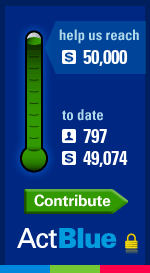
Goal ThermometerThe only thing I'd like to see more than Trump rotting in prison for child rape would be to see Bill Clinton in there with him as a cell-mate. I was on the phone with an old friend today, the guy who first ran against then-Speaker Denny Hastert and who set in motion his eventual downfall. Topic: AOC, who beat Joe "the next Speaker" Crowley, one of the most awesome electoral outcome of 2018. We agreed that Democratic Party elected officials never learn anything substantive. None of them will change any policy-oriented or corruption-oriented behavior to avoid Crowley's fate. Instead, like Henry Cuellar (Blue Dog-TX), Gregory Meeks (New Dem-NY), Jim Costa (Blue Dog-CA), Kurt Schrader (Blue Dog-OR), Dan Lipinski (Blue Dog-IL), Stephen Lynch (New Dem-MA), Tom O'Halleran (Blue Dog-AZ), David Scott (Blue Dog-GA) and Eliot Engel (New Dem-NY), they are leading a counter-revolution against AOC, against "the Squad," against the Green New Deal, against Medicare-for-All and against any semblance of a progressive agenda. That thermometer on the right is how you can contribute to the progressive candidates fighting those 9 reactionary corporate whores.

Yesterday, Caleb Howe, reporting for Mediaite, roasted MSNBC's worst prime time host, Chris Matthews for his defense of all his pals who were raping underage girls under the auspices of Jeffrey Epstein. "Matthews," he wrote, "offered a rather unusual defense of rich politicians like Bill Clinton and Donald Trump who socialized with dead probable human trafficker and rapist Jeffrey Epstein: they like private planes."
The long Hardball segment on Epstein’s suicide covered his death, the theories about how it could have happened, the “chutzpah” of Trump to talk about Clinton’s association, given his own, and the attendant issues with MSNBC legal analyst Paul Butler and Vanity Fair’s Vanessa Grigoriadis. They decried Trump’s theorizing about Clinton, and also theorized that Trump and Attorney General William Barr “facilitated” Epstein’s suicide.

But one take offered by Matthews was particularly unusual.

“One thing culturally that goes on in politics that I find really dismaying: politicians need money. A lot of them aren’t that wealthy. They live on their salaries. A hundred and a half a year, they’re not crying, but they love travel and private planes. They to get around for their professional and political reasons,” said Matthews. “They’ve become friends with the wrong frickin’ people. And these people are frightening and they want something, they want the prestige of hanging around a politician.”

“These relationships are awful, the names that have come out. I don’t want to use their names tonight. Why do these guys know a guy like this guy Epstein? Why do you want to know him?” he asked Butler.

It’s more than just the implied absolution, it’s the fact that he declines to say names, he paints them almost as victims. The poor politician is so poor he needs to hang around with pedophiles just to get a few private plane rides. Woe is us!

Liberal writer Naomi LaChance noticed:
It’s extremely embarrassing for MSNBC that Matthews likes politicians so much he didn’t even want to report on the ones who are reportedly linked to an accused child rapist. It seems as though he’s in complete denial that some people in this world are violent abusers. Welcome to 2019, buttercup, that’s the world most of us are living in.

Besides, all three of these men-- Trump, Clinton, and Gore-- have been accused of inappropriate sexual conduct outside of the context of Jeffrey Epstein. (All three men denied the cumulative array of charges leveled against them.)
Amazed that Matthews couldn’t posit another theory as to why these men were acquainted with Epstein, LaChance said he “clearly knows one very clear possible answer and does not want to speak its name aloud.”

Ouch.
How does that fit in with Stoller's theories about Democratic politicians and the direction of the Democratic Party? Maybe a random tweet will help:


Labels: , , , , , , ,

Monday, July 01, 2019

Neoliberalism Killed 346 People Aboard the Boeing 737 MAX 8

>

What was left of Ethiopian Airlines Flight 302, a Boeing 737 MAX 8 jet, after it crashed to the ground six minutes after takeoff. All 157 people aboard were killed (source)

by Thomas Neuburger

The essence of modern neoliberalism, as encouraged and enabled by both political parties, is the Ayn Randian notion that the greatest amount of freedom in the world should be given to capital — that the giant pool of money should be allowed to flow unrestrained into any country it wishes, seek whatever profit it wishes to seek, then flow out, again unrestrained, leaving in its wake whatever wreck it wishes to walk away from.

The poster child for neoliberal profit-seeking is, of course, NAFTA and its legacy of devastated lives in every country touched by it, but there are more examples than anyone could count. This devastation has been going on for decades, starting in my own memory with Ronald Reagan's permitted transfer of the U.S. semiconductor manufacturing industry to Asia. (Reagan "earned" two million dollars in speaking fees during a fully paid eight-day grand-tour trip to that country within a year of leaving office — clearly "thank you" money for his many gifts to the suddenly swollen wealth of Japan.)

Since the age of greed was kicked off in the 1980s, and because in those years Americans were taught to love their predators (remember breathless praise of shows like Lifestyles of the Rich and Famous), the pursuit of profit by the few at the expense of the lives of the many has only accelerated.

The latest instance of this destructive pursuit is the story of the Boeing 737 MAX 8 jet. There are many parts to the 737 MAX 8 story. This part takes us, once again, to U.S. outsourcing to Asia and $9/hour software engineers in India.

From Bloomberg:
Boeing's 737 Max Software Outsourced to $9-an-Hour Engineers

• Planemaker and suppliers used lower-paid temporary workers
• Engineers feared the practice meant code wasn’t done right

It remains the mystery at the heart of Boeing Co.’s 737 Max crisis: how a company renowned for meticulous design made seemingly basic software mistakes leading to a pair of deadly crashes. Longtime Boeing engineers say the effort was complicated by a push to outsource work to lower-paid contractors.

The Max software -- plagued by issues that could keep the planes grounded months longer after U.S. regulators this week revealed a new flaw -- was developed at a time Boeing was laying off experienced engineers and pressing suppliers to cut costs.

Increasingly, the iconic American planemaker and its subcontractors have relied on temporary workers making as little as $9 an hour to develop and test software, often from countries lacking a deep background in aerospace -- notably India.
According to Mark Rabin, a former Boeing engineer whose work supported the 737 MAX project, the decision to outsource coding to India “was controversial because it was far less efficient than Boeing engineers just writing the code. I took many rounds going back and forth because the code was not done correctly.”

But outsourced U.S. jobs and greatly reduced wage costs were not the only benefits to Boeing from this decision. The company was also rewarded handsomely for it, winning, according to Bloomberg, "several orders for Indian military and commercial aircraft, such as a $22 billion one in January 2017 to supply SpiceJet Ltd. That order included 100 737-Max 8 jets and represented Boeing’s largest order ever from an Indian airline, a coup in a country dominated by Airbus."

Needless to say, in a nation dominated by neoliberal thinking and morality, more than $22 billion in new contracts easily offsets the loss of 346 lives in the two 737 MAX crashes, each of which killed everyone on board.

In a nation that abhors neoliberal morality, on the other hand, one would see trials for manslaughter instead.
 

Labels: , , , , , , , ,