Saturday, January 04, 2020

Midnight Meme Of The Day!

>


by Noah

For tonight's "Midnight Meme," I present a cartoon depiction of the Founding Fathers' worst nightmare: A president beholden to the worst foreign leaders the world can muster.

Once again, Trump willfully tops Nixon in vile treachery by enlisting the aid of fellow psychopaths ("the best people") for his version of the Committee To Re-Elect The President); those dictators from outside the country, the kind of people whose company, approval, and help he cherishes. He's getting away with it all because of other psychopaths- American politicians, for instance his brethren in the $enate and House who have, like him, sold their allegiance to the Constitution and what they once may have considered their country, all while enjoying the support of a fetid stew of sociopathic, nihilistic, and apathetic American voters, and, corporate media whores who abdicate their moral responsibilities and choose to not tell the whole truth and nothing but the truth. History will eventually know them all for what they are and it will be too late for them, and too late for us.

Happy 2020, everyone.

Labels: , ,

Thursday, October 24, 2019

Republicans Double Down On Stealing Elections-- Normalizing Foreign Interference And Disenfranchising College Students

>


Yesterday, after Matt Gaetz had finished eating his pizza pies and wrapped up the GOP temper tantrum du jour, the House voted on H.R. 4617, the SHIELD Act (Stopping Harmful Interference in Elections for a Lasting Democracy) to protect American elections from foreign interference. It passed 227 to 181. Not even one Republican was willing to step up to protect the integrity of American elections from the Russians, Saudis and other bad players. It's worth noting that one Blue Dog voted with the Republicans, fake-dei Colin Peterson (MN). Earlier, when the Republicans had tried to kill the bill with a motion to recommit, Josh Gottheimer (Blue Dog-NJ), Jeff Van Drew (Blue Dog-NJ) and Anthony Brindisi (Blue Dog-NY) voted with the Republicans, as they usually do.

Trump announced he will veto the bill if it passes the Senate, which is unlikely since Moscow Mitch will not allow a debate or vote on the bill. After all, the bill would require candidates for federal office to notify the FBI and the FEC if any foreign government or their lobbyists agents offer to assist their campaign. The bill also imposes new rules on political ads placed on social media similar to those currently governing radio and TV ads. Neither Moscow Mitch nor Trump could win reelection without illegal foreign assistance.

The excuse the White House and congressional Republicans made for opposing the bill is that the reporting requirements would overly burden campaigns without furthering securing U.S. elections, calling the act "redundant, overly broad, ambiguous, and unenforceable ... [and] would produce harmful unintended consequences without achieving that goal." On the Senate floor, Moscow Mitch called it "a transparent attack on the First Amendment that has united an unlikely band of opponents across the political spectrum."

I asked a couple of Blue America-endorsed progressives about this today. J.D. Scholten, who's running against extremest loon Steve King said that "This shouldn't even be a partisan issue. The American people-- not a foreign country-- should elect our leaders. Yet, after King's publicity stunt of storming into a secure hearing room and undermining our national security, he continued this trend by voting against the SHIELD Act, opening the door for foreign manipulation and tampering of our elections. These days, this is par for the course. The Republican party's voter suppression tactics across the country, especially against college students, are un-American. Our country created a government that is of, by, and for the American people, and we should be actively working to lower voting barriers and expand access to the ballot box."

Jon Hoadley is the Democratic candidate in southwest Michigan taking on Trump enabler Fred Upton, who-- like King, voted against the SHIELD Act. "Free and fair elections, Rep. Hoadley, said, "are the basis of our democracy, and that's why I've been a champion of voting rights and election protection in the state legislature. We know that foreign governments sought to influence our elections in 2016, and our Nation's intelligence community has made it clear that they are trying to do it again. Congressman Upton is once again putting his loyalty to his political party ahead of his obligation to represent the people of Southwest Michigan. Upton's vote against the SHIELD Act and aginst protecting the integrity of our elections and democracy is wrong."

Dana Balter the progressive candidate in the Syracuse area (NY-24) pounded out a powerful tweet this morning that helps expose Trump enabler John Katko (R) for his role in all this garbage. This is the video she included:


Since the Republicans know they can't win an election fairly, they do whatever they can to cheat. And involving foreign players isn't all they do. Earlier today, Michael Wines reported fro the NY Times that the GOP is working to make it so hard for college students to vote that they just give up. Take Texas; college students overwhelmingly favor Democrats-- so the state legislature "outlawed polling places that did not stay open for the entire 12-day early-voting period. When the state’s elections take place in three weeks, those nine sites [in Austin]-- which logged many of the nearly 14,000 ballots that full-time students cast last year-- will be shuttered. So will six campus polling places at colleges in Fort Worth, two in Brownsville, on the Mexico border, and other polling places at schools statewide."
“It was a beautiful thing, a lot of people out there in those long lines,” said Grant Loveless, a 20-year-old majoring in psychology and political science who voted last November at a campus in central Austin. “It would hurt a lot of students if you take those polling places away.”

The story at Austin Community College is but one example of a political drama playing out nationwide: After decades of treating elections as an afterthought, college students have begun voting in force.

Their turnout in the 2018 midterms-- 40.3 percent of 10 million students tracked by Tufts University’s Institute for Democracy & Higher Education-- was more than double the rate in the 2014 midterms, easily exceeding an already robust increase in national turnout. Energized by issues like climate change and the Trump presidency, students have suddenly emerged as a potentially crucial voting bloc in the 2020 general election.

And almost as suddenly, Republican politicians around the country are throwing up roadblocks between students and voting booths.

Not coincidentally, the barriers are rising fastest in political battlegrounds and places like Texas where one-party control is eroding. Students overwhelmingly lean Democratic, with three in four supportive of impeaching President Trump, according to an Axios/College Reaction poll released this month.

Some states have wrestled with voting eligibility for out-of-state students in the past. And the politicians enacting the roadblocks often say they are raising barriers to election fraud, not ballots. “The threat to election integrity in Texas is real, and the need to provide additional safeguards is increasing,” the state’s attorney general, Ken Paxton, said last year in announcing one of his office’s periodic crackdowns on illegal voting. But evidence of widespread fraud is nonexistent, and the restrictions fit an increasingly unabashed pattern of Republican politicians’ efforts to discourage voters likely to oppose them.

“Efforts to deprive any American of a convenient way to vote will have a chilling effect on voting,” Nancy Thomas, the director of the Tufts institute, said. “And efforts to chill college students’ voting are despicable-- and very frustrating.”

The headline example is in New Hampshire. There, a Republican-backed law took effect this fall requiring newly registered voters who drive to establish “domicile” in the state by securing New Hampshire driver’s licenses and auto registrations, which can cost hundreds of dollars annually.

The dots are not hard to connect: According to the Tufts study, six in 10 New Hampshire college students come from outside the state, a rate among the nation’s highest. As early as 2011, the state’s Republican House speaker at the time, William O’Brien, promised to clamp down on unrestricted voting by students, calling them “kids voting liberal, voting their feelings, with no life experience.”

Florida’s Republican secretary of state outlawed early-voting sites at state universities in 2014, only to see 60,000 voters cast on-campus ballots in 2018 after a federal court overturned the ban. This year, the State Legislature effectively reinstated it, slipping a clause into a new elections law that requires all early-voting sites to offer “sufficient non-permitted parking”-- an amenity in short supply on densely packed campuses.

North Carolina Republicans enacted a voter ID law last year that recognized student identification cards as valid-- but its requirements proved so cumbersome that major state universities were unable to comply. A later revision relaxed the rules, but much confusion remains, and fewer than half the state’s 180-plus accredited schools have sought to certify their IDs for voting.

Wisconsin Republicans also have imposed tough restrictions on using student IDs for voting purposes. The state requires poll workers to check signatures only on student IDs, although some schools issuing modern IDs that serve as debit cards and dorm room keys have removed signatures, which they consider a security risk.

The law also requires that IDs used for voting expire within two years, while most college ID cards have four-year expiration dates. And even students with acceptable IDs must show proof of enrollment before being allowed to vote.

...While legislators call the rules anti-fraud measures, Wisconsin has not recorded a case of intentional student voter fraud in memory, Mr. Burden said. But a healthy turnout of legitimate student voters could easily tip the political balance in many closely divided states.

Senator Maggie Hassan of New Hampshire, a Democrat, won election in 2016 by 1,017 votes over her Republican rival, Kelly Ayotte. Gov. Roy Cooper of North Carolina, a Democrat, won that year by about 10,000 votes in a state with nearly 500,000 undergraduates. And Donald J. Trump carried Wisconsin by fewer than 23,000 votes; the University of Wisconsin system alone enrolls more than 170,000 students.

...Repeated studies have shown that making voting convenient improves turnout. And while it is difficult to say with certainty what causes turnout to decline, anecdotal evidence suggests that barriers to student voting have done just that. Nationwide, student turnout in the 2016 presidential election exceeded that of the 2012 presidential vote-- but according to the Tufts institute, it fell sharply in Wisconsin, where the state’s voter ID law first applied to students that year.

Hurdles to student voting are hardly limited to politically competitive states. Most notably, the voter ID law in deeply Republican Tennessee does not recognize student ID cards as valid for voting, and legislators have removed out-of-state driver’s licenses from the list of valid identifications.

A Tennessee law requiring election officials to help register high school students is commonly skirted via a loophole, said Lisa Quigley, the top aide to Representative Jim Cooper, a Tennessee Democrat and voting rights advocate. And cities like Nashville and Knoxville, with large concentrations of college students, have no campus polling places, she said.

Tennessee ranks 50th in voter turnout among the states and the District of Columbia. “We’re terrible at voting,” Ms. Quigley said. “And it’s intentional.”

Only Texas’ turnout is worse. And as in Tennessee, voting is particularly difficult for the young.

Texas law requires educators to distribute voter registration forms to high school students, but the requirement appears to be ignored by most of the state’s 3,700 secondary schools. And while many states allow students to preregister at 16 or 17, and even vote in primaries if they turn 18 by Election Day in November, Texas bars students from registering until two months before their 18th birthday, the nation’s most restrictive rule.

The state’s voter ID law-- among the most onerous, though softened by court rulings-- still excludes college and university ID cards and out-of-state driver’s licenses that many students commonly carry.

Some Texas schools have sought for years to lower those barriers. At the University of Texas at Austin, a group called TX Votes has greatly increased turnout by rallying students against voting restrictions and enlisting scores of campus groups in voting and registration campaigns.

Austin Community College, whose 39,000 full-time and 33,000 part-time students sprawl over campuses in four Texas counties, pursues a similar strategy. The system’s student body is drawn largely from working-class and minority families.

In addition to sponsoring the campus voting, it gives its employees two hours off during every election to cast ballots.

It is not the only Texas college to set up campus voting. North of Austin, Southwestern University collected ballots from more than half of its 1,500 students last November in a one-day visit by a mobile polling place. Tarrant County, whose largest city is Fort Worth, racked up 11,000 votes at mobile campus sites; Cameron County, in southern Texas, opened three campus sites and reaped nearly 2,800 votes.

Dollar for dollar, mobile voting sites were “the most effective program we had,” Dana DeBeauvoir, the Travis County clerk and chief elections official, said.

State legislators took a dimmer view. Last spring, State Representative Greg Bonnen, a Republican from suburban Houston, filed legislation to require that all polling places remain open during the whole early-voting period, eliminating pop-up polls. He argued that local politicians were using the sites to attract supportive voters for pet projects like school bond issues.

The Texas Association of Election Administrators opposed the change, and Democratic legislators proposed to exclude college campuses, nursing homes and other sites from the requirement. But Republicans rejected the changes and passed the bill on largely party-line votes.

There are efforts to push back at the restrictions on student voting. The elections administrator in Dallas County, Toni Pippins-Poole, decided after the Legislature outlawed temporary polls to spend the money needed to make pop-up voting sites on eight college campuses permanent.

In New Hampshire, the state chapter of the American Civil Liberties Union is suing to undo the State Legislature’s domicile law. The League of Women Voters and the Andrew Goodman Foundation, a Mahwah, N.J., nonprofit group focused on protecting voting rights for young people, are contesting Florida’s parking requirements for polls in federal court.

Purdue University said last month that it would not charge out-of-state students a fee for ID cards, which are valid for voting in Indiana. Mitchell E. Daniels Jr., Purdue’s president and the state’s Republican governor from 2005 to 2013, said he wanted to encourage civic literacy among students.

Advocates for student voters argue that those are the exceptions.

“Everyone 18 years and older has a right, if not a duty, to participate in our electoral system,” said Maxim Thorne, the managing director of the Goodman Foundation. “We should be having conversations about how to make it easier, how to make it more welcoming, how to make it worthy of our time and effort. And what we’re seeing is the reverse.”
Protecting voting rights for students and minorities has been an integral part of Mike Siegel's career and campaign. He's running against a typical right-wing Republican incumbent in a gerrymandered Texas district that stretches from north Austin all the way to the Houston exurbs. This morning he told me that "The Republican attack on mobile voting in Texas is voter suppression at its most insidious. The two groups that will suffer most are youth and seniors. For example, I've visited a senior home in Austin with hundreds of voters, where folks relied on a mobile voting location to vote in numerous recent elections. Now many folks will have to venture out to voting locations further away, presenting logistical challenges and safety concerns. Whereas rural seniors consistently vote by mail, urban seniors often prefer to vote in person. The ban on mobile voting locations seems precision-guided to target likely Democratic senior voters."
Goal ThermometerAnd in terms of the youth vote, numerous high schools and community colleges across the Texas 10th have enough voters to utilize a mobile voting location, but not enough to justify "permanent" voting locations. By taking away the mobile voting option, Republicans will suppress thousands of student votes statewide, unless we can win a court injunction.

I am in touch with national voting rights experts to explore emergency legal action. The 26th Amendment of the United States Constitution provides, "The right of citizens of the United States, who are eighteen years of age or older, to vote shall not be denied or abridged by the United States or by any State on account of age." The ban on mobile voting locations singles out students and seniors, taking away a highly effective way to vote. I hope we can build a legal team and plaintiffs who will stop this law before it inflicts any damage on voter participation.


Labels: , ,

Monday, October 14, 2019

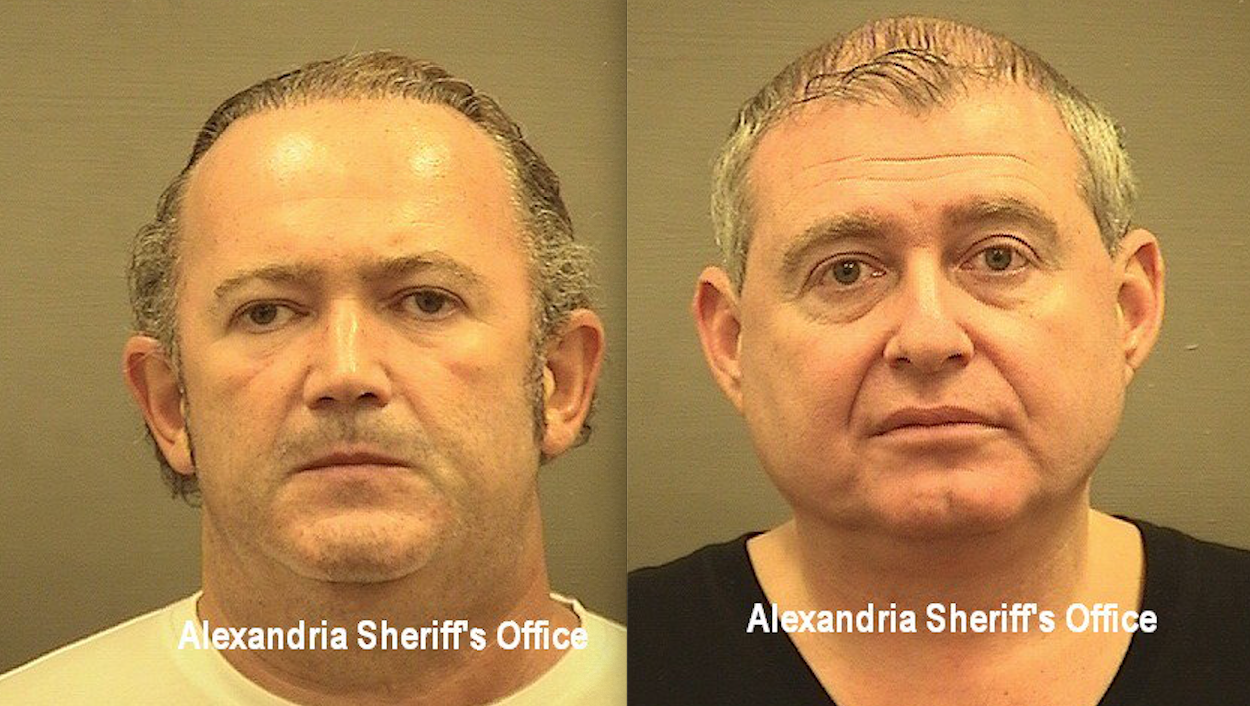
How Giuliani Directed Igor And Lev To Poison TX-32 Congressional Race With Over $3 Million In Russian Money To Get Marie Yovanovitch Fired

>

Russian Bribes And Election Interference-- The Texas Connection

Texas Republican Pete Sessions has a well-deserved reputation as a complete sleaze-ball. A crony of Jack Abramoff, he was never charged with bribery, even though he accepted over $20,000 in tribal money for his role in a slimy casino deal in 2002. He ran the NRCC and played fast and loose with campaign finance laws, often ignoring them entirely. He was rewarded for his "good work" with the chair of the House Rules Committee. He became even more famous when he led a nearly successful effort to disband the Office of Congressional Ethics (which he called "a political witch hunt"). So it should have surprised no one when it came out recently that he was taking large sums of Russian money as bribes from Trump/Giuliani cronies Lev and Igor. As Rules Committee chair, he was able to do more than just prevent medical marijuana laws from being voted on. And Giuliani must have directed Lev and Igor to him because of his notoriety for bribe-taking in the Allen Stanford-- currently serving a 110 year sentence in a federal pen-- scandal.

Sessions represented a north Dallas district for 21 years that was always being redistricted ahead of threatening demographic growth. Last year the area finally ran out of the number of old white men needed for him to win reelection. He lost a tight battle against a super-mediocre and pointless centrist Democrat, football player Colin Allred, 144,067 (52.3%) to 126,101 (45.8%). Even though Cook's out-dated, lagging PVI is R+5, even Hillary beat Trump by two points there in 2016 and this district may be swingy for a few cycles, it's days as a red bastion are over.

So Sessions decided to move his clown show down to Waco, where he was born and run there instead. TX-17 is much friendlier towards right-wing nuts like Sessions, but not friendly enough for incumbent Bill Flores to fight another battle. Flores is retiring. The PVI is R+12 and Trump beat Hillary 56.3% to 38.8%. But last year Flores didn't do as well as he had been doing-- winning 56.8% to 41.3%, with none of the 3 top counties in the district-- McLennan, Brazos and Travis-- performing as well for him as he expected. The Travis part of the district came in D+41 and McLennan and especially Brazos are headed on that direction. Can Sessions staunch the tide?

"Congressman 1"-- crooked Texas Republican Pete Sessions


Flores doesn't think so. "The announcement this week that former Rep. Pete Sessions from District 32-- north northeast of Dallas-- is going to run in District 17 should alarm all of us. Like you, I find it unacceptable that someone from outside Texas 17 would attempt to drop in and to try to elbow his way to the front of the line ahead of our local leaders. We have great leaders currently living, working, raising families and serving our communities in District 17. I hope you share my views that one of these people should be the next congressman or congresswoman from Texas District 17. Furthermore, I intend to help, support and vote for these types of local people during the 2020 election cycle and hope you will consider doing so also. One of the people who has announced that he is running for Congress from District 17 summed it up perfectly with his statement, “With all due respect, Mr. Sessions, we got this.” While I am not endorsing this candidate at this time, I could not agree more. Texas District 17 has plenty of talent-- let’s support them!" The Republican locals in the race are Wesley Lloyd and Trent Sutton and the Democrats will be fielding centrist Rick Kennedy, who opposes Medicare-for-All, again.

And that brings us to Sessions' propensity to always be on the receiving end of every bribery scandal to hit Congress. Most recently, according to Fox News, he has admitted taking illegal Russian cash from Igor and Lev. Caught red-handed he now claims he will turn over more than $20,000 to local charities. On Friday he told the media that "Yesterday, I learned that two contributors to my 2018 campaign are being charged for not following campaign contribution laws. Their deception cannot, and should not, be tolerated. Therefore, I am contributing the amount of their contributions to charities that serve abused women and children and the elderly in Central Texas." No one yet knows how much Russian cash Giuliani was able to direct the 2 clowns to inject into 2018 races, although over $600,000 has been found so far, probably just the tip of the iceberg. The biggest amount went to Trump-- around $350,000-- but much of it was spread around via the NRC, the NRCC and over a dozen local state Republican parties. Certain key super-corrupt individuals-- like Sessions-- were given direct, coordinated contributions for specific reasons. Sessions was bribed to help them get the American ambassador to Ukraine, Marie Yovanovitch fired, which he did.

In the Igor and Lev indictments, Sessions is referred to as "Congressman 1." A few bribed Republicans have promised to donate the money charity, but most-- like Trump, are holding onto the cash. And Sessions says he's giving back $20,000. Problem is that he may have gotten far more than that-- and some right into his pockets. According to CNN, "The indictment alleges that a 'Congressman-1' had been the beneficiary of approximately $3 million in independent expenditures by 'Committee-1... At and around the same time, Parnas and Fruman committed to raising those funds for Congressman-1. Parnas met with Congressman-1 and sought Congressman-1's assistance in causing the US Government to remove or recall the then-US Ambassador to Ukraine,' the indictment states." Igor and Lev gave immense sums of money to America First Action and America First Action bought $3,134,768 in independent expenditures from Sessions doomed campaign, by far the largest single source of money in the TX-32 race.

Sessions has no intention of contributing any of that $3,134,768 to "charities that serve abused women and children and the elderly in Central Texas."

Pete Sessions has not been arrested yet


UPDATE: Will Sessions Be In Prison Before The Election?

The Wall Street Journal reported that "A grand jury has issued a subpoena related to Manhattan federal prosecutors’ investigation into Rudy Giuliani, seeking documents from former Rep. Pete Sessions about his dealings with President Trump’s personal lawyer and associates, according to people familiar with the matter. The subpoena seeks documents related to Mr. Giuliani’s business dealings with Ukraine and his involvement in efforts to oust the U.S. ambassador in Kyiv, as well as any interactions between Mr. Sessions, Mr. Giuliani and four men who were indicted."


Labels: , , , , , , ,

Wednesday, October 09, 2019

Senate Intelligence Committee Knows Trump Is An Illegitimate President

>


There are 15 senators on the Senate Intelligence Committee, 8 Republicans and 7 Democrats. The chairman is Richard Burr (R-NC) and the vice-chair is Mark Warner, a conservative from Virginia. Almost every member is an establishment conservative. These are the rest of the members:
James Risch (R-ID)
Marco Rubio (R-FL)
Susan Collins (R-ME)
Roy Blunt (R-MO)
Tom Cotton (R-AR)
John Cornyn (R-TX)
Ben Sasse (R-NE)
Dianne Feinstein (D-CA)
Ron Wyden (D-OR)
Martin Heinrich (D-NM)
Angus King (I-ME)
Kamala Harris (D-CA)
Michael Bennet (D-CO)
The committee issued a report yesterday that, though annoyingly redacted, is going to send Trump into orbit if he ever finds out about it. The Republican's have the majority on the committee but the report found, that Russia's Internet Research Agency "sought to influence the 2016 U.S. presidential election by harming Hillary Clinton’s chances of success and supporting Donald Trump at the direction of the Kremlin" and called on Trump to "reinforce with the public the danger of attempted foreign interference in the 2020 election."

The 85-page report emphasized that the Russian activity against the U.S. electoral system has "increased, rather than decreased, after Election Day 2016"-- up "more than 200% on Instagram and more than 50% on Facebook, Twitter and YouTube." The Russians have especially attempted to exacerbate domestic tensions and increase Trump's election prospects by targeting African-Americans. The report: "By flooding social media with false reports, conspiracy theories, and trolls, and by exploiting existing divisions, Russia is trying to breed distrust of our democratic institutions and our fellow Americans."

The bipartisan report says flatly that "Despite Moscow’s denials, the direction and financial involvement of Russian oligarch Yevgeniy Prigozhin, as well as his close ties to high-level Russian government officials including President Vladimir Putin, point to significant Kremlin support, authorization, and direction of the IRA’ s operations and goals."


The Intel Committee is recommending that Congress consider new laws to block foreign interference in elections, such as requiring disclosure of who pays for election-related online advertising (just as TV stations do). The legislation already proposed to do that-- Lindsey Graham's Honest Ads Act-- has been blocked by Moscow Mitch.
The report confirms the findings of private researchers that African-American voters were targeted by the troll farm more frequently than any other group, in an apparent effort to suppress the vote and help Trump.

At a rally in Pennsylvania in December 2016, then President-elect Trump thanked black voters for failing to turn out for Clinton at the same rate they did for Obama.

"They didn't come out to vote for Hillary. They didn't come out. And that was a big," Trump said. "So thank you to the African-American community."

Two-thirds of the Internet Research Agency's Facebook ads were focused on race, the report found, adding that black voters were targeted with messages such as: "Don't Vote for Hillary Clinton," "Don't Vote At All," "Why Would We Be Voting," "Our Votes Don't Matter," and "A Vote for Jill Stein is Not a Wasted Vote."

While much of the report's analysis of how the Russians used social media in 2016 wasn't new, the document includes the first set of bipartisan recommendations to come out of a close look at what happened.

In addition to calling for new laws, the committee recommended that the executive branch "publicly reinforce the danger of attempted foreign interference in the 2020 election" and "establish an interagency task force to monitor foreign nations' use of social media platforms for democratic interference and develop a deterrence framework."

While the FBI and other agencies have sought to tackle the issue of foreign manipulation on social media, there has been no whole-of-government approach led from the White House, principally because President Trump has not wanted to focus on an issue that he feels undermines the legitimacy of his 2016 victory, officials have said.

Trump has never acknowledged the extent to which Russian intelligence services and their proxies intervened in the 2016 election, and at times he has denied that it happened.

Labels: , ,

Wednesday, April 24, 2019

How Much Are The Saudis Paying To Help Trump's Re-election Campaign?

>


Yesterday, Rebecca Kheel reported that most of the Democrats running for the 2020 nomination are advocating putting the U.S. back in the nuclear deal with Iran. Elizabeth Warren: "Our intelligence community told us again and again: The Iran Deal was working to prevent Iran from obtaining a nuclear weapon. If Iran continues to abide by the terms of the deal, you bet I will support returning to it." Instead, Trump is working at provoking Iran and making the situation even worse. On Monday he announced he will not renew sanctions waivers that allow our eight partners in the deal to continue buying Iranian oil. Netanyahu is strongly opposed to the deal and Trump "has signaled he intends to use his support for Israel as a wedge issue against any Democrat who runs against him next fall.

A Bernie aide told the news site Al-Monitor last month that the candidate would "rejoin" the Iran deal "and would also be prepared to talk to Iran on a range of other issues, which is what Trump should’ve done instead of simply walking away." Harris, hoping to have it both ways, told Al-Monitor she supports re-entering the deal "if the U.S. could verify Iran is not cheating." (International inspectors have repeatedly found Iran to be in compliance with the key aspects of the agreement.) McKensey Pete's and Beto's spokespersons said they'd rejoin the deal too, as would Julián Castro, Eric Swalwell, Marianne Williamson, Seth Moulton, Jay Inslee, John Delaney and Tulsi Gabbard. Biden is still focus group-testing the issue to see where he stands.

Trump’s decision to withdraw can be framed by Democrats as one of several moves that have alienated allies and "pander to a far-right political base. We just think this is a clear slam-dunk policy position for a Democrat. In May 2018 Morning Consult survey that found 68% of Democrats supported the deal.
Experts say bringing the U.S. back into the deal could be done simply and with executive action, and that it would not require votes in Congress.

The Democratic National Committee adopted a resolution in February calling on the U.S. to rejoin the agreement.

Experts say part of the reason Iran continues to follow the deal is because Tehran hopes Trump is a one-term president and that his successor rejoins the agreement.

But the Trump administration is putting increased pressure on Iran, most recently by ending the oil sanctions waivers. Trump also recently designated its Revolutionary Guard a “foreign terrorist organization.”

U.S. allies in Europe strongly opposed Trump’s decision to withdraw, and they have been scrambling to save the pact.

As a workaround to Trump's sanctions, the European Union set up mechanism to facilitate trade with Iran. But no transactions have gone through it, leading to mounting frustration from Tehran, said Barbara Slavin, director of the Atlantic Council’s Future of Iran Initiative.

“Clearly there are people in the administration and outside … who are trying to make it extremely difficult to return” to the deal, she said.

But Iran knows that if it leaves the deal it would be “falling into trap” set by the administration, Slavin said, adding that Trump’s withdrawal and Revolutionary Guard designation could likely be undone with executive action.

“I would expect that [returning to the deal] will be in the platform for the [Democratic National Convention], assuming Iran stays in the agreement,” she said. “Everything depends on Iran staying through the election. If it leaves the agreement, all bets are off.”
Yesterday Haaretz was kvetching that Israel is worried that the Democratic presidential candidates are promising to re-engage with Iran. Netanyahu's ambassador to Trump warned Democrats that re-entering the Iran Deal is "unacceptable." What is Israel going to do? Not accept the more than $3 billion in military aid it gets from the U.S. annually? Through itself into the arms of the Cossacks? Pull off another USS Liberty caper in the Mediterranean? Tell Jewish Democrats to vote for and contribute to Señor Trumpanzee? Abut you know what? If Israel is concerned, the Saudis and Emeratis are flipping out completely. How far will they go to defeat Democrats and bolster Trump?

Early yesterday, while Trump was tweeting up a storm against his enemies in the media, NBC News was reporting that a network of more than 5,000 pro-Trump Twitter bots railed against what Trump and his allies deceptively call the "Russiagate hoax" right after Barr released a redacted version of Mueller’s report. NBC noted that "The network illustrates the ongoing challenge Twitter faces in persistent efforts to manipulate its platform. These bots, however, did not appear to come from Russia. Instead, the bots had ties to a social media operation that previously pushed messages backing the government of Saudi Arabia and were connected to a person who claimed to be a private social media consultant, according to internet domain and account registration records. The bots, which were created last November and December, were pulled down by Twitter on Sunday night for breaking the social network’s rules against “manipulation,” the company said.
As social media platforms continue to prepare for the 2020 election, efforts to spread disinformation and sow discord remain an ongoing issue. And while operations sponsored by foreign countries are still a threat, the rise of for-profit trolling operations, which may include the new bot network, have added a new element for companies to counter.

“The landscape has changed,” said Clint Watts, a senior fellow at the Foreign Policy Research Institute who focuses on global disinformation campaigns. “Since 2016, everybody’s doing this. It’s trolling as a service. And since there are no consequences, the least sophisticated of all the actors are doing this.”

Almost all of the since-removed accounts, most of which only posted about 30 times each, attacked the press and lamented how the “Russiagate hoax” affected Trump’s presidency. Many of the accounts copied verbatim tweets from other pro-Trump accounts without attributing those tweets to the original poster.

The thousands of accounts are tied together by their frequent interactions-- including likes, retweets and copied tweets-- with a recently rebranded account called @TheGlobus, which posed as a news organization. Thousands of the accounts appeared to exist solely to “like” articles from @TheGlobus on Twitter, many only “liking” tweets from @TheGlobus and no other account.

Until its rebrand last month, @TheGlobus went by the username @ArabianVeritas and mostly posted positive news, policy initiatives and memes about Saudi Arabian Crown Prince Mohammed bin Salman.

It is unclear whether the accounts had any official connections to the government of Saudi Arabia.

“Whether this is a government or a pro-Saudi influence firm, it shows how easy it is to do and that there’s no cost or consequences for it,” Watts said. “These are made to influence Americans or Western audiences.”

Arabian Veritas called itself “an initiative that aims to spread the truth about Saudi Arabia and the Middle East through social media engagement” on its abandoned Instagram account. Despite rebranding as a news organization-- though it shows no evidence of employing journalists and its website is broken-- the account remained a “verified user” on Twitter.

The domain name for Arabian Veritas was registered to the name of Salah Faya, who listed himself as an “e-Services and e-Government Expert” and “software solutions consultant” for a ”confidential” firm in Jeddah, Saudi Arabia, on his Facebook page at the time of Arabian Veritas’ creation.

Saudi Arabia and contractors close to it have conducted extensive influence campaigns on Twitter in recent years to push positive news about the government and attack its enemies. One ally and former strategist of bin Salman, Saud al-Qahtani, is known as the “Minister of the Flies” for hiring bot and troll armies that tend to swarm on detractors. It does not appear that al-Qahtani had any connections to the bot network that Twitter removed on Sunday.

In October, bots backing the Saudi Arabian government flooded Twitter with messages railing against Jamal Khashoggi, who had been assassinated a few days earlier in Turkey’s Saudi consulate by Saudi government agents. Twitter removed the botnet that same week.

Faya did not respond to requests for comment. “The Globus” and “Arabian Veritas” accounts also did not respond when asked for information.

Twitter suspended @TheGlobus on Monday night.

"We suspended a network of accounts and others associated with it for engaging in platform manipulation-- a violation of the Twitter Rules,” a Twitter spokesperson told NBC News. “While our investigations are ongoing, in cases such as this, attribution is difficult. If we do have reasonable evidence to support state-backed activity, we will disclose the accounts as part of our information operations archive."

The accounts did not go to great lengths to hide that they were automated. Most copied their biographies from other Twitter users. Some even used stock photos, replete with stock photo watermarks, as profile pictures.

Josh Russell, an independent misinformation researcher who has previously identified large bot networks, first spotted the accounts on Saturday. He called the network “weird,” and added that they sat dormant between their creation and last week.

“The bots were not directly retweeting the pro-Trump accounts,” Russell said. “I think they were probably attempting to generally boost the visibility of those partisan talking points on Twitter in places like search results.”

Watts, who is also an NBC News contributor, called this method of propaganda “influence seeding,” and said the quality of the post doesn’t much matter to those who run these kind of botnets for political influence operations.

“Strategically, it doesn’t matter if no one believes that one account,” Watts said. “This sort of network changes the volume of accounts for what trends and makes sure 'Russiagate' and negative tweets about it trend higher.”

Labels: , , , ,

Monday, April 08, 2019

Ukrainian Prosecutors: Why Doesn't the U.S. Dept. of Justice Want Our Evidence on Democrats?

>

Joe and Hunter Biden in 2009 (AP Photo/Charles Dharapak)

by Thomas Neuburger

Wheels within wheels. This is from longtime investigative reporter John Solomon, writing in The Hill (emphasis mine throughout):
Ukrainian to US prosecutors: Why don't you want our evidence on Democrats?

Ukrainian law enforcement officials believe they have evidence of wrongdoing by American Democrats and their allies in Kiev, ranging from 2016 election interference to obstructing criminal probes. But, they say, they’ve been thwarted in trying to get the Trump Justice Department to act.

Kostiantyn Kulyk, deputy head of the Prosecutor General’s International Legal Cooperation Department, told me he and other senior law enforcement officials tried unsuccessfully since last year to get visas from the U.S. embassy in Kiev to deliver their evidence to Washington.
Intrigued? Look at the elements:
  • Evidence of foreign interference to help Democrats win the 2016 election
  • Democratic Party politicians being protected from investigation by Ukrainian prosecutors
  • The Trump administration refusing to act or help
Here is some of what Ukrainian investigators have found. Solomon again:
Ukraine is infamous for corruption and disinformation operations; its police agencies fight over what is considered evidence of wrongdoing. Kulyk and his bosses even have political fights over who should and shouldn’t be prosecuted. Consequently, allegations emanating from Kiev usually are taken with a grain a salt.

But many of the allegations shared with me by more than a half-dozen senior Ukrainian officials are supported by evidence that emerged in recent U.S. court filings and intelligence reports. The Ukrainians told me their evidence includes:
  • Sworn statements from two Ukrainian officials admitting that their agency tried to influence the 2016 U.S. presidential election in favor of Hillary Clinton. The effort included leaking an alleged ledger showing payments to then-Trump campaign chairman Paul Manafort;
     
  • Contacts between Democratic figures in Washington and Ukrainian officials that involved passing along dirt on Donald Trump;
     
  • Financial records showing a Ukrainian natural gas company routed more than $3 million to American accounts tied to Hunter Biden, younger son of then-Vice President Joe Biden, who managed U.S.-Ukrainian relations for the Obama administration. Biden’s son served on the board of a Ukrainian natural gas company, Burisma Holdings;
     
  • Records that Vice President Biden pressured Ukrainian officials in March 2016 to fire the prosecutor who oversaw an investigation of Burisma Holdings and who planned to interview Hunter Biden about the financial transfers;
     
  • Correspondence showing members of the State Department and U.S. embassy in Kiev interfered or applied pressure in criminal cases on Ukrainian soil;
     
  • Disbursements of as much as $7 billion in Ukrainian funds that prosecutors believe may have been misappropriated or taken out of the country, including to the United States.
What should we make of this?

Democrats Getting Foreign Help in 2016?

The first two points above should frighten the "attack on our democracy" crew — looking at you, Adam Schiff, and you, Rachel Maddow — but so far, nothing from that quarter. It seems electoral attacks on our democracy and election matter only when Trump, Russians and Republicans are involved.

And yet:
Ukraine’s evidence, if true, would mark the first documented allegation of Democrats receiving assistance from a foreign power in their efforts to help Clinton win the 2016 election. ... There is public-source information, in Ukraine and in the United States, that gives credence to some of what Ukrainian prosecutors allege.

A court in Ukraine formally concluded that law enforcement officials there illegally tried to intervene in the 2016 U.S. election by leaking documents of Manafort’s business dealings after he was named Trump’s campaign chairman. And a Ukrainian parliamentarian released a purported tape recording of a top Ukrainian law enforcement official bragging that he was responsible for the leak and was trying to help Clinton win.
Solomon notes a 2017 Politico report containing much the same information. One wonders why no one cares.

Joe Biden's Ukraine Corruption Problem — "Well, son of a bitch, he got fired"

The second two bullets above relate to something I've been privately aware of for a while, that Joe Biden has a Ukraine corruption problem and it's serious.

For example, from an April 1, 2019 report by Solomon on Joe Biden, Hunter Biden and Burisma Holdings, the Ukraine's leading private natural gas producer, we find this:
U.S. banking records show Hunter Biden’s American-based firm, Rosemont Seneca Partners LLC, received regular transfers into one of its accounts — usually more than $166,000 a month — from Burisma from spring 2014 through fall 2015, during a period when Vice President Biden was the main U.S. official dealing with Ukraine and its tense relations with Russia.

The general prosecutor’s official file for the Burisma probe — shared with me by senior Ukrainian officials — shows prosecutors identified Hunter Biden, business partner Devon Archer and their firm, Rosemont Seneca, as potential recipients of money.
Yet in that same report we learn that Joe Biden not only got that prosecutor fired, he bragged about it with the cameras rolling:
In his own words, with video cameras rolling, Biden described how he threatened Ukrainian President Petro Poroshenko in March 2016 that the Obama administration would pull $1 billion in U.S. loan guarantees, sending the former Soviet republic toward insolvency, if it didn’t immediately fire Prosecutor General Viktor Shokin.

“I said, ‘You’re not getting the billion.’ I’m going to be leaving here in, I think it was about six hours. I looked at them and said: ‘I’m leaving in six hours. If the prosecutor is not fired, you’re not getting the money,’” Biden recalled telling Poroshenko.

“Well, son of a bitch, he got fired. And they put in place someone who was solid at the time,” Biden told the Council on Foreign Relations event, insisting that President Obama was in on the threat.
Which led Solomon to ask these questions:
Nonetheless, some hard questions should be answered by Biden as he prepares, potentially, to run for president in 2020: Was it appropriate for your son and his firm to cash in on Ukraine while you served as point man for Ukraine policy? What work was performed for the money Hunter Biden’s firm received? Did you know about the Burisma probe? And when it was publicly announced that your son worked for Burisma, should you have recused yourself from leveraging a U.S. policy to pressure the prosecutor who very publicly pursued Burisma?
Joe Biden's Ukraine corruption problem is not just a recent one. The underlying story of how Hunter Biden and his company, Rosemont Seneca Partners, got involved with Burisma in the first place also raises questions:
Joe Biden and his son Hunter Biden may have leveraged the [2014] Maidan coup and war in East Ukraine to strike lucrative oil fracking deals in East Ukraine, along with a John Kerry family friend.

Limassol, Cyprus based energy firm Burisma Holdings, collected large energy contracts in the East of Ukraine, with Hunter Biden, Devon Archer and oligarch Ihor Kolomoyskyi, closely tied to the energy production company, which pushed for fracking exploration on land owned by East Ukrainian residents.
Will anyone who matters in the U.S. talk about it?

Why Does Trump's DOJ Not Care?

The last puzzle — after the alleged Ukrainian interference "in our democracy" on behalf of the Clinton campaign, and the Biden corruption allegations — is the lack of response by the Trump Department of Justice. As Solomon's story details, it's not like Ukrainian prosecutors haven't tried to raise the alarm. Yet so far nothing from the Trump administration. Ukrainian prosecutors are still being denied visas to visit the U.S. so they can present their case to U.S. prosecutors.

There's not enough evidence to show why there's been no action on these charges, and, of course, action might still be forthcoming. But we can look at what the effect of burying this story and any potential prosecution might be by looking at who benefits.

1. Burying this story and preventing prosecution benefits Joe Biden. A corruption prosecution of his son Hunter in either the U.S. or Ukraine, plus the knowledge that Biden used his position as vice-president to protect his son, might well be the finishing blow to his still-not-announced 2020 candidacy.

2. Burying this story benefits mainstream Democrats generally, not just Joe Biden. Note that Biden said that Obama was in on the plan to blackmail Ukrainian officials to fire the prosecutor. The benefit to Obama's thus-far untarnished reputation would be undeniable.

In addition, if indeed Joe Biden is the shining knight on which the Party, like a lady in distress, have pinned their ribbons and hopes, his fall could mark the end of those hopes. What do mainstream Democrats hope for from Biden? The defeat of Bernie Sanders in the primary, or anyone like him.

3. In an odd way, burying the story benefits Donald Trump as well. If 2020 will truly be another "change year" for the electorate, whom would Trump rather run against — an old school, been-around-too-long mainstream Party regular (with baggage), or a genuine change candidate like Bernie Sanders, a man whose crowds rival and surpass Trump's own?


It's speculative, of course, to assess motives at this point, but the benefits to those listed are obvious and easy to divine.

However this story develops, stay tuned. We'll learn a lot if it breaks into the mainstream. We'll also learn a lot if it doesn't.
  

Labels: , , , , , , , ,