"When fascism comes to America, it will be wrapped in the flag and carrying the cross."
-- Sinclair Lewis
Sunday, February 26, 2012
"Worst Cooks in America" is back, once again putting the "o-o-o" in "bo-o-ogus"
>
Ah, noodle-pulling! A wonderful skill, and a pleasure to watch as done by someone who knows what he's doing, like Chef Lee here. However, it's not only an extremely difficult skill but a totally unnecessary one for even the most skilled home cook. Yet here it was in this batch of worst cooks' second session! (A Food Network caption for a different photo from the field trip says, "Anne and Bobby bring their recruits to Chinatown to make their own noodles, which brings fear -- and tears -- to both teams.")
by Ken
As I write, I'm struggling to get through an episode of Season 3 of Food Network's abominable Worst Cooks in America, a repeat of last week's Episode 2, "Going Global." (As one of the "recruits" noted on camera, she hasn't even gotten basic American cooking down, and now she was supposed to produce Asian cuisine?) As I've written in the past (most recently last February, in "Should everyone involved in producing Worst Cooks in America be shot? Just 'cause I can't think why not doesn't mean there isn't a reason"), this show enrages me to a degree that I makes it all but unwatchable for me. Yet here I am, doing my quasi-journalistic duty. I can't write about the third iteration of this TV abomination without watching it.
Or can I? It turns out to be essentially the same fraud as it was in the first two seasons: a show that pretends to be providing instruction to cooking plebes but does no such thing, instead using them as props for the entertainment of viewers who presumably have as little regard as the producers do for both the skills involved in cooking and the process by which we humans learn. The notion that any professional chef would lend his or her presence and credibility to such an enterprise is shocking and shameful. After all, who should more respect for both the knowledge base and the process of acquiring it than someone who had to go through his/her own learning process and develop a proper respect for ingredients and skills?
And yet here is Worst Cook in America "returning champion" Anne Burrell, back for the third season, now squaring off against Bobby Flay. I had just a smidgeon of curiosity about this, since both Anne and Bobby make no secret of having undergone extensive formal training. Since they have shown no hesitation in identifying themselves with the institutions with which they have been and still are associated, you'd think that some of the people there would be taking the lead in a campaign of professional shunning.
Oh, but of course, it's only entertainment!
So what, for example, what could that recruit have been thinking when she expressed the thought that perhaps she ought to be learning some kitchen basics before venturing into Asian cuisine? Surely she didn't think that anyone connected with the show cared whether she acquired any skills? If she's lucky really, simply being exposed to all those people cooking all that food, and witnessing weekly one-off demonstrations and getting the occasional hint (maybe helpful, more likely not), may enable her to absorb some odd shards of cooking knowledge, or at least just a tiny bit more confidence in attempting to cook. If so, it will be purely accidental. Of course, it seems to me equally likely that all the wild misinformation the recruits are being exposed to will increase their confusion about what they need to learn and how they could learn it.
Noodle-pulling? Come on, gang! Hey, if I thought I had to become a noodle-pulling master to be a competent cook, I would probably throw in the kitchen towel without a second thought. Or later in the show, when the recruits were all required to make a meatball dish (more about this in a moment), they were required to grind their own meat! This is certainly a potentially useful skill for the home cook. For ages I've thought about getting into grinding my own meat (often in comjunction with a fantasy of getting into sausage-making, and maybe terrine- and pâté-making). I've never done it, though. And I know, just as every person on the planet knows -- with the possible exception of the oafs at Food Network, it's a totally non-essential skill. And again, to throw it at totally unskilled cooks in their second session?
By contrast, meatball-making could be an actually useful kitchen skill, and the recruits might just possibly have gleaned a few tips in the one and only demonstration they get of any technique. The only thing is, they weren't just making meatballs. Each of them was making a foreign meatball-type dish, chosen by a random drawing. (Who doesn't like random drawings? This is great TV!) So nearly everyone was attempting to produce a dish with which he/she was totally unfamiliar, in both conception and taste.
The assumption, I guess, is that actually teaching technique wouldn't be of interest to bored-out-of-their-mind viewers. Such viewers are presumed, quite possibly correctly, to have no attention available for watching people actually being taught the various skills involved in meatball making, with demonstration, explanation, practice, and correction. How tiresome! Who would want to watch that?
So we have a show pretending to teach people how to cook, conceived for people who are presumed to have no interest in how one actually learns how to cook. The goal, of course, is to have the final contestants, the last ones standing after the others have been thrown off the island by Chefs Anne and Bobby, produce "a restaurant-quality meal." Again as I've pointed out, this is both a preposterous and an irrelevant goal for home cooks. Lots of home cooks regularly produce dishes superior to most of what's turned out at restaurants, who are basically in the hospitality, not the culinary, business.
I admit there was a moment early in the "Going Global" episode where I felt a flicker of interest. In one of our rare glimpses into what the promotional campaigns always refer to as "boot camp," yet a boot camp where there doesn't seem to be any serious repetition and corrective instruction, we saw a bit of the recruits attempting to apply Chef Anne's now-you-see-it, now-you-don't "lessons" in knife technique. Julienning and chiffonading, as I recall -- when you can't recall what was demonstrated, let alone what the demonstration(s) consisted off, you may guess that not much knowledge was imparted.
No, I don't mean when Chef Anne delivered her witty mot about one recruit's chiffonaded cabbage looking like it came from a lawn-mower bag. Ha ha, Chef Anne! No, I'm thinking of the moment -- and it was just a moment -- when suddenly there was Chef Bobby providing actual hands-on correction of one of the recruits' knife technique! Except that what he was telling the poor fellow was to be looking at the knife, not his fingers.
Doesn't Food Network have lawyers? Was there really no one to wonder how many lawsuits they may be subject to by viewers who wind up in hospital ERs with sliced-up hands trying to apply what they "learned" here from Bobby Flay?
In the end, though, you can't be ashamed for other people. Still, the fact that nobody connected with this assault on the craft and art of cooking, and the ability of humans to learn, is experiencing profound shame may be what's most upsetting.
Should everyone involved in producing "Worst Cooks in America" be shot? Just 'cause I can't think why not doesn't mean there isn't a reason
>
"Fun With Flambé"this clip is called. Let's see a show of hands: Who believes that flambé-ing is among the top 200 skills a novice cook needs to learn? 300? 400? The sad thing is that Chef Robert's demonstration of how to make a bread pudding is actually quite good. You have the feeling that he could actually teach aspiring cooks if Food Network's Worst Cooks in America, which has its second-season finale tonight, had any aspiration to doing so.
by Ken
So, tonight is the Season 2 finale of Food Network's Worst Cooks in America. I have the comfort of knowing that it will join the earlier episodes on my DVR, where I suppose someday I'll force myself to watch them. I know I should probably watch them before going off on the show again (see "Travesty Tonight: Worst Cooks in America gets even worse!"), but I've watched enough bits of this season's episodes, including whole minutes of the season premiere, in which Robert Irvine, whose culinary skills I've come to respect a lot via Dinner Impossible, where in the course of tackling his mission he's had to do quite a lot of on-the-spot culinary instruction to skill-free designated helpers, replaced last season's Beau MacMillan alongside Anne Burrell.
Now these people all know how to cook, which means they all learned how to do it, somehow, which means they all know that this wasn't it. They also know the show doesn't allow, let alone encourage, them to do much actual teaching. Instead they're simply ringmasters presiding over this circus of kitchen washouts who for the most part actually, even desperately, want to acquire some basic kitchen skills, but instead are made the butt of the show's ridicule. Oh sure, some of them do produce occasional acceptable results, but since they have almost nothing to go by except the week's initial demonstration, anything they produce (or, God forbid, learn) is apt to be by accident or luck.
Imagine if a bunch of people who really, really wanted to learn to play the piano had a skilled player demonstrate for them how to play, say, a Chopin waltz, and then got to fiddle at the keyboard for a while before being judged on their ability to reproduce it. Pretty ridiculous, eh? (Well, not so ridiculous that if somebody decides to put this show on the air I would reject payment for the idea.)
This isn't how any skill I'm aware of is acquired, least of all by taking place in the gladiatorial setting of a TV competition reality show. It's as if these godforsaken TV competitions have taken the place of reality. Well, I suppose something has to take the place of reality in an age when the overriding public mood is to devote every ounce of energy, every fiber of the corporeal being, to the absolute and utter denial of reality.
I had to stop watching early on in the first episode when the culinary plebes were given a piece of "instruction" by Chef Robert: how to cut up a chicken. Now butchering a chicken is a genuinely useful kitchen skill, but (a) it is absolutely, unequivocally non-essential to knowing how to cook (in every supermarket in the country you can buy all the chicken parts you need or desire), and (b) it is not a skill that anyone in the history of cooking has learned from watching it done once and then being tested on it, not ever, never, and anyone who pretends otherwise is a liar or ignoramus or both. Said pretender is also someone without the tiniest regard for either kitchen skills or the people who want to learn them.
Ladies and gents, I give you your Food Network team.
I caught a bit of a more recent episode where the poor plebes were subjected to a kitchen "decathlon," where they had to execute a whole bunch of skills -- an utterly indiscriminate mishmosh of the fundamental and the arcane -- all under pressure of time, so that the contestants' primary focus was on how they stood timewise against their competitors, meaning that essentially no focus was on the actual skills.
By coincidence, one of the skills in the "decathlon" was an actual basic kitchen skill: chopping an onion. Now I'm not going to say that speed is totally irrelevant to the task. I think it's safe to say that anyone who needs five minutes to dismantle an onion is overmatched by his/her lack of skills, and not being able to produce a decently chopped onion is almost the least of his/her problems. I think there's a 98 percent probability that such a person, if only out a sense of sheer helplessness, is going to spend as little time in a kitchen as he/she can manage.
The "coincidence" I meant is that onion-chopping happens to be one of the skill demonstrations I remember most vividly from the series of basic-technique shows Jacques Pépin did decades ago on public television, which for me were not only an inspiration but a source of invaluable instruction. Jacques explained that he slices an onion at his whirlwind pace simply because he's done it so much, and stressed that such speed is unnecessary to the home cook. As long as you understand and get the hang of the basic technique, it becomes part of your skill set, and an incredibly important one -- and the likelihood is that the more you do it, the more comfortably if not actually faster you'll be able to do it.
There is no element of actual cooking skills that can in any way be interpreted as a race, and any effort to pretend otherwise is, again, an absolute blatant fraud. It's a fraud that Worst Cooks in America has now gleefully perpetrated on two seasons' worth of contestants -- and of course viewers.
When you consider in addition that these kitchen professionals are allowing themselves to be used, to fatten their wallets or egos or both, for the purpose of taunting poor souls who just want to acquire some basic kitchen skills, the only imaginable conclusion is that they are the sworn enemies of everything that matters about culinary skills and, for that matter, about humanity. As I believe I wrote about the first season of Worst Cooks in America, there's probably a reason why everyone involved in this sordid spectacle shouldn't be lined up against a wall and shot dead; I just can't think of it.
Beyond all of this, there is an underlying, or perhaps overlying, lie at the heart of this disgraceful spectacle: that what these would-be cooks need to learn is how to produce "restaurant-quality" meals. The stark reality is that restaurant cooking as practiced today has far more to do with theater than cooking, and the embarrassing secret -- secret, at least apparently, from the people who pay those ridiculous prices for all that crap food -- is that vast gutfuls of the swill that's served in today's restaurants is as dreadful as the swill that's displayed on movie screens and in art museums and on theatrical and operatic stages: junk dished out to gullible patrons who want desperately to believe that they're "with it."
Of course there's such a thing as good restaurant cooking. But it's not what most home cooks truly want to learn. We want to be able to put interesting and well-prepared food on our tables for the enjoyment of ourselves, family, and friends. Restaurant cooking tends to place a premium on things you find in restaurant kitchens: an abundance of daily-prepared stocks and sauces, staffs of prep cooks to provide materials for labor-intensive preparations, ingredients beyond the inclination or scope of most home shoppers (although of course more and more of those ingredients have become available to home cooks, for a price). We want to learn the kind of cooking that helps us know what kinds of ingredients to buy, how to handle them, and how to turn them into the aforementioned self-, family-, and friend-satisfying meals.
Having your dish judged by a panel of self-imagined culinary experts (some of whom are culinary experts, I hasten to say) as the grand climax of the series as if it were a restaurant offering is, well, just plain silly. I will say that from the bits of judging I've seen Chef Anne and Chef Robert provide on this season's episodes, there actually are bits of useful critiquing delivered to the contestants, but it comes in the worst way at the worst time. The contestants needed that critiquing when they were stabbing blindly at reproducing the week's challenge dish.
I recall seeing in Anne Burrell's bio that she does in fact teach classes at one of the fancy-shmancy cooking schools. I like to think that if she provided "instruction" of the caliber she does on Worst Cooks in America, her students would have the sense to demand their money back.
In the world of TV cooking competition shows, REALLY wanting to win REALLY isn't a substitute for self-knowledge and REAL focus
>
Wolfgang Puck, offering us his version of Sachertorte, believes we can make "one of the world's greatest chocolate desserts" -- see below.
by Ken
Whew! With episode four of Top Chef's All Stars season scheduled for tonight, I'm almost caught up on the earlier ones, as part of an intensive pull to polish off the finale of Fox's Hell's Kitchen season (which featured a poor talent pool even by HK standards, didn't it?) and the first three episodes of The Learning Channel's new Cake Boss: Next Great Baker with Buddy "Cake Boss" Valastro. The experience has reinforced a couple of observations I'd been thinking about for a future post, from watching, these shows as well as Food Network competitions like Chopped and Ultimate Recipe Throwdown:
* It's amazing how unknowing most of the contestants are about both their own skills, which they tend to overrate, often wildly, and those of their competitors, which they correspondingly baselessly downplay. Now part of the learning process is precisely this matter of coming to understand strengths and weaknesses, both our own and other people's. It just strikes me that an astounding number of these people are way far back on the learning curve.
It comes out in all sorts of ways, not least in weirdly whacked-out responses to criticisms from the judges. Now there's a measure of subjectivity in judges' opinions, but these are generally highly competent professionals, and when a panel like this tells you unanimously that your dish has little or no (or poor) flavor, or that it's ruinously oversalted or seriously undercooked, etc., etc., it's kind of a delusional reaction to declare, sometimes to the judges' face, that "I stand by my dish" or "X just doesn't like me" or "they just don't get my originality" or "they've got it in for me."
On Cake Boss: Next Great Baker one of the bakers was assigned to produce carrot-cake cupcakes, and turned in something that looked to have the texture of dry little meatloaves, in which, as Buddy and his brother-in-law Joey (the oven guy at Carlo's Bakery) and even we could see there was no more than a smattering of carrot shreds in the batter. I can't imagine it tasted like much either, and as the guy muttered about how much his customers love his carrot cake, I was giving him the benefit of the doubt, figuring that under the pressure of the competition and the cameras he'd just blown it. But no, when Buddy ranked his crappy cupcakes in the bottom two for the challenge, he turned belligerent and ranted about how much carrot cake he sells and he's never had any complaints until Buddy's. Whoo! I guess you have to give the guy credit for finding that many customers who like crap carrot cake.
And then, from people at a significantly higher level of the profession, there were the consecutive flaming departures from Top Chef All Stars of Elia and Jen. We know from their previous seasons that they're both extraordinarily talented cooks, and the judges made clear that they know that too. But that wasn't what they were judging; they were judging the food in front of them, which not only wasn't up to the standards to be expected in this highly competitive company but apparently just wasn't very good at all.
When Elia was eliminated so embarrassingly early in the competition, it was understandable that she was highly wrought, and I suppose we could accept, maybe even respect, her standing by her food and insisting that judges or no judges she's not going to change it. But there was a really nasty spitefulness to it, and no recognition at all of the possibility that her dish simply wasn't very good. (It was an extremely clever challenge, by the way: Each contestant had to remake the very dish for which he or she had been eliminated in his/her original season.)
But Elia went quietly compared with Jen -- yes, lovely and talented Jen, whom I had been looking forward to seeing give us a consistent demonstration of the culinarily adroit, poised form she showed through the first half of her season -- who underwent a meltdown after being told by the judges that her braised pork belly, although well-seasoned, was textural moosh and the hard-boiled egg crumbled on top of it had no taste. I didn't taste it, of course, but there was no disagreement among the judges on either point, so it was bizarre to have her insisting quite belligerently that it was "a great dish." (By the way, in a candid-interview insert, competitor Casey -- a teammate of Jen's on that challenge, wasn't she? -- says she sampled Jen's dish and it tasted like "wet bacon." Think about that a moment: wet bacon. A great dish?)
Before she headed off, screaming and cursing, she insisted on camera back in the stew room that head judge Tom Colicchio must be punishing her for arguing with him. I guess she had no way of knowing that Tom in fact admired her spunk in sticking up for her food. The problem was that the food doesn't seem to have been very good. Again it probably wasn't a factor in the judges' decision but still didn't reflect well on her that when Tom criticized the decision to have her team's numerous dishes all served on one plate, where it all blended together, she snapped back that she assumed the judges were smart enough to ask for additional plates if they wanted them. Talk about Missing the Point 101!
Well, it was certainly crackling television!
Less dramatic but still pretty loopy has been Fabio's near-threateningly voiced indignation at judge Tony Bourdain, insisting repeatedly that he understands criticism of his food but won't allow himself to be made fun of. Now Fabio under control is one of the most amazingly charming individuals you will ever see (and also an outstandingly talented and skilled cook), but this nutjob version of Fabio was, again, simply out of touch with reality. As we all know, Tony Bourdain can be tart, and there's no question that he really, really hated the dish that Fabio had served, and made no effort to conceal it. But I heard nothing he said that could be in any way misunderstood as a personal comment about the cook -- it was all about the food, which it was generally agreed was terrible. And that, after all, is what Bourdain was there to judge.
(We might also mention the astonishment that many of these contestants have when judges say anything negative about their food. It seems to come as a rude shock that anyone might ever be less than enthralled by their offerings -- again, a serious gap in their knowledge of themselves, and also of their place in the big world around them.)
* My other observation, which is more mundane but possibly weirder, is how many of these contestants have gotten the idea that really, really wanting to win constitutes a qualification for winning. This has become standard among the contenders on Chopped and Hell's Kitchen. On the latter, for example, when Gordon Ramsay asks each week's candidates for elimination why they should stay in Hell's Kitchen, almost all of them now tell him how badly they want to win. For many of them it's the only reason they offer Chef Ramsay as to why they should be allowed to remain -- because they wanna.
Now I think I have some idea where this comes from. Occasionally on one of these shows you'll see one of the judges challenging a contestant as to "whether you really want to win." And the meaning is clear enough, I would have thought. They're questioning whether the contestant is really committed to the competition, whether he or she is really engaging all his/her talent and skills and determination to the challenges. And that certainly is a legitimate question.
But to many of these folks it clearly hasn't occurred that "wanting to win" matters only if it involves (a) having the necessary talent and skills and (b) applying them with the maxim focus and determination they're capable of. I got an especially sad example of this watching a rerun of a second-season Ultimate Recipe Throwdown show I'd seen before, in which near-miss contestants from the first season were invited back and given a second chance. There was a sweet, earnest young woman, who clearly cares about cooking and has accomplished much given her limited training and experience. She had been devastated when she lost the first time, as if her life was over, because she was counting on the cash prize to enable her to attend culinary school.
Which would have been nice, I'm sure, but there are other ways to acquire training besides winning prize money on a TV game show. There are cheaper schools, including community colleges, there are wage-slave jobs at the apprentice level. I'm not saying it's easy, but the notion that your entire future as a would-be chef depends on winning Ultimate Recipe Throwdown is, even allowing for her youthful innocence, crackers. Now she was back for her second chance, and she was even more desperate, having had her dreams delayed a whole year, she explained, by her failure to win the first time. As badly as she wanted to win the first time, this time she really, really, really wanted to win.
In this case, though, really, really wanting to win would have started with choosing recipes that might impress the judges but that she could execute in the necessary time under TV-camera pressure (which, after all, she'd already experienced once!) and then preparing and gathering and focusing herself mentally and physically to really execute those recipes. Instead, she floundered amidst her too-ambitious (and in some respects culinarily arguable) dishes and made a steady stream of mistakes. In tears again after her second loss, now sure that her life was ruined because she still hadn't won the money for cooking school, she sobbed in despair that she'd given it everything she had.
Again, of course, emotions are raw and explosive under such tension. I'd like to think that that sweet young this had the courage to watch the aired show, and saw that no, contrary to what she thought at the time, she hadn't given it anything like her all. Even apart from the likelihood that one or more of her competitors was actually a better cook at their respective stages in their lives, meaning that quite likely even if she had given it her best effort, she might well not have been good enough to win that day, the fact remains that she screwed up at every step of the way, from conception through execution.
Really, now! Say, aren't these supposed to be "reality" shows?
A SECOND SEASON FOR WORST COOKS IN AMERICA: COULD IT MAYBE BE WORSE THAN THE FIRST?
I really, really hated the first season of Food Network's Worst Cooks in America, in which Anne Burrell and Beau MacMillan supposedly took on the task of teaching two teams of certified-zero-skilled cooks some basics but instead proceeded -- unless what happened off-screen was radically different from what happened on -- to teach them, basically, nothing while treating them, basically, with sneering derision and insouciant unconcern. It was such a disgraceful exhibition, showing disrespect not just for the human beings entrusted to them but for food and cooking in general, that I'm amazed either of them has had the courage to show her/his face in public.
But no, Worst Cooks in America is back for a second season, debuting Sunday, January 2, with only a half-change of cast: Beau is gone, replaced by earthy Englishman Robert Irvine, who has been performing all those feats of real-deadline mass-catering derring-do on Dinner Impossible. It will be interesting to see how Robert handles the assignment, given all the no-nonsense real-world on-the-job training we've seen him give to countless cooking zeroes assigned to him as mission "helpers" over his seasons of Dinner Impossible.
Meanwhile, Anne is back for season two. Since she clearly does know her way around the kitchen, I'm hoping she approached this season as a mission of redemption for last season's shocking exhibition. The likelier reality is that she and the producers think what she did last season was okay, maybe even a triumph. Is there no shame?
WITH WOLFGANG PUCK'S RECIPE, I REALLY THINK WE COULD MAKE A VERSION OF HIS SACHERTORTE
I'm not planning to try to make one -- for one thing I would probably wind up consuming the whole damned thing in less time than it took to make -- but today's e-recipe from ArcaMax Publishing featured regular ArcaMax contributor Wolfgang Puck's version of Sachertorte, "a rich, beautiful Austrian layer cake that's one of the world's greatest chocolate desserts."
Wolfgang explains that one reason he calls his version "Wolfgang's Sachertorte" is that he uses bittersweet chocolate rather than the traditional cocoa powder, believing that the cocoa butter in the chocolate "yields moister results and even more intense chocolate flavor." "To tell you the truth," he writes, "I've found some of the slices of Sachertorte I've eaten in Austria (I won't say where) to be a little dry for my taste." The recipe even includes toothpick-method instructions for cutting the single layer in which the cake itself is baked, in a nine-inch springform pan, into two layers.
One thing I've found with Wolfgang's Tribune Media Services-syndicated recipes is that they aren't for show. They're meant to be used, and the Sachertorte, while involving a fair amount of time and labor, looks to be within reach of even the average-skilled baker.
Travesty Tonight: Worst Cooks in America gets even worse!
>
Anne Burrell and Beau MacMillan of Worst Cooks in America
by Ken
I worried that I was unduly harsh on Food Network's dreadful, bad-faith Worst Cooks in America. So I half-watched tonight's third episode. It turns out that I was way too kind. The ghastly things about the first two episodes have become even worse.
When one of the contestants freaked out because her milk boiled over, and another panicked because his béchamel turned into a paste, where the hell were the chefs to tell her that (a) milk very easily boils over, you've got to watch it carefully, and him that (b) the whole trick of making a béchamel is blending your fat-and-flour mixture into the liquid?
But again, in what universe do you teach cooking by demonstrating something once and then leaving the "students" to fend for themselves except to toss the occasional dart of withering ridicule? It appears that anything the contestants learn, they're going to have to figure out for themselves.
There's no question in my mind who delivered the most incompetent performances and should have been eliminated: on chef Anne's team, chef Anne; and on chef Beau's team, chef Beau.
It's a shame Bravo's Chef Academy, featuring chef Jean-Christophe Novelli, wasn't better-publicized. It was actually pretty good. (That's the divine Emmanuel, the former porn star, between chef Novelli and fellow student Tracie.)
by Ken
I always say I don't watch "reality" shows, but the truth is that there's one category I often do: the food-related ones. Partly it's because the subject interests me, and partly because the subject has some, well, reality.
I'm not saying it's strictly real, since after all we can't smell or taste what's prepared (my mother's big peeve with cooking shows was that at the end, when it's time for the cook to taste what he or she had produced, it's always wonderful, just okay or even "eh! not my best"; she had been cooking for a lot of years, and this didn't agree with her experience), and in any case shows like Top Chef and especially Hell's Kitchen really arent about the food. They're more about people who are involved in the preparation of food.
Still, the ingredients are real, and are either good or not so good, and likewise the skills of the people we're shown manipulating it, and in most of these shows, somebody eventually eats some of it. This already gives you a world of reality way beyond anything you'll get on, say, Survivor or American Idol or Dancing With the Stars.
Since viewers clearly love competition-style shows, we're getting more and more of them, even though it seems to me a really shoddy premise. Not much of life, after all, is organized according to the throw-one-person-off-the-island principle, and it really represents a degraded standard of quality. Nobody has to be good, just better, or wilier, than the competition. This certainly isn't how we learn.
I missed the first few episodes of Chef Academy, but then was impressed enough to catch the remaining five, and now I've gone back and caught up with the first via YouTube. The premise is that French chef Jean-Christophe Novelli, who apparently runs a successful cooking academy in England, wanted to establish a Novelli Academy in the U.S., and apparently had the smarts to help finance a trial balloon -- and of course publicize the venture -- by conducting an eight-week trial "course" in the form of the TV show.
Chef Jean-Christophe really does seem to know what he's doing in the kitchen, and clearly has a method for teaching cooks of various levels. He is also what we might call "a character." Whom did he want to meet in Hollywood? His hero, Columbo. Chef also has a fondness for playing practical jokes on students, with almost frighteningly deadpan seriousness. Though he appears to be straight as an arrow (his pregnant girlfriend is part of the establishment in L.A.), he showed a fine appreciation for the attributes of student Emmanuel, said to be a former porn star. It was apparently chef's idea to have Emmanuel serve dessert to Tracie, the winning student in one episode, in the manner of a Chippendale's-type waiter, and Emmanuel went along quite happily, and appeared naked except for an apron.
It was interesting, though, how little of his luscious self Emmanuel wound up revealing. Emmanuel was an interesting case. The young man is, in fact both quite bright and quite charming -- was it possible for a viewer of any gender not to fall madly in love with him? He's also quite serious about his cooking. Given his, er, attributes, on any other TV show you might see these days, reasons would have been found to have him at least half naked for significant screen time on every episode. Here, even in the "naked waiter" stunt, it's amazing how little of himself was revealed.
In general Chef Academy isn't like your standard reality show. For one thing, it really isn't a competition. There is no ritual elimination of one contestant in each episode. Instead, in each episode (each devoted to a food category, like bread or fish or meat) there was a test based on what the students were learning, though they weren't told when exactly the test would be, and each student was graded "pass" or "fail" -- though for reasons of TV drama they weren't told which at the time of their evaluations. The deal was, if you failed three times, you were eliminated -- in other words, maintaining some semblance of academic standards. Chef Jean-Christophe made it clear the whole time that he wanted everyone to succeed, but that they had to live up to his standards. I can't help feeling that some "pass" decisions were influenced by considerations of "good TV," keeping some of the more eccentric characters on the show. But in the main, I think chef J-C was in fact judging according to his own standards.
Interestingly, in the first episode we actually got to see Jean-Christophe screening the 15 preselected finalists for the program's nine slots, both interviewing and having them cook for him. There were intriguing insights into his thinking about cooking and people. He made it clear that what he was looking for was passion for cooking; with that, he was confident he could teach technique. And while what he taught was specific recipes, the recipes depended on kitchen skills that the students had to develop, or refine, in the case of the more experienced cooks -- and the food itself was highlighted in a way that it rarely is on, say, Top Chef. (I suspect that a lot of viewers have already made the amazingly easy-looking pea soup.)
It was clear that all of the Chef Academy students, even the really annoying ones, underwent significant personal as well as culinary transformations in the course of the eight weeks of the prototype U.S. Novelli Academy. What can I say except that the next time I hear chef Novelli is doing a TV series, I'll be watching?
WORST COOKS IN AMERICA: WORST SHOW ON FOOD NETWORK?
Presumably Anne Burrell and Beau MacMillan are ashamed of their participation in Worst Cooks in America, but I'm guessing not nearly ashamed enough. For a few lousy bucks they disgraced themselves and their profession.
True, we've had only two episodes of Food Networks' Worst Cooks in America (new episodes air Sunday nights, with repeats throughout the week), and it's true that its intended as an entertainment program rather than any kind of record of culinary instruction. Teaching and learning, after all, are dull; what's fun to watch is eccentricity and conflict -- and of course those weekly eliminations. All of these Worst Cooks has in abundance. I guess by reality-show standards it's a success.
Twelve of the most hopeless cooks in the country will compete in a high-stakes elimination series in Worst Cooks in America. At stake for the last two standing is the chance to cook for a panel of esteemed culinary critics and win the grand prize of $25,000. This six-episode series will put the "recruits" through a culinary boot camp led by two acclaimed chefs: Anne Burrell, host of Secrets of a Restaurant Chef, and Beau MacMillan, executive chef at elements in Phoenix.
There's no question about the participants' lack of culinary skills. In the opening episode the whole throng of contestants who had been selected to compete for slots on the show first had to cook a "signature dish" -- an excellent test for a cook of some skills, I think, but meaningless to people with none. And the results were pretty frightening. We saw that almost without exception these folks had no clue about ingredients or preparation techniques. The results were as horrifying as, under such circumstances, you would expect.
But we learned something else in that episode: Almost all of these people want, and I mean want desperately, to learn to cook. And what most enraged me about this crockpot of a show is the wholesale betrayal of those people's hopes -- as well as the hopes of viewers of similarly low skills who tune in, thinking there might be hope for them as well, and find that apparently it's all incomprehensible and hopeless.
It appears that each week, Anne and Beau will show their "teams," once through and out, how to prepare a dish of theirs and then expect them to "replicate" it. (Yes, the word "replicate" pops up a lot.) For all the talk of a culinary "boot camp," there is virtually no real instruction. At boot camp you have endless instruction and drill and correction and more drill and more repetition. Here a technique is demonstrated once, a recipe is prepared once, and it's assumed that people at this skill level, many of whom feel defeated before they even start, can instantly master it. Anytime one of these poor souls succeeds, it's almost entirely by luck. One of them said, beaming, when his version of the "replicated" dish proved surprisingly successful, that it gave him confidence. Well, if it meant confidence that he could learn to cook, of course he can -- though not from these frauds. Because if he meant that his accidental triumph gave him confidence that he was on the right path, he couldn't have been more wrong; he had no more clue what he had done right than he had a clue what he had done wrong in all his previous cooking efforts.
One of the chefs (mercifully, I don't remember which) gave a single demonstration of five different techniques of cutting with a knife, and then the contestants all fiddled with knives for a couple of minutes -- and knife skills were supposed to have been acquired? Or when chef Anne assigns her team the day's recipe to replicate, which literally fills a blackboard, and then erases the blackboard, telling the stunned contestants (who were already in a state of shock having to reproduce the dish even with the recipe in front of them) that they should have memorized the recipe. What??? In order to cook, you have to memorize incredibly detailed recipes?
In critiquing the dishes, both Anne and Beau use terms like "overseasoned" and "underseasoned" without considering that none of these people have any idea what proper seasoning would consist of. Nor is their almost total ignorance of even basic food ingredients ever taken into consideration. Often they're being asked to cook with ingredients they hate or afraid of. Like when people who have never eaten duck, and are in many cases grossed out by the very idea of it, were expected to cook the stuff.
Cooking isn't that mysterious. You need basic knowledge of ingredients and basic knowledge of preparation methods, including a basic understanding of how all the basic ingredients that can be cooked respond to heat, applied in the various ways it can be applied. (Incredibly, in the second show, people who are clueless about the whole matter of application of heat to food are asked to cook on a Benihana-style grilltop. Do I have to explain why that's a catastrophically terrible as well as pointless idea?) I'm sure that to the makers of a TV entertainment show, real teaching and real learning sound unbearably tedious. After all, they're programming for people who have forsworn ever learning anything more than they know, and are probably phobic about people who teach.
I thought, though, that at least on the Food Network it might have been thought necessary and worth the effort to find people who can do real teaching and make it entertaining. (And they know people. Alton Brown's Good Eats, on the network, is both more entertaining than, oh, 98 percent of what's on TV today and as good a source of food and cooking information as I know. It's true that Alton brought the show to them more or less fully conceived, but they had the sense to put it on the air.
Worst Cooks's Beau is new to me, but Anne we've known as Mario Batali's right-hand sous chef on Iron Chef America and, as noted in the show description, from her own show, Secrets of a Restaurant Chef. She has one of those outsize personalities beloved of TV executives, but there's no question that she can cook. Which doesn't necessarily mean she can teach. I see from her bio that she has taught quite a lot at the Institute of Culinary Education, and I assume this means she's taught people with zero skills. I can't imagine she does it anything like this way. If either she or Beau ever thinks back to how they first learned to cook, I'm sure they realize that it had nothing to do with the perfunctory one-time-and-out demos they do here. (I do allow that more instruction and practice actually took place than we're shown, but then, why is there no reference to it? The implication is that we're being shown how to teach people with no skills how to cook.)
Oh, I expect Anne and Beau were told constantly, throughout the preparation for the series and then during production, that this isn't a "cooking show," it's just entertainment. Well, they got suckered. Because to a lot of people, both participants and viewers, this is as close as they're going to get to a cooking show, and they're being lied to. There's a fair amount of ridicule and scorn heaped on the many failures produced in the judging of inept dishes produced.
Thanks to the five seasons of Food Network's Next Food Network Star series, we viewers have gotten to know two of the network's chief programmers, Bob Tischman and Susie Fogelson, pretty well. Or at least I thought we had. Did they really green-light Worst Cooks? If so, they should be ashamed. Everybody involved in it should be ashamed.
LEARNING-TO-COOK FOOTNOTE
I was thrilled to learn that Jacques Pépin's ancient PBS "Technique"shows had been packaged onto DVD.I learned an immense amount from those shows when they were first aired, and then repeated endlessly during pledge drives. I haven't seen the DVD package myself, but from the online comments I gather that it's been done in strangely inept fashion, but the content apparently is still there, and I can identify with the commenter, J. Lin of Seattle, who wrote:
This DVD is far and away the best thing that has happened to my cooking skills in the last ten years. Humans learn by imitation and it's much easier to learn when watching someone actually doing and walking you through the technique than trying to read it out of a book. All the TV shows and specials gloss over the fundamental techniques you need in order to get anywhere. As in all arts, without a good grasp of the basic moves, you'll get hopelessly lost very quickly when you attempt anything beyond the remedial.
I can't recommend this DVD set highly enough if you, like me, have always wanted some kind of cooking "training" but can't make the time to go to a class or take lessons.
I'm embarrassed to admit that' I'll keep watching Worst Cooks in America, at least for a while.
MEANWHILE, WHAT THE HELL HAPPENED TO LAST RESTAURANT STANDING?
Raymond Blanc (center) with his intrepid restaurant examiners -- and now restaurant partners -- Sarah Willingham and David Moore
You may recall that I've been a big fan of the first two seasons of Last Restaurant Standing, the series BBC America has imported from the U.K. (where it's just The Restaurant), in which couples with dreams of opening a restaurant are given the opportunity by chef-entrepreneur Raymond Blanc to open and operate, on a limited basis, the restaurant of that dream, competing to open a real restaurant in partnership with Raymond. (The partners can be anything from spouses to parent-child to just friends. There just have to be two of them, one to cook and one to be front-of-house manager.)
We're only two episodes into the new season, and the whole thing is a shambles from which it's hard to foresee any recovery. (New episodes air Tuesday nights on BBC America, and then are repeated often.) Oh, there are a couple of couples who might yet show us something, but mostly the competitors seem hopeless. They seem to have hardly any clue why they want to be in the business, and certainly no idea of what kind of restaurant theirs would be (beyond a few mindless clichés like "local produce"), and even if they did, they seem to have virtually no skills, culinary or managerial, with which to back up that vision. For example, the women who wanted to open a Nigerian restaurant and popularize Nigerian cuisine might have had a workable idea, but the cook couldn't produce even a single dish. She and her partner literally couldn't open a can, and were handling knives so dangerously that chef Raymond wisely sent them packing while they were still, er, cooking.
The show claims to have received thousands of applications. Didn't anyone screen them?
Actually, the first show got off to a promising start, with chef Raymond pointing out what a dreadful time this is for restaurants. Rightly or wrongly, I really do place considerable stock in both his kitchen skills and his thorough knowledge of the restaurant business. It's clear when he talks about or actually handles food that he knows what he's doing, and not only does what he has to say about the business consistently make sense, but he's got his large chain of successful restaurants, of quite varied sorts, to testify to his business acumen. So when he explained that his restaurants are nevertheless succeeding because of the strength of his creative vision for them, I take it seriously.
There's also an interesting wrinkle this season in that chef Raymond's trusty sidekicks, restaurant executive Sarah Willingham (she of the exasperated grimaces that say, "What do these people think they're doing?") and restaurateur David Moore (who accomplishes pretty much the same thing with a look of astonished incomprehension at what he's observing), who in the past have done all the field inspecting of the restaurants, have now been promoted to the rank of partners. They are to invest in the winning couple's restaurant along with Raymond. Our Sarah in particular, never exactly a "soft touch" in her evaluations, seems to have turned into a veritable tigress, as if at every step the competitors are trying to filch money out of her wallet. And in line with their new more or less equal status, Raymond himself ventures out into the field more.
All well and good. But then we're exposed to contestants who seem as if they would be unequal to the challenge of eating in a restaurant, let alone working in one -- and forget running one.
If possible more alarming, after all of chef Raymond's down-to-earth, down-to-business words, the producers seem to have run out of ideas for challenging the contestants, or perhaps run short of budget with which to do so. To begin with, contrary to BBC America's publicity, which insists that "nine couples" -- the starting number -- will be given the chance to open restaurants, it appears that the actual number of restaurants will be six. (I suppose you could say that the other three couples had "a chance" to have a restaurant, but that's pretty fine parsing.)
Then, what are we to make of the first formal "challenge"? It began plausibly enough, with chef Raymond explaining, in that dead-serious tone he uses to impart the real lowdown on this business, that no restaurants know more about their customers, thanks to thorough research, than chains. This is entirely plausible. But in what way were the contestants either to have their aptitude tested or their skills enhanced by being divided into three groups and taking over the running of a chain express sushi place or pizza place or an Asian place for a day?
What the heck does this have to do with the restaurants these people plan to run? Yes, there is a certain challenge in seeing whether, with maybe 10 minutes' "training" from the restaurants' regular staff, they can manage to serve a day's worth of customers, but because the job of keeping those establishments functioning is so specific to each (most obviously, you don't learn how to make sushi or pizza or the Asian dishes in a few minutes, and the ability to do so really doesn't matter if you don't plan to serve sushi or pizza or the Asian menu), the task really has next to nothing to do with the talents or skills these people would need to run their own place. And what does any of this have to do with the research and marketing expertise of chain restaurants? What it looked like was a way to do a show on a minimal budget. (Presumably the restaurants donated their premises in exchange for the publicity, saving the producers the cost of running the "real" restaurants for a week.)
As Sarah approaches the pizza restaurant, we're told that she's looking for the "sleek service" that enables it to serve so many people. Once inside, we learn that what she's really looking for is "product knowledge." Sure enough, she traps her contestant-waiter into telling her, after long study of the menu, that two pizzas she asks about are safe with her nut allergy, only to inform him that they both contain nuts! Huh??? For three years now we've been told how much expertise Sarah has in restaurant management, and in particular with chains, and she thinks one of those restaurants could be successfully run by people who have more or less just walked in the door? Of course the front-of-house contestant-waitress who comes to her table first and asks if she can get her "a drink or something," before she's even been given a menu, deservedly gets demerits, but really now! I don't think we need our Sarah's vaunted industry credentials to sniff out rank incompetence, which is mostly what seems to be featured in this season of Last Restaurant Standing.
David doesn't do much better at the sushi restaurant. His first "gotcha" test is whether the temporary staff has succeeded in keeping the conveyor belt that carries most of the sushi offerings filled. To his surprise they're doing a pretty good job of it, and he even acknowledges that the quality is pretty good. (I guess we don't need to be reminded how many years of training is required in Japan to qualify as a sushi chef. Not to worry, though, at the much busier dinner service the conveyor built is thinned out till it's empty.) But then he traps a contestant-waitress who doesn't like fish -- and as the narrator reminds us refuses to eat raw fish -- asking her if she could describe for him the differences between tuna and salmon! Huh??? Do we have anyone out there who'd like to take this one on: describing the differences between tuna and salmon?
All that said, though, I'm embarrassed again to admit that, hopeless as this season is looking, I'll keep watching Last Restaurant Standing too, at least for a while.

 Ah, noodle-pulling! A wonderful skill, and a pleasure to watch as done by someone who knows what he's doing, like Chef Lee here. However, it's not only an extremely difficult skill but a totally unnecessary one for even the most skilled home cook. Yet here it was in this batch of worst cooks' second session! (A Food Network caption for a different photo from the field trip says, "Anne and Bobby bring their recruits to Chinatown to make their own noodles, which brings fear -- and tears -- to both teams.")
 So we have a show pretending to teach people how to cook, conceived for people who are presumed to have no interest in how one actually learns how to cook. The goal, of course, is to have the final contestants, the last ones standing after the others have been thrown off the island by Chefs Anne and Bobby, produce "a restaurant-quality meal." Again as I've pointed out, this is both a preposterous and an irrelevant goal for home cooks. Lots of home cooks regularly produce dishes superior to most of what's turned out at restaurants, who are basically in the hospitality, not the culinary, business.

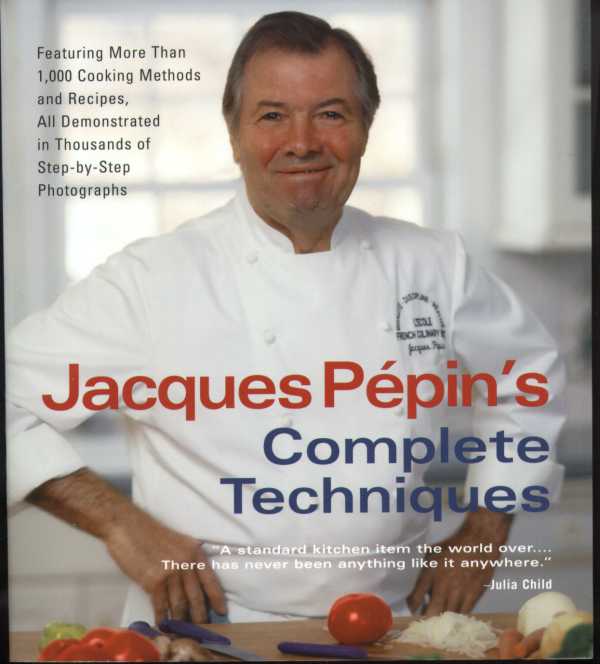


 I learned an immense amount from those shows when they were first aired, and then repeated endlessly during pledge drives. I haven't seen the DVD package myself, but from the online comments I gather that it's been done in strangely inept fashion, but the content apparently is still there, and I can identify with the commenter, J. Lin of Seattle, who wrote:


