Monday, August 26, 2019

Is Trump Trying To Manipulate The Economy To Benefit Himself? Of Course He Is!

>


Would Trump put his own personal interests ahead of the country's interests? If anyone doesn't know the answer to that, it's useless trying to persuade them. In truth, if Trump could gain a quarter by costing the U.S. a billion, he would jump at it. Trump will sell us out to our enemies in a blink of an eye. The former president of Sudan, Omar al-Bashir, is on trial now for, among other things,  taking $90 million in bribes from Saudi Arabia's thuggish crown prince Mohammed Bin Salman, a crony and ally of Trump and his vile family. If Bin Salman was willing to give $90 million to the useless al-Bashir how much has he been willing to give the Trumps and Kushners? Is Trump on the take? You really have to ask? It's why Trump can't be allowed to slink off after his term and must be prosecuted, The precedents he has broken and set have to be expunged from our history or we will be doomed, as a nation and a society, to live with them forever. No other American ex-president has ever been imprisoned. Trump must be. (It's another reason to not vote for Biden, who will immediately pardon Trump and his family and regime if he ever gets into the White House.)

Over the weekend, the Washington Post assembled an A-Team to work on how Trump puts his own financial interests ahead of the country's well-being-- Jonathan O'Connell, David Farenthold and Heather Long. Short version: Señor Trumpanzee "stands to save millions of dollars annually in interest on outstanding loans on his hotels and resorts if the Federal Reserve lowers rates as he has been demanding." We'll get into it in a moment, but first I want to ask you if you saw the write-up I did Sunday of Benjamin Corey's thesis that Trump really is the Anti-Christ. Here are a couple of illustrations that connect Corey's theory and The Post theory:


Trump's Miami area golf resort, Doral, is a decrepit pigsty badly in need of renovations. Trump wants to host the next G-7 meeting there in 2020 so he can give the bill for the renovations to the U.S. taxpayers. That's who he is; it's who he's always been. A clue he is looking to profit was a statement he made earlier today: "My people wanted it. I'm not going to make any money." That can be translated into, "My staff warned me not to do anything this blatant but I want to soak Uncle Sam for every penny I can while I'm still able to."

Now, back to O'Connell, Farenthold and Long, who explained that "In the five years before he became president, Trump borrowed more than $360 million via four loans from Deutsche Bank for his hotels in Washington, D.C., and Chicago, as well his 643-room Doral golf resort in South Florida. The payments on all four properties vary with interest rate changes, according to Trump’s official financial disclosures. That means he has already benefited from falling interest rates that were spurred in part by a cut the Federal Reserve announced in July, the first in more than a decade-- and his payments could drop by millions of dollars more annually if the central bank grants Trump’s wish and further lowers short-term rates, experts said."
“It will reduce his borrowing costs quite a bit if he gets what he wants,” said Phillip Braun, a finance professor at Northwestern University’s Kellogg School of Management. Braun said Trump’s savings could be even greater if Deutsche Bank permits his company to pay down the loans more quickly without a penalty, which banks sometimes allow.

...While Trump’s adult sons, Donald Trump Jr. and Eric Trump, are managing the family business, the president insisted on retaining ownership of his company after his election, bucking the practice of past presidents. That decision, ethics experts warned, would lead to potential conflicts of interest between his personal interests and public policy goals.

The Trump administration has argued that lower interest rates would spur more consumers to buy homes and cars and businesses to invest in new factories. Cutting rates also typically lowers the value of the dollar, making U.S. products cheaper to overseas buyers, a goal of the president.

But most economists and business leaders say Trump’s trade war is the biggest threat to the economy, not interest rates, which are already at historically low levels.

Since taking office, Trump has aggressively sought to lower interest rates and rejected  the mostly hands-off approach other presidents have taken to the Fed, repeatedly blasting Chair Jerome H. Powell-- whom Trump appointed to the post last year-- for not falling in line.

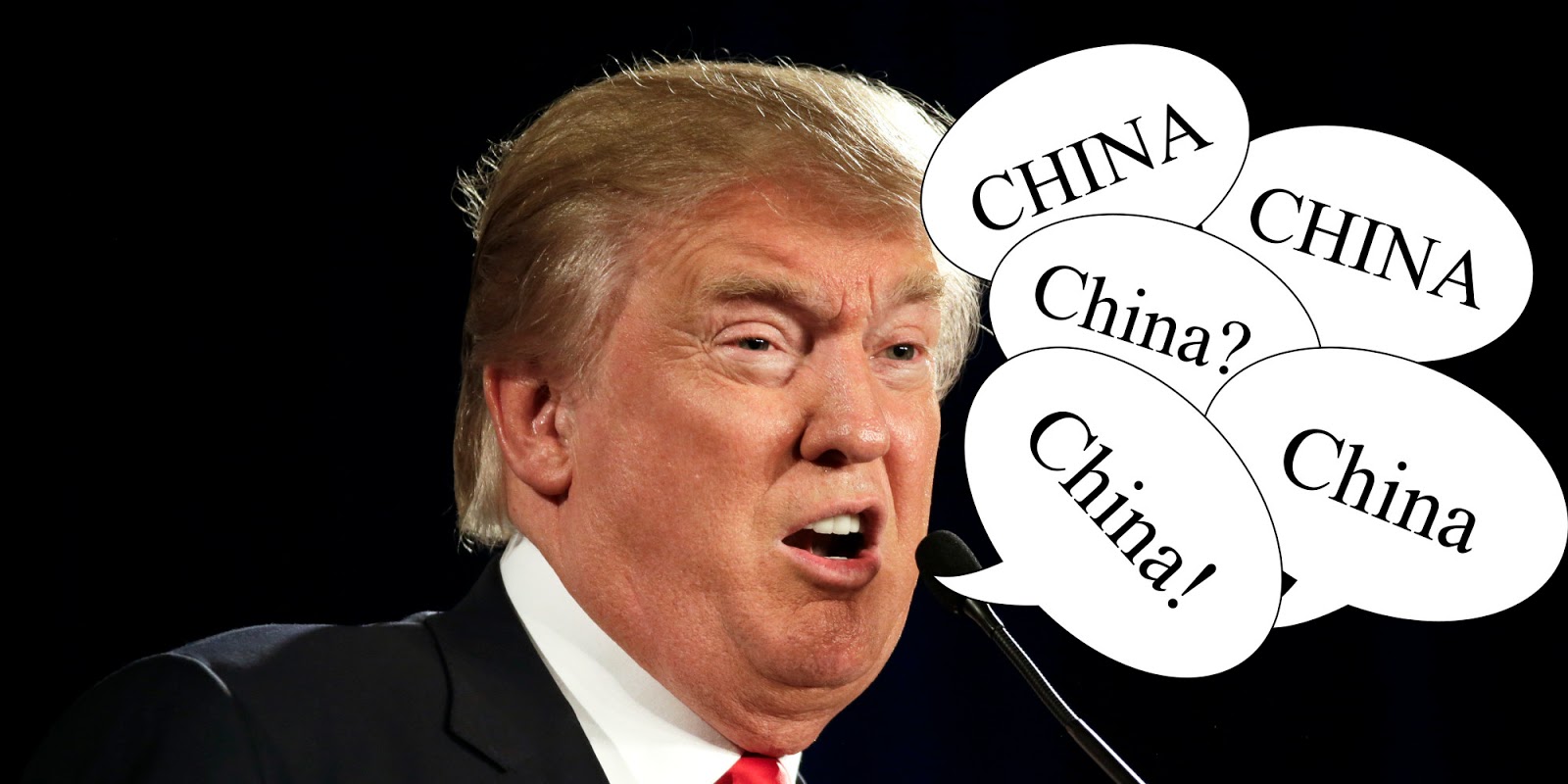
On Friday, after Powell made no announcement of a rate cut and instead voiced concerns about Trump’s trade war with China, the president immediately attacked him on Twitter, writing that “As usual the Fed did NOTHING!” and comparing Powell to Chinese President Xi Jinping.

“My only question is, who is our bigger enemy, Jay Powell or Chairman Xi?” Trump posted.

Trump and his advisers have privately discussed creating a rotation among the Federal Reserve governors that would reduce Powell’s influence, the Washington Post reported this past week.

Asked Friday night by reporters if he wanted Powell to resign, the president responded, “If he did, I wouldn’t stop him.”

...Experts said it’s difficult to ascertain exactly how much Trump would save if he gets the reduction in short-term interest rates that he has urged, from 2.25 percent to 1.25 percent-- a move typically reserved for economic emergencies.

But the president would be substantially impacted by a rate cut, they agreed.

Beginning in 2012, Deutsche Bank provide Trump’s company with about $364 million in loans by working through the bank’s private wealth division, rather than through traditional commercial lending units, according to public loan documents.

The borrowing was for two loans totaling $125 million to buy and renovate the Doral golf resort in Florida, a $170 million loan to renovate Washington’s Old Post Office Pavilion into a Trump hotel and a $69 million loan to refinance an existing Trump hotel in Chicago.

Trump’s financial disclosures and loan records indicate that all four of the loans remain outstanding. His company has paid down at least $19 million of the Chicago loan, according to the filings, though the documents do not show the amount of the remaining balances for any of the properties.

Trump could save at least $600,000 and as much as $1.1 million annually on just the larger of the two Doral loans if the Fed made a percentage point reduction, depending on the loan agreement, according to Clifford Rossi, a professor at the University of Maryland’s business school.

Even a quarter-point reduction, which most Wall Street investors now predict will occur in mid-September, could save Trump as much as $275,000 annually on that single Doral loan.

“If you’re a consumer borrower with a car loan or a credit card, a quarter-point reduction is significant savings,” Rossi said. Trump “has more loans and a bigger dollar size, so he would get certainly a larger reduction on the amount owed than most Americans out there.”

An analysis by Bloomberg News found that for every quarter-point reduction, Trump could save $850,000 in annual interest rate payments, which would mean more than $3 million in annual savings if the Fed dropped rates a full percentage point as Trump has demanded.

During his years as a real estate developer, Trump was famous for his aggressive efforts to save money, even when it meant breaking up relationships or shattering professional norms.

Trump has been sued dozens of times for nonpayment of bills, by building contractors, bartenders and even his own lawyers. He used money from a nonprofit charity to pay off legal settlements for his for-profit businesses. He once sued his own lender, Deutsche Bank, to get out of a large mortgage.

Before entering politics, Trump often advocated for lower interest rates, which are key for a business that relies on large sums of debt.

“Interest rates are very critical to the real estate industry, and [Trump has] spent his whole career there, so he has strong opinions about where interest rates should be,” said James Bullard, president of the Federal Reserve Bank of St. Louis. “Every real estate person I’ve ever met in my life has always wanted lower rates in all circumstances, so I think that’s part of [Trump’s] nature.”

In the 1980s, Trump became one of the most aggressive borrowers in the country, using cheap loans to finance an Atlantic City casino empire that ultimately failed and forced four of his companies to file for bankruptcy.

In the wake of that collapse, Trump was largely frozen out by big banks. He used cash to fund much of his company’s more recent real estate expansion, then turned to an increasingly risk-taking Deutsche Bank for some big loans starting in 2012...

Democrats in Congress have subpoenaed his Deutsche bank records, but Trump sued to stop the bank from responding and the matter remains mired in court.

Previous presidents have avoided publicly criticizing the Fed to maintain the board’s insulation from politics. Trump decided otherwise from the get-go and as global economic concerns mounted in recent weeks, he escalated his already routine attacks on Powell, tweeting at different times in July that “the Federal Reserve doesn’t have a clue!” and “They raised rates too soon, too often, and tightened, while others did just the opposite.”

Four former Fed chairs, collectively appointed and reappointed by six presidents, then published a Wall Street Journal op-ed urging that the Fed be allowed to act “free of short-term political pressures and, in particular, without the threat of removal or demotion of Fed leaders for political reasons.”

Trump further amped up the pressure Friday after Powell spoke at a meeting of central bankers in Jackson Hole, Wyo. The chair said the U.S. economy was in a “favorable place” but that the trade war Trump launched against China had created a “complex, turbulent” situation.

Trump responded with a tirade on Twitter, blaming China for a boatload of issues and demanding that U.S. companies avoid doing business there. Stock market investors, already wary of a shaky bond market and declining consumer confidence, began a sell-off that resulted in steep market losses.

Braun, the Northwestern professor, said Trump’s constant pressure on the Fed chair and his colleagues to adjust rates to suit the president’s liking could hurt the U.S. economy.

“I don’t think the Fed should be accommodating Trump’s trade war, and the risk is potential inflation and the reputation of the Fed in the future,” he said.

Labels: , ,

Thursday, March 09, 2017

Will Trump Be Running Brothels In China? Maybe Not Until He Leaves The White House

>


There have always been well-sourced rumors in New York-- apart from how Trump met Melania and how their sketchy relationship actually began-- that Trump Model Management was, at least in part, a front for an escort service, supplying attractive but desperate Eastern European women to wealthy desperate men. Trump owns 85% of Trump Model Management, which still has a shady reputation on every level. (Read about it at the link just above.) Yesterday, though, Erika Kinetz, reporting for the Associated Press, seemed to indicate that the Trump Organization will be running call girls in China. Yeah, you read that right. And why not? Sheldon Adelson does it, so why not Señor Trumpanzee?
China has granted preliminary approval for 38 new Trump trademarks, paving the way for President Donald Trump and his family to develop a host of branded businesses from hotels to insurance to bodyguard and escort services, public documents show.

Trump's lawyers in China applied for the marks in April 2016, as Trump railed against China at campaign rallies, accusing it of currency manipulation and stealing US jobs. Critics maintain that Trump's swelling portfolio of China trademarks raises serious conflict-of-interest questions.

China's Trademark Office published the provisional approvals on February 27 and Monday.

If no one objects, they will be formally registered after 90 days. All but three are in the president's own name. China already registered one trademark to the president, for Trump-branded construction services, on February 14.

If Trump receives any special treatment in securing trademark rights, it would violate the US Constitution, which bans public servants from accepting anything of value from foreign governments unless approved by Congress, ethics lawyers from across the political spectrum say. Concerns about potential conflicts of interest are particularly sharp in China, where the courts and bureaucracy are designed to reflect the will of the ruling Communist Party.

Dan Plane, a director at Simone IP Services, a Hong Kong intellectual-property consultancy, said he had never seen so many applications approved so quickly. "For all these marks to sail through so quickly and cleanly, with no similar marks, no identical marks, no issues with specifications-- boy, it's weird," he said.


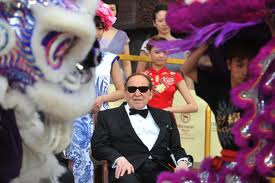
Trump will be able to build and operate hotels spas, golf clubs, restaurants, retail shops, run insurance, finance and real-estate companies, a body guard service, massage parlors and escort services. Trump ally and financier Sheldon Adelson is the don of the multibillion dollar Macao gambling empire and he is also infamous for providing prostitutes in China. In late June, 2012, we looked into one of the myriad lawsuits against Adelson and saw how his former chief executive of the Macao casinos revealed that Adelson "personally approved of prostitution and knew of other improper activity at his company's properties in the Chinese enclave."
In the lawsuit, he accuses the company and Adelson of breach of contract and of pushing him into illegal activity in Macau, a former Portuguese colony near Hong Kong where Sands has established a strong business presence. The company owns the Venetian Macao and Sands Macao casino resorts, the Plaza Macao hotel, restaurant and shopping complex and the newly opened Sands Cotai Central resort with three hotels and two casinos.

In documents revealed Thursday-- including a sworn seven-page declaration that Jacobs submitted along with a summary from his attorneys of problems obtaining documents from Sands-- Jacobs describes an effort he launched after arriving in Macau in May 2009 to rid the casino floor of "loan sharks and prostitution."

"This project was met with concern as (company) senior executives informed me that the prior prostitution strategy had been personally approved by Adelson," Jacobs said in the documents.

In his court filing, Jacobs alleges other documents that haven't been turned over include records of misuse of "blue card' work permits and the hiring of illegal workers in Macau; emails and records of Adelson controlling a "Chairman's Club" allowing favored members, including known or suspected organized crime figures, exclusive access to Sands China's most luxurious accommodations; and email requests from Adelson to a Macau lawmaker who Jacobs said was hired as outside counsel after Jacobs was fired.

...Jacobs' lawsuit has drawn interest from U.S. Justice Department and Securities and Exchange Commission investigator for possible violation of the Foreign Corrupt Practices Act, according to a filing with the SEC. The law bars American companies from paying foreign officials to "affect or influence any act or decision" for commercial benefit. No charges have been filed.
Does anyone breathing think this kind of filth isn't right up Trump's alley?


Labels: , , ,

Sunday, February 05, 2017

Trump Gets So Upset When He's Exposed As The Kleptomaniac He's Been All His Life

>


Saturday, Trumpanzee woke up, chopped up and then snorted a couple of Adderalls and started with the morning ritual-- his nasty, childish, mastabatory tweeting. One claimed that the NYTimes is fake news and that it had apologized to His Trumpiness. The fake news-- or in the Regime's own terms, #AltFacts-- is that it ever apologized to him for anything. Interestingly, the latest poll from PPP asked people who had more credibility, The Times or the Trumpanzee. 51% of people chose The Times; 42% chose the orange-hued orangutang. In fact, among self-identified "moderates," that number is 61% for The Times and just 30% for Trumpy-the-Clown.


Some people assumed-- inaccurately-- that it was The Times editorial against his endangered Department of Education nominee, the ultra-odious Betsy DeVos, that got him going about The Times again. The editors urged a decent Republican in the Senate-- I don't know what they've been smoking-- to join Susan Collins (R-ME) and Lisa Murkowski (R-AK) and every single Democrat-- to deny DeVos confirmation Monday. They just need one more. But that's a hopeless task. Once electorally vulnerable Dean Heller (R-NV) said he was voting for DeVos, the battle was, in effect, over. There are no other decent Republicans in the Senate, despite what The Times editors may wish. "The extra Republican vote," they fantasized, "could come from one of several independent-minded senators; one candidate is Lamar Alexander, an expert on public schools who actually owes the country a good turn because of his failure as chairman of the committee vetting Ms. DeVos to question her closely and to give more time to her critics. There are few more telling examples of Mr. Trump’s disdain for the federal government’s critical role in lifting up America’s schoolchildren than his choice of Ms. DeVos. She has spent years funneling her inherited fortune into a campaign to replace the nation’s traditional public schools with federally funded charter schools, regardless of the latter’s performance, and supporting vouchers, which help families send children to private or parochial schools and drain funds from public schools that need more, not less, support. Mr. Alexander didn’t give senators much time to question Ms. DeVos, but it was sufficient to reveal her near-total unfamiliarity with public education law, standards and even problems. A conservative ideologue, she fell back on most policy questions to an assertion that states should make their own rules, even on settled matters of federal law, like access for handicapped children."
Betsy DeVos’s nomination is not about making public education more effective, or helping publicly schooled children succeed; it’s about blowing up the system without a clue as to what comes next. Mr. Alexander was secretary of education himself, from 1991 to 1993, and he ran for president twice, speaking out against the influence of money in politics. And while he went way easy on Ms. DeVos in the hearings, he surely knows better than to place her in a job of such importance to the country’s future.
The editors then landed some gratuitous slaps at Scott Pruitt, Tom Price and Steven Mnuchin, Trumpanzee’s picks to head the EPA, the Department of Health and Human Services, and the Treasury. But Trump is primarily concerned with Trump, not Betsy DeVos or anyone else. Sure, he wants to "win," but, again, that's about him, not them.

No, what got him into a foul mood yesterday was a report by Susanne Craig and Eric Lipton calling him out on his lies about separating himself from his businesses. His attorneys and advisors have urged him to take at least the appearance of ethics seriously. He has consistently refused to do any such thing. And now, as they reported yesterday, "records have emerged that show just how closely tied" the most corrupt and crooked, self-serving monstrosity ever installed in the White House "remains to the empire he built."


While the president says he has walked away from the day-to-day operations of his business, two people close to him are the named trustees and have broad legal authority over his assets: his eldest son, Donald Jr., and Allen H. Weisselberg, the Trump Organization’s chief financial officer. Mr. Trump, who will receive reports on any profit, or loss, on his company as a whole, can revoke their authority at any time.

What’s more, the purpose of the Donald J. Trump Revocable Trust is to hold assets for the “exclusive benefit” of the president. This trust remains under Mr. Trump’s Social Security number, at least as far as federal taxes are concerned.

Since his election, there have been widespread calls for Mr. Trump to sell his assets and put the proceeds in a blind trust. He has resisted those calls, stressing that the president has no legal obligation to do so.

While the trust structure, outlined in documents made public through a Freedom of Information Act request by ProPublica, may give the president the appearance of distance from his business, it drew sharp criticism from experts in government ethics.

“I don’t see how this in the slightest bit avoids a conflict of interest,” said Frederick J. Tansill, a trust and estates lawyer from Virginia who examined the documents at the request of the New York Times. “First it is revocable at any time, and it is his son and his chief financial officer who are running it.”


...The most immediate test of Mr. Trump’s legal moves to separate himself from his company, the Trump Organization, pertains to the ownership of the new Trump International Hotel in the Old Post Office Building in Washington.

The trust documents, which were prepared last month, argue that “all beneficial ownership in the licensee previously held by Donald J. Trump, personally, now is held derivatively and beneficially by The Donald J. Trump Revocable Trust,” which is legal language intended to suggest that Mr. Trump no longer has a personal tie to the hotel lease.

A provision in the 2013 lease for the building, held by Mr. Trump and his three oldest children, appears to prohibit a federally elected official, including the president, from benefiting from it.

But lawyers who specialize in federal contracts say the trust arrangement simply creates an additional legal step between Mr. Trump and the hotel-- meaning he will still profit from it.

Robert H. Sitkoff, a professor at Harvard Law School, said the new details in the trust documents were unlikely to resolve the apparent legal problems with the Old Post Office site.

“Formally he is no longer the owner, but functionally he still is,” he said.

Representative Elijah E. Cummings, Democrat of Maryland, the ranking member on the House Committee on Oversight and Government Reform who has called for a congressional investigation into the lease, said he remained unsatisfied that Mr. Trump had addressed his conflicts. “This is smoke and mirrors,” he said of the new documents.


Labels: , , , , ,

Thursday, January 12, 2017

Inauguration Day Weather Forecast: 54 Degrees, Cloudy, Light Wind, Chance Of Golden Showers

>


-by Skip Kaltenheuser

If the as yet unverified and unsubstantiated report on Russian spies with Trump scandals in their pockets turns out to be even half true, I’ll be gobsmacked. It would be hard to comprehend that when Trump-- a global traveler with insights into the underworld and anything-goes weasels like Roy Cohn-- was traveling in Russia he didn’t quickly grasp that many hotels, loaded with hookers with mobster supervisors, would have rooms wired for surveillance. That could only be ignored by someone with no control over his appetites and/or is a risk-adrenaline junkie and/or is an exhibitionist on an unimagined scale.


Many years ago I stayed in the Cosmos, originally built for the 1980 Moscow Olympics, legendary for KGB surveillance targeting guests throughout the massive 1,777 room hotel. No idea if anyone there now watches the lives of others, but when I was there my jaw dropped at hookers-- stunning, roped in from slavic regions, the Ukraine, Georgia, the Balkans, etc...-- parading back and forth on a narrow path along the sides of the huge lobby and up on to a balcony walkway and around and back down to a lobby bar to linger for a tea and conversation. They weren’t allowed to traverse the main area of the lobby so guests wouldn’t panic. Elevators were watched by guys in suits with long scars on their face who kept tabs on their temptresses and watched the clock to make sure that after their original mission they didn’t linger upstairs for a freelance quickie-- girls still tried, adding new context to "elevator pitches." The Chinese are more subtle, but they pull those stunts, too. Perhaps they share a lending library with the Russians. Nothing new here, friends in China swear to me that the Chinese have the goods on a Nixon dalliance from when he passed through Hong Kong. Nothing would surprise.


But I’ve been skeptical about Putin’s hack/leaks involvement, been hard to fully embrace it. Now we’re all parsing Buzzfeed’s offering, which left me in danger of drifting from my anchor of healthy skepticism. Keep reminding oneself that as of this writing, the reports are still not verified and authenticated. I trust legions of journalists are now taking that on, I hope with more success avoiding echo-chambers that trapped them during the election season.

Listening now to Trump’s press conference, the denials came across as spirited and initially somewhat nimble, though parts of the conference were retreats into retreads from campaign speeches. But there seems to be a time limit or pressure point after which Mr. Hyde surfaces, as when Trump jumped down a CNN reporter’s throat. He dodged questions on contacts between his associates and Russia, then concluded the press conference when that question circled back.

Trump’s legal eagles make plausible-sounding defenses of non-divestment trust strategies for family business interests. They were stepped on by Trump's claim that if he had to he had the ability to ably run both his company and his country, and no doubt several alternate Earths as well. But some of that defense amounted to throwing everything into a ball of confusion and implying well, what’s a wild and free-roaming mogul to do? I look forward to seeing conflict-of-interest experts tackle it.

Here’s some WaPo fact-checking on Trump’s press conference. And here’s the NY Times fact-check take. Here’s the transcript and video if you want to try your hand.

Back to hack, I can’t help but observe that recently Trump often wears an expression like he’s been kissed by a Russian caviar sturgeon. Still, I could round up other usual suspects, from the Chinese moguls Howie has detailed here and here-- some of whom might catch a good deal if Trump suddenly had to do a major divestment; to Likud sympathizers/operatives-- thrilled at the prospect of a US ambassador as extremist and whacky as they are; to Wall Streeters with indictable histories-- who feared the pressure Sanders and Warren might put on Hillary; to a DNC or Clinton Foundation insider who couldn’t stomach what was going on, going rogue. And there’s always the fallback on ? and the Mysterians. But if it can be demonstrated that there’s a big whoopsie going on within the Kremlin, that scenario will intrigue. Until then, this writer will continue to have it both ways.

But why a whoopsie in the Kremlin? Putin ought to be thrilled as revelations pour forth. Credibility of both Hillary and Trump is aflame. Both major parties are hamstrung and weakened, much of mainstream media has been shamed, and the US political establishment is revealed to be as flaky, corrupt and hypocritical as anyone imagined. I hear China is letting in more news reports as cautions against corrupt democracy.

Win-win for Putin.


Unless Putin fears retaliation of a different sort than continued sanctions and a time-out. A few years ago I asked a former ambassador to the Balkans why the US didn’t take the obvious path to undermine Putin and start pushing a gatling gun of items onto the Internet, in Russian, detailing how much Putin and his cronies stole from their countrymen while Russian life expectancies plummeted  particularly for depressed men. Include how the Putin crowd stole it and where they stashed it. And put up Russian translations of books like Putin’s Kleptocracy: Who Owns Russia, by Karen Dawisha, a review of it here. The ambassador thought it a swell idea. That it hasn’t happened makes me wonder if there is some sort of Mexican standoff with US intelligence. Or if there’s fear of a wounded Putin bear with nothing to lose. Maybe now a steady stream of revelations on a kleptocrat without peer will become unavoidable. Perhaps Putin's recipe for radioactive soup.

Meanwhile, I’m intrigued at the prospect of Foreign Corrupt Practices Act violations in Russia by Trump’s outfits, though again that asparagus whiff is in the unverified, unauthenticated leak in Buzzfeed. But if it’s there, and investigators can crack open the shells, there might be lurking dynamite to launch Trumpster to the dumpster. Maybe the Demo’s will eventually again cheer the Comey cha-cha. But consider Trump’s nominee to run the U.S. Securities and Exchange Commission, Walter Clayton, from a law firm of Goldman Sachs minions, a lawyer who worked on the public offering of China’s Alibaba Group Holding Company, which was reported to be undergoing an SEC look-see. Clayton has argued for damping down FCPA enforcement. Here’s a contrary point of view on the FCPA from a writer I particularly enjoy.

With some irony, I note that Trump has again been handed a timely distraction from very critical issues-- his cabinet nominees from the Goldman Sachs network of revolving doors, for instance-- that will now get less scrutiny as we become transfixed on every morsel of uncertain origin tumbling from Russia.


Hey, have you ever seen the art of Mark Lombardi? Really sorry he’s not with us now, could sure use him as Washington’s artist-in-residence for narrative structures that chronicle the incoming titans of influence. If you have some time, sit down and watch this amazing, mind-blowing documentary about Lombardi, Death-Defying Acts Of Art And Conspiracy:


Is it too soon to bring back UB40’s "Rat in Mi Kitchen," written for Margaret Thatcher, to become the theme song for the incoming Trumpocalypse? Here’s a version that dropped a lyric but throws in a Herb Albert trumpet solo that’ll put you right. I see anthem potential. Good for marching with pitchforks and torches. And for Trump voters turning on a dime once they feel betrayed, just as many did with the Clintons.


Labels: , , , ,

Tuesday, January 10, 2017

How Foreign Leaders-- Like, Say China-- Think They Can Use Trump's Greed and Stupidity To Take Advantage Of America

>


I'm pretty certain Elizabeth Warren's bill to force Trump to avoid conflicts of interest isn't going anywhere. The bill would force Trump (and Pence)-- and their spouses and dependent children-- to divest any financial assets that pose a conflict of interest and place the money into a blind trust. If it were to pass and be signed into law, it would make Trump immediately impeachable, defining his stance on his conflicts as a "high crime or misdemeanor."

Meanwhile, last night, el Presidente-elect met with Jack Ma. Jack's a billionaire, founder of Alibaba, China's Amazon (plus)-- in fact, the richest billionaire, not just in China, but in Asia. I don't know how accurate that is, since there are a lot of shady billionaires in places like Saudi Arabia, India, Indonesia and other countries where national wealth often finds its way into personal bank accounts, but let's just acknowledge that Jack's loaded. Trumpanzee, who should ask him why Google, YouTube, Twitter, Facebook and DWT are all blocked there, addressed the press after the Jack pow-wow. We had a great meeting... And a great, great entrepreneur, one of the best in the world. And he loves this country and he loves China." Jack shared his plan with Trumpanzee to create a million new jobs in the U.S. by teaching American small businesses to see stuff in China via Alibaba. Trumpanzee said he and Jack would do "some great things" together.

I was in China yesterday. China wants to turn the Beijing airport into the world's biggest air-hub, replacing Heathrow. With that in mind, I noted that Beijing airport is the most irrational and dysfunctional airport I'm ever experienced, a poster child for gross inefficiency and, on top of everything else, absolutely Orwellian. I'd avoid it at all costs in the future. While late planes in and late planes out caused me have to suffer for hours and hours in a sub-par business lounge, I read a blatant government mouthpiece, the Global Times. The Global Times wasn't dancing around edges of Trump's conflicts of interest-- and how China plans to take advantage of them. I'd be laughing at this report... if it was about anyone else but Trump and his crew of criminal miscreants. In the report, Yang Sheng starts off talking about the Taiwan problem Trump has decided to stoke for God-knows-what-reasons, but keep reading, even if you don't care about Taiwan per se.
U.S. president-elect Donald Trump and his team said they will not meet with Taiwan island's leader Tsai Ing-wen during her stopover in the U.S., but Chinese observers said they prefer to see his actions.

As China's influence over the U.S. grows, Trump will learn his lesson and become more aware of China's bottom line, they said.

The Associated Press (AP) quoted Trump transition spokeswoman Jessica Ditto as saying on Saturday that "the president-elect would not be meeting with the Taiwanese leader while she is in the U.S., nor will members of his transition team."

Trump sounded unaware of Tsai's trip when he was asked about it ion New Year's Eve. "Nobody's ever mentioned that to me," he told reporters. "I'm not meeting with anybody until after January 20, reported.

"Trump's words are not very trustworthy as he has no basic knowledge and sense of the U.S.' position on cross-Straits relations., sometimes sounding very irrational on Twitter. Compared with his words, his actions better reflect his mindset," said Chu Yin, an associate professor at the University of International Relations.

Although Trump and his team claim they will not meet Tsai while in the U.S., Taiwan media still says a lunch meeting with people from Trump's team is scheduled with Tsai in her U.S. stopover.

...Chen Yixin, a political expert at Taiwan-based Chinese Culture University, said that "the possibility of a Trump-Tsai meeting is almost zero percent," because Trump would not stoop to fly to Houston or San Francisco only to meet with her, but members of his team are not yet officials, so there's a possibility they could meet with Tsai.

Chu added China enjoys a strong influence over the U.S. so Trump will learn his lesson if he keeps challenging China's bottom line."For instance, his family members also have business dealings with China."

The New York Times reported that Jared Kushner, Trump's son-in-law and advisor, is working on a deal with Anbang Insurance Group, a financial Chinese behemoth with estimated assets of $285 billion. "And a president-elect or president, if he challenges China, not only will the U.S. feel the impact, but his family and businesses as well," Chu added.
Trump honored in Shanghai with a statue befitting his stature


Yeah, Jared's working on a deal, alright. Everyone in Trump's circle is working on deals. But let's focus on Kushner for a moment. Jerry Nadler, Ranking Democrat on the House Judiciary Committee did today-- with a letter to Attorney General Loretta Lynch about his glaring conflicts of interest. This is the letter:
Dear Attorney General Lynch and Director Shaub:

We write to ask that your review a number of legal issues concerning reports that Jared Kushner, President-elect Donald J. Trump’s son-in-law, will be appointed to a White House position as senior adviser to the President. Given the Department of Justice’s (DOJ’s) central role in enforcing ethics and conflicts-of-interest laws applicable to Executive Branch officials, we ask for your prompt attention to these matters.

To begin with, Mr. Kushner’s appointment may run afoul of 5 U.S.C. § 3110, the Federal anti-nepotism statute. Under that statute, a “public official may not appoint, employ, promote, advance, or advocate for appointment, employment, promotion, or advancement, in or to a civilian position in the agency in which he is serving” a relative. The statute defines the term “public official” to include the President and defines the term “relative” to include a “son-in-law.” While the anti-nepotism statute does not specify, other statutes that apply to executive agency employees, such as the Hatch Act, have been interpreted to apply to White House staff (excluding the President and Vice President). In this case, given the express inclusion of the President as a “public official” under the anti-nepotism statute, there is a strong case to be made that the White House is an “agency” for purposes of the anti-nepotism statute and that it would apply to bar Mr. Kushner’s appointment as a White House staff member.

As you know, federal government officials are also required to recuse themselves from matters in which they have a financial interest. While the Washington Post reported today that Mr. Kushner plans to resign from his position overseeing his family’s real estate business and divest “substantial assets” in preparation for accepting a potential White House position, it is as yet unclear whether these steps would be sufficient to avoid potential conflicts. His attorney has indicated that he would “recuse himself from any matters having a direct impact on his remaining financial interests,” suggesting that he would not completely divest himself of assets that could raise a conflict of interest. Also, there is no indication that his wife, Ivanka Trump, would divest her ownership interest in the Trump Organization or any other financial interests that could further raise potential conflicts of interest in her father’s Administration.

Moreover, Mr. Kushner’s White House position may allow him to influence policy that benefits his business interests. For example, it has been reported that he will meet with Speaker of the House Paul Ryan this evening to discuss tax policy which, at a minimum, raises the appearance that he may be using his public office for private gain-- namely adopting tax changes which will benefit Mr. Kushner and his family.

In addition, should Mr. Kushner choose not to be compensated for his role as a White House “senior adviser” in an attempt to circumvent both the anti-nepotism statute and the general prohibition on Executive Branch officials seeking to use their offices to enrich themselves, his appointment may violate the Anti-Deficiency Act. Indeed, this concern may apply with respect to the appointment of other individuals who reportedly will fill positions as unpaid advisers to the incoming Administration, such as Carl Icahn and Corey Lewandowski, and we ask that you review the lawfulness and appropriateness of their circumstances as well.

In light of the foregoing, and given the potential speed of developments, we urge DOJ to consider our concerns and to take any action it may deem appropriate promptly.

Labels: , , , ,

Happy Birthday, Jared Kushner-In-Law

>


The Susanne Craig piece in the NY Times over the weekend, , Jared Kushner, a Trump In-Law and Adviser, Chases a Chinese Deal, wasn’t really important because it was about a Chinese deal. It was important because Trump leans so heavily on Kushner and Kushner, like his jailbird father (and long-time Trump crony) is corrupt to his core. “Since the election,” reported Craig, “intense scrutiny has been trained on Mr. Trump’s company and the potential conflicts of interest he will face. But with Mr. Kushner laying the groundwork for his own White House role, the meeting at the Waldorf [with a well-connected Chinese billionaire] shines a light on his family’s multibillion-dollar business, Kushner Companies, and on the ethical thicket he would have to navigate while advising his father-in-law on policy that could affect his bottom line.”

Kushner, who turned 36 today, promises to comply with federal ethics laws but his attorneys have been making a case that he really doesn’t have to. He pays them an awful lot of money for that advise. The Times story makes the point that “he is involved in steering policy, making personnel choices and serving as the middleman between foreign leaders, the White House and the president-elect in ways that could affect his business, even as companies like Anbang see opportunity in entering into new ventures with the president-elect’s son-in-law.” Kushner, for example, was behind Trump’s decision to weave Goldman Sachs— with which he has a great deal of business, tightly into the administration.
Trump has said that his son-in-law, an Orthodox Jew, will play a central role in dealings with Israel, describing him as so talented that he could help “do peace in the Middle East.” Mr. Kushner’s company has received multiple loans from Israel’s largest bank, Bank Hapoalim. The incoming Trump administration will inherit a Justice Department investigation into allegations that the bank helped wealthy Americans evade taxes.

Indeed, despite a lack of foreign policy experience, Mr. Kushner is emerging as an important figure at a crucial moment for some of America’s most complicated diplomatic relationships. Such is his influence in the geopolitical realm that transition officials have told the Obama White House that foreign policy matters that need to be brought to Mr. Trump’s attention should be relayed through his son-in-law, according to a person close to the transition and a government official with direct knowledge of the arrangement.

So when the Chinese ambassador to the United States called the White House in early December to express what one official called China’s “deep displeasure” at Mr. Trump’s break with longstanding diplomatic tradition by speaking by phone with the president of Taiwan, the White House did not call the president-elect’s national security team. Instead, it relayed that information through Mr. Kushner, whose company was not only in the midst of discussions with Anbang but also has Chinese investors.

Ethics experts said that while the conflict-of-interest law is narrowly drawn, Mr. Kushner’s mix of roles leads inevitably to ethical questions.

Matthew T. Sanderson, a lawyer at Caplin & Drysdale and former general counsel to Senator Rand Paul’s presidential campaign, said deals like the one with Anbang “might not be illegal under the conflict-of-interest rules, but raise a strong appearance that a foreign entity is using Mr. Kushner’s business to try to influence U.S. policy.”

Without knowing details of Mr. Kushner’s holdings and divestiture plans, he said, the merits of his proposal are hard to assess. Even if he divests his stake in certain properties, Mr. Sanderson added, “it strikes me as a half-measure” that “still poses a real conflict-of-interest issue and would be a drag on Mr. Trump’s presidency and cause the American people to question Mr. Kushner’s role in policy making.”

Like the president-elect, Mr. Kushner built on the fortune of a successful father. In the 1980s, his father, Charles Kushner, took over the New Jersey-based construction business started by his own father, a Holocaust survivor from Poland. Charles expanded into office buildings and apartments, eventually assembling a $1 billion real estate business and becoming a leading Democratic donor, contributing to politicians in New Jersey and New York and winning appointment to the board of the Port Authority of New York and New Jersey.

But the company was upended when Charles became engulfed in a nasty family feud over how the business’s proceeds were to be distributed. The fight, which played out in a federal courthouse in Newark, resulted in a plea deal for Charles, who in 2005 was sentenced to two years in prison for tax evasion, witness tampering and making illegal campaign donations. The family infighting was so bitter that, at one point, Charles hired a prostitute to seduce his brother-in-law, videotaped the encounter and sent the footage to his sister.

Jared, 23 at the time of his father’s conviction, had recently graduated from Harvard. He was studying for an M.B.A. and law degree at New York University in 2006 when he bought the New York Observer, at the time an influential weekly newspaper known for its coverage of the city’s elite and high-end real estate.

It is unclear exactly when he assumed control of the family business. The company now says he became chief executive in 2008, but contemporaneous news accounts rarely describe him that way until 2012. Nevertheless, Mr. Kushner quickly became the company’s public face as it expanded across the Hudson River into Manhattan, much as Mr. Trump had left Queens for the big city decades before.

Charles Kushner was released from federal custody in August 2006. He immediately resumed a significant role in the business and remains heavily involved today. Still, it was with Jared as headliner that the company soon made its biggest play ever: $1.8 billion for the skyscraper at 666 Fifth Avenue that would remain at the center of its story to this day. It was the highest price ever paid for a single office building in the United States — and more than three times what its seller had paid six years earlier. [It’s the building Kushner is selling to the Chinese now.]

…As the Kushners have expanded their businesses, they have also, by necessity, expanded their universe of investors and creditors. Lenders have included private equity giants like Blackstone, the French bank Natixis and Goldman Sachs. Another lender is Deutsche Bank, which recently reached a $7.2 billion settlement with the Justice Department over its sale of toxic mortgage securities. But it remains under investigation over allegations that it disguised trades that helped Russian clients move money offshore.

Beyond real estate, Mr. Kushner has moved into the Wall Street, health care and tech spaces.

He has an indirect investment in Thrive Capital, a venture capital firm valued at about $1.5 billion that is run by his brother, Joshua. The company has made more than 100 investments in dozens of companies, both in the United States and abroad. Among them is Oscar, a health insurance company founded in 2012 to take advantage of the Affordable Care Act, which Mr. Trump has vowed to dismantle. Oscar’s investors have included Li Ka-shing, who is one of Hong Kong’s richest men, and China’s Ping An Insurance, which has close ties to relatives of former Prime Minister Wen Jiabao of China.

The Kushner brothers have counted the Russian billionaire tech investor Yuri Milner and the Chinese billionaire founder of Alibaba, Jack Ma, as investors in another endeavor — Cadre, a tech-savvy real estate investment company they started with a friend. Goldman Sachs has invested in both tech ventures.

But the money behind many of Mr. Kushner’s real-estate investments remains a mystery. While the company lists dozens of partners on its website, it does not disclose the individuals behind those companies.

One of the newest Kushner projects — a Trump-branded luxury apartment tower that opened in November in Jersey City — got nearly a quarter of its financing, about $50 million, from Chinese investors who are not publicly identified.

The investors are beneficiaries of a federal program that grants two-year visas and a path to permanent residency in exchange for investments of $500,000. The program, known as EB-5, has become popular with real estate developers as a cheap form of financing; in fiscal year 2015, the State Department issued 9,764 of the visas — overwhelmingly to applicants from China.

But the program, which must be renewed periodically by Congress, has lately come under fire. The Government Accountability Office has issued several reports raising concerns about what it termed the program’s insufficient background checks and lax safeguards against illicit financing. One applicant, the agency found, failed to report potential financial ties to a string of Chinese brothels.

Then there are the Kushners’ continuing negotiations with Anbang’s Mr. Wu, one of the most politically connected men in China.

In 2015, Mr. Kushner began pursuing a grand vision for 666 Fifth Avenue. The renowned architect Zaha Hadid was asked to come up with a design to resculpt the 40-story, 1950s-era aluminum-clad office building, adding apartments, a hotel and a mall and nearly tripling its height to 1,400 feet.

But the plan needed money, and while Mr. Kushner had managed to hang on to his family’s flagship building, it still had a lot of debt, with a $1.1 billion loan coming due in 2019, and a good portion of the commercial office space vacant.

Anbang, which got its start as an auto insurance company in 2004, had become one of the most aggressive Chinese buyers of United States real estate, and had begun investing in hotels. But it had encountered problems of its own; its byzantine ownership structure had given rise to concern on Wall Street and in Washington.

The Times reported last year that Anbang is owned by a few dozen companies, which in turn are owned by a number of shell companies that are controlled by roughly 100 people, many of whom have ties to a county in China that is the home of Mr. Wu, whose own power stems in part from marriage. In his case he married Zhuo Ran, a granddaughter of Deng Xiaoping, the leader who brought China out of the chaos of the Mao era. Mr. Wu also counts as a central business partner the son of a People’s Liberation Army marshal, and he has recruited several former government insurance regulators to serve on his board.

Anbang’s structure has stoked such suspicion about its true ownership that some Wall Street firms, including Morgan Stanley, have opted not to advise the company on United States mergers and acquisitions because they cannot get the information needed to satisfy their “know your client” guidelines.

Anbang’s deep ties to the Chinese state have also led to a break in presidential protocol. Presidents have long stayed at the Waldorf, but when Mr. Obama visited New York for the opening of a session of the United Nations General Assembly in September 2015, he decided to seek other accommodations. American officials were vague about the reasons for the change at the time; a senior national security official cited security, counterintelligence and cybersurveillance concerns.

National security concerns have also complicated Anbang’s efforts to acquire other properties in the United States.

One deal, to buy the Hotel del Coronado in San Diego, fell apart in October amid concerns from the Committee on Foreign Investment in the United States, which comprises the heads of nine federal agencies and is charged with reviewing the national security risks of transactions involving foreign governments or state-connected companies. The Hotel del Coronado is near a naval base, and deals involving proximity to national security infrastructure typically receive heightened scrutiny. Anbang was, however, able to acquire the other hotels in the same collection.

Last year, Anbang tried to purchase the Starwood Hotels chain, outbidding Marriott with a $14 billion offer. It was widely reported that the deal would be subject to review by the committee. But though the parties expressed confidence that it would pass muster, ultimately Anbang walked away from the deal before submitting the kind of detailed inside information that process would entail.

And while Anbang’s planned $1.57 billion purchase of Des Moines-based Fidelity & Guaranty Life, first announced in November 2015, was cleared by the committee, also known as Cfius, it stalled after the New York State Department of Financial Services demanded more information about Anbang’s shareholding structure.

But Anbang was nothing if not savvy. Company officials had cultivated a relationship with Benjamin M. Lawsky, who had earlier led the financial services agency, from May 2011 to June 2015. It was Mr. Lawsky, by then a consultant, who introduced Anbang to Kushner Companies, according to people with knowledge of how the discussions came about. Mr. Lawsky declined to comment.

Mr. Kushner led the negotiations, his spokeswoman, Ms. Heller, confirmed. Kushner Companies would disclose little else about the joint venture, except to say that Anbang would become one of the equity partners in the building’s redevelopment if an agreement is finalized. Anbang declined to comment.

It was just coincidence that Mr. Kushner’s Nov. 16 dinner at the Waldorf with Mr. Wu took place the week after the election, Ms. Heller said, adding that it had been in the works for a while.

By the time of the meeting, Mr. Kushner had decided to hand off certain business relationships, including the one with Anbang, to others at Kushner Companies, according to Ms. Heller, and it was for that reason that he invited his father and Laurent Morali, the president of Kushner Companies. She said he planned to sell his stake in 666 Fifth before the closing of any Anbang deal, but she declined to name the potential buyers or the price Mr. Kushner hoped to get.

Ms. Heller stressed in her statement that the United States has “not found Anbang to be a state-owned enterprise” — an important technical point, given that the Constitution’s Emoluments Clause prohibits the acceptance of payments and gifts from foreign governments.

Should it consummate its deal with Anbang, she said, Kushner Companies will seek any necessary approvals from the federal government. She expressed confidence that any deal would pass muster with the foreign investment committee, citing the fact that it did not block the Chinese company from buying the Waldorf Astoria.

Come Jan. 20, when Mr. Trump is scheduled to be inaugurated, that committee will be made up of his cabinet members, and the process is such that the president has the final say.

It is a process with which Mr. Trump has some familiarity. During the campaign, he repeatedly criticized Hillary Clinton for supporting, as secretary of state and member of the foreign investment committee, a deal that benefited donors to her family’s charitable foundation while giving the Russians control of about 20 percent of America’s uranium-extraction capacity.

On China, Mr. Trump has talked a tough game, accusing Beijing of currency manipulation and raising the possibility of a trade war. But whether that is only a negotiating tactic remains to be seen. The president-elect has his own financial entanglements with China: He owns a 30 percent stake in a partnership that owes roughly $950 million to a group of lenders that includes the Bank of China, and one of his biggest tenants at Trump Tower is another state-owned bank, the Industrial and Commercial Bank of China.

With Anbang a magnet for controversy, Mr. Kushner has kept the negotiations under wraps. But a week after the Nov. 16 dinner at the Waldorf, Mr. Kushner’s father and Mr. Wu met at the hotel for lunch. After the elder Mr. Kushner departed, Mr. Wu was clearly elated.

“I love you guys,” he exclaimed in English to his remaining entourage, according to one person present.
Some day-- maybe a long time from now-- Chris Christie is going to get his revenge against Jared Kushner and his cronies in China won't be able to protect him... and the whole country, this one, will be applauding.


Labels: , ,

Thursday, December 22, 2016

Be Honest-- Would You Stay At A Trump-Branded Hotel? What If It Was Raining And You Had No Umbrella?

>


I travel a lot-- always have. When I was a kid I would crash wherever I could. I hitch-hiked out to San Francisco for what the media later dubbed "the Summer of Love" and wound up sleeping on a step on a staircase in an old Haight-Ashbury Victorian. Years later I spent several years living in a VW camper can as I drove from London to India. Still later I wound up as president of a large company and stayed in the major luxury class hotels like the Plaza Athénée in Paris, the Principe Di Savoia in Milan, the New Otani in Tokyo, the Prk Tower in Buenos Aires, Four Seasons and Ritz Carlton's everywhere... But never, under any circumstances, a Trump-branded hotel. Trump hotels-- like the one I wrote about in Baku last June when I visited Azerbaijan-- always have a reputation for being glitzy and third rate. These days, when I travel, I tend to rent apartments or houses and use them as a base to explore. The idea of walking into a Trump property-- even for a dinner-- has always been inconceivable, long before he decided to jump into politics. His properties are as phony and superficial as he is.

This week, Benjamin Freed, writing for the Washingtonian, was just the latest to laugh at all the tasteless Arabs rushing to hold their gawdy, ostentatious events at Trump's new hotel in DC. A match made in heaven. Freed's review is brutal-- and not in a good way. "Before the Trump International Hotel opened," wrote Freed, "Donald Trump liked to brag that the business he and his family built inside the Old Post Office would be 'one of the great hotels of the world.'" It's worth mentioning that part of the deal when you pay Trumpanzee to use his name to brand your hotel is that he will publicly state that when the hotel opens, no matter how much of a pile of crap it is, Trump will put out a press release calling it "one of the great hotels of the world." Every hotel he's ever been associated with gets that worthless accolade for their worthless promo packet, often backed up by the same worthless pronouncements from Ivanka and one of the sons (who Trump himself referred to on camera as "retards.") Freed continued: "But according to a year-end list of new luxury hotels from a travel group that specializes in high-end accommodations, it’s one of the world’s worst. The Trump hotel rated as the world’s third-lousiest new hotel, according to the membership-only United Kingdom operation LTI-Luxury Travel Intelligence. Maybe not quite as bad as Trump Grille in NY's Trump Towers, but still really gross.
“The building itself is undoubtedly impressive, but once inside we start to ask questions,” LTI’s review begins, acknowledging the Old Post Office as a marvel of late-19th-century Romanesque Revival architecture and design. But from there, the review is brutal.

“LTI finds the décor a little garish and more quantity over quality,” it continues. Few who have been inside the hotel might argue differently. In Trumpian fashion, the hotel is a pageant of too-muchness, from the gold-colored bathroom fixtures to a $29 bowl of hummus to the crystal spoonfuls of sickly-sweet Hungarian wine that go for as much as $140.

It goes on.

“Service is poor on occasions and lacks confidence,” LTI founder Michael Crompton writes. “The whole experience seems a little forced, and therefore this place is not for the true discerning luxury traveller.”


no comment
For supporters of the president-elect or his hotel, Crompton’s suggestion that his DC hotel is not truly luxurious might be the most cutting. Throughout his business career, Trump has resembled a spoiled outer-borough brat robing himself in glitz and luxury to get in the good graces of rich Manhattan swells, and his political rise could very well be a response to DC establishment types laughing him out of the White House Correspondents’ Association Dinner.

Only two hotels-- anywhere in the world-- fared worse in LTI’s rankings: a Four Seasons on Oahu, Hawaii, and the Palazzo Versace in Dubai, United Arab Emirates.

While LTI’s review does not make explicit mention of Trump’s election or the brewing mess over the Trump Organization’s lease from the General Services Administration for the Old Post Office, it does acknowledge that it is unlikely to have much impact on the hotel. “But no doubt the tourist hordes will keep the place eternally busy,” Crompton writes.

UPDATE, 5:48 PM: In an email to Washingtonian, Crompton piles on to his publication’s initial criticism, writing that the Trump hotel’s gaudiness—and that of the larger Trump brand-- runs counter to recent hotel-industry trends. “For quite a while there has been a move towards an understated elegance in new luxury properties,” he writes. “We had similar feelings towards Trump Turnberry (one of Trump’s golf courses in Scotland).”
You think there's any chance at all his presidency will be any different? I don't.

Labels: ,