WAIT, WAIT! CAN'T WE ABOLISH THE DEATH PENALTY AFTER THE WAR CRIMES TRIBUNALS?
>

After all, we do know how to do war-crimes trials. That's Supreme Court Justice Robert Jackson, chief prosecutor at Nuremberg in 1945.
 Most of my friends are probably admiring New Jersey and its Democratic governor and state legislature today. Even here in Asia people are aware-- and heartily approve-- of Governor Corzine signing a bill abolishing the death penalty in New Jersey. Back when I was at PS 197 in Brooklyn I won a U.N. scholarship for an essay I wrote defending the death penalty. I've moderated my bloodthirsty tendencies a bit since then... but just a bit.
To me the only thing that's inherently wrong with the death penalty is how dependably imperfect our justice system is in figuring out who should get it and who shouldn't. The justice system is fatally biased against minorities and against poor people. So, although I still consider myself a proponent of the death penalty, I don't think it should be implemented-- except in special cases.
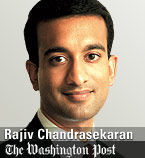
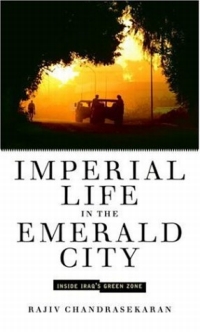
 Right now I'm reading Rajiv Chandrasekaran's stupendous best seller, Imperial Life in the Emerald City: Inside Iraq's Green Zone. Anyone who needs a reason for exceptions to banning the death penalty need spend only a few hours contemplating the egregious war crimes committed by the Bush Regime and its lackeys in Iraq. For example, the Geneva Convention (and its predecessor, the Hague Convention of 1899; Article 43)-- as Bush Regime attorneys never tired of pointing out-- "required an occupying power to respect all the laws of the occupied country except when it is necessary to promote public order and safety." But right-wing ideologues the Bush Regime installed to run Iraq couldn't wait to impose the kind of vulture capitalism in Iraq they have been slowly imposing on America under the administrations of Reagan, Bush I, Clinton, and Bush II. One dangerous nutcase Republican hack, Peter McPherson, immediately "slashed Iraq's top tax rate for individuals and businesses from 45% to a flat 15%. It was the sort of tax overhaul that fiscal conservatives long dreamed of implementing in the United States... The centerpiece of McPherson's agenda was a new foreign-investment law" whereby foreign companies could gobble up all of Iraq's natural resources and industries.
And there were far worse culprits than McPherson. He was replaced by Bush crony Thomas Foley, "an investment banker and a major Republican Party donor who had been President Bush's classmate at Harvard Business School."
A month after arriving, Foley [right] told a contractor from Bearing Point [a GOP-connected criminal consulting firm] that he intended to privatize all of Iraq's state-owned enterprises within thirty days.
"Tom, there are a couple of problems with that," the contractor said. "The first is an international law that prevents the sale of assets by an occupation government."
"I don't care about any of that stuff," Foley told the contractor, according to her recollection of the conversation. "I don't give a shit about international law. I made a commitment to the president that I'd privatize Iraq's businesses."

Imperial Life in the Emerald City reads like a blueprint for dismal and tragic failure in Iraq-- as though it was a premeditated objective. It is also a blueprint for how a Giuliani government would run-- I'll get more into that anon-- and it should be a blueprint for a thorough investigation by Congress. Hopefully, the worst of the criminals won't be indicted in New Jersey but in a state that knows how to punish real criminals... like Texas or Utah. Because despite the crocodile tears shed by the Republican Party's most effeminate presidential candidate, Mitt "I would never live in a pink house" Romney, these Republicans really do need to be punished for what they've done in Iraq-- for the sake of our national soul.
P.S.: KNOW YOUR U.S. PUBLIC SERVANTS--
THOMAS C. FOLEY
In June 2004, our Tom received the Department of Defense Distinguished Public Service Award for his service as director of private-sector development for the Coalition Provisional Authority in Iraq. In 2006 he became U.S. ambassador to Ireland.
So that'll be "Mr. Ambassador" to you, girls and boys. Whatta guy!--Ken
#
Labels: Culture of Corruption, death penalty, Greed Zone, Iraq War, Rajiv Chandrasekaran, Thomas C. Foley, war crimes
posted by DownWithTyranny @ 12:01 AM
1 comments
|
Reddit