Sunday, February 12, 2017

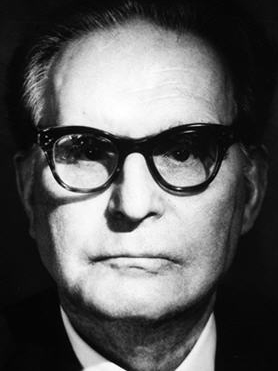
Nicolai Gedda (1925-2017)

>

10pm ET UPDATE: We have Yevgeny Onegin audio files!

Anneliese Rothenberger and Nicolai Gedda as Constanze
and Belmonte in Mozart's Abduction from the Seraglio,
from the cover of their 1966 EMI recording

MOZART: The Abduction from the Seraglio: Overture and Belmonte's entrance aria, "Hier soll ich dich denn sehen?"
BELMONTE: Here am I then to see you,
Constanze -- you, my happiness?
Let Heaven make it happen!
Give me my peace back!
I suffered sorrows,
o Love, all too many of them.
Grant me now in their place joys
and bring me toward the goal.

[aria at 4:35] Nicolai Gedda (t), Belmonte; Vienna Philharmonic, Josef Krips, cond. EMI, recorded February 1966

Now here it is sung by a younger, fresher-voiced Nicolai --

[aria at 4:20] Nicolai Gedda (t), Belmonte; Paris Conservatory Orchestra, Hans Rosbaud, cond. Recorded live at the Aix-en-Provence Festival, July 11, 1954

Finally, here it is sung in English (from a complete Abduction
recording based on a Phoenix Opera Group production) --


[in English; aria at 4:10] Nicolai Gedda (t), Belmonte; Bath Festival Orchestra, Yehudi Menuhin, cond. EMI, recorded Oct.-Dec. 1967 (now available in Chandos's opera-in-English series)

by Ken

Although Nicolai Gedda continued singing publicly well into his 70s, he had, not surprisingly, slipped out of the international circuit well before then, and since he was 91 when he died on February 8, in Switzerland, it may be that to younger music lovers the Swedish tenor is just a name, if that. But there was a time, and a fairly long one at that, when he seemed to be everywhere, singing more or less everything -- at least everything assumable by a generous-voiced lyric tenor, in the wide range of languages in which he sang with both technical and expressive assurance.


I NEVER THOUGHT OF OUR NICOLAI AS A FAVORITE
SINGER. IT'S MORE THAT HE WAS ALWAYS THERE.


Read more »

Labels: , , , , , , , ,

Sunday, March 29, 2015

Sunday Classics snapshots: Count Almaviva goes a-wooing, then and now

>


Urged on by Figaro (Ross Benoliel), "Lindoro" (Luigi Boccia as Count Almaviva) identifies himself to Rosina (Stephanie Lauricella), with Enrico Granafei playing the guitar and Jason Tramm conducting, at New Jersey State Opera, June 2012. (For English text, see below.)

by Ken

I'd like to think we established the premise well enough in last week's "snapshots" post, "Rosina I and Rosina II," where we heard aural snapshots of young Rosina first as the spitfire being wooed by the supposed poor student Lindoro in the opera Rossini fashioned from the popular Beaumarchais play The Barber of Seville, and then, a mere three years later, as the desolate, pretty much emotionally abandoned Countess Almaviva in the opera Mozart fashioned from Beaumarchais's equally popular sequel, The Marriage of Figaro.


I HOPE AURAL TRANSFORMATION OF ROSINA
CAME AS A SHOCK -- A REALLY HORRIBLE SHOCK


Read more »

Labels: , , ,

Sunday, March 22, 2015

Sunday Classics snapshots: Rosina I and Rosina II

>


Victoria de los Angeles as Rosina II at the Met in 1952

Rosina I
I'm docile, I'm respectful;
I'm obedient, gentle, loving;
I let myself be ruled and guided. But --
but if you touch on my weakness,
I shall be a viper, I shall,
and a hundred tricks
I'll play before I'll yield.
And a hundred tricks, etc.
I'm docile, I'm respectful;
I let myself be ruled and guided, etc.

Victoria de los Angeles (s), Rosina; Orchestra of the Teatro Colón (Buenos Aires), Carlo Felice Cillario, cond. Live performance, June 1962

Rosina II
Grant, love, that relief
to my sorrow, to my sighing.
Give me back my treasure,
or at least let me die.
Grant, love, etc.

Victoria de los Angeles (s), Rosina; Metropolitan Opera Orchestra, Fritz Reiner, cond. Live performance, Mar. 1, 1952

by Ken

It's not that we've never done this sort of thing before in Sunday Classics. In fact, I like to think we've taken pretty frequent advantage of the oportunity afforded by this peculiar, er, format, to put together any two (or three or more) damned things we want which can benefit from being heard together. Butting together "the two Rosinas," as we've just done, is an idea so obvious that it doesn't seem to occur to many people that it really doesn't get done that often.

Well, here it is.


MY NEED TO DO THIS JUXTAPOSITION STARTED . . .

Read more »

Labels: , , ,

Sunday, May 11, 2014

Ghost of Sunday Classics: Why the heck are Mary Martin and John Raitt singing "There's No Business Like Show Business"?

>


A cheery thought from Roz Chast in the May 12 New Yorker

IRVING BERLIN: Annie, Get Your Gun: Overture and "There's No Business Like Show Business" (plus "They Say It's Wonderful")

Mary Martin (Annie Oakley), John Raitt (Frank Butler), 1957 NBC TV Cast ensemble. Capitol-EMI

There lived a king, as I've been told,
In the wonder-working days of old,
When hearts were twice as good as gold,
And twenty times as mellow.
Good temper triumphed in his face,
And in his heart he found a place
For all the erring human race
And every wretched fellow.
-- the Grand Inquisitor, in Act II of The Gondoliers

by Ken

In the end it was all the Gilmore Girls' fault. Maybe not "all," but for sure some, especially in that "end." Yesterday I had this idea for a Sunday Classics post. On the bus heading upstate when there wasn't going to be any time to write. I was already on the bus for my daylong Wolfe Walkers trip up the Hudson with Justin Ferate, to several fascinating Hudson River destinations he'd cunningly stitched together, I found myself hearing Leporell's great catalogue aria from Mozart's Don Giovanni, which we'd listened to just last Novermber.

You recall:

Read more »

Labels: , ,

Sunday, November 03, 2013

Sunday Classics: Guess who's coming to dinner at Don Giovanni's place

>


Ildar Abdrazakov as Don Giovanni and Andrew Foster-Williams as Leporello, in Washington last October
THE STATUE: Don Giovanni, you invited me
to dine with you, and I have come!

Matti Salminen (bs), the Commendatore; Berlin Philharmonic, Daniel Barenboim, cond. Erato, recorded April 1991

Kurt Moll (bs), the Commendatore; London Philharmonic Orchestra, Sir Georg Solti, cond. Decca, recorded Oct.-Nov. 1978

Giorgio Tozzi (bs), the Commendatore; Metropolitan Opera Orchestra, Karl Böhm, cond. Live performance, Dec. 14, 1957

by Ken

In Friday night's special Sunday Classics "TV Watch" post we listened to Leporello's Catalog Aria from Act I of Don Giovanni, in which he tries to pacify the hysterical Donna Elvira, abandoned by Leporello's master, Don Giovanni, with an outline of his sexual exploits. Or if not to pacify her, at least to put her off until he can find a way to shake loose from her.

It's a manageable leap to use that as a springboard to one of the towering chunks of musico-dramatic literature that I've had it in mind to get to before we wind up business. So today, with a minimum of chatter from me, we're going to tackle the Final Scene. (Just to be clear, the end of the "Final Scene" isn't the end of the opera. There's an epilogue, which doesn't figure in our considerations today.)


IT ALL GOES BACK TO THE MURKY BUSINESS
OF THE OPENING SCENE OF THE OPERA --


Read more »

Labels: ,

Friday, November 01, 2013

Sunday Classics TV Watch: "White Collar" 's Neal Caffrey's Mozart is Leporello's little list

>


On last week's White Collar episode, "Out of the Frying Pan," Mozzie (Willie Garson) and Neal (Matt Bomer) planned a caper.
LEPORELLO: My dear lady, this is a catalog
of the beauties my master has loved,
a list which I have compiled.
Observe, read along with me.

(1) Gabriel Bacquier (b), Leporello; London Philharmonic Orchestra, Sir Georg Solti, cond. Decca, recorded Oct.-Nov. 1978
(2) Ferruccio Furlanetto (bs), Leporello; Berlin Philharmonic, Herbert von Karajan, cond. DG, recorded Jan. 1985

by Ken

I thought I was going to be really topical tonight, pouncing on Neal Caffrey's choreographed White Collar routine to Leporello's "Madamina," and then I remembered that through the miracle of DVR technology I was watching last week's episode, "Out of the Frying Pan," in which Neal wsa rehearsing this elaborate routine choreographed Mozzie in order -- as we eventually found out -- to surveillance cameras for a necessary heist.


WE CAN DO BETTER THAN THE WOOFY
PERFORMANCE THEY USED ON THE SHOW


Read more »

Labels: , ,

Saturday, July 27, 2013

YouTube Watch: From Paraguay with love -- "Watch the First 54 Seconds. That's All I Ask. You'll Be Hooked" (Adam Albright-Hanna)

>


by Ken

This video (which, given its wide-screen format, you might want to watch on YouTube directly) came to me as a pass-along, from an upworthy.com post by Adam Albright-Hanna whose full title is:

"Watch the First 54 Seconds. That's All I Ask. You'll Be Hooked After That, I Swear" (Adam Albright-Hanna)"

It's at about 0:51 that the boy who has just described how his "cello" was constructed -- out of discarded scrap materials, starting with an oil can for the body of the instrument -- begins to play the opening Prelude of the Bach First Cello Suite. And sure enough, I was hooked.

I know there are messages being sent and lessons to be learned, but I really don't know how to amplify this. About the only thing I could think to add was a fuller representation of the music we hear:

BACH: Solo Cello Suite No. 1 in G, S. 1007:
i. Prelude


János Starker, cello. BMG, recorded June 1992

Or this very different take, by Mstislav Rostropovich, who when he finally got up his courage to recorded the Bach cello suites declared himself unfavorably disposed toward what he called the French habit of turning Bach's structural writing into sing-songy tunes.


Mstislav Rostropovich, cello. EMI, recorded March 1991

VIVALDI: The Four Seasons: I. Spring:
i. Allegro
ii. Largo
iii. Allegro


Netherlands Chamber Orchestra, Szymon Goldberg, violin and cond. Philips, recorded Oct. 22-26, 1973

MOZART: Serenade in G, K. 525 (Eine kleine Nachtmusik):
i. Allegro
ii. Romanze: Andante
iii. Menuetto: Allegretto
iv. Rondo: Allegro


Vienna Philharmonic, Bruno Walter, cond. EMI, recorded Dec. 17, 1936 (digital transfer by F. Reeder)

#

For a "Sunday Classics" fix anytime, visit the stand-alone "Sunday Classics with Ken."

Labels: , , , ,

Sunday, May 26, 2013

Sunday Classics: The young Colin Davis gets off to a running start

>

The early-career Colin Davis

MOZART: The Abduction from the Seraglio, K. 384: Overture (with concert ending)

Royal Philharmonic Orchestra, Colin Davis, cond. EMI, recorded c1961

by Ken

In this week's preview, I took a stab at describing the "happy traits" of Colin Davis's early career: a natural sense of musical flow coupled with a preference for having the music play with determination and make its points naturally. By way of illustration, I offered the vivid performances of Mozart's Idomeneo and Clemenza di Tito Overtures from CD's c1961 EMI LP of nine Mozart overtures, as contrasted with the still-pretty-good but noticeably more forced performances from his c1989 BMG CD of 12 Mozart overtures. We also heard the Magic Flute Overture from both Mozart overture records along with the performance from Davis's 1984 Philips recording of the complete opera.

As I've said before, very likely a bunch of times (at least I hope so!), there aren't many things I value more in the realm of art than the alert musical instincts of a talented musician. That innate talent still needs a whole lot of developing, including in the direction of expanding, both widening and deepening, in order to provide a true underpinning for an artistically productive career. But without this innate musicality as a starting point, where is there for the would-be musician to develop?


EVENTUALLY WE'LL HAVE TO DEAL WITH THE
NONDEVELOPMENT OF DAVIS'S GOOD INSTINCTS


Read more »

Labels: , , ,

Friday, May 24, 2013

Sunday Classics preview: Memorable Mozart from the no-nonsense younger Colin Davis

>


The Seraphim LP issue of the c1961 Colin Davis disc of Mozart overtures I keep going on about, as in this July 2012 preview

by Ken

I've spent a lot of time and effort trying to find a path into Mozart's two mature efforts to resurrect the opera seria, Ideomeneo and La Clemenza di Tito. Though the operas themselves remain for me massive expenditures of genius effort which came to not a whole lot, I love both overtures with an abiding passion. What's more, in the case of the Clemenza Overture in particular, when I finally saw the opera in the flesh for the first time, I was surprised by how effective a theatrical overture it was. If only what followed had lived up to that promise.

MOZART: Idomeneo, K. 366: Overture

MOZART: La Clemenza di Tito, K. 621: Overture

Royal Philharmonic Orchestra, Colin Davis, cond. EMI, recorded c1961

My abiding affection for these ovrtures must relate to the first performances of them I got to know well -- the ones we just heard, which I hope you'll agree are especially robust and attention-grabbing. They are, of course, from the Colin Davis LP of nine Mozart overtures, long available here as a budget-price Seraphim LP, which I keep going on about, including last week's Colin Davis and Magic Flute "double" preview. (I was pleased to see our friend Philip Munger note in his comment on that post that he wore out his copy of that LP.)

Read more »

Labels: ,

Sunday, May 19, 2013

Sunday Classics: "Good night, thou false world!" -- (final) exit Papageno?

>

"Good night, thou false world!"

PAPAGENO: Right, then, that's still how it is!
Since there is nothing holding me back,
good night, thou false world!
-- most of our Magic Flute translations by Robert A. Jordan

Dietrich Fischer-Dieskau (b), Papageno; Berlin Philharmonic, Karl Böhm, cond. DG, recorded June 1964

Or in English: "Fare thee well, thou world of pain!"

[in English] John Brownlee (b), Papageno; Metropolitan Opera Orchestra, Bruno Walter, cond. Live performance, Dec. 26, 1942

by Ken

We were just looking at Mozart's and Beethoven's exceptional use of minor keys for opening movements of symphonies and concertos, and one point I could have made more explicit is how frequently -- among these admittedly infrequent cases -- the "thematic" material that inspires such a plan is more "motivic" than really melodic -- think of Mozart's D minor Piano Concerto (No. 20) or of Beethoven's Fifth and Ninth Symphonies.

But of course the minor mode doesn't preclude great tunes, and I think that's what planted the thought of this great moment from The Magic Flute in my head. It's the moment when Papageno the lowly bird-catcher is driven by his loneliness to the ultimate despair, and I think the Fischer-Dieskau performance in particular makes it clear that Mozart plays this moment "for real." (Not to worry, we're going to hear the complete scene, er, eventually.)

As I suggested in Friday night's "double preview," "Enter the bird-catcher; exit Sir Colin Davis," we're focusing this week on Papageno, though as we often do, we're going to start with the Overture.


OUR THREE PRINCIPAL PAPAGENOS
AND THEIR DISTINGUISHED CONDUCTORS


Read more »

Labels: , , , , ,

Friday, May 17, 2013

Sunday Classics (double) preview: Enter the bird-catcher; exit Sir Colin Davis

>


Colin Davis (1927-2013) at home

by Ken

As I must have mentioned, one of my core LPs in the early getting-to-know-music stage was a budget Seraphim issue of a disc of Mozart overtures conducted by Colin Davis early in his career. There were fine performances of all these indispensable pieces, and my recollection is that I played that LP a lot.

The subject of my complicated feelings about Sir Colin, who died on April 15 at 85, as a conductor has come up occasionally in these posts, and I'm afraid I'm going to need to rehash it in order to memorialize him properly, though I'm going to want to stress the truly wonderful things he did. The thing is, those truly wonderful things, which were often quite unexpected (who, for example, would have expected a great recording of Mahler's Das Lied von der Erde from him?) tended to be a lot less heralded than a lot of stick-waving hackery.

I don't have those fine old EMI Mozart overtures on CD, and so tonight, since I happen to have some consideration of one of the characters of Mozart's Magic Flute in mind, I thought we'd let Sir Colin give us a taste from his 1984 Philips recording of the opera -- not a great performance by any means, but a pretty good one. We hear first Davis's Overture, which we've actually heard before.

MOZART: The Magic Flute, K. 620: Overture

Staatskapelle Dresden, Sir Colin Davis, cond. Philips, recorded January 1984

Now we hear the bird-catcher Papageno's two ever-familiar, ever-beloved ditty-like songs.

Read more »

Labels: , ,

Sunday, May 12, 2013

Sunday Classics: What comes after Mozart's and Beethoven's minor-key symphonic opening movements?

>


What comes after the monumental, mysterious opening movement of the Beethoven Ninth Symphony, which we heard last week? At the link, Christian Thielemann conducts the Vienna Philharmonic in what seems to me a grindingly prosaic rendering of the thunderingly dramatic scherzo.

by Ken

I realize I should have been saying more about this amazing music we've been hearing, dipping into the two symphonies apiece for which Mozart and Beethoven composed opening movements in the minor mode. But really, when it comes to an incandescent movement like the opening one of Mozart's great later G minor symphony, No. 40, could I really have said anything more helpful than, say, "Wouldja listen to that?" And ditto when it comes to the opening movements of Beethoven's Fifth and Ninth Symphonies. I mean, we're talking here about two of the monuments of human civilization, and I thought talking should take distant second place to listening.

What we began pursuing in this week's preview is the question I raised last week: Where do you go from there?

My point was, if we accept that writing a minor-mode symphonic first movement is an uncommon and nervy thing to do, and is likely to happen only if a composer has been seized by some gripping musical material that requires it, where does he want to take his audience next?

Consider, for example, the most modest of the four Mozart and Beethoven symphonies we began last week: Mozart's earlier G minor symphony, No. 25. Let's add the second movement to the performances we heard last week of the first.

Read more »

Labels: , , , , , , , , ,

Friday, May 10, 2013

Sunday Classics preview: Moving on with those Mozart and Beethoven minor-key symphonic opening movements

>

Tonight we hear both Leonard Bernstein's 1961 and 1977 recordings of the second movement of Beethoven's Fifth Symphony.

by Ken

Last week we heard all of the minor-key symphony opening movements that Mozart and Beethoven wrote -- two apiece. I suggested that one obvious question is: Where do you go from there?

We're going to explore that a little on Sunday. (Last week I said I thought it would be in two weeks -- wrong!) And we're going to start by hearing what comes next in two of those symphonies: emphatically, spaciously major-key slow movements.

MOZART: Symphony No. 40 in G minor, K. 550:
ii. Andante


Pittsburgh Symphony Orchestra, William Steinberg, cond. Capitol-EMI, recorded 1958

Cleveland Orchestra, George Szell, cond. Columbia-CBS-Sony, recorded 1955

BEETHOVEN: Symphony No. 5 in C minor, Op. 67:
ii. Andante con moto


New York Philharmonic, Leonard Bernstein, cond. Columbia-CBS-Sony, recorded Sept. 25, 1961

Vienna Philharmonic, Leonard Bernstein, cond. DG, recorded live, September 1977
#

Labels: , ,

Sunday, May 05, 2013

Sunday Classics: The symphonic Mozart and Beethoven open in minor mode

>


They look so simple, these eight notes, but they form one of the most striking and readily identifiable motifs in all of music -- the opening of one of Beethoven's two minor-key symphonic first movements.

by Ken

In Friday night's preview we listened to all of the first movements among Mozart's 40 or so symphonies which are in minor keys. That's right, both of them, which happen to be in the same key, G minor.

Partly this was out of abiding affection for the masterpiece among them, the great Symphony No. 40, and partly it was as a springboard to listening to the two first movements among Beethoven's nine symphonies which are in minor keys, Nos. 5 (C minor) and 9 (D minor). It seems clear to me that these movements have something in common, something that sets them apart from all their major-key brethren -- and something that even sort of applies to the littler Mozart G minor Symphony, No. 25.

Let's listen again to the Mozart G minor opening movements.

MOZART: Symphony No. 25 in G minor, K. 183:
i. Allegro con brio

Columbia Symphony Orchestra, Bruno Walter, cond. Columbia, recorded Dec. 10, 1954 (mono)

Concertgebouw Orchestra (Amsterdam), Josef Krips, cond. Philips, recorded June 1973

MOZART: Symphony No. 40 in G minor, K. 550:
i. Molto allegro

Columbia Symphony Orchestra, Bruno Walter, cond. Columbia-CBS-Sony, recorded 1959

Concertgebouw Orchestra (Amsterdam), Josef Krips, cond. Philips, recorded June 1972


I DON'T WANT TO MAKE THIS SOUND MORE
MYSTERIOUS THAN IT ACTUALLY IS


Read more »

Labels: , , , , ,

Friday, May 03, 2013

Sunday Classics preview: The symphonic Mozart dips into the minor

>


Leonard Bernstein prepares listeners for listening afresh to Mozart's Symphony No. 40. (Warning: It's pretty technical.)

by Ken

I had a couple of possible post ideas that started to overlap and scrunch into each other. I had in mind a post where we would listen to the iconic first movements of Beethoven's Fifth and Ninth Symphonies, and I was thinking separately about my curious ambivalence about Mozart's symphonies with the notable exception of the G minor, No. 40. And it was hard to escape one thing these three landmark symphonies have in common.

For tonight I thought we'd start by listening to the first movements of the Mozart's Symphony No. 40 and also No. 25, which happens to be in the same key (G minor). Of Mozart's 40-ish symphonies, these are the only ones that have minor-key first movements.

MOZART: Symphony No. 25 in G minor, K. 183:
i. Allegro con brio


Columbia Symphony Orchestra, Bruno Walter, cond. Columbia, recorded Dec. 10, 1954 (mono)

Concertgebouw Orchestra (Amsterdam), Josef Krips, cond. Philips, recorded June 1973

MOZART: Symphony No. 40 in G minor, K. 550:
i. Molto allegro


Columbia Symphony Orchestra, Bruno Walter, cond. Columbia-CBS-Sony, recorded 1959

Concertgebouw Orchestra (Amsterdam), Josef Krips, cond. Philips, recorded June 1972


IN THIS WEEK'S SUNDAY CLASSICS POST

We'll be pursuing this question of minor-key symphonic first movements and hearing both of Beethoven's.
#

Labels: , , ,

Sunday, March 31, 2013

Sunday Classics: Our "J" and "K" conductors shine in Mozart's "Don Giovanni" and "Così fan tutte"

>


Eugen Jochum (a few years older in the picture!) conducts the Berlin Philharmonic in the Overture to Mozart's Così fan tutte, from his December 1962 DG recording of the complete opera.

by Ken

We're showing off our "J" and "K" conductors in Mozart operas this week. In Friday night's preview we heard both Eugen Jochum and Josef Krips conducting the opening of The Abduction from the Seraglio. Today we're going to hear each in excerpts from one of the great operas Mozart wrote with his supreme librettist, Lorenzo da Ponte: Krips conducting Don Giovanni and Jochum conducting Così fan tutte -- not only my favorite recordings of these much-recorded operas, but two of my all-time favorite opera recordings.

The two performances reflect markedly different sensibilities, but that same quality of basic musicianship -- which I might boil down to discovering how the music wants to move of its own momentum -- I've been trying to highlight in our tributes to Jochum, Krips, and our other "K" conductors, Rudolf Kempe and Rafael Kubelik.

You don't really think of matters of tempo (or at least I don't), because the tempos have been chosen to make scenes happen, and that's where at least this listener's focus is. Nor do you especially register obvious ploys to create rhythmic "momentum"; the point is that the momentum happens from within, with the music always seeming to move of its own volition in accord with the dramatic needs of the moment, while at the same time, cunningly enough, allowing the music to shine fully.

In the booklet for the Decca "Legendary Performances" reissue of the Krips Don Giovanni there's an "evaluation" of this legendary performance, which of course is careful to allow for its "legendary" status (otherwise the author wouldn't have been paid; these people do now how to give their masters what they're looking for) but picks it apart in a "checklist"-type way. Some of the learned-sounding prattle is moderately accurate as far as it goes, which isn't far, while much of it not even that. But almost all of it is innocent of what seems to me the most important, and in some ways only, consideration: how does the music play?

I don't like doing this: spotlighting performances I expressly don't like, all the more so in a case like this, where the recording seems to me to fundamentally misrepresent the performer. But here's the Così Overture again, and performed by Karl Böhm, for whom this opera may be said to represent a specialty. If you were to describe the performance objectively, in terms of tempo and phrasing and articulation, it might sound like "Böhm's Così Overture," but to me it doesn't, at all, because it doesn't move the way "Böhm's Così Overture" did in every other performance I've heard. In this version, much of the life has been squeezed out of the music.

MOZART: Così fan tutte, K. 588: Overture

Philharmonia Orchestra, Karl Böhm, cond. EMI, recorded November 1962

Here, by contrast, is a Böhm Così Overture, unfortunately in so-so broadcast-quality mono sound, from just a few months earlier.

MOZART: Così fan tutte, K. 588: Overture

Vienna Philharmonic, Karl Böhm, cond. Recorded live at the Salzburg Festival, Aug. 8, 1962


THAT SAID, LET'S MOVE ON TO THE KRIPS DON
GIOVANNI
AND JOCHUM COSÌ RECORDINGS


Read more »

Labels: ,

Friday, March 29, 2013

Sunday Classics preview: Two of our "J" and "K" conductors shine in Mozart

>


As a native Salzburger, not to mention a man with ambitions to be master of all the musical heights, Herbert von Karajan tried, tried, and tried again to make his mark in Mozart. This Don Giovanni Overture is better than many of his efforts -- far from great, but not bad.

by Ken

In the "modern era" of Sunday Classics we've had occasion to take note -- largely but entirely coincidentally -- of four conductors from roughly the same era who to me epitomize "musicality," something I'd rather have you listen to and glean for yourselves than attempt to define. So far we've heard our three "K" conductors (Rudolf Kempe, Josef Krips, and Rafael Kubelik; preview and main post) and our "J" conductor (Eugen Jochum; Parts 1, 2, 3, and 4) alphabetically segregated. This week as we move into the treacherous terrain of Mozart, and specifically the Mozart operas, we're going to cross-group, since two of our conductors are responsible for what seem to me two of the all-time great operatic recordings.

For tonight, though, we're just going to focus on the openings of two great Mozart operas, what seems to me his first true operatic masterpiece, The Abduction from the Seraglio, and that towering masterpiece from the height of his creative outpouring, Don Giovanni. (Actually, we first heard this music, and many of these recordings, in a May 2010 preview post.) I hope this will be fun because we're going to hear these two overtures, neither a stranger to the concert platform, as stand-alone pieces, with little concert endings tacked on, and then we're going to hear them the way they were composed, to lead directly into the operas' opening numbers.


HERE ARE OUR TWO OVERTURES IN STAND-ALONE FORM

MOZART: The Abduction from the Seraglio, K. 384: Overture

Academy of St. Martin-in-the-Fields, Neville Marriner, cond. EMI, recorded c1981

MOZART: Don Giovanni, K. 527: Overture

Staatskapelle Dresden, Sir Colin Davis, cond. BMG, recorded c1998


NOW HERE THEY ARE AS THEY WERE MEANT TO PLAY

Read more »

Labels: ,

Friday, November 02, 2012

Sunday Classics preview: Night Music

>


Part 1 (of the poster's 17) of the 1990 New York City Opera telecast of Stephen Sondheim's A Little Night Music

by Ken

The German Nachtmusik is literally "night music," but by extension it's also the standard term for "serenade." As for example:

MOZART: Serenade in G, K. 525 (Eine kleine Nachtmusik)


Vienna Philharmonic, Bruno Walter, cond. Victor 78rpm set M 364, recorded Dec. 17, 1936, digital transfer by F. Reeder

London Philharmonic Orchestra, Sir Thomas Beecham, cond. Victor 78rpm set DM 1163, recorded 1945, transferred and restored by Bob Varney
[Restorer Bob Varney notes of the 1945 Beecham set: "A 1947 magazine ad showed this recording priced at $3. That would be the equivalent of about $30.25 today and would buy only 16 minutes of music."]

IN THIS WEEK'S SUNDAY CLASSICS POST

We'll be hearing what I think qualifies as the ultimate in Night Music. Here's a glimpse. Note that in the opening two-horn dialogue, the theatrical first part is played by the Chicago Symphony's legendary Dale Clevenger (born 1940), who has been the orchestra's principal horn since 1966 -- and, yes, is still on the job.


Chicago Symphony Orchestra, Georg Solti, cond. Decca, recorded May 1971
#

Labels: ,

Sunday, July 29, 2012

Sunday Classics: Listening back to Otto Klemperer's "Così fan tutte" recording

>

Klemperer with his Così score at the time of the recording

by Ken

As I indicated in Friday night's preview, today we're going to listen again to a little of the recording that Otto Klemperer made of Mozart's Così fan tutte," in celebration of sorts of this lovely recording's overdue reissue by EMI.

We actually did a more comprehensive listen-through to chunks of this recording in the March 2011 post "Remembering Margaret Price, Part 3 -- as Mozart's Fiordiligi," and I've begun replacing the original audio clips for that post, made from my German-pressed LPs, with clips from the (pretty good) new CD issue. As I've said, it's not among my very favorite recordings of the opera, but as I indicated in writing about it for The Metropolitan Opera Guide to Recorded Opera, in this case most of Klemperer's special insights have been intuited by other conductors on records -- among whom my clear favorite remains Eugen Jochum in his near-miraculous 1962 DG recording.

We're just going to hit some high points today, with a couple of other performances tacked on, and I thought we'd kick off with a perennial favorite excerpt of mine, the Act I farewell trio, as the ladies think their fiancés are going off to war, in a scheme engineered by their cynical old friend Don Alfonso.

Act I, Trio, Fiordiligi-Dorabella-Don Alfonso,
"Soave sia il vento"

Gentle be the breeze,
Calm be the waves,
And every element
Smile in favour
On their wish.

Margaret Price (s), Fiordiligi; Yvonne Minton (ms), Dorabella; Hans Sotin (bs), Don Alfonso; New Philharmonia Orchestra, Otto Klemperer, cond. EMI, recorded Jan. 25-Feb. 18, 1971

Irmgard Seefried (s), Fiordiligi; Nan Merriman (ms), Dorabella; Dietrich Fischer-Dieskau (b), Don Alfonso; Berlin Philharmonic, Eugen Jochum, cond. DG, recorded December 1962

[in English] Elizabeth Harwood (s), Fiordiligi; Janet Baker (ms), Dorabella; John Shirley-Quirk (bs-b), Don Alfonso; Scottish National Opera Orchestra, Alexander Gibson, cond. Live performance, May 1969


TO CONTINUE WITH OUR COSÌ
LISTEN-BACK, CLICK HERE

#

Labels: , , ,

Friday, July 27, 2012

Sunday Classics preview: A master's view of three Mozart opera overtures

>


by Ken

One of my early records that I played over and over was a Seraphm LP of Mozart opera overtures beautifully played by the Royal Philharmonic under Colin Davis. (Yes, that's it above!) I've always really, really loved Mozart overtures -- but then, what's not to love? (I might mention that back in May 2010 we had a Mozart-overture "quiz-contest" in which we heard the overtures to The Abduction from the Seragio, The Marriage of Figaro, Don Giovanni, and Così fan tutte.)

Considering how late in life Otto Klemperer began recording operas for EMI (when the earliest of the three recordings we're going to hear from tonight, the Don Giovanni, was made, he was already 81), it's kind of amazing that eventually he would record all three of the "da Ponte operas" (i.e., the ones with those sublime librettos by Lorenzo da Ponte) as well as The Magic Flute. It pains me to think that in his last couple of years, amid his increasing incapacitations, he was working on two scores special to him which EMI would have been happy to record: the Mahler Sixth Symphony (following his uniquely fascinating recording of the Seventh) and the "other" Mozart operatic masterpiece, The Abduction from the Seraglio. EMI actually scheduled sessions for Abduction (twice, if I recall correctly), which he was unable to do.

The four Mozart operas he did record are all, er, "special" performances, which you wouldn't necessarily want as your only recording (hint: they're not exactly, um, speedy), but their specialness includes qualities you won't hear anywhere else. I thought tonight we would hear the overtures to the three da Ponte operas. (Since the Don Giovanni Overture, instead of coming to a full stop, leads directly into Leporello's opening aria, I decided to tack that on here -- though we then have an abrupt ending with the dramatic first entrance of Donna Anna.)


The Marriage of Figaro, K. 492: Overture


New Philharmonia Orchestra, Otto Klemperer, cond. EMI, recorded January 1970


Don Giovanni, K. 527: Overture; Introduzione, Leporello, "Notte e giorno faticar"
LEPORELLO: Toiling night and day,
Working for someone who can't be satisfied.
Putting up with rain and wind,
Eating badly and sleeping badly.
I want to play the gentleman,
And I don't want to be a servant anymore.
Ah, what a dear gallant man!
He wants to be inside with a beauty
And I play sentinel!

Walter Berry (bs-b), Leporello; New Philharmonia Orchestra, Otto Klemperer, cond. EMI, recorded June-July 1966


Così fan tutte, K. 588: Overture

Klemperer's Così recording isn't among my favorites, but it's got important qualities that make me happy it's finally available again.


New Philharmonia Orchestra, Otto Klemperer, cond. EMI, recorded Jan. 25-Feb. 18, 1971


FOOTNOTE: ABOUT THOSE COLIN DAVIS OVERTURES

I might explain that I'm not one of those people with great reverence for Colin Davis's Mozart opera recordings, though in general the later Bavarian Radio series of the da Ponte operas for BMG seems to me a healthy cut above the much-ballyhooed Philips versions. But that early EMI LP of overtures was awfully good. ("Early" Davis was often better than the wildly uneven "International Megastar" Davis.) Just for the heck of it, I thought I'd see if it's obtainable now, and I found this CD that not only appears to contain all the overtures from the Seraphim LP with the Royal Philharmonic but also three German Dances, the Serenata notturna, and Eine kleine Nachtmusik -- with copies available for as little as 40 cents (plus shipping)! Let me stress, though, that I haven't heard it, so I can't vouch for the transfers. Still, 40 cents . . . .

(Oh wait, I see that the Clemenza di Tito Overture is omitted. I don't have much use for the opera, but I love the Overture, and as I recall, Davis did it just fine. Grr!)


IN THIS WEEK'S SUNDAY CLASSICS POST

We've already heard excerpts from Klemperer's recording of Così fan tutte. Now that there's (finally) a readily available CD edition, I thought we should revisit it.
#

Labels: , ,