Wednesday, June 03, 2020

Naming The Names: The Democrats Working With Republicans To Gut Social Security And Medicare

>

Eva: "Back in 2015, my opponent switched parties from Republican to Democrat. But if you look at his track record, you couldn't tell the difference. He's voted to roll back important banking regulations adopted under Dodd-Frank, weaken the federal minimum wage bill, he accepts corporate PAC money from private health insurance companies and Big Pharma, and now wants to gut two of our most important and most popular safety nets. Clearly, my opponent still bleeds GOP red. Programs like these are essential-- we are seeing it now more than ever.  When I'm in Congress, I will defend and fight to expand Social Security. I will fight for Medicare for All. Our system needs a complete overhaul, and that starts with replacing representatives in Congress who aren't willing to put people first."

Conservative politicians-- entirely clueless and unable to learn from past mistakes, but dramatically-inclined-- many representatives of their own wealthy class-- are already talking the Austerity talk about how to deal with the economic blowback from the dual pandemics-- the coronavirus and Trumpism. Cutting what conservatives love to label "entitlements," as well as services depended on by the non-rich, come immediately to mind. Virtually all Republicans and the entire Republican wing of the Democratic Party, want to cut Social Security, Medicare, Medicaid, food stamps and so on. Well, the Republicans want to eliminate them; the Democraps just want to cut them (liberals).

The nearest parallel is the financial crisis of 2008-- a story of unregulated market failure that in the UK the Conservative government somehow succeeded in turning into a story of state failure in the form of the allegedly spendthrift Labour government preceding them. This enabled it to follow low-spending, deficit-cutting austerity policies that, it’s widely acknowledged, only prolonged the economic pain-- though it did have the desired effect from the government’s perspective of most hurting the people it cared least about, and generally weakening public institutions to which it was ideologically opposed. Justifications for austerity are often informed by the so-called 'household analogy' that a country’s finances are just like those of an individual, debt-averse household-- the idea that ex-Prime Minister Theresa May had in mind when she said 'there is no magic money tree' to increase frozen public sector wages. This time around, plenty of commentators are warning against the siren song of austerity and the 'economically illiterate' household analogy as a response to the forthcoming economic crisis. But there are plenty on the right still trying to sing it. If they succeed once again in pinning the economic storms to come on lazy employees and install another round of austerity, I think I’ll give up whatever vestigial faith I still have in electoral politics.

Ever since Caitlin Emma's tweet promoting her password-protected PoliticoPro article Monday, people have been asking which Democrats are working with the Republicans to compromise Social Security and Medicare under the cover of Trump's ballooning deficit. Here's the letter conservative New Dem Scott Peters (San Diego) and right-wing freak Jodey Arrington (R-TX) sent to Pelosi and McCarthy.

No one wants to say it out loud, but what these people think is a "cure" is to raise the retirement age and reduce benefits, rather than eliminating the cap on contributions so that wealthy people (the people who finance their cushy lifestyles and careers) pay their fair share. These are the Democrats who signed on. Every single one of them-- notice, not any just normal Democrats, all Wall Street-owned New Dems and Blue Dogs, most with histories of wanting to work with the GOP to gut Social Security, Medicare and Medicaid-- is a shit-eating conservative (shit-eaters in red have primaries pending):
Ben McAdams (Blue Dog-UT)
Dean Phillips (New Dem-MN)
Ed Case (Blue Dog- HI)
Stephanie Murphy (Blue Dog-FL)
Kathleen Rice (New Dem-NY)
Kurt Schrader (Blue Dog-OR)
Derek Kilmer (New Dem-WA)
Jimmy Panetta (New Dem-CA)
Cindy Axne (New Dem-CA)
Tom O'Halleran (Blue Dog-AZ)
Anthony Brindisi (Blue Dog-NY)
Ron Kind (New Dem-WI)
Kendra Horn (Blue Dog-OK)
Abigail Spanberger (Blue Dog-VA)
Jim Cooper (Blue Dog-TN)
Jim Costa (Blue Dog-CA)
Henry Cuellar (Blue Dog-TX)
Xochitl Torres Small (Blue Dog-NM)
Dan Lipinski (Blue Dog-IL)
Collin Peterson (Blue Dog-MN)
Harley Rouda ("ex"-Republican/New Dem-CA)
Ann Kuster (New Dem-NH)
Colin Allred (New Dem-TX)
Lou Correa (Blue Dog-CA)
Chrissy Houlahan (New Dem-PA)
Terri Sewell (New Dem-AL)
Sharice Davids (New Dem-KS)
Gil Cisneros ("ex"-Republican/New Dem-CA)
Lipinski's constituents already defeated him in the March primary but he still wants to do all the harm he can before he gies back to Tennessee to live. I might add that the Republicans on the list are all garden variety Trumpists like Jason Smith (R-MO), Roger Williams (R-TX) and Cathy McMorris Rodgers (R-WA). I reached out to McMorris Rodgers Democratic opponent, Chris Armitage, a firm defender of Social Security and someone who wants to expand Medicare, not shred it. Yesterday, he told me that "Cathy thinks she can do anything to hurt people and never face consequences. Well, we are shining a light on the cockroaches with this bill. Make people show what they are really about, greed and corruption or compassion and integrity."


I bet Horn will be sad when she she passes by No. Western and Britton Rd in OK City


Another staunch progressive, Tom Guild, is running for the Oklahoma seat Blue Dog Kendra Horn is disgracing with her conservative approach. Tom told us he's "extremely disappointed that Ms. Horn is undermining the security of America’s and the Fifth District’s seniors. It was just a few days ago that I received a slick and very expensive mailer paid for by one of Horn’s Super PACs praising her for her alleged work on behalf of senior citizens. Raising the retirement age and reducing benefits rather than eliminating the cap is simply a power play that feathers the nests of her well-heeled New York, San Francisco, and Washington, DC mega donors. Horn opposes Medicare for All. Instead she wants to give more public money to Big Insurance Corporations to prop up the failing profit-driven health care insurance industry. Social Security should be expanded, not weakened. Benefits should be increased, not undermined. With alleged friends like Kendra Horn, who needs enemies?"

Goal ThermometerJust down the road from Tom's OK City district, Texas progressive Julie Oliver is taking on Trump enabler Roger Williams in a gerrymandered district that stretches from the suburbs south of Ft. Worth right into Austin. "Every American," she said after hearing Williams was one of the signatories, "should be able to retire with dignity. Not only should we eliminate the Social Security wage benefit so that the ultra-rich do their patriotic duty and pay into it like the rest of us, we should expand Medicare to every person in this country so that we all get the care we need.

Cathy Ellis is running for the seat occupied by Trumpist Jason Smith in the rural southeast Missouri district. "Cutting Social Security," she told us this morning, "would dramatically hurt districts like mine, where the population leans older and folks rely on Social Security to live, eat, and survive. Jason Smith continues to make it clear that he doesn't have the interests of his constituents at heart-- he only works on behalf of the big corporations that fund him, including many that have a vested interest in cutting Social Security."

Alex Lawson, executive director of Social Security Works, told us today that "This is both incredibly stupid and extremely dangerous. Austerity prolonged the Great Recession and weakened the recovery. If Wall Street billionaires and the politicians they own are successful in bringing back austerity, it will prolong the pandemic and lead to economic catastrophe. We need much more government spending right now-- to save lives in nursing homes, and to prevent state governments from having to make catastrophic cutbacks. The last thing we need to do is cut Social Security and Medicare, which are more essential than ever in the midst of a pandemic. Shame on every Member of Congress who signed this letter."


Labels: , , , , ,

Friday, April 10, 2020

What Will It Take For You To Vote For Status Quo Joe?

>


If you follow this blog, you know I detest Biden and have no intention of voting for him. I didn't just discover him when Obama decided he needed a conservative white guy to balance his ticket; I've followed Biden-- and his putrid record-- since the 1970s when he jumped into politics as a Republican who switched to become a conservative Democrat and whose first and signature issue was racism. He was anti-Choice, anti-gay, anti-working class and vehemently and loudly anti-progressive... for over three decades.

Yesterday I was on Nicole Sandler's radio show and we discussed what it would take for me to vote for Biden. It would take a lot. But, literally, right after the show, I saw this report from CBS News: Biden adopts parts of Sanders' policies: lowering Medicare age and forgiving some college debt. Bo Erickson reported that "A day after Bernie Sanders dropped out of the Democratic primary race, Joe Biden, the party's likely  nominee, has already implemented two elements of the Democratic socialist's agenda and credited Sanders' energetic movement with the change. 'Senator Sanders and his supporters can take pride in their work in laying the groundwork for these ideas, and I'm proud to adopt them as part of my campaign at this critical moment in responding to the coronavirus crisis,' Biden stated in a release."

There's some good policy that someone wrote for Biden, although it contradicts his decades-long record. Before I read it, I started arguing with Washington Post reporter Greg Sargent, who is a friend and who had just done a column about it: Biden Makes His First Big Overture To Sanders Voters. Greg and this co-writer, Paul Waldman, were impressed.


It's an OK start-- not enough to make me vote for him, but enough to get my attention and imagine something I thought was unimaginable, namely that I might be persuaded to vote for him. We're not there yet, not even close. But I would like to get there. I really would. Here's the policy part of his statement:
Lowering the Medicare Eligibility Age to 60

I have directed my team to develop a plan to lower the Medicare eligibility age to 60.

Under this concept, Americans would have access, if they choose, to Medicare when they turn 60, instead of when they turn 65. Medicare benefits would be provided to them as they are to current Medicare recipients. This would make Medicare available to a set of Americans who work hard and retire before they turn 65, or who would prefer to leave their employer plans, the public option, or other plans they access through the Affordable Care Act before they retire. It reflects the reality that, even after the current crisis ends, older Americans are likely to find it difficult to secure jobs.

Of course, those who prefer to remain on their employer plans would be permitted to do so, and employers would have to comply with non-discrimination laws and would be prohibited from excluding older workers from coverage or otherwise try to push them out of their plans. And the Biden Medicare-like public option-- as well as other subsidized private plans available to individuals through the Affordable Care Act-- would remain available.

Any new Federal cost associated with this option would be financed out of general revenues to protect the Medicare Trust Fund.

Forgiving student debt for low-income and middle class individuals who have attended public colleges and universities

I’ve also directed my team to develop a plan to forgive federal student debt relating to the cost of tuition currently held by low-income and middle-class people for undergraduate public colleges and universities, as well as private Historically Black Colleges and Universities (HBCUs) and private, underfunded Minority-Serving Institution (MSIs).

The concept I’m announcing today will align my student debt relief proposal with my forward-looking college tuition proposal. Under this plan, I propose to forgive all undergraduate tuition-related federal student debt from two- and four-year public colleges and universities for debt-holders earning up to $125,000, with appropriate phase-outs to avoid a cliff. The federal government would pay the monthly payment in lieu of the borrower until the forgivable portion of the loan was paid off. This benefit would also apply to individuals holding federal student loans for tuition from private HBCUs and MSIs.

This proposal would be in addition to my existing student debt proposals:
Immediately cancel a minimum of $10,000 of student debt per person, as proposed by Senator Warren in the midst of the coronavirus crisis.
Those earning less than $25,000 per year will not have to make monthly payments and will accrue no interest
Those earning more than $25,000 per year will pay no more than 5% of discretionary income toward payments
After 20 years, the remainder of federal student loans will be forgiven without any tax burden
Those who participate in public service will be eligible for additional federal loan forgiveness, including $10,000 per year of forgiveness for up to five years.
I would finance this new student debt proposal by repealing the high-income “excess business losses” tax cut in the CARES Act. That tax cut overwhelmingly benefits the richest Americans and is unnecessary for addressing the current COVID-19 economic relief efforts.
60 is just plain niggardly and at the very least he should agree to lower the starting age to 55. He's dragging his damn feet on this. He indicates he will back a public option which is better than nothing, even if it isn't Medicare for All, which is something he will never agree to. Had he also included a statement about Medicare covering teeth, ears and eyes and something strong about holding down drug prices, he probably would have gained a lot more support.


The student debt forgiveness policy is a good step in the right direction, and likely all we can expect from this life-long conservative, establishment hack. He certainly owes us more... but it's something-- and at a moment he could have just given the middle finger.

Labels: , , ,

Monday, February 10, 2020

What's Worse-- Biden's Sincere Belief In Austerity Or Trump's Belief In Nothing But Personal Corruption?

>


Trump's a monster, no doubt about it. He's a grifter who has not an ounce of patriotism nor the will towards public service in his bloated orange body or his misshapen shriveled soul. That said, unlike Joe Biden, Trump is not driven-- the way his party is-- to destroy Social Security and Medicare. And it isn't just the Republican Party that is eager to destroy the social safety net; it is also the Republican wing of the Democratic Party, faction of the party that has largely rallied behind Biden, one of the worst pro-Austerity warriors in our lifetimes, worse on that count than Trump, who doesn't care enough about it to want to stir up the ultimate hornets nest.

Over the weekend, Washington Post reporters Jeff Stein and Erica Werner looked at how Trump's proposed budget "is expected to lay bare how much he has adjusted to the political and practical limits of Washington, with some of his biggest campaign promises from 2016 cast aside and replaced with more limited policy ambitions. On immigration, health care, infrastructure and the deficit, the final budget pitch of Trump’s first term will look much different from the campaign platform he offered four years ago."


Those advising Trump are as eager to cut Social Security and Medicare as Biden and his faction are. If Trump was interested in issues beyond his own prospects of emptying the treasury into his own pockets, he might be as bad, or even worse, than Biden on the social safety net. So far, though, he has only let the Austerity hawks chip away around the edges. His campaign promises to protect Medicaid from cuts, wrote Stein and Werner have "been repeatedly ignored, as he has sought to slash some $800 billion over a decade from the health program for low-income Americans. The latest evidence of this came on Saturday, when he wrote on Twitter that the budget proposal 'will not be touching your Social Security or Medicare.' He made no mention of protecting Medicaid, even though he had vowed to guard it during his first presidential campaign. He is also seeking to gut the Affordable Care Act through the courts despite pledging to safeguard one of its key tenets: insurance coverage for people with preexisting conditions."

Biden, who has advocated deep cuts to Social Security, Medicare and Medicaid for his entire career, would be much less likely to beat around the bush. Trump is reticent because of the political blowback. Biden would ignore the blowback and see himself as the ultimate political martyr who only has one term anyway. He sees Austerity as an ultimate good. Trump only sees graft and corruption as ultimate goods.
During the 2016 campaign, Trump vowed to deliver a major infrastructure plan, but there has been virtually no progress on this issue.


And the president’s promise to eliminate the government’s roughly $20 trillion debt within eight years has also gone unfulfilled. Instead, Trump has added almost $3 trillion to the debt in three years, and that number is only expected to balloon, according to nonpartisan estimates. Proposals to cut domestic programs have evaporated in massive year-end budget deals with Congress that have actually raised spending limits.

Trump’s first budget proposal relied on questionable math when it sought to eliminate the budget deficit after 10 years, but even that goal has slipped out of reach.

Trump has scored a string of victories in recent months, including securing a bipartisan revamp of the North American Free Trade Agreement and being acquitted by Republicans in the Senate on impeachment charges. He signed a partial trade deal with China and marshaled through a massive tax-cut package in 2017.

But Monday’s budget proposal will demonstrate that a number of the president’s loftiest campaign promises from four years ago have largely been abandoned, because of political realities as well as simple budget math.


“I have no idea how he can live up to his campaign promises to reduce the deficit, not address entitlement programs, and at the same time cut taxes,” said Bill Hoagland, a Republican who served as staff director for the Senate Budget Committee. “I have not figured out how to square this circle, and neither have they.”

...[E]ven more so than under prior administrations, Trump’s budget proposals have been largely rejected by lawmakers who’ve agreed on a bipartisan basis to restore and even increase spending for agencies and programs that the administration has tried to cut, including health and education programs and foreign aid.

Trump in the past few years has sought to backpedal on some of the proposed budget cuts, facing blowback after seeking to cut funding in states central to his reelection campaign, such as Michigan.

That has led to some dejection among career officials at agencies and within the White House Office of Management and Budget, who are forced to devote enormous time and attention to developing a budget document they know Congress will largely reject, according to several people with knowledge of internal administration dynamics who spoke on the condition of anonymity to describe them.

In prior years, Trump’s budgets have reflected the irreconcilable contradictions of his campaign promises in part by relying on overly rosy economic forecasts and glossing over how he would achieve big cuts.

In 2017, Trump’s budget predicted that economic growth would surge to an annual rate of 3 percent by 2021 and stay at that healthy rate indefinitely. This goal has proved elusive. The economy grew 2.9 percent in 2018 but slowed to 2.3 percent in 2019, and is projected to slow even more this year. Relying on rosy economic estimates in the budget plans allows the White House to assume that prospering families and companies will generate high levels of tax revenue as a way to offset the widening deficit. Instead, the deficit estimates have proved faulty.


Trump’s budgets have also proposed enormous cuts to domestic spending programs as a way to try to bring the deficit down. But nondefense domestic spending, aside from what are considered mandatory programs, makes up just a sliver of the overall $4.6 trillion federal budget. Mandatory programs, including the domestic programs Medicare and Social Security, make up more than 60 percent of federal spending. And since Trump has promised repeatedly to wall off Medicare and Social Security from cuts, while also increasing the Pentagon and Department of Homeland Security budgets, he has fewer agencies available for cuts if he wants to seek reductions.

Rep. Charles J. “Chuck” Fleischmann (R-TN), a member of the Appropriations Committee, said the deficit cannot be addressed until Congress and the administration take on entitlement programs such as Medicare and Social Security. But he noted that Trump has promised to protect those programs, “and I will certainly respect that.”

“So I think right now, this year, is probably not the year to deal with the mandatory side of the equation,” Fleischmann said. “But perhaps that’s something that President Trump will look at with the Congress in his second term.”
Ironically, Fleischmann's bloodthirsty instincts would undoubtably better-served by a Biden (or, likely, a Bloomberg) administration that would go right in for the kill. "Although," wrote Stein and Werner, "Trump has talked publicly about wanting to cut spending, he has also signaled an indifference toward the federal budget... [and] rarely speaks of it. Leaked audio from a dinner the president attended in January with donors at Mar-a-Lago, his private resort in Florida, captured the president brushing aside those who are critical of rising defense and federal spending as part of the growing national debt. 'Who the hell cares about the budget? We’re going to have a country,' the president said."


Biden and the Republican wing of the Democratic Party-- the Blue Dogs, New Dems, so-called "Problem Solvers"-- care. Which is why the 2020 primary is the ultimate crossroads for the Democratic Party. Bernie wants to lead a party that embraces the philosophy of governance espoused by FDR. The B-Team embrace, albeit never openly, Rockefeller, Eisenhower and Nixon Republicanism.


Labels: , , , , , , ,

Wednesday, January 01, 2020

Are You Waiting To Go To The Dentist Until Bernie Starts Implementing Medicare-For-All?

>


If you’ve been reading DWT with even the slightest regularity, you probably know what a big fan of Medicare I am. I feared it when I was in my late 50s because I had what I thought was perfect private insurance, a platinum plan that AOL-TimeWarner gave to divisional chairmen and presidents. But once I retired and turned 65, I had to move to Medicare-- and just as I was diagnosed with a very rare form of cancer. I soon discovered that Medicare wasn’t worse or just as good as my platinum plan… but much better. Yep, much better. Except for a couple of things-- things conservatives had done to make Medicare worse-- making sure it didn’t cover dentistry and more recently, attaching a horrendous drug plan (Medicare Part D), which is meant to pay back pharmaceutical companies for massive campaign contributions and other bribes to members of Congress. Medicare beats even the best private insurance available except for the things conservatives have ruined in the plan the way it was originally conceived. The Bernie and Pramila Jayapal plans pending before Congress-- which will never be voted on until Moscow Mitch and Pelosi are out of power-- fix all those problems.

In 2012 Greg Kaufmann, reporting for The Nation looked at the disaster that is American dentistry in the form of a Q&A with Bernie, who, as chairman of the subcommittee on primary health and aging, had “began preparing for a hearing on The Dental Crisis in America… While the senator is well known for his advocacy of a single-payer healthcare system, he is also a longtime and passionate advocate for the expansion of Federally Qualified Health Centers (FQHCs)-- community health centers in underserved areas that provide primary medical care, dental care, mental health counseling and low-cost prescription drugs on a sliding-fee basis. He fought for these centers as a congressman prior to his election to the Senate in 2006, and he was a major player in ensuring that there was a significant investment in FQHCs in the healthcare reform legislation passed in 2010. But with 47 million people living in areas where it’s still difficult to access dental care, 17 million low-income children not seeing a dentist every year and one-fourth of U.S. adults over age 65 missing all of their teeth, Sanders says there is still a long way to go to address this crisis.” Kaufmann interviewed him a few days before the hearing.
Kaufmann: Dental disease has been called “the silent epidemic” or “the hidden healthcare crisis.” Is that how you would characterize it?

Bernie: Absolutely. We have a real crisis both in terms of access to affordable dental care-- and not only for lower-income Americans but for many in the middle-class as well-- and the consequences of a lack of treatment.

Let’s be clear. There are nearly 50 million Americans living in places where it’s difficult to access dental care, and 130 million Americans do not have dental insurance coverage. As a nation, I think it’s a pretty sad state of affairs when one-fourth of US adults over 65 have lost all of their teeth. What that means for that generation is that they didn’t get proper dental care and their teeth were yanked, rather than being treated. And it’s a sad state of affairs that we have only 45 percent of Americans age 2 and older who saw a dentist in the last twelve months.

If you are one of the people who go to a dentist on a regular basis, who can afford the high cost of dental care, you may not be aware of how serious this crisis is. But the reality is there are tens and tens of millions of Americans who do not have access to a dentist, or who cannot afford dental care even if they have access to it, and this impacts a lot of kids, a lot of seniors, and working people in general.

When we talk about the healthcare crisis in America we’ve got to also be talking about the dental crisis and how to address it.

Kaufmann: Given that so many people are impacted by a lack of access to care, why do you think the issue doesn’t get more attention?

Bernie: I think the American Dental Association has been aggressive in trying to prevent real dental reform. And except in rare cases when people are dying-- there’s some attention then-- but if you’re talking about toothaches being the major cause of student absenteeism, or increasing risk for diabetes, heart disease, poor birth outcomes, it’s just not going to get the same kind of attention. And I also think because low-income people bear the brunt of this crisis-- the needs of low-income people never get a whole lot of attention.

Kaufmann: In preparation for the hearing, you’ve asked people to share their stories about finding quality dental care. What kind of response have you gotten?

Bernie: An unbelievable response. We’ve now received over 1,000 testimonials. Many of them are from the state of Vermont, but many are from other parts of the country too. And it just tells me that people who are suffering with dental disease and problems with access have never had a chance to express themselves so they’re taking advantage of this opportunity to do it. Time and again, we’re hearing from adults who say they’ve been living with rotting teeth, or for years haven’t been able to afford a dentist, or they are struggling to find a dentist who will treat their kids.

Kaufmann: Can you talk more about how the dental crisis is impacting both lower-income people as well as the middle-class?

Bernie: Let’s be honest, dental care in America is extremely expensive, period. If you walk down the street and trip, and knock out a couple teeth, you’re talking thousands of dollars to get those teeth replaced and plenty of people can’t afford that. We have many dentists throughout this country who do not treat Medicaid patients-- only about 20 percent of the nation’s practicing dentists accept people on Medicaid-- and parts of the country where there is no Medicaid available for dental care at all. We’ve got many dentists now who are primarily into cosmetic dentistry, they’ve moved away from basic dentistry. We also have a graying dentist population, with more dentists retiring each year than students graduating from dental schools to replace them. So, we don’t have enough dentists, and we certainly don’t have enough dentists in the communities where the crisis is the greatest and people are in most desperate need of one. Low-income people, racial or ethnic minorities, pregnant women, seniors, people with special needs, people in rural areas-- they all have a much harder time accessing a dentist than other groups of Americans.

Kaufmann: You have made a big push for community health center funding over the years-- certainly during the healthcare reform debate but even long before then in the House. Dental care was an important part of that push. Have you seen any impact from the funding you and your allies were able to steer towards that effort?


Bernie: Absolutely, and here’s the good news: any newly established-- and there are many-- federally qualified community health center must provide dental care. In Vermont, we now have the highest percentage of people in the country per capita who are visiting community health centers-- 18 percent of Vermonters use them for their primary care. We’ve seen a huge expansion of dental clinics in the state—beautiful state-of-the-art clinics in a number of the community health centers. And wherever these clinics arise there are waiting lines to get in there, and the reason for that is that the community health centers are there to treat people whether they are on Medicaid or any other program and have no health insurance. So the need is extraordinary and people are coming in big time. We still have a long way to go in Vermont but we’ve made some real progress, and I suspect that’s happening around the country as we expand the number of community health centers. There are now over 3.5 million people who receive dental services at 1,100 community health centers across the country. But I want to emphasize, we still have a very, very long way to go.

Kaufmann: At Wednesday’s hearing, what aspects of the crisis will you be exploring?

Bernie: We want to hear first of all about the crisis of access. We know that, for example, there are hundreds of thousands of visits to emergency rooms in the US every year to deal with preventable dental conditions. We also want to hear about the ideas out there in terms of how we can expand the dental workforce-- and not just in terms of dentists but an expansion of workers who may not have a dental degree but do have training in dental care. In Minnesota, they are called “dental therapists,” and it’s similar to a nurse practitioner in the medical field. The Kellogg Foundation estimated that 25 to 30 percent of routine dental services could be performed by a dental therapist. There are also fifty countries around the world that use these kinds of dental care providers, including Great Britain, Australia, Canada, New Zealand-- so why can’t we do it here? We also have to make sure that we continue to expand the dental clinics within the community health centers. Also, one of the areas I personally think has extraordinary potential and is very cost-effective is literally having a dental office in schools. We’ve done that now in three locations in Vermont and in every instance it is working very, very well-- and we know it’s important. The US Surgeon General’s Report in 2000 noted that students miss 50 million-- 50 million!-- hours of school in a year due to dental problems.

Kaufmann: Any new legislation to expand dental access will face significant opposition from Republicans and conservative Democrats based on cost. Can you talk a little bit more about this issue of cost-effectiveness?

Bernie: Look, if you have somebody who doesn’t have health insurance, who doesn’t have a doctor or dentist, and in order to deal with their cold or flu or dental problem, they go to an emergency room-- in general, that visit will cost ten times more than walking into a community health center. Expect to hear testimony about the exorbitant costs states are incurring that could be avoided if people had basic, preventive care.

So when you build a community health center or a dental clinic you are getting people away from the emergency room and you are saving substantial sums of money. You are also saving money with regular cleanings and care by not having to do more expensive dental procedures down the road. And again, dental disease and poor teeth can lead to other very significant health problems-- digestive problems, diabetes, heart disease, infections-- people have died as a result of brain infections related to dental decay.

But it’s not just a question of money, it’s a question of pain, it’s a question of time missed at work or school. So I think you can make a strong case that an ounce of prevention is worth more than a pound of cure.

Kaufmann: You’ve long been passionate about this issue and you’ve kept pushing it over many years. Where does that passion comes from?

Bernie: In 1969, two days after my son was born, I moved up to an area of Vermont in the northeast part of the state, which is called the Northeast Kingdom-- it’s the most rural part of the state and the poorest part of the state. And I will never forget this young boy, 10 or 11 years old-- here’s a kid whose teeth were rotting in his mouth, I’d not seen anything like that ever. It just blew me away and I found out how severe the problem is. I’ve never forgotten that.

Two years ago or so I was visiting a brand new dental clinic in Hardwick, Vermont, about two miles away from where that kid had lived. An older guy brought in his granddaughter who was in high school. The granddaughter was going to this dental clinic for her routine cleaning, her teeth were in beautiful shape. The old man had no teeth in his mouth at all. He said he’d have teeth if there had been a clinic. But we still have such a long way to go.

If you walk down the street today, and you see somebody who has two front teeth missing, you know that that person is poor. And the truth is that when that person goes in to apply for a job it will be far more difficult to get that job. It’s a badge of poverty and it impacts people’s ability to get ahead.

Kaufmann: Do you anticipate offering legislation coming off of this hearing?

Bernie: Yes. It will include many of the ideas we’ve talked about and that we’ll discuss at the hearing. It deals with the absolute need to make sure that we have access for all Americans to decent quality dental care. Raising Medicaid reimbursement rates to dental care may be part of the solution but ultimately we have to make sure that there are providers who are prepared to treat lower-income and working class people who today cannot afford care. It’s a question of getting dentists and healthcare professionals into areas where they will treat people who need treatment.
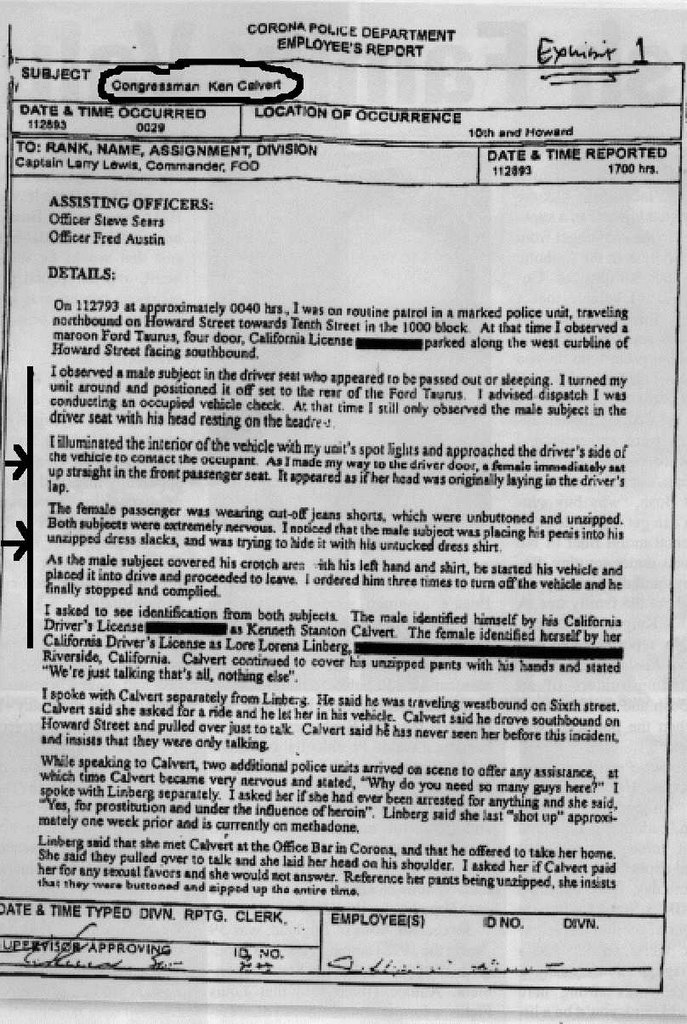
Goal ThermometerLiam O’Mara, a Riverside County history professor and progressive activist is running to represent the Southern California congressional district held by untreated  sex-fiend and corrupt Trumpist Ken Calvert. Calvert doesn’t believe in supporting public health in any way so, is an opponent of not just Medicare-for-All, not for plain ole Medicare as well. O’Mara brings an entirely different perspective to the debate. "I know a great many people without dental or vision insurance, which means far higher costs when things inevitably go wrong,” he told us yesterday. "In fact, I am among them, as one of the many academics who slip between the cracks of good coverage because of the way the field has pushed us into part-time contractors. I know people in my circle who've not seen a dentist in a decade or more. Is it any surprise that billboards for tooth implants are proliferating along freeways in poorer areas? The lack of coverage pushes people into expensive catastrophic care, despite regular check-ups being far cheaper and more healthful. Dentistry is one of countless areas where we could save money if we just made insurance available to everyone. Bernie's plan does that, and we need to elect enough progressives to see it become law."


Heidi Sloan, is a progressive Democrat competing with anti-healthcare Trumpist Roger Williams for a gerrymandered seat in central Texas (TX-25)."Medicare For All," Heidi, who sent us this tweet (above) from a few days back, told us, "is about providing care to all people and to our whole bodies. That means vision, reproductive health, mental health, and dental. Our teeth are not somehow separate from the rest of our bodies, and it is absurd that the insurance industry has convinced us to think of our dental health as something different from our health in general-- as though receiving care for these bones were a treat instead of a necessary component of well-being. When I chew food, I don't think I'm experiencing a luxury. If you've ever had wisdom teeth come in, you know that alleviating that pain should not be regarded as a nice bonus that you get if you can afford it. In demanding Medicare For All, we are demanding the working class have real healthcare for our bodies, and we're not buying that our teeth are somehow exempt from that demand anymore."

Morgan Harper is running for a seat in Columbus, Ohio held by a do-nothing Democratic backbencher, Joyce Beatty. Morgan will never be accused of being a do-nothing-- and passing Medicare-for-All is one of the planks in her progressive platform. "The dentistry crisis in this country," she said, "is largely overshadowed by the broader healthcare crisis; it cannot be ignored. Millions of Americans do not have easy access to quality dental care, millions more are uninsured, and for those who are fortunate to have dental insurance, the quality of that coverage often does little to offset the costs of needed procedures. We must do better." 


Labels: , , , , , ,

Saturday, October 05, 2019

How Great Would It Be To See Trump Debating Bernie About Healthcare Instead Of Trump Debating Biden About Who Has The Most Corrupt Family?

>


Let's take a few minutes away from impeachment, Ukraine and China-- although I do want to mention the reporting did for the Wall Street Journal, about how Trump lied to Senator Ron Johnson (R-WI) when Johnson confronted him about the illegal pressure he was putting on Ukraine, a quid pro quo to get Ukraine to help Trump steal the 2020 election, the way he stole the 2020 election. When Johnson asked Señor T, the illegitimate fake president said, "Muthafucker, no way. I would never do that. Who told you that?"
Let the people
have the power
to redeem
the work of fools
upon the meek


Instead, let's move along to how the Trumpist Regime plans to destroy Medicare, while persuading Trump's 2-digit IQ moron supporters that he's saving it. During his speech to the old, slow-witted and generally feeble residents of the Villages in Florida this week, he mentioned that the impeachment thing might have been set up by the pharmaceutical industry since he's "taking them on." By taking them on, he means letting them run wild and raise prices with impunity. He attacked Bernie's plan to actually improve Medicare and lower drug prices as putting "everyone into a single socialist government-run program that would end private insurance."

Kaiser Heather News reminded it's readers that Trump once again "said he and Republicans are committed to protecting people who have preexisting conditions-- a claim that PolitiFact and Kaiser Health News previously rated False, because of his administration’s policies.


Trump told his audience that “Democrats are draining your health care to finance the open borders.”

We asked the White House for the basis of this remark and never got a specific answer. But there are various issues to examine.

In August, the president argued that Democrats “support giving illegal immigrants free healthcare at our expense.” But that isn’t accurate. The statement, part of a Trump 2020 television advertisement, was rated Mostly False.

That claim examined Democratic candidates who had said during one of the televised debates that their health care plans would provide coverage to undocumented immigrants. But the question posed by a debate host didn’t ask whether coverage would be free. In fact, multiple candidates said coverage for undocumented people would not be free. Some, meanwhile, include copays and deductibles in their health care proposals. Plus, if any Medicare for All plan was financed through, for instance, payroll taxes, undocumented immigrants would also be subject to paying those.

Trump argued that Democratic proposals for universal health care “would totally obliterate Medicare”-- adding that “whether it’s single-payer or the so-called public option … they want to raid Medicare to fund a thing called socialism.”

The argument here is nuanced but, fundamentally, Trump’s characterization misses the mark and is misleading.

The “single-payer” bill he refers to is the Medicare for All proposal pushed by Democratic Sens. Bernie Sanders of Vermont and Elizabeth Warren of Massachusetts. The bill would put all Americans-- including the seniors currently covered by Medicare-- into a single health plan. It would share Medicare’s name but look dramatically different: Unlike the existing program, the proposal envisions covering virtually all medical services and eliminating cost sharing. It would not be administered by private, for-profit contractors.

Predicting what this looks like is difficult since it’s grounded in hypotheticals. And one could argue that using the term “obliterates” is not completely off base because Medicare in its current form would no longer exist. But that misses the broader impact. Under the proposal as it’s written, seniors would be insured through a program at least as generous-- if not more-- than what they currently receive.

As for “public option” proposals put forth by candidates such as former Vice President Joe Biden and South Bend, Ind., Mayor Pete Buttigieg, they would leave Medicare more or less as it is, while also creating a public health plan uninsured people could buy into.

Describing Medicare for All, Trump said the plan would “reduce Americans’ household income by $17,000 a year.”

We contacted the White House to find out the source of this number. The administration acknowledged receipt but never sent an answer.

That said, it’s unclear where this number comes from, because the evidence simply doesn’t exist to make such a precise claim. After all, many details about Medicare for All are still being worked out. That makes it exceptionally difficult to figure out how much such a system would cost-- let alone how an individual household’s finances might change under such a system. (This ambiguity is why the Congressional Budget Office has declined to estimate single-payer’s fiscal impact.)

And different households would likely make out differently under Medicare for All. Some might end up paying more. But others would likely pay more in taxes while still seeing their health care costs go down-- meaning they could ultimately save money.


Trump said, “the Democrat plans for socialized medicine will not just put doctors and hospitals out of business, they will also deny your treatment and everything that you need.”

This statement relies on a talking point that’s been widely debunked.

We focused on the first part of this claim. Both conservatives and moderate Democrats have argued that single-payer health care, in particular, would drive hospitals and doctors to shutter en masse. (Conservatives have made this argument about a public option as well.) In a past related fact check, we rated this as False.

The argument springs from the way Medicare currently reimburses hospitals, at 87 cents for every dollar spent on health care. But the Sanders bill does not set a reimbursement rate, and instead would charge the federal government with devising an appropriate rate.

Some hospitals might struggle under a new system-- but others, health care economists have previously told us, would likely do better.

“It really depends on which hospitals you’re talking about,” Gerard Anderson, a health policy professor at Johns Hopkins University and an expert in hospital pricing, told Kaiser Health News in July.
The L.A. Times' Michael Hiltzik didn't beat around the bush: Trump’s plan to ‘save’ Medicare would actually destroy it. "Trump," he wrote, "portrayed himself Thursday as the nation’s foremost defender of Medicare against what he termed the 'socialist' Medicare for All proposals being offered by Democrats in Congress and on the presidential campaign trail. 'As long as I’m president, no one will lay a hand on your Medicare benefits,' Trump told an audience at a big Florida retirement community. During the day, he signed an executive order purportedly designed to 'protect and improve' the program. Here’s the truth of the matter: Trump’s executive order is a stealth attack on the very program he’s swearing to protect. Buried within the order is a provision that would destroy Medicare by driving its costs to an unsustainable level. At the same time, Trump is proposing to turn more of the program over to commercial insurers. Put simply, he’s proposing to privatize Medicare... The victims will be the 60 million seniors who depend on Medicare for their healthcare. Their costs would go up, and their access to benefits shrink."


Biden can't defend his swampy family of lobbyists, drug addicts and swindlers. Instead his desperation has caused his campaign to run this bullshit ad (below) in Iowa , New Hampshire, South Carolina and Nevada, pretending that Trump wants anyone but Biden instead of what Trump really wants: Biden, Biden, Biden. Trump knows full well that by attacking Biden in early primary states, unsophisticated and simple-minded Democratic primary voters will want to thwart him and vote for Biden-- Trump's strategy for not having to debate a more substantive candidate-- Bernie or Elizabeth-- on policy. He wants Biden so the whole campaign is about who is the worst liar, who is the more senile and whose family is more disgusting-- i.e., a pure lesser of two evils race, the only kind of race Trump knows how to win.


Labels: , , ,

Monday, September 09, 2019

What Do You Do About Democratic Candidates Who Oppose Medicare?

>


From 1905, when it was first introduced, to 1965 when a Democratic landslide the year before than finally allowed it to pass, Medicare had been opposed by conservatives-- of both parties. In its last few years before passage, Wilbur Mills (D-AR), the completely conservative Democrat sexual predator and alcoholic who chaired the then all-powerful House Ways and Means Committee prevented Medicare from being voted on. The Democratic landslide of 1964 broke the grip on Congress of the alliance between the GOP and the right-wing (mostly) southern Democrats.

Democrats gained a net of 37 new seats, bringing their already strong majority to 295-140. But it wasn't just the number of Democrats, it was the quality and progressive nature of Democrats that allowed passage of Medicare-- albeit a flawed compromised version that conservatives had turned it into (no one under 65, no dental, no medicine, no vision, etc). Four conservative Democrats were defeated by Republicans in Alabama as were 2 in Georgia, which may have made some establishment Democrats sad but is part of the reason Medicare passed. Right-wing Republican Patrick Martin was defeated by liberal John Tunney in Riverside, California. San Franciscans elected Medicare champion Phillip Burton to his first term. Of Iowa's 6 anti-Medicare Republicans, five were swept out of office by Democrats who backed it. Of the 6 new Democrats elected that year in Michigan all were Medicare supporters. In New York 7 Republican anti-Medicare congressmen were defeated by 7 pro-Medicare Democrats. In Robert Taft, Jr., a fanatic anti-Medicare freak from Ohio, retired from the House (to run a losing race for senator) and was replaced by Democrat Robert Sweeney, who backed Medicare. Memphis, Tennessee Democrats defeated racist dog Clifford Davis in the primary, replacing him with pro-Medicare Democrat George Grider. In Washington state, 4 anti-Medicare Republicans were replaced by 4 pro-Medicare Democrats, including future Speaker Tom Foley and future Senator Brock Adams.

Sorry for the tangent, but I do want to say that if not for conservatives-- Republicans and Democrats both-- the U.S. would have had Medicare decades sooner than 1965 and it would have had far more in common with the Medicare-For-All bills that were written by Bernie in the Senate and Pramila Jayapal in the House than with the Medicare today. It would have covered everyone for starters. And it would have covered medicine, treatment for eyes and ears, teeth and mental conditions.

When rotgut shitbags like Michael Bennet-- an appointed U.S. Senator with a consistent rating of "F" from ProgressivePunch-- say, as he always does, "One sure way of losing a Senate race in Colorado would be to be for Medicare for All," his is the voice of Wilbur Mills and other conservatives who opposed Medicare for 60 years. His is the voice of conservatives who opposed the American Revolution, the emancipation of the slaves, giving people who were neither male, wealthy, or white the right to vote, the voice of people who opposed Civil Rights and desegregation, public education, anti-trust laws, environmental protection, consumer protection, the 8-hour work week, Social Security, unemployment insurance, gay equality... All the things conservatives fought against... those were the Michael Bennet's of our past and today it should come as no surprise that these conservatives oppose Medicare-for-All and call it socialism. Needless to say, Bennet wants more douche bags like himself in the Senate, which is why he has endorsed John Frackenlooper, who also opposes Medicare-for-All.

It's a funny thing about Frackenlooper. During one of the debates, when he was still running his nonsensical presidential run-- with his mighty average 0.3% support-- he was trying to make the case that he is progressive by bragging that marijuana legalization happened while he was governor of Colorado. That's true; tidied. He somehow neglected to mention that he fought legalization all the way. Even after Amendment 64 passed in 2012, Frackenlooper called it reckless and then sulked for two years.

Not the same as Medicare-for-All... but not unrelated either


Last month, the Colorado Sun compared all of the state's Senate candidates vying to take on right-wing Republican Cory Gardner, in regard to Medicare for All. Frackenlooper, they pointed out, has cautioned that supporting Medicare-for-All "gives Republicans a lane of attack to label Democrats socialist. He said the party 'might as well FedEx the election to Donald Trump' if they don’t heed his warning." I can imagine him warning that the Sons of Liberty were a bunch of extremists and siding with Jospeh Galloway to advocate not breaking with Britain. He probably would have moved to Britain with Galloway and other loyalists who felt the demands for independence were too extreme. That's who Frackenlooper is and has always been-- cowardly, visor-free, conservative garbage.
In Colorado’s Democratic primary for U.S. Senate, at least two candidates support a single-payer government plan that covers everyone through Medicare, including the best-known candidate in the race, Andrew Romanoff.

“A lot of folks find when they change jobs, quit their jobs, when they get fired or their employer goes out of business, they lose their coverage,” said Romanoff, former speaker of the Colorado House. “So if we are serious about guaranteeing health care to all Americans, making sure that’s not just a paper promise but real access to health care, then I think we’ve got to rethink the way that the system works. It’s a false promise to tell folks that their coverage is secure under an existing system.”

The other candidate is Stephany Rose Spaulding, who says that health care should focus on taking care of people and not making money for private insurance companies. “I would make the public option so great that people would find no need for private insurance,” the Baptist pastor and University of Colorado-Colorado Springs professor said.

The stance aligns the two with the policy’s champion in the Democratic presidential primary, Bernie Sanders. The Vermont senator supports a plan that would essentially get rid of private insurance in favor of government coverage for doctor appointments, prescriptions and more. His rival, Massachusetts Sen. Elizabeth Warren, agrees with the idea, as do four other candidates, though they leave room for private insurance.

Romanoff’s plan differs from Sanders’ model in a key way. He thinks people should be able to supplement their Medicare coverage with private insurance if they wish, mirroring how the government-run health care system works today. That, he believes, would allow people to have more choice in their care but also protect them from losing care all together.

“I wish a public option had been added to the Affordable Care Act when this debate began 10 years ago,” he said. “I think a public option would be an improvement on the status quo. I just don’t want to lose sight of the end goal here, which is to get to a place of health care for all.”

Gardner is using Sanders’ embrace of Democratic socialism and Medicare for All as fodder for attack against the crowded field of Democrats seeking to unseat him. It’s a key part of his campaign.

“Socialized medicine means less choice, higher taxes and longer wait times and more government control,” Gardner said during the Western Conservative Summit in downtown Denver last month. “It means losing the health care that you have at your job and having it replaced with government-run healthcare. It’s so free that it’s unavailable. … We know that Democrats’ Medicare for All will actually result in Medicare for none.”

Romanoff and Spaulding reject Gardner’s argument and brush off Bennet’s argument.

“Is this argument going to make it easier for the insurance industry and the drug companies to bankroll Cory Gardner’s campaign and beat up on any Democrat that dares to take them on? Then the answer to that question is yes,” Romanoff said. “But there are more people who are committed to getting a place of universal health care then there are insurance companies and drug companies intent on killing the plan.”

Spaulding said people who call Democrats socialist for supporting Medicare for All are “just trying to trigger people’s emotions.”

“I would say to Bennet that more than 70% of Americans are advocating for a health care system that everyone can have access to,” she said. “So I don’t think we are alienating anyone.”
And then came all the dummy candidates, careerists who just want the job but are clueless and without strong values or principles and are examples of what's wrong with the American political class.
...Others in the Democratic field running to unseat Gardner support a government-run health insurance option that could operate alongside the Affordable Care Act but would allow people to keep their private provider.

“I think a public option is very much wanted across America,” said Alice Madden, a former Colorado House Majority leader. “My view is, it’s about choice. I think if it’s done well in 10 years, maybe private insurance does go away because everyone sees this is the way to go. But if someone is fearful and it totally flips them out (to lose their private insurance) why would you make them do that?”

As for why she thinks Medicare for All is the wrong way to go, Madden says: “I don’t know if it’s necessary and would maybe end up wasting some taxpayers dollars where you don’t need to.”

Dan Baer, an Obama-era diplomat, calls his version of the public-option plan “Medicare for All who need it” or “Medicare for All who want it.”

“I think it makes sense to start with targeting the people who don’t have care right now or people who don’t have access to affordable care,” Baer said.

  ...John Walsh, Colorado’s former U.S. Attorney, and state Sen. Angela Williams also are generally on the same page as their Democratic rivals when it comes to endorsing a public option.

“I think that we have before us a system that could work and should work if we repair it,” Walsh said of the Affordable Care Act.

Williams said she’s “not ready to take away people’s choices, but we want to ensure that people who don’t have healthcare coverage-- that we take care of them with an option.”

She doesn’t foresee the divide on health care becoming a serious divide in the large field. “I think that there are a lot of talented people running in the Senate race, and I believe that we’re all going to be as cordial as possible in running this race,” she said. “Because divisiveness, we might disagree on our views, on issues, but Colorado doesn’t like negative campaigning.”

Baer echoed that sentiment. “I’m proud to be part of the party that is trying to solve a problem that is facing too many Americans,” he said. “And I think we are having a healthy policy discussion.”
I asked a candidate from a different race-- in a fairly red district-- why his e-mails weren't mentioning Medicare-for-All, just GOP/DCCC-type messaging about "access." I asked him if there was a strategy, since I know he is absolutely in favor of Medicare-for-All. Here's what he wrote to me:
No. There’s no strategy. This week has been a bit of a rough one here on my campaign internally. The guy that has been helping me, set me up with this digital marketing firm and turns out that both of them are pretty moderate and want me to run more moderately and think that’s the path to win. This [the e-mail I was complaining to him about] came from their advice-- it was set up a while ago before I publicly endorsed Jayapal’s bill-- so I missed circling back to it and didn’t realize it was still in the queue to go out.

But-- they are gone now. Both of them. I’m not going to run as a moderate and I don’t need people pushing me that way. Unfortunately-- I wish this email had been stronger on the healthcare front-- but hopefully I can send out another one soon and clearly lay out my position for Medicare for All. Strike this up as an early mistake.

I’ve brought on another digital marketing firm which I think will fit my campaign much better. And I’m in the midst of bringing on another manager as well-- someone who worked with AOC last cycle.

I’m seeing there’s a bit of a learning curve for a first time candidate. It takes a minute to realize the value of the advice you get at first. But I’m learning.
Axios reported yesterday that Pelosi is about to release a moderate drug-pricing plan that "would direct the federal government to negotiate the price of certain expensive drugs with little or no competition-- and, crucially, that would also become the price in the private market, not just the Medicare drug coverage price... That's awfully close to what Trump has endorsed before, but Democrats aren’t eager to share the issue ahead of 2020... The drug industry is spending record-setting amounts of cash on lobbying, and it's shoveling campaign cash at Republican senators in an effort to remind them that pharma and Republicans have always been friends. 'I think this is a real test of that alliance,' the industry lobbyist said."

The real bill, the one Pelosi will not allow to come to a vote, was written by Lloyd Doggett (D-TX)-- H.R. 1046. It has 126 Democratic cosponsors, over half the caucus, but Pelosi has it bottled up in the two committees she completely controls through her puppets, Energy and Commerce (Frank Pallone) and Ways and Means (Richard Neal).

Remember, in 2018 it was the promise to reduce prescription drug prices that helped Democrats win the midterms, as more than just the "we hate Trump" party. And reducing prescription drug prices was also a Trump promise despite Republican party protestations. It's almost a year since the midterms and Pelosi hasn't moved an inch-- just more political game-playing, which is the only thing she does any more.

Doggett’s bill deals with pharmaceutical companies that don't negotiate in good faith by enablinhg HHS to issue licenses to competitors who would be able to produce the same drug as a generic, effectively eliminating a company’s monopoly on a particular drug. Pelosi's leadership has largely avoid backing Doggett's bill-- no Steny Hoyer (MD), no Ben Ray Luján (NM), no Jim Clyburn (SC), no Hakeem Jeffries (NY), no Cheri Bustos (IL), no Frank Pallone (NJ), no Richard Neal (MA)... And, of course, the Republican-lite Blue Dog/New Dem freshmen all oppose it-- all the regular suspects: Kendra Horn (OK), Sharice Davids (KS), Joe Cunningham (SC), Xochitl Torres Small (NM), Ben McAdams (UT), Chrissy Houlahan (PA), Angie Craig (MN), Jeff Van Drew (NJ), Colin Allred (TX), Mikie Sherrill (NJ), Anthony Brindisi (NY)... Their constituents like being ripped off by drug companies?

Even though Trump kind of likes Pelosi's plan, a corporate shill like George Holding (R-NC) has finally found an issue to oppose Trump on! The progressive Democrat opposing Holding's reelection this cycle, Jason Butler, told me that "Holding is not fighting to lower prescription drug prices for the people of North Carolina and he’s not protecting his people from the predatory practices of big pharma that led to the opioid epidemic. Some wonder why? Well, you don’t need to look any further than his bank account. As of 2018 Holding has received more than $185,000 from pharmaceutical manufacturers. Holding has a long history of putting personal profit before the needs of his people and its time for a leader who will stand up to big pharma and put the needs of the people of NC first."

Shaniyat Chowdhury is the progressive Democrat taking on corrupt New Dem Gregory Meeks in southeast Queens. "It’s not enough," he told us this morning, "to call yourself a Democrat by covering horns with a halo, and pretending you’re fighting for working class people. Gregory Meeks already accepts millions of dollars from the finance, insurance, and real estate lobbyists to keep him in power, but not for working class people like us. He leverages big money in DC for industries that do not care about our well being. Prescription drug prices are an all-time high. In the richest nation in the world, no person should be too poor to live. Big pharma and our government should not determine the price tag for our lives. Immoral incompetency is why things never get done in DC, and is exactly why corrupt incumbents should be challenged."

Kim Williams is also a progressive Democrat running for a seat occupied by a corrupt conservative, in this case, the one occupied by Blue Dog Jim Costa in the Central Valley. She told us today that "This summer, we knocked on thousands of doors and spoke with hundreds of voters in this district. The topic that came up most was healthcare. We've heard story after story about people who are on the brink of homelessness because of medical debt. We also lack care, and I, myself, have to drive two hours to get to my doctor often after waiting weeks to get an appointment. One in four adults live below the poverty line here and two-thirds of our kids are on some form of federal assistance. And if the national average holds true for this district, at least twenty percent of our residents are choosing between medicine and food. Is now really the time to be playing political football? And what is the point of holding on to a majority if you're going to put politics over people's lives? Every crisis families in this district face is directly tied to political neglect, and it's long past time for change."


Labels: , , , , , ,