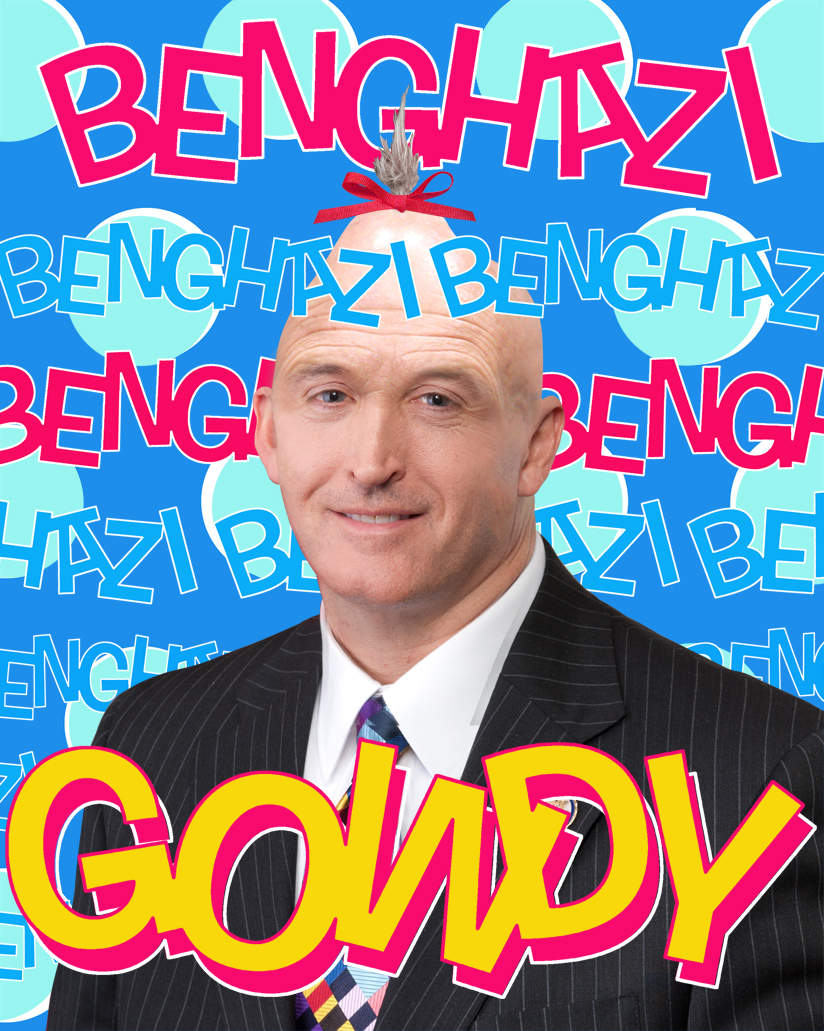
"When fascism comes to America, it will be wrapped in the flag and carrying the cross."
-- Sinclair Lewis
Friday, April 06, 2018
Trump's Winning-- Even If The Republicans Are Losing In... Tennessee
>
Matt Bai’s post at Yahoo News yesterday, Tired of winning yet? You're not alone., was hilarious. His low approval numbers can be attributed to the public being tired of so much winning. He asks you to remember all the payback to 2016 when “Trump, like a real-life Music Man with a truckload of fetching red hats [vowed that] if he became president, America would all of a sudden start winning again. Our rural areas and small cities would bounce back. Our borders would be safe. Our government would work for everyone. There was just one catch. We’d win so much, Trump said, that we’d eventually grow tired of winning. He knew what he was talking about. Because Trump had been winning all his life.”
He was born a winner, with a dad who made a small fortune in real estate. He gambled that fortune on big-city skyscrapers and faux-classic casinos and exclusive golf courses the color of money, and he won again and again, if you don’t count a couple of nettlesome bankruptcies and a huge payout to victims of his scam university. (And, you know, the frozen steaks.) So Trump understood how empty winning can be. How you think it’s going to soothe all your demons and wipe away all your cares, how you assume that once your team finally wins the championship you will wake up every morning with a smile on your face, but in the end it just leads to a void of disappointment and self-doubt. And here we are. Trump’s been pretty much the president he said he would be, even before he seized control of his own administration a few weeks ago and started replacing milquetoast policymakers with like-minded TV celebrities. He’s told the Europeans and other allies who relied on our leadership for the last century to go figure things out for themselves. He’s done his damnedest to discredit the entire idea of America as a nation of immigrants who share common values. He’s responded to the Russian czar’s threat to nuke Florida by congratulating him on his hard-fought fake-election win and suggesting he visit Washington. Thanks to Trump’s tax cuts and military buildup, we’re now rocketing toward an economic calamity in which just servicing the interest on our spiraling debt, coupled with our other obligations, will push interest rates higher and crowd out almost everything else the federal government does. Oh, I know what you’re saying: This doesn’t sound like winning at all. But that’s only because you misunderstood what Trump was trying to say. Trump doesn’t define winning the way you and I do. It’s not about giving back or improving people’s lives; as I’ve written before, Trump has never done that anywhere, unless you count remodeling a skating rink. Winning, in Trump’s mind, wasn’t about us. It was about him. It’s about ratings and primacy. Trump wants more than anything to exist outside of himself, to occupy your screens and your emotions. He always has. Losing, to Trump, is receding from center stage. Winning is finding one way after another to keep us riveted to the show. So Trump is absolutely delivering on his promise. He’s winning and winning and winning. Every day, it seems, he taps some new well of audacity, willing himself to become the overarching story of our time. Even the reimagining of an old TV sitcom becomes a national conversation not because of anything that happens on the show itself, but because of what its star says about Trump, in the script and in real life. They should call it “Roseanne in Trumpland.” Another win for the president. Of course Trump’s idea of winning feels deflating to most of us. It’s exhausting. It’s disorienting. It’s like putting your face up to an industrial fan every hour of the day. It seeps into our dreams-- all this dissembling and smallness and provocation bursting onto our TV crawls and iPhone screens-- and when we wake up, we’re not an inch closer to giving our kids the America we promised them. But you can’t really blame the president. He told us right from the start that we’d get tired of the whole noisy routine. We were just too busy gawking to listen.
And, if a new MTSU poll his to be believed, Trump is about to win again-- big-- in Tennessee. Former Governor Phil Bredesen is going to crush GOP nut case Marsha Blackburn in the Senate race in one of the country’s reddest states. Tennessee’s PVI is a daunting R+14. Trump won the state’s 11 electoral votes in a landslide-- 1,522,925 (60.7%) to 870,695 (34.7%), biggest margin any presidential candidate had since 1972. Bredesen leads Blackburn 45-35% and even manages to take 20% of the Republican electorate! Tennessee’s voters know Bredesen is a conservative and Trump will be able to pull out the self-congratulatory speech he have when Conor Lamb beat Saccone in Pennsylvania underscoring that Lamb won because he ran on Trump’s platform. He’ll say the same thing about Bredesen. While the Tennessee Republicans wage war against Bredesen in the same way the Polish army attacked German panzer divisions and the Luftwaffe-- with calvary charges. “Blackburn's campaign spokesman Abbi Sigler said Bredesen was trying to convince voters he's a moderate but he's more in line with Democrats like U.S. Sen. Chuck Schumer and former House Speaker Nancy Pelosi.” That’s not going to work. [The poll also showed Trump with a 50% approval rating and just 41% disapproving.] And just ask yourself... if the House impeaches Trump in 2019, how will Senator Bredesen (and Senator Doug Jones) vote when the Senate has to decide if he's guilty or not? You know.
Is Marco Rubio The Least Suitable Candidate, Not Counting Cruz And Herr Trumpf?
>
I guess it was moderately embarrassing for all concerned on the last day of the year when it came out that the cynical soft-on-national-defense attacks Rubio has been using (unsuccessfully) against Ted Cruz, could scorch his establishment allies, who were as concerned as Cruz was about the anti-Constitution neocons like Rubio trying to permit unlimited domestic spying on American citizens-- and voted with Cruz and against Rubio. As Tim Mak put it bluntly at the Daily Beast, "Among Sen. Marco Rubio’s closest allies, he stands nearly alone on the issue of NSA spying."
21 of Rubio’s 24 congressional supporters backed the USA Freedom Act-- a bill Rubio has said, “weaken[s]… U.S. intelligence programs”-- this year (a 25th supporter, Rep. Darin LaHood, wasn’t in Congress at the time of the vote). And of these 21 members of Congress, more than a dozen co-sponsored a version of the USA Freedom Act in the previous Congress. ...It’s just the latest complication with Rubio’s opposition to reining in the NSA—this month, he was using misleading talking points to present his opponents as weak on national security; now he finds himself in a sticky situation, where many of his own closest supporters can be counted among that crowd.
Chief among Rubio’s latest endorsements is Rep. Trey Gowdy, a Republican congressman whose support Rubio touted widely this week in Iowa. But Gowdy was a co-sponsor of the USA Freedom Act. His office did not return a request for comment. Rep. Darrell Issa, another prominent Rubio backer, also co-sponsored this year’s NSA overhaul.
“We spy on everyone,” Rubio told Gowdy, defending the practice of spying on a U.S. ally. “That’s the nature of intelligence.” “It’s more complicated than the [WSJ] story makes it seem,” Rubio added. Gowdy responded that people are upset because the U.S. decided to stop spying on leaders of Germany and some other nations, but still spies on Israel. But Rubio sang a different tune around the same time Wednesday morning on the Fox News program Fox and Friends. Instead of defending the surveillance, Rubio said that the practice of spying on allies was possibly even “worse” than reported. “I actually think it might be worse than what some people might think, but this is an issue that we’ll keep a close eye on,” Rubio said on the show.
Rubio, a dishonest little worm, tried to placate Gowdy by offering him the job of Attorney General (as Herr Trumpf had done previously). These Republicans! Matt Bai had one of them in mind yesterday too: the Young Fogey who, he wrote, may be compared to Obama on certain superficial levels but is really nothing like Obama on anything that counts. In an interview a few months ago he had told Bai, "I believe that the Republican Party has an opportunity in 2016 to do something it hasn’t been able to do in a long time, and that is make the argument that we’re the party of the future, that we are the party that understands the 21st century and understands what it takes to make America great in the 21st century." Bai met up with him again in Iowa Wednesday, still very much the Young Fogey trying to make his generational appeal "in front of a busily designed blue banner, on which were listed a long series of meaningless phrases: New American Century. Renewed American Values. New American Jobs. Renewed American Education. New American Leadership."
Later, in a conversation aboard his campaign bus, I asked Rubio if his generational argument still seemed relevant. “The generational choice has always been about our ideas, about whether we we’re going to confront 21st-century issues,” Rubio told me. “And the fundamental argument I’m making is the best way to confront 21st-century issues is by applying the principles that made us great to the unique challenges before us now.” So, I clarified, the new American century was really about returning to the principles of the last American century? “Actually, the principle of the new American century is to make it even better than the 20th century,” he explained. Oh. OK.
Rubio enjoyed a sustained surge in the polls in late October, on the strength of a forceful debate performance, after which it seemed he might be able to unify the sizable bloc of Republican voters who aren’t ready to disassemble all government and replace it with the hunger games. But his momentum seems to have stalled in recent weeks, and his strategy in the early states seems opaque. Now some of Rubio’s rivals are coming at him hard, hoping to peel off some of his support in New Hampshire and Iowa. This week, both Bush and Chris Christie attacked Rubio for being AWOL from the Senate, where he only occasionally drops in these days to vote. (“I’m out there running for president, so these votes start to matter again,” Rubio told me, by way of explanation.) The most pointed attack on Rubio, however, has to do with his limited experience. Christie, who is within striking distance of Rubio in most New Hampshire polls, repeatedly says that the last thing the country needs is another president who needs “on-the-job training,” someone who will sit down on his first day in the Oval Office and say, “Gee-whiz.” “He has no experience governing,” Christie told me when I brought up Rubio with him a few weeks ago. “He’s had five years in the United States Senate, and for a good amount of that time he’s been running for president.” If Rubio is frustrated by the unrelenting questions about his resume, he doesn’t show it. As debate watchers know, he tends to greet hostility from others with something like bewilderment, as if he can’t quite comprehend why such a pointless accusation would even occur to anyone. “No one over the last five years has shown better judgment or better understanding of the national security issues we face than I do,” he told me. “Gov. Christie can say that, but on my first day in office I’ll be reading the same intelligence reports that I’ve been reading for the last five years, because I’m a member of the intelligence committee. “I’m prepared to be commander in chief the first minute of the first day in office,” Rubio added, “and I’m not sure he can say that or anyone else on the Republican side can say that.” I asked Rubio the obvious question: why he thought he was any better prepared to be president than Obama had been in 2008. He gave me the obvious answer. “I don’t believe he’s failed because he was only a senator for two years,” Rubio said. “He has seven years of presidential experience, and the decisions he’s making today are just as bad or not worse than the ones he made at the beginning.” To a large extent, Rubio’s viability in the coming weeks probably depends on whether voters who loathe the president accept this answer or not. It depends on whether they decide, ultimately, that Obama was too much of an ideologue, as Rubio argues, or whether, as Christie contends, Obama’s brief career as a legislator simply didn’t prepare him to govern. It may also depend, to some extent, on whether Rubio can compensate for some of the advantages Obama had that he doesn’t. On paper, Obama and Rubio present strikingly similar candidacies. Both were state legislators who became celebrated first-term senators. Both represent a demographic shift in the country toward a fast-approaching nonwhite majority. Both rose on the strength of inspiring personal stories and electrifying speeches. In some cosmic way, Rubio must know that he probably owes his ascendance in national politics to Obama’s. Every party goes looking for its version of the latest model; just as George W. Bush seemed to be the boomer antidote to Bill Clinton, Rubio arrived on the scene just as Republicans were scrambling to find their own personification of youth and inclusivity. But 2016 is turning out to be nothing like 2008, and Rubio’s candidacy isn’t really much like Obama’s. For one thing, Obama benefited from having the kind of clear foil, in Hillary Clinton, whom Rubio had hoped to face in a much smaller field-- older, establishment-backed, shadowed by a sense of dynastic entitlement. Obama was also fortunate in that he could tap into a powerful constituency inside the party. Clinton needed African-Americans voters, but after Obama proved himself capable of winning in Iowa, those voters swung heavily into his column, changing the electoral math of the primaries. There is no corresponding bloc of Latino voters in the Republican Party, other than in a handful of states.
More to the point, though, Rubio isn’t anything like the fluid politician Obama was in 2008. It’s true that both men are essentially cool characters, more comfortable talking about policy than sharing emotions. But where Obama has always exuded preternatural confidence (some call it arrogance) and an informal, self-deprecating style, Rubio telegraphs caution and uncertainty. In his town halls this week, Rubio spoke from notes he balanced on a stool, occasionally pausing to find his place, as if manually switching gears in his head. He seemed ill at ease introducing his wife and four (adorable) children, which ought to be the least scripted thing a candidate ever has to do. After meeting with Rubio last week, a reporter for New Hampshire’s Conway Daily Sun likened him to “a computer algorithm designed to cover talking points.” This was uncharitable, but it’s true that Rubio has a tendency to seek refuge in the well-worn trenches of his rhetoric, to the extent that you sometimes wonder if he has heard the question you’re asking. I’ve sat with Rubio several times now, just as I spent some time with Obama before he became president. It seems to me that Obama vanquished the doubts about his resume mostly because, rightly or not, he never seemed to doubt the firmness of his own footing. Rubio, on the other hand, is like a man gripping a railing, steady in the moment but afraid to let go. Actually, if there’s a better analog for Rubio than Obama, it might be John Kerry in 2004. Like Rubio, Kerry was an elusive and insecure candidate, a senator who stepped through every conversation like it was a minefield from his youth in Vietnam. But Kerry was also the perfect consensus candidate for a riven party-- liberal enough to appease supporters of Howard Dean and establishment enough to reassure everyone else. He was both acceptable and electable. It’s hard to think of any constituency in the Republican Party right now-- evangelicals, libertarians, nativists-- whose goal in life is to make Rubio our next president, as opposed to Cruz or Carson or Trump. But as I wrote last April, Rubio might still be the candidate who satisfies most of them.
Let's hope Rubio doesn't ever get anywhere near the White House, but that if he somehow does manage to get in, he doesn't try to eviscerate the 3rd Amendment too.