Wednesday, April 22, 2020

World Leader? Nope

>


Other than nations that have transactional relationships with Trump, the whole world generally detests him. Both friends of the U.S. like the EU countries and foes of our country, like North Korea, look at him like a buffoon. Even if you don't understand German, the video above gives you an idea of what kind of esteem Germans hold the president-- especially when you compare that to how admired Barack Obama was there.

Last week Trump mouthed off about how great his relationship is with murderous Korean dictator Kim Jong Un, boasting how the U.S. would have been at war with north Korea if not for him. "I received a nice note from him recently. It was a nice note. I think we’re doing fine," referring to stalled nuclear talks with North Korea. The following day, the North Korean Foreign Ministry put out a statement saying there was no letter from Kim Jong Un and that Trump had just made it up out of thin air. "The relations between the top leaders of [North Korea] and the U.S. are not an issue to be taken up just for diversion nor it should be misused for meeting selfish purposes."

National Security Action, a Democratic organization, hired Hart Research to do a poll of voters in battleground states. Most Americans say Trump has made the U.S. less respected on the world stage. Only 31% think he's made the U.S. more respected. "Among the 16% of voters who remain undecided ahead of November’s election," wrote Axios' Dave Lawler, "59% agree that Trump is making the U.S. less respected, compared to 16% who say the U.S. is now more respected." This chart shows the share of voters who approve or are concerned about Trump's handling of key issues:


Standing up to China ranked last, suggesting Trump’s recent campaign to brand Joe Biden as "soft" on China may not resonate strongly. Especially harmful for Trump's reelection prospects is that 22% of voters in these key states say that Trump has increased the likelihood of war.

Jim Harper is a civil rights attorney contesting a gaggle of conservative Democrats for a blue seat in northwest Indiana. He noted that morning that "allies and world leaders don't take Trump seriously, and Americans know this. Now more than ever, we need international cooperation to overcome this global pandemic. Unfortunately, Trump has shredded American diplomatic credibility and, with it, our ability to lead. This is just another example of how Trump's incompetence will cost lives at home and abroad."

Goal ThermometerEva Putzova progressives with the only opportunity for adding an Arizona progressive to Congress. She's the opposite of insular and is very aware of the danger Trump's narcissistic personality put's America in.She told me he's "made the world less safe and harmed our reputation with other countries. He has abrogated nuclear arms treaties with Russia and is developing low-yield nuclear weapons which increases the chances of them actually being used. He has increased tensions with China over his racist 'China Virus' statements related to the coronavirus. And with the exception of brutal dictators like MBS, Bolsonaro, and Duterte he is despised and disrespected by world leaders. Like his domestic policy, his foreign policy is driven by self-interest, not national interest. It is no wonder that 22% of voters in battleground states say that Trump has increased the likelihood of war. We need a President who will seek peace between nations and bring us back from the brink of armed conflict. Whether that is Joe Biden remains to be seen. A progressive Congress and progressive movement will be necessary to insure that is the case."

Lauren Ashcraft is the progressive candidate running in a congressional district that spans parts of Manhattan's East Side, Queens and Brooklyn, a unique situation. Her opponent has ignored Queens and Brooklyn-- and most of the Manhattan parts of the district, just lavishing attention on Wall Street and the wealthy neighborhoods of the Upper East Side. This morning, Lauren told me that "Trump's foreign policy has been to compliment leaders who compliment him or help him or his friends to personally profit-- an approach that is otherwise completely maniacal and without any logic or foresight. It’s time we have a new generation of leaders who won’t budge on being anti-war and anti-imperialism."

Having won his primary, history professor Liam O'Mara is running for a Riverside County congressional seat held by corrupt conservative Ken Calvert. "Our standing in the world matters, and not just with tin-pot dictators and foreign influence peddlers," he told me earlier today. "That this needs to be said at all is sad, but it does. Republican voters are always talking about keeping Americans safe-- so why do they ignore the evidence and throw out strategies proven to work? At the end of the day, it's apparently not our safety that matters, it's how 'tough' we appear, how much we push others around, and this approach to foreign policy consistently increases dangers for Americans and is objectively harmful."

"Trump, he continued, "entered office determined to hamstring the State Department, slashing the aid budget that helps us to maintain good relations and solve problems before they affect us, and attacking the diplomatic corps because it was devoted to the country and not to his personal interests. He has also repeatedly slammed NATO and the EU, maligned our close neighbours Canada and Mexico, and undermined pro-democracy forces in dozens of countries, while at the same time cozying up to dictators like Kim, lawless killers like Duterte, and overt neofascists like Bolsonaro. He has also continued the longstanding American subservience to the Saudi monarchy and the Israeli far right, in both cases ignoring core American principles and commitments to human rights. And he has pursued military action in at least eight countries that escalates the blowback risk to Americans, since military action alone will not and cannot defeat terrorism. We know what works and has worked, repeatedly and over many decades, in cases all around the world. We can spread liberty and stability, decrease the threat of terrorism and insurgencies, and strengthen economic and political ties in ways that ensure major wars are a thing of the past. And the way we do that is... pretty much the opposite of everything the GOP does in Washington. I had friends present and offering expert analysis before the Iraq War... which was promptly dismissed, with predictable and disastrous consequences. It's time we paid attention to the evidence again, and stopped letting this country be run by an organized crime family."


Labels: , , , , , , , ,

Monday, March 23, 2020

U.S. Has No Competent Leadership In The Current Crisis-- We Are Flying Blind

>


When Obama was elected in 2008, Bush left him a major financial crisis that came to be known as the Great Recession. Obama appointed Rahm Emanuel chief of staff who was widely quoted as having said "You shouldn’t let a crisis go to waste," meaning it could be used to pass otherwise difficult legislation and enact policies that might get more scrutiny and opposition under other circumstances.

Needless to say, the Trump Regime is trying to do that right now and we've discussed their economic wish list for the catastrophe. particularly lowering taxes and jeopardizing Social Security and Medicare. Politico's Betsy Swan, though, looked in a different direction for something they'd like to do: suspending constitutional rights under cover of the crisis. Enter, stage right: William Barr, the Trumpst Attorney General. "The Justice Department," she reported, "has quietly asked Congress for the ability to ask chief judges to detain people indefinitely without trial during emergencies-- part of a push for new powers that comes as the novel coronavirus spreads throughout the United States." Barr is targeting the statute of limitations, asylum, the way court hearings are conducted and is "seeking the authority to extend deadlines on merger reviews and prosecutions."
The move has tapped into a broader fear among civil liberties advocates and Donald Trump’s critics-- that the president will use a moment of crisis to push for controversial policy changes. Already, he has cited the pandemic as a reason for heightening border restrictions and restricting asylum claims. He has also pushed for further tax cuts as the economy withers, arguing it would soften the financial blow to Americans. And even without policy changes, Trump has vast emergency powers that he could deploy right now to try to slow the coronavirus outbreak.

...In one of the documents, the department proposed that Congress grant the attorney general power to ask the chief judge of any district court to pause court proceedings “whenever the district court is fully or partially closed by virtue of any natural disaster, civil disobedience, or other emergency situation.”

The proposal would also grant those top judges broad authority to pause court proceedings during emergencies. It would apply to “any statutes or rules of procedure otherwise affecting pre-arrest, post-arrest, pre-trial, trial, and post-trial procedures in criminal and juvenile proceedings and all civil process and proceedings,” according to draft legislative language the department shared with Congress. In making the case for the change, the DOJ wrote that individual judges can currently pause proceedings during emergencies but that their proposal would make sure all judges in any particular district could handle emergencies “in a consistent manner.”

The request raised eyebrows because of its potential implications for habeas corpus-- the constitutional right to appear before a judge after arrest and seek release.

“Not only would it be a violation of that, but it says ‘affecting pre-arrest,’” said Norman L. Reimer, executive director of the National Association of Criminal Defense Lawyers. “So that means you could be arrested and never brought before a judge until they decide that the emergency or the civil disobedience is over. I find it absolutely terrifying. Especially in a time of emergency, we should be very careful about granting new powers to the government.”

Reimer said the possibility of chief judges suspending all court rules during an emergency without a clear end in sight was deeply disturbing.

“That is something that should not happen in a democracy,” he said.
Matt Cartwright (D-PA) is self-quarantined and has had some time to think about this threat. "It is abhorrent to use 'emergency' as an excuse to curtail American civil rights," he told me today. "We in Pennsylvania are rightly proud of our own Supreme Court Justice Owen J. Roberts.  A lifelong Republican, not only did he vote to uphold Social Security as constitutional. But, just as consequentially, he also was one of the dissenting votes in Korematsu v. United States, in which the Court upheld our shameful imprisonment of thousands of innocent, loyal Americans of Japanese ancestry during Workd War II. Roberts dissented because he understood the truth:  that when we surrender the civil rights of any American, we forfeit a part of why America is even a nation in the first place."

Jim Harper is an attorney who is running for the open blue congressional seat in northwestern Indiana. "The Justice Department's ploy is shocking," he told us this morning, "but not surprising. Donald Trump does not care about due process, and he does not care about fixing our broken criminal justice system. At a time when governments should be releasing non-violent and low risk offenders to reduce the risk to inmates and employees alike, Trump and Barr are using this emergency to hold inmates for longer than the law allows. Trump is once again trampling on the Constitution. We should all be concerned. Today, he is using this emergency to take rights away from inmates and asylum seekers. Who will be next?"


Lev Menand and Ganesh Sitaraman went through seven lessons we should have learned from the Great Recession. McConnell failed to move any of his reactionary pandemic legislation yesterday-- in part due to all the Republican senators quarantined. Even before that, Menand and Sitaraman were urging that we look back at policy choices made in 2008 to help us navigate the current emergency. "Policymakers," they wrote, "pursued a variety of crisis-fighting strategies, from investing in banks and automobile companies, to cutting taxes and green-lighting infrastructure investments, to re-regulating financial institutions and setting up new agencies to protect Americans from some of the harmful practices that helped precipitate and worsen the crash. Looking back at what worked and what didn’t can help us reprise successful strategies while avoiding pitfalls."
1 Fiscal Stimulus Should be Big, Salient, and Recurring. The 2009 stimulus was big, but not big enough. Famously, Christina Romer, President Obama’s chief economic advisor, proposed a stimulus of greater than $1 trillion, but was rebuffed by political advisors who thought that amount would appear too large. The stimulus that passed was not only too small, but it was largely composed of withholding tax reductions. This tax cut went unnoticed by most people, compared to getting a check from the federal government. (Incredibly, that was by design.) For a stimulus to work well, people should know and feel that they are getting money in their pockets. Ideas like cancelling student loan debt, expanding Social Security payments, and direct transfers are therefore far better than payroll tax cuts. And as economic crises generally do not resolve themselves immediately, a stimulus should not be a one-time-only action. Indeed, after the last stimulus, the federal government adopted sequestration, a disastrous austerity policy that ran directly counter to continuing to spark growth and recovery. A stimulus should be sustained with recurring elements to restore confidence and ensure that recovery does not depend on the legislature reauthorizing expansionary policy every six months.

2 Target Main Street. During the 2008 crisis, policymakers targeted the bulk of the bailout money at Wall Street financial institutions, rather than homeowners. The result was twofold. Wall Street recovered relatively swiftly, while homeowners did not; and the economy was rebuilt on a shaky foundation as homeowners struggled for years to get above water on their mortgages. Some at the time argued for rescuing homeowners, rather than big financial institutions, but their arguments went unheeded. This time, instead of homeowners, it’s small businesses and workers who are in trouble. Restaurants, bars, mom-and-pop retail, and other local enterprises are suffering from physical distancing. Workers are losing their jobs. Policymakers’ focus needs to be on proposals that will keep these businesses and individuals afloat. Stabilizing household balance sheets will address one of the roots of the crisis and lay the foundation for economic recovery.

3 Reforms Should Make Structural Improvements. Both bailouts and a stimulus can be designed as one-time policies or can be designed to have structural implications to get the economy on a safer, stronger, more secure footing in case of a future crisis. Reducing withholdings-- as the 2009 stimulus did-- or the payroll tax cut that the White House proposed recently do not serve that purpose; in fact, they could weaken important safety net programs. Instead, policymakers should push for proposals like paid leave, and condition bailouts on higher wages and governance reforms. These kinds of changes strengthen the economy after the crisis subsides-- and make it more resilient for when the next crisis hits.

4 Bailouts Without Stringent Conditions are a Bad Idea. When the government bailed out financial institutions in 2008, it did so with few conditions. This created two sets of problems. First, rescued firms were free to use taxpayer funds to pay bonuses, rather than for shoring up the economy at the household level. And second, it re-established that these institutions were too big to fail, and gave them license after the fact to return to irresponsible, risky behavior. Thus, many of the biggest banks have grown since 2008 and pushed for deregulation, increasing the likelihood of future bank bailouts. Executives and investors did well during the boom years, knowing that the government would likely rescue their firms if things went bad. While some say that we should simply let irresponsible private companies fail, certain businesses are effectively public utilities for which continuity of service is of critical importance. Banks are essential to economic functioning, and in a crisis the government is typically the only source of new capital to keep them operational. Airlines, which face serious distress today, also provide basic infrastructure. Policymakers need to keep these businesses running but they do not need to bail them out unconditionally.

5 Debt Restructuring Should Focus on Forgiveness. In a shrinking economy, facing growing deflationary pressures, some debts cannot be repaid. But default and foreclosure are hugely disruptive and damaging, and in the current environment, actively dangerous. During the Great Recession, policymakers adopted technical, complicated policies like the Home Affordable Modification Program (HAMP) to get at the ongoing mortgage crisis. But HAMP was difficult to navigate, slow to act, helped too few people, and disproportionately benefited big companies. HAMP was also inadequately sized. Mortgage debt overhang continued, holding back consumer spending and impeding the recovery. A better, simpler, and more effective response would alleviate suffering by simply forgiving debt and eliminating debt overhang.

6 Technocratic Regulation Is Fragile and Often Ineffective. After the financial crash, Congress passed the Dodd-Frank Act, a law that reformed the financial system largely by requiring technocratic governance by administrative agencies, rather than through structural improvements to the design of financial institutions. For example, instead of breaking up the banks through a simple, clear Glass-Steagall regime, the Volcker Rule prohibited proprietary trading, but with some carve-outs. Companies heavily lobbied regulators on the specifics, ultimately stretching the rule to hundreds of pages of obscure language. A few years later, banks succeeded in rolling back several aspects of the Volcker Rule. Looking forward, policy reforms shouldn’t focus on either deregulation or technocratic regulation—they should focus on structural reforms that create the conditions for enduring economic stability.

7 If it Functions as Money, it Should be Regulated as Money. The Federal Reserve recently announced it would back commercial paper markets, repo markets, and money market mutual funds, serving as a lender of last resort for issuers of these deposit-substitutes. This gives these firms the benefits of a public subsidy without imposing any of the prophylactic safeguards designed for bank deposits. Ordinarily, banks get the benefit of federal insurance through the FDIC, in return for being regulated and paying fees to the government. This prevents a “run” on the banks, and it was a critical part of the New Deal. In 2008, a run in the money markets helped deepen the financial panic and amplify the recession, and yet this market was never fully reformed. We shouldn’t make the same mistake twice. If the Fed is going to backstop these money-substitutes, they should be brought into the bank regulatory regime.


Labels: , , , , ,

Tuesday, February 04, 2020

NRA Fanatic-- And Montana State Legislator-- Claims Permission To Murder Socialists Is In The Constitution

>


Socialism-- of the Scandinavian variety-- was once very popular in Montana, particularly among miners. Montanans were voting for the Socialist Party candidate for president, Eugene Debs, almost doubt the rate of the U.S. in general and in 1917 Butte elected a Socialist Party mayor. That all eroded with the infamous Anaconda Road Massacre-- a corporate/fascist  response to the Industrial Workers of the World and the Metal Mine Workers Industrial Union strike in 1920. The owner of the Anaconda Copper Mining Company was reported in a local Butte newspaper to be urging the shootling and hanging of the strikers. His mine guards opened fire on the picketers, killing one and wounding 15 others-- each one in the back as they tried fleeing. No one was ever prosecuted for the murder.

Montana's 52nd House district, basically the south side of Billings, is represented in the state legislature by Rodney Garcia, a far right Republican freshman who won his seat in 2018 with 1,858 votes (53.3%) against 24 year old Democrat Amedlia Marquez who had 1,631 votes (46.7%). Garcia, a 66 year old high school graduate and retired oil worker had served in the legislature previously (1985-87). He campaign primarily on allowing guns in schools, cutting the size of government and against public healthcare (i.e., Medicare and Medicaid). Over the weekend he became much better known, saying he believes the U.S. Constitution calls for the shooting or jailing of those who identify as socialists.

Garcia made the statement at a state party gathering in Helena Friday meant to kick off election season and offer training for party members and candidates. Garcia said he was concerned about socialists "entering our government" and socialists "everywhere" in Billings, before saying the Constitution says to either shoot socialists or put them in jail. Amid cries for his resignation, he said yesterday that he would resign only if God asked him to.


The Montana Republican Party later condemned Garcia's remarks.

In this year's presidential election, President Donald Trump has often called Democrats "radical socialists" in an attempt to use the term socialism, which is defined as theories about collective or government ownership and operation of the means of production and distribution, as a boogeyman-like phrase to criticize proposals from Democrats where the federal government would play a larger role in areas like health care or education.

...On Saturday, a reporter asked Garcia to clarify his remarks.

“So actually in the Constitution of the United States (if) they are found guilty of being a socialist member you either go to prison or are shot,” Garcia said.

Garcia could not to point to where in the Constitution it says socialists could be shot or jailed.

Asked to clarify if he thought it was fair to shoot or jail a socialist, including those who live in Montana, Garcia said yes.

“They’re enemies of the free state,” Garcia said. “What do we do with our enemies in war? In Vietnam, (Afghanistan), all those. What did we do?”

Asked if that was an appropriate response to his opponent from the last election cycle, Garcia said “according to the Constitution, I’m telling you.”

“I agree with my Constitution,” Garcia said. “That’s what makes us free. We’re not a democracy, we’re a Republic Constitution.”

In 2018 Garcia ran against Amelia Marquez for the House District 52 seat in Billings.

Marquez said Saturday she is associated with the Montana Democratic Party and is an eastern member at-large with the party’s executive board. She said she is also a democratic socialist and her political views align with those of Sanders.

Marquez said Saturday after being told about Garcia's statements she wished the state legislator would spend more time talking to his constituents about their needs.

“I wish Rep. Garcia would continue to focus on the issues rather than this constant worry over things that are somewhat ludicrous,” Marquez said.

Garcia said he views what he sees as an influx of socialism in Montana as a “very dangerous” situation and that socialism has destroyed countries like Venezuela.

“They’re teaching that to kids. Thank God my grandkids know it’s wrong because I teach them. And it’s a very dangerous situation," Garcia said.

Garcia added he believes socialism is growing, citing advertising he says is done by socialists on Facebook.

Garcia is not new to controversy. During the 2019 state legislative session in the midst of debate over child protective services, he went on a conservative radio show to accuse child protection workers of kidnapping children. He was forced to return a $3,000 campaign contribution in 2018... The Montana Republican Party issued a statement Saturday censuring Garcia’s comments. When Garcia spoke Friday there was laughter after his question; some of those asked by a reporter about it said it was a response to an uncomfortable situation.

“The Montana Republican Party wholeheartedly condemns the comment that was made and under no circumstance is violence against someone with opposing political views acceptable,” said Spenser Merwin, the MT GOP executive director. “It’s disappointing that this isolated incident took away from the weekend’s events which showcased the strength of our statewide candidates and the importance of the upcoming election.”
Missoula area state Rep. Tom Winter, a progressive congressional candidate for Montana's one congressional seat, now open, told us that "Montana made national news today. It marked the second time in a week that the GOP called for the deaths of citizens they disagree with politically. Outrageous? Absolutely. Surprising? Not really. This time it was a fellow state legislator-- a colleague of mine-- claiming that our Constitution allows socialists to be shot. Ryan Zinke, with whom he was speaking, did not even bother to condemn his remark. Yes, that Ryan Zinke-- former Montanan Congressman and former Secretary of the Interior-- who resigned due to a corruption scandal, who sold off our public lands, and who now hides out in his fancy second home in California. He saw no problem 'killing socialists'. And last week the Republican Party in my district shared a video calling for civil war and to 'hang Democrats for treason'. They are talking about me. And my family. And my constituents. Just last month our Republican Secretary of State used a taxpayer-funded website to write, in regards to Native Americans, 'Species, languages, races all adapt and assimilate or they fade away'. And there it is. Openly applying social Darwinism to our fellow Montanans." Goal ThermometerWinter-- to whose campaign you can contribute by clicking on the 2020 Blue America congressional thermometer on the right-- was not finished, not by a long shot:
We should not be surprised. From Congressman Gianforte’s fearmongering over refugees to his donations to white supremacists, to Attorney General Fox praising a fast-food chain for its homophobia, to various state legislators palling around with white nationalists, to Auditor Rosendale moderating a far-right racist Facebook group, there is a moral rot at the top of the Montana GOP. All of us here know this.

I sat on the House floor in our state’s Capitol as one GOP representative accused Native Americans of committing a genocide against their own people. And he perpetuated the libel that they ate dogs. The most that the GOP "leadership" could muster was a weak half apology before sweeping it under the rug.

Various GOP Reps planted jars of personal lubricant on their colleagues’ desks, threatening members who had voted in support of Medicaid expansion with sexual violence. The Speaker of the House-- technically my boss-- was the first and only follower of a Twitter account mocking one of my disabled constituents. Like I said, there is rot in the Montana GOP.

This behavior has become standard among the elected officials of the Republican Party. And the MT Democratic Party has let them get away with it. Calling out racism and harassment and bigotry and violence comes at an electoral cost, the political class tells us. So we are supposed to accept the unacceptable, and to remain silent.


I represent a state house district that voted for President Trump by 11 points. Just two years later those same voters elected me, a progressive Democrat. I was told that I should hide my affiliations with Missoula’s refugee community. I was told to hide my past activism against the Muslim ban. To hide my volunteer work with Planned Parenthood.

I was told to hide anything that could be construed as 'too liberal.' Think about that. MT GOP candidates spew bigotry, fear, and racism, they call for shooting their own constituents, yet the political class thought I was the one who needed to keep my mouth shut.

Montana voters respect a candidate that fights for what they believe in, tells you who they are, and does not accept the unacceptable. That’s it. The political class needs to stop assuming Montanans’ only cross-party qualities are violence and racism.

We need to change: It doesn’t matter that, in fact, the Constitution does not allow a legislator to murder his constituents. It doesn’t matter that no other Republican elected official in that room saw fit to say anything to stop him. It doesn’t matter that at this point it’s just another sign of the moral rot in GOP leadership-- and I haven’t even gotten to President Trump. Tolerating violence, tolerating sexual lubricant left on legislators’ desks, tolerating all this fearmongering and bigotry and pettiness demeans public service itself-- regardless of party. And it demeans the Montanans we serve.
I asked some of the other Blue America-endorsed candidates how they feel about Garcia's call for violence. Lauren Ashcraft, a candidate in New York City, told us that "What this individual is calling for us murder... which is never acceptable or justifiable in this country." And, a little closer to the scene of the crime, Chris Armitage, whose running in eastern Washington in a district that borders Idaho, told us that "Using your elected position to incite violence is terrorism and a federal crime. I left Law Enforcement after witnessing the unfairly balanced scales of justice. In Congress, I look forward to ensuring that elected and appointed officials are not just held accountable, but held to the highest standards for conduct and ethics."

Shan Chowdhury is running for Congress in southeast Queens and he didn't take to Garcia's fascist rhetoric at all "For starters," he told me, "language that promotes violence in this nature is dangerous. And remember, a great American, Martin Luther King, Jr. identified himself as a socialist. There might still not be civil rights for tens of millions of Americans without him. And he was killed because of it. Socialism in the U.S. in not new and nowhere in the United States Constitution states does it say we must live in a capitalist society. If being a socialist means we are looking out for our fellow human beings so they have housing, healthcare, and jobs, then I am a proud socialist."

Texas Democratic Socialist, Heidi Sloan, running in a gerrymandered central Texas district, told us that "Do-nothing Republicans misrepresent socialism as a bogeyman to rally their base-- it's a cheap trick, and they resort to it because they offer nothing else for working class people to get excited about. Our campaign strongly condemns violence, and we also object to lies whether they are about socialism or about what the Constitution does and does not permit. With people like Rodney Garcia at the helm, it's easy to see why young people are rejecting the Republican Party in droves. Socialism is and will continue to be a compelling alternative to a lifetime of exploitation under capitalism."


Labels: , , , , , ,

Sunday, November 24, 2019

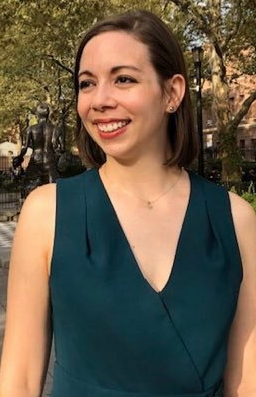
Endorsement: Lauren Ashcraft (NY-12)

>


Early this month we met Lauren Ashcraft, the progressive alternative to Wall Street-friendly Upper East Side Democrat Carolyn Maloney. The district they'll be contesting is no longer just Maloney's Silk Stocking sliver of Manhattan; it also includes progressive-friendly areas like the Lower East Side, the East Village, Alphabet City, Gramercy, Kips Bay, Tudor City, Turtle Bay and then over in Brooklyn, Greenpoint and Williamsburg and in Queens, Astoria, Long Island City and Sunnyside.

Goal ThermometerLauren Ashcraft is the newest Blue America endorsed candidate for Congress. We're endorsing her not just because she's on the right side of every important issue and because she's a courageous and competent candidate but because we think she will make a great and productive representative for working families in Congress. This week she sent us this note we thought we would share with you. Please consider contributing to her campaign by clicking on the Blue America 2020 congressional thermometer on the right.
As I write this, I’m on a bus back to New York after meeting my fellow Brand New Congress slate-mates in Washington, D.C. I wish I had the words for the passion, dedication, and energy I witnessed among this group of amazing future members of Congress, but I could never do those moments justice. Sitting here, I feel immense hope as I think about next year’s races, and I wanted to take a moment to pen my thoughts about this journey.

If I had to summarize what it’s like to run for Congress in one sentence, I would say that it’s already the greatest privilege of my entire life. Imagine having the honor of being invited into all of your neighbors’ homes, one by one, and having them open their hearts by sharing their stories and concerns with you. And then imagine that you had a plan to improve every one of their lives, and you could actually make it happen because your community is standing with you.

Of course, this journey has its challenges. I am running against an entrenched Democrat who accepts mountains of corporate PAC money, while Team Ashcraft is deeply moved by each one of our $35 average donations. I am fighting the institutional sexism that faces women candidates. And on a personal level, my social anxiety makes asking strangers for money on a daily basis extra flavorful.

That’s where my team comes in. It includes people I have known for years, and people I met last week. All of whom are working tirelessly because they believe so deeply in our mission to bring true representation to our district and country. Some of whom have seen me during tough moments, such as in May when my beloved grandmother and hero died the day before I had to perform in my first Congressional fundraiser as a standup comedian. My team has held me, carried me, and helped me back on my feet time and time again. Someone asked me once why I keep saying “we” when talking about my campaign. It’s because I can’t separate my journey from theirs. I could not do this without them.

I should warn anyone considering running for office that you will go through some pretty difficult times (I know this and I’m not even half-way through my race). If you are doing this for the same reasons I am, you see unrealized potential for your district and country and are passionate about your ideas to improve people’s lives. But you will realize that many of the organizations you have staunchly advocated for, and people who you thought would be on your side, aren’t who you thought they were. That even within our grassroots, David v. Goliath, The Little Engine That Could movement, there is some alarming toxicity that will shock the hell out of you. And I hope you, too, refuse to give up, and stay focused on what matters most.

But when you start to lose hope, you will be moved by the kindness that people show you. You will receive donations from people who are struggling to survive but find hope in your campaign. Strangers will be willing to open their homes to host strangers for meet and greets, because they believe in you. People you have never met will get up early and go to bed late, working on your campaign, because your platform is what they want for their community. And you will never be able to thank them as much as they deserve, but you give everything you can to win. For them.

If I could tell a passerby one thing about being a candidate, it is that we are human beings, too. Boy, are we human. And we get nervous. We worry about how to grow an entire team and movement who want us so desperately to win, without letting them down. I worry about potentially causing any discomfort for my family or partner, who are holding their breath as they walk on this journey with me, and sometimes reading other people’s thoughts about me. And you will miss your partner who is probably sitting right next to you, as mine is right now.

This journey has made me MORE human, more empathetic. All people, regardless of their successes or failures, life journeys, and goals, are… people. Just as being a cater waiter in college has caused me to go way out of my way to be kind to all service industry employees, running for office has made me view all grassroots candidates with much more respect. As I saw in others on the Brand New Congress Slate this weekend, grassroots candidates put their lives on hold for the entirety of their campaign, doing everything in their power to make a difference in people’s lives. And it’s all worth it when you realize you can make a real difference.

With all of this said, I actually cannot explain what it feels like to stand up for what you believe in against all odds, and to have SO many people and organizations stand behind you, one-by-one. I am so honored that Blue America is one of the organizations that has vetted my vision and path to victory, and is fearless in backing me. And I would be incredibly honored to earn your support on my quest to bring true representation and equality to my home, New York’s 12th Congressional District.


Labels: , , ,

Wednesday, November 13, 2019

Is NYC Ready For More Members Of Congress Like AOC?

>


AOC won her race against Joe "the next Speaker" Crowley for a number of reasons. She's charismatic; she out-worked him; he was an absentee congressman in a demographically changed district; his record was far too conservative for the district... there were others. But one that was especially interesting-- and decisive-- was how many well-educated, economically-struggling young people live in the Bronx-Queens district.That's a big part of how she beat one of New York's most powerful-- at least on paper-- politicians. There are young activists all over the country who want to replicate what she did and many aim to be as relevant to reform in Congress as she has been. Blue America has endorsed several of them Kina Collins, Robert Emmons, Rachel Ventura and Marie Newman in Chicagoland, Morgan Harper in Columbus, Ohio, Jessica Cisneros in south Texas, Rebecca Parsons in northwest Washington, Brianna Wu in Boston, and, so far, two in New York City in the vicinity of AOC's district Jamaal Bowman and Shaniyat Chowdhury. We finishing up the vetting of a third and should be announcing her endorsement soon.

A few days ago City&State reporter Jeff Coltin did a deep dive into half a dozen of the New York candidates challenging Democratic incumbents. "They’re just six of the more than three-dozen candidates taking on New York City congressional incumbents this cycle," wrote Coltin. "But, more so than most others, they have all mimicked Rep. Alexandria Ocasio-Cortez’s strategy of promoting progressive generational change-- and they’re already gaining momentum." He wrote that of the six, "Chowdhury matches Ocasio-Cortez’s profile best, as a fellow 20-something, DSA member and bartender taking on the boss of the Queens Democratic Party [and] none of the candidates, except Chowdhury, currently has the luxury of a head-to-head race against the incumbent."
AOC’s win over then-Rep. Joseph Crowley in the 2018 Democratic primary proved that a younger, more exciting candidate can unseat an older, blander one by challenging from the left. Crowley’s loss showed that even the most powerful incumbents-- like the fourth-ranking House Democrat and Meeks’ predecessor as Queens party boss-- could be vulnerable.

The dramatic upset, and a number of successful progressive challenges in New York state Senate races, have induced more first-time candidates to run and infused their campaigns with hope...

Google “the next AOC” and you’ll find endless examples of journalists hunting for and anointing successors to the 30-year-old member of the Democratic Socialists of America. Less than a year into Ocasio-Cortez’s first term, it has become a tired cliche-- the political equivalent of calling any dunking high school student the next LeBron James. “I’ve had that article written about me like five times now!” Boylan said with a laugh.

But the aspirants don’t mind the comparison-- most called her an inspiration. Bowman said she “opened the floodgates” for new people running for office. Chowdhury was even a lead organizer on her congressional campaign. Brand New Congress, the political action committee that helped elect Ocasio-Cortez, is backing Ashcraft, Chowdhury, Gagarin and Bowman. Another progressive PAC associated with Ocasio-Cortez, Justice Democrats, is also backing Bowman. Ashcraft, Chowdhury and Gagarin are all members of the Democratic Socialists of America.

...As part of their progressive reformer ethos, each of the candidates is pledging not to accept contributions from certain groups of donors. It’s a low-risk strategy, since real estate developers, fossil fuel companies and corporate political action committees aren’t interested in long shot left-leaning insurgents. “I can’t imagine that any corporate PAC would want to (donate), because of everything I’ve said on the record and what I represent,” Ashcraft said.

 So why the public pledge? “Just in case,” she said with a laugh. “It’s saving my campaign the stamp of sending that check back.”

But, of course, these campaigns aren’t just trying to win in June; their hope is to disrupt the system. They’re part of a movement that they hope could become as powerful within the Democratic Party as the religious right or the tea party have been among Republicans. Even if they lose, pulling the incumbents leftward could be considered a victory. Their overarching goals include less corporate influence over policymaking and big social investments, such as “Medicare for All” and the “Green New Deal.”
Some of the dozens of candidates running against incumbents are just trying to jump on a bandwagon and are pretty worthless distractions. Some are not much more than vanity candidates. And some don't have real understandings of contemporary politics, let alone class politics, or even imagine Hillary is a "liberal." I'll re-publish Coltin's profiles for the New York City candidates who actually make some sense:
Jamaal Bowman


District 16: Northern Bronx and southern Westchester County

Opponents: Rep. Eliot Engel, Andom Ghebreghiorgis, Samuel Ravelo

Age: 43

Home: Yonkers, for seven years, with his wife and three children

Occupation: Principal at Cornerstone Academy for Social Action in the Bronx

Early endorsements: Justice Democrats, Brand New Congress, Blue America, former gubernatorial candidates Cynthia Nixon and Zephyr Teachout, education activist Diane Ravitch

Political inspirations: Rep. Maxine Waters, Ralph Nader, Rep. Pramila Jayapal, Bernie Sanders, Alexandria Ocasio-Cortez and “The Squad”

Political identification: “As an educator. As an American. As a human being. As a father. As a husband. As a person who cares about other people... So I don’t subscribe to labels. I care about people, I care about humanity. And I want to put forth an agenda that taps into that.”

2016 presidential primary vote: “I refuse to say.” (His campaign later confirmed he was a registered independent and couldn’t vote.)

2016 presidential general vote: Hillary Clinton

Top priority in Congress: “To build a movement to engage communities and individuals that have been historically ignored or historically disenfranchised. In terms of policy topics, obviously, public education is a huge focus for me with a specific focus on early childhood education. We also need to focus on housing. In the wealthiest country in the world, we shouldn’t have anyone homeless at all.”

Why are you running against Engel? “The tipping point for me was 2017-2018 when 34 children died within the K-12 school system in the Bronx, and 17 of those children died via suicide. That same year, the Parkland shooting occurred. And I didn’t really hear anything from our politicians except thoughts and prayers... And Eliot Engel hasn’t shown the leadership in building a movement that we need.”

What are your qualifications? “I’m a middle school principal. And I’ve had many people tell me, if you can run a middle school in the Bronx, Congress should be a piece of cake. The ability and the need to build relationships with families and community members and community-based organizations to meet the holistic needs of children in the community is something I’ve been doing for the last 20 years.”

Declining any kind of donations? “We’re not taking any money from real estate PACs, any corporate PACs at all. Only individual contributions.”

An old friend of the blog, Jonathan Tasini, has a great podcast now, Working Life, and he recently interviewed Jamaal Bowman (as well as Shaniyat Chowdhury, which you'll find in the next segment below). This interview with Jamaal in extremely compelling and I urge everyone to take a few minutes and listen to it.


Shaniyat Chowdhury


District 5: Southeast Queens and southwestern Nassau County

Opponents: Rep. Gregory Meeks

Age: 27

Home: South Jamaica Houses, for the past eight years, with family

Occupation: Bartender, Terraza 7

Early endorsements: Brand New Congress, Blue America, South Jamaica Resident Green Committee

Political inspirations: Bernie Sanders, Malcolm X, Muhammad Ali, J. Cole, Kendrick Lamar

Political terms: “I’m not afraid of being called a socialist. I’m anti-capitalist, that’s for sure. But I do identify as a Democrat, I just think that we could definitely do better as a party.”

2016 presidential primary vote: N/A, was registered independent

2016 presidential general vote: Jill Stein

Top priority in Congress: “Breaking up big banks, taking money out of politics and making sure everyone has free homes.”

Why are you running against Meeks? “He’s been representing the district for over 20 years. Being one of the most corrupt Congress members (according to Citizens for Responsibility and Ethics in Washington) has a lot to do with where he’s taken money from... We want a working-class agenda for District 5 and not for the real estate and finance industries.”

What are your qualifications? “I interned and worked in the New York state Assembly as a legislative aide to Assemblywoman Latrice Walker. I’m also a United States Marine, so I served my country. I’m more than capable of serving my district. I’m an organizer and an activist. I’m also an educator. I’ve also done a couple campaigns, the most notable one was Alexandria Ocasio-Cortez.”

Declining any kind of donations? “No real estate. No Wall Street money. No big bank money. No big money whatsoever.”


Author and labor activist Jonathan Tasini-- same guy who did the interview above with Jamaal Bowman-- did an extremely enlightening session with Shan this week for his podcast, Working Life. It's very much worth listening to, whether you live in the district or not. Consider contributing to Chowdhury's and Bowman's grassroots campaigns here.


Lauren Ashcraft


District 12: East Side of Manhattan, Long Island City and southern Astoria, Queens, and Greenpoint, Brooklyn

Opponents: Rep. Carolyn Maloney, Erica Vladimer, Peter Harrison, Suraj Patel

Age: 30

Home: Long Island City, since May 2019, from Turtle Bay, which is also in the district-- with her partner and two rescue cats

Occupation: Director of stewardship at Middle Collegiate Church and stand-up comedian. Previously, project manager at JPMorgan Chase & Co., through October 2019.

Early endorsements: Brand New Congress, YoungPAC, Forward Thinking Democracy

Political inspirations: Jacqui Lewis, pastor at Middle Collegiate Church, and Bernie Sanders, who “turned me into the Democratic Socialist that I am.”

Political terms: Democratic Socialist, (DSA member since spring 2019), “And I guess I am a progressive, but I feel that word has been co-opted and doesn’t really carry the same weight that it used to.”

2016 presidential primary vote: “I would have voted for Bernie, but was one of the people that didn’t realize you had to change your registration (to Democrat) a really long time before the primary.”

2016 presidential general vote: Hillary Clinton

Top priority in Congress: “It’s absolutely imperative that we get big money out of politics. I absolutely would love an end goal of public financing of federal elections. But in the meantime, I had an idea for a tax credit that you could check a box on your tax returns and would be eligible for a federal tax credit that you could use for federal elections to donate to campaigns that inspire you.”

Why are you running against Maloney? “District 12 in particular is a very physical representation of the inequality in our society... And I’m fighting to get to the root of that problem, which is to get big money out of politics, so that representatives listen to the people and that’s their only influence.”

What are your qualifications? “My feeling on what qualifies someone to run for office is that they understand (the) issues that their community faces – that they’re passionate about changing and standing up for their community and being a vocal advocate.”

Declining any kind of donations? “I am not accepting corporate or super PAC money, and I’m also not accepting fossil fuel money... I am a former banking industry employee, and so senior executives and CEOs of the banking industry-- like the executive board, etc., those donations would be returned as well.”

Labels: , , , ,

Tuesday, November 05, 2019

Trump's Economy Has Started Falling Apart-- Especially In The Midwest

>


Jennifer Christie is the progressive Democrat in the race to fill the open seat for the congressional district north of Indianapolis. "Trump’s economy," she told us this morning, "is unsustainable for my district. We are a rural and suburban district that depends on agriculture and innovation. His tariffs hurt farmers, businesses, and consumers. Furthermore, Trump’s failure to invest in infrastructure and green technology stifle opportunity in our district. Our district is filled with people in agriculture, biotech, and technology who would thrive in an economy that works to solve the climate crisis through innovation and has thoughtful trade policies. Our manufacturers, who would also benefit greatly from focused investments to act in climate, are really struggling. The UAW recently striked in our district; We once had thousands more GM employees here than we do now. Although that decline has been happening for a while, we need a change." Early yesterday, Trump starting tweeting about how great the stock market is doing. That doesn't mean much for many people in the base that put him into the White House. In fact, in many of the states that flipped from Obama to Trump, his favorability is underwater-- and by some deep underwater. Morning Consult's state by state Trump Tracker:
Iowa- minus 14 (22 point decrease)
Wisconsin- minus 11 (17 point decrease)
Michigan- minus 10 (18 point decrease)
Pennsylvania- munis 8 (17 point decerase)
Ohio- minus 5 (10 point decerase)
North Carolina- minus 3 (21 point decrease)
Florida- minus 2 (23 point decrease)
That's 114 electoral votes.


All 7 of these "Trump states" have big agricultural economies and Sunday night we took a quick look at how Trump's trade policies have wrecked that sector. At the same time, the Washington Post was preparing to publish a piece by Andrew Van Dam and Heather Long, Unemployment Is Climbing In key Swing State, Including Michigan and Wisconsin, about how unemployment is starting to set in in some of these states. "Nationally," wrote Van Dam and Long, "the economy looks healthy, with solid growth, stocks at record highs and an unemployment rate of 3.6 percent, near historic lows. But unemployment isn’t falling for everybody. New data released last week by the Labor Department reveals just how many places are struggling. In more than 1,000 counties, or about one in three, the unemployment rate is higher than it was a year ago. That includes all 72 counties in Wisconsin and all 10 in New Hampshire, as well as most in Michigan, Minnesota and North Carolina. The numbers can be volatile from month to month, but this trend remains even if you look at entire quarters or years. Marinette County is a good example. At about 4 percent, its unemployment rate remains low by historical standards. But it has risen a full percentage point in the past year."

Marinette County is in northeast Wisconsin. In 2016 the folks there were looking for change. The Democratic Party establishment tried feeding them Clinton and Bernie won the primary. Trump lost Wisconsin statewide, but he beat Cruz in Marinette. The 8th congressional district, which includes Marinette, had already flipped red when Reid Ribble defeated Democratic incumbent Steve Kagan in 2010. "Unemployment is rising in parts of the country," The Post duo continued, "particularly in a few states that are likely to be critical to the 2020 presidential election. Of the 10 closest states in the last election, four--Wisconsin, Michigan, Minnesota and North Carolina-- have seen substantial rises in unemployment over the past year, according to the latest Labor Department data. Others have seen smaller rises, but it’s too early to read much into the often-revised numbers. Economists say it’s telling that many of the places experiencing rising joblessness are in areas that still depend on manufacturing and agriculture. Those industries have been hit hard by President Trump’s trade war with China.


The global economic slowdown and dramatic shifts in retail are also playing a role in some job losses. Beleaguered retailers fear that the tariffs Trump wants to put in place at the end of the year would raise prices on popular items like laptops and phones, driving away still more customers.

Models forecasting the 2020 presidential election often incorporate unemployment. But it’s not the rate itself that matters, many economists say. It’s how it changes.

“Unemployment can be low, but if it’s rising, that will hurt the incumbent,” said Mark Zandi, chief economist of Moody’s Analytics. Moody’s has several models that it uses to predict the 2020 election outcome. “When unemployment is rising, people sense the implications of that: fewer jobs, smaller pay increases, no bonuses and maybe some layoffs. It’s palpable. People feel things are changing, and it makes them nervous.”

Zandi’s models currently predict an easy Trump victory in 2020, but if the stock market declines significantly or unemployment rises back above 4 percent, that could change the result.

“The key swing states are the ones that feel the most fragile right now. A lot of that is due to the trade war,” Zandi said. “If anything moves against Trump, especially rising unemployment or higher Democratic turnout, it’s going to be a lot closer.”


Michigan and Wisconsin are among the five most manufacturing-reliant states in the country, separate Labor Department data shows. Manufacturing, especially of durable consumer goods such as automobiles or recliners, is particularly sensitive to foreign trade-- and to recessions.

“There’s a real disconnect between the manufacturing economy and the rest of the economy right now, and our Michigan economy is more manufacturing-heavy than the nation as a whole,” said Gabriel Ehrlich, associate director of the Research Seminar in Quantitative Economics at the University of Michigan.

In a 2017 analysis, Georgetown University economists modeled how swing-state county unemployment impacted the presidential vote, and found what Georgetown’s Dennis Quinn said in an email was “a significant penalty from rising unemployment, especially in swing states like Wisconsin.”

Why Wisconsin? As Quinn and his collaborators wrote in the journal International Organization, “exposure to trade is strongly associated with presidential voting.” The strongest effects, they find, are concentrated in places with the most low-skill manufacturing jobs and in swing states.

“It’s fair to assume that Mr. Trump’s prospects in Wisconsin, a state with a high manufacturing base with significant concentrations of low-skilled workers, are dimmed by this news,” Quinn said.

There is heavy debate about how much influence the economy is going to have on the 2020 election outcome or whether the election will become a referendum on Trump’s leadership style. Even on the economy, views have become more partisan over time, suggesting some might not shift their vote despite what’s happening in their region.

“I don’t think they will blame Trump for it. They are more likely to keep lashing out at immigrants and others," said John C. Austin, director of the Michigan Economic Center.

Many places where unemployment is above the national level have struggled for years.

“There is a bifurcated economy here in the Midwest, especially in Michigan,” Austin said. “There are knowledge and talent hubs in many metro areas that are growing. Whereas, small and mid-sized manufacturing places just haven’t found their new way yet.”

Unemployment is rising across the region, but in some places it may be a good sign. Unemployment typically rises for one of two reasons: Either more people are losing jobs or more people have been inspired (or compelled) to come off the sidelines and look for work.

But hiring appears to be cooling in some states, especially Wisconsin and Minnesota. Companies typically pull back on hiring before they turn to layoffs. The average rate of layoffs and firings has risen more rapidly in North Carolina than in any other state over the past two years, according to Labor Department data. In the other states, data through June did not yet show a sharp rise in layoffs.

For now, Michigan’s economy has slowed and the labor market has stalled out, but this turn is just starting to take place. It can often take a while before people’s perceptions change, and there is hope that conditions could improve, especially if Trump de-escalates trade tensions with China.

“I don’t think we’re in a psychological crisis zone in Michigan," Ehrlich said, "but I think the key is to avoid letting it get much worse.”
Lauren Ashcraft is a candidate for Congress, not in the Midwest by in NYC. A former analyst for JP Morgan, she told us she's "been called by concerned members of my district whose businesses are being hit hard by Trump's arbitrary tariff wars. One particular person has had to lay off multiple employees in his small family-owned business because the supplies he has to import have skyrocketed in price. As mentioned in my previous guest blog post, the tax cuts Trump handed out to corporations ended up becoming bonuses and pay raises for senior executives while layoffs for average employees have resumed. It is clear that he is handing out gifts to his friends and donors with no regard to the future well-being of this country. We measure success of presidents in the wrong way. We can look at unemployment rates and the volatile stock market's temporary ups as a win for Trump, or we can see everything for what it is. Low unemployment does not measure how many people are stuck in jobs they disagree with because they are afraid to lose their health insurance. Stock market performance does not measure how parts of NY-12 are under water because of rising sea levels. Tariffs do not prevent the criminalization of black and brown bodies in our society. If we measure the actual well-being of the people, it will be terribly evident how urgently we need true representation and leadership who prioritizes people over profit."

The Siena poll is pretty useless outside of New York state elections, but the NY Times foolishly insists on using it; I never understood why, since it never gets anything right and is always several degrees to the right. Yesterday, Nate Cohn used it to show that Trump is still competitive in states that no other-- more reliable-- polls show him competitive in. Siena shows that Trump would beat Elizabeth Warren badly and tie Biden in Michigan and that only Bernie would beat him there. The same poll shows Biden and Bernie beating Trump in Pennsylvania and Wisconsin, but Trump tying Elizabeth in both those states.

Historically, Emerson is far more accurate than Siena and they were in the field in Michigan at the same time Siena was-- and came out with very different findings.


One more poll to wrap this up, this one from the Financial Times and the conservative Pete Peterson Foundation. Lauren Fedor writes that "Nearly two-thirds of Americans say they are not better off financially than they were when Donald Trump was elected, casting doubt on whether economic expansion and a record bull market will boost the president's re-election campaign in 2020... 31 per cent of Americans say they are now worse off financially than they were at the start of Mr Trump's presidency. Another 33 per cent say there has been no change in their financial position since Mr Trump's inauguration in January 2017, while 35 per cent say they are better off. Persistently slow wage growth appeared to be a main driver of discontent, with 36 per cent of those who said they were worse off blaming their income levels. On Friday, the US labour department said average hourly income had risen 3 per cent in October, growth that was near highs for the past decade but lower than before the financial crisis. Another 19 per cent pointed to personal or family debts as the reason they felt worse off."


And of course... the wealthiest Americans are the ones reporting that they're better off since Trump took office. Working families are the ones who have done worse economically or just stagnated. I hope you realize by now that that's entirely by design and certainly not a coincidence.


Labels: , , , , ,