Sunday, April 05, 2020

Sir Keir Starmer Replaces Jeremy Corbyn As Leader Of Labour

>


This is how Bloomberg News summed up the story for American readers:
After a decade in the political wasteland, members of Britain’s main opposition Labour Party have chosen a moderate, un-flashy lawyer as their new leader. Their hope is that turning the page on the socialist radical Jeremy Corbyn, who was resoundingly rejected by voters last year, will see them re-take power.

Keir Starmer, 57, offers dry competence and seriousness after a turbulent five years under the firebrand Corbyn. At a time when the U.K. is grappling with the global coronavirus crisis and its own exit from the European Union, a steady hand could prove popular.


“Maybe being boringly competent is a magical thing-- because we haven’t got many boringly competent politicians at the moment, particularly in government,” said Steven Fielding, a professor at Nottingham University and historian of the Labour party. “People just flock to him like a safety raft from a sinking ship.”
On Saturday he won 275,780 votes (56.2%) in a three-way race and was elected party leader (over 2 women candidates). He represents a London district (Holborn and St Pancras), served in the shadow cabinet as the Brexit spokesman and was caught on tape opposing Corbyn as party leader. He's anti-Brexit and although widely known as a moderate, claims to be a socialist. He isn't an inspiration leader.

And if Boris Johnson passes away from his COVID-19 infection, the U.K. will need an inspirational leader. Johnson, who tested positive and has been getting worse in home quarantine, was admitted to the hospital today. In a extremely rare TV address, not necessarily in regard to Johnson's condition, Queen Elizabeth urged Brits to stay strong, united and resolute: "While we have faced challenges before, this one is different. This time we join with all nations across the globe in a common endeavour, using the great advances of science and our instinctive compassion to heal."


Labels: , , , ,

Saturday, September 24, 2016

Corbyn Wins Challenge From The U.K.'s Version Of The Blue Dogs And New Dems-- The Conservative Wing Of The Labour Party

>


Today, Jeremy Corbyn's 62% win was bigger than his original victory as leader of Britain's Labour Party-- 313,209 to 193,229 votes-- much to the chagrin of the establishment conservatives (and their media allies) who hold the progressive Corbyn in contempt and view him with disdain and hatred. They are England's version of the New Dems and Blue Dogs and they got their asses kicked by Labour's grassroots. As the BBC pointed out, "It is Mr Corbyn's second defeat of the Labour establishment, who many of his supporters believe have tried to undermine the leader consistently over the last 12 months."

Friday we saw what happens when a purported "party of the people"-- the Democratic Party of West Virginia in this case-- gets taken over by selfish and established special interests. In England "Labour HQ deliberately threw Corbyn supporters off the voting lists to reduce the size of his victory. Corbyn supporters believe many MPs have done nothing in the past year other than try to damage his leadership and today they will be shown to have failed badly in their attempt to oust him." What was happening to Corbyn wasn't unlike what happened in the U.S. to progressives-- from Bernie, who had the nomination stolen from him by the Establishment, to candidates up and down the ballot, who have been and are being subverted and sabotaged by the Democratic Party establishment. At least they won the battle in the U.K., even if the resistance here in the U.S. has been puny and largely unsuccessful.
Addressing supporters, Mr Corbyn said he and his opponents were part of the "same Labour family" and everyone needed to focus their energy "on exposing and defeating the Tories."

"We have much more in common than divides us," he said. "Let us wipe that slate clean from today and get on with the work that we have to do as a party," he said.

...[The jackass who challenged him, Owen] Smith, who had previously ruled out returning to the front bench, said he respected the result and the onus was on Mr Corbyn to "heal divisions and unite our movement."

"Jeremy has won the contest," he said. "He now has to win the country and he will have my support in trying to do so."

Mr Corbyn was first elected Labour leader in September 2015, when he beat three other candidates and got 59.5% of the vote.

Turnout was higher this time around, with 77.6% of the 654,006 eligible party members, trade union members and registered supporters-- 506,438 in total-- confirmed as taking part.

Mr Corbyn won comfortably in each of the three categories - winning the support of 59% of party members, 70% of registered supporters and 60% of affiliated supporters.
Party members-- Jeremy Corbyn (168,216); Owen Smith (116,960)
Registered supporters-- Corbyn (84,918); Smith (36,599)
Affiliated supporters-- Corbyn (60,075); Smith (39,670)
Despite winning the leadership in a vote of the wider membership and registered supporters last year Mr Corbyn, who spent three decades as part of a marginalised leftwing group of Labour MPs in Parliament, has never had the support of more than about 20% of Labour's MPs.

And the contest came about after more than 170 MPs supported a motion of no confidence in their leader-- that confidence vote came after dozens quit his shadow cabinet and other frontbench roles.

There has been speculation that a number of critical Labour MPs, including some who resigned from Mr Corbyn's shadow cabinet in June over his leadership in the wake of the EU referendum, could return in an attempt to heal the divisions over the party's future direction.

The result was welcomed by leading trade unions while Momentum - the campaign group spawned by Mr Corbyn's victory last year - hailed it as a "fantastic win."

Shadow health secretary Diane Abbott, a key ally of the leader, said opponents of Mr Corbyn had "thrown everything but the kitchen sink" at him.


"It was a hard campaign but the membership came out for Jeremy because they realised he had not been given a chance and had been treated unfairly," she said.

Shadow chancellor John McDonnell said it was up to Mr Corbyn's critics to decide whether they wanted to serve under him, insisting he wanted "unity and stability" and there was a "way we can accommodate everybody."

Labour MP Chuku Umunna said the "leadership issue was settled" and Mr Corbyn, through his re-election, was the party's "candidate to be prime minister."

Former leader Ed Miliband said it was "time to unite and focus on the country."

But Labour MP Louise Ellman said Mr Corbyn must appeal to more than his "cheering fans" and the public at large weren't "impressed with him and that needs to change."

"It no good being surrounded by people who already agree with you. That is not enough."

The conservatives within the party-- freaked out by Labour's younger and more progressive membership-- are now trying to rejigger the rules to prevent members-- or Corbyn-- from selecting the shadow cabinet and to keep him from deselecting treacherous MPs and party staffers. It's ironic that the Labour Party has grown three times bigger under Corbyn and is now the biggest political party in Western Europe but that the establishment wing of the party can't celebrate this instead of trying to undermine it, much the way the corrupt Beltway career politicians like Chuck Schumer, Ed Rendell, Debbie Wasserman Schultz and the corrupt and reeking garbage of that ilk fretted about Bernie expanding the base of the Democratic Party in this country. The next national parliamentary election will, in all likelihood, be in the spring of 2020. The conservatives within Labour seem more than prepared to "teach the Left a lesson" by working to defeat their own party, much the way the DCCC and the DSCC in the U.S. seeks to defeat progressives who have won the primaries.

By the way, you can support the progressive candidates for Congress who are being blackballed by the DCCC by tapping on the thermometer below. Let's fight back, the way progressives did in the U.K. and not give in to the Schumers and Wasserman Schultzes and Hoyers and Pelosis.
Goal Thermometer

Labels: , ,

Tuesday, August 23, 2016

Right-Of-Center Labour Party Careerists In The U.K. Are Every Bit As Sleazy As Wasserman Schultz And Steve Israel Here

>

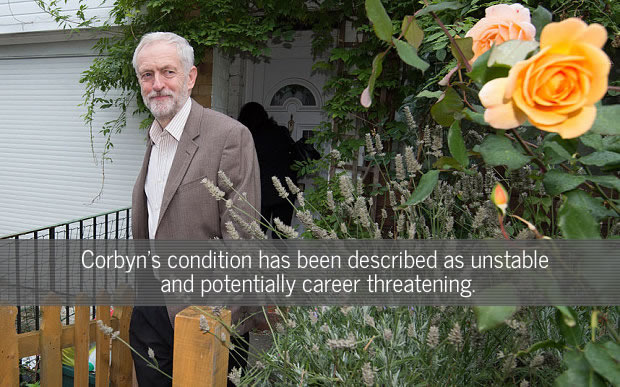
Jeremy Corbyn rushed to hospital with multiple stab wounds in back

We've been writing for some time now about how the Democratic Party establishment sees "party unity" as a one way street. When someone from the corrupt-conservative wing of the party wins a primary-- or steals a win-- progressives must jump on board and back her (or him). But when progressives win primaries-- as, for example, Mary Ellen Balchunis (PA-07), Tom Wakely (TX-21), Mary Hoeft (WI-07) all did-- the establishment abandons them or even works to crush them and aid the Republicans.

Goal Thermometer In fact, Blue America just started a new ActBlue page (on the right), dedicated to progressive candidates in winnable districts who the DCCC has refused to help against the GOP. Many grassroots Democrats can't cope with the very concept that Pelosi and her henchmen, while begging for money to "help take back Congress," are sabotaging that very effort by trying to stamp out legitimate progressive candidates in tough races. (Yes, Pelosi used to be a progressive herself, but that was many years ago and has virtually nothing to do with the crass partisan hack she has willfully morphed into in recent years.) It should come as no surprise that these tactics employed by the Democratic Establishment here, are also being employed by the Labour Party establishment in Britain, where the Conservative wing of the Labour Party is attempting to annihilate progressives in general and Jeremy Corbyn in particular. Writing over the weekend for The Telegraph, Kate McCann exposed their shenanigans.

So called "centrists" are moving to expel thousands of Corbyn supporters in the run-up to a party leadership election in late September, smearing them as "anti-Semites" and conspiring with the Conservative Party to annihilate Labour in an early election.
Almost 6,000 people have been reported to the party’s National Executive Committee as part of a new initiative introduced in mid-July to curb threats and poor behaviour.

It came as Tory MP Andrew Bridgen revealed he had been approached by Labour MPs as part of an attempt to secure an early general election to “get rid of Jeremy Corbyn” as the party’s leadership contest continues.

Mr Bridgen said he has been approached by three Labour MPs in Westminster who have asked for him to continue his bid for a nationwide vote in order to oust Mr Corbyn.

The MP claims that the Labour members warned the only way to rid the party of Mr Corbyn would be for Labour to be “wiped out” at a general election and prove his unpopularity with the public.

One senior Labour source told The Telegraph: “The sad truth is the Labour Party is no longer a safe space for women and Jews. Party members who receive a daily barrage of disgusting abuse deserve better than for Jeremy Corbyn to attempt to downplay it or tell them to simply ignore it.”

It follows an appeal by Labour supporters who were banned from voting in the party’s leadership election, which was later overturned by the High Court. The decision means that 130,000 people will be barred from voting in a decision thought likely to hit Mr Corbyn hardest, as many of his ­supporters are not party members but activists.
Come on, you didn't think for one minute that self-serving careerist slime like Debbie Wasserman Schultz, Steve Israel, Ben Ray Lujan, Steny Hoyer and Rahm Emanuel only exist in America, did you? This kind of back-stabbing was, after all, invented in the United Kingdom, right?


Slimy Democratic Party bosses Hoyer and Wasserman Schultz


Bonus For Americans Who Don't Want To Read About The Foreigners: A Moral Test

Are you as moral as you think you are?

This test only has one question, but it's a very important one.

By giving an honest answer, you will discover where you stand morally.

The test features an unlikely, completely fictional situation in which you will have to make a decision.

Only you will know the results, so remember that your answer needs to be honest.

THE SITUATION:

You are in Florida, Miami to be specific.

There is chaos all around you caused by a hurricane with severe flooding.

This is a flood of biblical proportions.

You are a photojournalist working for a major newspaper, and you're caught in the middle of this epic disaster. The situation is nearly hopeless.

You're trying to shoot career-making photos.

There are houses and people swirling around you, some disappearing under the water.

THE TEST:

Suddenly you see a man in the water.

He is fighting for his life, trying not to be taken down with the debris.

You move closer.

Somehow the man looks familiar.

You suddenly realize who it is.

It's Donald Trump!

At the same time you notice that the raging waters are about to take him under forever.

YOU HAVE TWO OPTIONS:

You can save the life of Donald Trump or you can shoot a dramatic Pulitzer Prize winning photo, documenting the death of one of the world's most powerful Republican men hell bent on the destruction of America.

THE QUESTION:

Here's the question, and please give an honest answer.

"Would you select high contrast color film, or would you go with the classic simplicity of black and white?"

Labels: , , ,

Saturday, August 03, 2013

New Labour/New Dems... Old Crap

>


I suspect there aren't many DWT readers who know who George Mudie is. I'd never heard of him until a few days ago when I read in the Guardian that Mudie, a Labour Member of Parliament from Leeds, was about to unload on Labour leader Ed Miliband-- which he has now done. So, you ask-- why should anyone care?

Between Margaret Thatcher and David Cameron's Conservative governments-- with the briefest of technical intervals for John Major and Gordon Brown--Tony Blair moved the Labour Party considerably right with a political concoction called New Labour, basically an anti-union move. New Labour, at least domestically, was never as bad-- in terms of heartless pandering to Big Business and in terms of corruption-- as our own New Dems (let alone America's Blue Dogs). But it still helped muddle the differences between Labour and the Conservatives and it did push the Conservatives further right on a number of issues. Today, according to the long-serving Mudie, voters no longer even know what Labour stands for. But he blames the hapless Miliband.
Labour backbench anxiety about Ed Miliband's leadership spilled into the open on Thursday when George Mudie, a veteran backbencher and former whip, issued a withering assessment, accusing him of being hesitant, cocooned in a bunker and failing to make the political weather.

Mudie, one of the leading figures in the move to oust Tony Blair from the Labour leadership in 2006 and a supporter of Ed Balls in the 2010 leadership election, said that even as a Labour MP he could not describe the party's current policies on education and welfare.

He also said there was a general fear among Labour MPs that the the party's poll lead was weak and unlikely to withstand the heat of an election campaign.


A palpable anxiety has spread in some Labour circles ever since its poll lead started to shrink and it became clear that growth is likely to be higher than forecast this year. There are also political rumbles over the decisions to confront the unions about their role in the party and to accept the coalition spending totals for 2015-16.

... The significance of Mudie's intervention, a self-confessed "cynical old and bad tempered" figure, will depend on whether other MPs voice similar doubts, or he remains an isolated voice. Mudie claimed there was a general concern among Labour MPs that the party's lead in the polls was "not firm enough, big enough and will it withstand a general election discussion?"

He told the BBC's World At One: "I think one of the difficulties a Labour party member would say to you, and I would say to you, I have difficulty knowing what we stand for now. We are 18 months away from an election, thinking that we will put out a document on all these major items and the public will say, 'Oh great'... At the moment the government are setting the agenda, making the weather, and we're responding to it. Tony Blair and Gordon Brown never did that."

He asked: "Do you know, because I don't, our position on welfare, do you know our position on education, do you know our genuine position on how we'd run the health service?

"I remember before we won, the five years to 97, this place was bubbling, we were energetic, we were at them, we thought we had all the answers. We're not at them and we're slightly hesitant and we're slightly confused and I deeply worry about that." Asked whether Miliband was in touch with the concerns of backbenchers like him, Mudie said the leader was "always cocooned by people round him and the basis they are around him is he trusts them".

He said one of Miliband's problems was that "he is young, the way he came to power, the problem with his brother, the fact that the trade unions had a major say. I think he is still trying to find himself and I think the problem with that is that sometimes he is doing things that he thinks a Labour leader should do that he should not do."

Without giving details, he said he knew Miliband had made mistakes. He said unless Labour offered something different and relevant, voters would decide to stick with what they have got.

Miliband has made the strategic decision to hold back on major policy announcements until closer to election, arguing that a five-year, fixed-term parliament requires a more disciplined approach.
I wonder if Miliband gets advice from Steve Israel, who encourages Democratic candidates to keep all but the most insipid, mom-and-apple-pie positions to themselves, and who urges freshmen incumbents to vote with the Republicans in the mostly pointless hope of wooing conservative voters. Two of Israel's worst freshmen, New Dems Sean Patrick Maloney (NY) and Kyrsten Sinema (AZ), have followed his advice and have amassed two of the worst voting records of any Democrats in the House. Both are considered very vulnerable to defeat in 2014. Neither has persuaded many conservative voters to abandon Republicans but both have alienated their Democratic bases who are unlikely to turn out for them at the polls.
MoveOn.org members have launched petitions against 14 Democrats-- including Arizona’s Congresswomen Kyrsten Sinema and Ann Kirkpatrick-- for siding with Republicans in their vote to delay implementation of the Affordable Care Act from 2014 to 2015.

According to The Hill, these members were targeted with MoveOn.org petitions: Reps. Raul Ruiz (D-Calif.) Scott Peters (D-Calif.), Brad Schneider (D-Ill.), Gary Peters (D-Mich.), Kyrsten Sinema (D-Ariz.), Julia Brownley (D-Calif.), Sean Maloney (D-N.Y.), Elizabeth Esty (D-Conn.), Dan Maffei (D-N.Y.), Ann Kirkpatrick (D-Ariz.), Bill Enyart (D-Ill.), Bill Owens (D-N.Y.), Cheri Bustos (D-Ill.) and Collin Peterson (D-Minn.).

Labels: , , ,

Tuesday, April 05, 2011

New Labour May Have Figured Something Out... Dems Are Clueless As Usual

>


Yesterday we looked-- in passing-- at how corporatist whores within the Democratic Party, in this case, Third Way, lead the party away from its proud working class heritage and ever closer towards supporting the Big Money ruling elites that keep its coffers full... and their career trajectories healthy. That way no matter which party wins, the wealthy elites never lose. Perhaps the GOP is better for them overall, but the Democrats never cause them very much trouble. You may be familiar with the Rahm Emanuel segment of the House caucus-- the New Dems, who were Big Business shills without embracing the social bigotry of the Confederate-oriented Blue Dogs. In England they have the same kind of crap-- or did-- in Tony Blair's New Labour. You know how disappointed Democrats responded to Obama's crappy centism by staying away from the polls in November. That's exactly what propelled the hated Conservatives into a ruling coalition in the U.K. But, unlike the clueless Democrats here, who are delusional and think they need to get even more conservative, Labour is reforming itself.
Of all the feelings about New Labour at the last election, it was hatred that was the most striking. It was the view of a minority but they were vocal, and it was the intensity of the emotion that made such an impact. Hatred is about betrayal. For some the betrayal was the Iraq war or civil liberties, and that has been powerfully articulated. But there was-- and is-- another account of betrayal in which a liberal elite, smugly superior in their metropolitan progressivism, championed globalisation and sold ordinary working people down the river.

This is not comfortable stuff. Too many elements of this story have some truth in them. And to compound the discomfort, it's a story that feeds into neuralgic arguments about multiculturalism. For both reasons, it's a betrayal that hasn't had the attention it deserves.

As Labour begins the local election campaign, there are plenty around the party wondering whether a year of coalition government has been enough to neutralise this loathing. Some are arguing that Labour just has to play its cards right, in contrast to a public-school dominated, public spending cuts government, for it to reassume the mantle of the working man and woman's champion.

Or maybe not. It may require a rather more rigorous and energetic soul-searching, argues a group of thinkers and politicians. They are alarmed at how New Labour strained and broke the historic alliance in the party between middle-class liberals and working-class communitarians, and ended up presiding over the loss of four million voters between 1997 and 2010.

...The central focus of the thinking is the emotional connection between party leadership and rank and file. The rationale is that it is just as important as the crucial issue of economic competence, if Labour is to rebuild trust. Miliband said last week that Labour is "your voice in tough times", but getting people to believe that is a very tall order, as much about empathy as economics.

The starting point is counter-intuitive: it is about the importance and value of nostalgia. In a remarkable speech in Liverpool last month, [Jon] Cruddas acknowledged how "nostalgic" has been used as a term of contempt on the left for a generation; it's been belittled as backward and reactionary. Tony Blair said in 2004 "Leave the past to those who live in it," and repeatedly insisted on the inevitability of globalisation, the necessity of adapting to it and the virtues of modernisation; this was progress, he said.

It didn't feel like it to many people. In a time of massive change, inevitably there is much nostalgia, and for those who might be losing a lot, New Labour's orders, "Forward march," came across as bullying, authoritarian and inhumane. It also came across as self-interested; globalisation might serve the London middle classes well, but outside the south-east, where secure jobs were drying up and affordable housing was scarce, it had much less to offer. In the wake of the 2008 financial crisis, earlier anxieties about globalisation have been vindicated and reinforced; it has proved as volatile, disruptive and risky a process as many feared. "Arguably we are living through the most destructive period of capitalism since the 1930s. Is this progress?" asked Cruddas in his speech.

New Labour insisted it was. It brushed aside those who didn't agree as reactionary, and it urged adaptation and acceptance of change without recognition of the costs entailed in terms of relationships, communities and sense of place. David Miliband (who is also listening to this debate closely) signalled the necessary shift in his recent speech on the future of social democracy when he said: "We are not apologists for globalisation. We are reformers." It's a measure of how dire things had become, that this needed saying.

Nostalgia has to be recognised as legitimate; it's a powerful emotional current in the electorate with which politicians need to connect. Politics is fuelled as much by the desire to protect and preserve as it is by the ambition to change and reform. Nostalgia is not always passive, it can inspire resistance; indeed, Alastair Bonnett at Newcastle University argues in his book, Left in the Past, that nostalgia has fed a powerful radical tradition on the left that has resisted the disruptive force of industrialisation and the centralising power of the state. The force of nostalgia should be obvious right now, when leftwing politics are dominated by an urgent agenda of conservation of high-quality public services, the welfare state and the NHS.

It is the right wing that has traditionally been adept at understanding the value of nostalgia.

The electorate needs recognition of valued traditions from their politicians, and will forgive them much else if such genuflections are offered. Margaret Thatcher managed to mask her radically disruptive politics with gestures to tradition; John Major and David Cameron have followed her model, if less skilfully.

What does a politics of nostalgia amount to? Cruddas, again, offers pointers: "People yearn for respect, belonging, identity, tradition. They yearn to fight against their insecurity." Jonathan Rutherford talks of a "conservative socialism". What they look back to are strands of early Labour thinking that shared much with Toryism – Romantic, popular, rooted in working-class experience of dispossession and English. But these strands fell by the wayside, marginalised by both liberalism, technocratic statism and internationalism.

They warn of how Labour talked too much of abstractions such as human rights; it gave too little space to the ordinary, the parochial, the routine, preferring instead to celebrate individual aspiration. What got lost was the community left behind and their collective languages of solidarity and security. This is what needs to be rehabilitated.

There is much that could go awry with these ideas. There's a lot of nervousness around the emphasis on Englishness because until now it's territory that has been left vacant for the far right to colonise (with the honourable early exception of Billy Bragg). Is there a way to redefine Englishness that allows for both nostalgia and multiculturalism?

Equally tricky is the question of what kind of credible economic policy nostalgia leaves room for? Neither are easy to answer. Nor is this a politics that is likely to go down well with a liberal London-based commentariat (and I include myself) who have a tin ear for much of this tricky emotional stuff. But how it feeds into the language, themes and stories Labour has to tell the country could be crucial in determining whether the party repeats its past pattern of defeat and faces several terms in opposition, or whether it manages to capitalise on rising opinion polls and bounce back.


You'd be insane to ever expect something like this video from the New Dems. Look at it; the Congressional Progressive Caucus put it out today... hits that nostalgia thing, don't you think:

Labels: , ,