Saturday, October 19, 2019

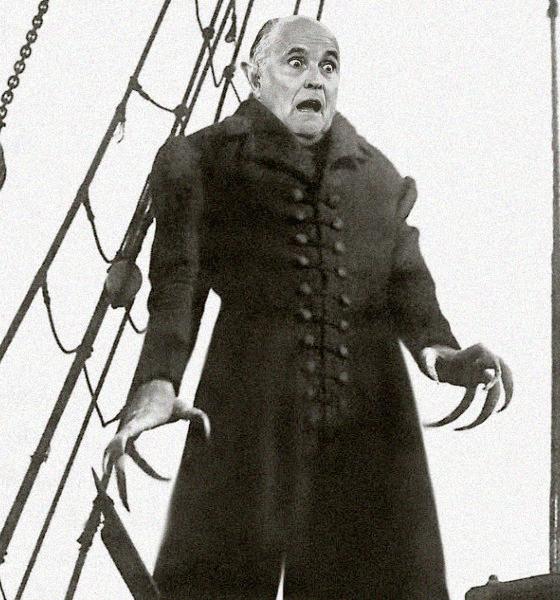
Ole Trumpy-The-Clown Had Such A Bad Week! And, Including The Cognitive Decline He's Suffering, No One Ever Deserved It More!

>


Finally, Republicans are started to break. Yesterday, Digby pointed out that younger Republicans are finally starting to jump off that sinking ship. Florida GOP Congressman Francis Rooney said he's open voting for impeachment-- the first one to say anything like that, as when their are still a handful of Blue Dogs who haven't! And John Kasich was on CNN yesterday saying he thinks Trump should be impeached. And if it can be proved that Trump was gaming the stock market, as appears more than likely... well, even his die-hard supporters will understand what that's all about. Oh... and his chief Capitol Hill henchmen, who has propped him up, Moscow Mitch told the Washington Post that withdrawing from Syria is a "grave mistake." A grave, I hope, that is big enough for the entire Regime and all his congressional lackeys.

Reporter Ashley Parker, reminded Washington Post readers that all the impeachment evidence points squarely at Trump as having personally orchestrated the Ukraine effort against Biden. "Two Cabinet secretaries. The acting White House chief of staff. A bevy of career diplomats. President Trump’s personal attorney. And at the center of the impeachment inquiry," she wrote, "the president himself. Over two weeks of closed-door testimony, a clear portrait has emerged of a president personally orchestrating the effort to pressure a foreign government to dig up dirt on a potential 2020 political rival-- and marshaling the full resources of the federal bureaucracy to help in that endeavor. On Thursday, acting White House chief of staff Mick Mulvaney waded further into the morass, saying during a rare news conference that he understood Trump to be asking for a quid pro quo with his Ukrainian counterpart-- only to attempt to retract those comments in a bellicose statement six hours later.
Contrary to weeks of denials from the president and his defenders, a growing body of evidence makes clear it was Trump himself who repeatedly pushed his own government and a foreign power to intervene in domestic political concerns, enlisting and ensnaring a growing number of administration officials in a way that increasingly made even some members of his own team uncomfortable.

The wave of witnesses reflects the growing peril enveloping Trump amid the burgeoning inquiry, which he and some top aides have tried to block by refusing to abide by congressional subpoenas. Not only are a growing number of officials and longtime employees choosing to come forward with damaging evidence, the narrative they are laying out points to potential violations of law, including prohibitions on accepting campaign help from a foreign entity, that bolster the case for impeachment.

The prepared testimony Thursday of Gordon Sondland, Trump’s ambassador to the European Union, showed how deeply the president involved himself in the Ukraine negotiations that are the focus of the inquiry, and the extent to which he outsourced Ukraine policy to his personal attorney Rudolph W. Giuliani.

“I would not have recommended that Mr. Giuliani or any private citizen be involved in these foreign policy matters,” Sondland said, according to his prepared remarks.

Yet despite his discomfort, Sondland said that because he and his team had been “given the president’s explicit direction,” the group “agreed to do as President Trump directed” and involved Giuliani in the ongoing Ukraine discussions.

...In an interview with the Wall Street Journal on Wednesday, Energy Secretary Rick Perry also clarified just how adamant Trump was in ensuring that Giuliani be included in Ukraine discussions.

“Visit with Rudy,” Perry paraphrased the president as saying.

Perry told the paper that after he contacted Trump’s personal attorney as part of an effort to facilitate a meeting between the president and Zelensky, Giuliani relayed to him unsubstantiated concerns that Ukraine-- not Russia, as the U.S. intelligence community has concluded-- had interfered in the 2016 presidential elections.

On Thursday, Perry notified Trump in writing that he planned to resign soon.

As early as May, Giuliani began publicly pushing theories involving Ukraine for which he had no reliable evidence. He urged, for instance, a corruption investigation into Hunter Biden, who sat on the board of Burisma, a Ukrainian gas company, while his father was vice president. So far, there is no evidence of any wrongdoing by Biden or his son.

At the time, many viewed Giuliani’s efforts in Ukraine as something of a personal passion project-- the extracurricular schemes of an aging lawyer whose behavior even some in Trump’s own orbit considered erratic.

Now, however, as Giuliani has said himself and as a number of other witnesses have made clear, Giuliani was working at the behest of his client, the president of the United States.

In rough notes released by the White House of Trump’s controversial call with Zelensky, the president seems to view Giuliani as almost interchangeable with Attorney General William P. Barr, telling Zelensky he hoped the Ukrainians could work with Giuliani and Barr to root out corruption there, including investigating the Bidens.


Mulvaney, too, acted as an enabler, organizing a meeting in late May that stripped control of Ukraine policy from experts at the National Security Council and State Department. He reassigned control to Perry, Sondland and Kurt Volker, then the special U.S. envoy to Ukraine-- a trio that called themselves “The Three Amigos.”

Even those with fewer one-on-one interactions with Trump have offered testimony painting a picture of dysfunction at best-- and malfeasance at worst-- emanating from the president.

Last Friday, Marie Yovanovitch, the former U.S. ambassador to Ukraine, told congressional investigators that she had been forced out of her post by “unfounded and false claims by people with clearly questionable motives.” Yovanovitch specifically named associates of Giuliani-- two of whom have since been arrested over campaign finance violations-- who she believe regarded her as a threat to their financial and political dealings.

On Monday, Fiona Hill, the White House’s former top Russia adviser, told investigators that on Ukraine, Giuliani ran a shadow foreign policy that bypassed traditional channels and career diplomats. Then-national security adviser John Bolton was so alarmed by Giuliani’s actions that he instructed Hill to alert White House lawyers about his efforts, she testified.

Hill also testified that Bolton said he wanted no part of any “drug deal” that the president’s allies were pursing with Ukraine, and that Bolton described Giuliani as a “hand grenade who’s going to blow everybody up.”

As for Sondland-- a wealthy Oregon hotelier-- Hill told investigators that she believed he was a possible national security threat because he was so out of his depth when it came to handling the administration’s Ukraine policy.

Then, on Wednesday, Michael McKinley, a former senior adviser to Secretary of State Mike Pompeo, testified that he had resigned the previous week in protest over how he believed the State Department had become politicized under Trump and Pompeo. McKinley, according to his prepared testimony, also cited his concerns over the administration’s efforts to pressure Zelensky into investigating the president’s political rivals.

“I was disturbed by the implication that foreign governments were being approached to procure negative information on political opponents,” McKinley said in his prepared remarks.

The steady stream of closed-door testimony, as well as public statements, contradicts Trump’s repeated claims that his phone call with Zelensky was “perfect” and “totally appropriate,” and that he did nothing wrong.

Nick Akerman, a prosecutor who investigated President Richard Nixon, said that unlike Watergate, when prosecutors struggled to figure out Nixon’s role in the events they were investigating, a growing body of evidence points directly to Trump.

“Here, you’ll have that in spades,” Akerman said. “All these individuals, all testifying that this is what happened... It’s just cascading at this point.”

Akerman said that unlike Nixon’s loyal cadre of aides, Trump’s outer circle of aides and advisers is increasingly unwilling to shield him from what some view as his own dubious behavior.

“This is a situation where you’ve got a lot of people who are career people, extremely smart people who certainly don’t want their reputations smeared,” Akerman said. “Trump had to use these foreign services people and professionals. He didn’t speak Ukrainian and Russian. He couldn’t communicate his threat without these people. He was forced to use people whose loyalty was to the U.S. government and Constitution and not to him.”

And, he added, each new witness and detail seems to reveal a common thread: “You’ve got Trump clearly involved.”
"I really try very hard to be super-ethical and always legal"


Of the 241 Republicans in the House when Señor Trumpanzee was installed, about 40% are gone or retiring-- and that will be a lot higher after election day, 2020. There were two pieces in The Atlantic that I want to point to, one from last year by James Fallows, This Is the Moment of Truth for Republicans, and one from yesterday by Peter Nicholas, The Unraveling of Donald Trump. Both are horrendous for Trump and the GOP. Let's start with Fallows, who warned Republicans back then that they could "either defend the United States or serve the damaged and defective man" who is now its illegitimate and soon to be gone "president." He continued that "There are exactly two possible explanations for the shameful performance the world witnessed on Monday, from a serving American president. Either Donald Trump is flat-out an agent of Russian interests-- maybe witting, maybe unwitting, from fear of blackmail, in hope of future deals, out of manly respect for Vladimir Putin, out of gratitude for Russia’s help during the election, out of pathetic inability to see beyond his 306 electoral votes. Whatever the exact mixture of motives might be, it doesn’t really matter. Or he is so profoundly ignorant, insecure, and narcissistic that he did not  realize that, at every step, he was advancing the line that Putin hoped he would advance, and the line that the American intelligence, defense, and law-enforcement agencies most dreaded. Conscious tool. Useful idiot. Those are the choices, though both are possibly true, so that the main question is the proportions." Brutal!
But never before have I seen an American president consistently, repeatedly, publicly, and shockingly advance the interests of another country over those of his own government and people.

Trump manifestly cannot help himself. This is who he is.

Those who could do something are the 51 Republican senators and 236 Republican representatives who have the power to hold hearings, issue subpoenas, pass resolutions of censure, guarantee the integrity of Robert Mueller’s investigation, condemn the past Russian election interference, shore up protections against the next assault, and in general defend their country rather than the damaged and defective man who is now its president.

For 18 months, members of this party have averted their eyes from Trump, rather than disturb the Trump elements among their constituency or disrupt the party’s agenda on tax cuts and the Supreme Court. They already bear responsibility for what Trump has done to his office.

But with every hour that elapses after this shocking performance in Helsinki without Republicans doing anything, the more deeply they are stained by this dark moment in American leadership.


Yesterday Nicholas wrote that "As the impeachment inquiry intensifies, some associates of the president predict that his already erratic behavior is going to get worse. The country is entering a new and precarious phase, in which the central question about President Donald Trump is not whether he is coming unstrung, but rather just how unstrung he is going to get. The boiling mind of Trump has spawned a cottage industry for cognitive experts who have questioned whether he is, well, all there. But as the impeachment inquiry barrels ahead on Capitol Hill, several associates of the president, including former White House aides, worry that his behavior is likely to get worse. Angered by the proceedings, unencumbered by aides willing to question his judgment, and more and more isolated in the West Wing, Trump is apt to lash out more at enemies imagined and real, these people told me. Conduct that has long been unsettling figures to deteriorate as Trump comes under mounting stress. What unfolded Wednesday inside the West Wing’s walls might be only a foretaste of what House Speaker Nancy Pelosi described that day, after a meeting with Trump, as a presidential 'meltdown.'
“He’s grown more comfortable in the job and less willing to assimilate new information and trust new advisers,” a former White House official told me. “He’s decided to throw caution to the wind and go it alone, especially when he’s stressed and feels under attack and threatened in various ways. Then his worst impulses and vices shine through.” ...[T]he latest concerns about Trump are just a crescendo in a long-running drama. Sam Nunberg, a former 2016 Trump-campaign aide, told me that a colleague once approached him and asked if Trump was losing it, saying they had just had the same conversation twice. Nunberg dismissed such concerns, assuring him that it was only because Trump likely wasn’t paying attention the first time.

His speech has changed over time, too. Software programs show that Trump currently speaks at a fourth-to-sixth-grade level. (Politicians are practiced at speaking to wide swaths of Americans, but Obama, for example, according to those speech analyses, spoke at an 11th-grade level in his final news conference as president.) A study last year by two University of Pittsburgh professors examining Trump’s appearances on Fox News found that the quality of his speech was worsening. They studied his comments over a seven-year period ending in 2017-- just as his presidency began-- and found that he had begun using substantially more “filler words”such as um and uh, though the authors did not conclude that the change signaled cognitive decline.

Even a casual observer can see the disordered and nonlinear thinking behind Trump’s speech. A case in point was Trump’s rally last week in Minneapolis. Within minutes of taking the stage, Trump launched, without explanation, into a dramatic reading of what he imagined was the pillow talk between Peter Strzok and Lisa Page, a pair of former FBI officials who had exchanged text messages critical of the president. He gave no context as to why he was talking about them, leaving it to the audience to fill in the Mall of America–size blanks. Trump never even mentioned that they had worked for the FBI or that Strzok was at one point involved in the Russia investigation-- just that they were “lovers” who disliked him. (Still, as theater, it seemed to work. When Trump cooed, “Oh, God. I love you, Lisa!” the audience laughed appreciatively.)

Other people who have worked with Trump in the White House and on the 2016 campaign pushed back on the notion that his mental acuity has eroded over time. “Every president has a super-exaggerated ego and personality in some way,” Tom Bossert, Trump’s former homeland-security adviser and a former official in President George W. Bush’s administration, told me. I asked him if presidents or presidential candidates should be subject to a fitness test measuring whether they’re up to the job. Various psychologists have floated this idea in response to Trump’s behavior. “I’m not sure what the fitness standard would reveal about people who are already wired that way,” Bossert said.

Conventional wisdom in Washington is that impeachment won’t lead to Trump’s removal, but that view rests on Republicans continuing to stay by his side. Even those most loyal to Trump could lose patience if his rash decision making collides with their own interests. Trump’s impulsive decision to pull U.S. troops out of northern Syria last week, setting the stage for Turkey’s attack on America’s Kurdish partners, has already infuriated some of his closest friends in Congress. It was soon after the House, in an overwhelming bipartisan vote, rebuked his Syria gambit on Wednesday that Trump lashed out at Pelosi, prompting her to abruptly walk out of their meeting. (Democrats, of course, are seizing the opportunity. “For those who don’t do politics professionally or even follow it closely: It is getting worse. He is getting worse,” Senator Brian Schatz of Hawaii tweeted last night.)

At least one lawmaker thinks that Republicans could hit a tipping point-- though he’s a Democrat. Representative Jamie Raskin of Maryland told me that it might be easier for Republicans to concede that Trump is unwell than that he’s a criminal who violated his constitutional oath by committing “high crimes and misdemeanors.” The path to removing Trump, in this formulation, might not be impeachment, but the Twenty-Fifth Amendment.
[Raskin is the obvious best replacement to head the House Oversight Committee but Pelosi will want to put an elderly and easily controlled crony of her on in that position, not an independent-minded firebrand like Raskin.]
Raskin, a former constitutional-law professor, is sponsoring a bill aimed at clarifying a provision of that amendment-- a vehicle for removing a president who is unable to carry out his duties, with the consent of the vice president-- by shifting responsibility for making such a judgment from the Cabinet to a panel created expressly for that purpose.

“It may be easier for at least certain Republican colleagues just to admit that the president is acting increasingly incapable of meeting the arduous tasks and duties of his office,” Raskin told me.

That’s still a lot to ask of Republican lawmakers who fully grasp Trump’s mystic hold on his political coalition and fear backlash. The question is whether Trump’s base starts to notice, or care, that the man it elected, facing pressures he’s never seen before, is devolving unmistakably into a different sort of man.

Labels: , , ,

Wednesday, March 22, 2017

Treason Is A Very Serious Crime-- Way Too Serious For Devin Nunes

>


Yesterday James Fallows wrote that Señor Trumpanzee's credibility crisis is now front-and-center. He worries about the inevitability of the moment a crisis causes Trump to say "Trust me," and no one can and that's why so many veteran officials have warned about his habit of incessantly telling instantly disprovable lies. "If an administration will lie about facts where the contradictory evidence is in plain sight, how can we possibly believe them on anything else? And that anything else could well involve the most bizarre charges ever lodged against an American president. Soon the whole country will want to know who in the Trump Regime is literally guilty of treason-- and has this particular stinking fish rotted from the head.

Did you watch Spicy Spice on TV claiming authoritatively that "General Flynn was a volunteer of the campaign" and that Paul Manafort "played a very limited role for a very limited amount of time?" We're talking about, respectively, Trump's now-fired National Security Advisor and his former campaign manager, the one who probably cut the deal with Putin that in all likelihood won him the election. Oh, you thought Bannon was the top guy at the campaign. Well, after Manafort's relationship with Putin started leaking out, the ghastly Mercer clan put their man Bannon in place but Bannon was in charge for just 83 days... Manafort 144 days. Anyway, watch Spicy trying to weasel out from under the importance of two of the Putinistas inside TrumpWorld. Very Ministry of Truth:


How did Trump even come into contact with Paul Manafort? Well longtime Trump crony Roger Stone-- the Julian Assange and Guccifer2 (GRU) contact person-- had been Manafort’s business partner, so it wouldn't be that much of a stretch to figure the introduction came from there. Trump would have taken right to Manafort, a ruthless and corrupt suck-up to power, just like Trump himself. Right now Trump and Manafort are both still claiming that neither of them was behind the only change the Trump campaign made to the GOP platform at the Republican National Convention, namely to let Putin write the position on Ukraine. Manafort, the scumbag who laundered payments from Putin's Ukrainian puppet into offshore accounts. This morning, the Associated Press blew the Manafort-Putin story sky high. Even Republicans are going to find it harder and harder to keep denying this with a straight face. "Manafort," reported AP, "secretly worked for a Russian billionaire to advance the interests of Russian President Vladimir Putin a decade ago and proposed an ambitious political strategy to undermine anti-Russian opposition across former Soviet republics...The work appears to contradict assertions by the Trump administration and Manafort himself that he never worked for Russian interests."
Manafort proposed in a confidential strategy plan as early as June 2005 that he would influence politics, business dealings and news coverage inside the United States, Europe and the former Soviet republics to benefit the Putin government, even as U.S.-Russia relations under Republican President George W. Bush grew worse. Manafort pitched the plans to Russian aluminum magnate Oleg Deripaska, a close Putin ally with whom Manafort eventually signed a $10 million annual contract beginning in 2006, according to interviews with several people familiar with payments to Manafort and business records obtained by the AP. Manafort and Deripaska maintained a business relationship until at least 2009, according to one person familiar with the work.

"We are now of the belief that this model can greatly benefit the Putin Government if employed at the correct levels with the appropriate commitment to success," Manafort wrote in the 2005 memo to Deripaska. The effort, Manafort wrote, "will be offering a great service that can re-focus, both internally and externally, the policies of the Putin government."

Manafort's plans were laid out in documents obtained by the AP that included strategy memoranda and records showing international wire transfers for millions of dollars. How much work Manafort performed under the contract was unclear.

The disclosure comes as Trump campaign advisers are the subject of an FBI probe and two congressional investigations. Investigators are reviewing whether the Trump campaign and its associates coordinated with Moscow to meddle in the 2016 campaign. Manafort has dismissed the investigations as politically motivated and misguided, and said he never worked for Russian interests. The documents obtained by AP show Manafort's ties to Russia were closer than previously revealed.

...Deripaska became one of Russia's wealthiest men under Putin, buying assets abroad in ways widely perceived to benefit the Kremlin's interests. U.S. diplomatic cables from 2006 described Deripaska as "among the 2-3 oligarchs Putin turns to on a regular basis" and "a more-or-less permanent fixture on Putin's trips abroad." In response to questions about Manafort's consulting firm, a spokesman for Deripaska in 2008-- at least three years after they began working together-- said Deripaska had never hired the firm. Another Deripaska spokesman in Moscow last week declined to answer AP's questions.


When asked Wednesday about Manafort's work for Deripaska, White House spokeswoman Sarah Huckabee Sanders said, "we do not feel it's appropriate to comment on someone who is not an employee at the White House."

Manafort worked as Trump's unpaid campaign chairman last year from March until August. Trump asked Manafort to resign after AP revealed that Manafort had orchestrated a covert Washington lobbying operation until 2014 on behalf of Ukraine's ruling pro-Russian political party.
Unpaid? No. Unpaid by Trump but not unpaid. Putin picked up that tab as surely as Mercer picked up the tab for Bannon and Kellyanne and the rest. AP makes the point that "the newly obtained business records link Manafort more directly to Putin's interests" and that "federal criminal prosecutors became interested in Manafort's activities years ago as part of a broad investigation to recover stolen Ukraine assets after the ouster of pro-Russian President Viktor Yanukovych there in early 2014."
Manafort and his associates remain in Trump's orbit. Manafort told a colleague this year that he continues to speak with Trump by telephone. Manafort's former business partner in eastern Europe, Rick Gates, has been seen inside the White House on a number of occasions. Gates has since helped plan Trump's inauguration and now runs a nonprofit organization, America First Policies, to back the White House agenda.

Gates, whose name does not appear in the documents, told the AP that he joined Manafort's firm in 2006 and was aware Manafort had a relationship with Deripaska, but he was not aware of the work described in the memos. Gates said his work was focused on domestic U.S. lobbying and political consulting in Ukraine at the time. He said he stopped working for Manafort's firm in March 2016 when he joined Trump's presidential campaign.

Manafort told Deripaska in 2005 that he was pushing policies as part of his work in Ukraine "at the highest levels of the U.S. government-- the White House, Capitol Hill and the State Department," according to the documents. He also said he had hired a "leading international law firm with close ties to President Bush to support our client's interests," but he did not identify the firm. Manafort also said he was employing unidentified legal experts for the effort at leading universities and think tanks, including Duke University, New York University and the Center for Strategic and International Studies.

Manafort did not disclose details about the lobbying work to the Justice Department during the period the contract was in place.

Under the Foreign Agents Registration Act, people who lobby in the U.S. on behalf of foreign political leaders or political parties must provide detailed reports about their actions to the department. Willfully failing to register is a felony and can result in up to five years in prison and a fine of up to $250,000, though the government rarely files criminal charges.

Deripaska owns Basic Element Co., which employs 200,000 people worldwide in the agriculture, aviation, construction, energy, financial services, insurance and manufacturing industries, and he runs one of the world's largest aluminum companies. Forbes estimated his net worth at $5.2 billion. How much Deripaska paid Manafort in total is not clear, but people familiar with the relationship said money transfers to Manafort amounted to tens of millions of dollars and continued through at least 2009. They spoke on condition of anonymity because they were not authorized to discuss the secret payments publicly.

In strategy memos, Manafort proposed that Deripaska and Putin would benefit from lobbying Western governments, especially the U.S., to allow oligarchs to keep possession of formerly state-owned assets in Ukraine. He proposed building "long term relationships" with Western journalists and a variety of measures to improve recruitment, communications and financial planning by pro-Russian parties in the region.


Trump was notoriously chummy with his campaign volunteers-- and Putin cutouts


Manafort proposed extending his existing work in eastern Europe to Uzbekistan, Tajikistan and Georgia, where he pledged to bolster the legitimacy of governments friendly to Putin and undercut anti-Russian figures through political campaigns, nonprofit front groups and media operations.

For the $10 million contract, Manafort did not use his public-facing consulting firm, Davis Manafort. Instead, he used a company, LOAV Ltd., that he had registered in Delaware in 1992. He listed LOAV as having the same address of his lobbying and consulting firms in Alexandria, Virginia. In other records, LOAV's address was listed as Manafort's home, also in Alexandria. Manafort sold the home in July 2015 for $1.4 million. He now owns an apartment in Trump Tower in New York, as well as other properties in Florida and New York.

One strategy memo to Deripaska was written by Manafort and Rick Davis, his business partner at the time. In written responses to the AP, Davis said he did not know that his firm had proposed a plan to covertly promote the interests of the Russian government.

Davis said he believes Manafort used his name without his permission on the strategy memo. "My name was on every piece of stationery used by the company and in every memo prior to 2006. It does not mean I had anything to do with the memo described," Davis said. He took a leave of absence from the firm in late 2006 to work on John McCain's 2008 presidential campaign.

Manafort's work with Deripaska continued for years, though they had a falling out laid bare in 2014 in a Cayman Islands bankruptcy court. The billionaire gave Manafort nearly $19 million to invest in a Ukrainian TV company called Black Sea Cable, according to legal filings by Deripaska's representatives. It said that after taking the money, Manafort and his associates stopped responding to Deripaska's queries about how the funds had been used.

Early in the 2016 presidential campaign, Deripaska's representatives openly accused Manafort of fraud and pledged to recover the money from him. After Trump earned the nomination, Deripaska's representatives said they would no longer discuss the case.
Are members of Congress paying attention? Some are. This morning, Ted Lieu issued a statement that the report about "Manafort's secret work to benefit Vladimir Putin’s government is a new explosive revelation in the increasingly disturbing story of the Trump Campaign’s connections to Russia. The revelation that Manafort was paid $10 million by a Russian oligarch to influence politics, corporate dealings and media coverage to benefit Putin is scary enough. Even more ominous is the fact that the Trump White House keeps lying about its ties to Russia. For the good of our Republic, there must be a full accounting of any and all ties between Russia, President Trump, his administration and his associates.  Russia waged an unprecedented, robust, covert effort to alter the outcome of our nation's 2016 election. The importance of fully understanding if Team Trump colluded with Russia cannot be overstated. That’s why Rep. Hakeem Jeffries and I have introduced a House resolution of inquiry that could compel the Trump Administration to publicly disclose information to Congress and the American people. The American people have an absolute right to know the truth about Trump and his team's ties to Russia now." OK, now listen to Dave Gahan on this:


Labels: , , , , , , ,

Monday, September 26, 2016

Sssshhhhh... The Debate is Starting

>


Samantha Bee wasn't nice to Matt Lauer in her assessment of the pre-debate thing they had a week or so ago. That's cause he sucked. Lester Holt, we're assured, is supposed to be better. We'll see in a few minutes. Ever hear of Pollfish? They're a real-time mobile survey platform and they did a flash poll yesterday (400 Americans) showing that over 30% of Americans are opting to avoid the political drama to enjoy their watching their favorite TV shows or Monday night football. And although more than have the respondents said they thought Trump would be more likely to attack Hillary than Hillary would be to attack Trump, most respondents expect that issue-by-issue Hillary will win tonight.

This morning, writing for Trump's son-in-law's paper, the New York Observer Matt Mackowiak. laid out laid out how Trump can "win" tonight: "all Trump has to do is perform above basement-level expectations... In a change year," he wrote, "Trump is the change candidate. Clinton is a lot of things, but she is not a change agent after eight years of Obama.The question for voters, particularly swing voters in battleground states, is whether Trump offers too much change. They need to know if he is an unacceptable risk." More Samantha Bee, since she seems to be able to explain just why some voters--many?-- don't already know how unacceptable Trump is:


Mackowiak included a little conventional wisdom on Trumpist short-comings-- "Trump can win this debate by not losing it. This will require discipline, self-control, patience, and calm. These are not his natural strengths. Serious, thoughtful debate prep would have benefitted him, but he appears to have been wholly unwilling to commit to it. This may prove to be a politically fatal error." But he went to town on the media's sexist expectational set-up of Hillary:
Trump likes to call himself a counterpuncher. But not every jab needs to be countered. I expect Hillary to jab and uppercut constantly. Her team appears to believe the only way she can win the debate is by invalidating Trump as a legitimate choice.

This approach has risks: She may appear too negative, too harsh, too shrill or too unlikeable. Likability is a real factor in how viewers evaluate debates. Emotions, nonverbal communications, posture, and facial gestures all play a role in how a candidate is perceived in the television era.

...Hillary must finally address legitimate questions of honesty and ethics. Will she directly, clearly, and honestly answer questions about her private email server-- why it was created, what were the risks it posed to national security, and why she deleted 33,000 emails. Will she answer allegations about selling access and favors at the State Department to wealthy Clinton Foundation donors? Will she demonstrate, over 90 minutes with no commercials, that she has the strength and stamina to be president, and finally put health questions behind her?

These are the issues she needs to put behind her to pull away from Trump.
Nate Silver's operation wanted to remind everyone before the debate starts that "eight out of 10 times, the non-incumbent party’s candidate-- that’s Trump this year-- gained in the polls after the first debate. That includes each of the last five times. There are various theories to explain this. Some people think, for instance, incumbent presidents do poorly in first debates because they’ve had four years to grow unaccustomed to being challenged so directly, or that the challenger benefits simply by being on an equal playing field with the sitting president. Those theories don’t apply this year. That said, there are other reasons to think Trump has more to gain. He is currently winning a lower percentage of self-identified Republicans than Clinton is getting Democrats, so perhaps he has more lower-hanging fruit than Clinton: More Republican voters may come home after seeing both Clinton and Trump in action." And that, historically (pre-social media), "first debates haven’t moved the polls all that much."

The Atlantic's brief interview with anthropologist Jane Goodall might be worth reading again before Trump and Hillary start duking it out. She watched his primary debates and told Fallows that "In many ways the performances of Donald Trump remind me of male chimpanzees and their dominance rituals." (Fallows suggests, "I’d start by thinking of him as a monkey with a machine gun.")


“In order to impress rivals, males seeking to rise in the dominance hierarchy perform spectacular displays: stamping, slapping the ground, dragging branches, throwing rocks. The more vigorous and imaginative the display, the faster the individual is likely to rise in the hierarchy, and the longer he is likely to maintain that position.”

In her book My Life With the Chimpanzees, Goodall told the story of “Mike,” a chimp who maintained his dominance by kicking a series of kerosene cans ahead of him as he moved down a road, creating confusion and noise that made his rivals flee and cower. She told me she would be thinking of Mike as she watched the upcoming debates.


For his article, Fallows spoke with experts who had some debate advice for Hillary:
Stuart Stevens, who prepared Mitt Romney to dominate Barack Obama in their first 2012 debate, said that she should launch the direct attack that Trump’s primary opponents were too slow to use. “He is a ridiculous person who doesn’t know anything, which she can expose,” he told me. “She can say, ‘Mr. Trump says he supports the Bill of Rights-- by the way, how many are there? He represents the party of Lincoln. By the way, when did he serve?’ You have to go right in there and demonstrate the utter ridiculousness of everything he says.”

Samuel L. Popkin, a political scientist at UC San Diego who has been part of the debate-prep team for many Democratic politicians, recommended a version of what Chris Matthews did with his abortion questions. “She can ask him about his policy of renegotiating the national debt,” he told me. “Then she comes right back, boom, ‘If you say that as president, you’ve just caused a worldwide stock-market crash.’ She doesn’t want to bog down into details. But she can show the specific, crucial details that pull everything else down.”

Most people I spoke with recommended a picador-like mocking approach, designed not to confront Trump directly but to cumulatively provoke him into an outburst. About his physical endowments, he is not so much thin-skinned as skinless, as Marco Rubio demonstrated-- but no one I spoke with thought this a wise path for Clinton to follow. Instead she could mock him on his other point of greatest sensitivity: that he may be a fake billionaire and phony business success. From history’s perspective, the most damaging moment for Trump from the Democratic convention was when Khizr Khan spoke about the death of his son, Captain Humayun Khan. For Trump himself, I would imagine it was the moment when Michael Bloomberg, unquestionably richer than he is, said, “I’m a New Yorker, and New Yorkers know a con when we see one.” When Comedy Central hosted a roast of Trump five years ago, he didn’t seem to object to jokes about his hair, about his weight, even about his lecherous remarks regarding his daughter Ivanka. The one subject he nixed, according to Aaron Lee, a writer for the roast, was “any joke that suggests Trump is not actually as wealthy as he claims to be.” So this is a scab Hillary Clinton should deftly pick.

watching for this tonight?

Donald Trump will almost certainly insult her directly, about her own crookedness and about the sins of her husband. This was the heart of his strategy during the primary debates-- “I call him ‘Little Marco’ ”; “More energy tonight. I like that” to Bush-- and is his instinct. She will answer those quickly and firmly-- “My husband and I have been through a lot, as the world well knows. But after 41 years, we are still together”-- and then move back to whatever policy point she wants to make. One way to describe this strategy is Martin O’Malley’s. “She has to be direct and tough right back to him, but then quickly pivot to what matters for the country,” he said. “It’s not enough just to disqualify this guy, since he’s survived remarks that in other times have been automatically disqualifying. She also needs to say what the election is about.”

Another way to describe this strategy is to use a phrase from Michelle Obama’s convention speech: When they go low, we go high.

Labels: , , ,

Thursday, June 16, 2016

Trump's One-Note Campaign: Ladies And Gentlemen, It's All About Meeeeeeeee

>


The psychological aspects of this campaign are fascinating, but they certainly seem to be effective on the highly uneducated so appreciated and targeted by Trump. This is a candidacy all about projection. His jihad against Hillary Clinton's e-mail scandal is something he knows something about-- not about her being guilty of destroying e-mails, but about he doing exactly that a decade ago. Yes, Paul Singer reported in USAToday Monday that in 2006 "when a judge ordered Donald Trump's casino operation to hand over several years' worth of emails, the answer surprised him: The Trump Organization routinely erased emails and had no records from 1996 to 2001. The defendants in a case that Trump brought said this amounted to destruction of evidence, a charge never resolved." His primitive little mind assumes everyone behaves the way he does.

Also Monday, James Fallows, writing for The Atlantic, did a pastiche of Trumpist campaign outrages-- like pulling the credentials of the Washington Post-- this weekend because he didn't like factually accurate report on how Trump had called President Obama a traitor in regard to ISIS. Is there any wonder why the American intelligence establishment is in a tizzy about providing him with sensitive daily briefings? "Loose cannon" does not properly describe what this person is.

Fallows wrote that he isn't "aware of any modern precedent of a major-party nominee publicly accusing an opponent, let alone a sitting president, of treason. Sure, each side has harbored dark fantasies about the other... [I]n the conscious lifetimes of today’s adult Americans, no major-party nominee has, before today, publicly suggested that his opponent might actively be a traitor. You could see this as a linear extension of Trump’s “other-ing” of Obama, through his earlier insane birth-certificate crusade. But the step he has now taken should be noted. He is suggesting that a serving president is not just possibly foreign-born but also perhaps a foreign agent. This is the man Paul Ryan, Mitch McConnell, Reince Priebus, Marco Rubio, Chris Christie, John McCain, Bob Dole, and the rest of the Republican “establishment” say deserves their support."


David Graham tried dealing with the bizarreness of Trump's call for President Obama to resign over his responsibility-- direct reponsibility in the Trump mind-- for the Orlando massacre, not of negligence, but of intent. This Trump is a truly dangerous man, not especially dangerous to ISIS or to any foreign powers, but dangerous to America and to Americans. The comparisons to Hitler and Mussolini don't do him justice. He's likely-- if Hillary blows this thing-- to be far worse than either. This is the reporting that got the Post banned from covering the lunatic's events. Other journalists-- and especially the TV networks-- should just serve notice that they will cease covering him as well until the Post is reinstated-- hopefully never. Let Fox News and Alex Jones have him all to themselves. They deserve each other.
In an almost entirely unprecedented moment, Donald Trump, the presumptive Republican nominee for president, suggested in interviews Monday morning that President Obama may have somehow been involved in Sunday’s massacre in Orlando.

Trump’s suggestion came by implication, but the message is unmistakable: The president may have somehow known about or been involved in the shooting.

“He doesn’t get it or he gets it better than anybody understands-- it’s one or the other and either one is unacceptable,” Trump said on Fox News. He had already called in a statement Sunday for Obama to resign from office. Trump added on Monday:
Look, we’re led by a man that either is not tough, not smart, or he’s got something else in mind. And the something else in mind—you know, people can’t believe it. People cannot, they cannot believe that President Obama is acting the way he acts and can’t even mention the words “radical Islamic terrorism.” There’s something going on. It’s inconceivable. There’s something going on.
The idea the president is a Manchurian candidate, a mole or agent for jihadism is a stunning accusation, even by the standard of a presidential campaign in which Trump has delivered a series of breathtaking statements, from comparing a rival to a child molester to being unable and unwilling to differentiate one of his policy ideas from Nazi policies.

Such conspiratorial beliefs are not unheard of in American politics, but they are typically banished to the margins. For example, some “Truthers” argued that President George W. Bush was either involved in or turned a blind eye to the 9/11 attacks. There’s no substantiation for those claims, and the people who hold them are generally viewed with derision. So, too, are those who have claimed that mass-shooting events such as the Sandy Hook massacre are “false flag” attacks, designed to drum up support for gun-control measures. The fringe radio host Alex Jones has already labeled Orlando a false flag, offering a sense of who Trump’s allies are on this issue.

What is unprecedented here is that the claims are coming from a major party’s presumptive nominee for president, but unhinged beliefs about Obama are not especially new, nor are they nearly so fringe. The conservative writer Andrew McCarthy argued in a 2010 book that Obama was part of a conspiracy with radical Islamists to subvert the U.S. government. More banally, many people have claimed that Obama is a Manchurian candidate (or a Manchurian president, perhaps), a non-U.S. citizen who is ineligible for the presidency. That claim, too, is bogus, contradicted by a raft of evidence, including Obama’s birth certificate and contemporaneous birth announcements in Hawaii newspapers. Nonetheless, polls as recently as this year have found a majority of Republicans questioning Obama’s citizenship.

These “Birthers” have been encouraged by supporters in upper echelons of politics. In 2011, for example, a prominent businessman began voicing doubts about Obama’s citizenship. He even said he had bankrolled investigators, sending them to Hawaii to look into the matter. (Whether he really did is unclear.) He even claimed that they’d turned up incriminating information. In the end, of course, no such evidence turned up, although the pressure did apparently convince Obama to release his “long-form” birth certificate, a white whale for birthers. Despite what might have been a discrediting experience for the businessman in the eyes of the public, he didn’t slink away and stay quiet. Instead, he ran for president in 2016, and he’s now the GOP nominee: Donald Trump.
As NBC Trump correspondant Katy Tur has been making abundantly clear, Trump is one sick puppy. "Trump's real-time Twitter reaction to tragedy," she wrote, "offers a rare and telling glimpse into the mind of the candidate. Tragedy after tragedy, Trump has quickly pivoted from the appearance of mourning to self-aggrandizement or petty attacks."

Everything is about Trump. It's all me, me, me. Narcissistic Personality Disorder-- characterized by grandiosity; an expectation that others will recognize one’s superiority; a lack of empathy, lack of truthfulness, and the tendency to degrade others-- barely does him justice.


I'm not sure of this but it appears that the Orlando shooters family came to Florida while Reagan was president, fleeing Soviet oppression. Reagan in 1982:
Today, we recognize a nation of unsung heroes whose courageous struggle is one of the epics of our time. The Afghan people have matched their heroism against the most terrifying weapons of modern warfare in the Soviet arsenal…

Their heroic struggle has carried a terrible cost. Many thousands of Afghans, often innocent civilians, women and children, have been killed and maimed. Entire villages and regions have been destroyed and depopulated. Some 3 million people have been driven into exile-- that's one out of every five Afghans. The same proportion of Americans would produce a staggering 50 million refugees.

We cannot and will not turn our backs on this struggle.
What a RINO!

Labels: , , , , ,

Monday, May 16, 2016

Do John Miller And John Barron Wear Wigs Too?

>


Every time the media is talking about Trump's repulsive faux-reality world, they're ignoring the issues the presidential campaign should hinge on. And over the weekend two new characters, made-up John Miller and made-up John Barron were introduced into The Donald Show. Bad enough when it was just another example of the bloviating insecure old man with the wig perpetrating fraud in everything he touches. But it was even worse than that:
It turned out that "Mr. Barron" was Donald Trump's favorite alias. When this was revealed, Trump said, "What of it? Ernest Hemingway used a pen name, didn't he?
Trump didn't just use the made-up characters to brag to the gossip columnists about his supposed sexual prowess and to manipulate the stock market, he used them when he was threatening his business adversaries as well. The National Memo reported yesterday that a long-surpressed Trump documentary, Trump: What's the Deal, "recounts a wide variety of Trump lies, exaggerations, and manipulations, but the misconduct of greatest interest to voters may be his threatening litigation in a scheme to deny payment to about 200 illegal Polish immigrants tearing down the old Bonwit Teller building on Fifth Avenue (an act of architectural vandalism). Many of the men lacked hardhats or face masks, used sledge hammers rather than power tools, had to pull out live electric wires with their bare hands, in a building laced with asbestos-- all in blatant violation of worker safety laws. A lawyer trying to get the workers paid the meager $4 to $6 per hour that Trump owed them received a bullying telephone call from one 'John Barron'."


Meanwhile Jim Fallows, writing for The Atlantic, says the Barron/Miller hoax and circus over the last few days could actually turn into something significant electorally. Acknowledging that "no previous stories have stopped Trump, or even slowed him down," Fallows the Barron/Miller silliness could be different because "they are about something everyone can understand."
Donald Trump’s positions about “policy” have in many cases been reckless (nuclear-rearmament for Japan), ignorant (anything involving taxes and budgets), destructive (a religious test for immigrants), or preposterous (“Mexico will pay for that wall”). And in a few cases they have been refreshing, for instance his anti-neocon international views.

But I think everyone realizes that, good or bad, his policies aren’t really what matters. That is because they are not really policies. They’re just what Trump has happened to say most recently. He’ll say something else during the campaign, do something else if he became president. Maybe better, maybe worse, who knows. It would be a crap shoot.

The real problem with Trump involves not policies, which can change, but temperament, which does not. A 70-year-old man (as Trump would be on inauguration day) who doesn’t know what the “nuclear triad” is, or why Japan has a “self-defense force” but not a normal military, can learn those things. But his temperament is not going to change. We are already seeing the man he is going to be, the traits he would bring to office.

...Even if I agreed with Trump on every item of policy (and I do on some), I would find his temperament dangerously disqualifying for the job. His outbursts; his narcissism; his inability to rise above challenges to his dignity or, yes, his hand size-- these are essentially the opposite of what we want to see in a president.

For me these are additional reasons not to support Trump. What about people who are seriously considering him? There is the possibility that the tape, and the stories of the women, could have an effect that “policy” doesn’t. The reason is that they present situations that most people can “understand,” but cannot understand.

Anyone who listens to the tape can understand that Trump was bragging about his sexual and other greatness-- and that he’s faking to do so. Anyone who reads the NYT story (and this) can understand what it would mean to openly judge women over whom you have economic power, mainly by their looks, or talk in a similar way about your baby daughter. People might skip past details of budget policy or trade plans, but they can grasp what this about.

Faking your voice on the phone? Yeah, I might have done that in junior high school, on “is your refrigerator running?”-style late night phone pranks. But doing it in your forties, to a magazine reporter, flatout falsifying your identity in order to brag about yourself? And sizing up your own children in sexual terms? And they would recognize that these are things normal people wouldn’t do.

By definition people who run for president aren’t “normal.” They’re all narcissists, they’re all driven, they all have to be ruthless in ways most of us are spared. But even among that group, the man Trump is something different. Maybe people who don’t care about budgets or the nuclear triad will notice these stories and ask themselves: seriously, is something wrong with this guy?

Or maybe they won’t. We’ve got nearly six months still to go.
And a couple of months to keep the Democratic Party from committing suicide by nominating a candidate who many voters-- particularly crucial independent voters-- see as flawed and repulsive as Trump. There's still time to save the Republic, if not the Republican Party:
Goal Thermometer

Labels: , ,

Wednesday, February 15, 2012

Have You Read The 15 Biggest Lies?

>

When Europeans start killing their plutocrats in the next few days, none should be allowed to jump to the front of the line and immigrate here

I hope you didn't miss Josh Holland's incisive book, The Fifteen Biggest Lies about the Economy: And Everything Else the Right Doesn't Want You to Know about Taxes, Jobs, and Corporate America. When I picked it up I wondered how he can possibly narrow it down to only 15 lies. And, sure enough, not even halfway through the introduction, he was laying them out-- and brilliantly. I don't think he's counting the meta-lies as part of the 15-- like how propagandists set out to pervert the meanings of words to make an unpopular position seem ordinary and acceptable to the very people it would prove most harmful.
In the spring of 2010, after a bitter yearlong debate over health-care legislation, congressional Democrats set their sights on financial reform. Most analysts agreed that new rules of the road were needed for the Wall Street high-flyers who had almost brought the global economy to a screeching halt in 2008.

Chris Dodd, the Democrat from Connecticut who chaired the Senate Finance Committee, offered up a package of rather mild reforms that most progressive analysts immediately criticized for not going far enough to rein in the banks. The bill would have created a new financial consumer protection agency, allowed the feds to dissolve insolvent banks in an orderly way, and created a new body that would oversee risky behavior on Wall Street.

As you might imagine, it didn’t sit well with the financial industry. The American Bankers Association-- the leading industry group-- released a statement calling the proposals “unwarranted, detrimental regulatory structures” and adding, “we are strongly opposed to the draft regulatory
reform proposal that... Christopher Dodd has advanced.”

Dodd’s bill came amid almost unprecedented public hostility toward Wall Street, so opposing the measure as some radical socialist endeavor-- the usual rhetorical strategy-- was unlikely to get much traction. But an unknown advocacy group calling itself (ironically) the Committee for Truth in Politics took a different tack. The group, organized by a former North Carolina Republican Party operative, started running a series of ads suggesting that Dodd’s reforms were, paradoxically, a gift to the banking industry-- a rich, undeserved bailout that only Wall Street executives could love. The reality, as FDIC chair Sheila Blair put it, was that the bill made bailouts “impossible,” as “it should.” She explained that lawmakers had “worked really hard to squeeze bailout language out of this bill... In a true liquidity crisis, the [government] can provide systemwide support in terms of... lending and debt guarantees-- but even then, a default would trigger resolution or bankruptcy.”

In technical terms, this particular lie might be called a classic example of “chutzpah.” But it wasn’t being uttered only by shady right-wing front-groups. Minnesota representative Michelle Bachmann, one of the most reactionary members of Congress and a darling of the Tea Partiers, had called an earlier version of the bill a “permanent bailout” for Wall Street. Soon after that, Senate Minority Leader Mitch McConnell (R-TN) made the rounds of the Sunday talk shows to spread the meme. All were playing off a script developed by Frank Luntz, the GOP’s super-pollster, who prepared a memo in early 2010 suggesting that opponents of the bill paint it as “punishing tax-payers” while rewarding the very “big banks and credit card companies” that were at that very moment furiously
trying to kill the bill.

It’s likely that nobody would even have thought of characterizing new regulations as a giveaway to the banks if not for the success the conservative movement (backed by corporate America’s deep pockets) has had in framing the economic issues of our day. When the ads went up, Mother Jones’s Kevin Drum commented,

And that, boys and girls, is how the game is played. Just portray a bill meant to rein in banks as a bill meant to bail out banks... Maybe suggest that instead of protecting consumers, it will remove consumer protections. Or that instead of regulating derivatives, it will set them free. Simple. Why bother making up complicated lies when simple ones will do just fine?

Turning reality on its head is nothing new for Frank Luntz, a key figure in the conservative message machine. He’s probably best known for penning an influential 2002 memo to then president George W. Bush suggesting that conservatives undermine the scientific consensus on global warming. He also played a pivotal role in popularizing the term “death tax,” which is much easier than explaining why ordinary Americans should oppose a modest inheritance tax on a few thousand of the richest families in the country.

In other words, the mendacity of the Committee for Truth in Politics was standard fare. And when you pause for a moment to examine this kind of spin, a few themes emerge. Every progressive policy is decried as a “job killer” or an act of wild-eyed social engineering. Almost without exception, those policies are painted as “radical.” Conversely, every measure that affects the wealthiest Americans is spun as an assault on the working class. Minimum wage increases, environmental protections, and even paid sick days “kill jobs,” and anything that impacts huge multinationals’ bottom lines is spun as an issue of vital concern to “small business owners.”

The message is clear-- the United States may be a hyper-individualistic country, but when it comes to our economic policies, somehow we’re all in it together. Bill Gates’s interests always dovetail neatly with those of Joe and Jane Six-Pack.

How do Republicans get away with it? Are people that stupid? Actually, many aren't. Yesterday President Obama's new budget proposed taxing dividends for the wealthiest Americans at a more equitable rate than conservatives prefer. So Republicans accuse him of being a "job destroyer." Most voters aren't buying this bullshit, which is clearly reflected in the 10% approval rating for the Republican-controlled Congress. In fact, many voters-- particularly progressives voters-- are unhappy with Obama's and the Democrats' half measures. Recall-- from the quote just above-- that most progressive analysts of Dodd's financial reform package "immediately criticized [it and him] for not going far enough to rein in the banks. It was the same with the health care bill-- hard to defend a half measure (or a quarter measure) that could just as well been the real single-payer reform the country needs if the cost of health care inflation is ever going to be solved. And did Big Pharma and the insurance industry really need the kind of sweetheart deal Obama tacked onto the bill? None of these "compromises"-- if that's what they were-- got him any more votes in Congress. They didn't stop the Republicans from making up lies and they didn't stop Wall Street from financing a multimillion dollar campaign against them. I bet if Obama proposed taxing dividends for the top 2 percent of income-earners at 60% instead of 39.6%, the Republicans would be happy willing to compromise at 39.6%. James Fallows' most talked about Atlantic piece last week, Obama, Explained concludes with the notion that Obama is getting better as a president. Makes sense. I still want to see him negotiate with the conservatives in such as way that he doesn't wind up giving away the whole store the way he has in the past three years time and time again. Then I'll go along with Fallows that he's on his way to chess master status.

Labels: , , , , ,

Monday, May 17, 2010

James Fallows goes gaga for Google, which he thinks is going to save the news business (or does he?)

>

"Ten years from now, a robust and better-funded news business will be thriving. What next year means is harder to say."
-- James Fallows, in his June Atlantic Monthly article,

by Ken

Okay, I plowed through the online version of James Fallows's piece in the June Atlantic Monthly, "How to Save the News," and it's not a total loss. Although it seems pretty murky to me, I learned some stuff. There are people, it appears, who have some degree of confidence that a new business model, or rather models, will be developed to make it possible for the business of newsgathering to continue, and while nobody seems optimistic about the continued existence of printed newspapers, some other form (TBD) is likely to emerge. And, oh yes, Google, thought to be the nemesis of professional news-gatherers because its search engine makes it possible for every user to cherry-pick all the organizations now gathering news without contributing to their botom line, is going to show the way, because even though they don't like to talk about to anyone except Fallows, they're doing a lot of work on the subject.
[S]ignificantly for the company’s vision of the future, nearly everyone at Google emphasized that prospects look bleak for the printed versions of newspapers—but could be bright for the news industry as a whole, including newspaper publishers. This could seem an artificial distinction, but it is fundamental to the company’s view of how news organizations will support themselves.

Reading between the lines of his Friday blog follow-up to the first wave of attention the piece received ("Google-and-the-News Followups"), you get the feeling that Fallows is surprised that the piece has been received as a Google puff piece, possibly related to the close relationship he acknowledges in the piece with Google CEO Eric Schmidt predating Schmidt's joining Google in 2001. Now I went back and looked at the piece, and yes, Fallows does say that Google isn't going to solve the problems of the news business, but he says it in the context of pointing out that Google didn't really create the problems either, though it unquestionably contributed. Okay, noted. But otherwise, it's not a piece about the news business, it's a piece about Google and the news business, and I don't see how it can be read any other way. The piece is almos entirely about Google. Makes you wonder if Fallows ever read it.

Basically, what I took away from the original piece is this:
[A]fter talking during the past year with engineers and strategists at Google and recently interviewing some of their counterparts inside the news industry, I am convinced that there is a larger vision for news coming out of Google; that it is not simply a charity effort to buy off critics; and that it has been pushed hard enough by people at the top of the company, especially Schmidt, to become an internalized part of the culture in what is arguably the world’s most important media organization. Google’s initiatives do not constitute a complete or easy plan for the next phase of serious journalism. But they are more promising than what I’m used to seeing elsewhere, notably in the steady stream of “Crisis of the Press”–style reports. The company’s ultimate ambition is in line with what most of today’s reporters, editors, and publishers are hoping for—which is what, in my view, most citizens should also support.

That goal is a reinvented business model to sustain professional news-gathering. This is essential if the “crowd sourcing” and citizen journalism that have already transformed news coverage—for instance, the videos from inside the Iranian protests last summer—are not to be the world’s only source of information. Accounts like those are certainly valuable, but they will be all the more significant if they are buttressed by reports from people who are paid to keep track of government agencies, go into danger zones, investigate and analyze public and private abuse, and generally serve as systematic rather than ad hoc observers. (I am talking about what journalism should do, not what it often does.)

But maybe you could skip the original article, because Fallows now tells us in the blogpost what he thinks we should have taken away from the article:
There is a wider variety of reaction to my current article (I've got to say it: subscribe!) than I can deal with in any comprehensive way at the moment. For now, a restatement of a central theme, then two reader dissents.

If there is a point that, above all the others, I wanted most to convey in this article, it is not "everything is going to be OK" or "Google is our friend" or even "here comes a torrent of new advertising money!" Rather it is a cultural/attitudinal argument about the press and everyone who cares about it. Far from being autumnal and despairing and mournful about a supposed golden age that has passed and fatalistic about the doomed state of public information and the resulting lapsed state of society, people who care about the media should (according to me) recognize that technological upheaval, and the resulting business shifts and forced individual innovations, have been the norm rather than the exception in our enterprise. Clever and ambitious people, especially but not only young people, will find new ways to do the work a society needs of them -- and to make a living while doing so. There will be parts of a future press establishment that will be worse than what we know now. There will be parts that are better. That is how it has always been. This paragraph, near the end of the story, is what I really believe:
Ten years from now, a robust and better-funded news business will be thriving. What next year means is harder to say. I asked everyone I interviewed [at Google] to predict which organizations would be providing news a decade from now. Most people replied that many of tomorrow's influential news brands will be today's: The New York Times, The Wall Street Journal, the public and private TV and radio networks, the Associated Press. Others would be names we don't yet know. But this is consistent with the way the news has always worked, rather than a threatening change. Fifteen years ago, Fox News did not exist. A decade ago, Jon Stewart was not known for political commentary. The news business has continually been reinvented by people in their 20s and early 30s--Henry Luce when he and Briton Hadden founded Time magazine soon after they left college, John Hersey when he wrote Hiroshima at age 32. Bloggers and videographers are their counterparts now. If the prospect is continued transition rather than mass extinction of news organizations, that is better than many had assumed. It requires an openness to the constant experimentation that Google preaches and that is journalism's real heritage.

Again, there really is a lot of sound observation and information about the journalism business past, present, and future. Fallows is a smart guy, and he's been around the business a long time. If I can indicate my problem with the mode of argumentation he deploys here, it comes down to this discussion of the question of readers paying for content:
[P]eople inside the press still wage bitter, first-principles debates about whether, in theory, customers will ever be willing to pay for online news, and therefore whether “paywalls” for online news can ever succeed. But at Google, I could hardly interest anyone in the question. The reaction was: Of course people will end up paying in some form—why even talk about it? The important questions involved the details of how they would pay, and for what kind of news. “We have no horse in that race or particular model in mind,” Krishna Bharat, one of the executives most deeply involved in Google’s journalistic efforts, told me, in a typical comment. His team was already working with some newspapers planning to put their content behind paywalls, others planning to remain free and hoping to become more popular with readers annoyed when paywalls crop up elsewhere, and still others planning a range of free and paid offerings. For Bharat and his colleagues, free-versus-paid is an empirical rather than theological matter. They’ll see what works.

All well and good, but my imagination isn't alert enough to see how this actually translates into new real-world business models such as Fallows assures us are in development, and the Google examples he discusses, "Living Stories" and "Fast Fiip" and "YouTube Direct" strike me as unpersuasive in the extreme, even accepting the wisdom that it's not going to be any one thing that replaces the old model, not this or this or that or that, but this and this and that and that. I don't see a line from any of these to anything that seems likely to form any part of a healthy new news-gathering business. Fallows himself points out that bloggers are part of today's new thing for news-gathering, and there are lots of serious news-gatherers at work (by which I don't mean thumb-suckers like yours truly), but I still don't see any glimmering of how the Google thought trails lead us to a model where those people can make a living doing it.

Of course I'm old and East Coast intellectual-ish, whereas these problems are going to be solved by young people (like always; you know, like Henry Luce and John Hersey and Jon Stewart -- and of course Roger Ailes was a mere child when he and fellow toddler invented Fox News, which come to think of it surely should be a caution rather than a model for where we're headed, no?) and West Coast tech-ish people.

You should know, though, that we have it on the authority of no less an authority than Google CEO (and Fallows buddy) Eric Schmidt, whom Fallows studiously avoided interviewing for this piece until after he had done all his other interviews (which resolves the potential conflict how exactly?), that the news business doesn't have a demand problem, it has a business-model problem.

I had the exact quote, but I've misplaced it, and it's too much hassle to find it again, because online you can only view the piece as its six separate "pages," which makes it almost impossible to riffle through. One of the dissents Fallows quotes in the blogpost points out that the absence of a single-page viewing mode is presumably not accidental, because this way each page counts as a "hit," and as the commenter points out, this is one reason why advertisers will never pay for online content they way they do for print or broadcast content, where there are actual numbers for readership and viewership.

I really do want to give Fallows credit for addressing an important subject in a manner different from the traditional sky-is-falling mode, and the fact that much of what his Google interviewees have to say floats over my head doesn't mean it's wrong. Maybe the thing to do is just wait those ten years until that "robust and better-funded news business will be thriving," and then we'll see what it was that was brewing today.
#

Labels: ,