Still Wondering: How Is It That 40% Of Americans Support Trump? And A Corollary: Why Is Biden Still Ahead In The Primary?
>

Decades later I was working in a publicity and p.r. firm in San Francisco. There was always some discussion about the adage, that the only bad publicity is no publicity. And that has certainly been one of the building blocks of Donald Trump's repulsive life. On Monday, Vanity Fair published an essay by Peter Hamby, Why Trump Has A Huge Advantage Over Dems With Low-Information Voters. Basically, he understands publicity... most Democrats don't. They're too busy trying to understand policy-- which Trump has no interest in whatsoever. "Trump," wrote Hamby, "despite his deep personal insecurities and lust for elite validation... has derived much of his political success by ignoring Washington finger-waggers and connecting with the more primal instincts of his supporters, in whatever televised or digital corner of the media he can, with or without the good graces of the national press and savvy insiders. Trump stumbled into understanding something crucial about the electorate, which is this: There are plenty of divisions in our conventional wisdom-- insider versus outsider, progressive versus moderate, young versus old-- but one of the biggest splits in American politics is simply between those who follow politics closely and those who do not." Recall when on election night Trump noted how he loves the poorly educated. Believe me, he still does... in a manner of speaking. He loves how easily manipulated they are.
It’s a split that maps, if not perfectly, onto the gap that emerged between college and non-college educated voters in 2016. The latter set are often low-information voters who view politicians and media with contempt, deciding to sit elections out. Trump has exploited them to powerful effect. The president has made politics about culture-- not just policy. He found a way to attract new voters, particularly rural and non-college educated whites who previously thumbed their nose at conventional politics. Because he’s a pure attention merchant, he doesn’t care what screen he appears on, as long he is there. Because he lacks an ounce of shame, it all works, with or without the blessing of the legacy press.Meanwhile, I'm guessing this is good news anyway:
None of the above can be said for Democrats, who care habitually about the good graces of the national press, and who don’t see politics as a subspecies of the entertainment business. Democrats happen to believe in facts and institutions-- and yes, they would like a cable contract when the campaign is over, thank you very much. But to Trump’s great advantage, the mainstream press is where many of the fights for the Democratic nomination are being waged: on cable news, on Twitter, and in the prestige media. Jared Goldberg-Leopold, the former senior communications adviser for Washington governor Jay Inslee’s presidential bid, told the Washington Post recently that, “In many ways, 2020 is the Cable News Primary. MSNBC and CNN are the biggest pipelines into voters’ living rooms.” The problem for Democrats is that those media spaces are, today more than ever, islands unto themselves. Cable may be a good way to reach highly engaged Democratic primary voters, but the reality is that television news is watched by only a tiny fraction of Americans. During the first five days of the much-hyped impeachment hearings, only about 4% of the American population tuned in to watch some part of the testimony on TV. Twitter, the other opinion-shaper preferred by Democrats, is younger, more educated, and more liberal than the country as a whole, and only 10% of its users create 80% of its content, according to Pew Research.
As much as Democrats and the press like to blame ideological and partisan bubbles for our broken political culture-- Facebook! Fox News!-- their pieties usually don’t include the fact that political media culture is a bubble of its own, a cocoon of college-educated and left-leaning professionals who read the same things, watch the same shows, and liked your last tweet about Lizzo. In this world, the inside game is everything. Topics like wine caves, pay-fors, court packing, white privilege, and Iowa’s role in the nomination process have become topics of profound consequence in the race. The political media blob tumbles forward every day on the assumption that people are aware of these story lines and characters, that voters are tuning in, when many probably can’t tell you what channel this thing is on. The assumption should be that they are not. Olivia Nuzzi, the New York magazine political writer, recently told the Columbia Journalism Review that for campaign reporters, “It’s very easy to get in the weeds on stuff that we feel like everybody knows, that’s actually not something that any normal human being would know.” Even in Iowa, where caucusgoers have a front-row seat to the race and defeating Trump is top of mind for Democrats, the minutiae of Washington rarely pops up at campaign events. “It’s health care, prescription drug costs, teacher pay, climate change,” said Caroline Cummings, a political reporter for KGAN in Cedar Rapids. “I can’t recall one question about the Mueller report when it was front and center in the D.C. chatter, and I can recall very few times when impeachment was at the forefront of conversation among caucusgoers on the campaign trail.” Americans might be obsessed with Trump, but they really aren’t obsessed with politics.
Not since Barack Obama have Democrats had a figure compelling enough to overwhelm the informational divides in our culture, to appear on all screens at all times and capture the attention of people who don’t usually follow politics: black people, Hispanics, young people, low-income voters, and people who just think politics sucks. Democrats need them. But at this stage of the race-- still early, yes-- Democrats aren’t even close to grabbing the hearts and minds or even the eyeballs of the drop-off voters who stayed home on Election Day in 2016. In fact, it’s worse: Many of those voters can’t even tell you who is actually running for president. This doesn’t mean voters are dumb. It means they’re normal-- and that Democrats have serious work to do to reach them.
A new series of focus groups, conducted by former Obama speechwriter Jon Favreau for Crooked Media, lays bare the challenge for Democrats trying to compete for attention with Trump in the current media environment-- and spells trouble for Democratic presidential hopefuls who think they occupy anything close to a slice of the popular mindshare heading into an election year. The focus groups, which will be featured on season two of Favreau’s podcast series The Wilderness, were convened late last year in Milwaukee, Philadelphia, Phoenix, and Miami. Each included 10 voters. The Philadelphia group included registered Democrats who voted in 2016 for Hillary Clinton. The Miami group was majority black and Hispanic and focused on people who voted for Obama in 2012, but stayed home or voted third party in 2016 rather than vote for Clinton. The Milwaukee group included voters who flipped from Obama to Trump in 2016, but voted Democrat in 2018. The Phoenix group was made up of voters who flipped from Mitt Romney to Clinton in 2016, and generally had higher income and education levels.
The Phoenix group of affluent suburbanites was highly attuned to the Democratic race: Like many Democratic-leaning voters showing up to campaign events in Iowa, they sounded like pundits, fluent in the electoral map and the ideological debates over Medicare for All versus Medicare for All Who Want It. “They sounded like they watched too much Morning Joe,” Favreau said. It was the other three groups of voters in Milwaukee, Philadelphia, and Miami-- the off-and-on Democrats who don’t follow the news closely-- that worried Favreau the most, he told me. “I came away thinking that Trump may not be as big of a challenge as the cynicism and distrust that a lot of these voters have towards the entire political system and the media,” he said. “Most of them don’t like Trump at all, but since politics hasn’t delivered for them in a tangible way, they’re starting to ignore the circus altogether, which makes them very hard to reach.”
In each of the three low-information groups, Favreau asked voters to say the first word that came to mind when he said “Democratic Party.” Almost everyone repeated a handful of the same names-- Barack Obama, Michelle Obama, Hillary Clinton, Joe Biden, Bernie Sanders, Nancy Pelosi, and Bill Clinton-- along with known Republican Condoleezza Rice for some reason (“I loved her,” said George, an Ecuadoran immigrant and dog owner in Miami). Elizabeth Warren’s name came up three times. Pete Buttigieg was named once, in Philadelphia. Most of the voters said they were generally aligned with the Democratic Party on issues-- especially the idea of reducing health care costs and expanding access-- but that they also associated the Democratic Party with infighting, taxes, socialism, ineptitude, and “too many candidates.” Only Obama’s name elicited warm reactions among everyone.
If opinions about the Democrats were scarce, for Trump, the opposite was true. “I purposely waited to bring up Trump because I wanted to ask them about their thoughts on issues important to them and why they vote and what they think about government first,” Favreau said. “But in almost every focus group, someone just brought up Trump almost immediately. He is everywhere, like a national psychic wound.” But even as they universally expressed displeasure with Trump, including the people who voted for him in Milwaukee but flipped in 2018, almost every participant told Favreau they wouldn’t yet commit to voting for the Democratic nominee in 2020. Some said it depends on who the nominee is. Others were open to voting for a third-party candidate instead of the Democrat. “None of them really like Trump, but they don’t have much love for Democratic politicians, Republican politicians, and especially the media, which they don’t trust at all,” Favreau said. “They really do see Trump as part of a broader political media culture that’s just out of control, silly, nasty, and not focused on what they care about.” A theme that surfaced again and again, not just about Democrats but about politics generally, was that the whole process is confusing, tedious, and off-putting—and that news organizations and social media do little to make sense of it. “I don’t understand it. I haven’t even watched the news. I just turn it off and go do something else,” said Angela from Philadelphia, a Medicaid-dependent mother of an autistic child who said she was raised Democrat but no longer follows elections closely, despite voting in 2018. “What they need to do is have an ‘understanding class’ with those who don't understand, so they can get a better election going on. Because I would love to be in politics just to see what’s going on, but as I see it now, I want no parts of it.”
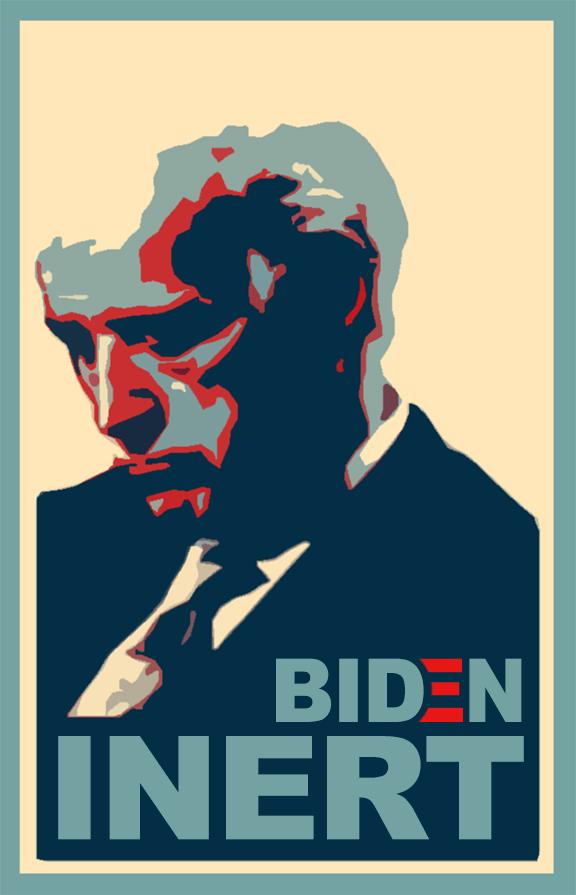
Favreau listed the name of each leading Democratic candidate for president and asked the voters to say the first thing that came to mind. Biden and Sanders, the two most famous names, predictably elicited the most responses, but almost all of them were surface-level and not particularly flattering. In Milwaukee words that came to mind for Biden included “hugger,” “oil tycoon,” “cops,” and “old white money.” Six of the voters-- all of whom had voted in the past two election cycles-- responded with some variation of “nothing” or “I have nothing” when Biden was named. In Philadelphia the voters associated Biden with “crime bill,” “too old,” and “not fired up.” A grandmother and self-described “cat lady” named Jean said, “I heard he said a bad thing, I didn’t like it.” Biden elicited better reactions in Miami, where attendees said “Obama,” “experience,” and “well dressed” when the former vice president’s name was mentioned.
Sanders, too, was described as “too old” in all three cities, though many of the responses were, if not on message, at least message-adjacent. The Miami group associated Sanders with “crazy hair,” “grinny,” “free college,” and “wants to give away too many things for free.” The Philadelphia group said “your crazy uncle,” “health care,” “questionable health,” and “passionate hand talker.” In Milwaukee the Obama–Trump voters described Sanders as “for the people,” “crazy but in a good way,” “boisterous,” and “bold”—while three of the voters had no response to his name. What jumped out to Favreau, though, was the fact that none of the other Democrats were registering with the voters. Only Warren’s name elicited a few responses in Milwaukee-- “energy” and “progressive”-- but the participants knew almost nothing about her. “A lot of us in politics are obsessing over some dumb Twitter fight between candidates or fourth-quarter fundraising numbers while most of these voters couldn’t name any Democratic candidates beyond Joe Biden and Bernie Sanders and maybe Elizabeth Warren,” Favreau told me.
Despite the Midwestern pedigree, only one voter in Milwaukee had heard of Buttigieg, from Indiana, and not a single person recognized Minnesota’s Amy Klobuchar. Buttigieg’s name also fell on deaf ears in Philadelphia. “Who dat?” asked Don, the father of a four-year-old boy. “Former mayor of a city I’ve never heard of,” responded Meredith, a mother from the suburb of Upper Darby. Others in the group shook their heads. In Miami, where the focus group participants were majority black or Hispanic, the question of whether Americans would vote for a gay nominee like Buttigieg snowballed into a confused conversation about sexuality and gender pronouns. “My sister today told me about a new thing called binary,” said Wendy, a Jamaican immigrant and mother of two. “It’s just too many new things that are added. I’m just getting confused,” she said. “Nonbinary,” chimed in a Cuban-American man named Renee. Tammy, a grandmother from Miami, agreed with Wendy. “Yeah, it’s getting kind of confusing.” Some in the Miami group said they would think twice about voting for a gay nominee. Others didn’t.
Focus groups are not polls, but they do add important texture to the horse race and pressure-test assumptions embedded in the national conversation. The Wilderness focus groups offer a glimpse into the behavior and opinions of those voters you don’t often read about, the self-identified Democrats who “don’t know enough” or have “no opinion” about the candidates. If you scrolled through excited corners of progressive Twitter last week, for instance, you’d think that Julián Castro’s endorsement of Warren was a major moment, giving her a stamp of approval from a former Obama administration official and the lone Hispanic figure in the 2020 race. But an Economist–YouGov poll from December showed that fully 35% of Democrats, and 39% of Hispanics, didn’t even know who Castro was. Another national Quinnipiac poll from December showed that 36% of Democrats didn’t know enough about Buttigieg to have an opinion, and a whopping 49% of Democrats didn’t know enough about Klobuchar. These are names on the tip of every political reporter’s tongue, the marquee actors in America’s national pageant, yet vast swaths of Democrats haven’t given them a passing thought.
These poll numbers are different in Iowa, New Hampshire, Nevada, and South Carolina, states where the candidates are spending their time and money, and where voters are paying closer attention to the early stages of the race. Whoever wins the Democratic nomination will obviously see their Name I.D. grow with time. But at the moment, Democrats other than Biden and Sanders are facing down a massive attentional gulf versus Trump. “Right now there are just too many of them,” said Jessica from Milwaukee. “I’m not watching the Democratic debates. I mean, this is like The Bachelor. You don’t watch on week one. There’s too many. Like, I’ll tune in when there’s two weeks left and we’ve narrowed down the population. But I don’t care enough right now. I want to see the number down to three roses, then I’ll vote.”
In the meantime, the views of these lesser-engaged Democrats are complex and don’t fall neatly into the ideological buckets often discussed in the media. They mostly liked the idea of Medicare for All, but also doubted how the government could possibly pay for it. They brought up a wide variety of issues as their top concerns—poverty, opioids, prison reform, Medicaid, college affordability, guns, LGBTQ rights, drug prices, taxes—but few could say what the federal government had done to help. “No one could remember the last thing the government had actually done to improve their lives, except one woman in Miami who brought up the Affordable Care Act,” Favreau said. In Milwaukee, where all the panelists had voted in the 2018 midterms, they were often more knowledgeable about state politics than national. “That’s the stuff that has a direct impact on us, right?” said Carol, a mother of two from suburban Waukesha County. “The stuff in Washington is all, like, at the top level. But day to day, I feel like that’s where we have more impact, where we feel, or can convince ourselves, anyway, that we have more impact to effect change.” All of them expressed clashing opinions that frequently surface in polls of Democratic voters: They wanted a nominee who would fight and not compromise on principles, but also someone who would work with the other side and heal the country.
Favreau asked each of the focus groups how they consumed their news. Most cautioned that they tune out political news, before naming Facebook, Instagram, Twitter, Google News, CNN, Fox News, MSNBC, BBC, and “local news.” But even as the participants identified their own news sources, every focus group participant said they didn’t trust them for information about politics. All of the cable networks were viewed as agenda-driven and produced to stoke outrage and ratings rather than inform viewers. “You only get what they want you to have. There’s no solid form of receiving news that isn’t biased or that isn’t, you know, structured and formulated and produced for the masses,” said Don, the father from Philadelphia. “You only get what they want you to have.” In Miami, George, the Ecuadorean immigrant, said TV news treats politics like entertainment, at the expense of more serious news. “The way they report, it seems like it’s more like a joke, so people don’t believe anything,” he said. Another Miami voter named Paul lamented the panel-style debates that have come to dominate the cable channels. “You have one side against the other,” he said. “They talked for two minutes. Nothing gets solved and you move on to the next topic. There’s no compromise anymore. There’s no smart talk.”
“They don’t trust CNN or Fox, see them as two sides of the same coin,” said Favreau. “They don’t even trust what they read on Facebook anymore, which is probably a very good thing, but the result is that they don’t know what to believe, and so they just largely tune out.” The focus groups crystallized the imperative for Democrats to find new ways to reach the irregular voters they need, with tactics and innovations that slice through the confusion of the media landscape. It’s more than that, though: The Democratic nominee must feel, for lack of a better phrase, bigger and more relevant than politics.


Labels: 2020 presidential election, Ari Melber, Favreau, publicity
posted by DownWithTyranny @ 5:00 PM
6 comments
|
Reddit