Thursday, February 03, 2011

Thurber Tonight: Part 5 of "The Bloodhound and the Bug," and "The Grizzly and the Gadgets"

>

Fifth of five parts -- here are part 1, part 2, part 3, and part 4


The Grizzly
and the Gadgets

(from Further Fables for Our Time)

A GRIZZLY BEAR who had been on a bender for several weeks following a Christmas party in his home at which his brother-in-law had set the Christmas tree on fire, his children had driven the family car through the front door and out the back, and all the attractive female bears had gone into hibernation before sunset returned home prepared to forgive, and live and let live. He found, to his mild annoyance, that the doorbell had been replaced by an ornamental knocker. When he lifted the knocker, he was startled to hear it play two bars of "Silent Night."

When nobody answered his knock, he turned the doorknob, which said "Happy New Year" in a metallic voice, and a two-tone gong rang "Hello" somewhere deep within the house.

He called to his mate, who was always the first to lay the old aside, as well as the first by whom the new was tried, and got no answer. This was because the walls of his house had been soundproofed by a soundproofer who had soundproofed them so well nobody could hear anybody say anything six feet away. Inside the living room the grizzly bear turned on the light switch, and the lights went on all right, but the turning of the switch had also released an odor of pine cones, which this particular bear had always found offensive. The head of the house, now becoming almost as angry as he had been on Christmas Day, sank into an easy chair and began bouncing up and down and up and down, for it was a brand-new contraption called "Sitpretty" which made you bounce up and down and up and down when you sat on it.

Now thoroughly exasperated, the bear jumped up from the chair and began searching for a cigarette. He found a cigarette box, a new-fangled cigarette box he had never seen before, which was made of metal and plastic in the shape of a castle, complete with portal and drawbridge and tower. The trouble was that the bear couldn't get the thing open. Then he made out, in tiny raised letters on the portal, a legend in rhyme: "You can have a cigarette on me If you can find the castle key." The bear could not find the castle key, and he threw the trick cigarette box through a windowpane out into the front yard, letting in a blast of cold air, and he howled when it hit the back of his neck. He was a little mollified when he found that he had a cigar in his pocket, but no matches, and so he began looking around the living room for a matchbox. At last he saw one on a shelf. There were matches in it, all right, but no scratching surface on which to scratch them. On the bottom of the box, however, there was a neat legend explaining this lack. The message on the box read: "Safety safety matches are doubly safe because there is no dangerous dangerous sandpaper surface to scratch them on. Strike them on a windowpane or on the seat of your pants."

Enraged, infuriated, beside himself, seeing red and thinking black, the grizzly bear began taking the living room apart. He pounded the matchbox into splinters, knocked over lamps, pulled pictures off the wall, threw rugs out of the broken window, swept vases and a clock off the mantelpiece, and overturned chairs and tables, growling and howling and roaring, shouting and bawling and cursing, until his wife was aroused from a deep dream of marrying a panda, neighbors appeared from blocks around, and the attractive female bears who had gone into hibernation began coming out of it to see what was going on.

The bear, deaf to the pleas of his mate, heedless of his neighbors' advice, and unafraid of the police, kicked over whatever was still standing in the house, and went roaring away for good, taking the most attractive of the attractive female bears, one named Honey, with him.


Moral: Nowadays most men lead lives of noisy desperation.


SUNDAY NIGHT: "No Standing Room Only"


THURBER TONIGHT (including BENCHLEY TONIGHT):
Check out the series to date

#

Labels: ,

Wednesday, February 02, 2011

Thurber Tonight: Part 4 of "The Bloodhound and the Bug," and "The Bears and the Monkeys"

>

Fourth of five parts -- here are part 1, part 2, part 3, and part 5


The Bears
and the Monkeys

(from Further Fables for Our Time)

IN A DEEP FOREST there lived many bears. They spent the winter sleeping, and the summer playing leap-bear and stealing honey and buns from nearby cottages. One day a fast-talking monkey named Glib showed up and told them that their way of life was bad for bears. "You are prisoners of pastime," he said, "addicted to leap-bear, and slaves of honey and buns."

The bears were impressed and frightened as Glib went on talking. "Your forebears have done this to you," he said. Glib was so glib, glibber than the glibbest monkey they had ever seen before, that the bears believed he must know more than they knew, or than anybody else. But when he left, to tell other species what was the matter with them, the bears reverted to their fun and games and their theft of buns and honey.

Their decadence made them bright of eye, light of heart, and quick of paw, and they had a wonderful time, living as bears had always lived, until one day two of Glib's successors appeared, named Monkey Say and Monkey Do. They were even glibber than Glib, and they brought many presents and smiled all the time. "We have come to liberate you from freedom," they said. "This is the New Liberation, twice as good as the old, since there are two of us."

So each bear was made to wear a collar, and the collars were linked together with chains, and Monkey Do put a ring in the lead bear's nose, and a chain on the lead bear's ring. "Now you are free to do what I tell you to do," said Monkey Do.

"Now you are free to say what I want you to say," said Monkey Say. "By sparing you the burden of electing your leaders, we save you from the dangers of choice. No more secret ballots, everything open and aboveboard."

For a long time the bears submitted to the New Liberation, and chanted the slogan the monkeys had taught them: "Why stand on your own two feet when you can stand on ours?"

Then one day they broke the chains of their new freedom and found their way back to the deep forest and began playing leap-bear again and stealing honey and buns from the nearby cottages. And their laughter and gaiety rang through the forest, and birds that had ceased singing began singing again, and all the sounds of the earth were like music.


Moral : It is better to have the ring of freedom in your ears than in your nose.


TOMORROW NIGHT: Part 5 of "The Bloodhound and the Bug," and "The Grizzly and the Gadgets" (from Further Fables for Our Time)


THURBER TONIGHT (including BENCHLEY TONIGHT):
Check out the series to date

#

Labels: ,

Tuesday, February 01, 2011

Thurber Tonight: Part 3 of "The Bloodhound and the Bug," and "The Lover and His Lass"

>

Third of five parts -- here are part 1, part 2, part 4, and part 5


The Lover
and His Lass

(from Further Fables for Our Time)

AN ARROGANT GRAY PARROT and his arrogant mate listened, one African afternoon, in disdain and derision, to the lovemaking of a lover and his lass, who happened to be hippopotamuses.

"He calls her snooky-ookums," said Mrs. Gray. "Can you believe that?"

"No," said Gray. "I don't see how any male in his right mind could entertain affection for a female that has no more charm than a capsized bathtub."

"Capsized bathtub, indeed!" exclaimed Mrs. Gray. "Both of them have the appeal of a coastwise fruit steamer with a cargo of waterlogged basketballs."

But it was spring, and the lover and his lass were young, and they were oblivious of the scornful comments of their sharp-tongued neighbors, and they continued to bump each other around in the water, happily pushing and pulling, backing and filling, and snorting and snaffling. The tender things they said to each other during the monolithic give-and-take of their courtship sounded as lyric to them as flowers in bud or green things opening. To the Grays, however, the bumbling romp of the lover and his lass was hard to comprehend and even harder to tolerate, and for a time they thought of calling the A.B.I., or African Bureau of Investigation, on the ground that monolithic lovemaking by enormous creatures who should have become decent fossils long ago was probably a threat to the security of the jungle. But they decided instead to phone their friends and neighbors and gossip about the shameless pair, and describe them in mocking and monstrous metaphors involving skidding buses on icy streets and overturned moving vans.

Late that evening, the hippopotamus and the hippopotama were surprised and shocked to hear the Grays exchanging terms of endearment. "Listen to those squawks," wuffled the male hippopotamus.

"What in the world can they see in each other?" gurbled the female hippopotamus.

"I would as soon live with a pair of unoiled garden shears," said her inamoratus.

They called up their friends and neighbors and discussed the incredible fact that a male gray parrot and a female gray parrot could possibly have any sex appeal. It was long after midnight before the hippopotamuses stopped criticizing the Grays and fell asleep, and the Grays stopped maligning the hippopotamuses and retired to their beds.


Moral: Laugh and the world laughs with you, love and you love alone.


TOMORROW NIGHT: Part 4 of "The Bloodhound and the Bug," and "The Bears and the Monkeys" (from Further Fables for Our Time)


THURBER TONIGHT (including BENCHLEY TONIGHT):
Check out the series to date

#

Labels: ,

Monday, January 31, 2011

Thurber Tonight: Part 2 of "The Bloodhound and the Bug," and "The Fox and the Crow" (plus "Variations on the Theme")

>

Second of five parts -- here are part 1, part 3, part 4, and part 5


The Fox
and the Crow

(from Further Fables for Our Time)

A CROW, PERCHED IN A TREE with a piece of cheese in his beak, attracted the eye and nose of a fox. "If you can sing as prettily as you sit," said the fox, "then you are the prettiest singer within my scent and sight." The fox had read somewhere, and somewhere, and somewhere else, that praising the voice of a crow with a cheese in his beak would make him drop the cheese and sing. But this is not what happened to this particular crow in this particular case.

"They say you are sly and they say you are crazy," said the crow, having carefully removed the cheese from his beak with the claws of one foot, "but you must be nearsighted as well. Warblers wear gay hats and colored jackets and bright vests, and they are a dollar a hundred. I wear black and I am unique." He began nibbling the cheese, dropping not a single crumb.

"I am sure you are," said the fox, who was neither crazy nor nearsighted, but sly. "I recognize you, now that I look more closely, as the most famed and talented of all birds, and I fain would hear you tell about yourself, but I am hungry and must go."

"Tarry awhile," said the crow quickly, "and share my lunch with me." Whereupon he tossed the cunning fox the lion's share of the cheese, and began to tell about himself. "A ship that sails without a crow's nest sails to doom," he said. "Bars may come and bars may go, but crow bars last forever. I am the pioneer of flight, I am the map maker. Last, but never least, my flight is known to scientists and engineers, geometrists and scholars, as the shortest distance between two points. Any two points," he concluded arrogantly.

"Oh, every two points, I am sure," said the fox. "And thank you for the lion's share of what I know you could not spare." And with this he trotted away into the woods, his appetite appeased, leaving the hungry crow perched forlornly in the tree.


Moral: 'Twas true in Aesop's time, and La Fontaine's, and now, no one else can praise thee quite so well as thou.


Variations on the Theme

I

A FOX, ATTRACTED BY THE SCENT of something, followed his nose to a tree in which sat a crow with a piece of cheese in his beak. "Oh, cheese," said the fox scornfully. "That's for mice."

The crow removed the cheese with his talons and said, "You always hate the thing you cannot have, as, for instance, grapes."

"Grapes are for the birds," said the fox haughtily. "I am an epicure, a gourmet, and a gastronome."

The embarrassed crow, ashamed to be seen eating mouse food by a great specialist in the art of dining, hastily dropped the cheese. The fox caught it deftly, swallowed it with relish, said "Merci," politely, and trotted away.

II

A FOX HAD USED all his blandishments in vain, for he could not flatter the crow in the tree and make him drop the cheese he held in his beak. Suddenly, the crow tossed the cheese to the astonished fox. Just then the farmer, from whose kitchen the loot had been stolen, appeared, carrying a rifle, looking for the robber. The fox turned and ran for the woods. "There goes the guilty son of a vixen now!" cried the crow, who, in case you do not happen to know it, can see the glint of sunlight on a gun barrel at a greater distance than anybody.

III

THIS TIME THE FOX, who was determined not to be outfoxed by a crow, stood his ground and did not run when the farmer appeared, carrying a rifle and looking for the robber.

"The teeth marks in this cheese are mine," said the fox, "but the beak marks were made by the true culprit up there in the tree. I submit this cheese in evidence, as Exhibit A, and bid you and the criminal a very good day." Whereupon he lit a cigarette and strolled away.

IV

IN THE GREAT AND ANCIENT TRADITION, the crow in the tree with the cheese in his beak began singing, and the cheese fell into the fox's lap. "You sing like a shovel," said the fox, with a grin, but the crow pretended not to hear and cried out, "Quick, give me back the cheese! Here comes the farmer with his rifle!"

"Why should I give you back the cheese?" the wily fox demanded.

"Because the farmer has a gun, and I can fly faster than you can run."

So the frightened fox tossed the cheese back to the crow, who ate it, and said, "Dearie me, my eyes are playing tricks on me -- or am I playing tricks on you? Which do you think?" But there was no reply, for the fox had slunk away into the woods.


TOMORROW NIGHT: Part 3 of "The Bloodhound and the Bug," and "The Lover and His Lass" (from Further Fables for Our Time)


THURBER TONIGHT (including BENCHLEY TONIGHT):
Check out the series to date

#

Labels: ,

Sunday, January 30, 2011

Thurber Tonight: Part 1 of "The Bloodhound and the Bug," and "The Cat in the Lifeboat""

>

The Bloodhound and the Bug, part 1

First of five parts -- here are part 2, part 3, part 4, and part 5

Tonight we launch a new round of Thurber fables, this time drawing from the later collection, Further Fables for Our Time (1956). -- Ken

The Cat
in the Lifeboat

(from Further Fables for Our Time)


A FELINE NAMED WlLLIAM got a job as copy cat on a daily paper and was surprised to learn that every other cat on the paper was named Tom, Dick, or Harry. He soon found out that he was the only cat named William in town. The fact of his singularity went to his head, and he began confusing it with distinction. It got so that whenever he saw or heard the name William, he thought it referred to him. His fantasies grew wilder and wilder, and he came to believe that he was the Will of Last Will and Testament, and the Willy of Willy Nilly, and the cat who put the cat in catnip. He finally became convinced that Cadillacs were Catillacs because of him.

William became so lost in his daydreams that he no longer heard the editor of the paper when he shouted, "Copy cat!" and he became not only a ne'er-do-well, but a ne'er-do-anything. "You're fired," the editor told him one morning when he showed up for dreams.

"God will provide," said William jauntily.

"God has his eye on the sparrow," said the editor.

"So've I," said William smugly.

William went to live with a cat-crazy woman who had nineteen other cats, but they could not stand William's egotism or the tall tales of his mythical exploits, honors, blue ribbons, silver cups, and medals, and so they all left the woman's house and went to live happily in huts and hovels. The cat-crazy woman changed her will and made William her sole heir, which seemed only natural to him, since he believed that all wills were drawn in his favor. "I am eight feet tall," William told her one day, and she smiled and said, "I should say you are, and I am going to take you on a trip around the world and show you off to everybody."

William and his mistress sailed one bitter March day on the S.S. Forlorna, which ran into heavy weather, high seas, and hurricane. At midnight the cargo shifted in the towering seas, the ship listed menacingly, SOS calls were frantically sent out, rockets were fired into the sky, and the officers began running up and down companionways and corridors shouting, "Abandon ship!" And then another shout arose, which seemed only natural to the egotistical cat. It was, his vain ears told him, the loud repetition of "William and children first!" Since William figured no lifeboat would be launched until he was safe and sound, he dressed leisurely, putting on white tie and tails, and then sauntered out on deck. He leaped lightly into a lifeboat that was being lowered, and found himself in the company of a little boy named Johnny Green and another little boy named Tommy Trout, and their mothers, and other children and their mothers. "Toss that cat overboard!" cried the sailor in charge of the lifeboat, and Johnny Green threw him overboard, but Tommy Trout pulled him back in.

"Let me have that tomcat," said the sailor, and he took William in his big right hand and threw him, like a long incompleted forward pass, about forty yards from the tossing lifeboat.

When William came to in the icy water, he had gone down for the twenty-fourth time, and had thus lost eight of his lives, so he only had one left. With his remaining life and strength he swam and swam until at last he reached the sullen shore of a sombre island inhabited by surly tigers, lions, and other great cats. As William lay drenched and panting on the shore, a jaguar and a lynx walked up to him and asked him who he was and where he came from. Alas, William's dreadful experience in the lifeboat and the sea had produced traumatic amnesia, and he could not remember who he was or where he came from.

"We'll call him Nobody," said the jaguar.

"Nobody from Nowhere," said the lynx.

And so William lived among the great cats on the island until he lost his ninth life in a barroom brawl with a young panther who had asked him what his name was and where he came from and got what he considered an uncivil answer.

The great cats buried William in an unmarked grave because, as the jaguar said, "What's the good of putting up a stone reading 'Here lies Nobody from Nowhere'?"


MORAL: O why should the spirit of mortal be proud, in this little voyage from swaddle to shroud?


TOMORROW NIGHT: Part 2 of "The Bloodhound and the Bug," and "The Fox and the Crow" (plus "Variations on the Theme," from Further Fables for Our Time)


THURBER TONIGHT (including BENCHLEY TONIGHT):
Check out the series to date

#

Labels: ,

Wednesday, December 15, 2010

Thurber Tonight: Fables for Our Time: "The Unicorn in the Garden" and "The Birds and the Foxes"

>

Constance Cummings as the unspeakable Mrs. Barrows and Peter Sellers as meek Mr. Martin in The Battle of the Sexes (1959), adapted from Thurber's story "The Catbird Seat"
WHICH CAME FIRST, "THE CATBIRD SEAT"
OR "THE UNICORN IN THE GARDEN"?


Is there any question that Thurber's two most memorable pieces of short fiction are "The Secret Life of Walter Mitty" and "The Catbird Seat"? I've just been dipping into the mammoth volume of collected Thurber Letters published in 2003 with the approval and participation of the writer's daughter, Rosemary, and was intrigued by the correspondence dating from the period in which the screenplay for a film version of "Walter Mitty," to star Danny Kaye as the inveterate daydreamer, was being written. I was intrigued by Thurber's eagerness and innocent optimism while he was officially consulting on the film and actually believed that Sam Goldwyn was interested in cinematizing the special qualities of the story.

In the end, almost all of Thurber's work and suggestions were ignored, and the 1947 Secret Lives of Walter Mitty, made as a showcase for the star's mindless hamming, was a source of considerable pain for the author. Earlier on, though, no doubt still imagining how well the genuinely witty, creative side of Danny Kaye could serve Walter Mitty's story, he had actually imagined Kaye following it up by taking on the meek and mild-mannered, compulsively prim and proper Mr. Martin in a film adaptation of "The Catbird Seat." Perhaps needless to say, that didn't happen. (Eventually "The Catbird Seat" was, er, adapted into the 1959 British film The Battle of the Sexes, with Peter Sellers as Mr. Martin.)

Since "The Catbird Seat" didn't appear until the New Yorker issue of Nov. 14, 1942 (it first appeared in book form in The Thurber Carnival, which contained an entire section of previously uncollected material), we can assume that the basic plot mechanism was borrowed from "The Unicorn in the Garden," rather than vice versa. I don't know that we'll get to "The Catbird Seat," but really we don't have to -- you can find it here.
-- Ken

The Unicorn in the Garden

ONCE UPON A SUNNY MORNING a man who sat in a breakfast nook looked up from his scrambled eggs to see a white unicorn with a golden horn quietly cropping the roses in the garden. The man went up to the bedroom where his wife was still asleep and woke her. "There's a unicorn in the garden," he said. "Eating roses." She opened one unfriendly eye and looked at him. "The unicorn is a mythical beast," she said, and turned her back on him. The man walked slowly downstairs and out into the garden. The unicorn was still there; he was now browsing among the tulips. "Here, unicorn," said the man, and he pulled up a lily and gave it to him. The unicorn ate it gravely. With a high heart, because there was a unicorn in the garden, the man went upstairs and roused his wife again. "The unicorn," he said, "ate a lily." His wife sat up in bed and looked at him, coldly. "You are a booby," she said, "and I am going to have you put in the booby-hatch." The man, who had never liked the words "booby" and "booby-hatch," and who liked them even less on a shining morning when there was a unicorn in the garden, thought for a moment. "We'll see about that," he said. He walked over to the door. "He has a golden horn in the middle of his forehead," he told her. Then he went back to the garden to watch the unicorn; but the unicorn had gone away. The man sat down among the roses and went to sleep.

As soon as the husband had gone out of the house, the wife got up and dressed as fast as she could. She was very excited and there was a gloat in her eye. She telephoned the police and she telephoned a psychiatrist; she told them to hurry to her house and bring a strait-jacket. When the police and the psychiatrist arrived they sat down in chairs and looked at her, with great interest. "My husband," she said, "saw a unicorn this morning." The police looked at the psychiatrist and the psychiatrist looked at the police. "He told me it ate a lily," she said. The psychiatrist looked at the police and the police looked at the psychiatrist. "He told me it had a golden horn in the middle of its forehead," she said. At a solemn signal from the psychiatrist, the police leaped from their chairs and seized the wife. They had a hard time subduing her, for she put up a terrific struggle, but they finally subdued her. Just as they got her into the strait-jacket, the husband came back into the house.

"Did you tell your wife you saw a unicorn?" asked the police. "Of course not," said the husband. "The unicorn is a mythical beast." "That's all I wanted to know," said the psychiatrist. "Take her away. I'm sorry, sir, but your wife is as crazy as a jay bird." So they took her away, cursing and screaming, and shut her up in an institution. The husband lived happily ever after.

Moral: Don't count your boobies before they are hatched.

§

The Birds and the Foxes

ONCE UPON A TIME there was a bird sanctuary in which hundreds of Baltimore orioles lived together happily. The refuge consisted of a forest entirely surrounded by a high wire fence. When it was put up, a pack of foxes who lived nearby protested that it was an arbitrary and unnatural boundary. However, they did nothing about it at the time because they were interested in civilizing the geese and ducks on the neighboring farms. When all the geese and ducks had been civilized, and there was nothing else left to eat, the foxes once more turned their attention to the bird sanctuary. Their leader announced that there had once been foxes in the sanctuary but that they had been driven out. He proclaimed that Baltimore orioles belonged in Baltimore. He said, furthermore, that the orioles in the sanctuary were a continuous menace to the peace of the world. The other animals cautioned the foxes not to disturb he birds in their sanctuary.

So the foxes attacked the sanctuary one night and tore down the fence that surrounded it. The orioles rushed out and were instantly killed and eaten by the foxes.

The next day the leader of the foxes, a fox from whom God was receiving daily guidance, got upon the rostrum and addressed the other foxes. His message was simple and sublime. "You se before you," he said, "another Lincoln. We have liberated all thsoe birds!"

Moral: Government of the orioles, by the foxes, and for the foxes must perish from the earth.


TOMORROW NIGHT: Our third installment of "The Pet Department"


#

Labels: ,

Thursday, December 09, 2010

Thurber Tonight: Fables for Our Time, "The Little Girl and the Wolf" and "The Hen and the Heavens"

>

We began our holiday-season Thurber odyssey last night with a first helping of "The Pet Department." Owing to a scheduling confusion, tonight we being our look at the Fables for Our Time with not one but two of the original fables, published in Fables for Our Time and Famous Poems Illustrated (1940). (The volume of Further Fables for Our Time appeared in 1956.)

Wikipedia observes that Thurber's fables "usually conformed to the fable genre to the extent that they were short, featured anthropomorphic animals as main characters, and ended with a moral as a tagline," and after what I think of as the archetypal Thurber fable, "The Little Girl and the Wolf," we've got one of the all-animal ones, on a famliiar theme, "The Hen and the Heavens." (We've already made the acquaintance of "The Very Proper Gander" in a post that suggested "the teabaggers would know how to deal with him.")

I see that Wikipeda proposes as the "most famous" of Thurber's fables one with an all-human cast, "The Unicorn in the Garden." We already have that on our schedule.
-- Ken


The Little Girl and the Wolf

ONE AFTERNOON a big wolf waited in a dark forest for a little girl to come along carrying a basket of food to her grandmother. Finally a little girl did come along and she was carrying a basket of food. "Are you carrying that basket to your grandmother?" asked the wolf. The little girl said yes, she was. So the wolf asked her where her grandmother lived and the little girl told him and he disappeared into the wood.

When the little girl opened the door of her grandmother's house she saw that there was somebody in bed with a nightcap and nightgown on. She had approached no nearer than twenty-five feet from the bed when she saw that it was not her grandmother but the wolf, for even in a nightcap a wolf does not look any more like your grandmother than the Metro-Goldwyn lion looks like Calvin Coolidge. So the little girl took an automatic out of her basket and shot the wolf dead.

Moral: It is not so easy to fool little girls nowadays as it used to be.

§

The Hen and the Heavens

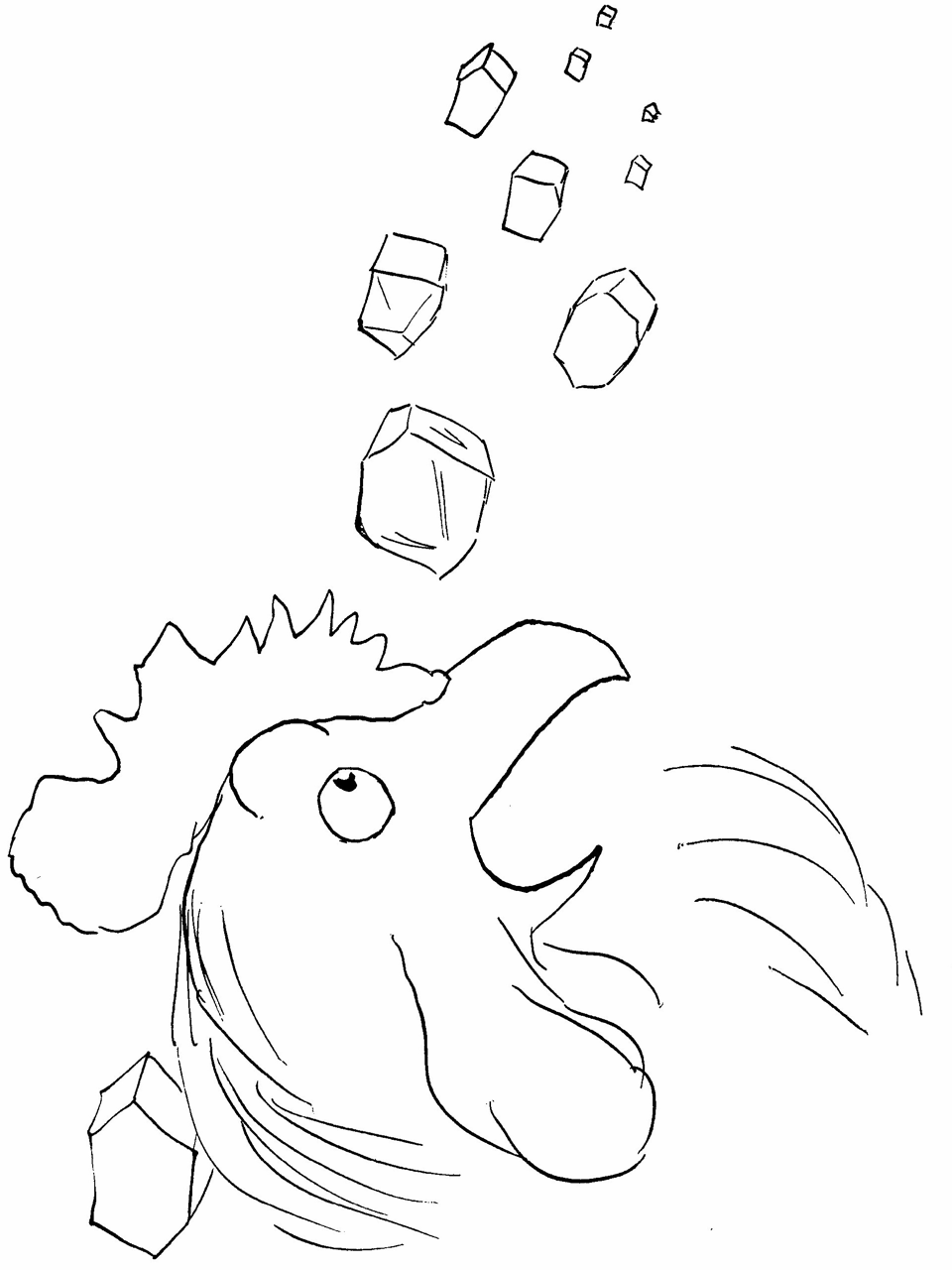
ONCE UPON A TIME a little red hen was picking up stones and worms and seeds in a barnyard when something fell on her head. "The heavens are falling down!" she shouted, and she began to run, still shouting, "The heavens are falling down!" All the hens that she met and all the roosters and turkeys and ducks laughed at her, smugly, the way you laugh at one who is terrified when you aren't. "What did you say?" they chortled. "The heavens are falling down!" cried the little red hen. Finally a very pompous rooster said to her, "Don't be silly, my dear, it was only a pea that fell on your head." And he laughed and laughed and everybody else except the little red hen laughed. Then suddenly with an awful roar great chunks of crystallized cloud and huge blocks of icy blue sky began to drop on everybody from above, and everybody was killed, the laughing rooster and the little red hen and everybody else in the barnyard, for the heavens actually were falling down.

Moral: It wouldn't surprise me a bit if they did.


COMING UP SUNDAY: "My Fifty Years with James Thurber" (by James Thurber)


THURBER TONIGHT: Check out the series to date

#

Labels: ,

Wednesday, December 09, 2009

Thurber Tonight: Fables for Our Time, "The Little Girl and the Wolf"

>

We began our holiday-season Thurber odyssey last night with a first helping of "The Pet Department." Tonight we have what I think of as the archetype of the Fables for Our Time, published in book form in 1940 (including a section of "Famous Poems Illustrated"). A collection of Further Fables for Our Time was published in 1956.

Wikipedia observes that Thurber's fables "usually conformed to the fable genre to the extent that they were short, featured anthropomorphic animals as main characters, and ended with a moral as a tagline," and next up we've got a typical specimen on a familiar theme, "The Hen and the Heavens." (We've already made the acquaintance of "The Very Proper Gander" in a post that suggested "the teabaggers would know how to deal with him.") I see that Wikipeda proposes as the "most famous" of Thurber's fables one with an all-human cast, "The Unicorn in the Garden." We already had that on our schedule.
-- Ken


The Little Girl and the Wolf

ONE AFTERNOON a big wolf waited in a dark forest for a little girl to come along carrying a basket of food to her grandmother. Finally a little girl did come along and she was carrying a basket of food. "Are you carrying that basket to your grandmother?" asked the wolf. The little girl said yes, she was. So the wolf asked her where her grandmother lived and the little girl told him and he disappeared into the wood.

When the little girl opened the door of her grandmother's house she saw that there was somebody in bed with a nightcap and nightgown on. She had approached no nearer than twenty-five feet from the bed when she saw that it was not her grandmother but the wolf, for even in a nightcap a wolf does not look any more like your grandmother than the Metro-Goldwyn lion looks like Calvin Coolidge. So the little girl took an automatic out of her basket and shot the wolf dead.

Moral: It is not so easy to fool little girls nowadays as it used to be.


SUNDAY NIGHT: Thurber's "My Fifty Years with James Thurber"
#

Labels: ,