Saturday, September 12, 2020

Winning On The First Try

>


-by Eva Putzova

It’s been a bit over a month since my bid for a congressional seat ended with winning 41.4 percent of the vote in one of the largest districts in the country in the midst of a global pandemic. I look back at our campaign as a truly winning campaign because to get 33,248 Arizonans to vote for an immigrant who didn’t shy away from supporting Medicare for All, a Green New Deal, and a tuition-free college education in an environment where the Democratic Party with all its institutional power chose to back a lifelong-Republican-turned-Democrat with a strong pro-Trump record was an incredible success.

When I launched my campaign in January of 2019 I was as prepared as I could have been to challenge the incumbent: I had three successful campaigns under my belt and understood the layering and integration of campaign activities and strategies; I was disciplined and serious, willing to work day in and day out for a year and a half; I had a small team of competent and committed people I could rely on; as a former councilmember and a leader of a local minimum wage initiative, I already had a constituency to support me and was not starting from scratch to build my name recognition; and I gave ourselves a long 19 months to learn what we didn’t know with enough time to reach voters in this geographically vast district. I also knew our campaign needed a strong communications program and that we had to start knocking on voters’ doors early in the cycle to offset our fundraising capacity disadvantage.

Many in political circles would conclude that my candidacy had the typical arc of a progressive struggle and that this was just a warm-up for the next time. To be honest, running again in 2022 is not completely out of the question for me, but I am convinced that as progressives we can succeed on the first try. Here’s how and why and what we collectively should do to make it so.


Give candidates the financial freedom to run

I’ve been preparing for this campaign since 2017 when I left my university job in strategic communications for a position that aligned with my political views while at the same time giving me the flexibility-- or so I thought-- to take time off to run a viable campaign. I am a regular working person who needs income but I structured my life in a way that allowed me to take the last 6 months of the campaign off from my day job. And here’s where I learned the most important lesson that I believe would have made a difference-- to build the campaign financially from nothing you need more than 6 months of undivided attention. As a campaign we ended up raising over $418,000 which is not a small achievement but more than half of it came after I was free from my day job and could focus my mental energy on call-time-- the bread and butter of every congressional campaign. With the tremendous proliferation of progressive organizations that want to change the composition of Congress to include more regular people, I would argue that candidates need less training in campaign 101 and more support in what boils down to essentially buying their time so they are free to run effectively. For newcomers, there’s no magic digital fundraising strategy that can replace good old-fashioned call time given the campaign finance laws we have to operate within and there’s no real way to dedicate those precious hours to it while also holding onto a full-time job. It’s true that candidates can draw a salary from their campaign funds but the law doesn’t allow for that until very late in the cycle and when they do just that, they are criticized from their well-funded opponents as well as from progressive circles that see virtue in financial sacrifice and struggle.

Build out a post-partisan progressive issue-based institutional network

I underestimated how wide and deep the establishment institutional ecosystem reaches. I knew that the state Democratic Party as well as the DCCC would be both actively and passively working against my candidacy, but like most people, I didn’t realize how close organizations like Emily’s List, Planned Parenthood, or Sierra Club are to the Party and that their internal incumbent endorsement policies provide a convenient cover to support legislators who are far from championing issues their non-profit arms built their brand reputation on. As our grassroots support comes mostly from regular people who hold these institutions in high regard, the current landscape of issue-based organizations adds to the challenge when we compete for contributions, support, and ultimately votes. The network of trans- or post-partisan organizations operating in the area of reproductive health, labor, and to a lesser degree environmental and climate justice that enjoy significant brand equity is still underdeveloped. This is especially true in more rural districts where progressive alternatives have no local footprint. We need to support issue-based organizations willing to transcend party politics and build local, grassroots power through investing in lasting infrastructure. I realize that this is easier said than done but this is where numerous foundations interested in transformative policymaking can focus their energy.

Focus on campaign staffing

After talking to many congressional candidates and based on my own campaign experiences, I concluded that one of the greatest challenges first-time grassroots candidates face is a lack of access to professional staff who share progressive values and have relevant campaign experience. By nature, campaigns do not have time and finances nor are set up with the necessary HR infrastructure to follow rigorous and lengthy hiring processes that would lead to successful filling of critical positions in campaign management, field, fundraising, and communications. There are many reasons why the bench of available campaign talent is so small, including competition from non-candidate PACs and c4/c3 organizations that can provide more stable employment to qualified talent and a growing number of campaigns vying for congressional and other elected seats. Progressive organizations working in the arena of electoral politics would significantly improve the chances of campaign successes by focusing on recruiting and developing campaign staff and providing them with steady employment while “loaning” them to the campaigns for months at a time to fill in their highly skilled and specialized but temporary staffing needs. Creating a match-making hub of campaigns and organizations with available staff for different functions could be transformational to grassroots campaigns. Such a hub would address concerns from the campaign and staff’s perspective, including vetting candidates and campaigns as well as professional staff, providing access to healthcare benefits, retaining knowledge in the progressive movement, and providing much needed employment stability in the political campaign “industry.”

Test technology and tools, share actionable insights, and vet consultants

In the last four years we have seen an incredible growth in the number of organizations and PACs encouraging people to run for public offices, endorsing candidates, and providing basic campaign training. Shortly after a candidate files their candidacy papers they start making initial decisions on engaging a particular mix of tools and consultants that can set them on a path to success or be a source of frustration, missed opportunity, or costly mistakes. In these early stages, candidates need the most help-- they don’t know what they don’t know-- and they need specifics, like where to go for compliance advice or what is a reasonable rate for a reliable treasurer or what CMS to commit to for the length of the campaign and what voter outreach tools will be easily integrate-able down the road? What vendors sell what data and what quality can we expect? Who is a reliable consultant and who should we avoid because they are either overextended or simply are better in selling their services than actually providing them? In other words, because as grassroots candidates we operate on very lean budgets, we need help avoiding costly mistakes and losing time learning by doing. By the end of the first campaign, candidates gain incredible insights that they can capitalize on in their subsequent efforts but there’s no reason why that knowledge shouldn’t be transferred to them at the onset.

Support candidates early and support them often

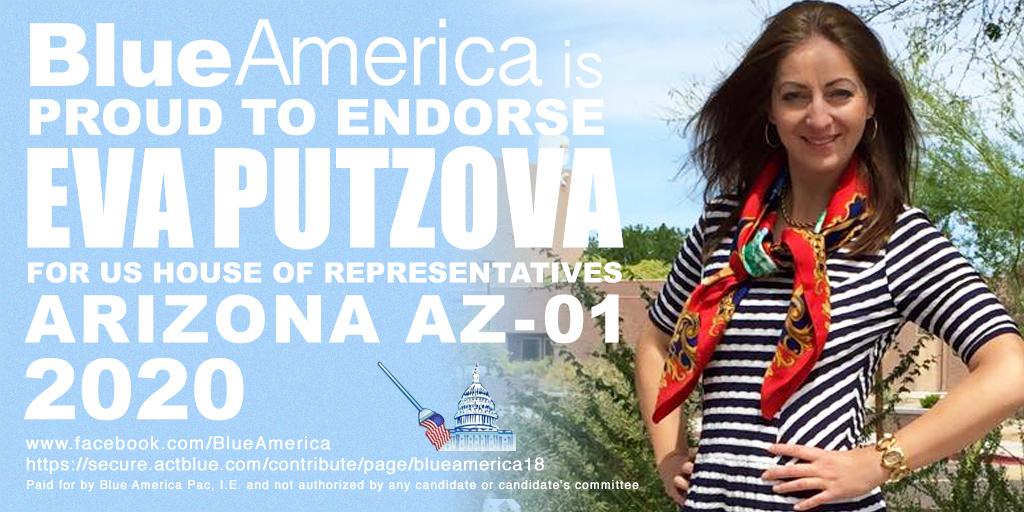
My best experience when being considered for an endorsement was with Blue America PAC, thanks to which you are reading this blog. Not only did Howie Klein, who heads the PAC, reach out to me soon after we launched our campaign but also, he didn’t send us a lengthy questionnaire that would take hours to complete. Instead, he spent 45 minutes on the phone with me asking direct questions to get to know me, my values, policy stances, and my campaign experience. He didn’t ask for a campaign budget but he asked how I intend to win. After Jamaal Bowman’s victory and Charles Booker’s near-victory, a number of articles were written calling for progressive organizations to get behind candidates early and to stop waiting on the sidelines for candidates who rise to the top despite the lack of support just to join in the last few weeks when what can be done to affect the outcome is limited. What people in progressive circles think will happen will happen because they will act to make it happen. The time and effort it takes to pursue endorsements is extraordinary. It’s not just lengthy questionnaires from organizations that never intend to endorse anybody but the incumbent or are not interested in the district at all, but also a lack of responsiveness and feedback that chips away unnecessarily from the campaign’s time. Blue America also did something that no other organization did: it used its platform to regularly and frequently raise dollars for our campaign and other endorsed candidates. In our weakest fundraising months, Blue America helped us stay operational because it had clarity, focus, and discipline in engaging its followers. It seems that some policy-focused organizations decide to endorse candidates but then don’t spend enough time to develop their candidate-facing programming. It is an opportunity for future cycles that I hope those in charge of c4 organizations and PACs will work on.
As I look back at the last 19 months, the work we did and the insights and knowledge we gained, I keep thinking about how to help first-time candidates to win on the first try. If you want to help me put the infrastructure we have built to good use, drop me a note at eva@evaforcongress.com and let’s talk. Campaigns come and go but the fight for progress continues.

Labels: , , ,

Tuesday, August 18, 2020

Going Forward... What's The Democratic Party Going To Be?

>


No one knows what's going to happen, but it would be a safe bet that Americans aren't going to have a chance to vote for a real progressive for president in a very long time, probably longer than I'll be a sentient being. Or maybe not. Maybe Biden and the Democrats will screw up so badly that the Democrats lose Congress in 2022 and then the Democrat in the White House in 2024-- whether Biden or Kamala-- loses to a Republican who also screws up. So 2028... I may still be walking around and sentient. My grandmother was at that age.

But... I still feel cheated. I so wanted one damned good great president in my life. Instead they've all be mediocre at best and, more frequently, piles of stinking, rotting garbage. I wanted to see Bernie win so badly. It wasn't in the cards-- the Democratic establishment made certain of that.

Yesterday, Washington Post reporters Robert Costa and Sean Sullivan wrote about an interview they did with Bernie on Sunday. They predicted that Bernie's DNC speech last night "will effectively close an improbable odyssey-- two bids for the White House that together formed the backbone of a new, insurgent liberal movement." Thanks in great part to Bernie, Medicare-for-all, free college tuition, the Green Anew Deal and a chastening of the nation’s financial elite have all come to the fore of a grassroots Democratic Party-- and have pulled even a horribly corrupt status quo establishment slightly to the left and, perhaps put the breaks on a corrosive drift toward more-centrist views that have been been dominant since the Clinton DLC wing of the party managed to take over and change the focus from working class to managerial and donor class.

They quoted Bernie: "Ideas that we raised in health care, in education, in the minimum wage, in climate change, in criminal justice were ideas five years ago that people perceived to be radical and extreme. Today they are mainstream, and today they are actually being implemented by states and communities around the country."

They saw the slot allotted by Biden to AOC as a kind of passing of the torch. That's OK but there's more to it than that. I think I saw just about every Velvet Underground live performance in New York. They were my favorite live band when they were first getting going. There are many claimants to this but I think Michael Stipe first said, "not that many people ever bought that first Velvets album, but everyone who did started a band." And thank God they did. And not that many people saw that first Ramones national tour-- but it was Howie Klein (not the thieves who stole it as their own) who compared them Johnny Appleseed and noted that everyone around the country who went to see them started their own punk band.

AOC isn't the only political heir of Bernie's but one who even Biden was unable to deny at least 60 seconds of speaking time during his convention. But think of all the people Bernie has inspired who are now serving or will soon be serving at every level of government and who are committed to the somewhat revolutionary approach he imbued in a whole generation of Democrats.

When David Feldman introduces me on his radio show every week, he says something to the effect of Blue America supporting progressive and socialist candidates. I often remind him that this cycle, there was just one actual socialist candidate-- Shaniyat Chowdhury, who ran for a southeast Queens district held by loathsome and corrupt party boss Gregory Meeks, a New Dem. Shan, a first time candidate, didn't win, although close to a quarter of the voters backed him in the primary. "We’re only getting started," he told me this morning. "This was just the beta as a first time candidate. Change makers persist. I’ve continued to organize post election around housing rights, anti-poverty, and foreign policy. Sometimes I forget how young I am and how young our collective movement is with Bernie Sanders. Which speaks to the level of despair of what working people are going through. We are tired of waiting for change to happen election cycle or establishment democrats telling us it’s not our moment. I wake every morning thinking Trump or not, will everyone have free healthcare? Are we ending universal poverty and unjust wars? Are Black lives going to matter beyond symbolic gestures? The answer is clear. For that, I’m not going away anytime soon. Whether it’s this election or the next, we must continue to change the tides in the sea towards a more prosperous future. I will run for Congress again because I believe it is there where we can fight for humanity throughout the world."

In 2016 then-Flagstaff city councilwoman Eva Putzova was a Bernie delegate to the convention. This cycle she ran for Congress against a reactionary Blue Dog incumbent who spent most of his political career as a Republican and still votes as a mainstream Republican. Although the full face of the establishment opposed her. Yesterday, her district's election results were finally certified by Arizona's Secretary of State and she ended the race with 41.4% of the vote, winning in the most populous county and doing exceptionally well in the southern part of the district despite DCCC and the Arizona Demmocratic Party tilting the scales in favor of the incumbent. "We ran," she told me today, "a spirited, principled campaign that showed the district is winnable by a progressive candidate. If things fall in place, it's not out of the question that I'd run for the seat again. We have learned a great deal, built an impressive infrastructure, and we wouldn't be starting from scratch." That's how progressives win-- two cycles. It took that long for Alan Grayson and it took that long for Ro Khanna and Donna Edwards, each primarying their own party's establishment choice.

One of the people I met while Hector Oseguera was running for Congress told me during the convention broadcast last night the "for the past month, Hector has focused on the future of the progressive movement. Although we've witnessed incredible strides since Bernie's first presidential run, Hector often says 'we still have such a long way to go.' Policies like Medicare for All and a Green New Deal have not yet been realized. We are in the middle of a generational shift, and Hector is taking a central role in directing that shift across North Jersey. Bernie's presidential runs paved the way for a new generation of leaders, but that door sits merely ajar. It is now up to the Millenials to throw that door open and lead our nation into a new progressive era. It is often said that the true measure of a person is how they respond in times of adversity. Given the response I've seen from Hector in the past month, I wouldn't be surprised to see him throw his hat into the ring again." Yep... I get the same feeling!

Kim Williams ran for the strongly Democratic Central Valley seat held by worthless Blue Dog Jim Costa, who Biden will likely appoint to his dream job next year-- ambassador to Portugal. Kim told us she entered her race this year because she "wanted progressive policies to become part of the conversation in a poor, rural district that needed it. Throughout my campaign, we said things out loud that others would not, and I am extraordinarily proud of what we accomplished. We started a district-wide conversation and we knocked on 20,000 doors to promote a policy platform that resonated with actual people and not the local party elite. Our efforts proved that there was demand for Medicare for All and a Green New Deal while helping Bernie, and other progressives, win primaries in the district. And our work continues. I will not run again this cycle and I won’t need to. My focus today is on tearing down barriers for progressives and combating the incredible corruption embedded into every layer of our political system. CA-16 will see another candidate carry the progressive banner forward, and I am delighted by the base of support that is rallying behind her. My friend, Yenifer Gallegos-Mejia, is jumping in as the only candidate with the backbone to stand for progressive ideals and against Fresno’s duplicitous political class. She will not only build upon early momentum and carry us over the finish line, she will inspire an emerging generation of activists that will build a more equitable America. She is the future, and I will stand behind her and every other progressive running in the district."

"Sanders-style left-wing populism," wrote Costa and Sullivan, "is gaining power throughout Europe and the Americas, at times replacing an older guard of liberals who embraced globalization. Across Western democracies, campaigns rooted in passionate emotion and grievance have won mass followings. 'I’m very proud. I am very proud of the movement that we have built,' Sanders said. 'The younger generation is overwhelmingly progressive, and they want to see their government function in a different way than in the past.' Sanders pointed to Ocasio-Cortez and Rep. Rashida Tlaib (D-MI), two allies who recently won congressional primaries, as evidence of a healthy and competitive left flank inside the Democratic Party."
In the eyes of his core backers, Sanders came agonizingly close to seizing control of the Democratic Party with his strong showings in the initial contests of the 2016 and 2020 campaigns. There were days when they thought he would be unstoppable.

But it didn’t pan out four years ago, as Hillary Clinton scooped up victories and support from superdelegates-- and as Sanders grew furious with the Democratic National Committee. Nor did it work out earlier this year when former South Bend, Ind., mayor Pete Buttigieg muddied Sanders’s plans for a clean-cut victory in the Iowa caucuses and a politically hobbled Biden suddenly revived his campaign in South Carolina, in part because of alarm in corners of the party about a Sanders nomination.

Sanders and his supporters are trying to learn from his success during the 2020 primary campaign in courting young voters in Iowa and Latino voters in Nevada-- and from his stumbles, particularly with Black voters who rallied around Biden in March.

Exit polls showed that the struggles Sanders experienced among Black voters four years ago against Clinton largely continued. Sanders’s fervent push to broaden the electorate with new voters was never realized.

Sanders’s supporters argue that campaigns come and go but that ideas move glacially. And history has precedent for movement campaigns having a long-term impact. In 1964, conservative Barry Goldwater lost the presidential election in a landslide. But his campaign laid the ideological groundwork for his supporter Ronald Reagan to win the White House 16 years later.

If the United States eventually moves toward democratic socialism in the coming years, Sanders will deserve significant credit for mounting campaigns that pulled the Democrats to the left, said Abdul El-Sayed, a Michigan-based liberal organizer.

“He didn’t only take on the establishment but the governing consensus in America that markets are the answer,” El-Sayed said. “He drove the conversation that we are all having. He lost two elections, but he won the future in the sense that the party is now a lot browner, blacker and younger and sounds like Bernie Sanders.”

Faiz Shakir, who served as Sanders’s campaign manager in 2020, said the defeats were not rejections of the senator’s ideas but a product of a “party in transition.”

“There is no question the kinetic energy and dynamism in the Democratic Party is with progressives. But the party is in transition,” generationally and politically, Shakir said, “and you’re going to have fits and starts.”

...Biden, who once fashioned his candidacy as a vessel to restore political norms and bolster institutions, has started sketching out a more transformational-style presidency that would seek to marshal a sweeping response to the coronavirus pandemic, a severe economic crisis and racial upheaval.

“What we’re seeing is more than lip service,” said Rep. Ro Khanna (D-CA), who served as a national co-chair on the Sanders campaign. “The Biden team has been very intentional about listening to not just Bernie Sanders but a lot of his key policy advisers.”

Some Sanders activists have refused to join with the senator in offering the former vice president their unequivocal support, underscoring the importance of Sanders’s pitch for unity on the convention’s opening night.

In a column for the socialist magazine Jacobin, former Sanders adviser David Sirota mocked the task-force rollout as “an SNL skit.”

“They are a mix of party dinosaurs, corporate zombies and some terrific progressive voices,” Sirota wrote of the group members.

Over the weekend, Tlaib said she voted against the Democrats’ platform and cast her delegate ballot for Sanders, expressing outrage about her party’s refusal to upend what she called a “for-profit system that is leaving people to suffer and die just because they cannot afford health care.”

The Sanders political operation has labored to keep things calm, asking some supporters he picked to represent him at the convention to sign agreements barring attacks on other candidates or party leaders, combative confrontations on social media or talking to reporters without approval.

The move, which carried a threat of being removed as a delegate, has the effect of blunting one of the most powerful if divisive tools of the Sanders support network-- its unrestrained online presence and tendency to stoke controversy through social media, which has at times spiraled into abuse of his opponents.

...“It’s not about looking back,” [Bernie] said. “It’s about looking forward.”
Rachel Ventura is on the Will County board and primaries a garden variety Illinois New Dem this cycle. Yesterday she told me that "Bernie is right, it’s about looking forward. Currently, the corporate Democrats continue to ignore the people, whether it’s the call of free college, Medicare for all, the green new deal, or even legalizing marijuana. The hope and change we are looking for does not rest in the present, but in the future. We need to take control of our own future and run our own candidates. We need more bartenders, teachers, community activists, nurses and blue-collar workers taking the reins of power from the elitists who currently govern for the wealthy few. We see candidates like Marie Newman and Cori Bush win on their second time running. How many progressive candidates who ran this year will run again in 2022? I know I’m leaning that way and with an army of supporters already pressuring me to run coupled with national organizations biting at the bit to endorse our campaign again, there’s definitely a compelling argument to run. While taking home 42% of the vote after being outspent 17 to 1 is impressive, it isn’t a win. The win will come from continuing to champion the people’s voice."

Rachel continued: "Today and every day until the 2022 election, we need every person to drown out the false media voice and demand better representation, Medicare for All, and The Green New Deal. We need people to have political conversations with their friends and neighbors about how both democrats and republicans have failed the people in a time of COVID and economic uncertainty but pulled no punches to protect their corporate donors. It isn’t enough to call for our politicians to be anti-corrupt; we must throw them out and elect people who will truly represent common sense solutions. Our government, via the politicians, for too long have told us what we deserve and don’t deserve but it is ‘we the people’ that need to tell them what it is we need and demand. Now is not the time of polite negotiations, now is the time for impatience and bold action. Regardless of who wins the Presidential Election, the people must rise up and demand better policies. We cannot allow them to control the messaging, whether at the pulpit or on the news stations. That fight continues from everything Bernie has fought for, from the things MLK fought for, even all the way back to Henry Wallace. Our fight won’t be over in 2020 and it certainly won’t be over in 2022. But it is the time to stop pulling punches. To stop the DNC or RNC from gaslighting us. We all, collectively need to call them out. I’m excited for the future and have already begun collaborative talks with the 2020 congressional candidates like Eva Putzova, Morgan Harper, Melanie D’Arrigo, Robert Emmons, and so many more. Join us in the continued fight!"

Dorothy Reik is widely considered one of California's most visionary progressive leaders is the president of the Progressive Democrats of the Santa Monica Mountains and an elected member of the Los Angeles County Democratic Party Central Committee-- elected by the largest majority of anyone else in the county-- and is a member of the California Democratic Party Executive Board. This morning, she told me that "Looking forward without looking back is how we got where we are today. We cannot really move forward until we understand how we got where we are right now and until we conquer the forces that led us here, from corporate greed to racism and everything in between. As I write this at least 850 delegates have refused to support the platform because it does not include Medicare for All. What evil brought us to the point where we confuse 'insurance' with 'care'? Yes, Bernie has moved us forward in many ways but we cannot progress further until we admit to who we are and where we have been.


Labels: , , , , , , , ,

Wednesday, August 05, 2020

For Progressives-- Wins, Losses And The Road Forward

>

Start calling her Congresswoman Bush

Last night there were two gigantic progressive wins-- both in Missouri. After a decade of dogged and vicious Republican opposition in the state legislature and from the governors, the state's voters passed a Constitutional Amendment to give health care to nearly a quarter million of the state's poorest citizens (people earning less than $18,000 annually) through Obamacare Medicaid expansion, making Missouri the 38th state to adopt it. Thanks to massive popularity in St Louis, the amendment passed 52-48% statewide, with right-wing governor Mike Parson continuing to lie that the state can't afford it-- even after a credible study from the Institute for Public Health at Washington University, found that providing health care for more people would actually save the state money. Since the federal government will match 90% of the costs of the newly eligible-- down from 100% had Missouri decided to be part of the program from the beginning-- that state will save about half a billion dollars a year in federal income taxes because residents pay into the system that funds Medicaid expansion without getting the benefits of that expansion."

The other huge progressive win in Missouri was Cori Bush defeating corrupt Congressman Lacy Clay in their St. Louis congressional race:


Cori, a nurse, a Black Lives Matter activist and Berniecrat was great news on a night when other movement activists didn't around the country didn't fare as well. Clay raised $740,525 compared to Bush's $562,309 but a massive $150,000 I.E. on her behalf from Justice Democrats evened the playing field.

The biggest disappointment was that Blue Dog and "ex"-Republican Tom O'Halleran in Arizona managed to avoid being ousted by another Berniecrat and movement activist, Eva Putzova, who won the districts's biggest and bluest county, Coconino, but was dragged down by the more conservative counties that backed O'Halleran. With 94% of the votes counted, he won 34,095 (58.65%) to 24,037 (41.35%). This was Cori's second try against Clay-- and Eva's first try against O'Halleran. I expect she will try again.

In Michigan, Rashida Tlaib handily beat back a challenge from corporate shill Brenda Jones, with a 2-1 landslide. And in the southwest district, with all precincts now counted, voters have chosen the progressive state legislator, Jon Hoadley over garden variety Democrat Jen Richardson-- 52.3% to 47.7%. Hoadley is in a good position to beat Trump enabler Fred Upton in November.

In Washington state, progressives lost their congressional runs against right-of-center incumbents Rick Larsen and Derek Kilmer and in WA-10, conservative Marilyn Strickland seems to be beating progressive Beth Doglio for first place for the seat opening up after Denny Heck's retirement. It looks like they will square off in November-- with a sharp contrast between a progressive and a conservative.

This morning, Roots Action, led by Berniecrat Norman Solomon, announced that his group has launched a grassroots campaign aimed at "swing voters on the left," to persuade Bernie supporters and other progressives in swing states to "Vote Trump Out-- and Then Challenge Biden."


The Vote Trump Out swing-states initiative will include a highly-targeted social-media program and other digital outreach, utilizing messages from national and state progressive luminaries-- people who are widely respected on the left in ways that establishment Democrats are not. The campaign will urge progressives in the dozen battleground states to vote for Joe Biden rather than sit out the election or cast a third-party protest vote. Directed heavily toward young people, the effort will be entirely independent of-- and often in opposition to-- corporate Democratic leaders.

The RootsAction campaign has assembled a group of national endorsers who are likely to be persuasive to progressives on the fence about voting for Biden. They include: Ady Barkan, Medea Benjamin, Leslie Cagan, Noam Chomsky, Marjorie Cohn, RoseAnn DeMoro, Barbara Ehrenreich, Daniel Ellsberg, Bill Fletcher Jr., Jim Hightower, Rep. Ro Khanna, Jamie Margolin, Annabel Park, Linda Sarsour, Winnie Wong and James Zogby.

The #VoteTrumpOut campaign will assert that-- while President Trump is unfailingly immune to progressive persuasion or protest-- the fight for a full progressive agenda (ranging from major climate initiatives and anti-racism to universal healthcare, free public college and taxing the wealthy) would have the potential to win some victories with Biden in the White House.

The campaign’s mission statement declares: "We are not going to minimize our disagreements with Joe Biden. But we’re also clear-eyed about where things stand: supporting the Democratic nominee in swing states is the only way to defeat Trump... If Biden wins, we’ll be at his door on day one, demanding the kinds of structural reforms that advance racial, economic and environmental justice."

Renowned linguist, author and political activist Noam Chomsky contributed this comment to the initiative: "I live in the swing state of Arizona, and I’d vote for a lamp post to get Trump out." Chomsky is featured in a campaign-launch video [above].

"Our organization fought fiercely in the primaries for Bernie and against Biden," said RootsAction.org cofounders Jeff Cohen and Norman Solomon. "But the general election is far less about Biden than it is about Trump-- the most dangerous president in modern U.S. history, who opposes virtually every policy and principle that progressives are fighting for."


Labels: , , , , , , , , , , , , ,

Friday, July 17, 2020

Cutting The Pentagon Budget-- By 10%

>


I caught those above two minutes Wednesday night on MSNBC of Ali Velshi interviewing Bernie about his amendment to cut the Pentagon budget by 10% and repurpose the funds for America's most economically hard-pressed communities. What's a mere 10% you might ask and how can that help anyone? How about $74 billion with a "b?" The proposed Pentagon Budget is $740.5 billion and Bernie and his allies in this battle-- Elizabeth Warren (D-MA), Ed Markey (D-MA), Jeff Merkley (R-OR), Ron Wyden (R-OR) and, believe it or not, normally reflexive war-monger Chuck Schumer who may be nervous about a prospective upcoming primary challenge from AOC, in the Senate and Barbara Lee (D-CA), Pramila Jayapal (D-WA) and Mark Pocan (D-WI) in the House-- would like to see that money go towards healthcare, housing and childcare in communities with a poverty rate of over 25%.

The amendment is to the National Defense Authorization Act for 2021 by far right Oklahoma Republican Jim Inhofe-- and it's one of over 700 amendments offered in the Senate alone! That includes another one by Bernie-- along with Chuck Grassley (R-IA), Ron Wyden (D-OR) and Mike Lee (R-UT)-- to force a Pentagon audit and one by Bernie, "Reduction in Amount Authorized to be Appropriated for Fiscal Year 2021 by this Act" that would amount to a 14% spending cut across all DoD agencies (excluding personnel, research and healthcare).

Most of the 700+ amendments will never be voted on. This one will. In a letter of support from dozens of organizations across the country other members were urged to sign on as cosponsors. "We urge you to co-sponsor Amendment 1788 introduced by Senators Sanders and Markey, and vote in support should it reach the Senate floor."
Our militarism budget is out of control. In 2019, the United States spent more money on our military than the next nine countries combined. The Department of Defense's budget eclipses that of federal courts, education, the State Department, local economic development, public health, and environmental protection combined, yet the Pentagon is incapable of passing a basic audit.


Multiple analyses have determined that U.S. and collective security would not suffer, and in fact would improve by, cutting hundreds of billions of dollars from the runaway Pentagon budget through common-sense steps, like eliminating redundant and unusable weapons systems, ending wars, ceasing reliance on expensive contractors, and rejecting new nuclear weapons development. These overdue steps would instead allow us to properly focus our investments on our most urgent and pressing human needs. Polling demonstrates that this is a popular idea, and most American voters want to see money redirected from the Pentagon to invest in human security.

The jarring recent images of police with weapons of war in our streets is a stark reminder of how militarism and white supremacy drive misplaced spending priorities both at home and abroad. Meanwhile, all over the country, millions have lost their jobs and access to healthcare as the novel coronavirus pandemic rages on. The current moment should force us to confront the reality that, for too long, we have invested in the wrong priorities, the wrong tools, and the wrong solutions.

As a point of comparison: last year, the Centers for Disease Control budget was $7 billion, just 7 percent of the national policing budget, and less than 1 percent of the Pentagon budget. Those three figures alone tell a tragic story about what and who this country prioritizes and values.

We should no longer tolerate unchecked spending on systems that fuel violence and corporate greed at the expense of the basic needs of our people. This amendment is a crucial step toward a federal budget that actually aligns with our values. We strongly urge you to support it.
This amendment is going to be voted on in both houses of Congress by the end of the month. I'll remember to tell you who votes for it and who votes against it. Will you remember to not support Democrats who oppose it? I know Eva Putzova, Cathy Kunkel and Liam O'Mara are, in great part, motivated to run for Congress because of a genuine yearning for peace on earth. I asked each how they feel about the amendment. Eva told me that "It always comes down to the institutionalized, legalized corruption. Those who take money from corporate interests benefiting from the military-industrial complex like my opponent vote for expansion of the DoD budget every single time. Finally, we have a bill that can divert resources from wasteful and inhumane war economy to programs and services we desperately need. I doubt Congressman O'Halleran will have the political courage to do what's right but hope these will be among the last bills he would cast his votes for."

Goal Thermometer"My opponent, Congressman Mooney, recently cosponsored a bill to claw money back from the CARES Act-- money for low-income legal aid, public transit and the Peace Corps, among others," said West Virginia progressive Cathy Kunkel. "Rather than cutting programs with direct benefit to West Virginians (and millions of other Americans), the real question is what benefit are Americans really deriving from our oversized military budget, especially when the Department of Defense is incapable of passing an audit to even account for these expenditures? If I were in Congress today, I would be supporting efforts to redirect military spending towards basic economic needs, like healthcare and education."

Liam O'Mara, the progressive Democrat running for the last GOP hold in Riverside County, reminded me that "We were warned, repeatedly, and most famously in 1961 by Eisenhower, that the defence establishment gaining influence over Congress would be disastrous for our way of life and system of government. We ignored those warnings, and have sent people back to Congress again and again who are fully bought and paid for by the military-industrial complex. Ken Calvert is one such swamp-creature-- a so-called Representative who refuses to meet his constituents and is 98% funded by corporate interests, the largest share of which are defence contractors. Maybe if we stopped electing people who are there just to serve the stock price of big corporations, and whose loyalty is only to the almighty dollar, we wouldn't be spending such an obscene amount of money on tools of destruction, or using them to bomb eight countries. It's time to wake up, stop shovelling blood and treasure into that yawning void that is the stock market, and get this country working for ordinary people again. And the way to do that is to fire spineless lackeys like Calvert who'll spend any amount of our money to make his owners richer."

New must-watch video from Brave New Films:


Labels: , , , , , ,

Tuesday, July 07, 2020

A Month From Today-- Can We Trade In A Blue Dog Retrobate For A Dedicated Progressive?

>


Over the weekend, Blue America launched a last-minute fundraising drive for the one progressive challenger running for Congress in Arizona, Eva Putzova. 24 hours later, 61 contributors had raised $1,567 for her last minute push-- an average of around $26 a person. For a grassroots campaign, taking on an entrenched galoot like this, contributions like that make a real difference. In Eva's own words, "This is the final stretch for our campaign before the big primary on August 4 and your contributions are already making a big difference. Over the last 18 months of campaigning, we have done the impossible-- knocked on 17,000 doors (prior the pandemic), dialed 160,000 phones, and raised more than AOC didi in 2018 heading into her primary in New York."

But Eva's district, AZ-01, has some unique challenges for campaigns like hers as it includes the Navajo Nation where cell phone coverage (for texting and calling) is spotty, where broadband Internet access is limited (for digital ads), and where people check mail under the non-pandemic circumstances only once a month (for campaign mailers). "These days, Eva explained "it takes 2-3 hours standing in a line at the Post Office to get mail out of P.O. boxes on the reservation. Shortage of staffing due to COVID-19 as well as space limitation due to the necessary social distancing measures put in place make a trip to get mail a challenge the rest of America can’t even imagine. We still need to reach the Native voters and the best way to do it, considering these limitations, is by radio. We set a goal to raise $15,000 in the next 5 days to fund our radio campaign strategy on the Navajo Nation."

Can you step up on more time for Eva? Why? I asked her why.

As a reliable progressive with a track record of following through on my campaign promises-- during my campaign for the City Council in 2014 I said I’d work to raise Flagstaff’s minimum wage and I did that in 2016-- I will fight for Medicare for All where everybody is in and nobody is out, for a Green New Deal to retool our economy away from fossil fuels while bringing equity and justice to historically marginalized communities, and to overhaul our immigration system to reflect the humanity that I still believe most people in this country subscribe to. You can count on me to oppose wars of choice and to use my political capital to recalibrate our defense budget that serves corporate interests rather than peace, actual security, and diplomacy.

As a representative in Congress, I also need to bring justice for Indigenous people who live in this district and to all Native people around the country. We have to put First People first because for centuries, we put them last. As a result, 1/3 of the Navajo Nation doesn’t have running water, 15,000 households lack electricity, hundreds of miles of their roads are unpaved and children spend 2-3 hours every day being bussed to schools or separated from their families in boarding schools.

This weekend, I talked to an ER doctor from Chinle, AZ and they shared with me what it’s like for the Native patients. Unlike in other hospitals around the country, important specialists are not being hired to provide healthcare for the local Native people. During every ER shift, routinely, 1 to 6 patients require care of a urologist, neurologist, nephrologist, or one of other specialists. Instead of being completely treated at the Chinle hospital, they are airlifted and transported hundreds of miles away from their homes to Phoenix, Flagstaff, or New Mexico’s Albuquerque. After the treatment, they are discharged but Indian Health Service doesn’t pay for their transportation back home and they are stranded, oftentimes left homeless overnight or for longer in a place they have no network to turn to. And it’s not just the ER patients-- others who need a specialist-- experience a huge distress over the prospect of being sent outside of their home communities without access to transportation to bring them back.

How is it possible that we don’t fund Indian Health Service to employ much needed specialists locally? How come there’s money for expensive air transportation but not to bring people back to their homes? How can we stomach leaving vulnerable people stranded and homeless after the hospital discharge?

Goal ThermometerWhat we hear from the healthcare providers on the Navajo Nation points to one thing: a complete bi-partisan failure of the Congress to act. My opponent has done absolutely nothing for four years to change this and has done everything to help Republicans and corporations to exploit the rest of the country.

Help me unseat one of the most pro-Trump Democrats, Tom O’Halleran and donate to our campaign. We have no plans to come in a strong second and with your help, our campaign will deliver on August 4.
You see that thermometer above; just click on it and you'll be on an ActBlue "Primary A Blue Dog" page where you can contribute to Eva Putzova for Congress. Those radio ads for the Navajo reservation are not all that expensive. $26 contributions go a long way-- and this I can tell you for certain. As bad as O'Halleran has been in the House... that's how good Eva will be.


Labels: , , , , ,

Sunday, July 05, 2020

Arizona Primary Is Next Month-- This Is The Most Important Race For Progressives

>


For Blue America, primary season is rapidly coming to a close-- there are just a few left. We helped with some spectacular wins this cycle-- Kara Eastman in Omaha, Marie Newman in Chicago, Jamaal Bowman and Mondaire Jones in New York, Liam O'Mara and Audrey Denney in California... Mike Siegel (TX-10) and Lisa Ring (GA-01) came in first in their primaries and Mike's runoff is next week (July 14) and Lisa's is August 11th. In between Mike's runoff and Lisa's, the last two candidates on our 2020 Primary A Blue Dog page have their big days: Keeda Haynes in Nashville and Eva Putzova in Arizona's mammoth first district.

Eva just released a new homemade video introducing herself (above). But after reports this week that Pelosi is doing for her Blue Dog opponent exactly what she did for Jamaal's-- raising tons of cash-- I thought it is important to remind people not just what Eva stands for-- Medicare-for-All, a Green New Deal, an equitable immigration overhaul, tuition-free college, peace...-- but also what the incumbent Pelosi is supporting stands for.

First a quick reminder about AZ-01. It is absolutely massive-- bigger than several states-- and it includes all or part of 11 counties. (The whole state has 15 counties.) Most of the voters live in just 5 though-- Pinal, Coconino, Pima, Navajo and Apache. It is the home of the country's biggest Native American population (23% of the district's residents) and is a classic swing district, although Trump has caused it to turn bluer. McCain won the district by over 3 points, Romney by two-and-a-half points but Trump by just one point. In 2018, the Republican congressional candidate lost by over seven-and-a-half ponts. Local polling shows Trump being swamped in AZ-01 this November.

The incumbent is a lifelong conservative Republican, Tom O'Halleran, who began his career as a cop in Chicago and then a futures trader on the Chicago Board if Trade. He was elected to the Arizona state House, as a Republican, in 2000 and then to the state Senate in 2007, again, as a Republican, before losing the Republican primary in 2008. As a state legislator he voted against marriage equality and to criminalize abortion-- both bills subsequently vetoed by Governor Janet Napolitano (D). He quit the GOP in 2014-- primarily over a water rights issue-- but was defeated when he ran for a state Senate seat as an independent. When he decided to run for Congress, he suddenly switched parties again and-- voilà!-- a Democrat is born. Kind of. He joined the Blue Dogs and basically still votes with the Republicans more than half the time (on substantive issues).

A big Austerity fan, O'Halleran is eager to cut Social Security and Medicare benefits, takes massive injections of corporate cash (bribes), which helps explain why he has voted with Trump 54% of the time, one of the worst records of any Democrat in Congress. You want examples? Halleran voted against:
opening at impeachment inquiry against Trump
a carbon tax
removing an antitrust exemption for insurance providers
disaster relief for Puerto Rico and other areas
O'Halleran voted for:
a failed amendment to give Trump the authority to go to war with Iran
a resolution to support ICE
S 2155, introduced by Idaho Senator Mike Crapo (R-ID) and passed into law in May 2018  that rolled back important banking regulations adopted under the Dodd-Frank Act in 2010
an amendment that weakened the historic Raise the Wage Act, by allowing Congress to modify or delay future wage increases. (He wrote the amendment.) That is especially harmful considering that this was the very first time either chamber of Congress voted to raise the exploitative subminimum tipped wage of just $2.13 to the full minimum wage.
Goal ThermometerThis is the final month before the primary and Eva's campaign could use more contributions to help fund, among other things, mailers for newly registered voters and GOTV and compared and contrast radio ads for the Navajo Nation. Please just click on the Primary A Blue Dog thermometer on the right and contribute what you can to Eva's campaign. I can't promise you she is going to win-- beating an incumbent is hard-- but I can promise you two things:

1- She will use your contribution well and work right up until the last vote is counted; and

2- If she is elected to Congress, she will be one of the top 5 members for her entire career, just the way O'Halleran has been one of the 5 bottom worst members. And remember, whoever wins this primary, will be the next member of Congress from AZ-01. There is no need to worry about losing this seat. 

(And, by the way, early voting starts in 3 days!)


Labels: , , , , ,

Wednesday, June 24, 2020

Will The Climate Crisis Be A Factor In November?

>


On Tuesday, Pew released a new poll on the climate crisis which shows that "a majority of Americans continue to say they see the effects of climate change in their own communities and believe that the federal government falls short in its efforts to reduce the impacts of climate change. At a time when partisanship colors most views of policy, broad majorities of the public-- including more than half of Republicans and overwhelming shares of Democrats-- say they would favor a range of initiatives to reduce the impacts of climate change, including large-scale tree planting efforts, tax credits for businesses that capture carbon emissions and tougher fuel efficiency standards for vehicles... Public concern over climate change has been growing in recent years, particularly among Democrats."

From the moment it seized control of the executive branch, the Trump Regime has been throwing out regulations on the fossil fuel industry, pushing for more drilling and coal mining and weakening vehicle fuel-efficiency standards. Meanwhile 65% of Americans say the federal government is doing too little to reduce the effects of climate change and majorities also feel the Regime isn't doing enough to protect air and water quality.
Consistent with public concerns over climate and the environment, 79% of Americans say the priority for the country’s energy supply should be developing alternative sources of energy, such as wind and solar; far fewer (20%) give priority to expanding the production of oil, coal and natural gas. To shift consumption patterns toward renewables, a majority of the public (58%) says government regulations will be necessary to encourage businesses and individuals to rely more on renewable energy; fewer (39%) think the private marketplace will ensure this change in habits.

Partisans remain far apart on several overarching questions about climate change. Much larger shares of Democrats and those who lean toward the Democratic Party than Republicans and Republican leaners say human activity is contributing a great deal to climate change (72% vs. 22%), that it is impacting their own local community (83% to 37%) and that the government is doing too little to reduce the effects of climate change (89% to 35%).

Despite these differences, there is bipartisan support for several policy options to reduce the effects of climate change. This is especially true when it comes to proposals put forth earlier this year by Republican members of Congress, such as large scale tree-plantings to help absorb carbon emissions and offering tax credits to businesses that capture carbon emissions.

...84% of U.S. adults support providing a business tax credit for carbon capture technology that can store carbon emissions before they enter the atmosphere. Large majorities of Democrats (90%) and Republicans (78%) back this proposal, which House Republicans rolled out earlier this year.

Most Americans also support tougher restrictions on power plant emissions (80%), taxing corporations based on the amount of carbon emissions they produce (73%) and tougher fuel-efficiency standards for automobiles and trucks (71%). Partisan divides are wider on these three policies, with Democrats much more supportive than Republicans. Still, about half or more of Republicans say they would favor each of these policies, including 64% who back tougher emission standards for power plants.

While partisanship remains the predominant dividing line in many views of climate and the environment, there are meaningful differences within party coalitions.

In particular, Republicans and Republican leaners who describe their political views as moderate or liberal (roughly a third of all Republicans and leaners) are much more likely than conservative Republicans to see local impacts of climate change, support policies to address it and say the federal government is doing too little in areas of environmental protection. Further, younger generations and women in the GOP tend to be more critical of government action on the environment than their older and male counterparts. Republican women also are more supportive of polices aimed at reducing the impacts of climate change than GOP men.

Differences among Democrats and Democratic leaners are more modest. Strong majorities of both moderate or conservative and liberal Democrats believe the federal government is doing too little to reduce climate change and support a range of policies to address its effects on the environment. There are not meaningful differences in these views among Democrats by either gender or generation.


...Majorities of U.S. adults favor each of the five proposals to reduce the effects of climate change included in the survey. The most popular, favored by 90% of Americans, is to plant about a trillion trees to absorb carbon emissions. President Trump announced in this year’s State of the Union that the U.S. would join the World Economic Forum’s One Trillion Trees Initiative.

Widespread public support extends to proposals to provide a tax credit to businesses for development of carbon capture and storage capacity (84%) and tougher restrictions on power plant carbon emissions (80%).

About seven-in-ten also favor taxing corporations based on their carbon emissions (73%) and adopting tougher fuel efficiency standards for cars and trucks (71%).

The Trump administration has taken steps over the past year to roll back regulations on carbon emissions in areas such as fuel-efficiency standards for vehicles and power plants emissions.

Support for these policies aligns with how effective the public thinks they would be. A 2018 survey found majorities of Americans believed restrictions on power plant emissions, tax incentives to encourage businesses to reduce carbon emissions and tougher fuel-efficiency standards for cars would all make a difference at reducing climate change.


Most U.S. adults think human activity, such as the burning of fossil fuels, contributes a great deal (49%) or some (32%) to climate change. About two-in-ten (19%) say human activity contributes not too much or not at all to climate change. Views on this question are about the same as they were last fall.

Americans continue to be deeply politically divided over how much human activity contributes to climate change. About seven-in-ten Democrats (72%) say human activity contributes a great deal to climate change, compared with roughly two-in-ten Republicans (22%), a difference of 50 percentage points.

The difference is even wider among those at the ends of the ideological spectrum. A large majority of liberal Democrats (85%) say human activity contributes a great deal to climate change. Only 14% of conservative Republicans say the same-- 45% of this group says human activity contributes not too much or not at all to climate change.

Views about the role of human activity in climate change also vary by education among Democrats, but not among Republicans. Democrats who have graduated from college are more likely to say human activity contributes a great deal to climate change than Democrats without a college degree. For example, 86% of Democrats with a postgraduate degree say human activity contributes a great deal to climate change, compared with a smaller majority (58%) of Democrats with no college experience. Among Republicans, comparably small shares across level of education see human activity as contributing a great deal to climate change.

Previous Pew Research Center analyses have found a similar dynamic in views of climate change by level of science knowledge, based on an 11-item index. Among Democrats, those with higher levels of science knowledge are more likely to say human activity influences climate change a great deal than those with lower levels of science knowledge. By contrast, there is no such relationship among Republicans.

There also are significant differences in these views among Democrats by race and ethnicity. Overall, 80% of white Democrats and 70% of Hispanic Democrats say human activity contributes a great deal to climate change. By contrast, black Democrats are much less likely to take this view: 49% believe human activity contributes a great deal to climate change.

Reducing reliance on carbon-based fuels is viewed by climate advocates as a critical step to preventing the worst impacts of climate change. The survey finds a broad majority of Americans (79%) say the more important priority for the country is to develop alternative sources, such as wind and solar; far fewer (20%) say the more important energy priority is to expand the production of oil, coal and natural gas...


An overwhelming majority of Democrats and Democratic-leaning independents (91%) say that developing alternative sources should be the nation’s energy priority. A smaller majority of Republicans and Republican leaners (65%) also takes this view.

Among moderate and liberal Republicans, a large share (81%) say developing alternative sources should be the nation’s energy priority. The views of moderate and liberal Republicans are relatively close to those of Democrats: 88% of moderate and conservative Democrats and a near-unanimous 97% of liberal Democrats say the more important energy priority is developing alternative sources. By contrast, conservative Republicans are much more divided in their views: A narrow majority (54%) gives greater priority to developing alternative energy sources, while 45% say the priority should be expanding the production of oil, coal and natural gas.

On balance, a majority of U.S. adults see a role for government in shifting usage patterns toward renewables.

Climate Change Denier-in-Chief by Nancy Ohanian


About six-in-ten Americans (58%) say that government regulations are necessary to encourage businesses and consumers to rely more on renewable energy sources. Fewer (39%) think the private marketplace will encourage the use of renewable energy, without the need for government intervention.

Partisans hold opposing views on this question: 77% of Democrats, including those who lean to the Democratic Party, believe that government regulations are necessary to shift the country toward reliance on renewable energy, while 61% of Republicans and Republican leaners say the private marketplace will be enough.

Views on this question, and opinion dynamics among partisans, are comparable to what they were when the question was last asked in 2018.

Americans’ overall preference to prioritize alternative energy is reflected in views of specific energy source development.

Large shares say they would favor developing more solar panel farms (90%) and more wind turbine farms (83%).

There is far less support for expanding fossil fuel energy sources. Majorities oppose expanding coal mining (65%), hydraulic fracturing (60%) and offshore oil and gas drilling (58%).

A narrow majority of the public (55%) opposes more nuclear power plants in the country, while 43% are in favor.

...There is bipartisan support for expanding solar and wind power, though somewhat smaller majorities of conservative Republicans back these two policies.

By contrast, Republicans-- especially conservative Republicans-- are more supportive than Democrats of expanding fossil fuel energy sources and nuclear power.

Majorities of conservative Republicans favor expanding offshore drilling (72%), hydraulic fracturing (65%) and coal mining (63%). By contrast, about half or fewer of moderate and liberal Republicans favor expanding these forms of energy development. Democrats broadly oppose these methods, and opposition is particularly widespread among liberal Democrats... [Y]ounger Republicans give more priority to alternative energy development-- and are less supportive of expanding fossil fuel sources-- than older Republicans.

...Majorities of Americans continue to say the federal government is doing too little to protect key aspects of the environment. About two-thirds of Americans say the federal government is doing too little to protect water quality of rivers, lakes and streams (67%), protect air quality (65%) and reduce the effects of climate change (65%). About six-in-ten think the federal government is doing too little to protect animals and their habitats (62%), and a slightly smaller majority say the federal government is doing too little to protect open lands in national parks (54%).

These findings come amid a changing federal regulatory landscape. The Trump administration is reversing or seeking to change more than 100 rules and regulations related to carbon dioxide emissions, clean air, water or toxic chemicals.

...Democrats remain far more likely than Republicans to say the government is doing too little to address aspects of the environment. For instance, about nine-in-ten liberal Democrats say the federal government is doing too little to protect air quality (93%) or water quality (91%). By comparison, among conservative Republicans, just 36% say the federal government is doing too little to protect water quality and only 28% say this about air quality. Majorities of conservative Republicans say the federal government is doing the right amount in these areas.

Puerto Rico by Nancy Ohanian


Moderate and liberal Republicans are more critical of government action on the environment than conservative Republicans. Narrow majorities say the government is doing too little to protect water and air quality, wildlife and their habit and to reduce the effects of climate change. Ideological gaps among Democrats are more modest than among Republicans.
One problem with that: the Republican wing of the Democratic Party. The members of Congress from that wing-- corporate Democrats, Blue Dogs, New Dems-- they think like Republicans. I spoke to two candidates who are running for seats occupied by virulent Blue Dogs, both of whom (Kendra Horn of Oklahoma and Tom O'Halleran of Arizona) oppose meaningful climate action. Eva Putzova noted that "In four years, my opponent, Rep. Tom O'Halleran, has done nothing meaningful to address the climate crisis. He is fine with sweeping one of the largest crises that humanity faces under the rug. When I'm in Congress, I'll be the exact opposite. I'll push with other progressives for a Green New Deal to save our planet and retool our economy to be 100% green. We need bold action, not timid baby steps."

Goal ThermometerTom Guild is also a Green New Deal advocate, one of the reasons for his candidacy. He told me he favors "bold action on climate change, including using the Green New Deal as a roadmap for future action. Kendra Horn, my primary opponent, does not. I favor planting a trillion trees to absorb carbon emissions; providing tax credits to businesses for developing carbon capture/storage; tougher restrictions on power plant carbon emissions; taxing corporations based on their carbon emissions; and tougher fuel efficiency standards for cars. I have never heard or read anything coming from Horn discussing all these great ideas or any strategy to reverse climate change. Climate change is an existential threat to our planet and humans, according to a consensus of the scientific community. America needs to develop renewable energy sources and transition to a green energy economy very soon. Scientists say that we have as a little as a decade and maybe as much as several decades to seriously deal with climate change before an irreversible decline in our environment leads to the end of planet earth as we have known it. Urgency is the key. Quick action is needed. We cannot fiddle while Rome, Georgia and Rome, Italy and everything in between burns. Of all the issues on the political and economic radar today, climate change is one of the most important, and one we must take very seriously and engage in bold action to quickly address.

Reporting on the poll and a similar one released by Kaiser, the Washington Post's Brady Dennis noted that "while Americans are increasingly worried about climate change, fewer than 4 in 10 said they believe that tackling the problem will require them to make 'major sacrifices,' ... and most are unwilling to pay for it on a personal level. For example, while nearly half of adults said they would be willing to pay a $2 monthly tax on their electricity bills to help combat climate change, just over a quarter said they are willing to pay $10 extra each month. And while two-thirds support stricter fuel-efficiency standards for the nation’s cars and trucks, increases in the gas tax remained deeply unpopular. Instead, clear majorities say they would prefer that climate initiatives be funded by increasing the taxes on wealthy households and on companies that burn fossil fuels. Whether rising concerns over climate change and its impacts on everyday life will translate to the ballot box this fall remains a question mark. Climate and the environment have emerged as a central issue for Democrats, particularly over the past decade... But for Republicans, it’s just the opposite. Concerns over climate remain among their lower priorities."

Progressive Democrat Cathy Kunkel is running for a West Virginia seat occupied by Climate Change denier and Trumpist Republican Alex Mooney. She told me today that "Impacts of the climate crisis are being felt in West Virginia, from recent deadly flooding to impacts on small farms and agriculture. West Virginia needs real political leadership that will fight for federal resources to help revitalize our economy and make sure that no worker is left behind as our country transitions away from fossil fuels and tackles the climate crisis." Needless to say Mooney has failed to provide any kind of constructive leadership, instead just spitting out lies and bullshit about "bringing back" the coal industry.

Audrey Denney is the progressive Democrat running for the largely rural district in northeast California against Climate Change Denier Doug LaMalfa. This morning, she reiterated to me that he "doesn’t believe in climate change. By profession he is a rice farmer. The Growing Climate Solutions Act will help farmers gain access to carbon markets with the carbon they sequester on their farms. That bill is in the Senate now and has broad, bi-partisan support as well as support from large ag companies (i.e. Cargill) and very traditional farming organizations (i.e. the American Farm Bureau). Other than Rep. LaMalfa the rest of the traditional agricultural industry has not only accepted that climate change is real-- but it understands our industry’s role in mitigating it. It is incomprehensible and appauling to me that we have leaders who do not believe in science. Science is not like Santa Claus. Something you can choose to believe in or not. Science is fact. If we want to have a habitable planet, climate change is far and away the most important issue the global community must be confronting."


Labels: , , , , , , ,