Sunday, August 30, 2020

A First Realistic Step Towards Getting Rid Of Devin Nunes Is Getting Rid Of Devon Mathis In An Overlapping District-- Meet Blue America's Latest Endorsee, Drew Phelps

>


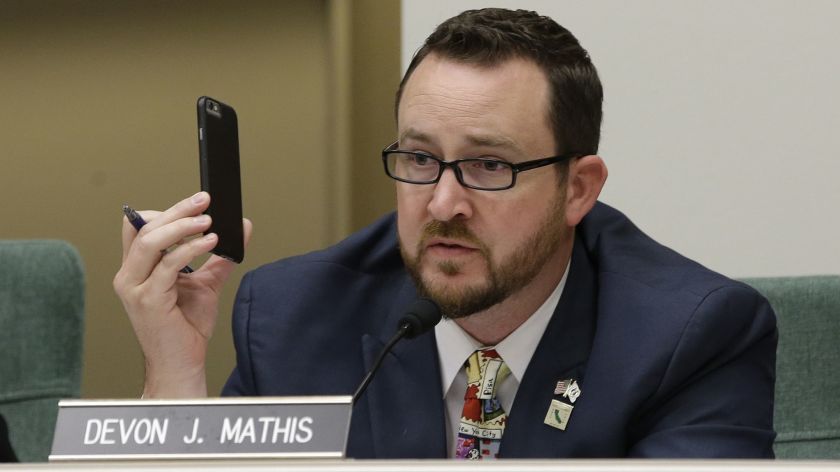
A week ago, we took a look at California's worst state legislator, Devon Mathis. Since then, I've had dozens of people asking me-- or telling me-- about his Democratic opponent, Drew Phelps. And, by popular demand-- as well as our own vetting-- today Blue America is officially endorsing young Mr. Phelps. Please consider contributing to his campaign to represent the Central Valley Assembly district that encompasses Tulare and Inyo counties (and a tiny bit of Kern County)-- AD-26-- by clicking on the 2020 state legislatures thermometer below.

Goal ThermometerPhelps told me that he's a 4th-generation Tularean-- as well as a healthcare advocate, and an affordable housing specialist running to bring much-needed change and progressive leadership to California's 26th Assembly District. In 2015, he actively led and organized residents of the district with the grassroots Citizens for Hospital Accountability, a diverse coalition of local activists fed up with the financial and legal mismanagement of the Tulare Regional Medical Center. After two years of constant organizing, Citizens for Hospital Accountability defeated a bond measure that would have funneled millions of dollars of public dollars to private healthcare interests, and successfully recalled all five members of the Hospital’s Board of Directors.

Currently, he told me "there are over 80 combined felony and misdemeanor counts against three executives who had been running the Tulare Regional Medical Center into the ground. The seeds of those charges were planted when the Citizens for Hospital Accountability contacted the Tulare County District Attorney to investigate possible wrongdoing." That's the kind of grassroots leadership Blue America looks for in candidates.

Previously, Drew served as the Director of Grant Oversight with the Manuel Torrez Family Resource Center, bringing in funding for the Center’s “Healthy Families, Happy Kids” initiative, as well as helping organize the program’s annual mobile health clinic and fair. His other volunteer experience in the South Valley includes directing a soccer camp for underserved youth and coordinating healthy food distributions for working families.

Phelps has deep roots in the community, being the grandson of the former mayor of Tulare and has been active in politics since childhood, knocking on his first door for a city council candidate at the age of 12. He is a lifelong Democrat from a family that has a progressive pedigree that focuses on solving local issues by building broad coalitions of working people.

His campaign is supported by a broad coalition of labor unions, progressive advocacy organizations, and local activists and elected leaders. His emphasis will be on basic quality of life issues that have plagued the residents of AD 26 for years. It is estimated that over 10,000 residents don’t have access to clean drinking water. In some cases it is because wells have gone dry and in others contaminated runoff have poisoned the water to the point that it is less safe to drink than what is coming out of the tap in Flint, Michigan.

Assembly District 26 is in an area of California that consistently lags other parts of California in terms of measures of economic growth, unemployment levels, air and water quality, educational attainment, and access to basic medical services. Drew is running to replace an incumbent-- the aforementioned Devon Mathis-- who is wholly ineffective when it comes to dealing with these issues and has no notable achievements in his six years in office.

When elected, Phelps promised me he will be laser-focused on addressing the drinking water issues, delivering quality healthcare options, and diversifying job opportunities-- all of which have been ignored for too long under his opponent's leadership. Drew Phelps will be a champion on the issues that matter most to the folks in his district, not the Sacramento special interests that support his opponent.


Labels: , , , , ,

Sunday, August 23, 2020

Worst California State Legislator? Is Anyone Worse Than Devon ("Proud White Guy")?

>


Everyone following politics throughout the nation has no doubt heard of Devin Nunes, his ridiculous hackery is legendary at this point. One interesting fact about Nunes is that his district overlaps with that of another terrible Devon whose name is nearly unknown outside of Sacramento-- Devon Mathis in California Assembly District 26, a chunk of the Central Valley, primarily Tulare County with sparsely populated Inyo County and a small piece of Kern County, the Kern River Valley.

In 2017, while Devin Nunes was colluding with the Russians on Trump's behalf, Devon Mathis made headlines in 2017 after reports came out that he allegedly assaulted a female member of his staff. A Sacramento Police Department investigation quickly wrapped up a month later with no charges filed. However, Mathis lost staff and his former chief of staff filed a lawsuit alleging he was fired after raising concerns about inappropriate behavior by Mathis.

In 2018, while Nunes was stepping up his collusion with Moscow, Mathis was sued by his former district director alleging sexual harassment and unfair pay practices. The California Assembly Rules Committee disciplined Mathis in 2018 for violating sexual harassment policy but gave so few details about the incident, that it is unknown whether the probe had been related to the staffer’s lawsuit. The only detail given was that the sexual harassment took the form of "sexual 'locker room talk'."

In a more recent scandal, Mathis was forced to donate $14,000 to charity from his campaign committee after serious criminal charges were leveled at Dr. Yorai Benzeevi, an executive who ran Healthcare Conglomerate Associates (HCCA). HCCA was the organization that had been donating-- as in bribing-- at least $14,000 to Mathis.

Mathis was approached by a local group called Citizens for Hospital Accountability who asked that Mathis request an audit of HCCA due to possible mismanagement of the Tulare Regional Medical Center. Mathis at first refused to request an audit, having been overheard once saying that he could not request an audit because he "owed Dr. Beenzeevi a favor." Mathis has, at this point, still not been arrested for taking bribes.

Later, Mathis signed a letter of support for an audit that had been requested by Senator Jean Fuller, but that support came nearly three years after the initial audit had been requested by local activists-- and after HCCA was removed as the hospital’s manager. Devon’s inaction let a bad situation deteriorate to the point that the Tulare Regional Medical Center was nearly closed on a permanent basis. Since then, the man to whom Mathis owed the favor, Dr. Benzeevi, has been charged with 40 felonies including counts of money laundering, conspiracy, embezzlement, and grand theft.

At this point you might be asking, how can Devon Mathis act as an effective legislator amid such extensive personal and professional scandal? The answer is-- he just doesn’t get much done. He delivers nearly nothing for the people in his district and has in fact continually voted against their interests. In the most recent legislative session, he was only able to get one of his thirty-seven bills passed and he has missed nearly 1,000 votes since first being sworn in in 2014.

Relating to the current pandemic, Mathis is one of the most prominent anti-vaccine leaders in the California Assembly. He refused to support a measure meant to provide additional funding to help fight against the COVID-19 pandemic and opposed efforts to require that hospitals furnish personal protective equipment (PPE) and that employees use the equipment supplied. He was also a trailblazer in putting children at risk, calling for schools to reopen in mid-May of 2020. Friday Tulare reported 95 new cases, bringing the county total to 13,117, with 210 already dead.

"Proud white guy"


As a cherry on top, there he was in 2019 on the floor of the Assembly saying that he is "a proud white guy" in response to his Black peers describing their experiences with law enforcement profiling. We’re sure everyone on the floor was happy he wanted that entered into the record in responses to valid critiques of poor police practices. 

Devon Mathis can truly be described as one of the worst legislators in Sacramento, on both a personal and professional level. His opponent, Tulare Democrat Drew Phelps, is someone we are in the midst of vetting right now... but so far, the process is going well as I feel in my gut we'll have an announcement coming in the next week or two about that.

Labels: , , , , ,

Wednesday, February 26, 2020

Blue America Endorsement: Jonathan Abboud For California Assembly

>


Jonathan Abboud is running for an open blue seat in the California state Assembly-- the 37th district which runs along the coast from Point Conception through Goleta, Santa Barbara, Carpinteria and Ventura into Oxnard. It includes just over half of Santa Barbara County and almost 30% of Ventura County. Democrats usually win there with over 60%. Hillary beat Trump in the district 64.3% to 29.2%. The current member, Monique Limón (D), was re-elected in 2018 with over 80% of the vote in a Democrat v Democrat's runoff. Republicans have pretty much given up trying in the 37th. These are exactly the kinds of districts where it is so crucial to elect forceful progressives and not more of the corporate shills Sacramento is so full of.

Goal ThermometerJonathan is contending with 5 other Democrats, conservatives and moderates. He's the progressive the race. Born and raised in Los Angeles, in a rent controlled apartment, near an oil field, with underfunded schools, his parents were immigrants. He graduated from UC Santa Barbara, in 2014 after serving as student body president during a tragic year in Isla Vista, the UCSB college town. He decided to stay there to work on forming a own local government and is now employed as General Manger of the Isla Vista Community Services District. In 2014 he was elected to the Santa Barbara Community College District Board of Trustees representing Isla Vista. One more thing I know will be important for many DWT readers to know: Jonathan was one of the few elected officials in California to endorse Bernie in 2015 at the start of campaign. If that's all you need to know, that thermometer on the right will lead to the Blue America state legislatures Act Blue page, to which Jonathan was just added.

Article: What Does It Mean To Be A "Progressive" Candidate In 2020?


-by Jonathan Abboud
Candidate for the California 37th State Assembly District

The 37th State Assembly District is one of the safest blue districts in the state, our current representative wins with over 80% of the vote.

An article published in December by the Santa Maria Times mentions as much and goes on to ask each candidate if they’re a progressive Democrat. All six answered yes, because this brand of politics has strengthened since Bernie Sanders ran for president in 2016. So it has become popular to call yourself a progressive, and overall that’s a good thing.

However, it can lead to some confusion. What does it mean to be a "progressive" candidate or elected official in 2020?

Among my initial reasons for supporting Bernie Sanders for President in 2015, is because of his specificity and direct support for ideas like tuition-free college, Medicare for All, publicly financed elections, public affordable housing, and banning fracking and new oil/gas production immediately. To me, this demonstrates a clear commitment to these issues. Of course there might need to be a compromise made along the way, but that’s acceptable when our starting position is the progressive position, not the compromise itself. Starting from the compromise position, for example, has led to the privatization of the UC system over the past few decades, a system that at one point was tuition-free for all California residents.

On the other hand, Bernie's opponents and most Democratic candidates spoke in general terms and platitudes anyone can agree with like "improve education" or "access to healthcare" or "protect the environment." Obviously most people support these things, but when someone runs for office on these ideas only, it's very hard to hold them accountable when elected. These phrases can mean almost anything. They don’t demonstrate a direct commitment to rejecting large corporate interests and a firm unshakable solidarity with the working poor, the middle class, people of color, immigrants, and the LGBTQ community.

The same is true in my race. I am the only candidate actually running on specific progressive ideas, not being shy to talk about them, and also the only candidate who’s endorsed Bernie Sanders for President.

My platform includes:
Tuition-free public colleges & trade schools
Minimum teacher salaries raised to $60k
Universal pre-K
Green New Deal, transition to carbon neutral by 2030
Ending all new oil and gas production
Publicly financed campaigns
Medicare for All
Publicly built affordable housing, housing as a right
I’m also the candidate who’s been powered by a large volume of small donations, swearing off fossil fuel money, corporate PACs, and big developers. We are the only campaign running a field program of any scale (it's where most of our budget goes to of the $105,000 we’ve raised), working to register thousands of new voters, and I personally canvass 3-4 hours per day.

No other candidate is running on all of these issues, apart from one other who supports M4A. Yet, this is a 100% safe blue district. Districts like these are where we can make solid gains in electing progressive legislators.

In the last week of the campaign, we are picking up a lot of momentum. I talk to voters every day relieved to have a candidate actually supporting these ideas and even if they don’t agree with all or most of them, they’re happy to have someone being specific that they can hold accountable.

I need all the help I can get from the progressive community to cross the finish line. The California legislature is a super majority of Democrats. We just need a few more voices in there pushing for progress to start making a big change here.


Labels: , , ,

Tuesday, February 18, 2020

The Democrats Completely Control Sacramento-- So Why Is It Such A Cesspool Of Corruption?

>


If the old maxim is true that absolute power corrupts absolutely, then California Democrats have a very real problem. As the power and legitimacy of the GOP has waned, Democrats have seized control of a supermajority in the state, with both hands. With their power now left unchecked by a viable opposition party, the party politics of the left have drifted into corruption, led by party power players like Assembly Speaker Anthony Rendon and Christy Smith, an unaccomplished freshman legislator running for the CA-25 seat abandoned by Katie Hill, as well as a wide cadre of party apparatchiks.

Their goal has been to put their thumbs on the scales of primary elections across the state in order to elect moderate back benchers who will maintain the status quo and not rock the boat for party leadership. The internal party bias has been especially hard on the progressive wing of the party, where the California Democratic party routinely tries to pick the winners of primary races.

The Young Turks recently reported one such story of unethical influence into races that are supposed to be democratic in nature. The story featured Eric Ohlsen who is running for State Assembly in District 36, the Antelope Valley district that is contained within the boundaries of CA-25. According to Ohlsen, he was told at a meeting with Christy Smith that the decision had already been made behind the scenes to support his opponent, Jonathan Ervin, so Ohlsen should just try again in a few years. She also took umbrage with his messaging to get big money out of politics and fight corruption. Ohlsen had said in a speech-- up top-- at the California Democratic Convention, "Democrats have a supermajority in Sacramento and they keep telling us that we need to learn how to compromise. We’re not compromising with Republicans to pass legislation, we’re compromising with industry because they’re donors." Regarding that anti-corruption stance, Ohlsen said, "Christy told me that my anti-corruption messaging was 'personally offensive' to her." Which is probably a good self-assessment because both Smith and Rendon had pushed Ervin from behind the scenes and made sure that opposing candidates did not get any endorsements, which gave Ervin a $121 thousand advantage over everyone else in his race.

Ohlsen confirmed in a follow up interview that during his meeting with Smith, she had noted that both herself and Rendon had endorsed Jonathan Ervin before any primary races had even begun, effectively removing any democracy from the Democratic Primary.

Rendon has a long track record of using his influence with the unions and special interest groups to deny funding and endorsements to any candidates that he does not hand pick. His position as Speaker of the House in the State Assembly gives him leverage over groups that may potentially offer endorsements to candidates. By offering to reduce access to legislators, Rendon can control or eliminate the flow of money to candidates that he does not approve of. Encouraging his membership in the Assembly to direct funds at particular candidates is another tactic that Rendon has used to starve out competition from progressive candidates, and favor ones, like Ervin, who will act as an empty vessel for his agenda.

Threats of the denial of funding have also been used against other progressive candidates such as those who support Cenk Unger. Alaina Brooks, SEIU delegate for California's 36th Assembly District, executive board member for Local 2015, made it very clear to the Ohlsen camp that if he continued to support his fellow progressive candidate that his political future would be in jeopardy.

Goal Thermometer"The amount of pushback that we have gotten is surprising to me," Ohlsen said, "Nearly every Democrat in Sacramento ran on talking points to get money out of politics, but as soon as you ask, 'that sounds great, so where is your bill?' they start working like crazy behind the scenes to block you from competing." With a supermajority of Democratic votes in the California Legislature, passing any anticorruption measures would be a simple task, the problem is that the measures would need the support of people who have spent their careers benefiting from the money in politics.

This is the reason why many states have enacted publicly funded elections, which limit the ability of party elites and special interests to pick and choose the winners of elections before they have even began. It is a proposition that has been supported on the national level by several Presidential candidates including Tom Steyer, who said, "I think the point about publicly funded campaigns means that if you are running, the public will fund a campaign that’s at least comparable to what anyone’s going to spend on their campaign," Steyer told reporters. "And that’s actually I think the easiest way to go about this and the proper way."

Also on the national level, Representative Alexandria Ocasio-Cortez (D-NY) has faced many of the same problems by bucking the party establishment. She rose to prominence by defeating Joseph Crowley, a corporate Democrat who portrayed himself as being a progressive liberal while simultaneously taking money from Goldman Sachs, Facebook, Google, BlackRock, amongst others. AOC has continued to garner criticism from her own Democratic colleagues for holding House Democrat’s feet to the fire regarding financial corruption within the party.


The GOP lost their position as a viable opposition party in the state, but by quashing the voices of opposition within their own ranks, Democrats could undo any gains they have been given. The activities of Rendon and Smith to put their thumbs on the scales of party elections could create a culture of corruption that will bring down their own house. Matt Stoller summed the problem up nicely in a 2019 column for the Washington Post, "For too long, disagreements in the Democratic Party have been kept behind closed doors, and the result was the protection of powerful financial interests. It is time to start talking about this dynamic, so that voters can make a democratic choice about what kind of politics they actually want to build. That, in the end, is why it’s called the Democratic Party."

Labels: , , , , , , ,

Tuesday, November 19, 2019

A Guest Post By Eric Ohlsen-- Cleaning Up Sacramento

>


Eric Ohlsen is the progressive candidate, endorsed by Blue America, running for the Antelope Valley state Assembly seat occupied by Tom Lackey, the last Republican in the Assembly from Los Angeles County. One of his top priorities is to help clean up corruption in Sacrament by getting corporate sewer money out of the electoral process. Please consider contributing what you can to his grassroots campaign by clicking on the state legislative 2020 thermometer below.

Goal ThermometerI want to mention that though the Democrats control both houses of the state legislature-- and by very big margins-- corruption is still rampant in Sacramento. Though there are no good Republicans-- not one-- there are both good Democrats and bad Democrats-- plenty of bad Democrats-- serving in the state legislature. Most of the most conservative, corporate-friendly Democrats happen to also be the most corrupt ones. That's the nature of conservatism and the nature of the kinds of individuals who embrace conservatism. Based on the research from California's Courage Campaign, there are 15 Democrats who have been graded failures ("F"), based on their alignment with the corporate interests that exploit Californians. Here's the list, from bad to worst (with their 2019 vote scores):


Al Muratsuchi (Torrance, Redondo Beach, Gardena)- 54
Joaquin Arambula (Fresno, Coalinga)- 50
Freddie Rodriguez (Ontario, Chino, Pomona)- 48
Jacqui Irwin (Oxnard, Simi Valley, Thousand Oaks)- 47
Patrick O’Donnell (Long Beach)- 42
Tim Grayson (Vallejo, Concord)- 39
Tom Daly (Santa Ana, Anaheim)- 36
Brian Maienschein (Rancho Santa Fe, Poway)- 32
Sharon Quirk-Silva (Fullerton, Buena Park)- 32
Ken Cooley (Citrus Heights, Rancho Cordova)- 27
Sabrina Cervantes (Corona, Jurupa Valley)- 27
Rudy Salas (Bakersfield, Hanford)- 18
Jim Frazier (Vacaville, Fairfield, Antioch)- 11
Adam Gray (Merced, Los Banos)- 9
Jim Cooper (Elk Grove, Lodi)- 9


The Corruptive Effects of Lobbying
by Eric Ohlsen


When we think about the topic of corruption in our political system, it is easy for the mind to focus on the overt acts of corruption and abuses of power that come from the White House in a steady torrent. And we are not wrong to be concerned by that. However, that type of bald faced corruption is not the only kind that should concern us.

Moneyed interests use their leverage on our politicians every day in an effort to subvert the will of the people for their own financial gain. That is what cooperate lobbying is, and it is an activity that is corrosive to our democracy. Now, to be fair, it doesn’t have to be corrosive; there are groups, causes, and issues that deserve an opportunity to be heard, but the problem is that corporate lobbying has the money and influence to drown out the worthy types of lobbying, allowing their interests to overpower all others.

During the 2019 legislative year, lobbyists in Sacramento spent $219.4 million. That is a startling $2 million spent every day that the State Legislature was in session. It is a figure that has continued to rise. Corporate lobbying has increased 24% over the last 4 years and shows no sign of slowing down. Some of the most concerning lobbying efforts have come from the energy industry. During the 2018 election cycle, the petroleum industry lavished $19.2 million into California politics. Republicans have traditionally been the most welcoming to contributions from the oil industry but they are not the only place that the oil industry directs its effort.

The petroleum industry has been working hard to push their agenda by aiding conservative Democrats who are amenable to their cause. In 2018 there was more than $853,000 in direct contributions split between 47 Democrats who were in races for both Assembly and Senate, plus another $2.8 million to help Susan Rubio, $343,000 campaign supporting the re-election of Democratic Assemblyman Rudy Salas of Bakersfield, and $160,000 to a committee that campaigns for "business-friendly"-- meaning BIG business-friendly-- Democrats.

The thinking is that since the Republican Party has waned in California in recent years, the energy industry should try to reshape the type of Democrats that are getting sent to Sacramento. By helping to elect conservatives from the Republican wing of the Democratic Party, the oil lobby hopes to slow the momentum of progressives who will not be willing to kill or water down environmental legislation at the behest of big money donors.

Also, let’s not limit the energy industry’s lobbying efforts to just the oil and gas sectors, this is true too for Pacific Gas & Electric which spent more than $10 million in 2018 to buy political influence. And while the numbers have dropped some, they have still spent more than $6 million on lobbying this year as well. Meanwhile PG&E has continued to pour out $4.5 billion in dividends to its shareholders rather than conducting the necessary maintenance needed to prevent fires. It is a bald faced effort to buy their way out of accountability for failing to maintain the system that California rate payers have paid them to maintain. And as the legislature begins to revisit the rules around the role of utilities to prevent wild fires in the future, you can bet that PG&E’s spending on lobbying efforts will ramp up.

It is not just the energy industry trying to buy its way into our legislative decisions. There was, of course, recently California had the opportunity to provide a single-payer Medicare option to all Californians, only to have the bill blocked by Democratic members of the Assembly who were bought off by the lobbying efforts of the health insurance industry. They managed to get SB-562 killed at the last moment.

Another area where there is a concerning amount of money trying to purchase influence is around the issue of education. If ever there is an issue that we, as a community, a State and a Nation that we need to get right, it is education. However it took a yeoman’s effort for the California Teachers Association to get Assembly Bill 1505 passed which gives local school districts necessary control over the expansion of charter schools. Charter school groups spent about $900,000 on lobbying and even more poured in by other outside groups. These charter schools cost the same amount as public schools, while providing fewer services and not producing any better results, but because they are backed by interests seeking to privatize education they are able to funnel money into efforts to avoid necessary oversight by local school boards.

And finally I want to talk about the lobbying efforts of the NRA. This is the most infamous and insidious lobby, and it really is worth considering the NRA as a meta issue about lobbies and not as a discussion of the Second Amendment. However you may feel about gun ownership rights, when you look at the methods, tactics, and money that the gun lobby throws at legislatures around the country it is clear that they have managed to subvert the will of the people in a way that has been both incredibly successful and unbelievably dangerous. It is not just about getting their way, the greater problem with their lobby is that they have poisoned the water on having a meaningful debate about how to manage and regulate guns in a sensible way, to ensure public safety. The most egregious example of this is the gun lobby and their allies in Congress managed to block the CDC from even studying gun violence as a public health issue.

Ultimately, when you look at all of these points, the problem becomes clear, that while lobbying does not have to be inherently bad, the way that it is currently regulated tips the scales to those with the most money. And whenever money is such a decisive factor in democracy, then it becomes extremely difficult for the legislature to pursue the interests of the people.


Labels: , , ,

Saturday, August 31, 2019

Affordable Housing Is Becoming A Crisis In California-- Don't Expect GOP Hacks Like Tom Lackey To Be Part Of The Solution

>


Los Angeles doesn't have any Republicans in its congressional delegation any longer-- and there's only one left in the delegation it sends to the Assembly in Sacramento, Tom Lackey of Palmdale (AD-36). His name is an apt description. The Antelope Valley seat stretches from southern Kern County through the northeast corner of Los Angeles County and into northern San Bernardino County. There are 9% more registered Democrats than Republicans in the district, but that number is deceiving because there are more Independents than Republicans and they tend to lean right.

Goal ThermometerThere are 3 relatively viable Democrats in the race, two conservatives, Steve Fox (a reactionary who lost to Tom Lackey the last 3 elections) and Johnathon Ervin (who hasn’t won an election despite trying 3 times for City Council and once for State Senate). As of today, Blue America is endorsing the progressive in the race, Eric Ohlsen. Eric enlisted in the Coast Guard right out of high school. After this service he enrolled in L.A. City College and ran up $30,000 in student debt. His wife and her family are from Palmdale and that's where they settled. Today he works as a producer and is an unabashed progressive which he believes gives him the best chance of winning over independent voters and beating Lackey. He's a booster of the Green New Deal and Medicare for All. He feels he can not just pinpoint the problems that his neighbors care about but that he has the solutions to deal with them.

One of the big ones in the Antelope Valley is an affordable housing crisis that is kicking in all over the region. I asked Eric to introduce himself by talking about that specifically. If you like what you read, please consider contributing to his campaign by clicking on the Blue America state legislative thermometer above. As you can see, he's the only Californian on the list.


California’s Housing Crisis
by Eric Ohlsen


Housing costs continue to increase faster than income levels. The financial strain pushes too many good citizens further and further toward the fringes. While there is no magic policy pill that will solve California’s affordable housing crisis, as a State, and a community, we desperately need to find solutions. That means changing the way we approach the problem as a whole.

First, let’s start at the state level with Proposition 13. Because of Prop 13, both commercial and residential properties are only reassessed for tax purposes when they are sold. So owners pay property taxes based on the value of the property when they acquired it, not at its current market value. The problem with this is that a municipality’s revenue does not reflect the rising costs of its operations, and must therefore cut costs any way possible in order to account for annually increasing shortfalls. And the easiest budgets to slash are social services and education. Prop 13 was a bill that was sold to the public in a way that sounded good at the time, but has ultimately had far too many unintended consequences. It has hamstrung local governments and deprived them of necessary civic revenue, forcing cuts to important social services including affordable housing initiatives.

Another unintended consequence of Prop 13 is on construction of new housing. The city still has the same costs associated with new construction, but not the same revenue. So now cities are forced to work around those costs by passing them onto the developers in the form of up-front fees that must be paid before construction. This additional burden of up-front costs drives up the initial investment and makes it more difficult for developers to build much needed housing throughout the state. This exacerbates the problem of housing shortages and rising home costs to everyone. Also, the front-loaded development fees that cities have become increasingly reliant on, favor large-scale housing developments and shopping malls.

There are currently efforts underway to treat commercial property different than residential property, which has become known as “split roll.” By enacting the split roll, nothing would change for residential properties, but businesses would have their properties reassessed to market values every three years or less and these commercial properties would still be taxed at their value plus 1 percent. These additional funds would help communities across the state pay for much a much needed upgrade in our educational system, fund social programs, affordable housing initiatives, and rebuild civic infrastructure. In short, it will give our communities the resources they need to thrive.

Rent control solutions are also an option, such as AB 1482, which recently passed the State Assembly, and caps rent increases at 7 percent plus inflation. But this legislation falls woefully short because it not only does not go far enough, but it also lacks any renter protections. What good is rent control if a landlord can evict a tenant without any just cause, only to raise the rent as much as they want with the tenant gone? We can and should do better than this, but it is at least one direction where we can find progress.

Next, let’s look at local solutions like Community Development Block Grants (CDBG). CDBGs are allocated to social service programs locally and can be used in very specific ways targeted to the individual needs of the community, for example, subsidized housing or maintaining the stock of affordable housing in the area. CDBGs can also be used to keep small business real estate more affordable, which creates jobs and retains locally owned businesses.

Another local solution to help address California’s housing shortage is to amend zoning ordinances to ease restrictions on second dwelling units. While from a State level these units do not require additional reviews or hearings to build, many local municipalities have restrictive city ordinances in place that create a barrier to secondary dwelling units on a property. These units are beneficial to a community because they increase the supply of affordable housing, increase the urban density, and help homeowners with financial stability. Zoning ordinances can also be amended to account for the development of “tiny house” communities which have been successfully used to help the chronically homeless, but also as an alternative housing solution in other areas.

Finally, and most urgently, let’s look at the housing crisis from the street level. Immediate action must be taken to give help to our most vulnerable neighbors. Those with the greatest housing needs can be helped through expanded programs for subsidized housing. These programs can be paid for in part by the proposed changes to Prop 13 and can help our neighbors now, before they face the devastating effects of homelessness. We can also work to make the system easier to navigate for those in need by continuing to improve the coordination of services through L.A. County’s “No Wrong Door” policy. This helps people to avoid getting swept up in bureaucracy and to find their way to the help they need.

These are all specific things that can be done to help ease the crisis of housing costs in California, but I think that the biggest change has to come with how we approach this problem as a whole. We need to seek out a comprehensive solution rather than treating the problem as an afterthought. This is a problem that impacts literally every Californian and solving it must be seen as a priority by legislators and not some secondary or tertiary problem. We must demand a bolder approach from our State Legislature.

Labels: , , ,

Friday, February 22, 2019

Heroes And Villains-- Inside The California State Legislature

>


I don't follow the California state legislature as closely as I should. My excuse is that I'm too busy watching Congress and don't have the time. Luckily, here in California we have the Courage Campaign doing to job for us. This week they released their latest assessment of how the individual members of the state legislature are doing. When they sent it out yesterday, they noted that "Throughout their time in office, legislators are faced with so many issues that directly affect the well-being of all California communities: from criminal justice to workplace safety to the environment and more. As your representative, it’s their job to vote in line with your interests on issues to make our state a safe and happy home for everyone. Especially with a elected Democratic, veto-proof supermajority in the Legislature and a Governor who ran on a bold, progressive agenda, we must lead the nation forward and show that progressive policies work for all of us. We'll never address the challenges Californians face-- including skyrocketing housing costs, a health care system that puts profits over patients, gross overspending in our broken mass incarceration system, and a deeply underfunded education system-- unless elected officials are truly held accountable to the people in the nation's most progressive state."

Let's look at the Assembly first. There are only 18 Republicans left. One is too new to be rated and the other 17 have all been scored with "F." Among the Democrats six have A+ scores-- Ash Kalra (eastern San Jose), David Chiu (eastern San Francisco), Kevin McCarty (Sacramento), Mark Stone (Santa Cruz, Monterey), Reggie Jones-Sawyer (South L.A.), Rob Bonta (Oakland, Alameda, San Leandro) and Wendy Carrillo (Highland Park, East L.A.). Those are the best members of the Assembly. How about the worst ones-- the ones who are, in all but name, Republicans? 15 Democrats-- the so-called "mod squad"-- have the same "F" grades as the Republicans do, generally a corrupt bunch of worthless conservatives who take money from big oil, charter schools and other special interests (bolden names are in the Hall of Shame, the legislators who are the biggest bribe-takers in Sacramento):
Tom Daly- Anaheim, Santa Ana
Tim Grayson- Vallejo, Concord, Martinez
Sharon Quirk-Silva- Fullerton, Buena Park, Cypress
Sabrina Cervantes- Jurupa Valley, Norco, Corona, El Cerrito
Rudy Salas- Hanford, Wasco, Bakersfield
Patrick O'Donnell- Long Beach
Melissa Melendez- Lake Elsinore, Marieta, Wildomar
Ken Cooley- Citrus Heights, Rancho Cordova, Carmichael
Joaquin Arambula- Fresno
Jim Frazier- Vacaville, Antioch
Jim Cooper- Elk Grove, Lodi
Freddie Rodriguez- Ontario, Pomona, Chino
Brian Maienschien- Rancho Santa Fe, Poway, Carmel Valley
Al Muratsuchi- Torrance, Redondo Beach, Manhattan Beach
Adam Gray- Modesto, Merced, Los Banos
Now the state Senate, where there are only 11 Republicans still standing. Two are too new to be rated and the other 9 have "F." Among the Democrats four have A+ scores-- Bill Monning (San Luis Obispo, Monterey, Paso Robles), Hanna-Beth Jackson (Santa Barbara), Holly Mitchell (Culver City, Madera Height, DTLA, South L.A.), Mike McGuire (Arcata, Eureka, Fort Bragg, Santa Rosa, Marin County) and Toni Atkins (San Diego, La Jolla, Solano Beach)-- the best members of the Senate. And now the worst, the bribe-taking DINOs-- if fact Steve Glazer is generally considered the overall worst and most corrupt member of the state legislature:

Steve Glazer (feh!)

Steve Glazer- Concord, Walnut Creek, Livermore
Richard Roth- Riverside, Moreno Valley, Corona
Cathleen Galgiani- Stockton, Tracy, Lodi, Manteca
Anna Caballero- Merced, Madera, Los Banos, Salinas, Coalinga
Something good to keep in mind if any of your legislators happen to be among the very best or the very worst.


Labels: , , , ,

Friday, December 07, 2018

The Anti-Trump Wave Helped Democrats Almost Everywhere That Racism Isn't Enshrined As The State Religion

>


Paul Ryan was whining about how long it was taking for all the votes to be counted in California, primarily because absentee ballots were coming in overwhelmingly for Democrats and after election day, vote counting flipped 4 more Republican seats including one in Orange County and two in the Central Valley that left Ryan allies Mimi Walters, Jeff Denham and David Valadao unemployed. But what Ryan failed to mention is that there are still ballots being counted and recounted all over the country. The Alaska state legislative races are a good example. First Alaska's Republican Senate President Pete Kelly was ousted by Fairbanks state Rep. Scott Kawasaki (D) after a handful of votes were counted a week after the election. But the vote to replace Kawasaki is still in turmoil. On election night Republican Bart LeBon held a 5-vote lead over Democrat Kathryn Dodge but since then, the lead in that race has gone back and forth as ballots have been counted. Control of the House depends on the final outcome! And this week, it came down to whether or not one ballot would be counted! Last Friday, the Division of Elections gave LeBon the win with 2,263 votes to Dodge's 2,262. Yesterday Dodge announced that she's appealing the recount.

But, whether decided on election night or a few days or weeks later, the anti-Trump wave was significant in state legislative races almost everywhere in the country. It looks like 393 seats flipped nationally-- give or take a few. That includes 7 chambers that flipped from red to blue (Senates in Colorado, Connecticut, Maine, New Hampshire and New York and, quite spectacularly, Minnesota's House.) On top of that GOP supermajorities were broken in state Senates in North Carolina, Michigan and Pennsylvania, while Democrats gained supermajorities in the Illinois, Vermont, Nevada and Oregon state Houses and in the California and Oregon Senates-- while holding onto supermajorities in Senate races in Illinois, Massachusetts, Vermont, Rhode Island, Hawaii and Maryland and in state Houses in New York, California, Maryland, Rhode Island, Delaware, Hawaii and Massachusetts.

There were a handful of reactionary, low-education, racist states, mostly in the Old Confederacy (like Alabama and Arkansas), were the GOP made gains, but most of the gains went to Democrats, even in states like Georgia and Texas. In Arizona the Democrats picked up 4 House seats, putting them 2 votes away from grabbing the majority. In California , Democrats picked up 4 Assembly seats and 3 Senate seats, as the state GOP continues to disintegrate. Out of the 80 California Assembly seats, just 19 are in Republican hands, although one seat is still too close to call.


These were some of the other highlights:
Colorado House- Democrats expanded their 36 to 29 seat majority by picking up 5 more seats
Connecticut House- Democrats expanded their 80-71 seat majority by picking up 12 more seats, while breaking the 18-19 Senate deadlock by winning 5 Republican seats
Florida House- Dems picked up 6 seats
Georgia House- Dems picked up 9 seats with 2 more too close to call
Idaho House- Dems picked up 3 seats
Iowa House- Dems picked up 5 seats with 2 more still uncalled
Kentucky House- Dems picked up 3 seats
Maryland House- Dems picked up 6 seats with one still uncalled
Maine House- Dems said goodibye to Paul LePage by picking up 16 seats (while watching their pals in the Senate turn that chamber blue by picking up 4 seats
Michigan House- Dems picked up 6 seats in the super-gerrymandered state
Minnesota House- Dems crushed it-- picking up 20 seats
Montana Senate- Dems picked up 2 seats
North Carolina House- Dems broke the GOP supermajority by taking 9 of their seats, while Dems in the state Senate did the same by winning 6 red seats
New Hampshire- Dems flipped control of both chambers. But the House went from 176 Democrats and 217 Republicans to 233 Democrats and just 167 Republicans
New Mexico House- Dems flipped 9 seats with another seat still not final
New York Senate- Dems flipped 8 seats and took control
Nevada Assembly- Dems created a supermajority by flipping 2 seats that Trump had won
Pennsylvania House- Dems picked up 11 seats
Texas House- Dems flipped 12 seats
Utah House- Dems picked up 4 seats
Vermont House- Dems picked up 15 seats
Washington House- Dems picked up 7 seats
West Virginia House- Dems picked up 5 seats including John Doyle's win over GOP Majority Leader-designate, Riley Moore.

Labels: , , , ,

Saturday, November 03, 2018

A Republican Could Never Win In The Oakland-Berkeley-Richmond District, So They Recruited And Financed A Corporate Democrat, Self-Styled Buffy The Bernie Slayer

>


23% of registered voters in California's 15th Assembly district declined to state a party preference. 66% are Democrats. 6% are Republicans. Most of the district is Berkeley, Richmond and Oakland, along with smaller communities like Albany, Emeryville, Piedmont, El Cerrito, Hercules, Pinole, San Pablo, El Sobrante and Kensington. Trump managed to pull 7% of the vote there. The demographic make-up is a great mix:
White- 39.4%
Latino- 21.7%
Asian- 19.9%
Black- 16.3%
This year the primary for the open seat (incumbent Tony Thurmond is a candidate for State Superintendent of Schools) included 11 Democrats and a Republican. The Republican came in 6th with 5.9% of the vote, eliminating him from the general election and guaranteeing that it would be a Democrat vs Democrat race. That top two from the primary are a corporate big money Clinton type, Buffy Wicks, and grassroots progressive Berniecrat Jovanka Beckles.

Blue America concentrates on congressional races, but every year we look for exceptional men and women running for state legislative seats, candidates we think are potential superstars of the future. This cycle there are just 14-- and one of them is Jovanka Beckles. A few days ago Lee Fang and Leighton Woodhouse published a piece in The Intercept about the race: A Billionaire-Backed Democrat Is Facing Off Against A Democratic Socialist In Berkeley. And It's Getting Rough. "The battles within the Democratic Party," they wrote, "have played out in high-profile races this year, largely featuring well-heeled establishment figures with years of elected experience challenged by left-wing outsiders running with the support of a national grassroots movement. Amidst this fight, there has been a strenuous effort from party centrists to drain the question of any ideological content."

They explained that "Jovanka Beckles, the candidate endorsed by the Democratic Socialists of America and Sen. Bernie Sanders who has the governing experience and the support of leading local elected officials" is up against "Buffy Wicks, who has never held office before [and] is running as a business-backed Democratic operative pushing to disrupt a seat long-held by the progressive left. In the June primary, backed by a groundswell of money, largely from tech executives and Washington, D.C. politicos, Wicks took the most votes." At a recent forum audience members peppered Wicks-- formerly a a senior advisor to Rahm Emanuel’s campaign for Chicago mayor-- with questions about "why she isn’t working towards single payer health care and why she opposes the contentious Proposition 10 ballot measure to enable more rent control in California. For several educators in the crowd, they wanted to know how she could square her recent public criticism of charter schools with the fact that pro-charter groups were spending big money [hundreds of thousands of dollars] on her behalf." She ran Hillary Clinton's California primary campaign and her office featured a notorious "Buffy the Bernie Slayer" poster.


Beckles has served since 2011 on the Richmond city council, fighting a larger than life battle against the oil giant Chevron, which owns the 117-year-old refinery that has long cast its shadow over local politics.

The campaign has piqued national interest as wealthy donors have inundated the election with independent expenditures casting Beckles as an angry extremist unwilling to support a practical solution to the housing crisis.

The race is another sign of the economic and cultural changes that have utterly transformed the Bay Area in recent years as a result of the long technology boom-- changes that are uprooting the traditional, radical political culture of the region, pitting a longstanding leftist power base against an ascendent brand of technocratic, corporate-friendly Democrats.

...The extent to which influential Democrats [led by corrupt slime ball Gavin Newsom] and corporate donors have rallied around Wicks is an indication of how much the election has become a bellwether in the ongoing battle to define the heart and soul of the party.

“If a democratic socialist can knock off an establishment Democrat, you’ll have a slew of Berniecrats challenging mainstream candidates,” warned former San Francisco mayor Willie Brown, now a highly paid consultant, in his regular column for the San Francisco Chronicle.

Those establishment Democrats and their allies have closed ranks around Wicks to a degree almost unheard of in a local race like the one in Assembly District 15.

For a relatively small California legislative seat being fought over by two Democrats, huge amounts of money are being spent, largely to elect Wicks. Independent expenditure groups have spent $1,191,389 on pro-Wicks efforts this year and another $244,160 in negative messages against Beckles. On the other side, a labor union-backed independent expenditure group has spent $391,831 in support of Beckles and $7,412 in opposition to Wicks.

In terms of direct donations, the contrast is similarly stark. Beckles has raised $386,887, which pales in comparison to the $1.3 million raised by Wicks.

The East Bay chapter of the Democratic Socialists of America launched a research-driven website highlighting the donors to Wicks and her attendant IEs, noting that many of the donors include right-wing billionaires and consultants for special interests. William Oberdorf, a major Republican donor, has given $150,000 to one group backing Wicks. Ron Conway, an early investor in Twitter and other name-brand tech companies, who has used his wealth to help moderate Democrats defeat a slate of progressives in San Francisco, has also given to Wicks.

The fundraising advantage has given Wicks an ability to hire a professional campaign operation, with modern polling, advertising, and an innovative get-out-the-vote operation that utilizes texting to encourage supporters to remind their friends and colleagues to go to the polls. The Berkeley Democratic Club, one of the local groups endorsing Wicks, received $6,000 from her campaign last week to send its endorsement slate mailer to city residents.

...Govern for California, one of the groups backing Wicks, is financed in part by one of the heirs of the Walmart fortune, an irony that somewhat blunts her campaign story of once doing battle with the retail giant.

One of the other groups, formed last month, is the “Coalition for East Bay Health Care Access, Affordable Housing and Quality Public Schools, supporting Buffy Wicks for Assembly 2018.” The group is principally funded by the two powerful healthcare lobby groups, the California Medical Association and the California Dental Association; as well as by EdVoice, a charter school PAC.

Chevron, the longtime nemesis of the district’s environmental and economic justice movements and of Jovanka Beckles in particular, also appears to favor Buffy Wicks. Local lobbyist Eric Zell, who has worked for years to influence local government on behalf of Chevron, recently sent an email to his contact list urging them to vote for her. In a sign of how malleable the term “progressive” has become in the Bay Area’s current political culture, the word was used in the email six times. “In the East Bay, we are united behind a progressive agenda,” the email from the oil lobbyist proclaims.

But it is the lawyers that registered and administer the Wicks IE that may raise eyebrows even more than its donors.

The group is run by attorneys from Bell, McAndrews & Hiltachk, a notoriously right-wing law firm that serves lobbyists and the Republican Party. The firm provided consulting work for Donald Trump’s presidential campaign, as well as many of the most conservative California Republicans, including Darrell Issa and Dana Rohrabacher.

Ashlee Titus, the partner whose name appears on the IE’s filing, is a board member of the California chapter of the Republican National Lawyers Association and the president of the Sacramento Federalist Society. Her name appears on an October 3 letter advocating the swift confirmation of Brett Kavanaugh to the Supreme Court. (Titus did not respond to a request for comment.)

...In opinion columns and in social media, supporters of the Wicks campaign have portrayed Beckles as an unstable radical, someone who can’t be trusted to effectively represent the district... Campaign fliers have swamped the mailboxes of district residents, claiming that Beckles has missed votes on the city council, played video games on her phone during council votes, and ignored the housing crisis... In one recent mailer, Beckles is quoted stating that, “We don’t suffer from a housing shortage crisis.” But the quote is cropped, leaving out her following statement, “We are suffering from a housing affordability crisis.”

...The barrage of attacks is nothing new for Beckles. She has fought for years as part of a grassroots effort called the Richmond Progressive Alliance to reshape the political reality in her community, which has long been dominated by politicians loyal to the interests of Chevron.

Since 2003, the RPA, as it is known, has worked to push back against Chevron influence in Richmond. They have fought Chevron’s efforts to skirt local taxes, called attention to flaring from the refinery, and demanded greater fines for the routine pollution that has sickened local residents.

That activism has sparked years of increasingly bitter political fights. In 2014 alone, the oil giant poured more than $2.9 million into an account used to smear RPA supporters, including Beckles, a shocking sum to influence a working class municipal race. A campaign consultant was hired to launch a blog mocking Beckles, falsely accusing her of dining excessively on city taxpayer money and not showing up to meetings. Chevron even hired a public relations expert to launch an entire news publication, the Richmond Standard, complete with bona fide coverage of local events, as a portal to advance political attacks on RPA politicians including Beckles.

Incredibly, the RPA has largely prevailed, despite some setbacks. The coalition, including Beckles, has won reforms in city policing and a $15 minimum wage, among other policy changes. Chevron-backed candidates have repeatedly lost close elections to RPA’s slate. Many of the RPA-backed ideas were eventually defeated, such as a radical proposal to use eminent domain to save homes from foreclosure and an effort to combat obesity through a soda tax.

The current legislative race has recast many of the old charges hurled at RPA candidates like Beckles: Too out of touch, too extreme. In past years, the establishment Democratic Party in Richmond used the wider network of party figures to tip the scales, with California Treasurer Phil Angelides and Sen. Dianne Feinstein (D-CA), among others, working to help the Chevron-backed moderates campaign against the insurgent RPA.

The same strategy appears clear in the current race for Assembly District 15. Wicks has touted an impressive list of supporters. Sen. Kamala Harris (D-CA), [corporate whore] Lt. Gov. Gavin Newsom; and even Obama himself have endorsed Wicks. Sen. Claire McCaskill (D-MO) has personally donated to her campaign, and former Congresswoman Gabby Giffords (D-AZ) attended her launch party (Wicks’ husband is a former Giffords aide).

...In many ways, the race also reflects the fast moving shift of national-level Democratic operatives who have beaten the path from the campaign trail, to the Beltway, to the booming Bay Area after serving in the Obama administration.

Wicks’s fellow travelers include, most famously, Obama’s former campaign manager, David Plouffe, who took a lobbying job with Uber in San Francisco in 2014 and is now at the for-profit foundation of Facebook founder Mark Zuckerberg and his wife, Priscilla Chan. It also includes former assistant press secretary and National Security Spokesman Tommy Vietor, who moved to San Francisco to speech write for startup CEOs; former Obama Communications Director Dan Pfeiffer, who joined GoFundMe; and former White House advisor Tom Reynolds, who was hired by Facebook, among many others. Plouffe, Vietor, Pfeiffer, and Reynolds are all Wicks donors.

“The generation of Obama staffers, their ideology was always kind of loosely defined in these non-ideological, aspirational ideals,” said Shant Mesrobian, who worked on the Obama campaign’s digital team in 2008 and who lives in San Francisco.

“When you define your politics so broadly about ‘doing big things,’ non-ideologically like that, it’s easy to see why you can make this transition to Silicon Valley, the Mecca of ‘doing big things.’ When you don’t define your politics by specific things like fighting inequality, corruption, things you can be held accountable to, at the end of the day you can justify anything.”

But supporters of Beckles hope to make voters aware that the vast amounts of money represent a wider power struggle in politics.

“The fact that Buffy Wicks is getting so much money from groups such as Govern For California’s IE, which represents the charter industry, this is all like new corporate money that’s coming in that attempts to change the face of the Bay Area, driving out people of color, working class people,” said Keith Brown, from the Oakland Education Association. “This wave is creating communities such as what we see in Oakland and Richmond between the haves and the have-nots.”


Monday's endorsement of Jovanka by Bernie and the rally he and Congresswoman Barbara Lee held with Jovanka, helped. "While in Berkeley," he wrote, "I had the chance to meet with Jovanka Beckles, and I was impressed by her commitment to progressive values. In the state Assembly, she will fight for Medicare for all, a living wage for all California workers, environmental justice and criminal justice reform. I'm proud to support Jovanka Beckles in the 15th Assembly district." The following day the SIEU released a new tracking poll by EMC Research showing Jovanka ahead by 4 points-- 42% to 38%. The poll shows that Beckles is leading among women voters 47-35%, with independent voters 46-33% and with voters of color 49-36%.


Labels: , , , , ,

Thursday, August 23, 2018

The East Bay-- Progressive Jovanka Beckles vs Establishment Phony Buffy Wicks

>


In May we profiled two candidates in California's 15th Assembly District, which includes parts of Berkeley, Richmond, Oakland, Albany, Emeryville, Piedmont, El Cerrito, Pinole, El Sobrante, Hercules and Kensington. The demographics: 39.40% White, 27.1% Latino, 19.9% Asian and 16.31% Black. Only 6% of the registered voters are Republicans-- which means that if a conservative is serious about running for office there, they run as a Democrat-- the way Buffy Wicks is doing.

The two finalists from the primary are Jovanka Beckles, the working-class community organizer, queer Afro-Latina immigrant, and unabashed democratic socialist; and Buffy Wicks, the former CAP fellow, Hillary Clinton campaign operative and low-level Obama staffer. While Wicks cruised to the first spot in the top-two primary with over 30% of the vote, the second-place spot was decided by the thinnest of margins, with Beckles claiming victory over opponent Dan Kalb by just over 700 votes.

Now that the competitors for the November general election have been decided, the choice facing the voters of the 15th district couldn't be clearer.

Wicks' platform is carefully crafted to appeal to Bay Area progressives and #resistance voters. (An unreconstructed Blue Dog type Democrat wouldn't fare well in this district, no matter how many photos they took standing next to Barack Obama.) But when it comes down to details, it's clear that Wicks ran well to the center during the primary, a stance that continues in her platform today.

The first plank on her website is aimed at the housing crisis, and it's a stark reminder that Wicks stood alone during the primary in her opposition to the repeal of Costa-Hawkins, the statewide ban on local rent control ordinances that's long been the bane of renters and community housing organizers across the state. Proposition 10, a voter-initiated repeal of Costa-Hawkins, is on the ballot in November, and Beckles is campaigning heavily for its passage. Confusingly, Wicks is taking no position on the measure, despite claiming elsewhere that she opposes Costa-Hawkins repeal: "we'll see what the voters decide in November" was her only comment, when pressed repeatedly by a KQED reporter.

On healthcare, Wicks seems to understand that the Democratic base treats support for single-payer health care as a litmus test, so her platform doesn't reject the idea outright. But from the language she uses, it's clear that her support for the idea is tepid at best:


California is taking an important and necessary look at universal healthcare and creating a single-payer system. Making that happen will mean making some difficult choices in our budget and tax policies. I believe California can and should be committed to providing single-payer health care for its residents. I am ready to be bold, tackle tough spending questions, and keep California moving towards a stable single-payer health care system-- while immediately moving to protect vulnerable Californians from the Trump administration's plans to take critical medical coverage from millions.
"Difficult choices," "tough spending questions," an "important and necessary look": these are not the words of a candidate who believes that free, universal healthcare is one of the greatest moral callings of our time. Who can read this passage and seriously believe that Wicks won't reject any single-payer bill that comes up for debate on the grounds of "fiscal responsibility?" In contrast, full-throated support for SB 562, California's most recent version of a single-payer bill, is a central plank of Beckles' healthcare platform.

With Wicks' campaign benefitting from over $400,000 in independent expenditures from pro-charter PAC "Govern for California" during the primary alone, it's especially instructive to see how the two candidates differ on education policy. In her platform, Beckles advocates for a statewide moratorium on building new charter schools, and identifies them as a culprit in undermining public school quality and worsening working conditions for teachers. Wicks, unsurprisingly, only calls for more "transparency and accountability" for charters, while insisting that they "can serve a need in our community." As for post-secondary education, Beckles proposes universal tuition-free education for all of California's public school systems-- from community college to the CSUs to the UCs-- while the most Wicks can muster is making college "debt-free for low-to-middle income students."

Goal ThermometerOn labor issues, the difference between Beckles and Wicks is particularly glaring. Beckles supports a broad suite of pro-worker policies, from a $20-an-hour minimum wage, to expanded protections for workplace organizing, to an end to mandatory arbitration and non-disclosure agreements, to reducing the full-time workweek to 36 hours. Wicks, meanwhile, has no section for labor rights on her platform at all.

On the right you see the Blue America 2018 legislative candidates' thermometer. Please consider chipping in what you can to help make sure that Jovanka Beckles beats Buffy Wicks in November. The California legislature is full of conservative Democrats gumming top the works and preventing progress on proposal after proposal. The last thing California needs is another one like that in the state Assembly-- exactly what Buffy Wicks has always been and, despite her desperate attempt at camouflage, still is.


Labels: , , ,