Monday, July 15, 2019

A Closet Mentality Is All About Deceit-- And Can Be Very Problematic To Break Free Of-- The Case Of McKinsey Pete

>


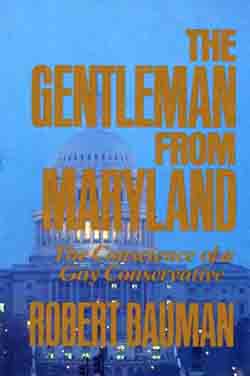
On Friday we took a little look at McKinsey Pete's gay identity politics. Several people have asked me to explain why living in the closet is such a terrible thing. To live a double life, a person has to start learning how to lie and deceive and eventually that deceitfulness takes over someone's whole being and they stop understanding when they're lying and when they're telling the truth, not just about their sexuality, but about everything. This is something I've studied carefully when it comes to politicians. I read and then re-read Maryland top-dog GOP outed congressman Bob Bauman's fantastic book, The Gentleman From Maryland. Bauman, founder of the American Conservative Union and Young Americans For Freedom, wrote poignantly about how his secret double life was so stressful that it led to alcoholism. I had dinner with Mark Foley after he was caught bonking young congressional pages and we began an honest years-long correspondence. And here in California when far right-wing ultra-homophobic state Senator Roy Ashburn was caught, drunk, with a young male prostitute, I studied his fascinating public epiphany. I respect him for it. He now talks about how a tawdry and fearful existence in the closet ruined his life (below) and forced him into an existence predicated on hypocrisy and deceit. Ashburn, when asked if he's been a hypocrite, said, flatly, YES! "I was in hiding."


From an L.A. Times interview Patt Morrison did with Roy Ashburn in 2010 soon after he was busted:
For decades you worked so hard to keep your sexual orientation under wraps. This must have been a torment, but in another sense, was there an element of relief?

I'm sensing relief now. I had not consciously decided to come out, but there's no doubt looking back that I had become increasingly bold about attending gay events, like pride festivals, and going to dance clubs and bars. Last year I attended Las Vegas Pride and San Diego Pride.

Were you looking over your shoulder?

A little more in San Diego than Las Vegas.

...At some point, you must have realized a public career was incompatible with being open about your sexual preferences.

Something happened that I guess caused me to realize that. When I was in sixth grade, the police had a raid in the sand dunes [near San Luis Obispo] and a bunch of gay men were arrested, probably charged with indecent activity. That sticks in my mind-- the publicity and the shame around it. One of my teachers was one of the people. The talk among the kids, the talk among the adults, the talk in the community, the press-- at that time the choice was pretty clear: If you were gay and open, it was a life of shame, ridicule, innuendo about molesting and perversion. It was a dark life. Given that choice of whether you come out or whether you're in secret, I mean, there really wasn't a choice.

You worked for members of Congress, then were elected to public office yourself from Kern County. Were your sexual preferences in the back of your mind, or did you just go about your business?

The answer is both yes and no. I was married and had children. And I had a career and a passion. I also had a huge secret. But given my circumstances and my responsibilities, it wasn't an overwhelming issue for me. The desires were always there, but my focus was primarily on-- well, pretty selfishly-- on me and my career and my family.

Barry Goldwater had a gay grandson and didn't think government had any business in anybody's bedroom. But the recent brand of Republicanism has championed anti-gay issues.

I truly believe the conservative philosophy as embraced by Goldwater: that the government has no role in the private lives of the citizens. In the 1980s, there was a coming together of the religious right and the Goldwater right, sort of a marriage of convenience. It propelled Ronald Reagan to the presidency. Reagan never repudiated that but-- this is just my view-- I don't think he really embraced it either. In no way do I want to put down people of strong religious convictions; I happen to have very strong religious beliefs myself. But it was a merger of those two, and the religious [right's issues] were about same-sex rules, same-sex marriage, abortion, gun rights, these sort of core, litmus-test issues.

Did you feel uneasy with that combination? You did help to organize and speak at a rally in 2005 against a legislative bill sanctioning same-sex marriage.

How I ever got into that is beyond me. I was very uncomfortable with that, and I told one of my confidantes, "I'm never doing that again." It was not what I wanted to do, it wasn't me, but I helped to organize and lent my name.

A lot of people, gay or straight, are probably wondering why you voted even against issues like insurance coverage for same-sex partners.

The best I can do is to say that I was hiding. I was so in terror I could not allow any attention to come my way. So any measure that had to do with the subject of sexual orientation was an automatic "no" vote. I was paralyzed by this fear, and so I voted without even looking at the content. The purpose of government is to protect the rights of people under the law, regardless of our skin color, national origin, our height, our weight, our sexual orientation. This is a nation predicated on the belief that there is no discrimination on those characteristics, and so my vote denied people equal treatment, and I'm truly sorry for that.


"Roy [Cohn] was not gay," Republican operative and Trump crony Roger Stone remarked about Trump's mentor, to CNN legal commentator Jeffrey Toobin. "He was a man who liked having sex with men. Gays were weak, effeminate. He always seemed to have these young blond boys around." Political closet cases live in darkness, fear and self deception. Their lives are a lie and lying becomes the norm. All Republican closet cases are, at heart, Roy Cohn. A lifelong homosexual-- and a swell guy-- Mark Foley, long before he was caught, drunk, sneaking into a boys dormitory looking for sex, was a critic of President Clinton. "It's more sad," he told the media, "than anything else, to see someone with such potential throw it all down the drain because of a sexual addiction."

McKinsey Pete is a Democrat, so at least politically, he is very different from Bauman, Foley, Cohn and Ashburn (not to mention Lindsey Graham and Mitch McConnell, neither of whom has been publicly outed yet). Sunday, the NY Times published a sure-to-be-controversial piece by Jeremy Peters, Pete Buttigieg’s Life in the Closet-- And why it took him until he was 33 to come out.


The closet that Pete Buttigieg built for himself in the late 1990s and 2000s was a lot like the ones that other gay men of his age and ambition hid inside. He dated women, deepened his voice and furtively looked at MySpace and Friendster profiles of guys who had come out-- all while wondering when it might be safe for him to do so too.

Chris Pappas, who was two years ahead of Mr. Buttigieg at Harvard and is now a Democratic congressman from New Hampshire, said he arrived at college “pretty much convinced that I couldn’t have a career or pursue politics as an L.G.B.T. individual.” Jonathan Darman, who was one class ahead of Mr. Buttigieg, remembered how people often reacted to a politician’s coming out then: “It wasn’t a story of love but of acknowledging illicit desire.” And Amit Paley, who graduated in Mr. Buttigieg’s class, recalled that “it was still a time where vocalizing anti-gay sentiments was not only common, but I think pretty accepted.”

The thought that 15 years later someone they might have shared a dorm or sat in a lecture hall with would become the first serious openly gay candidate for president of the United States never crossed their minds. But no one would have found the possibility more implausible than the young man everyone on campus knew as Peter.

Mr. Buttigieg, now the mayor of South Bend, Indiana, struggled for a decade after leaving Harvard to overcome the fear that being gay was “a career death sentence,” as he put it in his memoir.

Many in his generation and in his college class decided to come out as young adults, whether they were confident they would be accepted or not, and had their 20s to navigate being open about their identity-- a process that helped make Americans more aware and accepting of their gay friends, family members and co-workers. Instead, Mr. Buttigieg spent those years trying to reconcile his private life with his aspirations for a high-profile career in public service.

Attitudes toward gay rights changed immensely during that period, though he acknowledges that he was not always able or willing to see what broader social and legal shifts meant for him personally.

“Because I was wrestling with this, I’m not sure I fully processed the idea that it related to me,” he said in an interview.


More than most people his age-- even more than most of the ambitious young men and women he competed against at Harvard-- he possessed a remarkably strong drive for perfection. He went on to become a Rhodes scholar, work on a presidential campaign, join the military and be elected mayor all before he turned 30. After being deployed with the Navy to Afghanistan in 2014, he said he realized he could die having never been in love, and he resolved to change that. He finally came out in 2015, when he was 33.

He took a longer journey than his peers did, he has said, because of the inner turmoil he experienced over whether in fact he wanted to be known as the “gay” politician.

His record of accomplishment during those years in the closet is impossible to separate from the isolation and anxiety he felt as he weighed the cost of telling his family, friends and constituents who he really was. Pursuing so many goals had two outcomes, intentionally or not: It distracted his busy brain from a reality he wasn’t ready to face, and provided him the armor of a life experience that would make his sexual orientation just one of a litany of attributes.

“Peter struck me very early on, at 18 or 19, as someone who would run for president regardless,” said Randall Winston, a close friend of Mr. Buttigieg’s from college. Over beers and Chinese food, Mr. Winston said, they spent late nights on campus talking about the right and wrong reasons for getting into politics. “If you want to be a political leader, why?” he recalled. “Is it about yourself? Is it really about the good of the nation? I think he was asking himself those questions from the jump.”

Mr. Buttigieg said in the interview that if he had been interested in a career other than politics, he would have found the decision to come out much easier. “The arts is one where you could have jumped in there in the 2000s, and it would have been sort of incidental,” he said. “Whereas something like finance, it was getting there. And in politics it would have been completely defining.”

Few experiences in his young adulthood were as formative in shaping his identity as the hypercompetitive environment he encountered at Harvard. Even liberal Cambridge, where meeting a gay student or professor would have been fairly unremarkable, did not always nurture the sense of confidence that he and many of his gay classmates felt they needed to be themselves. At times their surroundings seemed to do just the opposite.

In interviews with a dozen of Mr. Buttigieg’s friends and classmates, people described a culture in which a mix of abundant ambition and youthful insecurity made students carefully attuned to the way they presented themselves to others.

Mr. Winston recalled the dual pressures of having high expectations for yourself while also being aware-- sometimes realistically, sometimes not-- that your classmates and professors had their own ideas about who you were too.

“I don’t want to say it’s all artifice-- a lot of this is just common to growing up,” he said. But the culture at Harvard, he added, caused a lot of students to think, “‘O.K., I’m going to maintain this aura, this impression I’m giving to others.’”

Describing the insecurities he felt as a young man, Mr. Buttigieg has said he sometimes marvels at how differently the world treats him today compared with what he expected when he was too afraid to come out. On the day he kicked off his presidential campaign, he said he had imagined what he would say to his teenage self. “To tell him that on that day he announces his campaign for president, he’ll do it with his husband looking on,” he said with a note of disbelief in his voice. “Would he believe me?”

Mr. Buttigieg took a long and fraught path from life as an undergraduate who once had a girlfriend to a presidential candidate who travels the country with his husband in tow. While he was still in the closet, the country became a different place very quickly. And to understand Mr. Buttigieg’s journey is to understand the microgeneration in which he came of age.

When members of the Harvard class of 2004 were juniors in high school, Matthew Shepard, a 21-year-old gay man from Wyoming, was bludgeoned, tied to a fence post and left to die in a murder that shocked the nation’s conscience. By the time they shipped off to Cambridge, few would have any gay friends — at least ones who were open about it. And the idea of a man marrying another man, or a woman marrying another woman, seemed almost absurd. The closest thing gay men and lesbians had to marriage was a civil union, which in 2000 was legal in exactly one state: Vermont.

“Gay marriage was not this obvious liberal no-brainer,” said Mr. Darman, a journalist and historian who came out in his senior year of college, 12 years before Mr. Buttigieg would. While Harvard was certainly a liberal bubble, it was still in many ways very socially conventional in the early 2000s, he said. “In a lot of social settings at Harvard in that period, the default assumption was that you were straight. And that would not have been true even five years later.”

Friends and classmates remembered Mr. Buttigieg as thoughtful and clearly on a trajectory that would bring him success of some kind, even if it dawned on few of them that might mean the White House.

One thing no one seemed to peg him for was someone wrestling with being gay. He was so discreet that many of his friends and classmates said in interviews that they never would have guessed he was hiding anything until he told them. He left the testosterone-fueled campus sex banter to others. Hegel and de Tocqueville were more to his conversational tastes.

“His sexuality didn’t present as a really big thing in his life,” said Joe Flood, a classmate. “I think he always thought about himself politically,” he added, noting that Mr. Buttigieg would become active in the university’s Institute of Politics, an organization at the Kennedy School of Government that hosted big-name politicians like Senator Edward M. Kennedy and Howard Dean during their time in school. “You don’t end up there accidentally,” Mr. Flood said... There was a small, close-knit social circle of L.G.B.T.Q. students. But they existed a world apart from Mr. Buttigieg’s Harvard.


Peter at Harvard


...But when Mr. Buttigieg and his peers left college and started embarking on their professional lives, the country was changing in significant ways, jolting their sense of what it could mean to be openly gay and have a high-profile career.

One of the biggest developments was right in Harvard’s backyard. In 2004, Massachusetts became the first state where same-sex couples could marry. Students flocked to Cambridge City Hall in the early-morning hours on May 17 to watch the first couples wed at 12:01 a.m.-- the earliest moment possible under the new law. Mr. Buttigieg remembers the occasion but was not there. “I don’t remember feeling that connected to it actually,” he said.

Soon states from Iowa to Maine would start allowing same-sex couples to marry. Then Congress would repeal the military’s “don’t ask, don’t tell” ban on serving openly as gay or lesbian. And the Supreme Court would declare the rights of gay men and lesbians to have their relationships recognized by the state, first in 2013 when it struck down the Defense of Marriage Act in United States v. Windsor, and then again in the 2015 decision that guaranteed same-sex marriage as a right protected by the Constitution in Obergefell v. Hodges.

In 2004, when Mr. Buttigieg’s class graduated, public opinion polls showed that roughly one-third of Americans favored allowing same-sex couples to marry. A decade later it was more than half the country and rising.

Many closeted people found their plight more difficult during the early years of social and legal change, as they wrestled with whether to finally open up after years of trying to maintain an impression of themselves that was false.

Mr. Paley, who was Mr. Buttigieg’s college classmate, remembers sitting in his dorm room in 2003 as a closeted junior and crying as he read Justice Anthony M. Kennedy’s opinion in the landmark case Lawrence v. Texas, which struck down bans on intimacy between homosexuals on grounds that such laws were an affront to their dignity. “That helped me realize I can’t live my life this way,” he said of hiding his sexual orientation. It took Mr. Paley until the end of his senior year to fully come out, and he now serves as chief executive of the Trevor Project, an organization that works to advance the rights of L.G.B.T.Q. youth.

Mr. Pappas, the congressman from New Hampshire, ran his first race for state legislature in 2002 as an openly gay candidate and won. “It’s an important facet of who I am,” he said. “And I think over time I realized how powerful it was that I share that with more and more people.”

He said he ran as an out candidate in that first race because he saw no point in turning back after he came out in college. And after hearing from people who told him how encouraging it was to see him as an openly gay man in politics, Mr. Pappas realized he had made the right choice regardless of the political implications. “I don’t think I fully appreciated that at first,” he said.

After he graduated, Mr. Buttigieg went to work for John Kerry’s presidential campaign in Arizona and quickly immersed himself in the job. Mara Lee, who worked with him at the time and remains a friend, remembered meeting her co-worker for the first time: “Here’s this guy who’s doing a million things at once. He has seven or eight TVs on to monitor the local and national news. He’s introducing himself to me-- being genuine-- and having a conversation while typing.” She remembers two computer screens on his desk.

Once he came out, she said that being gay was never the first thing he wanted people to see when they met him-- a veteran, Rhodes scholar, polyglot who was first elected mayor of South Bend when he was 29. “While it’s an important part of who he is, it’s not the only part,” she said.

When he first ran for mayor in 2011 and won, he was closeted. A local gay rights group did not initially endorse him in that race, opting instead for a candidate with a more established track record on the issues. Mr. Buttigieg endured some awkward moments, like signing a city law banning discrimination based on sexual orientation in 2012. To not think about how the law directly affected him, he acknowledged, “took a little compartmentalization.”

His employees and constituents saw an eligible bachelor in their young mayor and wanted to set him up with their daughters. Some on his staff even joked about his old light green Ford Taurus as a “chick magnet.” He did not bother to correct them.

When he did come out in the summer of 2015, the forum he chose was an op-ed for the South Bend Tribune. “It took years of struggle and growth for me to recognize that it’s just a fact of life, like having brown hair, and part of who I am,” he wrote.

He may have waited far longer than most young gay men today. But ever the overachiever, he made record time in setting a new bar. In less than four years he went from being single and closeted to being married and out as a gay candidate for president.
Peters, who is a member of the LGBTQ community and not closeted, didn't bother to mention that he's gay for this story. He probably should have. But something more important that he should have done is spend some time looking into Pete's time as a consultant for McKinsey, a firm that inculcates its employees with an ability to lie smoothly and effectively. Pete's life in the closet prepared him for that perfectly-- for that and for the life of a politician. He may not lie as much as Trump and Biden... but he's still young and tends not to tell the truth about anything that can be seen as controversial.

Bernie also beat Hillary in South Bend

Labels: , , , , , , ,

Saturday, April 09, 2016

Chalk Up Hastert's Life Of Raping Underage Boys To One Thing: Conservative Values

>

Conservative politicians want to give your underage sons some thrills

Denny Hastert didn't just molest 4 boys when he was a wrestling coach. Nor did he just molest 5 boys. While he presided over a viciously homophobic congressional Republican Party, he was still carrying on an active-- albeit closeted-- gay sex life. He'd hire a gay hooker in the evening and come into Congress the next morning and help pass a law to make life more difficult for LGBT families. It wasn't just a Denny Hastert problem; it wasn't even just a Republican Party problem. It's a fatal flaw in the American conservative movement: a tolerance for bigotry and hatred and a willingness to cater to the lowest instincts of the most unevolved and primitive among us to get support for the kind of economic inequality that drastically elevates the billionaires and millionaires against the rest of society. It was an economically and socially rewarding position for politicians like Hastert.

DWT reported about Hastert's homosexuality and hypocrisy for over a decade. The Establishment media knew for all that time and chose not to report it, just as they chose to not report years and years and years of Mark Foley raping underage boys while he was a Florida congressman voting against the legitimate aspirations of gays and lesbians looking for equality under the law. People were outraged that I dared write dozens of posts about Mark Foley, Larry Craig, David Dreier, Lindsay Graham, Mitch McConnell, Patrick McHenry and Hastert "without proof," while they continued voting for bigotry and continued having sex with boys and men. I pitied those critics and, in part blamed them for the continuation of outrages against children they refused to protect.


And this is an old story in RepublicanWorld. Former Maryland congressman and right-wing firebrand, Republican Bob Bauman, wrote an autobiography in 1986, The Gentleman from Maryland: The Conscience of a Gay Conservative, that warned future Republicans against the hypocrisy of the closet. His warnings have gone unheeded by two generations of conservative closet cases in Congress and government. Remember, Bauman wasn't just some run of the mill Republican. He was one of the founders of both the Young Americans for Freedom and the American Conservative Union and served as chairman of each. He was a leader of anti-gay hysteria among Republicans in Congress, while he was sneaking around-- a married man-- having sex with underage boys. Eventually he was arrested with a 16 year old, shunned by his colleagues, rejected by his constituents, divorced by his wife... his life a shambles.

Six years ago, in California, state Senator Roy Ashbury-- the penultimate leader of the anti-gay forces in the state legislature-- was pulled over, drunk, with a young male prostitute he had picked up in a bar, his carefully crafted "family values" political and personal life forever shattered. Instead of hiding under a rock like most outed GOP politicians, Ashburn decided to come clean. This is from an interview in the L.A. Times 3 months after his arrest. It's an indictment of hypocrisy and bigotry and the very conservative "value" that insists gays stay in the closet, a value that inevitably leads to the tragedies of congressmen like Denny Hastert, Aaron Schock (R-IL), Mark Foley (R-FL), Ed Schrock (R-VA), Jon Hinson (R-MS) Larry Craig (R-ID)...
For decades you worked so hard to keep your sexual orientation under wraps. This must have been a torment, but in another sense, was there an element of relief?

I'm sensing relief now. I had not consciously decided to come out, but there's no doubt looking back that I had become increasingly bold about attending gay events, like pride festivals, and going to dance clubs and bars. Last year I attended Las Vegas Pride and San Diego Pride.

Were you looking over your shoulder?

A little more in San Diego than Las Vegas.

...At some point, you must have realized a public career was incompatible with being open about your sexual preferences.

Something happened that I guess caused me to realize that. When I was in sixth grade, the police had a raid in the sand dunes [near San Luis Obispo] and a bunch of gay men were arrested, probably charged with indecent activity. That sticks in my mind-- the publicity and the shame around it. One of my teachers was one of the people. The talk among the kids, the talk among the adults, the talk in the community, the press-- at that time the choice was pretty clear: If you were gay and open, it was a life of shame, ridicule, innuendo about molesting and perversion. It was a dark life. Given that choice of whether you come out or whether you're in secret, I mean, there really wasn't a choice.

You worked for members of Congress, then were elected to public office yourself from Kern County. Were your sexual preferences in the back of your mind, or did you just go about your business?

The answer is both yes and no. I was married and had children. And I had a career and a passion. I also had a huge secret. But given my circumstances and my responsibilities, it wasn't an overwhelming issue for me. The desires were always there, but my focus was primarily on-- well, pretty selfishly-- on me and my career and my family.

Barry Goldwater had a gay grandson and didn't think government had any business in anybody's bedroom. But the recent brand of Republicanism has championed anti-gay issues.

I truly believe the conservative philosophy as embraced by Goldwater: that the government has no role in the private lives of the citizens. In the 1980s, there was a coming together of the religious right and the Goldwater right, sort of a marriage of convenience. It propelled Ronald Reagan to the presidency. Reagan never repudiated that but — this is just my view — I don't think he really embraced it either. In no way do I want to put down people of strong religious convictions; I happen to have very strong religious beliefs myself. But it was a merger of those two, and the religious [right's issues] were about same-sex rules, same-sex marriage, abortion, gun rights, these sort of core, litmus-test issues.

Did you feel uneasy with that combination? You did help to organize and speak at a rally in 2005 against a legislative bill sanctioning same-sex marriage.

How I ever got into that is beyond me. I was very uncomfortable with that, and I told one of my confidantes, "I'm never doing that again." It was not what I wanted to do, it wasn't me, but I helped to organize and lent my name.

A lot of people, gay or straight, are probably wondering why you voted even against issues like insurance coverage for same-sex partners.

The best I can do is to say that I was hiding. I was so in terror I could not allow any attention to come my way. So any measure that had to do with the subject of sexual orientation was an automatic "no" vote. I was paralyzed by this fear, and so I voted without even looking at the content. The purpose of government is to protect the rights of people under the law, regardless of our skin color, national origin, our height, our weight, our sexual orientation. This is a nation predicated on the belief that there is no discrimination on those characteristics, and so my vote denied people equal treatment, and I'm truly sorry for that.

When it comes to marriage, I'm getting the feeling that you're mulling over whether government ought to be in the marriage license business at all.

It's a very complicated issue, marriage, but it seems to me that the government's role is to protect a civil contract, whether it's to purchase a home together, enter into whatever financial or legal arrangement, including marriage. The whole issue of marriage as a 5,000-year-old tradition, a religious context, a historical context-- what government's role is, is the sanctification of the legal bond. Then it seems to me a matter for a church or some other societal organization but not for government.

What have you been talking about with the gay groups you've been meeting with?

The same things we're talking about. I don't have an agenda. I don't have a plan. I don't have an expectation. I just want people to know who I am and what's in my heart. I kept that from people. I concealed it from everyone for almost all my life, so I'm [now] privileged to work with people from all aspects of life, including organizations devoted to advancing the rights of gay and lesbian and transgendered individuals.

Recently in the Senate you spoke in favor of a resolution calling on Congress to repeal "don't ask, don't tell.''

For that day I knew I had to say something. I already had prepared what I was going to say about serving in the military, and I actually had it written out because I wanted to be precise. But I had to preface it with something else, to give context to why all this time in elective office and being so deeply hidden, why was I now standing and speaking on this subject matter, and so I did.

...You're divorced, with four daughters and grandchildren. So here's where I ask about your family, and you can tell me to buzz off.

The things we're talking about were my choices. It was my choice to keep it secret; it was my choice to be a gay man and be married and have children. It was my choice to build a life on lies in order to conceal myself. That obviously had a big effect on my marriage and my children in ways that I don't fully comprehend, but it's my responsibility and not something to be talked about in interviews.
Thanks to Pelosi there was no trial and Foley still insists it was just naughty e-mails

Until this weekend, Hastert had been granted unofficial deniability from the justice system. He's myriad legal cases were never specifically about child rape. And Hastert, who paid millions of the dollars he earned as a sleazy lobbyist to cover up his sex crimes, is now insisting he shouldn't go to prison for several reasons, one of which is that he was punished enough when his official Speaker of the House portrait was taken down. Comedian Andy Richter was a student at the high school in Yorkville where Hastert was raping his students and the interview he did with USAToday isn't funny.
Federal prosecutors alleged in a court document filed Friday evening that Hastert abused or had inappropriate contact with at least five minor boys during his time at Yorkville High School, west of Chicago. Hastert taught at the high school for about 16 years before leaving in the early 1980s to launch his political career.

One of the victims, identified in court documents as "Individual D," told prosecutors that Hastert "put a 'Lazyboy'-type chair in direct view of the shower stalls in the locker room where he sat while the boys showered."

Richter, a sidekick on Conan O'Brien's TV show on TBS, said in a series of posts on Twitter that he remembers the chair.

"I went to Yorkville HS '80-'84 & I remember this chair. Purportedly 'to keep boys from fighting,'" Richter posted.

...Hastert, 74, pleaded guilty in October to one count of illegally structuring bank withdrawals. In the new court filing, prosecutors detail how the bank fraud was part of a scheme by the former lawmaker to pay off one of his alleged victims. It also details the other alleged incidents in which Hastert molested or committed sexual acts on boys in his charge.

The statutes of limitation on the sexual misconduct allegations have expired, but prosecutors raised the alleged wrongdoing in their pre-sentencing memo ahead of Hastert's scheduled sentencing later this month.

The former speaker faces up to six months in prison.
He was raping boys as young as 14.

Labels: , , , , , , ,

Tuesday, January 31, 2012

Primary-night special: Ex-"Gentleman from Maryland" (now Floridian) Bob Bauman reveals that he voted for Ron Paul

>

Here's our Bob with, uh, some other guy, back in the day.

“I think both parties are miserable. I don’t know what they stand for anymore.”
-- former MD Rep. Bob Bauman, in an interview
with the Washington Blade's Lou Chibarro Jr.

by Ken

Howie has written a number of times, most prominently in an August 2007 post titled "Larry Craig And Other Republican Closet Cases Should Learn a Lesson From Former GOP Congressman Bob Bauman," about the case of the arch-conservative Maryland congressman who saw his political career go up in smoke in 1980 when, in the midst of his reelection campaign, he was unceremoniously outed following his arrest and negotiated "no contest" misdemeanor plea for soliciting a teenage male prostitute. (He notes in the Washington Blade interview with Lou Chibarro Jr. that he was represented in court by Tom O'Malley, the father of current Maryland Gov. Martin O'Malley.)

It was a swift and sudden end to a career that until then had seemed headed meteorically upward. Bauman had parlayed an attack-dog political style and especially a hard-won mastery of legislative procedure, with which he succeeded in driving the Democratic leadership batty, into a position of prominence in a mere three and a half terms in the House. What makes his case of such enduring interest is that after slinking out of office in 1981, and then being humiliated when he tried to slide back in the following year, in 1986 he published his fascinating book The Gentleman from Maryland: The Conscience of a Gay Conservative.

Bauman, now living in the gay-friendly little city of Wilton Manors, near Fort Lauderdale, accepted an offer from Lou Chibarro Jr. of the Washington Blade to share some of his current political thoughts.
In an interview with the Washington Blade on the eve of Florida’s Republican presidential primary, Bauman said he remains committed to conservative and libertarian principles but has shunned politics since 1982.

“I think both parties are miserable,” he said. “I don’t know what they stand for anymore.”

Bauman added, “I think they mirror each other. I think they are both completely enthralled to Wall Street and the banks. I think they are controlled by the people that contribute money to them. And that goes for Obama and it goes for Gingrich.”

“The only thing you can say for Romney is that he’s rich enough that maybe he won’t be influenced by that,” said Bauman. “I hate to say it, but I think he’s probably the least influenced by them because of his religion.”

Bauman said he considers Rick Santorum "no better or worse" than Romney or Gingrich, and he didn't vote for any of the three.
[He] said he voted earlier this month for GOP presidential contender Ron Paul, the congressman from Texas, as a “protest vote.” He said Paul’s outspoken call for reforming the nation’s politics and economic policies represents a refreshing alternative to the other candidates, even though Bauman acknowledges some of Paul’s proposals are unrealistic.

Bob apparently understands why so many Americans are turned off by present-day politics, but refuses to surrender to despair.
Bauman noted that some people he knows who share his disappointment over the current state of U.S. politics no longer vote because they believe it “lends credence” to a lousy system.

“I don’t feel that way. I’ll keep fighting until I go,” he said.

In case you were wondering what our Bob has been doing since his forced withdrawal from public life, after some bouncing around, he hooked up with "a libertarian-oriented publishing company called Agora Publications," and in 1998 --
helped to found a subsidiary to the company called the Sovereign Society, which publishes email newsletters and books specializing in legal tax avoidance through the use of offshore investing.

“I write for them on a regular basis for their daily e-newsletter that goes out to more than 335,000 people,” he said. “And I write books. I’ve written five or six or more books on offshore financing and on places to invest off shore -- asset protect -- all of the things that Newt Gingrich has been railing against for the last few days,” he said.

Apparently his heroic work in spreading the gospel of tax avoidance is what Bob has in mind by "fighting until I go." It's inspiring to know that he hasn't let our lousy political system take all the fight out of him.
#

Labels: , ,

Tuesday, June 15, 2010

More thoughts on that interview with outed California State Sen. Roy Ashburn

>

"I have had the privilege of serving in elective office for 26 years and dealing with important legislation, and I did so with a huge secret and in many ways a career built upon lies and deceit."
-- Senator Ashburn, in the L.A. Times interview

by Ken
[from a dispatch carried on BakersfieldNow.com, "home of KBAK & KFFX Eyewitness News"]

Change of course: Roy Ashburn urges support for gay rights

By DON THOMPSON, Associated Press
May 27, 2010

SACRAMENTO, Calif. (AP) -- Sen. Roy Ashburn spoke out passionately in favor of gay rights during a legislative session.

The Republican from Bakersfield was forced to reveal he is gay after a recent arrest for drunken driving.

On Thursday, he urged his fellow senators to "rise above discrimination" and support letting gays serve openly in the military.

Ashburn also weighed in on a bill designed to protect clergy who refuse to perform gay marriages.

"I am no longer willing or able to remain silent on issues that affect sexual orientation, the rights of individuals, and so I, um, I'm doing something that is quite different and foreign to me. And it's highly emotional," Ashburn told fellow senators.

Ashburn said he would not be speaking at all were it not for his drunken driving arrest in March after he left a gay-friendly nightclub near the state Capitol. . . .

My agenda for today was an update on the state of the "conventional wisdom" on anti-incumbent fever, but that will have to wait till tomorrow. (I wish we could always shove the conventional wisdom out of sight this easily.) All I really have in mind for today is a gut reaction to Howie's morning post -- specifically, the large chunk of interview he reproduced by the Los Angeles Times's Patt Morrison with recently self-outed California State Sen. Roy Ashburn, whose "life as a 'family values' politician all but ended months ago," Patt recalls --
in the early morning hours of March 3. He was arrested for DUI after he'd left a gay club, and soon thereafter acknowledged that he was gay. His DUI cost him his driver's license for a time and put him back on a bike, pedaling his life in an altogether new direction.

Howie has repeatedly recommended former Rep. Bob Bauman's post-traumatic book The Gentleman from Maryland: The Conscience of a Gay Conservative, written after he'd come to grips with his ignominious self-outing, and the life of repression and denial that preceded it. I gather from Howie that Bauman achieved some real understanding of the way he'd screwed up a large chunk of his life, and hurt a lot of people who didn't deserve to be hurt, by pretending to be someone other than he was, and in pursuit of that pretense donning the guise of a rabidly homophobic political warrior.

I'm embarrassed to say that I've never actually read Bauman's book, but in the wake of the Ashburn interview, I've just ordered a copy. (You can find them dirt-cheap on amazon.com.) Because what I find so fascinating about the Ashburn interview is how little he can muster to say about his long period of what we might call professional homophobia. It's not that he's inarticulate, just barely articulate on this subject -- and understandably so, given that he's probably only just getting past the "my life as a train wreck" stage.

Listen again as Patt points out, after establishing Ashburn's fascination with politics from his earliest memories, that "you must have realized a public career was incompatible with being open about your sexual preferences":
Something happened that I guess caused me to realize that. When I was in sixth grade, the police had a raid in the sand dunes [near San Luis Obispo] and a bunch of gay men were arrested, probably charged with indecent activity. That sticks in my mind — the publicity and the shame around it. One of my teachers was one of the people. The talk among the kids, the talk among the adults, the talk in the community, the press — at that time the choice was pretty clear: If you were gay and open, it was a life of shame, ridicule, innuendo about molesting and perversion. It was a dark life. Given that choice of whether you come out or whether you're in secret, I mean, there really wasn't a choice.

And when he was elected to public office himself, "Were your sexual preferences in the back of your mind, or did you just go about your business?"
The answer is both yes and no. I was married and had children. And I had a career and a passion. I also had a huge secret. But given my circumstances and my responsibilities, it wasn't an overwhelming issue for me. The desires were always there, but my focus was primarily on — well, pretty selfishly — on me and my career and my family.

Now Ashburn is set up for the crucial subject of his horrible record on every subject relating to the normal rights of gay people as citizens.
The best I can do is to say that I was hiding. I was so in terror I could not allow any attention to come my way. So any measure that had to do with the subject of sexual orientation was an automatic "no" vote. I was paralyzed by this fear, and so I voted without even looking at the content. The purpose of government is to protect the rights of people under the law, regardless of our skin color, national origin, our height, our weight, our sexual orientation. This is a nation predicated on the belief that there is no discrimination on those characteristics, and so my vote denied people equal treatment, and I'm truly sorry for that.

What a way to live! Is it possible not to feel empathy for how hard it must have been? It doesn't excuse his professional homophobia, but now that he's come out the other side, it's hard not to wish him well. Not only is he dealing honestly, finally, with who he is, but he says he's dealing with his alcohol-abuse problem, which you have to figure is not unrelated.
I'm just trying to tell the truth from the reality of the life I've lived, which has been an amazing life. I have had the privilege of serving in elective office for 26 years and dealing with important legislation, and I did so with a huge secret and in many ways a career built upon lies and deceit. Now that the truth is known, actually I am comfortable talking about these things.


As I've said repeatedly, it seems to me that the dramatic shift in public attitudes toward LGBT folk has been largely attributable to the growing awareness of straight folk that they actually know representatives of the once-exotic "other." They're coworkers, friends, and family members, and once you know them as actual people, as opposed to the grotesque caricatures fobbed off by the masters of social orthodoxy, it turns out that they're people just like any other people -- some good, some bad, most somewhere in between, just like everybody else.

It has to be scary as well as deeply shameful for not just closeted by positively bunkered guys like Bob Bauman and Roy Ashburn to accept that ill-informed, malignant characterization of "the other" and applying it to themselves. This of course is the "internalized homophobia" that every LGBT person has to cope with -- and let me say once again (as I did most recently in a post called "Maybe it's not that mysterious why the upper ranks of the GOP and the Far Right are overflowing with homophobic closet cases") that for me nobody has made this more understandable than Mike Signorile, whose "Case for Outing on All Levels," in the June Advocate, Howie cited again this morning.

I'm thrilled in dealing with younger gay men to note how dramatically lower the internalized-homophobia quotient has become. The less of it there is to overcome, the better shot the victim has of getting beyond it. And that manufactured shame doesn't do anyone any good, except for primarily religion-peddling creeps who exploit homophobia for their personal advantage.

To return to that May 27 AP piece, reporter Don Thompson notes:
SACRAMENTO, Calif. (AP) -- Sen. Roy Ashburn spoke out passionately in favor of gay rights during a legislative session.

The Republican from Bakersfield was forced to reveal he is gay after a recent arrest for drunken driving.

On Thursday, he urged his fellow senators to "rise above discrimination" and support letting gays serve openly in the military.

Ashburn also weighed in on a bill designed to protect clergy who refuse to perform gay marriages.

"I am no longer willing or able to remain silent on issues that affect sexual orientation, the rights of individuals, and so I, um, I'm doing something that is quite different and foreign to me. And it's highly emotional," Ashburn told fellow senators.

Ashburn said he would not be speaking at all were it not for his drunken driving arrest in March after he left a gay-friendly nightclub near the state Capitol.

Earlier on, Thompson reported:
"Does anyone really believe that a person's sexual orientation affects their ability to serve our nation and protect our freedom?" he said, supporting a resolution urging Congress to change the military's policy on gays.

"The answer is that being gay or straight has nothing to do with ability, devotion, courage, honor, skill and loyalty, the characteristics that I think we would all agree are desirable and necessary for those who serve in our national military," Ashburn said. "The current policy of 'don't ask, don't tell' is clearly out of date and discriminatory."

He cited conservative icon Barry Goldwater's view that government should stay out of people's private lives.

"It calls upon our nation's best instincts and seeks to correct a basic discrimination that is hurtful to people and to our country," he said of SJR9, the resolution by Sen. Christine Kehoe, D-San Diego, who is openly gay. "I respectfully ask that we rise above discrimination and vote aye on this resolution."

In this context it's good to hear the last words of Ashburn's quoted by the L.A. Times's Patt Morrison:

"I don't know that I've ever felt more optimistic about the future for myself. I don't know what the future holds, but I think it's going to be incredible."
#

Labels: , , , , ,

Tuesday, March 09, 2010

Only An Idiot-- Like Our Mass Media-- Would Compare Eric Massa To Mark Foley... Now Sen. Roy Ashburn Is Something Else

>


When I was really young, like maybe 11 or 12, my mom must have sensed I was gay. I hadn't thought about it myself... didn't even know what it was, although I did feel some kind of undefined attraction for some of the older guys in the neighborhood (older meaning 16 or 17). Anyway, she told me she wanted me to meet someone and to hang around because he was coming over before dinner. It was her hairdresser, a guy with two first names, one of which was Michelle (or at least whatever it was was pronounced "Michelle," like in Bachmann). So Michelle is a walking, breathing stereotype. I can still recall the fluffy pink mohair sweater, the screamingly dyed blonde hair in a style that didn't look like anything any man I had ever noticed had. And his wrist was the limpest wrist I had ever seen. Maybe he was just putting it on thick for me. But it worked. Although I had a couple of discreet "experiments" while I was a teenager, I stuck with girls; I forced myself to, without even making a conscious decision. I knew I wasn't like Michelle; that's all.

I read Hubert Selby's then brand new 1964 now-classic Last Exit To Brooklyn and realized there are gay people in Brooklyn, although it was a painful revelation. Wikipedia synopsizes two of the 6 parts:
The Queen Is Dead: Georgette, a transvestite hooker, is thrown out of the family home by her brother and tries to attract the attention of a hoodlum named Vinnie at a benzedrine-driven party. [And, yes, I'm certain that's where Morrissey got his song title.]

Strike: Harry, a machinist in a factory, becomes a local official in the union. A closeted homosexual, he abuses his wife and gets in fights to convince himself that he is a man. He gains a temporary status and importance during a long strike, and uses the union's money to entertain the young street punks and buy the company of drag queens.

That kept me in the closet for another few years. It really all seemed so furtive and ugly and sad back then. The experiences I had-- as a hitchhiker going back and forth from Brooklyn to Manhattan-- weren't very satisfying. Girls were way better. But... something wasn't right and sometimes I got this unconscious feeling. By the time I was in college drugs were an integral part of my life-- and in a very big way. They do wonders for inhibitions... as well as for denial. I had sex with a guy who I really liked but when my girlfriend found out and demanded I make a choice, I picked her and quickly "forgot" I had ever even had sex with a guy, even though, in the depths of my consciousness I knew that that was exactly the right thing for me.

I had a big transitionary stage after graduation when I was celibate for years, traveling around Asia looking for myself. I found me... in Amsterdam (of all places) and when I went to a psychologist and told him I suspected I might be gay he was waiting for the punchline. Finally he asked me if I had come to see him to get addresses of places where I could meet other gay guys. I took that as a professional blessing-- and I didn't need any addresses because I lived directly across the street from the Vondel Park.

I started making up for lost time with a vengeance. But the closet had scarred me and it took another year before I was able to tell my family (back in America) and my old friends. I was lucky. My mother's reaction, after trying a little denial for a few moments, was "Does this mean you want to start wearing my wigs?" I didn't and there was never a bump, not even the tiniest one. No one ever considered inviting me to anything without my boyfriend or didn't accord him the same love and respect and acceptance they had always given girlfriends I brought home.

I was very lucky. Not every gay person is. Ex-Congressman Bob Bauman's wife, like him a devout Catholic and, also like him, devouter conservative, was-- again, like him-- a founder of the Young Americans For Freedom, had their marriage annulled when he was outed. He wrote the best book I ever read on the topic of a closeted conservative politician coming to grips with himself, The Gentleman From Maryland-- The Conscience Of A Gay Conservative. It should be a must-read for every closeted politician who winds up running for office. The blurb from Publishers Weekly:
Claiming that financial need compelled him to publish this "near-perfect Greek tragedy" of a life "flawed by a great weakness," ex-Congressman Bauman reveals with relentless candor the alcoholic and homosexual behavior that led to the ruin of his political career and marriage. His story is engrossing both on a personal level and as an expose of Washington's gay scene to which, he maintains, belong government, professional and corporate leaders of all political casts. While admitting his guilt, Bauman alleges that his indictment for sexual solicitation and attendant activities, based on evidence from paid FBI informants, was politically motivated by the Carter administration, "Tip" O'Neill and by a Maryland senator who considered him a potential rival. Now practicing law, Bauman still suffers from rejection of his professional talents and from social prejudice, he stresses, and, as a Roman Catholic, finds little comfort in his religion's ambivalent stance toward homosexuality.

Bakersfield state Senator Roy Ashburn, vicious homophobic Republican sociopath by day, bar trawler by night, should have read it long ago. It might have saved him a lot of misery. Outed last week when he was pulled over, drunk, with a young male he had picked up in a Sacramento bar, he actually went on a big Bakersfield radio station and told his constituents "I am gay." No shit, Sherlock! On personal leave since his arrest early Wednesday morning and avoiding the press, he figured he couldn't deny it any longer.
The arrest touched off rampant speculation about his sexuality after a Sacramento television station reported he had been at a gay nightclub in Sacramento just before he was pulled over by California Highway Patrol officers. But Ashburn had declined to comment.

He broke his silence in an interview on Bakersfield radio station KERN (1180 AM) with talk-show host Inga Barks on Monday morning, saying the incident had led to "restless nights" and "soul searching." Ashburn said he had "brought this on myself." When he told Barks he owed his constituents an explanation, she responded, "Do you want me to ask you … the question, or do you want to just tell people?"

"I am gay,'' Ashburn answered, "and so I … those are the words that have been so difficult for me for so long. But I am gay. But it is something that is personal and …. I felt with my heart that being gay didn't affect-- wouldn't affect-- how I did my job." He did not express any resentment that his sexuality had come under scrutiny, saying, "Through my own actions, I made my personal life public."

The episode, widely discussed on Internet blogs, in newspapers and on TV, spurred charges of hypocrisy against the senator from gay-rights activists who noted that Ashburn, a divorced father of four, had voted several times against legislation favoring gays and lesbians.

On Sept. 1, 2005, Ashburn voted against a bill that would have allowed same-sex marriages in California. The bill was later vetoed by the governor. Ashburn also was among the minority in voting against legislation last year that designated May 22 of each year as Harvey Milk Day.

"It is unfortunate he helped spread the bigotry that forced him to stay in the closet," said Geoff Kors, executive director of Equality California, a group supporting gay marriage. "We hope he now takes this opportunity to educate people in his district and throughout the state that his sexual orientation is irrelevant.''

Ashburn defended his votes against gay-rights legislation, saying he was reflecting how the voters in his district felt.

Listen to the whole interview with a right-wing radio host Part I:


Part II, in which he shows he doesn't understand what it means to be a self-loathing Republican homosexual:


Now, what about Eric Massa? I know Eric for a long time-- and I don't know. He told me last week that he expected to get slandered, although he was expecting to get slandered by Republicans. He was very specific about that. He said they were out to get him because he was fighting for ending DADT. Today he's going on the Glenn Beck show to denounce the Democrats for screwing him up instead! (Apparently many of his new allies don't trust him or realize that he's mentally unstable now, adding to the personal tragedy of this guy.) I think he's in a great deal of pain and overwhelmed by a sense of desperation in regard to his crumbling life. All I can say is that I'm going to pray for him (rather than for Ashburn; I'm not that pure of heart at this point on my evolutionary journey). Oh-- and I'm going to continue to work towards eliminating the strictures that closets confine people in. Politically speaking, I could use some help on that one.


UPDATE: Oy Veh!

Hoyer, as expected, called Massa's wild charges absurd but the big news-- just as Glenn Beck is about to start his exploitation session with a dangerously sick man-- and who better than Glenn Beck?-- the Washington Post reports an even worse assessment than anyone expected.
Former Rep. Eric Massa (D-N.Y.) has been under investigation for allegations that he groped multiple male staffers working in his office, according to three sources familiar with the probe.

The allegations surrounding the former lawmaker date back at least a year, and involve "a pattern of behavior and physical harassment," according to one source. The new claims of alleged groping contradict statements by Massa, who resigned his office on Monday after it became public that he was the subject of a House ethics committee investigation for possible harassment.

Labels: , , , , , ,