Monday, June 22, 2020

Reopening-- Italy, Spain, Saudi Arabia...

>

A Hajj gets much more crowded than a Trump rally-- or inauguration

I lived abroad for 7 years and I'm a "member" of the century club (meaning I've been to over 100 countries). When I was still in my twenties and people asked me to name my favorite countries, it would always be Afghanistan, Morocco, Nepal and Ceylon (since re-named Sri Lanka). Over the years the only constant has been Morocco. There's too much air pollution in Kathmandu to go back; too much violence in Afghanistan and Sri Lanka... well, I would go back for a 4th times but... but my favorites now would have to be Italy, France, Spain, Thailand, Bali, Morocco.

Two of my traveling buddies, Roland and David, keep asking when we can go out on the road again and where. For me, it's going to be not for a long time until I even leave my house for more than a hike in the hills behind it and a weekly trip-- in my beekeepers outfit-- to the grocery store. I don't see an airplane ride in my immediate future. But... I sure am hankering for the Monto neighborhood behind the Forum where Roland and I rented a two bedroom-two bathroom apartment in the Palazzo del Grillo last we were in Rome, a week for what it would cost for a night in an equivalent hotel. (As I wrote at my travel blog 10 years ago, we didn't have the Frette sheets or the fancy towels but with what you save, you can afford to buy them and take them home! And after a few days you start to feel like you're part of the neighborhood and that you're living a normal life, not just a time and space cut-out from reality.

Italy was badly hit by the pandemic. The country had 238,720 confirmed cases (9th worse in the world), 34,657 deaths (4th worst after the U.S., Brazil and the U.K.) and 3,948 cases per million, in the population (32nd worst in the world and about the same as Texas, except Texas is just at the beginning of its battle with the pandemic and Italy is pretty much finished).


Erica Firpo lives in Rome and writes for the Washington Post. Over the weekend she made the point that Rome is ready for visitors again but that the restaurants look different. "As Italy opens up to its residents, Europe and eventually the rest of the world," she wrote, "businesses in Rome are trying to figure out how to navigate an Eternal City without the daily traffic of tourists and full offices. The centro storico, Rome’s historic center, has long relied on tourism to support many of its restaurant and food services. Opening doors again isn’t easy; restaurants are experiencing a new atmosphere thanks to changed personalities and limited tourism. Some are investing in invigorating the local community, while others are simply trying to move forward. As Rome slowly acquaints itself with the city’s new landscape, these restaurants, cafes and markets are doing their best to evolve in the city’s new landscape.
Community first

RetroBottega one of the city’s innovators for its focus on materie prime (locally sourced, raw and organic fruit and vegetables), closed its restaurant, wine bar and pasta lab along with the rest of the country on March 8. Owners Giuseppe Lo Iudice and Alessandro Miocchi quickly pivoted to support the team that supports them, i.e. its staff and its farmers, and to support the historic center’s community.

“We reached out to the community that wasn’t able [or didn’t want] to shop in the supermarket, that wanted quality,” says RetroBottega’s Lo Iudice. Reconfiguring into RetroDelivery, a CSA-structured produce delivery service, RetroBottega reached out to local residents to offer fresh produce delivery via WhatsApp.

It wasn’t easy at first, but the neighborhood quickly caught on and loved the personalized grocery service with the RetroBottega vibe. Miocchi, the pasta brain, expanded the repertoire to include fresh bread, and now RetroDelivery delivers gourmet products, meat, fish, and freshly made pasta and breads thanks to a collaboration with Roscioli, as well as a local butcher and local fish vendor.

The Roscioli family, four generations of bakers, is one of the cornerstone’s of the Campo de’ Fiori neighborhood. Roscioli is now a local empire with a coffee shop, bakery and restaurant/gourmet delicatessen.

During the lockdown, while the closed-to-public cafe organized coffee deliveries, the bakery kept its doors open and provided home deliveries of such items as homemade yeast and pizza dough.

“Bread has a social weight; we have to provide it,” explains baker PierLuigi Roscioli. In fact, he personally delivered bread to his patrons, which inspired the community and showed that there was some normalcy in a surreal situation.

Aligning with RetroBottega was a natural fit for Roscioli, as both are dedicated to providing top-quality products and investing and supporting the local community by continuing to cater, in all senses of the word, to its needs.

“We are rooted in this neighborhood; we can’t abandon it. We grew up here. It was unfathomable to think that we wouldn’t stay open. For us, it’s not about economics, but it’s a duty to our community,” says PierLuigi.

A return to dining

All’aperto (alfresco dining) is one of every Romans favorite expressions. We love eating outside, but not every restaurant has that possibility, and the new social distancing regulations and personal hesitations make indoor dining an afterthought, at best.

RetroBottega reopened its restaurant, wine bar and pasta lab but not quite as it was before. Lo Iudice and Miocchi refocused their menu by creating pizzas-- inventive and made with prime materie and antipasti. Roscioli Salumeria, the brothers’ tiny restaurant, restructured its tables and, like everyone else, requires advance reservations.

It's not an ideal situation, and not helped by the fact that Romans are not as active as tourists in dining out. To some, this is the perfect time to experience restaurants whose wait lists are weeks long, but to restaurant owners, the next few months are a precarious tight rope.

One establishment that intensely feels the effects of the pandemic’s full stop is Pizzeria Remo a Testaccio, an inexpensive, cult-favorite pizzeria in the Testaccio neighborhood. Right now, the usually busy pizzeria is quiet. Regular clients are not interested in sitting inside, whether scared of being too close or offset by the summer heat, and for those that potentially want to return, they are dissuaded by social distancing settings that make dining a lot less fun.

“Unfortunately, most people come to the pizzeria as a group of friends and family, and now would have to sit distanced from each other. Are they going to tell jokes using WhatsApp?” asks partner Antonio Amato.

Roman constants

Rome is not Rome without gelato, and during the lockdown, many gelaterie teamed up with delivery services to provide the treat to homes all over the city. Giolitti, the 120-year-old gelateria best known for its 57 flavors as well as its crowds, was this journalist’s go-to delivery for cioccolato fondente (dark chocolate) during the lockdown.

Closing its doors completely was not an option, describes Nazareno Giolitti.

“Giolitti has only been closed only a half-day when my grandfather passed away and another half-day when my father passed away. Why? Because my grandparents always said we are public service. Our feelings come second to that of the people,” he says. Giolitti maintained its staff by alternately hours, and immediately focused on at home gelato delivery.

When Italy slowly opened, Giolitti was prepared with take away coffee drinks, pastries and gelato.

“We are a tradition. A line will return and it’s our responsibility to keep it organized,” Giolitti says. But Giolitti notes that as a heritage establishment that owns its space, the gelateria is luckier than most other businesses that are struggling to pay rents and salaries.

Giolitti is now fully reopened, and the line has returned.

Traditional cafes are the staple of any Italian city. They are where we meet and greet in the morning for a quick chat and fast counter service. Although bars and cafes have been open for nearly two months, the normal routine is nothing like before. Along with social distancing protocols, which reduce the amount of people at the counter, Rome updated business hours to three time slots during May and June, where non-food-related shops (like clothing) open at 11 a.m., which means less morning traffic from incoming staff.

Bar del Cappuccino, a beloved hole-in-the wall on Via Arenula, is waiting for the foot traffic to return, like every other bar in the city center.

“Our faithful clientele has returned. And since tourists aren’t traveling, we are reaching out to local businesses,” says owner Adriano Santoro, who keeps in touch with the local community with Facebook posts and offering home delivery as well as takeaway service. “We’re all waiting to see how this moves forward.”
It sounds she could be describing Los Feliz, the neighborhood in Los Angeles where I live and where things are slowly, in some cases fitfully, starting to reopen. I haven't even thought about going back to a restaurant myself and have a feeling it may be a very long time before I do. Spain, which was also devastated by the pandemic is also starting to reopen for tourists. Overall, it was the 6th worst-hit in terms of overall cases (293,584) and 6th worse in terms of deaths (28,324). There have been cases 6,279 per million, not as bad as the U.S. (7,210) but about the same as Alabama (6,123), which is spiking, while Spain is finishing up. Saturday Spain reported a diminishing 363 new cases, while Alabama reported a rising 547. Yesterday Spain ended its 3 months-long state of emergency "allowing in tourists from most of Europe," reported The Post, but warning that hygiene measures must be followed to avoid a second wave... The move will mean Spaniards can move around the country as normal and will allow some relief for the country’s decimated tourism industry. Tourists from Britain, who make up the largest proportion of visitors to Spain each year, will also be allowed to enter without a 14-day quarantine, Foreign Affairs Minister Arancha González Laya told the BBC. However, some on holiday may be put off by having to isolate for two weeks when they return to Britain, in line with current regulations. González Laya urged Britain to implement reciprocal measures. Spain will begin to welcome visitors from outside the European Union from July 1, depending on the level of outbreak in their home countries." (I think that means they will not be allowing U.S. visitors.

The Gulf States are all among the worst hit in the world, by any metric. These are the countries listed by cases per million and with their total cases in parentheses:
Qatar- 31,485 cases per million, worst in the entire world (88,403 total cases)
Bahrain- 13,187 (22,407)
Kuwait- 9,439 (40,291)
Oman- 6,091 (31,076)
UAE- 4,582 (45,303)
Saudi Arabia- 4,627 (161,005)
Iran- 2,472 (207,525)
Iraq- 813 (32,676)
1,267 Saudis have died. I've never been there and it isn't high up on my bucket-list since it isn't hospitable to non-Muslim tourists. But despite a seriously soaring case load, they're in the process of also reopening. Again, The Post reporting. As of yesterday curfews and other restrictions imposed to fight the pandemic, were ended after 73 days of lockdown. This is insane because their infection rate is rising and there is no metric that suggests they should be reopening.

The Post's Paul Schemm reported that "Travel to and from the country remains banned, as do gatherings of more than 50 people. Mask use will continue to be mandatory outside... Sports facilities have also been reopened, but there are strict social distancing and hygiene protocols meant to prevent the further spread of the virus. Taxi rides for instance will be permitted, but payment must be by credit card rather than cash. The 1,500 mosques in the city of Mecca, the focus of an annual pilgrimage by more than 2 million Muslims a year, also reopened on Sunday. Mosques elsewhere in the country had reopened last month. Authorities have not yet announced if the annual Hajj pilgrimage set for the end of July will go forward as normal, but it is widely expected to either be canceled or severely curtailed in numbers."

Allowing the Hajj-- if people came (2.5 million did last year)-- would have been the biggest super-spreader of the virus on earth. Today the government announced a "very limited number of pilgrims"-- and just people already living in Saudi Arabia-- will be participating. (Indonesia, Singapore, Brunei and Malaysia had already announced that their citizens would not be going on the Hajj this year.) The Saudis have been worried about riling up the psycho extremists (their version of the Trumpist base) for whom religion trumps health concerns. There are more than 7,400,000 foreign workers, many just one small step up from slaves, living in Saudi Arabia, the majority from India, Bangladesh, the Philippines, Pakistan and other poor South Asian countries. Most live in horribly overcrowded quarters and in ideal conditions for the virus to spread. The Saudis will put together a quota system allowing only certain numbers from each nationality to take part.


Labels: , , , , , , ,

Wednesday, April 01, 2020

COVID-19 Takes A Heroic Fighter Against Fascism, Rafael Gómez Nieto, The Last Member Of La Nueve

>


YouTube has lots of videos about La Nueve-- but none of them are in English. The one above is a trailer for the film La Nueve, also in Spanish, its plot described in English tritely: "Manuel loses most of his family during Hitler's bombing in Spain and sends his daughter to Paris to save her. After defeat and exile, Manuel joins the Ninth Company, 'La Nueve,' in a desperate struggle to free Europe from Nazism and reunite with his daughter." There is however a book, La Nueve-- The Spanish Republicans Who Liberated Paris-- by Evelyn Mesquida and translated into English by Paul Sharkey.
The magnificent heroes from a hidden page of history, the soldiers of La Nueve, No 9 company of General Leclerc’s renowned 2nd Armoured Division (DB). According to the history books, the liberation of Paris began on 25 August 1944 when Leclerc’s 2e Division Blindée (2e DB) entered the city via the Porte d’Orléans.

In fact, Leclerc began the push earlier, on 24 August, when he ordered Captain Dronne, commander of No 9 Company to enter Paris without delay. Dronne thrust towards the city centre via the Porte d’Italie at the head of two sections from No 9 Company, better known as La Nueve.

The first vehicle from La Nueve reached the Place d l’Hôtel de Ville shortly after 8.00 p.m., “German time”on 24 August 1944. Amado Granell-- Paris’s very first liberator!-- climbed down from his half-track to be greeted inside the city hall by Jean Moulin’s successor, Georges Bidault, president of the National Resistance Council. Granell, like 146 out of the La Nueve’s 160 men, was a Spanish republican!

The Battle of Paris cost the 2nd Armoured Division the lives of 71 men and 225 wounded. Material losses included 35 tanks, six self-propelled guns, and 111 vehicles.

On 26 August, General De Gaulle strode down the Champs Élysées accompanied by four vehicles from La Nueve acting as his escort and protection detail. The procession was led by Amado Granell and his armoured car.

Survivors of the civil war against Franco, having enlisted in the Free French army, the Spanish republicans of La Nueve-- anarchists, socialists, communists and republicans-- went on to liberate Alsace and Lorraine and saw action in Germany. Of the 146 men who landed in Normandy, only 16 survived to be the first to enter Hitler’s Berchtesgaden Eagle’s Nest.


Tuesday, in the midst of all the other coronavirus horrors besetting Spain right now, the last hero of La Nueve, Rafael Gómez Nieto passed away-- age 99-- after being infected with COVID-19.

Young Americans don't even know much about the Spanish Civil War, let alone about this obscure tangent. Both are worth ruminating on as mankind is once again under threat from full-blown fascism. When the Spanish Civil War began 1936 most of the 160 kids who later became La Neuve were teenagers. Four years later fascism ruled Europe, including Spain and France and many Spaniards, including those future members of La Nueve had fled to North Africa. After Eisenhower invaded Algeria late in 1942, Spanish patriots eager to fight fascism joined a Free French division for foreigners, the Corps Franc D'Afrique and fought against the German and Italian Africa Corps which was obliterated in 1943.

They were based in Rabat, Morocco and then went to Britain to participate in the invasion of Normandy. La Nueve landed at Utah Beach and fought the Nazis on the outskirts of Château-Gontier and Alençon and then becoming the first Allied troops to reach Paris-- August 24-- after the French underground revolted against German occupation (August 20, 1944). On the afternoon of 25 August, the German garrison surrendered and General von Choltitz was held prisoner by La Nueve. By the time they helped capture Berchtesgaden-- Hitler's Eagle's Nest-- on May 5, there were only 16 Spaniards left active in the unit, 35 having been killed and 97 wounded. After the war many refused French citizenship, rightly angered that the Allies embraced Franco's fascist government instead of overthrowing it. They became politically inconvenient and their history was buried until 2004 when the City of Paris officially paid them homage for their role in the liberation.


Labels: , , ,

Tuesday, March 31, 2020

Other Countries Are Coping-- Or Not Coping-- With The Pandemic As Well

>


A couple of weeks ago I visited my doctor at the cancer hospital she works in. The policy there has always been to not admit anyone with infectious diseases. The hospital just cares for cancer patients and is also a major research center for cancer cures. A huge number of patients are immune-compromised and any kind of infection could be a death sentence. During our chat, she told me that doctors there had been asked-- I didn't ask by who but I assumed it was a government entity-- to start wrapping their heads around ceasing to treat elderly cancer patients. I think she said 60 or 65. She was horrified at the prospect.

Soon after someone sent me the video from a doctor in Madrid who was even more distraught than my doctor. Weeping, he said that in Madrid coronavirus patients over the age of 65 were being sedated and allowed to die because there aren't enough respirators in Spain. He mentioned that elderly patients were removed from respirators if they were currently being kept alive by them.


In the past three years, Trump "ignored multiple direct warnings-- briefings, reports, simulations, intelligence assessments-- that a pandemic was likely and that the government didn’t have enough masks, ventilators, or antiviral drugs to deal with it. His administration was told exactly what to do: second-guess case detection rates, prepare rapid production of tests, and line up extra funding and personal protective equipment. He did none of it. He stiffed a budget request for preparedness funds, and he disbanded the National Security Council unit in charge of pandemics... Trump’s administration learned of the outbreak in China around New Year’s Day, but he brushed off briefings about it, figuring it hadn’t spread in the United States. (The CDC offered to send its own experts to China, but China refused, and Trump-- overriding advice and U.S. intelligence-- backed off.) On Jan. 21, the CDC reported the first known American infection. But in an interview on CNBC, Trump scoffed, 'It’s one person coming in from China. We have it under control. It’s going to be just fine.' Data released by the World Health Organization showed the coronavirus was killing victims at a far higher rate than swine flu did. (That remains true, even though calculated mortality rates from the coronavirus have declined.) But the Trump administration didn’t declare a public health emergency until Jan. 31. The president had to be pushed to ban travelers from China, and he did nothing domestically. In late January, the administration rebuffed an HHS request for money to buy masks and other emergency supplies. Throughout February, as U.S. intelligence agencies monitored the spread of the virus in Europe and Asia, Trump insisted the United States was safe. When a CDC official raised concerns in public, Trump rebuked her for scaring the stock market."

"We're told to put on a brave face," said another doctor in Madrid whose audio tape the doctor in the video played, "fill up with courage and go to work knowing that you are going to have to let many people die." He wants to penalize the politicians who-- like Trump-- were too cowardly to act fast and decisively while the pandemic grew; he wants their salaries to be docked and used to buy respirators. The video is heartbreaking.

The fascist-leaning Trumpist president of Brazil, Jair Bolsonaro, sounded like the other side of that coin. People are demanding his resignation because he has been telling Brazilians to stay at work, ignore safety guidelines, "take it like a man" and reminding his countrymen that "we all must die one day." On Sunday, Twitter deleted two of his tweets in which he questioned quarantine measures aimed at containing the coronavirus, on the grounds that they violated the social network's rules.

Typhoid Mary shakes hands with Captain Corona

The far-right leader had posted several videos in which he flouted his government's social distancing guidelines by mixing with supporters on the streets of Brasilia and urging them to keep the economy going.

Two of the posts were removed and replaced with a notice explaining why they had been taken down.

Twitter explained in a statement that it had recently expanded its global rules on managing content that contradicted public health information from official sources and could put people at greater risk of transmitting COVID-19.

In one of the deleted videos, Bolsonaro tells a street vendor, "What I have been hearing from people is that they want to work."

"What I have said from the beginning is that 'we are going to be careful, the over-65s stay at home,'" he said.

"We just can't stand still, there is fear because if you don't die of the disease, you starve," the vendor is seen telling Bolsonaro, who responds: "You're not going to die!"

In another video, the president calls for a "return to normality," questioning quarantine measures imposed by governors and some mayors across the giant South American country as an effective containment measure against the virus.

"If it continues like this, with the amount of unemployment what we will have later is a very serious problem that will take years to be resolved," he said of the isolation measures.

"Brazil cannot stop or we'll turn into Venezuela," Bolsonaro later told reporters outside his official residence.

On Saturday, Health Minister Luiz Henrique Mandetta highlighted the importance of containment as a means of fighting the coronavirus, which has already infected 3,904 people in Brazil, leaving 114 dead, according to the latest official figures.

"Some people want me to shut up, follow the protocols," said Bolsonaro. "How many times does the doctor not follow the protocol?"

"Let's face the virus with reality. It is life, we must all die one day."

In the four videos posted on his Twitter account, Bolsonaro is seen surrounded by small crowds as he walked about the capital.

Bolsonaro has described the coronavirus as "a flu" and advocated the reopening of schools and shops, with self-isolation necessary solely for the over-60s.
It's easy to say, "Brazil elected this psychopath; they deserve what he does to them." Fair enough-- for the 57,797,847 people who voted for him-- but what about the 47,040,906, who voted against him? They don't deserve to die-- not any more than the people -- a majority-- in the U.S. who voted against Trump do.

Tom Phillips, reporting from Rio for The Guardian yesterday, wrote that Brazilians are demanding Bolsonaro resign for "downplaying the virus and willfully undermining efforts to slow its advance with shutdowns and quarantines."
“Brazil and the world are facing an emergency unprecedented in modern history … [and] in our country the emergency is exacerbated by an irresponsible president. Jair Bolsonaro is the greatest obstacle to urgent decisions being taken to reduce the spread of the infection [and] save lives,” said the document, first published in the Folha de São Paulo newspaper.

They added: “Bolsonaro is in no position to keep governing Brazil... He commits crimes… lies and fosters chaos, taking advantage of the despair of our most vulnerable citizens.

“We need unity and understanding to face up to the pandemic, not a president who goes against public health authorities and puts his authoritarian political interests above the lives of everyone else.

“Bolsonaro is more than a political problem-- he has become a public health problem… He should resign,” they concluded.

“He needs to be urgently contained and must answer for the crimes he is committing against our people.”

The declaration, Brazil Cannot Be Destroyed By Bolsonaro, was signed by leading voices from across the Brazilian left including Ciro Gomes, Flávio Dino, Manuela d’Ávila, Fernando Haddad and Guilherme Boulos.

Ciro Gomes said Bolsonaro’s conduct represented “the difference between hundred of thousands of deaths or tens of thousands of deaths in Brazil.”

“I believe he must answer for crimes against humanity at the International Court of Justice in the Hague-- and I will work towards this,” Gomes told The Guardian.

Asked what his message to Bolsonaro was, Gomes said: “Resign, you reckless man.”

Boulos said the irresponsible, erratic and backwards behaviour of Bolsonaro-- who one Brazilian commentator this week nicknamed “Captain Corona”-- meant he had to go.

“More than a political crisis, Bolsonaro now represents a public health problem,” Boulos told The Guardian. “We see no way for Bolsonaro to continue governing the country-- this will cost Brazil a tremendous number of human lives.”

Boulos claimed Bolsonaro’s undermining of quarantine and social distancing measures was partly the result of his being beholden to business owners who opposed a shutdown because it meant they would lose money.

“He represents the most perverse economic interests that couldn’t care less about people’s lives. They’re worried about maintaining their profitability,” Boulos said.

Bolsonaro has rejected criticism of his response, which he claims is designed to protect workers and the economy. “We’re going to tackle the virus but tackle it like fucking men-- not like kids,” Brazil’s president declared on Sunday.
And brief blurbs from around the word:

Phuket is a tropical island developed for tourism off the southwest coast on Thailand. It gets something like 39 million tourists a year. But not this year. Yesterday, the government closed down all points of entry.

Moscow is on lockdown but some people weren't paying any attention to the guidelines yesterday (day 1) and others deny the seriousness of the pandemic and, like Trump and Bolsonaro, dismiss it as a flu.


At least Putin didn't lick Protsenko's hand


Can you imagine someone deciding to go on a cruise now? People do. And, of course, they get coronavirus and some die. There are two Holland America ships that have been stranded in the Pacific and which Panama finally decided to allow to traverse the Panama Canal-- without stopping-- in order to get into the Caribbean. There are dead people and sick people and the ships hope to be allowed to dock in Fort Lauderdale. One ship, the Zaandam has 1,243 guests and 586 crew and 138 suspected cases (and 4 bodies).

Labels: , , , ,

Monday, April 29, 2019

Socialists Won In Spain-- But Fascism Made A Comeback

>


On Friday, just as Spain was preparing to vote, Bob Dylan played at the Bizkaia Arena in Bilbao. His set list as been unchanged for the whole European tour-- until the Friday night gig when he added a rare song he doesn't play much, "Dignity." An old friend married a donostiarra and settled in her hometown, San Sebastián, about an hour and a half from Bilbao. They drove there for the concert with their 3 kids, all of whom took the song as an anti-fascist message in the middle of an election where the fascists were making a comeback attempt through the Vox party. Voter turn out was way up-- basically because of support for and opposition to the fascists... 76%.


As it turns out, Prime Minister Pedro Sánchez's Socialist Party (PSOE) won 123 seats, while their anti-austerity allies, Podemos. has taken 42-- so 165 seats, 11 fewer than they would need without forming a coalition with some smaller regional parties. The big loser Sunday was the center-right Popular Party (PP), whose seats were halved to just 65-- winning no seats at all in the area Dylan played-- none in Bilbao, none in San Sebastián, none anywhere in the Basque region. (And just one in Catalonia.) Another center-right party, Ciudadanos, picked up 57 seats. The fascist Vox party, founded in 2013, will make its debut in Parliament with 24 deputies (the lower end of what pollsters had predicted). That makes 146 seats for the right and 165 for the left.

Winner


Vox, as you might guess, is Spain's Trumpist party-- xenophobic, misogynist, racist, Islamophobic and 100% in thrall to the wealthy. Steve Bannon has been supporting Vox through his fascist "think tank," The Movement. Vox's Rafael Bardají is the link between Spanish fascism and the Trump regime. He advocates building a wall around the last two Spanish colonies in Morocco, Ceuta and Melilla, and forcing Morocco to pay for it. It would be more likely that Morocco would just kick Spain out of the two enclaves entirely. Santiago Abascal, the head of Vox, is also advocating for an end of gun control in Spain. Russia has been secretly assisting Vox's efforts in the hopes of destabilizing and ultimately destroying the European Union. Vox did best in Madrid (3.64%), Castile y León (2.50%), Aragon (2.33%) and Murcia (2.32%). It was below 2% everywhere else, doing worst in Catalonia, Basque Country, Galicia and the Canary Islands, less than 1% in each.

Labels: , ,

Friday, September 21, 2018

Trump And His Walls

>


I wonder if adolescent Trump was ever a stamp collector. Most Americans who know of the existence of Spanish Sahara (1884-1975) only know about it as a part of their collections. It's a big, mostly empty territory south of Morocco and north and west of Mauritania, bordering on a stretch of the Atlantic Ocean. A tiny corner touches southwest Algeria. Today it is a 100,000 square mile-- around the size of Colorado-- disputed area with about half a million people, 40% of whom live in the only real city, Laayoune. The main claimants are Morocco and the Polisario Front, which set up a government-in-exile as the Sahrawi Arab Democratic Republic in Tindouf, Algeria. North of the Spanish Sahara, south of Agadir on the Moroccan coast is a 580 square mile enclave called Ifni (which is also best known in America to stamp collectors). About 50,000 people live there, primarily in Sidi Ifni. Spain occupied it in 1476 but abandoned it after fierce resistance from the locals. Spain reoccupied it in 1859 after a short war with Morocco, but ignored it until 1934. It was reoccupied by Morocco on 1957 and reintegrated into Morocco in 1969.

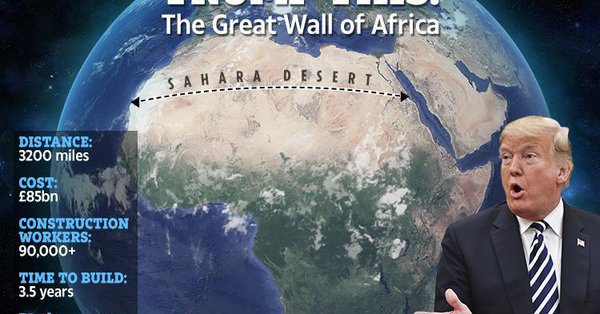
Today Spain has to tiny enclaves-- basically smuggling ports-- on the north coast of Morocco, Ceuta and Melilla. The Sahara Desert-- 3,600,000 square miles, about the size of the U.S.-- stretches from what was until 1975 the Spanish Sahara and Morocco through Mauritania, Mali, Algeria, Tunisia, Niger, Chad, Sudan, Libya, and Egypt.


I've been visiting Morocco since 1969 and had started wandering south of the Atlas Mountains in the 1990s. A couple of different times Roland and I drove as far south as Moroccans roads would go, once to Sidi Ifni on the coast and once to M'Hamid on the edge of the Sahara. We rented some camels and a guide and set off for the legendary Timbuktou. We never got close and turned around and headed back for M'Hamid. Years later we made it to Mali, went to Timbuktou and hiked north to trade with Tuaregs in the desert. Another time we took a Nile cruise, got off halfway, got on some camels and rode out into the Libyan Desert, an extension of the Sahara. In all the Sahara desert is about 3,000 miles from east to west, a thousand miles longer than the U.S. border with Mexico.

So why bring all this up? Trump told the Spanish government-- which hasn't been able to finish building a modern freeway from Madrid to Barajas Airport-- to build a wall across the Sahara to stem the migration of Africans across the Mediterranean Sea and on into Europe. The Guardian reported that Josep Borrell, Spain's foreign minister, revealed that during a visit to the White House by King Felipe and Queen Letizia in June, Señor Trumpanzee made his crackpot proposal. When someone mentioned that the Sahara is 3,000 miles long, Trump dismissed the objection by stating flatly that "The Sahara border can’t be bigger than our border with Mexico." Of course, there is no "Sahara border" and what does it have to do with Spain anyway? Spain has been overwhelmed by over 33,000 refugees getting across the Mediterranean to its shores this year, more than have come via Italy or Greece.

The migration issue has been used as a political weapon by rightwing parties who have been accusing Spain's socialist government-- and the EU-- of being too soft on immigration. None of those parties, however, have embraces Trump's insane scheme, which everyone in Europe is laughing about. Meanwhile, Trump was whining and pestering congressional Republicans about not including his own idiotic wall on the Mexican border in the budget.
Trump pressed fellow Republicans in Congress on Thursday to “get tough” and push to fund his proposed border wall in the current spending bill, raising the specter of a government shutdown when funding lapses later this month.

In a post on Twitter, Trump called the bill “ridiculous” for not including funds for a planned wall along the U.S. border with Mexico, and blamed Democrats for blocking it in the plan passed by the Republican-controlled Senate on Tuesday.

The Senate-approved massive spending package included a provision to fund the federal government through Dec. 7 in an effort to avoid a government shutdown when funding ends Sept. 30.

The move gives lawmakers more time to finalize plans for next year’s spending, and avoids potentially angering voters who could be left without services from federal agencies weeks before the Nov. 6 congressional elections.

Republicans, who are seeking to keep control of both chambers in the November election, narrowly control the Senate with 51 seats against 49 for Democrats, and need Democrats’ support to pass any spending legislation.

The spending legislation must pass the Republican-controlled U.S. House of Representatives before it can be signed into law by Trump.

Trump has previously threatened to let the government shut down on Oct. 1 if he does not get money for the border wall.

“I want to know, where is the money for Border Security and the WALL in this ridiculous Spending Bill, and where will it come from after the Midterms? Dems are obstructing Law Enforcement and Border Security. REPUBLICANS MUST FINALLY GET TOUGH!” Trump said on Twitter.

Trump is seeking to make good on a key campaign promise to build the wall, but had long pledged that Mexico-- not U.S. taxpayers-- would fund it, something Mexico has refused to do. He has now, instead, turned to Congress for support.

Labels: , , , ,

Tuesday, January 09, 2018

The Future Of An Independent Catalonia

>


-by Reese Erlich

During a trip to Barcelona, I sat down to read a local newspaper and, although I understand Spanish, I couldn’t fathom a word. The newspaper was in Catalan. Catalonia is part of Spain but has its own distinct language, territory, culture and history of resistance to oppression.

It was the Spring of 2003, and I was speaking on a panel with other US journalists opposed to the Iraq War. The conservative government in Madrid supported the US invasion; the progressive government in Catalonia did not. Hundreds of people came out to our events, which were sponsored by the Barcelona city government.

Catalonia, which is located in the northeast of Spain, now has an even bigger dispute with a conservative government in Madrid. In October, the Catalan parliament declared independence. Then the central authorities, led by the right-wing Popular Party (PP), seized control of the Catalan government and jailed some of its leaders. Other leaders fled to Belgium to avoid arrest.

The central government dissolved the Catalan parliament and called new legislative elections for Dec. 21. Both pro- and anti-independence parties are mobilizing for the elections, and the results may be close.

Opponents of independence argue that Catalan secession would splinter Spain, and worsen economic and political conditions in Catalonia. Richard Silberstein is an American attorney who has worked in Barcelona since 1992. His firm represents multinational corporations, among others. “The Catalán government,” he told me “was willing to ram secession down the throats of the majority of the Catalán population through undemocratic, illegal means.”

Independistas disagree, saying Catalans voted for independence in a fair election. They say they are fighting for democracy and social justice. “Today everything is in the hands of the rich people, the same as in [former dictator Francisco] Franco’s time,” Xavi Turull told me. “Now the people are taking power.” Turull is a well known Catalan musician and independence advocate.

Who’s right? Well, it’s complicated.

To the extent Americans know any Catalan history, it’s from George Orwell’s seminal book Homage to Catalonia. He described the 1930s civil war when communists, socialists, anarchists and progressives fought Spanish fascists, who were backed by Hitler and Mussolini.

From 1931-1939, when Spain elected a progressive government, Catalans enjoyed considerable autonomy with the right to speak their own language and control local government. When Franco seized power in 1939, he crushed Catalan autonomy along with democratic rights throughout Spain.

The struggle for Catalan rights continued throughout the Franco era and down to the present. In a 2006 referendum 78% of Catalans voted to establish a Statute of Autonomy, which gave Catalonia control over cultural matters, education, healthcare, and local government, among other matters.

But in 2010, as a result of a legal action spearheaded by the conservative PP, Spain’s Constitutional Court rewrote 14 provisions of the Statute and changed the interpretation of 27 others. Over a million Catalans demonstrated against the court decision.

“We got very angry,” Turull said. “Why belong to a country that overrules our laws.”

That’s not how the pro-unity forces see the issue. Silberstein said the independence movement propagates populist myths based on a false sense of Catalan victimhood. He noted that Catalonia is one of the richest regions of Spain.

The independence movement is “an insult to people who really are oppressed, who have dictatorships or face ethnic cleansing,” he said. “I would challenge anyone to show how they are oppressed.”

But many Catalans do, indeed, see themselves as oppressed. That was reflected on October 1 when the province held an independence referendum. The central government declared the voting illegal and sent security forces to arrest independence party leaders and block people from voting. Over 800 people were injured in clashes with police and Civil Guards.

Catalans voted 91% in favor of independence, although because of a boycott by unity supporters, only 42% of registered voters participated.

“Lots of people were horrified, including investors,” said Silberstein. “It opened the floodgates for companies moving out.” More than 2,400 Catalan based corporations have technically relocated by moving their headquarter addresses to Spanish territory.

The vote was a watershed moment for independistas, however. “We celebrated,” said Turull. “We were so happy. But we knew it wouldn’t last.”

Turull acknowledged that the independence movement is mostly made up of intellectuals, middle income people and youth. The working class, which includes a lot of people from other parts of Spain, has not favored independence. Turull said the independistas focus on the lack of democracy in Spain, not immediate economic issues.

Turull said Catalans are tired of having their progressive laws overruled by Madrid. “A small country is easier to have a socially progressive majority,” he said. “Look at Iceland where they jailed their bankers after the 2008 crash.”

The left in Spain falls into two broad camps regarding the Catalan issue. Several smaller Catalan parties, such as the Popular Unity Candidacy (CUP) and the Republican Left of Catalonia (ERC), support independence. CUP argues that a left wing coalition can actually win power in an independent Catalonia while it could not in Spain.

On a national level, the leftist Podemos and the Communist Party of the People’s of Spain support self determination, including the right of Catalans to hold free elections on independence. They urged a vote against independence, however, and encourage peaceful dialogue to expand Catalan autonomy within a federal Spanish state.

Turull, for example, would favor greater autonomy within Spain if Podemos headed the government in Madrid. “Podemos would have convinced Catalans to remain in Spain,” he said. “Podemos in power means we would have had a chance for real change.”

But the left does not hold power in Madrid. Major Spanish institutions are solidly allied against independence and even oppose a referendum. Spain’s King Felipe VI, the Constitutional Court, PP and the Socialist Party oppose Catalonia’s right to self determination.

I think these central government policies are a guarantee of continued turmoil. Catalonia has the right of self determination, which can be compared to the right of divorce. Knowing you can separate allows the marriage to stay together on the basis of equality. Recognizing the right of divorce doesn’t mean every couple should actually separate. That same principle applies to independence movements.

An independent Catalonia would face tremendous problems as it came under attack economically and militarily by the central government. Europe would also seek to isolate the new country, fearing the example it would set for separatists in Scotland, Belgium and elsewhere. And, it’s not at all clear that an independent Catalan government led by nationalists, not leftists, would improve the lives of ordinary people. However, that’s a decision for Catalans to decide.

The left and independence forces plan to make the Dec. 21 parliamentary elections into a new referendum on independence by scoring a victory for their parties. I think the independence forces will respect the vote if they lose. I seriously doubt that the central authorities will do the same.

“The only thing I want is a fair referendum,” said Turull. “If the majority votes for union, then we stay in Spain. But if we vote for independence, we will become independent. That’s democracy.”


Labels: , ,

Sunday, December 20, 2015

Spain's Voters Rejected Austerity Today

>


Spain elected a new Parliament today and turnout was high-- something like 73%. But because no party won a majority, it's not clear which parties will form the new government. It does look like the left will control more seats in the lower house of the Cortes. The election was fought over Austerity and the right-wing incumbent government of Mariano Rajoy and his party-- Partido Popular (PP)-- won 123 seats out of 350 (and 29% of the popular vote) but that's a third fewer seats than the 186 they won in 2011, and far from the 176 they need for a majority in the Congress of Deputies.


The second biggest vote-getters were the Socialists-- 22% of the popular vote and 90 seats, but it was the two new parties to whom so many voters turned and who now hold the key to who gets to form a government. Podemos is the non-traditional party of the "new" left and they got 21% of the vote, almost as much as the old line Socialists, and won 69 seats. The fourth ranking party was Ciudadanos, pro-business centrists who won 40 seats and 14% of the vote.

Every European prime minister who has imposed a harsh austerity agenda-- similar to the vision Paul Ryan laid out for America the other day-- has been defeated at the polls. If Rajoy manages to cobble together a coalition, he'd be the first who managed to win two terms. Cuidadanos is the obvious place for him to turn but that would still just be 163 seats, a dozen short.

Rajoy's party still controls the upper house so if the two left-wing parties got together with a couple of smaller regional left-wing parties they could form a government but all their initiatives could be stymied in the Senate. This is all made even more complicated by the fact that the two left wing parties hate each other and the two right-wing parties hate each other. It could take months to form a coalition no matter who heads it.

Today Paul Krugman noted in a NY Times column that austerity hasn't done anything to help Spain's economy or workers, just made the situation worse with unemployment around 22%. Like everyone else following the election returns there he has "no clue how this works out; apparently every possible structure for a new government is impossible, except in comparison with all the others. And meanwhile the euro effectively imposes a straitjacket whatever voters say. But anyway, those getting ready to toast the vindication of austerity after all might want to put the cava back in the fridge."

Labels: , ,

Tuesday, July 30, 2013

You Can Never Separate Conservatism And Corruption-- Not In The U.S., Not In Spain

>

This dirty little Spanish fascist didn't even make the trains run on time

There are certainly corrupt Democrats too-- plenty of them. But corruption isn't encouraged by their party's Greed and Selfishness Ayn Randian philosophical underpinnings. Conservatism is about what Depeche Mode called the grabbing hands that get all they can. In the U.S. not many people are paying attention to the colossal scandal being played out in Spain, where a far right ideological maniac, Mariano Rajoy, managed to get elected Prime Minister, completely tanked an already wobbly economy, while lining his and his own family's pockets. He's widely seen not just as the most right-wing leader in the European Union-- with ideas that look like they came directly from Paul Ryan's playbook-- but also the most corrupt.

The former treasurer of Rajoy's neo-fascist party, Luis Bárcenas, is singing like a canary from his prison cell-- and pointing right to Rajoy. He's already testified that Rajoy took big payouts-- even bigger than the ones Marco Rubio took in Florida-- from an illegal slush fund. And that's on top of a longstanding habit of taking bribes from companies that got special treatment from his office. Rajoy is the kickback king of Spain. And he refuses to resign, even though the Spanish people would like to see that happen-- and the sooner the better.
It's a story of six-figure kickbacks, briefcases of banknotes handed over in car parks and politicians pocketing cash-filled envelopes that allegedly goes right to the top of Spanish politics. And yet the man who has the most explaining to do, Spain's prime minister, Mariano Rajoy, refuses to discuss the allegations, which he dismisses as lies and insinuations.

Despite a series of well-documented allegations that Rajoy and senior party members received illegal cash payments over a period of years, Rajoy seems prepared to tough out growing calls for his resignation and the threat of a motion of censure, knowing that parliament and the nation are about to pack up for the summer.

However, the questions will still be waiting to be answered when Spain wakes up again in September. Alfredo Pérez Rubalcaba, the opposition Socialist leader, said on Sunday that "until he answers these questions, Rajoy cannot govern."

According to a survey published in the conservative El Mundo newspaper, 83% of Spaniards believe the allegations and think Rajoy should answer them. However, Rajoy's Partido Popular (PP) has an overall majority and even Rubalcaba admits the motion of censure is largely symbolic.

"Rajoy's strategy has always been the same. He never wants to explain or justify his policies," says Antonio Argandoña, a professor of business ethics at IESE Business School, speaking in a personal capacity. "It would be difficult to change now. I think he's counting on sticking it out until everyone comes back from holiday; there'll be something else on the front pages. He may even take big and unpopular policy decisions to show that he can stand the pressure and won't be blown off course."

The scandal broke in 2009 when the alleged slush fund was investigated. The anonymous donations came from large companies, mainly in the construction industry, in order to sweeten deals for public contracts. One leading politician was allegedly paid in order to secure the refuse collecting contract for the city of Toledo. The allegations against the PP's treasurer over a period of 20 years, Luis Bárcenas, first emerged in 2009 but the story took off at the beginning of this year when El País newspaper reproduced the accountant's handwritten records detailing illegal monthly cash payments to senior politicians, including €250,000 (£215,000) to Rajoy. According to Bárcenas, senior party figures were paid an "extra salary" ranging from €5,000 to €15,000 a month in cash. Under Spanish law, government ministers may not receive any other income apart from their government salary.

It is also alleged that the party's secretary general, María Dolores de Cospedal, took a €200,000 kickback that was handed to her in a briefcase in a car park. The ledgers also record slush fund payments of several thousand euros to the current health minister, Ana Mato, allegedly to cover the cost of her children's communion and birthday parties.

Bárcenas is in prison on remand, having been declared a flight risk after it was revealed that the former accountant has €47m in Swiss bank accounts.

The government at first dismissed the El País documents as mere photocopies and stood by Bárcenas, who initially denied authorship of the ledgers. This month El Mundo published the originals and last week Bárcenas admitted they were authentic. The PP has now turned its back on its former treasurer, calling him a criminal and a liar. However, last week El Mundo published text messages sent between Rajoy and Bárcenas that show that as late as March Rajoy was expressing his solidarity with Bárcenas and urging him to hold his nerve and keep quiet. Now the PP fears Bárcenas, angry that his party has abandoned him, may have more up his sleeve, including recorded conversations that will implicate Rajoy.

The Rajoy allegations are the latest in a succession of corruption cases, of which there are more than 200 currently before the courts. They involve politicians ranging from village mayors to former cabinet ministers, as well as leading business and cultural figures and even the royal family. Spanish people knew the system was bad, but few imagined it was this bad. Transparency International, which assesses countries on their perceived levels of corruption, ranks Spain 30th, just below Botswana and one place above Estonia, out of 176 countries surveyed.

If people are not taking to the streets in any numbers to demand Rajoy's resignation it is because they are disillusioned with the political system as a whole. Rubalcaba scores even lower in approval ratings than Rajoy, who himself barely makes it into double figures in most surveys. "The positive thing about a crisis is that it exposes the hidden reality and this is what's happened in Spain," says Francesc de Carreras, who teaches constitutional law at the Universitat Autònoma in Barcelona. "Economic growth was partly based on false foundations. The government has set off on a new economic path but what hasn't begun is the necessary reform of political parties."

At the moment Rajoy is looking no further than the end of the week. He has no immediate rivals either within his party or in opposition. However, the scandal has attracted international coverage and fear of political instability is damaging confidence in the country. "I think Rajoy will survive all this but Spain's image right now is very bad all over the world," says Argandoña.
I guess people forget that when they vote in fascism, corruption is part of the package. You'd think Spanish voters would have learned that one by now.

Labels: ,

Tuesday, June 11, 2013

The Banksters Know Just How To Fix Spain's Economy-- Suspend The Minium Wage... And Give The Banks To The Banksters

>

Luis Maria Linde, ECB President Mario Draghi and President of the Spanish Parliament Jesus Posada

Spain cooked its own goose last year when it elected a uber-corrupt right-wing government lead by crooked wing-nut Mariano Rajoy. The Bank of Spain's brand new crackpot right-wing Governor, Luis Maria Linde, is urging that government, enmeshed in endless corruption scandals and an Austerity economy cascading out of control, to sell two nationalized banks (Catalunya Banc and NCG Banco), quickly raise the retirement age and scrap the minimum wage. Nothing about executing banksters and confiscating all their stolen loot.

Linde calls his "reform" temporary but, of course, ending the minimum wage has been a goal of right-wingers since before it was ever adopted. He claims it will help end unemployment and give the labor market flexibility. Not a peep about the ultimate goal: slavery.
“It would be worth exploring the possibility of establishing new formulas that would allow, in special cases, temporary departures from the conditions laid down in collective bargaining agreements, or exceptional mechanisms to prevent the minimum wage from acting as a constraint on specific groups of workers with most difficulties in terms of employability,” he said in the report.

Spain’s minimum wage is currently set at €645 a month with a record 6.2 million people out of work. The national unemployment rate has hit 27.2% while Andalucia has been named as the second hardest place to find a job in Europe with 34.6% of the population without work.

Nationally, youth unemployment has reached a record 57.2%.

Linde also suggested making reforms to the state pension by increasing the retirement age and changing how pensions are calculated.

The report, which calls for the official age of retirement to increase from 65 to 67, recommends that calculating the amount a person receives should be based on contributions made in the last 25 years of working life rather than the last 15.

Labels: , , ,

Monday, April 29, 2013

Maybe It Really Isn't Fair To Always Just Blame The Germans

>


The conventional wisdom runs something like this: the northern European (Protestants) are industrious and thrifty and the southern Europeans + the Irish (Catholics) are slackers and high livers who squander their wealth on wine and women. Or... the Nazis won the long-war after all and are now cracking the whip to make everyone in Europe act like a good little Germans-- or starve. After all, who really gained the most from the creation of the Common Market and the Eurozone? German industry is well... very much über alles. Cyprus, Spain, Italy, Portugal, Greece... not so much. German banks have, conventional wisdom has it, underwritten their spendthrift ways-- or at least their ability to buy expensive German manufactured goods.

Over the weekend, Der Spiegel offered an alternative interpretation, basically, why don't the 1% in these crooked countries pay their fair share and stop avoiding taxes? Like here in the U.S. "interest rates are very low, because the ECB [like the Fed] is flooding the euro zone with money to stabilize the system. People who save their money are currently getting the short end of the stick, as they are stealthily being dispossessed. On the other hand, those with enough money to invest in stocks and real estate are benefiting from the boom triggered by the flood of funds coming from the ECB. In other words, taxpayers and ordinary savers are paying for the euro rescue efforts, which are primarily benefiting the rich in Europe's most troubled economies. Their assets remain largely untouched, while the assets of their rescuers are melting away... [T]he aid programs to date have only replaced old loans with new ones, so that the borrower countries will never shed their heavy debt burdens." Ordinary Germans are getting sick of being painted as the bad guys, although keep in mind when you read the numbers below that the averages reflect that many of these southern Europeans countries have much, much less economic equality than the northern countries do. The rich are really rich (and powerful) and the poor are getting poorer and the middle class in smaller, less powerful... and shrinking.
[T]here is also a second image of Germany, one that's based on numbers, not emotions. The figures were obtained by the European Central Bank (ECB) and released last week. This image depicts a country whose households own less on average than those that are asking for its money.

In this ranking of assets, Cyprus is in second place Europe-wide, while Germany ranks much lower, even lower than two other crisis-ridden countries, Spain and Italy.

And this Cyprus, with its affluent households, is now supposed to receive €10 billion ($13.1 billion) from the European Stability Mechanism (ESM), the Euro Group's permanent bailout fund, and the International Monetary Fund (IMF), at least according to the decisions reached after dramatic negotiations, which the German parliament, the Bundestag, is expected to approve this week. But a new question is arising: Why exactly are we doing this? Isn't Cyprus rich enough to help itself?

In light of the new ECB study, a new discussion of the Euro Group's bailout strategy is indeed necessary. So far taxpayers have born the risks of this strategy, by guaranteeing all loans the ESM has paid out to needy countries. Greece, Ireland, Portugal and Spain are already part of this group, and now Cyprus has been added to the mix.

...It would be more sensible-- and fairer-- for the crisis-ridden countries to exercise their own power to reduce their debts, namely by reaching for the assets of their citizens more than they have so far. As the most recent ECB study shows, there is certainly enough money available to do this.

The numbers are potentially explosive. For instance, the average German household has assets of €195,000, almost €100,000 less than the average Spanish household. The average net wealth of households in Cyprus is €671,000, more than three times the German value. Italian and French households are also significantly wealthier than their German counterparts.

The differences are even more pronounced when it comes to median net wealth, which is the level that the lower half of the population just reaches and the upper half exceeds. On this measure, Germany, at €51,400, is actually in last place in the euro zone. The corresponding value for Cyprus is five times as high. Median net wealth is even higher in crisis-rattled Portugal than in Germany.

The conclusions of the ECB study had hardly been published before various efforts to relativize and whitewash the figures began. The results were apparently embarrassing to the ECB itself, but also to the German government.

...[T]he differences in wealth were mainly attributable to property ownership habits in the various countries. Whereas just over 80 percent of households own their own homes in Spain (83 percent) and Slovenia (81.6), and even 90 percent in Slovakia, this is true of only 44 percent of Germans.

...Nevertheless, some attempts to downplay differences in wealth within the euro zone are reminiscent of card tricks. One argument holds that the Germans are portrayed as being too poor, because their figures do not account for their claims against the government pension system. In other countries, people provide for their retirement by buying property, which Germans don't have to do because they have government pension insurance.

But this is a spurious argument. Claims against a government pension fund do not constitute the asset accumulation in the classic sense, but rather a promise that could quite possibly not be kept. The current working generation pays for the pensions of retirees, which is precisely why pension claims cannot be reflected in the wealth calculation. They are offset by the younger generation's obligation, which is essentially a liability to vouch for the claims.

There are in fact understandable reasons why the Germans even lag behind such crisis-ridden countries as Greece, Cyprus and France when it comes to asset accumulation. In the last 100 years, Germans have been the victims of several events with the traits of expropriation. The hyperinflation of the 1920s, a consequence of World War I, destroyed the wealth of a middle class that had seen its fortunes consistently improve during the German Empire.

The monetary reform of 1948 eliminated the Reichsmark, which had become worthless after Germany's defeat in World War II, and wiped out the savings of an entire nation. In East Germany, 40 years of socialism destroyed the last vestiges of wealth and property. In the less than 23 years since German reunification, residents of the former East German states have not yet managed to attain the same levels of affluence as their fellow Germans in the west.

Most countries in the euro zone were spared such disasters. Either they emerged victorious from the two world wars, like France, or they remained neutral, like Spain. Either way, their citizens were able to build wealth over generations.

...The numbers, Italy's leading business newspaper Il Sole 24 Ore wrote, seem to suggest that "la Bundesbank" were trying to say to us: "You're the rich ones, and if you have problems, kindly solve them on your own."

Italy isn't swimming "in money, but in poverty," the paper argued, noting that 16.5 percent of Italians are considered poor while only 13.4 percent of Germans fall below the poverty line. The Italian central bank prepared its own report, which emphasized that Italy has more poverty and a lower average income, but also more wealth and less private debt.

It isn't this supposed wealth but growing poverty that has Italians upset these days. And it isn't the lives of the rich that shape the headlines, but the fates of people like Anna Maria Sopranzi, 68, and Romeo Dionisi, 62. Dionisi was a self-employed craftsman from Civitanova Marche in central Italy.

Sopranzi and Dionisi hung themselves from a heating pipe in their basement. A farewell note was stuck to the windshield of their neighbor's car. "Forgive us," they had written. Deeply in debt and impoverished, they had had no income for months but plenty of delinquent customers. Right up until the end, they hadn't shown any signs of despair or asked for help, neither from relatives nor the church.

They died of shame, and of the burden of the demands imposed by Equitalia, a government-owned company that collects taxes for the tax authorities.

People commit suicide every day in Italy. This was also the case before the crisis, but the deaths of Sopranzi and Dionisi were suicides committed out of despair, a warning sign that shook the entire country. The newly elected president of the parliament, Laura Boldrini, a former spokeswoman for the United Nations High Commissioner for Refugees, attended the funeral. "This is government murder," people said in the church. "To you we are just numbers." The archbishop appealed to politicians, saying: "It must become clear to you that we can no longer manage."

The crisis has plunged many people into poverty in Southern Europe, people who no longer know how they will make ends meet. Unemployment has risen to record level, and there are no new jobs in sight.

In Spain, a third of residents have taken out mortgages on their homes. With more than 4 million people losing their jobs in the years of crisis since 2007, many have been unable to continue servicing their loans with banks and savings banks.

There were 30,000 foreclosures last year alone, and most of them were primary residences. In most cases, the downgraded price paid at auction isn't sufficient to cover the entire outstanding debt, so that the mortgage holder is forced to continue paying high penalty interest and pay off the remaining debt in installments.

...Southern Europeans in a number of countries have traditionally paid no taxes on a good share of their income, which is one reason households with far smaller incomes have been able to accumulate substantially larger assets than German households.

Estimates by Friedrich Schneider, an economist in the Austrian city of Linz, reveal how horrifying the scope of the shadow economy is in the crisis-ridden countries of the euro zone. Among all the countries in the Organization for Economic Cooperation and Development (OECD), Greece, Italy, Portugal and Spain occupy the first four positions in the applicable negative ranking.

On the Iberian Peninsula and in Italy, the hidden economy makes up 20 percent of GDP, compared with almost 25 percent in Greece. By comparison, it only constitutes about 13 percent in Germany, and significantly less than 10 percent in other euro countries, like Austria and the Netherlands.

The greater the importance of moonlighting, the lower the tax revenues. The shadow economy deprives Spain, Italy and other countries of dozens of billions of euros in tax revenue each year, and has been doing so for decades.

Schneider's figures also show that in Greece, Spain and Portugal, the shadow economy plays an even greater role today than it did in the late 1980s. The scope of the shadow economy has declined in Italy, but only slightly. In other words, if attitudes toward taxation in Southern Europe were just as good as they are in the north, the debt-ridden countries would have solved their budget problems long ago.

All problems aside, Lars Feld, a member of the German Council of Economic Experts, also sees the ECB figures as good news. "They show that Germany, with its tough conditions for the euro bailout funds, is in the right."

After all, the debt-ridden countries are only eligible for the billions from bailout funds if they satisfy certain conditions in return. In addition to spending cuts and tax increases, they generally include the obligation to actually collect taxes. If tax laws not only appear on paper, but are also enforced, then "even Greece will be able to set aside doubts concerning the sustainability of its debts," says Feld.

Despite the drawbacks and qualifications of the ECB's wealth figures, one realization remains: The countries of the south are far more prosperous than previously supposed.

For these countries' governments and the politicians in the partner countries dealing with bailouts, this can only lead to one conclusion: There is still plenty to be had. Cash-strapped countries that have already taken advantage of aid from the bailout funds should be required to increase their own contribution even further.

In fact, the ailing economies have already begun increasing taxes on their citizens, in some cases substantially. In this context, many governments are also taking aim at assets.

Last year, for example, Spain reintroduced a wealth tax that had been abolished five years earlier. It doesn't generate much in revenues, in fact, less than €1 billion. This is because of generous exemptions that can reach €1 million on properties used as primary residences.

The Socialist government in France introduced a special tax on assets last year, which generated €2.3 billion in revenues. The Greek government plans to tax the rich to an even greater extent. After the government drastically increased revenue goals for the wealth tax last year, it now expects revenues to increase from €1.2 billion to €2.7 billion.

Economist Labrianidis also favors requiring the wealthy to play a stronger role in repaying the government debt. "The biggest problem is tax evasion and tax flight. And I'm not talking about the kiosk owner who doesn't give you a receipt for a pack of cigarettes," says the professor. He is referring to "the very rich," and he is calling for political will and a "wealth registry." Still, Labrianidis sees "no steps being taken in this direction. There is no political will to chase capital."

The average wealth of Greek households may seem high, but the country ranks near the bottom in Europe in terms of tax revenues. In 2011, tax revenues, including social security contributions, amounted to 35 percent of GDP, compared with an EU average of 40 percent.

Greek authorities are also making very little headway in their fight against tax evasion. Lists exist of delinquent doctors, wealthy people unwilling to pay their taxes and tax fugitives in Switzerland. There are also lists of undeclared swimming pools (which are subject to a tax) and proud owners of luxury yachts whose incomes are barely large enough to pay taxes. But the tax collectors continue to come up short. Last year, tax authorities were expected to drum up €2 billion in back taxes to help pay off the country's debt, at least under the conditions imposed by the troika consisting of the International Monetary Fund (IMF), the ECB and the European Commission. The actual figure was barely €1.1 billion.

In all southern European countries, the rich show little inclination to help pay for the consequences of the crisis. One exception is Diego Della Valle, 59, the inventor of the driving shoe and the president and CEO of Italian leather goods company Tod's. He proposes that companies like his, which are doing well despite the crisis, invest 1 percent of their profits to help the weakest members of society: the local elderly and unemployed youth.

In the case of Tod's, that would amount to €1.5 million, and if other profitable, publicly traded companies follow suit, he hopes to raise €150 million. Della Valle, who plans to launch his voluntary welfare contribution campaign this week, notes that this is something he can afford, and that for him it is "no great sacrifice, nor is it populism."


As nice as that may sound, keeping the government's hands away from private assets is a very popular pastime in Italy. It's an approach embodied by Silvio Berlusconi. More than anyone else, the self-made billionaire and longstanding former prime minister personifies the notion of circumventing the law and living according to the motto: Taking is more sacred than giving.

Although Italy has a high income tax rate of up to 43 percent, the government loses an estimated €120 billion a year to tax evasion and tax flight. There have long been discussions of tax increases and capital levies, but as is so often the case, little has ever been implemented.

Some ideas that have been discussed are the reintroduction of the land tax, an increase in the value-added tax and a wealth tax. The IMU, a tax on real estate ownership, including primary residences, was finally introduced under former Prime Minister Mario Monti. His predecessor Berlusconi had pledged, if re-elected, to reimburse around €4 billion in money that had been paid under the IMU tax. There was also a levy on yachts 10 meters or longer.

...Spain is a little further along in this respect. The conservative government of Prime Minister Mariano Rajoy, which came into office in December 2011, felt compelled to increase the maximum income tax rate from 45 to 52 percent. Rajoy also limited the possibility of reducing corporate income tax with write-offs. Before, on average, companies paid a de facto rate of only 10 percent to the government, says Josep Oliver i Alonso, a professor of applied economics at the Autonomous University of Barcelona

. Rajoy also reinstated the inheritance tax abolished by the Socialists, which will now apply to medium-sized and large estates. But because the crisis-torn population is already suffering under the increased value-added tax of 21 percent, as well as prescription fees and increases in taxes on alcohol and tobacco, Spaniards are growing less tolerant of the rich who try to avoid paying taxes on their money. New scandals are uncovered almost daily.

A former treasurer with the governing party, the conservative People's Party, hid €38 million in Swiss bank accounts, while a son of the former head of the Catalan government reportedly moved €32 million to tax havens. Even the son-in-law of the Spanish king allegedly siphoned ill-gotten public funds abroad.

...Peter Bofinger, a member of the German Council of Economic Experts, which advises the federal government, also believes that the crisis-ridden countries should ask the wealthy to make a substantially larger contribution. To clean up government finances, he is even calling for a capital levy. "The rich would then, for example, be required to relinquish a portion of their assets within 10 years."

A model of this sort of capital levy is the so-called Equalization of Burdens program implemented in Germany after World War II. At the time, the wealthy were compelled to pay a special tax for a period of 30 years.

Bofinger is convinced that a wealth tax would be far more appropriate than imposing a levy on savers, as was recently the case in Cyprus. "Resourceful wealthy people from Southern Europe will simply move their money to banks in Northern Europe, thereby evading the levy."

For Brussels economist Wolff, the ECB statistics provide more than just an answer to the question of who should pay the bill for the crisis in Southern Europe. "It becomes clear, once again, how unfair wealth is distributed, in Germany and elsewhere."

What he means is that wealthy Germans should also be expected to cover the costs of the crisis. "The effort to rescue the euro would be completely absurd if, in the end, the relatively poor average German household helped the super-rich in Greece avoid paying higher taxes."
Sounds like Paul Ryan and Silvio Berlusconi have substituted the same childish Ayn Rand books for the Bible on their bedside tables. Or are greed and selfishness just part of the inherent nature of conservatism?

Labels: , , , , , , , ,