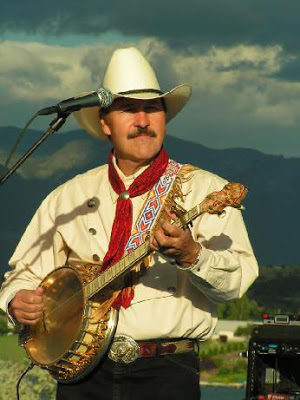
Thursday, May 25, 2017

Election Day-- Today... In Montana

>


Today's the day. A quarter million people have already voted in Montana but whatever analysis of that available shows that neither side has any advantage so far in the early voting. [For comparison's sake-- even if it's an apples-to-oranges comparison-- the June 6 special election in CA-34 has had 14,820 early votes and the expected total for the entire race is between 40 and 45,000.] This is going to be close and it's totally about getting out the vote. So, if you're in Montana, or you know anyone in Montana... your country needs you today.

Rob Quist has raised over $5 million from over 200,000 donors. Gianforte raised around the same amount but from only a tenth as many people-- and includes $1.5 million from himself. In the last week, spending has gone through the roof as internal GOP polls have shown Quist having caught up with Gianforte. Helena's Independent Record reported that "Republicans are significantly outspending Democrats," meaning outside groups... GOP outside groups have ensured that Republicans have a spending advantage, though, airing more than $7 million worth of TV ads, versus about $3 million from Democrats. House Majority PAC, Democrats’ main House outside group, on Tuesday added a last-minute $125,000 TV ad buy to the race, on top of $25,000 announced last week." That's Pelosi, who's decided to spend big in GA-06 and just pretend to be helping in Montana to pacify Berniecrats, many of whom are too new to politics to understand the difference between Pelosi spending $150,000 and Ryan spending $3 million.
In the past 20 days, outside groups have spent $228,061 in support of Quist. Groups supporting Gianforte have spent $356,476. Much of that money is being spent on getting out the vote. The Progressive Turnout Project, for example, has spent $14,825 on employees to get out the vote for Quist. The Republican National Committee spent $16,939 on Gianforte phone calls May 20-21.

Turnout in rural Montana counties, where Republicans do well, has been strong with more than 70 percent of absentee ballots returned by rural voters, according to Montana’s secretary of state. Turnout through Monday had absentee ballots from rural counties comprising 30 percent of the state’s absentee vote. That’s better than the normal absentee turnout, which is 25 percent, said Craig Wilson, Montana State University Billings political science professor emeritus.

Combined, the rural county absentee vote is higher than the turnout in Missoula and Gallatin counties, Montana’s second and third largest counties for absentee ballots. Anchored by the state’s two largest universities, those are counties where Democrats need higher turnout, Wilson said.

Money spent against the candidates is more lopsided. Republican groups have spent almost four times as much targeting their opponent as Democrats have. That's $1.93 million against Quist and $442,450 against Gianforte in the past 20 days.

...The campaign committees of Quist and Gianforte have raised at least $10 million combined, while outside groups have spent more than $7.1 million thus far.

The Quist campaign announced Tuesday that it had topped $6 million in contributions, noting that it had generated about $1 million in small donations over the past five days.

That amount could not be immediately verified because it had not yet been reported to the Federal Elections Commission.

Gianforte's campaign said it has raised about $4.6 million, including a last-minute loan of $500,000 from Gianforte. He had previously lent his campaign $1 million. The combined total in direct contributions is a record haul for a Montana congressional race.

...The money flowing into the campaign from independent outside groups, which can spend unlimited amounts of money, has mostly benefited Gianforte. Groups supporting the Bozeman entrepreneur have spent more than $6.3 million, according to FEC records, including $2.4 million from the Congressional Leadership Fund.

The fund has also spent heavily to influence another special congressional election in Georgia, as have the Republican Party committees.

The Republican National Committee and the National Republican Congressional Committee have combined for more than $3.1 million.

While Quist has gotten most of his money from individual donors, he has also benefited from independent campaign committees, such as Planned Parenthood and the Democratic Congressional Campaign Committee, which was responsible for about half of the roughly $800,000 in spending on Quist's behalf.
Today, the question is whether or not the surge in grassroots Quist contributions will equate to a surge in grassroots Quist voters. Does the national enthusiasm translate to Montana voter enthusiasm? Are Trump and Ryan as toxic for Republicans in Montana as they are in other places? After the two big wins for Democrats in very Republican legislative districts in New Hampshire and Long Island Tuesday, Republicans are freaking out today about Montana. Gianforte complained to his supporters that "This race is closer than it should be." Elena Schneider, writing for Politico yesterday reported "recurring nightmare of a pattern for Republicans around the country, as traditional GOP strongholds prove more difficult and expensive for the party to hold than it ever anticipated when President Donald Trump plucked House members like Ryan Zinke, the former Montana Republican now running the Interior Department, for his Cabinet. Gianforte is still favored to keep the seat red, but a state Trump carried by 20 percentage points last year became a battleground in the past few months."
Republicans have called on Vice President Mike Pence and Donald Trump Jr. to calm their nerves about turnout and prevent Democrats from having the only energized voting bloc in the special election. Both have rallied voters with Gianforte, and Pence recorded a get-out-the-vote robocall. Gianforte, who said little about Donald Trump when Gianforte ran for governor and lost in 2016, has cast himself as a willing and eager partner of the president this time around.

On Tuesday, surrounded by Trump stickers-- and some Trump hat-wearing supporters-- Gianforte said he was eager "to work with Donald Trump to drain the swamp and make America great again," invoking two of the president's campaign slogans. Pence's robocall may give another boost to Republican turnout efforts.

But the environment has changed since Trump’s presidential win last fall. One senior Republican strategist warned that, based on the party’s performance in special elections so far, if Republicans “cannot come up with better candidates and better campaigns, this cycle is going to be even worse than anybody ever thought it could be.”

“The fact that we're talking about Montana-- a super red seat-- is amazing,” said John Lapp, who led the Democratic Congressional Campaign Committee during the 2006 cycle. “It's also amazing how much money Republicans have to pour into these seats to defend them. It's still a steep climb in Montana, but we know that the reaction there means that there's a tremendous amount of Democratic energy across the country, a tremendous amount of fundraising that will then feed into races that are much fairer fights."

Democrats hope the passage of House Republicans’ health care bill just three weeks before the election will put the wind at Quist’s back. It has been the subject of Quist’s closing TV ads, and he has called the plan “devastating” to Montana.
It's been called devastating for Montana because it is-- more so than almost any state that voted for Trump. Because the state expanded Medicaid, 9.3% of Montanans stand to lose their health insurance if TrumpCare becomes law-- 96,317 people, a very significantly higher percentage than Texas' 3.0%, Georgia's 3.4%, Kansas' 2.3%, Alabama's 2.6%, Idaho's 4.4%, Tennessee's 2.4%, Oklahoma's 2.5% or Mississippi's 2.2%. That should help boost turnout today. As will the fact that even "Republicans acknowledge that Gianforte has flaws Democrats exploited mercilessly in last year’s gubernatorial race, likely cementing negative feelings about him from some voters. Gianforte is dogged by reports that he sued Montana to block access to a stream in front of his ranch, kicking up a public lands dispute that hits home with Montana voters and has “probably followed him into this House race,” said Jeff Essman, the state’s GOP party chairman."


Last night, over-entitled, right-wing crackpot Greg Gianforte went completely insane and beat up a reporter. No wonder both Montana and national Republicans think Gianforte is the worst possible candidate they could have been saddled with today. Listen below. Despite the witnesses and the audio, Gianforte made up a whole lie about how the reporter attacked him because... "liberal journalist." The Fox News reporters in the room had something to say about that.
The race to fill Montana's sole seat in the U.S. House of Representatives took a violent turn Wednesday, and a crew from the Fox News Channel, including myself, witnessed it firsthand.

...Gianforte grabbed Jacobs by the neck with both hands and slammed him into the ground behind him. Faith, Keith and I watched in disbelief as Gianforte then began punching the man, as he moved on top the reporter and began yelling something to the effect of "I'm sick and tired of this!"

...To be clear, at no point did any of us who witnessed this assault see Jacobs show any form of physical aggression toward Gianforte, who left the area after giving statements to local sheriff's deputies.

As for myself and my crew, we are cooperating with local authorities. It is not clear if charges will be filed against Gianforte at this time.


Overnight, Montana's three most influential newspapers-- the Billings Gazette, the Missoulian and the Helena Independent Record-- withdrew their endorsements of Gianforte... and he was charged with misdemeanor assault. Voters are waking up to that today! And this:


UPDATE: Oy!

Montana has same day voter registration. People waking up are seeing some incredible news about the Republican dirt-bag-- who has strong ties to neo-Nazi organizations-- who they are being asked to vote for today. From last night's Missoulian:
Greg Gianforte should not represent Montana in the U.S. House of Representatives.

The Republican candidate for Congress not only lost the endorsement of this newspaper Wednesday night when, according to witnesses, he put his hands around the throat of a reporter asking him about his health care stance, threw him to the ground and punched him-- he should lose the confidence of all Montanans.

...The Gallatin County sheriff’s office found probable cause to cite Gianforte for misdemeanor assault Wednesday night. We will leave it to the legal system to determine his guilt or innocence.

But there is no doubt that Gianforte committed an act of terrible judgment that, if it doesn’t land him in jail, also shouldn’t land him in the U.S. House of Representatives.

He showed Wednesday night that he lacks the experience, brains and abilities to effectively represent Montana in any elected office.

And in case critics say this is just fake news from the liberal media, let us repeat one fact again: The eyewitness account of Gianforte’s actions came from a Fox News reporter.

We hope our fellow Montanans who haven’t already cast their ballots will say loud and clear at the polls Thursday that Greg Gianforte is not the man we want representing us in Washington. He does not represent Montana values and he should not represent us in Congress.

We’re putting our trust in your good sense.

The whole country is.

Labels: , , , ,

Wednesday, May 24, 2017

Will Montana And Georgia Special Election Voters Help Stop Trump? Lookin' Good

>


A new poll of GA-06 voters is a dire warning to congressional Republicans. Paul Ryan's SuperPAC has put more money into the campaign on behalf of Karen Handel than any outside group has ever spent on any congressional race in history. And those millions and millions of dollars appear to have been wasted as Jon Ossoff has pulled ahead:
Jon Ossoff- 51%
Karen Handel- 44%
At the same time, tomorrow's at-large race in Montana is looking so close that no one can call it-- again, after massive expenditure from Ryan and the GOP on behalf of billionaire self-funder Greg Gianforte.

In his NY Times column yesterday, David Leonhardt emphasized that "while the rest of the country has been transfixed by Trumpian chaos, members of the Senate have spent the last two weeks talking about taking health insurance from millions of Americans... The effort to take health insurance from the middle class and poor and funnel the savings into tax cuts for the rich is a little like mold. It grows best in the dark. That’s why Republican leaders in the House handled their bill as they did. They did not hold a single hearing, because they knew that attention would have been devastating."

But the Republican posture towards healthcare-- which has largely driven the polling numbers up for Ossoff in Georgia and for Quist in Montana-- will now be reinforced by the Republican posture towards Social Security. As the NY Times explained, the $4.1 trillion budget Señor Trumpanzee proposed "cuts deeply into programs for the poor, from health care and food stamps to student loans and disability payments, laying out an austere vision for reordering the nation’s priorities." The Republicans are trying to redefine "Social Security" to leave out of the definition the parts they want to cut-- aid to people with disabilities.

Yesterday, Chuck Todd hammered Trump on the broken promise to protect Social Security, Medicaid and Medicare from his fellow Republicans whose grasp on power makes them think they have a mandate to destroy all three. Mantra-like, Trump always claimed during his campaign that he wouldn't allow that to happen. "Save Medicare, Medicaid and Social Security without cuts. Have to do it," he said. "[T]wo subjects-- seizing on immigration/race and protecting entitlements-- eventually made him the first Republican since 1988 to carry Pennsylvania and Michigan, and the first since 1984 to win Wisconsin. So it's striking that President Trump's first budget cuts Medicaid and a part of Social Security, arguably hurting many of the voters who helped him win in 2016." Will Montana and Georgia special election voters take it out on Gianforte and Handel? They should-- and more important, midterm voters should decimate the GOP ranks in Congress next year. The Regime "proposes reducing spending on Medicaid programs by more than $600 billion over the next decade, a massive cut that appears to go on top of $839 billion in Medicaid cuts included in the House bill... [Señor Trumpanzee] opposed cuts to Social Security during the campaign, but the new budget would make cuts to Social Security Disability Insurance, which covered over 10 million recipients as of December 2015. It would save about $72 billion through changes to disability programs over the next ten years. Asked about the discrepancy, Mulvaney suggested that the president intended his promises to apply only to retirement benefits. 'If you ask 990 people out of a thousand, they'd tell you Social Security disability is not part of Social Security,' Mulvaney said."
[W]hat's extraordinary about this Trump budget-- released just six months after his presidential victory-- is how it undercuts a central campaign promise... [I]t more reflects Mulvaney's values as a former House Freedom Caucus member than what Trump campaigned on in 2016. "This is, I think, the first time in a long time the administration has written a budget through the eyes of the people paying the taxes," Mulvaney told reporters yesterday, per Sarlin. That sounds a lot more like Ayn Rand and the Tea Party than Trump and Steve Bannon, no?

...The National Republican Congressional Committee, the Republican National Committee and the Paul Ryan-affiliated super PAC Congressional Leadership Fund have already spent more than $15.5 million combined on a trio of unexpectedly competitive races in deep red congressional districts, according to independent expenditure and disbursement reports filed with the Federal Election Commission. More: "[N]ational Democratic groups have spent only a fraction of what their Republican counterparts have pumped into competitive races so far. The Democratic Congressional Campaign Committee, the DNC and the House Majority PAC have spent about $4.2 million combined on the three special elections in Georgia, Kansas and Montana, according to FEC reports and statements from the organizations."
And who gets hit the hardest by this budget? Trump's own base. According to Politico, "Rather than breaking with Washington precedent, Trump’s spending blueprint follows established conservative orthodoxy, cutting taxes on the wealthy, boosting defense spending and taking a hatchet to programs for the poor and disabled-- potentially hurting many of the rural and low-income Americans that voted him into office."
The budget proposal underscores the wide gulf between campaigning and governing, even for a president who promised to rewrite the presidential rule book.

The president’s budget plan calls for more than $1 trillion in cuts to a wide range of social programs with millions of beneficiaries, from farm subsidies to federal student aid. That includes a $600 billion cut to Medicaid over 10 years, despite Trump’s repeated promises on the campaign trail not to cut the program. The budget also takes an ax to the federal food stamp program and Social Security Disability Insurance.

Trump also proposes some of the deepest cuts to agriculture subsidies since Ronald Reagan, squeezing out nearly $50 billion over 10 years.

Trump’s budget would drastically cut domestic programs controlled by Congress, slashing $1.7 trillion over 10 years. At the end of the decade, the U.S. would spend nearly twice as much on defense as on other domestic programs. Domestic discretionary spending would be capped at $429 billion per year, below 2004 levels, while military spending soars to $722 billion.

...Trump’s budget would tighten the belt on programs for low-income families ranging from cash assistance to the child tax credit. Nearly $200 billion in cuts will come directly from the federal food stamp program, which helps feed 44 million people each year.

Trump would also slash $72 billion by tightening the rules for programs for people with disabilities-- programs that Trump’s advisers have described as riddled with fraud and abuse. A federal watchdog, however, found last year that 17 anti-fraud programs already exist.


Pramila Jayapal (D-WA), Vice Ranking member of the House Budget Committee, responded to the release of Trump's budget in way that doesn't augur well for House Republicans headed into the 2018 midterms. "There is only one way to describe the Trump budget-- cruel. It pulls the rug out from under people who are already struggling to make ends meet. Simply put this is a $54 billion assault on Americans living on the brink. This budget proposal continues the trend of transferring taxpayer dollars into the pockets of the wealthy at the expense of our nation’s working families. It attacks women’s health care by defunding Planned Parenthood, destroys Medicaid, cuts funding for the Children’s Health Insurance Program and guts nutrition assistance programs that help families put food on their tables. This budget continues down the path of tearing apart families by proposing funding for a billion dollar border wall, and it neglects the health and safety of everyone by making a 31 percent cut to EPA funds that keep our air and water clean. A budget is a statement of our values. My values and the values of the people of Washington’s 7th District could not be more different from those expressed in this proposal. I believe our budget should invest in jobs and opportunities for working families who are desperately in need of support. This budget, in total contradiction to the populist platform that the President campaigned on, does exactly the opposite. It guts investments in working people to give tax cuts to the wealthy. That's just wrong. As a member of the House Budget Committee, I am determined to fight against this budget and protect our communities from harm."

Labels: , , , , , , , , , ,

Monday, May 22, 2017

Democratic Candidates Need To Talk More About Paul Ryan's And The GOP's Dystopian Vision Than About Trump's Insanity

>


Yesterday, writing for The Hill, Christina Marcos reported that Republican members of Congress are now afraid angry constituents will kill them or do them physical harm.
A growing number of House Republicans are facing physical threats from angry constituents in their districts, leading many to fear for their safety.

In the last few weeks alone, the FBI arrested a man threatening Rep. Martha McSally's (R-AZ) life, a woman pursued Rep. David Kustoff (R-TN) in her car, and Rep. Tom Garrett (R-VA) heightened security at a town hall event in response to death threats.

Other Republicans still holding town halls say they haven't felt physically threatened by protesters, but they worry about the depth of anger from some constituents in the polarized environment and what it means for political civility... [A]n increasing number of lawmakers’ encounters with constituents, even in deep-red districts, have gotten ugly.
Poor snowflakes... maybe they should contemplate why their constituents are so angry-- starting with the ugliness behind a Republican agenda that includes gutting the social safety net, kicking their families off health care and redistributing the nation's wealth further in the direction of the 1%. Georgia Republican Party activist Erick Erickson, has been contemplating this, as he mentioned yesterday in a Washington Post column and has come to the conclusion that "Voters are increasingly dissatisfied with a Republican Party unable to govern. And congressional Republicans increasingly find themselves in an impossible position: If they support the president, many Americans will believe they are neglecting their duty to hold him accountable. But if they do their duty, Trump’s core supporters will attack them as betrayers-- and then run primary candidates against them."

Erickson is wrong if he thinks this is all about Trump though, rather than about the Republican agenda. Trump may be a clown and a fool, but Ryan and Ryan's enablers are the real heart of darkness for the Republican Party. Ericsson continued:
It is becoming ever clearer that Trump has the potential to cause more damage to the Republican Party than Obama did the Democrats. While there is no doubt the Democrats saw serious electoral setbacks under Obama, there remains a key difference here: Obama is deeply respected and liked by a majority of voters. Trump is increasingly disliked, and the Republicans who enable him are increasingly distrusted.

With a horde of vocal Trump supporters cheering on every inane statement, delusion, lie and bad act, the majority of the American people can be forgiven for thinking the GOP as a whole has lost its mind. The Republicans may soon lose a generation of voters through a combination of the sheer incompetence of Trump and a party rank and file with no ability to control its leader.
It isn't Ericsson's job to help Democrats figure out how to navigate this-- and the lack of any kind of vision inside the DCCC will insure that nothing meaningful or effective welcome from that quarter but, as Jonathan Martin pointed out over the weekend in a NY Times piece, local Democrats outside of the sway of the DCCC are looking for a way to reach voters over and above the DCCC-pushed themes of "Trump/Bad" and "Putin/Putin/Putin."


Katie Hill, the local, progressive, non-DCCC candidate running against Republican backbencher Steve Knight in the Simi Valley, Santa Clarita, Antelope Valley district of Southern California dealt with the question in a guest post here at DWT Saturday. "Trump," she wrote, "is not the problem. He’s the symptom of a damaged political consciousness in America" and asked-- and took a stab at answering-- the key question: "what is our vision? We have a great, grassroots resistance that has emerged, but right now, all we’re doing is reacting to Trump’s every move. He is setting the agenda, maintaining the initiative, and we’re screaming on the sidelines. It’s understandable. Trump is a disaster. He’s doing things that would have been unimaginable in any other time. He is putting our country at risk, going against our every value with every unhinged twitter outburst. We, of course, must resist. But that’s not enough. We must be more than the anti-Trump party or we fail." Martin looked towards the special election coming up Thursday in Montana.
As the nation’s capital was rocked by revelation after revelation from the investigation into any connection between the Trump campaign and Russia, Democrats in Washington were focused on what they saw as nothing less than saving the republic.

More than 1,800 miles away, Rob Quist, a Democratic candidate in one of the House special elections that will gauge the mood of the country this spring, was concentrating on high insurance premiums, not high crimes.

Mr. Quist, who is running to fill the seat vacated by the Interior Secretary Ryan Zinke, was in Wolf Point, Mont., assailing his Republican rival, Greg Gianforte, over the repeal of the Affordable Care Act. The appearance was part of a weeklong “Hands Off Our Health Care” tour that Democrats hope will hand them an upset on May 25.

“Russia is important to the American public, but health care hits home directly in people’s lives,” said Nancy Keenan, executive director of the Montana Democratic Party. “Regular Montanans are talking about the heck of a spring snowstorm we just had, this health care bill, the stuff that’s hitting them every single day. They know something is amiss in Washington, but in their everyday lives it doesn’t affect them right now.”

The contrast between what Democrats in Washington are consumed by and what their candidates are running on illustrates an emerging challenge for the party as the president becomes ever more engulfed in controversy: For all the misfortunes facing their foe in the White House, Democrats have yet to devise a coherent message on the policies that President Trump used to draw working-class voters to his campaign.

And at least for now, the voters whom Democrats need to win back are more focused on their own troubles than those of the president.

After a campaign in which they learned the hard way that an anti-Trump message was insufficient, Democrats are again grappling with how to balance responding to Mr. Trump’s apparent transgressions and devising an affirmative policy agenda of their own.

“The country wants answers on this, but they don’t want to see us be so consumed we can’t do anything else,” said Senator Sherrod Brown, a Democrat from Ohio facing re-election in 2018, citing a need to address infrastructure, trade agreements and health care.

Finding that equilibrium now is even more difficult because the party’s lawmakers believe they have a solemn constitutional duty to pursue what they see as the president’s misdeeds.

...“There’s this Washington narrative, and then there’s a voter narrative,” said Anita Dunn, a longtime Democratic strategist. “Significant parts of our base are following the Washington narrative very closely, but for voters who voted for Donald Trump or voters who didn’t vote at all, I think Democratic candidates are going to have to make the election meaningful to those voters’ lives.”

The more effective way to do that, in the eyes of many Democrats, is to draw more attention to the repeal of the health law than to the investigation of Mr. Trump’s campaign.

“The Trump story happens without us,” said Ms. Dunn, noting that the leaks will keep coming and Democrats have little control over the F.B.I. inquiry; the investigation by the newly named special counsel, Robert Mueller; or the inquiries being led by the congressional Republican majorities.

“But the health care contrast, which is a very, very powerful one if you look at the polling, is where we can draw a sharp contrast,” she added.

Ms. Warren, while insisting that Democrats could link the Trump campaign inquiry and his policy agenda under the rubric of accountability, acknowledged that she did not hear much from voters about Russia-related matters.

“The two issues people raise the most with me are health care and student loans,” she said in an interview. “And both of them make people cry.”

Some in the party are gamely trying to break through on the policy front, as Senator Brian Schatz of Hawaii demonstrated on Friday shortly after yet more developments related to Mr. Trump were reported. In an all-caps Twitter post, Mr. Schatz wrote, in part, that in the middle of the White House’s troubles, “they are still trying to take away your healthcare and ruin the internet.”

And those Democrats facing voters next year in states Mr. Trump won are particularly eager to shift attention to policy, to demonstrate to voters they are focused on their most pressing concerns.

...Quist is putting his money where his message is: After a week of health care-focused events, he began airing a pair of closing television commercials. Both were focused on how the Republican-passed health bill would imperil individuals with pre-existing medical conditions.

As we've mentioned before iron worker and union activist Randy Bryce is likely to mount a campaign for the southeast Wisconsin congressional seat Paul Ryan operates out of. This is a district Obama won in 2008 and Trump won in 2016. Hillary was the wrong candidate in this kind of blue collar district. Bryce is the exact kind of candidate Democrats need in this kind of district, He's not counting on the DCCC to figure that out. He's putting together a locally-based/values-driven grassroots campaign now. His appeal is Wisconsin-oriented, working families-oriented... not DC-oriented. We reached him yesterday and he told us the issues his neighbors are talking about are kitchen table, bread-and-butter issues, far more than Putin-Gate and Trump's personality defects. Here's what he had to say:
One word best describes what the voters of Wisconsin’s 1st CD are concerned about-- survival.

In Wisconsin, the Middle Class is disappearing faster than any other state in the country. The extreme anti-worker legislation brought on by Scott Walker is decimating us. With the Republicans having complete control over the U.S. Government, the rest of the country is now feeling what has been going on in the Badger State since 2011.

Just this evening I heard a story about someone who needed medical help that was just planning on letting their illness take them away. That’s right. In the wealthiest nation in the year 2017 someone will be dying because they feel that they can’t afford to live.

Think about that for a minute. It’s not hyperbole, it’s a factual story.

That’s not my America regardless of who is in charge. I didn’t wear an army uniform and donate years of my life defending some land where people felt that way about simply existing. I wonder how many others who wore the same uniform and put their lives on the line were discharged only to find that their lives had no worth while they were no longer dodging bullets.

Looking at coworkers, and, certainly at my own situation, I see our children having less opportunities than we did. (well, for most of us at least. 99% to be exact) That tells me that we are going in the wrong direction.

Since I can remember, I have heard about an “American Dream.” I have seen it on television, but, it seems to be disappearing in my neighborhood. I’ve heard a slogan referencing “making America great again” uttered by someone who inherited his dream.

I don’t ask for much for myself. My vision of America being great would include a genuine freedom to be able to stand on one’s own feet and be allowed to keep what is earned in order to not be dependent on any government agency. Stop stealing from the people who do the work in order to send millions to an offshore account in order to avoid paying taxes. Workers are the job creators. When we have extra money, we buy things. Buying things creates demand. Demand creates jobs.

We don’t need to go back to the 1950s in order to make America great again. We have the wealth. We have the workforce. All that we need is genuine representation who understands-- who CARES-- about us.

Once we take back our country’s soul, the rest will follow. Money is not speech. The cries of our hungry, our poor, our sick, our children who are having their futures stolen are the speech that I am hearing. Our solution is so very simple. We need people to make decisions on our behalf who not only live in our neighborhoods, but, who want to be with us. We need more people who help us up the ladder, not kick it down once they get to the top. The rooftop is a very big place. There’s enough room for all of us. The only time that we should be looking down at someone is when we help lift them up.

Let’s be Americans. Let’s help lift others up with us.

Let’s take back the power that our forefathers bequeathed upon us-- demand that those who we pay to represent us hear the same voices that we hear. They chose to make decisions on our behalf. If they don’t, let’s replace them with one of our own who genuinely cares about what happens to us.


Labels: , , , , , , ,

Saturday, May 20, 2017

5 Day Countdown To Montana Special Election-- It's All About Getting Out The Vote

>

Rob Quist might be hard for Steny Hoyer and his K Street goons to relate to

The Montana special election to fill Ryan Zinke's seat is this Thursday-- 5 days from today. Recent public polling shows Democrat Rob Quist getting closer. Internal polling-- done for both parties after Comey was fired by Trump-- supposedly shows a dead heat. A dead heat means the race isn't about who's spending more on TV ads; it means who has a better ground game and who gets out the vote on Thursday. The DNC has decided to kick in in a big way for Ossoff's race next month in GA-06. But they're not helping in Montana. The DCCC and Pelosi's PAC have given huge money towards Ossoff's race but just modestly for Quist. This week Alex Isendstadt made a big fuss over a $25,000 late ad buy from the House Majority PAC in Montana. That's a drop in the bucket compared to what they're spending in Georgia. He wrote that "the buy is a small one; the candidates and parties have so far spent more than $8 million on the Montana race. But it underscores how Democrats are making a late play in the contest." It doesn't sound like much of a play to me at all. Republican groups have spent around $4 million bolstering Gianforte while the DCCC has put $280,000 into Montana. Fuckers.
Republicans remain confident that Gianforte will pull out a win. But with Trump’s turmoil dominating the headlines, GOP officials are on alert. Two party strategists who had reviewed recent polling said they believed Gianforte’s lead was around 5 percentage points. “Up but not out of the woods,” one Republican strategist said.

To buttress Gianforte, the U.S. Chamber of Commerce announced that it would air $200,000 worth of commercials during the final week of the contest.

Goal Thermometer Without air cover from national Democrats, Quist has been forced to rely on his own fundraising-- which has been prolific. Quist’s campaign announced on Thursday that it had raised over $5 million to date.

Some liberals have complained about the national party’s reluctance to engage in the contest, arguing that they were missing out on the opportunity to steal a Republican-held seat. A win would further energize Democrats, who are looking to exploit Trump’s national unpopularity and retake the speaker’s gavel.
Quist is too populist, too independent-minded, too progressive and too anti-establishment for the suits at the DCCC to get very excited about. He happens to be, though, the exact kind of candidate who has a shot to win in Montana. He's not a DC kind of guy. They want more guys like them. That's why they lose in districts like these-- always.

Thursday Quist's campaign announced they had raised $5 million from 200,000 individuals in 85 days. He is out-raising Gianforte-- who took in $3,3 million, primarily from lobbyists and big donors-- but Paul Ryan's SuperPAC is making up the difference while the DCCC sits around with their heads up their asses. And Gianforte put a million dollars of his own money into trying to buy the seat. He did the same thing when he tried buying the governorship last year-- and lost to Democrat Steve Bullock by 20,000 votes-- 50.25% to 46.36%. He is too extreme and too much of a bigot for Montana. He's obsessed with homosexuality, which isn't much of an issue even for conservatives in Montana. And he's very extreme on Choice as well. He's had Donald Trump. Jr. and Mike Pence campaigning for him.


Today Bernie kicks off two days of barnstorming with Quist. They start at 11 AM in Missoula-- where Bernie didn't just crush Hillary in the primary-- he beat Trump as well! In fact, Bernie got 13,271 votes in Missoula County. Trump only got 7,623 votes in the GOP primary. Bernie not only beat Trump, though; he beat Trump, Cruz, Kasich, Rubio and Bush combined-- 13,271 to 9,983. Today's first event was scheduled for the 1,200 seat Wilma Theater but had to be moved to the 7,500-seat Adams Center Field House. By 3 PM they'll be at the Butte Civic Center and then move on to an 8:30 PM rally at the Billings Depot. Tomorrow morning they'll be at Montana State University in Bozeman. Bernie and Quist have a message for working folks in Montana which transcends Trump's bullshit and Gianoforte's transparently craven lust for position. There are good reasons Quist didn't ask DC politicians like Pelosi, Hoyer, Wasserman Schultz and that type to join him on the campaign trail-- just Bernie.

Who thinks it will help Gianforte's chances that Trump was caught telling two top Kremlin spies that he fired "the nut job" when they were in the Oval Office? He told Sergey Kislyak, Russia's spymaster for the Western Hemisphere that firing Jim Comey had relieved "great pressure" on him. He was probably wrong to imagine he-- or the GOP-- would be relieved. "I just fired the head of the FBI He was crazy, a real nut job," he told the Russians. I faced great pressure because of Russia. That’s taken off... I’m not under investigation." He is-- and voters in Montana are not likely to react any differently than anyone else in the country is to this breaking news. Polling show that most Americans don't trust Trump and know exactly why he fired Comey and understand what obstruction of justice means and how serious it is.


UPDATE: Bernie And Rob Kicked Ass In Missoula

Rob Quist told thousands of people in Missoula that "people shouldn't have to go bankrupt because they've had a medical issue," a familiar refrain to progressives in the Democratic Party and to more and more garden variety Democrats as well. Even some from the Republican wing of the Democratic Party have started signing on to John Conyers' Medicare for All Act. Friday Wall Street captive Joe Crowley was finally forced into it. But Montana Bernie Sanders supporters were on board long before Crowley and they are turning out for Quist. "The eyes of the country are on Montana this week," Bernie reminded the cheering crowd.

Labels: , , , ,

Wednesday, May 17, 2017

The Rotgut Democratic Establishment Trash Still Hates Bernie More Than They Hate Trump

>


It infuriates garbage Democrats and their media shills that Bernie is the most popular and beloved politician in America. It absolutely unhinges them. I wonder which contemptible establishment whores-- "many" contemptible establishment whores-- Edward-Isaac Dovere was referring to when he wrote Tuesday that "many top Democrats are furious that Bernie Sanders appears to be running for president again, or at least planning to drag out his decision long enough to freeze the race around him." Wasserman Schultz? Some of the other Clinton garbage who turned America over to Trump? Schumer? Hoyer? Dovere is an imbecile himself so he could well be referring to any congressional jerk foolish enough to talk with him in confidence.

He quickly managed to slip in that Bernie will "be 79 the next time the New Hampshire primary rolls around" and that Jane Sanders' college is being investigated for "potential bank fraud," typically ugly Dovere-branded sliming, the specialty Politico keeps him around for. He also accused Bernie of daring to introduce Medicare-For-All legislation and trying to "force others to sign on" and of daring "to put himself at the center of the conversation."

Another congressman told me today that Dovere is the "biggest asshole pretending to be a journalist... I ever met... [If] I see him coming, I turn around and walk in the other direction."

Another indictment Dovere thrust at Bernie: "He’s joining Ohio Gov. John Kasich for a CNN town hall tonight that’s being held on the evening of the Center for American Progress forward-looking Ideas Conference-- an event Sanders wasn’t invited to. Some of his moves, like collecting names and email addresses via RSVPs to his “unity tour” with new Democratic National Committee chair Tom Perez for his Friends of Bernie Sanders group-- a mailing list the DNC itself won’t have any access to-- have alienated his allies on the left." Dovere is just pulling that nonsense out of his ass, of course. No allies of Bernie's on the left are alienated by any such thing. If course to a numbskull like Dovere, "left" means anyone not quite as far right as Paul Ryan or Mark Meadows, or any "ex"-Republican he can find to call Bernie names.
Former DNC chair Donna Brazile warned party leaders against relying on Sanders, unless they’re willing to give in on opening the party to more independents like he wants.

"He's not someone who we should go to, to build or rebuild or expand our party unless he's willing," she said.

Sanders, who has re-registered as an independent and made a point of asserting that independence while he was on tour with Perez, is nonetheless the most popular Democrat and the most popular active politician in the country. He’s savoring it, whether in the stops he’s planning to make this weekend in Montana for Democratic House candidate Rob Quist, or his trip to Iowa, home of the caucuses he nearly won, on July 15 for the Iowa Citizens for Community Improvement's "action convention.”


Goal Thermometer The Democratic establishment has all but abandoned the Montana special election-- just the way they did with Berniecrat Jim Thompson in Kansas. Quist is too independent-minded and progressive for them. They're pouring millions into the more "moderate" Jon Ossoff race in Georgia and nothing close to what's needed in Montana. Blue America is recommending contributions for both candidates-- party unity. And speaking of party unity, Our Revolution endorsed Jimmy Gomez Tuesday, despite the fact that Gomez-- a solid progressive-- was a Hillary backer in 2016.
In Congress, a number of up-and-comers say they’re glad to see Sanders pushing the party toward an economic focus, and away from the social issues of Hillary Clinton’s failed “Stronger Together.” Those voices, and the people who show up by the thousands still at Sanders’ stops around the country, are the ones the gripers should be focused on, his supporters say-- not nursing old grudges or complaining that Sanders would torpedo their chances.

Starting with healthcare-focused rallies in January that he encouraged Senate Democratic leaders to do more widely, Sanders continues traveling the country. He’s also using his newfound celebrity to elevate local-level fights like a unionization drive in Mississippi and the candidacy of Virginia gubernatorial candidate Tom Perriello, whose effort is being managed by one of his former top staffers.

Touring the country with Perez, Sanders sought to stamp his economic populism on the head of the DNC. But people familiar with the arrangement said he also spent much of the time traveling with the party chair on their private Gulfstream jet getting to learn about Perez’s personal history, which he hadn't bothered to read up on earlier.

“For years, our fellow activists on the left have said we need an antidote to the tea party. This is what an antidote to the tea party looks like,” said former NAACP President Ben Jealous-- an Our Revolution board member-- at the group’s meeting in Maryland last month.

Sanders loyalists say they’re eager to stir up the internal fight that they say the party needs to have. To Sanders, it’s the natural next step in his pursuit of the 40-year-old goal of upending the established political system, which they see millions of voters having supported last year. And each passing day of the Trump administration, along with the Democrats’ resistance, has vindicated his belief that substantive change can come when masses rise up.

“Our party is divided into various wings, and Bernie clearly represents one of those wings. It is a progressive, activist, economic populist wing to the party,” said Mark Longabaugh, one of the top strategists for the 2016 campaign, who said he’s among those who’d be ready to sign up again. “The rest of the party still hasn’t wrapped its mind around it.”

Sanders sees everything he’s doing as maximizing his sway in the Senate, using the speculation to build his center of gravity. To the extent he has thought about 2020, he hasn’t gotten into how different the race would likely be if it’s a packed field, rather than the binary choice of 2016.

If he were to run again, he would almost certainly be by far the most famous entrant, dominating the left and sucking up far more television coverage than he did before. But he would also have four years' worth of new baggage to contend with, including barbs from [vile, repulsive, contemptible] Clinton allies [typified by crooks and cheats like the universally-despised, outside of Clinton establishment circles, Debbie Wasserman Schultz and Rahm Emanuel] who still quietly blame him for her loss.
Back to Montana for a moment; internal polls are now showing that Quist has caught up with the rich Republican candidate and Bernie's upcoming rallies in Montana this weekend are such a big deal that the first venue in Missoula this Saturday has been changed from the 1,200 seat Wilma Theater to the 7,500-seat Adams Center Field House.

Labels: , , , ,

Sunday, May 14, 2017

Bernie's Going To Montana To Campaign Across The State With Rob Quist

>


Rob Quist is way too independent-minded and too dedicated to values and principles for the hacks at the DCCC to get too worked up over his race in Montana. Besides, it goes against their forever backward-looking modus operandi to contest Monatana too strongly. They only want to fight in districts where Hillary beat or did very well against Trump. Jon Ossoff's campaign has seen millions of dollars flowing from the DCCC and allied groups into GA-06 on his behalf. Quist's campaign hasn't. Trump won Ossoff's heretofore solidly Republican district, but very narrowly-- 48.3-46.8% a difference of just 1.5 points. 4 years early, Romney had beaten Obama 60.8% to 37.5%-- a 23.3 point difference. So that's some swing!

But Montana is a far different story. The DCCC isn't familiar with the state at all. There hasn't been a Democrat in the House from Montana since progressive icon Pat Williams retired in 1997. The DCCC doesn't understand that a populist economic message is how to win there. Like Quist's message. But messages that that spook economic royalists and reactionaries like Denny Heck, Cheri Bustos, Ben Ray Lujan, Steny Hoyer, Joe Crowley and the DCCC's sad, clownish staffers-- staffers who have only experienced losing and think of losing as the natural order of things. All that experience losing has made them damn good at it, best in the business by far. No one loses like the DCCC loses. Trump did better than Romney did in Montana. He beat Hillary there 56.5% to 35.9%. Hillary massively under-performed Obama's 41.7%-- enough information to send the DCCC scurrying in the opposite direction.

That's a huge and stupid mistake. Hillary had the wrong message for Big Sky Country, which is why she did so poorly there. In fact, despite her huge archest  despite all the cheating and despite all the name recognition, Bernie beat her in the Montana primary 51.1% to 44.6%. Take Missoula County, the most crucial for any Democratic candidate. Bernie beat Hillary 13,271 (60.4%) to 8,115 (36.9%) but perhaps equally important that day was while Trump pulverized Ted Cruz in the GOP primary, he only wound up with 7,623 votes. In fact, Bernie won more votes in Missoula County than Trump, Cruz, Kasich, Rubio and Bush combined-- 13,271 to 9,983! Bernie's message resonated with Montana voters. Hillary's candidate-centric, poor excuse for a message ("It's my turn" or "I may be horrible but Trump's worse") didn't.

And Quist's message is very much like Bernie's. He speaks plain English to the state's working families. And he's running against a multimillionaire from back East who Montana voters already rejected on the same day they rejected Hillary and voted for Trump. Gianforte lost to Democrat Steve Bullock in the gubernatorial race that same day 250,846 (50.2%) to 232,080 (46.4%). And in crucial Missoula County, that went so strongly for Bernie over Hillary and over Trump, Bullock pulverized Gianforte 38,636 (65.2%) to 18,634 (31.5%).

And guess who's going to Missoula this coming weekend. No, not Debbie Wasserman Schultz-- not invited. No, not Steny Hoyer-- not invited. Not Nancy Pelosi-- not invited. Not Chuck Schumer-- not invited. Not Ben Ray Lujan or Denny Heck or Cheri Bustos or Joe Crowley-- none of them were invited either, And, yes, you guessed it: Bernie Sanders. Bernie and Rob will be campaigning all over the huge state Saturday and Sunday May 20 and 21. Gianforte has had Donald Trump, Jr. and Mike Pence campaigning for him in the state, something that reminded Montanans that Gianforte backs TrumpCare, which hits Montanans much harder than people in most states that voted for Trump. Medicaid expansion has done wonders for Montanans and they understand that Trump is shutting that down-- and that Gianforte has no problem with that.

Quist has been very clear and very vocal that he opposed TrumpCare. Gianforte has been sneaky-- telling Montana voters he was undecided and needed to study the bill, but celebrating on a call with DC lobbyist/funders on the phone after it passed. A poll by Garin-Hart-Yang Research, taken a week before passage of TrumpCare-- and 2 weeks before Trump peremptorily fired Jim Comey-- showed Gianforte leading Quist 49-43%. The poll, which also showed considerably more enthusiasm among Quist backers than among Gianforte backers, prompted the head of the Montana Republican Party, John Essmann, to tell attendees at the RNC meeting in California last week that the race is much closer than the polls are showing. He calls the enthusiasm on the Democratic side and the lack of enthusiasm on the Republican side "volatility" and he says he's never seen so much of it in Montana.

Maybe that, at least in part, is because 9.3% of Montanans stand to lose their health insurance if TrumpCare becomes law-- 96,317 people, a very significantly higher percentage than, for example, Texas' 3.0%, Georgia's 3.4%, Kansas' 2.3%, Alabama's 2.6%, Idaho's 4.4%, Tennessee's 2.4%, Oklahoma's 2.5% or Mississippi's 2.2%. In fact, Montana will be among the 3 or 4 worst-hit of any of the states that voted for Trump.

Goal Thermometer Bernie and Rob will kick off their Montana rallies next Saturday at 11am in Missoula, followed by a 3 pm event at the Butte Civic Center and an 8:30 rally at the Billings Depot. The last appearance will be late Sunday morning at Montana State University in Bozeman. Bernie and Quist have a message for working folks in Montana which transcends Trump's bullshit and Gianoforte's transparently craven lust for position. The DCCC hasn't invested the kind of money that it takes to get that message out-- the way they did in GA-06-- and if you'd like to help, it isn't too late. Just tap that Flip Congress Blue America thermometer on the right and contribute what you can. Nancy Pelosi and her crowd need more values-driven Democrats pushing her away from the mealy-mouthed Blue Dog Republican-lite messaging that has been music to the ears of the DCCC for the last decade-- and has led to the loss of dozens and dozens of House seats.


Labels: , , , ,

Monday, May 08, 2017

Will The Passage Of TrumpCare Turn The Tide In Montana?

>


House Republicans had a tough choice Thursday when Ryan and Trump forced a vote on the phenomenally unpopular and destructive TrumpCare legislation. If members voted NO, they could be in trouble with the hardcore Republicans back home who have been brainwashed by Hate Talk Radio and Fox News and who insisted on a repeal no matter the consequences. That kind of trouble could lead to a primary from the right. If members voted YES-- as all but 20 Republicans did-- then the anger on the right might (temporarily) dissipate but that would leave them open to a devastating narrative for the 2018 midterms.

217 Republicans decided to cater to the base-- NRCC chairman Steve Stivers insists it's all that matters in a midterm-- but we should get a hint about how that vote will impact voting very soon. In just over 2 weeks, on May 25, Montana votes in a special election to replace Republican Ryan Zinke, who was drafted for Trump's cabinet with the OK of the House Republican leadership which felt certain it would have no trouble replacing with with another Republican. And maybe they will-- although no with "no trouble" since this race is already costing them a lot more than they expected it would.

It's an at-large district, so the entire state votes. Montana went for Trump last November 279,240 (55.6%) to 177,709 (35.4%), a horrible showing for Hillary. But that was mostly about Hillary. Bernie had won the June primary 65,156 (51.46) to 55,805 (44.16%). She was the wrong candidate for Montanans. In fact, the same day Trump beat her so badly, Democrat Steve Bullock was reelected governor of the state 255,933 (50.2%) to 236,115 (46.4%). You might be tempted to say Bullock only won because the Republicans picked such a terrible opponent against him, slick multimillionaire Greg Gianforte. And you might be right. But Gianforte is the congressional candidate now as well-- and the Democrats nominated the polar opposite of Hillary-- a salt-of-the-earth grassroots populist backed by Bernie, Rob Quist.

Quist has been very clear and very vocal that he opposed TrumpCare. Gianforte has been sneaky-- telling Montana voters he was undecided and needed to study the bill, but celebrating on a call with DC lobbyist/funders on the phone after it passed. A poll by Garin-Hart-Yang Research, taken a week before passage of TrumpCare, showed Gianforte leading Quist 49-43%. The poll, which also showed considerably more enthusiasm among Quist backers than among Gianforte backers.

9.3% of Montanans stand to lose their health insurance if TrumpCare becomes law-- 96,317 people, a very significantly higher percentage than Texas' 3.0%, Georgia's 3.4%, Kansas' 2.3%, Alabama's 2.6%, Idaho's 4.4%, Tennessee's 2.4%, Oklahoma's 2.5% or Mississippi's 2.2%. In fact, Montana will be among the 3 or 4 worst-hit of any of the states that voted for Trump. Both Trump and Pence will be traveling to Montana to campaign for Gianforte (while Bernie will be in-state campaigning for Quist).

Goal Thermometer Clare Foran, asserted for Atlantic readers over the weekend that Democrats haven't found a winning formula yet for competing in rural America in the Trump era and that the DCCC isn't doing enough to help flip the seat. "Montana," she pointed out, "is the kind of state where Democrats may need to make inroads if the party wants to expand its reach across the country, and convince voters who believe Democrats are out of touch that they are not a party of coastal elites." She reports that the DCCC has spent around $600,000 on the race, far less than the over $2.5 million Paul Ryan has directed into Montana.
The Montana contest creates a challenge for the Democratic Party. Trump’s election has convinced Democrats that the party must complete across the United States to win back the influence it has lost at the state and federal level in recent years. But as Democrats try to prove they can win even in places that aren’t liberal strongholds, the national party’s overarching anti-Trump message may prove alienating in states like Montana, where many voters approve of the president.

There are even indications that Quist-- whose campaign website claims he will act as “an independent voice for Montana” in Congress-- wants the national party to keep its distance. The Huffington Post reported last month that the candidate “declined an offer from the Democratic National Committee Chair Tom Perez to campaign for him in the state,” citing an anonymous source. The Quist campaign and the Montana Democratic Party did not respond to multiple requests for comment on the race and the scope of national Democrats’ involvement.

“Help from the national level is a double-edged sword,” Evan Barrett, a veteran Montana Democratic political operative, told me. “When the national party sends in resources, that can really help, but it’s not so good for the National Democratic Party to come to Montana in a highly visible way. That could put a partisan brand on the race, which could turn off some people the campaign needs to win over.”

...Some political activists who supported Vermont Senator Bernie Sanders during the presidential primary argue that if the party were to embrace a more populist economic agenda, Democrats in working-class or rural parts of the country might not need to distance themselves from its stamp of approval. “If the Democratic Party brand is toxic, maybe they should rethink their brand,” said Corbin Trent, a co-founder of Brand New Congress, an organization formed to support 2018 primary opponents against both Democrats and Republicans. “The party needs to be more responsive to the needs of American people who feel that the party has turned its back on them.”

No matter how populist the agenda, however, there would likely still be elements of the party platform, like support for gun control, that could become a liability in conservative parts of the country. That includes Montana: In one ad, Republican Gianforte says: “some folks just don’t get it, our Second Amendment rights are not up for negotiation,” after a narrator ominously accuses Quist of wanting to “establish a national gun registry” that would put residents’ personal information “in a big government computer.” In an ad of his own, Quist, wearing the cowboy hat that’s become his signature, wields a rifle and vows to “protect your right to bear arms.”

But even as he tries to showcase his political independence from Washington, Quist doesn’t seem to want every party leader to stay away. Sanders, who remains an Independent but is officially part of Senate Democratic leadership, endorsed Quist last month, and is expected to campaign alongside him ahead of the election.

As Democrats work to rebuild in the Trump era, some party leaders acknowledge that “there’s no question that the Democratic Party needs to strengthen its brand,” as Deputy DNC Chair Keith Ellison put it in a recent interview. He argued that the party can do that by “strengthening our ties, and connection and trust with the grassroots.”

...Some progressive critics, meanwhile, think the party should devote more attention to the Montana race to prove it cares about winning in non-urban and not-as-affluent parts of the country, especially after national Democrats largely stayed on the sidelines of a Kansas special election last month in a deep-red congressional district. The Democratic candidate ultimately lost that race, though it proved far more competitive than most observers had predicted.

“I think the additional influx of resources i n Montana is a good move,” said Winnie Wong, the co-founder of the grassroots progressive group People for Bernie, which formed during the presidential primary to support Sanders’s White House bid. “It means they are seeing the error of their ways. That said, I do think they should have mobilized for Quist much earlier on.”

Of course, Democrats in Washington don’t necessarily see it that way. Michigan Representative Dan Kildee, a member of the DCCC leadership team, defended the group’s investment in the race, arguing in an interview that Montana is “clearly a priority.” “The DCCC is investing, and I think investing in the right way,” Kildee said, “by empowering people who know Montana politics to make decisions about the priorities of the use of resources, which is really a smart way to go.”

...If the party aims to make investments in elections based on what local campaigns and activists want-- and how competitive they believe a race to be-- it makes sense that national Democrats would engage differently in different races. The question now is whether they can translate their engagement into concrete gains as the party tries to win seats in state legislatures, in Congress, and eventually the White House. And whether, and to what extent, the party itself will need an overhaul in order to do that.

Labels: , , , , ,

Wednesday, April 26, 2017

Time For The Democrats To Use Paul Ryan To Win Elections-- Montana

>


Goal Thermometer Paul Ryan's SuperPAC, the Congressional Leadership Fund, has continued spending immense sums of money to prop up weak Republican candidates. Ryan spent millions on ineffective, counterproductive attack ads in GA-06 even before the GOP had a candidate, spent several hundred thousand dollars in KS-04 and is rapidly approaching the million dollar mark in Montana. Today Ryan's sleazy corporate-financed SuperPAC announced it would pour another $3.5 million into GA-06, bringing the total to $6.5 million, the most any outside group has ever spent in a congressional race anywhere. And Trump is headlining a fundraiser in Atlanta for Handel on Friday. Ryan's shady SuperPAC is spending $800,000 on the ad above in Billings, Bozeman, Great Falls and Missoula, hoping to tear down Rob Quist on behalf of the an untenable and out-of-touch Republican multimillionaire, Greg Gianforte.

The ad attempts the old Republican trick of conflating every Democrat with Nancy Pelosi. Ironically, you know who people hate and mist-trust far more than Pelosi? Yep, Paul Ryan. Right-wing website Breitbart much a big deal out of the new Wall Street Journal/NBC News poll that looks so terrible for Ryan.
Forty percent of Americans hold an unfavorable view of Ryan, compared to only 22% who view him positively, according to the poll. The numbers represent a major decline in popularity since February, when Ryan’s net favorability was only one percentage point negative. The same drop in support is mirrored among Republican poll respondents, with net favorability falling from 49-points to 23 in the same period.


Ryan’s drop in popularity was more significant than that among the long-abysmally low rating for Congress as a whole. The percentage of those with a favorable view of congressional performance fell from 29 to 20 since February. The drop among Republicans was more significant, falling to a mere 31% from the high 40s.

This outpouring of disapproval comes after Speaker Ryan spearheaded the abortive effort to repeal and replace Obamacare with his own “American Health Care Act.” The bill had to be withdrawn for lack of support and drew criticism from across the spectrum of Republican politics. The perception of Ryan’s ability to deliver legislative victories in the House took a major hit in the aftermath of his health care bill’s demise, with some members of Congress calling for his replacement.

Other legislative initiatives have stalled under Ryan’s leadership. He has repeatedly stated that tax reform will likely to be possible only after the precarious health care situation is untangled. At the moment, the House is embroiled in a struggle to pass a budget to keep the government running, with contention over the funding of President Donald Trump’s signature border wall apparently stalling this often routine measure.

As Congressional Republicans approach the oft-discussed 100-day mark of the Trump presidency, Speaker Ryan is unable to point to any major legislative accomplishment. Negotiations are ongoing to revive the momentum for implementing the GOP’s agenda, but the Wall Street Journal/NBC News poll suggests the electorate is losing confidence in the Republican leadership’s ability to do so.
Tying Gianforte's campaign to Paul Ryan might be a great strategy for Montana Democrats and for the DCCC. In fact, it might be a far better approach than this pretty innocuous stab at a negative ad:


Labels: , , , ,

Saturday, April 22, 2017

The Montana House Special Election-- A Guest Post From Mike Lux

>


There is a trend developing in this election cycle, and it has the potential to fundamentally redefine the nature of politics in the Trump era.

In February, a Delaware special election that would determine which party controlled the state Senate was heavily targeted by both parties and expected to be very close, despite being a district that the Democrats only won 51-49 in 2014. This year, the Democrat won by over 17 points.

Progressive Democrat James Thompson ran in a very Republican blue-collar Kansas district that Donald Trump won by 27 points. Everyone assumed he would get blown out, but Thompson only lost by seven points. Mind you, that was after Ted Cruz came to Wichita to do a rally; Donald Trump did a GOTV robo-call; and the National Republican Campaign Committee did a last-minute media buy. Thompson, badly outspent, countered with an aggressive and innovative Facebook campaign (using both organic content and paid advertising) and an outstanding GOTV operation, and he almost pulled it off.

Right now in Georgia, there is another House special going on in a heavily Republican district (although it is a suburban Atlanta district that only went to Trump by a single point). Jon Ossoff, the Democratic candidate, won close to 49% in an 18-candidate primary (30 points more than the 2nd place Republican candidate), has raised more than $8,000,000, and has 7,000 volunteers doing GOTV work. The general election will be tougher because the Republican vote will consolidate behind their candidate, but Ossoff has a great chance to win in a solidly Republican district once held by Newt Gingrich.

We have the beginnings of a political earthquake here, folks. Democratic intensity is the highest I have ever seen in my 40 years of political work. Trump’s approval rating has started out lower than any other president in history. A lot of Trump voters now have mixed feelings about him, which means that their intensity level for turning out for these special elections — and if trends continue, even for the November 2018 election-- is low.

With this as background, I have a very strong recommendation for Democratic donors and political organizations: over the next five-plus weeks, there is no better use of your money and political muscle than the May 25 Montana special election for the House seat left open by Ryan Zinke, Trump’s new Interior Secretary. If you are already helping Ossoff out in GA 6, that is a great thing, but, frankly, with $8 million plus and 7,000 volunteers already in hand, they are reaching saturation levels and soon won’t need as much help. On the other hand, Montana has not been as much a focus of attention, and the potential to win that district is large. Here’s why you should take a look at this race:

1. Winning in GA 6 would be amazing (winning always is), but it is the kind of district that everyone assumes is trending away from Trump: an electorate that is very suburban, well educated, and professional. If Ossoff wins, it will be a strong accomplishment, but would be more or less expected by the pundits and political pros here in DC. On the other hand, if we were to win in heavily rural and blue-collar Montana, a state and district won by Trump 56-36, it would set off the kind of political earthquake that Scott Brown winning Ted Kennedy’s old seat in MA did in 2010. Republicans would start running for the hills. It’s already been difficult for Republicans to stay united and pass tough legislation, but if we win the Montana special, the panic on their side will be palpable.


Too liberal? Really? Contribute at the thermometer below


2. In spite of Montana being a very red state in presidential elections, it has been surprisingly purple in other statewide races in recent years. Democrat Governor Steve Bullock was just re-elected to a second term last year; Democrat Brian Schweitzer had been governor for two terms prior to Bullock’s two victories; incumbent Democratic Senator Jon Tester is running for his third term next year; and before being named by Obama as ambassador to China, Democrat Max Baucus had been a senator for decades. So clearly there is an openness to electing Democrats to major offices in Montana.

3. Democrats have a strong candidate while Republicans have a relatively weak one. The Republican candidate, Greg Gianforte, is the same one who lost to Bullock in the governor’s race in 2016, and he had a lot of negatives exposed in that race. Meanwhile the Democratic candidate, Rob Quist, is a country music singer, who is a local legend in the state. 4. The top two staffers running Quist’s campaign are the same ones who managed Bullock’s successful re-election campaign. They know Gianforte in depth, and they know how to beat him.

5. Quist has already raised $1.4 million, so the campaign is off to a good start. However, the Republicans are beginning to understand the stakes and are dumping massive amounts of money into the race. Quist is going to need help.

6. There is a private poll that shows the race within ten points, despite Gianforte's big lead in name recognition, hot off of his run for governor. When voters read the bios and messages of both candidates, the race becomes a statistical dead heat. This is a winnable race if the Quist campaign gets the money it needs, and if independent efforts to do GOTV with American Indians and young people gain funding. If we win here, it is going to change the nature of the political environment and narrative for the 2018 cycle-- it will help Democrats recruit great candidates, expand the number of districts in play, help the Democrats raise more money, and boost Democratic activist involvement even more. I strongly encourage everyone to get involved in this race.
Goal Thermometer

Labels: , , , ,