Wednesday, July 11, 2018

Señor Trumpanzee, Try To Remember, Vladimir Putin Is No Friend Of America

>


You probably read that Trump told Putin, during a phone call, that his staff-- none of whom were chosen by Hillary or Obama or the "Deep State"-- are "stupid people." He's right... though it was probably stupid of him to tell Putin and go even further by telling him "not to listen to them." That's not the kind of thing you talk to Putin about... nor to John Malkovich's character in Billions.


As Trump was leaving for the NATO meeting yesterday he told journalists "I have NATO, I have the UK, which is in somewhat turmoil, and I have Putin. Frankly, Putin may be the easiest of them all, who would think?" The Brits-- as people, if not as a government, hate him. They're making Green Day's 2004 smash, "American Idiot," a hit all over again in his honor. It's already the #1 song on the UK Amazon chart. There's a campaign, "Make American Idiot Great Again," to also make it #1 on iTunes, Google Play, Spotify and YouTube.

If you were wondering what Trump meant when he pronounced the U.K. "in somewhat turmoil," he may be dreading the reception planned for him but it was really about Theresa May's cabinet calling apart, particularly the departure of their own Trump-like imbecile, Blundering Boris, who claimed Britain was "headed for the status of colony."
Monday’s flurry of resignations from Theresa May’s cabinet is causing consternation and frustration around European capitals, with politicians and commentators expressing concerns that chaos in Westminster will paralyse Brexit negotiations and accelerate Britain’s departure from the geopolitical stage.

The prospect of further disarray would more likely cause consternation than schadenfreude in Berlin, said Josef Janning, who heads the Berlin office of the European council on foreign relations. Although that sentiment did not extend to the recently departed foreign secretary, Boris Johnson.

“The sorrow caused by Johnson’s departure in German government circles will be in short supply,” Janning said. “German politicians were alienated by the way in which he carried out his office from the beginning. He was seen as a player, an opportunist.”

...“During Johnson’s tenure, Britain’s desire to shape the framing of European foreign policy has sunk to zero. On the key questions-- how to deal with China, or the future of transatlantic relations-- May has been more responsive than her foreign minister,” said Janning.

Brussels has greeted the resignations with bemusement, interest and froideur. Diplomats said neither the former Brexit secretary David Davis nor Johnson had been big figures in the Brexit talks, but raised concerns that Theresa May’s hard-fought Chequers compromise could be in doubt.

“The question is, can she pull it through,” said one EU diplomat. “The stability of the government is called in question and now we will see what happens. But even if the government were to fall … we have no other option to deal with this or the next government.

...Le Monde conceded the British political crisis had not taken Europeans totally by surprise because “an implosion of the Conservative government one day or another” was expected with the Tories still so divided over Brexit.

As for Davis, the French daily Libération said his departure “didn’t make too many waves” because “he had not, for months, been seen as the principle interlocutor of European negotiators.” The paper added: “His minimal presence in Brussels [four times since the start of the year], his lack of knowledge of the details of the negotiations, even a persistent impression of dilettantism, had left people weary.”

In Germany, Frankfurter Allgemeine was concerned that Europe was witnessing only the beginning of Britain’s descent into political chaos. “After an eventful Monday it looks more likely that the rebellion in the Conservative party will build momentum and a vote of confidence in their leader could become inevitable,” wrote the paper’s political correspondent Jochen Buchsteiner.
On Tuesday, two Conservative Party vice-chairs, Maria Caulfield and Ben Bradley, quit over the soft Brexit plan. Brits shudder at the thought of Trumpanzee sticking us nose into their internal politics now, which is entirely likely. May warned her party's rebels-- Brexit hardliners, to fall in line or risk handing the keys of No. 10 Downing Street to Jeremy Corbyn.


Labels: , , , , , ,

Friday, July 06, 2018

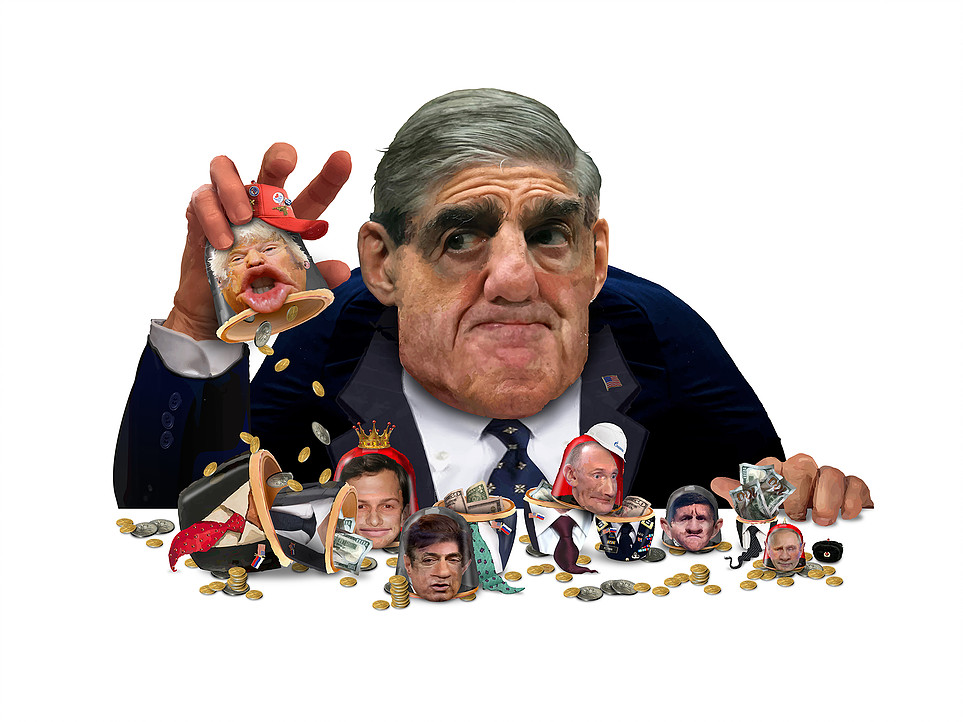
We All Want Mueller To Prove Trump Is A Criminal Fast-- But More Important, We All Want Mueller To Prove Trump Is A Criminal Indisputably

>


I've been binge-watching Billions and I'm finishing up Season 3. There's is certainly some inspiration there from the activities of Preet Bharara, the former U.S. Attorney for the Southern District of New York is his office's battle against Steve Cohen (S.A.C. Capital Advisors) and John Gutfreund (Salomon Brothers). I've learned a lot about the workings of the U.S. Attorney's office-- at least the storied South and Eastern districts' U.S. Attorney's offices. So I was especially interested in a report by Chris Strohm yesterday that Mueller has tapped more prosecutors to help with the growing Trumpanzee probe.

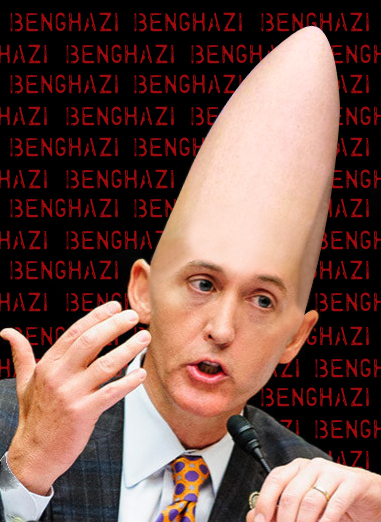
"Growing," huh? That should flip Trump out by itself. "As Mueller pursues his probe," wrote Strohm, "he’s making more use of career prosecutors from the offices of U.S. attorneys and from Justice Department headquarters, as well as FBI agents-- a sign that he may be laying the groundwork to hand off parts of his investigation eventually, several current and former U.S. officials said." If you're a Billions fan, think Bryan Connerty, Chief of the Securities and Commodities Fraud Task Force for the Southern District. Mueller has 17 federal prosecutors now. Team Trumpanzee-- including, incongruously, Trey Gowdy, who led the Benghazi "investigation" (4 years, no indictments)-- is screaming that the investigation is going on too long and costing too much. This while Trumpists file more and more court challenges-- some frivolous-- meant to slow down and bog down the investigation.
Investigators in New York; Alexandria, Virginia; Pittsburgh and elsewhere have been tapped to supplement the work of Mueller’s team, the officials said. Mueller has already handed off one major investigation-- into Trump’s personal lawyer, Michael Cohen-- to the Southern District of New York.


“Whatever you got, finish it the hell up because this country is being torn apart,” Republican Representative Trey Gowdy of South Carolina told Rosenstein during a June 28 hearing. Rosenstein said Mueller knows he must move expeditiously.

A heavy investigative load for Mueller had been anticipated from the start, the officials said. The special counsel has already issued 20 indictments and secured guilty pleas from five individuals, and some of the defendants are mounting stiffer-than-expected battles in court.

“I don’t think he’s getting in over his head,” said Solomon Wisenberg, who served as deputy independent counsel investigating President Bill Clinton in the 1990s. “These things have a tendency to balloon. Yes, it may be taxing on them. No, it’s not that unusual.”

Nor is it unusual for Mueller to turn to U.S. attorneys or to Justice Department headquarters, said Wisenberg, who’s now a partner at the law firm Nelson Mullins Riley & Scarborough LLP.

Mueller is dealing with the legal battles as he considers whether to subpoena Trump for an interview and as he accelerates his investigation into potential collusion.

The first-- and perhaps biggest-- court case for Mueller is over his indictment of Trump’s former campaign chairman, Paul Manafort, for an array of financial crimes. Manafort is fighting the indictment in two federal courthouses, and he expanded his case last week to the U.S. Court of Appeals for the District of Columbia.


Both sides are now gearing up for a trial to begin later this month.

“It’s going to be all hands on deck when they go to the Manafort trial," Wisenberg said.

Other court fights may have come as a surprise.

Mueller indicted 13 Russian individuals and three entities in February on charges of violating criminal laws with the intent to interfere with the U.S. election through the manipulation of social media.

None of the targets are in the U.S., but one of them, the Internet Research Agency, has forced Mueller into another legal fight in federal court. The two sides have been sparring most recently over how to protect sensitive investigative materials from disclosure. Mueller has enlisted prosecutors with the U.S. Attorney’s office in Washington to handle the case.

Another surprise came last week when Andrew Miller, a former aide to Trump adviser Roger Stone, filed a sealed motion to fight one of Mueller’s grand jury subpoenas.

Mueller also plans to move eventually to sentencing for Trump’s former national security adviser, Michael Flynn, and former foreign policy adviser George Papadopoulos, both of whom pleaded guilty to lying to investigators.

“He’s a busy guy,” said Jeffrey Cramer, a former federal prosecutor.

“There’s certainly multiple fronts going on right now,” said Cramer, who’s now managing director of the international investigation firm Berkeley Research Group LLC. “Some of them are more active than others.”

Cramer doesn’t think Mueller’s in over his head but says he might be taking timing into consideration when it comes to making additional moves.

“You don’t have unlimited resources in a sense that you’ve got an unlimited cadre of prosecutors and agents,” Cramer said. “There does come a time where they can only do so much.”

Mueller has already shown that in some situations he will hand off cases, such as with the Cohen investigation. Additionally, Mueller is getting help from Rosenstein, who is fielding congressional demands for documents and testimony.

In the end, though, Mueller knew what he was signing up for.

“While there’s a lot on the plate, they’re not all going on all at once," Cramer said. “His office is doing their job. He’s doing what he’s supposed to be doing.”


Labels: , , ,

Thursday, June 14, 2018

Anyone Think Trump Has Read The Constitution, Let Alone Understood It? Kellyanne's Hubby Does

>


Some of the really craziest Republicans in the House, the Devin Nuneses and Matt Gaetzes of the dysfunctional chamber, have been trying, along with Giuliani and Hannity, to claim the Mueller investigation of Russian i Kellyanne Conwaytook to the pages of Lawfare on Monday to set his fellow-Republicans straight. I feel like we're living through the first season of Billions.

Trump, of course, in a twitter explosion of adderall-fuelled, self-serving rage and idiocy a few days ago claimed the very appointment of the "Special Councel (sic) is totally UNCONSTITUTIONAL." The tweet-- and the one that correct his misspelling-- have been removed from his feed. Conway provided his readers with both:


Señor Trumpanzee "didn’t explain, he wrote, "what his argument was, or where he got it, but a good guess is that it came from some recent writings by a well-respected conservative legal scholar and co-founder of the Federalist Society, professor Steven Calabresi. Unfortunately for the president, these writings are no more correct than the spelling in his original tweet. And in light of the president’s apparent embrace of Calabresi’s conclusions, it is well worth taking a close look at Calabresi’s argument in support of those conclusions."

Um... Trump doesn't read, let alone dense legal arguments by legal scholars and he certainly never explains what his argument is, or where he got it." Usually his rantings come from a toxic combination of snorted Adderall, Finasteride and Fox and Friends. But Conway's rebuttal to Calabresi's contention that "all of Special Counsel Mueller’s work is unconstitutionally 'null and void' because... Mueller’s appointment violates the Appointments Clause of the Constitution, Article II, Section 2, Clause 2," is still worth reading.


The Appointments Clause distinguishes between two classes of executive-branch “officers”-- principal officers and inferior officers-- and specifies how each may be appointed. As a general rule, the clause says that “Officers of the United States”-- principal officers-- must be nominated by the president and appointed “with the Advice and Consent of the Senate.” At the same time, however, the Appointments Clause allows for a more convenient selection method for “inferior officers”: It goes on to add, “but the Congress may by law vest the Appointment of such inferior Officers, as they think proper, in the President alone, in the Courts of law, or in the Heads of Departments.”

Calabresi argues that Special Counsel Mueller is acting as a principal officer and that, accordingly, Mueller’s appointment violates the Constitution because Mueller was appointed by the acting attorney general, and not by the president with the advice and consent of the Senate. In support of this broad point, Calabresi makes first a specific claim and then a more general one.

His specific claim, made at the outset of his “Legal Opinion,” is that “Robert Mueller has behaved like the 96 [sic] U.S. Attorneys who are principal officers of the United States and who must be nominated by the President and confirmed by the Senate.” His more general, and overarching, claim is that under Supreme Court case law applying the Appointments Clause, Special Counsel Mueller is a principal officer because “because Mueller does not have a boss who is supervising and directing what he is doing.”

Calabresi’s first point-- the illustrative comparison between Mueller and the U.S. attorneys-- begins with a badly mistaken premise. Without citing anything at all, he repeatedly assumes, in both his op-ed and his “Legal Opinion” paper, that “Congress has specified that the 96 [sic] U.S. Attorneys are all principal officers who must be nominated by the President and confirmed by the Senate.” (Emphasis mine.)

This assumption is just wrong-- uncomplicatedly, flatly wrong. It is true that, typically, the 93 (not 96) U.S. attorneys are presidentially nominated and Senate-confirmed. But Congress has established an alternative method of appointment. Title 28 U.S.C. § 546 provides that, until the Senate confirms a presidential nominee, U.S. attorney vacancies can be filled for up to 120 days by an appointment made by the attorney general and then indefinitely by local district courts. Such non-presidential, non-Senate-confirmed appointees are, as one court of appeals has put it, “fully-empowered United States Attorneys, … not subordinates assuming the role of ‘Acting’ United States Attorney.” And such fully-empowered, non-presidentially-appointed U.S. attorneys are not all that uncommon. Today, the sitting United States attorneys in two of the most important judicial districts in the country-- the Southern and Eastern Districts of New York-- were appointed by the judges of those districts under Section 546(d).

And so “the Congress …  by … vest[ing] the Appointment” of U.S. attorneys “in the Courts of law” and “in the Heads of Departments,” obviously recognized that U.S. attorneys are “inferior officers.” But Congress is not the only branch of the government to have reached this conclusion. In 1978, the question was expressly put to the Justice Department’s Office of Legal Counsel. OLC’s conclusion: U.S. attorneys are inferior officers, because the law “authorizes the Attorney General to direct all U.S. Attorneys in the discharge of their duties.”


Not to be left out, members of the third branch-- which has made a lot of these appointments-- have also agreed. The Supreme Court has never squarely addressed the point under the Appointments Clause, but in discussing presidential removal power in Myers v. United States, the Supreme Court specifically referred to “a United States attorney” as an example of “an inferior officer.” More recently, in Morrison v. Olson, the high court approvingly noted how “Congress itself has vested the power to make [U.S. attorney] interim appointments in the district courts” under 28 U.S.C. § 546(d), and observed that “[l]ower courts have also upheld [those] interim judicial appointments of United States Attorneys” under the Appointments Clause. These lower courts include two federal courts of appeals, one of which rejected an Appointments Clause challenge to a U.S. attorney who had served under a judicial appointment for more than six years.

Accordingly, there is no serious dispute: U.S. attorneys are inferior officers. So if what Robert Mueller is really doing is, as Calabresi suggests, “behav[ing] like the [93] U.S. Attorneys,” then Calabresi’s argument immediately collapses on itself. Mueller is an inferior officer, just as U.S. attorneys are.

...[Rosenstein] confirms that Special Counsel Mueller does have an active principal-officer boss-- indeed, it suggests that Mueller is probably being supervised and directed more closely than any of the 93 U.S attorneys from Maryland to Guam... [N]not only does Mueller have a boss, and not only is the boss keeping tabs on Mueller, but, according to this judicial decision, Mueller is also faithfully following his boss’s orders.

That disposes of Calabresi’s Appointment Clause contentions, but Calabresi makes one additional constitutional point—and it’s a very, very, very odd one. It is based upon Morrison v. Olson, the 7-1 Supreme Court decision in 1988 that upheld the markedly different, long-expired independent-counsel provisions of the Ethics in Government Act of 1978.

To conservative lawyers of my generation, Morrison is, to say the least, a deeply unsettling decision, because it upheld the creation of a truly “independent” prosecutor-- an official who was exercising purely executive power, the power to prosecute, yet was doing so not only outside the Justice Department but, effectively, outside the entire executive branch. It provoked one of Justice Scalia’s greatest dissents-- to my mind, one of the greatest dissents of all time.

The majority in Morrison upheld the independent counsel mechanism against a variety of constitutional attacks-- including an Appointments Clause claim and a separation-of-powers claim. It rejected the Appointments Clause claim because four factual circumstances were present: the independent counsel was ultimately removable “for cause” by the attorney general, though unsupervised by him; the independent counsel had “limited duties,” involving merely investigation and prosecution; the counsel was “limited in jurisdiction”; and she was “limited in tenure.” As for the overall separation-of-powers claim, the court held, in the last major section of its opinion, that the independent counsel scheme did not “unduly interfer[e] with the role of the Executive Branch.”

For his part, Justice Scalia dissented vigorously and brilliantly from both holdings. As for the Appointments Clause, presaging his later opinion for the court in Edmond, he concluded that the independent counsel was a principal officer, and not an inferior officer, because she was subordinate to no one in the executive branch. As for the separation-of-powers holding in Morrison, Justice Scalia decried the “ad hoc, standardless” “balancing test” applied by the court. “[H]ow much removal of Presidential power is too much?” he plaintively asked. In the stirring conclusion to his dissent, Justice Scalia declared his preference to “rely upon the judgment” of the people who “constructed our system … and approved it,” when they declared “quite plainly,” in Article II, § 1 of the Constitution, “that ‘[t]he executive Power shall be vested in a President of the United States.”

I have already said enough about the Appointments Clause: The special counsel passes muster even under Justice Scalia’s test, which under Edmond is now the law. But on the basis of Morrison, Calabresi launches one further attack, albeit a half-hearted one, on the special counsel: He actually suggests that, in contrast to the independent counsel scheme upheld in Morrison, “[t]he Mueller appointment also violates the final part of [the] Morrison opinion”-- the separation-of-powers holding-- “because it interferes ‘too much’ with the President’s executive power.”

This is almost too much to bear, because what happened in Morrison was that Congress passed a statute that took prosecutorial power-- purely executive power-- away from, and out of, the executive branch. Cue Justice Scalia’s dissent: “the statute before us deprives the President of exclusive control over that quintessentially executive activity” and “[t]he Court does not, and could not possibly, assert that it does not.” “[T]he independent counsel exercises executive power free from the President’s control.” “[T]he independent counsel is not an inferior officer because she is not subordinate to any officer in the Executive Branch (indeed, not even to the President).” Despite all that, the majority in Morrison did not think the old independent counsel law stripped “too much” executive power away from the executive.

Contrast that with the situation here-- where not even Justice Scalia would think any power has been removed from the executive. Here there was no statute imposed by Congress, just a regulation-- a regulation promulgated by and within the executive branch. Specifically, a Justice Department regulation promulgated by the attorney general, an officer fireable at will by the president. And what does this regulation do? It simply divides work among lawyers within the Department of Justice-- within the executive branch. It surely doesn’t remove any executive power from the executive branch.

And not only that, the special counsel regulations can be unilaterally revoked by the very executive branch that unilaterally created them. Indeed, according to Attorney General Janet Reno when she issued the special counsel regulations in 1999, those regulations aren’t even subject to notice-and-comment rulemaking, because they relate to “matters of agency management or personnel,” and “agency organization, procedure, or practice”-- which suggests they could be dispensed with equally unceremoniously as well. In short, not only does the special counsel regulation not  take power away from the executive branch, but the internal rearrangement of authority it brings about within that branch could be relatively easily undone by a presidentially removable principal officer. No matter how you cut it, to borrow Justice Scalia’s words, there has been no “removal of Presidential power”-- none-- let alone too much.

In short, there is no serious argument that Special Counsel Mueller’s appointment violates the Appointments Clause specifically or the separation of powers generally.

*     *     *

A final observation: It isn’t very surprising to see the president tweet a meritless legal position, because, as a non-lawyer, he wouldn’t know the difference between a good one and a bad one. And there is absolutely nothing wrong with lawyers making inventive and novel arguments on behalf of their clients, or on behalf of causes or people they support, if the arguments are well-grounded in law and fact, even if the arguments ultimately turn out to be wrong. But the “constitutional” arguments made against the special counsel do not meet that standard and had little more rigor than the tweet that promoted them. Such a lack of rigor, sadly, has been a disturbing trend in much of the politically charged public discourse about the law lately, and one that lawyers-- regardless of their politics-- owe a duty to abjure.

Labels: , , , ,